Tag Archive: Food Trip


We get this all the time.  Foreigners in the workplace telling us that Filipinos tend to eat every so often.  Lunch is no sandwich and a fruit.  Neither is it a half hour break.  Naaaah.  That one hour lunch break can easily stretch to a couple of hours, often blaming the traffic for not getting back soon enough. These days,  there are many joints a walking distance from the offices. But lunch is lunch, and every Filipino observes it not just as a break from work but also as a chance to chat away the blues and break the monotony of working behind a desk. As for snacks or mid-day “mini-meals”?   That’s when it is more likely to find Filipinos eating that sandwich or fruit.  But the hardcore ones would still crave for their carbo fix:  a noodle dish, rice porridge or rice cakes.  In between lunch and that midday mini-meal, don’t be surprised to find them munching peanuts, pork cracklings, chips, or splitting pumpkin seeds.


Taho. Best for breakfast!
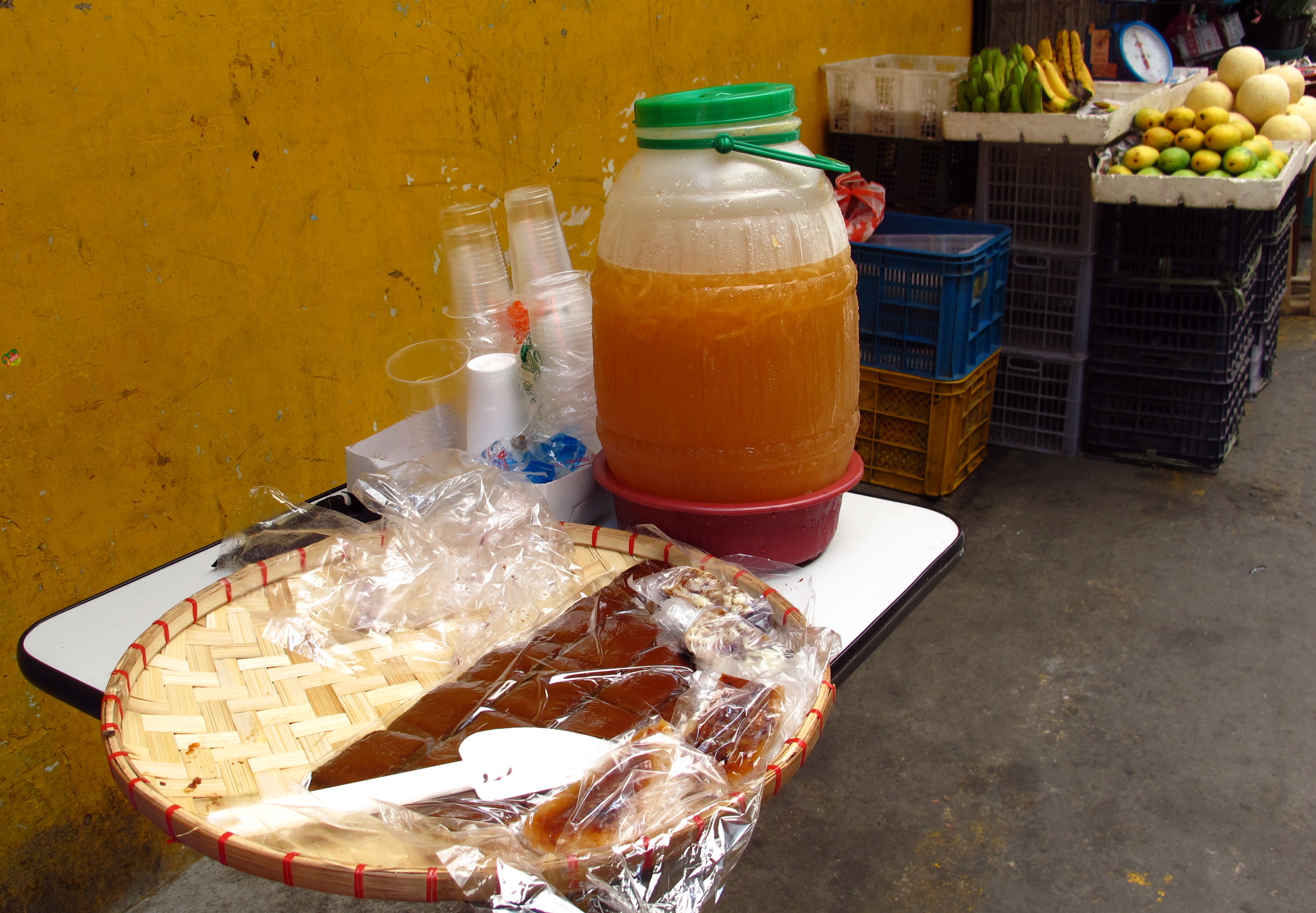
Sago at Gulaman


Luckily for us,  there is no shortage of food to be found and bought.  Stuck in a traffic jam?  No worries.   The street vendors plying the main roads sell anything from peanuts to pork cracklings to boiled eggs to mint candies to fruits to bottled water to “fish balls, squid balls and shrimp balls”. Boiled bananas, boiled peanuts, even corn on the cob! Walking the streets of Manila is an adventure.  Every tourist should try this.  Buying street food is very much a part of every Filipino’s way of life.  And there’s more to be found in urban centers like Manila, where folks are supposed to be “busier” than their counterparts in the provinces who may have the time and energy to cook their own meals and snacks.
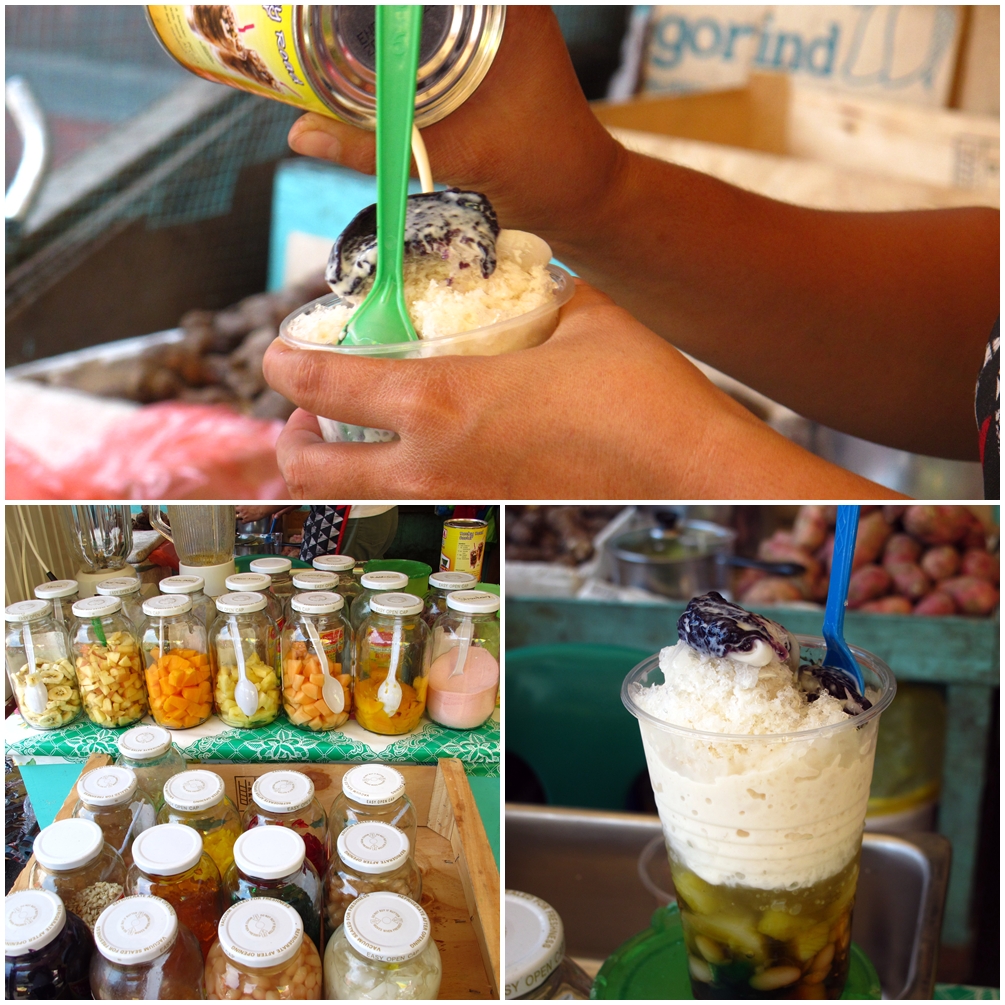

Halo Halo!


As it is summer, try going to San Andres Market, a stone’s throw from Malate Church.   You can get your freshest fruits here to eat, or to be made into a fruit shake.   You can’t go wrong with a 10 peso fruit shake (less than US $0.25) or the local “halo-halo” (literally means “mix-mix”) for 20 pesos (less than US$0.50). I strongly suggest you try the halo-halo which is a mixture of  sweetened fruits, ice shavings and milk, topped with a local sweetened ube yam. You can’t be more Filipino than that!
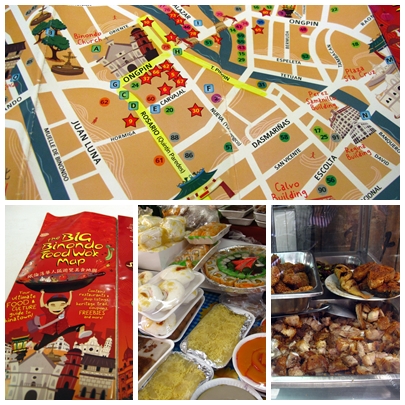
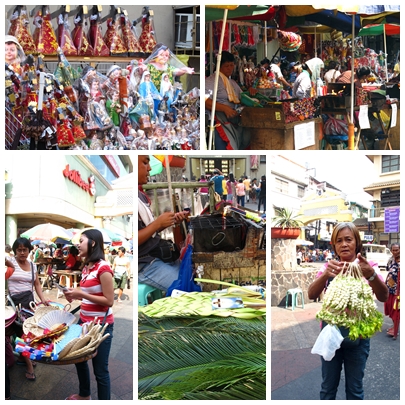


Or you may want to head all the way to Chinatown for your dimsum fix and other foodstuff.  The street vendors here range from those selling fruits, vegetables and cooked food to those selling almost anything you need to get from an honest-to-goodness hardware and supermarket.  Around Quiapo Church,  you can buy your religious icons,  candles,  fans (strongly suggested on hot, humid days) , flower garlands, brooms (yes, brooms),  fruits, vegetables , squash flowers, and fish (live, dead, smoked or dried!).  From Quiapo Church through Santa Cruz Church to Binondo Church,  you will find street stalls selling footwear, garments and again,  more foodstuff.  There is an alley near the Binondo Church called Carvajal where I wanted to buy almost everything I laid my eyes on!  Forget the diet.  There is so much to buy here to take home as TV dinners.  Sushi?  Taho? Meat loaf?  Rice cakes?  
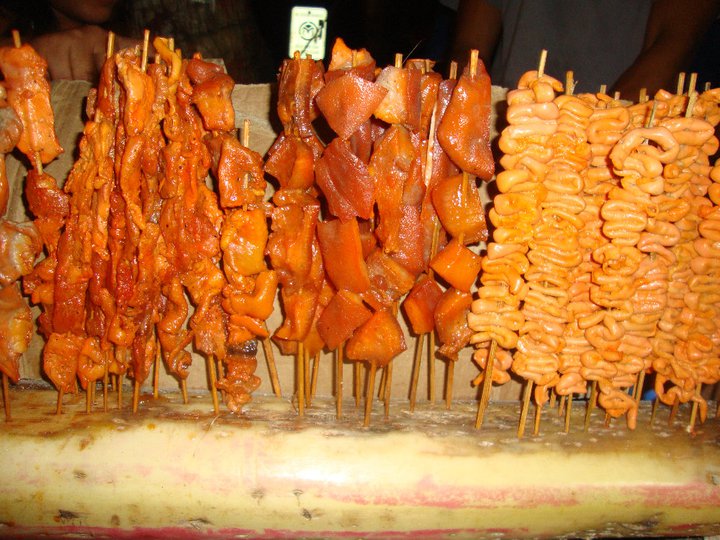
 

Barbequed Pork and Innards. Guess what!
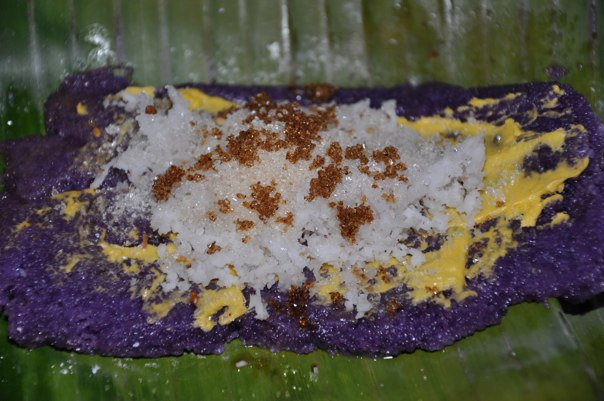
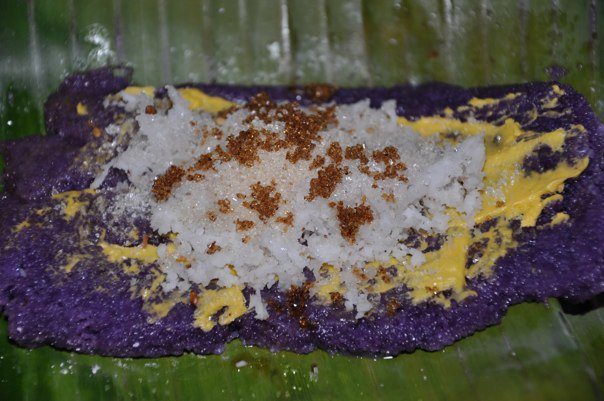
Puto Bumbong

You may also want to check out more photos from my TravelBlog site. 


Lechon or Roasted Pig


The celebrity chef Anthony Bourdain once visited the Philippines and tried our lechon. He then declared it is the best he has ever tried in all his travels.


This roasted pig adorns almost every buffet table as families and friends celebrate occasions from birthdays to anniversaries to graduations to weddings to baptisms to fiestas.   It is the equivalent of a royalty dish.   It is our Filipino equivalent to the American turkey,  or to the roast beef.    When lechon adorns a buffet table,  every Filipino starts thinking of having a feast.   And almost always,  the roasted and crunchy skin is the first to go.   Some stuff the roasted pig with various herbs and serve lechon without any dips, like the lechon from the Visayas, a group of islands south of Manila.  Others serve lechon with a dip of liver sauce (some sweet, some a little spicy),  or with a vinegar and soy sauce dip. We have heard of many tales of fatal heart attacks in many parties where the victims indulged of this cholesterol load.  You may say you can savor lechon and enjoy it at your own risk.   The health hazards are however set aside in favor of this savory meal.


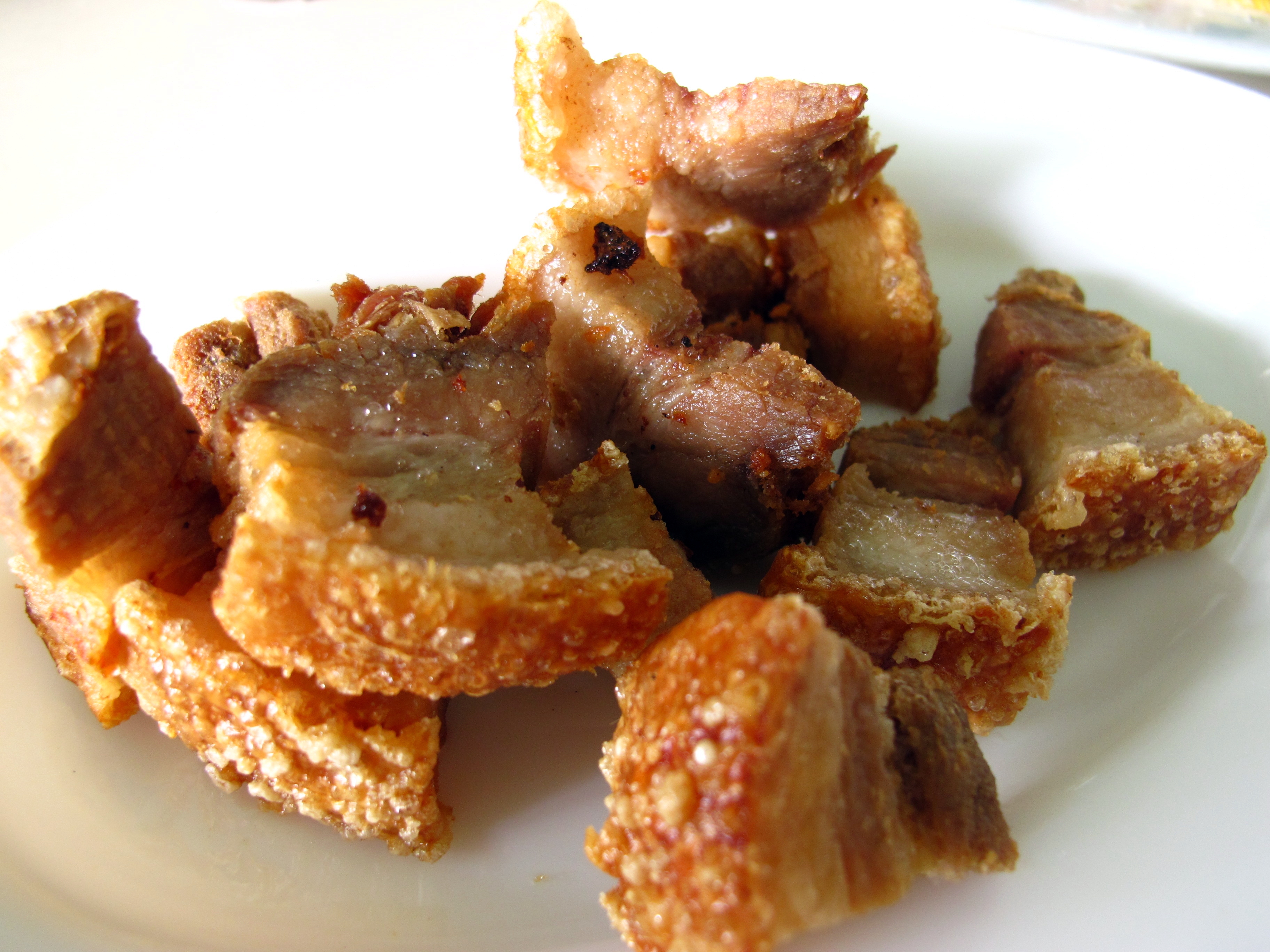
Lechon Kawali or Wok-Fried Pork Chunks


Many restaurants serving Filipino dishes include lechon in its menu, but if you want to see the whole pig chopped up into half kilo or one kilo servings,  you may want to try going to Baclaran Church in Pasay-Paranaque along Roxas Boulevard (lining Manila Bay), or just try your luck in supermarkets with food stalls (like in SM Supermarket, Cash and Carry Supermarket) where lechon is available for take out .


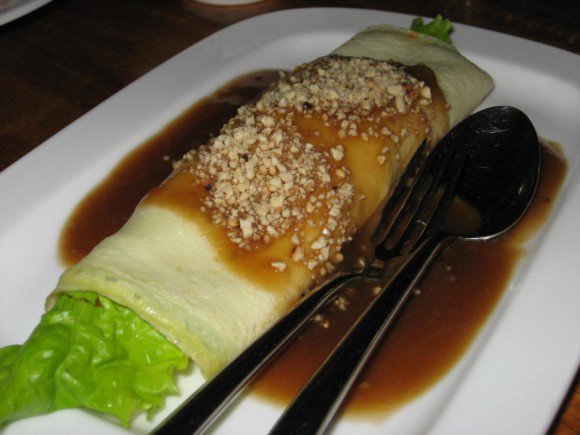
Lumpiang Sariwa (Fresh Vegetable Roll)

Vegetable Dishes


To “ease” the guilt of that cholesterol load, you may order any of these vegetable dishes :


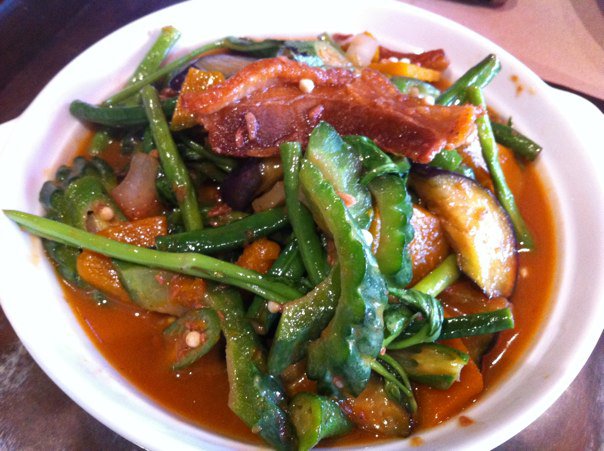
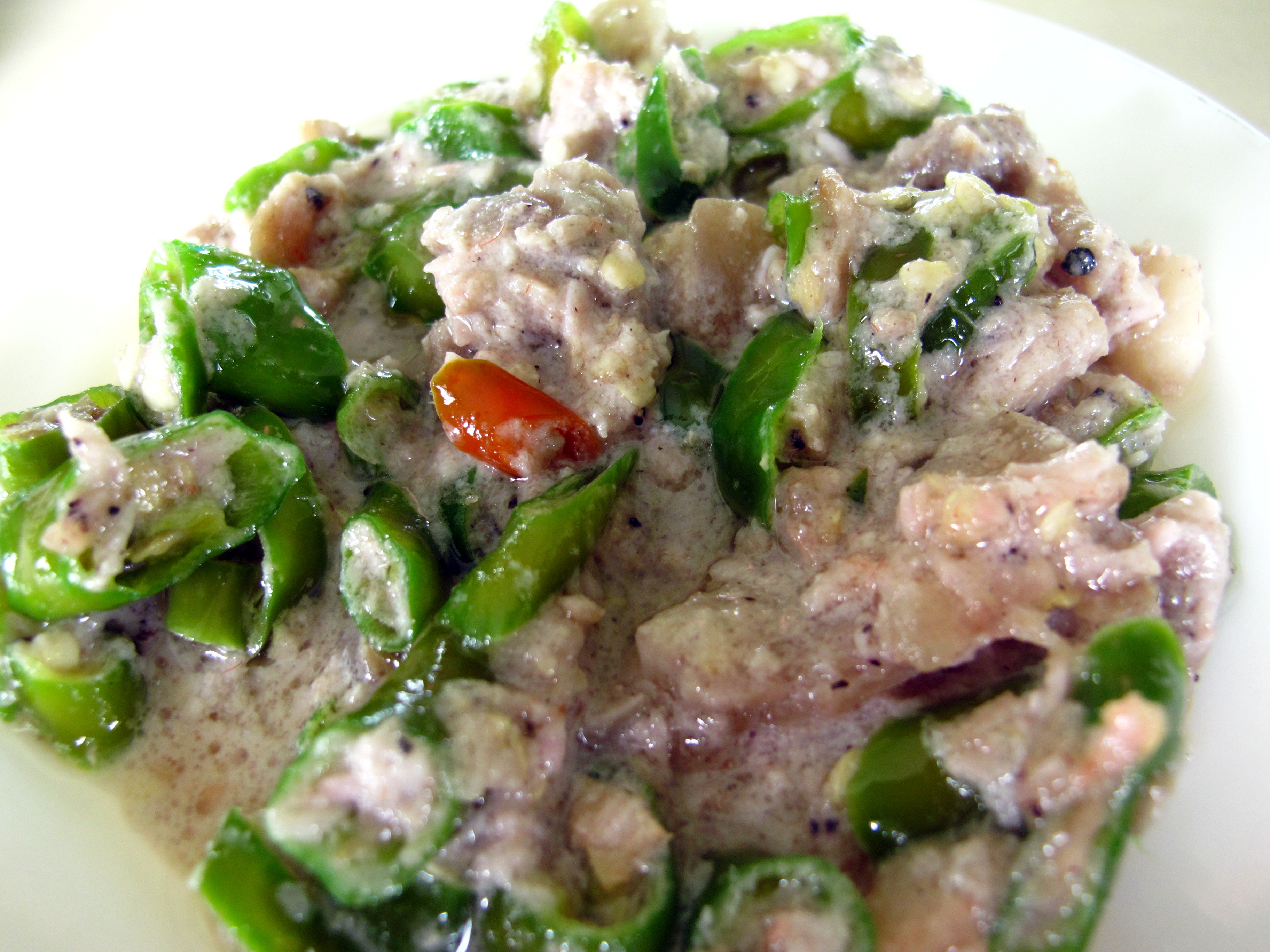
Pinakbet


Pinakbet or Pakbet :  this came from Northern Philippines but has somehow become a mainstay vegetable dish in many Filipino homes.   Vegetables include ampalaya (bitter gourd), squash, stringbeans, eggplant, and okra.   Some cook it a tad dry, others soupy, flavored with the very Filipino bagoong or shrimp paste. If you are a vegetarian, be sure to tell the waiter to have it cooked WITHOUT pork or any meat slices.


Bicol Express


Laing and Bicol Express :  From Bicol Region some 8 hours drive south of Manila,  this spicy dish is cooked in coconut milk.   Taro leaves are used for the laing and again, some cook it a bit dry or saucy.  Either way,  it is spiced up enough to make it a dish hailing from Bicol, which is famous for its peppery dishes.


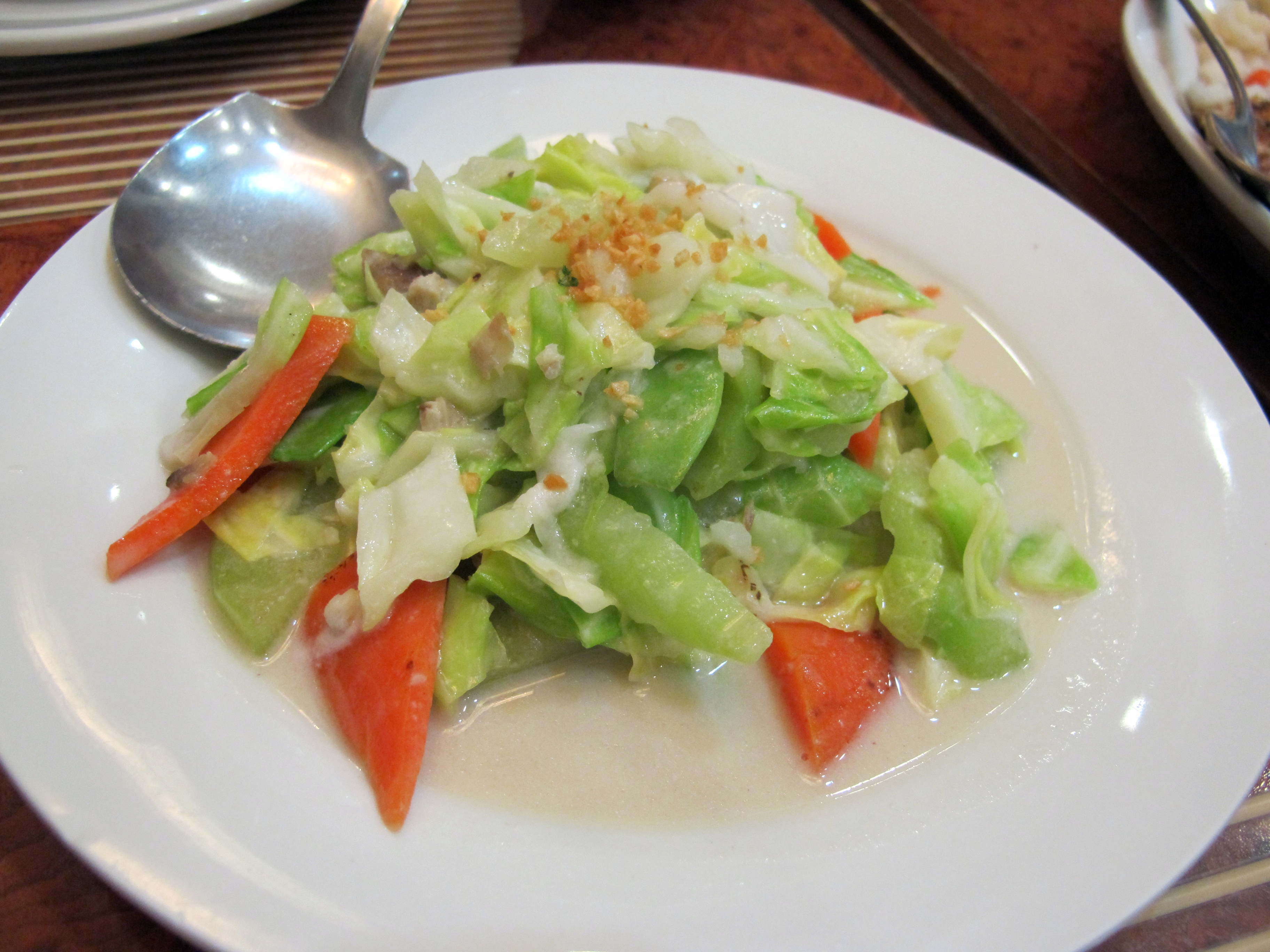
Buko Chopsuey


Chopsuey :  If you are familiar with Chinese cuisine,  this is the same chopsuey which has become another Filipino favorite. In Bicol, there is a variation of the dish:  Buko Chopsuey.

Kakanin:  Bibingka, Puto Bumbong at Iba Pa

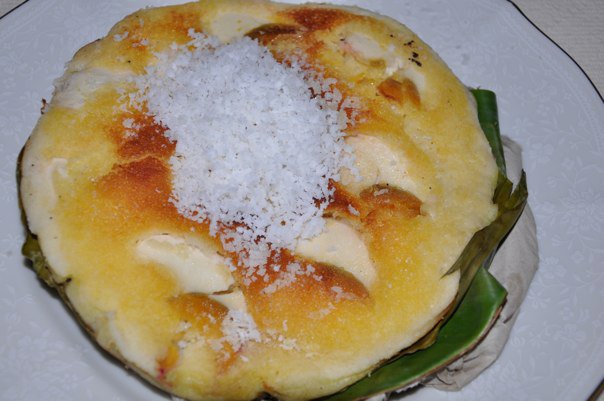
Bibingka


I live near the area of Greenbelt Makati where many trendy and gourmet restaurants can be found.   Italian, Greek,  Spanish,  American,   Chinese, Thai, Indian……….take your pick.   Among the Filipino restaurants ,  you can try the very established, not that expensive “Via Mare” .  Here, one finds the very Filipino rice cake called bibingka served either with our local buffalo cheese or salted egg,  fried noodles served with eggs, shrimps, squid, pork rinds called pancit luglug and again, the guinomis or halo halo.  Our local bread called pandesal is also available here, served with kesong puti which is the equivalent of the Italian mozzarrela, but way cheaper!   There are other rice cakes and desserts like puto bumbong (colored purple!) and palitaw which are all priced so reasonably I have to insist you try them all!  Most rice cakes are served with shredded coconut meat.


Puto Bumbong

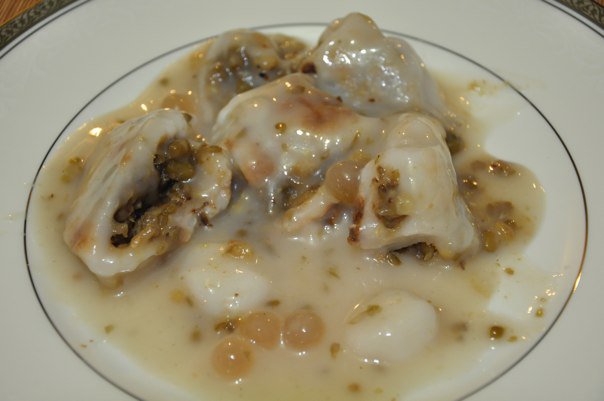
Bibingkoy


Happy eating, everyone!


Have more cravings? More photos can be found in my TravelBlog site. 


Bicol Express. Sounds like a train to you?  That is exactly what it was.  The non-stop train from Manila going south to the Bicol Region is called Bicol Express. The train’s long gone,and many take the overnight buses now.  [As of end of June 2011, the PNR train from Manila to Naga resumed operations.] But the Bicol dish to which it gave its name, remains a favorite popular Bicolano dish.  In Albay, we tried this dish in 1st Colonial Grill in Legazpi City and in “Let’s Pinangat” , a roadside eatery in Camalig, Albay.

Traditional Bicol Cuisine


Quite distinct from the local cuisine found in other parts of the country, Bicol is famous for its spicy, coconut cream-based dishes.  Local folks here even eat raw “sili” (peppers) dipped in salt to go with their rice.  By itself, it is a meal.  Just watch them pop the “sili” into their mouths without touching their lips and following it up with rice scooped with their hands.


I’d say the Bicolano cuisine is truly local, “untouched” by Spanish and Chinese influences.  Coconuts abound in the area. So with the local peppers.  It is a natural consequence that their cuisine will use much of these local ingredients.  Bicol Express may have a very American sounding name, but I will venture to guess that it had a local name before the famous train plied the Manila-Bicol route.  “Laing” and “Pinangat” can only be Bicol as Bicol could be.  Both use homegrown ingredients like taro leaves, and of course the “sili” and coconut cream.  Back in Manila,  the laing — taro leaves stewed in coconut cream — is a regular vegetable dish in many Filipino restaurants.   But nothing beats eating it right here, cooked the traditional way.

Fusion Cuisine

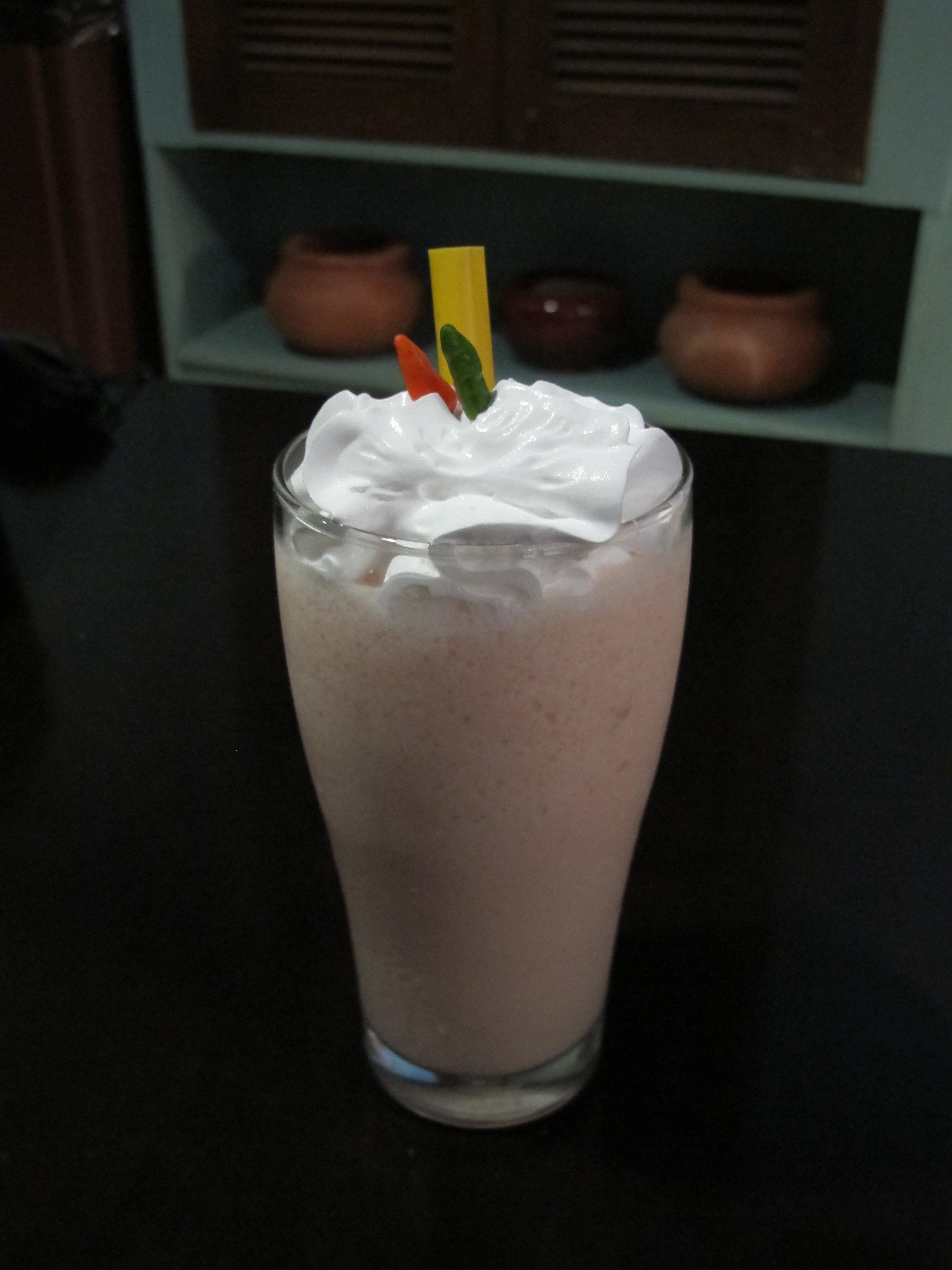
Sili Shake, anyone? And there's Pili Shake too! (Try it at Bicol Blends Cafe)

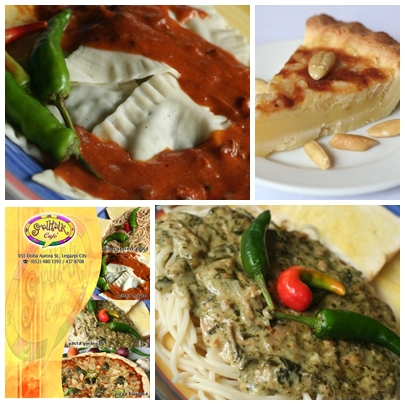
Small Talk Cafe


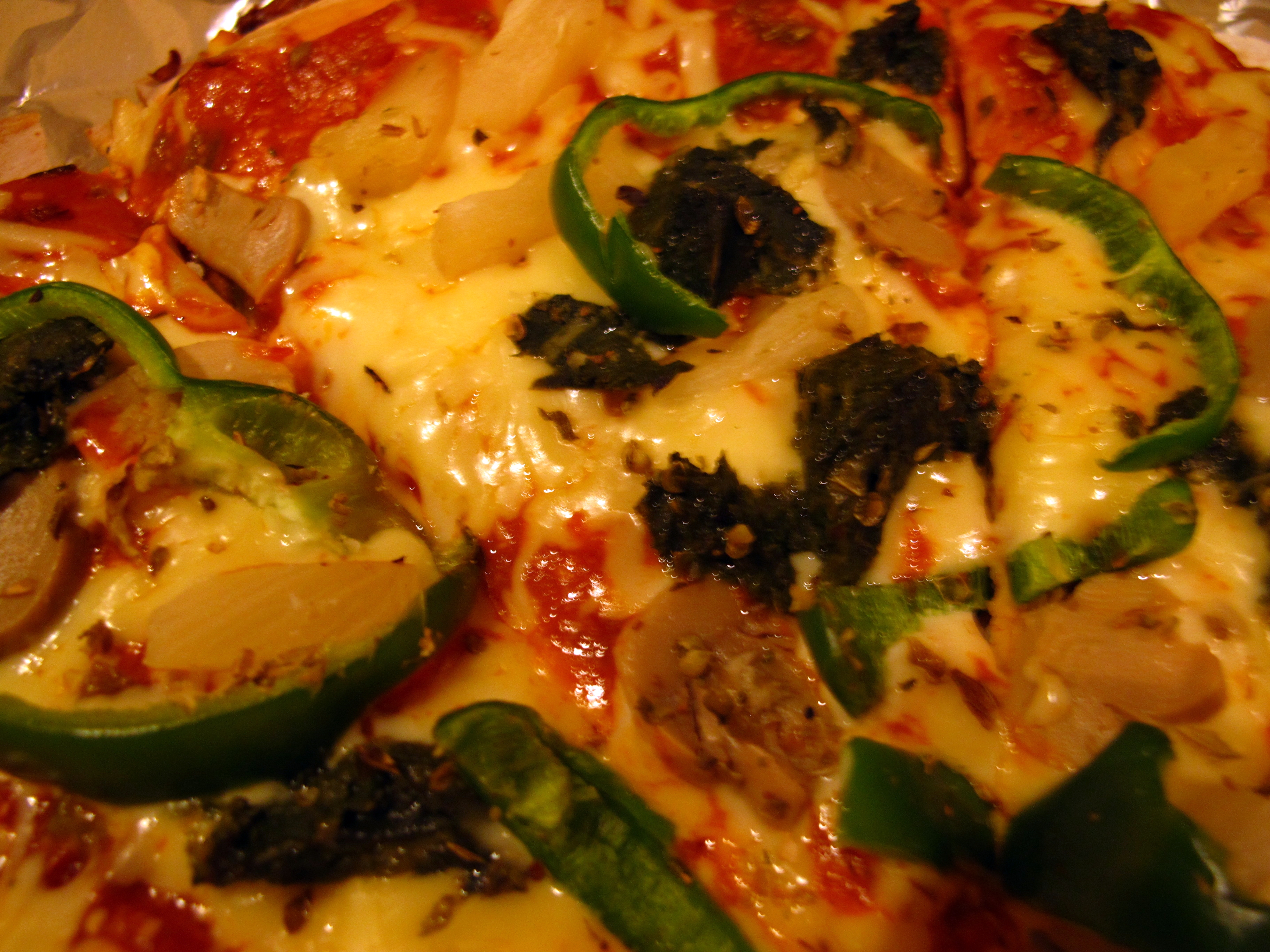
Of late, many modern restaurants now fuse Western and Bicolano dishes.  Starting off with the milk shakes,  there is a joint called Bicol Blends right beside Hotel Amada and 1st Colonial Grill which serves modern-day fusion drinks for the adventurous.  Sili Shake and Pili Shake , to name a few.   And there’s Small Talk Cafe which serves up pizza and pasta fused with local dishes like pinangat and laing.  We tried the Laing Pizza where the laing or taro leaves look more like the regular pesto on a pizza.  But the laing pasta certainly has a very local, acquired taste.   I liked it, actually.   I could have also tried their Pili Basil Pasta, but there just isn’t any more room for more. For sure, I will have to also try Pasta Mayon when I head back in May.  Pasta Mayon is laing(again!)-filled ravioli with tuna sauce.  It is served in a way that it looks like a volcano with lava flowing.


Some Local Sweets and Pili Nuts

“Pili” is Bicol’s prized nut.  Slightly more expensive than almonds, but they are so good one shouldn’t leave the place without trying them.  You may find them in tetra paks, in plastic jars, in plastic sachets all over town.  We got ours from Albay Pili Nut Candy along Rizal Street.  It is reputed to be among the oldest pili stores, operating as a home business or cottage industry.

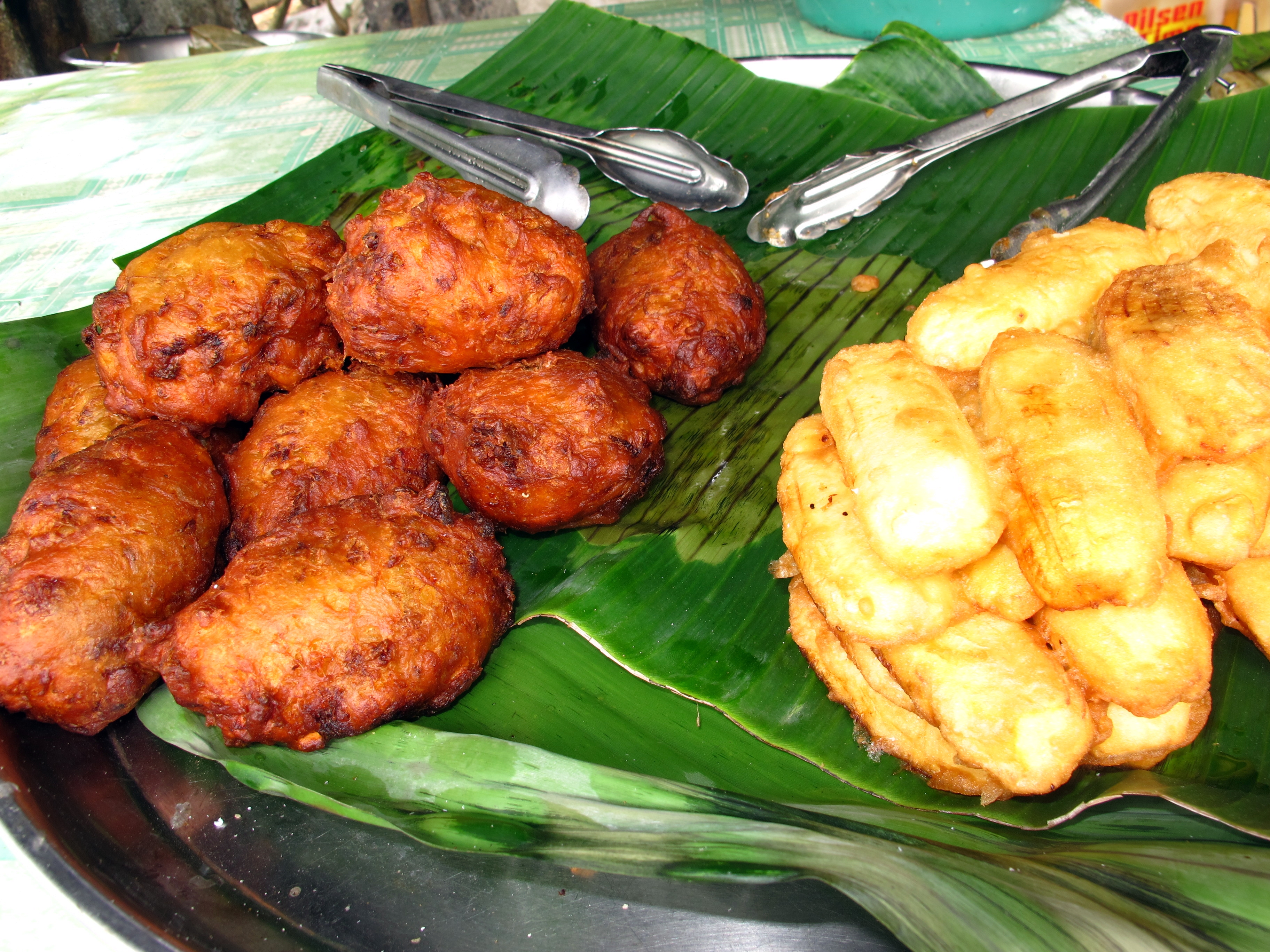
Sweetened or honeyed Pili Candies make for good desserts.  But if you want to try some street food, check out those roadside stalls selling guinamos which is mashed bananas and sinapot which is banana fritters.  You may also be interested how locals “bake” their rice cakes using only tin cans and charcoal.  You find many versions of the rice cakes in this rice-eating nation and Bicol has its own version, for sure.   All these rice cakes also make for good mid-day snacks or breakfast, and collectively go by the name “kakanin”which literally means “eats”.

Bon apetit! [:)]

More photos  can be found in this TravelBlog site.