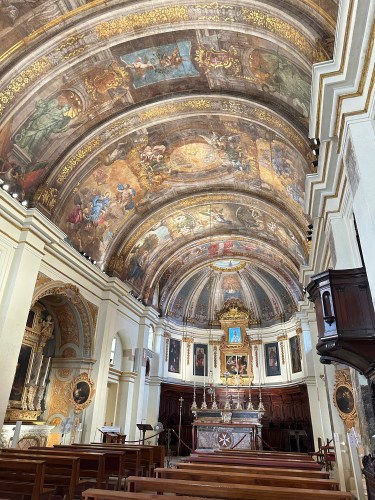
It’s been on my bucket list for the longest time. Malta and the southern part of Italy (Sicily). Have read up quite a bit on Malta and it didn’t disappoint. And that applies only to Valletta. There isn’t time for ferry rides or further exploration to sites like Mdina or the Three Cities. For sure, I’d be back with more days to spend here. One of the few times I promise myself that I will repeat and enhance the experience. Malta has that effect on you. And I just know that it is one place where the visit cannot, should not be rushed. It needs to be digested slowly. (Besides, the uphill climbs are no joke 🥲). With few hours to spare, we joined the swarm of midday cruisers but did the best we could.
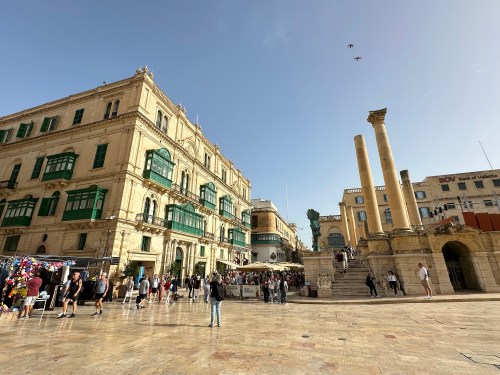
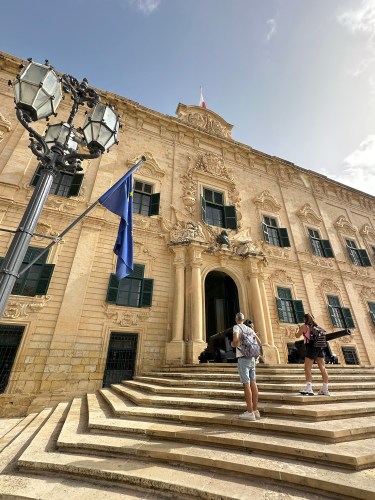
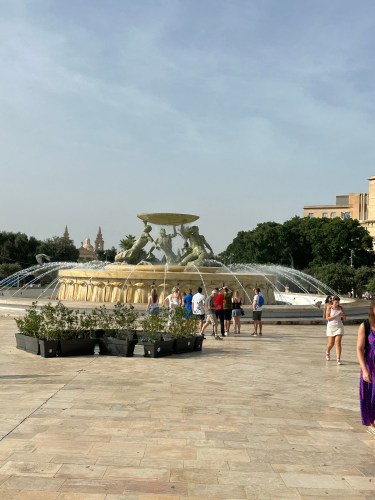
Signed up for a walking tour and we put those leg muscles to good use. From the boat, we walked for 8 minutes along the waterfront promenade which was thankfully flat. Against the bastion walls, we found the Barraka lift, paid a measly €1 to take us up to the historic city center which sits beautifully on a cliff offering a panoramic view of the harbor. Stepping out of the Barraka lift, passing the lovely colonnaded gardens, we headed towards the Parliament or Freedom Square. A short and easy stroll, really. Flat and paved. On our way, we passed the baroque building housing the office of the Prime Minister as well as the Church. The capital’s main thoroughfare — Republique Street — runs from the Triton Fountain all the way to Fort St. Elmo. The star-shaped fort is where the National War Museum is (which we missed!). It is also the site of the historic great siege of 1565 and bore heavy bombardment during the Second World War.
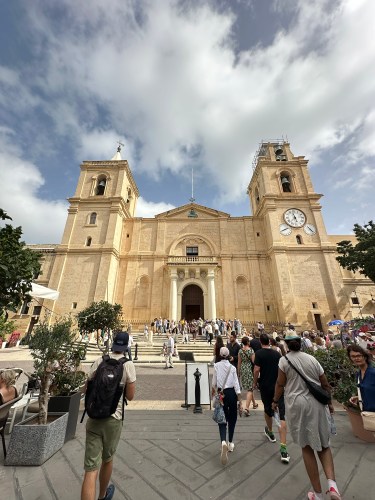
I do have one major regret here. We should have booked visits to the St. John’s Co Cathedral — a solid fortress-like structure designed by a military architect that looks simple, even austere, and quite commanding. Why? It houses two Caravaggio masterpieces which were painted during the Italian Baroque Master’s wild fugitive days in Malta. The “Beheading of Saint John Baptist” is regarded as one of the greatest works of this other Michelangelo (Merisi da Caravaggio) — a priceless work of art which incidentally is the only work he signed. While this masterpiece hangs in the Oratory, the other piece “St Jerome Writing” hangs in a dedicated Caravaggio Wing inside the cathedral. Trivia: this piece was stolen in 1984, later ransomed and recovered in 1986. There was a long line the day we visited. Sigh 🥲
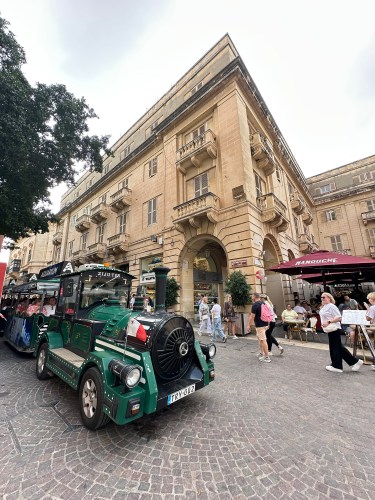
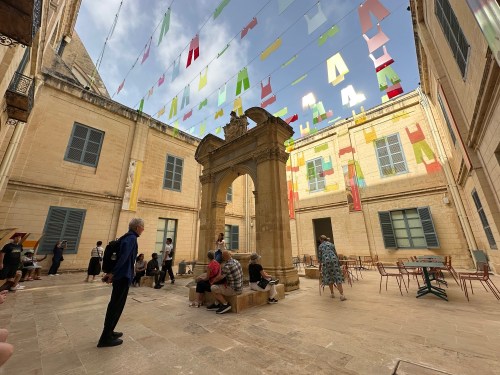
We did have a chance to visit MUŻA. The museum is housed in a knight’s palace and features contemporary Maltese art and Baroque masterpieces . But then again, there isn’t time to explore. Frankly, I can’t believe there is so much in Valletta, the smallest capital in the European Union. For a place with only 6,000 residents, it is home to over 300 official monuments. No wonder the entire capital is declared a UNESCO World Heritage Site given the abundance of historic and heritage sites packed into its small walled grid. Evidently, so much wealth must have funded Valletta’s architecture like the stone bastions, palaces, fortifications and monuments. One story goes that the founders of Valletta — the Knights of Saint John also known as Knights Hospitaller — “inherited” the wealth amassed by the Knights Templar in the 13th century. As decreed by the then Pope, the order was abolished in 1312. But it took more than 200 years before Valletta was founded by the Grandmaster of the Knights of Saint John — Jean de Vallette — in 1566 following the Great Siege of Malta. As the knights defended Malta against the Ottomans, the knights were elevated in legendary status. The second story goes that after the siege, many monarchs gave significant financial contributions to the Knights for defending Malta against the Ottoman advances.
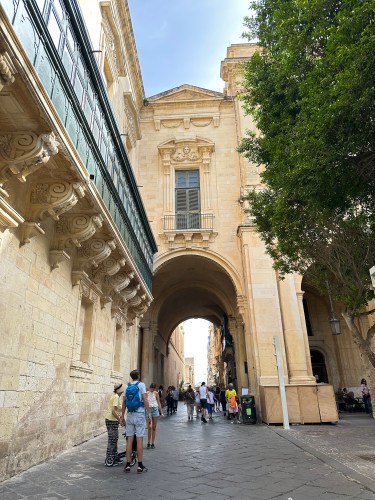

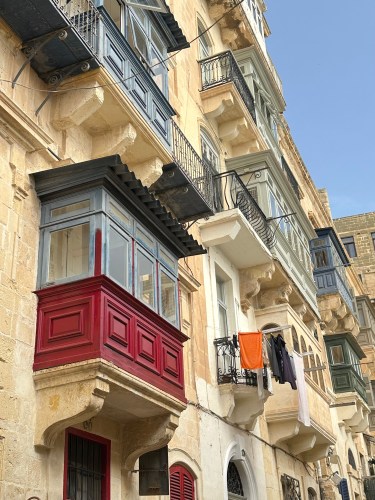
Whatever and however the story goes, Malta impresses. It deserves the UNESCO Heritage Site every bit of the way. And then there are the Maltese Balconies called gallariji. These closed wooden balconies originated from the 17th century during the Order of Saint John, and now are the cultural symbols of Malta. They are typically painted in vibrant hues from bold reds, deep blues or forest greens. Quite similar to their Moorish, Arabic and North African counterparts.