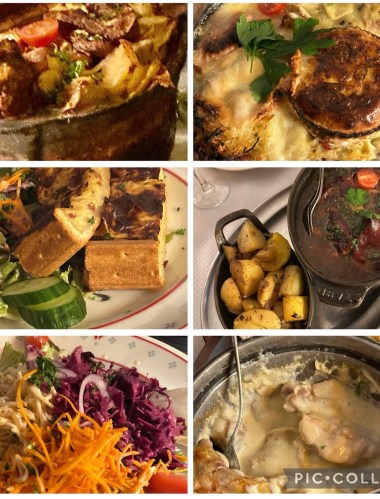
Back from a trip to Strasbourg and Colmar, my curiosity compelled me to dig deeper into the beautiful, picturesque Alsace Region. In particular, its architecture and cuisine. Why? The fairytale-like architecture and “blended” French- German cuisine truly sets Alsace apart from much of France. I can just imagine the vibe when these cities and communes dress up for Christmas. It must be like stepping into a fairytale book! No wonder the best Christmas markets are found here.
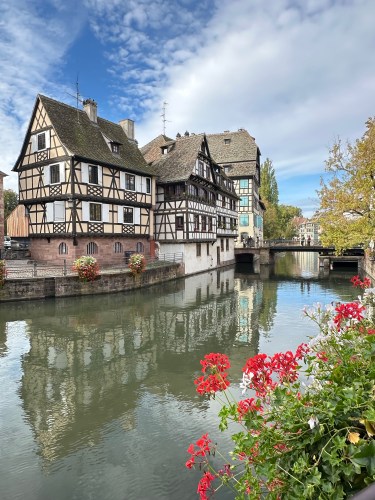
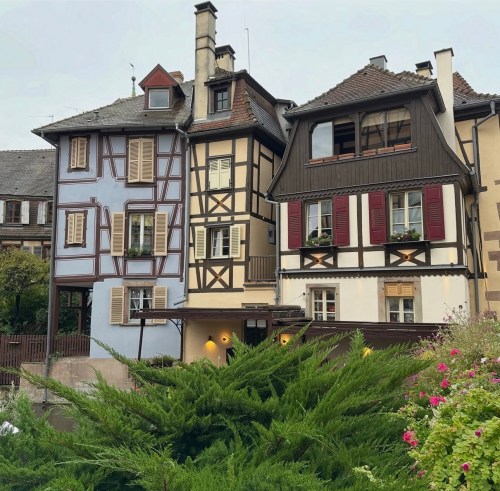
Alsatian architecture is famous for its storybook maisons in pastel colors.
The structural skeleton exposes the oak beams or local timber joined together largely by wooden pegs — no nails or screws! – and the spaces in between filled in by panels of mud and straw mortar, clay, stone, plaster or brick. The upper levels typically jut out to claim more space while protecting the lower levels from rain. The walls are painted in pastel yellows, blues, greens and pinks — often hinting on the homeowner’s trade, such as blue for wood crafters or yellow for bakers. In Petite France in Strasbourg and in Le Petit Venise or Little Venice in Colmar, we saw a lot of this architecture. I’m sure it’s the same in the neighbouring towns and communes like Eguisheim and Riquewhir. Such is the medieval charm that wraps the entire Alsace Region. And for that reason, I wouldn’t mind revisiting this area if only to explore the other villages.
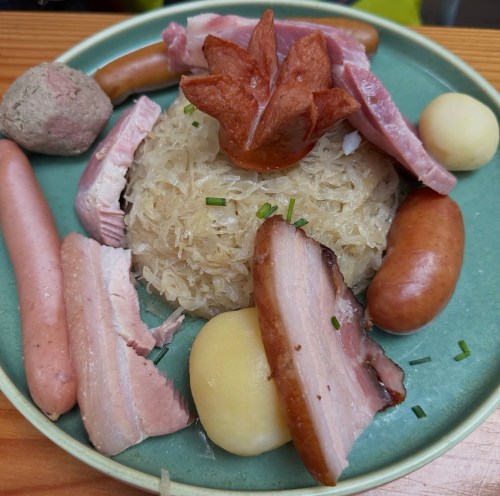
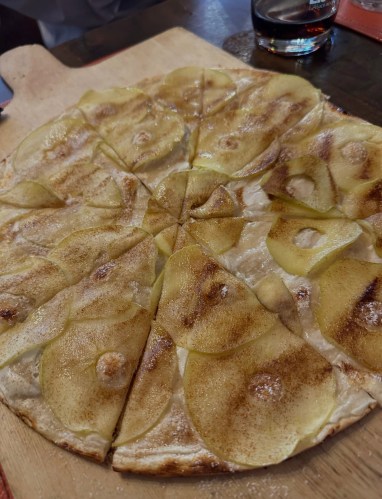
The intersection between German and French culture doesn’t end with architecture. It is likewise reflected in the Alsatian cuisine. Perhaps because the area changed hands between German and French occupation several times, the traditions and gastronomy blended well to produce a distinct cuisine. In Alsace, the wine taverns called winstubs offer such delights like the chocroute which pairs an assortment of sausages with the fermented white cabbage and boiled potatoes. Like many German dishes, the portions are generous, much unlike the quintessential “French portions”. This Alsatian signature dish is often served with wine from the region — Riesling, Gewürztraminer, and Pinot Gris. Or you may try Flammekueche. I know, it’s a tongue-twister. So just say Tarte Flambé. It’s like pizza but paper-thin. This yummy wood-fired flatbread is typically topped with fromage blanc or crème fraîche, thinly sliced onions, and lardons which are simply smoked bacon. When we tried one in Colmar, we ordered a special drizzle of calvados, a very potent alcoholic drink sourced from apples. Frankly, there’s a long list but let me just mention Baeckeoffe, a casserole of assorted meats cooked in white wine, leeks and the ubiquitous potatoes sealed in an earthenware pot. And of course Alsace has a regional twist to the very French coq au vin — the dish uses Riesling so it’s called coq au Riesling and served with spätzle.