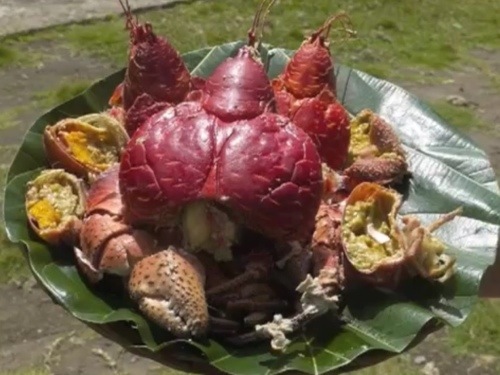
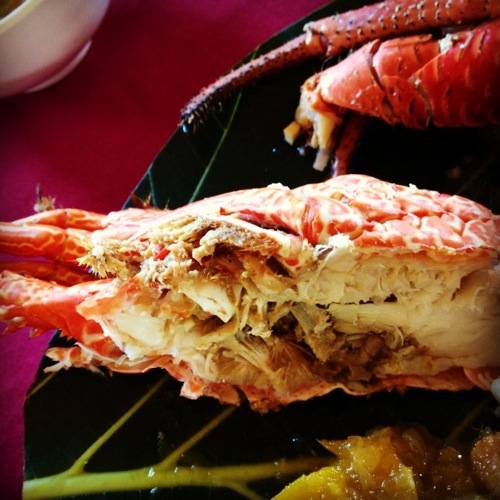
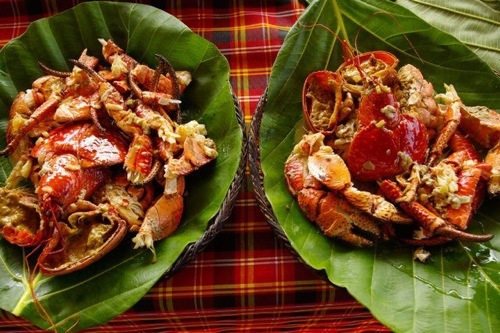
Ivatan cuisine is as fresh and healthy as it gets. Most visitors would be eager to feast on freshly-caught lobsters and the coconut crabs (called “tatus”) indigenous to the place, but there’s really more beyond these coveted seafoods.
coconut crabs are called “tatus”
lobster galore1
Priced at 600 pesos a kilo (US$15/kg), I can eat those lobsters daily! As it turned out though, there were more of the other dishes which were repeatedly served during our stay in Batanes. Not that I don’t like them, but a little variety could have helped. Like I would have welcomed fish sinigang, calamares and fish kilawin while I was there. 😉
More LOBSTERS!
AND FISH. Grilled, fried or sweet and sour? I like mine sinigang!
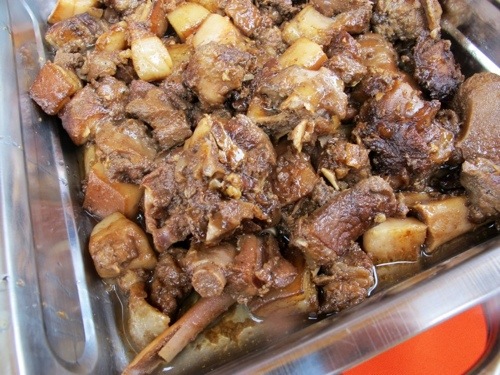
But I do miss the lumot (seaweed) soup, pako (fiddlehead fern) salad, “Venes” or dried gabi (like “laing” but not really) and Uvud balls (minced banana pith cooked with fish flakes and minced pork). The last one seems to be the national dish of Batanes 😉 along with the luñis — the Ivatan adobo cooked in salt rather than vinegar and soy sauce — as they were served in nearly all buffet meals we’ve had during our stay.
Pako Salad. Made from fiddlehead fern.
uvud ng sarap!
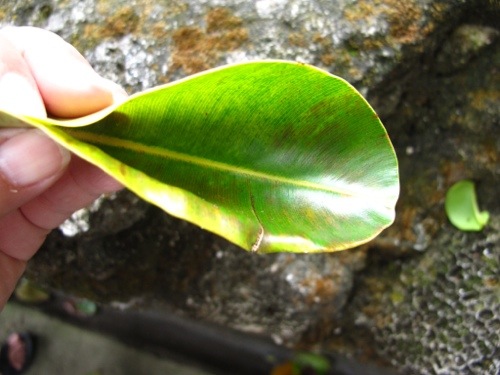
When we visited the village of Savidug (named after a tree otherwise called “talisay” elsewhere) in Sabtang Island, our guide pointed out a Kabaya (breadfruit) tree to us. The Kabaya leaves are used as plates and may even be folded to scoop soup! Ingenuity at its best. Makes for a great picnic!
Now, that’s a spoon!
Good for scooping!
I didn’t see any rice paddies in Batanes. Nor fruit trees other than bananas. For sure, there are sweet potatoes and yam. We were served rice with turmeric, freshly harvested coconuts and the sweetest camote (sweet potato). There aren’t too many dessert choices and while I enjoyed the camote cue and “bukayo”, I’d soon grow tired of it if I had it all too often. For sure, I’d know what to bring the next time I visit Batanes!
“Lunis” or ivatan adobo.
Do we have to make a choice?
(Thank you, Chikie and Pinky for some of the food photos!)
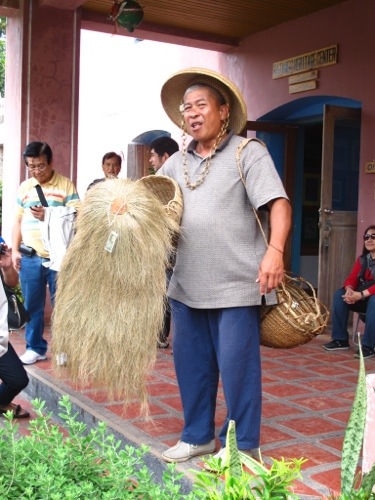
Love it. Got it! Rogers (yes, with an S) is such an adorable tour guide. We had him for 4 days and there was simply no chance of any mind-numbing boredom with this Ivatan. Before this trip, I only have 2 personal friends who are Ivatans. Rogers makes 3. Dan, his assistant, makes 4.
Rogers With An “S”. That’s what he’s called!
Rogers loves punctuating his statements with “Got it?”that we all too soon adopted it as the group’s tag line. When anyone asks anything even vaguely hinting of a complaint (like why can’t we buy coconut crabs to take home?), Rogers is quick to plead to spare him of any misdirected protest (“Please don’t get mad at me…..”) and accordingly ends his statement with “I love you”. Once, there was this Caucasian who approached him and I overheard Rogers bidding him farewell and the perfunctory “I love you, Sir”. I waited for the man’s reaction, but he must have gotten used to Rogers (as we were, after only 24 hours) that the mechanical endearment was accepted without much fanfare.
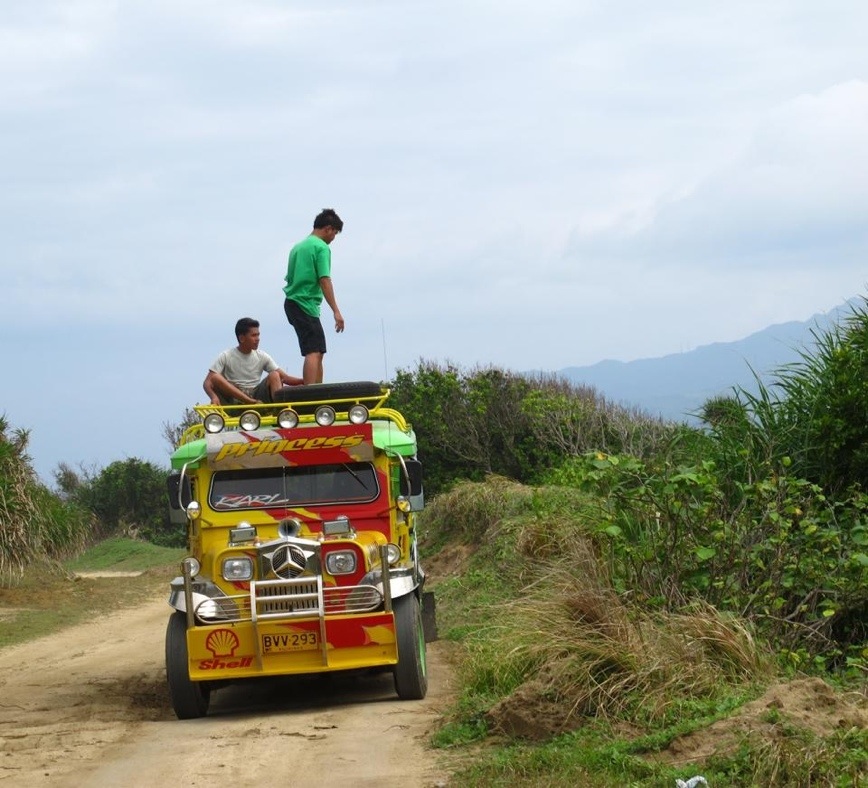
And that’s Rogers’ able assistant……..DAN. No “S”
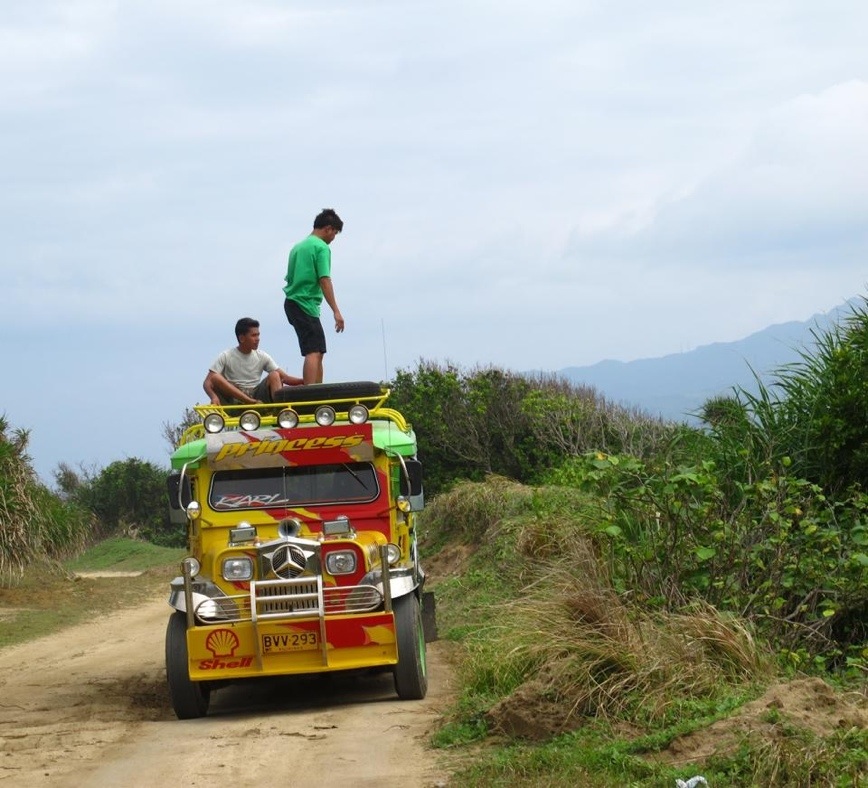
His assistant, Dan — that’s Dan in green shirt atop the jeepney! — is just as gracious but not given to the same endearments. I’d give him a few years before saying “I love you’s” without blushing. 😉 Much like Rogers, Dan is quite adept with cameras too. SLRs, P&S, iPhone or iPad cams. I learned they also serve as guides in many Photo Safaris and Photography Workshops conducted in Batanes. Rogers said they learned by listening to the lectures and simply watching the pros. No wonder they know the best angles and photo spots.
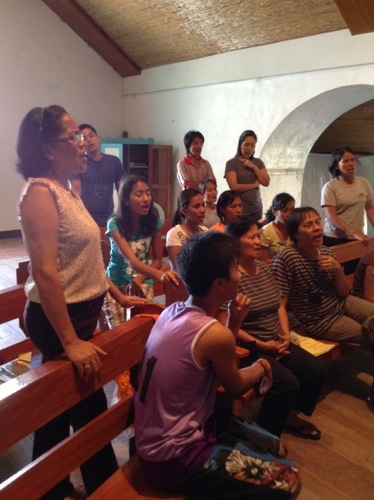
Welcome to Batanes….. sung by these friendly Ivatan students.
Choir of the San Carlos Borromeo Church in Mahatao singing ” We Welcome You to Batanes”. So heartwarming!
When we visited the San Carlos Borromeo Church in Mahatao, we spotted the Parish Priest standing by the 2nd floor window. He came down to welcome us just as the church choir sang a Welcome to Batanes song for us. Just as beautiful was the song number by Ivatan students who sang for us after our dinner at the Lighthouse overlooking Basco Bay. So heartwarming!
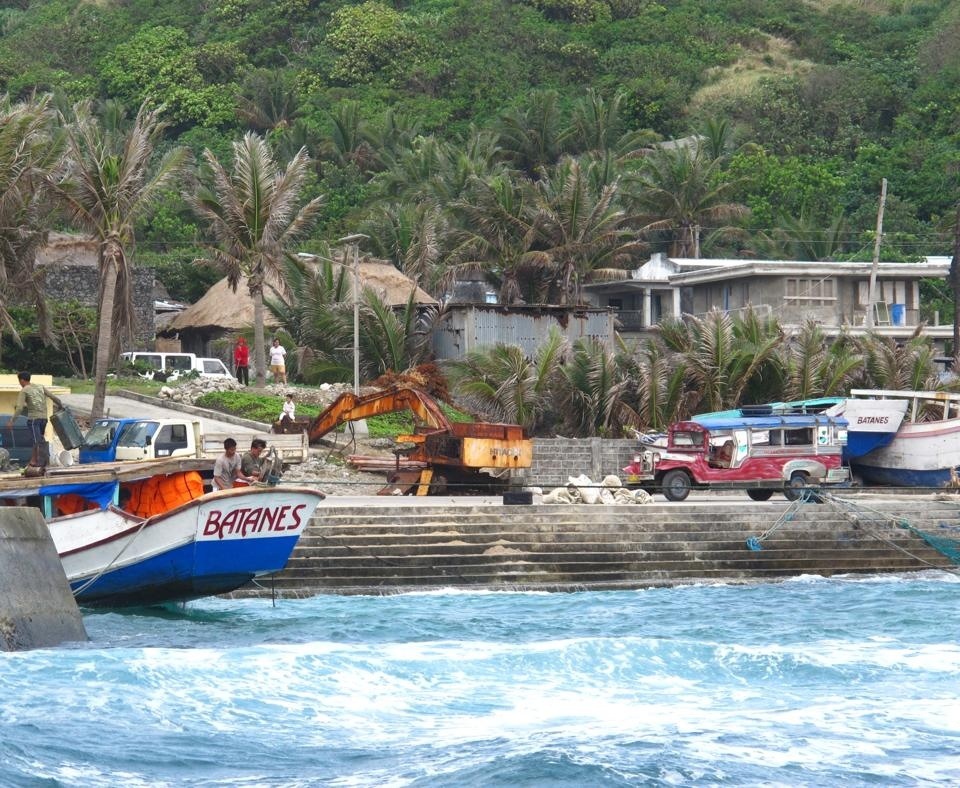
The hardworking Ivatans in action. Sabtang Port.
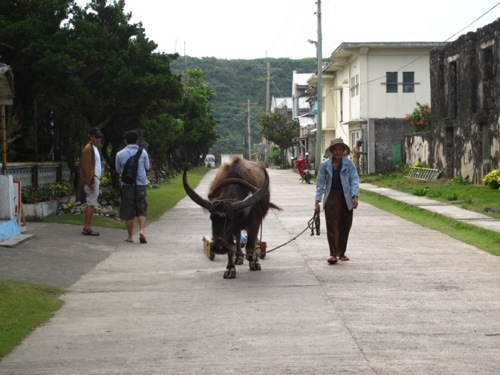
The Old Man and His Carabao. Sabtang Island, Batanes, Philippines.
Being in Batanes and with these hospitable Ivatans is a refreshing experience. From the hardworking men at the Sabtang Port to the old man with his carabao to the old lady by the road. Some of us even borrowed bicycles from smiling children who took our hands to touch their foreheads as a show of respect. It’s nice to be OLD here in Batanes where respect for elders is still fashionable!
Buko or Young Coconuts For Sale.
The Old Ivatan lady by the road. Sabtang Island, Batanes. Philippines.
Some skeptics think Honesty Cafe is really just all-hype. This untended store allows you to take whatever you like and simply deposit your payment in a box. Nothing can be simpler than that. I would love to retell this story to such skeptics about how one of us lost his room key, cell phone and eyeglasses in Rakuh a Payaman a.k.a. Marlboro Country. We already boarded our jeepney, well on our way to another destination, when my friend missed his stuff. Our Tour Guide Rogers directed his assistant Dan to take over while he mounted a bike to motor back to Marlboro Country. No luck. After all it was near sunset by then, so Rogers summoned some of his friends to continue the search as we were leaving early the next morning. No high hopes they’d be found.
You make the Ivatans proud. And so with the rest of the Filipinos. Batanes. Philippines.
Hey, skeptics. See that photo above? Between Rogers and my friend Tony is this fine young Ivatan lad who found Tony’s cellphone, eyeglasses and room key.He motored all the way from Rakuh a Payaman to the airport where we were getting ready to board for our homeward flight. He was in a hurry to leave after returning Tony’s stuff that Rogers had to hold him for this posterity shot. Makes us all admire this young Ivatan, but truly, we weren’t surprised at all about Ivatan honesty and admirable character. How about you? Were you surprised? Love it? Got it?
I’ve read too many articles and heard too many stories about the boat ride from Batan to Sabtang Island. After overcoming my apprehensions over riding a small plane from Manila to Batanes….. Now this.
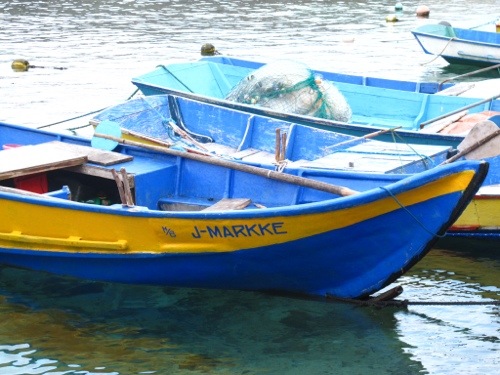
Lying southwest from Batan, the island of Sabtang is visible on this clear day which started at 5am for us. Two consecutive mornings I pulled myself out of bed on this holiday. No, I’m not complaining. And that’s saying a lot coming from moí whose mornings are typically slow and dragging till noon. It must be the fresh air of Batanes. Nothing seems to disturb me here. I’m at peace. Despite the early mornings, the malfunctioning camera, the repeated menu of Ivatan meals (I like them, but 3x replayed can be a bore), the near-absence of fresh fruits and icy desserts, AND NO BREWED COFFEE. No brewed coffee! Imagine that. Ordinarily, I’d be grumpy as can be. But not here. Not now. Not before this falowa ride from Ivana Port to the island of Sabtang.
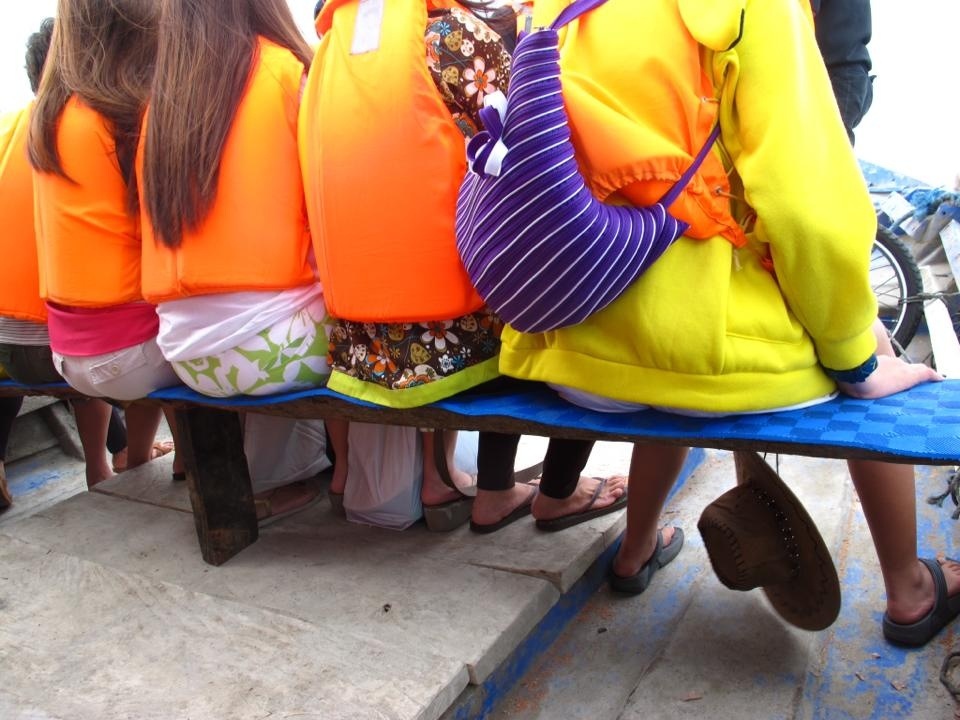
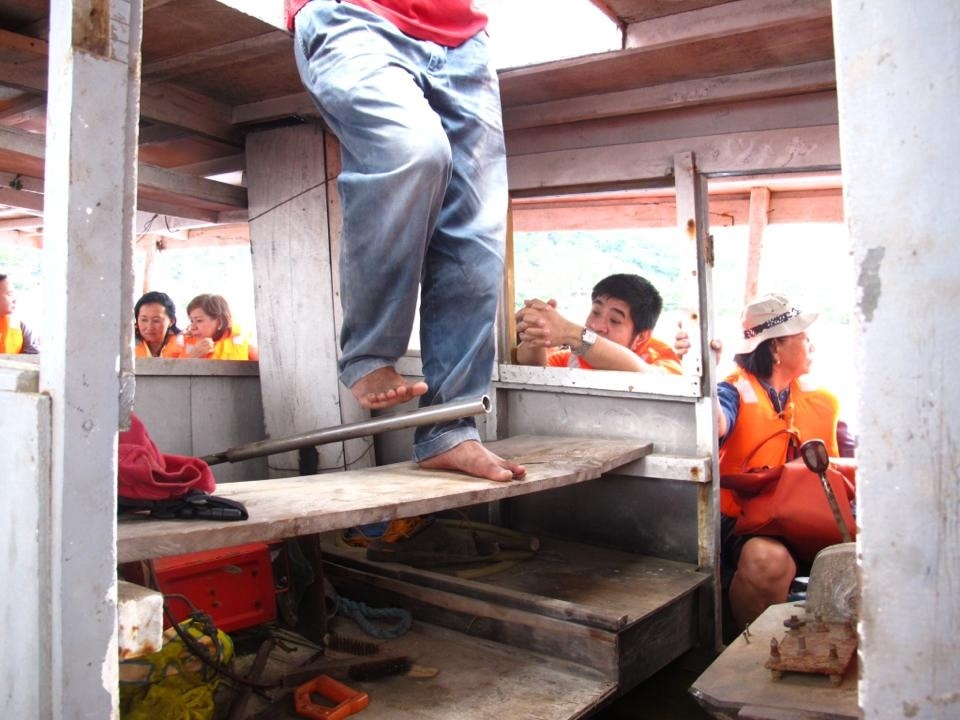
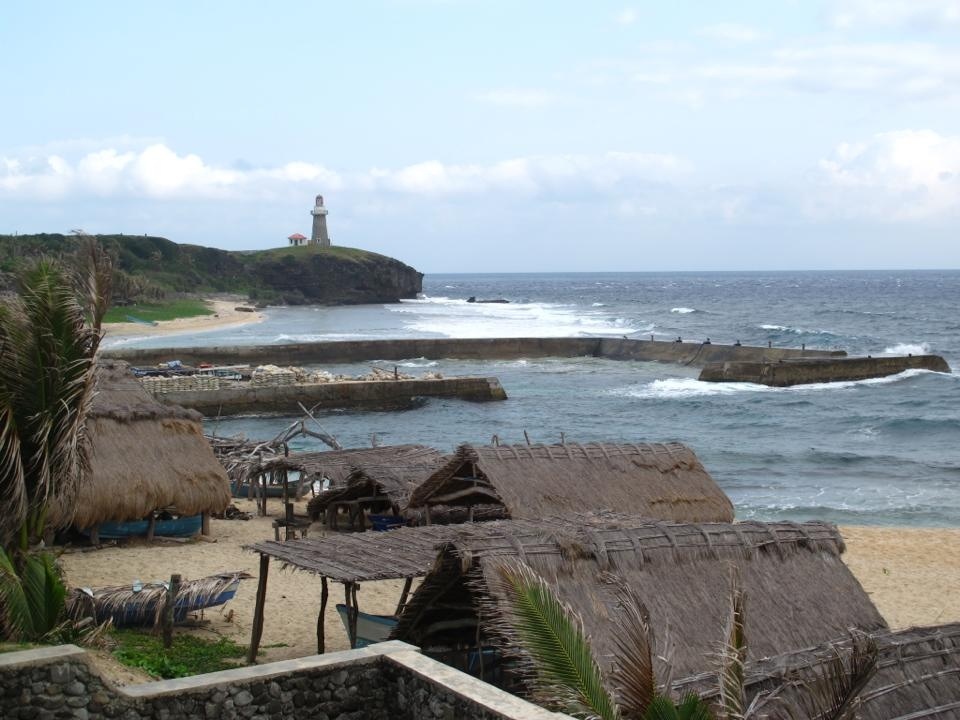
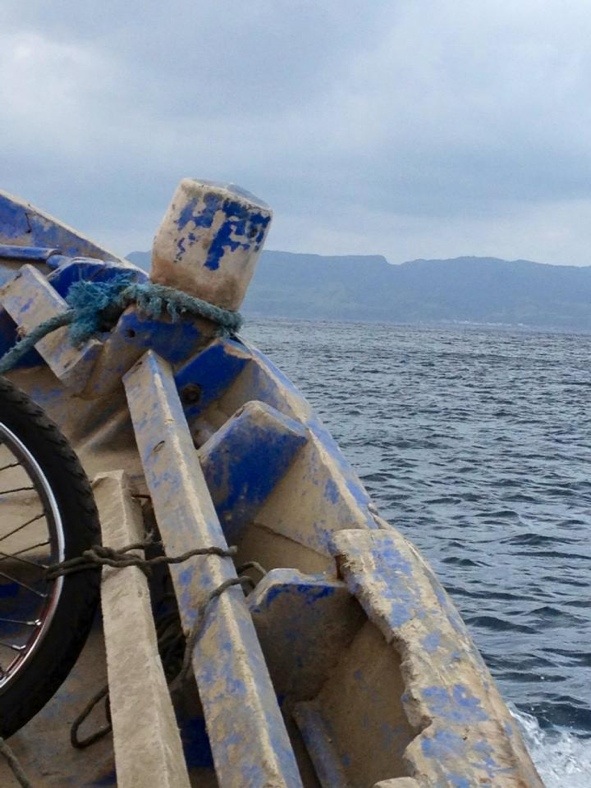
I must confess I expected the worst, and was a tad “disappointed” the waves weren’t as fierce as I imagined. I even pulled my camera out of ziploc to make a video and snap some photos. All that while we rocked and rolled sailing southwest. No mean feat for the “captain” who steered the boat using his foot! By the time the Sabtang lighthouse was in full view, I couldn’t wait to jump out of the falowa. Excited much.
They say a trip to Batanes is not complete without seeing the Ivatan houses in Sabtang. “Frozen in time” is how a friend described them. I was ready for them. Those pre-Hispanic stone houses which stood against the strong winds and crushing waves from the Pacific Ocean and South China Sea spoke volumes of Ivatan’s past. The scenario where a lone carabao walks past a row of these houses is a scene straight out of some documentary or movie. Hearing roosters crow on top of the thatched roofs as we strolled out of the village is yet another. I’ve seen and imagined those. Many have written about Savidug and Chavayan Villages — so I was kind of prepared for such vistas.
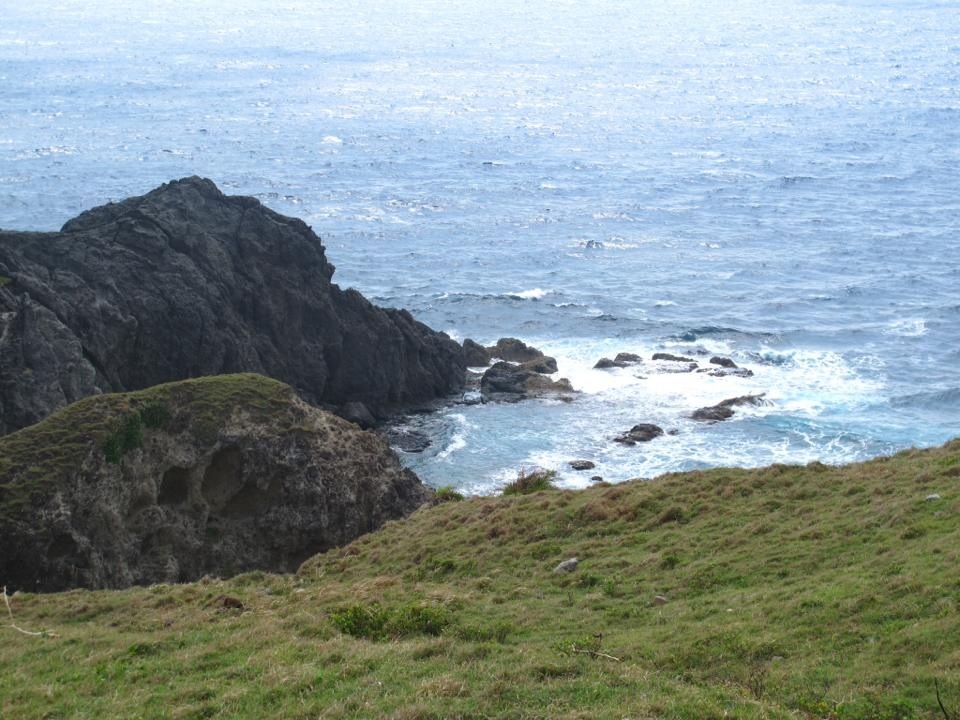
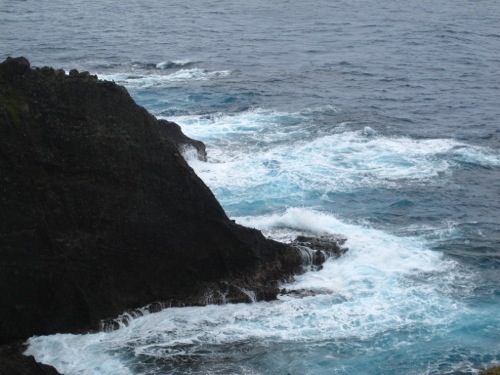
But pictures and postcards cannot mimic the sway, the breeze, the sound of the howling winds passing through the cliffs of Tinian. Our jeepney stopped by Chamantad Viewpoint, the highest point in Sabtang, facing the Pacific Ocean. I completely ignored the waiting buco (young coconuts) and camote cues (sweet potato on skewers) for mid morning snacks. I walked past the huts towards the cliff, mesmerized by the sound of the waves crushing the rocks lining the coast, bothered only by the wind threatening to lift my hat to make a terrible mess of my already bad hair state. This place is sooooo lovely!
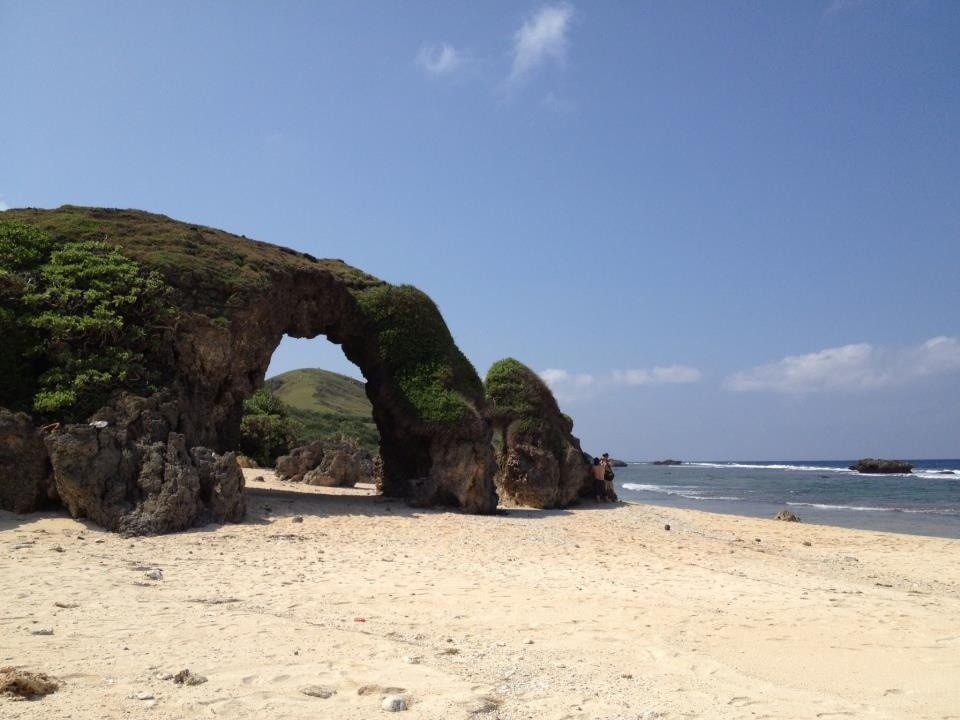
After that “Wuthering Heights”episode, we trooped to Morong Beach for lunch. Lobster, coconut crabs, flying fish, red snapper, Ivatan adobo, sautéed veggies for lunch. I’m sure there was more, but my memory was messed up by Chamantad-Tinian Cliffs. Still….. The “romance” with Nature has not ended. Just around the bend from where we enjoyed our seafood lunch is the Nakabuang Arc Formation lining the sandy shore. I tried to imagine a bigger rock here before the waves and wind eroded it to form this rock arch. Sabtang is truly blessed. I readily accepted the place couldn’t possibly have a decent (aka “safe for swimming) beach but here it is. Unbelievable!
We missed a few spots in Sabtang as we had to rush back to port to get on the last falowa boat bound for Batan. Past 2pm, our jeepney “zigzagged” through the narrow winding roads and our falowa rolled over the waves of the Balintang Channel anew, said to be among the fiercest in the world. A little braver now, after that earlier “boring” ride. I found myself laughing nervously as the waves crested and ebbed. I watched the older boatman, who captained our first falowa ride, somehow guiding the 2nd falowa captain. The latter obviously deferred to the older man’s judgment and experience. For sure, there weren’t any more crossings after this. You know what I mean. But all’s well. If asked to do this again, I would. In a heartbeat! 🙂
Call it Batanes Fever. Or Ivatan Addiction. Whatever. But I’ve been home for 2 days now and all I’ve done is review and upload our photos from the smallest, northernmost island province of the Philippines. Wrote the first of my Batanes blog series yesterday but was stumped when I kept “losing” my draft midway through the blog. I’m not one to do a “prelim” — I simply write away and click that tab which says “Publish”. So I gave up after repeating myself 3 times — the temper got in the way, and I knew I just lost the motivation to write.
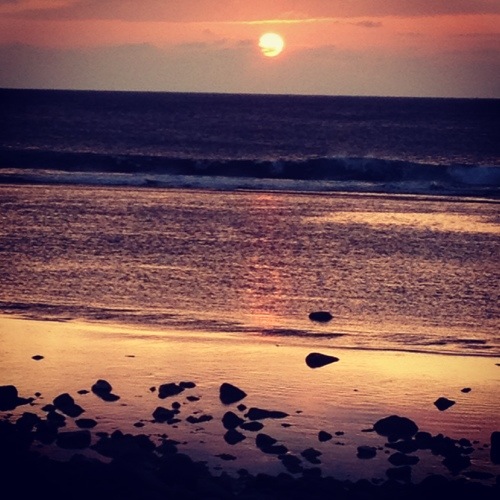
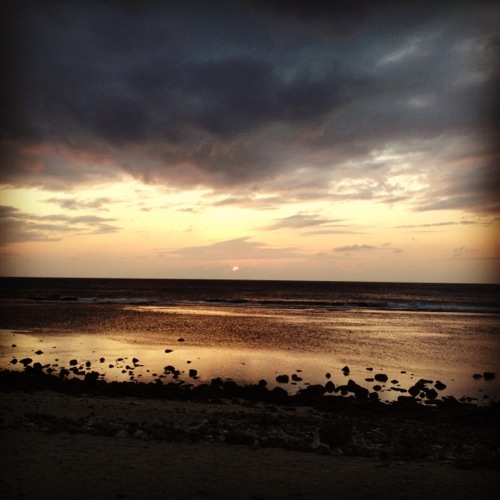
Waiting for Sunset On a Typical Day in Batanes
This very moment, I’m blogging using my iPhone. And using the stored photos taken by this phone which saved my day when my Canon G12 died in Batanes. Between these and those snapshots from my iPad Mini, I’m fine. Sad, but not exactly bothered by my malfunctioning G12. Funny how the Ivatan simplicity, warmth and hospitality along with the natural and rugged beauty of the island can weave magic into our lives. I started writing this to capture how I feel at the moment. If you’re looking for travel tips, directions and suggested itineraries, skip this post and read my other blogs. This one’s written by me. For me.
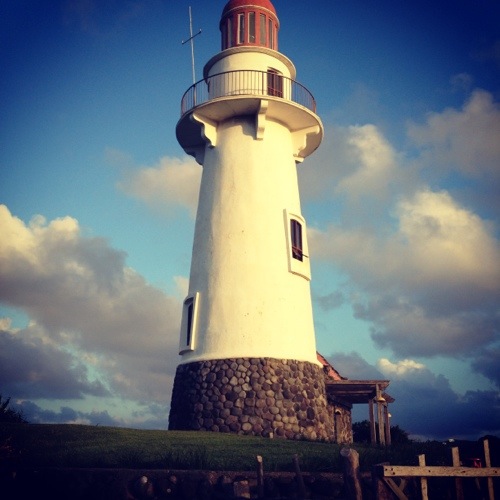
The Mahatao Lighthouse. Surely, a Batanes icon.
I used to dream my family has a truffle farm in Périgord. That stopped on my first night in Batanes. The music from the waves rushing to shore lulled me to sleep. I could have written down my sentiments then, but I needed to prep myself for next morning’s falowa boat ride to Sabtang. Pacific Ocean meeting the South China Sea (or should I say West Philippine Sea) sounds threatening but the guide assured us of the Ivatan boating skills. I believed that lock, stock and barrel. There’s something about the Ivatan culture that renders these friendly, hospitable people quite a smart “breed” of Filipinos. I suspect the isolation made them so self-sufficient, self-reliant, respectful of nature, and smart.
The Falowa boat ride from Ivana Port in Batan Island to Sabtang Island took 45 minutes. Not a bad ride. But the return trip was something else.
I miss the sunsets — which I viewed daily — the ocean views, the verdant rolling hills, the lobsters, the coconut crabs, the Ivatan culture. Many times, some youngster grabbed my hand to touch his forehead. A very Filipino tradition to show respect for elders, now seemingly lost in the chaos of the metropolis. I am touched that an 86 year old Ivatan lady from the oldest stone house called House of Dakay survives on alms and help from neighbors and visitors like us. I am very impressed that an Honesty Cafe exists in Batanes and that many homes remain unlocked throughout the day and night. The Ivatans make us fellow Filipinos proud of this old tradition and culture of honesty, self-reliance, simplicity, industry, dignity as a people.
Nakabuang Beach is truly nakaka-buang sa ganda. The rock formations and the monastic rhythm of the rushing waves encourage peeps to take a dip, even if they are NOT dressed (or undressed?) for it.
Many planned visits to Batanes would focus on God’s magnificent creations. Van Gogh-wannabes and photography enthusiasts would delight in Nature’s painting on the sky, find melody in the howling winds and feel enthralled in the rhythmic slapping of the waves against the rocks. In my book, the must-experience lies in the genuine hospitality and dignity of the hardworking Ivatans and their respect for Nature. Their isolation taught them self-reliance and their faith in God made them respect Nature and seek God’s mercy. Everyone with a drop of Filipino blood can learn well from that.
This sunset shot using my iPhone could have been better. But it’s a good memory catcher. Waiting by the shore for the sun to set is ma’velous! Esp if there’s a good dinner waiting across the street 😉
Truly, Paradise does not rest on panoramic vistas alone. It lives in the hearts of the people. Nurtured through the centuries. DIOS MAMAJES! Colloquially, it means “Thank you”. Literally? It means GOD GIVES BACK.
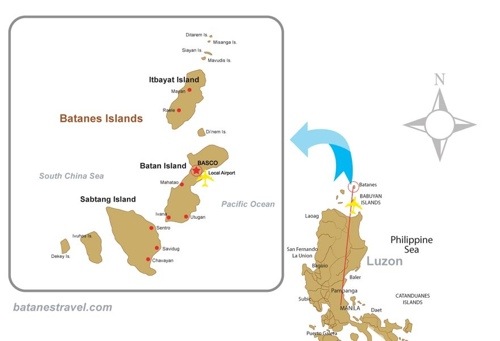
We had near-perfect weather when we visited recently, yet we still rocked and rolled on that falowa boat ride to Sabtang. We were up at 2:30am to be at the Domestic Airport by 3:30am for our SkyJet flight at 5:30am. We were a group of 35 chatty, giggling peeps on board 2 long jeepneys driving around Batan Island, one of 3 inhabited islands of the 10 in this smallest and northernmost island province of the Philippines. We were tired, sleep-deprived, and my CANON G12 camera went bust here after being my loyal companion for many past trips. Some of us lost a scarf, missed a cellphone, dropped a hat. YET we have not had a nega-moment during this wonderful trip.
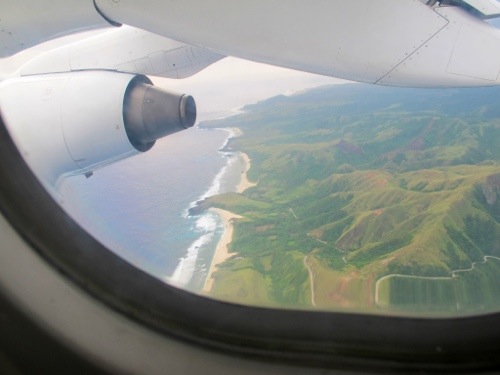
Aerial View of Batan Island Before SkyJet Landing
I may have felt like a zombie the morning we arrived in the lovely airport terminal of Basco, Batanes, but I wasn’t so zonked out to remember this is Batanes and NOT Capetown nor the rolling hills in Yorkshire. Certainly looks like Bronte country that I instantly remembered that most compelling character Heathcliff of Wuthering Heights fame. But I digress.
BATANES IS BEAUTIFUL. Rustic, serene, utterly divine. A typhoon may spoil a holiday and a ride over the choppy waters where Pacific Ocean meets the West Philippine Sea may give you nightmares —- but in my book, this place has no equal within the country. I want to kick myself why I waited this long. I could have made better jump shots on that hill, stood dangerously by the cliff edge and perhaps even tested the cold ocean waters even if I didn’t know how to swim. The passion is still there, but the energy mimics the state of my G12 cam. 😦
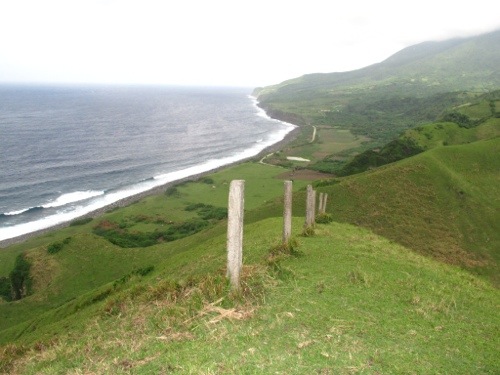
Rolling Hills
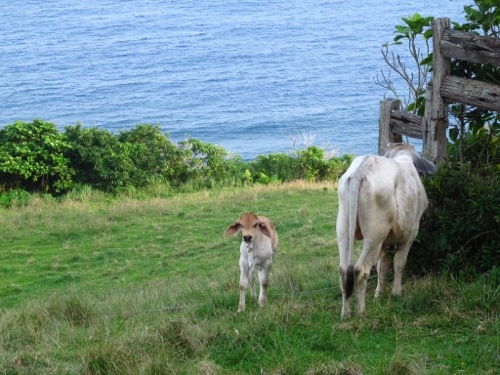
Mother and Child. Or Mama Cow and Calf? Near Fundacion Pacita in Batan Island, Batanes.
Many photo safaris have been conducted here. I can understand why. It’s a chore NOT to take good photographs here in Batanes. Our group included professional photographers and photography enthusiasts. When my Canon G12 conked out, I made do with my iPad mini and iPhone. Saved the day for me. And while my photos pale in comparison with Mon’s (yes, you Mon!), I am happy. After all, Mon (yes, it’s you again) and Chikie (yes, you dear) made sure I have my jump shots souvenirs! Ahem. Ahem. 😉
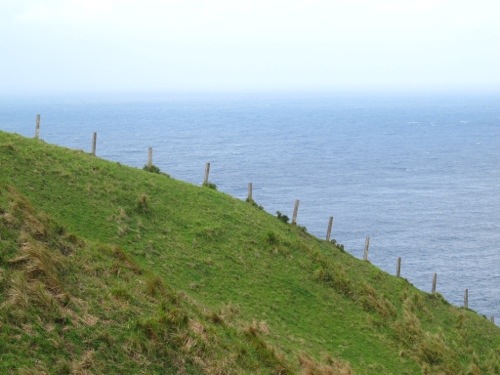
Poles Lining the Rolling Hills
Ivana Port.
(There’s more to write about. But I’m on my 3rd attempt writing this post. For some reason, I lose the draft midway through the blog. Don’t ask me why. It took 3 attempts before I gave up. It’s hard to write in all candor, only to “repeat” the same narrative with fading emotions battling with impatience. My apologies. I need a break. Watch this page. Sequels out soon. )
April 9, 1942. Every Filipino veteran remembers the date. It was the day Filipino and American soldiers surrendered in Bataan to the Japanese. The Fall of Bataan. The Surrender. I remember the line “Sumuko na ang mga Amerikano sa Bataan” (The Americans already surrendered in Bataan) in that unforgettable movie “Oro, Plata, Mata” by the cinema genius of a director, Peque Gallaga. So poignant in its truth, so piercing in its pain and hopelessness.
More than 45,692 Filipinos and 9,300 American soldiers who dragged their feet during the Death March from Bataan to this final destination suffered more indignities here. Camp O’Donnell it was then called, then Capas Concentration Camp where 30,000 POWs died from April through June 1942 while under detention.
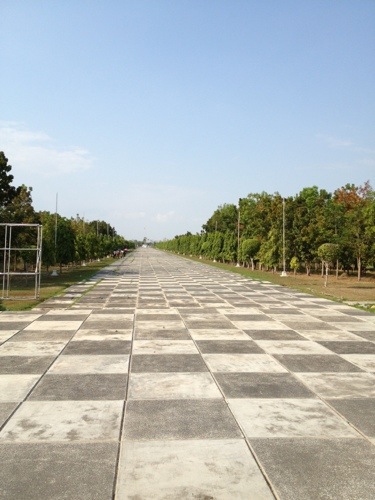
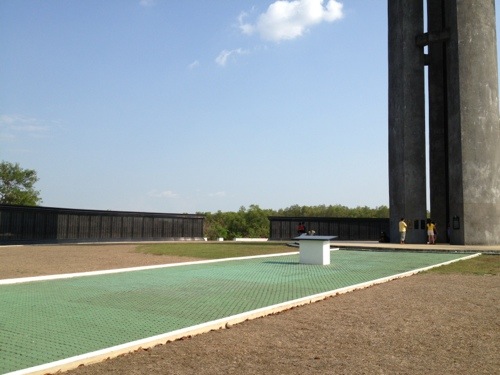
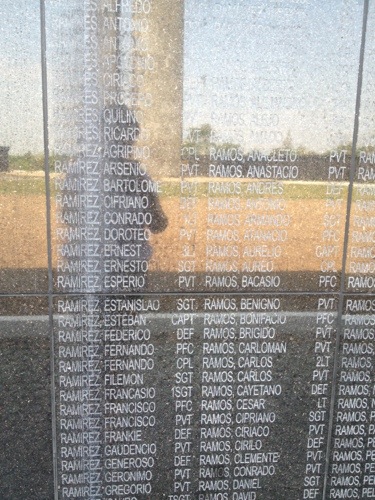
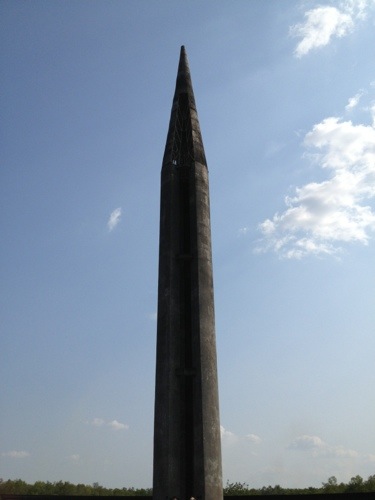
We honor our fallen heroes here. There is a central walk leading to the peace monument — the Obelisk, the focal center of the shrine. Around it, marble walls bear the names of the fallen, many forgotten over time.
Looking up at the Obelisk, we are reminded how much blood was shed in defense of our independence. At the very least, we owe it to them to preserve the peace and to live in harmony and unity as Filipinos regardless of creed and religious convictions.
A visit to the Capas National Shrine after a trekking adventure in Mt. Pinatubo is recommended. No detours. The Shrine is just a few minutes away and right along the same rad exiting from the Capas meeting point where you board the 4×4 jeeps.
You may also wish to check out my blog on Mount Pinatubo. Just click on this Pinatubo.
Turumba or Tarumba?When you get to Pakil, Laguna either in search of Lanzones or woodcraft or Jose Luciano Dans’ century-old paintings, you can’t miss Pakil Church — official residence of the Virgen de Turumba. But what is Turumba? That was the first question we asked Brother Erning, the Church Marshall.
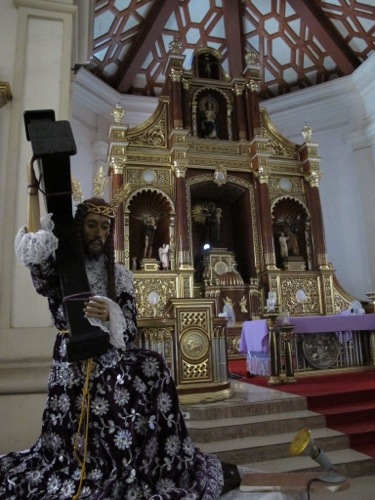
Nuestra Senora de los Dolores or Virgen de Turumba
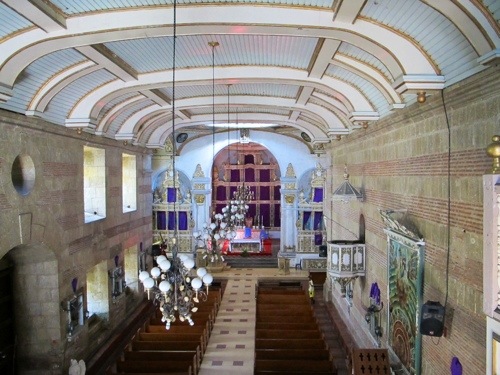
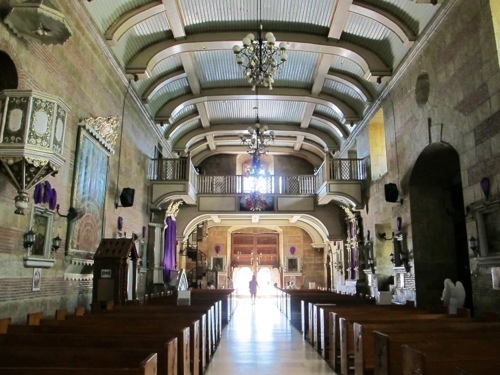
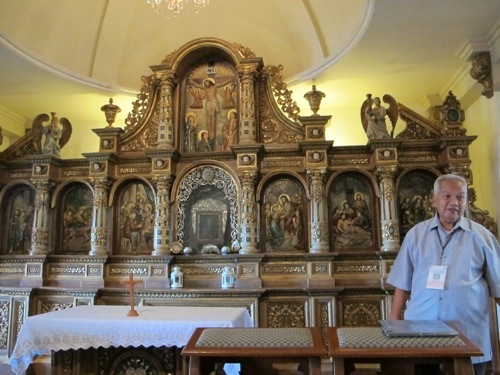
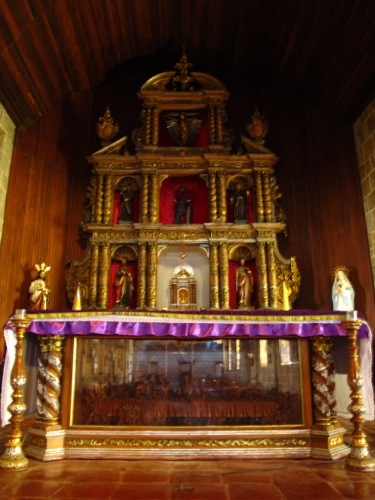
Interior Shot. Altar with 14 icons behind in separate niches, veiled in purple satin this Lenten Season.
It was Lent that Friday we visited. All 14 icons in separate intricately carved niches behind the main altar, veiled in purple satin. Brother Erning drilled us on the Turumba or Tarumba Legend and toured us around the majestic San Pedro de Alcantara Church, sometimes referred to as the Church of the Nuestra Señora de Los Dolores or Virgen de Turumba. Built in 1767, the Virgen has been enshrined here since 1788 when it was fished out of Laguna de Bay. The legend goes that no one could lift the image till the parish priest came to bring it to this Church followed by locals singing and dancing in glee. The trance-like dance was called Turumba. Or Tarumba — literally meaning “natumba sa laki ng tuwa” or “tremble in great joy”.It is also the sound of drumbeats during the processions marking the feast of Turumba culminating sometime in September of each year.
Chapel of the Virgen de Turumba
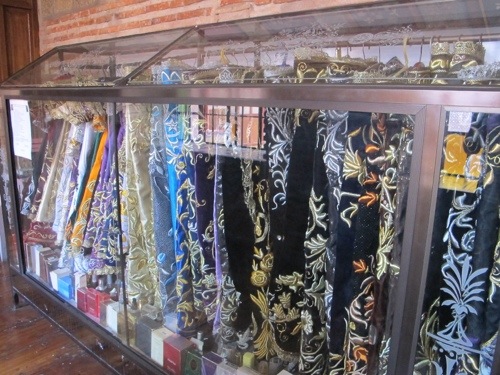
I’ve done my research before coming here. But Brother Erning’s version is soooo much better. He regaled us with stories about the Virgin and brought us to this tiny, lovely Chapel where the image is enshrined. He reminded us to ask permission from the Virgin before taking any photos. Then he proceeded to tell us how a magical cloud floated over the 18th century church as US bombing squads hovered above during the Second World War. How many believed the Virgin saved the town with this miracle which inspired many to dress the Virgin’s image in intricately beaded gowns. The count to date per Brother Erning is 50,000 gowns donated by the faithful! (My earlier research pegged it at only 700) The Virgin changes gowns every 2 weeks, and each worn gown is cut up in small patches and distributed to the faithful. We were fortunate to go home with patches of these embroidered and beaded gowns.
The Corridor Leading to the Collection of Gowns Donated By the Faithful
50,000 Gowns! Only to be cut up in small patches after they’re worn.
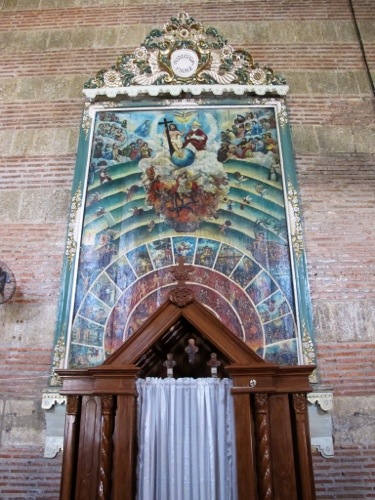
Brother Erning is a legend himself. His love for the Virgin, this Church and his hometown is legendary. But he’s got a couple of stories which floored me. The first was how Pakil was spared from Japanese invaders who occupied neighboring towns. His story goes that the Japanese Army was not drawn to this town because of fear of being attacked by ants. Say that again? A.N.T.S. as in Lanzones ants! The other story has to do with Jose Luciano Dans’ 200 year-old painting of “Langit, Purgatoryo (or Lupa?) at Impyerno“. Heaven, Purgatory and Hell. When I asked Brother Erning why the painting depicted ONLY WOMEN in hell, his candid answer was to point out that the figures included both men and women except ……. that Dans didn’t want to be irreverent by painting men with their “hanging ornaments”. How’s that? Plausible, yes, but nevertheless a rib tickler. 🙂
Inspired by Dante’s Inferno? This is Luciano Dans’ Langit, Lupa (or Purgatoryo) at Impyerno. Read below for a most interesting story. 🙂
Brother Erning, the Church Marshall.
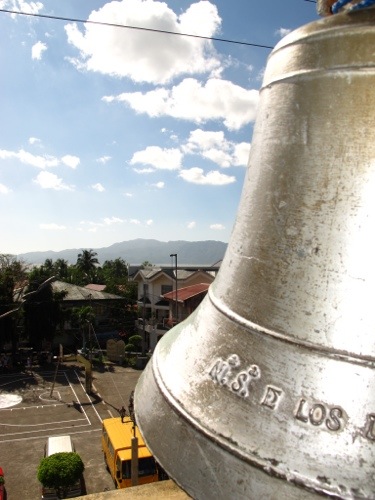
Before we left, Brother Erning brought us up the choir loft and bell tower. This time, he got us listening to some recent happenings in this church. The hit and ongoing TV series or teleserye “Juan Dela Cruz”shoots all its church and plaza scenes here. In fact, Brother Erning stars in some episodes! He reminded us to watch the next few episodes where he’s featured before we climbed down and marched out of the Church. In particular, he mentioned the scene where Juan dela Cruz battles the vampires! Really, we just love these stories and we love Brother Erning even more!
Check out that Pieta painting. Looks so much like the famous and treasured Michelangelo’s sculpture, right?
One last look at Pakil Church. Location shoot for the hit teleserye “Juan de la Cruz”.
The rural town of Pakil, Laguna. 4th stop after Calamba, Pila and Paete in a roadtrip around Laguna de Bay. Try it! Very doable for a day trip south of Manila.
We should have started earlier. But NOT on empty stomachs. We had our fill by the time we left our meeting place in Don Bosco Pugad’s Coffee and Saints. It was also mid morning by the time we hit the road to visit the lake towns of Laguna around the Bay. You may consider it a Visita Iglesia, if you like. Three churches and a few other sites. Started with Pila, Laguna. Now off to Paete, the woodcarving capital of the country. (Chisel is “Paet” or “Ukit” in Tagalog) Lanzones Country. And birthplace of the yoyo.
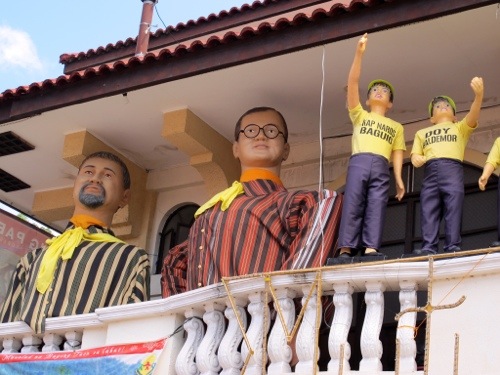
Taka or Papier Mache. Just like in Angono, Rizal.
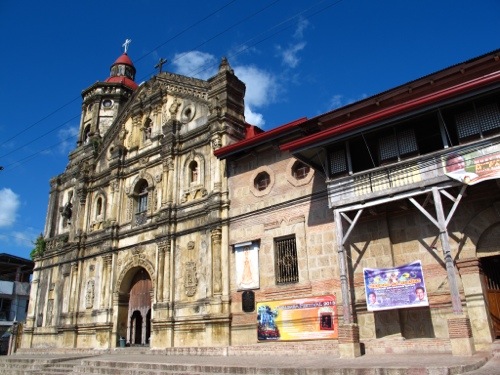
The art of TAKA (paper mâché) seems big in this town. Much like what I saw in Angono, Rizal — another town rich in art, history and culture. It also happens to be the political campaign season so there were TAKAs around and along the main road leading to the beautiful church. Men and women figures sculpted out of paper peeking out from windows and balconies. By themselves, they looked interesting. But what really got our interest was the Paete Church with its lovely baroque architecture with floral bas reliefs.
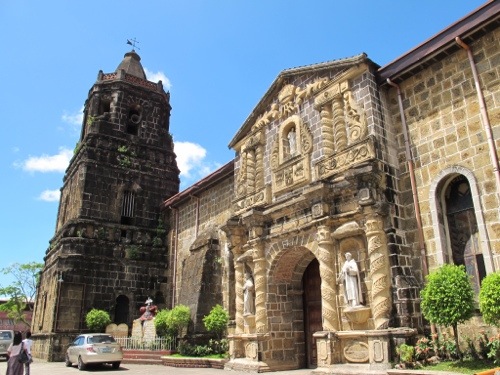
Saint James Church in Paete, Laguna
The Paeteños have preserved their centuries-old tradition of woodcarving. Inside the Church honoring Saint James, you’d find religious icons and centuries-old paintings by Paeteño artists including those by Jose Luciano Dans. It is said that this art flourished long ago that one shouldn’t be surprised to find locally-crafted masterpieces in churches, palaces and museums in other parts of the world. Besides, the same craftsmanship is displayed on buffet tables on many cruise ships as descendants of these Paeteño woodcarvers found another niche in ice sculpting! Can you beat that? Wood or Ice, there is no shortage of carving skills from this community.
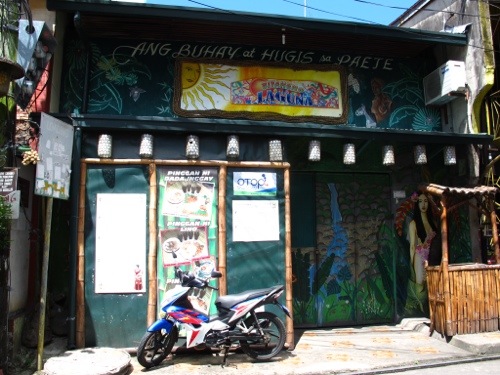
There is no record of it but Paeteños believe that the yo-yo which is a Philippine invention actually began in Paete. I wouldn’t be surprised. The art galleries cum dining places we wanted to visit along Quesada Street were both closed, but we’ve seen enough woodcarved religious and not-so-religious icons to conclude that the art continues to flourish here.
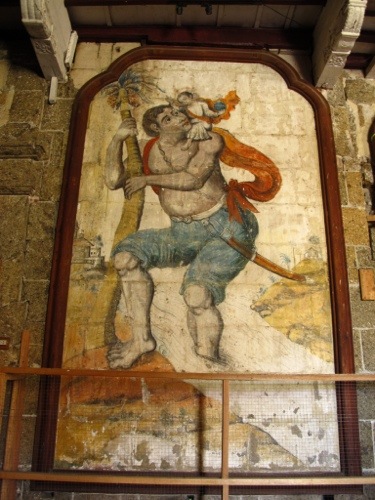
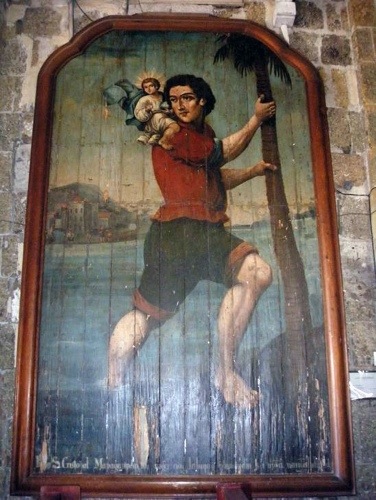
And then there are the 200 year old paintings of Jose Luciano Dans. This Paeteño was commissioned by the Spanish friars to paint St. Christopher. Dans’ rendition of a St. Christopher with Oriental features didn’t meet with the friars’ approval and so the mural was replaced by another painting of the same saint with European features. The 2nd painting was on wood and installed over the mural. The discovery of the original mural was fairly recent when restoration work had to be done on the “European” saint. As it turned out, the mural was better-preserved.
The original Dans painting of Saint Christopher with Oriental features.
The 2nd Dans painting of Saint Christopher with European features. Sourced from the Net.
We actually failed to see the 2nd painting since it was taken down for restoration works. We also failed to buy any Lanzones. Worse, the 2 art galleries cum dining areas along Quesada Street where we intended to have lunch were both closed. Hungry past noon, we ended up in Bengas, a local eatery serving home-cooked food. No pretensions, no frills. Just simple meals like lumpia and Pancit ulam. The latter is a very Pinoy thing. Like noodles are everywhere in Asia, but methinks only Filipinos eat noodles with rice. So it’s not surprising why Paeteños came up with Pancit Ulam.
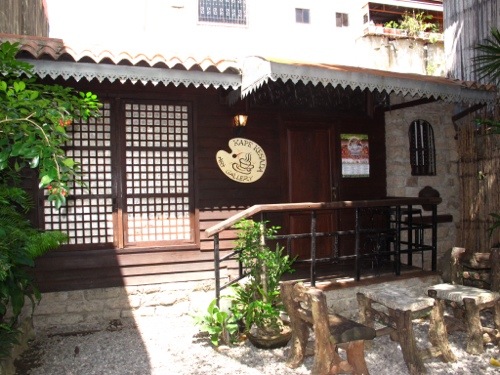
Cape Quesada
Pancit Ulam from Bengas. Yes, you eat the pancit with rice.
While in Paete, we hardly met any other tourists. Foreign or Local…… Zilch! A pity. No wonder the local carvers are seeking better pastures carving ice instead. Mind you, ice carving is actually more demanding. Unfortunately, each creation melts into insignificance unlike woodcarvings. Sigh. 😦
It’s another heritage town just a couple of hour’s drive south from Manila. Easily, a day trip that’s easily combined with neighboring towns in Laguna just as equally rich in art, culture and history. Many pre-Hispanic treasures enshrined in the Pila Museum attest to Pila being one of the earlier settlements in the country.
Municipio
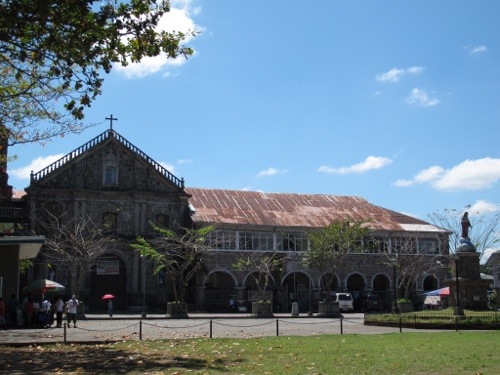
17th century Pila Church
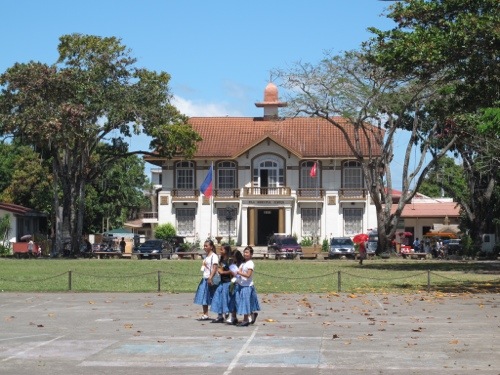
We were surprised to find this little-known Plaza Mayor in this old town. The colonial influence is evident here where a 200 year-old church, a Municipio (Town Hall), and several ancestral, heirloom houses and old trees line the Plaza. The National Historical Commission has declared Pila as a historical landmark in the league of Vigan (Ilocos Sur), Silay (Negros Occidental) and Taal (Batangas).It’s a wonder very little is known of the place and that this historic town is not top of mind among local tourists.
Mercifully, Pila was spared from the bombing raids run by US troops back in 1945 to flush out the Japanese Army. The Church, the Convent, and many of the old buildings and houses of illustrados and prominent families clustered around the Plaza remain standing to this day.
Who Knows Tomas Pinpin?
If you ask me, I only know it as a street in Binondo where a favorite and oldest restaurant is located. Yes, I’m talking of Toho Antigua Panciteria. (Another restaurant, Ambos Mundos, claims to be the oldest restaurant, but this is another story) I bet I’m not the only one in this sorry predicament.
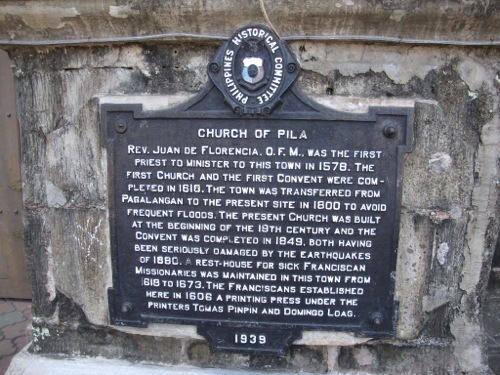
So, who is Tomas Pinpin? This eminent Filipino is responsible for the country’s very first Tagalog dictionary.He ran a printing press in Pila, Laguna which printed the first local dictionary as early as 1613. Of interest is the fact that this printed material pre-dates the very first printed book in America. Truly, Pila has so much to be proud of!
From History Lessons To Amazing Race To Teleserye
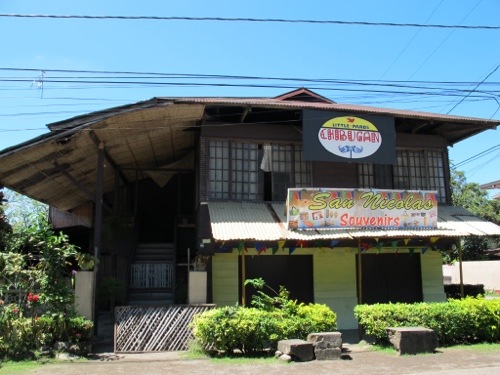
Several scenes from the Amazing Race were shot here. Of late, the teleserye “Be Careful With My Heart” likewise shoots scenes here for this big TV series hit. In particular, the “San Nicolas” hometown of the leading character “Maya” is actually this quaint town of Pila, Laguna. Just off a corner from the Plaza is “Pards Chibugan” — the local eatery business ran by Maya’s family. For sure, these put Pila back on the map as many locals visit the place for its TV or teleserye value.
Quite a sudden takeoff from all that history bit. 😉
About time we consider this listing. Makes life so much simpler.
Visa-Free Countries for Philippine Passport Holders:
ASIA
Brunei – Not Required for stay up to 14 days
Cambodia – Not Required for stay up to 21 days
Hong Kong – Not Required for stay up to 14 days
Indonesia – Not Required for stay up to 30 days
Israel – Not Required for stay up to 90 days
Laos – Visa can be obtained upon arrival up to 30 days
Macau – Not Required for stay up to 30 days
Malaysia – Not Required for stay up to 30 days
Maldives – Visa can be obtained upon arrival up to 30 days
Myanmar – Visa can be obtained upon arrival with pre-approval letter required
Nepal – Visa can be obtained upon arrival up to 150 days
Palestine – Not Required for undefined number of days
Singapore – Not Required for stay up to 30 days
Sri Lanka – Visa can be obtained upon arrival up to 30 days
Thailand – Not Required for stay up to 30 days
Timor Leste – Visa can be obtained upon arrival up-to 30 days
Vietnam – Not Required for stay up to 21 days
SOUTH AMERICA
Brazil – Not Required for stay up to 90 days
Bolivia – Not Required for stay up to 59 days
Colombia – Not Required for stay up to 180 days
Costa Rica – Not Required for stay up to 30 days
Ecuador – Not Required for stay up to 90 days
Grenada – Visa can be obtained upon arrival
Haiti – Not Required for stay up to 90 days
Montserrat – Not Required for stay up to 90 days
Peru – Not Required for stay up to 90 days
Saint Vincent and the Grenadines – Not Required for stay up to 30 days
Suriname – Not Required for stay up to 90 days
AFRICA
Cape Verde – Visa can be issued upon arrival
Central African Republic – Not Required for stay up to 7 days
Comoros – Visa can be obtained upon arrival
Djibouti – Visa can be obtained upon arrival up to 1 month
Eritrea – Not Required for stay up to 30 days
Ethiopia – Visa can be issued upon arrival
Madagascar – Visa can be obtained upon arrival up to 90 days
Mauritius – Not Required for stay up to 60 days
Morocco – Not Required for stay up to 90 days
Seychelles – Not Required for stay up to 30 days
Somalia – Not Required for stay up to 21 days
Togo – Visa can be obtained upon arrival up to 10 days at Lome airport
Zambia – Visa can be obtained upon arrival
PACIFIC ISLANDS
Cook Islands – Not Required for stay up to 31 days
Fiji – Not Required for stay up to 120 days
Micronesia – Not Required for stay up to 30 days
Nauru – Visa can be obtained upon arrival
Nieu – Not Required for stay up to 30 days
Palau – Visa can be obtained upon arrival up to 30 days
Pitcairn Islands – Not Required for stay up to 14 days
Samoa – Not Required for stay up to 60 days
Tuvalu – Visa can be obtained upon arrival up to 30 days
Vanuatu – Visa can be obtained upon arrival up to 30 days
EUROPE
Andorra – Not Required but only accessible via Spain or France that require visa.
Azerbaijan – Visa can be obtained upon arrival up to 30 days
Kosovo – Not Required for stay up to 90 days
Liechtenstein – Not Required for stay up to 90 days
San Marino – Not Required for stay up to 21 days
This data is updated as of February 2012. Visa requirements may change in the future so it is advisable to double check also before making your travel arrangements. You would also need to check whether a transit visa will be needed if you will travel through countries that require visas for Philippine passport holders. For those territories where you can get your visa upon arrival, make sure to check the required documents prior to arranging the trip.































 lifeisacelebration
