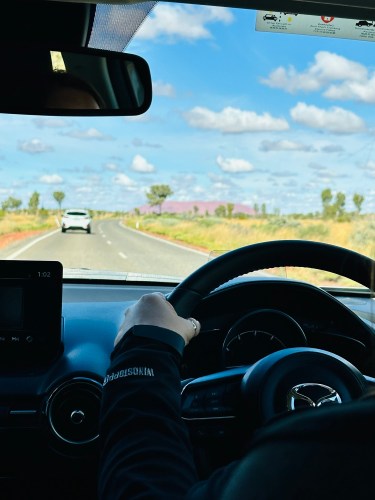
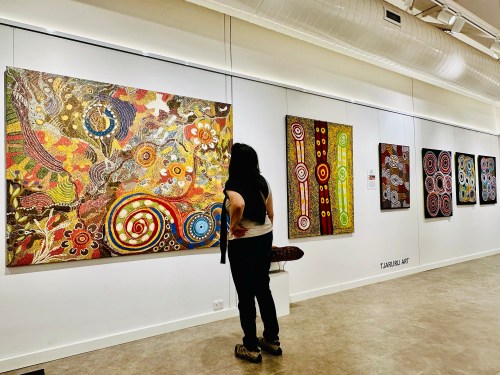
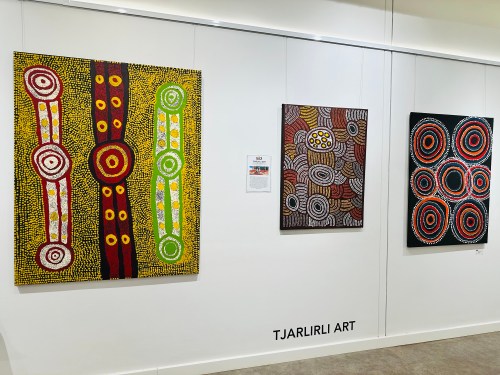
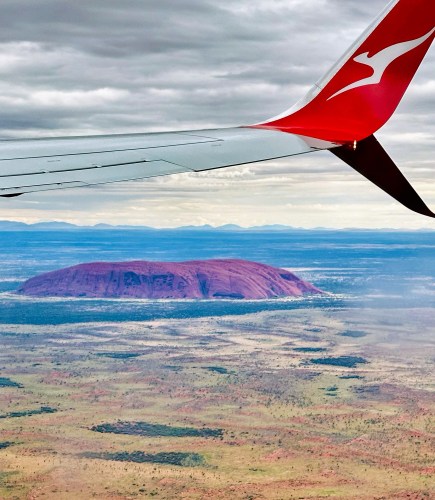
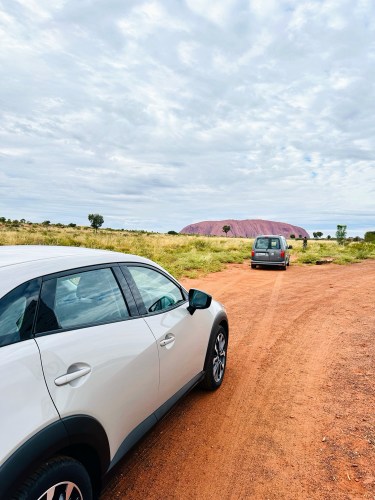
I know. It’s an old nursery rhyme but quite recently, an adaptation was made with an outback twist. Now a popular Australian children’s song (by the Cheeky Monkey Club), the song lyrics include Uluru and didgeroo. To see this massive rock monument, we rented a car to be more flexible with our timings and itinerary and also because the shuttle bus passes are actually quite pricey. We figured the cost for a 3 day pass for us three approximates the cost of car rental for the duration of our entire stay in Yulara. So there. No brainer. We can now go whatever time we may find convenient though we’ve decided not to explore after dark. After all, our itinerary is very very limited and “loose”. We’d be quite happy with the 10.6 kilometer base walk around the Red Rock, a sunrise and sunset view, a visit to an aboriginal art gallery and the “guided” stargazing at night. Outside of those, we’re prepared to be surprised.
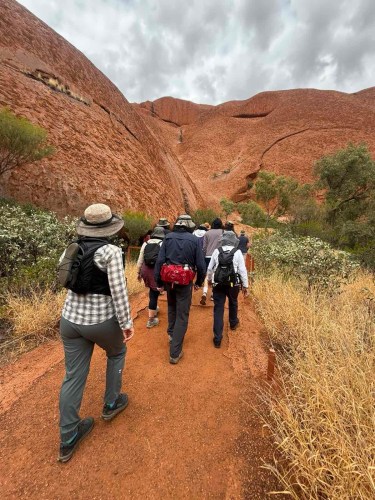
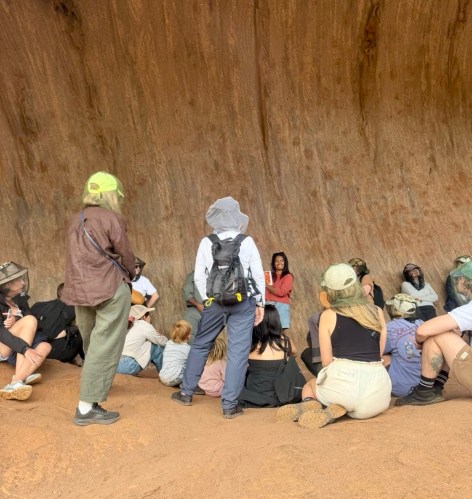
For the base walk around the sacred rock, we opted for the ranger-guided base walk for the first 2 kilometers. Started at 10am, ended around 11:30am. Confidence to “diy” the rest of the walk was boosted as there were other walkers and the overcast sky meant tolerable temps without much risk of getting dehydrated or burned. The base walk is flat with the sacred monolith always in full view. Some areas are sacred and photography is not allowed. Midway, there are kiosks or resting area and toilets. Not much wildlife in the area as it’s clearly a desert that can actually seem boring. While walking, Spotify can be your best friend. But I’m glad I’m walking with my niece and college friend whom I rarely see so there’s much to chat about and catch up on.
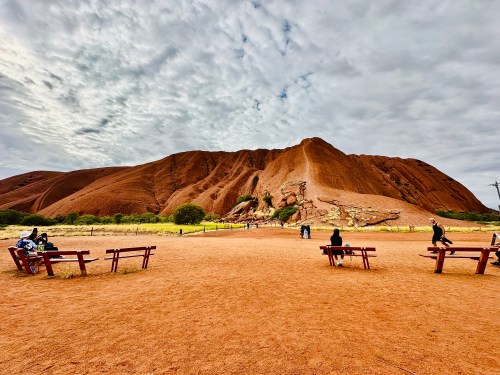
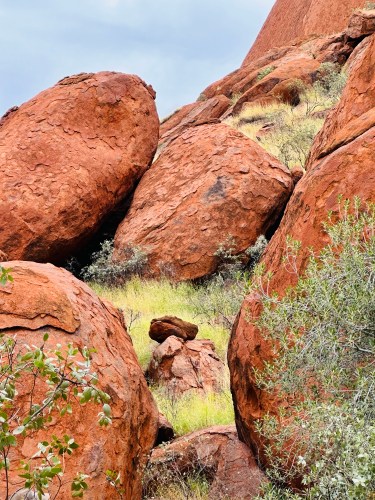
Circling the red rock the next 3 hours can seem “monotonous” but it’s interesting to view the massive rock at different angles. Along the circuitous way, one easily spots the Mala Kitchen , obviously the area where the Anangus prepped their meals — from honey ants to game meat like kangaroo and emu, as well as other edible grubs. Along the Uluru base walk , there are “detours” to check out special spots like the Kuniya Walk towards the Mutitjulu Waterhole. And every so often, we stopped to look up as the stone face bears marks looking much like they were purposely designed. Vegetation is limited such that I was reminded of the cartoons “Flintstones” and remembered Fred, Wilma and Pebbles 😄
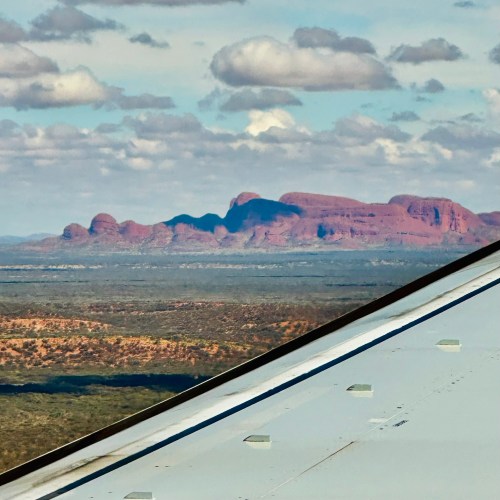
Uluru did not disappoint. It’s a geological wonder in a natural landscape one only finds here. The desert floor and stone hues change depending on how the light hits them. The rock art bears significance as the Anangus “spoke” through them and the sacred sites demand respect as they are used for many “imnas” — traditional ceremonies, songs and dances. This is the way their belief system was passed on through generations, thus keeping the aboriginal culture and traditions alive. Even their aboriginal art form is so unique that I can’t help feeling so impressed. And their hunting tools is another story! I’m eager to read up to learn more about this indigenous culture even after this trip.
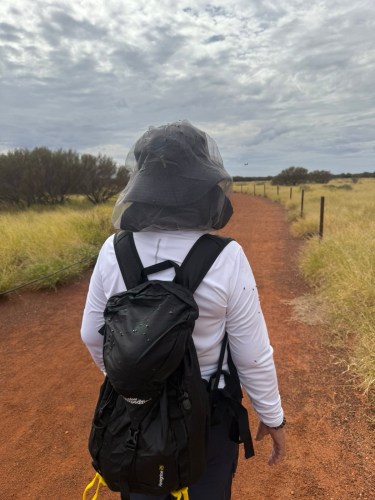
We made full use of the resting areas but had to be reminded to get up and resume walking. The day we visited was blessed with good weather — not too sunny to burn our skin, nor too cold to feel chilly. No rain (it rained only after our base walk), and no kangaroo/wildlife surprises! BUT there was an army of tiny flies which miraculously disappeared when the sun set 🤫. My backpack and white hiking shirt became their “tarmac” as they clustered as if some convention was called. You can say our day was marked by overcast skies, pleasant temps, fly-infested hikes, not too impressive sunsets, amazing and varying angles of the red rock and manageable walks. We’re happy even if the sunsets and sunrises are underwhelming. And the flies? We grew familiar with them after a few kilometers. You simply grow tired swatting them.
Getting here ain’t cheap. Hotels and food quite pricey. Places of interest limited to Uluru – Kata Tjuṯa Parks where the geological wonders sit like some designated guardians of Australia’s red center. But I’d say Uluru’s worth a visit at least once in one’s lifetime. What you find here, you can only find here. There may be no Ubers, no taxis, no real shopping and dining hub, but where else can you find this massive monolith on this planet? More than that, can you imagine the remainder of this rock formation extending up to nearly 5 kilometers underneath that red desert floor? Such is the mystique of Uluru. So yes, give it a visit.