Tag Archive: Manila


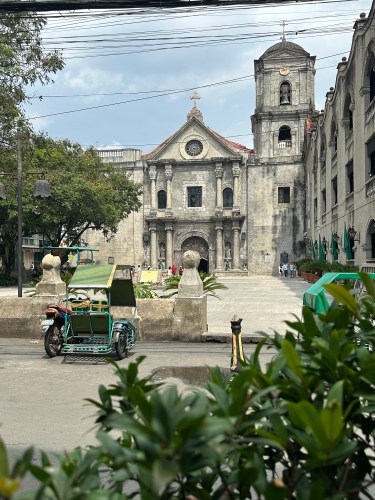
Intramuros comes to mind whenever we have foreign visitors to take around Manila. Over the years, I’ve lost count of foreign guests and “balikbayans” I’ve toured around the former walled city and nearby historical and cultural spots. But today is different. We have a free day and we’ve decided we’d check out the now pedestrian zone around Plaza San Luis Complex where you’d find San Agustin Church, Casa Manila, Casa Blanca, Barbara’s, Cafe Intramuros, Batala Bar, and not too far away, the Centro de Turismo and Museo de Intramuros. I’m only too happy to stroll along the cobblestoned General Luna Street devoid of motor vehicles and the ubiquitous pedicabs and tricycles. Now you’d find visitors on bamboo bikes, segways or horse-drawn calesas competing for space with the pedestrians. It even felt strange to find the San Agustin Church without cars crowding its beautiful frontage. Such scenes completely changed, nay transformed Intramuros. About time!

San Agustin Church
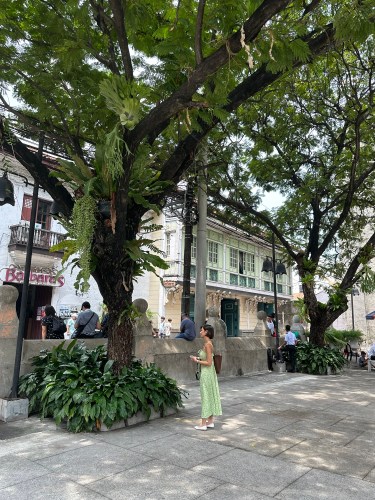
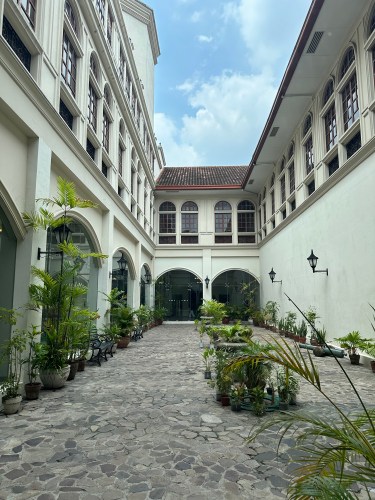
Across the Church is the Plaza San Luis Complex

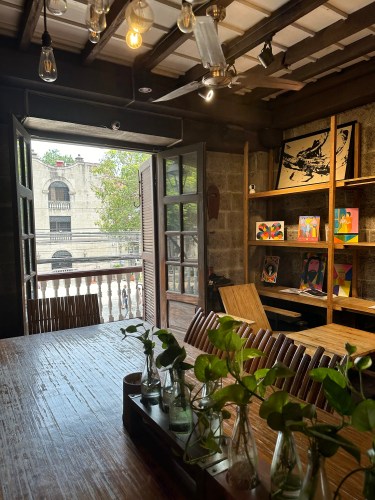
The coffee scene in Intramuros now counts Batala Bar and Cafe Intramuros alongside Barbara’s. We started our day with brunch in Batala Bar. From its windows, we have views either of the San Agustin Church or the Plaza and Casa Manila. There were not too many visitors but I need to mention that despite the summer heat, it was such a pleasant experience to go around the area. The service crew and the security staff are very friendly, accommodating and generous with their knowledge about the place. When people go out of their way to please, it is always a sign of good training and work ethics. 👍

Plaza San Luis
View from Batala Bar

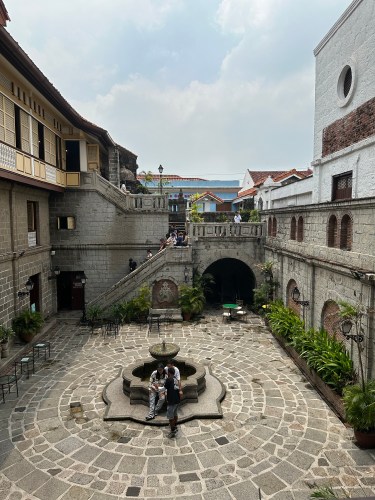
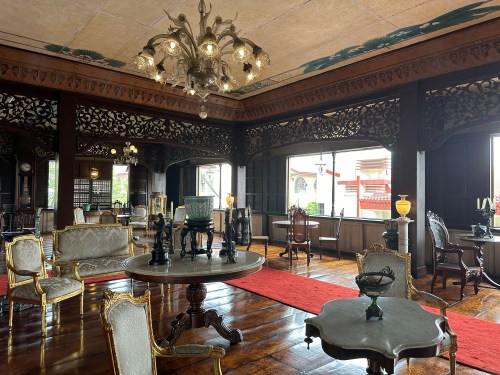
Casa Manila gives a glimpse into the lifestyle of the “illustrados” — Filipino families who enjoyed affluence during the Spanish times. The Casa or house is actually a mansion bearing the colonial style of architecture and taste — in stark contrast to the more modest “Bahay Kubo”. The antique furniture, wide windows, huge kitchen with antique cauldrons is a trip down memory lane. Like as far back as the 1850’s. Easily, one can spend an hour here. Around the Casa, one is never short on dining options. The cafes and restaurants are to be found just as soon as one exits Casa Manila via the staircase from the kitchen spilling into the plaza with the fountain at the center. There are also souvenir shops though I think they can improve in this department.

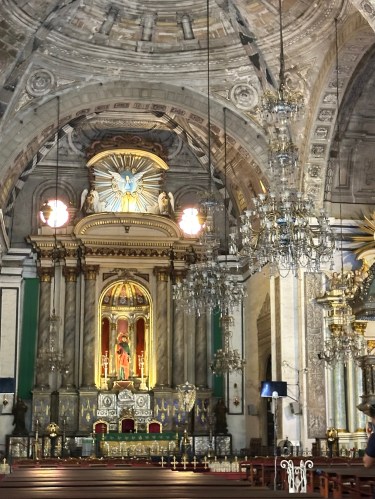
Inside San Agustin Church
Inside Casa Manila

The Centro de Turismo is under renovation so we spent an hour or so instead in the Intramuros Museum. Housed in what was then the San Ignacio Church and Convent, it is a treasure trove of historical and religious artifacts. For sure, the Intramuros Admin did a terrific job on this project. A half day itinerary for tourists may include visits to San Agustin Church and its Convent cum Museum, Casa Manila, followed by lunch in any of the cafes and restaurants within the Plaza San Luis. And there’s also Ristorante Delle Mitre across the street where there’s a good assortment of desserts and baked goods.

Museo de Intramuros
Inside Museo de Intramuros

Now if you still have energy and time left, you can always proceed to Manila Cathedral and Fort Santiago. We did, but not so much to tour around but to check out Papa Kape inside Fort Santiago. We heard so much about their Black Gulaman Americano Coffee and the Tahoat Coffee — a concoction that blends “taho” and oat milk cafe. Both iced, we enjoyed our bev as well as the resident cats within the cafe. Not a bad day to spend like “local tourists” in our own city!

Mr. Cat sleeping on the best seat of the house. Tahoat and Black Gulaman Coffee best served “iced”.
Papa Kape

Home now for a good month. Finally found my rhythm back. The jet lag lasted a solid 2 weeks after crossing 3 time zones. Then we had some guests and visiting friends so we got busy organizing meet-ups and reunions. Plus, being home after 2 months of travel required some sprucing up, health-wise and grooming-wise. Trips to the doctors, dental clinics, lab tests, spas, beauty parlor, and other wellness-related stuff.

Meditation Garden near the Adoration Chapel

The rhythm of church duties and meditation sessions put me back to normalcy. On top of the simple and regular mundane stuff we do, I yearn for the spiritual and emotional tranquility following a hectic and physically-challenged routine imposed by traveling. You can say that “in between trips”, we yearn for solitude and calmness . A perfect reminder too to celebrate the blessings and express gratitude that we’re back without any major mishap or misadventure. After all, I bet our daily pace when traveling must be at least triple, if not way way more than our regular load.

Visiting Friends

It’s also time to apply or renew expiring/ expired visas to prep for future travels. I have a load here: UK, Schengen, Australian and New Zealand visas. Kinda tiring but one’s got to do what one’s got to do. This is when I get truly jealous of friends and kin holding stronger passports! Poor me had to submit bank certificates, travel itineraries, flight and hotel reservations, etc. And it really bugs me that some embassies issue only one year-visas after all the trouble.

But it’s good to find one’s rhythm. After all, life has many chapters and like a good book, we put it down to pause. Even reflect on what’s been and how things are. It’s being present. And being well. 👍


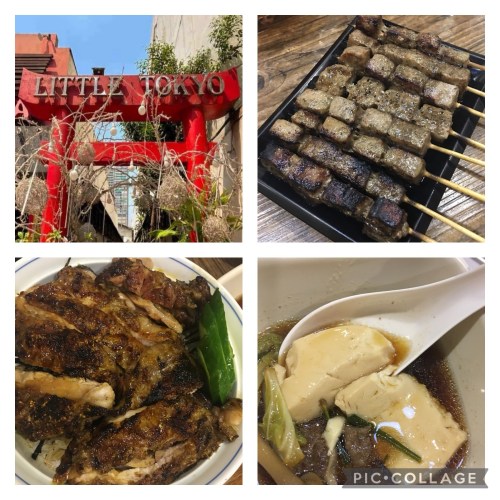
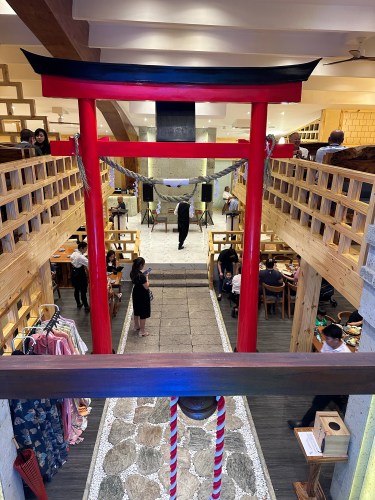
This is my neighbourhood. It’s a bit off the CBD, perhaps a couple of blocks. But here lies a slice of Japan with a cluster of izakayas serving authentic Japanese food with price tags ranging from quite cheap to pricey. Makati Cinema Square is now called Makati Central Square, MCS for short. Within this old mall are many tiny Japanese restos, the most popular of which is Manmaru. That is, judging by the queues nearly every mealtime outside this Japanese eatery. A few more restos within the same mall is Unakichi (entrance near Mcdo and KFC area) which specializes in unagi and Sakura Yakiniku (near Unakichi) and Yakiniku Kenshin (beside Manmaru). There is also our fav Wabi Sabi (2nd floor above Kenshin) for vegetarian ramen, dumplings and homemade ice cream. From MCS, we step out and cross the street towards LITTLE TOKYO which is another cluster of izakayas with a truly Japanese vibe. The Torii gate, narrow alley lined with red lanterns look more Japanese in the evenings when the lanterns are lighted and the courtyard seems more festive with banners.

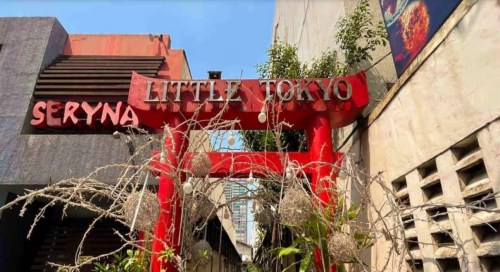
It’s easy to miss it but this Torii gate is just across Manmaru in Makati Central Square
Behind the Torii gate is this narrow alley
towards the izakayas.

Within Little Tokyo, the most popular and my personal favorite is Kikufuji whose entrance fronts the main road (Chino Roces Avenue), and for ramen, there is Shinjuku. Both are iconic izakayas in the Little Tokyo area fronting the main road and must have stood there for at least 2 decades along with Hana which is situated in the inner “courtyard”. Parking is always a challenge so I’d advise parking in the MCS basement and just walking across to Little Tokyo.

Izakaya Kikufuji may look rundown but it consistently ranks among the best izakayas in Makati.
Hana is in the interior part of Little Tokyo and is one of the 2 oldest izakayas there.

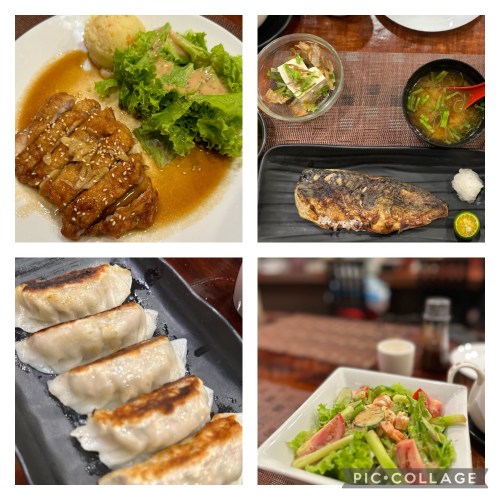
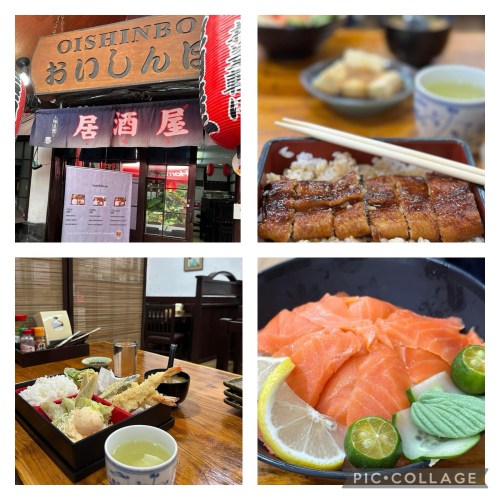
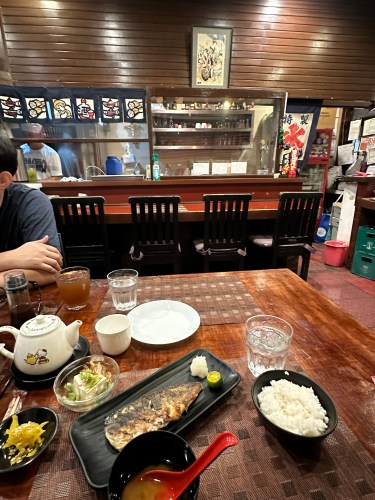
Inside Little Tokyo, you may choose to go for simple snacks like takoyaki, kakigori (flavored ice shavings), okonomiyaki (pan cake) or have serious yakiniku or bento boxes. Plenty of choices here. Menus are on display by the izakaya’s door so there shouldn’t be any surprises especially if one is on a budget. You may also opt for al fresco lunch or dinner or step into the tiny air conditioned spaces. I have tried Kikufuji, Shinjuku, Yakiniku, Hana and Oishinbo in the Little Tokyo cluster. Pricing observes a wide range as it largely depends on what you order. Less expensive would be the rice bowls or rice toppings, called donburi. Ask also if they have set meals which are really combo meals to include your chosen dish, miso soup, pickles, rice and sometimes a drink. There are a few more izakayas waiting for me to try. 😁

Oishinbo in INSIDE Little Tokyo
Inside Hana

Seryna is also quite popular. It is right beside the Torii gate entrance and across Manmaru in MCS. But my personal favorite remains to be Kikufuji — love those wagyu cubes and sushi. Just that it is always fully booked so I always end up settling for Shinjuku ramen or one of those bento boxes in either Hana or Oishinbo. Unless of course I’m craving for unagi which means crossing towards MCS’ Unakichi. As for Manmaru, I’d rather order online (via Grab) than braving those long lines!

Wagyu Cubes from Kikufuji
Little Tokyo at Night

The latest addition to this izakaya cluster is EDOYA. It is right beside Seryna and a Japanese grocery store and right across Manmaru housed in Makati Central Square. Some of the food we ordered tasted good but they’re still on soft opening when we visited so the service can actually be improved. It took a while for our food to be served. Also, we stayed in one of the cubicles on the 2nd floor and we found the acoustic properties of the place to be problematic. I hope they do something about this because the place looks nice and we’re willing to give the Resto a second chance. The iced coffee bevs are ok but we were frustrated that none of their ice shaving desserts were available. I promise to dine there a 2nd time and update this blog. So there. 😉

EDOYA
EDOYA

Having “Thursdates with Mu” and apo says Tagaytay gives her Sapa vibes. Sapa in Northern Vietnam was our recent travel together and we still remember that hill town “in the clouds”. Foggy when we arrived in Tagaytay, rainy when we slurped our ramen somewhere in Alfonso, and clear now as we sip our beers. Hello, everyone! Let’s do a field trip / cafe crawl in Tagaytay /Alfonso, Cavite. Apo had a long list of cafes, restos and a brewery to visit, all very neatly plotted on a map. My “trainee” is doing even better than me in the travel research department! On our ride here, we settled on 3 spots in her itinerary. A ramen lunch, a coffee stop and a brewery to check out. Sounds like a good plan?

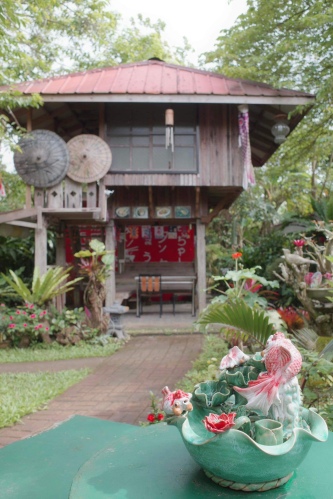
Dining Al fresco or inside one of these
Edo-inspired wooden houses? This is Surugin Ramen House “deep” in Alfonso, Cavite. Just waze it!
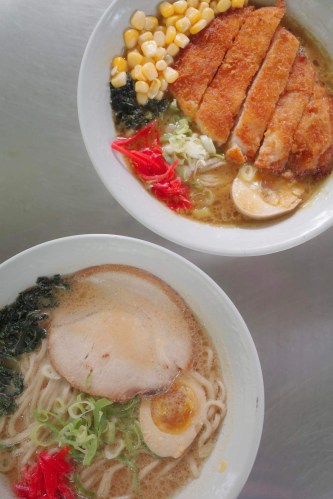
Katsu Curry Ramen & Odori Ramen

Surugin Ramen House reminded me of an Edo town somewhere near Kyoto as we slurped our steaming ramen and devoured the gyoza. It drizzled while we enjoyed our lunch al fresco under a shed. There were just the two of us here on this Thursday though I hear weekends are real busy. As in long queues! Just as well we came on a weekday. Took us all of 2 hours though, driving from Makati. Some portions of the expressways ain’t no express drives. Especially before and soon after the toll exits. Anyway, we “owned” the place so we took the chance to loiter around the gardens and checked out the cottages while waiting for lunch to be served. A pity though that they don’t serve hot tea. The only “flaw” to a good ramen meal. Tsk. Tsk.

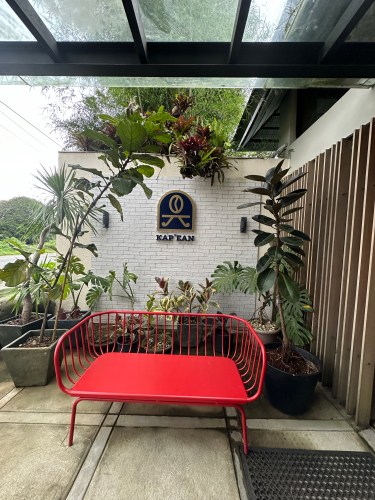
Kape’an is some 15 minutes away from Surugin
Kape’an is huge! Perfect for big events.

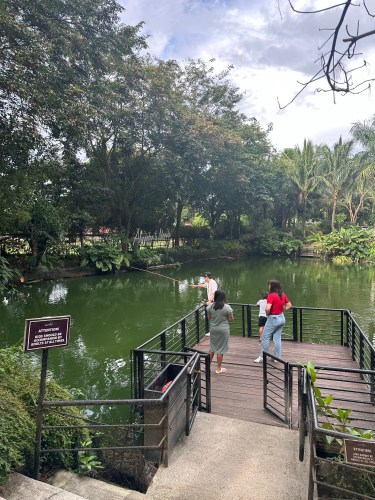
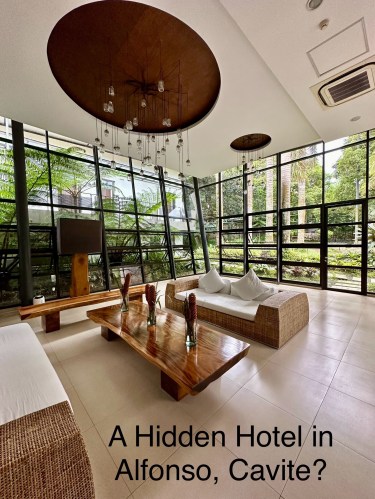
Post-lunch, we headed to our next stop for some coffee. Frankly, café has been more a dessert for moí lately. The coffee concoctions have been bolder, sweeter and overall more “sinful” unless you settle for a simple, straight-out espresso or good ol’ black coffee. We chose to drink our coffee hot this time, as it started to rain and the temps grew cooler. It even went foggy on our drive here which triggered our Sapa memories. 😍 We were also pleasantly surprised that Kape’an even has a fishpond and a hotel. The sprawling gardens make for perfect spots to enjoy your latté or non-coffee bevs like my “Nut-so-coffee”. We spent more time here than necessary. Drawn to check out the hotel rooms, we walked deep into the estate and passed a pond and several more al fresco coffee spots on our way to the hotel. I can’t believe this hotel existed since 2015! Very well maintained, I must say. We checked out the rooms and found a detached unit that suits a family of 6 or even 8. The unit has a bedroom and a loft (with 4 beds!) plus a sitting room and a kitchenette. I was tempted to book it right away for a family staycation. Staying in shouldn’t be a problem since there’s Kape’an and a restaurant within the hotel compound. The swimming pool looked very inviting too.

The Pond.
Abagatan Ti Manila Hotel

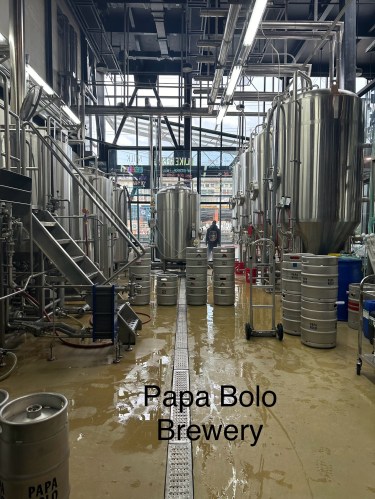
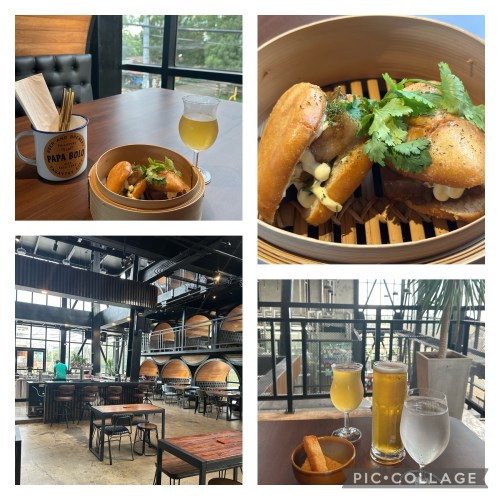
There could have been a couple more stops but we opted to spend more time in this brewery before calling it a day. We’ve heard horror stories about the traffic even on expressways. Papa Bolo Brewery is a revelation. I’ve been to Heineken Brewery in Amsterdam and find that the same experience can be repeated here. The place looks so impressive with all the modern touches. The menu has many offerings and while we’ve tried only 2 kinds of beers, both were good. I can imagine many events taking place here. And seriously? The place looks so inviting with the barrel dining and drinking spots on all 3 floors, each with a view of the glasscased brewery . Then there’s an area where bigger groups can enjoy small parties in comfort with game machines around.

Papa Bolo Brewery in Tagaytay
Beer, anyone? There’s Piña Niña, Cowboy Classic, Fruity Booty and More.

All told, it’s been a good day to discover new places. I’ve always loved Tagaytay. It’s my own “Disneyland” when I was a child. My happy place. Of course, it was way simpler, less busy and not crowded then. I am delighted that there has been many flourishing restos, boutique hotels and shops around here. And the vibrant coffee scene! I only wish the authorities manage this development very well. There have been a lot of blunders in the past administrations but I remain hopeful that local businesses here can be nurtured while made responsible and sustainable. After all, it’s a go-to destination for most tourists as well as locals because of its proximity to Manila. With the traffic even getting worse, I hope for better infrastructure for ease of transport and access for everyone. There’s only one Tagaytay and one Taal Volcano and Lake, the sights of which never fail to mesmerize me. Fell in love with that scene as a child, and still recall a big painting in our living room of the same scene. As a child, I don’t remember a morning that I didn’t look at that painting. Still stuck in my mind. 🥰

For bigger groups

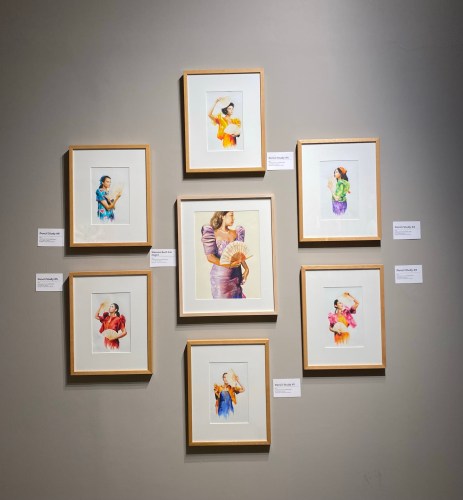
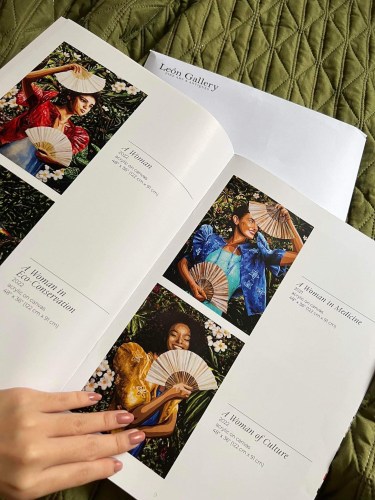
Her first solo exhibition was in 2019. That early,her fascination with empowered women spoke through her symbolic “Maria Clarasexpressed as modern Filipinas. Through the years, this theme almost always found expression in many of her art works. Somehow evolving, but the message remains and its meaning more clearly professed and manifested. Added in are the iconic abanicos (fans) and the kalachuchi flowers.

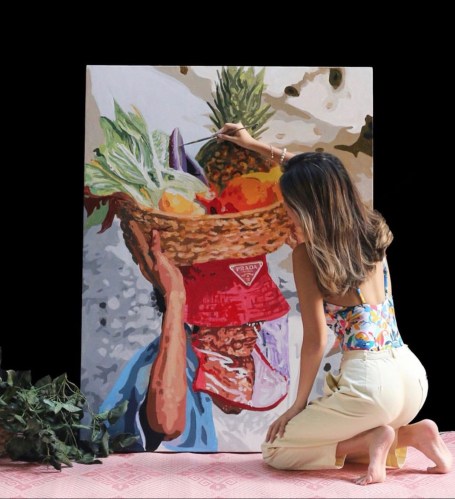
A few taking residence in her temporary art studio.
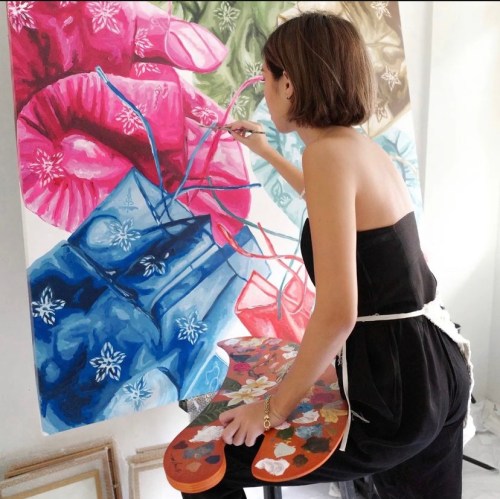
In Her Studio

Mona Clara. I remember this as the title of her first painting of a Modern Filipina. Mysterious just like Mona Lisa. “Confused” just like Maria Clara. Maria Clara in today’s language has come to mean either the country’s costume, or describe the traditional, shy, demure, noble and virginal Filipina. It is also one of the main characters in the book “Noli Me Tangere” where she is said to symbolise the state and sad plight of the motherland, our Philippines.

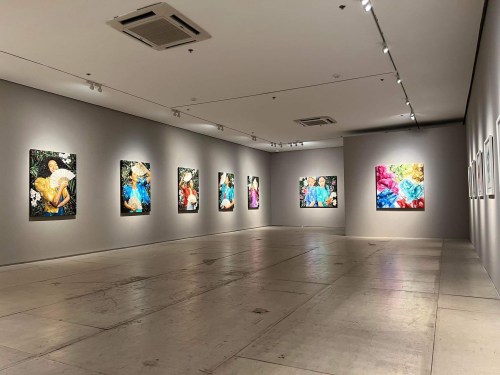
In this artist’s mind, her character MONA CLARA combines the qualities of mystery, tradition, confusion and some traces of humor. Perhaps one can even detect a subversive element. Through the years, the series depicted the Modern Filipina in today’s culture in a very satirical way. The approach and treatment leave the viewer to draw his/her own interpretation. Without question, the artist wittingly invites the viewer to discern a serious message.

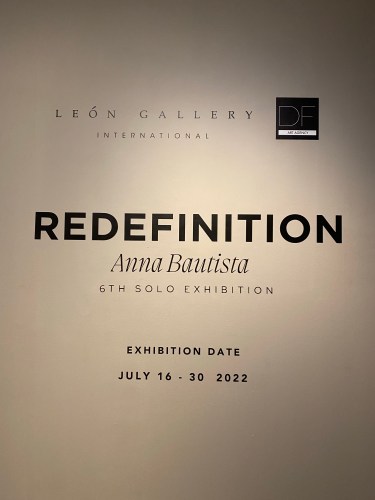
LEÓN GALLERY
Work In Progress

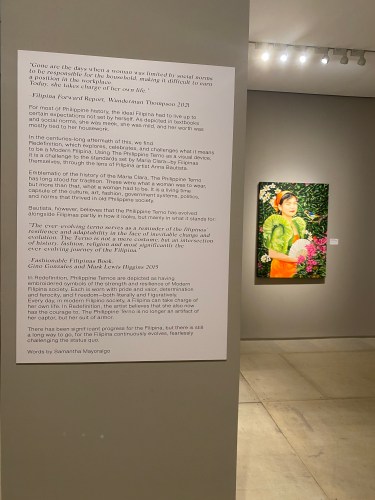
This 6th solo exhibition is titled “Redefinition”, which explores, celebrates and challenges what it means to be a Modern Filipina. Using the Filipino terno as a visual device, it is a challenge to the standards set by Maria Clara — by Filipinas themselves, through the brushstrokes of Filipina artist Anna Bautista.

Emblematic of the history of Maria Clara, the Philippine terno has long stood for tradition. These were what a woman was to wear but more than that, what a Filipino woman had to be. It is a living time capsule of the culture,art, fashion, government systems, politics and societal norms that thrived in old Philippine society. Anna believes the Philippine Terno has evolved alongside Filipinas — partly in how it looks, but mainly in what it stands for.


The pandemic seriously restricted our social life and daily routines. Online shopping, dining in, Netflix-bingeing and virtual meet-ups have become the norm. But I’m happy to note that the art world is still very much vibrant and many artists — forced to stay home and finding more time to indulge in their art — have drawn inspiration from everyday life otherwise taken for granted.

While we stayed home much of the time, we haven’t given up on the stuff we enjoy doing. Thank God our neighbourhood is lined with deli shops, restos, bar joints, art galleries, furniture shops and not too far away, specialty home decor shops where one can spend entire afternoons. Our white walls are now adorned with newly-framed artworks which made trips to our favorite framer so very pleasurable. The art galleries are such a delight to visit and the adjacent coffee and snack bars provide interesting breaks. The alley we frequent even boast of resident cats who’ve since become attractions of the place. Now, here’s one area where feline and human creatures seem to live in true harmony amidst all the beautiful artworks. Swell.

Eating out is restricted to only a few establishments which we found to be safely observing health protocols. But eating in is no less satisfying. We even sourced some of our dinners from our favourite restos as food deliveries have become our new normal. One lovely discovery is the joy of enjoying good meals without worrying about finding a parking slot nor of having to drive home. The convenience beats worries of prepping for meals and washing the dishes. Over time, we’ve grown accustomed to serving the food in their delivered state” to do away with stuff filling our kitchen sink. No big deal, really.

While we have since started brewing our coffee and creating our cocktails at home, we didn’t miss out on sitting in outdoor cafes and bars if only to immerse ourselves in the ambiance of shooting the breeze, so to speak. Besides, it’s really nice to sit it out for some beverages after being on one’s feet in the many neighbouring art galleries. The pandemic may have reduced the visiting crowd but certainly not the interest and enthusiasm of the few who come. Online shopping for art may be the new norm but a serious collector would still want to view such creations up close and personal. There comes also this newfound respect for young artists as one observes how their art evolved through this rough period.


Hi everyone! On our latest Bangkok adventure, here’s a blog summary. For updates, follow lifeisacelebration on Facebook and/or subscribe to this blog site.

Our Bangkok Cribs

Floating Market

Elephant Ride

Bang Pa-In Palace

Ayutthaya UNESCO Heritage Site

A Thai Engagement Procession

A Thai-Buddhist Wedding Ceremony

Art In Paradise Trick-Eye Museum

Chocolate Ville

Terminal 21

Keep reading!


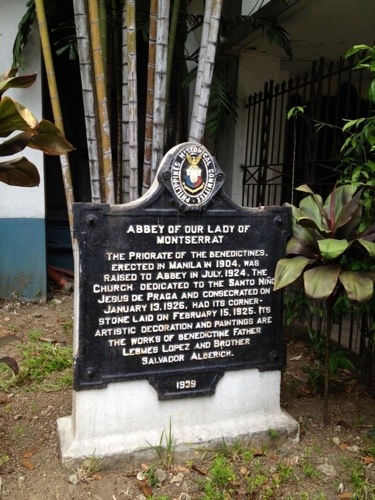
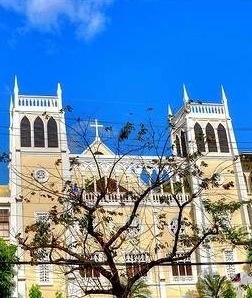
A week after I visited a monastery run by Benedictine Monks down South, I was reminded of my Visita Iglesia back in April earlier this year. Among the 7 churches and chapels I visited, the most striking in my book was the Abbey of Our Lady of Montserrat, more popularly called San Beda Chapel. It is a gem waiting to be discovered and rediscovered…… in an area more remembered as the posh San Miguel district in Manila where the moneyed and high society used to lead elegant lifestyles by the banks of the then clean, oil spill-free Pasig River. Quite ironically, it is also known of late as the Mendiola site that bore witness to way too many rallies, even bloody protests, as rallyists marched towards Malacañang.


20130701-085345.jpg

Abbey of Our Lady of Montserrat


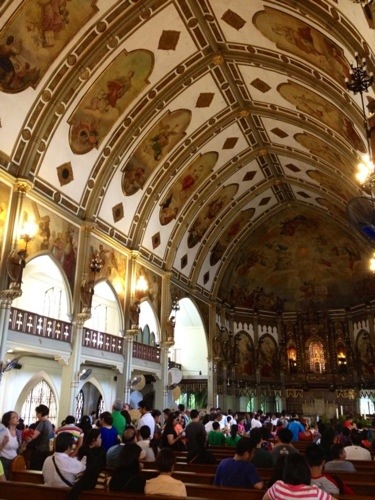
This neo-Gothic Chapel was designed by a Swedish architect by the name of George Asp. It would have looked even lovelier when it was consecrated in 1925, with those Sistine Chapel-like ceilings painted by artist-monk Fr. Lesmes Lopez, a Benedictine Monk. Awesome is an overused word, but yes, it is indeed awesome!


20130701-085505.jpg

You would have thought you’re somewhere in Europe. But naah, this is the San Beda Chapel right in Mendiola!


The stars in the galaxy must have conspired to spare this magnificent church from the destruction of the Second World War. Just a block away from Malacañan Palace by the Pasig River, both structures survived the carpet bombing during the Battle of Manila. Many of its historic counterparts in Intramuros were not as lucky. It surprises me though that not too many are even aware of the striking beauty of this college chapel. One look at the painting of the Apotheosis of the Most Holy Name of Jesus, the retablo and many bronze angels holding lamps to illumine the chapel in a “Rennaissance” kind of way, and you’re transported out of the slums, dirt, grime, chaos of Manila. I can imagine the old rich and elite hearing Sunday masses in this lovely college chapel back then. Can you?


20130701-085724.jpg

20130701-085757.jpg

Photo Sourced from the Net


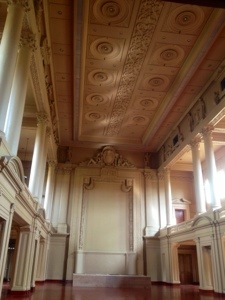
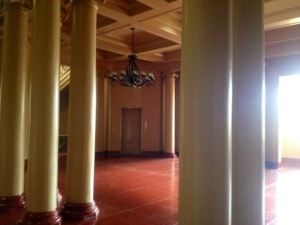
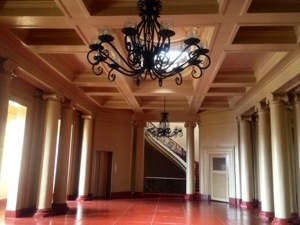
Originally intended as a public library but subsequently built to house the Legislature, this magnificent building designed by Juan Arellano was a casualty during the Battle of Manila in 1945. It was reconstructed in 1946 based on the original plans and remained the august halls of the Senate of the Philippines until it moved out in 1996. It took nearly a decade to transform this architectural treasure into what it is now: the official repository of national arts, treasures, archaeological finds and historical relics. The National Art Gallery of our very own National Museum.


20130218-102942.jpg

The Old Senate of the Philippines. Fully restored!

20130218-103039.jpg

Check out this hall where many statesmen of old (a rarity now) used to walk!


Whenever I visit the Museum, I always start with the Hall of Masters. It’s like paying your respects to geniuses the likes of Juan Luna and Felix Resurreccion Hidalgo. If that P150 (US$4) admission fee entitles one to a viewing of Luna’s Spoliarium and Hidalgo’s Assassination of Governor Bustamante ALONE, it would have been worth it. But there’s more. LOTS MORE. One visit won’t be enough.


20130218-103304.jpg

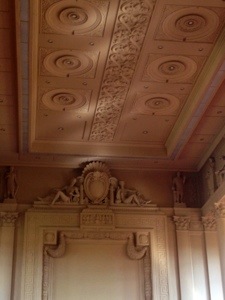
The ornate ceiling in the Old Senate Hall within the National Art Gallery.

20130218-103332.jpg

The Marker of the Old Senate Hall of the Philippines.


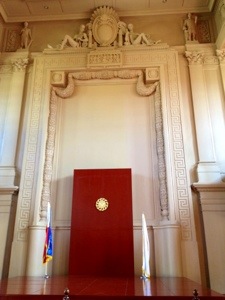
The Old Senate Hall has been completely restored. Here, where many revered statesmen walked the very floors and whose walls echoed many speeches from statesmen whose names now grace many street signs, shrines and monuments. Thank you, National Museum for allowing us to reconnect with our past. Thank you, Jeremy Barns, Museum Director, and everyone else who made this possible.


20130218-103537.jpg

How many National Anthems were played in this Hall?

20130218-103558.jpg

The Entrance to the National Art Gallery.

20130218-103623.jpg

Lovely Building. Next up: Museum of Natural History. In the same area!


WHO IS JONES? Why was this oldest bridge in the Philippines named Jones Bridge?


20130218-102048.jpg

Puente de Espana, then Jones Bridge, to honor the man behind the Jones Act granting independence to the Philippine Islands.


WILLIAM ATKINSON JONES. Member of US House of Representatives from 1891 to 1918. Right about the same period when the US bought the Philippines from Spain for $20 million. Imagine that. US$20Million for 7,107 islands.


20130218-102222.jpg

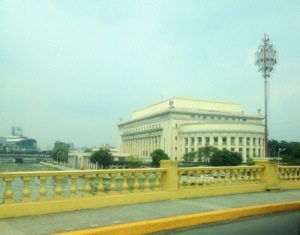
The Post Office Building and the Jones Bridge. Two landmarks rich in history.


Back to the question — why was the bridge named after Rep. William Atkinson Jones? Used to be called Puente de España since it was built in 1701 spanning over Pasig River and connecting Binondo to the core of the capital city of Manila. Originally done by Juan Arellano in the Neo-Classical design but destroyed and renamed Jones Bridge by the US Colonial Government in 1916 to honor the man who sponsored the bill, later enacted into law, granting independence to the Philippines. Bombed out in World War II, this formerly ornate arch bridge was yet again rebuilt but in simpler design after 1945. The oldest bridge in the country.


20130218-102557.jpg

Not my copy. Credits to Old Manila Nostalgia.


When Jones died in 1918, the Philippines paid for the marker on his grave in gratitude for the Jones Act which granted Philippine Independence. So much history behind this bridge across Pasig River with a bonus grand view of yet another landmark, the Postal Office of Manila. Next time you head for Binondo or Chinatown and cross this bridge from Plaza Lawton, think Philippine Independence. 😉