Tag Archive: India


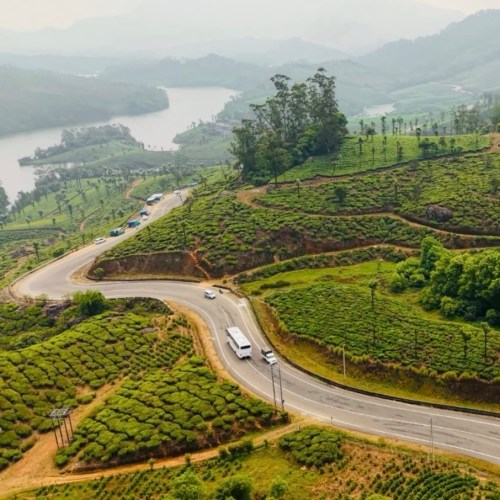
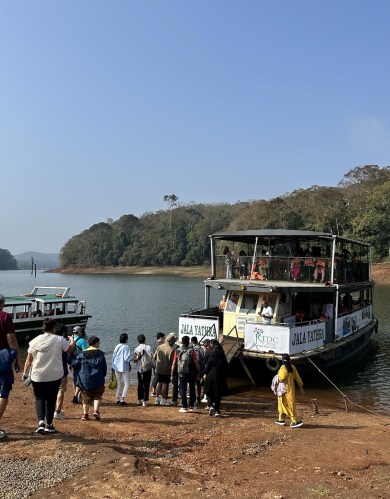
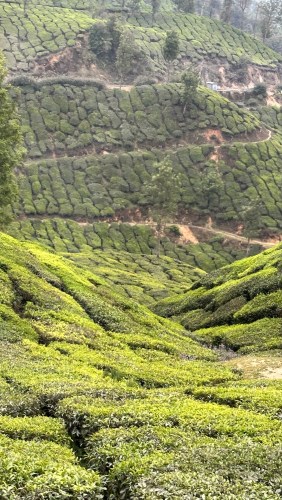
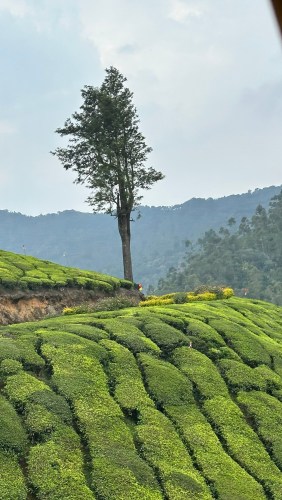
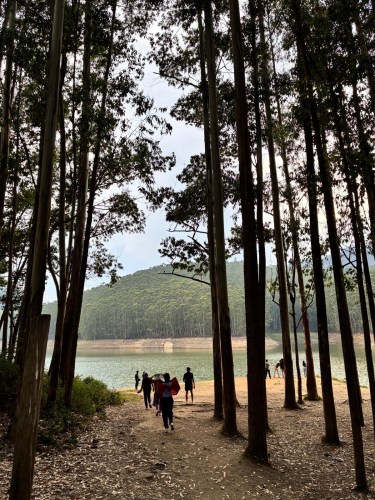
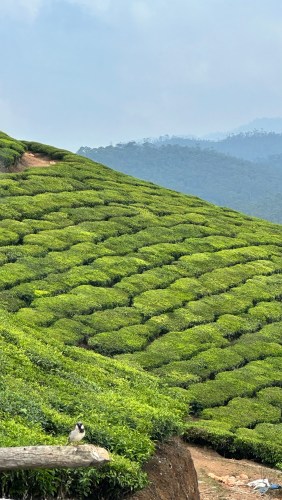
Munnar is known as the tea capital of Kerala. It took us 4 hours to drive from Cochin to Munnar with at least 3 pitstops. Reminded us of trips to Baguio, our country’s summer capital as we passed waterfalls, visited a Spices Garden and sensed the temps dropping. A long day as we settled in our hotel to prep for the next 2 days visiting tea plantations amidst misty hills and placid lakes. While we found time to enjoy cooler temps, we weren’t prepared for the zigzag drives climbing hills along narrow roads. We can hardly look as buses and cars glide past each other with only a few inches between them. Not even the green, verdant hills and serene lakes can calm our nerves as traffic grew congested while tracking steep roads and navigating sharp curves. These Keralan drivers are simply good and patient, like tight situations are par for the course.

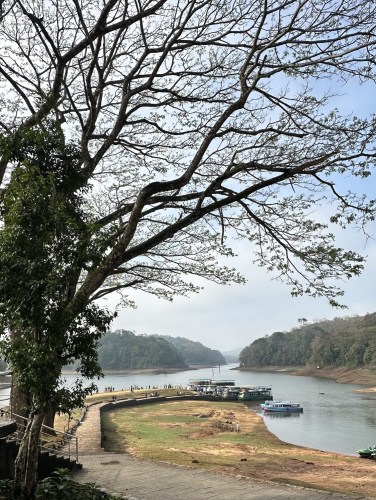
Admittedly, we lost a lot of time because of the slow traffic. Our driver and guide tried to push it all the way to the top hill station. The Echo Point by the lake is where we stopped to stretch our limbs and vocal cords. True, the sounds reverberated as we shouted out names, and some Pinoy inanities. Another challenging episode were the trips to the loo. And if something weird or crazy is about to happen, you bet it will happen to me. But that’s another story I hope my travel mates will not repeat outside our group 🤣

Echo Point. Ctto: Trisha
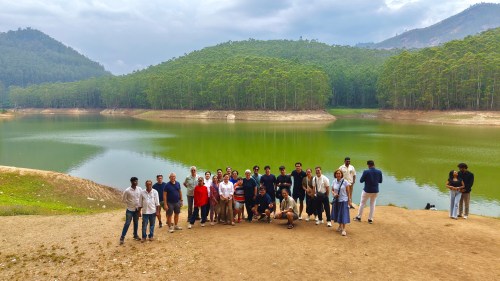
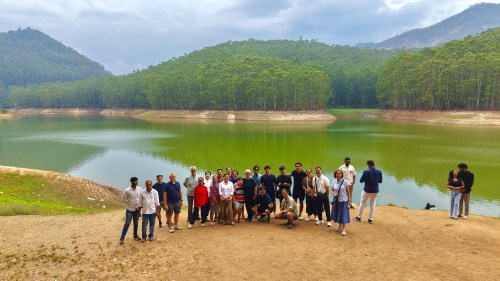
Group Shot by the lake. ctto: Eman

Today, we’re headed to a Tea Museum and perhaps a stroll in the nearby tea gardens. Will update this blog after today’s visit! See ya.

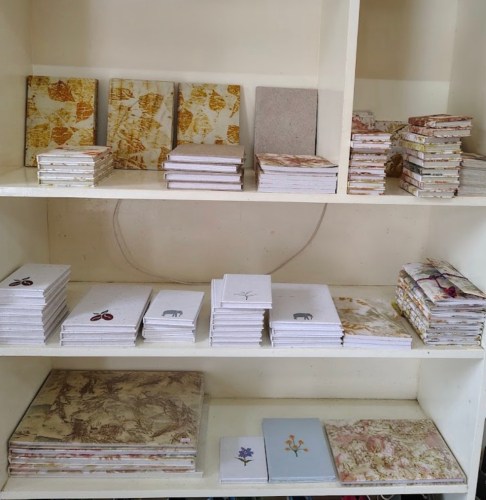
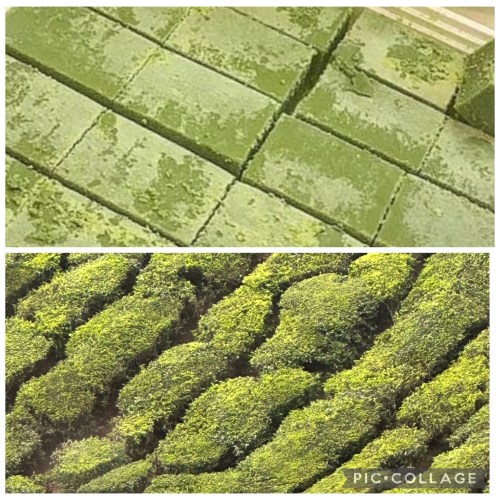
Update: Went to the Tea Museum and to Srishti, a charitable trust and welfare institute — a haven for specially-abled children of Munnar’s plantation workers. It aims to prepare and empower these children for life where they can positively contribute to society by learning skills like traditional craft techniques. Some of us bought fabric, bakery products, traditional apparel, paper products made from the fiber of non-wood raw materials like tea leaves, bananas, coffee, papyrus and marigold flowers.

Srishti Charitable Trust

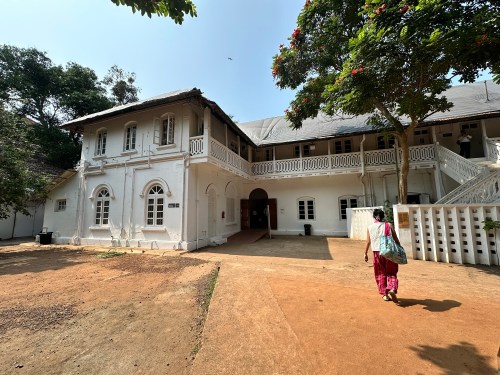
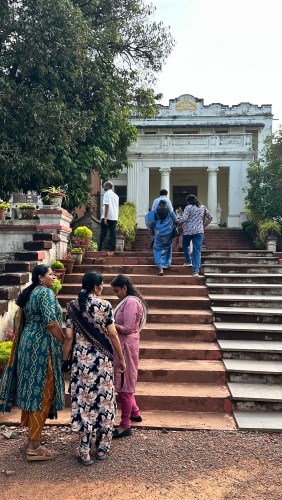
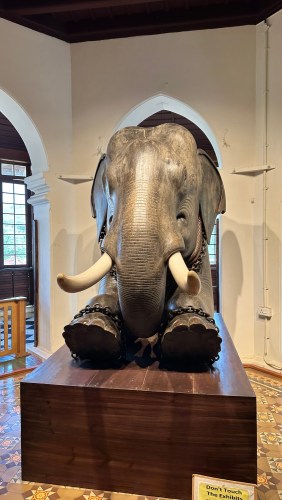
The drive took 4 hours from Kochi to Munnar, taunted as the “Kashmir of Southern India”. We broke the 120 kilometer journey with several pitstops, the first one being only after a half hour to visit the Hill Palace Museum in Tripunithura. The largest archaeological museum in Kerala is just 12 kilometers away from Kochi but traffic can be so bad in this corner of the world. By the time we arrived, we found many local tourists, largely older ladies elegantly garbed in sarees. We joined them locals in climbing up the many steps to reach the palace museum where we were required to take off our shoes to walk inside few of the many buildings within the complex. The first building we entered is the former residence of the Cochin Maharaja. Housed here is a huge royal elephant statue crafted from rosewood and bearing original ivory tusks. It’s a beautiful seated elephant statue, an impressive example of Keralan craftsmanship . Built in 1865 by the Maharaja of Cochin, the Cochin royal family ceded ownership to the Kerala government in 1980. Judging by how the rich collection of royal artifacts, royal jewels, weapons, antique furniture, old photos, ancient manuscripts and royal carts are artfully displayed and curated, the government of Kerala has done a good job of preserving Kerala’s heritage for future generations.

The former residence of the Cochin royal family is now the Hill Palace Museum, just 12 kilometers from Kochi.
Those are real ivory tusks attached to the seated elephant statue crafted from rosewood.

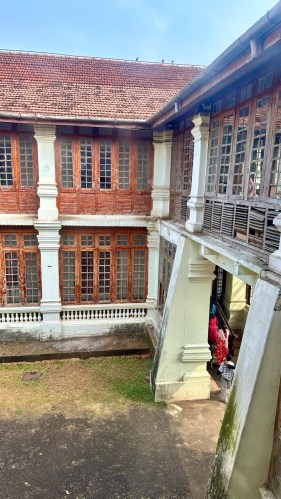
The former royal palace has a very elegant architecture. We love the windows and doors as much as we love the floorboards and tiles. Outside, the gardens are another thing. Even to this day, the palace looks “lived in” unlike palatial edifices echoing in its emptiness. The ambience is warm, and those tiles look like many happily stepped on them. Well, I sure hope so. With the death of the last Maharaja in 1964 and the complex growing into disrepair, the palace complex being transformed into a palace museum served to preserve Kerala’s heritage and culture.


I have been to India back in 2014. Happy to have spent my birthday there. As a first-time visitor then, we spent nearly 2 weeks touring around New Delhi, Agra, as well as the pink, blue and white cities of Jaipur, Johdpur and Udaipur. The Golden Triangle, plus more. As expected, highlight of the trip was Taj Mahal.

I’d gladly head back to Udaipur in the heart of Rajasthan and skip Delhi which I found so (air) polluted it threatens an asthma attack. Thought too that there are other spots in India I’d love to explore, like the southern part. So when my travel group suggested Kerala in the south of India, it was a no brainer to join. Tea estates, Kochi history and cruising the backwaters on a houseboat tick off many boxes for me. The only concern we have is the Nipah virus which allegedly hit West Bengal lately, over 2,300 kilometres away. Checked the map and the distance is like Manila to Singapore. Ergo, we decided it’s “safe” and far enough. So here we are.

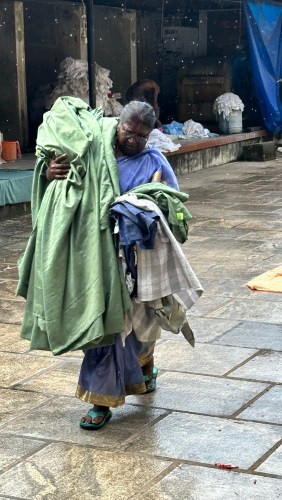
A grandma working in the Dhoby Ghat where all washing are done by hand, and ironing done using antique charcoal iron.

Securing travel e-visas was an ordeal as the visa system kept crashing. Most of us got stuck on page 2 of the online application but as soon as you pass that, it’s a breeze and processing only took 24-48 hours. Well, for most of us. My apo got hers after more than a week. And only after she got an email (a week from filing) requesting for submission within 24 hours (absolutely not a joke!) of additional information and proof which covered all of 18 pages. A real scramble. But we pulled through and the evisa was promptly issued within 24 hours from the 2nd filing. Phew!

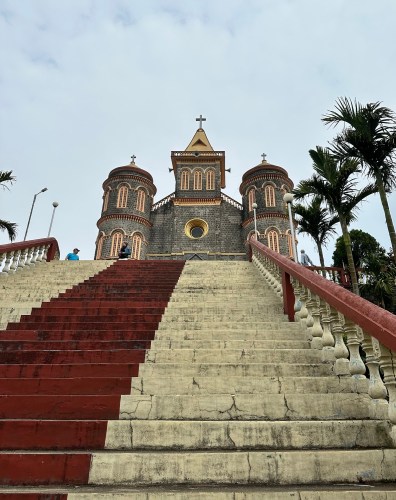
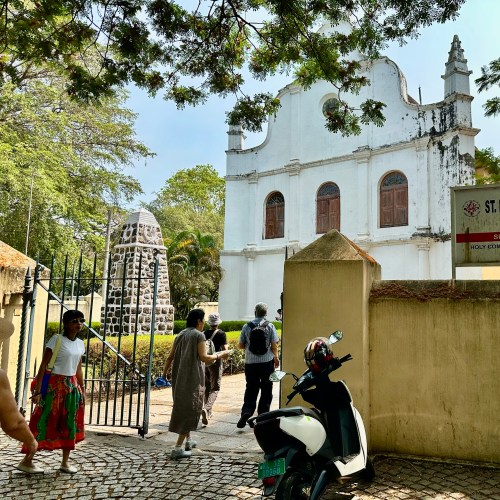
St. Francis Church

We got a big group this time. These seasoned travelers must share this same sentiment for enchanting tea plantations and Kerala backwaters. Balm for the soul. Soothing to our frayed nerves. Plus I’m assuming most of us are big fans of Indian cuisine. I am. So is my apo (grandchild). And then there’s Fort Kochi. I’m curious how the 3 cultures — Dutch, British and Portuguese — blended in this historic coastal neighborhood’s architecture, heritage and culture. Prior to this trip, all I know about Kerala has to do with Vasco de Gama. This Portuguese explorer reached Kerala in 1498, thus establishing a sea-based trade route between Europe and Asia. It was an epic 2 year voyage from Lisbon, around the Cape of Good Hope in South Africa, towards India’s south western city of Calicut in Kerala. This new maritime route ended the monopoly of Arab and Venetian spice traders. Think pepper and cinnamon. The new route boosted Portuguese economy and commerce. The Portuguese sailor went back a couple more times but on his 3rd trip, he caught malaria, died and was buried in India’s first Catholic Church — Saint Francis Church in Fort Kochi — before his remains were returned to Portugal where he now rests in the much visited- Jeronimos Monastery in Lisbon. Today, the spot where he was first buried (for 14 years, I hear) bears his tombstone.

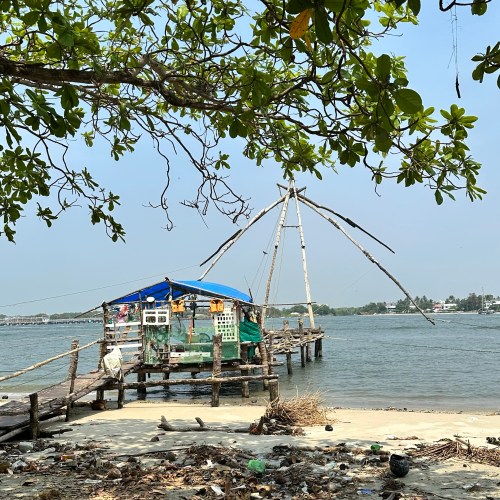
The Chinese Fishing Nets in Fort Kochi

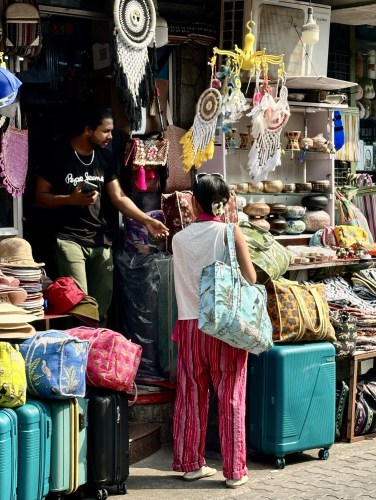
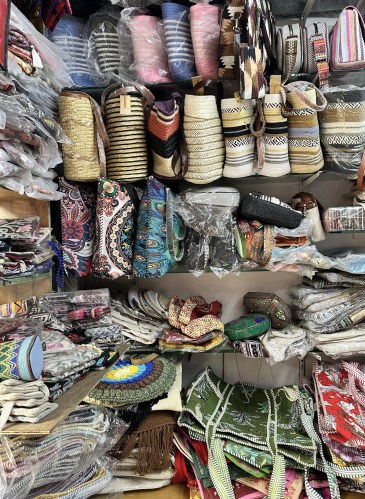
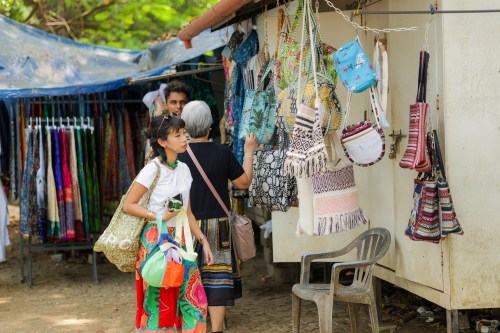
On our first whole day, our Kerala introduction involved a visit to the public laundry called Dhoby Ghat in Fort Kochi. This centuries-old traditional/manual and community washing center involved “dhobies” who are mostly old ladies doing handwashing and ironing using antique charcoal iron which are very heavy and hot. Frankly, it’s a tad heartbreaking to watch grandmas working way past retirement age. Thankfully, we didn’t stay too long and walked instead towards St. Francis Church. More tourists here. And even more vendors as we headed towards the Chinese fishing nets off the Arabian Sea. These teak and bamboo contraptions are a major tourist attraction here. To be honest though, we were distracted by the many beachfront vendors selling bags, purses, pens, jewelry, clothing and so much more. Before long, our tote bags just grew heavier while our wallets went lighter.

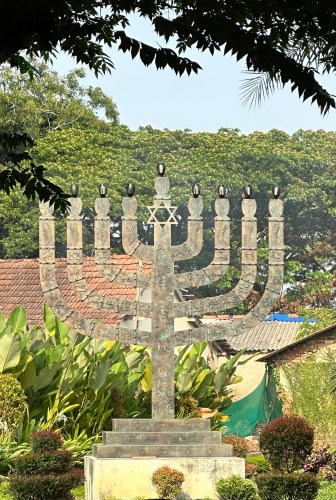
Jewish Synagogue.

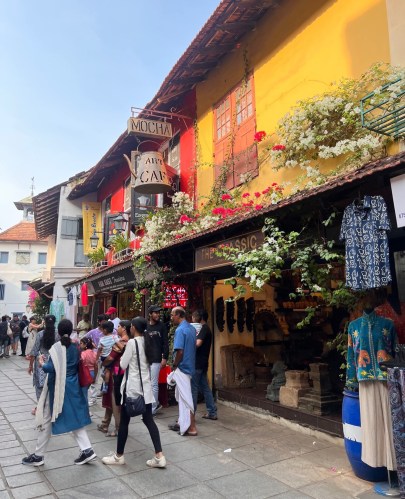
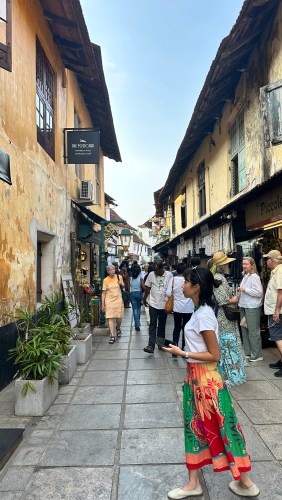
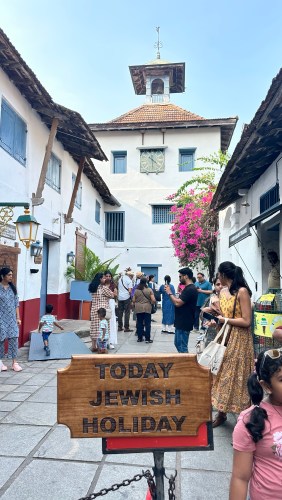
Fort Kochi is an interesting neighborhood. The Jewish town included a museum, a synagogue and an assortment of market stalls selling anything from spices to clothing to jewelry to perfumes, essential oils , woodcarvings and marble statues. We had our fill of shopping around the area and would have loved to check out the Jewish Synagogue but it being a sabbath, it was closed off to tourists like us. And so, we did the next best thing. Shop some more.

Jewish Town

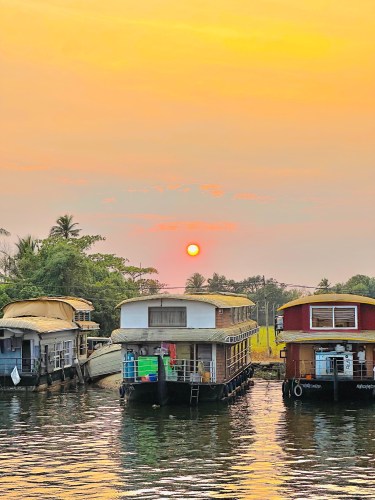
Tomorrow we drive towards Munnar and then Thekkady before we meet up with our houseboat in Allepey. It’s only our first whole day here and we’re giddy with excitement for some nature-tripping in the coming days. Not your typical barkada trip, I guess, but let’s just say we love going off the beaten path. Kerala may not be up there within the tourist radar but we’re here to explore and ready for some pleasant surprises. 😄


And it’s a wrap! Kaput. Enough. Pen down. Laptop off. One off the bucket list. Who knows when we’d return to explore more of this exotic country? But for now…… we rest our pens.


Photo Credit: BobI Francisco

Photo Credit: BobI Francisco

A Shutterbug's Haven.

A Shutterbug’s Haven.


FROM MAHARAJAHS TO MAHARANAS


Jaipur

Amber Fort

Dressing Up for Diwali Festival

Mehrangarh Fort in Johdpur

Ranakpur’s Jain Temple

Taj Mahal

The Sikh Temple in Delhi

Shah Jahan, the Master Builder

Qutub Minar


The opulence and poverty alternate in quick succession.

The opulence and poverty alternate in quick succession.


MUSINGS AND RAMBLINGS


A Birthday In India

The Colors, Sounds and Scents of India


A TOURIST’s PRINCELY PLEASURES


A Posh Birthday Lunch in a Royal Manor

First Impressions of Taj Lake Palace Hotel

Day 2 in Taj Lake Palace Hotel


Street Food

Street Food


FOOD PORN


As Spicy As It Gets

Feeling Royalty in Jharokha


It's good to be home 😄

It’s good to be home 😄


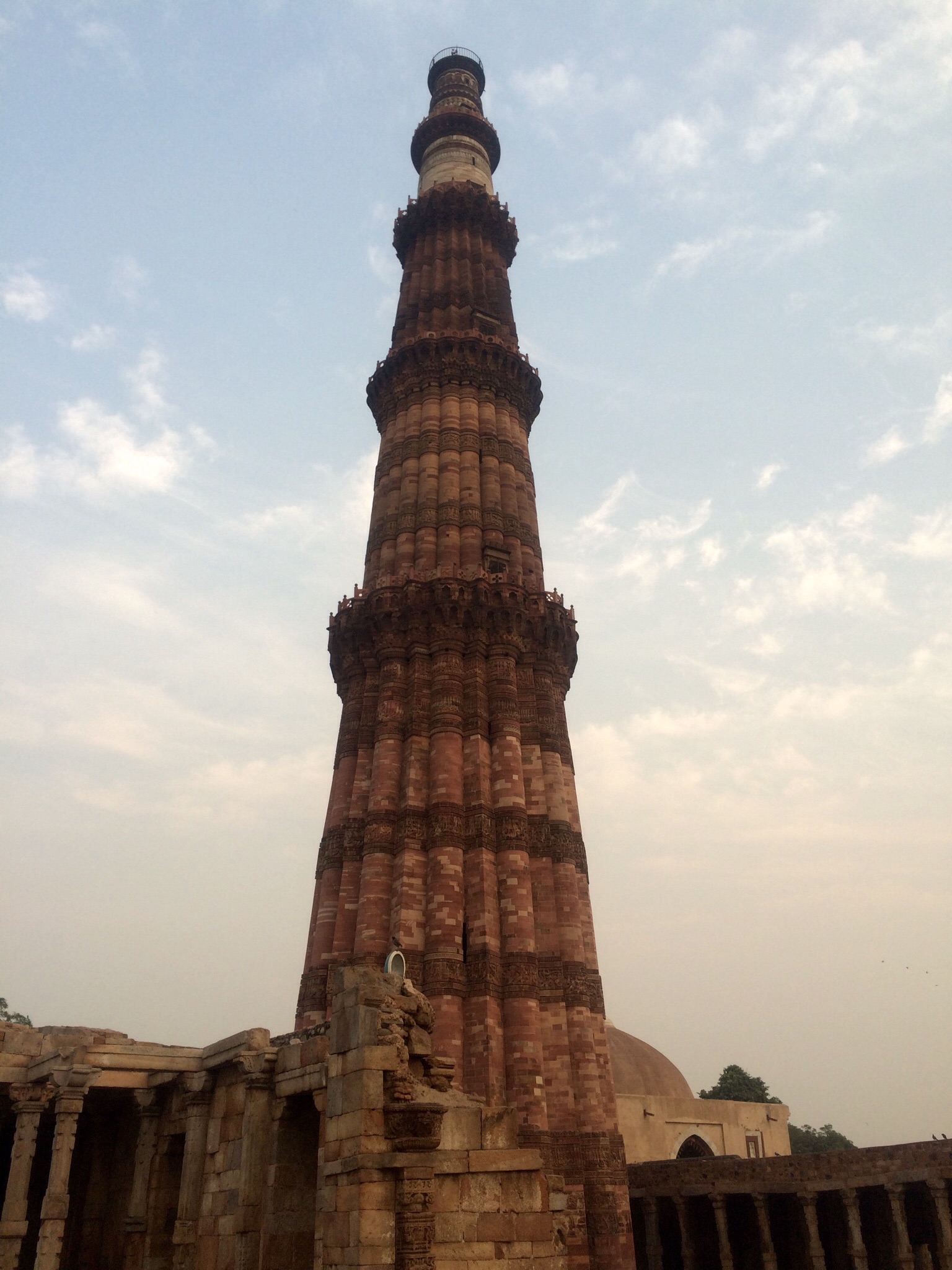
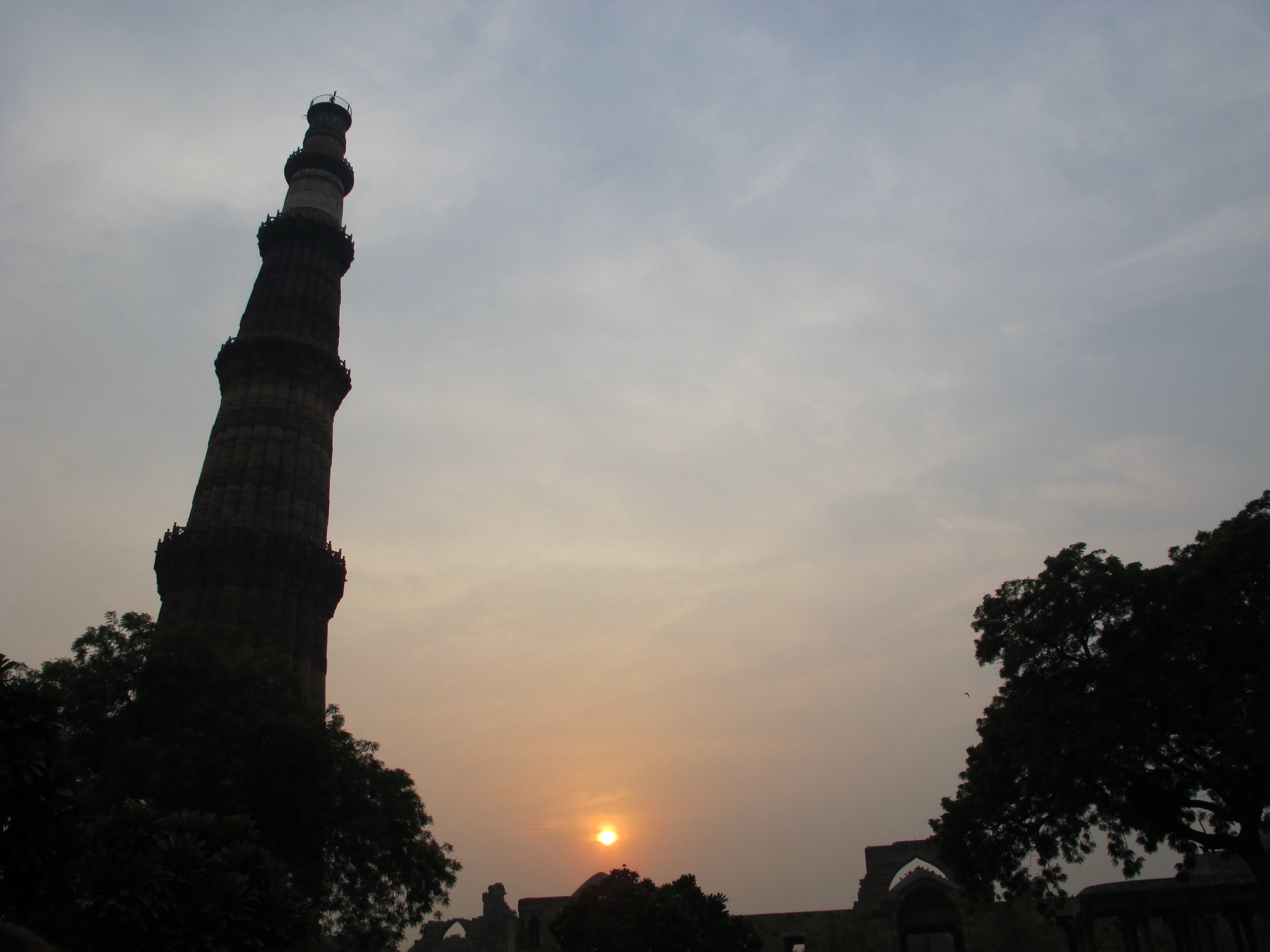
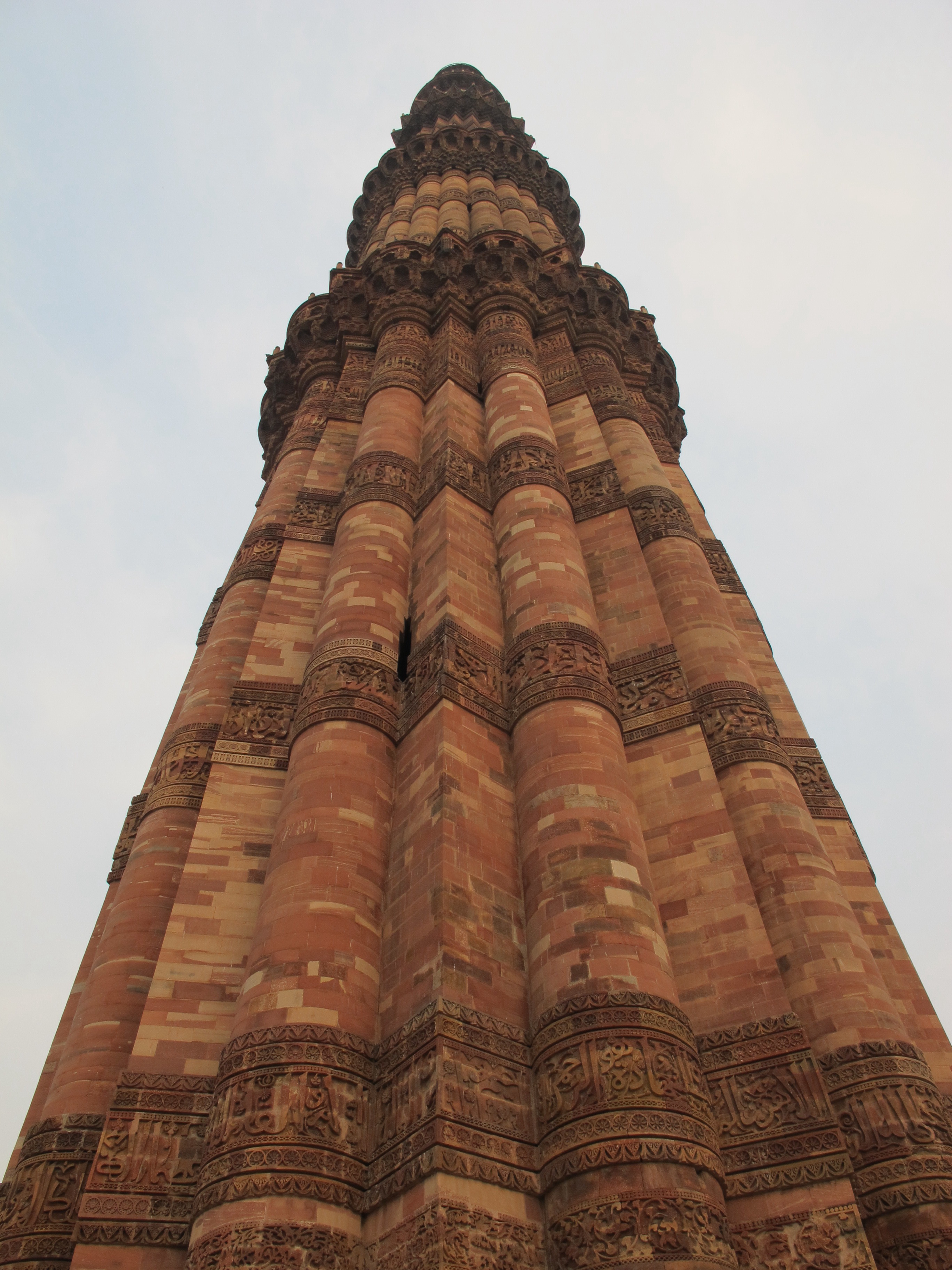
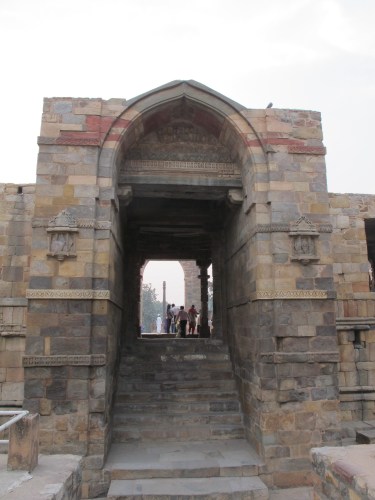
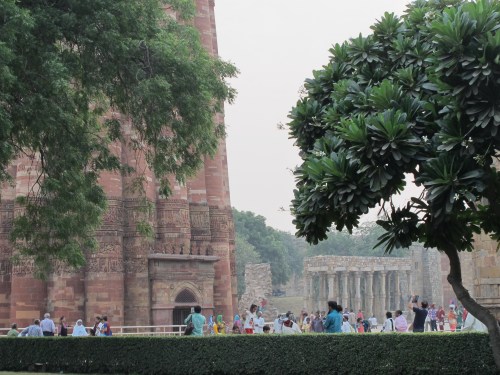
India is never short on ancient forts, palaces, towers, temples, monuments. Among its many heritage sites is this 12th century complex which includes this soaring 75-meter tower erected soon after the defeat of Delhi’s last Hindu Kingdom. Come sunset, it glows as a lovely redstone and marble minaret. The complex is quite manageable to explore, and we picked a lovely time of the day to do it.
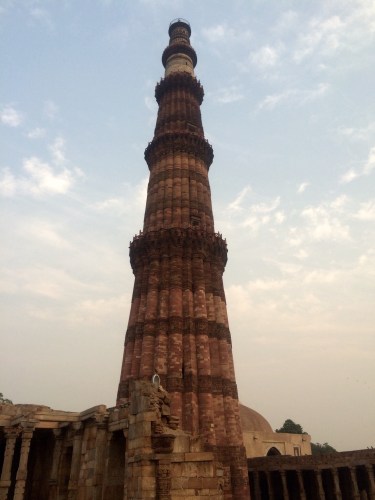


The 2nd tallest minaret in India, just a few kilometers south of Delhi.
The 2nd tallest minaret in India, just a few kilometers south of Delhi.

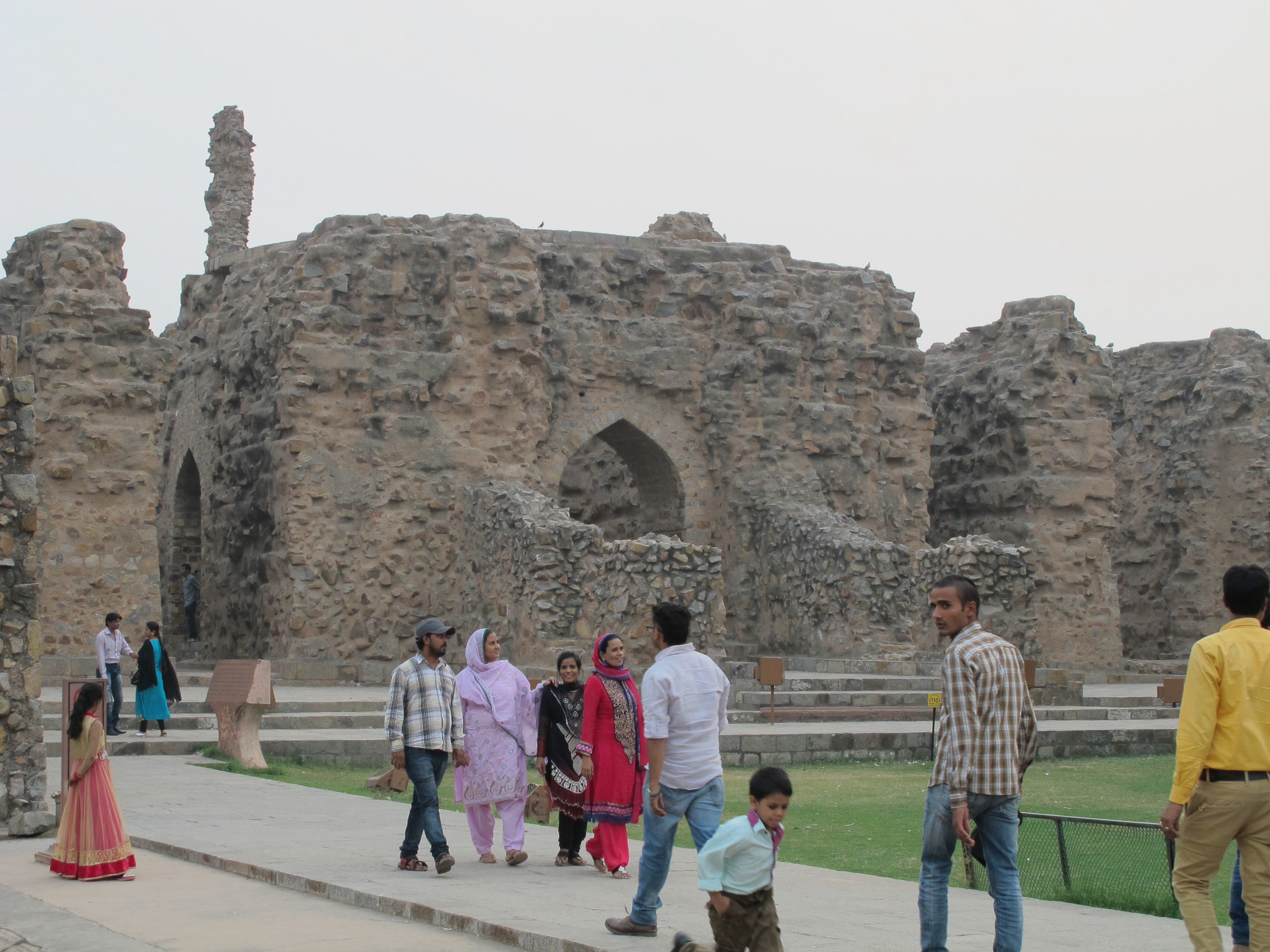
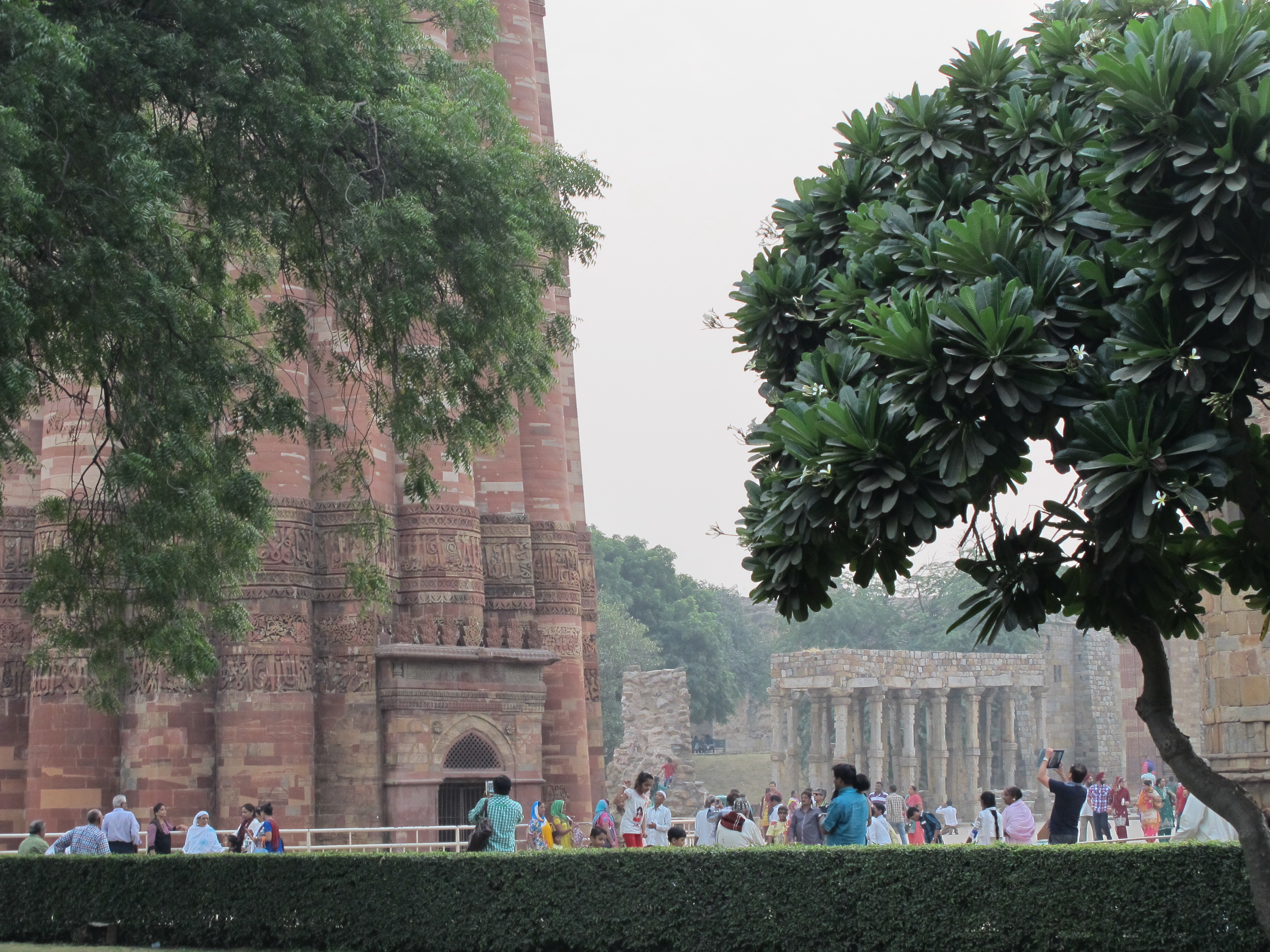
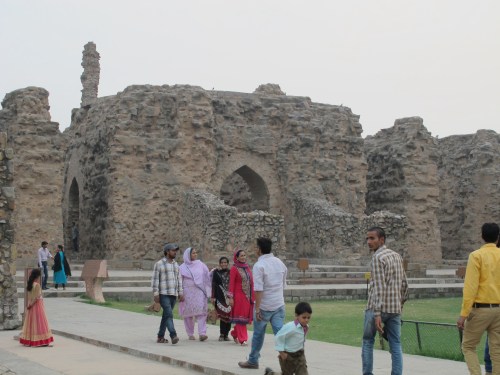
We found many local tourists within the complex.

We found many local tourists within the complex.


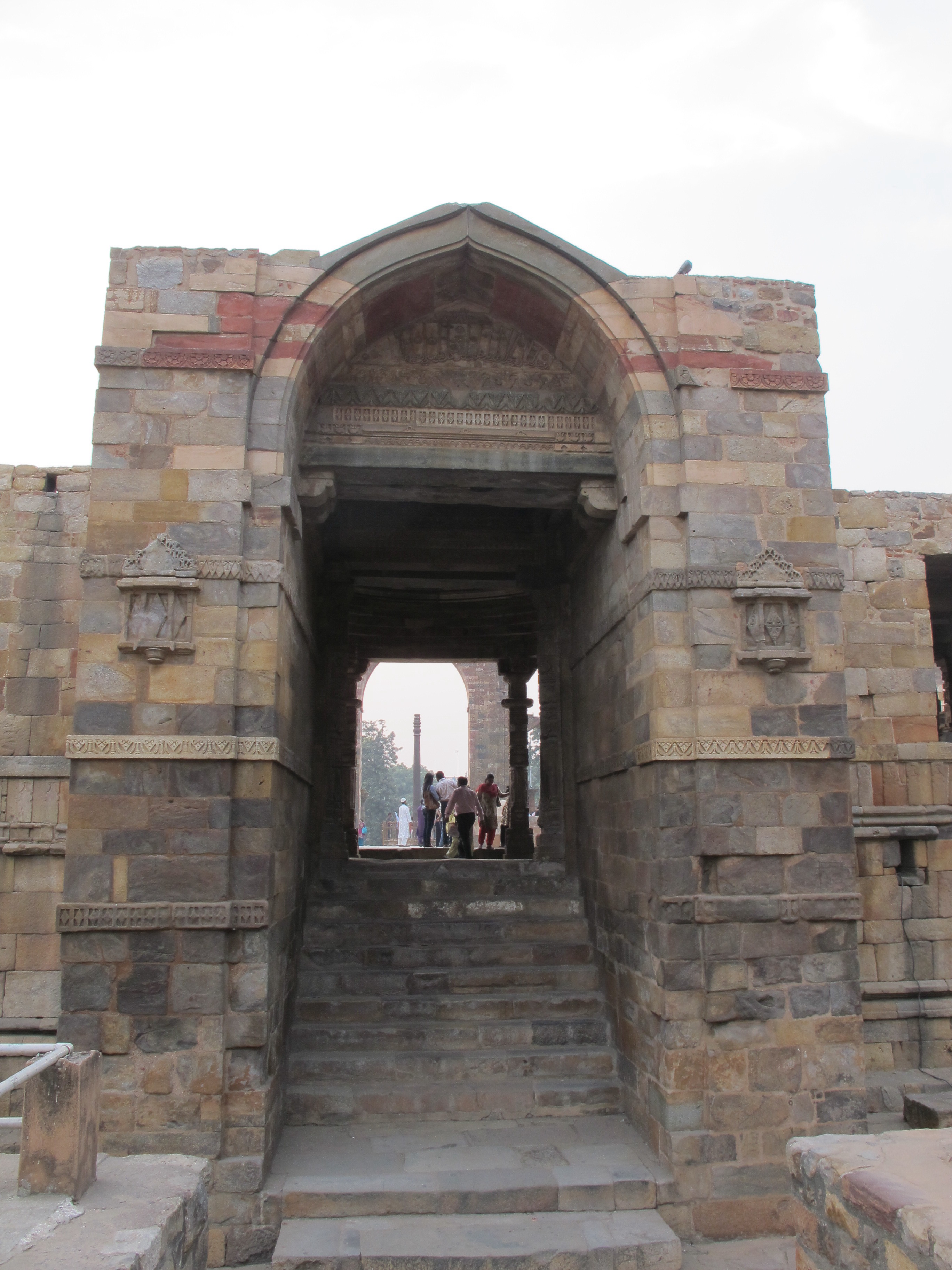
We visited the Qutab Minar complex on our last day in India, just hours before our departure. Glad we didn’t miss this site which is another UNESCO World Heritage Site. The minaret towers above some ruins much like The Forum in Rome, Italy. Built to honor the onset of Islamic rule in India, Qutub Minar is not without controversy. Sometimes called Qutab, after the first Islamic ruler, or Qutub which literally translates to “pole of justice”, the tower symbolizes “Islamic Justice”in this corner of the world.
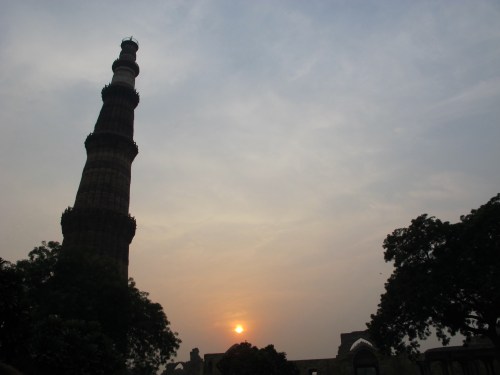


It was a lovely time of day to visit Qutab Minar.
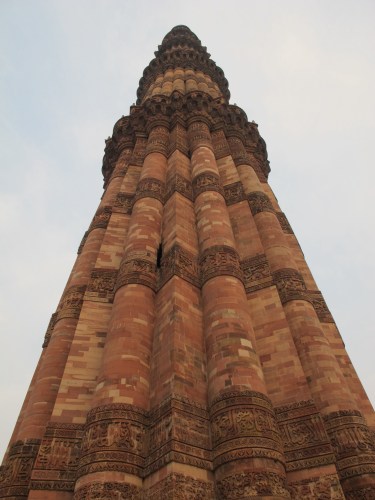
It was a lovely time of day to visit Qutab Minar.

Islamic calligraphy (verses from the Quran) and Hindu motifs combine in many of the monuments to be found here.

Islamic calligraphy (verses from the Quran) and Hindu motifs combine in many of the monuments to be found here.


Earthquakes. Wear and Tear. All these left the tower damaged and tilted slightly on one side. The first 3 storeys are made of red sandstone, the next 4th and 5th of marble. The many steps could be scaled before but a recent accident involving schoolchildren forced authorities caring for the monument to stop such uphill excursions. Access is not allowed now. The view from the top must be lovely, especially at sunset, when the adjacent red sandstone ruins within the complex glow as the sun fades from view.
 

image

image


Spices of India. Masala. And I thought it was another spice. Rather, masala is a mix of ground spices. The very heart of Indian cuisine. And India is soooo rich in spices. Turmeric. Cumin. Pepper. Cardamom. Chilies. Fennel. Cinnamon. Caraway. Anise. Ginger. Coriander. And so much more.


Poori or Puri  Unleavened Bread. As puffy as it gets! With potato masala.

Poori or Puri Unleavened Bread. As puffy as it gets! With potato masala.

image

Chole. Chickpeas is love <3

Chole. Chickpeas is love ❤


I was quite prepared for the spicy cuisine. And I do like Indian food. One of my fav dishes is the ubiquitous Palak Paneer found on every buffet spread. That plus the dhal (lentils) and chole (chickpeas) paired with all types of flatbread. Naan, Poori, Chapati, Paratha of all types — onion, garlic, paneer, etc. And the chutneys!


Chutneys galore!

Chutneys galore!

image

image


All that bread. Imagine all that ghee. A couple more weeks here and I couldn’t slide into my pants. Plus the rice. Biryani? Basmati? Carbo overload. And don’t forget the okra — short, tiny, and crunchy. Loaded with uric acid, if you aren’t careful. Yay!


They look like doughnuts but these breads must be filled with ghee!

They look like doughnuts but these breads must be filled with ghee!

image

image


And how can you resist the curry? My fav is mutton curry, which I can’t get enough off. Rice or flatbread, the mutton curry is wiped clean off the plate or bowl. Soaking naan across the curry plate is yum! Just mind the spices. There were others, but I couldn’t get past a tasting portion without burning my tongue. Phew!


image

Indian "fried rice" was such a hit with me!

Indian “fried rice” was such a hit with me!

IMG_7638.JPG


As for desserts, that uber-sweet, syrupy gulab balls should really push your sugar levels past the Diabetes 2 threshold. Tooooo much. I won’t mind not seeing them for a year. And the almonds? Freshly shelled and milky white not to be ignored. Other nuts like pistachio also found their way into some sinful desserts.


IMG_7635.JPG

IMG_7636.JPG


On our last day, our guide shared this home recipe with us. I tried it…. and ended up with a spinach dip instead. (I’m hopeless)

Palek Paneer (Spinach + Cottage Cheese)

Boil spinach until wilted. Osterize to make purée. Set aside.

In a pan, put veg or olive oil. Sauté cumin seed or put cumin powder; add finely chopped onions or onion purée. When browned, put garlic paste and bit of ginger paste. Put spinach; let boil. Add chili powder, salt to taste. Add cubed cottage cheese. Add tomato purée. Add little hot water to dilute.


IMG_7404.JPG

image
<br /

IMG_7637.JPG

Thank you, Chikie, for some of the food photos


He is called by many titles, but one sticks out in my mind. The “King of Marvels”. Rightfully so. It would have been enough to say he founded Taj Mahal, to honor his beloved Mumtaz Mahal, his favorite wife. But there is more. Truly, his reign was marked by a golden era in arts and architecture in this exotic country. Incredible India, Incredible Shah Jahan! 


It sparkles under the sun. It glistens under a crescent moon.

It sparkles under the sun. It glistens under a crescent moon.

This is how the Taj Mahal looks when viewed from Agra Fort, just 2 kms away.

This is how the Taj Mahal looks when viewed from Agra Fort, just 2 kms away.


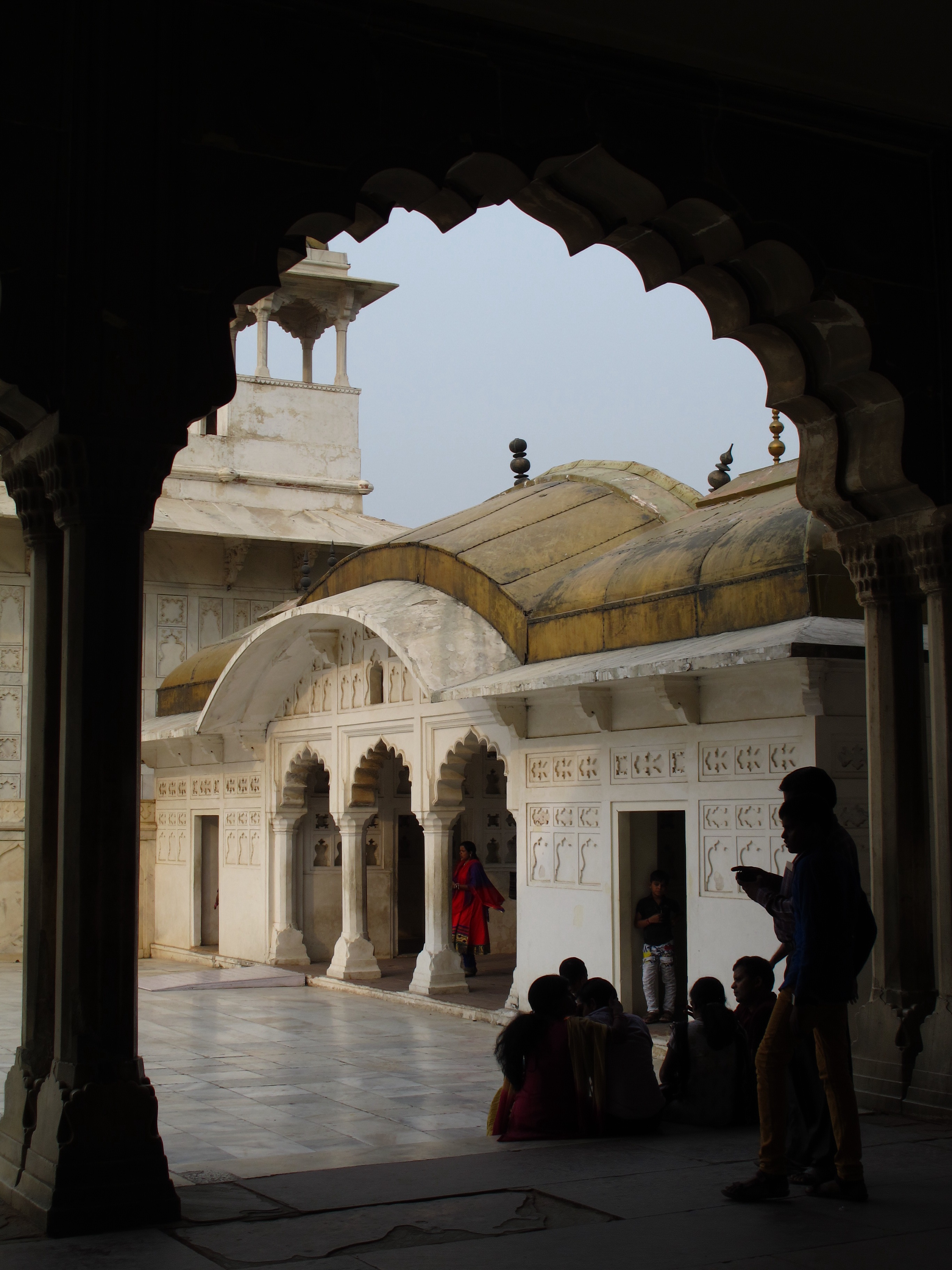
Besides Taj Mahal, give credit to Shah Jahan for a few more heritage sites. There’s Agra Fort, just a stone’s throw from the iconic Taj Mahal. It is also the place where Shah Jahan breathed his last. Right there in the Octagonal Tower of Agra Fort where he was imprisoned by one of his own sons following a war of succession. Sad. As cliché as it sounds, it’s where he viewed the “eternal teardrop on the cheek of time”. And while Taj Mahal sparkles, the Agra Fort is another marvel in its own right. 


Moti Masjid  (Pearl Mosque) inside Agra Fort

Hall of Private Audience (Diwan i Khas) inside Agra Fort

You get more than enough dose of those arches here. Lovely!

Diwan I Aam. Hall of Public Audience.


Once the capital of India before Shah Jahan moved it to Delhi, Agra is never short on monuments and forts. Most people just visit the Taj Mahal. Well, it is certainly worth seeing, and I perfectly understand if tourists spend more time there or wish to simply have their “moments” by not adding more sites to their list after seeing the Taj. But the Agra Fort sort of completes the journey to Agra. Shah Jahan is an absolute builder of marvels and his preference for buildings made of white marble shows in this addition to the red sandstone fort started by his grandfather. The Moti (meaning pearl) Masjid is a fine example of Mughal architecture.


The 16th century Mughal monument known as Agra Fort

The 16th century Mughal monument known as Agra Fort

Agra has lots to offer beside the Taj Mahal.

Agra has lots to offer beside the Taj Mahal.


There are more. But Shah Jahan’s final masterpiece is the Jama Masjid, touted as the largest mosque in India. Amidst the chaos of the bazaar just across it, this “Friday Mosque” can hold as many 25,000 devotees. Like many other temples, we left our footwear just outside the mosque to walk on tiles dating from the 17th century. Towering over Old Delhi, the mosque is an aberration in this otherwise chaotic world of rickshaws and narrow alleys. A ride in one of these rickshaws past many open-fronted stalls, many spilling into the alleys, breaks all tranquility gained from a few minutes inside the Mosque courtyard. Incredible!

 
image

image


Free and communal serving of food may take its origin from Sufism but it is a long-held tradition and practice in Sikh Temples here in New Delhi and elsewhere. LANGAR is the name for the large community kitchen, where volunteers can be found peeling and chopping onions, making bread, cooking lentils, etc. The volunteers, called Sevadars, work in the Langars attached to all Sikh Temples (Gurudwara), to prepare vegetarian meals fed to pilgrims or visitors, WITHOUT DISCRIMINATION. Food sharing can extend to as many as 20,000 pilgrims as in this Sikh Temple in New Delhi, regardless of faith, class, and status in life.


This is the temple pool where pilgrims cleanse themselves.

This is the temple pool where pilgrims cleanse themselves.

image

image


I almost missed this kitchen as my group left while I was literally “testing the waters” from the temple pool. By the time I looked up, they were gone. I knew I couldn’t leave without seeing how the kitchen works. More so, how the feeding of as many as 20,000 pilgrims is done. I am not sure how I lost them, but I would have thrown a tantrum if I missed this!


Feet, arms, legs, face washed with water from this pool.

Feet, arms, legs, face washed with water from this pool.

image

The Sikh Temple in New Delhi

The Sikh Temple in New Delhi


No one is allowed entry unless you take off your shoes or sandals and wrap something around your head. You also pass a square tub to wash your feet upon entry. Inside, both pilgrims and visitors mingle —- the only tell-tale signs distinguishing one from the other being that the pilgrims come here to worship while the visitors itch to snap a photo with their cams. Unfortunately, photography isn’t allowed inside the temple.


Sikh men wrap turbans around their uncut hair.

Sikh men wrap turbans around their uncut hair.

He caught me snapping a photo. Perdon.

He caught me snapping a photo. Perdon.

The volunteers peeling onions.

The volunteers peeling onions.


It is curious how food is prepared and fed to as many as 20,000 pilgrims and visitors. We met many volunteers, each obviously knowing what to do in that huge community kitchen. A system is in place. Although I found the lighting quite dim, the kitchen was kept clean and well-ventilated. Each volunteer busy with their assigned tasks. Huge baskets of naan and chapati. Large tubs of lentils or dahl. All served to people without regard for race, creed, faith and stature in life. Food is shared with whomever comes.


Ready for distribution

Ready for distribution

No rich or poor, pilgrim or not. Everyone is given a free meal.

No rich or poor, pilgrim or not. Everyone is given a free meal.

Breadmaking 101.

Breadmaking 101.


I wish there was time to line up, sit crosslegged and join the others to be fed on silver trays. I like the idea of sitting there with so many others, waiting for this man to drop bread on your silver tray, and another coming to scoop some lentils for each of them. I’ve seen it on TV and in some documentary, and would have relished being there and actually experiencing it.


image

image

Pilgrims and visitors wait for their portions.

Pilgrims and visitors wait for their portions.


SIKHISM. much has been written and said about this religious sect. One of many tracing its roots here in India. Amazing how this exotic country has encouraged so many life philosophies and faiths. There may be a whole world of difference between Sikhism and Hinduism, or for that matter, other religions. But what sticks uppermost in my mind is the Sikh belief in equality. No caste system for this faith. All beings created equal. Now, that speaks volumes, don’t you agree?


Bread served hot!

Bread served hot!

image

image


Having visited a Sikh temple, I am now inclined to pick up a book on Sikhism. You bet I am intrigued. I am curious how it began — amidst all the other religions dominating India — and how magnificent temples and community kitchens like this are funded. I am curious about their other beliefs. Did it just branch out as another protestant sect from Hinduism? Is the “equality” philosophy the “breaking point” ? Curious. Curious.


Feeding is so systematic , like "clockwork".

Feeding is so systematic , like “clockwork”.

Volunteer bread makers.

Volunteer bread makers.

A large tub of lentils!

A large tub of lentils!

image


He was 14 at the time. The grandson of Akbar the Great, famous for his empire marked by war victories, grand fortress palaces, flourishing arts and culture,  and a royal  harem   consort of 300+ wives and concubines. Then named Prince Khurram, he was the 5th Mughal Emperor of India, likewise destined for greatness and touted as a favorite of his grandfather Akbar. She was known then as Arjumand Banu Begam, a Muslim Persian Princess, hawking glass and silk beads in Meena Bazaar.  It was LOVE AT FIRST SIGHT. Yet the wedding took place only after 5 years and 2 wives.  


Photo Credit: Ernie Albano

Photo Credit: Ernie Albano


Five years later and after 2 wives. But she was his greatest love. His favorite. So she was renamed Mumtaz Mahal meaning “Jewel of the Palace”. Yet she was hardly at the Palace, accompanying the Emperor, then bearing the name “Shah Jahan” — meaning “King of the World” — in his military adventures while bearing his 14 children. Such devotion. Such love. I could almost hear the royal “gossip” about this great love affair.


image


Blue-eyed Shah Jahan and Lovely Mumtaz Mahal. Theirs is the best, hauntingly heart-rending love story of all time. The 15th century Pearl Mosque in Agra bears a grand exterior that glistens, sparkles, and glows as the sun passes overhead. It must look magical under a crescent moon. But for now, we stand in awe just viewing it, nearly dancing in sunlight and shade, dazzlingly white.


You ride this rickshaw on your way to Taj Mahal.

You ride this rickshaw on your way to Taj Mahal.

The "Teardrop" hides behind this fort-like gate.

The “Teardrop” hides behind this fort-like gate.


Shah Jahan’s reign is the Golden Era for Mughal art and architecture. Yet he is undoubtedly made most famous by this single feat — the builder of Taj Mahal to honor his favorite wife. The story goes that Shah Jahan was so heartbroken that he mourned Mumtaz’ death so bad that his hair all turned gray overnight when he emerged from mourning in one of the royal rooms. The Pearl Mosque is now an Indian icon and no visit to India is ever complete without visiting this royal tomb.


A glimpse of the royal tomb as one enters the gate.

A glimpse of the royal tomb as one enters the gate.

Jimi Hendrix was here!

Jimi Hendrix was here!


Truly, the Taj Mahal remains unsurpassed in its beauty. Shining marble with inlaid precious stones that glows under the glare of the sun as much as it glistens when darkness sets in. You feel Shah Jahn’s love and devotion just looking at it. Heartbroken, yet he lived and had a long reign till he fell seriously ill that it triggered a war of succession among his sons. The nearby Agra Fort is from where Shah Jahan, in his last days, viewed his Taj Mahal across the river. Deposed and imprisoned by his own son for the rest of his life. He intended to build a Black Mosque as his resting place, but he was destined to lie side by side with his beloved Mumtaz inside this magnificent royal tomb instead. A teardrop on the face of eternity. A monument to love.


IMG_7185.JPG

The octagonal porch where Shah Jahan died, pining for his beloved Mumtaz.


IMG_7179.JPG

(Don’t you just love this selfie photo by Ernie Albano? Thanks, Ernie!)


Ranakpur is some 5 hours drive from the blue city of Johdpur. The 15th century temple in the Aravali Valley hardly invited my attention for 2 reasons. First, I knew zilch about Jainism. Second, I have the beginnings of temple and fortress-fatigue by now. It didn’t help that the roads leading to Raknapur was such a rugged landscape, no lush forests nor vegetation, and our long trip was marked only by an occasional strange rock formation here and there.
 

IMG_6743-0.JPG IMG_6749-1.JPG


Out of the mud, cow dung and rubbish littering Johdpur’s narrow alleys into Aravali Valley past processions of holy cows and goats meandering along the major roads, we came face to face with monkeys guarding the temple gates. I confess monkeys scare me out of my wits but these monkeys were quiet, oblivious to our presence and obviously uninterested in humans. The nearly peaceful demeanor must have something to do with the tenets of Jainism which invokes that all living things have divine souls.


IMG_6772.JPG


This belief kept the Jains inside their homes by sunset, wont to linger outside in the dark where they may accidentally step on bugs and other tiny insects. You bet you won’t see a Jain swat a fly or shoo shoo a flying beetle. The idea drives me insane but such is their faith which commands respect and yes, admiration.


IMG_6801.JPG


Jainism is one of 3 ancient Indian religious traditions along with Buddhism and Hinduism. It promotes not only non-violence to living creatures but also non- possessiveness or absence of wordly attachments. Some Jains believe monks should be naked, completely renouncing all passions and bodily instincts and senses. A tough order, if you ask me. Yet for all its non-material attachments, I do find their temple an architectural wonder in marble. What with the corbelled ceiling and ornately designed arches as well as all 1,444 pillars — no 2 pillars are the same —intricately decorated.


IMG_6783.JPG IMG_6819.JPG


It may not have spread across oceans outside India, but there remain Jain communities within this incredible nation. Naked Jains? We spotted one. And frankly, it’s easier for me to understand that than letting tiny bugs bite them young babies. I won’t, can’t aspire to be a Jain. Non-violence yes, but I think I’d still instinctively hit a mosquito within swatting distance. 😔


IMG_6837.JPG IMG_6825.JPG IMG_6838.JPG