Category: Spain


To Montserrat & Back


Home of the Black Madonna. Just an hour’s journey via R5 from Placa de Espanya Station in Barcelona heading towards Manresa. One must decide before the train ride whether to ride the “connecting” cable car or funicular Cremallera up to the monastery. If you’ve decided to take the cable car, you need to get off the R5 train at the Aeri de Montserrat. If you are taking the funicular, you get off at the next station, the Monistrol de Montserrat. Slightly longer but cheaper. Combined tickets (train+cable car OR train+Cremallera) can be purchased at Placa de Espanya.

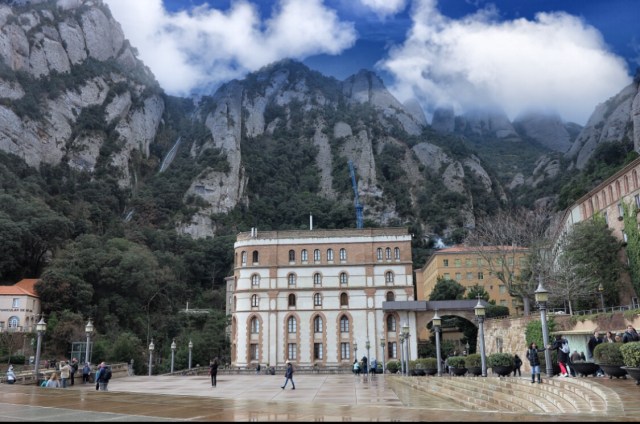
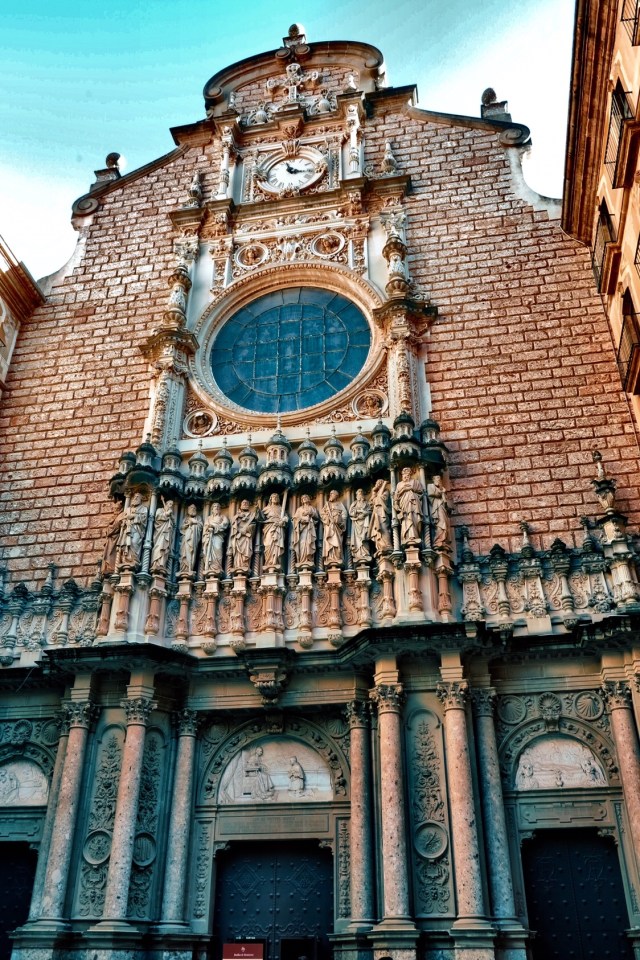
Either way, the ride guarantees stunning views. Montserrat literally translates to “serrated mountains”. The train weaves through the mountains as it climbs, and the cable car or cremallera gives an even more panoramic view as the short ride transports you right on Monastery grounds. The Black Madonna sits inside and at the top of the altar inside the basilica. We waited in line with other pilgrims for half an hour to go up and touch the Black Madonna. We also heard mass where Gregorian chants were sung by a boys’ choir from the monastery’s boarding school. On Saturdays, the chants are sung by the monks. We came on a Friday and the singing was heavenly!

Either before or after the visit to the basilica, you can linger around to appreciate the stunning beauty of Montserrat. Or light a candle and say more prayers. We did both. But we couldn’t stay longer outdoors because it was friggin’ cold! We could even hardly go past the beautiful square & courtyard of the Monastery, because of the freezing weather. Then and there, I ditched plans to check out the footpaths and hiking trails. Not even a funicular ride to reach higher grounds or to check St. Michael’s Cross or Santa Cova could lure me to engage in any adventure. Besides, it’s way past our feeding time 😩
< img src=”https://lifeisacelebration.blog/wp-content/uploads/2018/01/img_8569-1.jpg&#8221; class=”size-full”>

And so we’ve decided to have our adventure inside the Hotel Abat Cisneros Montserrat instead. The hotel is right beside the Monastery. Other lunch options include the Cafeteria which I’ve tried twice before. Nothing fancy. But a peek into the hotel’s dining area and a browse-through of its Menu convinced us that we’re ready for a proper meal. Lamb for the nieta and pulpo for the señora abuela. And a small bottle of vino blanco between us. Purrrrrfect!

< img src=”https://lifeisacelebration.blog/wp-content/uploads/2018/01/24510024947_97d078fd03_o-1.jpg&#8221; class=”size-full wp-image-13396″ height=”3024″ width=”4032″>

< img src=”https://lifeisacelebration.blog/wp-content/uploads/2018/01/img_4635.jpg&#8221; class=”size-full”>
Gaudi and Ciutat Vella


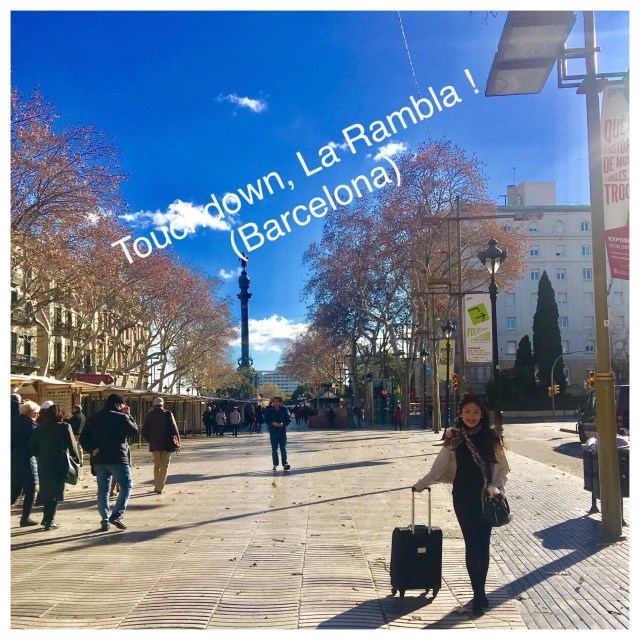
My nieta said she can live here. She had her entire face nearly pressed on the window as we trained into Barcelona Sants Station, then hopped on the metro for Liceu Station in La Rambla. A short walk to our hotel….. and La Boqueria. We knew we won’t grow hungry in this part of town.

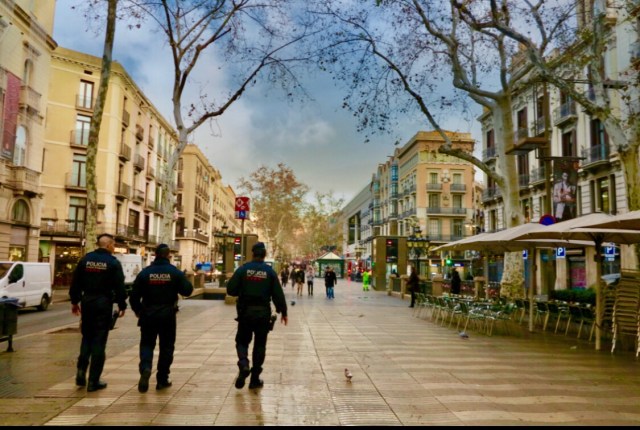
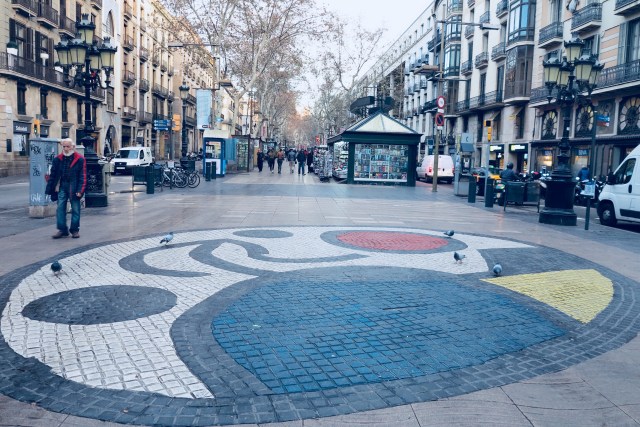
It was reassuring to find many policemen and patrol cars every so many meters in this part of town. We felt safe walking out of our hotel right into La Rambla. We made trips to La Boqueria for breakfast and lunch, only to find that the resto beside our hotel serves very good paella negra. I kid you not. Just don’t order the sangria which is exhorbitantly priced! We were happy with our meal till we asked for “la cuenta”. And so we justified that bill by saying we got a good discount from Museu Picasso, viewed/stepped on a Joan Miró artwork for free, and discovered the pleasure of strolling past Barri Gotic and enjoying La Ribera and El Born. Swell.

La Rambla is a strip that joins Placa Catalunya at one end with La Rambla del Mar on the other end. If you care for fountains and doves or need to get on a hop on/ hop off sightseeing bus, walk towards Placa Catalunya. If you want the sea breeze and errr, more doves, proceed towards the waters. Along the strip itself, you have La Boqueria, Liceu Theatre, and Palau Güell Museum on one side and on the other side, Barri Gotic which includes the Placa Real, and Barcelona Cathedral.

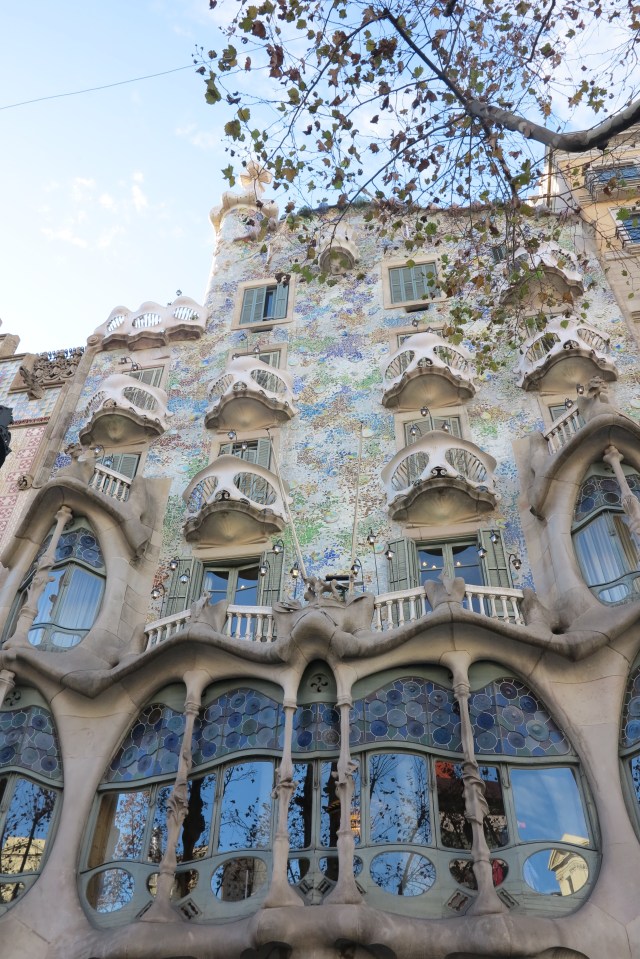
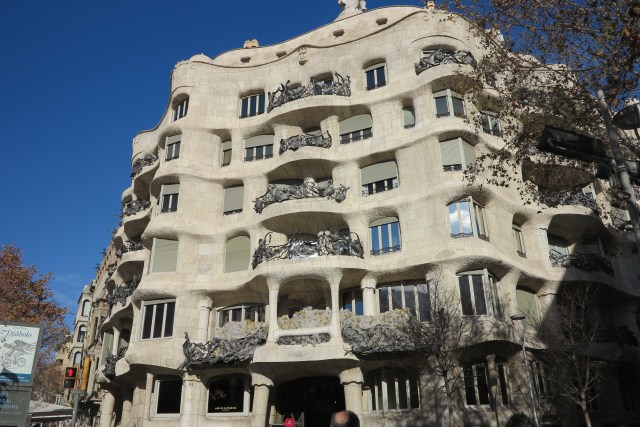
Farther on, you reach the La Ribera and the less touristy El Born neighborhood. Still part of the charming Ciutat Vella, without the hordes of tourists. Having spent time in this area, enjoying quiet dinners, one is inclined to think 80% of the tourists are either in Sagrada Familia, Parc Güell, La Rambla, La Boqueria, Casa Batllo or La Pedrera.

After all, Barcelona is largely all about Gaudi. Many on every tourist’s list are creations of Antoni Gaudi. No one takes the blame here — the man’s a genius! My nieta can’t have enough of him.

From The Archives:

So Much To Thank Gaudi For


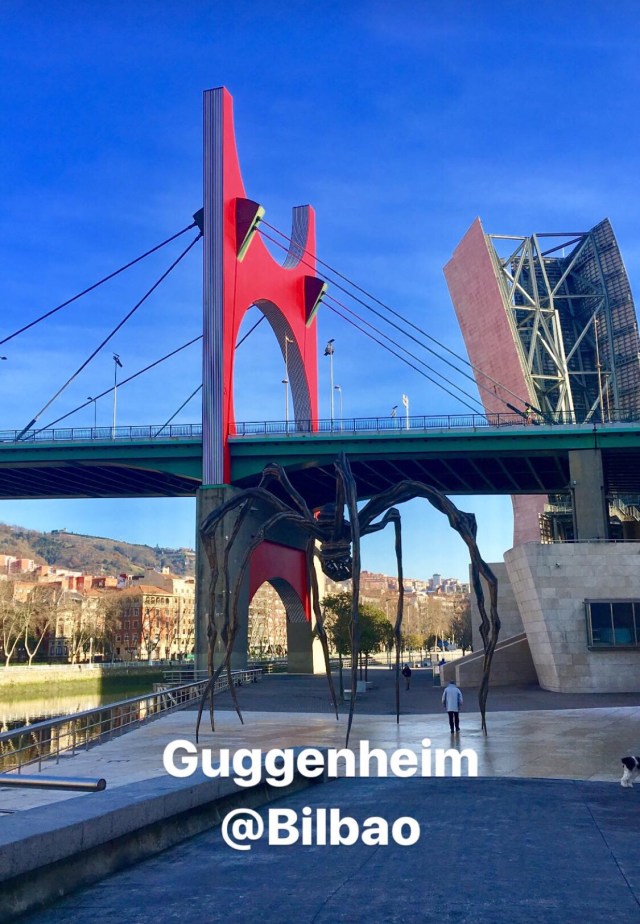
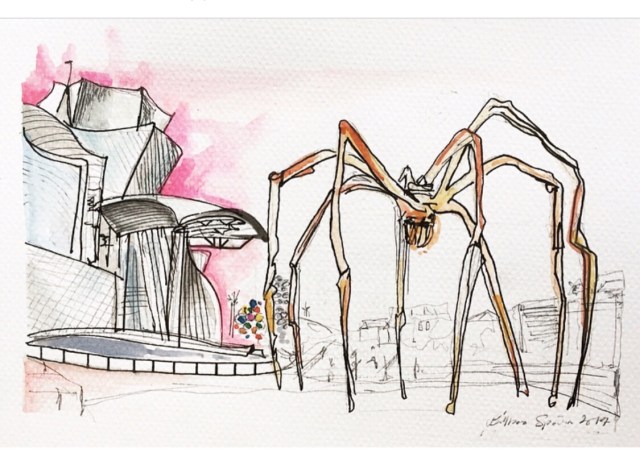
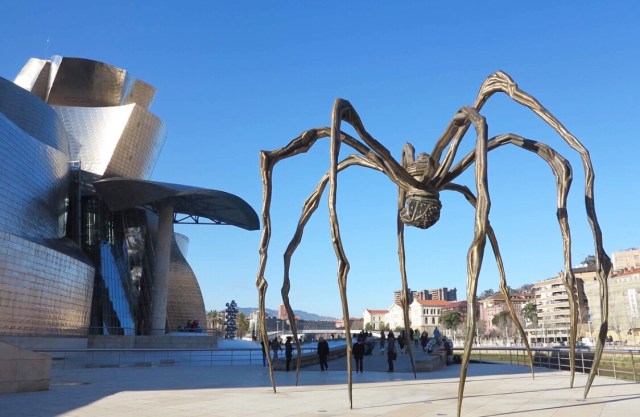
It’s a nursery rhyme I find myself humming each time I come visiting Guggenheim Museum in Bilbao, Spain. Sure, most people would visit to view what’s on exhibit inside the museo, while others would be quite content just viewing Guggenheim’s magnificent architectural wonder made of titanium, glass and limestone. In a sense, one can say the most significant work of art in this museo is the modern and contemporary style of the edifice itself. Designed by Frank Gehry, completed in 1997, hailed as a 20th century masterpiece. And indeed, it is! But much that I find the glass and titanium masterpiece awesome, I am particularly lured by this giant spider sculpture!

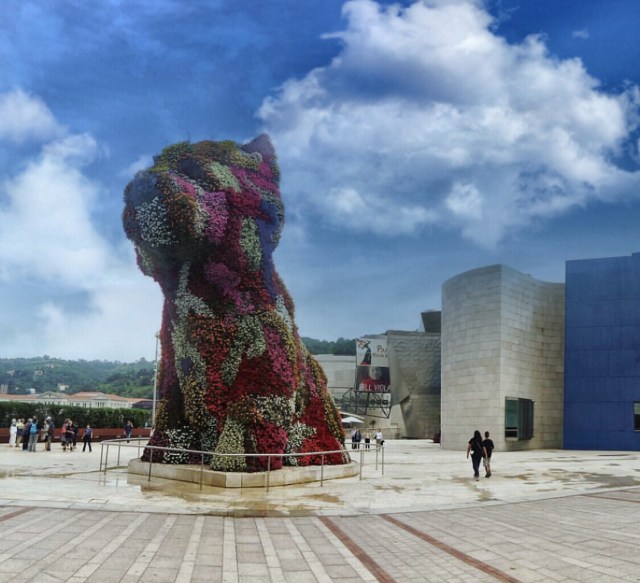
The day and time we visited, there was even some sort of a “fogging machine” around the edifice making the entire complex looking even more dramatic. Yet even without it, there is already enough drama in Guggenheim Museum with the giant spider, giant puppy topiary and the majestic red bridge. No camera whore nor aspiring photographer could miss these iconic landmarks. Unfortunately, Jeff Koons’ “Puppy” looks forlorn without the blooms. Made of stainless steel, this work of art is typically festooned with the most colorful flowers. Not in winter though. From the comforts of a sushi restaurant across the street where we nourished ourselves (a girl’s got to eat!), we viewed Koons’ giant terrier sculpture from the floor to ceiling glass window. Sad. It lost its magic from its spring version (shown here for comparison).

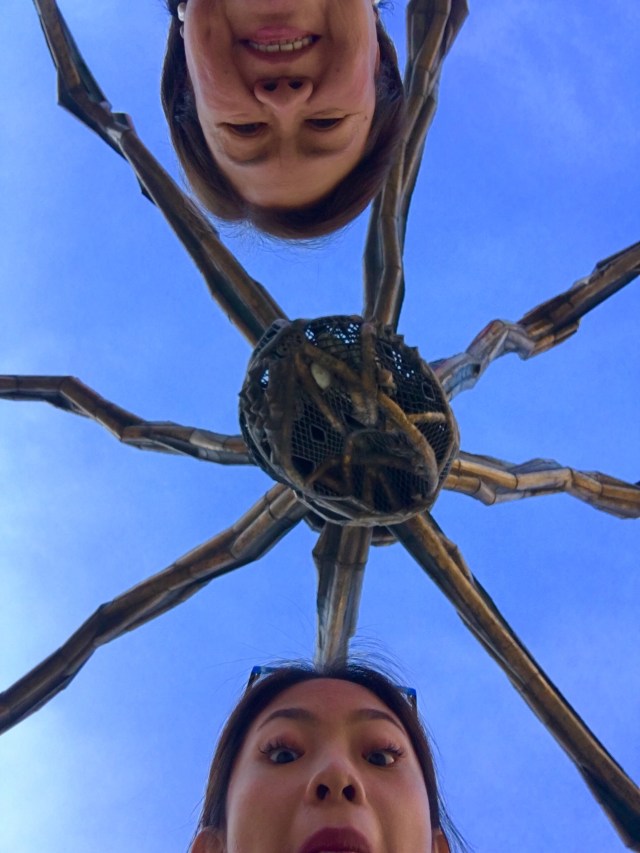
The not so itsy-bitsy spider by Louise Bourgeois makes up for the pup’s slack. On the other side of Gehry’s creation is this 9 meter-tall bronze, marble and stainless steel sculpture. It even has a name – Maman. If you stand underneath the giant spider, you’d find a sac of marble eggs embedded on its stomach. The artist designed it as such to honor her weaver-mom and to project the protective nature of mothers.

Lastly, let’s not forget the red bridge and row of buildings just across the river. No cam whore can possibly do wrong taking shots of these sights. But please do take the time to pause and appreciate this entire composition of works of art outside the confines of the Museo. After a few snapshots, breathe in all this beauty. I’m attached to the giant spider sculpture perhaps because the artist meant it as a tribute to his mom. Yeah. I’m a sucker for such stories.

Btw, no photography is allowed inside the Museum. Hmmm, so this explains all these exterior shots. I sneaked in a few shots though. Mi apologia.


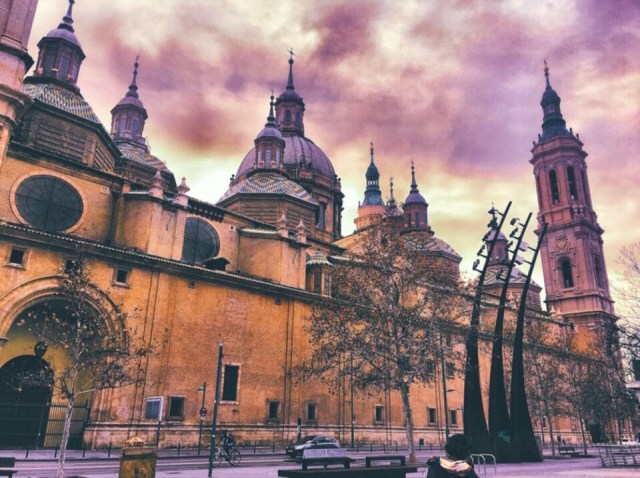
Early Tuesday morning, we took the train to Zaragosa. Just a quick visit to the Basilica de Nuestra Señora de Pilar, La Seo del Salvador and the Palacio de la Aljaferia. As the train chugged through towns blanketed in white-out snow, we braced ourselves for low temps as we reached Zaragosa. We could feel the cold almost touching our spine as our hands touched the train’s glass windows. Beanies and mittens on!

From the Zaragosa-Delicias Station, we hailed a cab to take us to our hotel. Dropped our bags in the hotel and stepped out almost immediately to hail another cab to drive us to Plaza del Pilar where the Basilica and La Seo stand across each other. Walking in this cold weather was not an ideal option. Upon reaching the Plaza del Pilar, we found so much going on there. Looks like some festivity just ended (3 Kings, I bet) and the decor, Christmas booths, kiddie rides are all being dismantled and packed away. But the entire Plaza del Pilar is sooo quiet. Hardly a crowd. We had a field choosing where to eat in the restos lining the square.

No photography was allowed inside where gaping is a common occurrence. The chapels, the dome, the vaulted ceilings, the many antique and art pieces are simply mind-boggling. Between the Basilica and La Seo, we were “churched out”. I’ve read somewhere that La Seo’s interiors are even lovelier than the Basilica’s. I do not disagree. Unfortunately, I don’t have photos to prove this comparison.

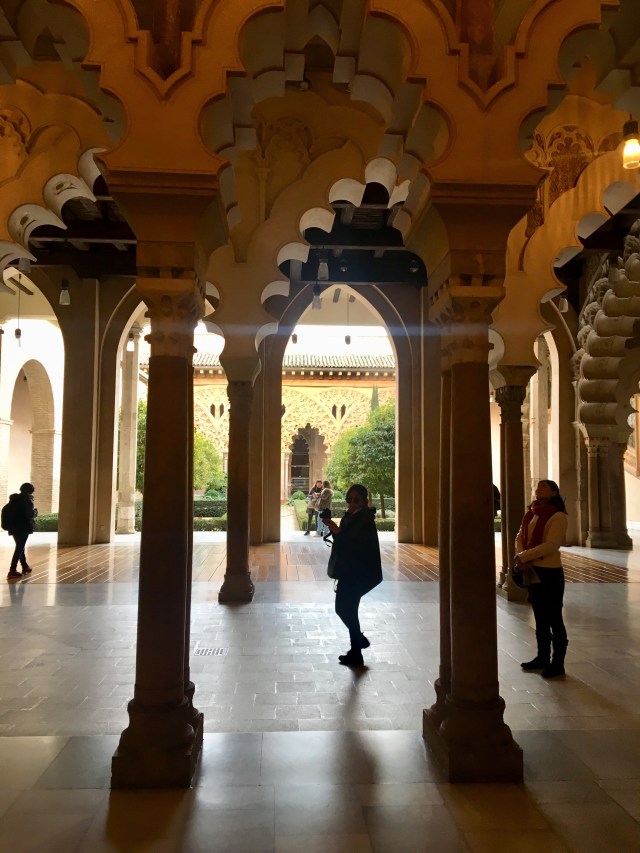
But what surprised us most is the Palacio de Aljaferia. We walked from the Plaza del Pilar to here. Surely, the Aljaferia is one of the finest examples of Hispanic-Muslim art, or Mudejar. This style was later copied at the Alcazar in Sevilla, as well as the more-visited Mudejar masterpiece in Alhambra in Granada. I have been to both and the garden and palace similarities are unmistakable. The series of arches, carved ceilings, the elaborate and intricately designed windows and doors. It is hard to imagine this 11th century structure was a woeful sight in near ruins despite being declared a National Monument of Historical and Artistic Interest in 1931. Then UNESCO declared its Aragonese Mudejar architecture a World Heritage Site.

Having visited this Islamic palace, I am awed by its grand design — the oratory, the portico arches, the wooden and coffered ceilings, the tiled pavement, the corridor, the lavish plaster decor. No wonder this architectural wonder became the Palace of the Aragonese monarchs after Zaragosa was recaptured from the moors.

Mi piquena Alhambra. Odd that it actually was the prototype for that grand palace and gardens in Granada. But Mudejar art in Aragon truly flourished in its time. Magnificent is an understatement. The palace is a good introduction for those who have yet to visit Sevilla, Cordoba and Granada’s Alhambra.

The Palace of Joy. It was. It is. Its beauty does not overwhelm. Its grandeur does not intimidate. Impressive, without being so imposing. It’s a palace not intended to impress, but meant to be enjoyed. Both Moorish and Christian monarchs who took up residence here must have felt the same.


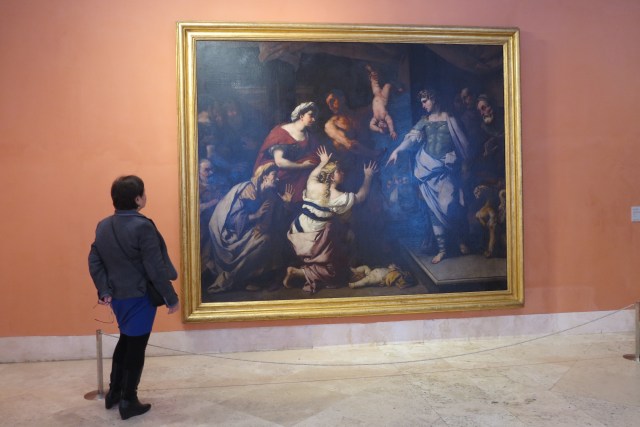
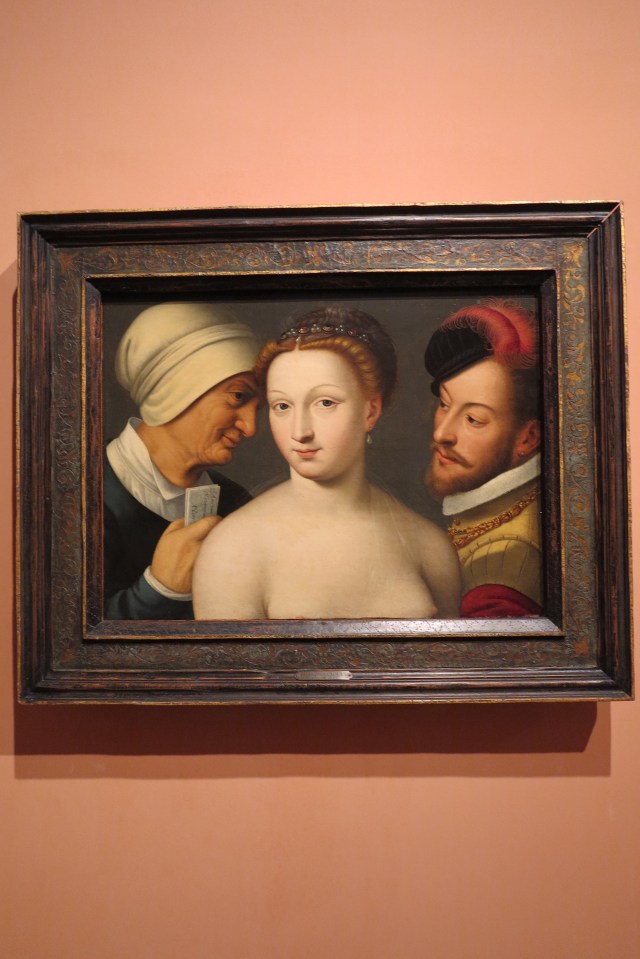
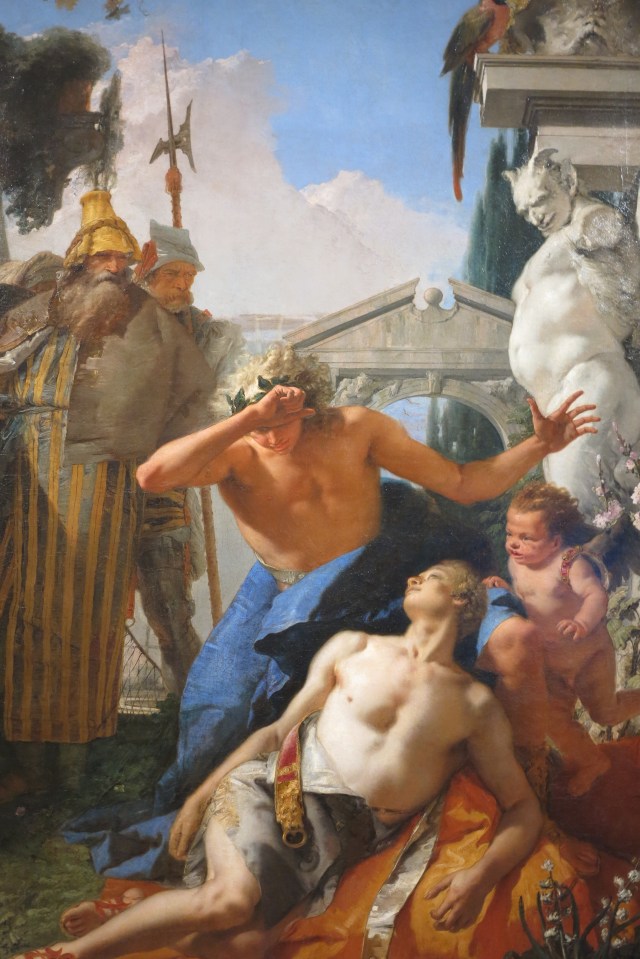
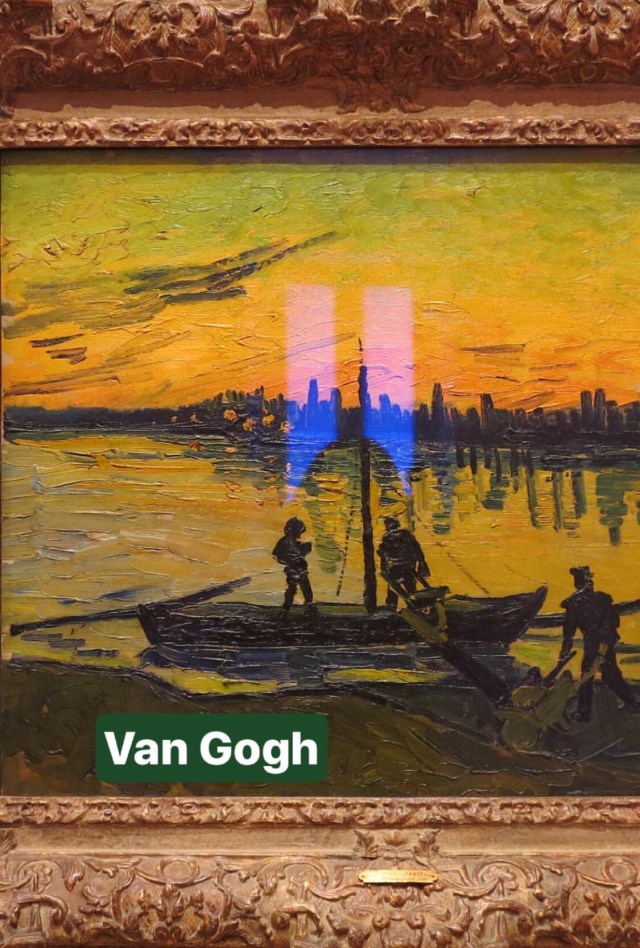
Last of the big 3 in Madrid: Prado, Reina Sofia and now Thyssen-Bornemizsa. There are varied opinions on which is the best. I observed the older ones prefer the more academic, traditional, classical Renaissance art while the younger generation prefer the more modern, contemporary art. In Thyssen-Bornemizsa, one gets a good blend of both. I saved it for last for this reason, and because I thought my energy level would have dwindled by the nth museum and Thyssen has a very good, decent cafe where I can chill.

On a freezing afternoon, it was the perfect thing to do. No way you’d find us in some park or strolling the streets of Madrid. There were even days it slightly snowed in Madrid and the breeze just give our bones the chill. So another museum visit won’t hurt. Besides, my nieta just couldn’t have enough of it. (There’s another small, even obscure museo she wants to visit which I haven’t in the many trips I’ve made to Madrid. Well, we’ll see. )

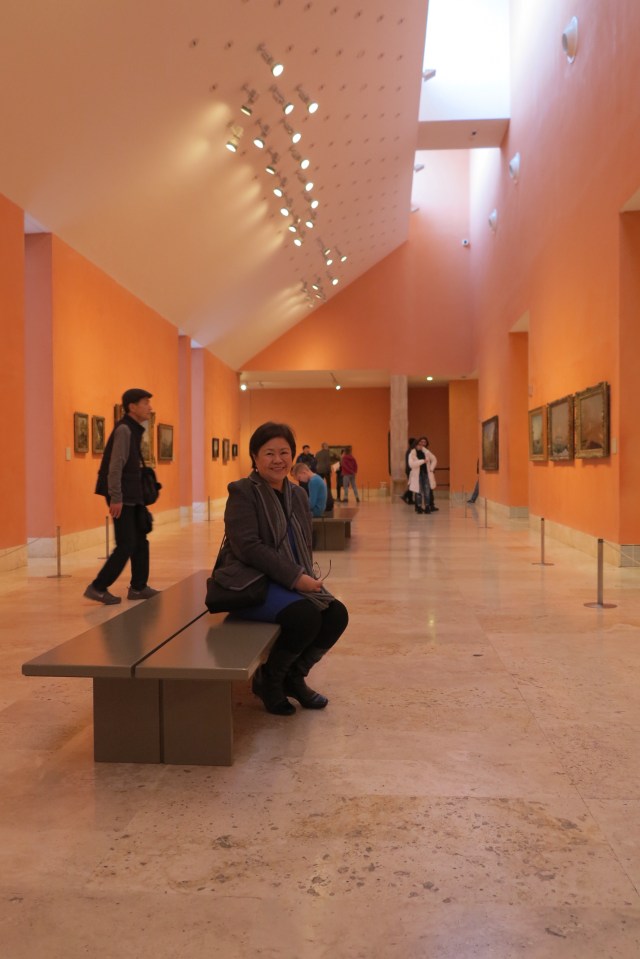
Thankfully, there were no lines. No crowd. Most everyone must be chillin’ on bed. Hmm, the mere thought makes me want to go under a warm blanket, in a heated room. That should be comforting. Anyway, there’s this business of viewing the TB collection. And this, I must say. Thyssen I find as the most visitor-friendly museum here. Well-curated, with long benches to sit on in nearly every hall. I also think it’s difficult to “lose” someone here because the visit is so guided that one goes from hall to hall in a very orderly manner. Many times, I sat it out while nieta moved from here to there. When it was time to meet up, it was easy to find each other.

What I love about museum visits is that no matter how many times you go, you’d always find something new. Not exactly a new artwork, but more of how an old, even familiar piece can affect you. Is it one’s mood at that moment? Have we “changed” without us noticing it? Hard to explain. But there were art pieces there I found truly interesting after some visits.

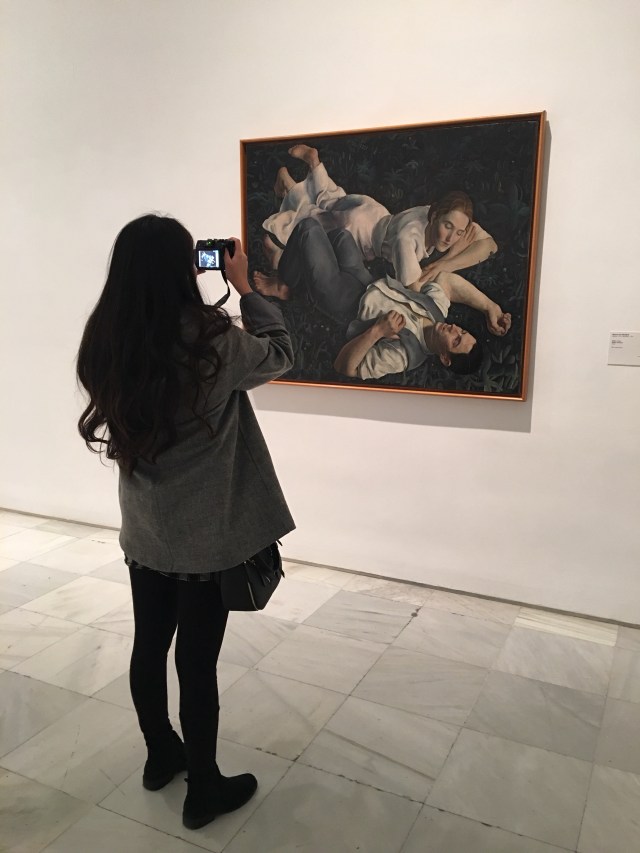
As for my nieta, she was happy she can take photographs unlike in Prado. In Reina Sofia, photography is allowed but not for Picasso’s Guernika and some other major pieces. She wants to look them up more intimately and perhaps, even reproduce them. Picasso did the same. So did many others. So, why not?


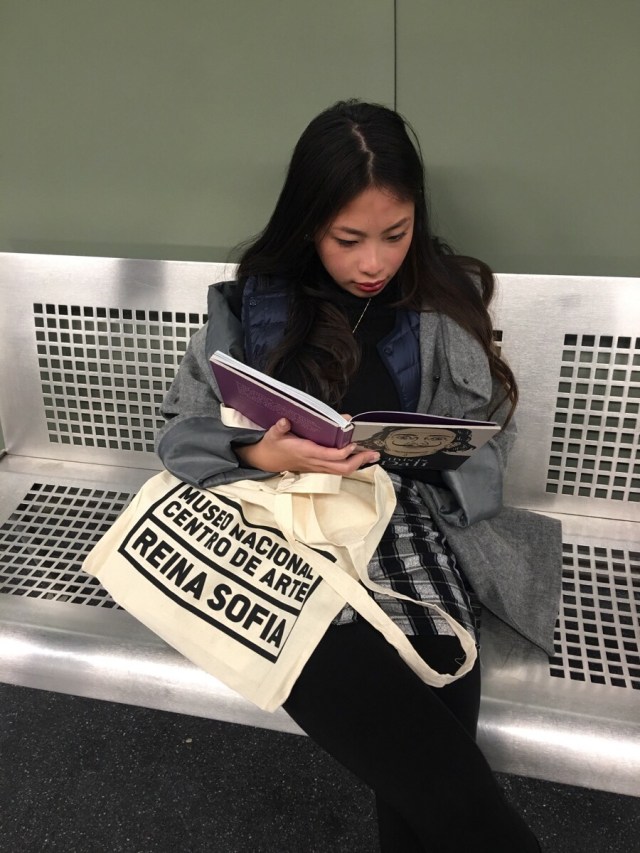
I’ve always known there would be many museums to visit with my nieta. But more visits to one museum? It happened. She asked to go back to Museo Reina Sofia. She felt the same way with Pompidou Center but our time in Paris was limited. Not so in Madrid. There was time.

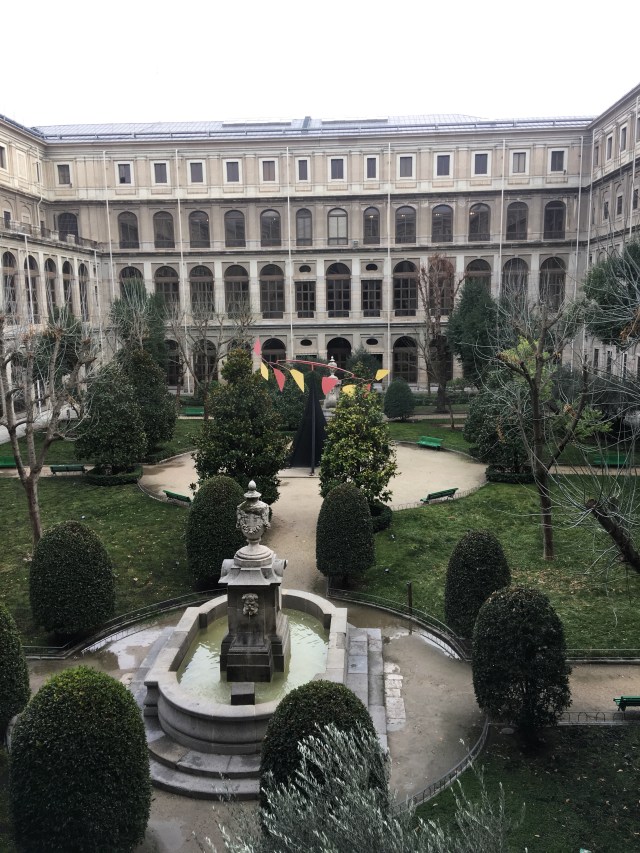
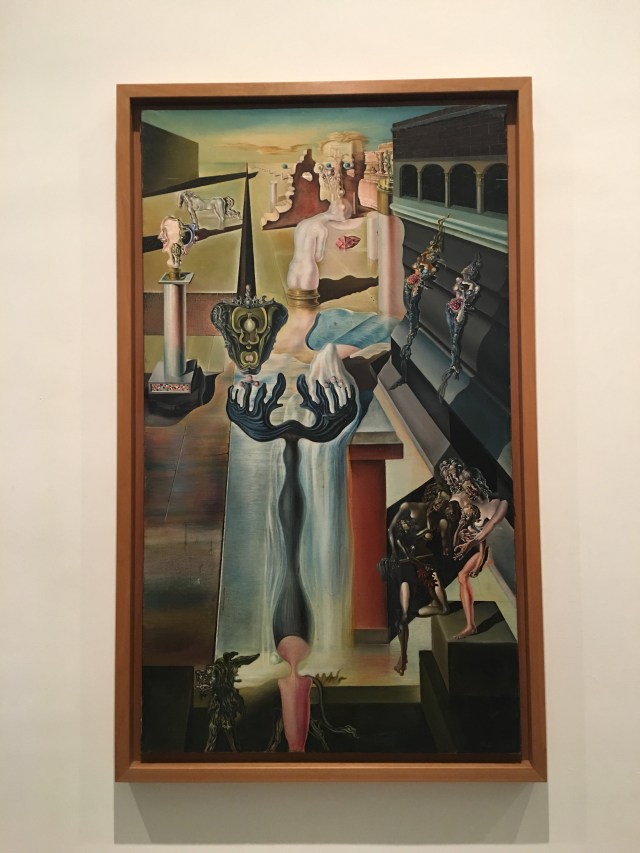
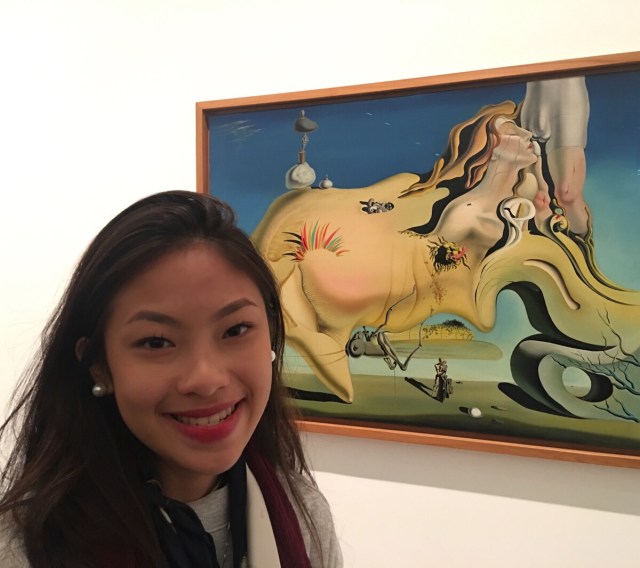
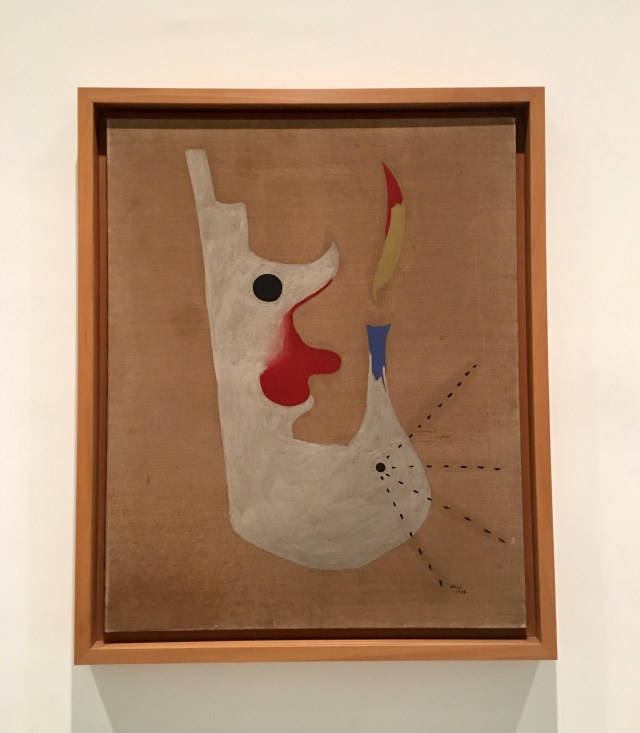
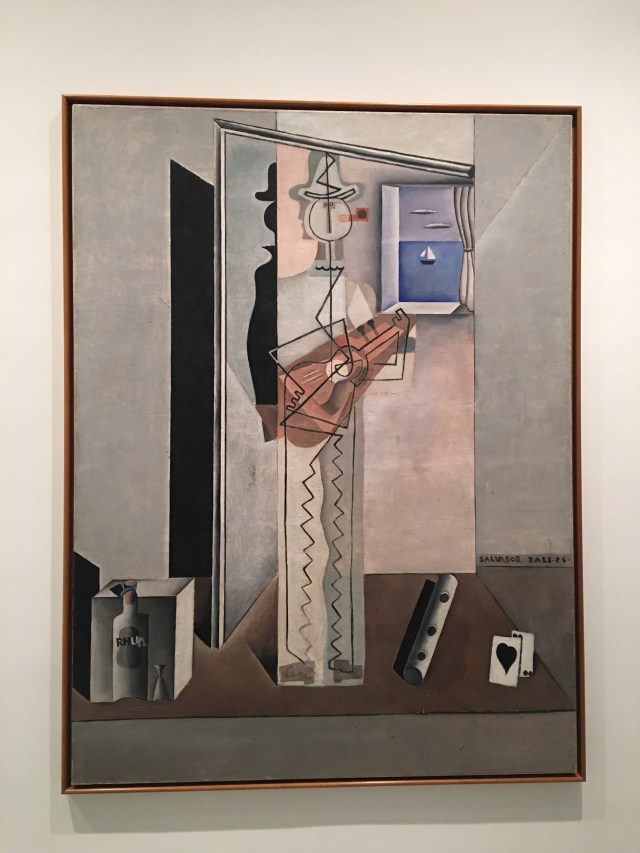
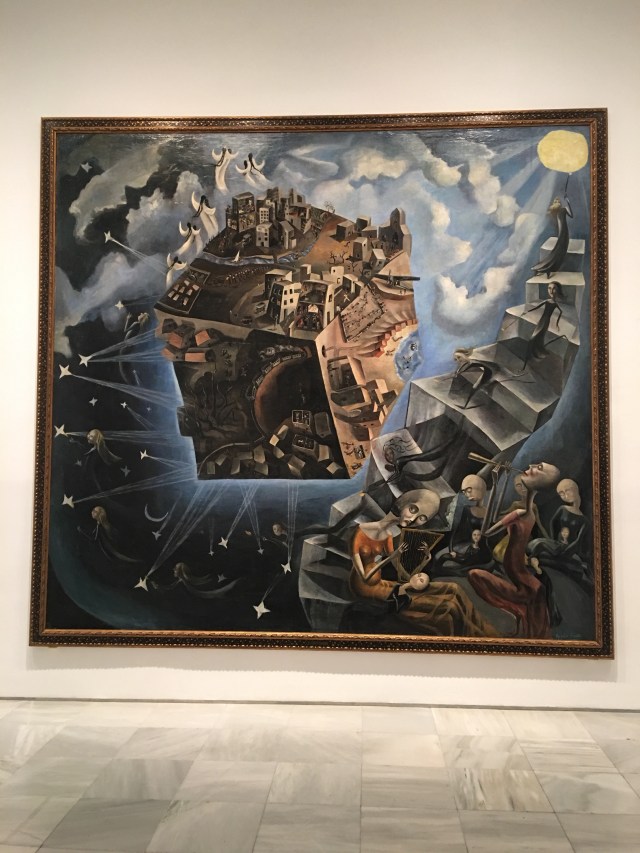
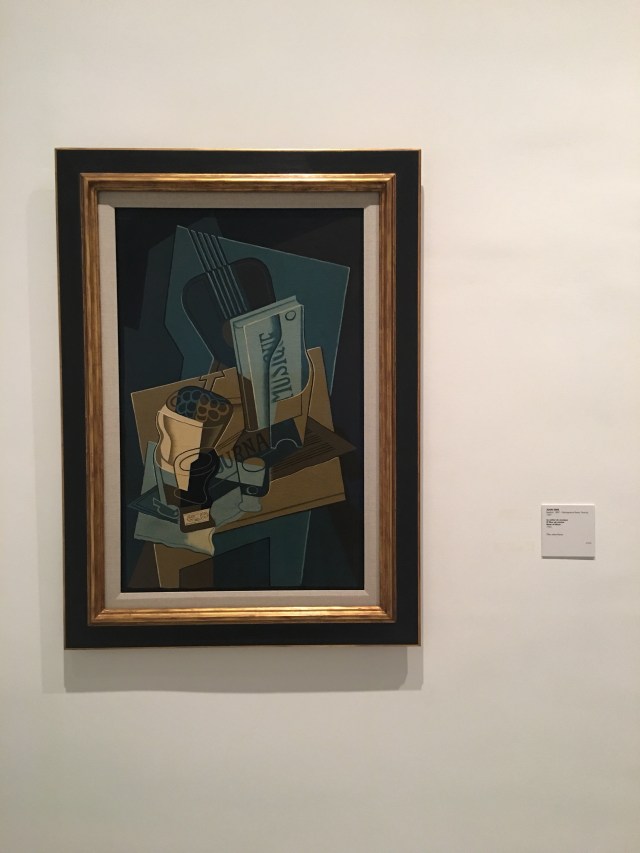
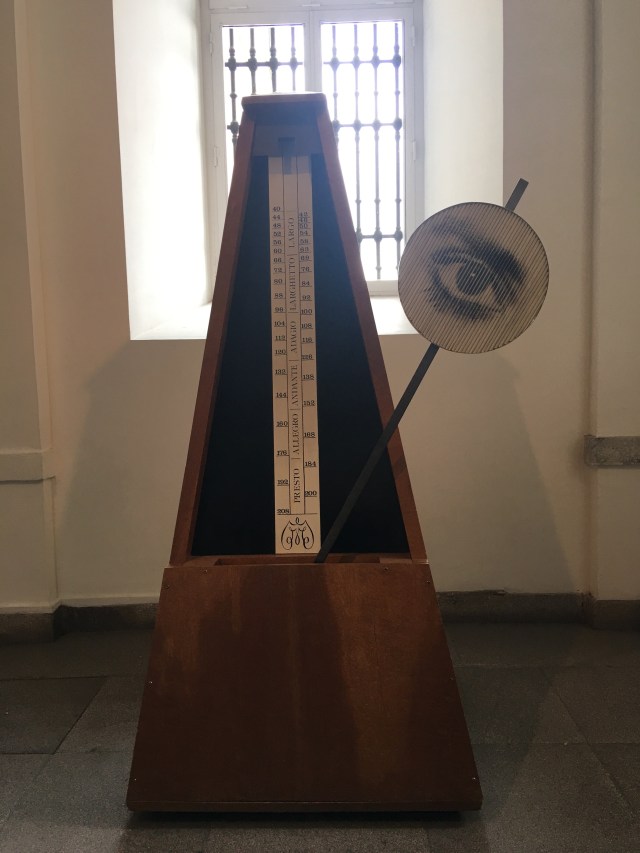
I could feel the excitement within the glass elevator we took to start from the upper levels and taking our sweet time down to the lower levels. She grabbed a map of the museum while I paid for the audio guides. She lingered longer over the Dali pieces. My fav too but I prefer the more sober Dali artworks. My nieta likes the ones bordering on surrealism. And there’s Miró, Magritte, Picasso, and 2 new favorites : Angeles Santos, whose Un Mundo she painted when she was only 18! And Juan Gris.

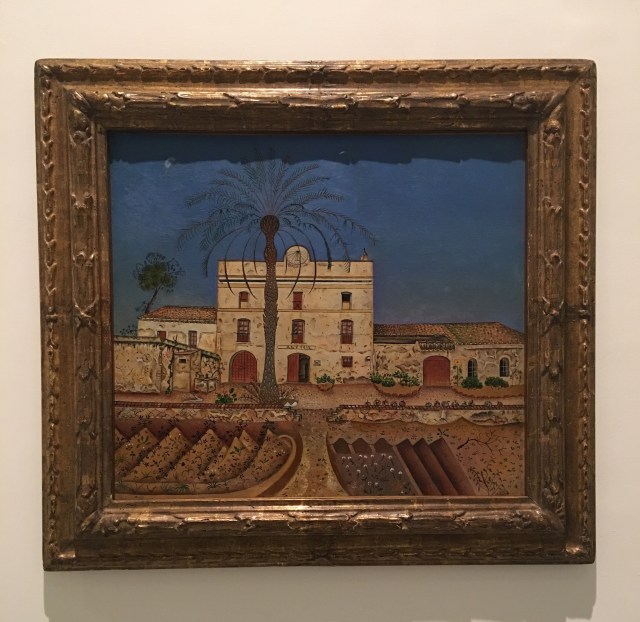
Apo (grandchild) was in Cloud 9. She had 4 hours to spend. That was the first thing she checked : closing time. It is a pattern: 4 hours in each museum. I should remember to wear more comfortable shoes next time. The lovely thing about Museo Reina Sofia is that she can take photos of many art pieces except for the obra maestras like Guernika by Picasso and some other celebrated works of the same artist and Salvador Dalí and Joan Miró. Truly, Spain reigned supreme in both Rennaissance and contemporary art.

Out in the streets of Madrid, she follows my lead as we navigated from Sol to Calle Mayor to Gran Via. Here within the Museo, she took the lead and shepherded me from hall to hall, and then back to the same halls where she found her favorites. She appreciated how her idols’ art evolved in style, approach and boldness in both message, form and hues. She fell in love with Dali’s works without loving the artist’s character. 🙄 Well…. Dali is Dali with all his eccentricities.

< strong>< strong>

By the time she was ready to turn in her audio guide, she shifted her interest to the museum’s tienda. She can’t leave without buying a Dali book and more souvenirs. Another happy day for mi nieta. 💕💕💕


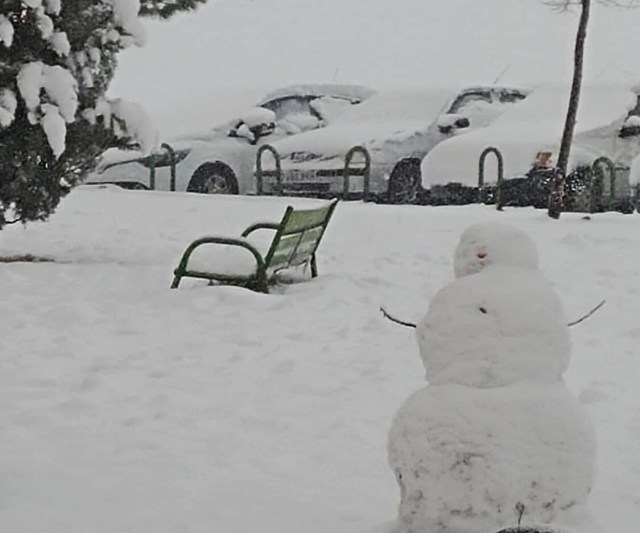
We were too lazy to plan where next to go. Giving in to instant and impromptu day trip plans, we woke up early one morning and decided we’d have a cochinillo lunch in Meson de Candido in Segovia. Hopped on the metro, off at Chamartin Station, straight into the Venta de Billetes to buy our ida y vuelta tickets for Segovia. We planned on staying at least 8 hours to enjoy the old town – the aquaduct, the Alcazar, Catedral, Museos, the cordero or cochinillo and a few, choice pastelerias. All in freezing -2C weather. But it snowed the night before in Segovia and the station is blanketed in snow. The man from Cercanias said the train will take us there but there’s no way we can reach the town proper from the isolated estacion because no buses nor taxis are available to ferry us out of the train station. Boo!

(Here are photos sourced from the Net on Segovia situation. Same snow situation in Avila, btw)

And so we hurried back — just as it also started to snow in Chamartin Station — to the ticket office to return our day tickets and claim a refund. Another time, perhaps. But we’re all bundled up for a day out and have no wish to be home early! Entonces, we returned to the ticket counter and bought tickets for the next train headed for….. Alcala de Henares. The hometown of Miguel de Cervantes, of Don Quixote fame. It is also home to a university founded by Cisneros. Cardinal, Regent and close adviser to Ferdinand of Aragon and Isabela of Castile.

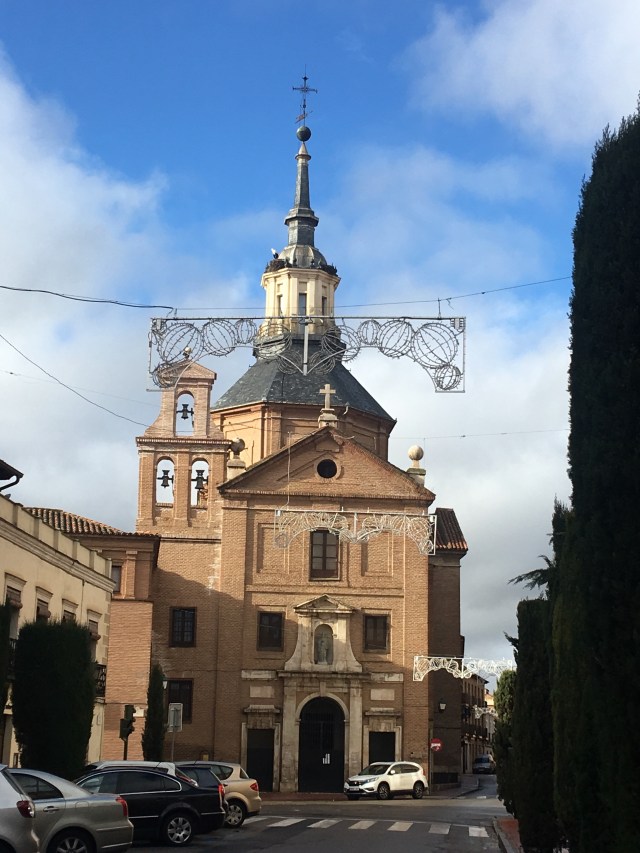
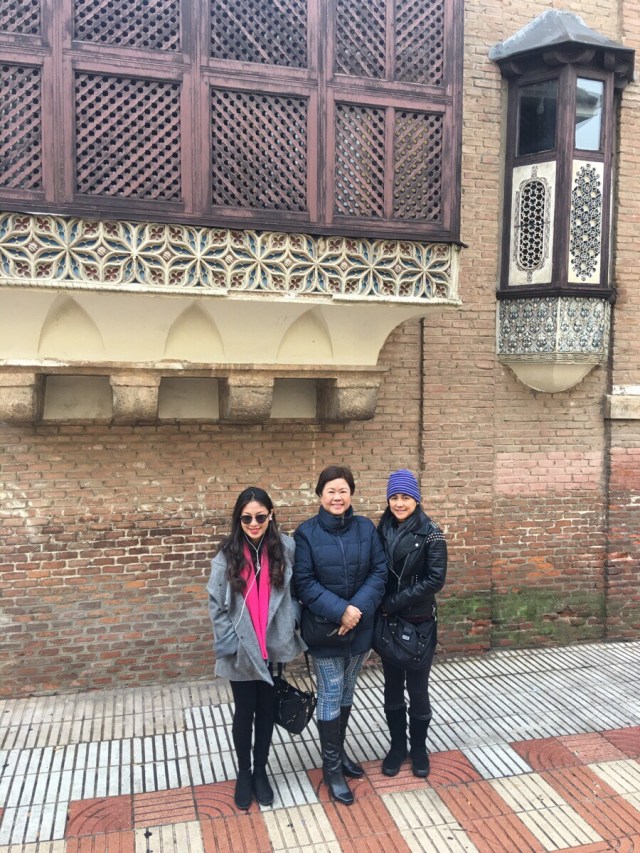
We took the Cercanias slow train and reached Alcala in under an hour. Still freezing at 3C, we only managed to visit a church, Cervantes’ Home, Plaza Cervantes with the ayuntamiento, the Universidad and the quaint, cobblestoned streets of Alcala de Henares. Oh yes, a little bit of “stork-watching” too. Told my sobrina and nieta that these storks seem to have “regal addresses” as they’ve taken up residences in many of the tall spires around this UNESCO Heritage Site.

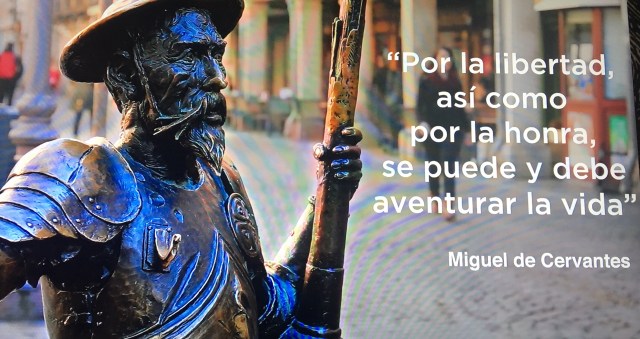
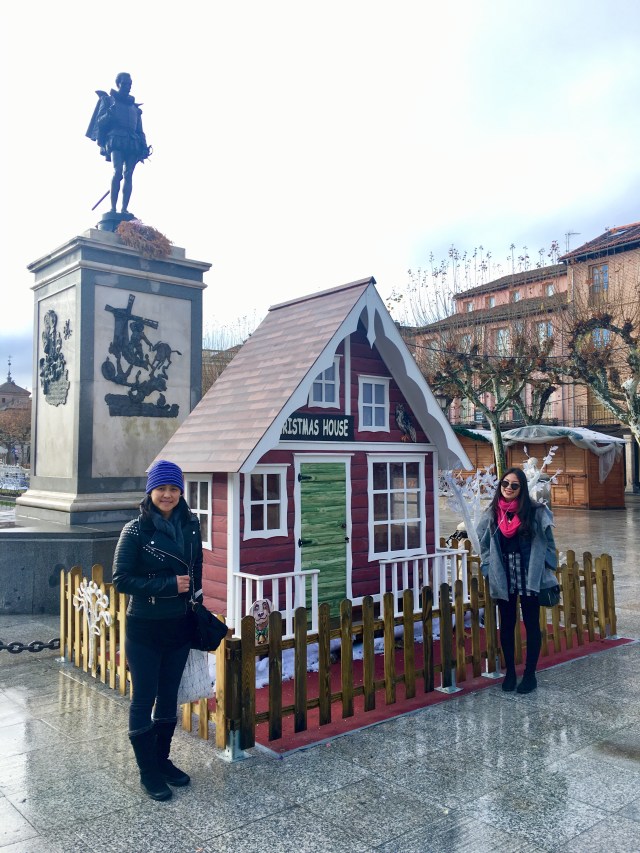
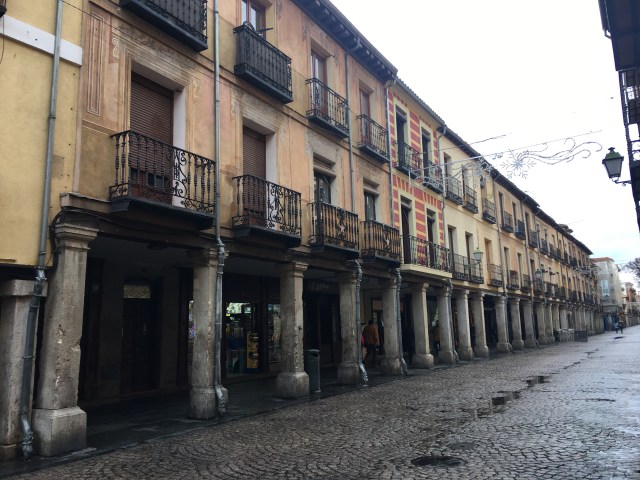
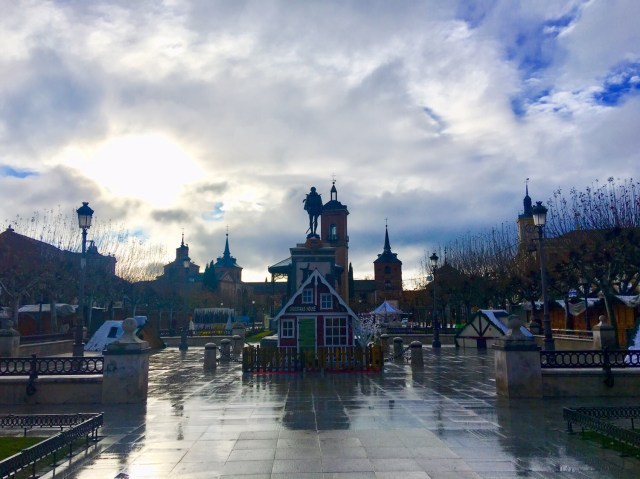
Man of La Mancha. Don Quixote. And his squire Sancho Panza. We’ve met twice before and we meet a third time more. Their life-size bronze statues guard Cervantes’ home, now a Museo. Casa Natal de Cervantes is right along the town’s cobblestoned, columns-lined Calle Mayor. Just off the Plaza Cervantes which locals have spruced up for the Christmas Season.

The first time I visited Alcala, I was all by myself. I knew I’d be back with family and friends. I was particularly amused by the “stork community” and earlier blogged about it. Just click on this link. But certainly, this town’s claim to fame lies in its old University and this celebrated man of literature. As for me, I’m happy enough to walk its streets, checking out those old columns, antique doors, gates, and (don’t laugh now) water spouts.

Btw, we were lucky to have changed our train tickets from Segovia to Alcala. The cochinillo place was blanketed in inches of snow, trapping many along the roads. Looks winter-nice in photos, but glad to be spared the ordeal of having to wait to be rescued. God is good!

https://www.thespainreport.com/articles/1290-180107094243-spanish-army-called-out-to-help-rescue-thousands-trapped-overnight-in-snow-west-of-madrid

Museu Picasso (Barcelona)


We didn’t even have to discuss it. But the lines, the crowds, the noise, got to us. Gaudi had many fans, judging by the crowd that stood in line for Sagrada Familia, Parc Güell, La Pedrera and Casa Batllo. There was an area in Parc Güell where we nearly had the spot all to ourselves. But not for long. As for the rest of Gaudi’s masterpieces, one simply co-exists with the rest of adoring fans. My nieta and I wanted some quiet time. Ciutat Vella is charming but the La Rambla y Barri Gotic areas are littered with camera-toting humans. A few more meters away and we settled in La Ribera. Still teeming with a vibrant vibe, but less touristy. We liked it better here, including El Born area.

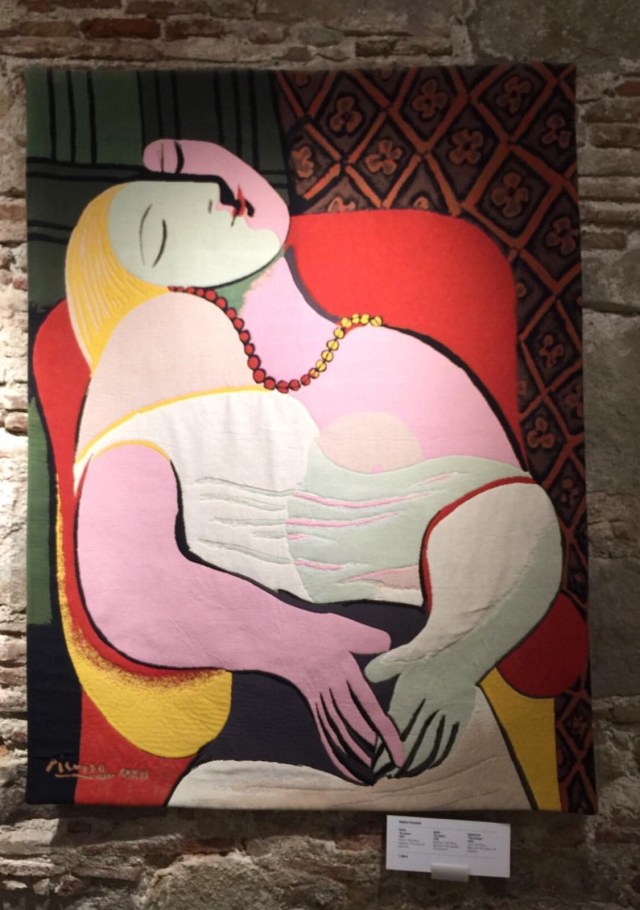
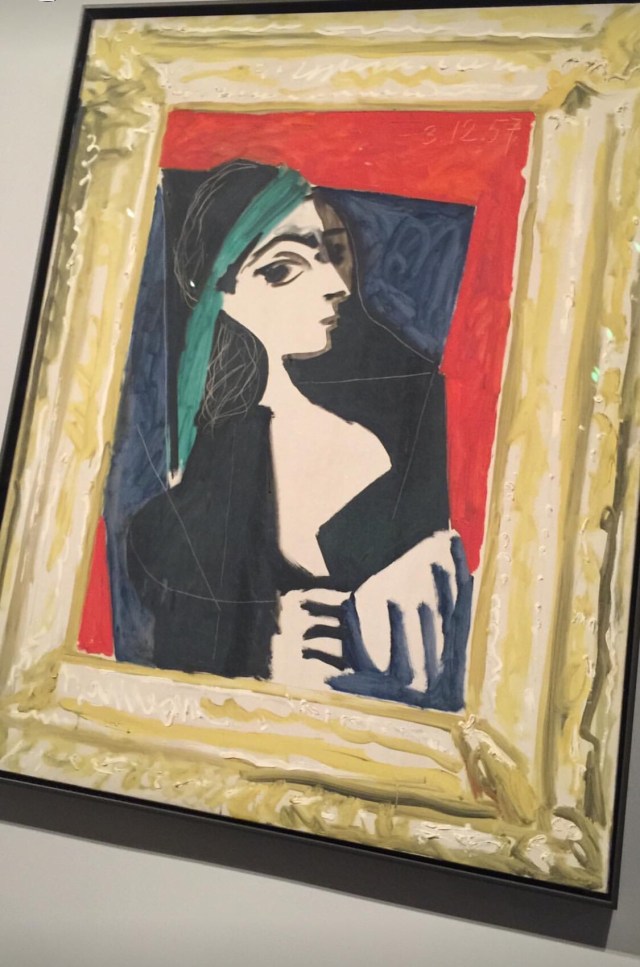
My nieta had Museu Picasso in her bucket list but we failed to buy tickets online. We missed the one in Paris so we just had to check this one out. The line for the museum was tolerable, thank God. Housed in 5 of La Ribera’s centuries-old medieval palaces, we were eager to get in and view Picasso’s earlier works. I have to confess I enjoyed the collection better in San Francisco’s MOMA, but I guess we needed to understand that the collection should be appreciated from another perspective. As I said, these are the master’s earlier works and one traces how his art evolved from the traditional and academic to modernist and contemporary. Imagine his works at age 14. So young, yet his brush strokes spoke of his genius and artistry.

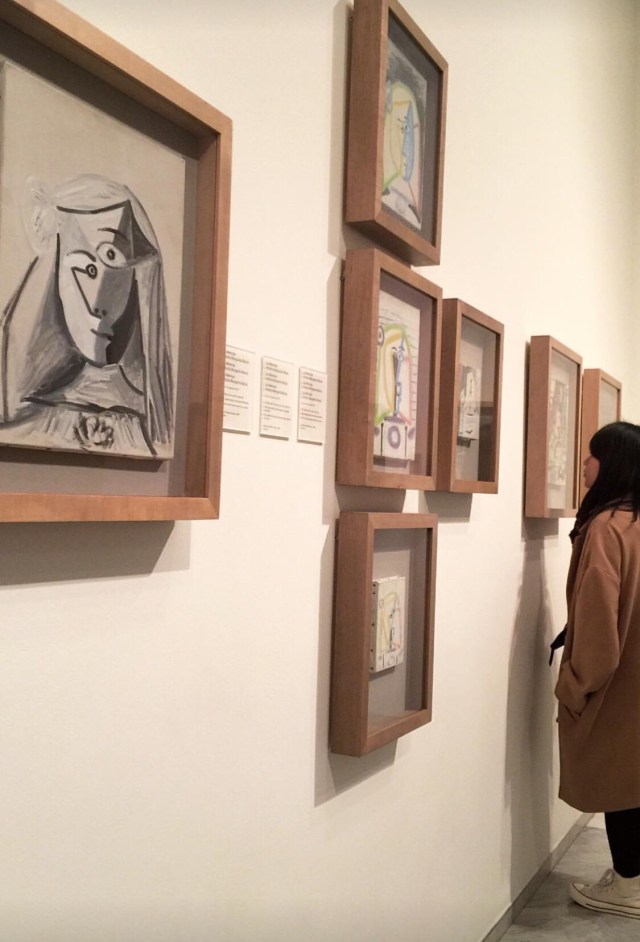
Although born in Malaga, Picasso chose to have this museum in Barcelona presumably because he likely feels more connected to this Catalan city. His good friend Jaume Sabartés had quite an extensive collection of his paintings, prints and drawings but Picasso himself added, albeit donated, much of the museum’s extensive collection. More donations were acquired — from Picasso’s widow, friends, other art collectors and various art galleries. Although the major works on exhibit included early Picasso works like the First Communion and Science and Charity, I am more intrigued by the artist’s portraits of himself and beloved father as well as his 58 “versions” of Velasquez’ Las Meninas.

I am a big fan of Diego Velasquez. His Las Meninas is prominently displayed in the Museo del Prado in Madrid. Pablo Picasso must be a big fan too. But why the 58 versions? What was he thinking? He donated his “recreation” of this major artwork when his good friend Sabartes died in 1968. And this is a quote from Picasso himself:

If someone wants to copy Las Meninas, entirely in good faith, for example, upon reaching a certain point and if that one was me, I would say..what if you put them a little more to the right or left? I’ll try to do it my way, forgetting about Velázquez. The test would surely bring me to modify or change the light because of having changed the position of a character. So, little by little, that would be a detestable Meninas for a traditional painter, but would be my Meninas.

— Picasso

Frankly, I still don’t get it. I mean, 58 versions kind of smack of an obsession, IMHO. The pieces jump out in vivid colors, unlike the original piece. But Picasso surely made them “his own” in that “distorted, cubist style” so prevalent in his art. Quite prolific, this artist. Well, he did live to a ripe, full age with not an ounce of passion lost through his many (20,000!) works in an astonishing range of style. Maybe it pays to keep inspired? For sure, he had several muses but I’m not going into that. 🙄

Indeed, Pablo Picasso is one significant artist of the 20th century. He started off being trained by his own father, copying many major artworks, and later inventing and reinventing his art. The world became better. He left us with many creations. As well as notable quotes. Quite a man, this Picasso!
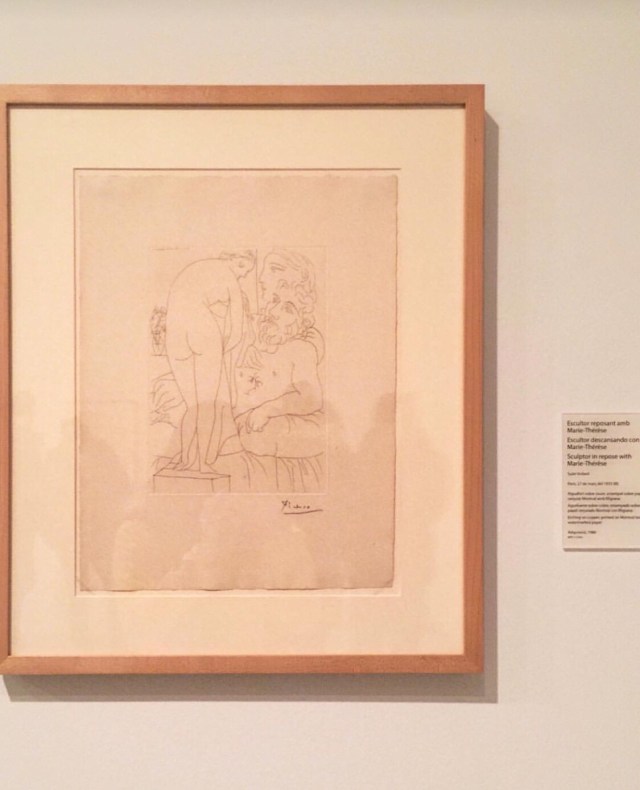
“The very act of creation is first of all an act of destruction.” – Pablo Picasso

< img src=”https://lifeisacelebration.blog/wp-content/uploads/2018/01/38507233085_5e2477428c_o-3.jpg&#8221; class=”size-full wp-image-13208″ height=”1657″ width=”1125″>


It was her first time in Paris. My nieta is traveling with me to Europe and Paris is at the top of her list. For many many reasons. The iconic Tour Eiffel, Sainte-Chapelle, the Louvre, Montmartre, Notre Dame, Arc de Triomphe, Champ Elysees, Madeleine, Pompidou Center, Sacre Coeur, Moulin Rouge, to name a few. And of course, there’s Versailles. I wanted to also bring her to Claude Monet’s Home and Gardens in Giverny but the impressionist painter’s estate is closed for the winter. Boooo! 😩

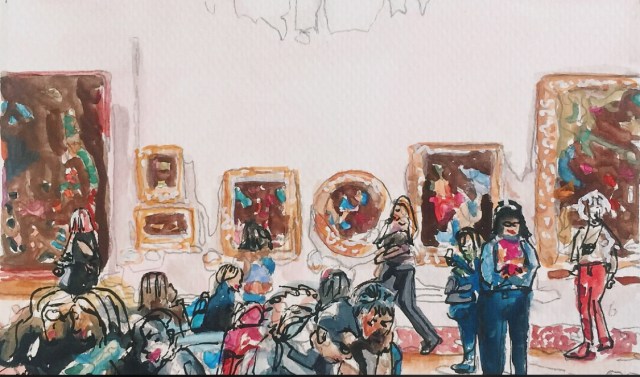
A quick sketch, but many short brush strokes on a really tiny piece of paper the size of a postcard. This art work is her first expression so soon after landing here. So little time in Paris, but we made do.

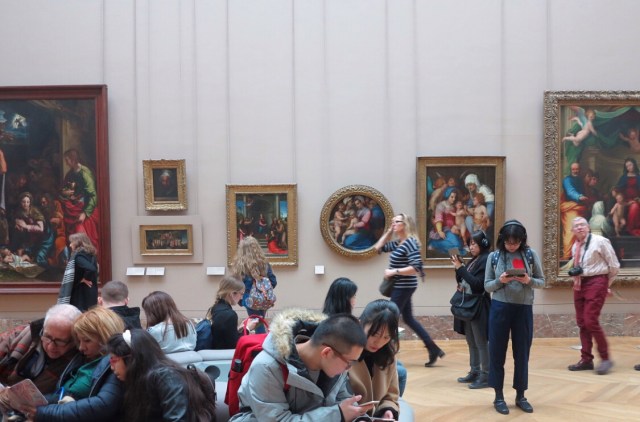
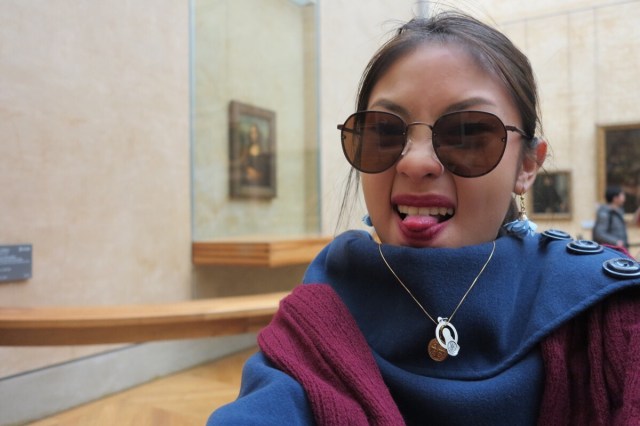
The very grand, iconic Louvre Museum impressed her so that she kept going back to the same art pieces across the huge museum. I settled on a bench by the staircase and let her shuttle here and there for the 4 hours we stayed! From Louvre, we went to another museé – the Centre Georges Pompidou. Here is a collection of many of the world’s best modern and contemporary art works and nieta is deliriously happy. Dalí, Matisse, Basquiat, Mondrian, Raysse and a few more.

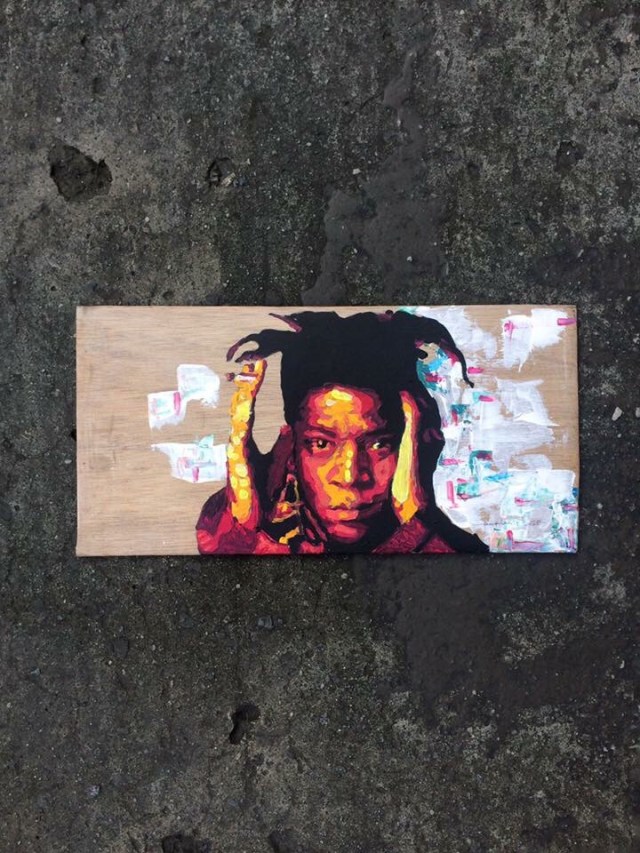
Basquiat

Mercifully, the line was very short in Centre Pompidou towards early evening and the museum closed real late for nieta to do an unrushed, leisurely review. More than that, her youthful “face value” earned her free admission (under 26, student) even if we didn’t present any document like her passport. The young man at the counter who asked how old she is simply said “I believe you”. Then he looked at her abuela, and charged me 14 euros. 👵👵👵 Rounding up the works of Jean Michel Basquiat, she recalled the portrait she painted of this free spirit whose works she found again when we visited Bilbao’s Guggenheim Museum. This young lady is in Cloud 9!

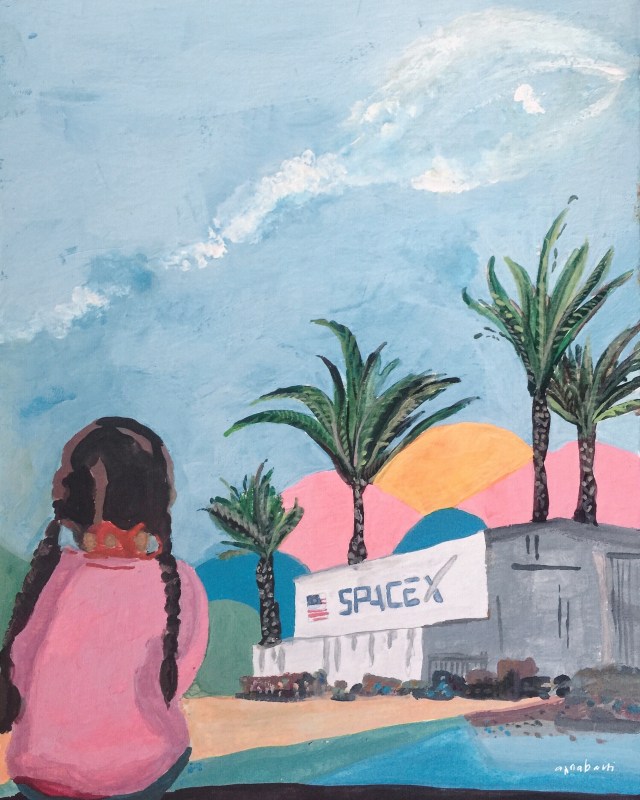
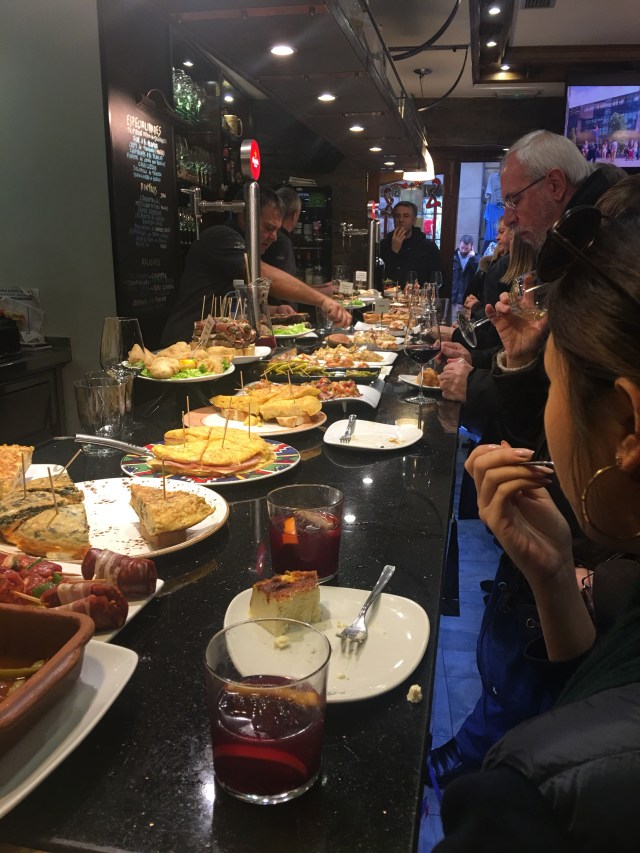
She’s been using the ink and watercolor she brought for this trip. But a day before Christmas, she bought art materials and a sketchpad so I bet she’d keep herself busy the next few days. More so, after a trip to Barcelona where we’d stay in a hotel a short distance from Picasso Museum. That, and all that Gaudi and Miro madness. I can’t wait. Too bad there’s no time to visit Dali’s Museum outside of the ciudad. Meanwhile, she’s done a few more art pieces. Taking inspiration from the gardens of Chateau de Versailles, she painted away. (But not happy with her Versailles work). Unable to forget the taste of the best tarta de quezo from San Sebastian, she painted the facade of La Viña. (We made 3 trips here — those cheese cakes are to die for!). And then some more. My young artist has never had formal art lessons but she’s been painting from the heart. I sense her art is still evolving and an artist-friend suggested to let it evolve without any “influence” from art mentors. The way it’s going, I am truly amused that she’s been experimenting with different medium and stoking her passion with stuff that interests her. Like dogs. (She loves painting those furry balls!) Portraits of celebrities. A germ, a seed of something that tugged in her heart of hearts. An experience she recalls. Really, I can hardly wait.


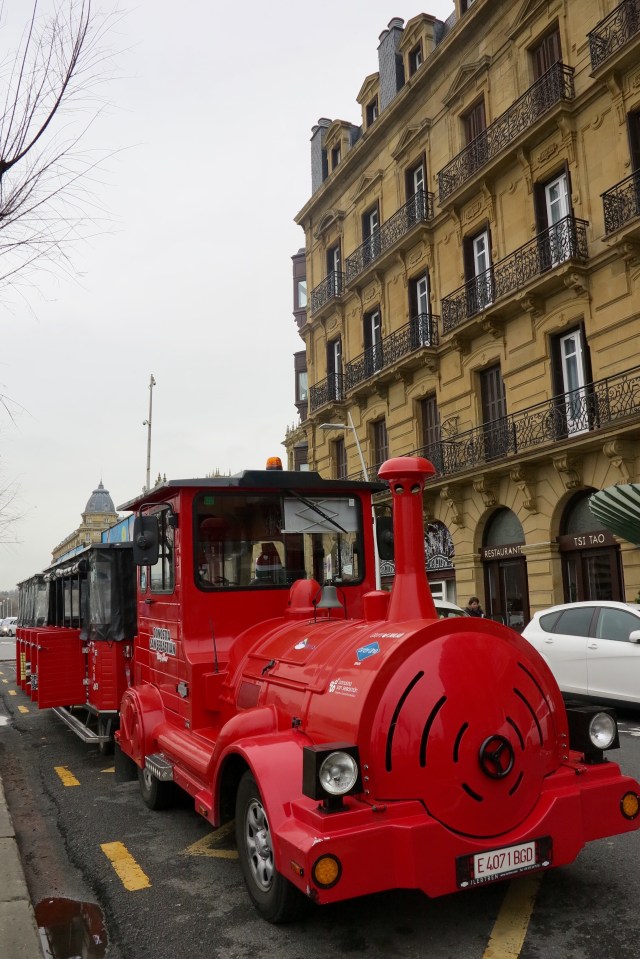
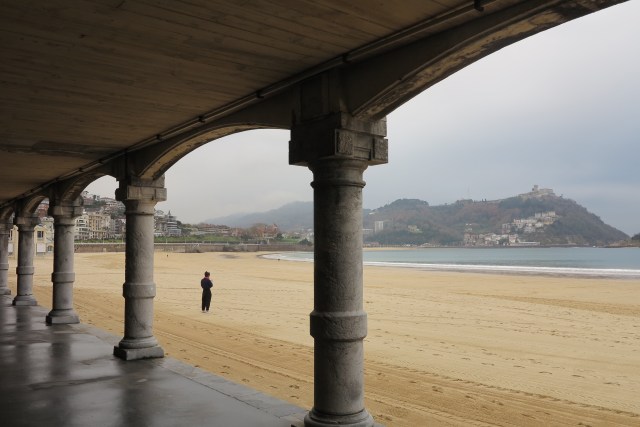
My introduction of Donostia-San Sebastian kicked off with a ride on the txu txu train. From Playa de la Zurriola to Playa de la Concha to Playa de Ondarreta. Nieta enjoyed the txu txu petit train ride. But she would have gotten off if she could to dig her toes on the beach and feel the sand under her soles. Too cold for that, but her love for the beach drew her back here every single day of our stay in San Seb.

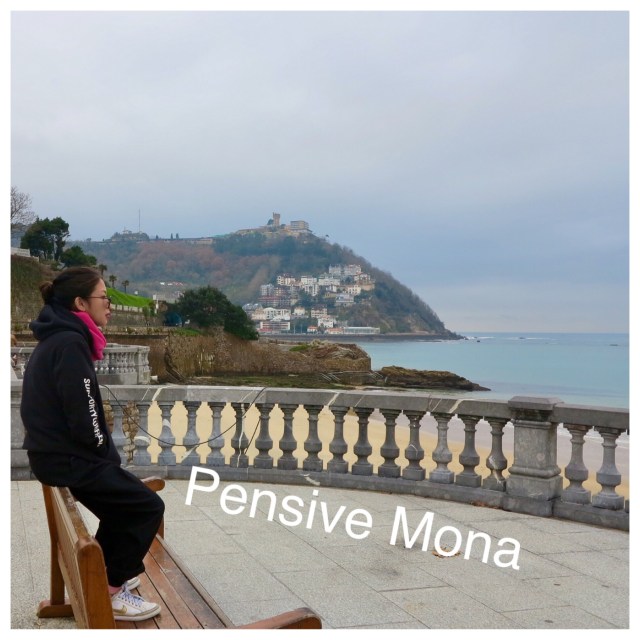
And so we walked the whole stretch of the concha (shell) shape of the beach one afternoon. Done this before but my nieta grew tired walking more than 5 kms and nearly gave up. We broke our trip with a dessert of chocolate y tarta de manzanas in Hotel Ezeiza near the funiculare to Mount Igueldo. Refreshed, energized, she walked all the way to the end.

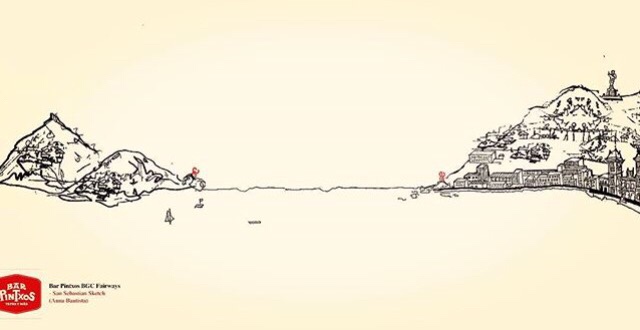
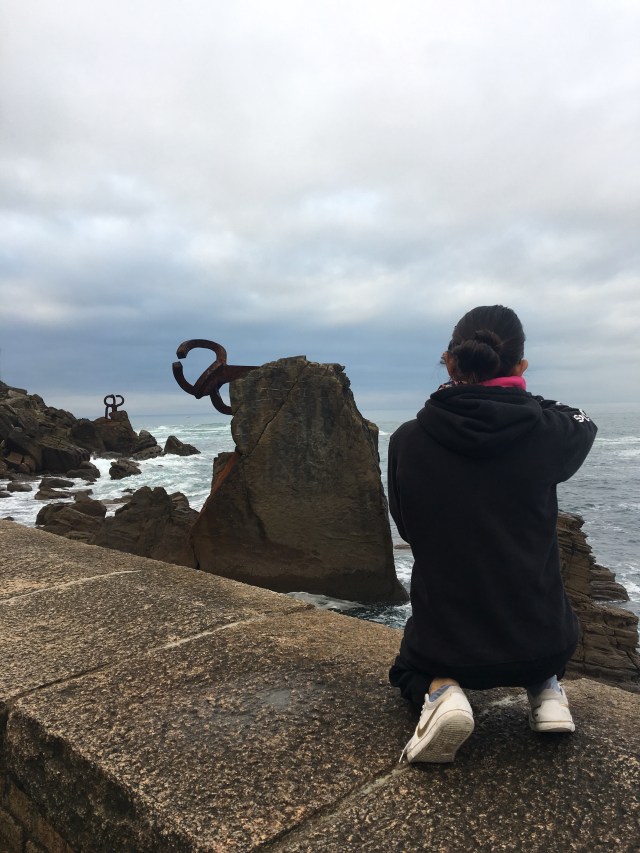
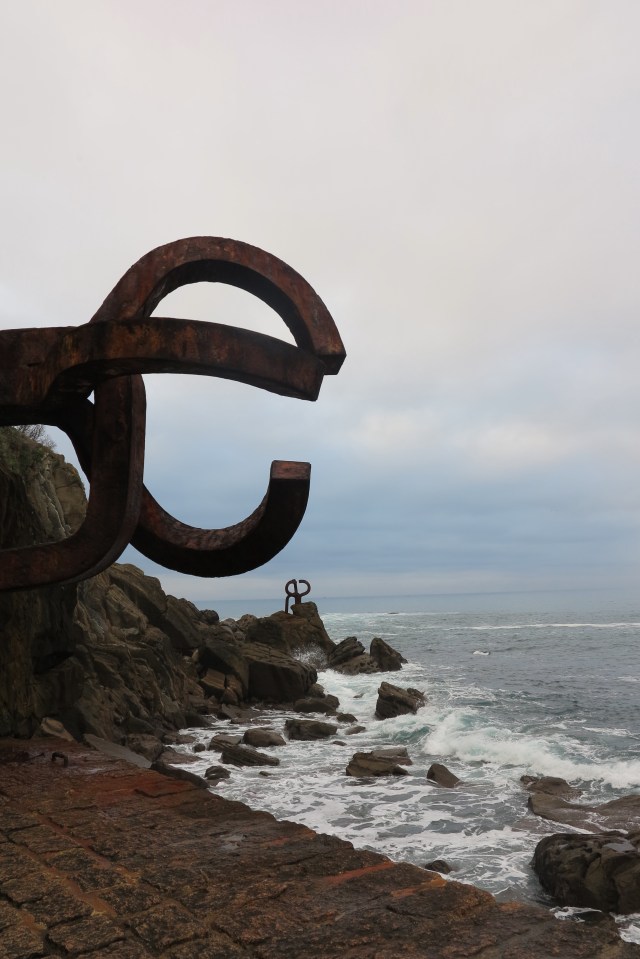
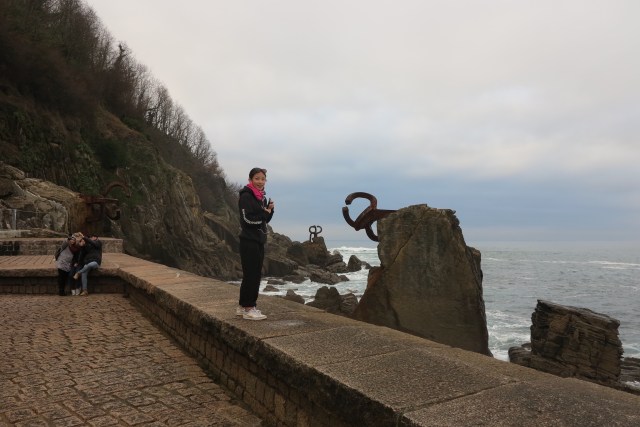
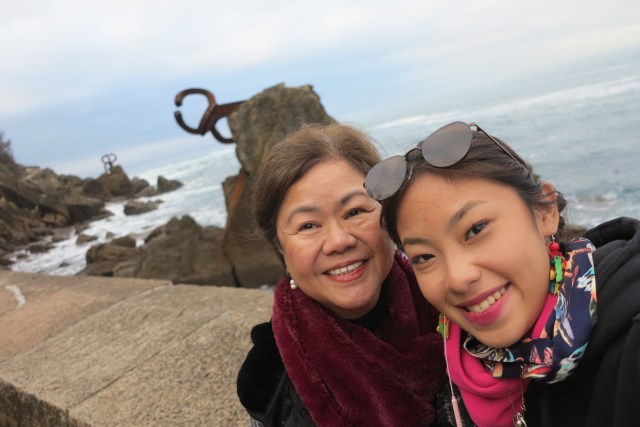
Having painted San Sebastian with all its peculiar details like the statues and sculptures along the shore, she just had to walk it to appreciate it. 🏖⛱🚶🏻‍♀️ Especially the Peine del Viento which are the 3 iconic pieces of steel firmly anchored to the rocks. In English, they translate to “wind combs” and Eduardo Chillida couldn’t have named his sculpture better. His best work, they say.

Towards late afternoon, the air is chilly and the winds grew fiercer. Nieta took shots of the peine way too many times, each time inching nearer the edge. I couldn’t watch her! Told her she’d give me a heart attack and lose her dear abuela if she doesn’t stop. She did, with a lot of teasing and ribbing on how I’m so easily scared. The nerve!

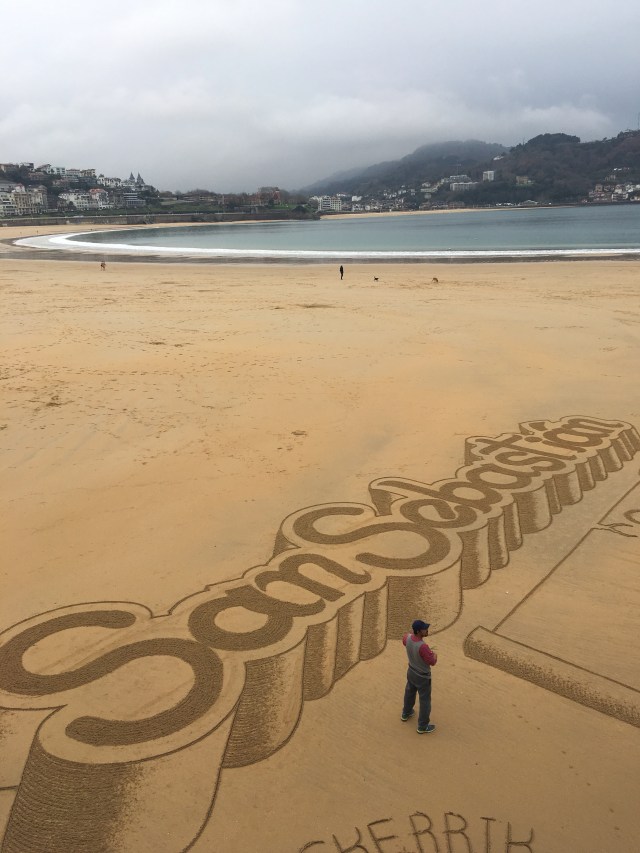
Thankfully, we went back to watching this young artist make beach art. Amazing falls short to describe this genius. Aaaaah, art takes many forms here in Donostia. Either in its architecture, food art served on a plate, etched on the sand, painted on the door or wall, or anchored on the rocks. Well done, San Sebastian!