Tag Archive: Travels


Many people go to Peru primarily to visit Macchu Picchu. Lima, its capital, has thus become just an entry point for most everyone’s coveted dream of setting foot on this wonder of the world. Perhaps not a fair assessment of what Lima can offer. But what’s going for it is how many of us visitors have very few expectations of this Peruvian capital. In fact, I’d dare say many of such expectations dwell on Lima’s gastronomic delights. After all, Peruvian cuisine has attracted global interest and many of its restaurants rank among the best. But that should not take away the charm off Lima’s unique attractions.

The capital has a very charming plaza with an ancient fountain, cathedral and monastery. After having your fill of archaelogical sites, fortresses and temples, it is refreshing to feel the ocean breeze as one walks along the promenade facing the Pacific.

For sure, you can’t miss that most erotic monument to “The Kiss” — strategically situated along the coastal park while paragliders hover above it.

Peruvians are proud of Lima’s major scenic attraction: the Pacific. If your first agenda is to try their cebiche and roasted or fried cuy (guinea pig) , you can check out the bistros lining the promenade serving these Peruvian delicacies. And if you’re there on a happy hour, go ahead and take sips of the Pisco Sour before checking out the core of the city: the Plaza Mayor or Plaza de las Armas.

In 1535, Spanish conquistador Francisco Pizarro “founded” Lima and created this beautiful square with all the important buildings around it. One can only imagine all kinds of Peruvian festivities and entertainment being held here. It does have its dark history as well, having stood as venue for public executions relating to the Spanish Inquisition. In the past, the same square was also used as arena for bullfights or corrida. Seeing those ladies in tiered skirts and bow hats sitting on benches or just strolling around the square add charm to the place.

The market in Lima gave us our first taste of the many, exotic fruits of Peru. I’m a big fan of chirimoya and I was eager to have more than a slice of it. The papayas were very sweet and there were many other fruits whose names I can’t recall now. If only for these fruits and the local vibe of mercados, one shouldn’t miss a visit to the market.

Many visitors will spend 2 nights in this capital, just before and right after flights to and from Cusco. That’s alright. You can take in the square, the oceanside promenade, the Nikkei restaurants, a couple of museos or monasterios in those 2 days. Lima may be underrated, even ignored, but it is certainly a good break after your Incan adventures.

Getting High In Cusco


To reach Macchu Picchu in Peru, one needs to fly to Cusco and from there, either drive or take the train to Aguas Calientes where shuttle buses take you up to the Incan citadel. The train ride takes 3.5 hours from Cusco and stops at Ollantaytambo Station from where the last 90 minute-train ride terminates at Aguas Calientes, the town at the foot of Macchu Picchu. Aguas Calientes is a lively, vibrant town now called Macchu Picchu Pueblo. One finds many souvenir items on sale here. Very touristy, but if you ask me, I like the touristy vibe of this town.

Cusco is higher than Sacred Valley, which in turn is higher than Macchu Picchu. One may choose to acclimatize in Sacred Valley and save Cusco AFTER a hike in Macchu Picchu. From Sacred Valley, it is only half an hour to Ollantaytambo, where one can visit a massive Incan stone terrace cum fortress / archaelogical site — another testament to Incan mastery of architecture and astronomy. The way from Ollantaytambo to Cusco may consider a pitstop in Sacsayhuaman — another fortress-temple ruins site situated close to and overlooking Cusco. Here, marvel at Incan engineering skills using boulders and stones so firmly hewn together sans mortar. It is mind-boggling how each humongous stone seems custom-carved and fitted so precisely to make up a fortress wall & structure. Unbelievable.

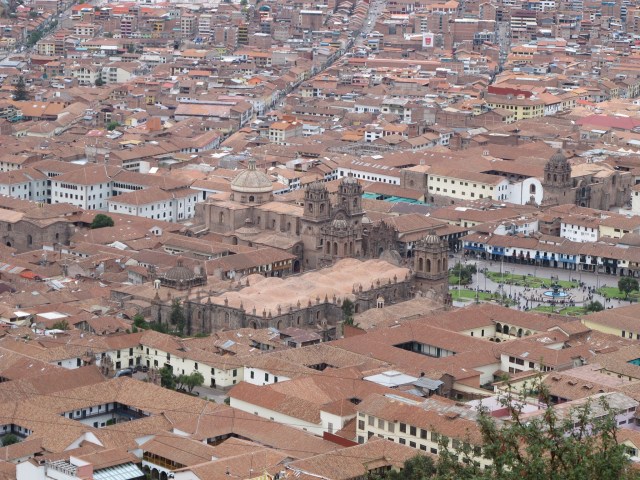
After having one’s fill of archaeological sites and fortress ruins, Cusco offers the alternative of visiting Hispanic settlements, churches and colonial-inspired plazas. Just around Plaza de Armas in Cusco, there are 3 significant churches and monasteries worth visiting.

Inside the main cathedral hangs a painting of the Last Supper where a guinea pig called “cuy” takes centerpiece. Very, very Andean. After all, where else in the world do they serve guinea pig as local delicacy? Just right across this Cathedral is the Jesuit Church (Iglesia de la Compania de Jesus) whose grandeur seems to overshadow that of the 16th century main cathedral that honors the Assumption of the Blessed Mother. Plus, there’s the Convento del San Francisco de Asis and the catacombs. This San Francisco Church and Monastery is attracting crowds mainly for its catacombs but quite frankly, I am not keen about seeing human remains as they give me the creeps.

Before flying back to Lima, we spent time in Cusco, a UNESCO World Heritage Site. The churches, convents, catacombs and plaza remind one that this is truly an amalgam of Incan heritage and colonial influences. The heart of Incan ancestry and colonial heritage beats here. How they’ve integrated both and preserved each heritage is an experience to be seen and felt. One can easily overread on Peru and the Incan Empire. I resisted the temptation and allowed my books to occupy space, undisturbed, in my suitcase. Instead, I delighted in chatting with Peruvianos, eating their food and listening to our guides whose Incan pride cannot be dismissed. I like that about ANY people or race. Peru. It must be experienced.


Macchu Picchu has an altitude under 2,400 meters, about 9,200 feet above sea level. But to get there, one flies to Cusco which has an elevation of 3,400 meters. More than 11,000 feet. That’s past the threshold when altitude sickness typically sets in. Those visiting Macchu Picchu ordinarily stay a couple of nights to acclimatize in Cusco. But there’s the option to stay in Sacred Valley instead which is about 2,900 meters — higher than Macchu Picchu, but lower than Cusco. A river valley “formed” by the Urubamba River, it’s really a perfect midpoint.

Sacred Valley is also home to many archaeological sites and Spanish colonial villages like Ollantaytambo and Pisac. Together with Cusco and Macchu Picchu, the area comprise the core of the Incan Empire. The archaelogical park in Ollantaytambo is no less challenging and is in fact a “climbing tour”. You need tons of energy for this, quite akin to tracing the Macchu Picchu trail. It is a pity Ollantaytambo is often overlooked because of Macchu Picchu’s majestic sanctuary up in the mountains. But Incan civilization in all its sophistication and grandeur manifests in Ollantaytambo’s stonework and dramatic setting both as a fortress and temple. One scales its stone stairways and steep terraces to gain a glimpse from the top of the quarries where all the stones were sourced. It was an engineering feat to transport these stones to put up this fortress, using (or diverting) the river’s current to ferry the stones. Go figure how smart these Incans were.

The Pisac Ruins include agricultural terraces held in place by stone walls. One can choose to take on this hike and impress everyone, or check out the handicraft and souvenirs market. There are also walking sticks, hats, water bottle holders to compose a hiker’s gear or a serious shopper may instead focus on gems, artwork, fabrics and fossils. The last one — please don’t buy! One person was offloaded in a domestic flight because of a fossil he bought which is not allowed to be taken out of the country.

While Cusco is bigger and busier, with its own set of attractions like big churches, monasteries, museums and plazas, Sacred Valley is more rustic. But our hotel for the night clinched it. Sonesta Posadas del Inca in Urubamba is so postcard-pretty, quiet and relaxing. Its charm rests in its sprawling complex of two-storey buildings, flower gardens, fountains, coffee nooks, tiny “instagrammable” chapel, and its breathtaking panoramic view of the mountains. Just imagine having coffee one morning with this view from any one of its many patios.

Even a single night here before taking on Macchu Picchu would be ideal. A train leaves regularly from this area to Aguas Calientes where one can ride the bus up to the citadel. There are coca tea available in abundance, and oxygen tanks are everywhere. Don’t be embarassed to ask the desk for a few minutes of oxygen to clear up your fuzzy brain! Tried it myself and it certainly worked.


My first reaction is why? How? This indigenous mammal has graced many homes as pets. Like the rabbits. But here, it has been a staple Andean dish for 5,000 years. They are actually rodents, more furry and cute! But here in Peru, they are either fried or roasted and called CUY. In some, they are served much like the suckling pig or cochinillo.

Tried this in Cusco, with ceviche (trout) on the side. They love their potatoes here so that makes up the carb component of one’s meal. I don’t know. Didn’t think I’d try it but then cuy is a Peruvian delicacy most locals would say no one should miss. But we opted for the better-looking cuy chaktado (fried under a stone) vs the roasted cuy on skewers found in most markets.

I like their ceviche with corn kernels (big kernels, long thin kernels) but I’d pass on their tamales and pisco sour. The tamales is too bland and the pisco sour too strong. In Lima, we’ve tried their lomo saltado and that’s ok. Won’t really crave for it. And no I won’t be ordering ice cream for dessert here. The texture and flavor just don’t make the cut. Nor would I order suspiro — a blend of egg yolks with condensed milk, cinnamon and port topped with meringue. Suspiro is simply too sweet for me. Each time it was served, I only managed a couple of teaspoonfuls. But I do like the variety of fruits we tried at the Food Market. Especially their custard apple, called chirimoya.

Do i have a favorite dish? I’m not particularly fond of meat but their salads, especially the avocado and lima beans as well as the variety of potatoes complete my meal. Trout is good too. And the quinoa soup is divine! For the carnivores, cuy fried or roasted, chicharrones (fried pork rinds), alpaca chops and lomo soltado should be IT!

Peruvian cuisine has survived many many years. The many varieties of potatoes and potato dishes, the big fat kernels of corn, those bigsized peanuts all pre-date the Incas. Our local guide kept reminding us the world owes Peru for its potatoes, now eaten all over the world. Through the years, Peruvian cuisine blended Andean ingredients with the Spanish and African to produce Creole cuisine. Then the Chinese came, and the craving for fried rice a la Peruviano gave way to chifa. The world-famous Nikkei cuisine blends Peruvian with Japanese cuisine — anyone cares for sushi with pisco sour? No wonder Peru — Lima, in particular — is home to many inspiring and aspiring chefs. A real food haven where many restaurants rank among the best!

Machu Picchu. FINALLY.


It has been on my bucket list like a stain that won’t fade away. Been imagining this Incan citadel up in the Andes for the longest time. Almost went a few years back, only to cancel plans at the last minute. Days before this trip, I’ve been agonizing over my lack of preparation, my seeming “lost ability” to pack (for summery, autumn, and wet weather) for 3 legs of this trip. Promised myself I’d relax the week before this trip, but no – I booked all my days prior and now reeling, functioning on what you’d term as #confusedmode. I’m too old multi-tasking but there I was, booking more trips even before I started to scratch this one off my bucket list!

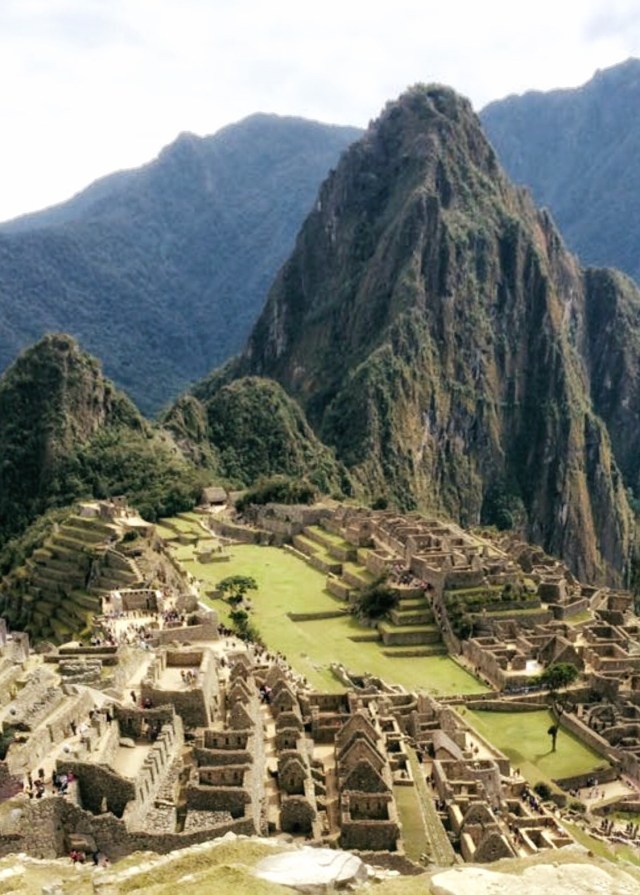
Well, I’m here now. Dripping with excitement to view this 15th century historic sanctuary of the Inca Empire. Its natural setting couldn’t be better. The Andes Mountain sets a beautiful panorama of mountain peaks, valleys and slopes. This mosaic of about 200 structures, terraces, walls and squares amidst a rugged, dramatic setting presents an architecture whose exact function and role in Incan civilization remains a mystery. Well-planned, yes. But abandoned and virtually forgotten until its rediscovery in the early 20th century. Thank God its awe-inspiring mystery and grandeur remain.

Initially, I worried over the weather forecast. Rain is not my good friend. Nor is high temps. I packed for cold weather but lately, temps have been rising. Plus the occasional rain. Because we can only bring a backpack for our 2-day visit of Machu Picchu, I had the backpack stuffed good with fleece vest, long-sleeved turtlenecks, and a raincoat/poncho. Last night, I replaced the turtleneck with a couple of cotton shirts. I also ditched my body bag and chose to carry my backpack to carry all my essentials, with thoughts of changing shirts depending on how the weather goes. Thank God I packed my cotton shirts — really meant as undershirts if the temps dip low.

But I forgot one thing. I’ve hiked up the Tiger’s Nest in Bhutan and thought I’d have no issues with altitude. It took awhile before I accepted that I may have been hit with altitude sickness while in Cusco where elevation is 11,000 feet. I had a headache that wouldn’t go away. I reasoned that I always had headaches back in Manila. Then some slight dizziness. Worse, I kept taking naps in the bus. Finally, I checked my Fitbit and found my bpm (heartbeats) hovered at 100 beats per minute as I rested and prepped for bedtime. With all the anxieties that I came this far and NOT enjoy Macchu Picchu, my “resting” bpm soared to 127. I was really worried.

I did as advised. Just my luck that my roommate is my doctor friend. I waited this long only to find myself planning this trip with this childhood friend. Oxygen was my good friend. Available in the hotels and the buses we took while in Cusco country. Macchu Picchu is lower than Cusco and thanks to my oxygen morning dose, it kept my heart from pumping so hard off my chest.

The bus we took zigzagged around the mountains at dizzying speed. The weather forecast is RAIN the whole day but it only drizzled towards mid afternoon. Soft rain, as our guide said while we walked from the Temple of the Sun towards the Sun Dial and Sacred Rock. With a rainy day forecast, our guide said the crowd we found in this ancient citadel is nothing compared to the norm. We had good, sunny spells and all. Never mind that it was unusually warm this late October. A couple of llamas even followed us around, and there was a pair of rainbows in all splendor as we bowed out of Machu Picchu. Not one, but a double rainbow! Even our guide Alvin had to take shots as he found rainbows in all his guiding career here only 8 times. Breathtaking!

I’m so happy to be here! Never mind that the dust worsened my allergies and my MP wardrobe never saw the light of day. My favorite striped cotton shirt was perfect as I sweated while walking up and down narrow, uneven steps. When it drizzled, and grew cooler, I put on my fleece vest and light raincoat. I grew hungry during the walk and felt my sugar and electrolytes dipping. What I’d give for a carrot stick to curb my hunger pangs! Someone in our group walking with her mom fed me peanut butter. That alone boosted my energy for a couple more hours walk. Bless her.

The following morning, I chose to rest it out. I know, it doesn’t sound like me, hungry for adventures, eager to suffer challenges. But I’m listening to my body, as well as to my doctor roommate. Rest the body. (Read: Have some retail therapy) Besides, I’m happy with my day in Macchu Picchu the day earlier. My resting heartbeat is now 80-90 bpm. Swell. I prayed as did many others I’d get here in fine health and weather. A slight “scare” just days before the hike, but I’m here now. Grateful, feeling blessed. This means much more than just ticking one off another destination off the bucket list.


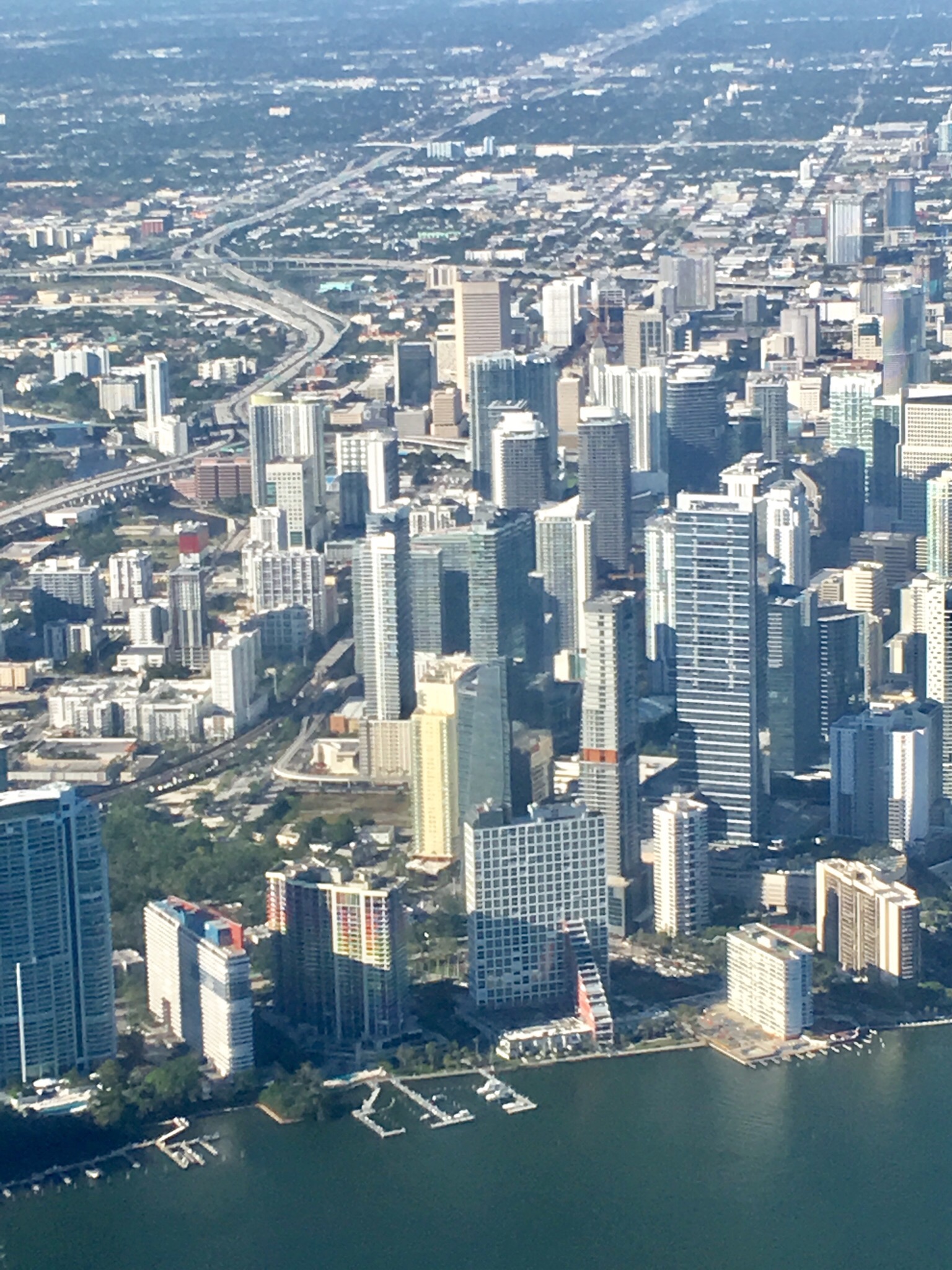
I’d be quick with this one. You may be all agog strolling the Art Deco-lined streets of Miami, but not as agog over a plate of stone crabs with the special Joe’s mustard and mayo (and whatever else) dip. An institution around here, many say it would be a crime to visit Miami without dropping in.

We had salad before digging in into those fat crab claws, and a slice of chocolate pecan pie after the delightful seafood platter. Too bad they ran out of key lime pie, which I hear is another bestseller.

The place is housed in this yellow building not too far away from the Art Deco strip and that building one always sees when watching CSI Miami 🙄 . Best to go off peak hours if you want to get seated. I noticed though that many locals pick up their takeaway here. The idea crossed my mind too even AFTER we’ve lunched here. For sure, I won’t mind getting stone crabs for dinner on the same day. But then, there’s the business of checking out the nearby Art Deco buildings and the crabs would have to be left, stoned and cold, in the car. 😩

So there. Take your pick. Dine in or takeaway, or both? By the time you’re done meticulously cleaning out those claws of all the crab meat you can get, you’re ready to check out those background scenes in your favorite TV series 😜

Then head back for more.


It was just a 2 day, 1 night cruise aboard Paradise Luxury. Thrilled after a 4 hour drive from Hanoi, it was such a treat to cruise Halong Bay — its many limestone rock formations, floating fishing villages, caves, the food and activities on board! Yes, it rained. But that didn’t take away a single minute of our enjoyment of this adventure. We were the lucky ones. A day earlier, the cruise was recalled after only 2 hours of sailing because of inclement weather. 

Boarding Time! (Paradise Luxury @Halong Bay) Boarding Time! (Paradise Luxury @Halong Bay)
A shower of rose petals as we boarded Paradise Luxury. A shower of rose petals as we boarded Paradise Luxury.

There were just a few of us onboard. The crew, the Cruise Manager (Lance) and butler (Gwen?) of Paradise Luxury 4 were all so friendly and accommodating. Food porn on board too. The works! All that plus a jacuzzi in the room? Rooms were spacious, so unlike the small, cramped cabins we got used to on big cruise ships.  Though it rained, the waters were so calm. Cruising along Halong Bay viewing its 1,969 karst formations was sheer delight. We thought we’d never grow tired staring out of our wide cabin windows or feeling the breeze and enjoying the views on deck. How could we have missed this in many of our travel itineraries?

So much room in our luxury cabin! So much room in our luxury cabin!
If you're traveling as a couple, ask for the cabin with this jacuzzi. Perfect for honeymooners! If you’re traveling as a couple, ask for the cabin with this jacuzzi. Perfect for honeymooners!

But the real treat lies in the beauty of this UNESCO Heritage Site, truly a top natural wonder of the world. The smooth ride over the placid waters of Halong Bay was so soothing to nerves frayed by the motorcycle and bicycle scene of Hanoi. This is the exact opposite of one’s feelings while crossing the streets of Hanoi. There were many other cruise boats, along with the smaller fishing boats from nearby floating villages along the bay, but this is one “traffic” that is far from chaotic. In fact, the many sailboats and luxury yachts dotting the 1,969 limestone rock islands added to the charm.

A lone sailboat looking wedged between 2 rock formations. A lone sailboat looking wedged between 2 rock formations.
Truly a top natural wonder of this world! Truly a top natural wonder of this world!

We slept like a log after a scrumptious dinner on board. The activities included short rides on tenders to view some caves, kayaking (if weather permits, but not on this ride), culinary and barista lessons, tai-chi first hour in the morning. For an overnighter, that is more than enough. Plus of course all the eating. The last activity is NOT to be missed. We had such savoury Vietnamese appetizers of crab cakes, shrimps, spring rolls and papaya salad. The menu listed scallop bisque, lamb, king prawns, salmon, and a chicken dish. We were prepared to choose one main entreé but was surprised we had ALL of it instead. And such generous helpings too.

And these were just appetizers! And these were just appetizers!
Fine dining on board! Fine dining on board!

The barista and culinary lessons were held in the dining hall. The tai-chi too, because the sundeck was wet from all the rain. The heavens wept while we slept, and just as we were sailing back to shore. The only thing is dining is intermittently interrupted as we passed the karst formations viewed from the glass windows and doors spilling out to balconies. How can you not help taking a photo? Lovely day. Soothing nights. We even passed one rock formation with a cave all lighted up for a private candlelit dinner!

Culinary lessons on board! Culinary lessons on board!
Ready for barista lessons! Ready for barista lessons!


After this experience, you know what I have in mind? Gathering my family and a few close friends to set sail on this luxury boat all to ourselves! That should be fun. There are smaller, 3 cabin boats if you like. But I am thinking along the lines of 8 cabins or so for a big family and a few couple friends. How about that?

Twilight time! Twilight time!
A time with friends. A time well spent! A time with friends. A time well spent!

Lazi Convent proudly stands across the pink-ish late 19th century church built by Augustinian Recollects in Lazi, Siquijor. The stonewalls echo a deep history of this convent used as “rest and recreation” of the Augustinian friars then. A collection of sorts is housed in the 2nd floor which now serves as a museum that impresses as well as breaks one’s heart.


20140712-130033-46833500.jpg

Lazi Convent. R & R. In late 19th century for men of the clergy.

20140712-130112-46872069.jpg

Centuries-old acacia trees line the road separating Lazi Convent from the Saint Isidore Church. Siquijor.


Impressive that the same acacia trees still line the road separating the Saint Isidore Church and the Convent which has since been converted into a school and Museum. That the basic elements of the old structure — pillars, capiz windows and staircase — remain. Heartbreaking that there is no semblance of security and preservation concerns relating to the Museum. In the first place, the use of the ground floor as school premises doesn’t augur well in preserving this historical site.


20140712-130806-47286243.jpg

The corridors on the 2nd floor of Lazi Convent which now houses the Siquijor Heritage Museum.

20140712-130831-47311048.jpg

Capiz-framed window slides on the 2nd floor of Lazi Convent cum Siquijor Heritage Museum.


When we came across a tabernacle on display, it broke our hearts to read that the piece is a reproduction, a fake, a switched copy of the genuine piece which was earlier sent for restoration. Only time will tell how the other treasures within the unguarded museum would fare. God forbid.


20140712-131128-47488711.jpg

The FAKE Tabernacle. Siquijor Heritage Museum. Lazi Convent.

20140712-131147-47507540.jpg

Historical treasures inside Siquijor Heritage Museum. No glass encasing to protect them. Unguarded. Poorly maintained.


The 2nd floor with capiz-framed window slides reminded me of my grandmother’s house, except that these ones offered a view of the Lazi Church across the road. No wonder men from the clergy chose this convent for R & R. The church is beautiful and this convent equally so, as well as huge in size. A friend reminded me that Siquijor was then center of studies on herbal medicine during the Spanish time and that many scientists from Europe visited the island for research then. I may also add that religious men, many of whom are botanists and pseudo-scientists, may have visited for these same reasons. Rest and Recreation AND RESEARCH!


20140712-132628-48388794.jpg

Lazi Convent. Rest, recreation and research!

20140712-132715-48435128.jpg

Saint Isidore Church just across the road from Lazi Convent.


The 2 structures in the sleepy town of Lazi are the iconic landmarks of this 3rd smallest island province in the Philippines. It has more to offer but many visitors shy away from spending more time, if not nights, in this province which gained notoriety as the country’s black magic capital. The beach scene here is quiet, even secluded. And the waterfalls and cave sites offer more for the more adventurous. With more tourist arrivals, perhaps local government here will consider a more serious upkeep of the island’s historical treasures.


20140712-133813-49093026.jpg

The stonewalls on the ground floor. All original. Lazi Convent. Siquijor.

20140712-133841-49121462.jpg

Lazi Convent. Midday. Siquijor.


 One thing I love about Australia is its many hamlets. Small, quaint, charming, enchanting villages either in the mountains or by the coast. I remember the first time I visited Katoomba. Took the train aiming to spend a whole morning viewing the magnificent gorges of the Blue Mountains and doing some bushwalking. I did. But I remember more that one afternoon I walked aimlessly along the streets of Katoomba. No Maccas (McDo) or KFC food chains here. Instead, I found tiny cafes, charming bookstores, arts and crafts stores, and food and delishops.


20140610-104438-38678790.jpg

Echo Point


My Katoomba Bookstore

My Katoomba Bookstore


Back in 1999, I stayed in an artist’s home. It’s quite a walk from the Katoomba Train Station, and it didn’t help that there was no heating around the house. Next day’s bushwalking was a struggle that I kept wishing I was on the cablecar with glass floor that kept passing us above the bush. When I had the afternoon to myself, I mechanically walked towards this bookstore that has seen better times. Old, unpretentious, but oozing with that old world charm. At the time, there was a baby grand piano in the center where someone (I assumed he was the owner) was playing some classical tunes. He offered me a cuppa and encouraged me to browse around lugging my cup of my favorite brew. What a relaxing afternoon.


Cablecar takes you right to Katoomba's iconic landmark -- The Three Sisters in Echo Point.

Cablecar takes you right to Katoomba’s iconic landmark — The Three Sisters in Echo Point.

Bookstore in Katoomba

Bookstore in Katoomba


Katoomba is truly an artist’s haven.  The oldest cafe in Australia is also to be found here, so lovingly restored and preserved. They even hold movie nights here! And in neighboring Leura, one is encouraged to simply walk around and appreciate the local architecture and gardens. There are bushwalking options leading all the way to Echo Point or to Leura Falls, if that suits your fancy. Or maybe you would like to just stay around Leura Mall and enjoy the flowering cherry trees. Amazing how they have preserved this historic street to include the Leura Post Office which now houses a news agency. Have a meal in one of the restos and coffee shops before checking out the many antique and gift boutiques.


We had a fantastic lunch here!

We had a fantastic lunch here!


Paragon Cafe is the oldest cafe in Australia.

Paragon Cafe is the oldest cafe in Australia.

You'd love dog-friendly Leura!

You’d love dog-friendly Leura!


And not to forget, take home some of those gourmet jams, dips, marmalades and tea concoctions. You don’t know how a simple jar can “extend one’s holiday”.


The old Post Office now houses a news agency.

The old Post Office now houses a news agency.

Grab a table at the Solitary Cafe. Just beware your coffee easily turns cold.] Grab a table at the Solitary Cafe. Just beware your coffee easily turns cold.


Call it a conspiracy. Everyone knew but her. Believe it or not, even the family dog seemed to be in on it, except her. Turning 70 is a milestone and we’re not leaving any stone unturned just to pull this big surprise.


20140509-064809.jpg


I flew into Sydney with the 2 “elves” (grandkids). Took PAL thinking our flight’s ETD was 10:45pm. Surprise, Surprise! It was actually 9:10pm. Flight skeds changed without notice? Did we miss it? Naaahhh. We were at the airport thinking we were way too early. Took a pee break at 8pm, grabbed a drink, and trooped back to our gate only to find we were the last 3 to board! Ran for it and finally put on our seatbelts almost out of breath.


20140509-065610.jpg


So we made it…. and landed 3 hours early in Sydney. My niece jumped out of bed at 7am when I messaged her that the “package has arrived”. By the time we reached the doorstep, all surprise plans went haywire. Lack of sleep and stressful departures do that to you. Just the same, we pulled off the surprise sans a video 😦


20140509-070620.jpg


Two days after, a niece arrived. That’s surprise #4 (the first 3 being moí+the 2 elves). The following week my dear couple friends arrived. I’ve rested well enough by then and didn’t fail to document the whole surprise scene.


20140509-071059.jpg


All set for the party now. April 27. Six surprise packages. Great Gatsby theme. Black, White, Silver and Gold. Only the 70 year old dons RED. Surprised? Yes. Happy? Yes. We did it! Friends and family all here to celebrate a milestone in my sister’s life. Life is a celebration!


20140509-071540.jpg

20140509-071632.jpg

20140509-071827.jpg

20140509-071903.jpg

20140509-072001.jpg

20140509-072034.jpg

20140509-072115.jpg

20140509-072213.jpg

20140509-072327.jpg

20140509-072354.jpg