Tag Archive: Travels


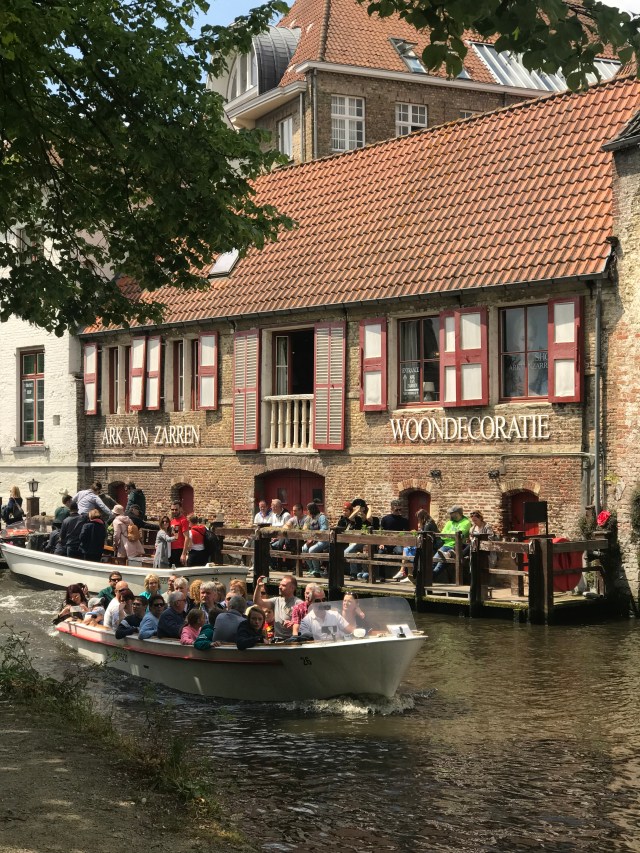
Say that again….. Giethorn or Giethoorn. Either way, you pronounce the “o” or “oo” like a single “o” as in horn. But roll your “r” and have an imaginary “e” between r and n. Got it? Oh, never mind. North of Amsterdam is this water village popularly called “Venice of the North”. Don’t ask me why but I do think Giethoorn’s beauty is so different from Venice and it won’t be fair to compare the two. With its centuries-old thatched-roof houses lining the canals, its charm can be appreciated from a boat or by walking its many footpaths and bicycle paths. It is worth the 2-hour trip from the capital, for sure.

Village of Giethoorn

Village of Giethoorn

There is a Museum and art galleries and curio shops abound. Plus you’d love the quaint coffee shops, aromatic cheese shops and dining areas where we partook of a delectable steak and some fish with chips and garden salad. Fortified with a good meal, we had the energy to walk around the village, crossing many tiny bridges and even checking out the gelato bars. All that time, the waterways were filled with boats, some manned/rowed by tourists who likely held an oar for the first time in their lives. I have to give credit to the professional boat men who never lost their cool while watching them amateurs navigate the canals, bumping left side, right side and rowing in a circle!

The Village Of Giethoorn

I’m told the waterways aren’t that deep. Was actually thinking how many bikes (and bikers) may have lost their balance and dropped/slid to the waters. I’m also curious how the residents can put up with a village teeming with boatfuls of visitors, some too curious nosy to actually step on a private garden just for one damn instagram shot. We went on a weekday and can just imagine the crowds and the noise on weekends in this car-Free village lying in the northeastern Dutch province of Overijssel. I can’t even imagine how crowded those tiny, narrow 170 bridges could be while punters carrying nosy and noisy tourists pass under.

Village of Giethoorn

Village of Giethoorn

Most tourists who rode the boats took time to walk around the water village, the church, cheese shops and ice cream bars. The narrow bridges make for “friendly encounters” especially when you cross paths many times. I’ve also met many dogs πŸ• who seem to enjoy seeing the colourful boats plying the canals. By the 3rd time you cross paths with someone, you’ve grown “close” . πŸ˜‚ If I were to head back here, I’d likely go much earlier in the morning or much later in the afternoon when the crowds have gone or haven’t arrived. It must be quite an idyllic experience to take one of those small boats called punters or to simply walk around crossing as many of the 170 wooden bridges connecting the tiny islands. Yes, that’s what I’d do. Nonetheless, it is still a wonderful experience. Let me just say I can do with less noise.

Village of Giethoorn

Village of Giethoorn

Village of Giethoorn


The first time I (solo) visited Amsterdam was in 1986. I couldn’t get Keukenhof out of my mind then. The next one was in 2000. Quite a long time till this visit. We snagged a free walking tour of the City, a (first) lunch in a pancake house before visiting the Anne Frank House, a 2nd lunch in that Bohemian Jordaan neighbourhood and finally a quick visit of the Red Light District.

This tiny country packs a lot. This time, I won’t miss the chance to do more day trips in the next 6 days out of Amsterdam. There’s Giethorn, Delft, The Hague, Leiden, Haarlem, Volendam (this one I visited in ’86) and many more. Never realised how easy this was to do with each out-of-the-city site a mere half-hour to 2 hours max away. The train and bus systems work, and there are plenty of things to do even within the city. The museum and art scene is very vibrant. Think Van Gogh, Rembrandt, Vermeer and Bosch. And the coffee and bar culture? We even found a tiny church converted into a bar complete with a pulpit, a cross on the panelled wall and some Turkish lamps! No wonder there are sooo many tourists especially at this time of the year. There’s always something for the art and culture geek, for the camwhoring tourists, the gay lovers (the first gay marriage was legitimised here), and yes, there’s the “sex and drugs” scene. Weather was a very pleasant 17-20C — perfect weather for walking.

There’s something about (clean) canals that fascinate us. Like Venice. But unlike Venice, the bridges crossing the canals are wider here, and not as easy to get lost πŸ™„. I could have skipped the Red Light District but we have a couple of first-timers in our group of 6, so we went. Our 24-hour travel pass was put to good use. More so since we chose a hotel outside the city center but just a mere 1-3 stops away via the bus or train station right next to our hotel.

It was a good first whole day in this city. Since we were blessed with good weather, we thought the museums can wait. Walking around and day trips to outside towns and big cities are the order of the day. Watch this page!


Or make that 6 in a million tourists who visit Stonehenge annually. Most definitely one of UK’s iconic sites. Its UNESCO World Heritage status attracts tourists from all over the world eager to tick it off a bucket list yet allowing only a quick photo opportunity of this ancient world wonder. I am just as guilty as many. Stonehenge is one big, mysterious circle of stones that likely fails to fully satisfy one’s curiosity. Who built them 5,000 years ago? What and how was the entire stone formation used for? Why was it built here in an open field in Wiltshire, England? Speculations abound, ranging from a religious ceremony site to some (alien) spacecraft landing pad. Whoa!

So many theories. But what’s for certain is where those stones in the inner circle come from. Scientific studies point to the Preseli Mountains in Wales. I know…. you’re curious too who moved these stones from 240 kilometres away or who orchestrated such a major project. Whatever. I’m attracted to prehistoric stuff — anything ancient — and curious over sites and architectural wonders whose purpose remains a mystery. And hey, the vast field surrounding this Neolithic structure is dotted now with blooming canola flowers and really stout sheep who looked soooo cute running across the field. Just beautiful!

Touchdown, London


It has been a while since I visited London. Back in 2000, there was a teenage goddaughter and her family whom we visited. Soon after, I was back on a business trip in 2003. My goddaughter is a full-grown adult now, ready to march down the aisle to meet the man of her dreams. How time flies!

I arrived to the same London I remember, except only that there’s the “Harry Potter” phenomenon and London Eye attraction adding to those sites from Canterbury Tales, palaces, and Westminster icons. We arrived nearly midnight in Central London. Still sleep-deprived, we managed a very productive first day outing the next morn. The usual drill: Buckingham Palace, Covent Garden, Borough Market, Hyde Park, Trafalgar Square, British Museum, Tower of London, Saint Paul’s Cathedral and London Bridge. Oh ok, add Dragon Alley and Bridget Jones apartment to that.
It is a pity that Big Ben and parts of Westminster Abbey and Cathedral are up for major restoration work. No photo op with all those scaffoldings. The Nelson’s Column still stands dead Center of the Trafalgar Square. It was teeming with tourists the time we visited. And you’d find them again at the British Museum amidst the Nereid Monument, Elgin Marbles and around the Rosetta Stone.

London’s and Westminster’s major attractions maybe all must-see’s but we enjoyed Borough’s Market best. It was a very late lunch here after a 3 hour walking tour and we weren’t just bushed when we got here. We were hungry! Hard to resist those empanadas and Argentinian steaks in a bun! Walking around the market, we likewise didn’t miss the Scotch eggs, asparagus and doughnuts!

By the time we were back at the hotel, we were very tired. All of 18,000 steps in a day. Skipping dinner, I called it a night early. Phew!

PorteΓ±a at Borough Market

Going Peranakan


We’ve had our taste of Peranakan in Singapore, Malacca, Indonesia, and even some parts of Thailand. Peranakan is derived from the word “anak” meaning child or descendant. And they are — from Chinese immigrants who settled in these parts of Southeast Asia. Today, we see the Peranakan heritage in architectural styles and cuisine. Descendants of Chinese immigrants fully assimilated in Malay traditions and subsequently exposed to European influences when the British ruled the land. The 2-storey colonial-era buildings stand side by side with Chinese tea houses and shops, amidst a more modern skyline dotted with Buddhist, Taoist and Hindu temples, Anglican and Catholic Churches, some 19th century mansions, forts and high-rise condominiums. A perfect blend of Oriental and Western tastes.
We’ve visited houses here and found the Peranakan style and architecture very apt for the Malaysian high temps and very humid weather. The courtyards provide natural lighting, breeze and the space to “cool down” in this state just above the Equator. Louvered shutters, stained glass and stencilled window panes, gargoyles, heavy wooden doors make you pause to imagine how they were in the olden days. The spice and flower gardens, if any, provide the aroma as wind blows in. It’s both comforting and nerve-soothing despite the high temps. A second floor foyer provides ventilation on humid days and once more, I like the concept of looking down through the cast iron railings to the courtyard to see who’s coming for dinner. 😜 But what I’d really love to see is how the courtyard transforms into a pool as it collects rainwater on rainy days. Must be really cool to experience that while tea is brewing and some Nyonya cookies and biscuits are warming. πŸ‘
And speaking of Peranakan’s Tambun biscuits, we’ve tried some and loved the variety available. some sweet, some savoury. So with their cuisine — a harmony of Chinese and Malay culinary traditions. Some sour, others salty, or spicy or really sweet. Baba Nyonya cuisine as it is fondly called draw direct references to Baba (an honorific title applied to males) and Nyonya (as applied to females). In those days, the Nyonyas spent a lot of time at home, mostly doing embroidery or in the kitchen where they obviously whipped up “magic” integrating Malay and Chinese cooking. These Nyonya dishes acquired an altogether different cuisine quite distinct from that of plain Chinese or simple Malaysian. From Laksa to Nasi Lemak to Itik Tim to Nyonya Fish Head Curry to Kari Kapitan to Babi Pongteh, prepare those taste buds for an explosion of flavors.

Fish Head Curry

Babi Pongteh cooked in Gula Melaka (Palm Sugar)

Soft -Shell Crab Fried in Salted Egg

Many directed us to the hawker markets near the jetties, or in Gurney Drive or the more central market near Sunway Hotel for our coveted seafood dishes. There were also suggestions to stay around Love Lane but when we checked, there were mostly bars and a vibrant nightlife rather than the serious eating we were planning on. 😜 In the hawker markets, we found many choices but were discouraged by the crowd, chaos and the heat! And so we went in search of more quiet roadside eateries and found one. Not exactly that quiet as it opens up to the hawker market but the young chef-proprietor by the name of Vincent welcomed us in and promised to cook anything we fancy. His wife was there to assist but Vincent ruled the kitchen. And how we enjoyed our dinner! Vincent even allowed me to buy my new fav Chendol and some flaky tambun biscuits to bring in to eat. The following night in Penang, we got even luckier. We decided to hunt for street art by sundown as it was cooler and chanced upon The Nyonya Legend House. We were the last customers allowed in and we had a wonderful, authentic Nyonya dinner. A dinner that we couldn’t even finish as the servings were very generous!

Vincent’s Dinner

Tambun or β€œDragonball” biscuits

The Nyonya Legend House In Lebuh Chulia

All told, we have fond memories of Penang. We like what we found, enjoyed what we saw, and savoured what we ate. The heat is a damper but over time, one gets used to it. In my case, Chendol and Ais Kacang were my friends. I had them every time I sensed a full migraine coming. It doesn’t choose a time of day, and I swear I can eat these flavoured ice shavings with fruits and other stuff anytime and anywhere. My only regret is I failed to try as many Nyonyan desserts as my stomach could hold! As for my travel companions, they were over the moon with their durian finds!


Who goes to Penang and fails to visit the Blue Mansion owned by Cheong Fatt Tze and the Green Peranakan Mansion? We enjoyed our guided tours of these two mansions in Georgetown and appreciated how the Penang elite used to live in those days. The official name is Cheong Fatt Tze Mansion, after the man who rose from rags to riches in this corner of the world. Tagged by NY Times as the “Rockefeller of the East”, Cheong was born to a poor family from Guangdong, China but his industry and business savvy earned him prominence, wealth and errrrr….8 wives. The house’s architecture is an impressive fusion of Oriental and European architecture, an impressive display of British and Chinese artisanship. Truly, a masterpiece deserving of the “Most Excellent Project” awarded by the UNESCO Heritage Conservation Awards in 2000. The owners of this late 19th century house certainly did not scrimp building it. Peranakan tiles alone are some of the best and loveliest, and it was crazy walking over these original tiles in the Mansion. No wonder the hit movie “Crazy Rich Asians” used this Mansion in that poignant mahjong scene. And crazy rich may well describe how this heritage house was built. And subsequently restored.

Regarded as one of 10 greatest mansions of the world, the Cheong Fatt Tze Mansion has 38 rooms, 7 staircases, 5 courtyards and 220 beautiful windows. The lucky number 8 pervaded around this eclectic masterpiece — in the number of pillars, number of steps in a staircase, etc. As one very prominent migrant known for his philanthropy and business acumen, his charms and fortune extended to his many wives and children. The Mansion claimed “Feng Shui” perfection but such good aura and chi must have worked only while the old man was around. His trading empire expanded around Southeast Asia but he made Penang his base, and this house essentially his favorite 7th wife’s. Tan Tay Poh was 20 when a 70 year old Cheong took her as his 7th. Imagine that gap – 50 years! She bore him one son but she died early at age 42, leaving the house to a son who allegedly squandered away his inheritance. The Mansion suffered disrepair and was in fact heavily dilapidated, with as many as 34 illegal squatter families living in it. Then a group of conservators bought the Blue Mansion to make sure this heritage house is lovingly restored and preserved. Hallelujah!

Mercifully, the restoration followed best-practice standards for the benefit of both locals and tourists who can now be reminded of the flamboyant lifestyles of Penang’s old rich. The indigo blue facade and walls invite attention and it is truly very fortunate that the conservators who purchased this Mansion from the descendants of Cheong Fatt Tze in 1989 turned it into the heritage home and boutique hotel it is now. Its fine dining resto called “Indigo” holds promise judging by its opulent decor and elegant style. We noticed too that its serving staff seem to know every diner like they’re regulars. Looks very exclusive, if you ask me. I’d love to dine there, but not keen about booking a room in the 18-room boutique hotel even for a single night. I bet it’s haunted.

πŸ“Έ Weng S

On the other hand, the Peranakan Mansion is another Penang gem. Likewise owned by another Chinese tycoon by the name of Chung Keng Quee, this green Mansion showcases Penang’s Peranakan heritage. Penarakan is a culture unique to Malaysia, Singapore and Indonesia. Chinese migrants who settled in Southeast Asia and married locals gave birth to this new culture and heritage fondly called Baba Nyonya. Expressed in its architecture, cuisine and traditions, these Baba Nyonyas assumed an altogether unique culture. And you bet this green-hued residence and museum was also quite a popular and favorite movie set for international movies and TV shows like “The Little Nyonya” and “The Amazing Race”.

On display are paraphernalia and memorabilia of the Straits Chinese. Apparently, the Chinese penchant for anything gold, beady and ornate is adequately expressed in the costumes, ornamental decor, even Nyonya slippers to be found here. The hand-crafted jewelries and hand-embroidered wardrobe and footwear must have given rise to local businesses which flourished then. I am particularly impressed with one item where feathers from a kingfisher bird were actually used to adorn an outfit.

Not turquoise beads, but kingfisher feathers!

A trip to Penang should include visits to these 2 mansions. It’s very educational and both these Mansions tell an awesome story! The guide in the Blue Mansion did an impressive job. So did the guide (Ricky) in the Peranakan Museum except that he had a very heavy accent and we had to strain to listen to him. Just the same, we left learning so much more about the Baba Nyonya culture. Chinese migrants, Peranakan Chinese, Straits-Born Chinese. They’re called all these. Peranakan is a Malay word that translates to “local born” . It is not a separate race, but rather a sub-culture within the Chinese community. Peranakan cuisine blends Chinese cooking with Malay traditions. Think LAKSA. 😊


We seriously went in search of more street art. But the heat and humidity compelled us to do the hunt at night when the temps were more bearable. Changed into a loose-fitting housedress too for comfort and switched to more comfy, airier sandals for the hunt. After all, we needed to scour the streets of Lebuh Acheh, Armenian, Cannon, Ah Quee etc to find all these Zacharevich art and other murals by local artists. The first set of our finds is in my earlier post but these new street art finds demanded a separate blog. Much too fascinating to be dismissed.

Reaching Up. Cannon Street.

That Zacharevich painting of a boy in yellow shirt on a chair reaching up came with an actual wooden chair. Just like that of the “Old Motorcycle” and the “Kids on Bicycle”. Same with the “Brother and Sister On A Swing”. As in there was really another swing. I’m not sure what this contemporary art style is called, but I bet the Millenial Kids would love this art installations where the urban landscape and recycled objects are fused into an art form. Well, the senior adults enjoyed it too. Kind of frustrating though that the map to search for this urban street art isn’t exactly accurate, but we managed and just missed very few. We also found more — to include those not listed in the city map we had. Seems like many local artists were inspired to showcase their talents as well. Zacharevich or Zach as he is fondly called, may have led the way but he has obviously inspired many local artists. Very artsy! Zach may have been born in Lithuania but the Malays consider him as one of them, and even call him the “Malay Banksy”, whatever that means.

Boy On A Bike. Ah Quee Street.

There were a couple we failed to see while walking the streets but easily found while cruising the same streets on a cab. Where we failed was to look upwards for murals adorning walls that will likely fade over time. Many need a serious retouch. Of course we can only sigh in despair as we cruised past them, unable to take a decent shot. And the ones along some unlighted alleys required some persistence not to give up the search. Luckily, we were a group of 8 friends and enjoyed the search like we were on a treasure hunt. Not too many tourists we met that night, as most of them were already having cold beers inside bars.

Some of those not included in the list were quite outstanding. The city should revise that list to include them. There was no attribution so we don’t know who the local artists were. A pity. I like the concept behind that wall with cigarette stubs and a man with oxygen mask. We also liked the grandma vendor handing a bowl to a boy. Susu Soya? And of course, I couldn’t resist another shot with the “Kids on Bicycle”. Yes, this time in my house dress!

Little Children on a Bicycle, Armenian Street.

The mural “Children Playing Basketball” was in a dimly-lit alley that we nearly missed. It’s in terribly bad condition. I like the energy of this mural but the local government should do something to preserve many such murals that are nearly faded on walls that seem pockmarked.

Our map guide listed a few which locals claim have long been gone. Not sure why, but I suspect the wall on which it was painted may have been torn down or the paint may have completely faded. After all, it’s exposed to the elements and near the sea.

Some paintings obviously were done to promote a nearby shop or restaurant– but that doesn’t take away the thrill of finding them. You just have to give it to these local artists who found an expression of their art that now entertain and amuse visitors like us.

Little Boy With Pet Dinosaur. (Too faded) Ah Quee Street

Be it a wall, a gate, a door. All art. Street graffiti if you like. All for our amusement. By the time we were done, it was past 9pm. No wonder most other tourists were already inside the shops and bars. Way past our dinner time and only this Peranakan Restaurant reminded us we should nourish ourselves.

Before heading back to our hotel, we were convinced many more artists will find ways to express themselves around town. While Georgetown prides itself as a UNESCO Heritage Site, this contemporary art expression seems to complement the more traditional architecture and environ of this historical district.

Of them all, our favourite is this. A child in blue pajamas that we missed but won’t give up on. Found it the next morning, after instructing our cab driver to bring us there. Now, we can say we’re all done! 😊

Little Girl in Blue. Muntri Street.


Loving it here in Penang. Unofficially the country’s food capital, it has also acquired quite a reputation for its street art. It hasn’t been long since Penang’s streetscape was given a boost with the creation in 2012 of a street art project. A Lithuanian artist, Ernest Zacharevic, started with murals in this heritage site that depicted playfulness, energy and some elements of local culture. Walking around the old town searching for these murals was an exciting activity. It wasn’t so easy though as some have faded and in such deteriorated condition. Many were clustered around the Armenian Street, to include those done by artists other than Zacharevic.

It was fun, and before we knew it, we have worked up quite an appetite for dinner. We missed many though as the sun has set and there were many cars parked along the streets where the murals were. Some even blocked the street art. Worse, some are barely recognisable and in dire need of a “retouch”. I am not sure how long these artworks will be around. Just the same, it’s a huge draw for Penang tourists especially the 3D and interactive street art. The historic district of Georgetown is teeming with this art scene.

The tourists in this heritage site don’t seem to mind the heat and humidity. Some have rented bikes while others like us simply sweated it out searching on foot. Either way, the murals invite the viewers to come nearer and take photos. We took the Lebuh Armenian route, passing Cannon and Acheh Streets from our hotel. We should have gone farther down past Chew Jetty to view more like the “Children Playing Basketball” and “Brother and Sister On A Swing”. But it’s almost dinner time and the Jetty Food Court beckoned. And so, part 2 of this street art search will have to wait.

Lastly, I wondered about those many kitten/cat paintings. They are cute too. Why cats? There is a political undertone here . The Penang state government reportedly runs its affairs on a CAT approach. CAT stands for competence, accountability and transparency. A good approach, I must say. But I won’t amplify on its political meanings and interpretations on this post. We’d just keep walking and check out more street art. 😊

There is a map one can download from the Net but it is easy to miss these artworks. We did. So we’re going back to check those we missed. Watch for updates on this blog.

Update here:

https://lifeisacelebration.blog/2019/03/07/in-search-of-more-graffiti-georgetown-penang/


Sweating it out here in KL after an early 7:30am flight from Manila. It’s been a long Monday, a quick city tour in the afternoon and a good Malaysian welcome dinner. We saw what we planned to visit, mostly around the Independence Square. And thank God we hired a van to drive us around the square. The Mosque, the Museum, the government offices are all around the Merdeka Square but walking in this hot, humid weather does not make walking around a pleasant activity. Besides, we’re only spending a day and a night here in KL. Tomorrow, we’re moving to Penang after a quick visit to Batu Caves.

Sultan Abdul Samad Building

It’s been years since I was here but I still remember how humid it was getting around. I skipped the Chinatown tour while my friends had their durian fix. But they bought jackfruit slices for me. Yum. After mandatory visits to the attractions around Merdeka Square and the Menara KL Tower, all I could think of is a long shower and a good dinner.

Jamek Mosque

And Madam Kwan’s didn’t disappoint. Nasi Lemak, Nasi Bojari, Nasi Goreng, Mixed Satay, chao kuey teow (noodle dish)and a fish head curry dish. It was also convenient that it’s housed in a Mall just right beside Petronas Towers. We initially planned on a nightcap at the Banyan Tree for a sip and a good view of the Towers at night, but it’s been a long day and that dinner at Madam Kwan’s made us all lazy and feeling lethargic.

And so, Monday ended with that dinner to prep for the next morning’s visit to Batu Caves and finally to spend more time in Penang. Funny, but by the time we reached Penang we all felt like we’ve been here a week. Perhaps it’s the long hours together doing all the touristy stuff as well as the endless chatter that made us feel like we’ve been together far longer. Not that we’re complaining. We shared many jokes and laughed and ate heartily. Well, we’re on holiday! Watch for updates in the coming days.


This is one trip packed with so much adventure. Judging by the itinerary, our giddiness was rightly justified. There was an element of fear especially for some adventures unfamiliar to us. Like winter sports. Like water sports. Make that ICE water sports. But here we are, still grinning from ear to ear, happy that we survived this trip without mishaps and with so many happy memories. This is our story.

Ready to Rumble

Drift Ice Walking

Wildlife-Watching Cruise

Snow Walking & Frozen Waterfalls

Speeding Over Frozen Lake Akan

The Red-Crowned Cranes of Kushiro

Camping 101 in Ikoro Forest

Food Trip in Tsurui

Jingisukan in Sapporo Beer Garden

And should you need a local tour operator for your Hokkaido trips, here’s one we’ve tried 3x and highly recommend. This coming from a satisfied customer.

Hokkaido Treasure Island Travel Inc

Travel Planner: Megumi Takeda

http://www.hokkaido-sightseeing.com/en

mailto:info@hokkaido-treasure.com

Hokkaido is ❀️

Excitement Overload!

Megumi and Nobu – our Hokkaido gems!