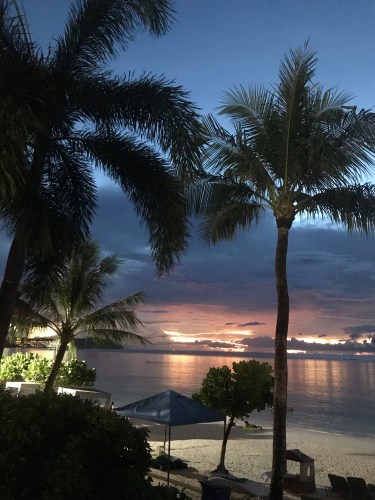
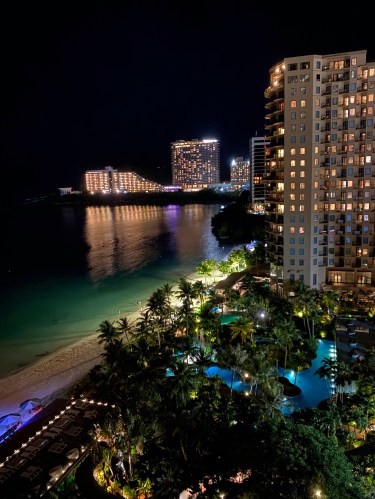
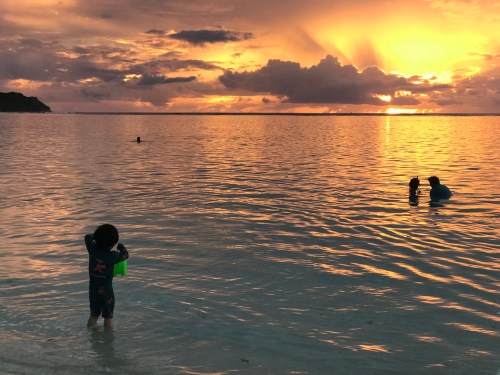
There are several hotels lining Tumon Bay in Guam. The new ones are quite impressive but Dusit Thani Guam Resort is still tops when it comes to the beach scene. We booked a beachfront room overlooking the bay (which spills out to the Philippine Sea) and found the beach scene and sunset views spectacular! Many waited for sunset. We couldn’t get enough of it so we had dinner at the hotel’s Tasi Grill overlooking the beach. On a summer night like this, a mojito hits the spot.
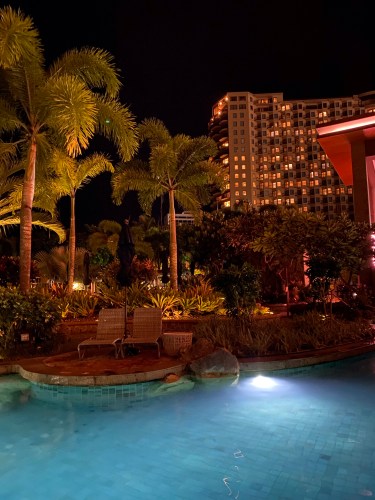
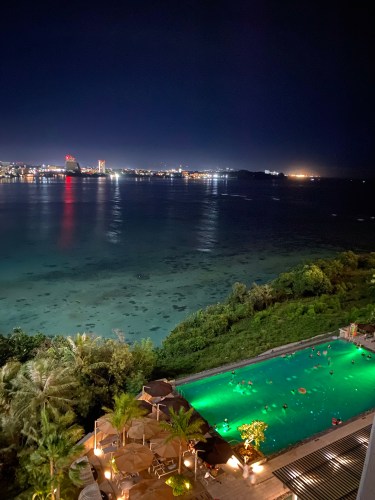
View from the Balcony View from the Hotel Pool
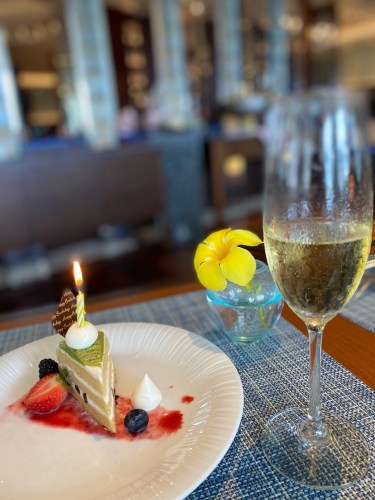
I love the vibe here. Young families on staycation for the weekend. Shuttling between the beach and the lovely pools is a favorite activity. The hotel bar lounge and a restaurant are top hangouts as one sips his fav brew or cocktail. Most waiters are Filipinos, as are the bands. The songs they played are no different from the typical repertoire back in Manila. I tried to cut down on calories by ordering a salad for dinner but we got a complimentary dessert of 2 slices of matcha cake. My favorite. Need I say more?
View from the balcony The Beach At Night
Dusit Thani Guam Resort, and its sister hotel Dusit Beach Resort share the same beach. The hotel facilities include a spa which you pass each time you head out to the pool and the beach. I bet many were lured to have that massage when the spa fragrances wafted through their nostrils. Smelled soooo good! The lobby is dotted with so many nooks and crannies for a quiet drink (which you can take out and around the lobby from the bar) while not straying too far away to enjoy the music from the bar band. And I bet those entertainers are Filipinos too. Great singing.
This kid stands watch while dad & mom enjoy the beach. La vie est belle✨Too bad the pool closes at 7pm
So next time you’re heading this way, try this beachfront hotel. I know. We’re booking this Christmas too!
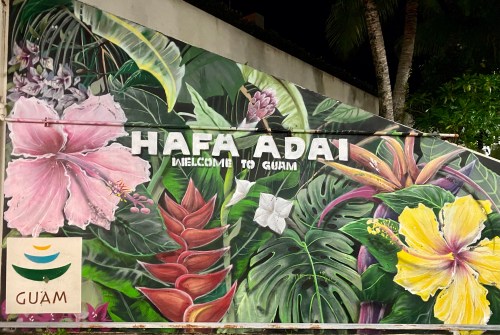
Hafa Adai! As in “half a day”? But make that the whole day for a more leisurely drive. There’s really no rush but the coastal road brings you from the Philippine Sea to the Pacific Ocean coast. North to South. West to East. Just be sure to bring water or any beverage along with snack food to tide you over since the dining places are not that many. Fret not though since the distances between points are very short. Guam is a tiny island that it’s a chore to manage to get lost!
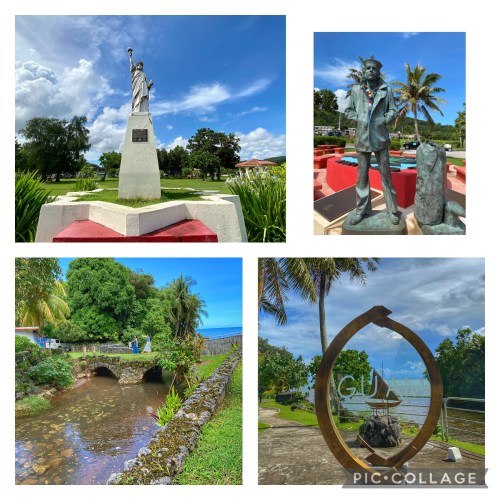
Liberty. Lone Sailor. Tollai Talaifak. Guam Seal. The Basilica
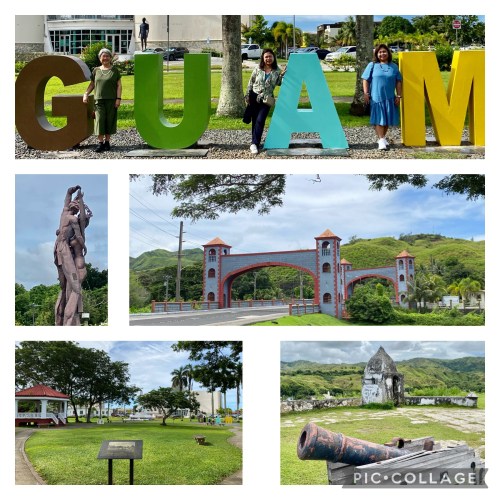
We started rather early not so much to cover more ground but to beat the sweltering heat. It showers intermittently here but when the sun’s out, it can get uncomfortably hot. From the Liberty Statue, the Lone Sailor, Plaza de España, Two Lovers Monument, historic Tollai (bridge) Talaifak, Cetti Bay Overlook, Magellan Monument, Nuestra Señora de Soledad Fort, Fort Santa Agueda to the Dulce Nombre de Maria Basilica and the Guam Museum. We met, and in fact made friends with, some Japanese and Korean tourists. Young travelers from countries just 2-3 hours flight away. They make car rental a flourishing business here in Guam and I just love how they are partial to top down sports carsin neon colors! In case you are just as inclined, be sure to slather a generous amount of sunblock or BURN!
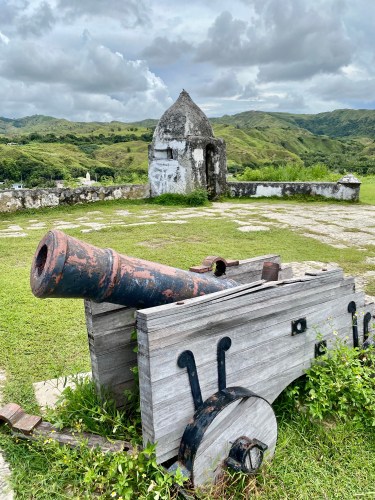
Nuestra Señora de Soledad Fort in Umatac Bay.
It is fascinating that Guam and the Philippines share similar war histories. Very interesting to note that while Ferdinand Magellan discovered the Philippines on March 16, 1521, his expedition actually made a stopover in Guam 10 days prior. In both the Philippines and Guam, the unholy alliance of government and religion ruled for over 300 years. Both were likewise sold off under the Treaty of Paris toAmerica and both were “abandoned” by US of A and suffered Japanese occupation, only to be later “liberated” by Uncle Sam after heavy bombardment to weed out the Japanese. The timelines are almost the same. And both cultural traditions and national identities heavily damaged by the foreign conquests. Same fate? Forover two centuries too, the 4-month voyage of the Acapulco-Manila Galleon Trademade stopovers in Guam or the Marianas Islands on their return trips to the Philippines. A Magellan Monument stands in Umatac by the bay, a stone’s throw from the Nuestra Señora de Soledad Fort where presumably, the Spaniards kept watch against sea pirates. The sentry tower and cannons in this fort look almost identical to the fort features of their equivalents in Manila and Cebu in Philippines.
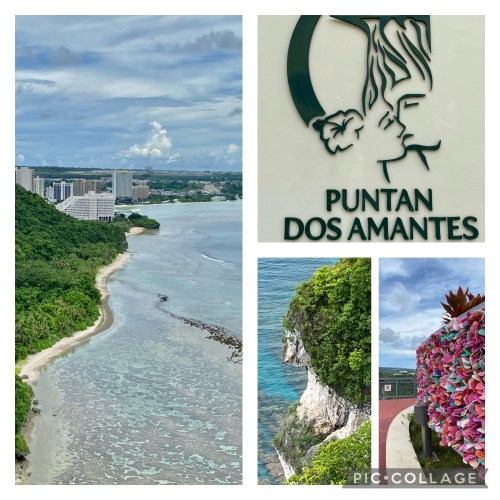
Two Lovers Point in Tamuning
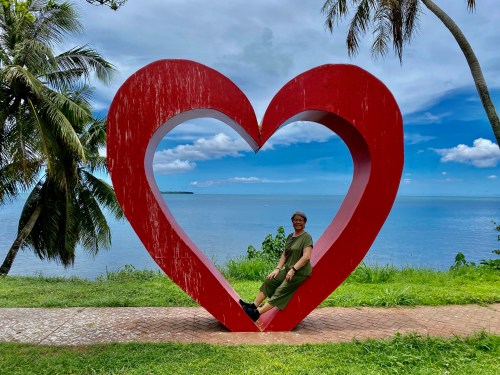
Two Lovers Point is a popular seaside cliff that overlooks Tumon Bay and the Philippine Sea. There is a legend of two doomed lovers and their forbidden love that ended with both leaping — with their hair tied together in a single knot — to their deaths here. There are many versions of the story but somehow, the romanticism and tragedy are further amplified by a “heart lock wall” where young pairs write their names on heart-shaped love locks to hang here. Much like those you’d see in Paris, Seoul Tower, Brooklyn Bridge, Rome, etc. Yes, this “sells”. Some distance away and without the crowd, we found this heart-shaped photo opp. Just as romantic, but without the tragic story. 💕😍
The beach scene may not vary much but the hotel facilities and amenities may provide enough variety to make hotel-hopping a worthy pastime. Despite the pandemic, the hospitality industry seems to be thriving and it feels so much like home given that many of the hotel staff are Filipinos who’d readily interact with you in the local language. Tourism may have waned for sometime but slowly picking up as those from the mainland and Asian neighbors are coming. I met many young Koreans, many of whom are students here. The same class of Korean teens whocame to study English in the Philippines. You’d find them booked for weekends in hotels, crowding the infinity pools and having a grand time. They also came ready with their Jack Daniels peeping out of their beach bags as they troop back to their hotel rooms. The balcony scene in most hotels gives a glimpse of their idea of fun.
Night view from the hotel balcony. The Tsubaki Tower
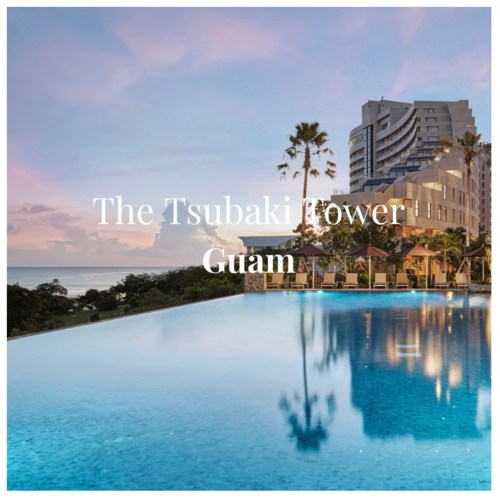
Dining out on weekends is a grand family affair. And hotel restaurants offering buffet lunch and dinner compete for patronage. The Tsubaki Tower ups the ante with unlimited wine and champagne. How can you resist that? Sundown cocktails are another thing. And best of all, there’s a fountain show at certain hours in the evening by the poolside. Unlike other hotels, The Tsubaki’s pool is open till 11pm. Other hotel pools are closed off as early as 7pm.
The Pool scene in the evenings. Fountain Show at Poolside
Cocktails are served either at the bar on the 27th floor or by the poolside. The La Cantina has a wide variety of bubbly spirits and offers a grand view of Tumon Bay. Watch paddlers, kayakers, jet skiers from the bar while sipping your wine and enjoying the soft sounds from the piano and the crooner. Should you opt to enjoy your beer or some other alcoholic drinks by the poolside, time your stay with the music and fountain show. It’s worth the wait.
Unlimited Wine and Champagne at BuffetsChill Nights at the bar
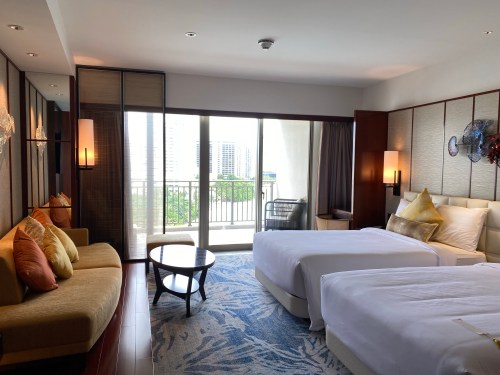
But then again, you may be too tired after an afternoon of water adventures or late night swimming at the pool. Tsubaki’s well-appointed rooms are perfect for relaxing evenings. If you get an Oceanside room, you may even watch the fountain show from the comforts of your balcony. La vie est belle. Life is beautiful!
Every Wednesday, the Chamorro Village comes alive with food booths, children’s rides, curio shops and blaring music from the dance hall. The Chamorros are the indigenous people of the Marianas Islands and likely descended from the Spanish, Mexican, Japanese or Filipinos. Its language has sprinklings of Spanish, as does the Filipino language. Both Chamorro and English are spoken in this Micronesian Island. Yes, Micronesia. Quite apart from Hawaii, which is a Polynesian island. The 2 are on different regions of the Pacific, in fact nearly 4,000 miles apart with Guam resting on the West side of the vast Pacific Ocean. And no, it is NOT among USA’s 50 states. Like Puerto Rico, Guam is a US territory.
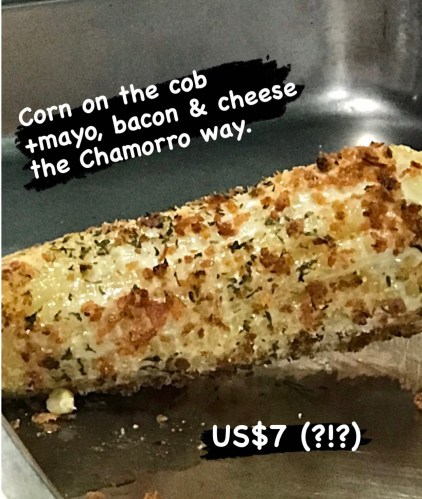
Hafa Adai is Chamorro for HelloPricey corn!
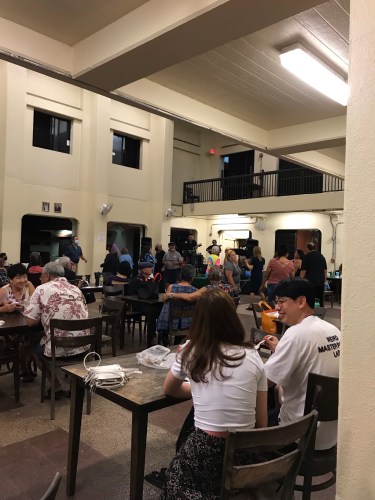
This Wednesday, we watched the native Guamanians and some tourists crowding a dance hall. I was surprised to see a fat carabao being paraded around for $3 rides around the village. The children are not the only riders; I found a full grown man enjoying his ride too. Must be a tourist. The booths displayed both food and souvenir items like floral clothes and curio stuff. Corn on the cob served with mayonnaise, bacon and cheese will cost you $7 (!) and other food sold were mostly grilled or barbecued.
Carabao Rides for $3 per person. Crowded on Wednesdays
When we passed the dance hall, an elderly man invited us to enter and join the dancing crowd of mostly locals. We politely said no, and simply watched. There was a good crowd – despite the pandemic-and it’s a good sense of how island life is in this corner of the world. It’s a Wednesday, the middle of the week, but the locals are behaving like it’s the start of the weekend. Judging by how difficult it was to find a parking space, this village must be the “in” meeting place in an island where locals take to the beach by day and dance their “worries” away by night.
We left Manila past 10pm for a four-hour flight to Guam. Quite a struggle standing around the carousel waiting for our bags at 4am Guam time. The 2-hour time difference ain’t much but without a wink, we behaved like cranky zombies this Sunday early morning. There was just enough time to hear mass, take a nap, bathe and then get ready to meet a friend for lunch. Our first taste of a Guam-azing (to borrow my friend’s description of her adventures) Sunday here made for a good introduction to this island territory of Uncle Sam.
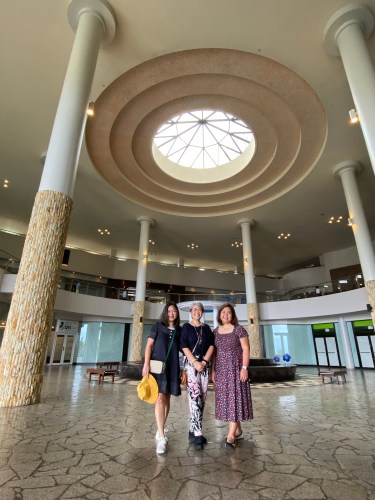
Beach View from Hotel Nikko GuamHotel Nikko Lobby
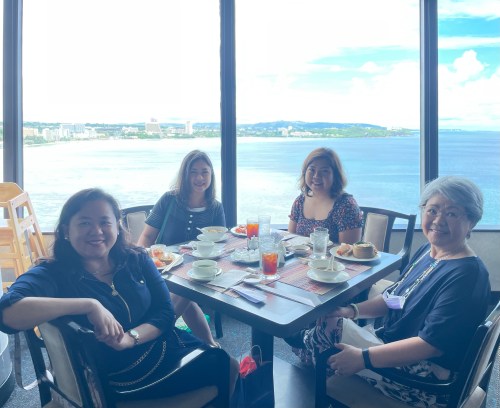
It would have been ideal to visit a Museum firstto brush up on a little bit of history but absent that and in my sleepless state, I relied on my first impressions during our first 24 hours — no, make that first 12 hours — here. That islander vibe welcomes you soon after landing. At 2am Manila time or 4am Guam time, it’s almost excusable to be testy and ill-tempered. Not so. The immigration and customs officers look and sound laid back, like they have all the time in this world. At the hotel where we lunched, everyone seemed to be so nice and locals enjoying Sunday meals were mostly families who seem to be “regulars” in Hotel Nikko’s Toh Lee Chinese Restaurant.
Lunch at Toh Lee Chinese Restaurant A Typical Sunday in Guam
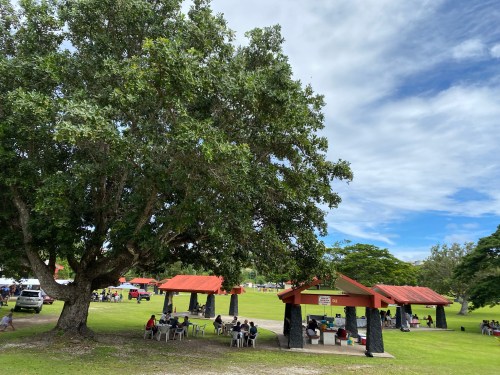
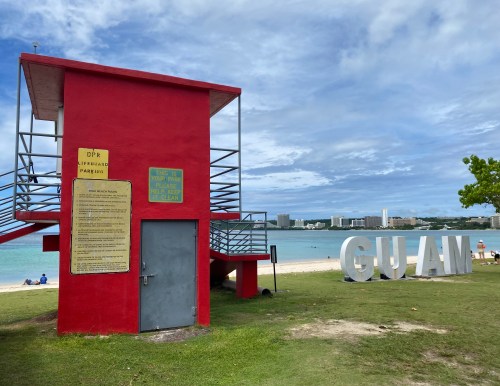
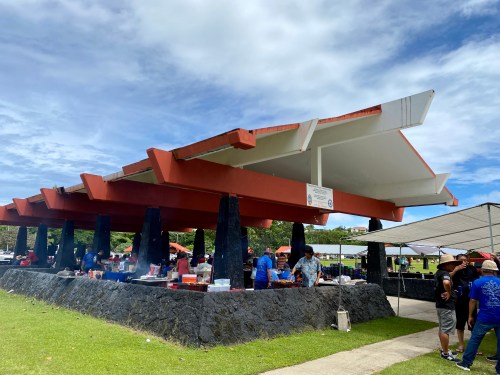
When we moved to the beach area fronting Hotel Nikko, Tsubaki Tower, Lotte Hotel and Guam Reef Hotel, we spotted that red Lifeguard Station watching over many locals enjoying a leisurely Sunday. That island life! The nearby kiosk had barbecue pits for locals to grill an assortment of meats and seafood while loud danceable music was blaring. We found the locals very friendly with one charming lady even offering to snap a photo of us.
Red Lifeguard StationLarge Kiosk Accommodated Many Locals
This island US territory may not be economically ranked at par with the states of Uncle Sam but its simplicity has its charm. I’m not sure how long that charm will hold since I suspect there aren’t many activities here outside of the beach scene and shopping. In my first 12 hours here, we’ve only lined up trips to the beach, malls and the cinema. My curiosity isn’t at its peak in my sleep-deprived state but then again, I didn’t come here for excitement. Let’s just say we’re happy to meet up with kin and kith.
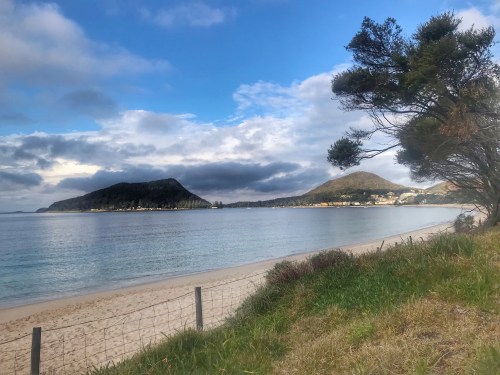
The weather forecast was gloomy but we were dead set to spend our weekend with the boys in Anna Bay. The preceding week in Kiama was an all girls (errr ladies) bonding adventure which included a visit to our favorite Benedictine Abbey in nearby Jamberoo. So for this weekend, we were hoping to join the boys on some thrilling adventures. Anna Bay belongs to the Port Stephens area in the Hunter Valley region and is one major entry point to the beach and sand dunes of Birubi Point. Here, there’s an assortment of things to do. Whale-watching, fishing, surfing may sound exciting but many find more thrills with the camel and horse rides along the shore, sand boarding and 4 wheel-drives across the sand dunes.
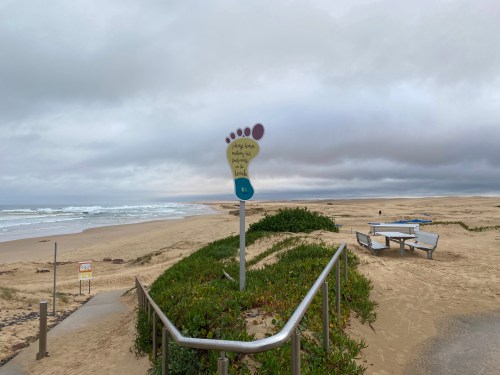
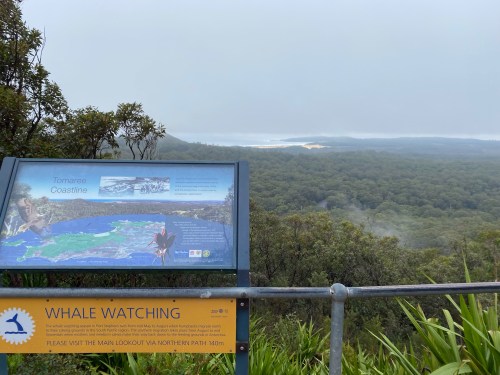
We weren’t in luck with the thrilling rides. But we sure got extremely lucky spotting pods of whales. The downpourwas put on hold to allow us some time at the Gangan Lookout, the beach and sand dunes at Birubi Point and lovely walks by the shore just right behind our crib here in Anna Bay. We could have waited for sunset (before 5pm!) but it grew cold and the looming downpour dampened our spirits. The waters were so calm and so soothing to frayed nerves. Many residents and guests like us spilled out of the apartment buildings to idle away the hours at the beach, playing with their dogs or even letting their toddlers play around the huge “sandbox”.
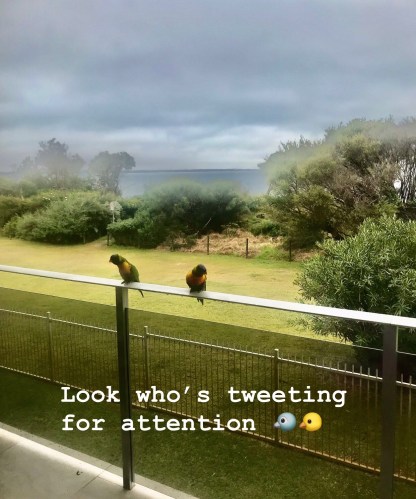
Back in Kiama, I missed the pods of whales. I saw more than enough here in Birubi point. The beach behind our serviced apartment here is another whale-spotting area but after putting on a show for us in Birubi, these aquatic mammals must have thought we’ve seen enough. Evenings here are so pleasant, if not wonderful. The waves crashing to shore lull you to sleep and early morns are marked by visits of different birds perched on your balcony. Imagine having your morning coffee while these birds chirp in chorus and while watching dogs frolic by the beach. Happiness!
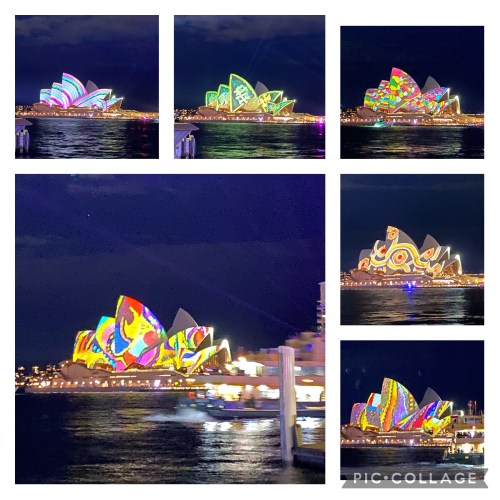
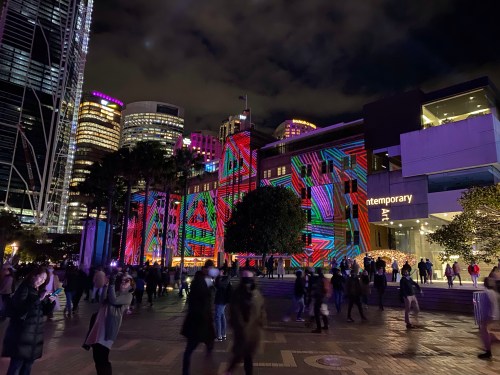
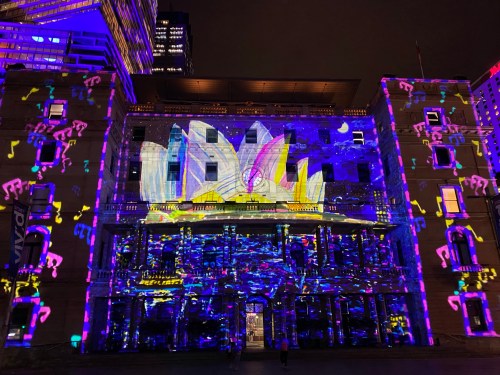
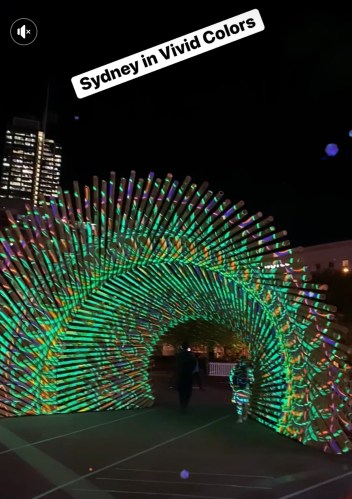
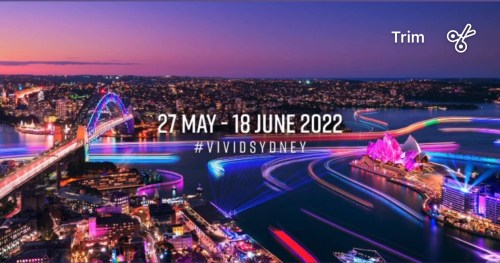
Finally, I found the chance to experience my Vivid Sydney after countless visits to Sydney. Running till June 18, this festival is truly a must-see. The Opera House looks majestic on any ordinary day, but its splendour is all the more amplified with all the lighting and well-curated designs. Viewed up close by the steps, or from across the harbour, one can only gasp appreciating its beauty.
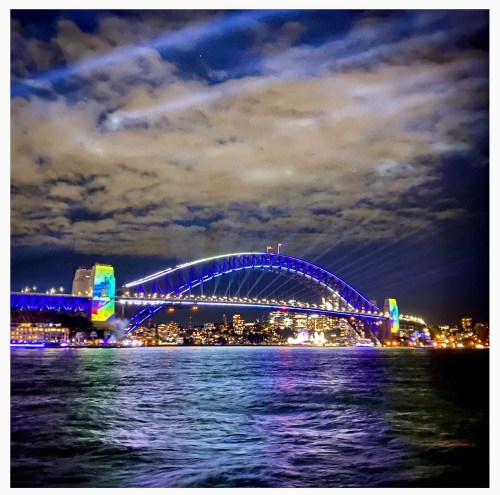
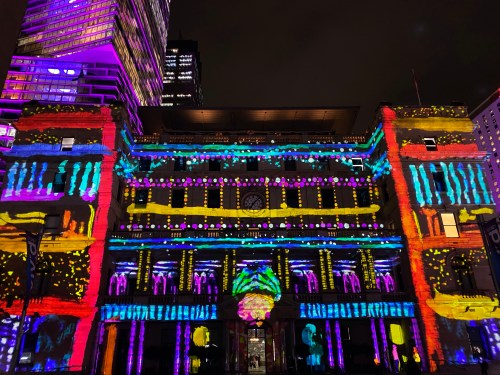
The festival in the Circular Quay area is not limited to the Sydney Opera House. That iconic bridge looks real grand too, along with the buildings lining the quay. A real standout is the Customs House which has quite a story to tell.
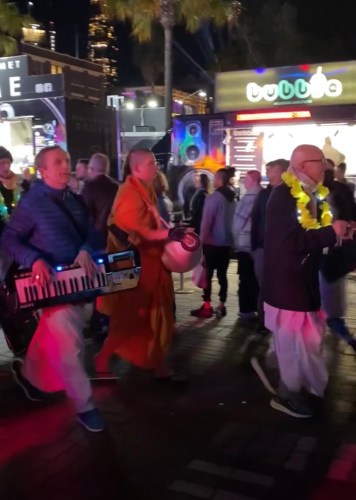
The only drawback is the low temps. I’ve always experienced mild winters here but certainly NOT this time. The wind factor adds to the chill so you can imagine how briskly we walked from Darling Harbor through Barangaroo towards Circular Quay. All spots by the water edge so yeah, cold. Really cold. And windy. When the Hare Krishna band paraded through the crowds, dancing to a beat and with the slightest clothing, I can only sigh with awe over their high tolerance for the cold.
We managed to check out only a few, but the more significant displays of this Festival of Lights, music and creative ideas. But for those who are eager to cover the entire spectacle, have a good walk around 11 Sydney CBD locations: Circular Quay, Sydney CBD, The Rocks, Barangaroo, Darling Harbour, Darling Square, Darling Quarter, The Goods Line, Central Station, Luna Park and Taronga Zoo. Not sure if there’d be more fireworks after the grand festival opening on May 27, which I missed. But hey, this Sydney event shouldn’t be missed!
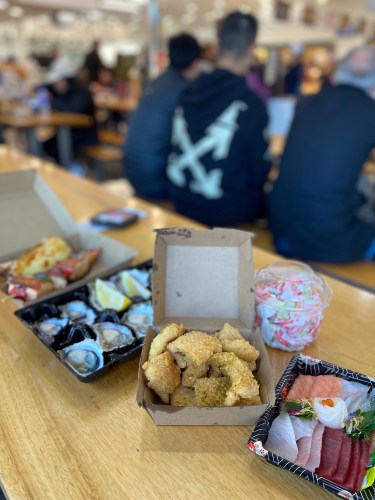
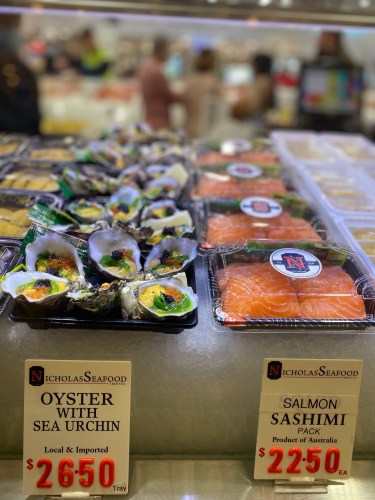
This Fish Market smelt soooo good. I was adamant to put oysters on the bed of my tongue as soon as I landed in Sydney and those cravings just had to be satisfied. I didn’t expect there were so many oyster choices! Good thing our food guru friend’s instructions were simple enough. Get the smallest oysters. Have the Balmain Bugs cooked with Singapore Chili. Then throw in a piece of lobster, calamari, grilled salmon and octopus on skewers, and some sashimi and Kani salad to start with.
Frankly, I couldn’t tell rock oysters from Coffin Bay oysters (yeah, what a name for a bay that yields really good oysters). Nor whether they were sourced from Sydney or Merimbula. I can only tell the Pacific Oysters are the largest, yet nowhere as large as those served to us in San Francisco, California. Enjoyed these appetizers way too much, along with the freshest tuna, salmon, scallops and other fish sashimi. I could have stopped there and gone home real happy but those bugs are still a-cooking! And the salmon and octopus a-grilling!
Balmain Bugs in Singapore ChiliGrilled Salmon and Octopus with Lobster Mornay
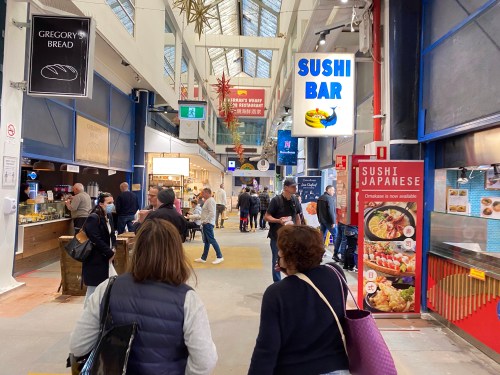
Heaven landed in Nicholas Seafood Bar in Sydney Fish Market in Pyrmont. Next to our table is a band of athletic men feasting on scampi and bottles of wine. They were happy to down their alcoholic delights and the scampi was just an excuse to keep their stomach linings warm and not empty. In fact, they hardly touched them as they got busy with their spirits. Not so with us 3 Oriental ladies who feasted on all these lovely seafood finds like there’s no tomorrow.
An hour and a half passed and we were bursting at the seams. Even before we capped our lunch with a cup of our favourite brew, I was already planning on setting this gastronomic treat as a Sydney tradition. Unforgettable. Each morsel a culinary delight. All that for 3 ladies with discerning tastes. Please don’t judge us 🙄
It started out as a heritage house tour and simple get-together of long time friends, then as bienvenida for visiting family members, and finally as a pseudo wedding reception for a young couple whose most significant ceremony we all missed because of the pandemic. There were 18 adults and 2 toddlers meeting for the first time who hardly warmed up and interacted with each other. Topics covered a broad range and the long table divided between the senior and younger members of the family. All’s well.
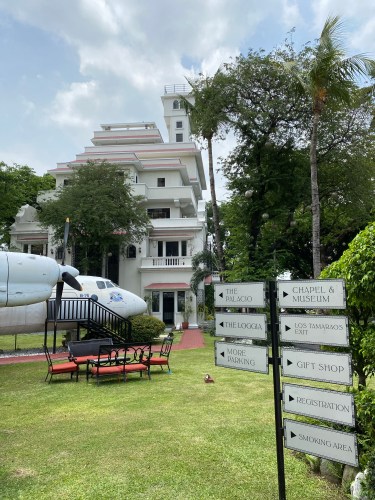
Palacio de Memoria
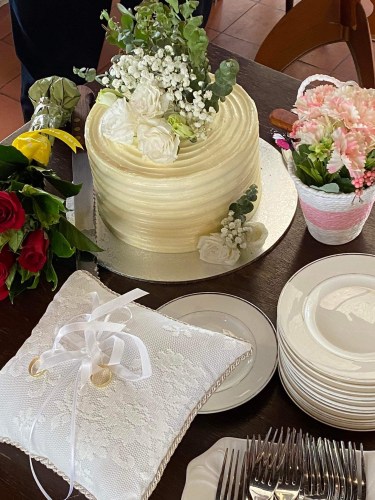
We nearly went overboard with the pseudo wedding reception. A bridal bouquet, a flower girl’s flower basket, the ring bearer’s pillow, the wedding cake. All in good fun. That happens when we all felt deprived missing a young couple’s wedding. The sprawling garden provided a beautiful backdrop for our group picture as well as bridal bouquet toss up between a spinster and a widow! The little girls from the past have all grown up, some with their adult children and toddlers. And the more senior members have done away with the dyes, proudly bearing their greying hair. The laughter across the long table sounded just as loud and crisp, the jokes nearly the same, and the banter seemingly endless but fun.
All In The FamilyThe Long Table
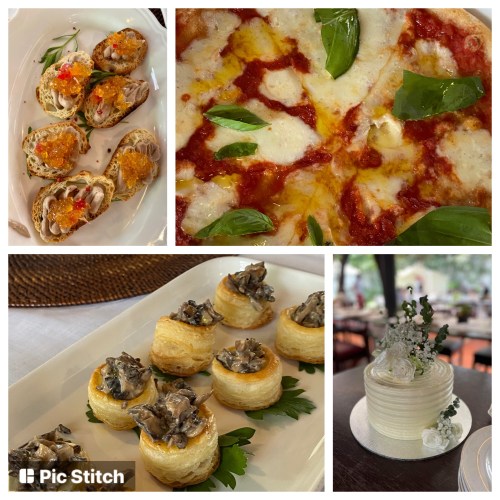
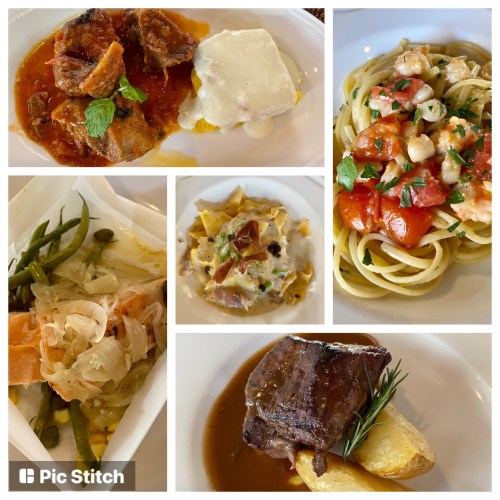
Here’s one unforgettable get together of family and friends. Never mind that the museum tour was cancelled and the bar housed inside one of the airplanes (spotted the 3 aircraft collections parked in the lawn) were closed. We enjoyed the antipasti and the main entrée as well as the refreshing beverages and vanilla-flavoured wedding cake. The pre-ordered al fresco lunch was seamlessly served and there was time enough to loiter around the gardens. For sure, I’d be back for the guided tour and the date at the bar. Por supuesto!
The Antipasti and the Wedding CakeA Choice of Lamb, Beef, Salmon or Pasta
Palacio de Memoria is now an events and auction venue consisting of a historic mansion restored to its pre-war glory. Abandoned for 2 decades and now owned by the Lhuilliers to house their antique collections including the 3 aircraft, one of which has since been converted into a bar. One can just imagine how this heritage mansion cut a majestic vista right along the wide Roxas Boulevard just across the Manila Bay before parts of the Bay were reclaimed. I bet many parties were held in its sprawling lawn while the breeze gusts in from Manila Bay. At the time we visited, tents were being set up in the front lawn for what looked like a wedding event. I can also imagine what great parties one can host here to celebrate birthdays, anniversaries or just about any momentous occasion. And there’s La Loggia Restaurant housed in a separate al fresco structure right beside the Mansion to provide the Italian food and refreshments. I heard one can even arrange picnics under one of the trees or just outside the airplanes with a picnic basket packed by La Loggia. Swell!
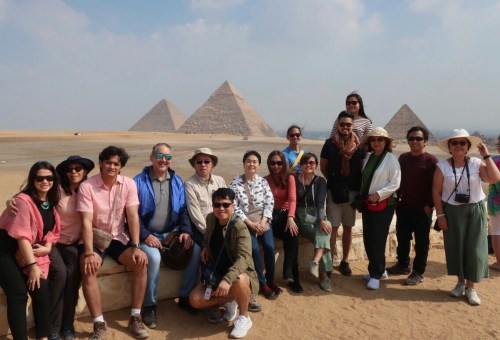
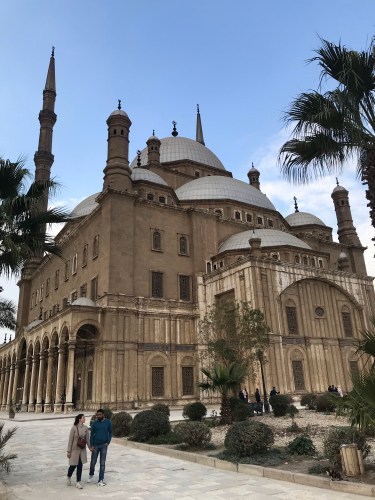
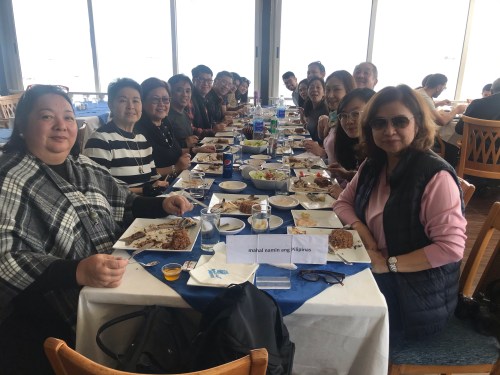
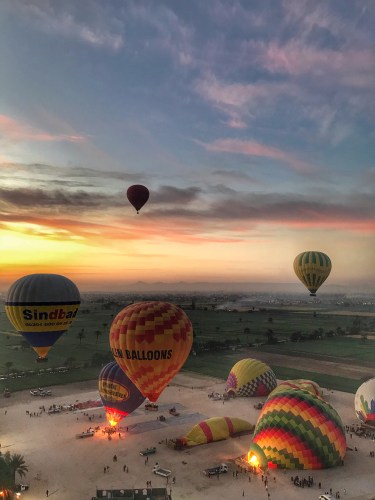
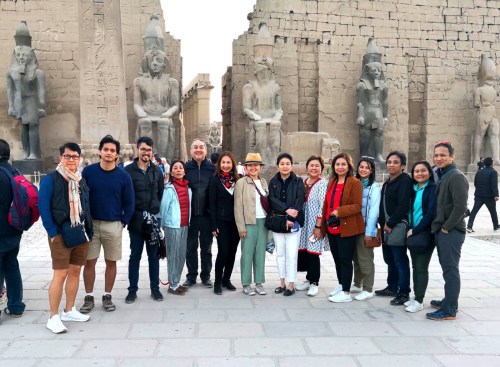
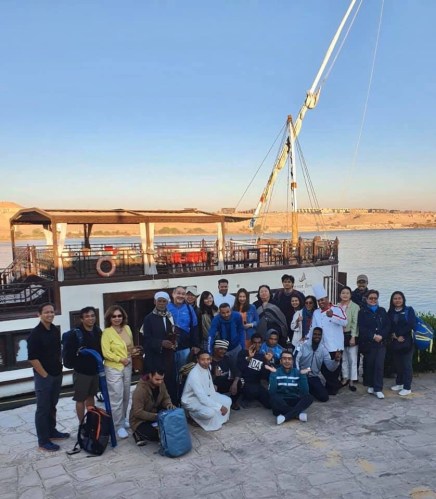
A bunch of close friends. “Barkada”. We’ve long planned this — and planned around a 5-night Nile Cruise on a chartered Dahabiya or sailboat. Cairo and Alexandra first, prior to the cruise from Luxor to Aswan. Then 3 more nights in Aswan to include a day trip to Abu Simbel. There were concerns prior to the trip. Left on February 17, about the time when the world is whirling and reeling from Coronavirus issues. But we were all set for this trip. So, armed with masks, wipes and alcohol sprays, we went. The flights to Cairo and then to Luxor, as well as the long drives to Alexandria and Abu Simbel were uneventful. The weather was perfect, all rides comfortable, though I must confess we underestimated Egypt’s cold temps. The whole cruising time, we had breakfasts on the riverboat’s deck in our terry bathrobes. The same robes we donned fordinners! It grew warmer by the time we reached Aswan and Abu Simbel. Finally, we parked our boots and rubber shoes and wore our sandals to go shopping. All throughout the journey, we were floored by all these ancient wonders and happily absorbed all the ancient history lessons. It was our luck that we had very competent tour guides. Egyptologists. Yes, you take special courses for that. We also met some foreign Egyptologists in the hotels where we stayed — archaeologists who specialise in Ancient Egypt. Such interesting people. The ones we met must be in their 60s-70s but you can still sense that burning passion in them. The kind you can almost touch! By journey’s end, we can only feel so thankful for the wonderful cruising adventure, the excitement triggered by the history lessons, the fun and mirth all throughout the holiday and most importantly the good health and safetyenjoyed by everyone. This is our story. Feel free to click on the links for more photos and details.

























 lifeisacelebration