Tag Archive: Philippines


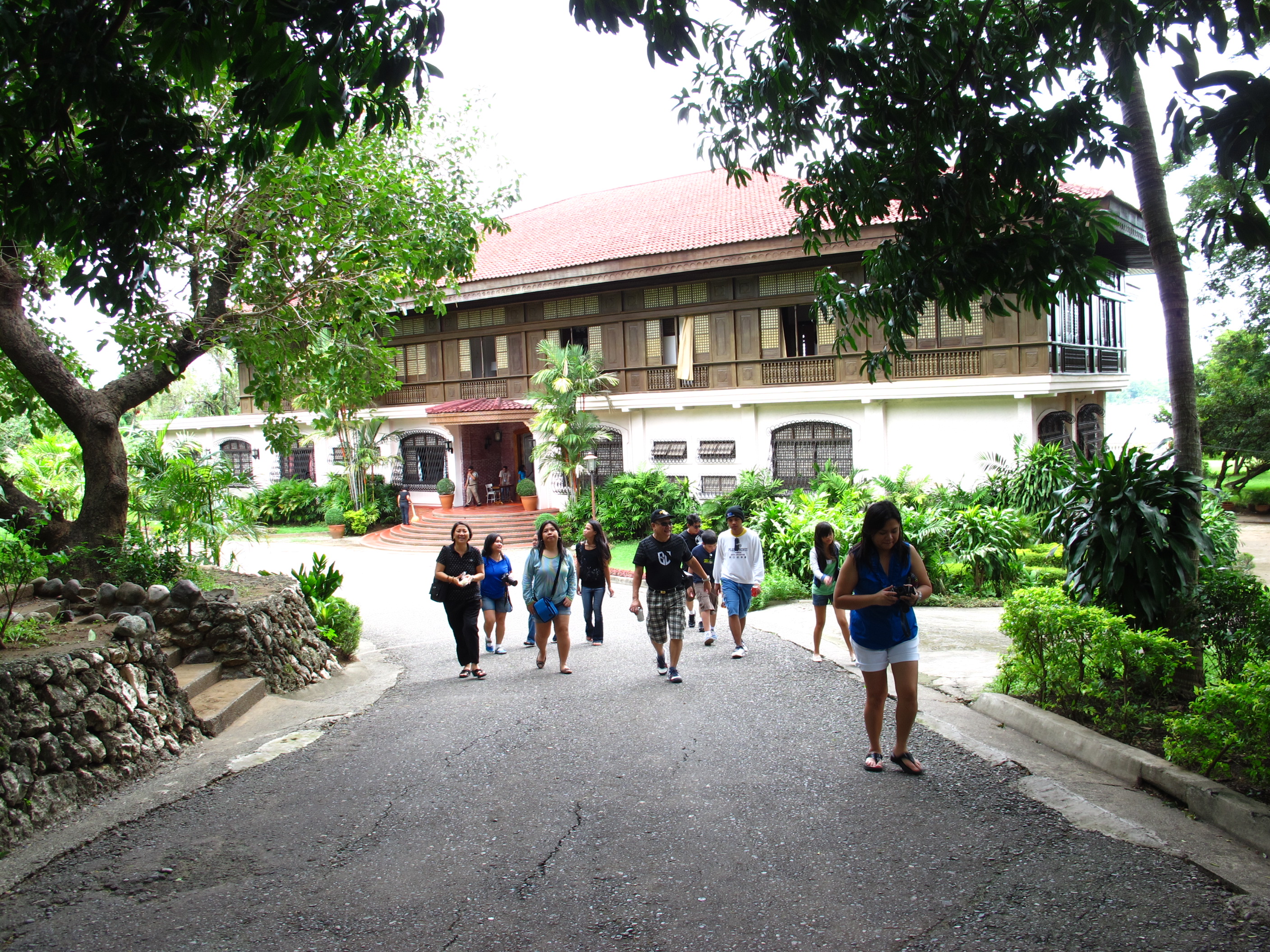
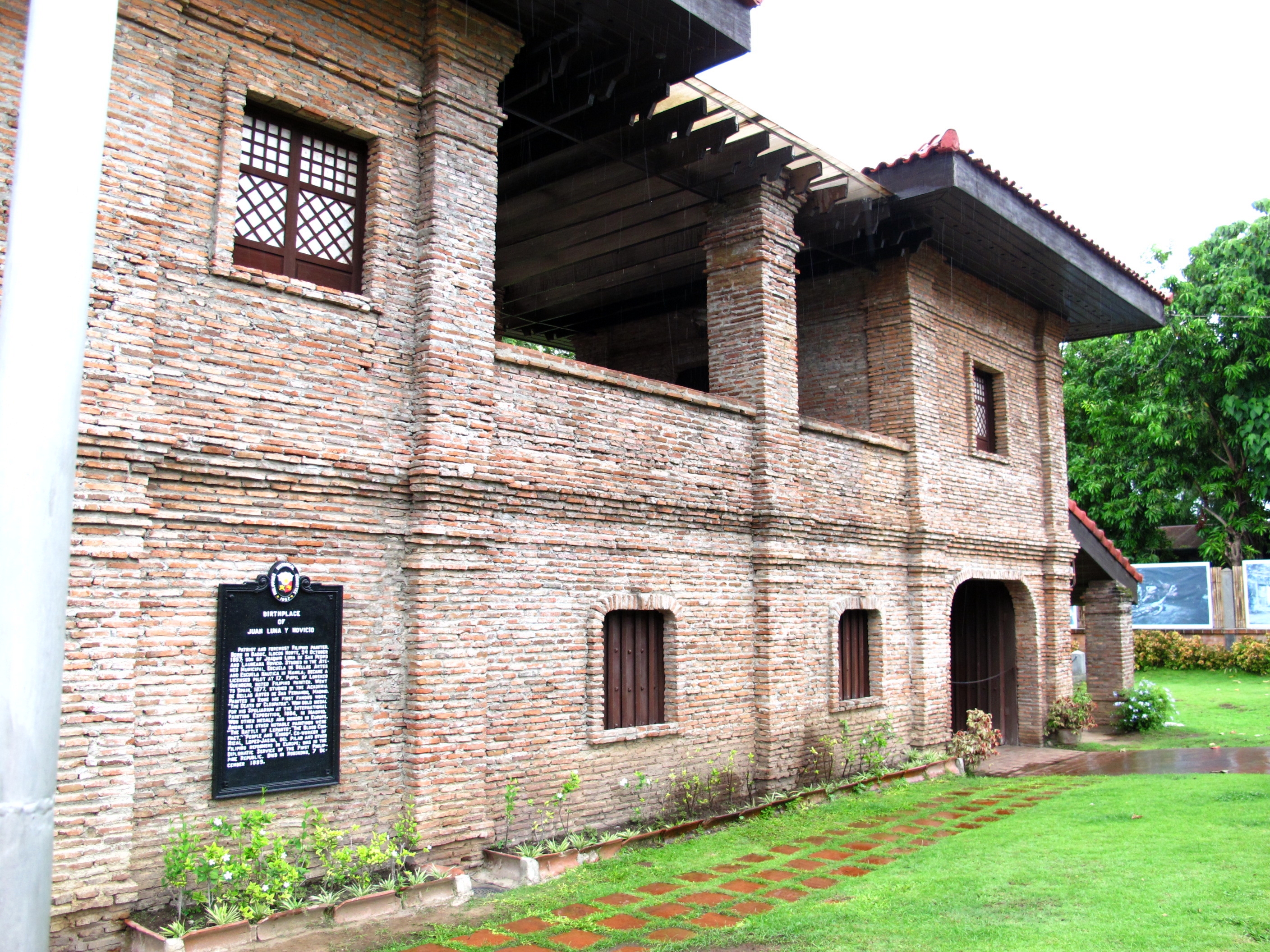
Having visited the Juan Luna Shrine in Badoc, Ilocos Norte last July seems to have driven us to search for more Lunas. Or rather, to dig deeper into the mind of this great patriot and artist. More than his art, there is that most interesting if not tragic side to this hero’s life.

Juan Luna Shrine in Badoc , Ilocos Norte

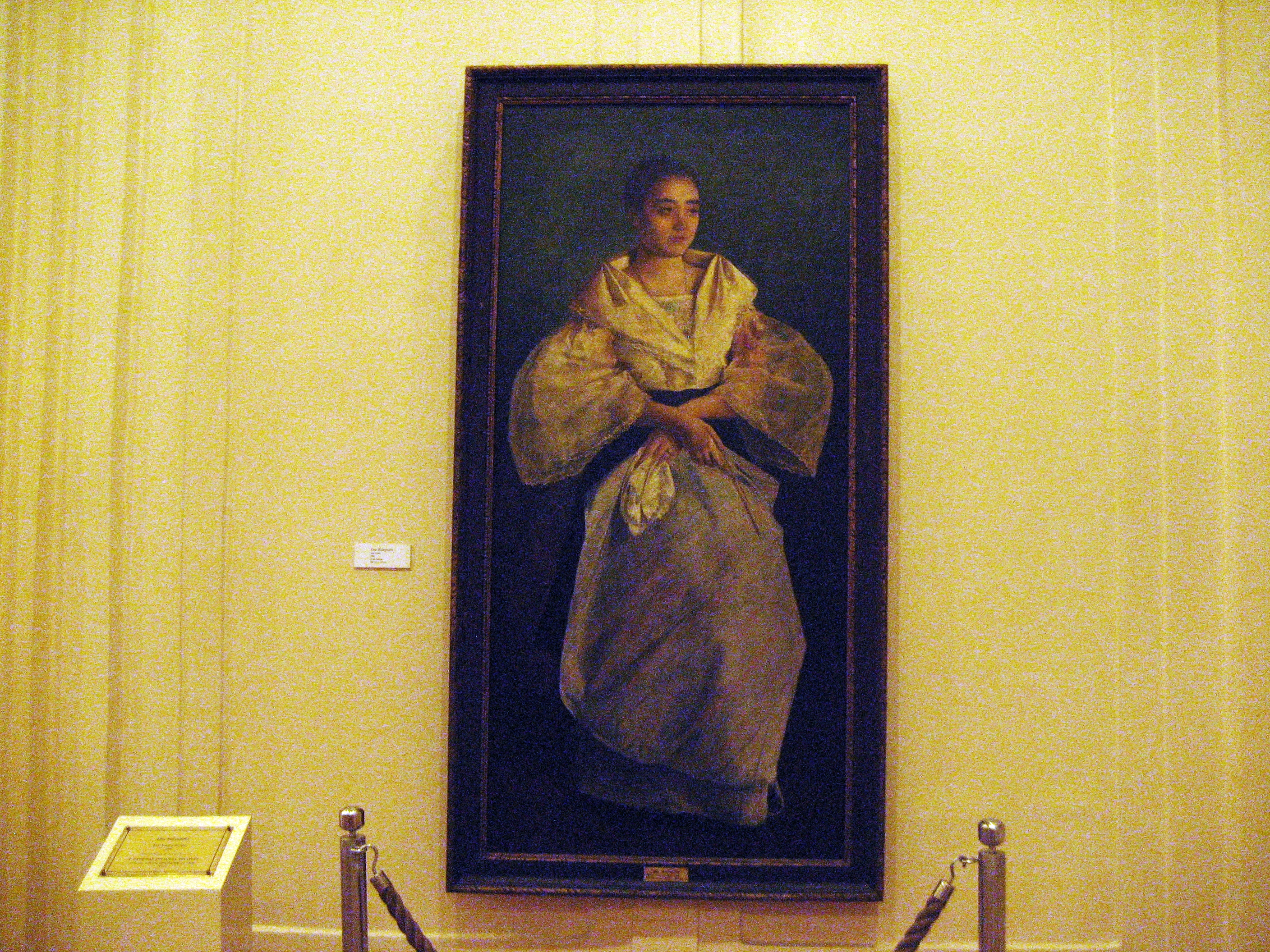
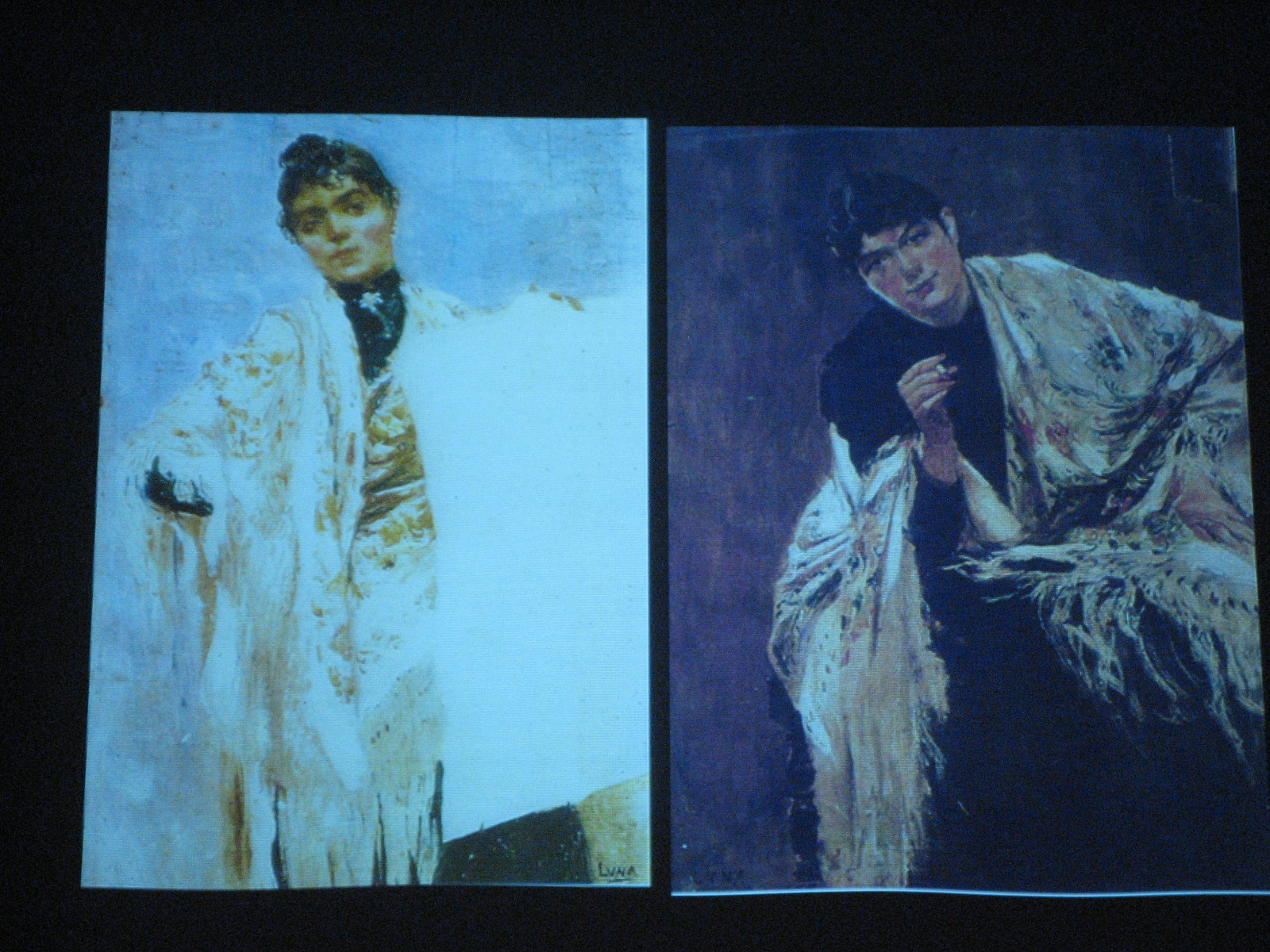
The tour guide here should be commended. Not easy to hold the attention of my 2 elves, aged 10 and 13, the whole hour we were here. I particularly liked how he presented Luna to us as the artist while talking of the gold award he won in a Madrid art competition with the masterpiece, “Spoliarium”. A copy hangs in this Shrine while the original adorns the Masters Hall in the National Art Gallery. Or Luna as a romantic with a painting of “Una Bulaquena” where the original painting used to hang in Malacanang Palace till it was transferred to the National Art Gallery.

The Original

The Original

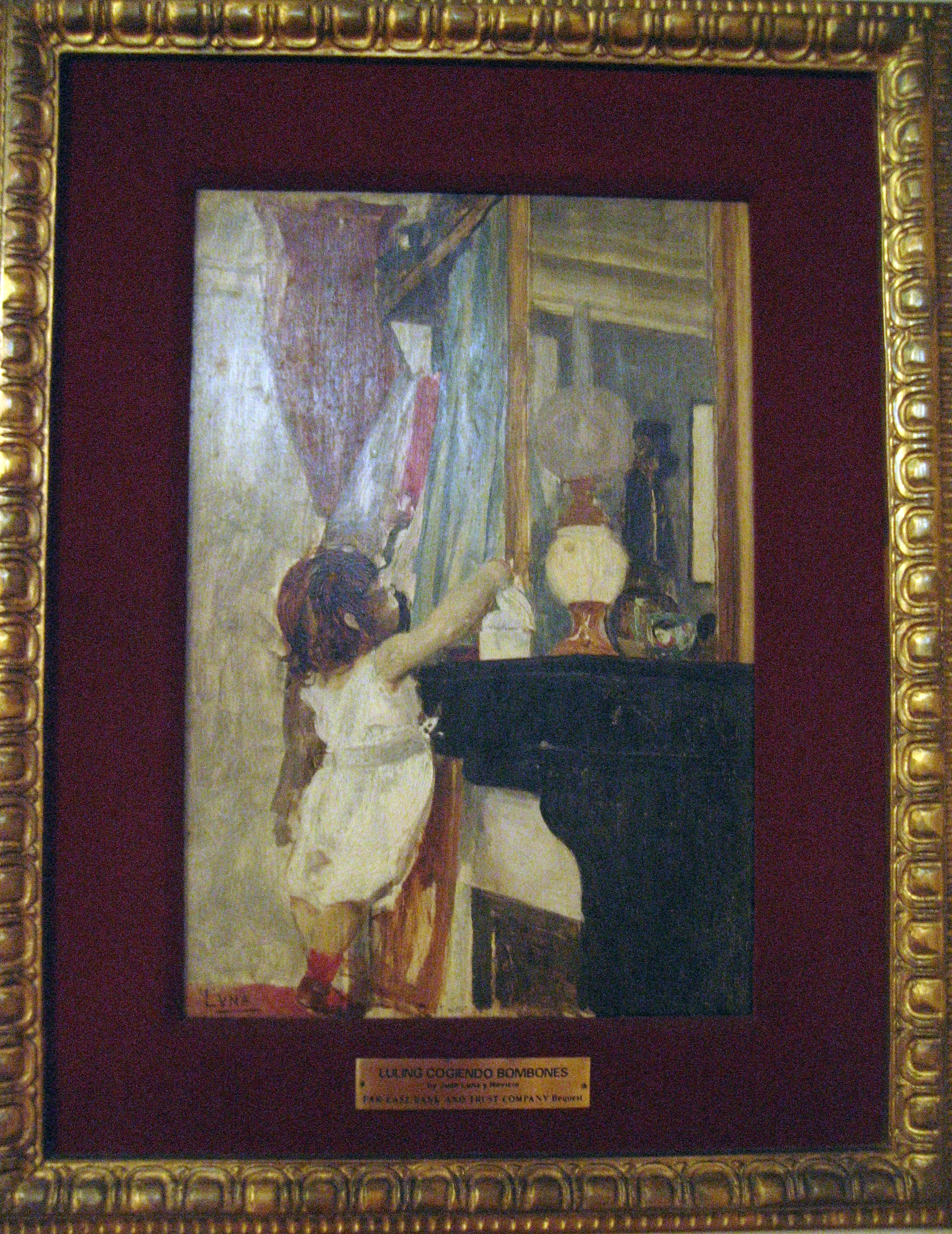
In one trip to the National Art Gallery, the Luna paintings showed how his art has evolved through the years spent in Madrid and Paris. But what caught my attention were some Luna paintings with no attribution. Was it Juan or Manuel who painted these? Jose Rizal once said Manuel , the brother of Juan and Antonio Luna, is the better painter but Manuel chose to study music instead.

That Little Girl Reminds Me of Someone Named Luna

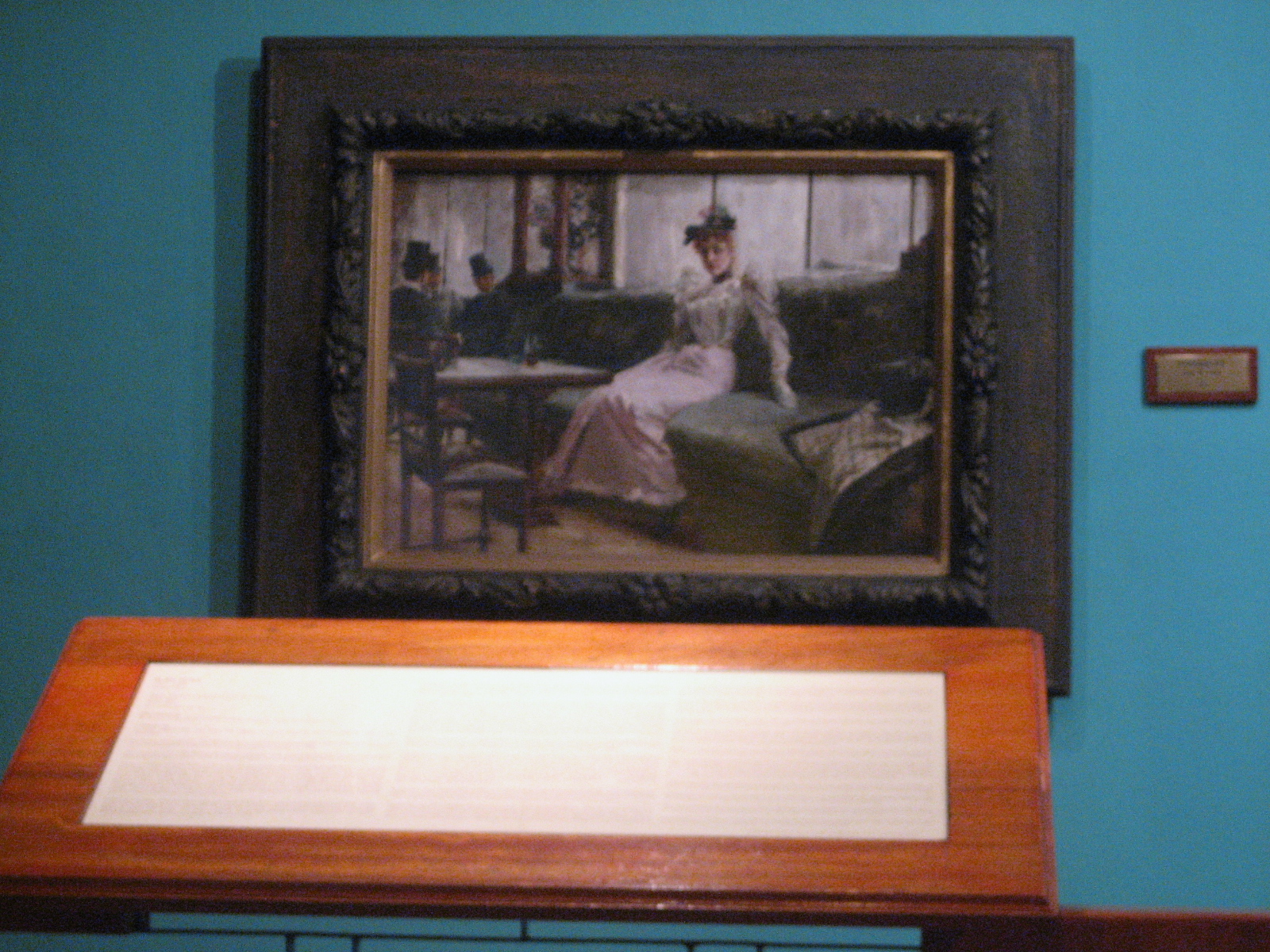
My search brought me to a Lecture Series on Juan Luna at the GSIS where its museum proudly hangs the celebrated GSIS investment in a Luna painting entitled “A Parisian Life”. Michael “Xiao” Chua gave the lecture which allowed us listeners to understand another side of Juan Luna. For the most part of the lecture, Xiao dwelled on the life and tragedy of this great artist. It is up to us viewers to relate these trivia to how his art has evolved. I am no art connoisseur but it is not difficult to differentiate the masterful but intense strokes exhibited in the “Spolarium” versus the softer, milder, even playful art gleaned from “A Parisian Life” .

The Parisien Life at the GSIS Museum. But not for long. Who is buying?

The Wife Paz......Tragically Shot by Juan Luna

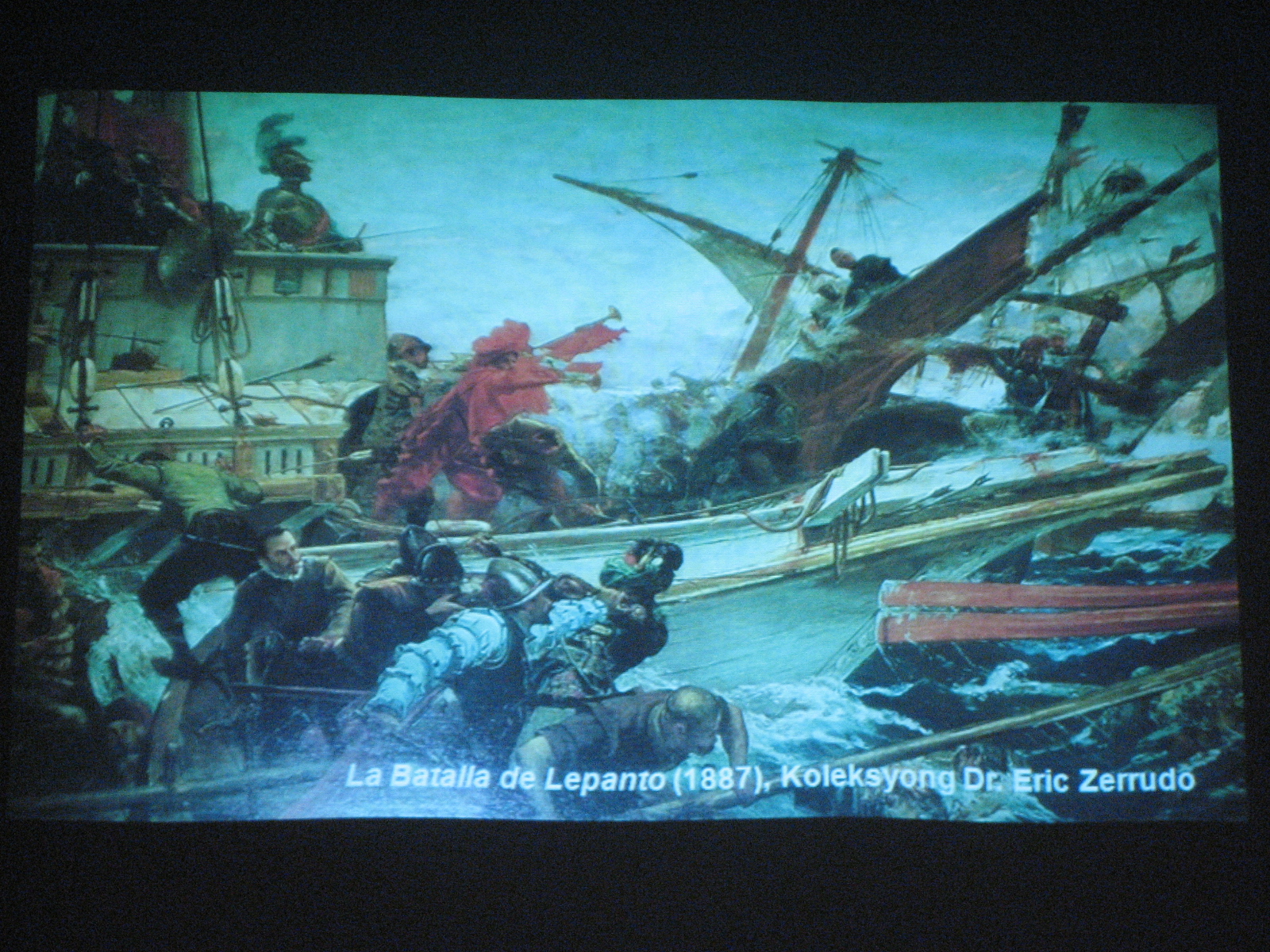
Xiao disclosed that the painting Parisian Life is up for sale. So, who is buying? It will be recalled that the sale and purchase of this artwork was so enmeshed in controversy in recent past. It has certainly gone a long way from the Bahay Nakpil-Bautista in Quiapo to the Hongkong auction house to GSIS Museum. In whose walls would it hang next? Xiao laments the possibility of having this painting stashed away in some foreign land. Much like the Battle of Lepanto, another masterpiece of Juan Luna, which has been hanging in the Senate walls in Madrid, Spain. So with the “Death of Cleopatra” which is on display at the prestigious Prado Museum in Madrid, Spain. Anyone care to shell out a hefty sum to keep this national treasure here at home where it belongs?

Battle of Lepanto @ Madrid, Spain.


One of the oldest towns in Batangas province, and around the Philippines, is BALAYAN. Coined from the Visayan word “Balay”, meaning house, it is one of the first settlements in the country with trade dating back to the mid-14th century. It was already known as Balayan since 1394 till it was “inherited” by a certain Datu Kumintang, after whom the town was called until 1578. The Augustinian missionaries arrived in this town in 1575 , then followed by Franciscan missionaries who built a small stone church in 1579.

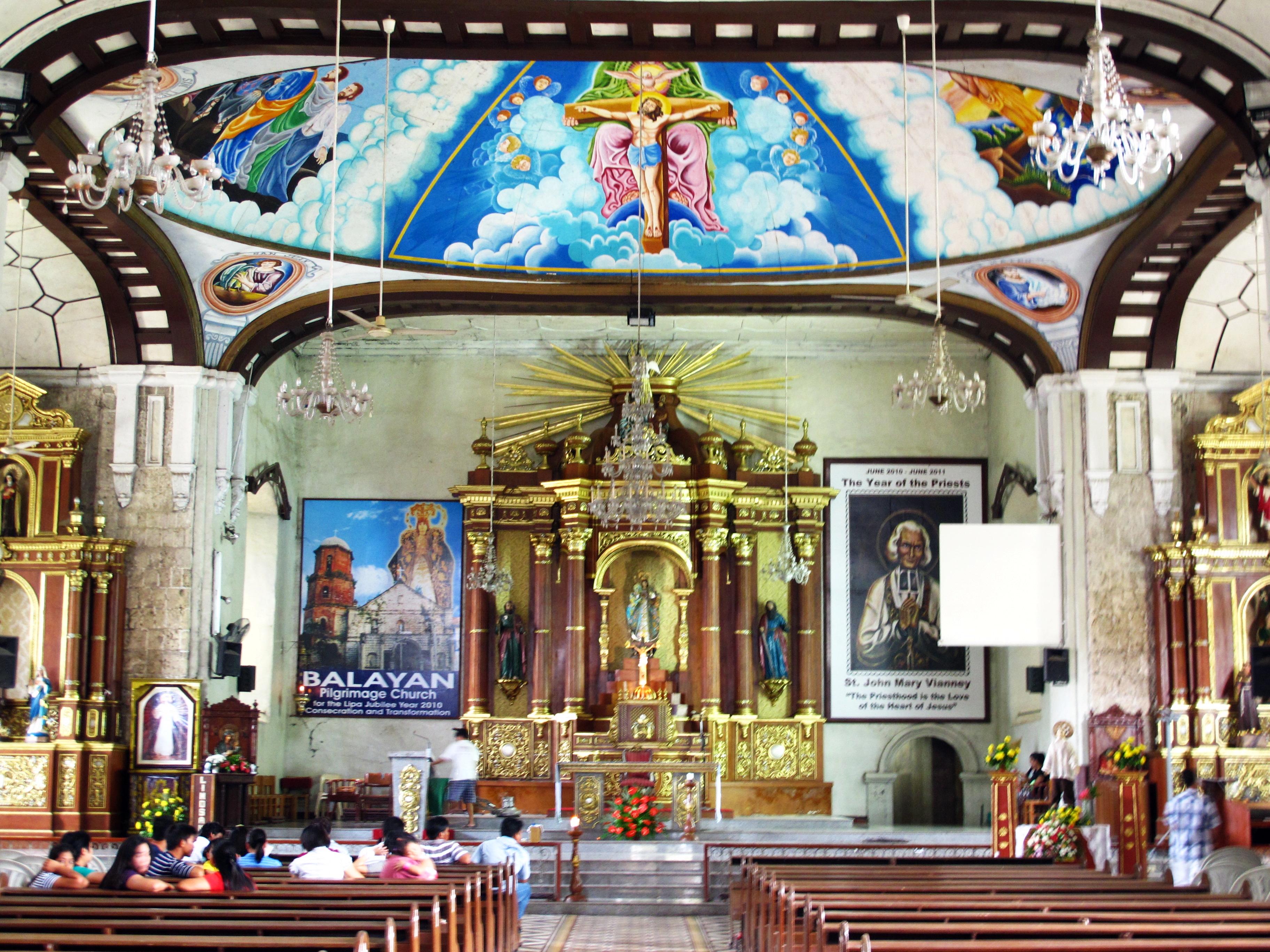
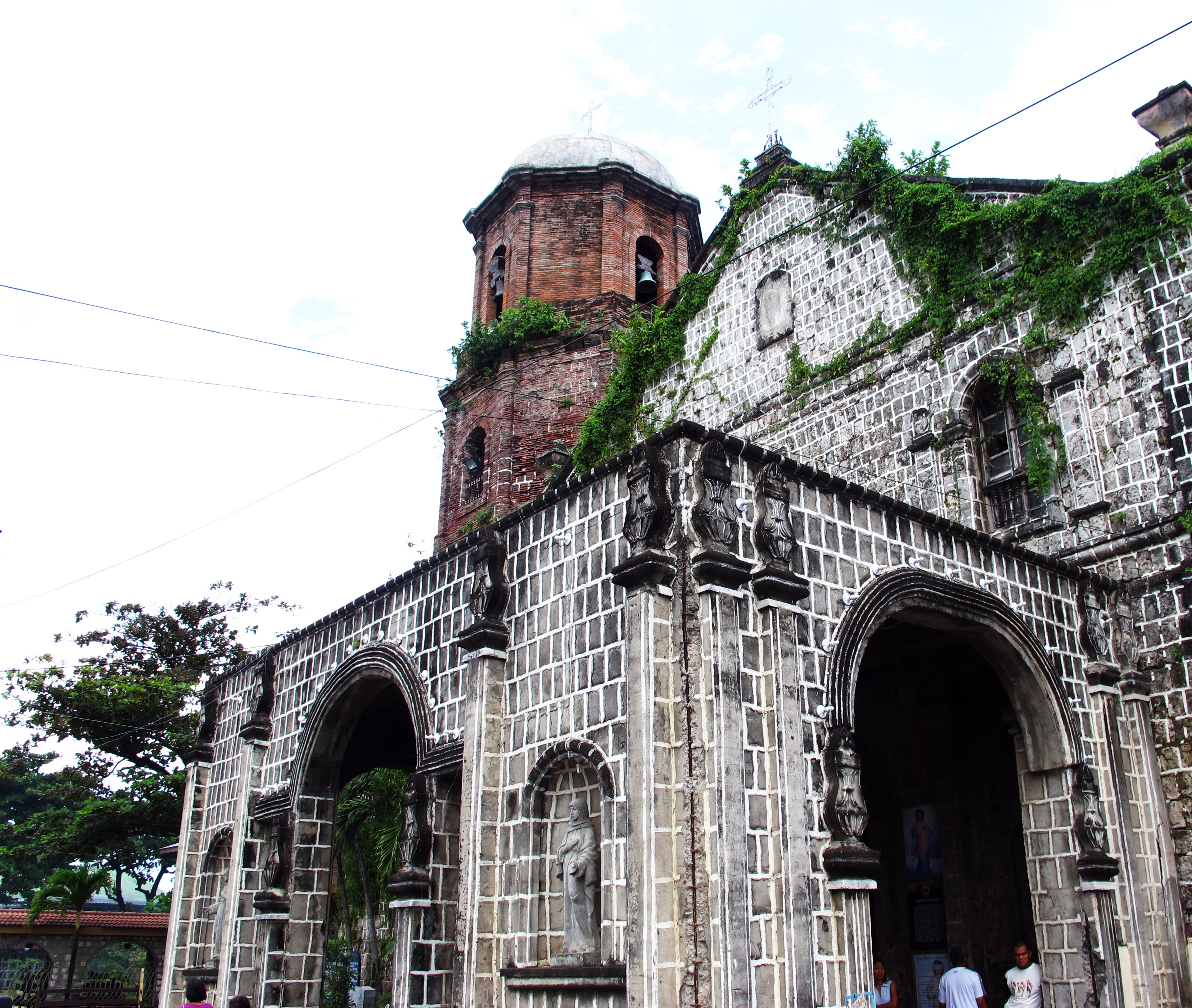
We began our tour of Balayan with a visit to this national cultural treasure. Balayan Church was under the administration of “Indio Clergy” since the 19th century. This sets it apart from the other heritage churches found around the country. Considered as the first church in Batangas, and likely in the whole Tagalog Region, its claim to fame ironically involves a furor not so long ago over a proposed construction of a McDonald’s outlet in the historic church grounds.

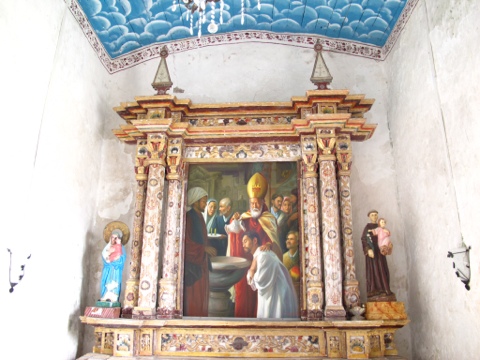
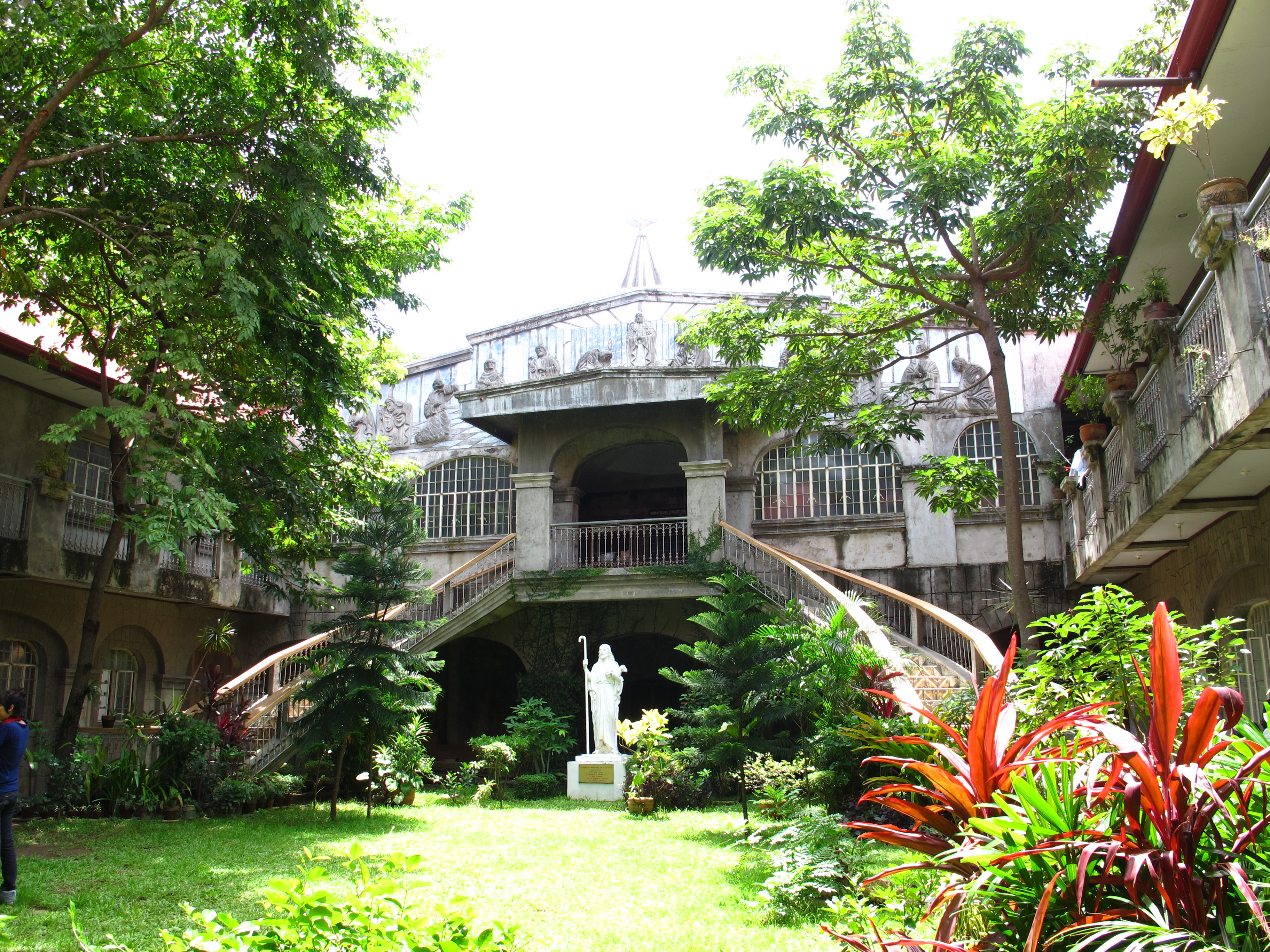
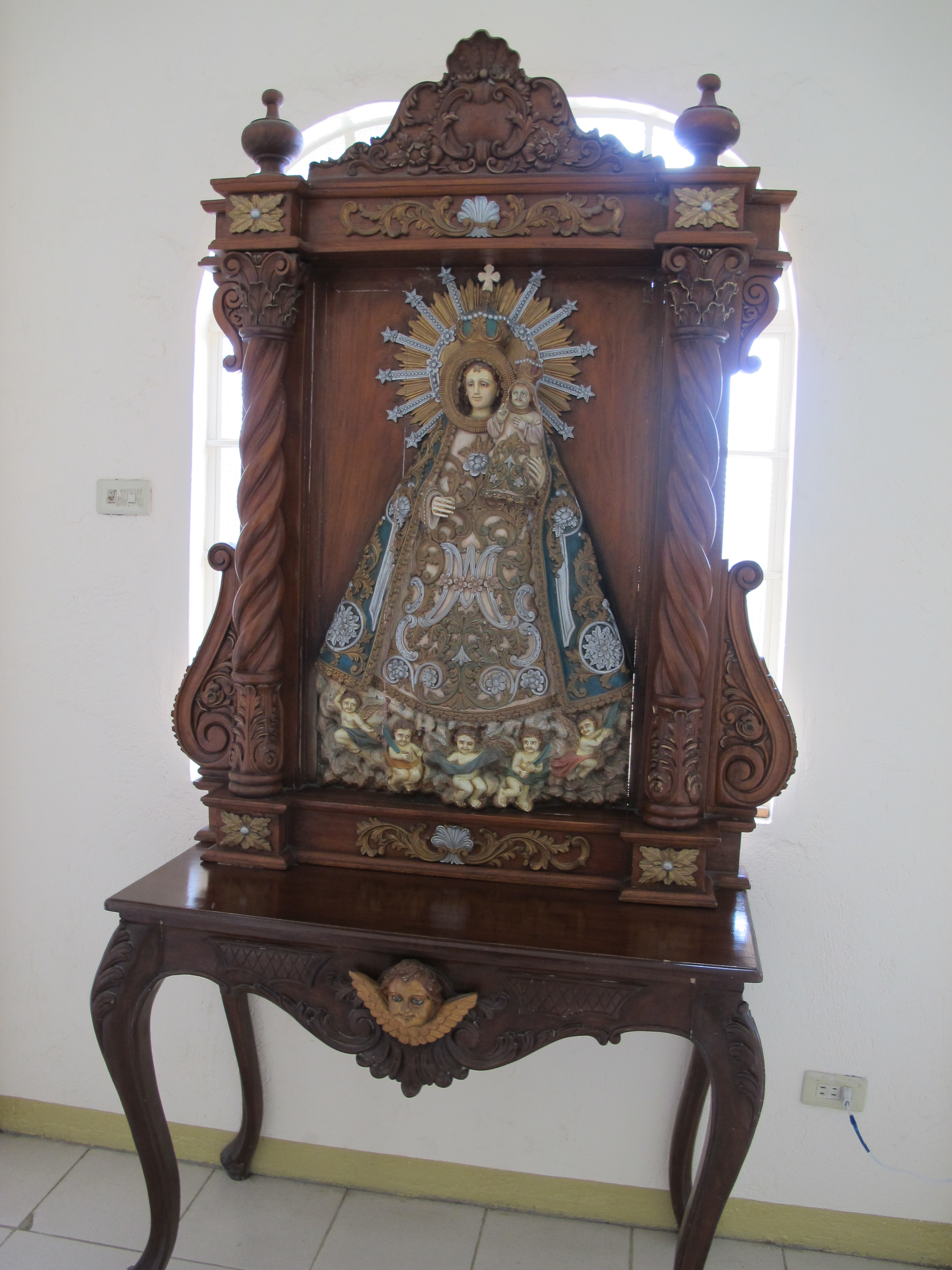
From inside the Church, we exited behind the altar out into a back courtyard. In one corner of this courtyard is a small chapel at the end of a passageway where we found some interesting art works.

Courtyard At The Back of the Church

I did not find any inscription and didn’t have the chance to ask how old this piece of art is. The intricate woodcarving is lovely, just as the image of Our Lady holding an Infant Jesus.

From the Church, we visited the ancestral house of Leo Martinez. I knew the name sounds familiar. He is now a local politician here, but I remember him as an actor from a now defunct TV comedy show of long ago.

Ancestral House of Leo Martinez

How about this for a door knob?

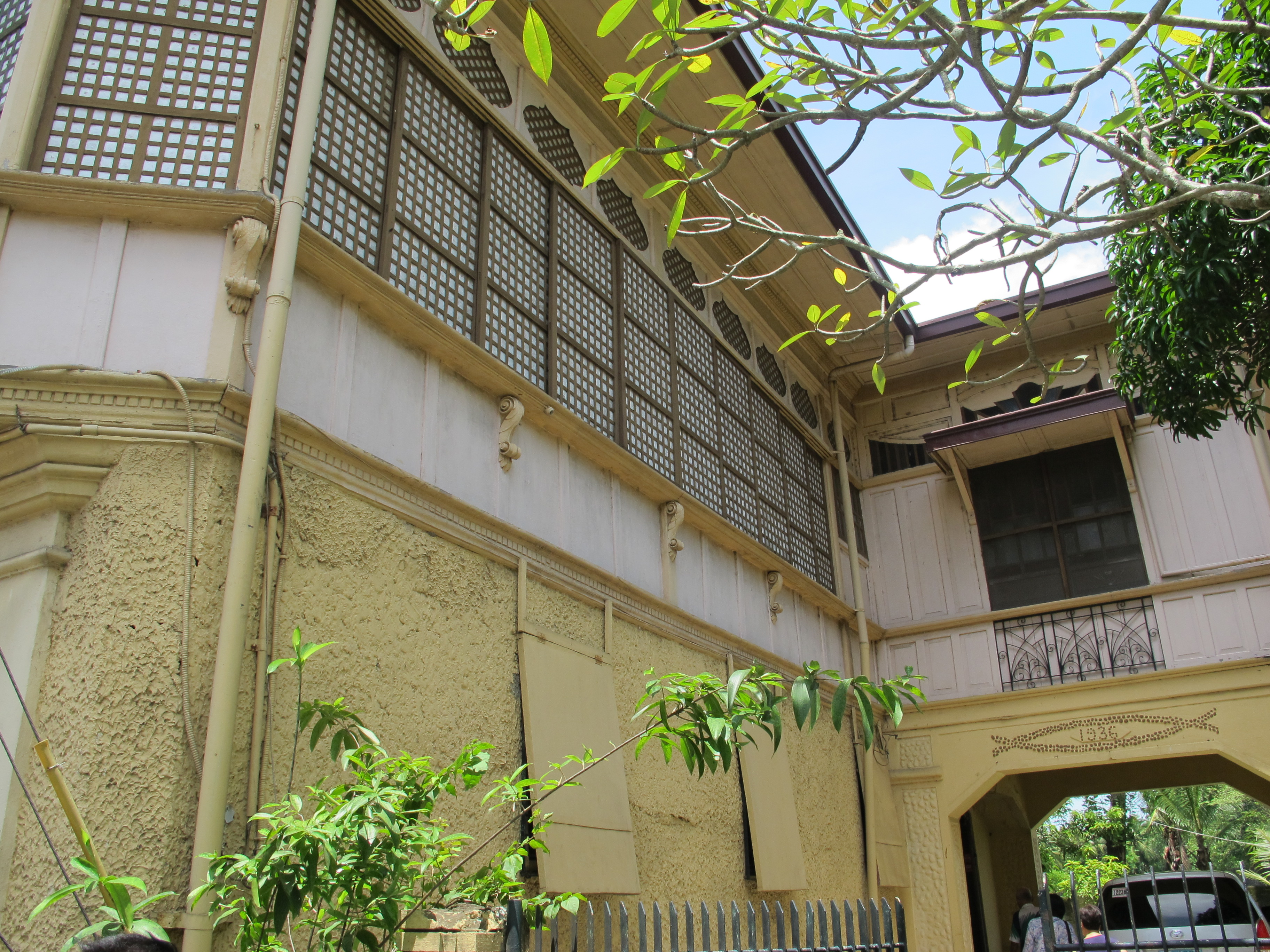
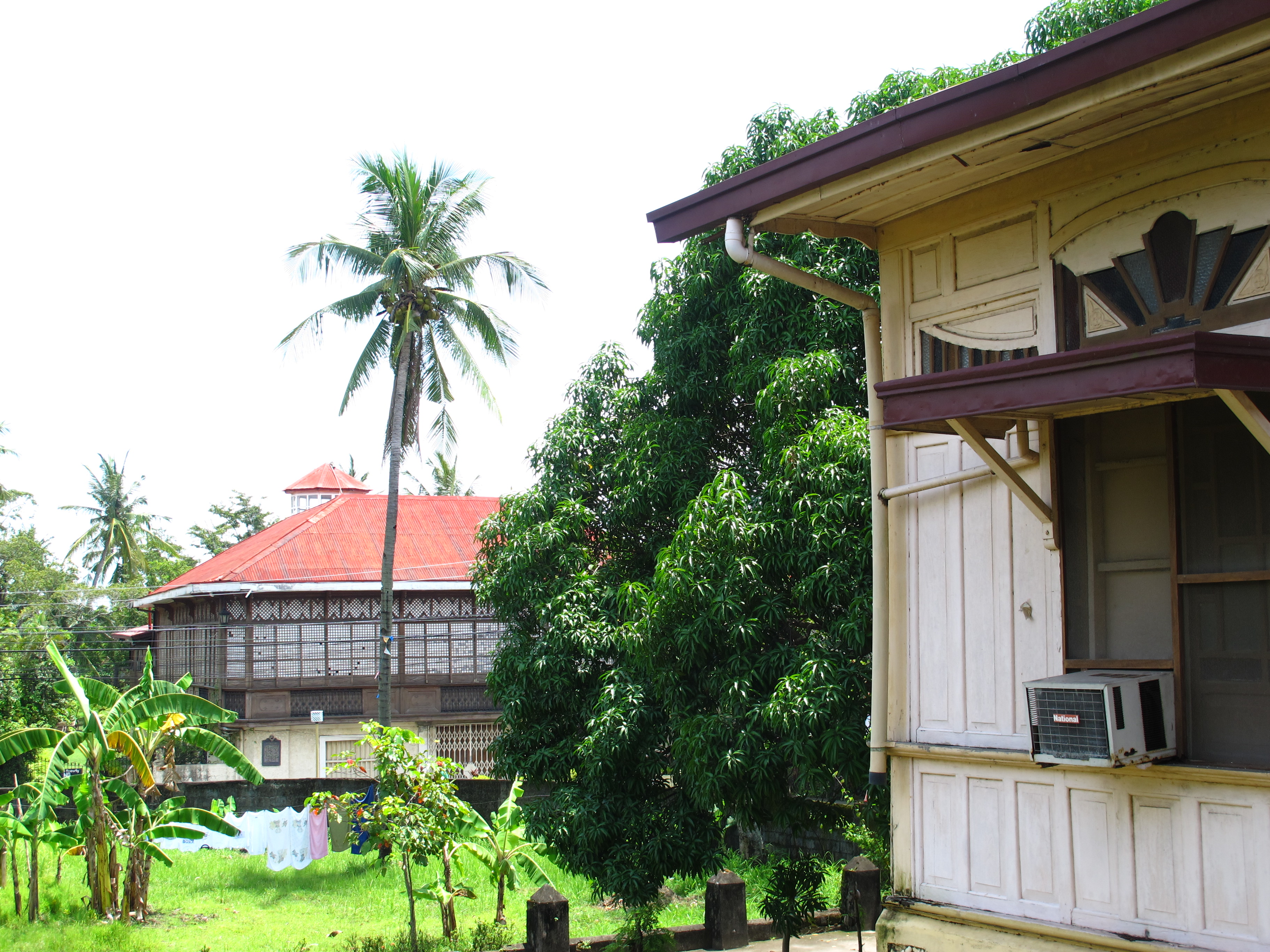
It is unfortunate that there was no tour guide to tell us more about the ancestral houses in this area. The house of Leo Martinez has a marker that says 1935, which renders it “new” compared to the ancestral house of Don Sixto Lopez just right across the street. You can view this older house from one of the wide windows of the Martinez house.

Ancestral House of Sixto Lopez in Balayan, Batangas

The oldest house in Balayan is that of Don Sixto Lopez, the Grand Old Man of Balayan. His house has wide windows framed by capiz shells, like many of the other ancestral houses to be found in the area. Lopes belongs to a rich illustrious family who owned vast tracts of sugarcane fields in Batangas. The house sits right across the ancestral house of Leo Martinez.

Not too many Filipinos are familiar with Sixto Lopez who belonged to the same generation as the great national hero, Jose Rizal. But some would be familiar with his high society granddaughter Diana Jean Lopez, and the equally famous if not more famous great grandchildren such as Claudia Bermudez (daughter of Diana Jean) and Nikki Prieto Teodoro(wife of Presidential candidate Gibo Teodoro, who is from another rich haciendero family, the Cojuangcos of Tarlac). Oh yes, you can say all these socialites certainly come with a lot of class, unquestionable pedigree and beauty genes!

House Across Leo Martinez' Ancestral House in Balayan

We could have visited this house too across the street lining the Martinez and Lopez ancestral houses. But it was closed as someone allegedly committed suicide just a few days before our visit. Yay! 😦

Shot of Sixto Lopez House, Taken From Leo Martinez' Ancestral House.

Just like Vigan and Taal, Batangas , Balayan is yet another colonial town reminiscent of our Spanish heritage. Many heroes hail from this town too, and as the oldest town in Batangas if not of the Tagalog Region, it has a lot of history begging to be told and retold. My fingers and toes are crossed that the the local authorities do their job to promote this town as another tourist destination.


One Brit. One Blog. One Airport. One “Hotel”. One Bad Coffee.

What’s wrong with Manila? Many things, obviously. What’s wrong with our NAIA Airport or Terminal One? Too many things, admittedly. But certainly not enough to trash Manila.

This blog by this Brit may have pointed out the sad state of our airport and the city such that it provoked serious discussion among Filipinos who:

1. Accepted the painful truth but took exception to the sweeping generalization.

2. Accepted the painful truth and added insult to injury by confirming how hopeless we are.

3. Are in denial of things wrong around us and attacked the blogger with abusive language.

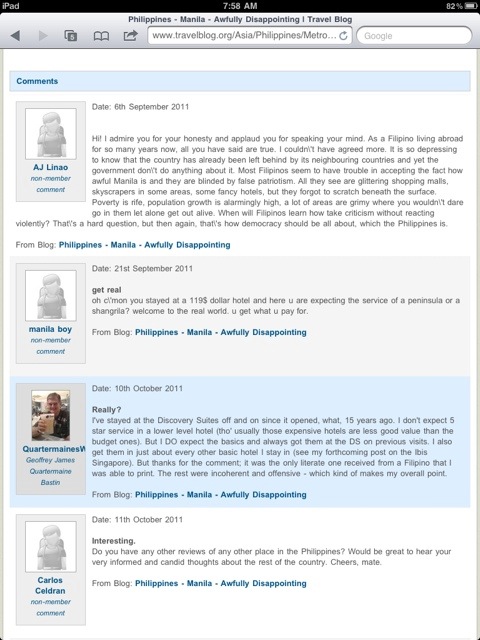
You may want to read the blog written by this Brit who admits being a grumpy old man, but certainly a well-traveled one. Without going to his blogsite (and adding to his stats), you can view the pages here. Read on, and tell me what you think.

xxxxxxxxxxxxxxxxxxxxxxxxxxxxxxxxxxxxx

20111017-201359.jpg

20111017-201419.jpg

20111017-201433.jpg

20111017-201458.jpg

20111017-201541.jpg

20111017-201604.jpg

20111017-201614.jpg

And there’s more. In a discussion forum in same blogsite, the comments revealed how Brits can argue among themselves just as much as some Pinoys claim to be the smart ones who readily accepted how this Brit branded Filipinos as “smarmy”. (He later apologized for this, admitting it was harsh and said in irritation.) Very likely, those smart ones didn’t even know what the word meant, and simply focused on one grumpy old man’s rants vs the filth in Manila. Nothing worth photographing, in his own words. But there were also other non-Pinoys who found the blog nasty and offensive, even as they agreed about the poor state of NAIA Terminal 1.

20111021-203239.jpg

20111021-203301.jpg

20111021-203320.jpg

20111021-203335.jpg

20111021-203401.jpg

20111021-203416.jpg

At the end of the day, this whole exercise proved that controversy sells. The Brit blogger got it right about the airport and the dirt in many places. But should we accept that Manila is hopeless and where the Filipino character is concerned? Some Pinoys do, judging by the comments.

The grumpy blogger reactivated his twitter account and invoked his “readers” to add to his 8 followers. I suspect he would write more controversial blogs, egged on by the phenomenal hit record of this mediocre blog. He is even more active in the travel forum, behaving like a true troll. Best not to engage him. He gets all fired up when he finds someone to argue with. In other words, don’t feed this troll. If you’re curious, allow me to just post additional screenshots of his Royal Troll-ness. 🙂


Our family took advantage of this promo package offered by Club Balai Isabel last August. We fell in love with the place. The kids loved it. And the adults too. So when my friend asked me for a one-day itinerary to entertain a group of friends, it was a no-brainer to head back to this magical place.

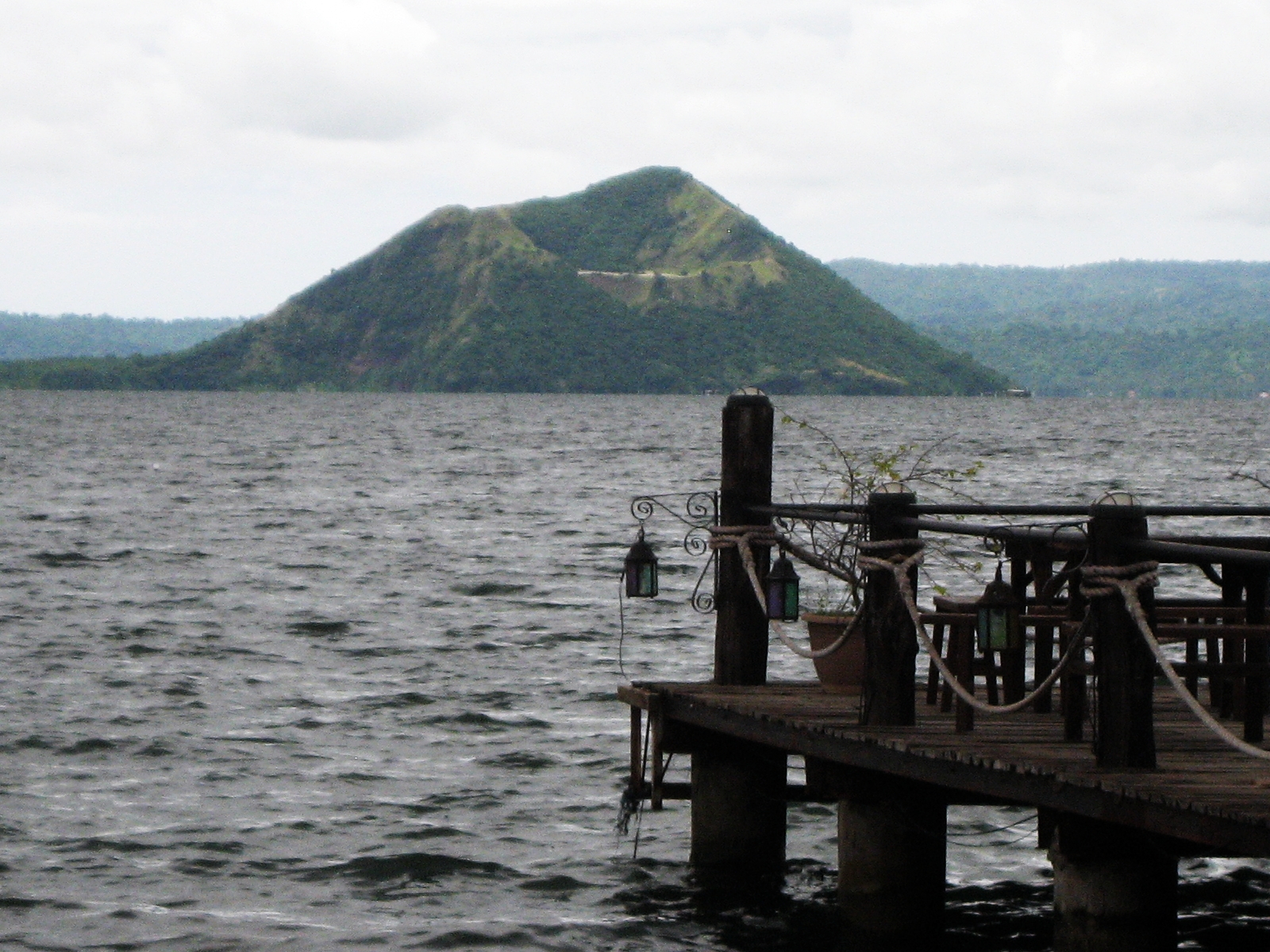
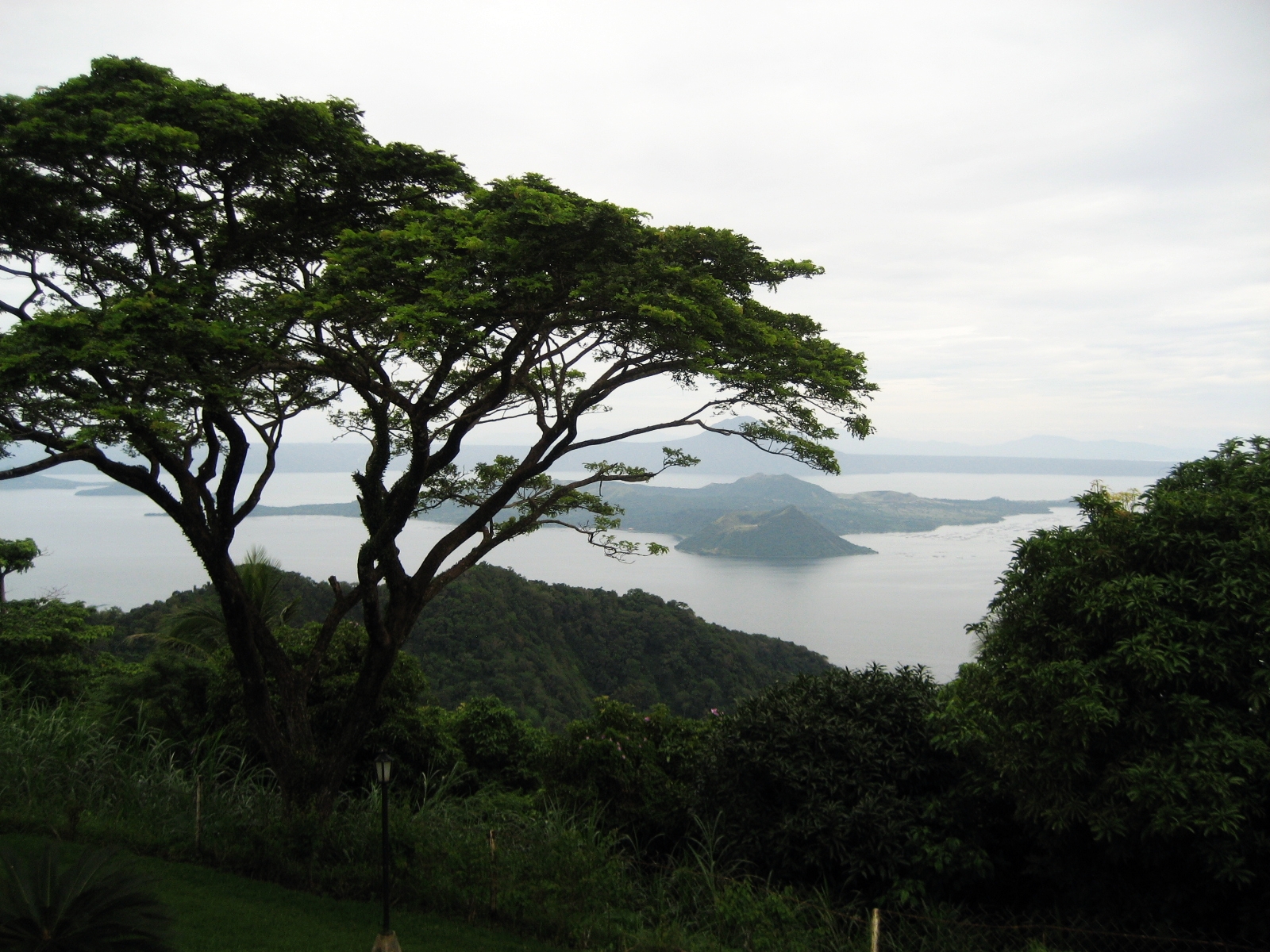
Taal Volcano and Lake from the Pantalan @Club Balai Isabel, Talisay, Batangas

It makes for a wonderful day trip if one were to introduce the Philippines to foreign and balikbayan friends. Not too far from Manila, and a day well-spent viewing Taal Lake and Volcano from the shore (Talisay, Batangas) and from the ridge (Tagaytay City, Cavite). This is our one-day itinerary:
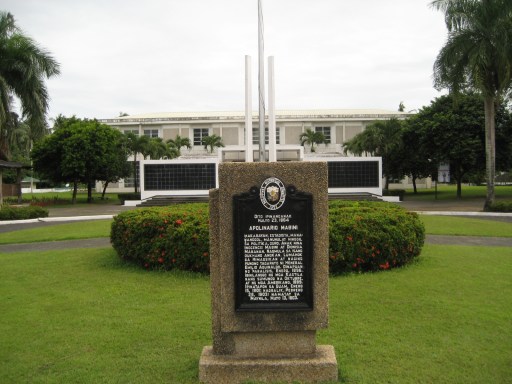
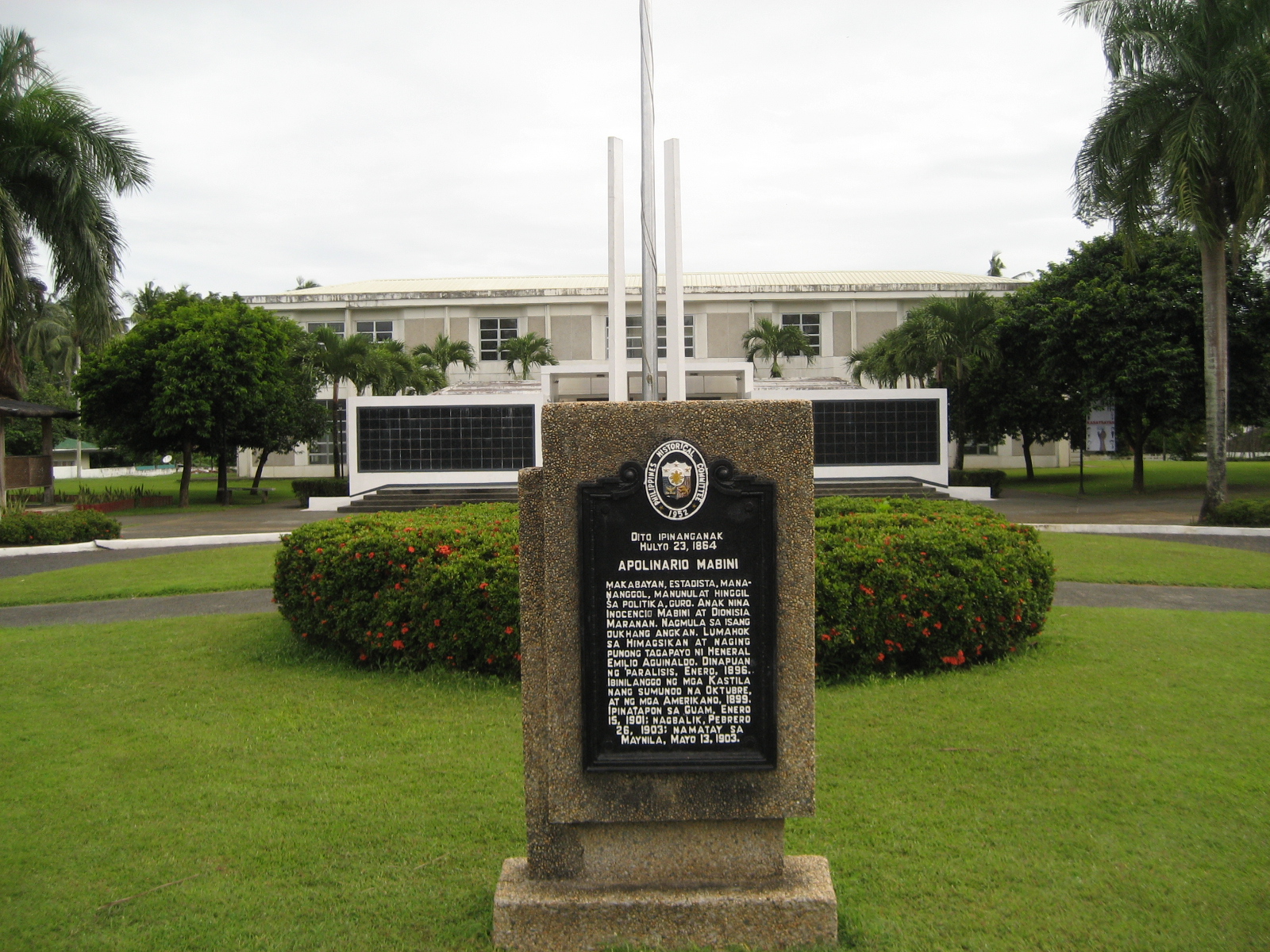
Mabini Shrine in Barrio Talaga, Tanauan, Batangas

On Our Way By 8am

Not bad. You don’t have to wake up extra early for this day trip. By 8 am, we were driving along SLEX , connecting to STAR Highway and out Tanauan Exit. All that in slightly more than an hour. As you exit out of STAR Tollway towards Tanauan, take the right turn towards Talisay. Along the way, you’d fine Mabini Shrine. This sprawling property houses the Shrine honoring the Sublime Paralytic, Apolinario Mabini. I have earlier visited this Shrine and dedicated a blog to the Brains of the Philippine Revolution back in the 19th century. This second visit cum stopover on our way to Club Balai Isabel took just 20 minutes max. Just a little bit of history for our Norwegian friend in the group.
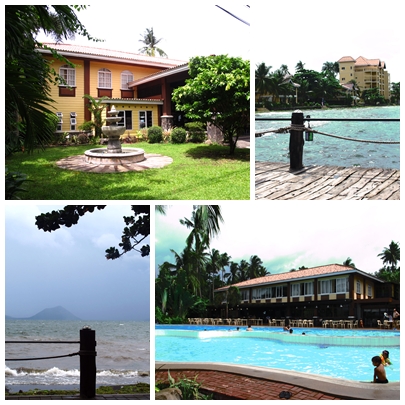
Club Balai Isabel

Just In Time For Lunch @Club Balai Isabel

From Mabini Shrine, we took the lone road towards Talisay. It did not take very long to reach Club Balai Isabel. This resort complex offers much by way of activity to day trippers and weekend travelers. The more adventurous may even come much earlier to try the boat ride across the lake and trekking towards the volcano crater. The resort can make all these arrangements for you.

There was time before lunch to check out the chapel inside the resort. The 3 swimming pools. The Pantalan. From the clubhouse, we enjoyed an amazing view of Taal Volcano and Taal Lake. You can grab a bench by the shore or at the cute-sy Pantalan and feel the breeze while viewing fishermen out to harvest the famous “tawilis” from Taal Lake. If they get lucky, maybe there’s even Maliputo for lunch. We walked the lakeshore from the Pantalan towards the Marina near the Chapel and the bigger pool.
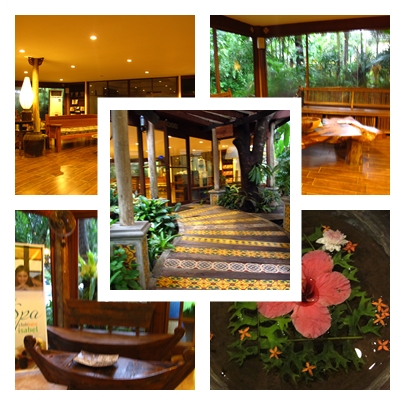
Club Balai Isabel

On our way back to the Clubhouse, we passed the Butterfly Garden, the Dr. Fish Massage area, the Spa, the Tennis Court, and the lovely villas , each of which has a splendid view of the smallest active volcano in the whole world. The view is enough to rev up our appetite. The stroll was a good exercise to take away the guilt from the sumptuous food to be had from the buffet table. The very accommodating crew of Club Balai Isabel makes for a very enjoyable stay in the resort. As I said, this is my 2nd visit. The last time, we stayed overnight. From the reservations to the waiter, to the gracious lady chef, to the store clerk, we were warmly received like old friends. I couldn’t resist shooting out an email to the Management just to mention this. The service orientation and culture of friendliness and courtesy are awesome.

This is not a paid advertisement. Or do they say advertorial these days? I am a paying client who had the pleasure of discovering Filipino hospitality and quality service from Club Balai Isabel, and I wish to share this with my friends who read my blogs.
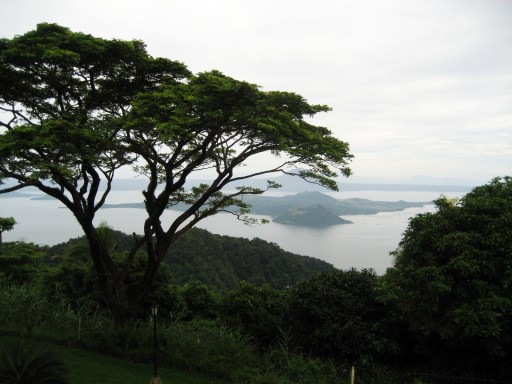
Taal Volcano and Lake From Tagaytay Ridge

Zigzag Up Via Ligaya Drive Towards the Ridge

After Club Balai Isabel, we took a left turn and in no time found Ligaya Drive. From here, try looking up to where you’re headed. You are leaving the shores of Taal Lake to get up to Tagaytay Ridge to view Taal Volcano a second time , this time from above. It can get you a bit disoriented. Two views of the lake and volcano in a day? And between these 2 viewpoints is this zigzag drive passing ritzy villages and mansions with rooms with a view. I think it is just a 7 kilometer drive but it would seem like a longer drive as you are climbing up with ravines on your right. 🙂

Up on the ridge, you have several choices on how best to spend the rest of the day. Oh, I’d never grow tired of Tagaytay. If you plan to stay way beyond sunset, there is a number of bistros with prices ranging from budget-friendly to extravagant. Check out some of these travel guides. If you want something really fancy, then dine at Antonio’s. You may burn a hole in your pocket, but if you are in a celebratory mood and can afford it, why not?
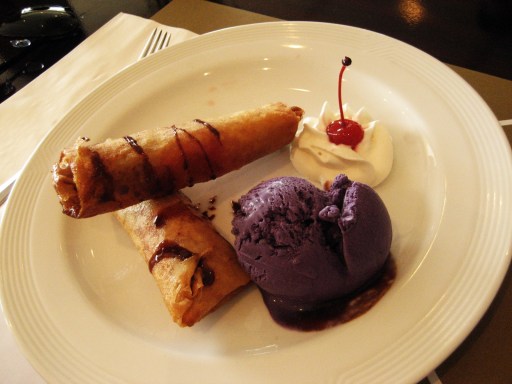
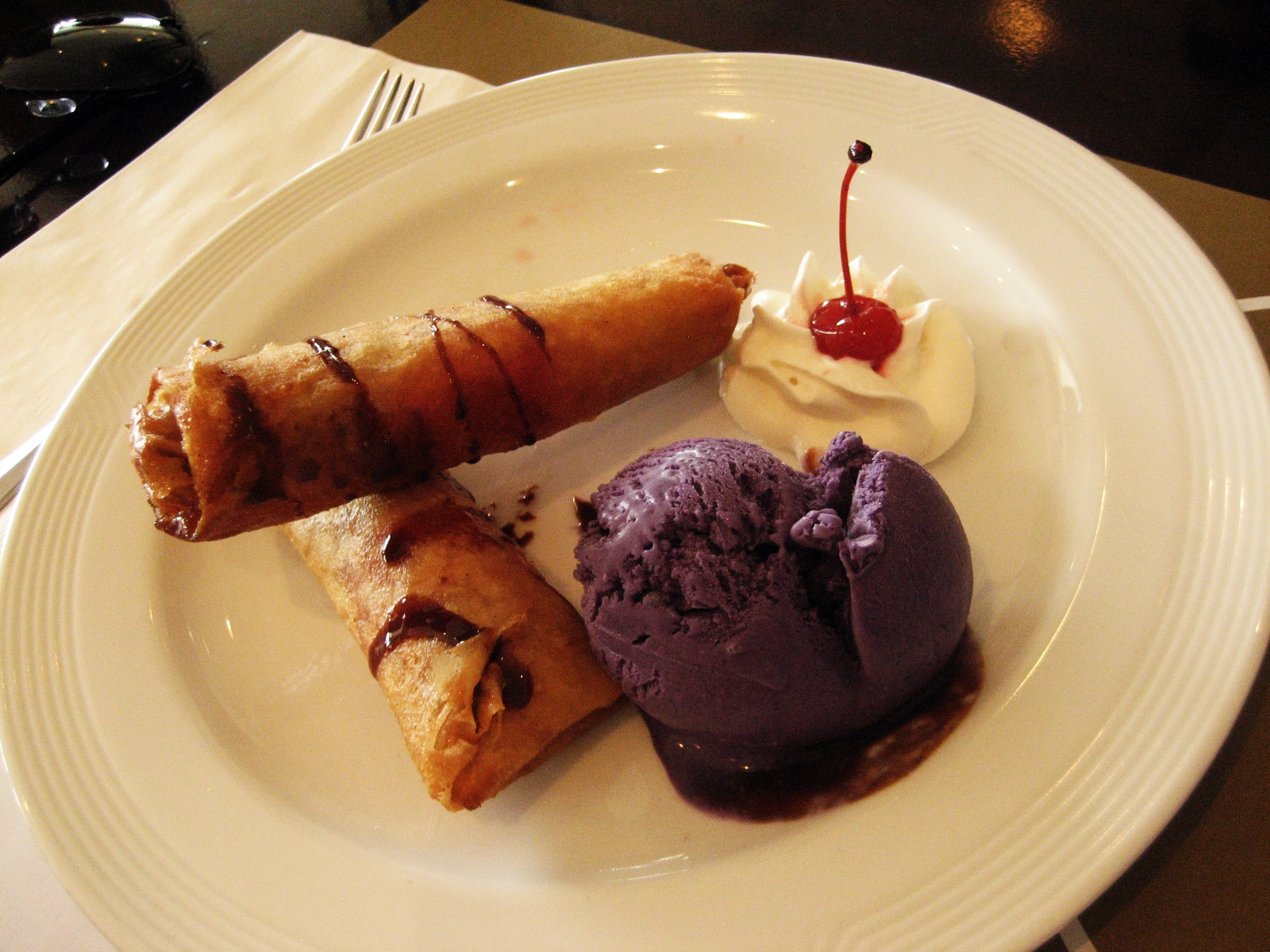
Fried Halo Halo or Turon?

Taal Vista Lodge

In our case, we chose Taal Vista Lodge. They have one of the best views, if not the best, from the Ridge and a restaurant which offers many choices on how to eat Filipino delicacies. They also have a lunch buffet, if you choose to do this itinerary in reverse.
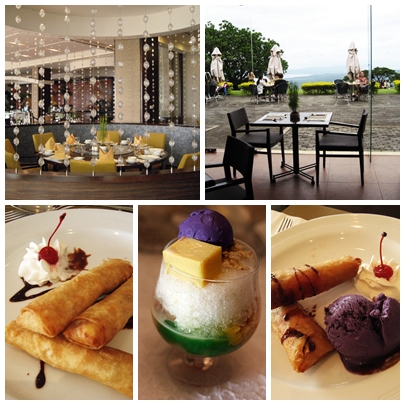
Taal Vista Lodge

Some of us had our halo-halo the traditional way (cold, with ice shavings) or fried! Make no mistake about it, but fried halo halo it was! And then there’s the traditional turon topped with ice cream. Or turon with leche flan filling. Imagine that!
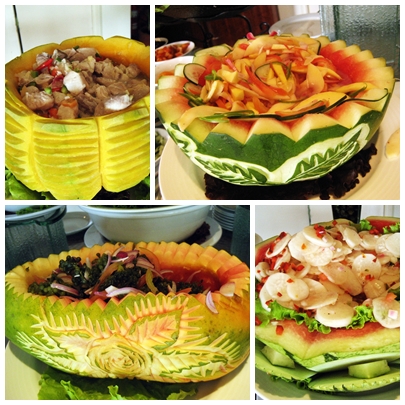
Lunch Buffet @Taal Vista Lodge

If you choose not to dine in Taal Vista’s restaurant, please do remember that the parking ticket is P100 per hour. Not bad if you just wanted to breathe in the air and savor the view from there. It is free if you have your parking ticket stamped in the restaurant.
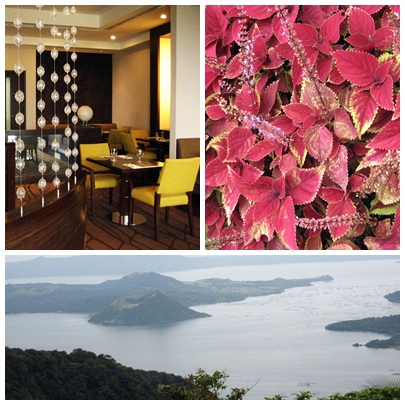
Taal Vista Lodge

So there. If your foreign guests or balikbayans are hankering for day trips outside of Manila, here’s one itinerary for you. More itineraries to come! So, don’t forget to subscribe to this site to get updates. You may also find me on Facebook (Lifeisacelebration) where I post all my blogs from this site and from TravelBlog. See ya!


I have just been to Taal, Batangas. Visited the Basilica of St. Martin de Tours, the Caysasay Shrine, the Sacred Well of Sta. Lucia, the Villavicencio Houses, Leon Apacible Museum, the Agoncillo Heritage Houses and Museums. You may have already read my blogs about the heirloom houses and the churches. Gorged on Tapang Taal and Panucha. But the prospect of eating home-cooked Tulingan and Adobong Dilaw beckons. And a visit to earlier-missed Villa Tortuga makes this next visit sooner than expected.

We almost dined here!
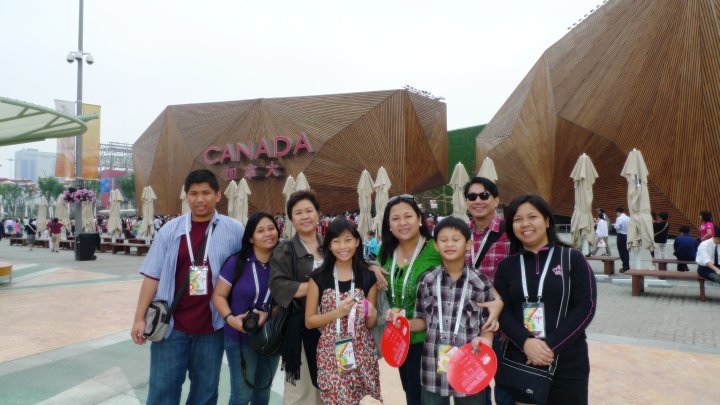
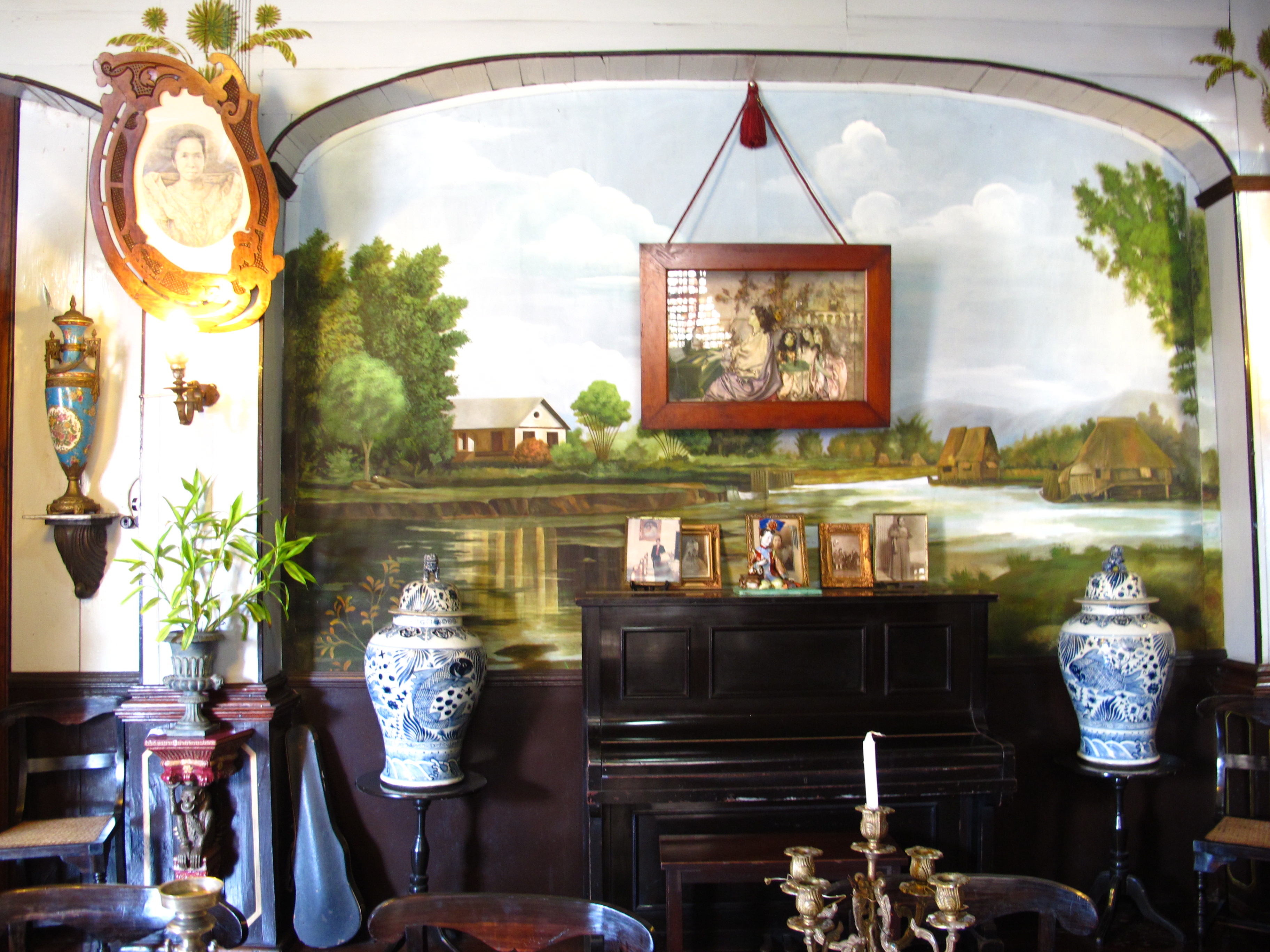
Inside Villa Tortuga

Home-Cooked Tulingan and Adobong Dilaw

The last time we visited, we dined in Taal Bistro. We considered lunch in full Filipiniana regalia in Villa Tortuga this time around. But my friend Alice has a cousin in Taal waiting to serve us a breakfast of Tapang Taal, Longganiza and Pancit. It didn’t stop there.

Sinaing na Tulingan

Adobong Dilaw

Home-cooked Tulingan (matched with bagoong made of tulingan innards – a first time! yummy) and Adobong Dilaw was scheduled for lunch. How can you resist that? (Thank you, Alice). It was all we could think about as we passed a number of heritage houses along Agoncillo Street. Just off the Villavicencio and Goco Houses , and right along the street leading to Taal Basilica, we had our lunch of Batangas delicacies. We only stopped eating these local dishes when we were served Turon. Hmmm, you can say we stopped eating to eat again and have our desserts – if there ever is such a thing. 🙂

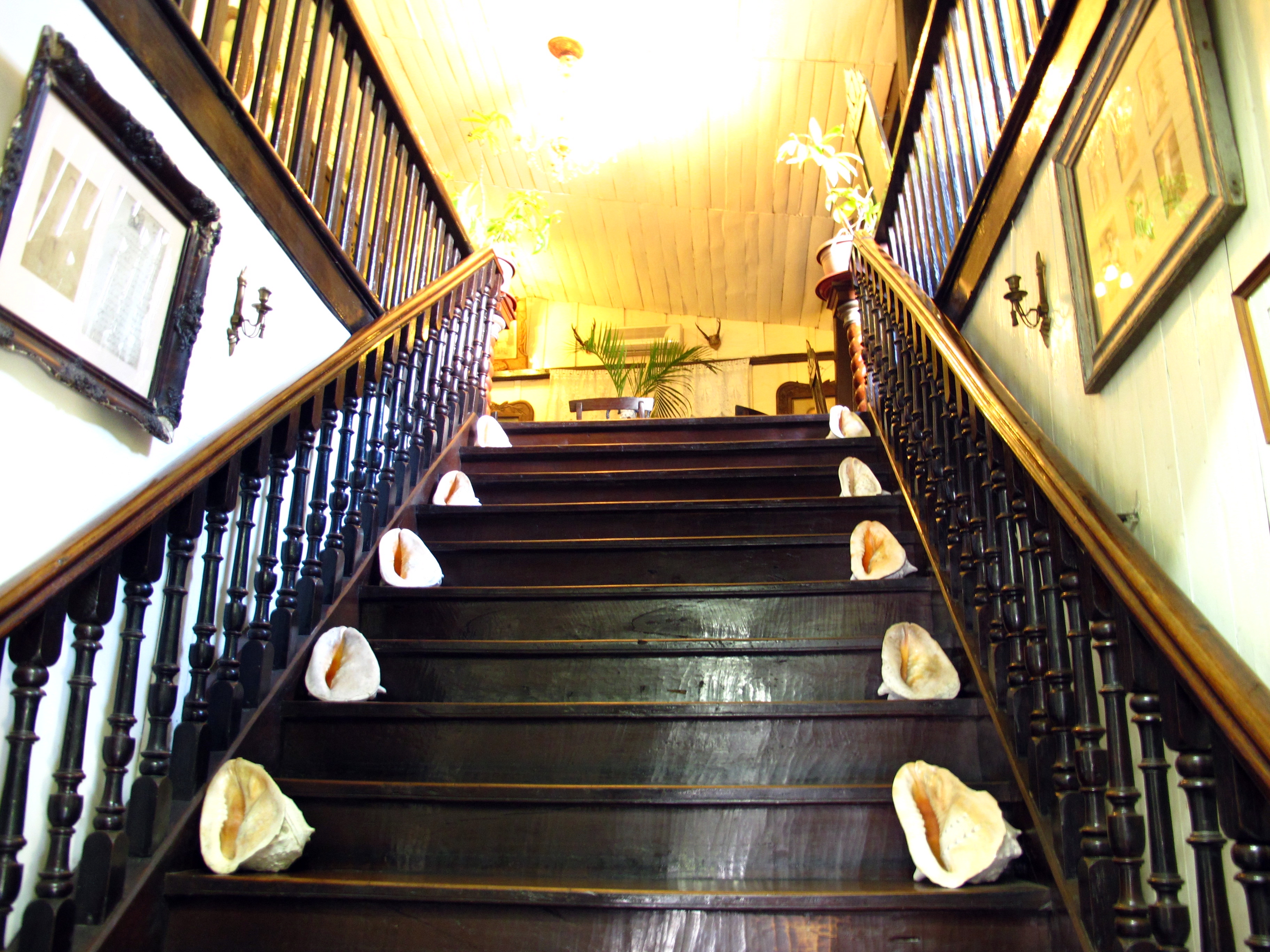
Stairway to History

Villa Tortuga

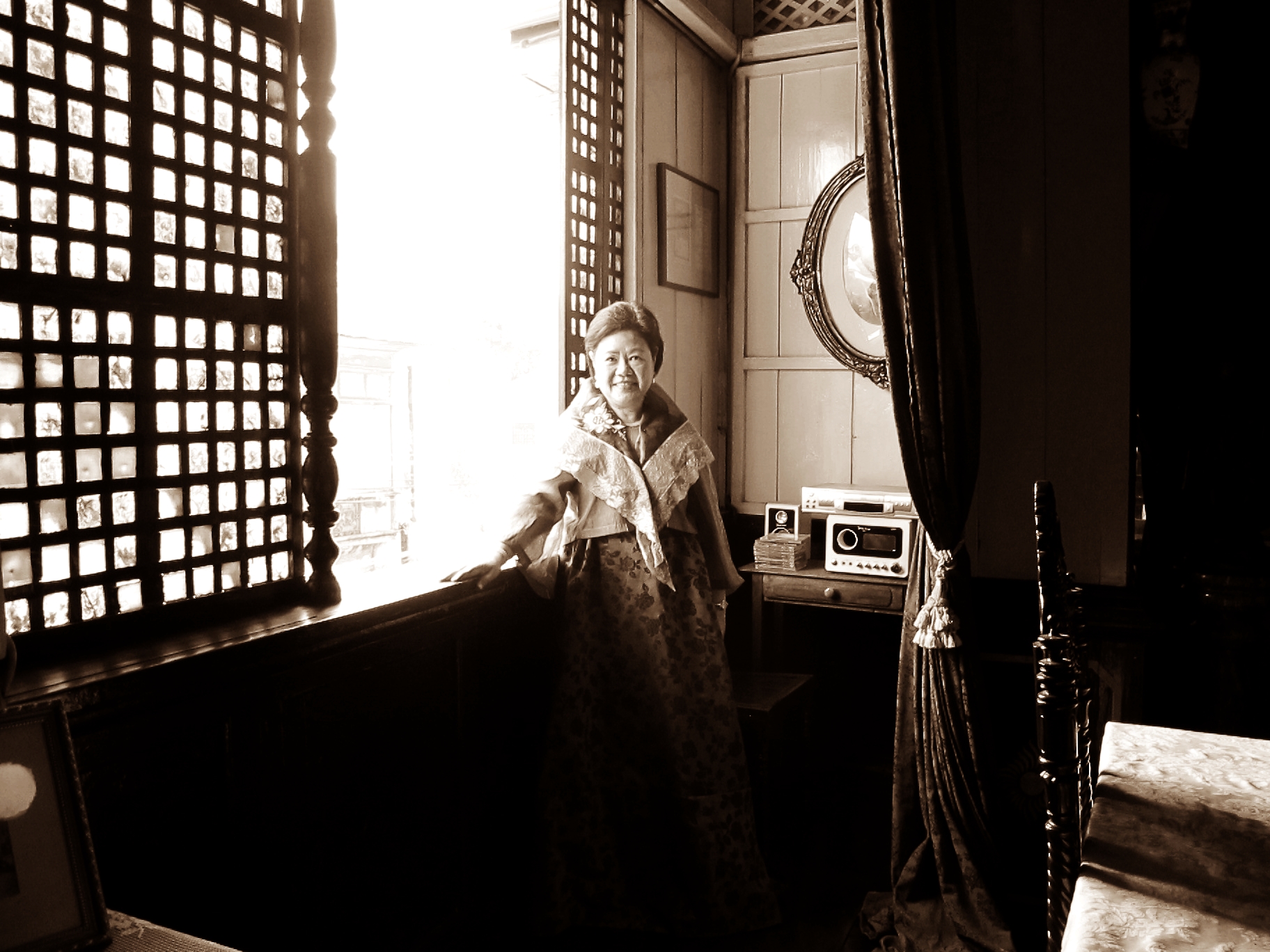
Alice arranged this visit at the Villa Tortuga. Lovely house. And alas, I found a truly good tour guide in Taal, Batangas. Well, I met him in my earlier visit but he guided us only in a couple of heritage houses then. This time around, Rochie guided us around Villa Tortuga and even took our photos! His assistant Adrian is just as competent without saying much. Adrian knew just where to have us pose, arrange the folds of our skirts here and there, pin our baro’t saya wherever, and snap our pictures. Oh, we had a blast.

How hard can it be taking ur own photo dressed like this?

And here are ur LOLAS. Donya Victorina? Maria Clara? Sisa? No, don't answer that.

While I have already written about the heritage houses of Taal, Batangas (check out http://www.travelblog.org/Asia/Philippines/Batangas/Taal/blog-652149.html ) as well as the religious sites here, this experience deserves a separate blog. Our photos will tempt you to brand us either as Donya Victorinas, older versions of Maria Clara and Leonor Rivera, or a Sisa looking for her sons. Whatever. Eat your heart out. We had a blast!

Looking for her Ibarra. Or Crispin. 🙂

Thank you ladies, for a wonderful time. It may not be the best of time to visit and have fun, but we really had a hilarious day trip, didn’t we?

Those planning day trips not too far from Manila, try this. If you like, call Villa Tortuga : 7250819, 7254562 or 0917-8246900 for lunch and Taal tour. It’s actually easy to do, but you need to arrange to visit some heritage houses. Otherwise, you just admire them from outside.

xxxxxxxxxxxxxxxxxxxxxxxxxxxxxxxxxxxxxxxxxxxxxxxxxxxxxxxxxxxxxxxxxxxxxxxxxxxxxxxxxxxxxxxxxxxxx


This list was emailed to me. Have been to, seen and photographed some but not all. Thought I’d throw in some of these photos here for a photowalk — to inspire us all to visit each site. It’s just around the corner! NEED HELP. IF U HAVE PHOTOS AND WANT TO SAVE ME THE TRIP, PLEASSSSSSEEEEE SEND ME. THANKS.

Oldest Steel Church

Despite the discrepancies in the dates of its founding, the San Sebastian Church is the only steel church in Asia built in the late 18th century. It should have celebrated its centennial around 1991. Yet, it seems that not even the Catholic administration paid any interest in its historical significance or in the fact that it was Alexander Gustave Eiffel who designed it.

San Sebastian Church

Oldest Restaurant

New Toho Food Center (1888, 422 Tomas Pinpin Street, Binondo, Manila) Five Chinese friends set this up in Binondo, Manila, where the restaurant still stands, in a newer structure also on Tomas Pinpin (formerly San Jacinto) Street which was built after a fire razed the wooden building back in 1984. That explains the slight change in the name. It used to be called the Toho Antigua Panciteria.

Oldest Province

Aklan, originally known as Minuro it Akean, is considered as the oldest province in the country and believed to have been established as early as 1213 by settlers from Borneo. Its first ruler was Datu Dinagandan. In 1399,Datu Kalantiaw grabbed the throne. In 1433, Kalantiaw III formulated a set of laws that is known today as the Code of Kalantiaw.

These days, Aklan is better known as the province to which Boracay belongs.

Oldest Town

Unisan, Quezon could be the oldest town in the Philippines. The people of Unisan claimed that their town is now 481 years old, having been established in 1521, the same year that Ferdinand Magellan discovered the Philippines. All other towns in the country were established not earlier than 1565, when Spain formally occupied the Philippines as a colony.A Malayan queen named Ladya reportedly founded Calilayan, the old name of the town. In 1876, Calilayan was renamed Unisan which was derived from the Latin word uni-sancti, meaning “holy saint”. (Source: Philippine Daily Inquirer)

Shoreline of Unisan, Quezon

Oldest City

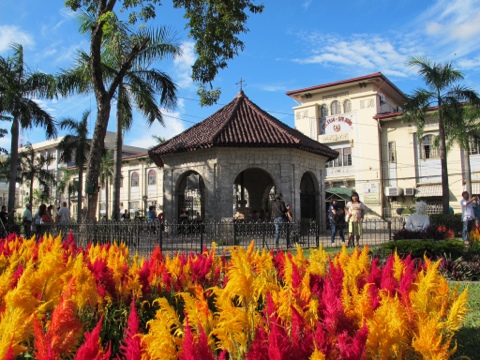
Cebu City is considered as the oldest city in the country, as this was the site of the earliest European settlement established by Spanish conqueror Miguel Lopez De Legazpi in 1565.

20120426-092832.jpg

Oldest Fort

The first Spanish settlement in the country, Villa del Santisimo Nombre de Jesus, was located inside Fort San Pedro in Cebu City. The fort’s construction began in 1565.

20120426-093327.jpg

Oldest Street

Calle Colon in Cebu City is considered as the oldest street in the country. Named after explorer Christopher Columbus, Calle Colon was first constructed in 1565 by men of Miguel Lopez De Legazpi.

Oldest Stone Church

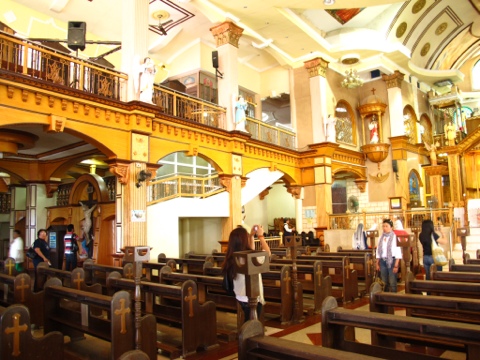
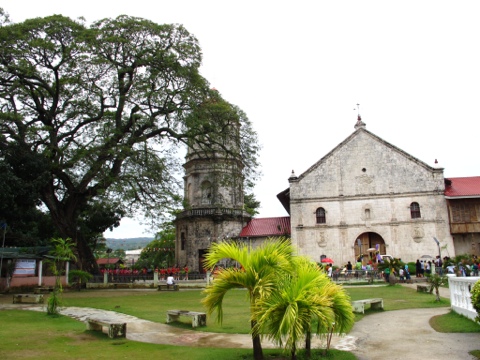
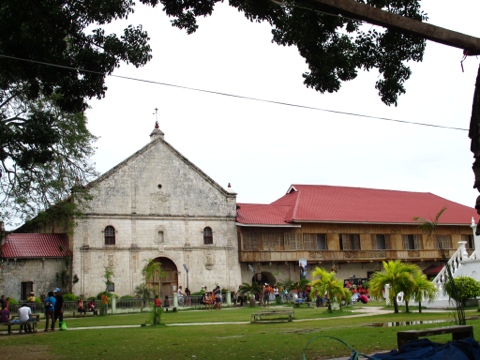
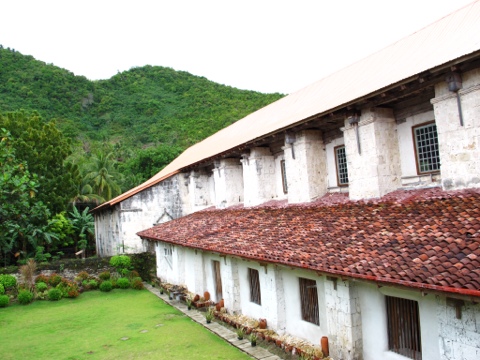
The Baclayon Church in Bohol is considered as the oldest stone church in the Philippines. But some historians disagree, claiming that San Agustin Church in Manila deserves the title.

Inside Baclayon Church in Bohol

Church historians claim that the cornerstones of San Agustin Church were laid as early as 1571, 25 years before Baclayon Church was built in 1596. But most people believe the title should be kept by the latter, since it is situated in the island first occupied by the troops of Miguel Lopez De Legazpi, the country’s first Spanish governor general.

Bohol was where a friendship was sealed with blood between Chieftain Rajah Sikatuna and Legazpi. The event is known today as”The Blood Compact.”

Oldest Hospital

The San Lazaro Hospital could be the oldest hospital in the country. According to Pampango historian Zoilo Galang, the San Lazaro hospital was established in 1578; Enfermeria de Naga, 1583; and Hospital de San Juan de Dios, 1596.

Oldest Church Bell

The oldest church bell in the country is said to be the one found in Camalaniugan, Cagayan. That bell was reportedly forged in 1595.

Oldest Bridge

The Jones Bridge, formerly known as Fuente de Espana, was first built in 1701. It was rebuilt by the Americans in 1916 and renamed after Atkinson Jones.

Oldest University

The University of San Carlos (U.S.C.) in Cebu City is considered as the oldest school in the country and in Asia. Formerly known as the Colegio de San Ildefonso, it was founded by the Spanish Jesuits on August 1, 1595. This makes the Cebu-based university older than theUniversity of Santo Tomas (1611) in Manila andHarvard University (1636) in the United States.

The University of Santo Tomas, however, contests this title. Formerly known as the Colegio de Nuestra Señora Del Rosario,U.S.T. was the first school, which got a university status in 1645. U.S.C. became a university in 1948. UST also claimed that the original U.S.C. was closed in 1769 as a result of the expulsion of the Jesuits. It reopened in 1783 under a new name and ownership. But the USC officials stick to their claim. The university observed its 400th foundation day on August 21, 1995.

UST

Oldest Vocational School

The Don Honorio Ventura College of Arts and Trades (DHVCAT) inBacolor, Pampanga is said to be the oldest vocational school in Asia. Augustinian Friar Juan Zita and civic leader Don Felino Gil established the vocational school on November 4, 1861.

Oldest Company

Ayala Corp., one of the largest conglomerates in the country, is also the oldest existing company around. It was established in 1834 by sugar barons Domingo Roxas and Antonio de Ayala. It was later renamed as Casa Ayala, then as Ayala y Compania and recently as Ayala Corp.

Oldest Bank

In 1881, Domingo Roxas, an ancestor of the Ayala family, became one of the first directors of Banco Español-Filipino De Isabel II,which was founded by virtue of a royal decree issued by Queen Isabel II. The bank issued the country’s first currency notes the following year. Considered as the first private commercial bank in the country, the bank came to be known as the Bank of Philippine Islands in 1912. The oldest savings bank was Monte de Piedad, which was established in 1882.

Bank of the Philippine Islands Branch in Vigan

Oldest Rizal Monument

What can be considered as the oldest in the country is a 20-foot metal structure standing at a park in Daet, Camarines Norte. Its construction reportedly began on December 30, 1898 and was finished in February 1899. In comparison, the Rizal monument at the former Luneta Park was built in 1912.

Oldest Insurance Firm

Insular Life Insurance Company was established on November 26, 1910, becoming the oldest insurance agency in the country.


Peninsulares (Spaniards born in Spain).  Insulares (Spaniards born in the Philippines). Mestizos or half-breeds who take unbridled pride in the “more superior half” and would rather ignore the “inferior”, perhaps accidental, perhaps never-intended half. And then there were the Sangleys or Chinoys, along with the Indios.

St Martin De Tours Basilica

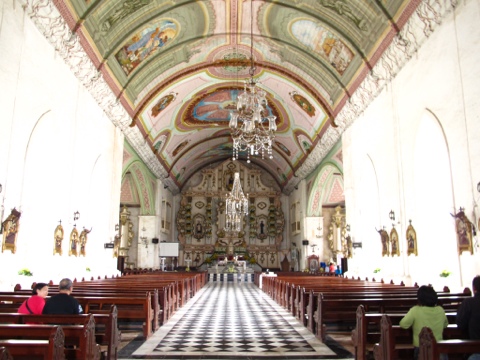
Inside the Basilica

Interestingly, the Spaniards born in the Philippines were initially called “Filipinos” while the natives were called “Indios”.  Over time,  they were tagged as Insulares  while the Indios remained……..er, Indios. 

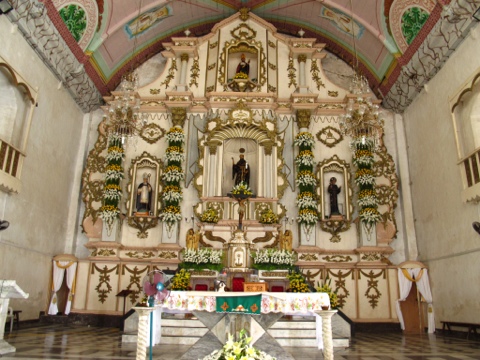
A Very Grand Altar and Magnificent Ceiling and Dome. Only In Taal, Batangas.

Santa Lucia Well near Our Lady of Caysasay Shrine


What was that? Like it or not, such was the imaginary caste system in the olden days. Hate to think that it may actually still ring true today as the ugly side of our history rears itself back into present-day society. I dare not venture a guess, but there must have been such a great divide then as depicted in Rizal’s Noli and El Fili.  Passing many ancestral houses along a narrow street in Taal, Batangas, looking out the windows of such heirloom houses, imagining the senor and senoras in their caruajes while Indios walk along the same narrow streets, we had a glimpse of the past in this heritage town. 


Our Lady of Caysasay Shrine


This vision all the more reinforces how great our heroes were and are.  Many of them come from the Mestizos or half-breeds,  the Ilustrados, yet they reached out to join the Revolution with the peasants in the name of love for country.  Many of them opened their huge houses to hold secret and not-so-secret meetings with the others who joined the Revolution.  All patriots. Rich and Poor.  Ilustrado or Unschooled.  They were bound by the same love for country.


A Painting of Juan Matingkad Fishing Out the Image of Our Lady in Pansipit River


We visited 4 of these heritage houses in Taal.  Wish there was time to visit more. Perhaps even sit down for a dinner in some ancestral house in full Filipiniana regalia. But on this humid day,  we were quite content to have visited these 4. But I intend to head back. So the blog on the heritage houses would have to be put on hold.  For now,  let’s talk about the 2 religious sites in Taal, Batangas.  Make that 3, to include the Santa Lucia Well which is marked by a coral stone arch with a bas relief image of the Virgin. It is claimed that the spring water has miraculous healing powers. Having said that, I do not understand how the local government here cannot do something to ensure that the sacred place and its waters are kept clean.  


Inside Caysasay Shrine


Mi apologia. But we need to vent our frustrations some more.  We had a couple of guides from a local tourist agency and a couple more from the Municipal Hall.  The town of Taal is one interesting heritage town so rich in history. But we felt so deprived of a “guided tour” as we traipsed along the heritage houses and religious sites without much ado on what these landmarks mean to us.  We asked questions too, and found the answers so inadequate. We do not blame them, as they were likely not “prepared” and guided to conduct a proper tour.  But this should alert the Tourism Officers and the local government to ensure that every Taal Resident is aware of their history, their heritage.  Tourism in this neck of the woods can only prosper if even locals like us, Indios as we are, can appreciate the story and the history behind these landmarks. 


The Hagdan-Hagdanan, now called San Lorenzo Ruiz Steps.


For the life of me,  I think their spiel was limited to the following:

1.   The image of Our Lady of Caysasay was fished out of Pansipit River by one fisherman named Juan Maningkad.

2.   The image had this habit of disappearing and reappearing in the place where it was originally found.

3.   When it vanished for a longer time,  it was found anew guarded by 2 kingfisher birds called Casay Casay.

4.   The Parish Priest then decided to have the Shrine built upon the site where the image was discovered. There it remained. 


Now, I’m oversimplifying here but that’s the gist.  Who wants a long complicated story, anyway?  As for the Sacred Well of Santa Lucia,  who knows why it is called Santa Lucia Well?  They had no answers.  We only know there used to be a Chapel there but only the Arch with the bas relief remained after a Taal Volcano eruption back in 1754.


Neither do they know why the Hagdan-Hagdanan made of granite stones leading up to the center of town is now called San Lorenzo Ruiz Steps. Perhaps it was renamed in honor of the first Filipino Saint soon after his canonization?  Who knows?  * so frustrating*


Back to the Taal Basilica (St Martin De Tours )


So, I have decided I should go back.  Maybe get a better tour guide.  Or perhaps simply do more research.   After all, the Net has all the answers.  But that is not the point. Taal is so rich in history you could almost smell its tourism potentials. Not just from locals, but this colonial town nearly “frozen in time” makes for a convenient sidetrip from Manila, or even a weekend destination after Tagaytay City.  


Maybe I should join them up there!


(My blog on the Taal Heritage Houses in TravelBlog. Just click on this link.)

xxxxxxxxxxxxxxxxxxxxxxxxxxxxxxxxxxxxxxxxxxxxxxxxxxxxxxxxxxxxxxxxxxxxxxxxxxxxxxxxxxxxxxxxxxxxx


Let me ask……..when was the last time you visited the Museum?


Don’t look at me. It’s something I don’t do on a regular basis. But I would love to spend many afternoons there. And I continue to wish there is a good coffee corner somewhere within the building where I can take a break before pursuing a second run of the Gallery.


The National Art Gallery with the Balangay Diwata ng Lahi


As it turned out, I was good for just a couple of hours. No breaks. Glucose level drops in 2 hours after walking from Hall to Hall , up and down the 3 floors. And then I start longing for a cup of good brew and some munchies. Having said that, let me advise you to go in the morning after a good breakfast! Or in the afternoon after a good lunch 😉


The Museum Of the Filipino People


When I got there, I decided to do the National Art Gallery first. The Museum of the Filipino People is good for a separate visit. “Slow by slow.” 😉 Who says you can rush through a Museum? The best time is always a time when you don’t care about the time. Go slow. Read all those markers. Every piece of art has something to say. Either written or visual or sensed. If you’re like me who hardly picks up an art or history book, this maybe a fine time to brush up on art and history. You just have to trust that the most relevant information are encapsulated in all those reading materials and markers.


Juan Luna

Felix Ressureccion Hidalgo’s “Assassination of Governor Bustamante”


You may want to start with the Hall of Masters. Be prepared to be blown away. Juan Luna’s “Spoliarium” has that effect on most people. On the other hand, Hidalgo’s “Assassination of Governor Bustamante” reveals a violent side of Spanish friars of that period. See it to know what I mean. Sly. Sly.


There are special halls showcasing the Museum collections of Juan Luna, Hidalgo, Amorsolo, Botong Francisco, Napoleon Abueva, etc. I cannot write about all of them, and would have to limit myself to a few favorites. After all, the “selection” is a very personal decision. No pretensions here. In my book, art assumes significance when these treasured pieces “talk” to me. Or “touch” me. I may misinterpret its message, or completely misunderstand it. But why and how the message was conveyed to me is entirely my own perception. Or sensation? This may sound like it takes too much away from the artist himself. But I dare say that the artists’ messages affect people in different ways. Happy, sad, empty, peaceful, anxious, relaxing, refreshing, uplifting…… we feel as we feel.


How lucky were those who posed for Amorsolo! They have been immortalized by this National Artist’s magical hands. Truly, a “Pamana” or inheritance. Amorsolo’s legacy lives through these masterpieces. Thank God for this prolific painter, our very first National Artist. From Philippine landscapes to traditional Filipino practices and everyday life , to these portraits, one is transported back in time as one takes in all those details of his artful strokes. For sure, his uncle Fabian de la Rosa, another great Filipino artist, must be so proud having mentored Amorsolo in his younger days when he and his family (Amorsolo’s mom is De La Rosa’s cousin) lived with them after Amorsolo’s father died.


First off, I was very very happy to find the Museum Foundation Hall where one views Botong Francisco’s murals which were ‘rescued’ by the Foundation from Philippine General Hospital (PGH) where they were earlier housed. The murals represent the progress of medicine in our country, so it was fitting to have them in PGH. Over time, these art pieces hardly invited attention, much less admiration and respect, as PGH visitors had other mundane things in mind. Cleaned up, restored to its former glory, and accorded its due respect in a Hall focusing on the greatness of this National Artist is an answered prayer. Aaaaah. Those wooden benches looking like “hagabis” (were they? ) let one rest and simply take in all the beauty of the masterpieces.


Vessels of Faith. That’s what it says. Honestly? I don’t know one bit about this exhibit. So, I devoured all “lessons” to be learned right in this Hall. Remember what I told you? The good guys who made this exhibit possible would have read up on these art pieces, and like “Twitter” are constrained to write down/display all that information in as few words as possible. This is history “shortcut”, if I may call it that. And it is just what I need. Right then and there, I did my “cramming” as if I would have to pass an exam as I exit from the National Art Gallery.


So, how much do we know of the Tau-Tao? A quick reading gives ample background on this Bagobo myth on afterlife. The myth is complete with all those colorful characters which reminded me of those Ramayana tales and Panday movies. Imagine Lumabat’s journey from earth, crossing the horizon to reach the skyworld. Meeting and vanquishing a snake with sharp teeth and a mouth that opens wide and shut to cut one person half, chasing a deer 9 times around the world, belly-opening procedures to take out one’s intestines to free Lumabat of his earthly desires (hunger)! Oh, this is part of our history — all those pre-Hispanic beliefs and myths comprising the Filipino spirituality!


I lament that I did not take my history lessons seriously. How I wish we had the equivalent of an Ambeth Ocampo (myIdol) in my student years! Now I cram. And it takes more than a few visits to really appreciate our heritage housed in the National Arts Gallery. So much. Too much. So I have decided on my “slow by slow” mode as my memory bank is not as efficient as it used to be. A few exhibits at a time. A few artists at a time. And once more, how I wish there is a Coffee Shop within the Museum! Caffeine-starved, my memory bank screams “full”. No storage space.


Talk to you later, guys!


From Laoag City to Vigan and back, we remember our wonderful dining experiences in these 4 restos. If there was more time, I’m sure we would have tried other dining places in between those yummy bagnet, longganiza and empanadas. So. Let’s not beat around the bush. Whenever the subject is food, no one should be kept waiting.

Vigan Empanada

Herencia Cafe

Best dining location ever.  Pick a table by the window and enjoy a panoramic view of the Paoay Church in all its majesty. It rained while we were cruising in a van from the airport thru a couple of touristy sites before sitting down for a proper lunch here.  A late lunch, but no one was complaining.  

This is the home, the birthplace of the famous Pinakbet Pizza.  Pinakbet as in that very Ilocano dish which found its way to almost every Filipino family’s dinner table.  Pizza as in that most famous export of Italy, along with spaghetti.  And it was such a treat to be able to taste the authentic Ilocano dishes such as Bagnet, Poqui Poqui, Dinengdeng and Crispy Dinuguan

Herencia Cafe : Right Across Paoay Church

Herencia Cafe: Home of Pinakbet Pizza

Bagnet, Kilawin, Pinakbet Pizza, Poqui Poqui, Dinengdeng, Crispy Dinuguan

La Preciosa @Laoag City

Our van driver wanted to bring us here on our very first day.  Perhaps he felt an authentic Ilocano meal here would have made a fine introduction to Ilocos Norte.  He wasn’t wrong.  Even if we actually “ended” our trip with a meal here on our last day.  

The restaurant has a bakeshop right beside it.  Which is fine if we have grown “tired” of Ilocano cuisine. Not so though.  We have not outgrown our taste for Dinengdeng and Crispy Dinuguan which they call Crispy Dinardaraan here.  

La Preciosa

But we were not prepared for Warek Warek.  No Ilocano has ever introduced me to this local dish of pig’s meat and entrails (tongue, liver, intestines) parboiled with calamansi, grilled, sliced, served with the juice of more calamansi and seasoned with salt and pepper. Having tried it, I was convinced we should not order any more dish involving innards. So no Higadu for us. But don’t miss the chance to try it when you get here.  Along with the Inabraw, Insarabasab, and Duyduy.

Cafe Leona

No one goes to Vigan without a “proper stroll” along Calle Crisologo.   You can do it during the day, but we strongly recommend you don’t miss it at night.  It had just rained when we got here, and the rainwashed cobble-stoned paths glistened as the lights from colonial-inspired lamp posts reflected on the water.   At the end of Calle Crisologo is Cafe Leona.  I didn’t mean to stop here for a meal except for my usual late afternoon brew.  Thought it would be a good place to sit out while the rest of the family explore.  By the time they were back, they were famished and ready for an early dinner. 

Cafe Leona. Along Calle Crisologo, Vigan

Cafe Leona’s menu is as confused as my current state while there, minding my 2 “elves” while their parents and aunts camwhore outside.  Thinking the best thing to do was to submit to Fusion Cuisine,  that was exactly what we did.  I wasn’t too happy with my Pasta with Longganiza, but the kids were happy with theirs.  Guess this place provides a “good break” while our stomach enzymes were still busily digesting our Ilocano breakfast and lunch. 

Kusina Felecitas / Cafe Uno @ Grandpa’s Inn

Grandpa

In Vigan, we would have been quite content with the empanadas filled with Vigan longganiza, egg and papaya.  But in Kusina Felecitas in Grandpa’s Inn,  we found this rare Malaga fish on its Menu, prepared in sour broth as with any other sinigang dish,  but soured with the local santol fruit!   We also indulged in the famous Vigan longganiza, the usual accompaniment of Poqui Poqui and Dinengdeng,  and the Kulintipay Shells.   These shells are actually the very same capiz shells you see framed in the sliding windows of Grandpa’s Inn.  I have not seen them for ages, much less, ate them.  Well, we were in luck in Vigan!  

Sinigang na Malaga Sa Santol

Among all the dining places we have tried, this one’s our favorite in terms of ambience. The restaurant looks more like an art gallery. The paintings hanging on the walls cover all the way to the Inn’s coffee shop aptly called Cafe Uno. Next time we are in Vigan, we would most certainly check in at this lovely Grandpa’s Inn


Kulintipay Shells

More? Read my TravelBlog post. 


If there’s Hispanic Philippines in Intramuros and Chinoy Philippines in Binondo,  then Harbour Square may well be your American Philippines.

Just realized it has been awhile since the last time I was here.  I remember idling time away here soon after I quit my job. The breeze, the view, those speedboats bobbing up and down the waters of Manila Bay, the skyline,  all make for a lazy morning. Or afternoon.  Wide range of dining choices too, should you go hungry.  You can go all American at Army Navy, full-throttle Pinoy at Dencio’s, Mediterranean along with a flute of champagne or glass of white or red wine at Grappa’s, Japanese shabu shabu or Teriyaki Boy,  Chinese, or go budget meals at Jollibee.  Or perhaps you can talk well into the night while sipping your brew at Starbucks.

The place is ideal for dating couples.  Whether you are in a romantic mood or gearing for a lover’s quarrel,  you’d find some “privacy” while strolling the walkway by the Bay, circling  Cultural Center of the Philippines, Folk Arts Theater, Aliw Theater, Star City, all the way to Sofitel if you like.  If all that walking didn’t settle the score, well…….get a room.  😉  Well, apart from being more private you also get to take a better twilight photo of the Bay area.  Seriously though,  this part of Manila is more “quiet”, less chaotic, good for the nerves and spirit. 

Guess Where This Shot Was Taken!

And here’s another one too……………. 🙂

Twilight at the Bay Area

xxxxxxxxxxxxxxxxxxxxxxxxxxxxxxxxxxxxxxxxxxxxxxxxxxxxxxxxxxxxxxxxxxxxxxxxxxxxxxxxxxxxxxxxxxxxxx