Latest Entries »


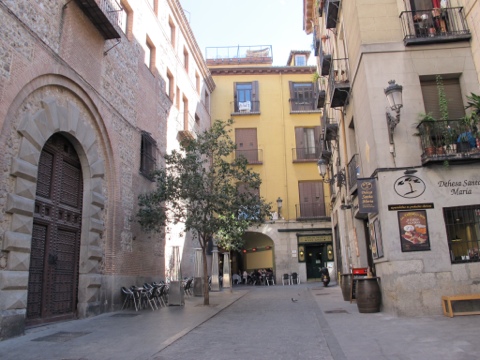
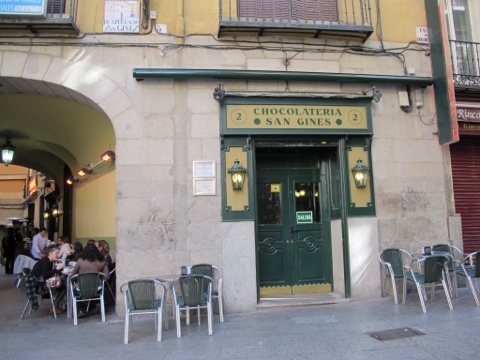
I have earlier blogged on my first desayuno (breakfast) of churros con chocolate here in Madrid. Where else, but in Chocolateria San Gines. There, I reminisced about my first taste of the churros con chocolate “to die for” back in 2002. I remember telling my nephew then that when I grow old, I would love to put up a coffee bar or Chocolateria like this where a corner table will be reserved for me….. much like the owner — an old man and his dog we met back then.



20120312-120703.jpg

20120312-120757.jpg


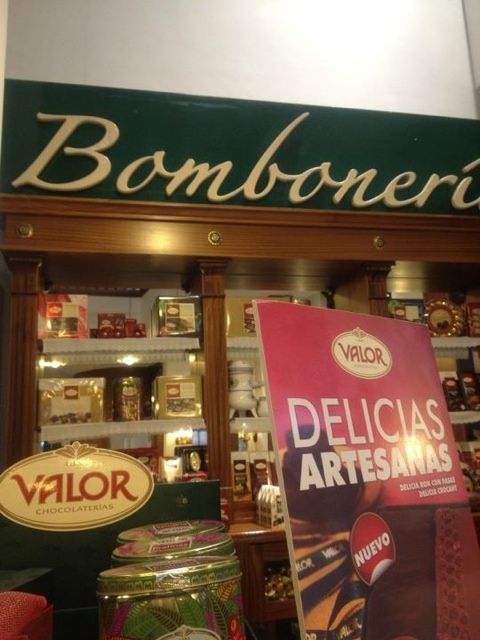
When I blogged about getting lost tracing my steps back to Chocolateria San Gines, and actually learning (the hard but delicious way) how easy it could have been to find the place (just off Calle del Arenal, walking from Puerta del Sol), a couple of friends suggested I also try the churros con chocolate at Valor. I did. More than that, I also tried a boxful of Valor chocolates!
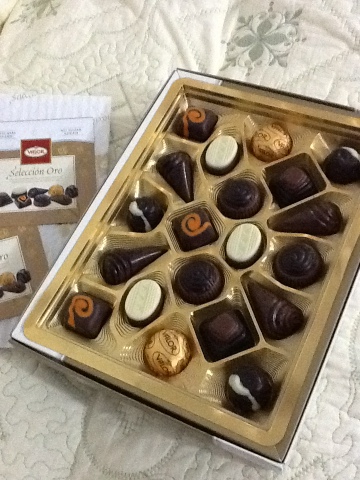


20120312-121507.jpg


After more than a couple of weeks setting up house here in Madrid, I finally found time to check out this other chocolate shop. I was surprised to find that it is so near Puerta del Sol. Well actually, much nearer Plaza Callao. A metro ride to Plaza Callao, walking towards Postigo de San Martin, it was delightful to find Chocolateria y Bomboneria Valor.
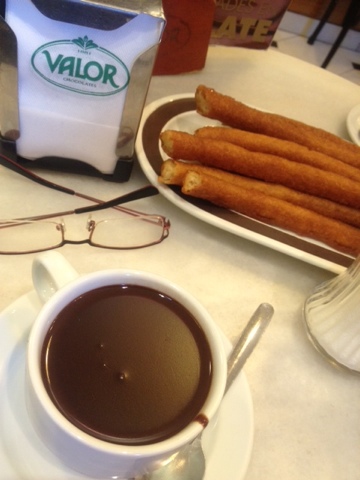
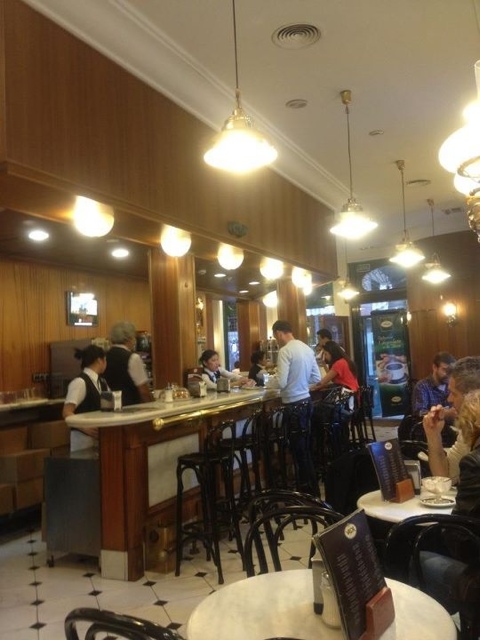


20120312-122620.jpg

20120312-122652.jpg


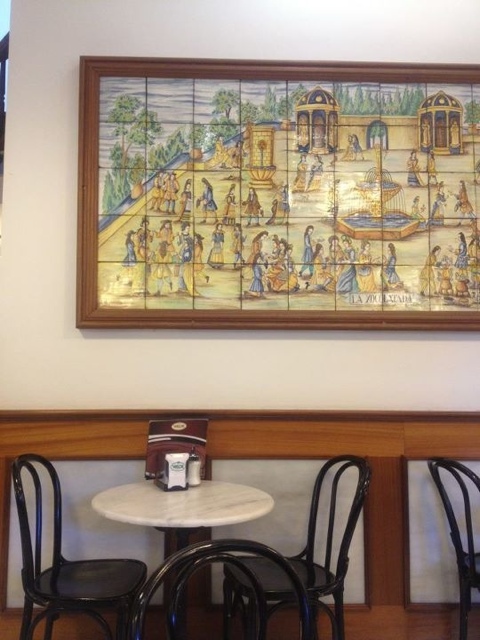
So, what’s the verdict? Admittedly, Valor is “better located” as Chocolateria San Gines is actually in an alley behind the Iglesia San Gines. Surprisingly, I also met 3 Filipinas waiting on tables in Valor. Now, some say Valor’s interiors are better, especially as one can look out to a livelier street scene in this corner off Plaza Callao. True. But I do like the old charm of San Gines.
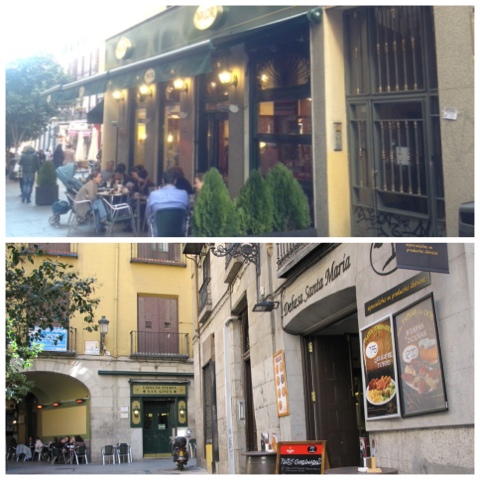


20120312-124126.jpg


The chocolate in Valor is mas sabroso. But I prefer the churros of San Gines! So if I were to choose between the 2, I would really rather get lost searching for Chocolateria San Gines. So there. β˜•β˜•β˜•


20120312-124446.jpg

20120312-143000.jpg

20120312-143022.jpg


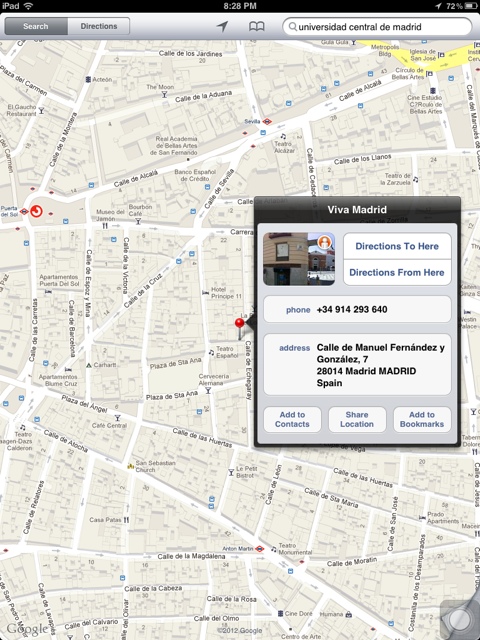
It started with Dr. Jose Rizal’s monument (built in 1996) in Avenida de las Islas Filipinas. Then a friend reminded me of Viva Madrid, the national hero’s favorite restaurant while he was still in university here. Finally, my search for πŸ‘¨ Juan Luna’s award-winning paintings led me to Hotel Ingles where Filipino patriots met to celebrate his and Felix Resurrecion Hidalgo’s winning the gold and silver medals for their obra maestros.


20120309-202352.jpg

20120309-202442.jpg


It was a good walk πŸ‘£ from Puerto del Sol, away from Calle Mayor and along Carrera de San Jeronimo. The Net πŸ“² came in so handy with this guide on which metro line πŸš‰ to use, where to get off and πŸ‘£ walking instructions on how to reach Viva Madrid 🍴Calle Francisco Fernandez y Gonzalez, 7. Love it! My very own GPS. πŸ‘ŒπŸ‘


20120309-203623.jpg

20120309-203652.jpg


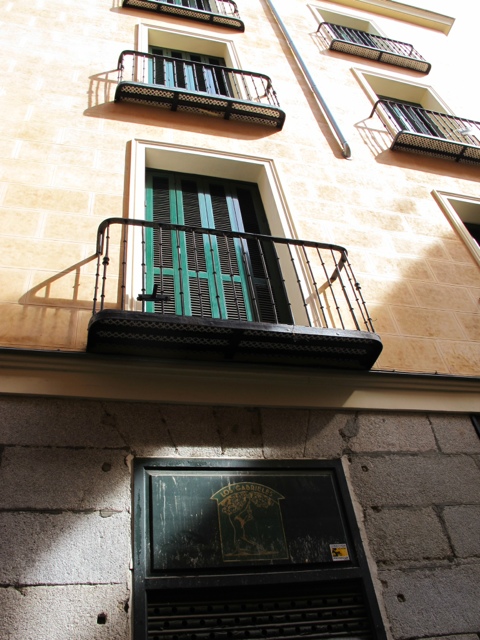
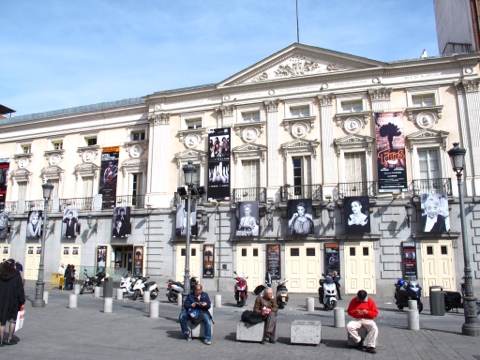
Soon, I found Viva Madrid. Right behind Teatro EspaΓ±ol. I checked out the menu and was secretly hoping there is a “Rizal’s Favorite” or something. A drink? Or a dessert? I found none. 😞 But I found a marker.


20120309-204821.jpg

20120309-204907.jpg


Just off the corner from Viva Madrid is Los Gabrielles, a music bar then where Filipino propagandists met regularly. I think this venue, described by Rizal in a letter to one of his sisters as having beautiful murals made of ceramic tiles, now hosts flamenco dance performances. πŸ’ƒπŸ‘―πŸ’ƒ


20120309-212842.jpg


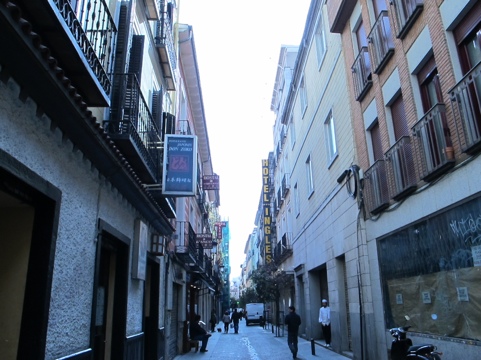
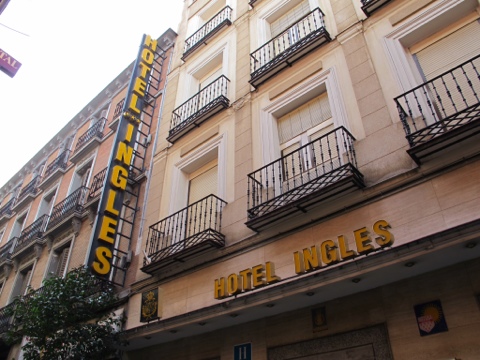
A few steps more, on the same Calle Echegaray, is Hotel Ingles, 🏫 venue for the banquet tendered in honor of Juan Luna and Felix Resurreccion Hidalgo when they won in the Madrid Exposition of Fine Arts in 1884 with their masterpieces “Spoliarium” (now at the National Art Gallery in Manila) and “Las Virgenes Cristianas Expuestas Al Populacho (Christian Virgins Exposed to the Populace, now at the Metropolitan Museum of Manila). In this banquet, our national hero — who’s said not to have eaten the whole day for lack of funds — gave more than a toast to honor Luna and Hidalgo. More like a speech. A speech so full of bravado and spunk, where Rizal frontally attacked the religious establishment. Perhaps a preview of the Padre Damasos and Padre Silvas in his Noli Me Tangere.


.

20120309-213220.jpg


This same hotel is also where our Filipino patriots met for πŸŽ‡ πŸŽ‰ πŸŽ†New Year celebrations, or where they usually had their cenas or late dinners. For sure, they didn’t venture far. You see, Hotel Ingles and Los Gabrielles are just likely 30 steps away from each other, and Viva Madrid is just off the corner — perhaps another 30 steps. All in the same neighborhood! And all behind the lovely Teatro EspaΓ±ol 🏒πŸ‡ͺπŸ‡Έ…. Errrr, another 30 steps.


20120309-213801.jpg


Part 2 of Rizal’s Favorite Haunts πŸƒπŸ‘£πŸšΆin the making. Watch this site!


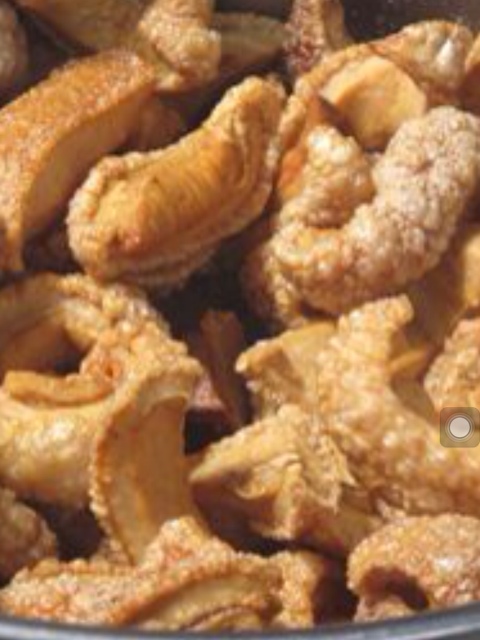
Can you blame us? Who goes to Cebu and not try its lechon and chicharon? If the best Cebu lechon comes from Talisay (I know, I know, I’d get lotsa flak writing this), then don’t argue with me when I say the best Chicharon hails from Carcar. Chicharon pa lang, ulam na!


20120308-112913.jpg


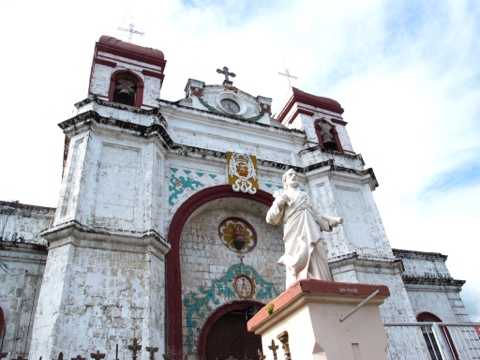
It’s more fun in the Philippines, indeed! But make sure you do Visita Iglesia in Saint Catherine of Alexandria Church to spare you from hypertension resulting from cholesterol overload. At the time we visited, the parish was closed. Thus, we appreciated its beauty — styled like most Greek Orthodox churches with onion-domed bell towers — from the outside where we also found many statues of saints adorning the fence around the church.


20120308-113129.jpg


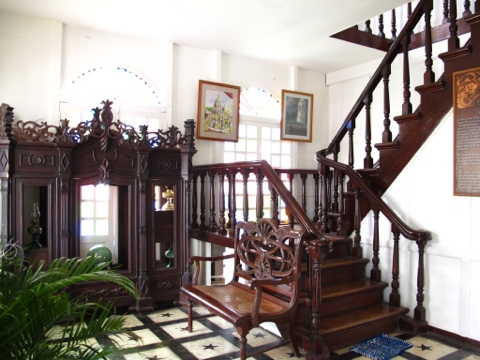
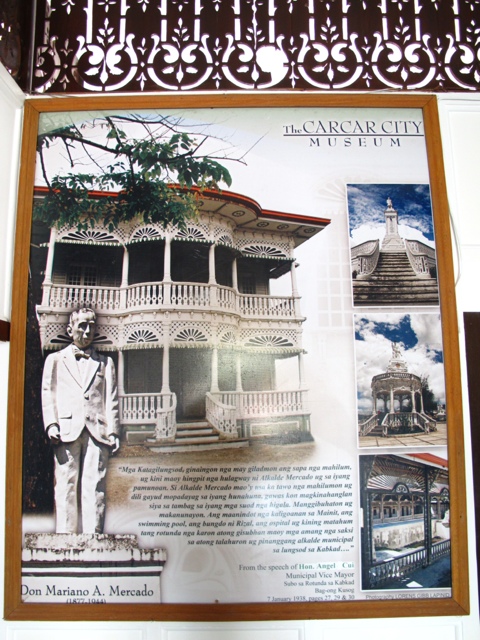
Right beside the church is the Carcar Museum. Yes, a Museum! Well actually, an American-styled dispensary years before and now converted into a lovely Museum complete with various illustrations tracing its history in this heritage capital of the province of Cebu. The Carcar Rotunda is also as American as the Carcar Museum. This white gazebo stands right before the church and the museum, which together comprise a most charming plaza.


20120309-143809.jpg


There was a museum guide who showed us around. The American-era dispensary was actually built in 1929 during the term of Don Mariano Mercado as Mayor. Among other landmarks are the municipal pool behind the Dispensary building, the Carcar Rotunda and the Rizal Monument. If I had my way though, I would replace the statue of Don Mariano with something more “cheerful” or “leader-like”. Call me irreverent but I thought the statue displayed Don Mariano’s shy, even tentative side. πŸ™‚


20120309-150054.jpg


Where to buy Chicharon? No worries. They’re everywhere! Inside the malls, outside the malls, along the streets, inside your bus or cars! The prices are no different though from the crunchies you can buy back in the city just an hour’s ride away. It is not known though that Carcar was once what Liliw is to Laguna, or Marikina to Rizal (now Metro Manila). Somehow, this 17th century shoemaking industry faded from the scene as competition set in and other industries flourished.


20120309-165609.jpg

20120309-165646.jpg


Just off the Plaza, and visible from the porch of the Carcar Museum is the town’s oldest house. Owned by Don Florencio Noel, the house is still lived in and is fondly called by Carcaranos as “Dakong Balay” which literally means “big house”. Now declared by the National Historical Institute as a heritage house, the house remains unaltered but lovingly restored and preserved by fourth generation descendants of the Noel family.


20120309-170938.jpg

20120309-171023.jpg


If you have been to Lourdes in France, you would be reminded of such Marian pilgrimage site when you visit Simala or Monastery of the Holy Eucharist in Southern Cebu. Run by Mongha ni Maria (Monks of Mary) who tend the gardens and built a mini-falls within the compound, the church has also since been a pilgrimage site.


20120307-164235.jpg


This church in Sibonga, Cebu drew crowds when the miraculous statue of Mama Mary shed tears of blood. Though not validated by the Church, this phenomenon drew many faithfuls to the site.


20120308-104746.jpg


I tweeted about this trip to Cebu and some tweeps advised me to go visit Simala on our way back to the city. It’s just slightly off the way and in between our Dalaguete and Carcar stopovers, but since we hired a van for the day, it worked out well. We felt good making this stopover. And there was even a Mass when we visited.


20120308-105053.jpg

20120308-105149.jpg


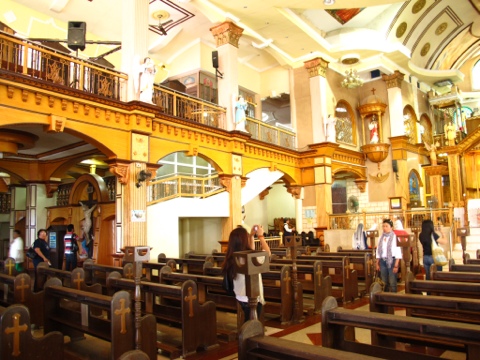
Hard to believe a church of this size was built in this corner of the province. The story goes that funds were provided by faithfuls who were miraculously healed here. If you are a first-time visitor like we were, you’d be awed by the grandeur of this church. Not just in the exterior appearance with the curving staircase and footbridge wrapped around the church, but in the interiors as well. We waited till Mass was over before snapping these photos.


20120308-105639.jpg

20120308-105719.jpg


So, next time you are in these parts of Southern Cebu, make time to do this pilgrimage. All you need to bring with you is your faith and perhaps, countless petitions for divine aid.


We didn’t plan on visiting Dalaguete. Much less visit it on its town fiesta which is celebrated every 9th and 10th of February. Yet there we were, witnesses to all that revelry in honor of its patron saint, San Guillermo de Aquitania.


20120307-152611.jpg

20120307-152711.jpg


As with similar town fiestas, Utanon is the Dalaguetnons’ way of showing gratitude for all their blessings. Through dance and music, they celebrate the town’s good harvest as Dalaguete is Cebu’s vegetable basket much like Baguio is in Luzon. It is also alleged that Dalaguete is the Music Capital of the island. The name Dalaguete came from balete, a tree which grew abundantly in the town, and which in Cebuano, is called the dalakit. On the other hand, Utanon means vegetables in the local dialect.


20120307-152814.jpg

20120307-152859.jpg


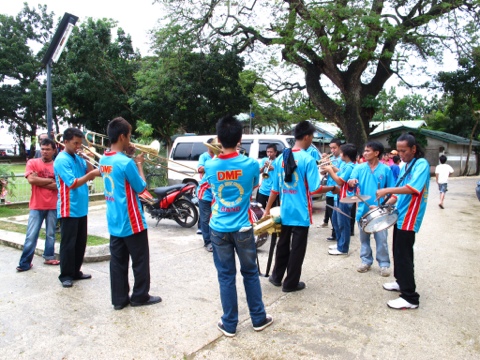
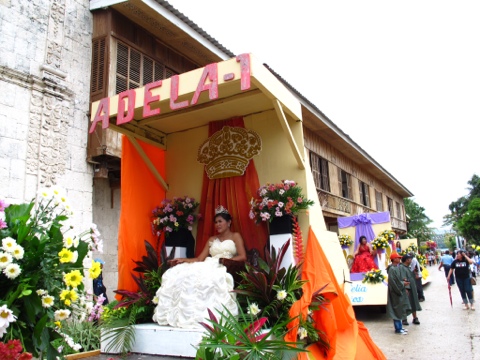
We caught sight of the bands and street marchers/dancers in front of San Guillermo Church. The festive colors of red, blue and green complemented the floats with “Hermana Mayors” gamely waving their hands as they were paraded around town. I have to say that the sight made for a very rural scene….. A village affair. I bet everyone knows everybody in this small town.


20120307-153500.jpg

20120307-153615.jpg


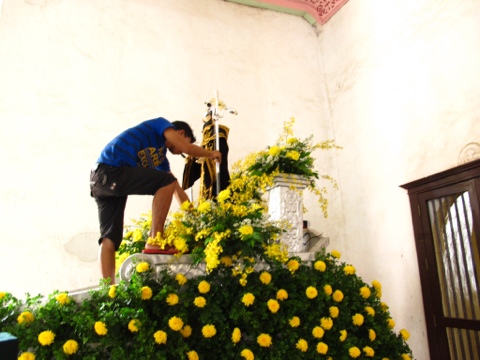
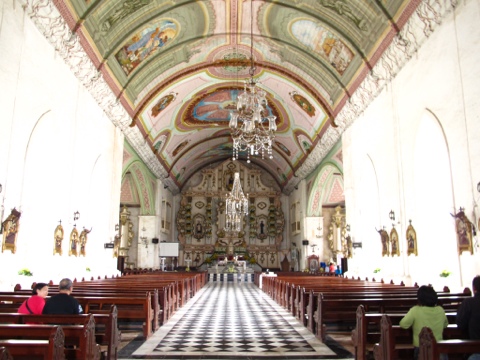
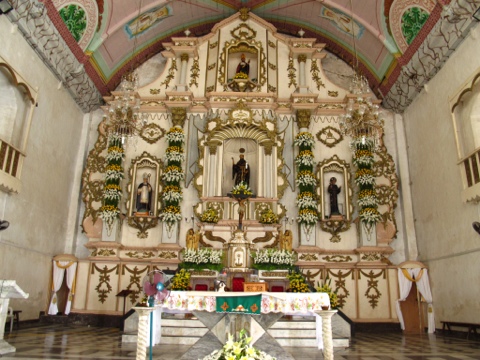
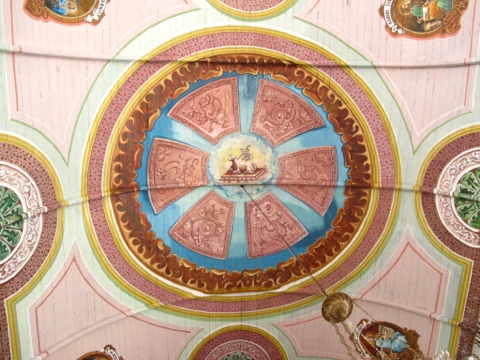
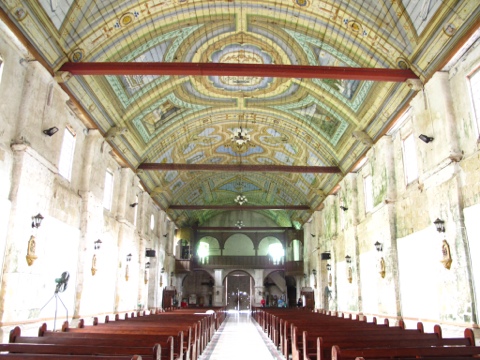
We surmised that the religious procession in honor of San Guillermo is scheduled later in the day as local men were still busy decking the floats with flowers. We said a prayer inside this 18th century baroque church with its shell-shaped altar before heading out for one last glimpse of the church and its adjoining convent. Should you come and visit this church, take time to stare up to view one of the few masterpieces by Canuto Avila, a 19th century maestro who did religious murals for 20 or so churches and convents in the Visayas, including the ceiling of Cebu’s Santo NiΓ±o Church.


20120307-154223.jpg

20120307-154357.jpg

20120307-154453.jpg


Next time around though, we’d make time to do the trek to Osmena Peak. For now, it would just be a pit stop towards Carcar where more Chicharon awaits us ☺


Cebu is NOT all about lechon. There’s the coveted, sought-after Chicharon from Carcar too! 😍 Kidding aside, Cebu has much to offer. In between the lechons and the chicharons, its natural wonders and rich history make it a must-destination.


20120306-083833.jpg


Oh, how we indulged ourselves! More so after a NO-TUKI-SIGHTING day in Oslob. Imagine having to wake up at 3am to leave at 4am, cruising the next 3 hours down to Southern Cebu to meet the gentle whale sharks. F.R.U.S.T.R.A.T.I.O.N. Those giants stood us up!


20120306-084229.jpg


Not like us to let this frustration ruin our day, we made good use of our time (and money spent on the hired van) to make a few interesting stopovers on our drive back to Cebu City.


20120306-091619.jpg

20120306-091718.jpg


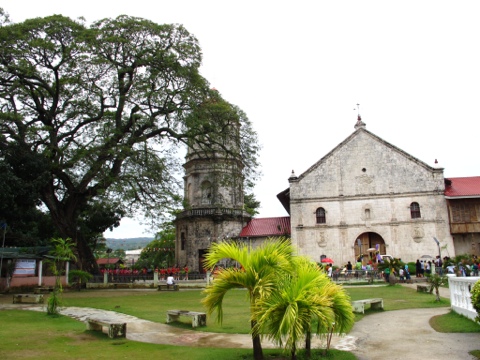
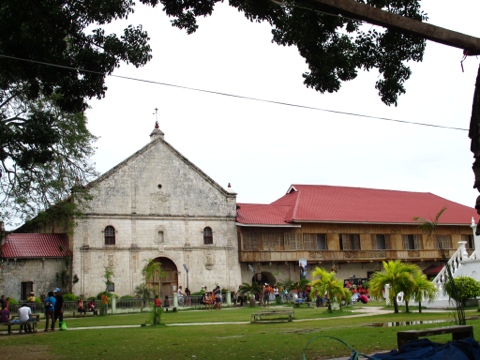
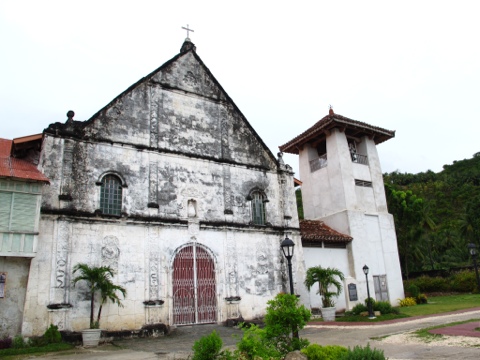
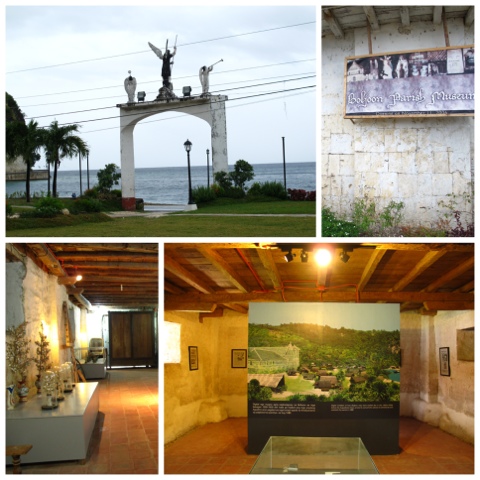
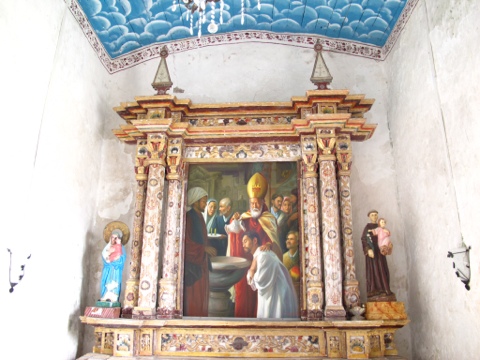
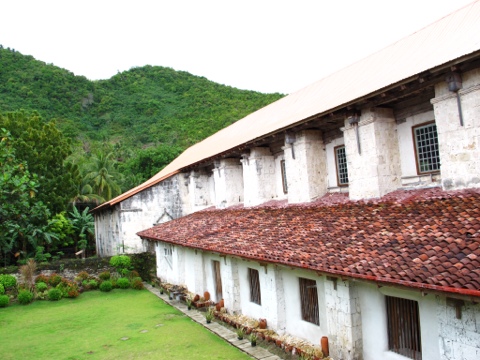
Boljoon. Our first stop heading back to the city from Oslob driving along the coast. One of the oldest towns in the Philippines. Strategically located, facing Bohol Strait some 100 kilometers south of Cebu City. The church of Nuestra SeΓ±ora Patrocinio de Maria, built in 1599 making it the oldest remaining stone church in Cebu, is very well preserved. The Museum adjoining the Church is a pleasant surprise.


20120306-104134.jpg

20120306-104719.jpg


If I have not read earlier blogs on Boljoon, I would have easily dismissed it as another sleepy town. As we passed this seaside municipality, a huge limestone and granite rock caught our attention — allegedly a cavity formed by the collapse of a mountain range. These natural wonders never fail to amaze me — truly an unplanned composition of water and wind. It is likely that Boljoon may have derived its name from “nabulho”, meaning “collapsed”.


20120306-125044.jpg

20120306-125218.jpg


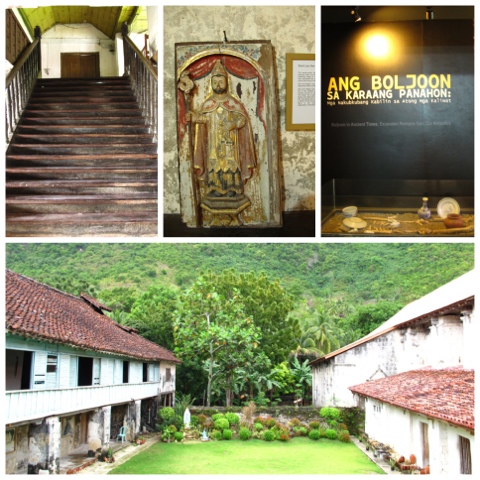
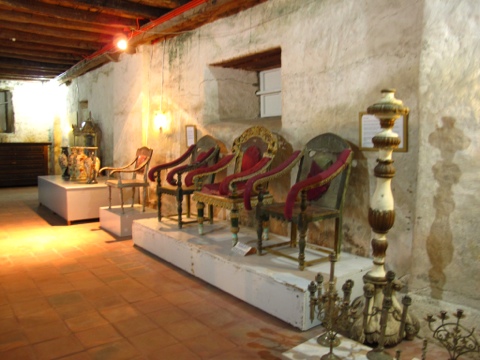
I took the stairs and was floored by the vista of the Boljoon Church courtyard framed by mountains. Wow. You don’t get this view every day. Somehow the vista transported me to those times of the frailes. A truly colonial feel. I can almost visualize the frailes doing their paseos in the courtyard or venturing out of the church premises for a grand view of the sea. More than that, the Parish Museum has much to offer – from church vestments, well-preserved parish records and manuscripts dating as far back as the 17th century, to various religious artifacts and archaeological finds. Among these archaeological finds are Japanese porcelain and other artifacts. Since the church compound also has its own burial grounds, skeletons were also unearthed. What all these excavation finds reveal can fill many pages of a book, telling of a rich heritage of an otherwise “sleepy, seaside town”. We never bothered before, but these discoveries now beg our attention. It’s all up to us to make, and cherish, that connection to our past.


20120306-132306.jpg

20120306-132432.jpg


This is not a travel blog. No travel advice here. Rather, this simply chronicles the steps we took and adventures we experienced while setting up house here in Madrid.


20120305-184234.jpg


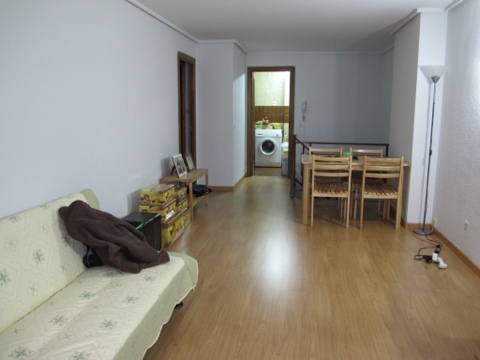
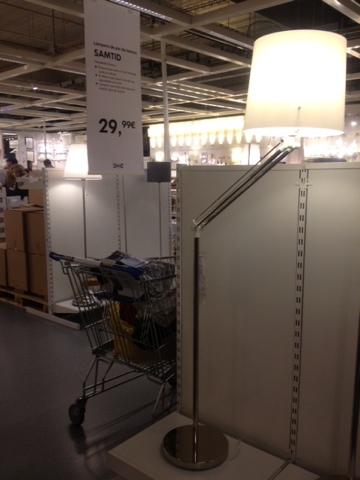
As soon as we found the flat, we spent the past few days window shopping, canvassing and actually buying the stuff we need. Easy to get overwhelmed. So, we listed the “must- haves” and “nice to have” stuff.


20120305-184550.jpg

20120305-184641.jpg


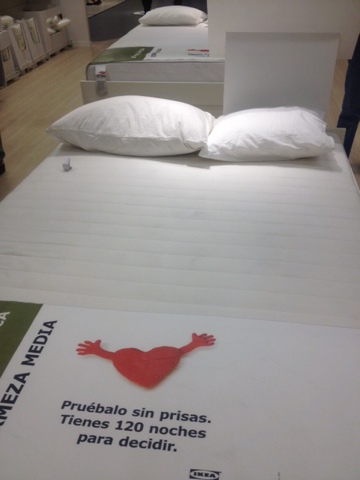
Where to sleep? We didn’t scrimp on the bed. A long day at the office demands a good bed to spend as much as 8 hours of relaxation. An extra mattress would double that, while keeping a spare for would-be guests without requiring storage space. The sofa easily converts into a bed at night. So that settles it. Nights would be a dream……


20120305-185120.jpg

20120305-185325.jpg


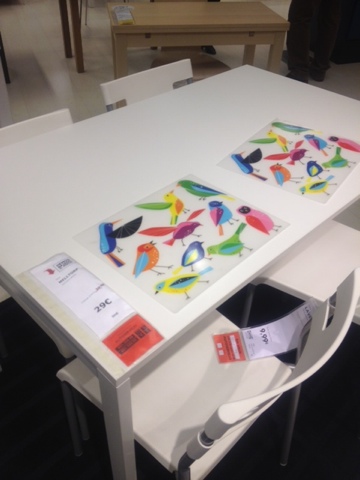
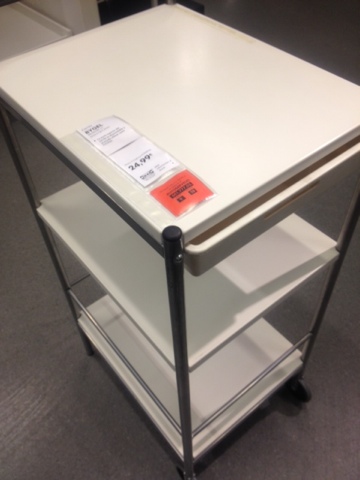
Where to eat? This white dining table and 4 chairs should be adequate. Easy to scrub clean. There is that option to string some cushions too, if one wishes. The set matches a trolley cart which can serve many purposes.


20120305-185636.jpg

20120305-185714.jpg


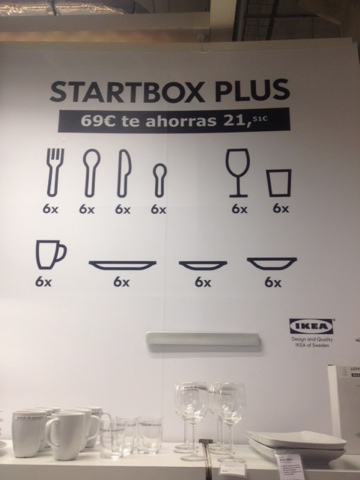
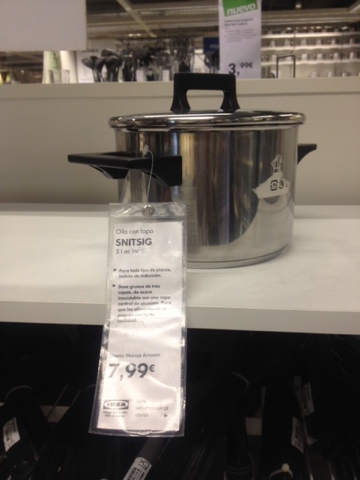
Now comes the starter set, along with the pots and pans. These should take care of the kitchen and dining areas. We can actually eat in!


20120305-185920.jpg

20120305-190001.jpg


Now, the sad part. Laundry items! If only we can forget about this. How to keep our clothes clean, dry and pressed good to wear. 😦


20120305-191620.jpg

20120305-191638.jpg

20120305-191659.jpg


Alas, we can now deal with the “minor stuff” — items from the supermarket. From food stuff to toiletries. From pots and pans to detergent and fabric softeners. From bed linen to towels to blankets. Haaaaaaay 😦


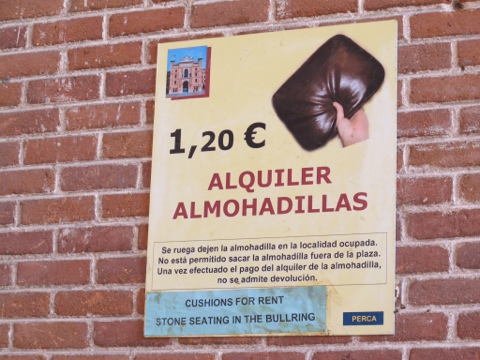
Back in 2002, I had the chance to watch a bullfight in Madrid’s Plaza de Toros. I still remember vividly the simple decisions we made which spelled a helluva difference on how much we enjoyed the bullfight. Like buying a ticket for a seat that’s “half out in the sun, half in the shade”. And renting cushions for the stone seats. Frankly, I don’t think I’d last 2 hours sitting on those stone seats under the sun! And you’d thank me for heeding this most important advice.


20120302-144247.jpg

20120302-144429.jpg


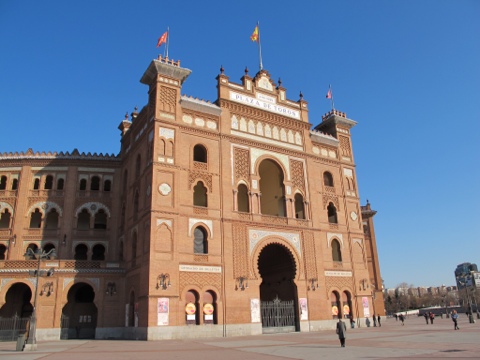
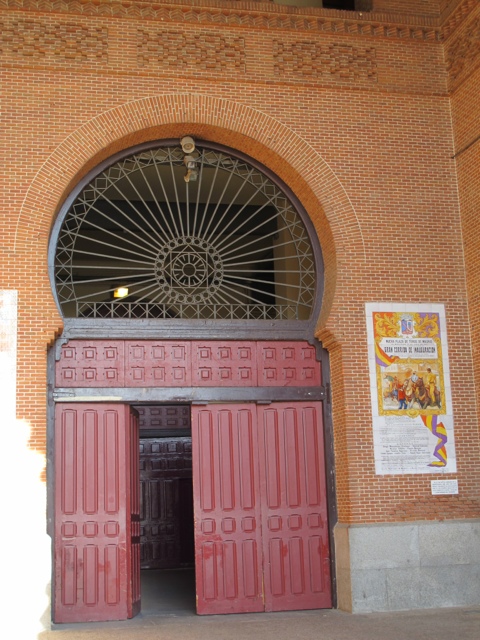
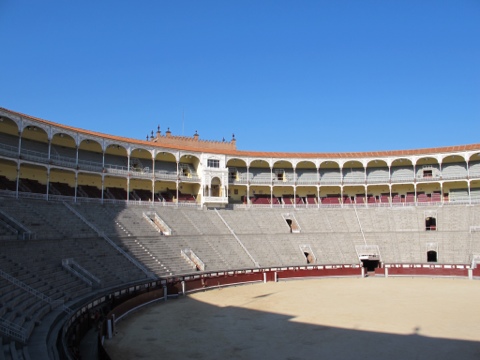
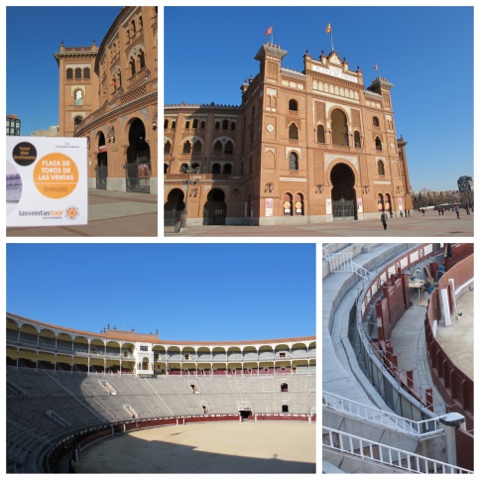
Bullfights begin in May. So maybe I’d get a chance to watch another one before I head home. But I do want to see the Plaza de Toros early on, remembering how impressed I was with the plaza cum colloseo built in neo-mudejar style in 1929 that seats as many as 22,000 spectators.


20120302-144516.jpg

20120302-144638.jpg


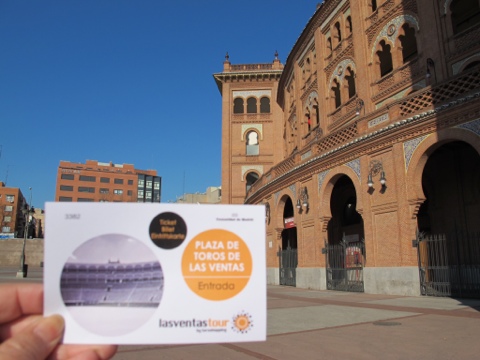
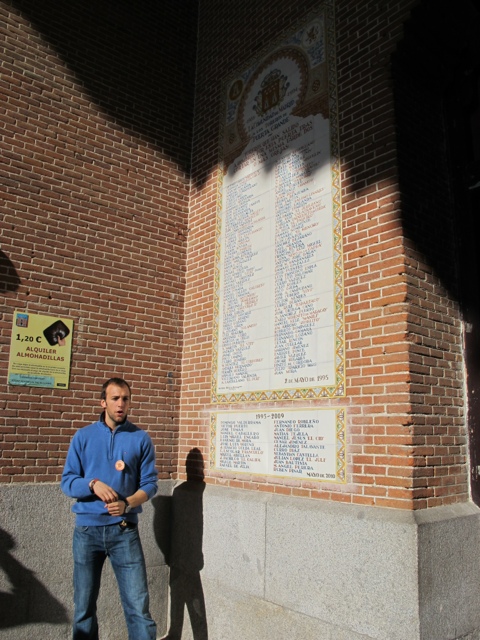
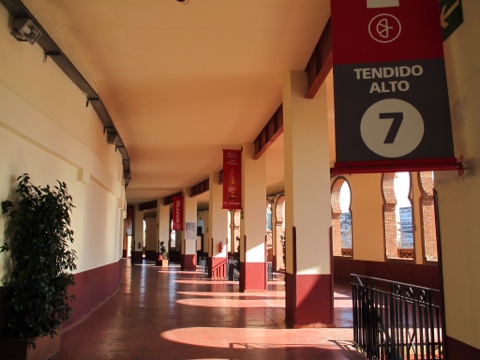
It took many Metro stops to reach Ventas. As soon as I climbed out of the Metro Station, the same, familiar expanse of the Plaza greeted me. I went to the ticket booth to inquire, possibly buy tickets for the next corrida. Instead, I ended up buying a ticket for a tour of the Bullring and the Museo Taurino inside.


20120302-144755.jpg

20120302-144845.jpg


Of course it is not the same as being there hearing all the yelling and cheering during an actual corrida. My 2002 memory was a mixed bag of anxiety, thrill, panic, and pity for the poor beast. This time around, I needed the sobriety of being shown around empty stone seats with this young good looking Spaniard rendering a history in the best English he could muster. Besides, it was quite thrilling for me to be standing right there in the middle where matadors and bulls face off!


20120302-145004.jpg

20120302-145043.jpg


The Museo Taurino did not allow photography. I did the next best thing to do. Do the museum TWICE! No worries, it is a small Museo with exhibits of busts, paintings and paraphernalia of famous matadors. I missed the only bullfighter I know, errrr I heard of. Manolete. Realizing I was at the exit area as soon as I saw the sign SALIDA, I asked if I could go back and look for dear old Manolete. The old Spanish gentleman at the gate was kind enough to let me and even shouted instructions to the lady guard inside to ensure I’m guided to Manolete’s gallery. Muy bien!


20120302-145207.jpg

20120302-145255.jpg

20120318-185148.jpg


(Last photo sourced from the Net, to give you an idea of the size of this bullring)


Today I’m ready for another Photowalk. Best in the mornings, then brunch, then siesta? It’s amazing how days somehow fall into some kind of routine.


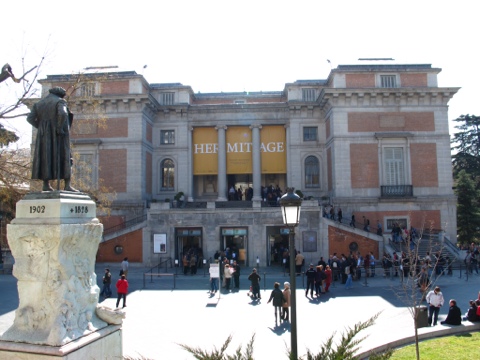
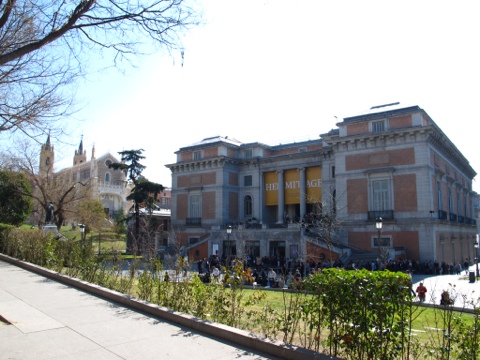
Free hours at the Museum are late afternoons or early evenings anyway. (Cheapskate!) But I can’t wait. When I saw that the Museo de Prado has some Hermitage artworks on exhibit, I immediately bought a ticket so I can have more time to leisurely view the collections. Spent all of 2 hours viewing the Prado collections and another 2 hours for a quick lunch in the Museum Cafeteria and the Hermitage exhibits.


20120301-212705.jpg


No photographs allowed inside. But I’m happy. Truly, the Prado is Madrid’s pride. The immense hoard of Spanish treasures, along with those of Flemish, Dutch, Italian masters feed the soul. My favorites are Goya’s “The Naked Maja” , Rubens “Adoration of the Magi” and “Three Graces”, El Bosco’s “The Garden of Delights” and Van der Weyden’s “Descent from the Cross”. I also liked Velasquez’ Meninas and Crucified Christ. The Hermitage Collection is an added bonus. I have been to the Hermitage in St. Petersburg back in 2004 and promptly concluded that Catherine the Great is the greatest shopper, collector and hoarder of them all. I’m no art connoisseur but I enjoyed my time at the Museum.


20120301-213013.jpg


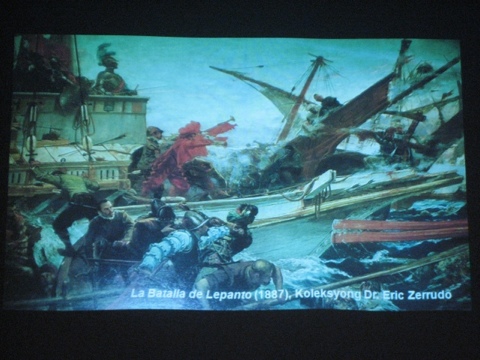
How I wish Juan Luna’s painting of “The Battle of Lepanto” is also hanging here rather than in Madrid’s Senado. I have yet to figure out how to view this masterpiece, but I’m determined not to leave Madrid without seeing it. (I actually did. Check out my blog on it) It also gives one immense pride to see Juan Luna’s “Death of Cleopatra” hanging side by side with Spanish Masters. Unfortunately, the 2nd time I visited the Prado to view this Luna painting once more, it was no longer there. When I checked with the Information Desk, I was informed it was put on storage. 😦


20120301-213140.jpg

20120301-213246.jpg


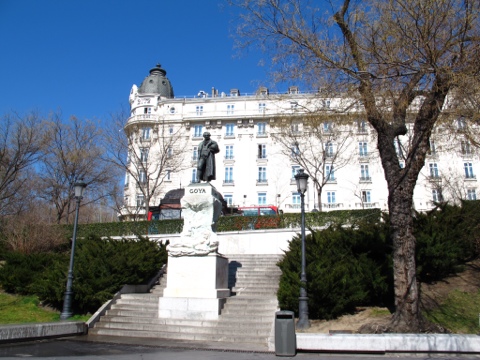
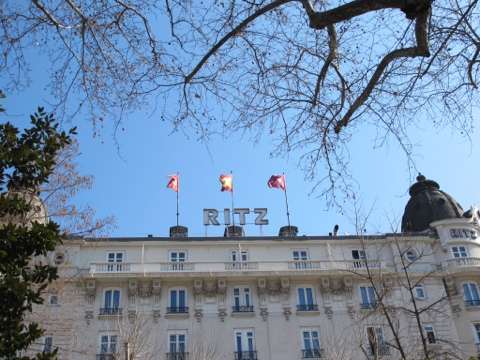
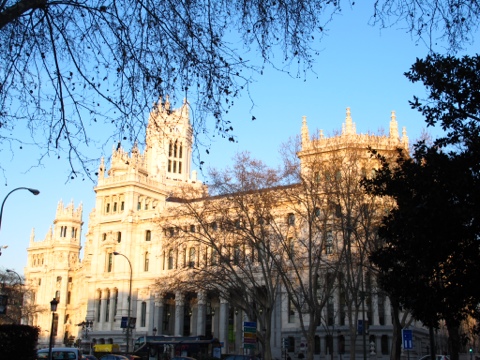
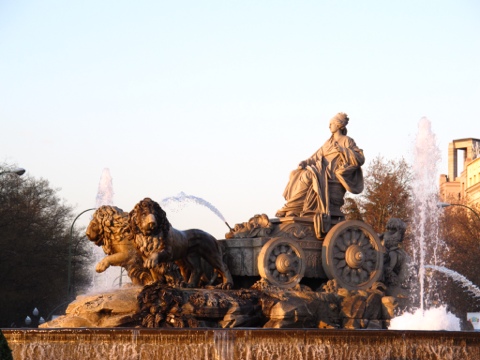
As i walked out of Prado, I turned green with envy of the guests staying in the adjacent Ritz Hotel. Such a lovely edificio! And in the best location too! One day. One day soon. I shook off the envy and instead dropped in on nearby San Jeronimo Church before rounding up the corner to view the Plaza de la Cibeles. One thing I love about Madrid is the many rotundas, gloriettas, museos, plazas, monuments, fountains and gardens they have. This city, both cosmopolitan and “old world” at the same time, makes each day a photowalk day.


20120301-213427.jpg


I was tempted to walk back to Puerta del Sol from the corner where Banco Espana stood and where I can get a glimpse of Cybele, the Greek fertility goddess, looking smug seated on a chariot pulled by 2 lions. Naaah. Not today. No rush. Today is strictly Museum Day. Prado Day. Thyssen and the rest can wait another day.


20120301-213622.jpg

20120301-213726.jpg

20120412-163214.jpg


Can’t resist including this excerpt from Rizal’s impromptu speech at a dinner in honor of Luna and Hidalgo at the Hotel Ingles:


“Luna and Hidalgo are as much Spanish glories as they are Filipino. Just as they were born in the Philippines, they could have been born in Spain, because genius has no country, genius blossoms everywhere, genius is like the light, the air, it is the heritage of all”


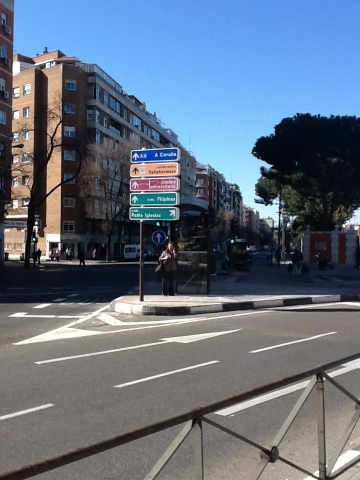
Another photowalk till my legs ached. Calling it quits for the day, I took the same path towards our hotel for the week. 🚢Along the way, I stopped by the Islas de Filipinas and Madrid’s equivalent of our Rizal Park. β›²There are similar parks for the other countries which centuries before were colonies of Spain.πŸ‡ͺπŸ‡Έ


20120301-132044.jpg

20120301-132105.jpg


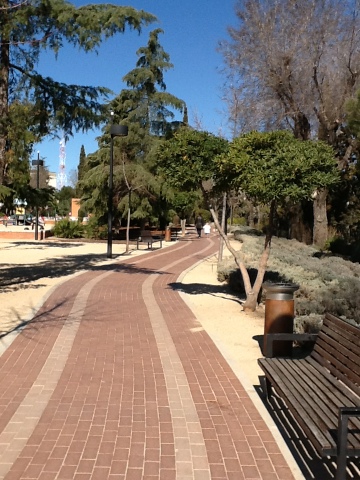
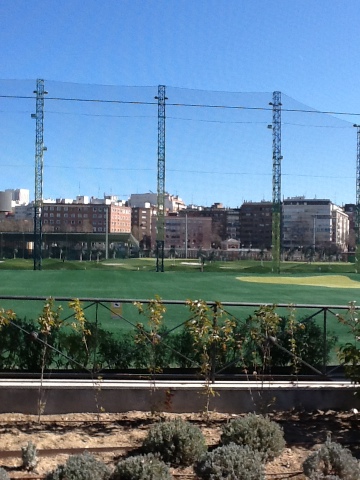
Inside the park, there is a joggers’ path πŸ‘£πŸ‘ŸπŸƒand a bike lane.🚲 Several benches were scattered inside the park where the center has been developed into a golf range.β›³ In one corner, there was even a cervezaria. 🍺The classier version of our beer garden. 🍻


20120301-132241.jpg

20120301-132302.jpg


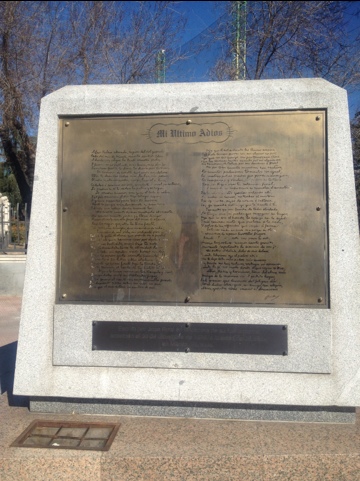
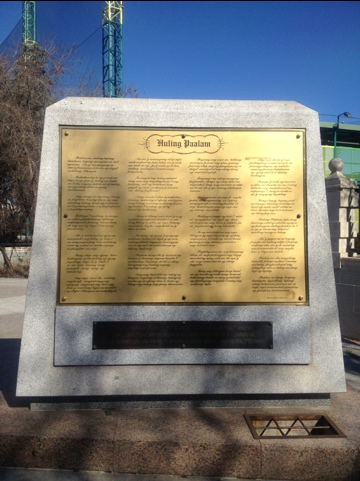
At the corner is the monument to our national hero, flanked by two tablets of Dr. Jose Rizal’s Mi Ultimo Adios and its Filipino translation.πŸ“ Imagine that! Dear Spain had this man, our national hero, wiped off the face of the earth yet built this monument in his memory.


20120301-132531.jpg

20120301-132558.jpg

20120301-132622.jpg