Latest Entries »


It was the day before my homeward journey. Weather forecast is cloudy, rainy day. So I made up my mind to stay home and start packing. Alas, the sun’s out by noontime! Packing can wait. And my itchy feet won’t.

20120507-084932.jpg

20120507-085152.jpg

While in line to enter one of the smaller museums in Madrid, I met this French mom and daughter tandem who told me about their trip to this university town. Alcala de Henares, just a half hour €3.20 trip by Cercanias train from Madrid’s Atocha Renfe Station. I love university towns! It also happens to be the birthplace of Miguel Cervantes of the Don Quixote fame. That’s it. I must go.
20120507-085341.jpg

20120507-085451.jpg

Glad I had a hearty breakfast. Lunch can wait. After all, this is Spain! When I got to Atocha Renfe Station, the train to Alcala is scheduled to leave in 5 minutes. I was fidgety as the lady before me couldn’t make up her mind. I made it with a minute to go. This is getting to be a habit! After a few stops, we reached the university town where Miguel Cervantes was born. Just a 10 minute walk from the train station to Plaza Cervantes.

20120507-085639.jpg

20120507-085810.jpg

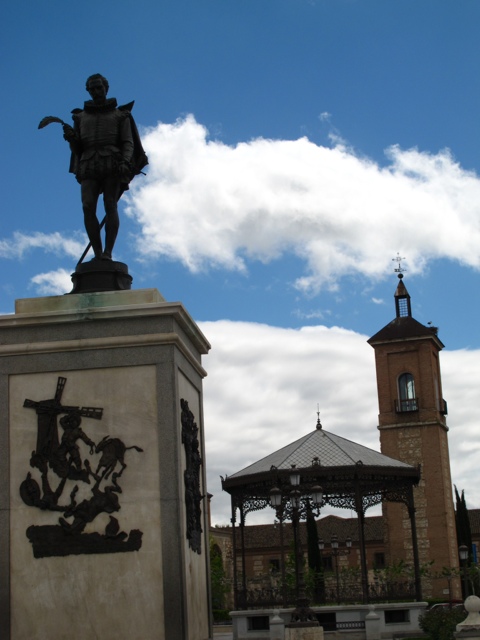
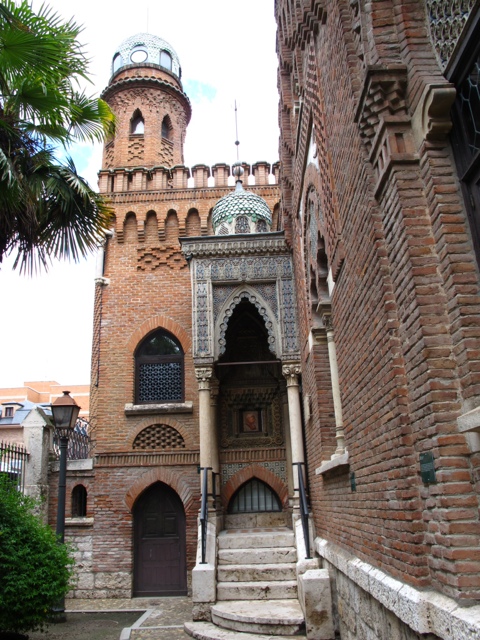
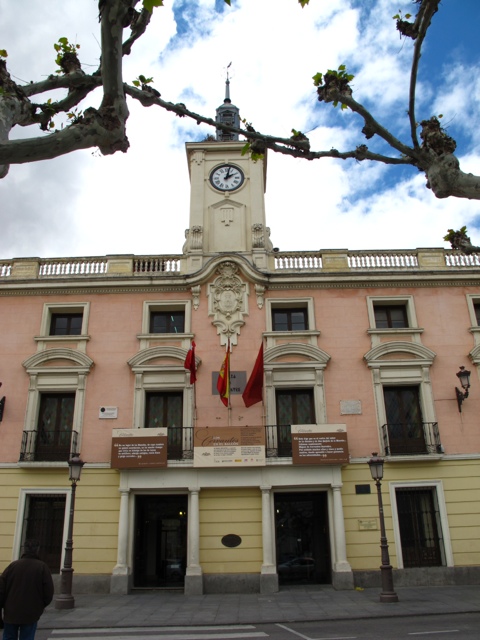
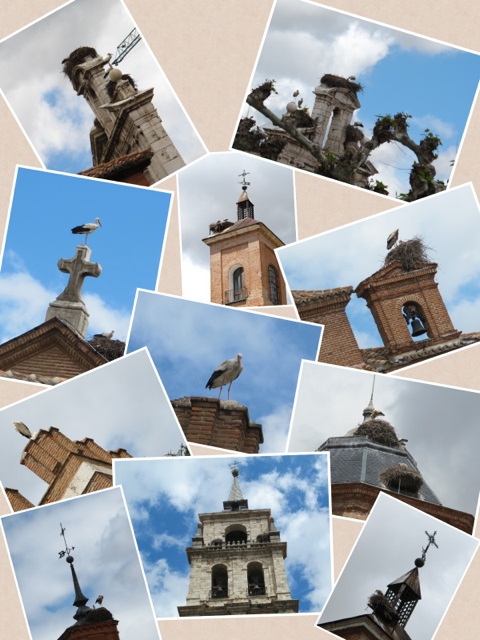
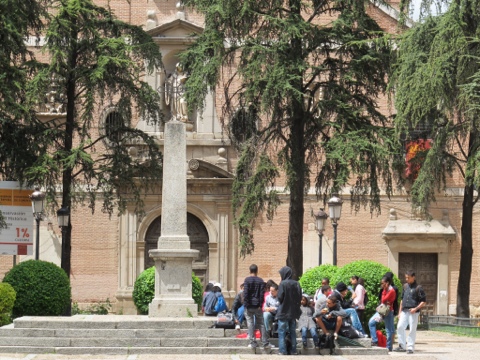
It’s a lovely plaza. In the middle is a bronze statue of the town’s favorite son and a kiosk with intricate ironworks. Around the plaza are old brick buildings and churches with spires now serving as havens for resident storks. I sat on a bench and took pleasure just watching the storks going about their business in their “residential nests” and flitting from one rooftop or spire to the next. It’s a community of storks here in Alcala de Henares!
20120507-085849.jpg

From the Plaza, I walked along Calle Mayor towards Casa Cervantes where the famous Don Quixote author lived. It’s a beautiful house, well-preserved with many interesting memorabilia. And it’s free! The bronze statues of Don Quixote and Sancho Panza seated on a bench right in front of the house was a hit with tourists.

20120507-090404.jpg

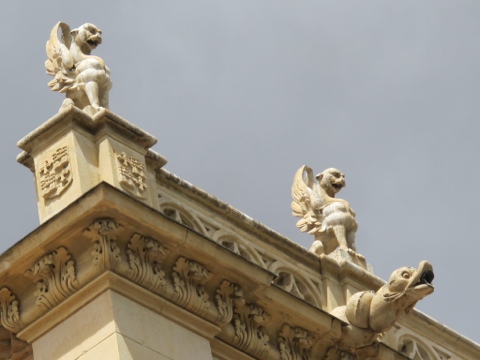
All around, it’s as if Cervantes still lives among the young population of university students. Young men and women manning tourist bureaus, souvenir shops, coffee bars, theaters. And the storks! Just look up and you’re bound to find their nests on rooftops and church spires. The Archbishop’s Palace is a favorite among these resident storks and it’s a challenge to find them in between the gargoyles!
20120507-090831.jpg

20120507-090954.jpg

It was an afternoon well-spent in Alcala de Henares. And guess what….. I took the train ticket- dispensing machine at the station with a minute to go!

20120507-091206.jpg


I only meant to walk off all those chocolate bars I ate. Perhaps even contemplate a little after visiting a convent. No camera strung around my neck. Today I’m a local enjoying Madrid’s gardens and parks. I tried talking to Siri but she just kept misunderstanding every word I said. I finally gave up.


20120502-204055.jpg


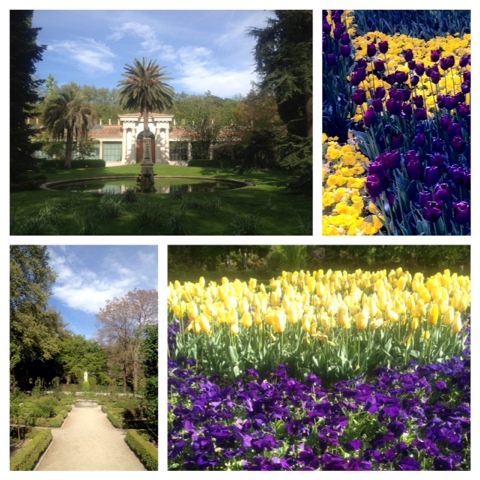
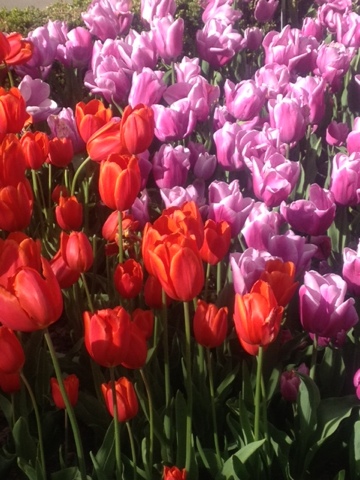
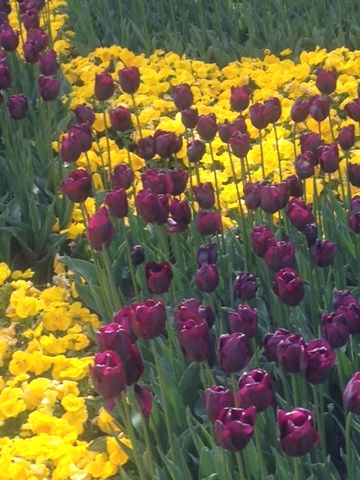
From Atocha Station, I crossed the street towards Prado. As I passed the Botanical Garden, I glimpsed tulips in lively colors and knew I couldn’t skip a visit here. Yellow, deep red, pink, even purple! From the flower gardens to the forest of trees surrounding a pond, the tranquility of spending a good hour here is just what I need. I only wish I brought my book!


20120502-205812.jpg


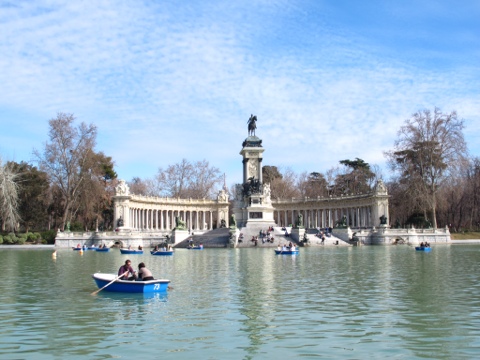
Siri, who couldn’t understand a word of what I’m saying 😄 proved handy as I snapped photos with my iPhone cam. From the Botanical Garden, I strolled towards the Iglesia de San Jeronimo. A lovely church especially at night when it is illuminated as a perfect background to the Prado Museum. Turning right as I passed the church, I crossed the street to enter Parque de Retiro. This park is more easily accessed from the Metro Line 2 (Red) Retiro Station, but if you’re guilty over some chocolate pleasures lately, it’s a better, longer stroll from this gate towards the metro station.


20120502-210138.jpg


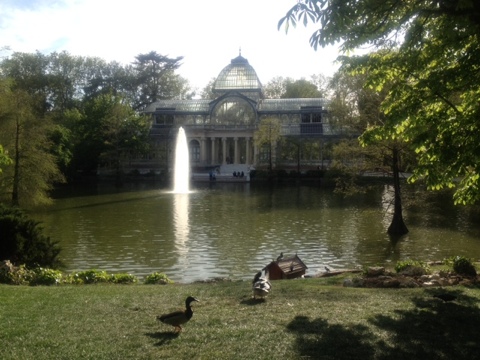
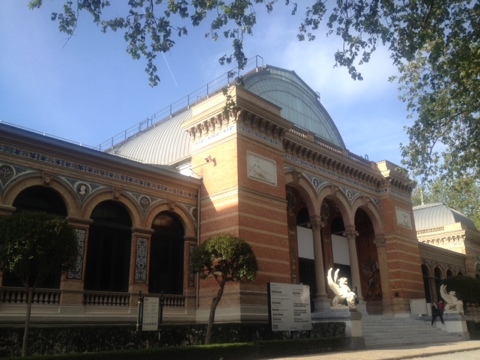
Rather than walk straight towards the boating lake, I strolled off towards Palacio Cristal. There is a smaller, charming pond here complete with geese hungry for potato chips and cheese curls. I saw some tourists feeding them such and I can’t say that’s good for these geese. With the same iPhone cam, I took a video of a street artist whose music is so apt for a lazy afternoon like now.


20120502-210345.jpg

20120502-210509.jpg


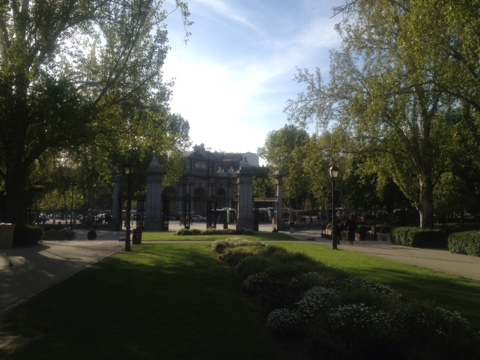
Finally, I passed the boating lake till I reached the Retiro Station for my metro ride home. But not without stopping for a snapshot of Plaza de la Independencia and Puerta de Alcala. Not the best shot as it is against the light. But who’s complaining? Siri was such a lovely companion today. Esta bien!


20120502-210600.jpg

20120502-210735.jpg


I only meant to walk off all those chocolate bars I ate. Perhaps even contemplate a little after visiting a convent. No camera strung around my neck. Today I’m a local enjoying Madrid’s gardens and parks. I tried talking to Siri but she just kept misunderstanding every word I said. I finally gave up.


20120502-204055.jpg


From Atocha Station, I crossed the street towards Prado. As I passed the Botanical Garden, I glimpsed tulips in lively colors and knew I couldn’t skip a visit here. Yellow, deep red, pink, even purple! From the flower gardens to the forest of trees surrounding a pond, the tranquility of spending a good hour here is just what I need. I only wish I brought my book!


20120502-205812.jpg


Siri, who couldn’t understand a word of what I’m saying 😄 proved handy as I snapped photos with my iPhone cam. From the Botanical Garden, I strolled towards the Iglesia de San Jeronimo. A lovely church especially at night when it is illuminated as a perfect background to the Prado Museum. Turning right as I passed the church, I crossed the street to enter Parque de Retiro. This park is more easily accessed from the Metro Line 2 (Red) Retiro Station, but if you’re guilty over some chocolate pleasures lately, it’s a better, longer stroll from this gate towards the metro station.


20120502-210138.jpg


Rather than walk straight towards the boating lake, I strolled off towards Palacio Cristal. There is a smaller, charming pond here complete with geese hungry for potato chips and cheese curls. I saw some tourists feeding them such and I can’t say that’s good for these geese. With the same iPhone cam, I took a video of a street artist whose music is so apt for a lazy afternoon like now.


20120502-210345.jpg

20120502-210509.jpg


Finally, I passed the boating lake till I reached the Retiro Station for my metro ride home. But not without stopping for a snapshot of Plaza de la Independencia and Puerta de Alcala. Not the best shot as it is against the light. But who’s complaining? Siri was such a lovely companion today. Esta bien!


20120502-210600.jpg

20120502-210735.jpg


If you can enjoy Madrid without shelling a euro, why ever NOT? This blog will hopefully guide you to enjoy Madrid without shelling a euro.


20120430-124852.jpg


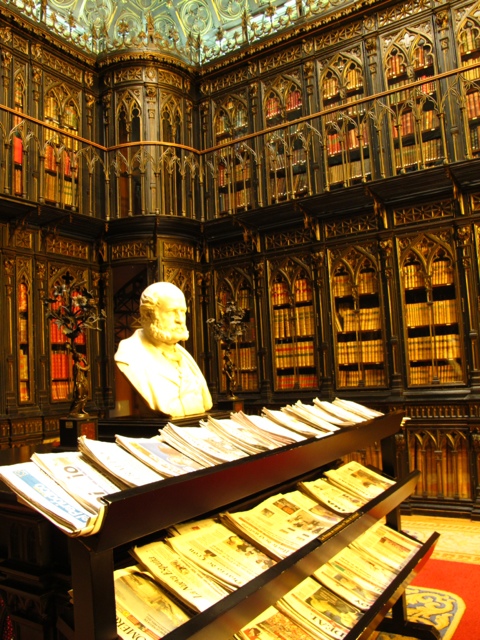
My best freebie experience in Madrid is my visit to the Senado. I sent an email requesting permission to view Juan Luna’s “Battle of Lepanto”. My blog on this adventure speaks of my Filipino pride. Juan Luna has that effect on us.


20120430-125621.jpg


From the Senado, you can switch to that most remarkable Spanish Master whose art evolved through the years. Take the Metro to Principe Pio. Off the beaten path, but your interest would peak just knowing that Goya is buried here in Ermita de San Antonio off Paseo de Florida. Headless. His frescoes on the dome is Madrid’s mini- Sistine Chapel. Do check out my blog on this Goya adventure.


20120430-130549.jpg


Need some air? Have a small picnic at the Parque de Retiro. Off the Retiro Station, have a glimpse of Plaza de la Independencia before strolling off to the Park. It is a huge park. I easily spent 2 hours walking, sitting, reading here. I wished I brought a sandwich and a thermo jug of good brew. Perhaps next time.


20120430-131244.jpg


Luna and Goya. Then a relaxing afternoon and picnic at the Retiro Park. Not bad. It doesn’t end there. More freebies in store for you. 😊By 5pm, start moving your ass to get back on the metro for a ride to Banco de España from where you can begin your paseo along Paseo del Prado. Prado Museum is free from 6 pm onwards. On the other hand —- just a few hundred meters away —- the Museo del Reina Sofia is free from 7pm till closing time at 9pm. I would suggest you don’t view the exhibits in one go. After all, it’s free so what’s the rush? Just make sure you don’t go on those days the museums are closed. But if you only have a day and want to enjoy these freebies, you’d be fine restricting yourself to the Prado. Stay till closing time to leisurely view the works of art of the Spanish Masters.


20120430-132408.jpg

20120430-132729.jpg


Have another day to spend without spending? Well, you can always go back to Museo de Reina Sofia (6-8pm) or there’s Plaza Mayor, Puerta del Sol and the Cathedral of Almudena. The last 3 make for a great photowalk. Don’t forget to visit the crypt beside the Almudena Church! And if there’s still time, go sit in any of the parks near Almudena Church and Palacio Real. Sabatini Garden and Plaza del Oriente invite you to simply relax and catch your breath while enjoying great views. If you’re lucky, you can even witness the changing of the guards. Or the changing of the royal horses. Both are great spectacles!


What’s all the hype?

20120430-164543.jpg


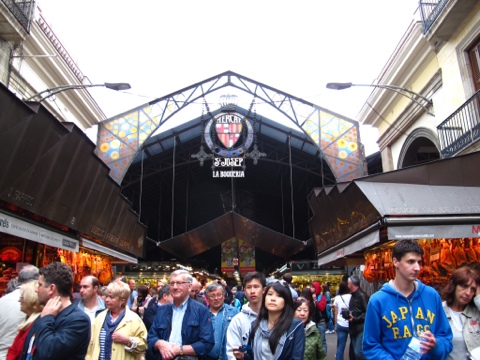
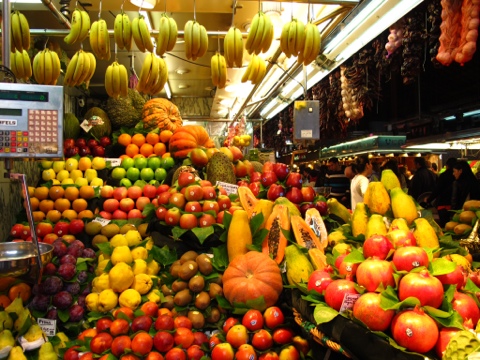
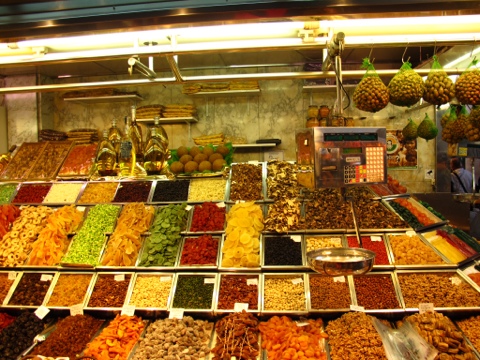
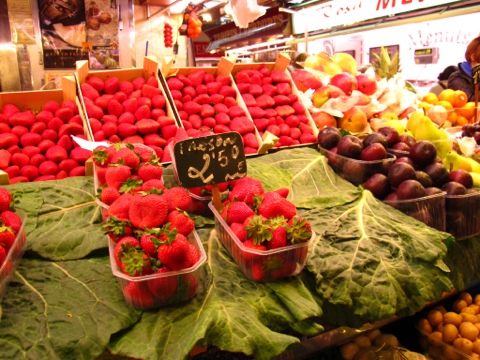
It’s really just a pedestrian path bordered by 2 narrow streets. One attraction is the market in La Boqueria. A convent used to stand on this site. Now it is a busy market bursting with camera-toting tourists snapping photos of fruits, vegetables, Jamon y Quezos and such stuff in lively colors. There are dining places within the market. Not the most comfortable, if you ask me. But we felt compelled to do this touristy thing so we can strike it off our list of must-do’s and must-experience. For the rather steep price we paid, I would rather eat someplace cleaner. 😒


20120430-164621.jpg


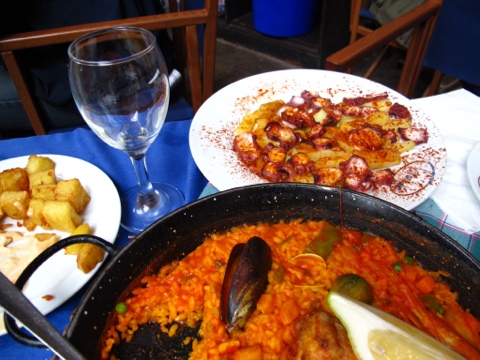
Fruits. We found many exotic fruits here, including mangoes and pineapples. My niece bought a pack for us to eat as appetizers while waiting for our paella, pulpo ala gallego, boquerones, and patatas bravas. We ate with our bags on our laps, while listening to an altercation 2 tables away. The diners there were complaining about their “cuenta” or bill. So much for “ambience” dining here where floors are as dirty as can be.


20120430-164739.jpg


Thick with tourists, we easily found tables here. Not as many tourists eat here, I guess. After all, you can have your fill ordering bocadillos while walking along Las Ramblas. This weekend was particularly crowded as even local tourists are here to add numbers. The red, blue and green “hop on, hop off” buses are almost always full. We decided to do the whole route for the red and blue tourist buses rather than hopping off every so often. Besides, not too many sites invited our attention outside of the Gaudi stuff. For sure though, those buses unloaded many tourists here in Las Ramblas. And many stayed till nightfall. The noise in the nearby hotels must be unbearable.


20120430-164908.jpg

20120430-164956.jpg


Just like back in Madrid, there were policemen spread around the area. This is a haven for pickpockets and scam artists after all. Am not surprised. Every 3-4 persons I met along the path walking from Catalunya all the way to Licieu needed no intro as tourists given their cameras, belt bags and Barcelona maps. My advice? Be sure you have decided where to go before stepping out of your hotel. Commit the directions on the map to memory. Or take a photo with your phone cam. Checking your cellphone invites less attention than spreading a map in the middle of a street. Remember that they don’t just pick pockets here. They can snatch your bags too. I should know. A friend of mine lost a bag containing cash, passport and travel documents here some 10 years ago. Hard lesson to learn.


20120430-165107.jpg

20120430-165137.jpg


Gaudi. When he graduated from Architecture School, the school director said he’s either a fool or a genius. We all know now how he turned out.


20120430-163149.jpg


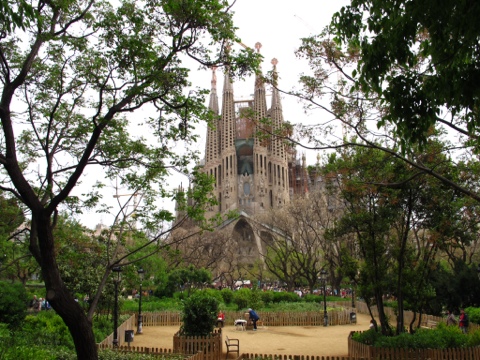
Sagrada Familia is in everyone’s list when visiting Barcelona. Gaudi’s spirituality, religiosity and love for the environment manifest in all his works. His understanding of nature and how he integrated it into his art or his architecture is simply beyond imagination. Unfortunately, Gaudi never taught nor left any written documents of his work.


20120430-163252.jpg


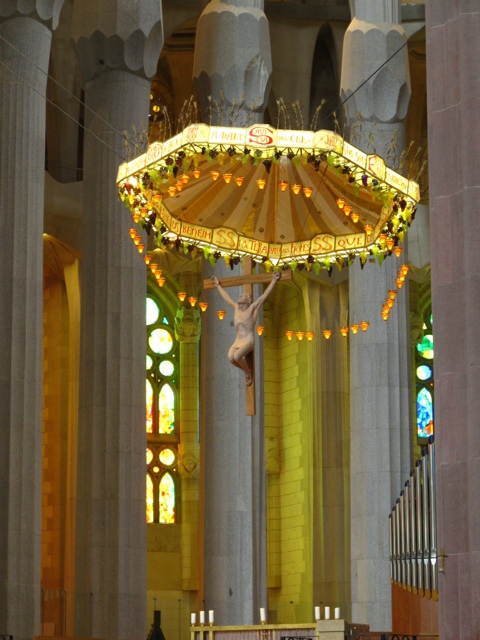
Inside the Sagrada Familia, one senses Gaudi’s religiosity most profoundly. While his work remains unfinished to this day, this genius spent over 40 years on the Sagrada Familia until his tragic death in 1926. From a well-groomed “man-about-town” given to gourmet tastes, Gaudi’s last few years were marked by frugality. When he was accidentally hit by a tram while crossing a street and lost consciousness, he was mistaken for a beggar and was not given immediate medical attention. Such a sad ending for a man whose works now give Barcelona unparalleled pride.


20120430-163408.jpg


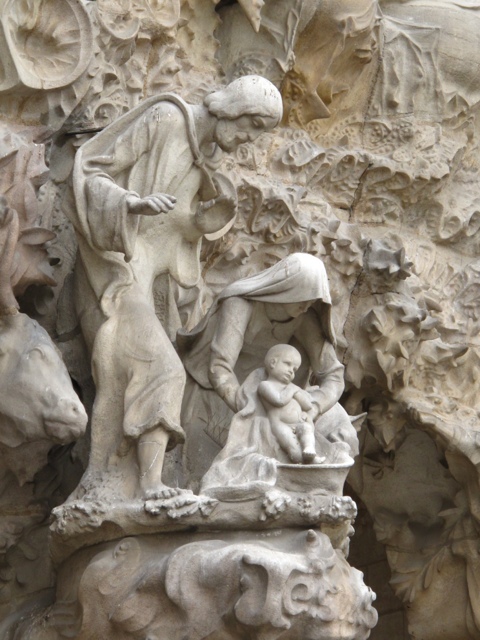
And the details. All of 18 towers representing the 12 apostles, 4 evangelists, Virgin Mary and Jesus Christ. The Nativity facade and all its statues. Inspired by the organic shapes of nature, the interiors integrated Gaudi’s architecture with other crafts where he gained skills like ceramics and stained glass. This modernist style also finds expression in Casa Battló, La Pedrera and Park Guell, to name a few.


20120430-163541.jpg

20120430-163717.jpg


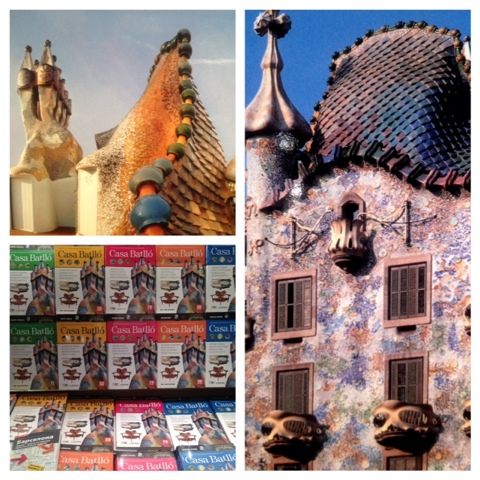
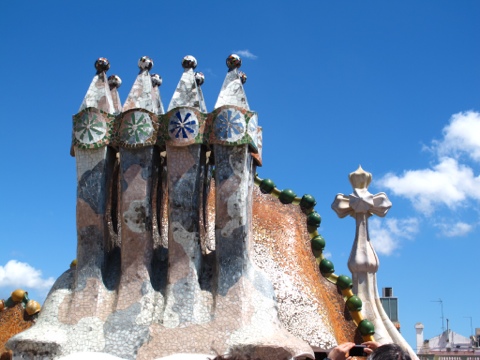
Gaudi’s style is so distinct, so seemingly unrestricted to a point of flamboyance. You don’t need a tour guide to spot a Gaudi when walking the streets of Barcelona. Casa Batlló is a prime example of Gaudi’s art. The “wavy” structures, ceramic-filled towers, stained glass windows framed by intricately-designed ironworks.. For sure, Gaudi raised a lot of eyebrows during his time!


20120430-164024.jpg

20120430-164314.jpg


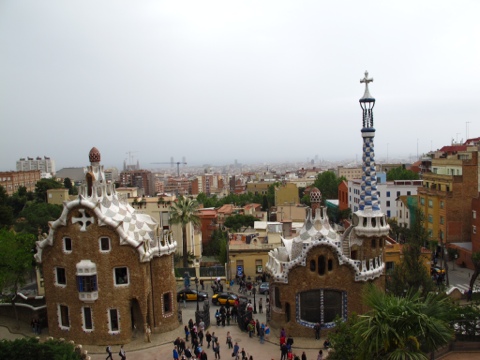
And then there’s Park Güell. Like a fantasy land with all those vibrant colors! My only regret when I visited the park was that I didn’t go much earlier. The crowd was so thick it diminishes one’s delight over this lovely park. Nearly all benches were taken. The grand staircase is so thick with tourists snapping photos of the dragon which has since become a Barcelona landmark.


20120430-164450.jpg


There’s so much more of Gaudi in Barcelona. But be warned. There are long lines. I strongly advise you go early to the Park one morning. Line up early for either Casa Battlló or La Pedrera the next morn. You can fill up the remainder of each day with “non-Gaudi” activities such as Las Ramblas, La Boqueria, Port Véll, Fundacio Joan Miro, Olympic Site, etc.


I kept putting it off. I have this nagging thought that Reina Sofia pales in comparison to Thyssen and Prado. That there isn’t much beyond Guernica. That in all likelihood, I probably wouldn’t even enjoy Guernica as I’m not crazy about abstracts, cubism nor surrealism.


20120430-144747.jpg


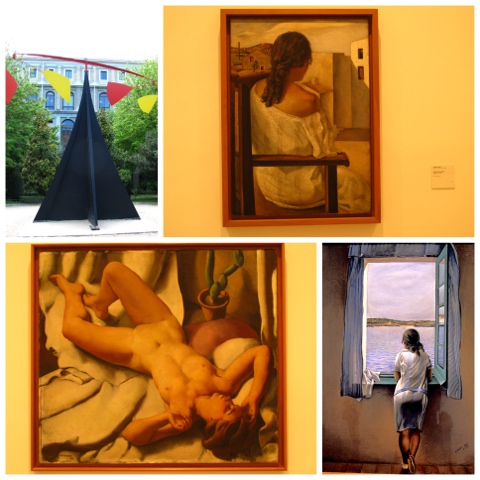
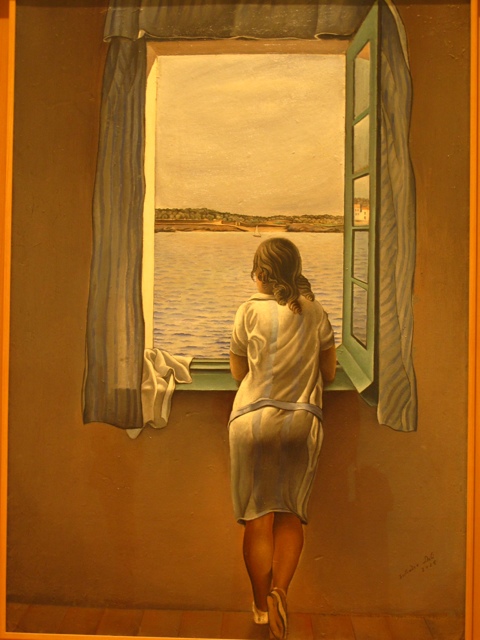
A visit drew an unexpected surprise. Salvador Dali. His “muchachas” paintings soon became my and my niece’s favorites. Somehow, I enjoy the mystery of seeing “backs”, thinking what the sitter is thinking…….. This comes as a big surprise to amateurish me. I mean, dummy that I am when it comes to art, I honestly thought Dali only delved in surrealism. Not my cup of tea. Seeing the muchachas paintings struck a chord in me. I’m sure my niece felt the same way too.


20120430-144322.jpg


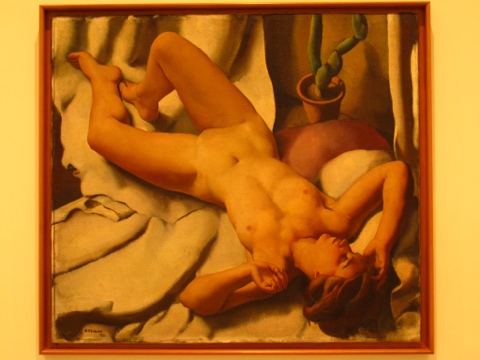
How about you? What do you think are they thinking? Were the sitters pretty? Were the muchachas young, middle-aged or old? How about this painting of another remarkable artist — Balbuena’s Desnudo — in the same hall as Dali’s two muchachas.


20120430-145654.jpg


I spent so much more time in this hall. Longer than the time I spent viewing the Guernica where there is a thick crowd. Somehow, I feel many just visited to see the Guernica. Well…. It is really all a matter of preference. As for me, I have made up my mind. These 3 paintings rank high in my list.


20120430-150700.jpg

20120430-150820.jpg


Joaquin Rodrigo. 1939. Concierto de ARANJUEZ. Classical guitar. His best known work. What could have inspired him to compose this most moving, soothing masterpiece?


20120426-215708.jpg


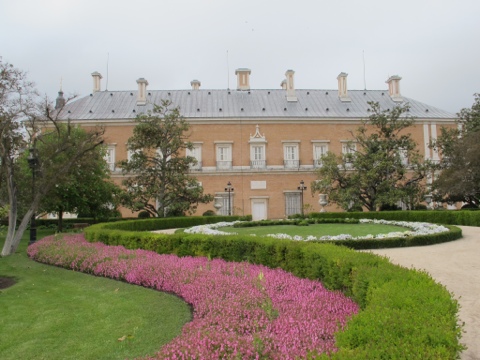
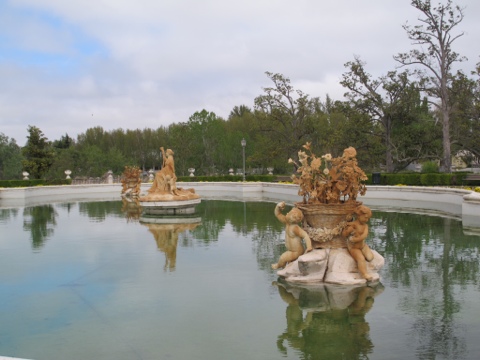
Rodrigo was blind nearly all his life. He played the piano, never the guitar. Yet he composed this piece for guitar as a solo instrument in an orchestra. He drew inspiration from the gardens of Palacio Real in ARANJUEZ. As intended, his composition captured the “rhythm” and “quiet melody” of the royal estate from the flower gardens to the ponds to the forest and hunting grounds.


20120426-221217.jpg

20120426-221305.jpg


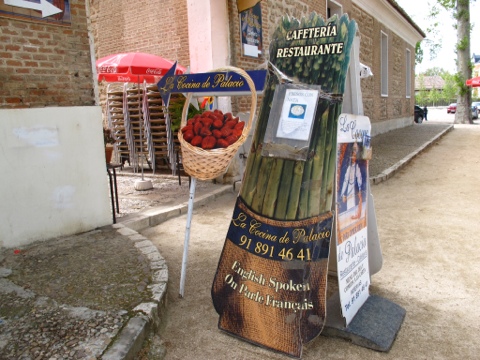
Don’t even dare walk the entire length of the estate. The royal gardens around the Palacio Real is fine. Meander through the tulip gardens, the magnolias and the plane trees lining the river walk. But hop on the “Chiquitren” to visit the rest of the gardens cum hunting grounds. It is said that members of the royal family had such diverse interests — hunting, boating, music, etc — and it looks like they each had their fill here. The tiny train plays the concierto while weaving around the estate. Nice.


20120427-142822.jpg


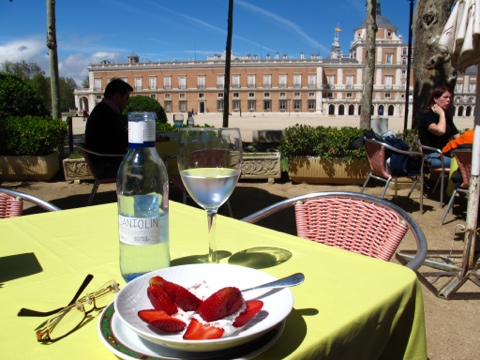
When you are done, head back to the Palacio Real and find a seat under the sun. Order the town’s famous Freson con Nata. That’s strawberry with cream for us. Don’t make the same mistake I did. Paid €8 just for the famous dessert (which I can easily whip up) and a bottle of agua PLUS a view of the entire length of the Palace. ☺


20120427-143111.jpg

20120427-143442.jpg


I bet you’d be humming “Concierto de Aranjuez” upon leaving town. . As you do, take one last look at the Royal Palace, then hop back on that Strawberry Train.


20120427-143535.jpg


In those days, monarchy may have spelled POWER…….and EXTRAVAGANCE. But there’s a breed who chose to live in convents and commit themselves to a life of prayer and devotion.


20120425-184314.jpg


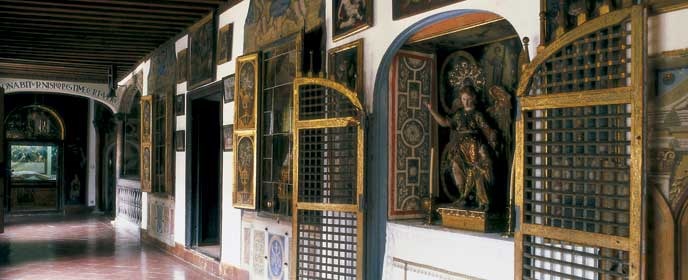
One such monarch is Juana of Austria, sister of King Philip II. She founded the Monasterio de las Descalzas Reales in 1559. The Franciscan nuns in this functioning convent are better known as the “barefoot royals” because of their aristocratic backgrounds. The convent also houses the tomb of its “fundador” Juana of Austria, one of few royals not buried in the royal resting place in El Escorial.


(I only managed to snap the exterior shot. The rest of the photos were all sourced from the Net)


20120425-185043.jpg

20120425-185100.jpg


The guided tour is only for one hour, but certainly worth the €7 admission. (Prado Museum is €12, free after 6pm) I could have waited for a later tour in English but couldn’t wait as I was eager to view the works of arts donated by the nuns’ wealthy families. And so it was a guided tour in Spanish for me. Having read up on the Monasterio, it was “muy facil” to follow the guide’s spiel.


20120425-185204.jpg


By this time, I am beginning to appreciate smaller museos. Prado and Thyssen are fine, worth every euro and time spent. By that, I mean lots of time. It’s hard to digest all that art in one go. In the case of smaller museums, the “collections” maybe fewer but definitely NOT less significant. In this Convento, I have this feeling that the wealthy families of the barefoot royals donated what’s “BEST” from their own collections and treasures. I can only imagine them saying goodbye to a daughter or a sister and parting with a treasured work of art to keep the novice nun “company” and provide a source of joy.


20120425-185304.jpg


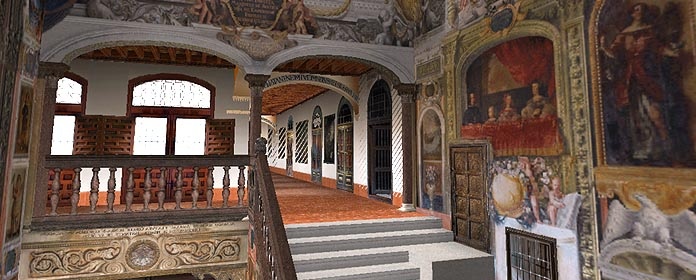
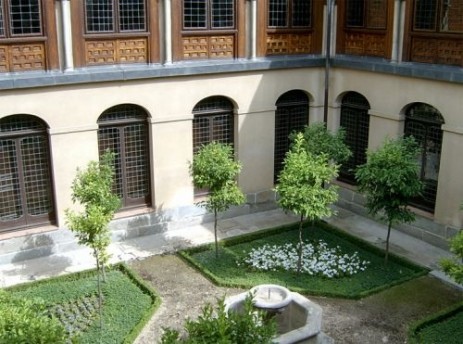
The Convent is bigger than I thought. We did the rounds from hall to hall, chapel to chapel, all around a lovely courtyard. But nothing beats the moment one enters the convent. The grand staircase is so stunning that it is agonizing to leave the area to view the rest of the monastery. This area is part of the original palace owned by the Royal Treasurer Alonso Gutierez before it was sold to Juana in 1555. The frescoes and trompe-l’oeil on the balustrades, arches and walls will leave you mesmerized. Not to be missed is the “royal balcony” fresco as one climbs the staircase. Here you’d find King Philip IV with Mariana of Austria, the Infanta Margarita Teresa and the Prince of Asturias, Felipe Prospero who died at age 4.


20120425-185402.jpg


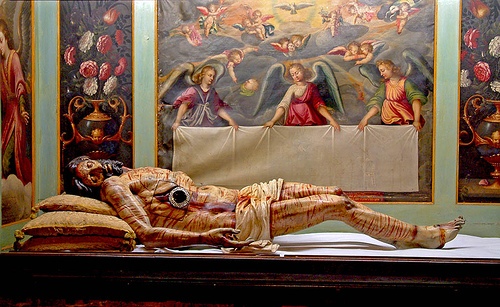
The chapels, cloisters, choir area, halls and corridors are all crammed with paintings, tiles, frescoes, sculptures, woodcarvings and other pieces of art. And the tapestries! Surely they’re there not just to “warm” the convent during winter. Speaking of which, I’ve got to say that there’s a certain degree of “warmth” in each piece of art in here. Perhaps because they were “favorite” works of art of some of the nuns — looked at and over and over as they evoke fond memories of their families? Perhaps they lovingly view, even touch these art pieces whenever they missed their families? Who knows? But unlike some “cold” works of art on display in some museos, I enjoyed this short but very comprehensive tour of the Convent the most. And in Spanish at that! Don’t fail to visit this convent when in Madrid. It is just a short walk from Puerta del Sol, right behind El Corte Ingles.


20120425-185502.jpg


Done the Prado Museum thrice. Each time, I was drawn more to the Spanish Masters. With much time to spend in Madrid, I was able to schedule my Prado visits in such a way that I devote the next 2 hours just viewing 1 or 2 artists.


20120425-181216.jpg

20120425-181332.jpg


Goya is among Spain’s greatest, if not THE. His statue stands on a prominent site on the Museum square, and rightly so. I lost count of how many galleries or halls inside the Museo where his paintings hang. But I do remember that Goya requires more time and attention. Amazing how his works evolved through the years. The religious paintings, the nude paintings, the more surreal — shall i say “fierce”? — paintings. More amazing is his life story. Imagine him as a man about town, painting the Duchess of Alba in all her nakedness, witnessing the Mayo Dos failed insurrection and painting it from memory, going deaf as he began on his “Pinturas Negras”, dying in Bordeaux, France and buried in Madrid without his head. That last piece of information about his headless body so intrigued me that I ventured to search for his resting place.


20120425-181456.jpg

20120425-181806.jpg


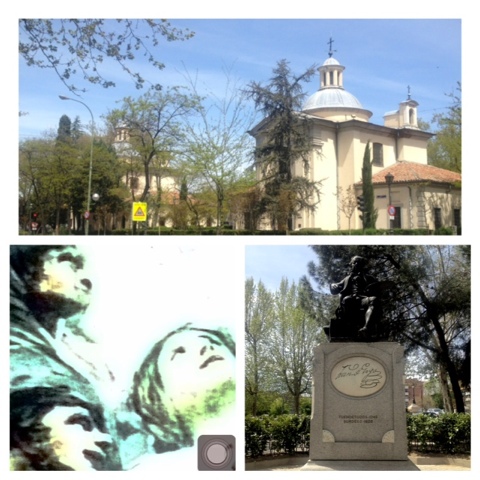
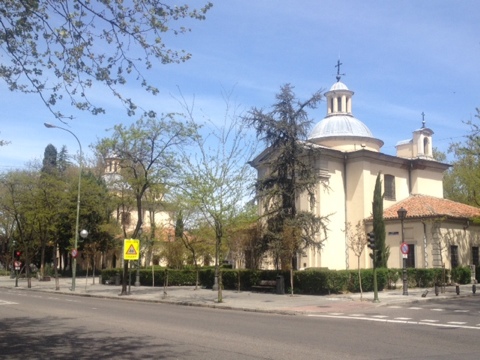
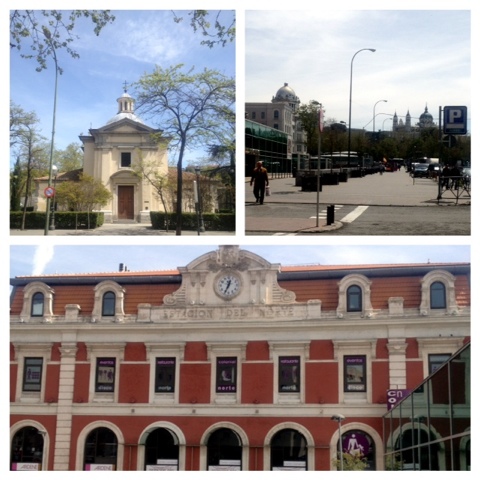
The metro stop says Principe Pio. Walking right from the station along Paseo de Florida for some 10 minutes, the statue of Goya proudly stands in the glorietta fronting the Ermita de San Antonio de la Florida. I thought I was seeing double when I reached the place, only to learn that a sister church with twin features was built right next to the original which has since been turned into a Museum. The mortal remains of Goya lie in the original 18th century Neo-classical church, while worship was transferred to the adjacent sister church. Both churches are tiny, with floors shaped like a Greek cross.


20120425-182029.jpg

20120425-182600.jpg


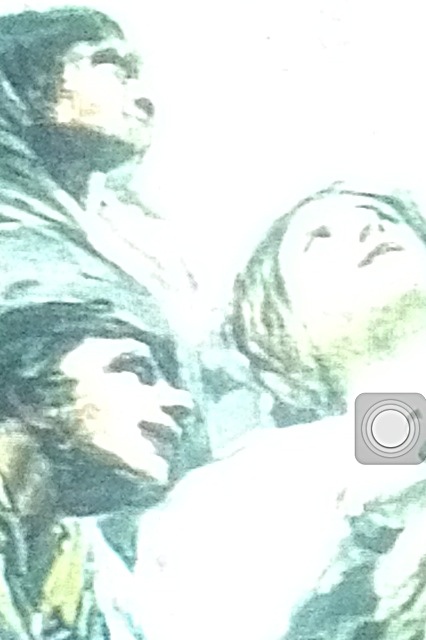
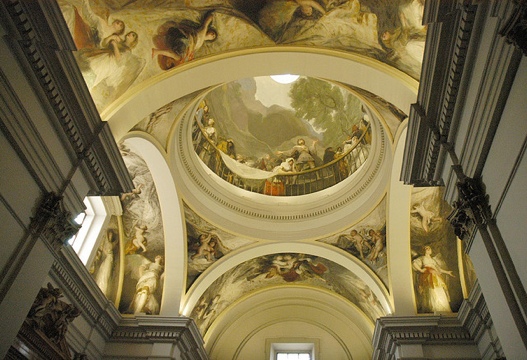
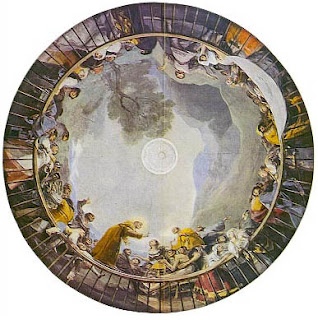
As expected, photography was not allowed inside the tiny museum-church. A pity. I would have loved to snap photos of Goya’s frescoes. The photo above and those below are some photos grabbed from the Internet, just to give you an idea of Goya’s genius. Surely, the Hermitage of Saint Anthony is so fortunate to house Goya’s masterpiece. There are mirrors — spotted at least 4— so one can view the ceiling, the dome without craning one’s neck. Still, I couldn’t help looking up to admire this intriguing man’s work. For a while there, I thought there was a banister or some kind of railing around the dome to allow one to go up and view the frescoes up close. I even assumed Goya painted from there while his assistant busily stirred his pigments. Was I dead wrong.


20120425-182750.jpg

20120425-182825.jpg


The cherubs painted on the ceiling looked like they were lifting the drapes for the audience to view the obra maestro. A child’s leg “hanging” from the banister made me realize that the feigned banister is part of the painting showing villagers witnessing a miracle of San Antonio. The artist even painted himself with a black cloak in this dome fresco! Each character in the painting has a different facial expression — pain, adoration, awe, joy, gratitude, festive, surprise, glee, fright, even indifference. Very very expressive figures and gestures caught in canvas. I like how Goya’s paintings seem to have blurred edges (this layman’s description), as if the artist smudged over the edges without losing the details. The restoration work done here and completed in 2005 is definitely commendable.


20120425-182935.jpg


Yet this site, this tomb of this magnificent artist is often missed. As I have. Been here 2 months until I ventured off the beaten path. But why headless, you ask? Goya died in Bordeaux in 1828. His head was stolen in France before the body was transported to Spain to be buried under  a very modest gravestone here. In death, as in life, Goya’s story truly invites one to either stand in awe or sit in contemplation. Now….. Let’s have that last look on Goya’s “Naked Maja”. Did the Duchess of Alba really sit for this painting? Or did she “lie” for this painting? 😊😊😊


20120425-183646.jpg