Latest Entries »


How often do we entertain foreign guests and balikbayan (returning Filipinos) family and friends?


I’ve done quite a few — from long weekend trips in mountain villages up North or to some beach destinations down South to whole day together-ness via roadtrips north or south of Manila. And for the briefest encounters……. There’s THE DRILL. A glimpse into over 300 years under Spanish rule (Fort Santiago y Intramuros) + the heart and core of Chinatown (a.k.a. Binondo Walk cum Foodtrip) + end-of-day relaxation along Manila Bay interspersed with brief food tripping episodes.


20130418-121619.jpg

Rizal Park

20130418-121744.jpg

Fort Santiago in Intramuros, Manila


By itself, the Rizal Park-Intramuros-National Museum can take a whole day already. But who wants to do long walks at 39 Celsius in humid April? I say the Museum can wait and the Park can easily be a “drive-thru”. We were first driven to Fort Santiago (entrance: 75 pesos, 50 pesos for students) passing Rizal Park (Dr. Rizal is the national hero), and then walked from Fort Santiago towards San Agustin Church, the oldest surviving church in this predominantly Catholic country. If there’s time, you can visit the Museum housed in the Convent adjoining the Church or visit Casa Manila (showcasing Filipino-Spanish lifestyle) just off the church corner. Or you can choose to sit on a horse-drawn carriage (the cheaper calesa or the pricey caruaje) sightseeing for the next hour or two. The choices depend on how much time you have. In some instances, I totally skipped Fort Santiago and instead visited Baluarte de San Diego. More trees there. Ergo, more shade!


20130418-132828.jpg

The National Art Gallery which used to be Legislative Building

20130418-133034.jpg

Baluarte de San Diego in Intramuros, Manila


From Intramuros, you can either take a cab or a jeepney or drive past the Museum and City Hall across Jones Bridge overlooking the lovely Postal Office to reach Binondo. Hungry or not, a Binondo Walk is never complete without dropping in on those “hole in the wall” spots. My personal favorites are Po Heng Lumpia House and Dong Bei Dumpling House. Need I tell you what they serve?


20130418-134252.jpg

Chinese Lumpia (Vegetable Roll) from the best : Po Heng Lumpia House in Binondo, Manila.

20130418-134323.jpg

Dumplings or Sio-Mai. Freshly Made!

20130418-214156.jpg

Kutchay Siomai or Dumplings with Chives Fillings. Only from that hole-in-the-wall, Dong Bei Dumpling House in Binondo, Manila.


Finally done with Hispanic Philippines (Intramuros) and Chinoy Philippines (Binondo Chinatown)? Maybe it’s time for a cup of Cappuccino in Harbour Square within the reclaimed area housing the Cultural Center of the Philippines, Folk Arts Theatre and Philippine International Convention Center. It’s your modern Philippines complete with junk food outlets lining the Bay. Grab a bite here, if you like. Many choices across a wide price range. This is also a superb place to unwind or chill while waiting for the famous Manila Bay Sunset.


20130418-135913.jpg

Manila Bay, viewed from Harbour Square in the CCP Complex near Cultural Center of the Philippines.

20130418-140005.jpg

Roxas Boulevard near Manila Bay. At Twilight.


Juan Luna’s obra maestra, the SPOLIARIUM , greets you as soon as you step into the Hall of Masters in the National Art Gallery. I have visited it quite a few times, appreciating how this painting brought and still bring so much pride to us Filipinos.

Browsing through my favorite Facebook pages, I was struck to find this photo of how the obra maestra looked in 1958. The National Museum offers this information and I do not wish to add nor subtract from it:


“Spoliarium (1958): Photo shows the Juan Luna masterpiece “Spoliarium” on display at the lobby of the Department of Foreign Affairs building on Padre Faura St. (now the Department of Justice building) where it was mounted on a wooden frame after it was shipped to the Philippines as a gift by the Franco Government in Spain that year. Unfortunately, because of its size, the painting was sliced into three pieces before it was crated and brought to the country. (The slices in the painting can be seen here) The Spoliarium was later restored by artist Antonio Dumlao before it was unveiled again in 1962. The painting remained at the DFA before it was transferred to the National Museum where it can be seen today.


The Spoliarium was entry by Luna to the Exposición Nacional de Bellas Artes in 1884 in Madrid, where it garnered the first gold medal (out of three). In 1886, it was sold to the Diputación Provincial de Barcelona for 20,000 pesetas. It measures 4.22 meters x 7.675 meters, and considered as the largest painting in the Philippines. (Thank you, Vic Torres, for the photo and the annotation.)”


20130407-090705.jpg

Sourced from the Net

(Source: National Art Gallery)


It almost breaks your heart to see even just a photo of a visibly “split up” SPOLIARIUM. Thanks to Antonio Dumlao, we are now privileged to view this obra maestra in all its glory. But pray tell, who is ANTONIO DUMLAO?


20130407-090900.jpg

Spoliarium at the Hall of Masters. National Art Gallery. Manila


More Internet surfing and more heartbreaks which can only be appeased by my sharing these with you.


First off, Antonio Dumlao was an accomplished artist. He was commissioned to give a “facelift” to the Juan Luna obra maestra in 1960 despite the fact that he was never trained in restoration work. In fact, he never had any formal education in the arts. He quit the same year he enrolled to study fine arts in the University of the Philippines. With or without formal education, Dumlao was a gifted artist. He was a muralist, a portrait canvas artist, a sculptor and a stained glass innovator. For many years, he served as Art Director of San Miguel Corporation and developed a friendship with his top art patron, Don Andres Soriano, through whom he met Don Manuel Elizalde, another art patron.


20130407-111309.jpg

Antonio Dumlao. (Photo sourced from the Net)

(Photo sourced from the Net)


DUMLAO was friends with Fernando Amorsolo, a contemporary, who has great admiration and respect for his work. Ironically, not much is known about DUMLAO. Nor about his deep friendship with his childhood friend from Intramuros days, Vicente Manansala. When Dumlao had a stroke in 1979, his daughter recounted how “Mang Enteng” flew to his father’s bedside. Genuine friends, indeed. Two years after that visit, Manansala had a heart attack and died before Dumlao, who died in 1983.


20130407-113012.jpg

Ina ng Lahi. Photo sourced from the Net.

(Sourced from the Net: “Ina Ng Lahi”. UP Vargas Museum. Filipiniana Collection.)


20130407-113119.jpg

Not just a painter or muralist. He works on stained glass too!
Photo Sourced from the Net.

(Sourced from the Net: “Sarimanok” Stained Glass. Far eastern University)


Imagine how this gifted muralist restored Luna’s Spoliarium! Makes me wonder how much of the mural is Luna’s and how much was Dumlao’s. I know, that’s NOT fair to say. Forgive this non-artist, layman’s random thought. One thing’s for sure though. This Luna fan is now officially a Dumlao fan too. His other stained glass works are still in Malacañang and in the Mosque in Quiapo. Now, this requires a visit! Join me?


What makes a good tour guide? I’ve met quite a few and can easily pick out those who stand out in my list. Them whose credo is to make every traveler or tourist enjoy his trip. Them who treat their job like their religion. With passion. With devotion. In the same vein, I can just as easily weed out the wrong types. Them who spit out names, dates and other historical facts almost mechanically, at times not minding whether or not you caught the trail of the pseudo-history lesson. I’m sure you know the types.


In my experience, I never really found the perfect tour guide. But each experience is rendered unique because of some “connection”. I’ve kept in touch with a few. I’ve even dedicated some blogs to “honor” them. Here’s a short list. 🙂


Randy, the Butanding Whisperer (Donsol, Sorsogon)

20130403-204916.jpg

Randy. The Butanding Whisperer.
Donsol, Sorsogon.


To this day, Randy still sends me text messages in his “jejemon” style which gives me tremendous headaches! I am still able to refer to Randy some of my friends eager for a Butanding experience. My grandchildren still remember him fondly.


Rusty, The Last Caretaker of Syquia Mansion (Vigan)

20130403-205211.jpg

Syquia Mansion in Vigan, Ilocos Sur. Don’t miss this!


I wonder how Rusty is. I failed to take a photo of him. Does he have his “apprentice” to train now? Has Rusty retired already?


Rogers With An “S” (Batanes)

20130403-210143.jpg

He punctuates his sentences with “I Love You”. And yes, take that seriously!


He punctuates his sentences  with “I love you’s” and his face has a perennial smile sure to infect each person he meets. Rogers — yes, with an “S” — is not young, but his energy and passion is forever on overdrive. Where does he get all the energy? Must be the Batanes air!


Cemetery Guides, anyone? (LA LOMA, NORTH & CHINESE CEMETERIES)


20130403-213319.jpg

La Loma Cemetery. Who would have thought this makes for an outstanding guided tour? In the league of New Orleans and Paris!


I joined a tour organized by the Museum Foundation of the Philippines and was only too happy to have the brilliant Architect Manuel Noche and the hilarious, ever-energetic Ivan Man Dy walk us through history as we walked around the mounds and mausoleums, some of which are as high as 3 storeys. I’m telling ya….. this guided tour is certainly worth the buckets of sweat that humid day!


Juan Luna Shrine: So, Who Shot The Patriot’s Wife? (Badoc, Ilocos Norte)


20130403-213722.jpg

The Juan Luna Shrine in Badoc, Ilocos Norte. Drop by on your drive from Laoag to Vigan. It’s the last town of Ilocos Norte on your way to Ilocos Sur.


Bet some of you didn’t know that. Yes, Juan Luna shot his own wife. I’d love to retell the story but that nameless guide in the Luna Shrine can’t be beaten in his craft. It was this man who inspired my grandchildren to always ask for a Tour Guide when we’re traveling. And they do listen….. In a way that makes me real jealous.


Mount Pinatubo: An Ex-Marine For A Guide and A Native Aeta for a Driver


Who would have thought I’d do this at my age? I was determined, but it sure was motivating that the trek was made shorter! I came in my old pair of comfy rubber shoes, then left with a pair of slippers. My guide’s daughter needed a pair and so mine — though used — must have made a good present.


20130403-225619.jpg

Our Pinatubo Guides!


THANKS TO THESE TOUR GUIDES —- my trips to these places are made truly memorable. There are DIY (Do It Yourself) Trips, and there are those where the experience is enhanced by how a local’s perspective is drawn much differently from what the travel books say. Priceless. Much.


Food tripping in Manila? We’ve tried some restaurants and takeout counters and came up with this list!

GREENBELT/GLORIETTA AREA

Tutto Domani

Cafe Breton

Spectrum In Raffles-Fairmont Hotel

Lobby of Makati Shangrila Hotel

Sentro 1771 in Greenbelt 3

TONKATSU By Terazawa

Yomenya Goemon in Greenbelt 3

Toast Box

Heaven & Eggs in Glorietta 4

Going Greek in Cyma

DRAFT in Greenbelt 2

Burger Bar

Teddy’s Bigger Burgers

ROCKWELL

Grace Park

Hatch 22

Mamou

Wooden Spoon

TWG Tea Salon

Zaifu at Power Plant Mall

KAYA Korean Restaurant

Morelli’s Gelato in Power Plant Mall

Cucina Victoria in Power Plant Mall

DRAFT in Rockwell

THE FORT

Champêtre

Going Mad For Garlic….. anytime!

Las Flores

Tokyo Bubble Tea at The Fort

Bar Dolci at The Fort

Shi Lin (Chinese, what else?) At The Fort

IHOP. Or OverHyped?

Cabalen (Pinoy Buffet) in Market, Market

Banapple at Market, Market

YABU IN SM AURA

SHINE Bakery & Cafe

MAGNUM in SM AURA

ARACAMA

SARSA Kitchen

Ramen Nagi

AROUND MAKATI AREA

BLACKBIRD (formerly Nielson Tower)

ESCOLTA At The PEN

Romulo Cafe in Jupiter Street (Pinoy With A Twist)

Kikufuji  

Hole In The Wall

Kashmir

Pino or Pipino? Carnivores Vs Vegetarians?

Build and Design Your Own Burger

Build and Design Your Own Pizza Pie

Shinjuku in Little Tokyo off Pasay Road

Toby’s Estate

Cara Mia or Amicí?

XO 46 in Salcedo Village (Spanish-Filipino Cuisine)

Kanin Club for Rice-Eaters

Rai Rai Ken

Kite Kebab in Poblacion

Señor Pollo in Poblacion

Coffee and Saints (Don Bosco Church, Makati)

The Plantation in Legazpi Village

Sophie’s Mom in San Antonio Village, Makati

Mochiko in Malunggay Street, Makati

As Korean As DONU Grill in Polaris

The Curator, A Coffee Shop

Commune Cafe & Bar

Your Local & Yardstick

Rural Kitchen of Liliw

MALL OF ASIA Area

China Blue in Conrad Hotel

Cafe Adriatico or Abe’s in Mall of Asia

Lugang Cafe (Chinese)

Sebastian’s Artisanal Ice Cream

Movie Stars Cafe

Razon’s in MOA and Elsewhere

Abe’s

SUBURBIAN MANILA

BLACK PIG in Alabang

Vieux Chalet in Antipolo

Swiss Deli in BF Homes III

OLD MANILA/CHINATOWN

Binondo: Po Heng Lumpia House

Binondo: Happy & Delicious Kitchen

Binondo: Dong-Bei Dumpling House

Ambos Mundos

ELSEWHERE IN MANILA

Ginzadon in Resorts World

Corazon in Shangrila Mall

Casa Roces Near Malacañan Palace

Epicurious

Peri Peri Chicken 

Rita’s

Lombardi’s for Italian Food

Project Pie in Mandaluyong

Makan Makan in Hotel H2O

Dulcelin in UP Town Hall

Crepeman in Maginhawa Street

Papa Diddi in Maginhawa Street

Cafe Publico in Greenhills’ Promenade

Krazy Garlic in Greenhill’s Promenade

TAKEOUTS

TDF (To Die For)

Best Mango Torte STILL from CUERVA’s

PIMBRERA in San Antonio Plaza (Forbes)

Bon Banhmi

Ellie’s Cookies


Ivatan cuisine is as fresh and healthy as it gets. Most visitors would be eager to feast on freshly-caught lobsters and the coconut crabs (called “tatus”) indigenous to the place, but there’s really more beyond these coveted seafoods.

20130402-080215.jpg

coconut crabs are called “tatus”

20130402-080256.jpg

lobster galore1

Priced at 600 pesos a kilo (US$15/kg), I can eat those lobsters daily! As it turned out though, there were more of the other dishes which were repeatedly served during our stay in Batanes. Not that I don’t like them, but a little variety could have helped. Like I would have welcomed fish sinigang, calamares and fish kilawin while I was there. 😉

20130402-081052.jpg

More LOBSTERS!

20130402-081142.jpg

AND FISH. Grilled, fried or sweet and sour? I like mine sinigang!

But I do miss the lumot (seaweed) soup, pako (fiddlehead fern) salad, “Venes” or dried gabi (like “laing” but not really) and Uvud balls (minced banana pith cooked with fish flakes and minced pork). The last one seems to be the national dish of Batanes 😉 along with the luñis — the Ivatan adobo cooked in salt rather than vinegar and soy sauce — as they were served in nearly all buffet meals we’ve had during our stay.

20130402-081657.jpg

Pako Salad. Made from fiddlehead fern.

20130402-081948.jpg

uvud ng sarap!

When we visited the village of Savidug (named after a tree otherwise called “talisay” elsewhere) in Sabtang Island, our guide pointed out a Kabaya (breadfruit) tree to us. The Kabaya leaves are used as plates and may even be folded to scoop soup! Ingenuity at its best. Makes for a great picnic!

20130402-082536.jpg

Now, that’s a spoon!

20130402-082813.jpg

Good for scooping!

I didn’t see any rice paddies in Batanes. Nor fruit trees other than bananas. For sure, there are sweet potatoes and yam. We were served rice with turmeric, freshly harvested coconuts and the sweetest camote (sweet potato). There aren’t too many dessert choices and while I enjoyed the camote cue and “bukayo”, I’d soon grow tired of it if I had it all too often. For sure, I’d know what to bring the next time I visit Batanes!

20130402-111606.jpg

“Lunis” or ivatan adobo.

20130402-113723.jpg

Do we have to make a choice?

(Thank you, Chikie and Pinky for some of the food photos!)

20130402-113854.jpg


Love it. Got it! Rogers (yes, with an S) is such an adorable tour guide. We had him for 4 days and there was simply no chance of any mind-numbing boredom with this Ivatan. Before this trip, I only have 2 personal friends who are Ivatans. Rogers makes 3. Dan, his assistant, makes 4.
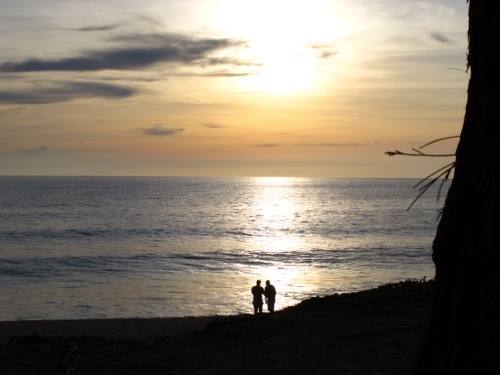
20130321-073412.jpg

Rogers With An “S”. That’s what he’s called!


Rogers loves punctuating his statements with “Got it?” that we all too soon adopted it as the group’s tag line. When anyone asks anything even vaguely hinting of a complaint (like why can’t we buy coconut crabs to take home?), Rogers is quick to plead to spare him of any misdirected protest (“Please don’t get mad at me…..”) and accordingly ends his statement with “I love you”. Once, there was this Caucasian who approached him and I overheard Rogers bidding him farewell and the perfunctory “I love you, Sir”. I waited for the man’s reaction, but he must have gotten used to Rogers (as we were, after only 24 hours) that the mechanical endearment was accepted without much fanfare.


20130330-121205.jpg

And that’s Rogers’ able assistant……..DAN. No “S”


His assistant, Dan — that’s Dan in green shirt atop the jeepney! — is just as gracious but not given to the same endearments. I’d give him a few years before saying “I love you’s” without blushing. 😉 Much like Rogers, Dan is quite adept with cameras too. SLRs, P&S, iPhone or iPad cams. I learned they also serve as guides in many Photo Safaris and Photography Workshops conducted in Batanes. Rogers said they learned by listening to the lectures and simply watching the pros. No wonder they know the best angles and photo spots.


20130330-130514.jpg

Welcome to Batanes….. sung by these friendly Ivatan students.

20130330-130623.jpg

Choir of the San Carlos Borromeo Church in Mahatao singing ” We Welcome You to Batanes”. So heartwarming!


When we visited the San Carlos Borromeo Church in Mahatao, we spotted the Parish Priest standing by the 2nd floor window. He came down to welcome us just as the church choir sang a Welcome to Batanes song for us. Just as beautiful was the song number by Ivatan students who sang for us after our dinner at the Lighthouse overlooking Basco Bay. So heartwarming!


20130330-130911.jpg

The hardworking Ivatans in action. Sabtang Port.

20130330-131003.jpg

The Old Man and His Carabao. Sabtang Island, Batanes, Philippines.


Being in Batanes and with these hospitable Ivatans is a refreshing experience. From the hardworking men at the Sabtang Port to the old man with his carabao to the old lady by the road. Some of us even borrowed bicycles from smiling children who took our hands to touch their foreheads as a show of respect. It’s nice to be OLD here in Batanes where respect for elders is still fashionable!


20130330-134815.jpg

Buko or Young Coconuts For Sale.

20130330-135013.jpg

The Old Ivatan lady by the road. Sabtang Island, Batanes. Philippines.


Some skeptics think Honesty Cafe is really just all-hype. This untended store allows you to take whatever you like and simply deposit your payment in a box. Nothing can be simpler than that. I would love to retell this story to such skeptics about how one of us lost his room key, cell phone and eyeglasses in Rakuh a Payaman a.k.a. Marlboro Country. We already boarded our jeepney, well on our way to another destination, when my friend missed his stuff. Our Tour Guide Rogers directed his assistant Dan to take over while he mounted a bike to motor back to Marlboro Country. No luck. After all it was near sunset by then, so Rogers summoned some of his friends to continue the search as we were leaving early the next morning. No high hopes they’d be found.


20130330-140207.jpg

You make the Ivatans proud. And so with the rest of the Filipinos. Batanes. Philippines.


Hey, skeptics. See that photo above? Between Rogers and my friend Tony is this fine young Ivatan lad who found Tony’s cellphone, eyeglasses and room key. He motored all the way from Rakuh a Payaman to the airport where we were getting ready to board for our homeward flight. He was in a hurry to leave after returning Tony’s stuff that Rogers had to hold him for this posterity shot. Makes us all admire this young Ivatan, but truly, we weren’t surprised at all about Ivatan honesty and admirable character. How about you? Were you surprised? Love it? Got it?


I’ve read too many articles and heard too many stories about the boat ride from Batan to Sabtang Island. After overcoming my apprehensions over riding a small plane from Manila to Batanes….. Now this.


20130325-180309.jpg


Lying southwest from Batan, the island of Sabtang is visible on this clear day which started at 5am for us. Two consecutive mornings I pulled myself out of bed on this holiday. No, I’m not complaining. And that’s saying a lot coming from moí whose mornings are typically slow and dragging till noon. It must be the fresh air of Batanes. Nothing seems to disturb me here. I’m at peace. Despite the early mornings, the malfunctioning camera, the repeated menu of Ivatan meals (I like them, but 3x replayed can be a bore), the near-absence of fresh fruits and icy desserts, AND NO BREWED COFFEE. No brewed coffee! Imagine that. Ordinarily, I’d be grumpy as can be. But not here. Not now. Not before this falowa ride from Ivana Port to the island of Sabtang.


20130325-180603.jpg

20130325-180839.jpg


I must confess I expected the worst, and was a tad “disappointed” the waves weren’t as fierce as I imagined. I even pulled my camera out of ziploc to make a video and snap some photos. All that while we rocked and rolled sailing southwest. No mean feat for the “captain” who steered the boat using his foot! By the time the Sabtang lighthouse was in full view, I couldn’t wait to jump out of the falowa. Excited much.


20130325-181025.jpg

20130325-181444.jpg


They say a trip to Batanes is not complete without seeing the Ivatan houses in Sabtang. “Frozen in time” is how a friend described them. I was ready for them. Those pre-Hispanic stone houses which stood against the strong winds and crushing waves from the Pacific Ocean and South China Sea spoke volumes of Ivatan’s past. The scenario where a lone carabao walks past a row of these houses is a scene straight out of some documentary or movie. Hearing roosters crow on top of the thatched roofs as we strolled out of the village is yet another. I’ve seen and imagined those. Many have written about Savidug and Chavayan Villages — so I was kind of prepared for such vistas.


20130325-181551.jpg

20130325-181823.jpg


But pictures and postcards cannot mimic the sway, the breeze, the sound of the howling winds passing through the cliffs of Tinian. Our jeepney stopped by Chamantad Viewpoint, the highest point in Sabtang, facing the Pacific Ocean. I completely ignored the waiting buco (young coconuts) and camote cues (sweet potato on skewers) for mid morning snacks. I walked past the huts towards the cliff, mesmerized by the sound of the waves crushing the rocks lining the coast, bothered only by the wind threatening to lift my hat to make a terrible mess of my already bad hair state. This place is sooooo lovely!


20130325-181932.jpg

20130325-182239.jpg


After that “Wuthering Heights” episode, we trooped to Morong Beach for lunch. Lobster, coconut crabs, flying fish, red snapper, Ivatan adobo, sautéed veggies for lunch. I’m sure there was more, but my memory was messed up by Chamantad-Tinian Cliffs. Still….. The “romance” with Nature has not ended. Just around the bend from where we enjoyed our seafood lunch is the Nakabuang Arc Formation lining the sandy shore. I tried to imagine a bigger rock here before the waves and wind eroded it to form this rock arch. Sabtang is truly blessed. I readily accepted the place couldn’t possibly have a decent (aka “safe for swimming) beach but here it is. Unbelievable!


20130325-182447.jpg

20130325-182907.jpg


We missed a few spots in Sabtang as we had to rush back to port to get on the last falowa boat bound for Batan. Past 2pm, our jeepney “zigzagged” through the narrow winding roads and our falowa rolled over the waves of the Balintang Channel anew, said to be among the fiercest in the world. A little braver now, after that earlier “boring” ride. I found myself laughing nervously as the waves crested and ebbed. I watched the older boatman, who captained our first falowa ride, somehow guiding the 2nd falowa captain. The latter obviously deferred to the older man’s judgment and experience. For sure, there weren’t any more crossings after this. You know what I mean. But all’s well. If asked to do this again, I would. In a heartbeat! 🙂


20130325-183149.jpg

20130325-183213.jpg


Call it Batanes Fever. Or Ivatan Addiction. Whatever. But I’ve been home for 2 days now and all I’ve done is review and upload our photos from the smallest, northernmost island province of the Philippines. Wrote the first of my Batanes blog series yesterday but was stumped when I kept “losing” my draft midway through the blog. I’m not one to do a “prelim” — I simply write away and click that tab which says “Publish”. So I gave up after repeating myself 3 times — the temper got in the way, and I knew I just lost the motivation to write.


20130320-180359.jpg

Waiting for Sunset On a Typical Day in Batanes


This very moment, I’m blogging using my iPhone. And using the stored photos taken by this phone which saved my day when my Canon G12 died in Batanes. Between these and those snapshots from my iPad Mini, I’m fine. Sad, but not exactly bothered by my malfunctioning G12. Funny how the Ivatan simplicity, warmth and hospitality along with the natural and rugged beauty of the island can weave magic into our lives. I started writing this to capture how I feel at the moment. If you’re looking for travel tips, directions and suggested itineraries, skip this post and read my other blogs. This one’s written by me. For me.


20130320-181247.jpg

The Mahatao Lighthouse. Surely, a Batanes icon.


I used to dream my family has a truffle farm in Périgord. That stopped on my first night in Batanes. The music from the waves rushing to shore lulled me to sleep. I could have written down my sentiments then, but I needed to prep myself for next morning’s falowa boat ride to Sabtang. Pacific Ocean meeting the South China Sea (or should I say West Philippine Sea) sounds threatening but the guide assured us of the Ivatan boating skills. I believed that lock, stock and barrel. There’s something about the Ivatan culture that renders these friendly, hospitable people quite a smart “breed” of Filipinos. I suspect the isolation made them so self-sufficient, self-reliant, respectful of nature, and smart.


20130320-182309.jpg

The Falowa boat ride from Ivana Port in Batan Island to Sabtang Island took 45 minutes. Not a bad ride. But the return trip was something else.


I miss the sunsets — which I viewed daily — the ocean views, the verdant rolling hills, the lobsters, the coconut crabs, the Ivatan culture. Many times, some youngster grabbed my hand to touch his forehead. A very Filipino tradition to show respect for elders, now seemingly lost in the chaos of the metropolis. I am touched that an 86 year old Ivatan lady from the oldest stone house called House of Dakay survives on alms and help from neighbors and visitors like us. I am very impressed that an Honesty Cafe exists in Batanes and that many homes remain unlocked throughout the day and night. The Ivatans make us fellow Filipinos proud of this old tradition and culture of honesty, self-reliance, simplicity, industry, dignity as a people.


20130320-184413.jpg

Nakabuang Beach is truly nakaka-buang sa ganda. The rock formations and the monastic rhythm of the rushing waves encourage peeps to take a dip, even if they are NOT dressed (or undressed?) for it.


Many planned visits to Batanes would focus on God’s magnificent creations. Van Gogh-wannabes and photography enthusiasts would delight in Nature’s painting on the sky, find melody in the howling winds and feel enthralled in the rhythmic slapping of the waves against the rocks. In my book, the must-experience lies in the genuine hospitality and dignity of the hardworking Ivatans and their respect for Nature. Their isolation taught them self-reliance and their faith in God made them respect Nature and seek God’s mercy. Everyone with a drop of Filipino blood can learn well from that.


20130320-192845.jpg

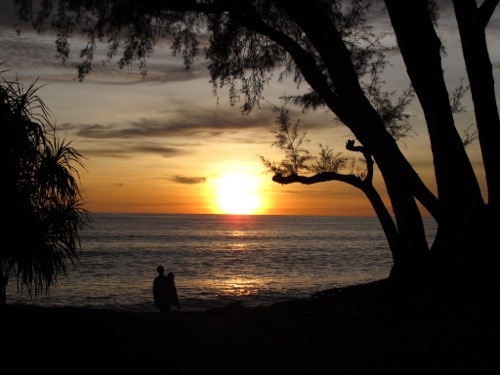
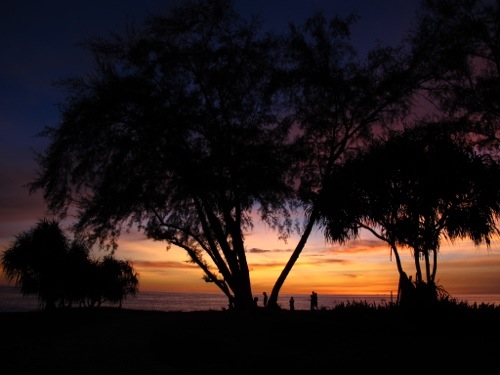
This sunset shot using my iPhone could have been better. But it’s a good memory catcher. Waiting by the shore for the sun to set is ma’velous! Esp if there’s a good dinner waiting across the street 😉


Truly, Paradise does not rest on panoramic vistas alone. It lives in the hearts of the people. Nurtured through the centuries. DIOS MAMAJES! Colloquially, it means “Thank you”. Literally? It means GOD GIVES BACK.

href=”https://lifeisacelebration.blog/wp-content/uploads/2013/03/20130320-201201.jpg”>20130320-201201.jpg

20130320-201358.jpg

Didn’t I say it’s the northernmost tip of the Philippines? Nearer to Taiwan (less than 200 kms) than Mainland Philippines.


WHAT’S THERE NOT TO LOVE ABOUT BATANES? 


We had near-perfect weather when we visited recently, yet we still rocked and rolled on that falowa boat ride to Sabtang. We were up at 2:30am to be at the Domestic Airport by 3:30am for our SkyJet flight at 5:30am. We were a group of 35 chatty, giggling peeps on board 2 long jeepneys driving around Batan Island, one of 3 inhabited islands of the 10 in this smallest and northernmost island province of the Philippines. We were tired, sleep-deprived, and my CANON G12 camera went bust here after being my loyal companion for many past trips. Some of us lost a scarf, missed a cellphone, dropped a hat. YET we have not had a nega-moment during this wonderful trip.


20130319-085126.jpg

Aerial View of Batan Island Before SkyJet Landing

20130319-090049.jpg


I may have felt like a zombie the morning we arrived in the lovely airport terminal of Basco, Batanes, but I wasn’t so zonked out to remember this is Batanes and NOT Capetown nor the rolling hills in Yorkshire. Certainly looks like Bronte country that I instantly remembered that most compelling character Heathcliff of Wuthering Heights fame. But I digress.


BATANES IS BEAUTIFUL. Rustic, serene, utterly divine. A typhoon may spoil a holiday and a ride over the choppy waters where Pacific Ocean meets the West Philippine Sea may give you nightmares —- but in my book, this place has no equal within the country. I want to kick myself why I waited this long. I could have made better jump shots on that hill, stood dangerously by the cliff edge and perhaps even tested the cold ocean waters even if I didn’t know how to swim. The passion is still there, but the energy mimics the state of my G12 cam. 😦


20130319-091303.jpg

Rolling Hills

20130319-091435.jpg

Mother and Child. Or Mama Cow and Calf? Near Fundacion Pacita in Batan Island, Batanes.


Many photo safaris have been conducted here. I can understand why. It’s a chore NOT to take good photographs here in Batanes. Our group included professional photographers and photography enthusiasts. When my Canon G12 conked out, I made do with my iPad mini and iPhone. Saved the day for me. And while my photos pale in comparison with Mon’s (yes, you Mon!), I am happy. After all, Mon (yes, it’s you again) and Chikie (yes, you dear) made sure I have my jump shots souvenirs! Ahem. Ahem. 😉


20130319-092000.jpg

Poles Lining the Rolling Hills

20130319-092123.jpg

Ivana Port.


(There’s more to write about. But I’m on my 3rd attempt writing this post. For some reason, I lose the draft midway through the blog. Don’t ask me why. It took 3 attempts before I gave up. It’s hard to write in all candor, only to “repeat” the same narrative with fading emotions battling with impatience. My apologies. I need a break. Watch this page. Sequels out soon. )


April 9, 1942. Every Filipino veteran remembers the date. It was the day Filipino and American soldiers surrendered in Bataan to the Japanese. The Fall of Bataan. The Surrender. I remember the line “Sumuko na ang mga Amerikano sa Bataan” (The Americans already surrendered in Bataan) in that unforgettable movie “Oro, Plata, Mata” by the cinema genius of a director, Peque Gallaga. So poignant in its truth, so piercing in its pain and hopelessness.


20130314-082718.jpg


More than 45,692 Filipinos and 9,300 American soldiers who dragged their feet during the Death March from Bataan to this final destination suffered more indignities here. Camp O’Donnell it was then called, then Capas Concentration Camp where 30,000 POWs died from April through June 1942 while under detention.


20130314-083649.jpg


We honor our fallen heroes here. There is a central walk leading to the peace monument — the Obelisk, the focal center of the shrine. Around it, marble walls bear the names of the fallen, many forgotten over time.


20130314-084716.jpg


Looking up at the Obelisk, we are reminded how much blood was shed in defense of our independence. At the very least, we owe it to them to preserve the peace and to live in harmony and unity as Filipinos regardless of creed and religious convictions.


20130314-085347.jpg


A visit to the Capas National Shrine after a trekking adventure in Mt. Pinatubo is recommended. No detours. The Shrine is just a few minutes away and right along the same rad exiting from the Capas meeting point where you board the 4×4 jeeps.

You may also wish to check out my blog on Mount Pinatubo. Just click on this Pinatubo.