Category: Travel, travels


This is my 4th time in Vienna and it’s only now that I’ve visited nearby Bratislava, Slovakia. I never thought it’s only an hour away from Vienna by bus on fare that costs a measly €5 (with snacks and bottled mineral water!). Of course you can travel in style and take that taxi ride between Vienna Airport and Bratislava for less than €100. Do note that it cost me €45 taxi fare from Vienna airport to my hotel in the city center. So, what gives? If you prefer small cities to big cities, spend more time in Bratislava where food, taxi, souvenirs, park, hotels and museum admissions are way cheaper. 👍

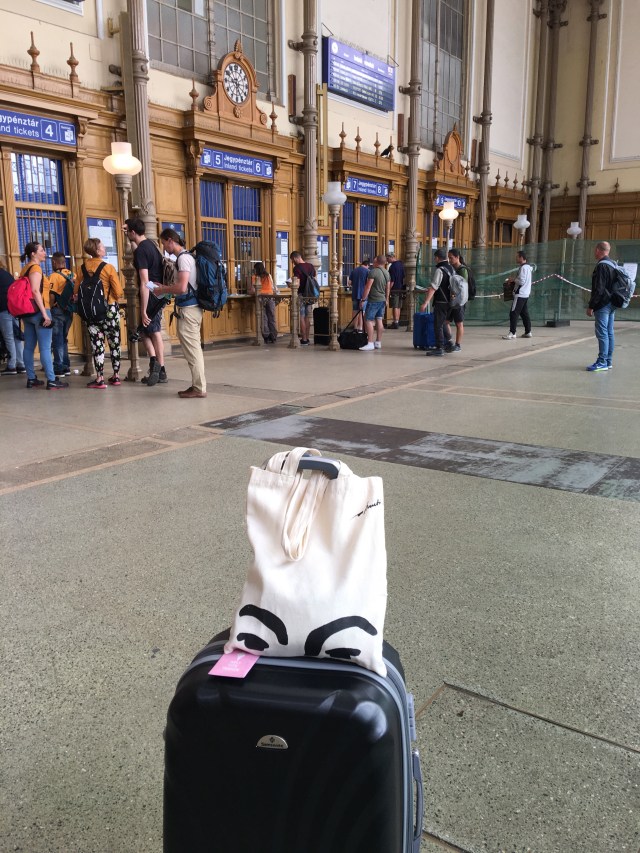
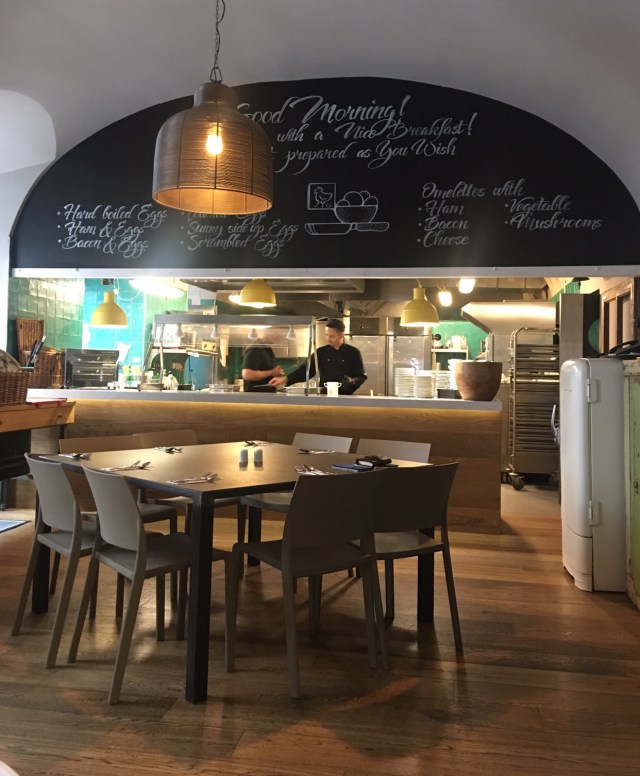
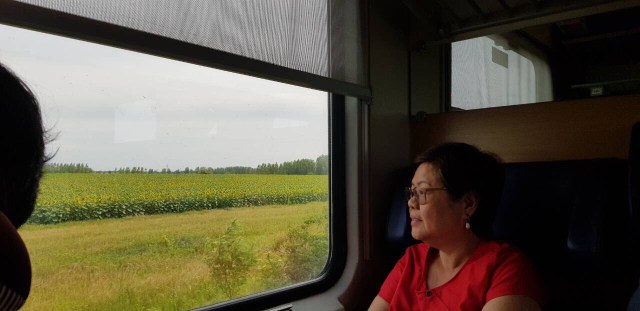
In our case, we rode the 2.5 hour train journey from Vienna to Budapest where we had a lovely time. From there and a few days after, we took another 2.5 hours from Budapest to Bratislava. Our train cabin was ideal for the 6 of us. My window seat was perfect for viewing the sunflower and corn fields, and tiny churches we passed. From the train station, it was just a short walk to our lovely Bratislava Loft Hotel which sits right above a popular brewery and located between the train station and the Old Town. The hotel offers a free mini bar (yes!) and a welcome drink at The Fabrika Gastropub below, which btw has a very good breakfast spread as well as a la carte meals. We were prepped for lunch while they got our rooms ready and we were happy with our first Slovak meal.

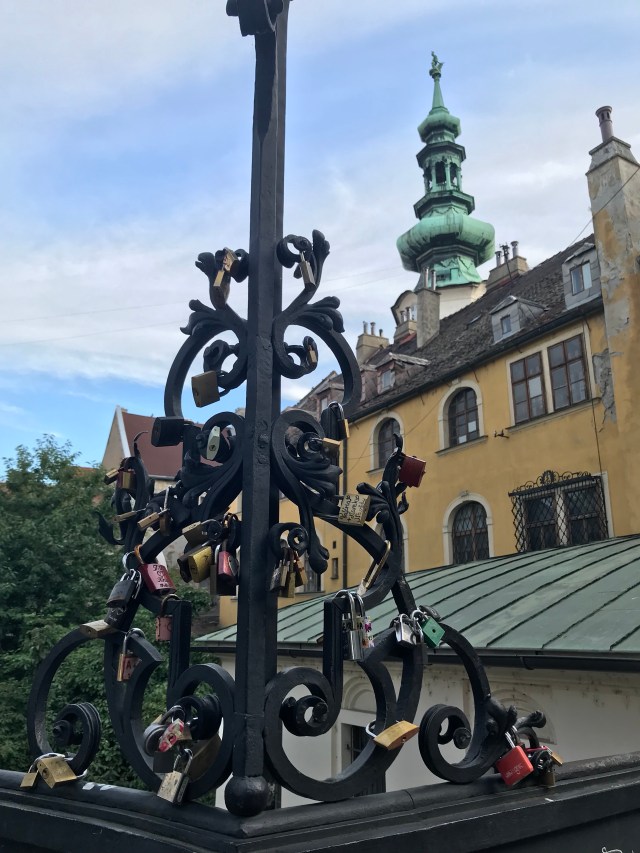
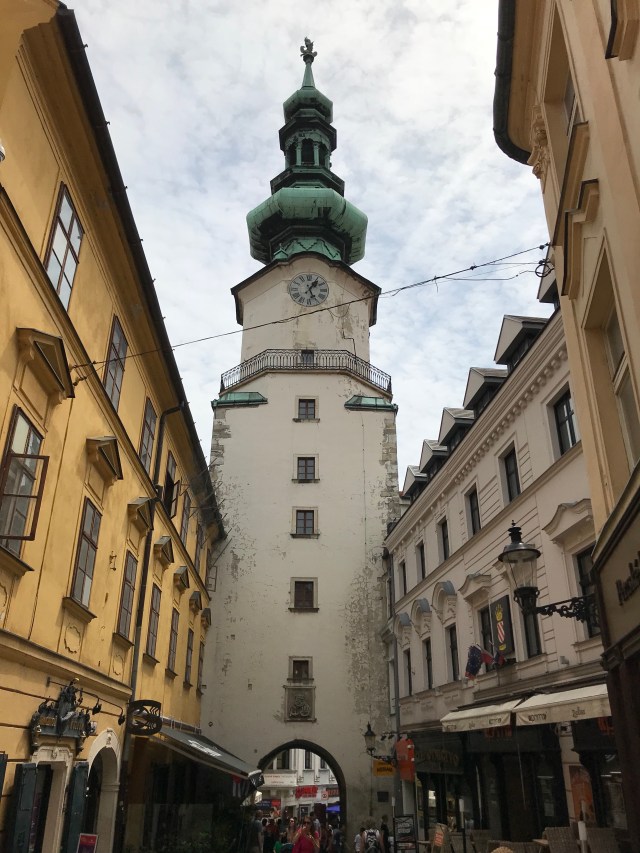
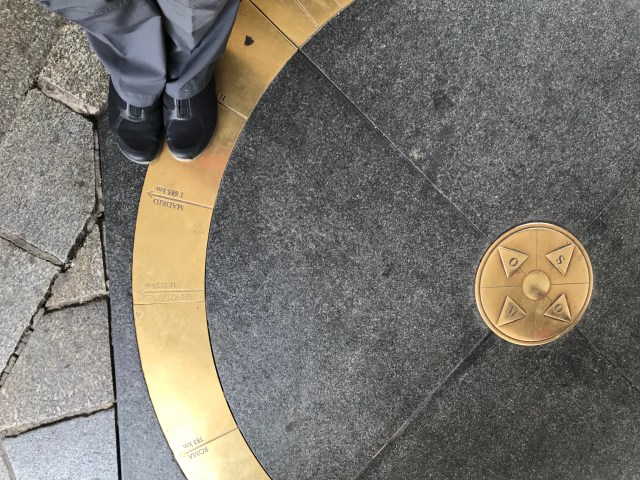
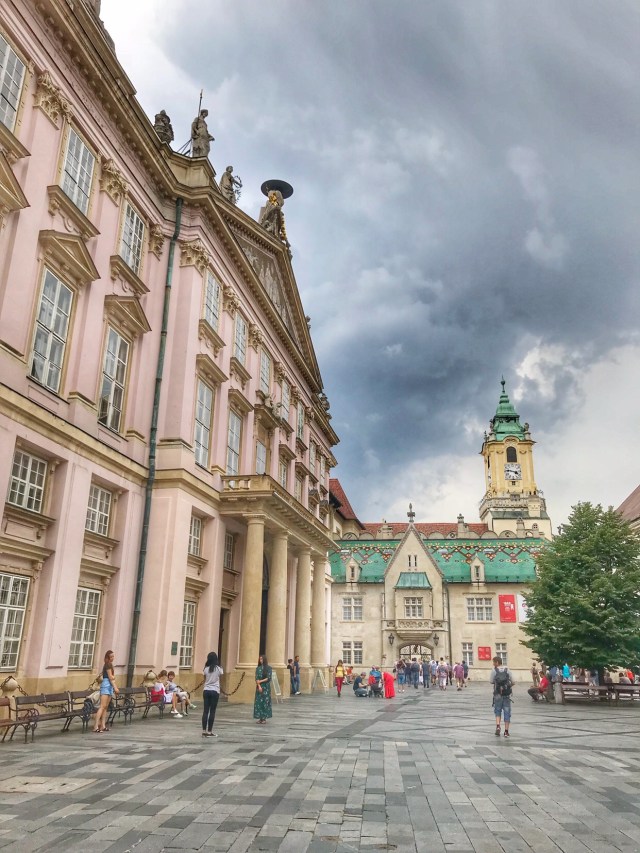
Soon after we deposited our bags in the room, we set off to meet our guide in the Old Town for our afternoon walking tour. It was another long walk (3 hours), but very informative & entertaining. We entered the Old Town through St. Michael’s Gate. Under the arched entrance is the equivalent of “Kilometro 0″ — technically the city center where distances are measured. Just before the gate is a small bridge adorned with love locks where one views the former moat below which has since been converted into a garden cum reading area. I promised myself I’d go back here on my last day with a mug of coffee and a book.

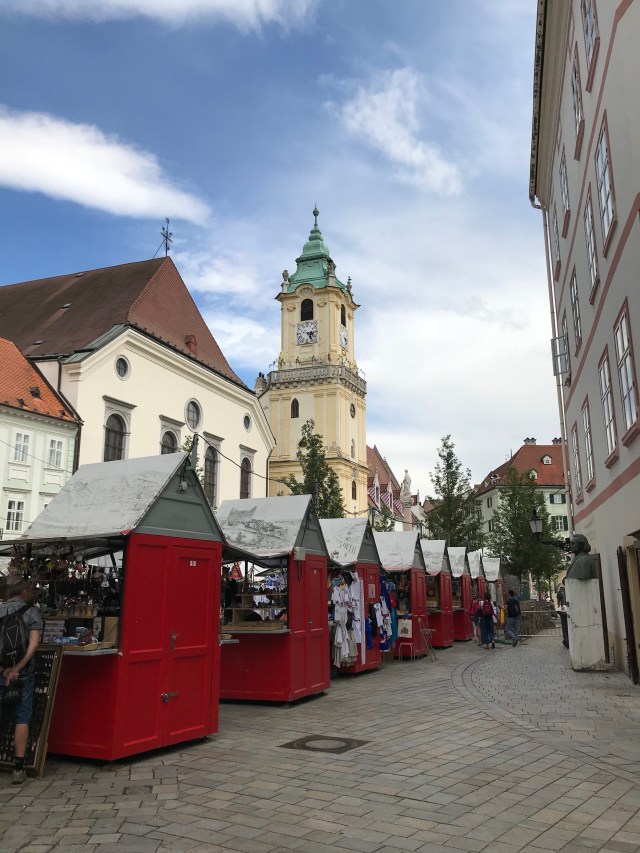
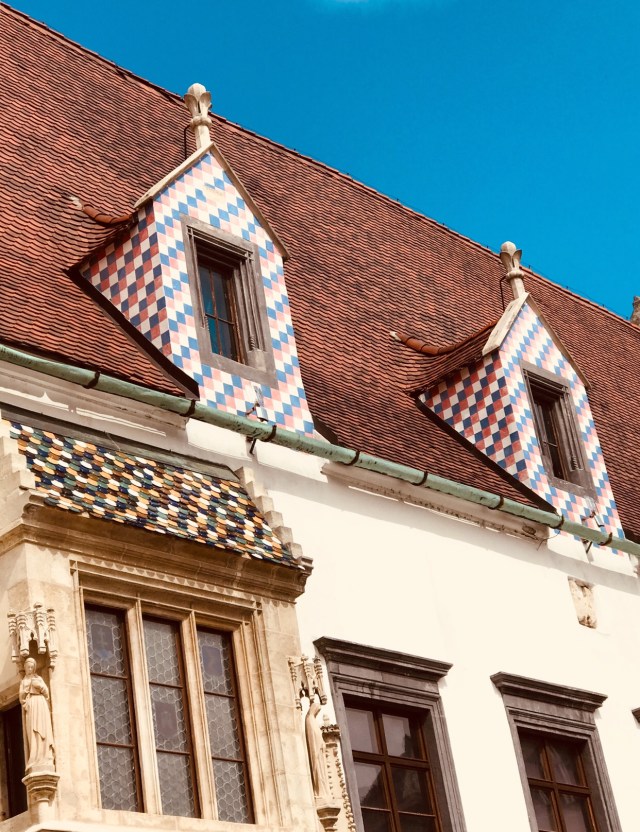
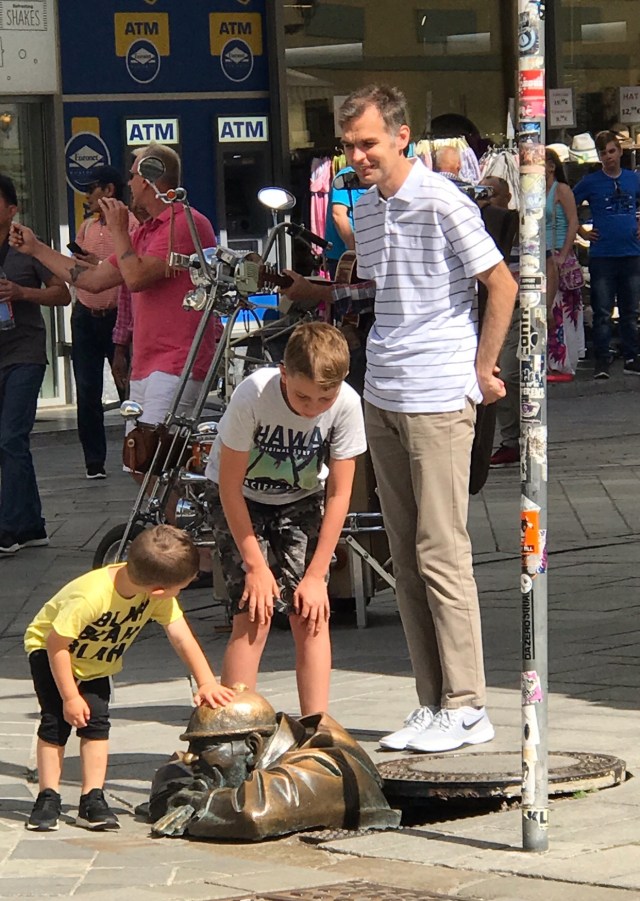
The Old Town is very compact and manageable. You can’t get lost here even if you tried. The lovely thing is there are small churches, historic buildings, fountains, tiny squares, museums, art galleries, an opera house, brass statues here and there, hemmed in by an assortment of pubs, gelato bars, coffee shops, and souvenir stores. There’s also a charming Danube Riverbank Promenade where more of the historic buildings and museums are located. You can’t get bored here. It’s really a small village, quaint and with so much character. And most everyone speaks English!

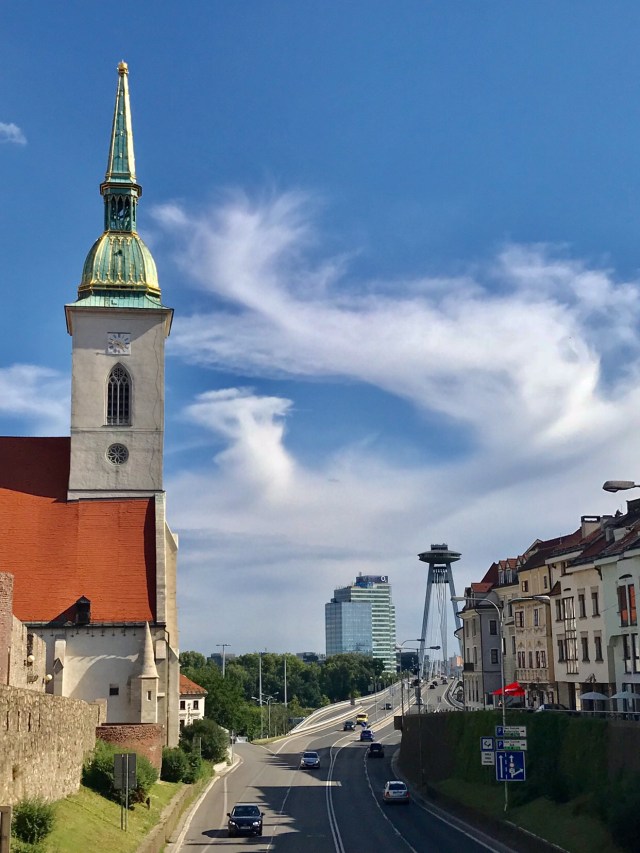
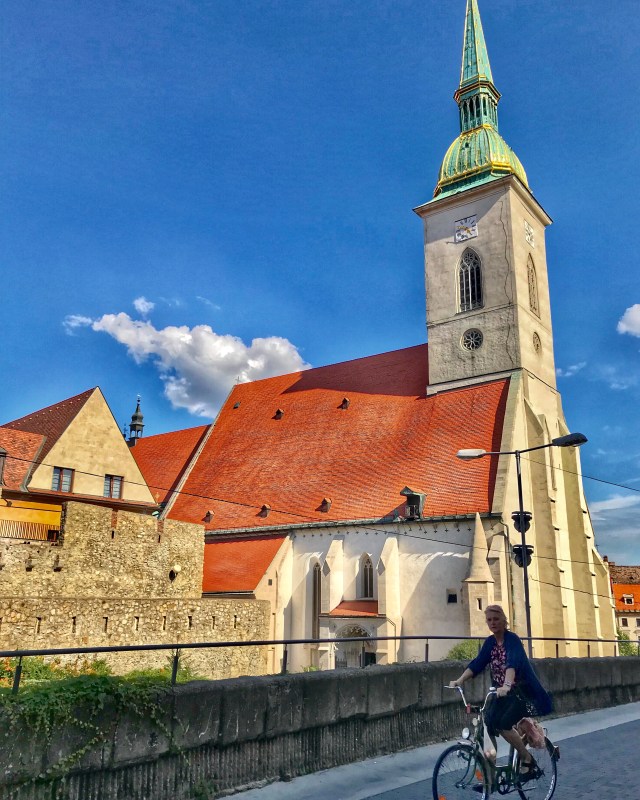
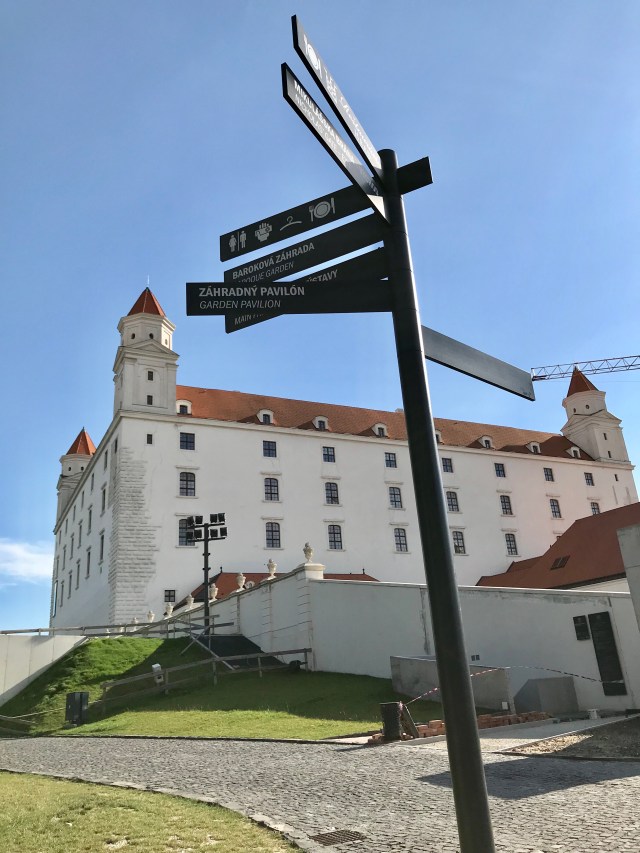
We were lucky to have blue skies and sunshine on our first 2 days here. On the third day it rained intermittently nearly the whole day. We made good time, led by our able guide whose name is as Slavic as can be – Voultjo? Not sure I’m spelling that right but this pony-tailed guide kept us hooked for 3 hours. He navigated us through the Old Town — the squares, St. Martin’s Church, old town hall, the “Gazer” statue, Opera House, the city walls, the viewpoint from where the UFO Bridge complemented the entire city view, all the way to the castle or Bratislava Hrad. He also gave us very good dining tips!

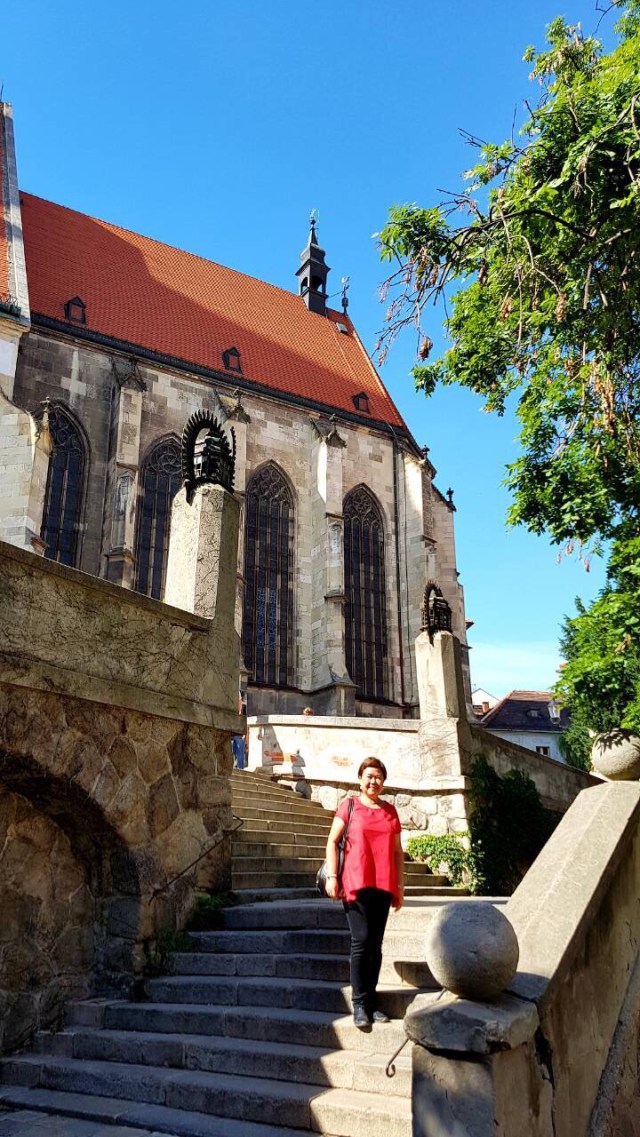
Just like our walking tour guide in Budapest, Voultjo warned us that his spiel maybe peppered with his political views. All’s well though, we can always do with a local’s opinionated views. We weaved around the quaint village (why are there so many Thai Massage Spas here?), making notes on some sites I’d like to revisit on my last solo (3rd and 4th) days in Bratislava before flying home. In particular, there’s the coronation church of Saint Martin and I spotted a few tiny churches too.

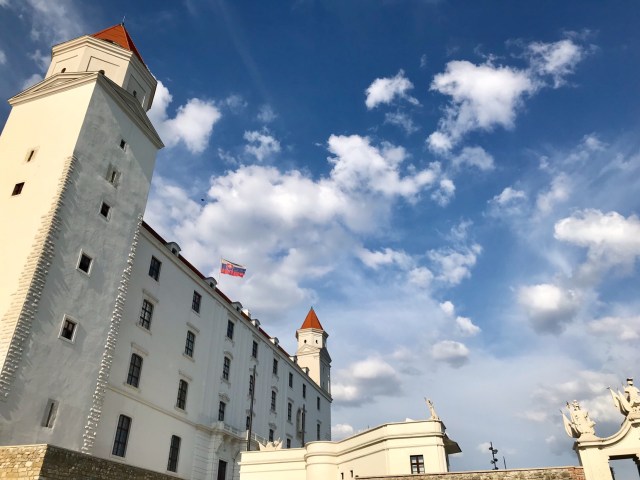
We didn’t get inside Bratislava Hrad but I was keen on going inside one of the Museums or Opera House on my last day. From outside, the castle grounds is really a huge modern park on a promontory from where one gets a 360 degree view of the Old and New Town. The UFO Bridge (it does look like an UFO) is in full view from here, and of course the same Danube River we saw in Vienna and Budapest.

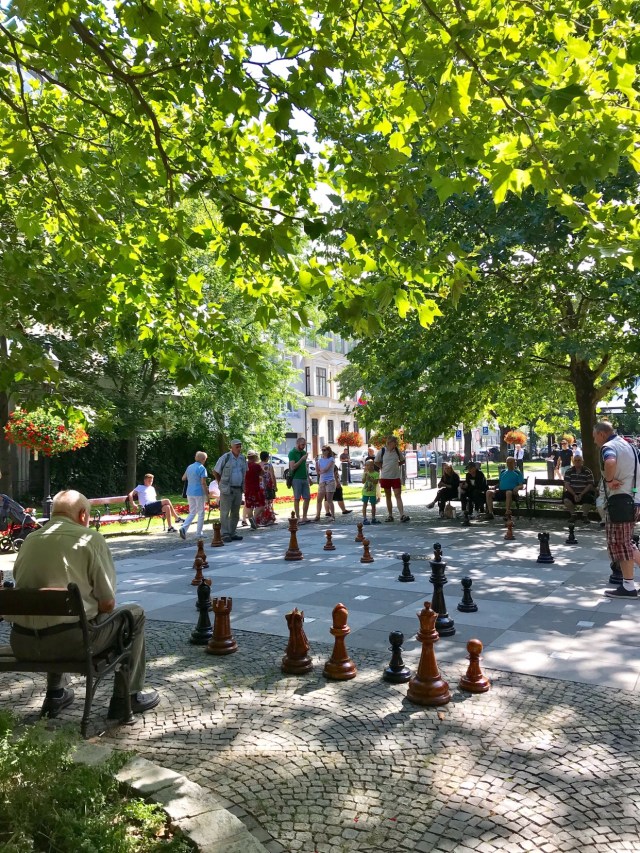
Our guide led us back to where we started in the Old Town after 3 hours of good walking. Thumbs up for this guided walking tour. Being a Sunday, there were more locals and tourists around, longer lines for the gelato, more snooping on a chess game played by old men, there were services in the churches, and more people enjoying the al fresco dining places. We felt we’ve covered most attractions and felt eager to check out Voultjo’s food tips. More on that in the next blog. Watch this page!

Dining In Budapest


Goulash is their national dish. Langos is the national dessert? Maybe. But really, Budapest has so much more. I love soup but one can only take so much goulash. So we tried others. And we weren’t disappointed at all.

Warning: Too many food photos. 🙄

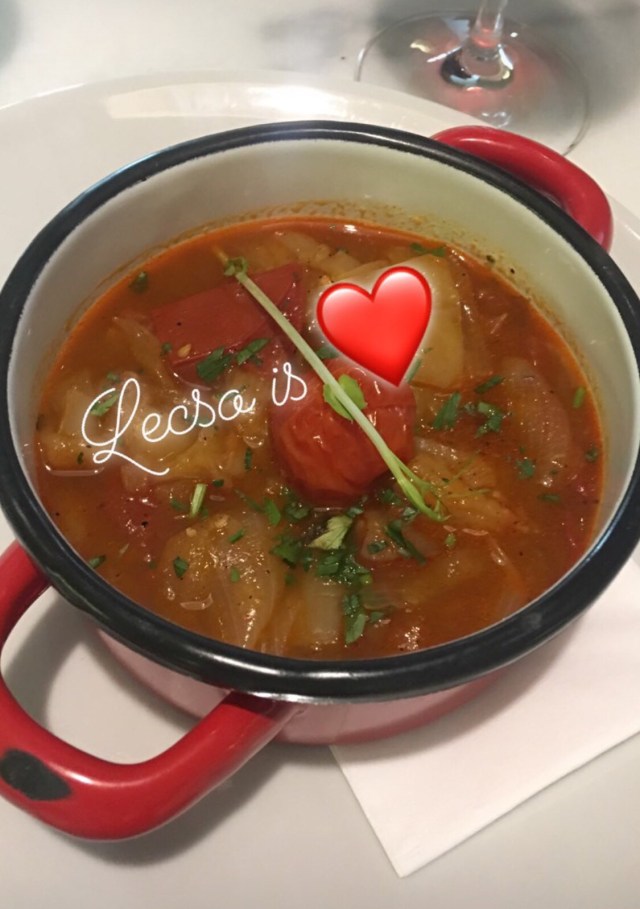
It’s my first time to try lecsó, a Hungarian vegetable soup. I call it soup but it’s really more like a stew of peppers, tomatoes, onions, and ground sweet and hot paprika. I couldn’t believe it’s a vegetable soup or stew so I searched the Internet for its ingredients. Turns out the onions and peppers are sautéed in lard and maybe even bacon fat! But, we maybe in luck. The tomatoes are best during the summer season in this corner of the world and our tastebuds confirmed it. Like goulash, lecsó gets a generous sprinkling of paprika. Unlike goulash, lecsó has no potatoes nor beef cubes. Between the 2, I’m now a fan of lecsó .

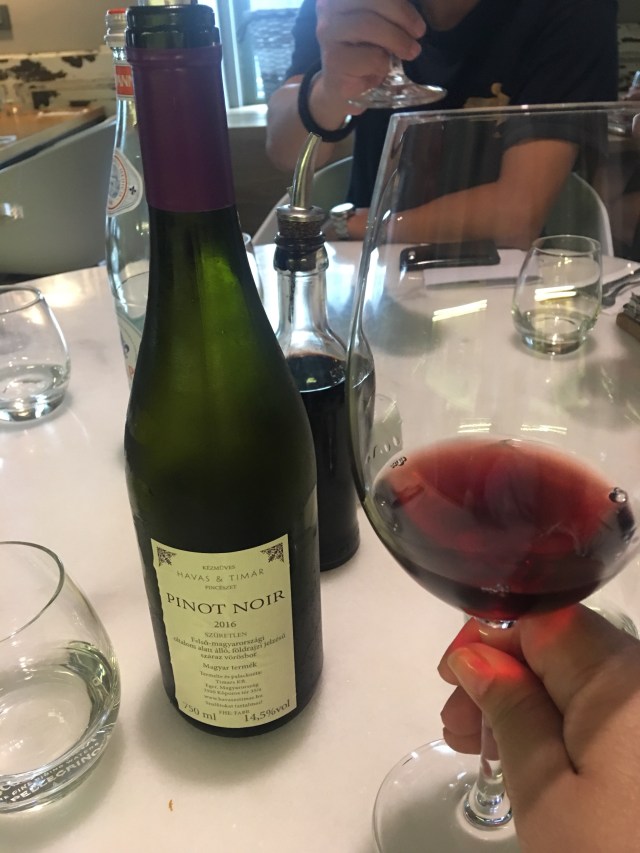
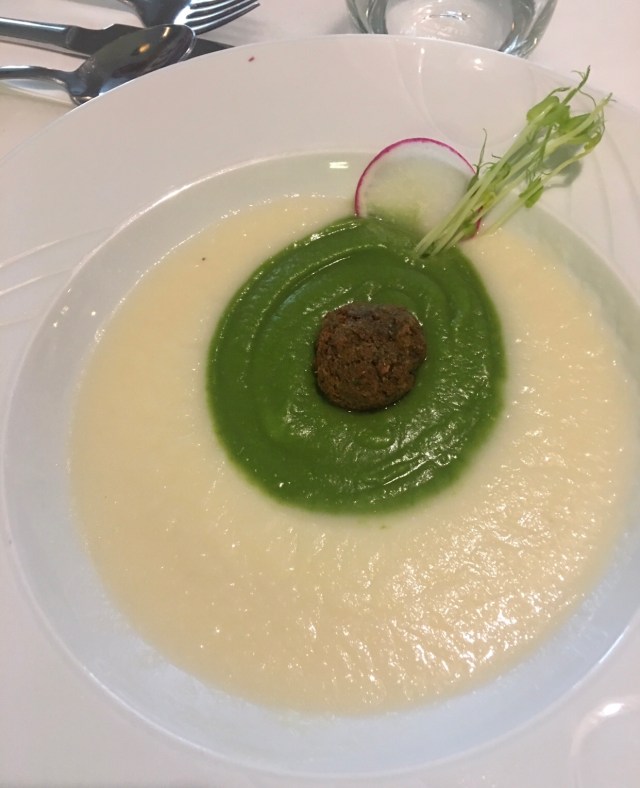
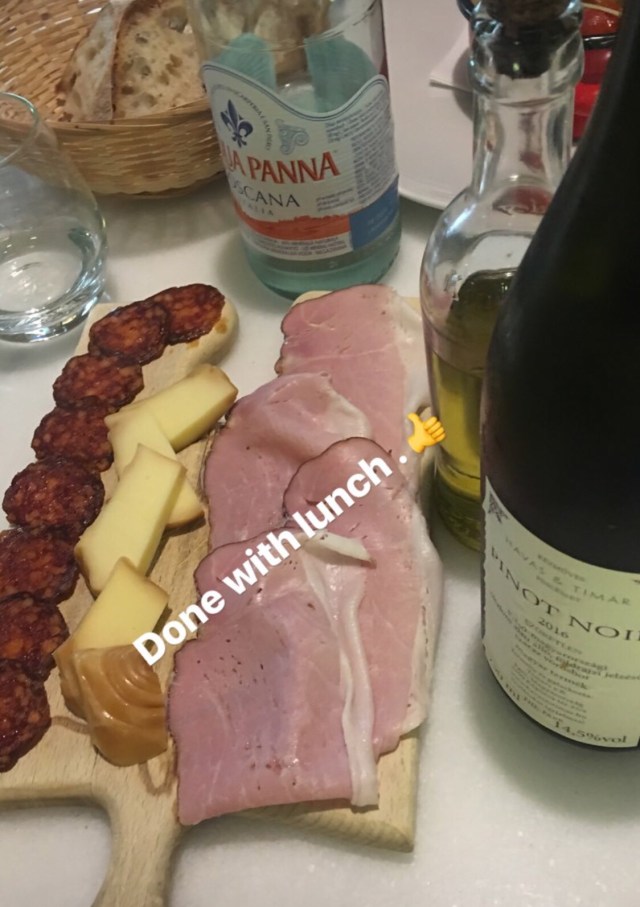
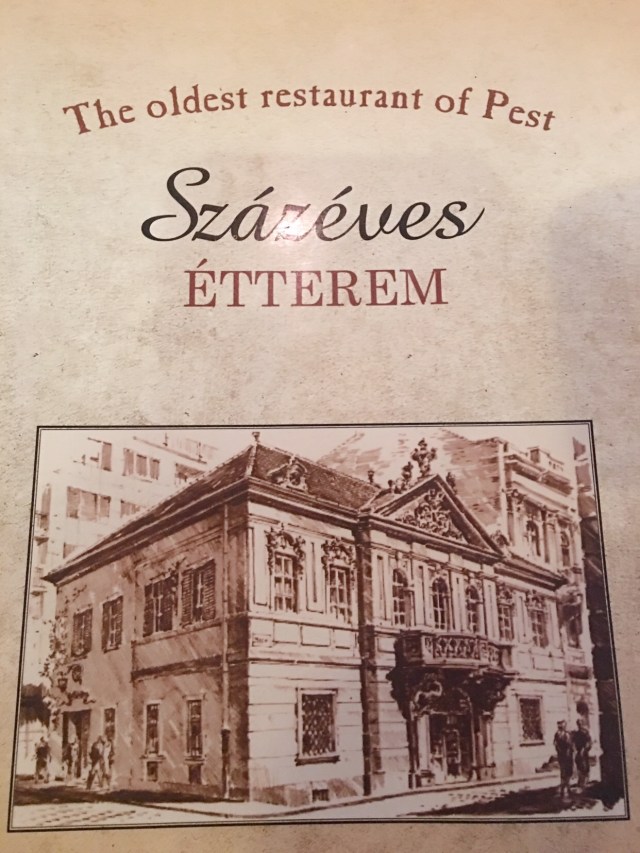
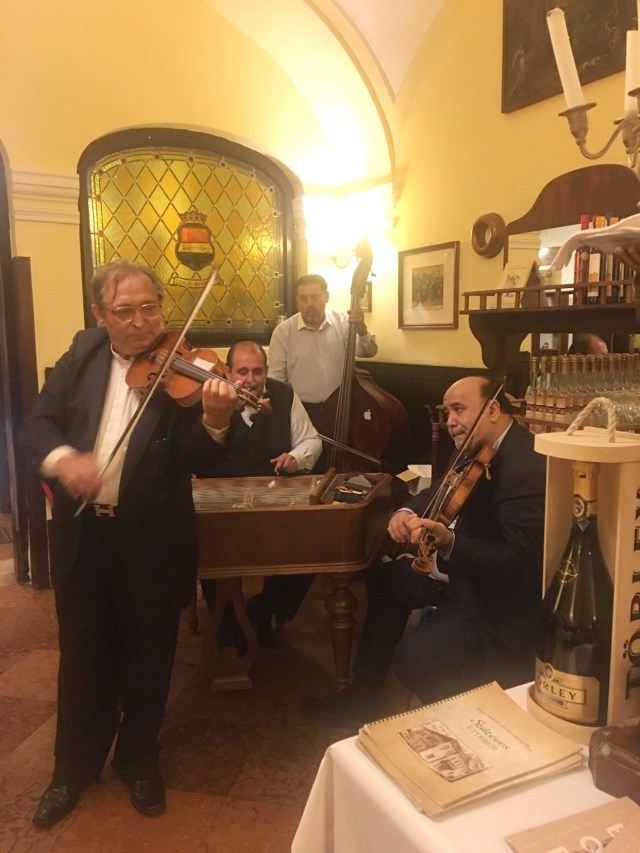
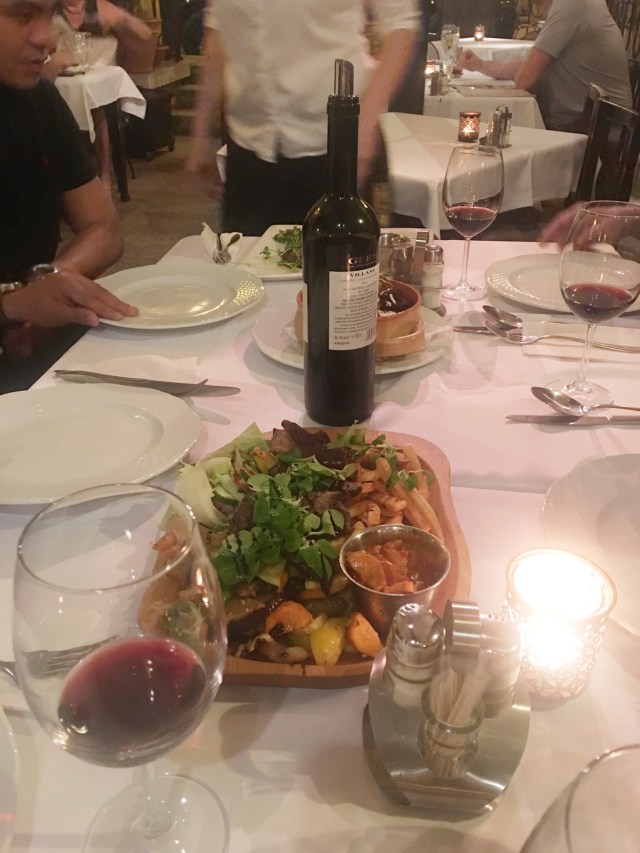
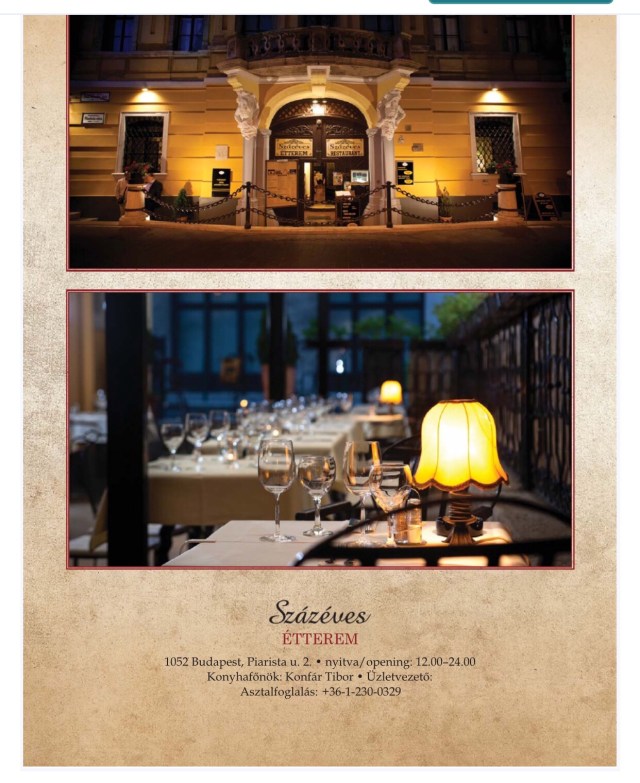
But it’s not the only soup we enjoyed. The restaurant in Hotel Zenit Budapest (Divin Porcello Ham Bar) where we stayed serves very good cabbage soup and ham, sausage and cheese platter. Plus they have a superb wine list! The first meal upon arrival here in Budapest got us all excited for dinner that same day. This time, we tried the oldest restaurant in Pest called Százéves which literally translates to “a hundred years”. Complete with classical music from these 4 Hungarian gentlemen.

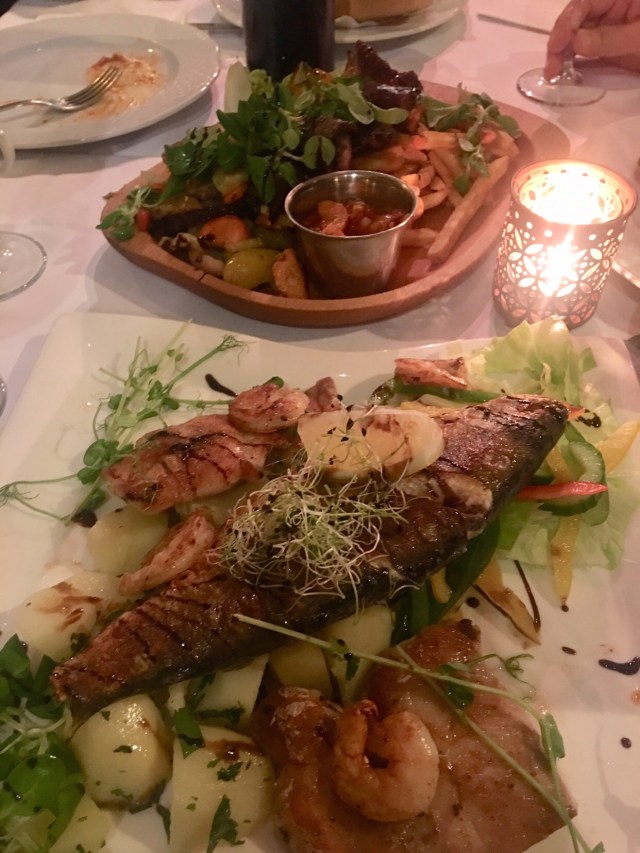
We particularly liked our fish dish here. Grilled zander? Have not come across this fish, but the English menu describes it as pike-perch of the Eurasian variety. It is a fresh-water fish with a very delicate taste. Simply grilled, and plated with alfalfa sprout toppings on a bed of lettuce and grilled onions with shrimps, we all enjoyed this dish.

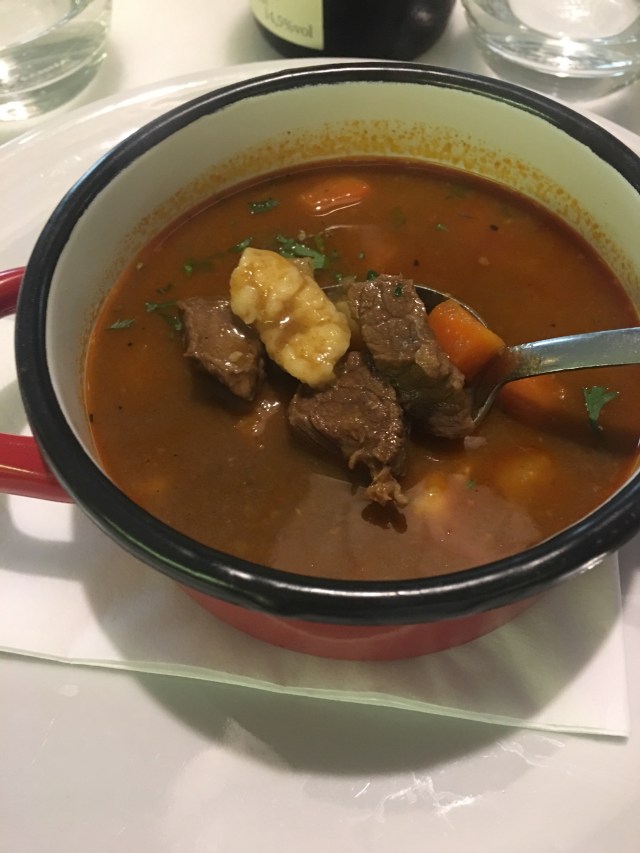
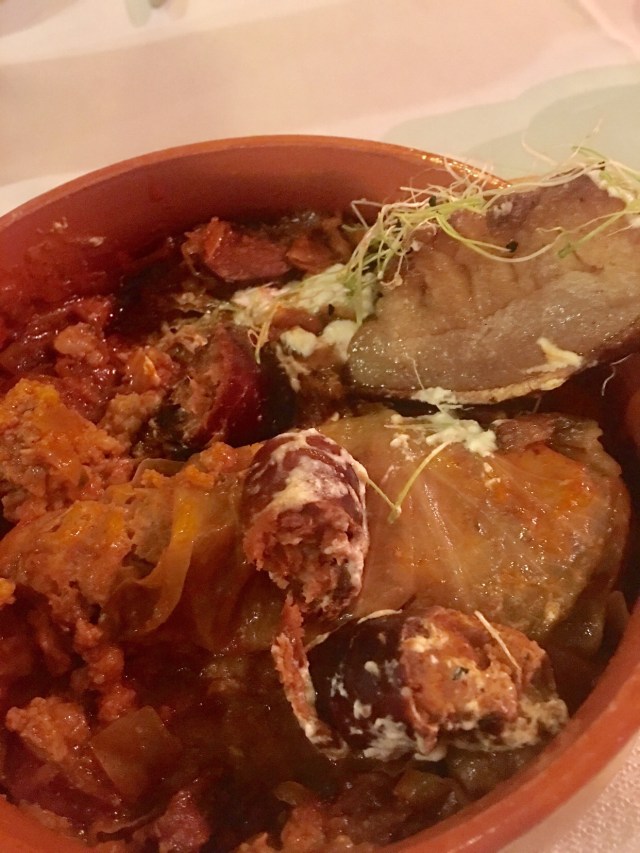
We ordered our 1st stuffed cabbage here. The first of 2, but we haven’t been lucky. The first “Koloszvar” stuffed cabbage was salty, the next one (in another restaurant) tasted bland. We likewise tried the Hungarian Goulash here. A sure favourite!

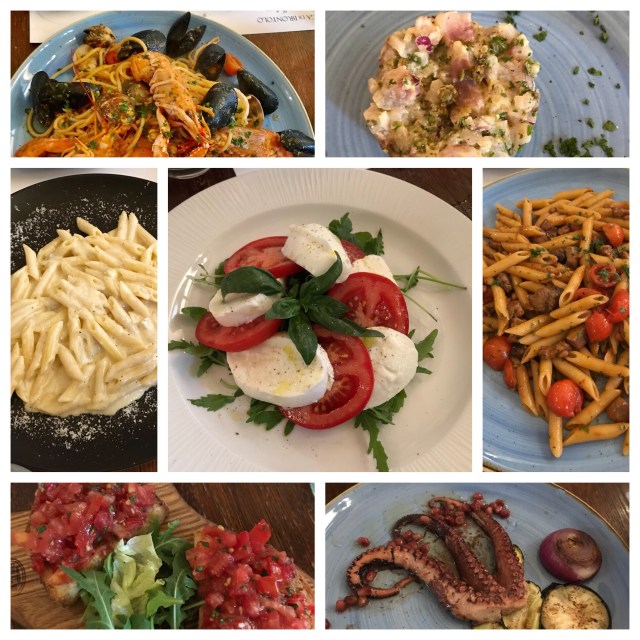
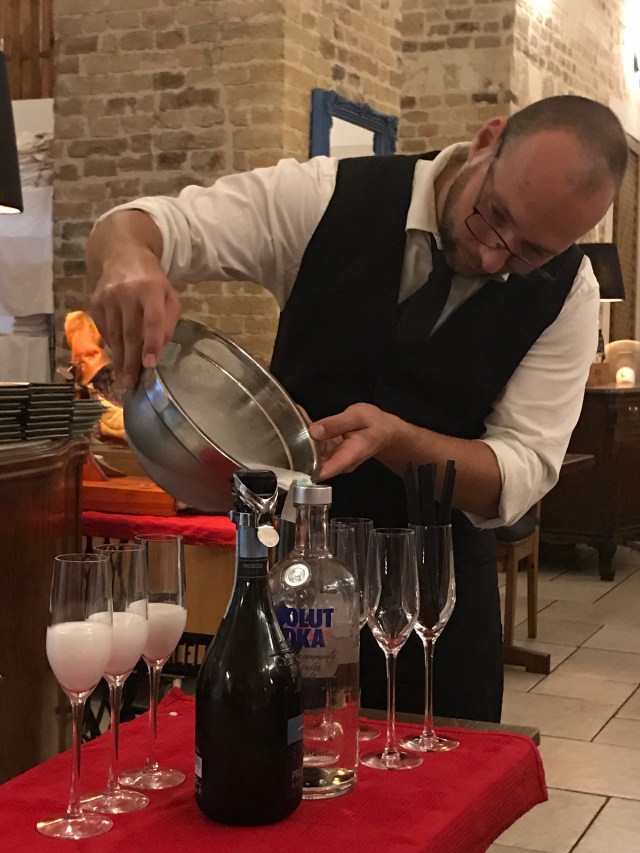
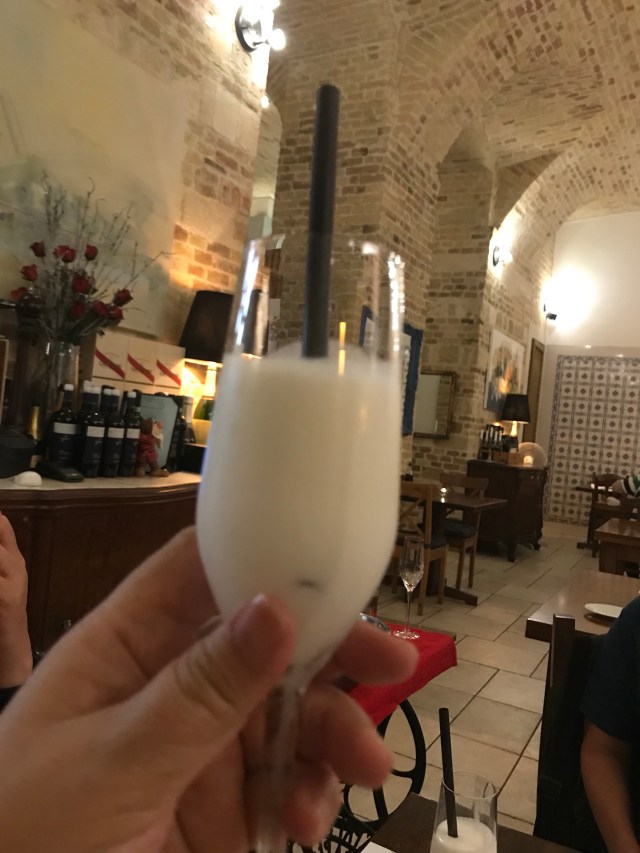
Our last dinner in Budapest wasn’t Hungarian. My friend found this Italian restaurant in Pest near the Danube which earned pretty good reviews. We had bruschetta, caprese salad, beef tartare, 3 kinds of pasta, pulpo and we had HUNGARIAN wine from Tokaj, Hungary. To finish this fine meal, we succumbed to the recommended lemon sorbet with prosecco and Absolut Vodka! First time I’ve tried this and I promise it won’t be the last. 🍸

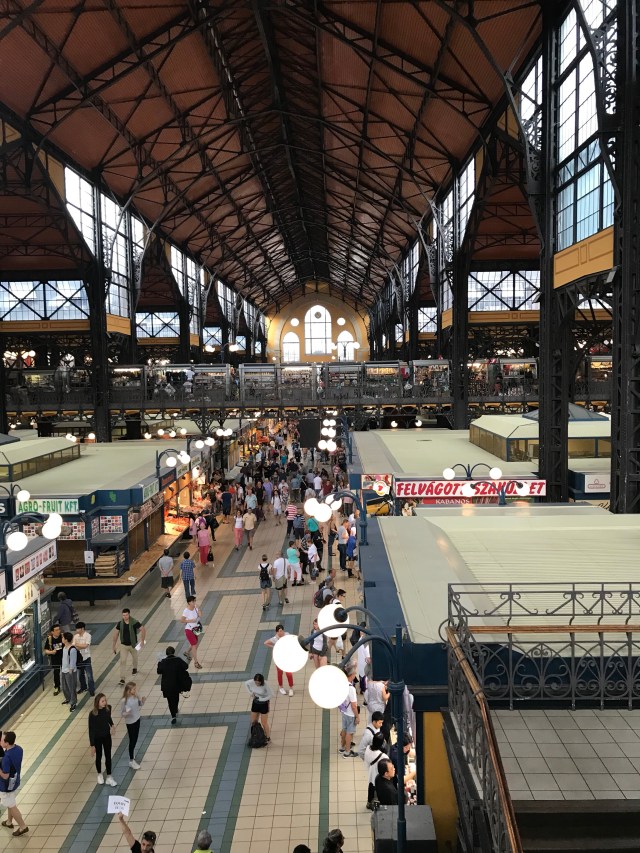
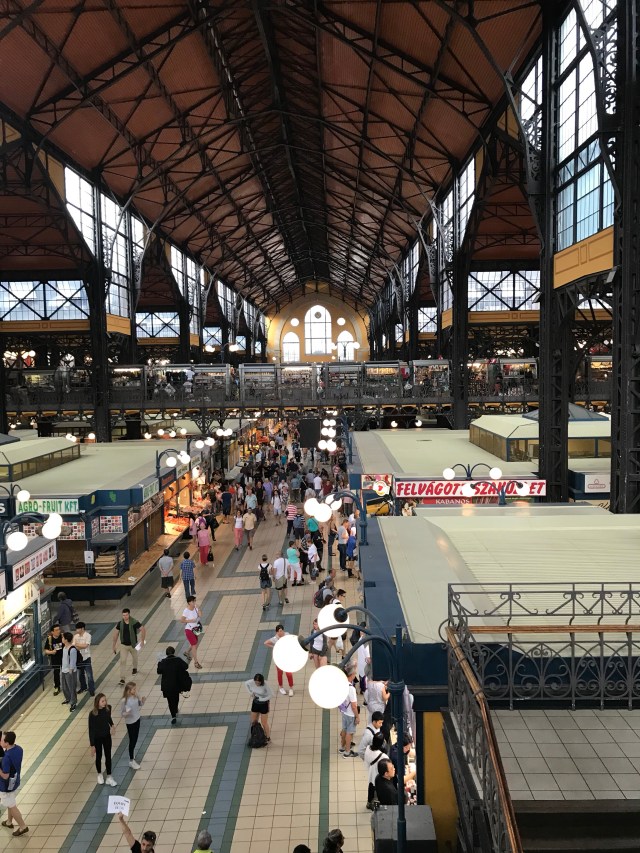
We ate very well in Budapest. And that’s only on the Pest side just around/near our lovely hotel by the Danube River. I bet there’s also many interesting bistros in the quieter side of Buda. We likewise enjoyed Hungarian wine. If at all, the only disappointment was the lunch we had at the Great Market Hall. The second floor is lined with many food stalls where one claims a table after ordering “cafeteria style” from any of the stalls. I enjoyed my beer but every dish we had was bleh. Took no pictures. Sorry. Nonetheless, I’d still suggest a visit to the Great Market Hall if only for the beer and some sausages. You’d find it at the end of the pedestrian shopping street called Váci Utca, so it’s not really out of the way. Besides, it’s the biggest indoor market housed in a magnificent building and offers many souvenir items and Hungarian delicacies.

Jó Etvágyát! 🍽👌 (Errrr, I only meant “Bon Apetit” in Hungarian)


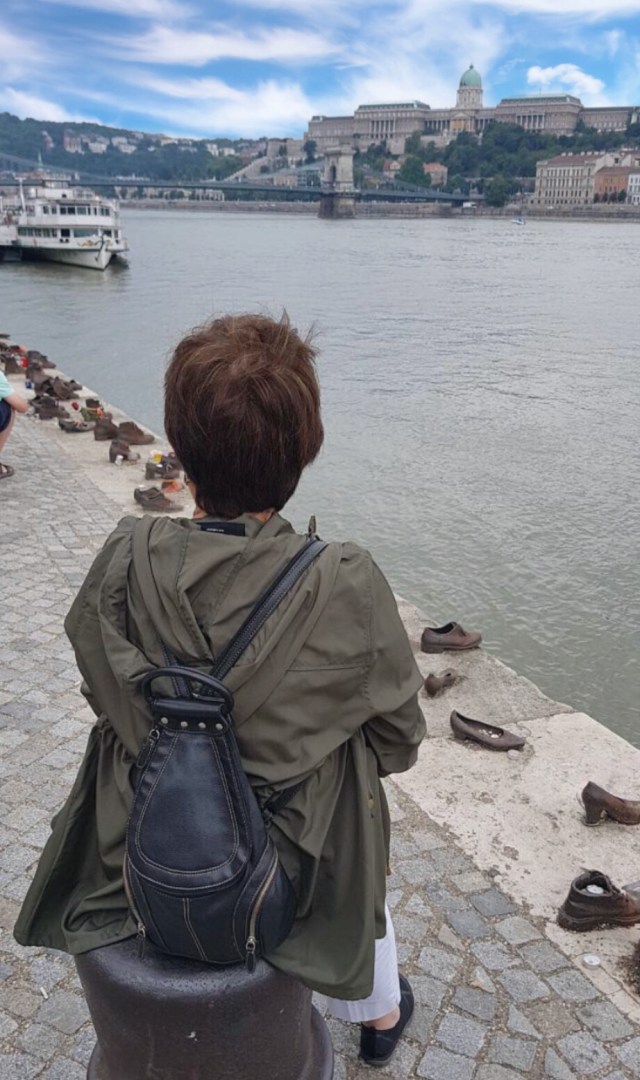
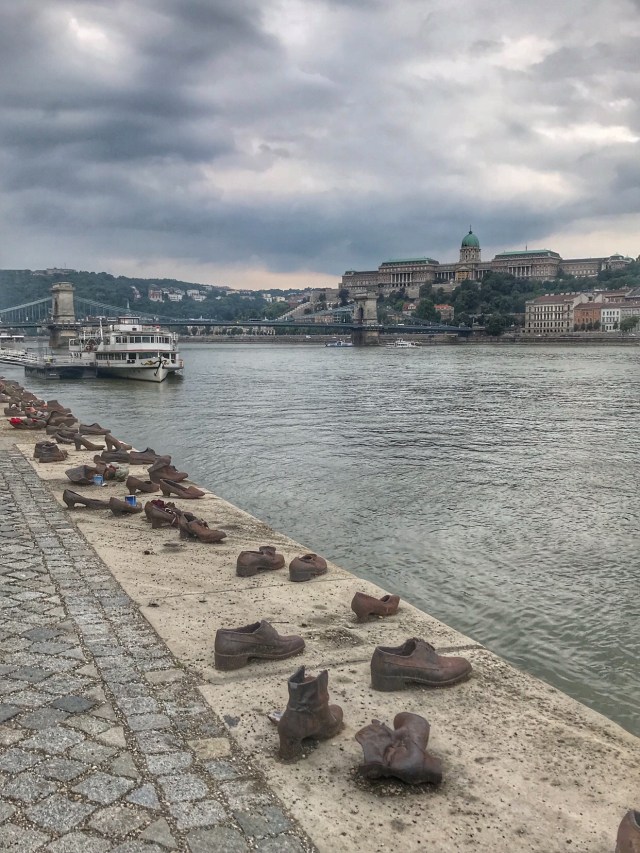
Hungary has heartbreaking stories to tell. And many stories are told in powerful symbols that are poignant reminders of a sad history. On the Pest side of the Danube, an evening stroll along the riverbank promenade is both refreshing and heartbreaking. The memorial is just a few meters south of the Parliament and consists of 60 pairs of shoes made of iron. Cast iron signs have the following text in English (also in Hebrew and Hungarian) : “To the memory of the victims shot into the Danube by Arrow Cross Militia Men in 1944-45. Erected 16 April 2005″.

I thought the victims were ALL Hungarian Jews. And that they were executed by Nazi Germans. I’m wrong on both counts. Many Hungarians were killed by fellow Hungarians and Germans. The Arrow Cross Party, who shared the same ideologies with the Nazis, took as many as 20,000 Jews from the Budapest Ghetto. It is claimed they were all executed at the banks of the Danube River. In February 1945, the Soviet forces “liberated” Budapest from the Germans. And that’s another sad story.

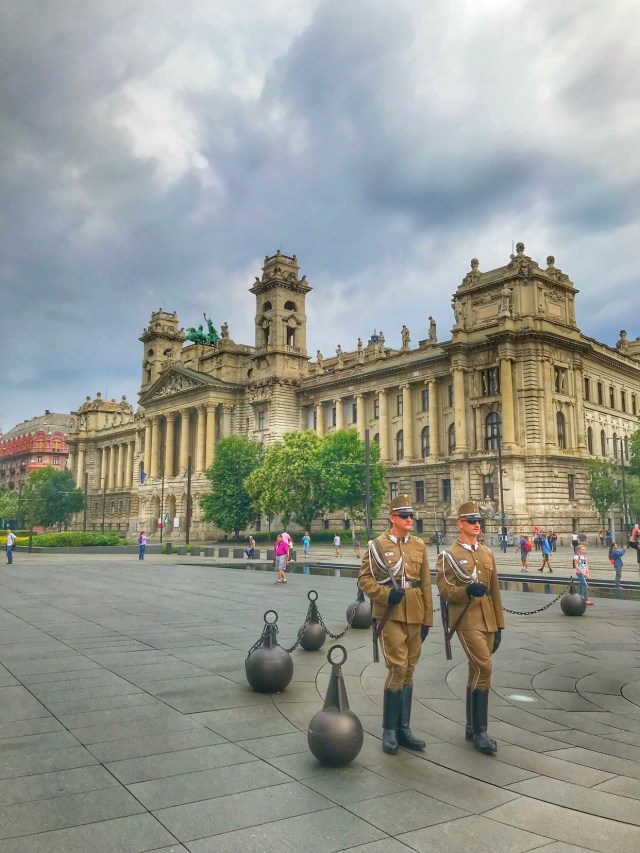
From Nazi Germany to Soviet Communism, Hungary suffered. Typically, I skip places where I feel negative vibes. But I was drawn to these symbols. The hole on the Hungarian flag hoisted over the Tomb of the Unknown Soldier. A dove shedding a tear. Old photos from a not so distant past. The chilling story of the Hungarian Uprising of 1956. Just look at that flag above the Tomb of the Unknown Soldier. The hole is right where the Communist Coat of Arms used to be. It was cut out and this symbolism became the battlecry of the Hungarian Revolution of 1956 against its Soviet-influenced, Soviet-backed government. There is a sad ending here where the uprising was crushed by Soviet tanks rolling into the narrow streets of Budapest. Power and might to crush a Revolution. About 2,500 Hungarian protesters died, and 200,000 fled as refugees. Many Hungarians consider this as the nation’s worst tragedy.

They’ve been through a lot, and these monuments and memorials reinforce that sad memory. No one forgets. 😔 One can’t help feeling impressed with the resiliency of these Hungarians.


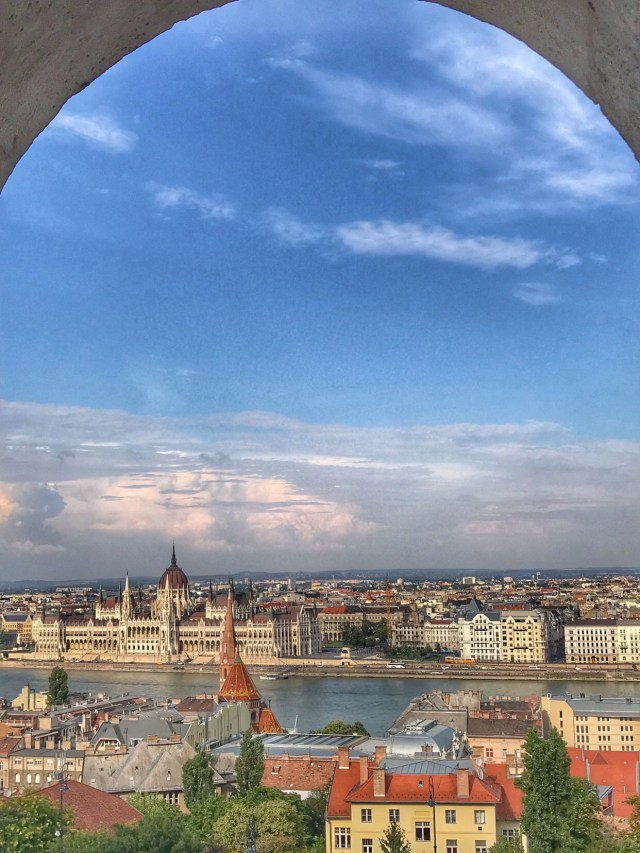
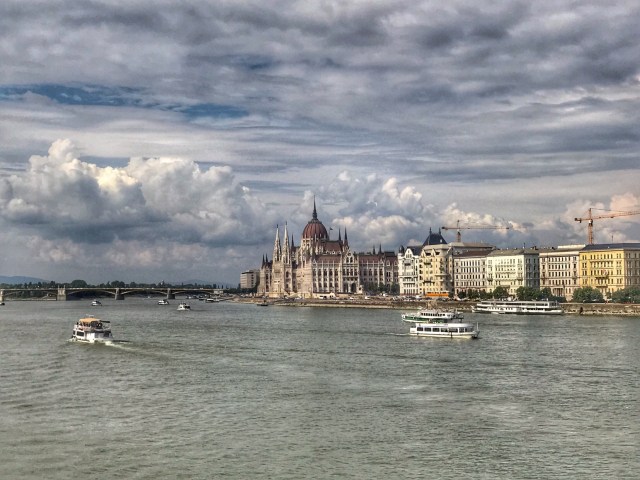
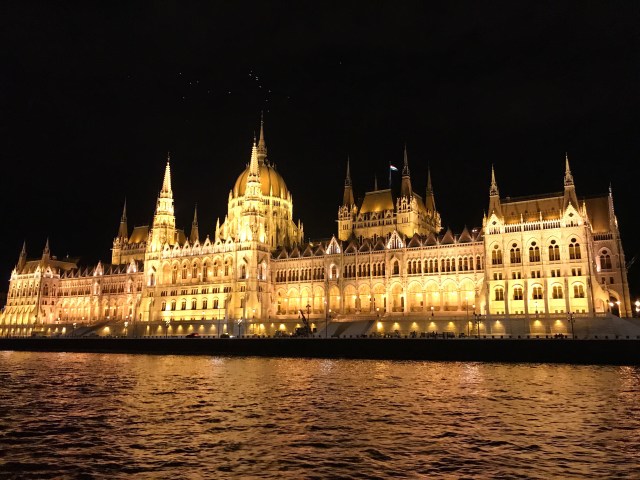
Flanking the Danube River are Buda on the West and Pest on the East Bank. The “tale of 2 cities” merging into one has been subject of many discourses and inevitably comparisons are drawn. Our hotel is on the Pest side. This is where the Parliament is, best viewed from across the Danube in Castle Hill. A very handsome building which is only 3rd largest in the world.

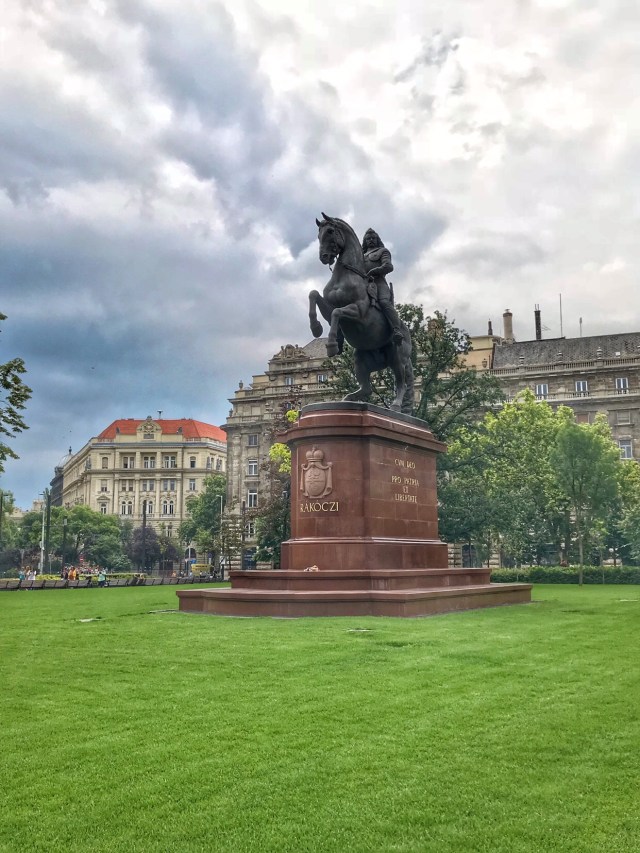
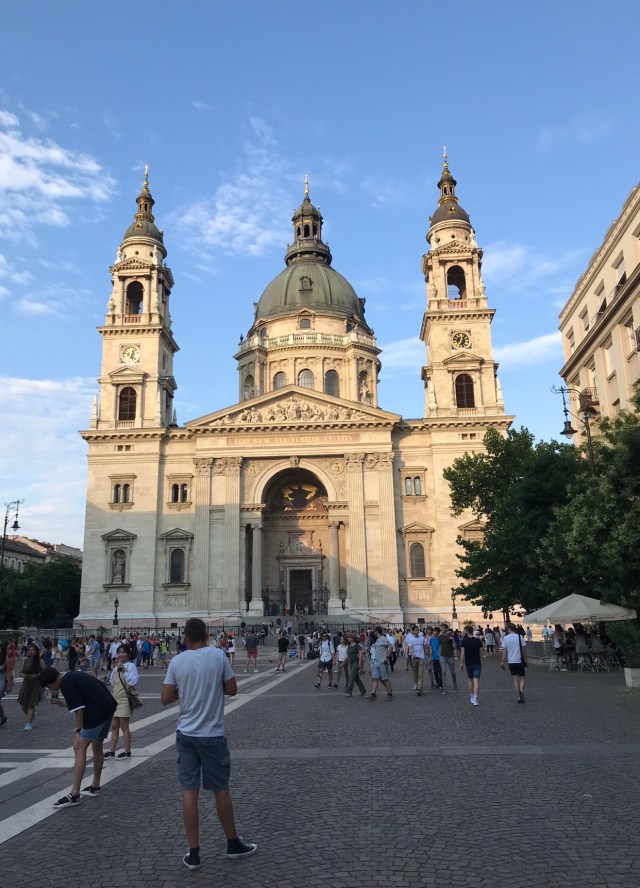
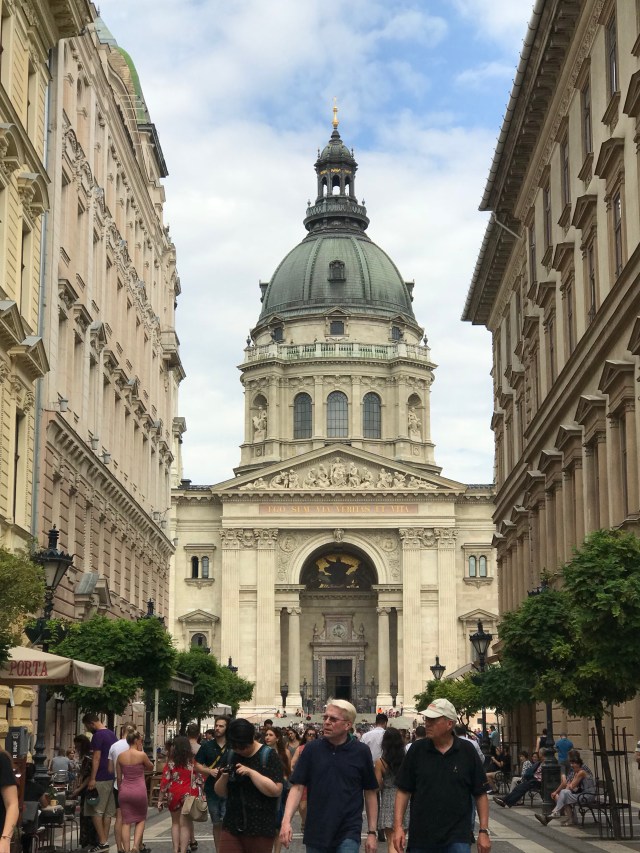
Pest is flat, but bigger. Where Buda is more formal, even reserved, Pest is more vibrant. Nightlife is certainly livelier on the east bank of the Danube. It may not be “quiet and less crowded” as its hilly half, but this is where the action is. The coffee and bar scene here is tops and while relatively “new” and “young”, its bolder character gave way to many prominent edifices like the Parliament, Heroes Square, the “ruin bars”, the iconic St. Stephen’s Cathedral, and the many bronze statues scattered all around. But in my mind, nothing beats the eclectic bronze shoes lined at the edge of the Danube. The story goes that Hungarian Jews were told to take off their shoes, put whatever jewellery they have inside the shoes, and stand by the river edge. Then they were summarily executed and their bodies fell into the river as they took the shots from Budapest’s Arrow Cross Militia who shared the same Nazi ideology during World War II. The bronze shoes are poignant reminders of this dark period in Hungarian history.

The Central Market Hall is another iconic landmark in Pest. The market has a 2nd floor catering to tourists wishing to buy souvenirs and feast on Hungarian cuisine. There are many souvenir and handicraft for sale here, as well as food stalls where one can try Goulash, lecso, Hungarian smoked sausages, stuffed cabbage, meatballs, langos and many more. We’ve tried it here and it was forgettable if it weren’t our worst lunch. Well, it was a food court after all. But Pest is really teeming with nice shopping places, coffee bars and fine-dining restaurants. One only needs to do a little research. Thankfully, one of my friends made sure we ate very well here. 🍽

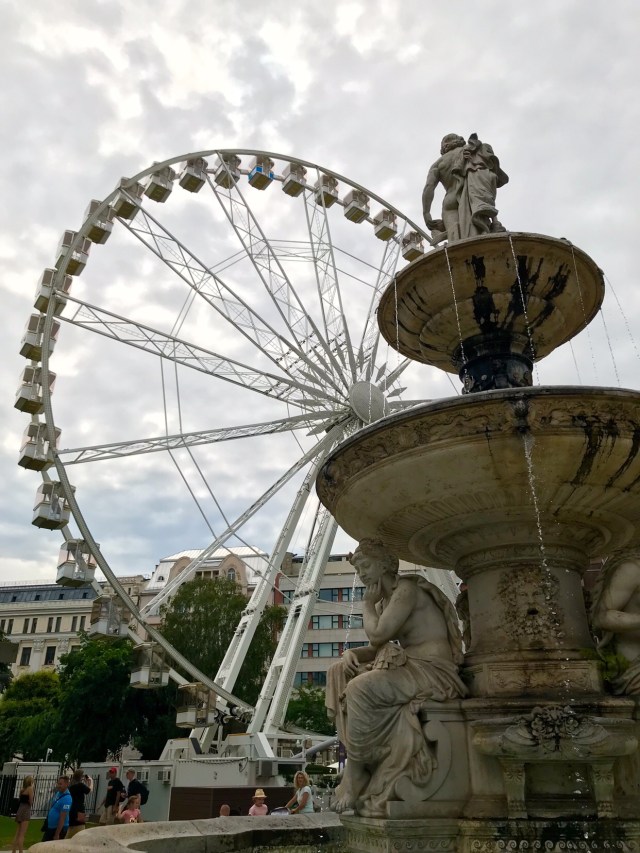
Michael Jackson fans would love it here. There is an MJ Memorial Tree in a tiny square corner just right across Kempinski Hotel where the late pop idol used to stay. The tree has assumed a Shrine of sorts with MJ photos plastered around the trunk. And Hungarian fans still gather here on MJ’s birthday, performing MJ’s popular dance moves. Nearby is the Hungarian Eye, much like the London Eye. It’s colossal but I feel it’s an eyesore amidst the many beautiful and historic buildings in the area.

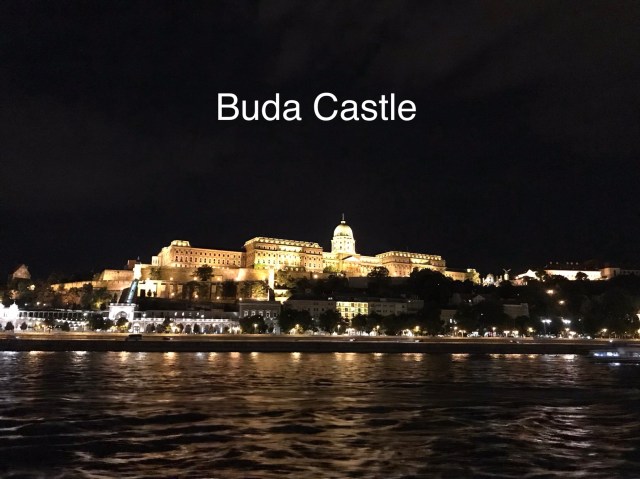
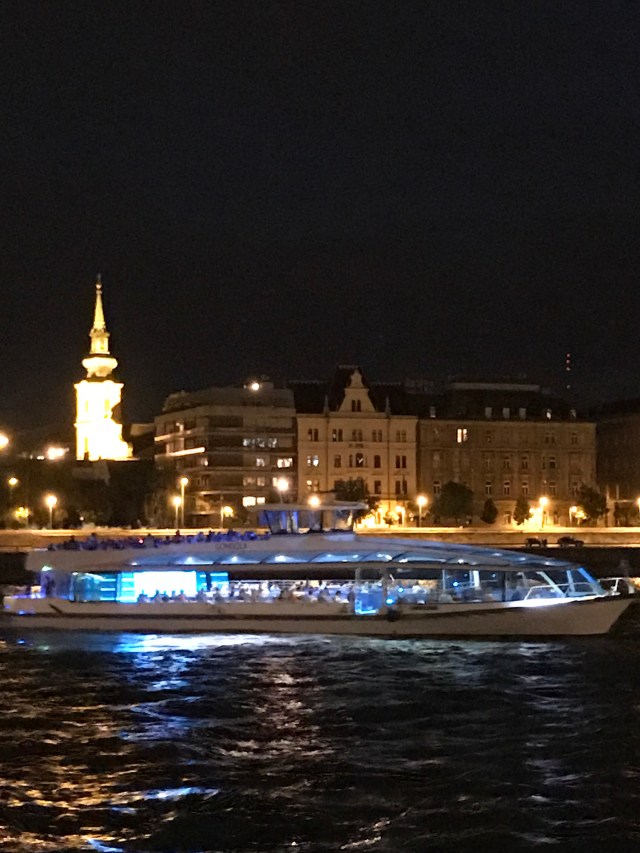
Budapest has a number of popular thermal pools or baths, clearly something they must have picked up from the Romans and Turks. It was tempting to check out Széchenyi or Gellért if only to watch old men play chess while half-submerged in hot thermal waters. We passed on this one and chose to instead hear mass at St. Stephen’s , enjoy a good dinner then take an evening Danube cruise to see the Hungarian landmarks all lit up. We enjoyed both Buda and Pest. But when I do make a next visit, I’d likely try a hotel in Buda if only to feel its more sober night life.

Buda of Budapest


It used to be Buda, Pest and Old Buda. Buda and Pest separated by the River Danube, with the Old Town resting on the left bank which is Buda. Earliest settlers were Celts until the Romans occupied the present-Day Budapest in the first century B.C., annexing it as part of the Roman Empire. Then there was Attila, and the Huns ruled from the 5th century till the Magyar tribes arrived in the 9th century. By all accounts, the settlers and rulers lingered for centuries to affect Budapest’s way of life in many, many ways – art, culture, cuisine, architecture, language.

By the 10th century, the Hungarian Kingdom was established and the first king was St. Stephen who converted Hungary into Christianity. Soon, the French and Germans migrated here and then, the Mongolian invasion happened in the 12th century, thus destroying both cities. Through the centuries until Buda, Pest and Old Buda (Obuda) were joined in 1873, the city saw its transformation from Medieval Hungary to Renaissance Budapest to Turkish Budapest. And then the Hapsburgs came. Pest was soon to become the cultural and economic center of Hungary. But let’s talk about Buda first, and deal with Pest in my next blog. 😊

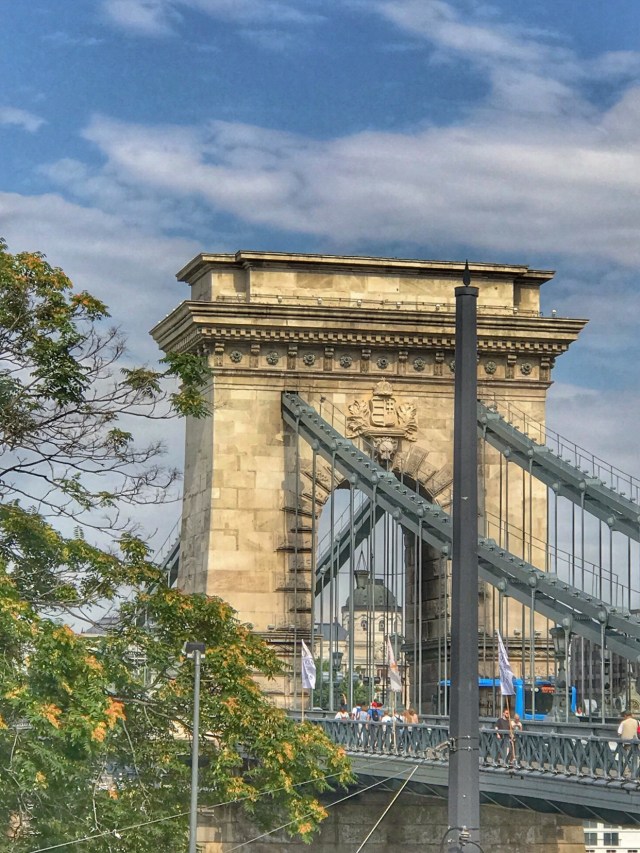
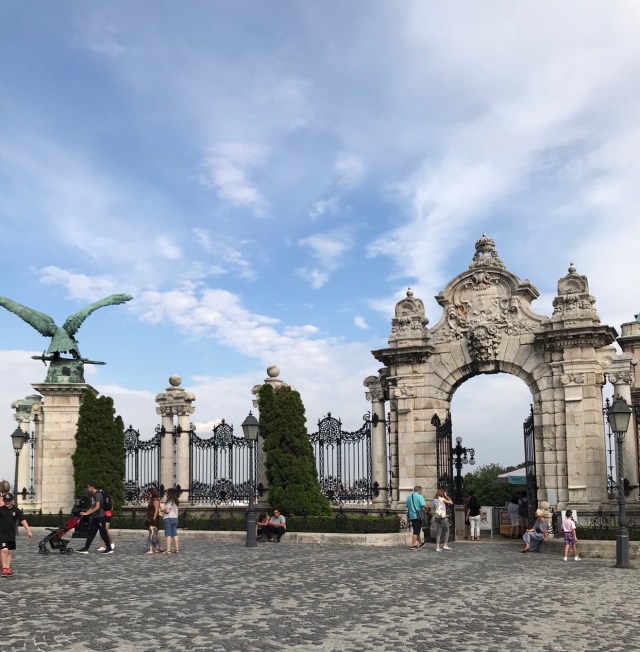
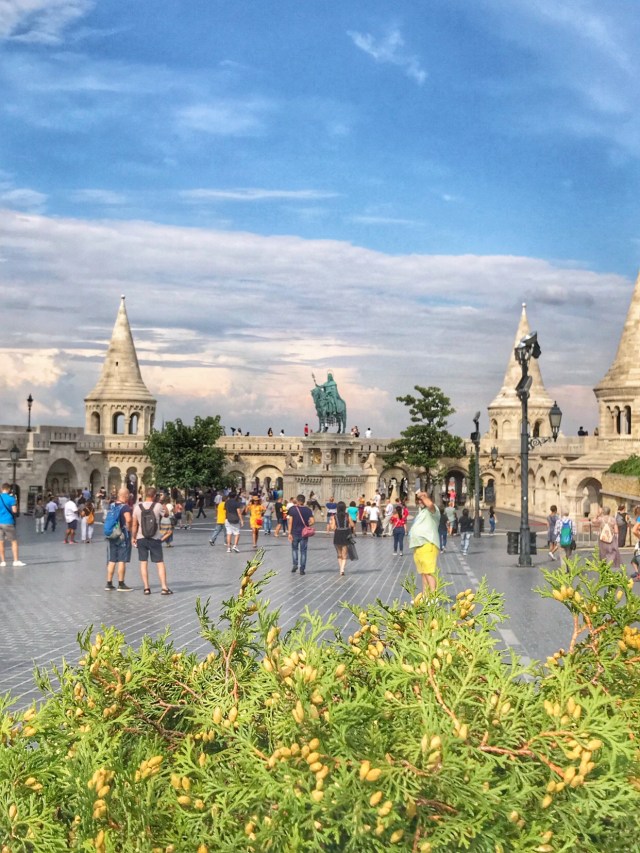
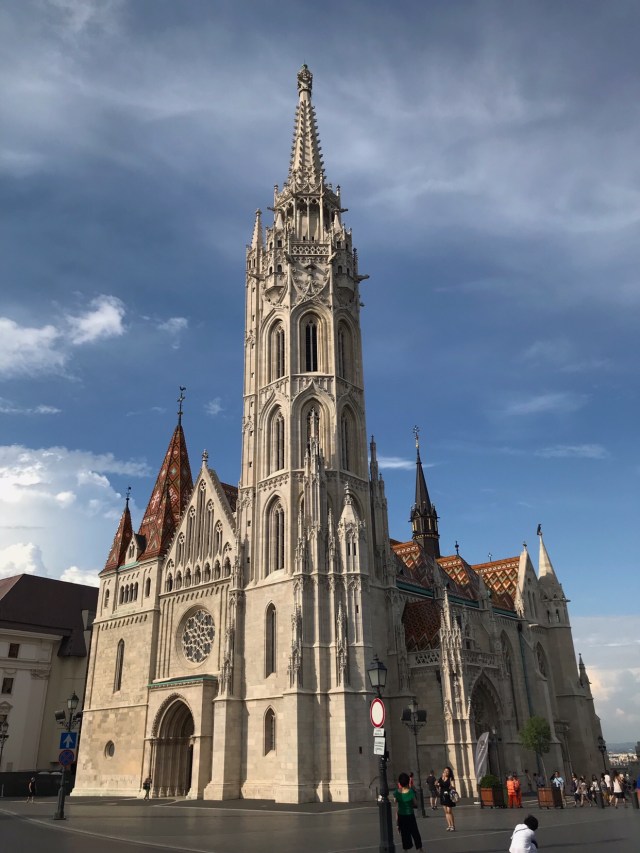
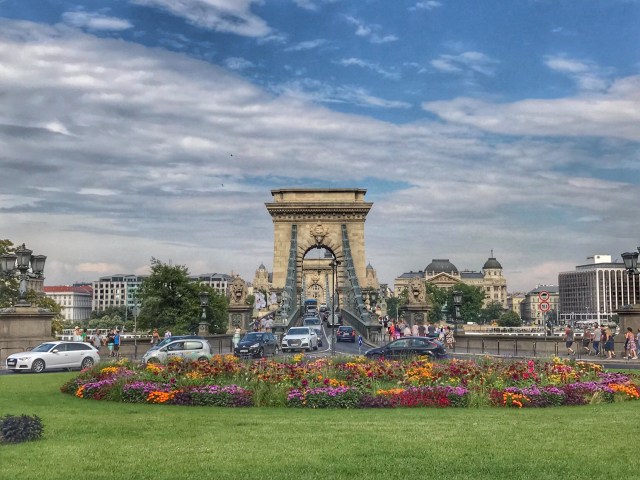
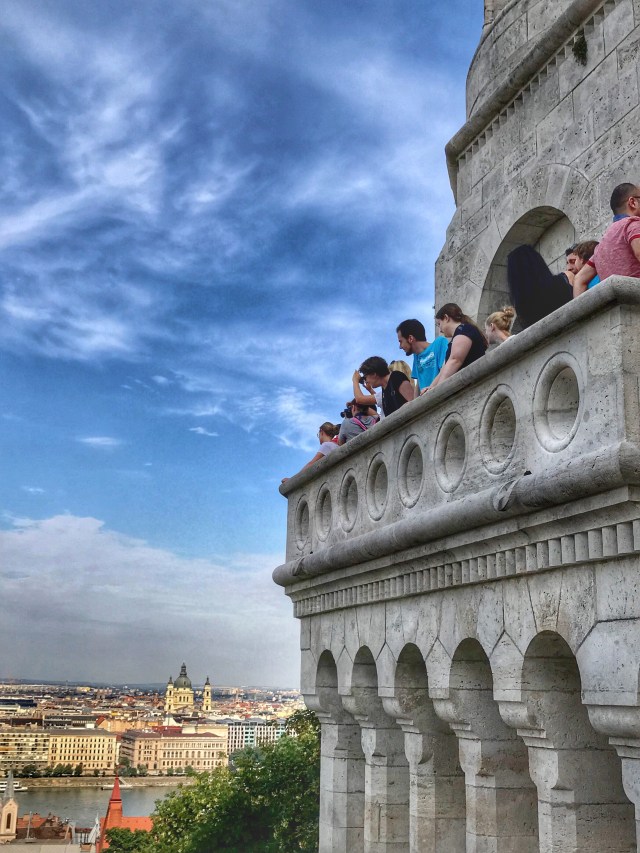
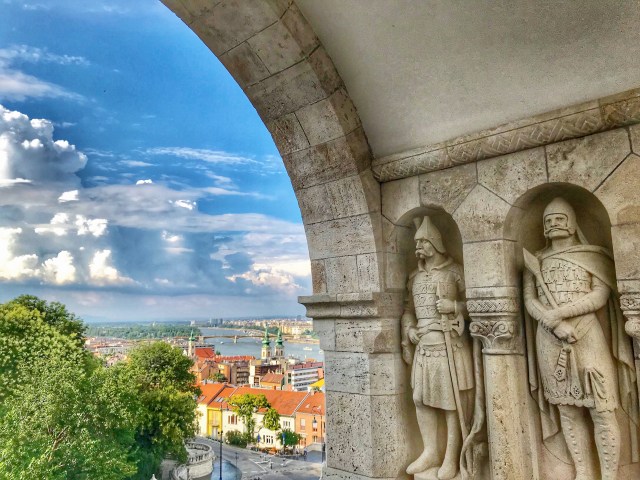
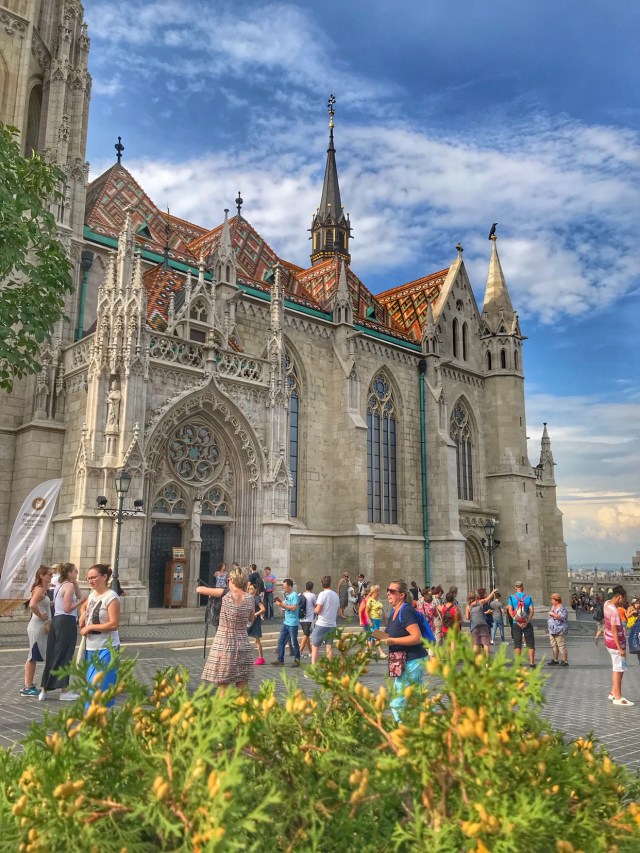
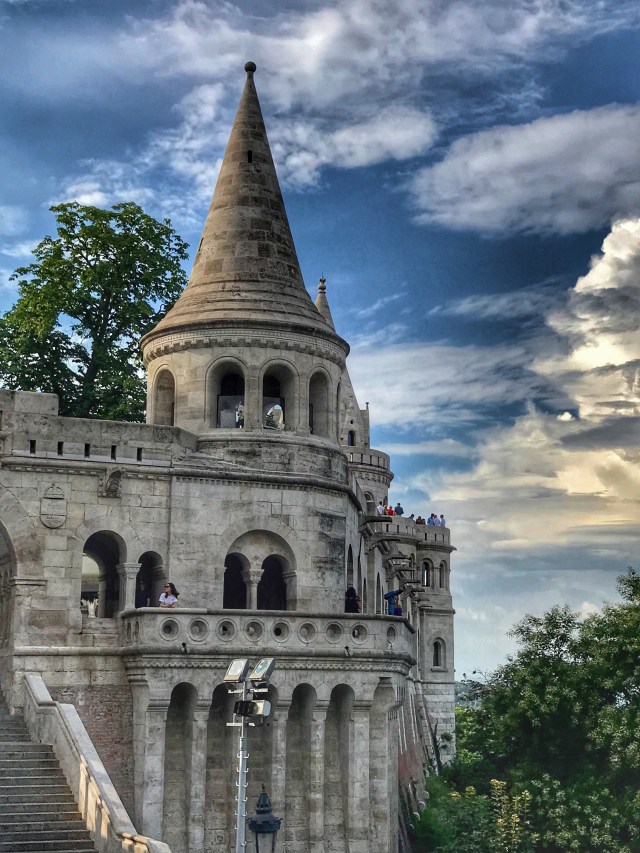
Buda Castle sits on Castle Hill with a perfect view of the Pest side. You can appreciate a night view of Buda riding a boat which glides slowly along the Blue Danube, or you can join a walking tour which requires stamina to last nearly 3 hours. Oh, there’s a funicular to climb up Castle Hill and visit the 3 major attractions on this side of the river. But we WALKED. 🏃‍♂️🏃‍♀️ And we crossed the Chain Bridge ON FOOT. 👣👣And we CLIMBED. 🚶‍♀️🚶‍♀️🚶‍♀️All the way to Buda Castle, 🏰🏰 Fisherman’s Bastion and St. Matthias Church 🕍🕍🕍 These 3 account for the best Buda attractions on the western bank of the Danube . All UNESCO Heritage Sites.

Its rich history doesn’t end here. The Austro-Hungarian Empire can claim much of what present-Day Budapest is. The Empire lasted only till the First World War. Then, during the Second World War, it cast its lot with Nazi Germany. The Germans seized the city and soon a dark period began for the country’s Hungarian Jews. There were political upheavals and once more, the nation in the 19th century transitioned from being a Hungarian Soviet Republic for a brief period, to being a Kingdom without a king.

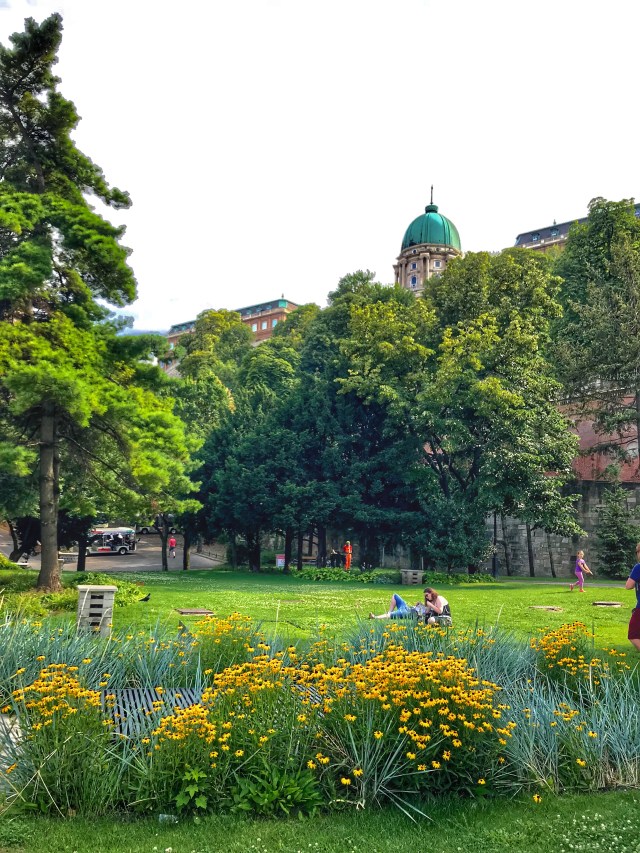
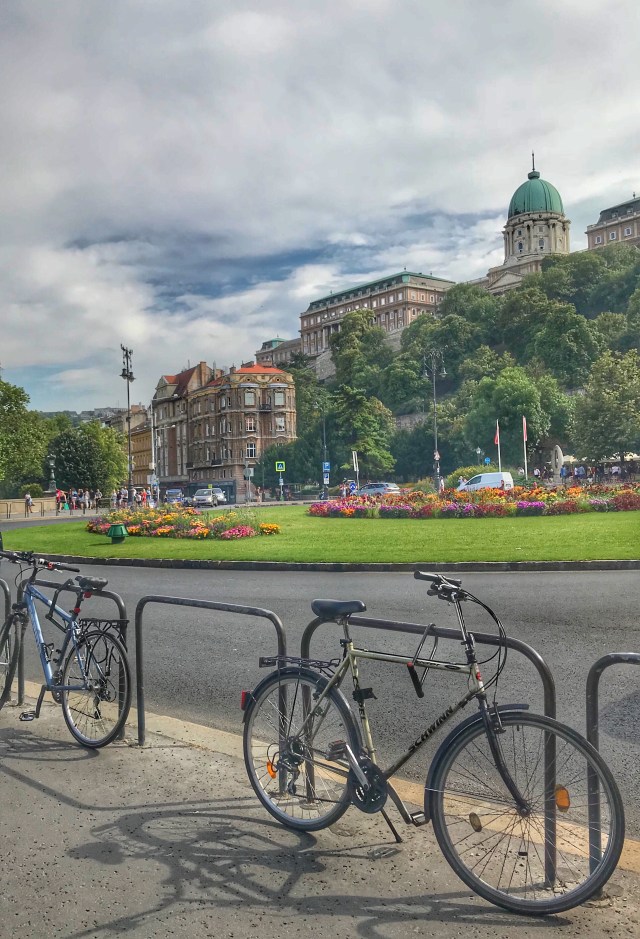
Castle Hill looks more “imperial” than its better-half on the right bank. Where Pest is flat, Buda is hilly. The first bridge connecting the 2 was built only in 1848. The other bridges look nothing less and maybe more interesting for those eager for a view of the thermal pools. Among its attractions, I like Fisherman’s Bastion with its fairy tale windows offering the best views of Pest. I am also intrigued by St. Matthias Church which was the venue for the coronation of the last 2 Hungarian Hapsburg monarchs : Frank Joseph in 1867 and King Charles IV in 1916. Earlier destroyed by the Mongols, it was reconstructed, restored and survived wars to what it is today. Side by side, the Saint Matthias Church and Fisherman’s Bastion are 2 sites not to be missed. Or for that matter, a visit to Budapest is a must-see destination. One falls in love with this city. Buda or Pest side, both are lovely. On foot or gliding on a riverboat, both sites are magical.


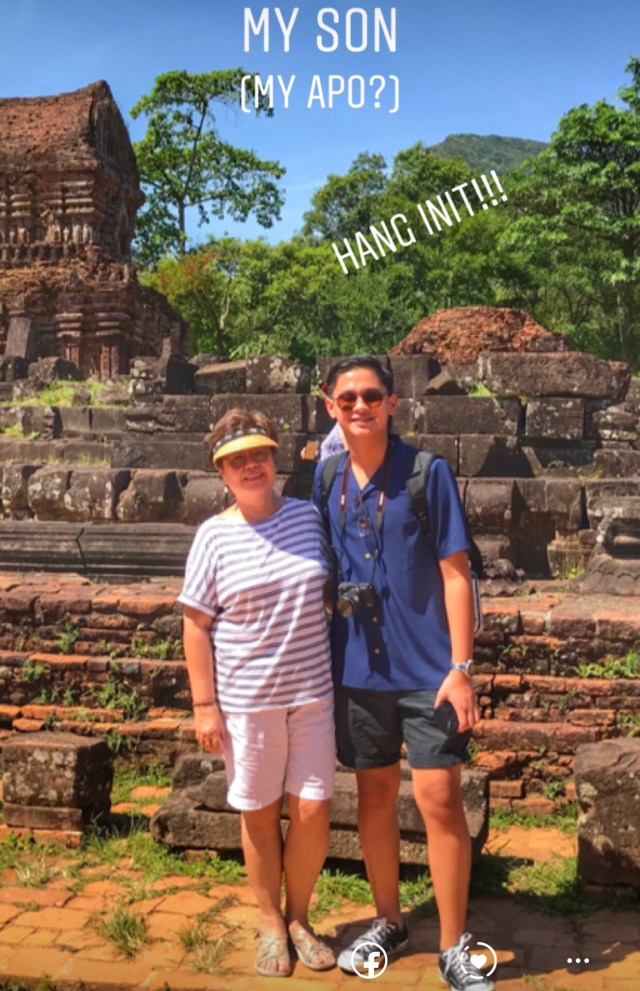
My Schengen visa is good till December 12 of this year. I do want to use it again and in fact drew up several options — like back to Spain for a week’s camino with my apo but he refused, thinking it’s too much hard work (hiking), or going to Croatia, or Iceland, or Poland — places I haven’t been to — or visit a friend in Switzerland. All plans fizzled out. Then some of my friends invited me to join their small group on an “impulsive, whimsical” trip to Vienna, Budapest and Bratislava. Problem is they are leaving Manila while I’m still in Vietnam. So I did the next best thing. I booked a ticket flying to Vienna on the same day I’m arriving from Vietnam to catch up with them. Why not? Or as they say here, “wine not”?

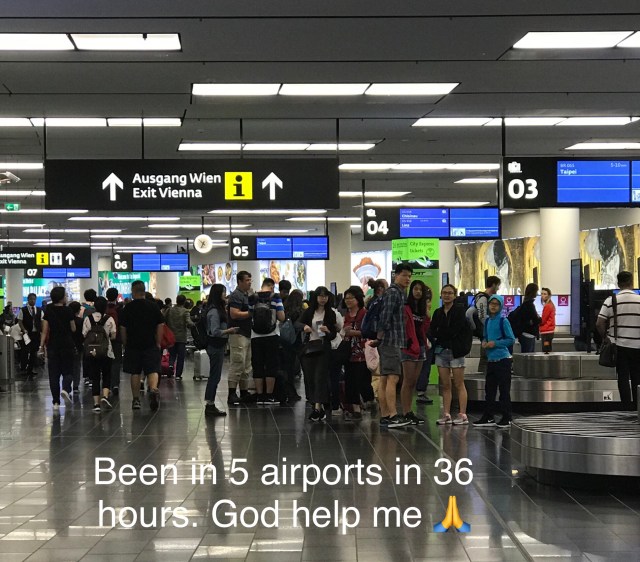
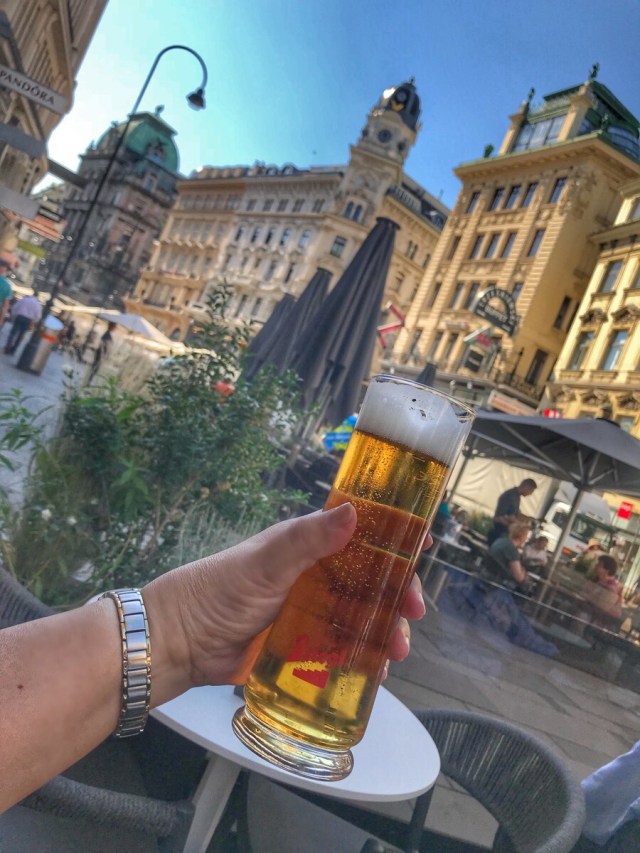
I was very tired when I landed early morning in Vienna. I should have slept throughout the 12-hour flight from Taipei to Viena but flying solo makes me all too cautious and alert that I must have slept only 3 hours max. I found my friends ready to hit the city when I reached our hotel soon after they were done with breakfast. And so we set off. By 9am, they were eager for their Viennese coffee after only an hour of city walk. (I was keen on having a beer though — yes, at 9am!) – and so we sat down and ordered our preferences. 🍺☕️

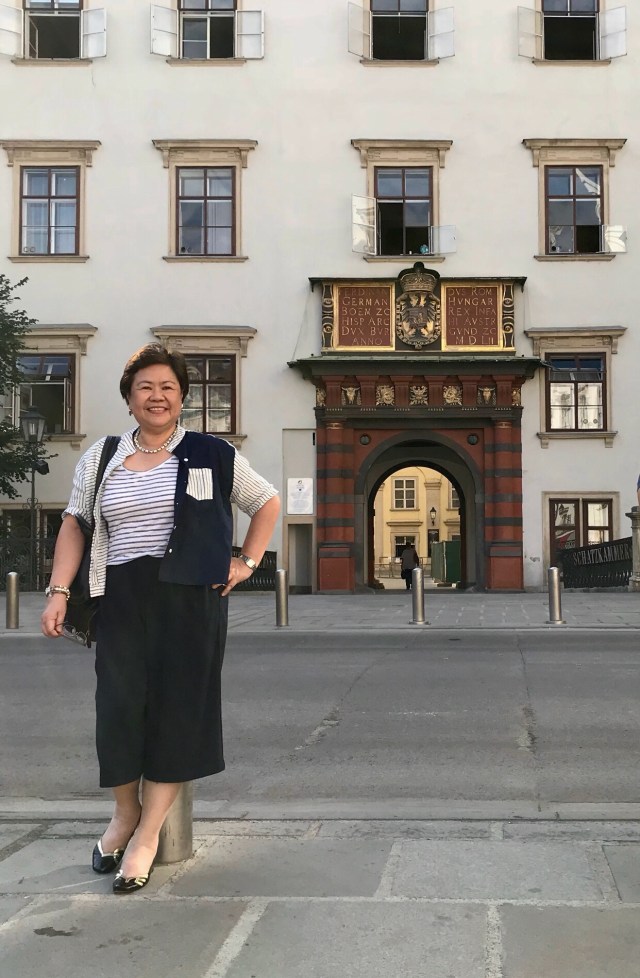
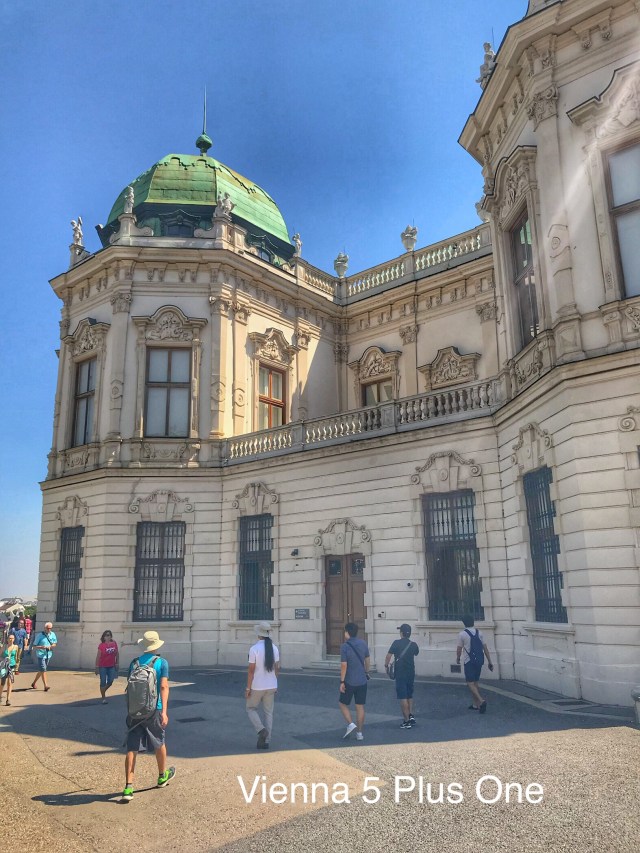
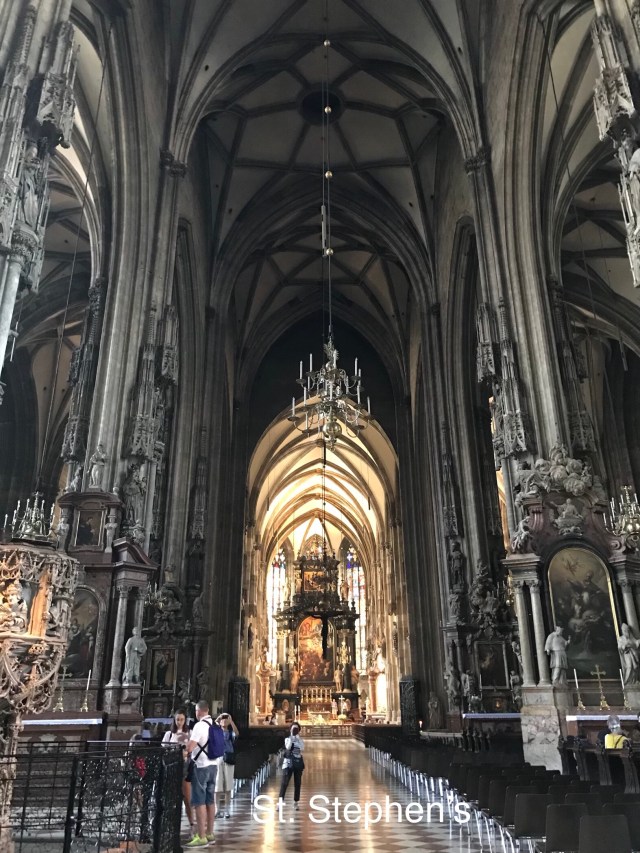
Since they got here earlier and covered the major Vienna attractions already, we planned on just a few more. It’s my 4th visit here so I don’t mind missing some of the sights. But I haven’t been to Belvedere Palace, so we did that. Plus a visit to the St. Stephen’s Cathedral. 🙏🏻

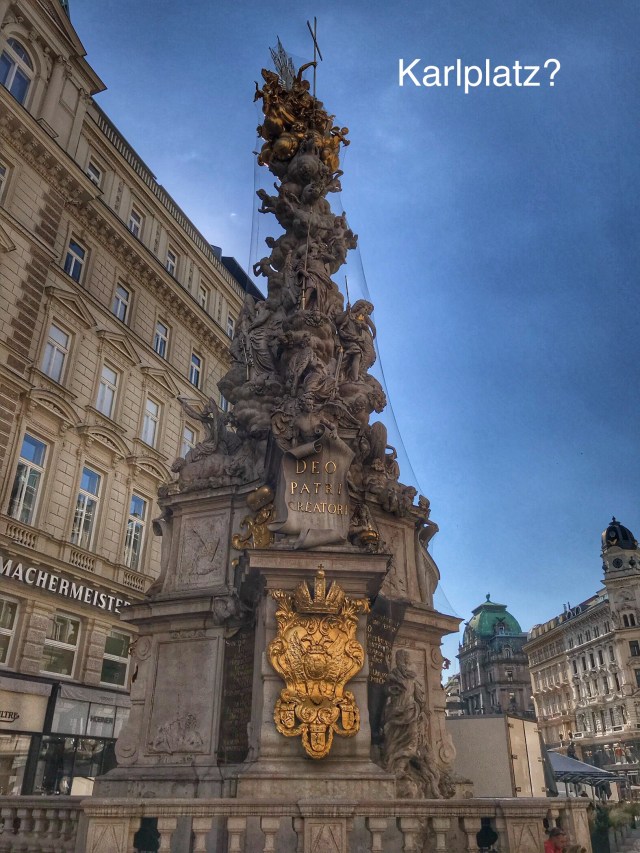
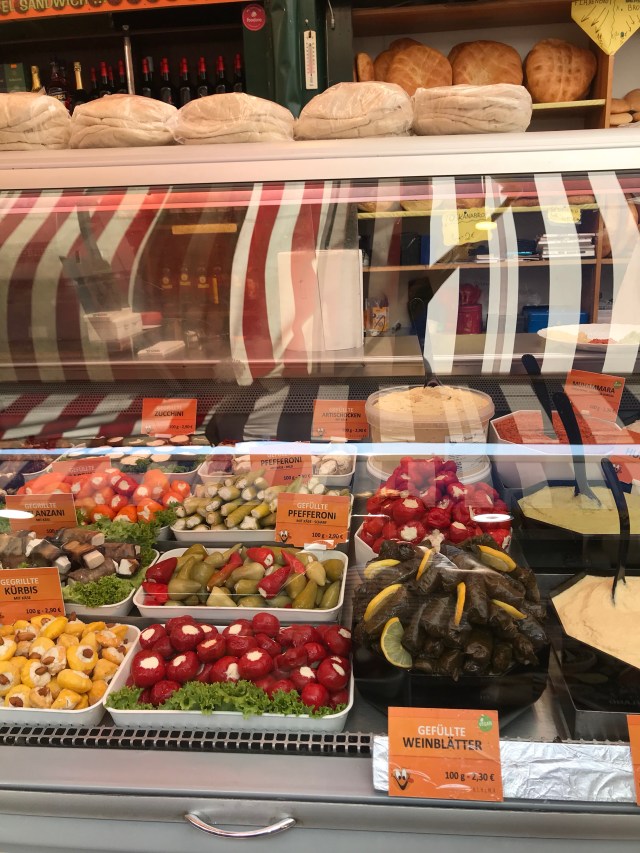
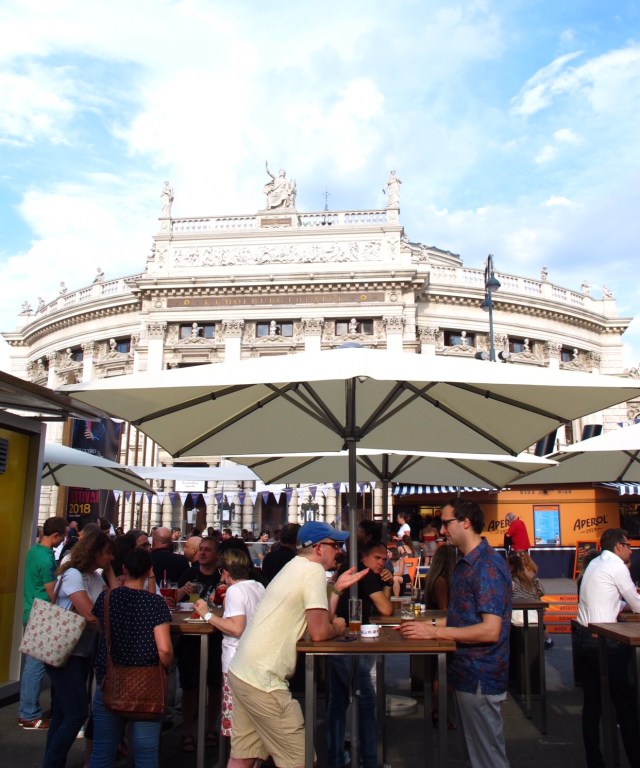
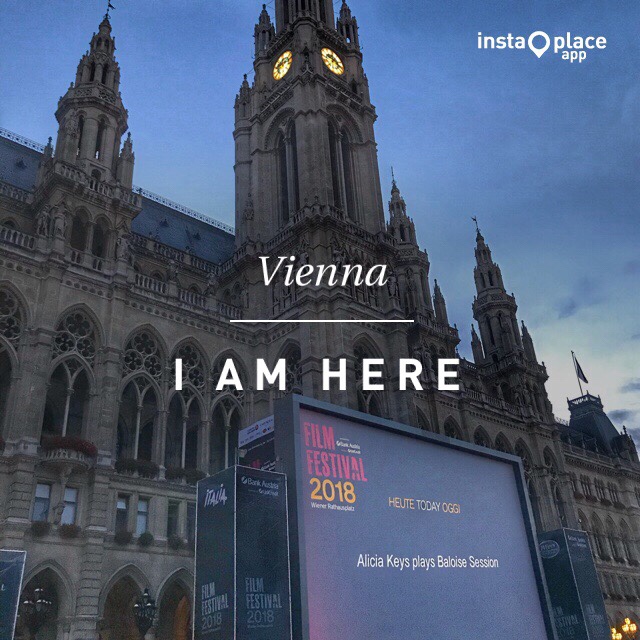
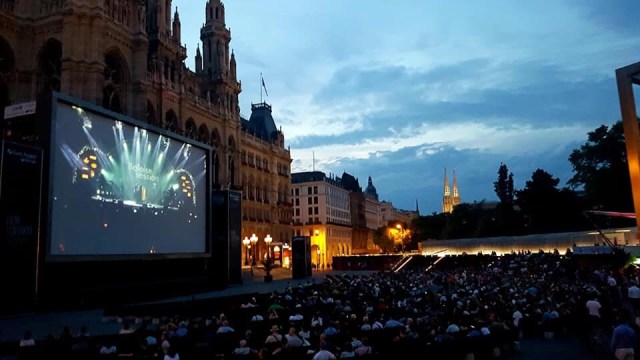
After Belvedere, St. Stephen’s and another pass of the Hapsburg Palace, we went in search for a good lunch in the Naschmart. Then we headed back towards the hotel for some rest. By evening, we set off for the Rathaus where a musical concert is taking place and where a lively, festive mercato-type food court is set up. I love these summer concerts and food camps. Dinner was an assortment of Viennese, German, Hungarian and Slovak delicacies although we likewise spotted some Asian food stalls. Here, we had our wine, spritzer and beer. Plus assorted sausages, meatloaf, and whatever else we spotted in the next table! It was crowded and we were lucky to get a table. No chairs. But we’re just too happy with our drinks, pica pica and music that we can’t complain.

Since the musical concert wouldn’t start yet and we’re done with dinner, we decided to make good use of our time. The coffee and pastry shop at the corner beckoned. It was time for iced coffee, lattes, sacher torte and apple strudel. We picked a good spot to people-watch that we had to struggle getting up and out to claim our seats in front of the Rathaus for the musical concert.

While my friends stayed 3 nights in Vienna, I only managed a night. No worries. I’m really more keen on the trip’s 2nd leg: Budapest in Hungary. So, the next day we geared up for the train ride to Budapest. Watch this page!


A whole week in Vietnam. From Manila, Ho Chi Minh City was our first destination but we were really excited over our first time in Central Vietnam. This is our story covering Saigon (now Ho Chi Minh), the Imperial Citadel in Hue, Langco Fishing Village, the Cham Museum and beaches of Danang, the preserved Ancient Lantern town of Hoi An and the Ruins of My Son. Staying a couple of nights each in Saigon, Hue and Hoi An, we took day trips to nearby attractions and maximised our time without really forgetting we’re on holiday. It’s not about ticking off from a list, but we left room for some spontaneous and serendipitous adventures. Including trips prompted by food cravings 😊

Saigon City Attractions:

https://lifeisacelebration.blog/2018/06/29/here-we-go-again-in-saigon/

Cu Chi Tunnels:

https://lifeisacelebration.blog/2018/06/29/cu-chi-tunnels-vietnam/

Hue Attractions:

https://lifeisacelebration.blog/2018/06/30/when-in-hue/

https://lifeisacelebration.blog/2018/07/01/say-whay-in-hue/

Hoi An Attractions:

https://lifeisacelebration.blog/2018/07/02/the-lantern-town-of-hoi-an/

https://lifeisacelebration.blog/2018/07/03/dining-in-hoi-an-vietnam/

My Son

https://lifeisacelebration.blog/2018/07/03/all-bricks-no-mortar-my-son/

In case you feel like checking out previous blogs on earlier trips to Hanoi, Halong Bay, Hoa Lu, Tam Coc and Saigon, here are the links:

https://lifeisacelebration.blog/2014/12/04/a-slice-of-luxury-aboard-paradise-cruises-halong-bay/

https://lifeisacelebration.blog/2014/12/06/hanoi-not-a-persnickety-trip/

https://lifeisacelebration.blog/2014/12/03/hoa-lu-and-tam-coc-on-a-rainy-day/

https://lifeisacelebration.blog/2011/11/17/eating-around-ho-chi-minh-saigon/


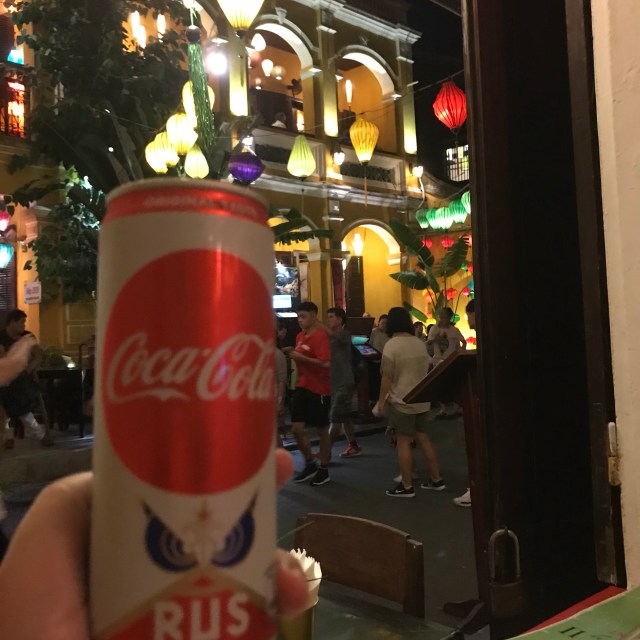
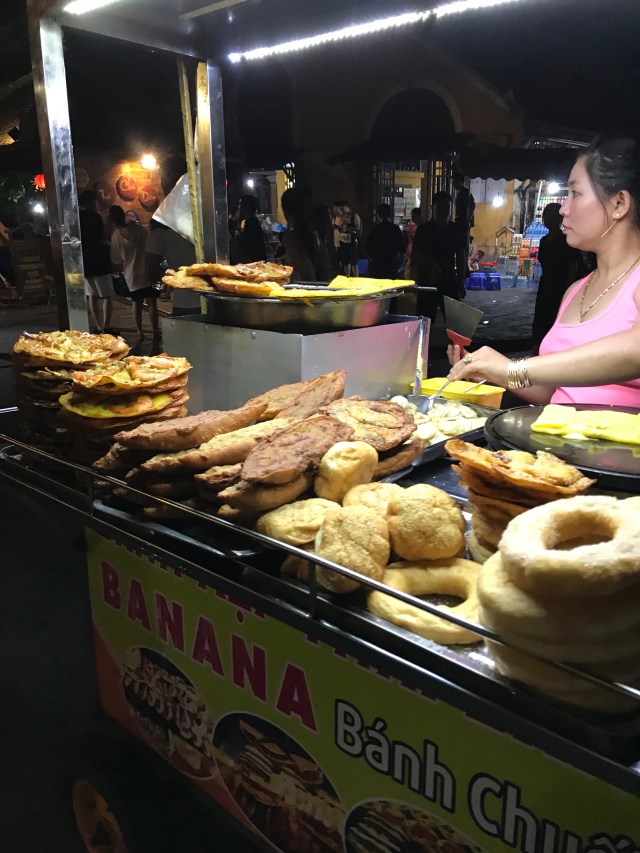
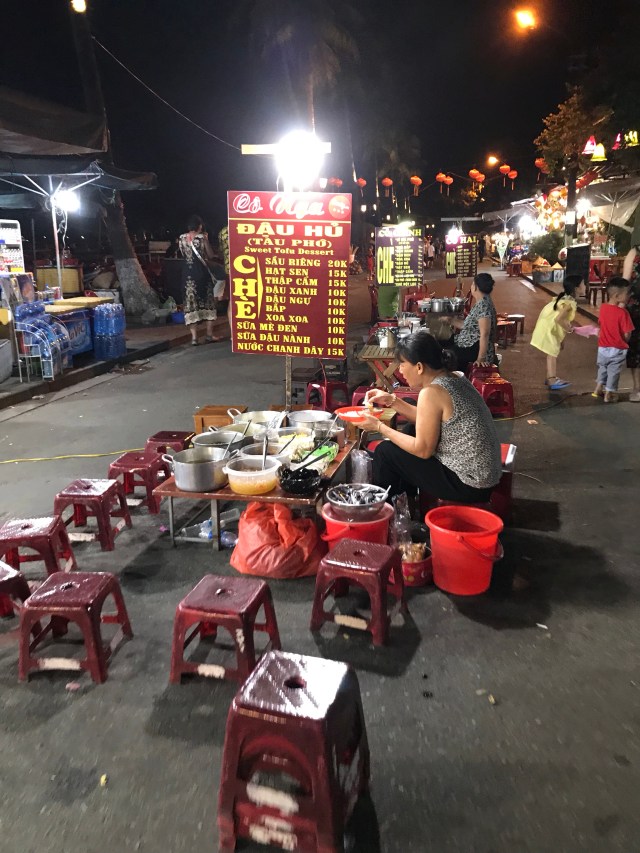
Hoi An is a well-preserved ancient trading port where many restaurants offering authentic Vietnamese cuisine are clustered in an area looking more like a quaint French village. Here, the nights get more vibrant as lanterns lit up and canal boat rides are peddled to tourists. The street food scene is very lively as stalls after stalls offer Hoi An specialties like steamed and fried dumplings, chewy rice noodles like Cao Lau, pancakes, mango and banana cakes.

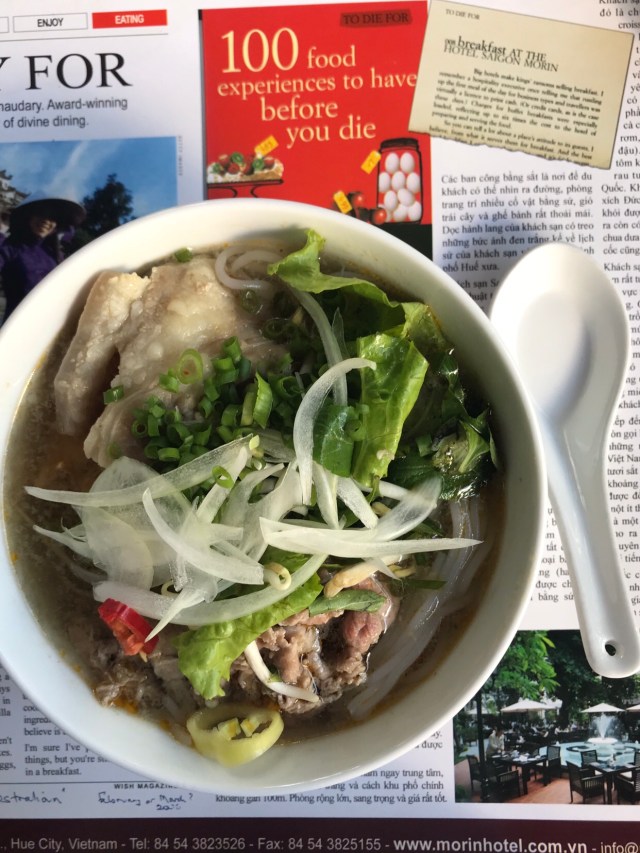
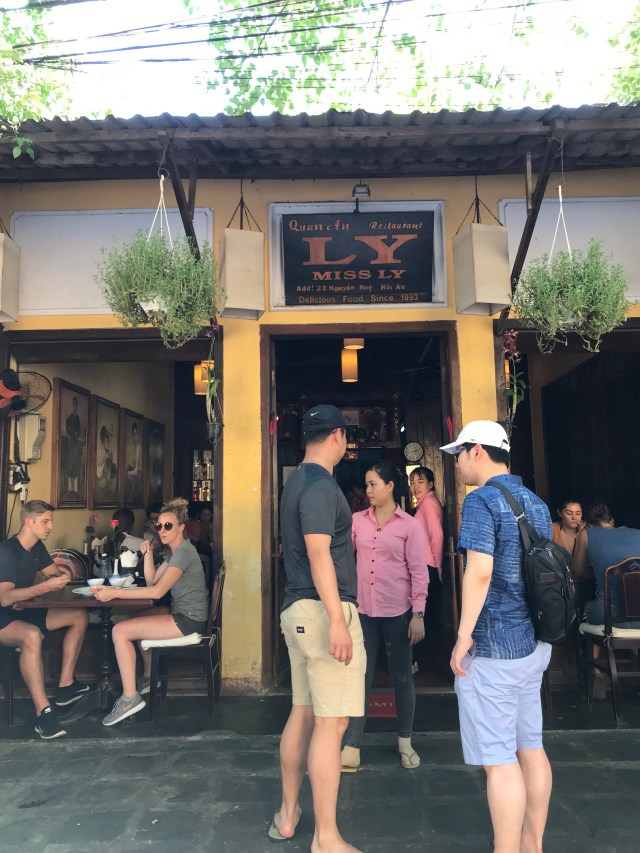
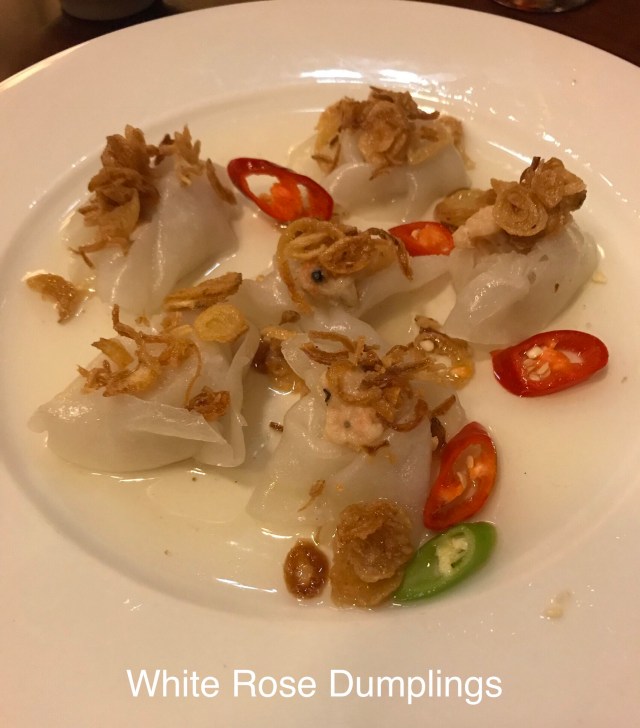
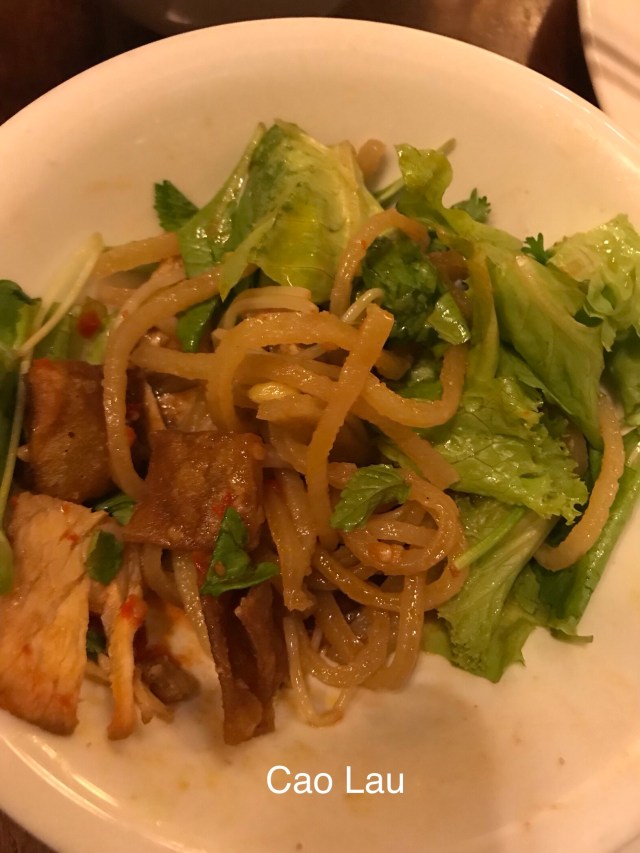
It was very tempting to claim one of those low stools and order the very Hoi An rice noodle dish called Cao Lau, topped with barbecued pork slices, beansprouts and herbs. So with the White Rose dumplings which locals call Banh Bao Vac. And then there’s those open-face pancakes which are really fried wontons with toppings of shrimps and more herbs. We did the next best thing — dined in Miss Ly which offerred all these street food and Hoi An specialties in a restaurant in the Ancient Town. All had a little kick and mildly spicy and we liked it. If you want to try it here, best to go early as it’s popular and gets really packed.

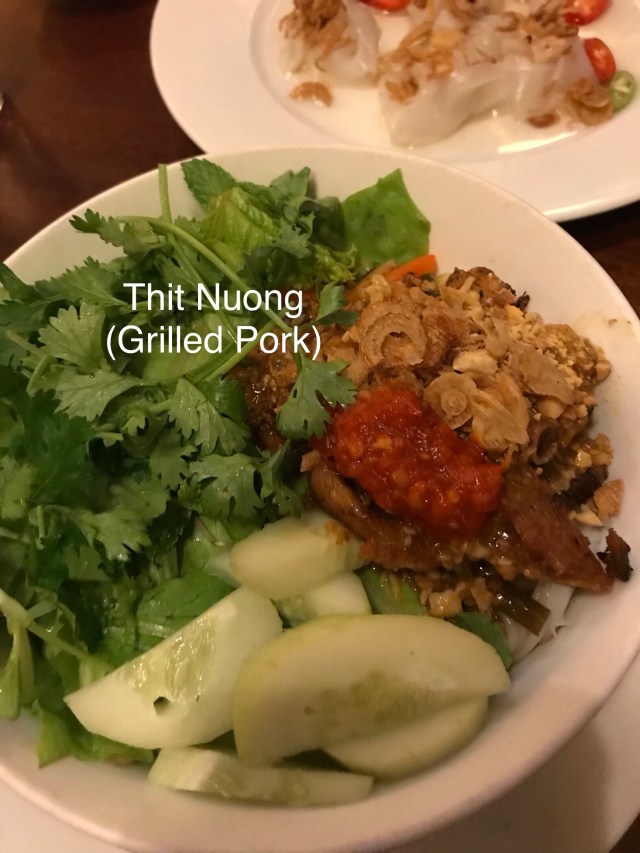
From the next table, we spotted some grilled pork served with noodles and tried those too. Very tasty. Again, with a bit of kick. We were asked, and we specified “mildly spicy” so I guess it can get spicier. All dishes are very delicious even if you have to enjoy them inside where it is more humid. Most restos offer cold towelettes to refresh you before meal is served. Without it, we’d likely sweat as most dishes are a bit spicy.

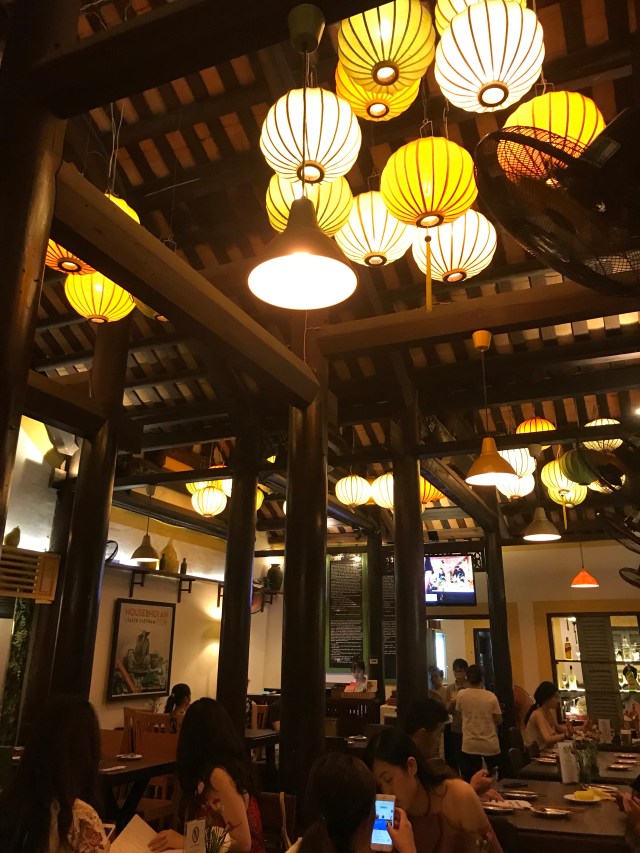
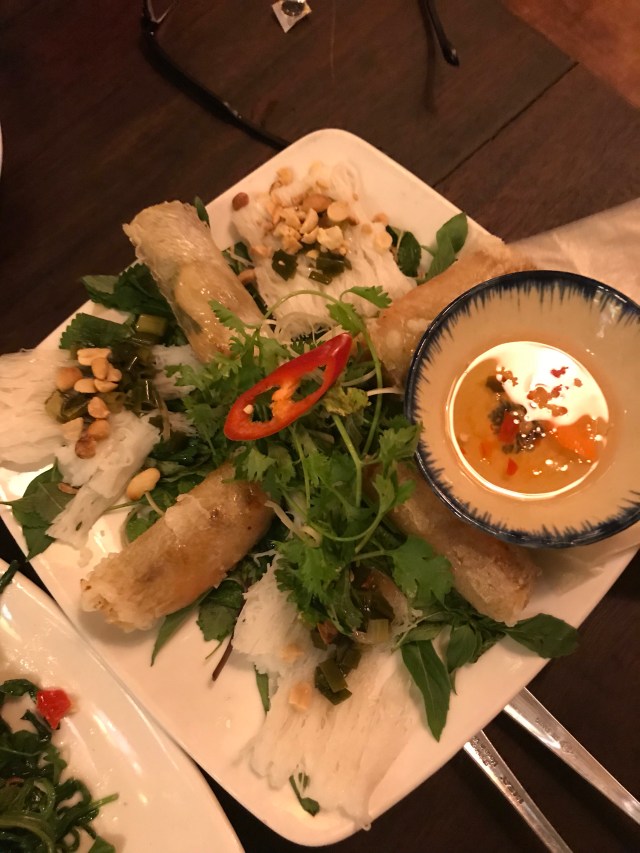
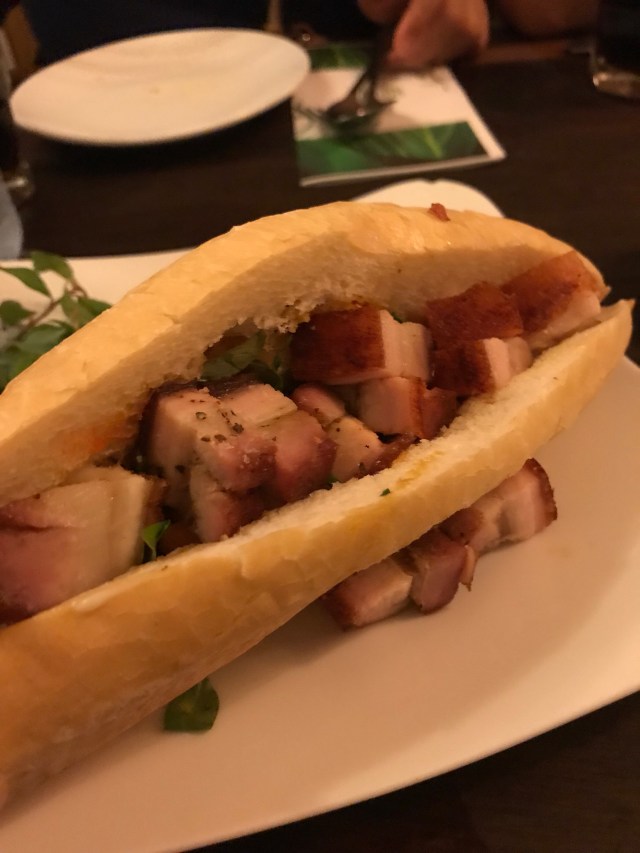
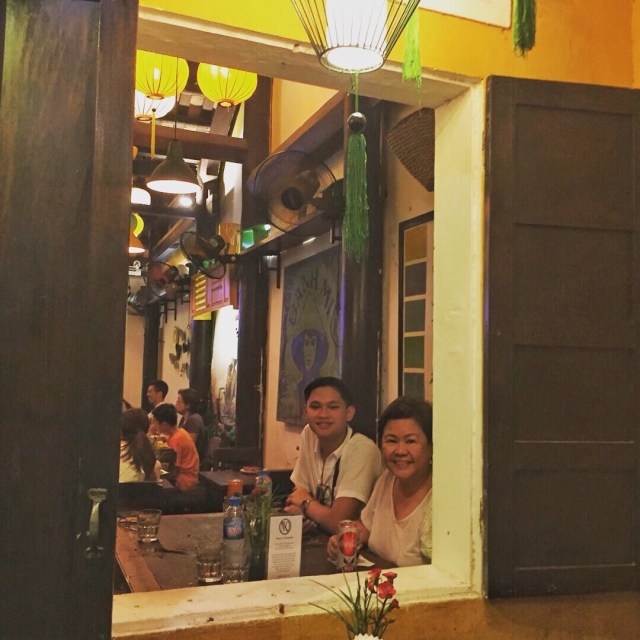
Just as popular, but a bit pricier, is Morning Glory Restaurant also in the Ancient Town. The resto must be so popular it now has a Morning Glory II just across the street. The extension likewise holds cooking classes, but we’re not into that. We’re here to eat 😊. I’ve heard many tourists asking for directions to Morning Glory. If we go by the reviews, there’s good reason to check out this place. But I think many, many restaurants here all make the grade, judging by how food aroma wafts from the kitchen to the lantern-lit streets. The fish dishes and curries we’ve so far ordered were not big hits though so we didn’t try the restaurant’s bestseller fish in caramel sauce. Besides, we weren’t that hungry when we got here for dinner and didn’t want to overstuff ourselves in the evenings. (Our hotel breakfast buffet in Belle Maisson was very good!) And so, we settled for the usual salad, banh mi and the special spring rolls offerred here called “Three Best Friends Spring Rolls”. They say Miss Ly and Morning Glory serve the best spring rolls but I’m telling ya…… they serve good spring rolls just about anywhere here!

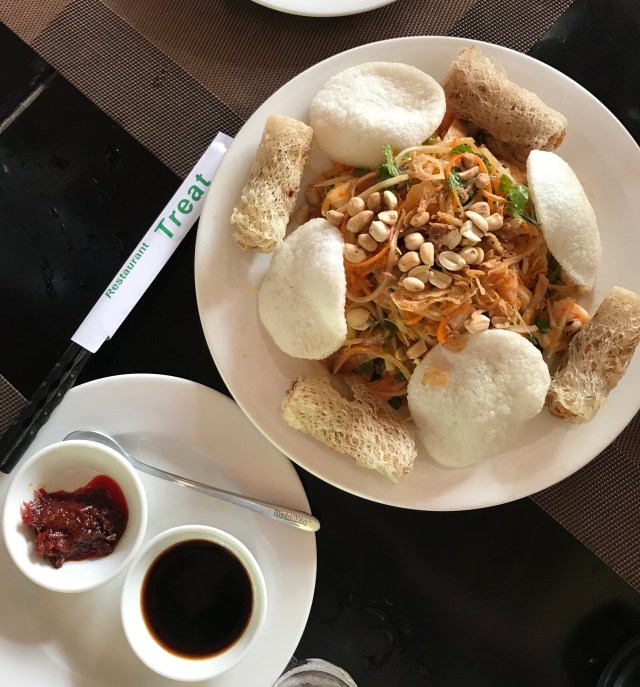
Our guide brought us to a place called Triet (Treat) where there is no crowd and where we actually enjoyed a very good, quiet lunch. Same lunch fare like Papaya Salad which we love, but served with tasty taro spring rolls here. We really liked this for appetizers. The main dishes were pleasant surprises too.

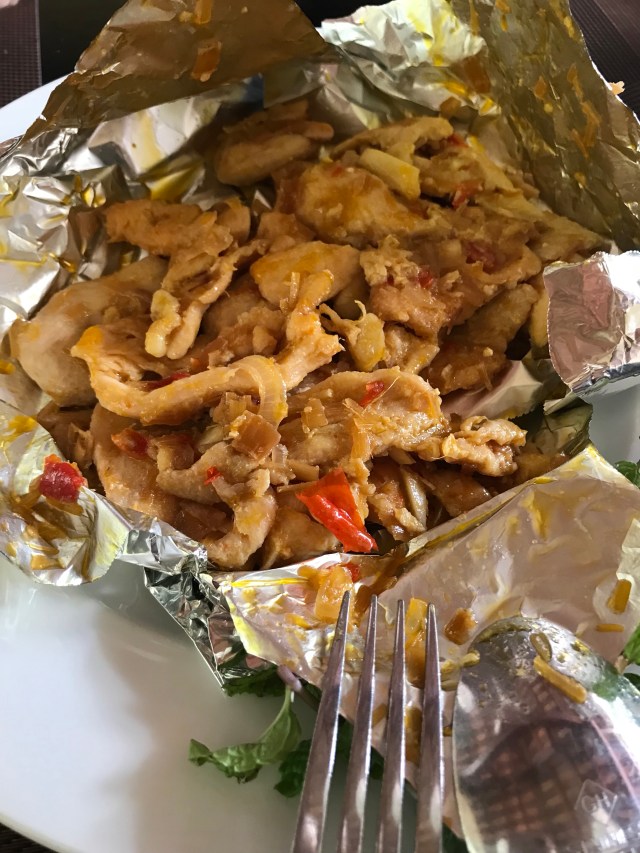
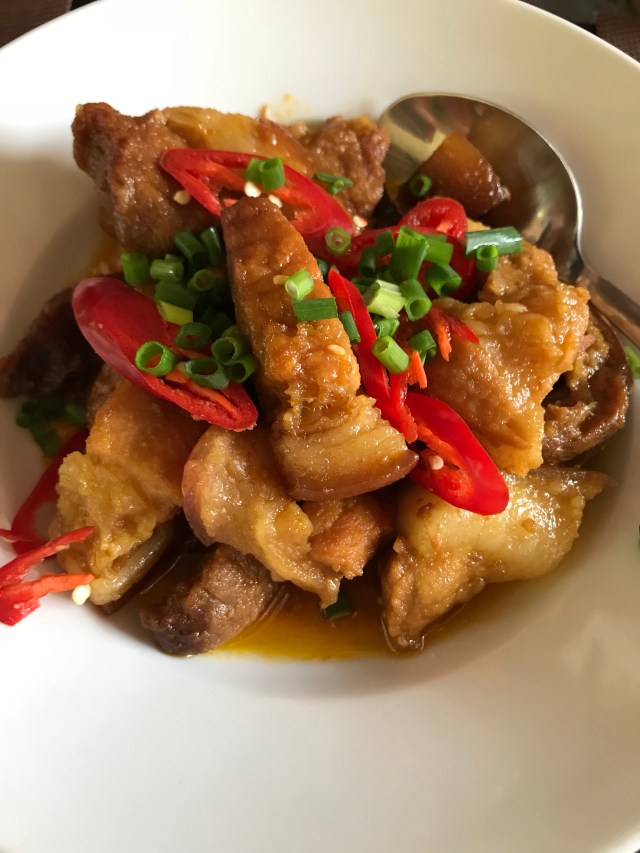
The grilled chicken with lemon grass was served wrapped in aluminum foil and smelled as good as it tasted. But our favorite dish was the Braised Pork in a Clay Pot. Tasted like our local “adobo” but with chili and chives. The chicken and the pork paired well with the vegetable dish with fried shallots we had. Good lunch! Nothing fancy but really cooked well.

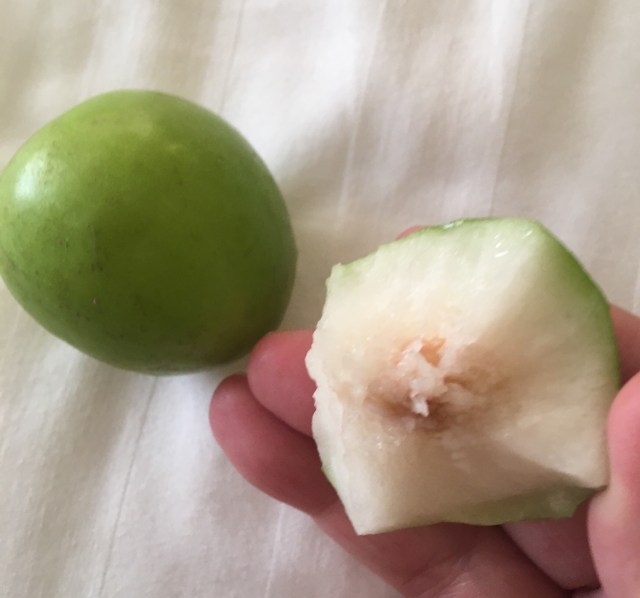
Dining here in Hoi An is an adventure. Don’t be limited by the restos we’ve listed here. But the few days we were here, we certainly ate well. On your way back to your hotel, try checking out the Night Market and buy some jackfruit, custard apples and there’s this fruit I’m not familiar with but tasted like small green apples, just better. Bon apetit!


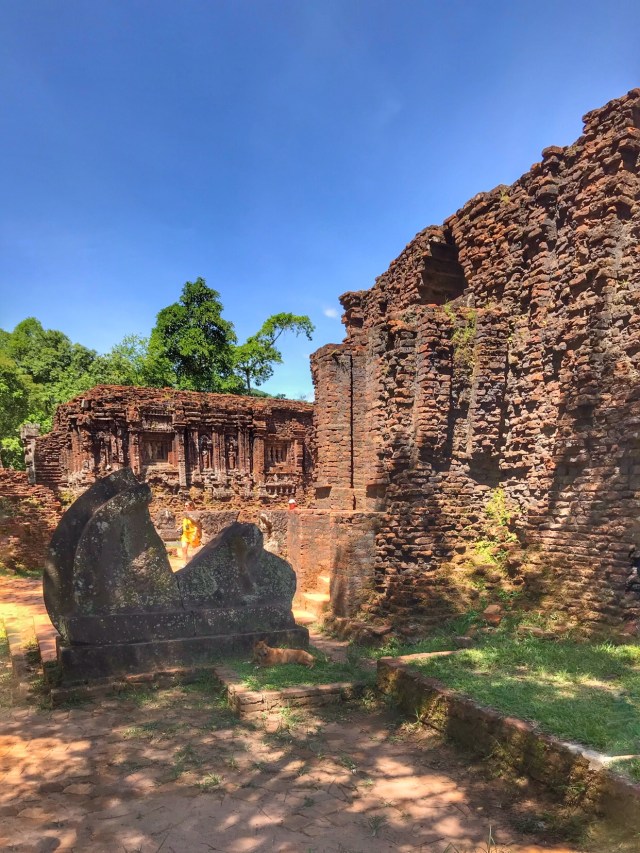
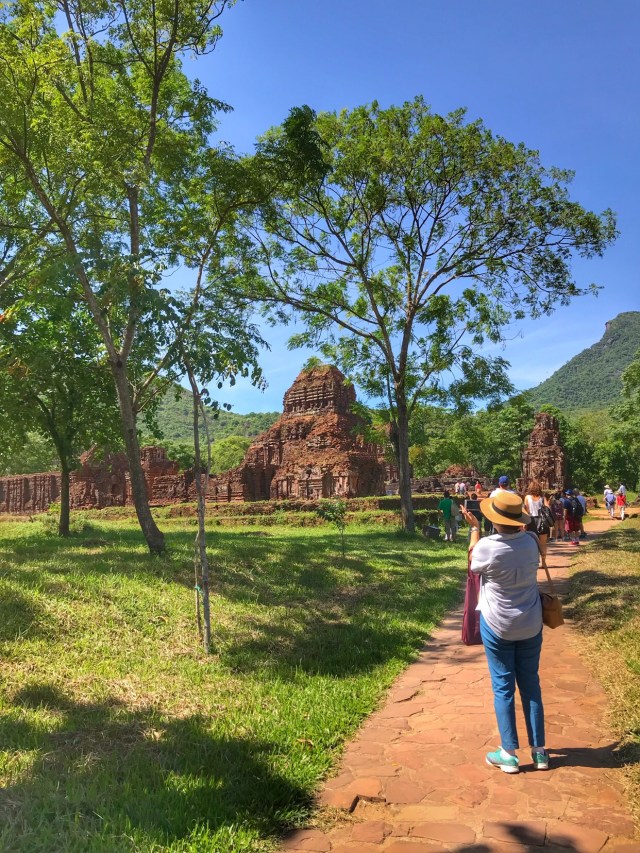
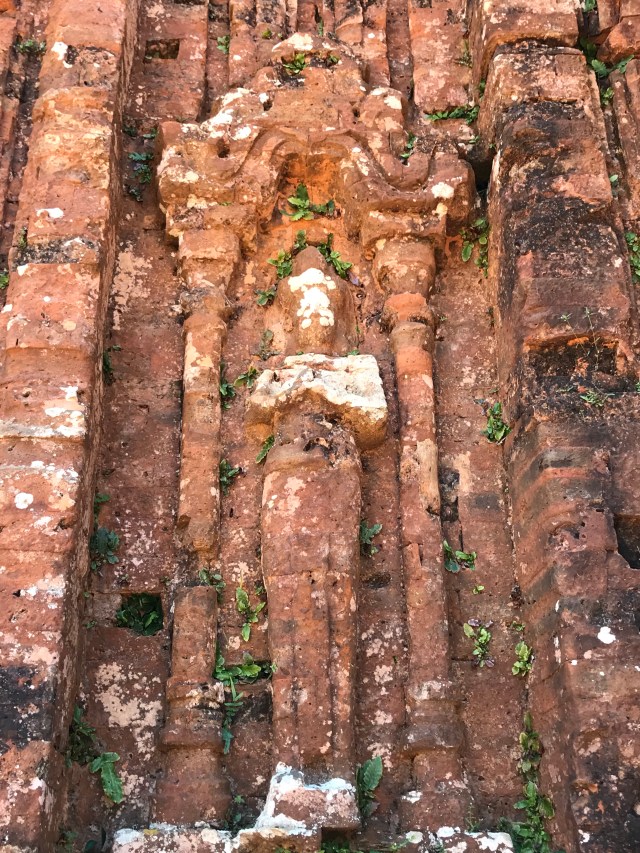
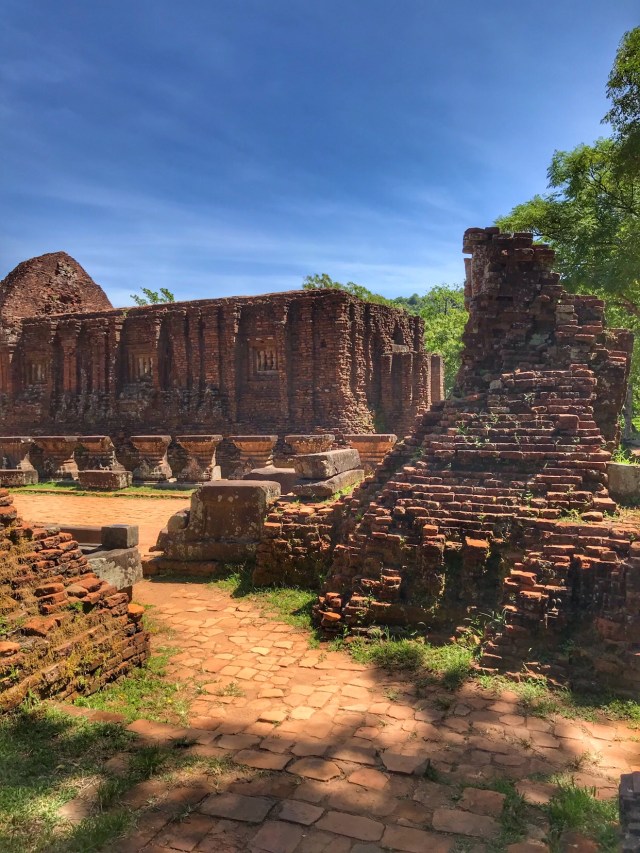
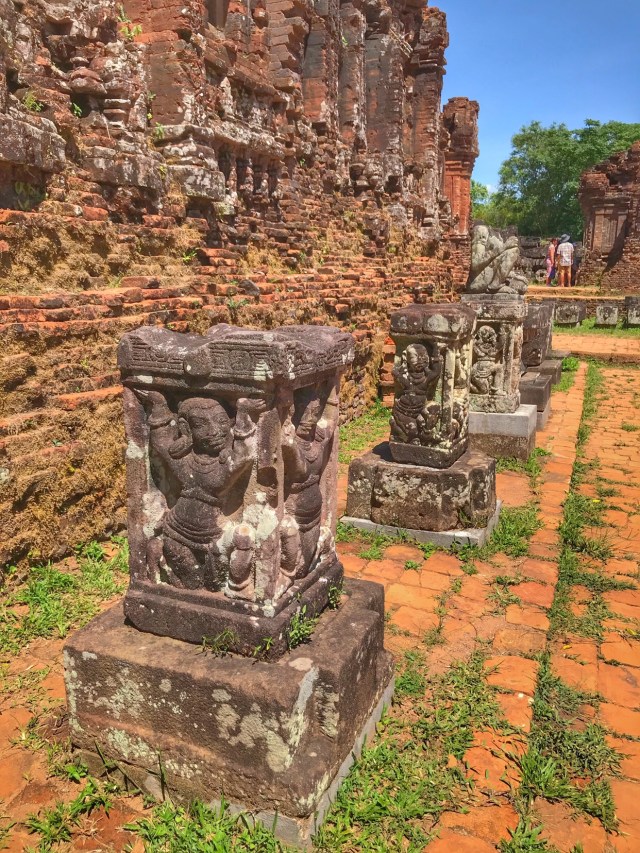
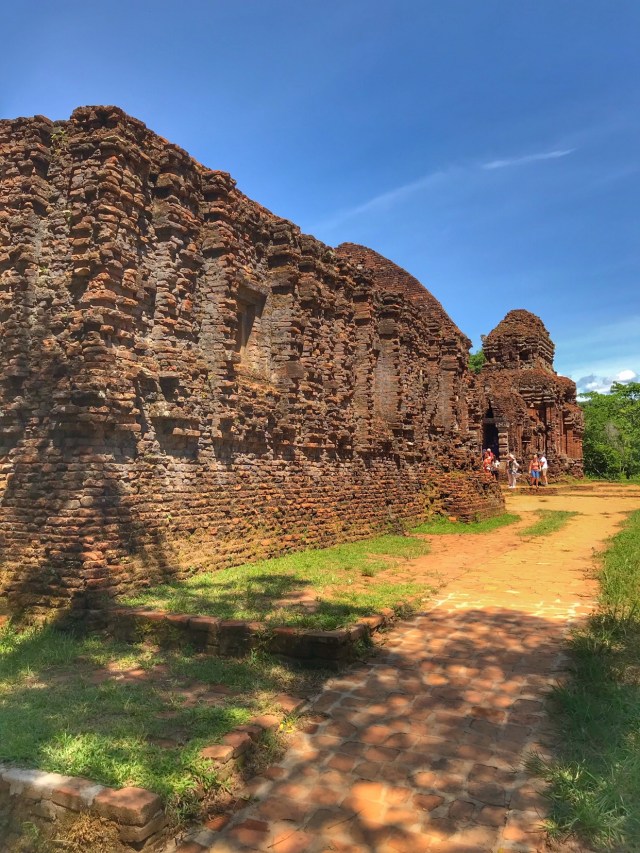
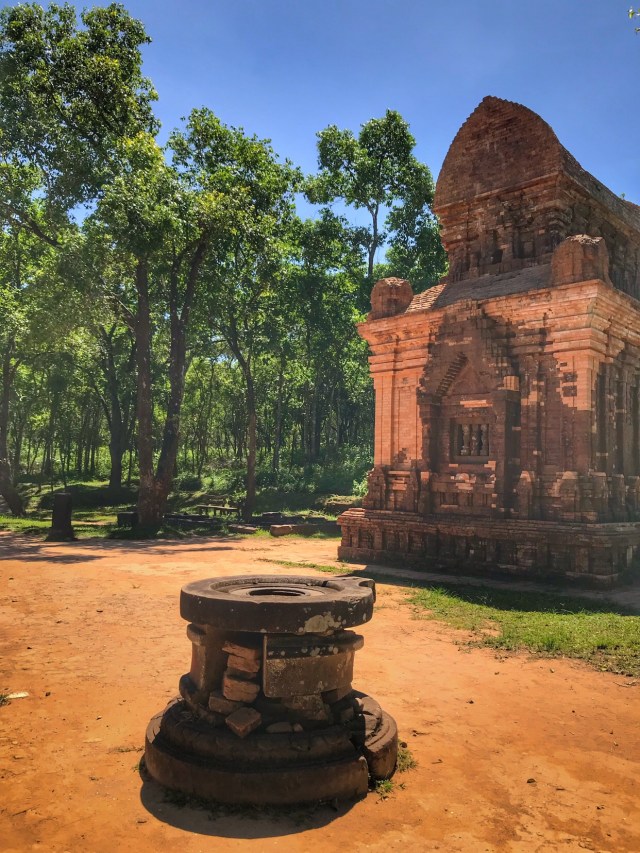
While it sizzled in Hue, it was “nearly burning” in Hoi An and My Son was “on fire”. Nearly 40C and here we are in the jungle, in what was once the sanctuary of Hinduism in Vietnam. This UNESCO Heritage Site was the political and spiritual capital of the mysterious Champa Kingdom which flourished from the 3rd century to the 14th century. Some records put it until the 18th century. About 17 of the original 71 monuments made of bricks and sandstone can be found here. These are the 17 that survived the war. And after the war, this heritage site had to contend with flooding from the nearby river and extremely high humidity which hampers preservation efforts. Not to mention the de-mining activities to keep the site clean and safe.

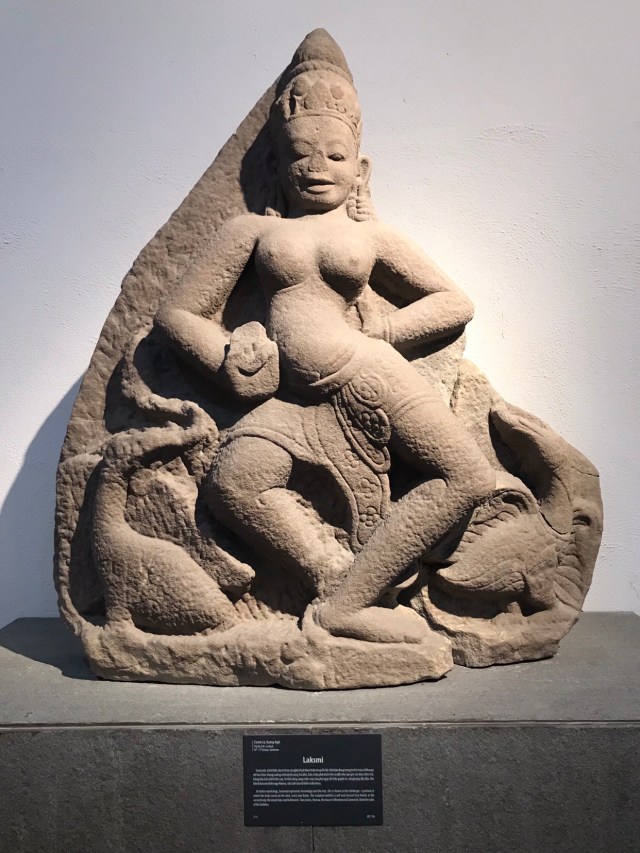
We spent 2 hours here, mindful that we walked only on paved, marked paths. Restoration work is ongoing but restricted because of the possible unidentified and unexploded mines in the area. A pity. We even found bomb craters side by side with the pockmarked tower monuments which were used to shield Vietcongs who hid there during the war while the Americans tried to chase them out by bombing and machine-gunning the area. So there. The site lost more than 50 tower temples to the war, climate conditions and flooding. It may not be as grand as Angkor Wat in Siem Reap nor the temples in Ayutthaya, but the legacy of the Champan Kingdom must be preserved for future generations. It helped that on our way from Hue to Hoi An, we visited a Cham Museum in Danang. Many Cham sculptures, many headless, are housed there.

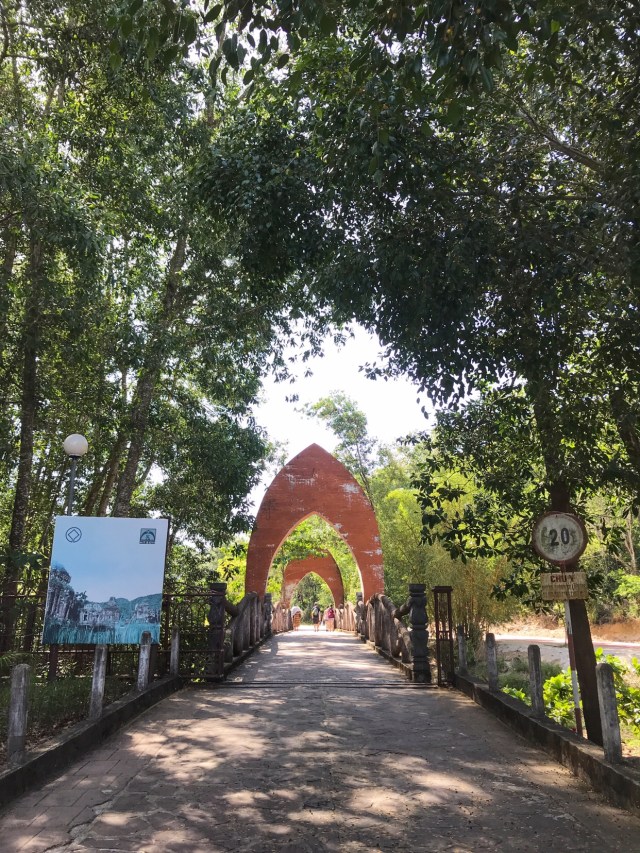
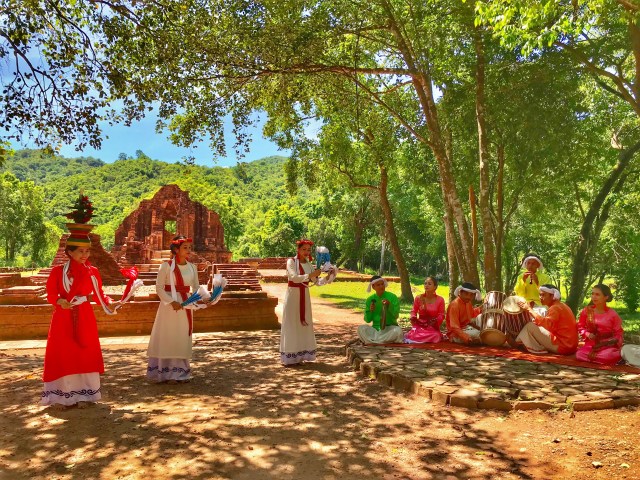
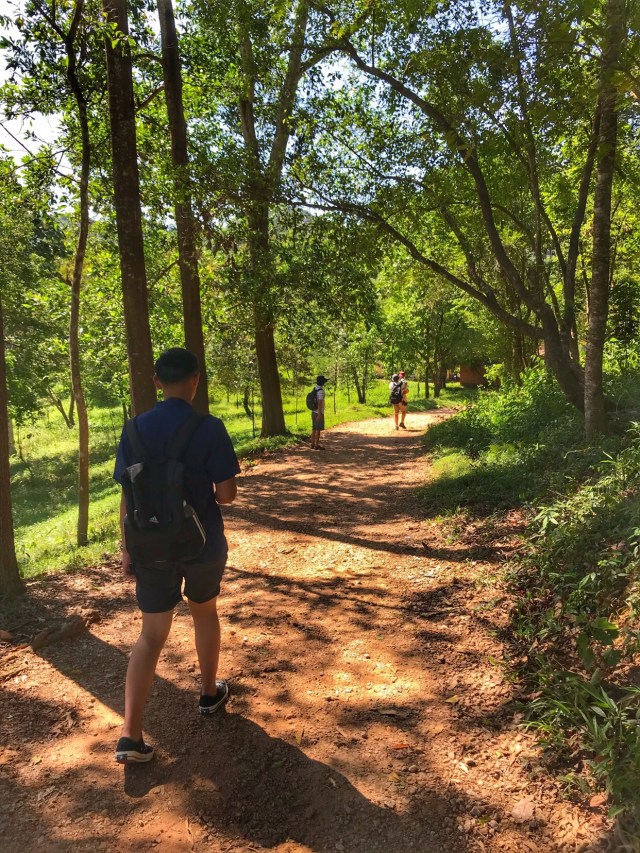
My Son is only an hour away from Hoi An. Our hired van was allowed only up to a point, and we walked beyond the entrance marked by double arches towards the tram station. Here, you take the shuttle for a 10 minute ride and get off near the ruins of this complex of Hindu temples. There were tourists offloaded from a few hired vans and tourist buses. There were also the adventurous ones who came on motorbikes. There is a tiny Museum, as well as a theatre stage where guests were treated to a spectacle of cultural performances. If I were to do this again, I’d time it in the cooler months of January and February. At the height of summer, it’s an ordeal walking drenched in sweat around the complex.

I didn’t expect to like the cultural performance before we started the hike. But I found the Apsara dance very expressive, even sensuous. The play with the hands and bent knees require grace, poise and elegant execution. I couldn’t even stretch and bend back my hands the way they do! From the stage, the same performing group moved to one of the ruin sites where they danced with an impressive backdrop of brick temple ruins.

The Chams are a minority tribe in Vietnam now. Back then, they worshipped the Hindu god Shiva and created this cluster of tower temples spread across Central and Southern Vietnam. This one in My Son lies in a lovely valley surrounded by 2 mountain ranges and covering 2 square kilometres. Try to imagine how this heritage site — so pretty and serene — was carpet-bombed by the Americans in a single week! Heartbreaking 😔


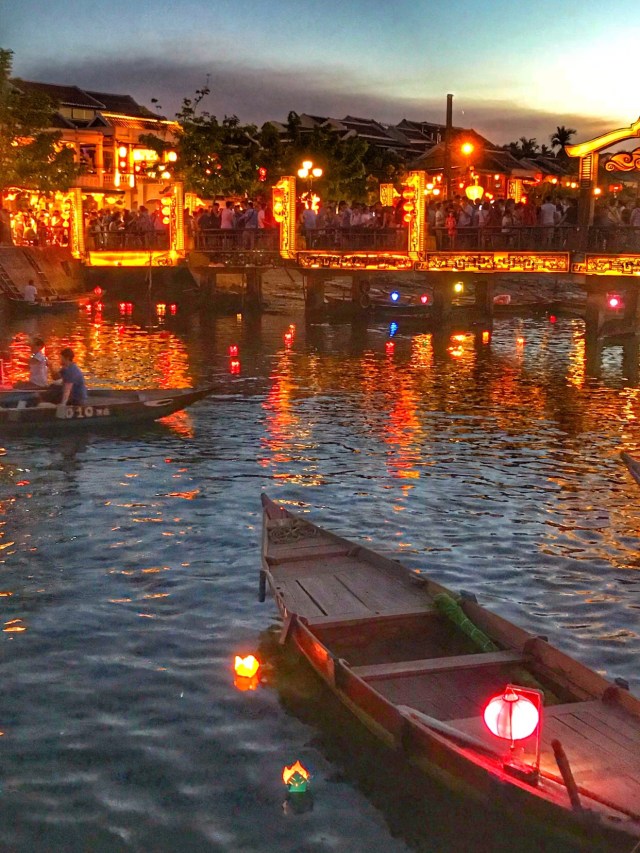
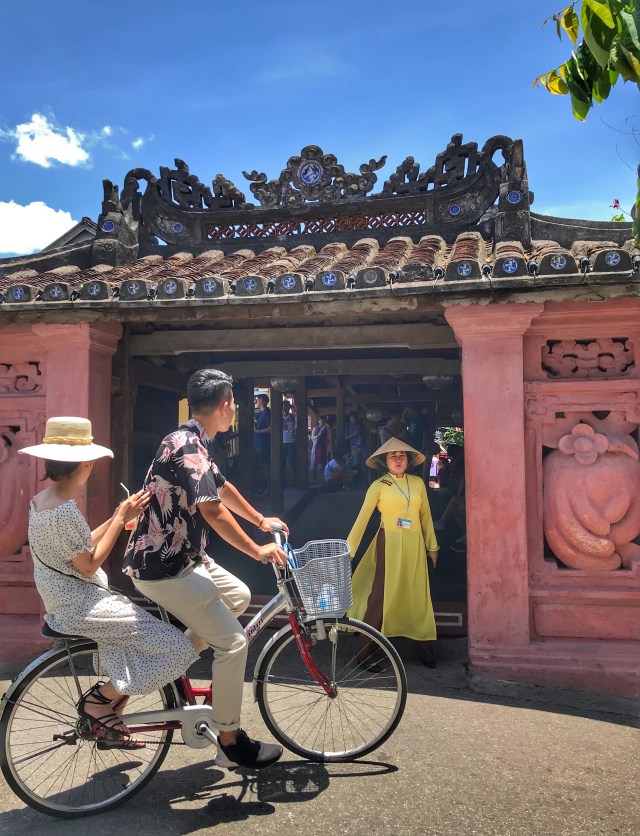
Just arrived for 2 nights in this lovely lantern town of Hoi An. An ancient trading port in Central Vietnam, it’s a melting pot of cultures expressed in its cuisine and architecture. Hue may have its temples, pagoda, royal tombs and Citadel but Hoi An is very quaint with its mustard-colored merchant houses, lazy canals and a Japanese covered bridge! Being Sunday, it looked like the entire population of 200,000 is out having a family day along with the many tourists agonizing where to dine in its many restaurants housed in old French-colonial buildings.

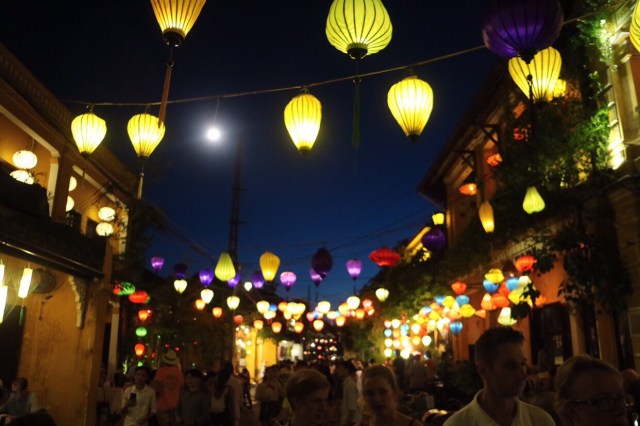
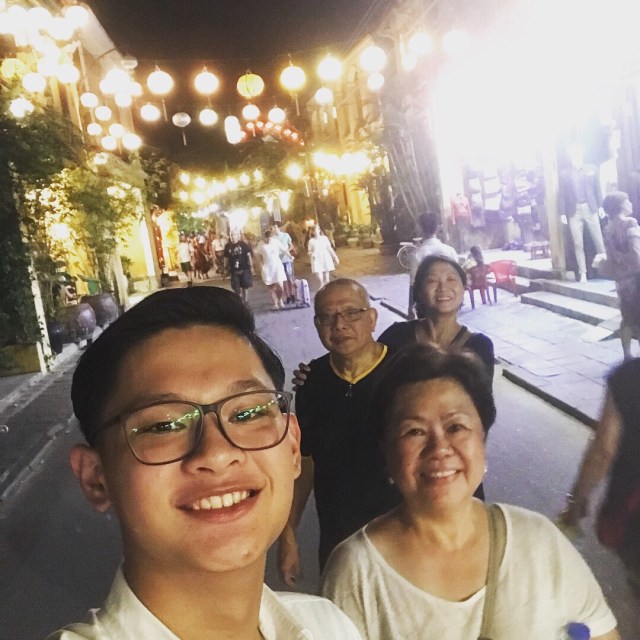
I’ve read about Hoi An being a lantern town, touristy and looking like a mini-Venice with wooden boats in lieu of gondolas. I was delighted to explore its narrow streets and alleys. My only regret is not using the free bicycles from our hotel to save me the 20 minute walk in this very humid evening. Still, it was a pleasant pedestrian tour of this heritage town. We reached the Japanese bridge just as the sun was setting and it sure was lovely.
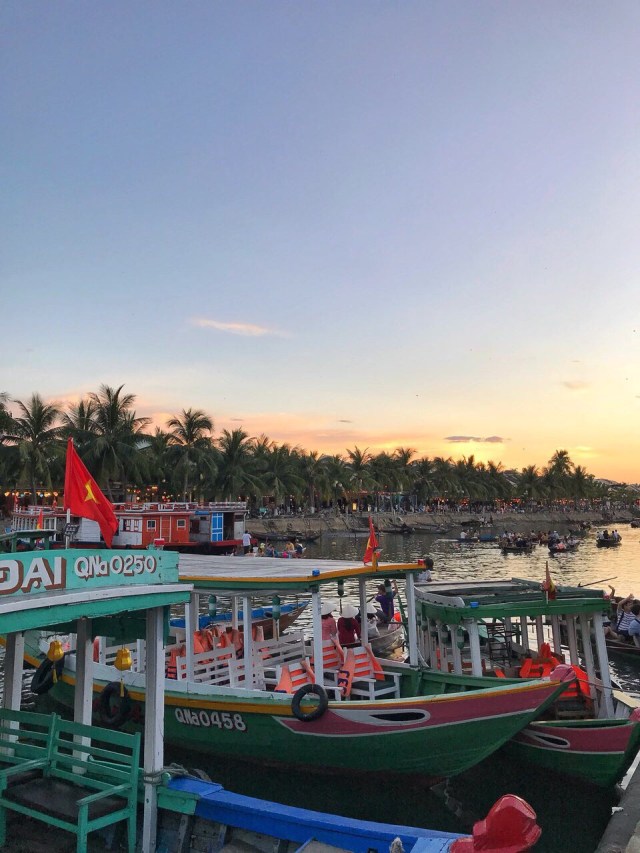
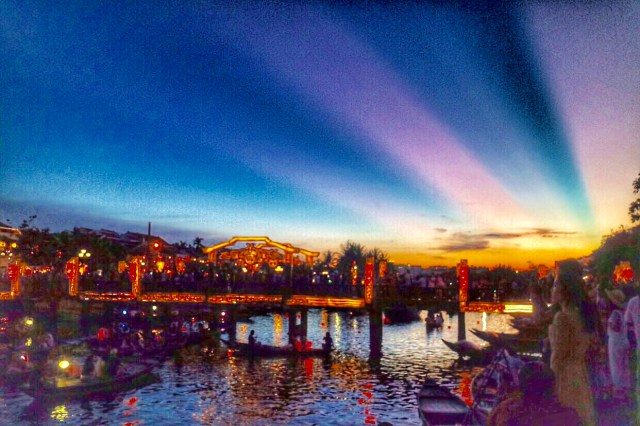
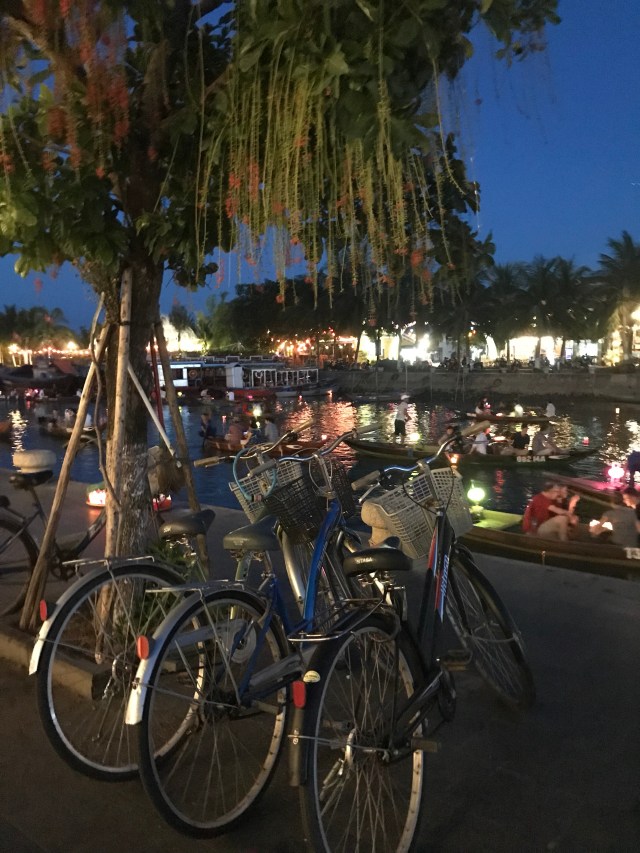
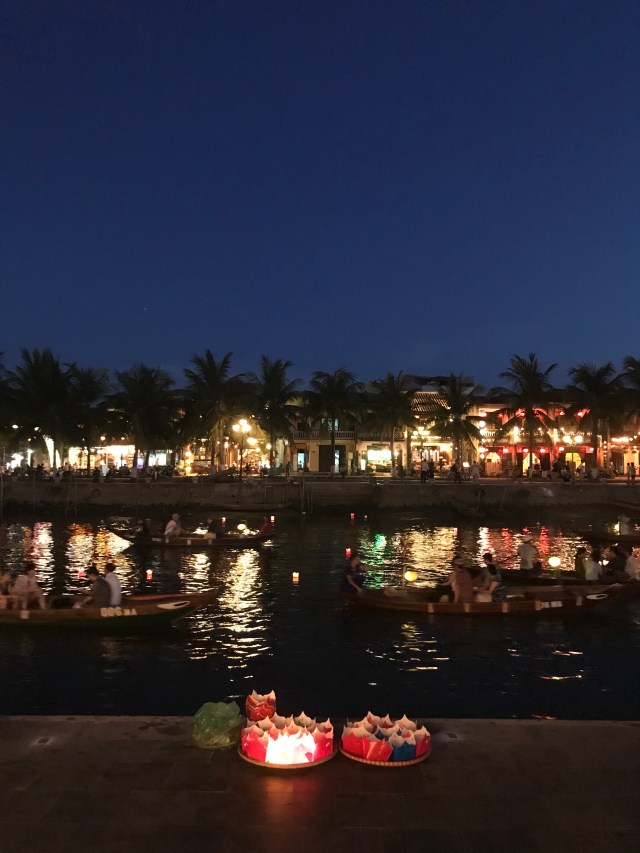
Many Portuguese, Japanese, French, Chinese and other nationalities must have lived in this ancient trading port. Cooking classes housed in its many French colonial houses seem to be in vogue among the many tourists. Those round basket boats plying the waterways even add more charm to this heritage town that was mercifully spared from the ravages of war. Most hotels, even home stays, offer bikes to their guests. One can bike along quiet lanes or brave the old town’s streets dodging many tourists here and there, or be more adventurous hiring motorbikes and scooters to explore the fragrant rice paddies just outside town. Or perhaps do both. Our walking tour is set for tomorrow but we couldn’t wait. No brainer to explore on our own. One doesn’t waste time here, or you’d miss the charm of a village well-lighted with colourful lanterns or a canal where many boats take in tourists for a ride (literally and figuratively). You can even float lighted lanterns on the river and watch them glide under the bridge.
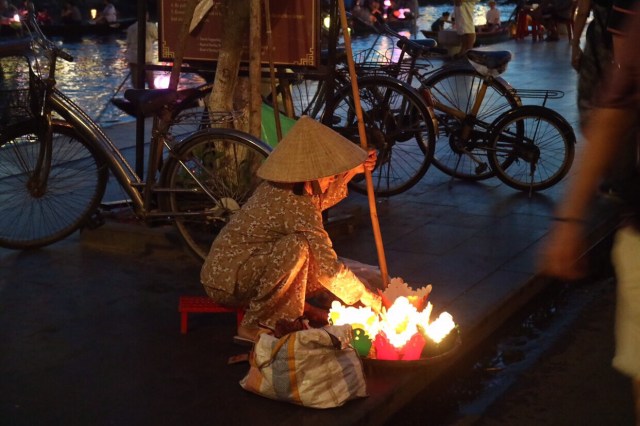
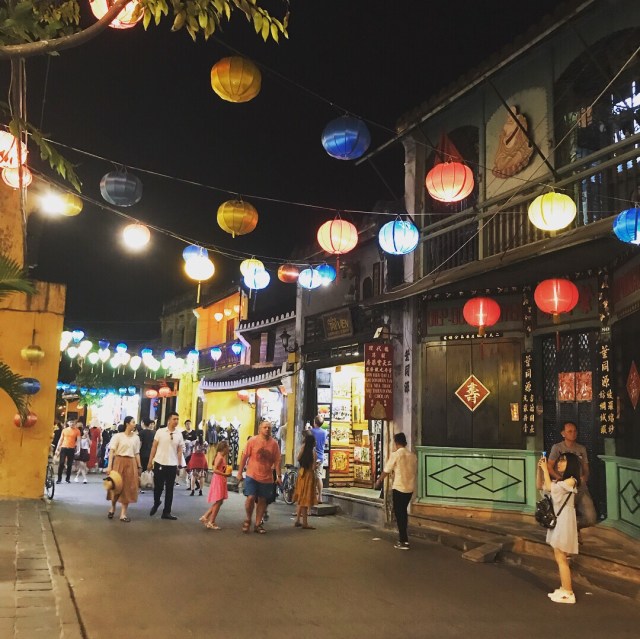
Though there are many dining options, I’ve heard many tourists asking for directions to Morning Glory restaurant. We found it very near the bridge and being rather early, found a table by the window. It was very hot and humid and most restaurants and shops were not air conditioned. Yet, many locals and tourists don’t seem to mind. Like an instant immersion into local life? The charm of this well-preserved town must have sent very positive vibes and they radiate in the way locals and guests behave even in very dry, humid conditions.
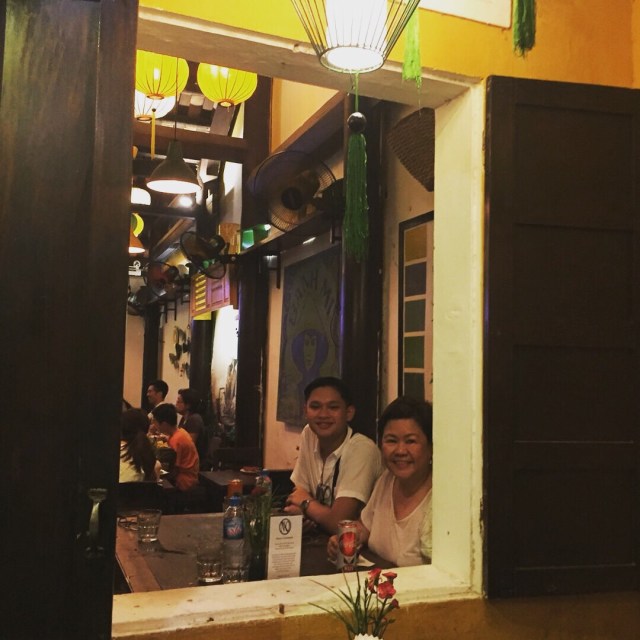
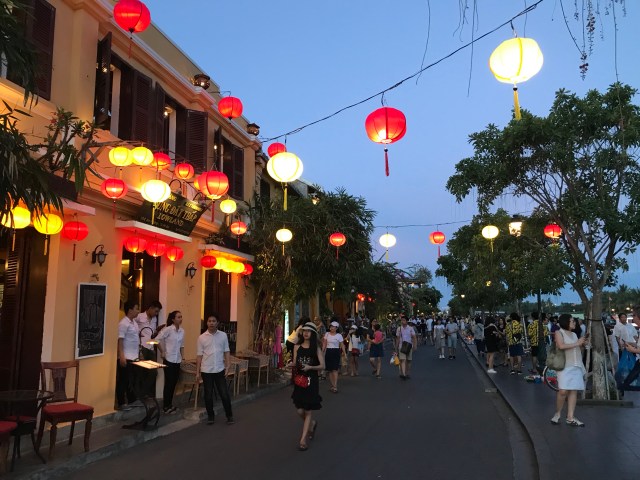
More to discover in our walking tour, I bet. Plus there are the beaches and rice and vegetable paddies to visit. Can’t wait to see where our lunch and dinner ingredients are sourced, or where we can dip our tired feet. Till the next blog, friends. 😘 Watch this page.