Category: Spain


I kept putting it off. I have this nagging thought that Reina Sofia pales in comparison to Thyssen and Prado. That there isn’t much beyond Guernica. That in all likelihood, I probably wouldn’t even enjoy Guernica as I’m not crazy about abstracts, cubism nor surrealism.


20120430-144747.jpg


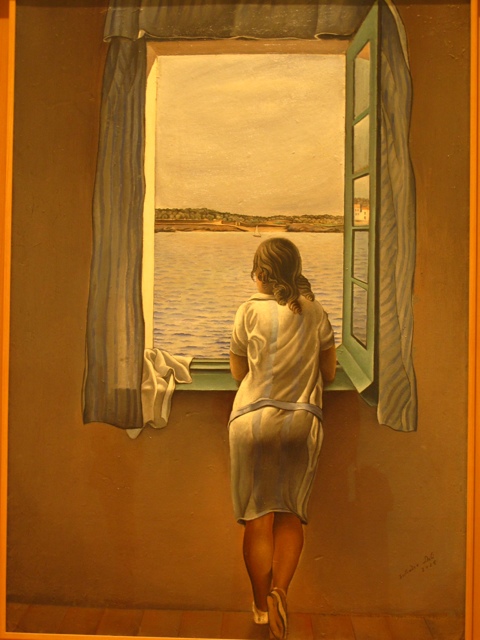
A visit drew an unexpected surprise. Salvador Dali. His “muchachas” paintings soon became my and my niece’s favorites. Somehow, I enjoy the mystery of seeing “backs”, thinking what the sitter is thinking…….. This comes as a big surprise to amateurish me. I mean, dummy that I am when it comes to art, I honestly thought Dali only delved in surrealism. Not my cup of tea. Seeing the muchachas paintings struck a chord in me. I’m sure my niece felt the same way too.


20120430-144322.jpg


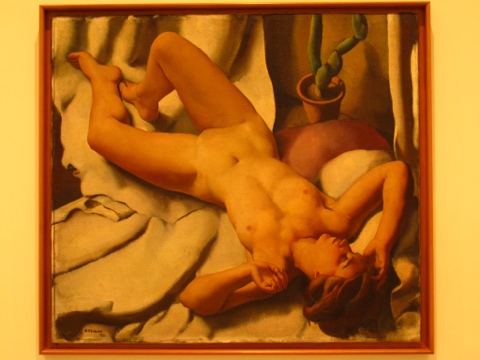
How about you? What do you think are they thinking? Were the sitters pretty? Were the muchachas young, middle-aged or old? How about this painting of another remarkable artist — Balbuena’s Desnudo — in the same hall as Dali’s two muchachas.


20120430-145654.jpg


I spent so much more time in this hall. Longer than the time I spent viewing the Guernica where there is a thick crowd. Somehow, I feel many just visited to see the Guernica. Well…. It is really all a matter of preference. As for me, I have made up my mind. These 3 paintings rank high in my list.


20120430-150700.jpg

20120430-150820.jpg


Joaquin Rodrigo. 1939. Concierto de ARANJUEZ. Classical guitar. His best known work. What could have inspired him to compose this most moving, soothing masterpiece?


20120426-215708.jpg


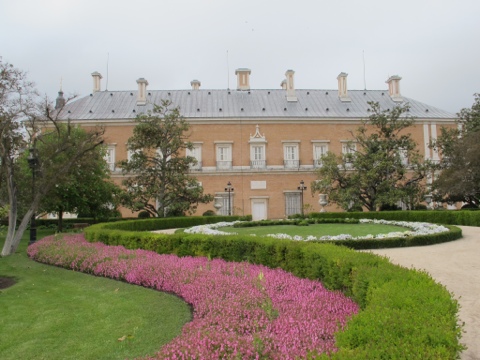
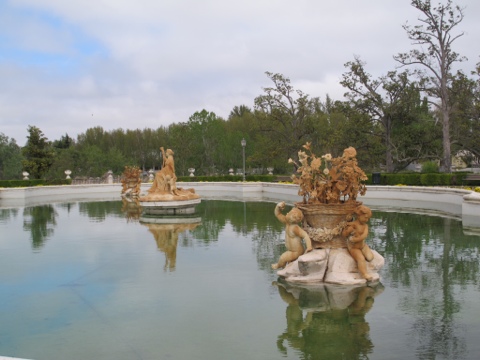
Rodrigo was blind nearly all his life. He played the piano, never the guitar. Yet he composed this piece for guitar as a solo instrument in an orchestra. He drew inspiration from the gardens of Palacio Real in ARANJUEZ. As intended, his composition captured the “rhythm” and “quiet melody” of the royal estate from the flower gardens to the ponds to the forest and hunting grounds.


20120426-221217.jpg

20120426-221305.jpg


Don’t even dare walk the entire length of the estate. The royal gardens around the Palacio Real is fine. Meander through the tulip gardens, the magnolias and the plane trees lining the river walk. But hop on the “Chiquitren” to visit the rest of the gardens cum hunting grounds. It is said that members of the royal family had such diverse interests — hunting, boating, music, etc — and it looks like they each had their fill here. The tiny train plays the concierto while weaving around the estate. Nice.


20120427-142822.jpg


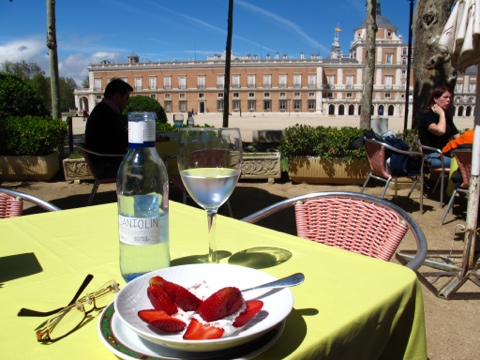
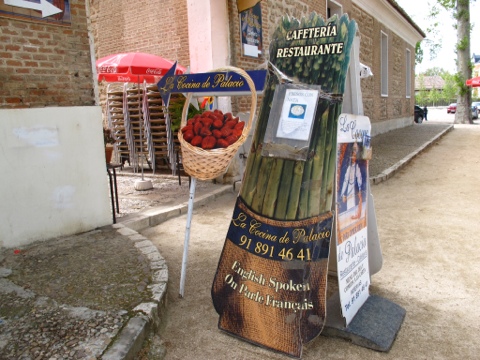
When you are done, head back to the Palacio Real and find a seat under the sun. Order the town’s famous Freson con Nata. That’s strawberry with cream for us. Don’t make the same mistake I did. Paid €8 just for the famous dessert (which I can easily whip up) and a bottle of agua PLUS a view of the entire length of the Palace. ☺


20120427-143111.jpg

20120427-143442.jpg


I bet you’d be humming “Concierto de Aranjuez” upon leaving town. . As you do, take one last look at the Royal Palace, then hop back on that Strawberry Train.


20120427-143535.jpg


In those days, monarchy may have spelled POWER…….and EXTRAVAGANCE. But there’s a breed who chose to live in convents and commit themselves to a life of prayer and devotion.


20120425-184314.jpg


One such monarch is Juana of Austria, sister of King Philip II. She founded the Monasterio de las Descalzas Reales in 1559. The Franciscan nuns in this functioning convent are better known as the “barefoot royals” because of their aristocratic backgrounds. The convent also houses the tomb of its “fundador” Juana of Austria, one of few royals not buried in the royal resting place in El Escorial.


(I only managed to snap the exterior shot. The rest of the photos were all sourced from the Net)


20120425-185043.jpg

20120425-185100.jpg


The guided tour is only for one hour, but certainly worth the €7 admission. (Prado Museum is €12, free after 6pm) I could have waited for a later tour in English but couldn’t wait as I was eager to view the works of arts donated by the nuns’ wealthy families. And so it was a guided tour in Spanish for me. Having read up on the Monasterio, it was “muy facil” to follow the guide’s spiel.


20120425-185204.jpg


By this time, I am beginning to appreciate smaller museos. Prado and Thyssen are fine, worth every euro and time spent. By that, I mean lots of time. It’s hard to digest all that art in one go. In the case of smaller museums, the “collections” maybe fewer but definitely NOT less significant. In this Convento, I have this feeling that the wealthy families of the barefoot royals donated what’s “BEST” from their own collections and treasures. I can only imagine them saying goodbye to a daughter or a sister and parting with a treasured work of art to keep the novice nun “company” and provide a source of joy.


20120425-185304.jpg


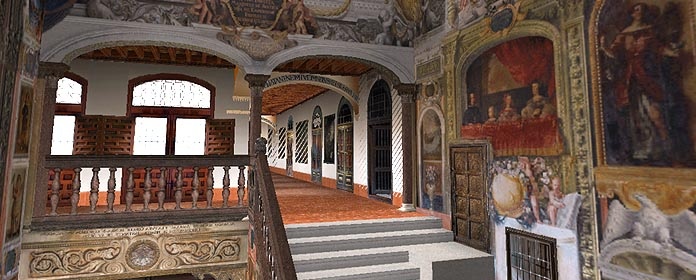
The Convent is bigger than I thought. We did the rounds from hall to hall, chapel to chapel, all around a lovely courtyard. But nothing beats the moment one enters the convent. The grand staircase is so stunning that it is agonizing to leave the area to view the rest of the monastery. This area is part of the original palace owned by the Royal Treasurer Alonso Gutierez before it was sold to Juana in 1555. The frescoes and trompe-l’oeil on the balustrades, arches and walls will leave you mesmerized. Not to be missed is the “royal balcony” fresco as one climbs the staircase. Here you’d find King Philip IV with Mariana of Austria, the Infanta Margarita Teresa and the Prince of Asturias, Felipe Prospero who died at age 4.


20120425-185402.jpg


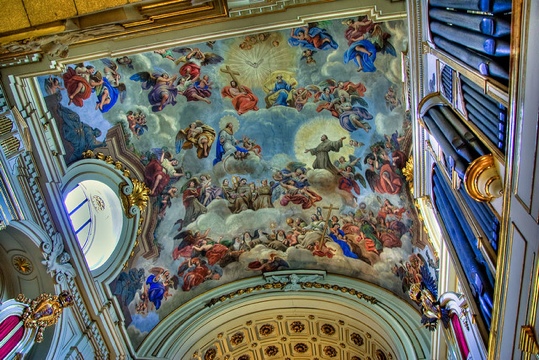
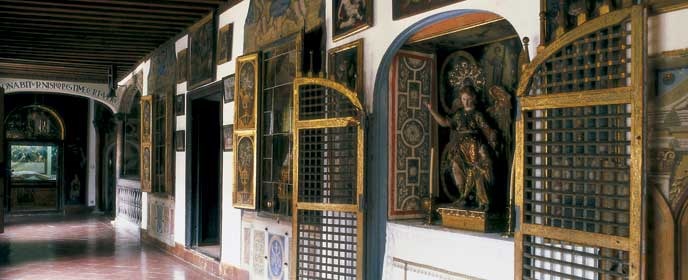
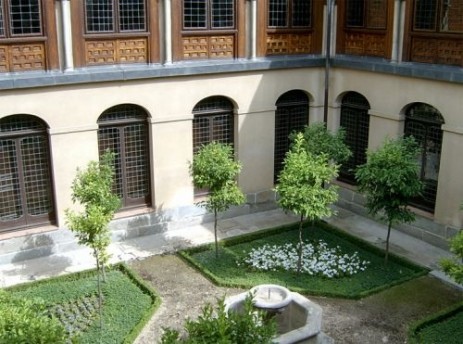
The chapels, cloisters, choir area, halls and corridors are all crammed with paintings, tiles, frescoes, sculptures, woodcarvings and other pieces of art. And the tapestries! Surely they’re there not just to “warm” the convent during winter. Speaking of which, I’ve got to say that there’s a certain degree of “warmth” in each piece of art in here. Perhaps because they were “favorite” works of art of some of the nuns — looked at and over and over as they evoke fond memories of their families? Perhaps they lovingly view, even touch these art pieces whenever they missed their families? Who knows? But unlike some “cold” works of art on display in some museos, I enjoyed this short but very comprehensive tour of the Convent the most. And in Spanish at that! Don’t fail to visit this convent when in Madrid. It is just a short walk from Puerta del Sol, right behind El Corte Ingles.


20120425-185502.jpg


Done the Prado Museum thrice. Each time, I was drawn more to the Spanish Masters. With much time to spend in Madrid, I was able to schedule my Prado visits in such a way that I devote the next 2 hours just viewing 1 or 2 artists.


20120425-181216.jpg

20120425-181332.jpg


Goya is among Spain’s greatest, if not THE. His statue stands on a prominent site on the Museum square, and rightly so. I lost count of how many galleries or halls inside the Museo where his paintings hang. But I do remember that Goya requires more time and attention. Amazing how his works evolved through the years. The religious paintings, the nude paintings, the more surreal — shall i say “fierce”? — paintings. More amazing is his life story. Imagine him as a man about town, painting the Duchess of Alba in all her nakedness, witnessing the Mayo Dos failed insurrection and painting it from memory, going deaf as he began on his “Pinturas Negras”, dying in Bordeaux, France and buried in Madrid without his head. That last piece of information about his headless body so intrigued me that I ventured to search for his resting place.


20120425-181456.jpg

20120425-181806.jpg


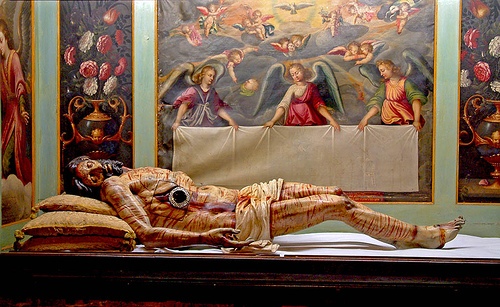
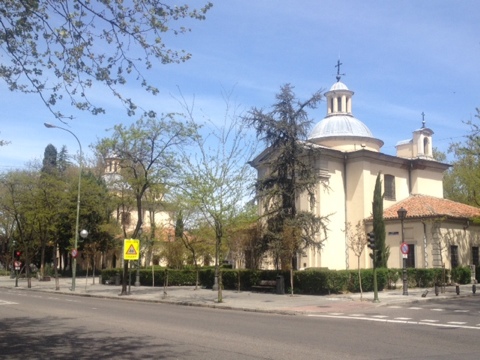
The metro stop says Principe Pio. Walking right from the station along Paseo de Florida for some 10 minutes, the statue of Goya proudly stands in the glorietta fronting the Ermita de San Antonio de la Florida. I thought I was seeing double when I reached the place, only to learn that a sister church with twin features was built right next to the original which has since been turned into a Museum. The mortal remains of Goya lie in the original 18th century Neo-classical church, while worship was transferred to the adjacent sister church. Both churches are tiny, with floors shaped like a Greek cross.


20120425-182029.jpg

20120425-182600.jpg


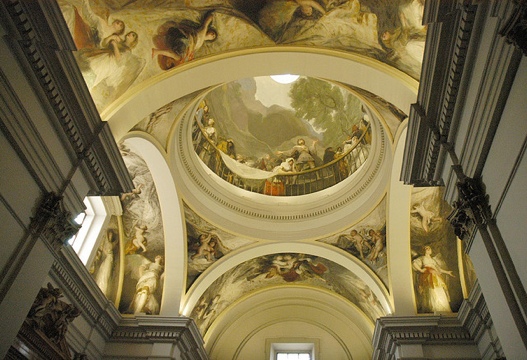
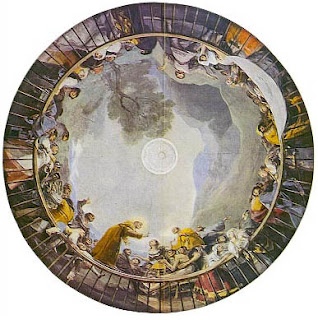
As expected, photography was not allowed inside the tiny museum-church. A pity. I would have loved to snap photos of Goya’s frescoes. The photo above and those below are some photos grabbed from the Internet, just to give you an idea of Goya’s genius. Surely, the Hermitage of Saint Anthony is so fortunate to house Goya’s masterpiece. There are mirrors — spotted at least 4— so one can view the ceiling, the dome without craning one’s neck. Still, I couldn’t help looking up to admire this intriguing man’s work. For a while there, I thought there was a banister or some kind of railing around the dome to allow one to go up and view the frescoes up close. I even assumed Goya painted from there while his assistant busily stirred his pigments. Was I dead wrong.


20120425-182750.jpg

20120425-182825.jpg


The cherubs painted on the ceiling looked like they were lifting the drapes for the audience to view the obra maestro. A child’s leg “hanging” from the banister made me realize that the feigned banister is part of the painting showing villagers witnessing a miracle of San Antonio. The artist even painted himself with a black cloak in this dome fresco! Each character in the painting has a different facial expression — pain, adoration, awe, joy, gratitude, festive, surprise, glee, fright, even indifference. Very very expressive figures and gestures caught in canvas. I like how Goya’s paintings seem to have blurred edges (this layman’s description), as if the artist smudged over the edges without losing the details. The restoration work done here and completed in 2005 is definitely commendable.


20120425-182935.jpg


Yet this site, this tomb of this magnificent artist is often missed. As I have. Been here 2 months until I ventured off the beaten path. But why headless, you ask? Goya died in Bordeaux in 1828. His head was stolen in France before the body was transported to Spain to be buried under  a very modest gravestone here. In death, as in life, Goya’s story truly invites one to either stand in awe or sit in contemplation. Now….. Let’s have that last look on Goya’s “Naked Maja”. Did the Duchess of Alba really sit for this painting? Or did she “lie” for this painting? 😊😊😊


20120425-183646.jpg

#30 HOW SPANISH ARE WE?


Luckily for me, we had more Spanish units in college than the younger set. Just the same, I am stumped whenever I’m forced to express myself in Spanish, and more so, when I’m compelled to listen to someone reply to me in Spanish. I’m telling you…… The easy part is expressing yourself in Spanish. Google Translate and all those English-Spanish dictionaries work for all those questions you have in mind. Until they give you their answers. As in DUH????


20120420-160337.jpg


I have been living in Madrid the past 2 months. I still don’t speak Spanish. But I go to the palenque, ride the metro, take day trips out of Madrid using the bus or train, visit museos, shop and sip good coffee along Gran Via, and feel “comfortable” in this foreign land. I would always find something “familiar” — no matter how vaguely — in every phrase or sentence uttered, or in many signposts or directions. Thank God the numbers (uno, dos, tres….), prices (quince, dies, katorse….), time (alas cinco, alas cuatro…..), days (Lunes, Martes, Miercoles….), months (enero, febrero…), are all familiar to us. These days, I confidently greet our porter “Que tal?” , hoping he would reply in “despacio” mode.


20120423-231600.jpg


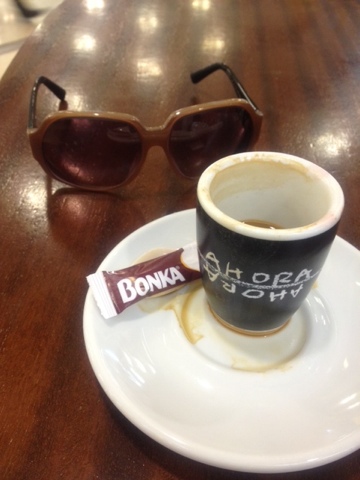
Going to the palenque is always an adventure. I easily found my “Suki” (favorite shops) where the vendor would actually gently correct my Spanish. Like tomate, not tomato. Cuarto (1/4) not cuatro. My fish vendor would even teach me how to cook the fish as if I understood beyond “plancha” (grill) and harina (flour). 😄 I easily spend 2 hours here, even drink coffee from a bar where the sacred brew is served in a glass! And how I remember my very first ordeal here….. How to order coffee with little milk. You see, you typically order cafe con leche (with milk) or cafe cortado (espresso). The problem is I’m not crazy over espressos and the alternative cafe has mucho leche!


20120425-171354.jpg


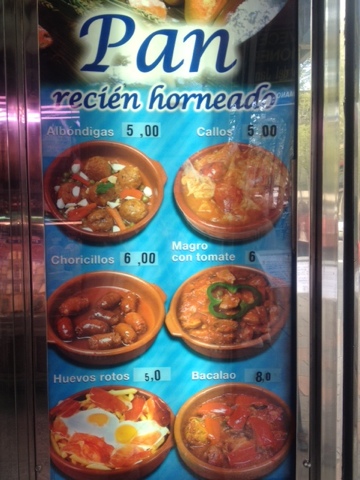
I have been very observant about signposts. More so about menus. Many Spanish dishes naturally found their way to Pinoy tables. The names ring familiar, sometimes similar, other times completely different. Like there is alBondigas here versus our alMondigas. Of course, every Pinoy loves Jamon but our Hamon is more American than Spanish. Which is a pity. And who has not heard of Arroz Valenciana? Valencia is where paella originated. How about Leche flan? Or pastillas?


20120425-173005.jpg

20120425-173246.jpg


Even here, you don’t throw your “Basura” just anywhere. When you want to rent or lease something, you say “Alquila” or “alquiler” similar to our arkila. And it’s not difficult to figure out what entrada and salida mean.


20120425-174005.jpg

20120425-174205.jpg


It will take some great effort for me to learn a new language like Spanish. Call me slow. But I’m always amazed how some Tagalog words are rooted in Spanish. After all, they ruled for nearly 400 years, didn’t they?


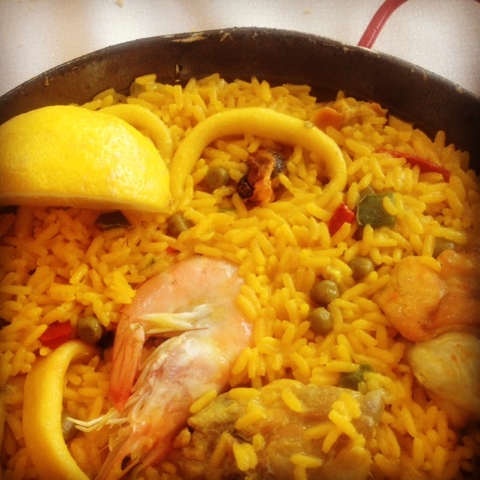
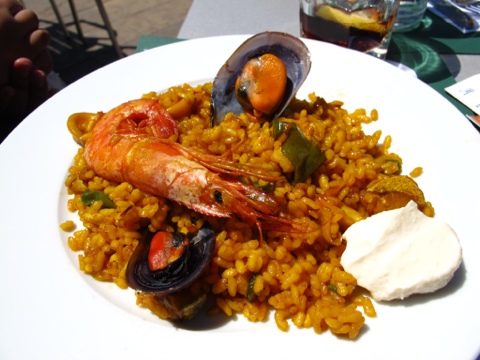
All wrapped up for Valencia, Spain. Weather forecast was 7-15 Celsius. Partly cloudy, light rain. Leaving at 4 am for the 4 hour drive from Madrid was a curse. Best decision I ever made was to bring my pillow in the car. The next 4 hours was put to good use………waking up fresh and not so grouchy in the place where paella was born.


20120422-215732.jpg

20120422-215951.jpg


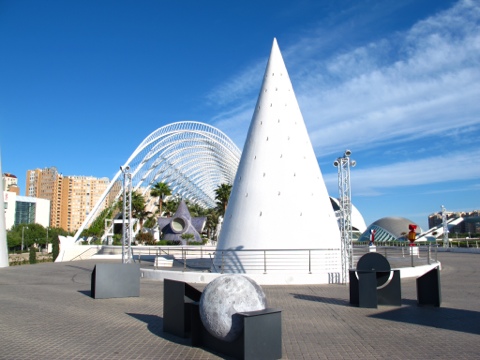
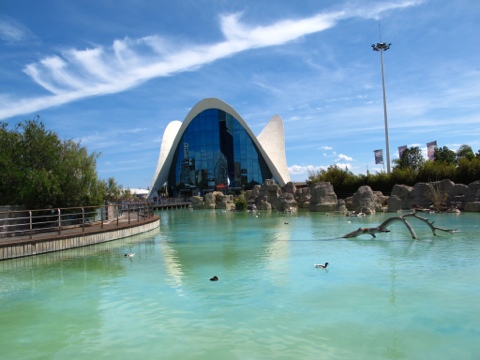
But that’s lunch. As we arrived well before opening times of many churches, museos and parks, there was plenty of time. As the car dropped us off at the Ciudad de Los Artes y Ciencias, the wind chill dropped from 7 Celsius to 14, and temp’s rising. Not bad. It’s cool and pleasant. Many tourists visiting Valencia had this itinerary uppermost in their minds. In fact, our hired driver only knows how to drive to this Park where his paying clients spend their whole day in the Park designed and created by Calatrava in some very futuristic design, then heading back to Madrid without even visiting the historic center.


20120422-223821.jpg

20120422-223955.jpg


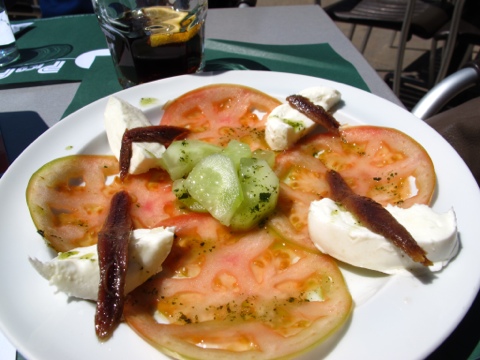
I won’t do that. If made to choose, I can skip the Park altogether and concentrate on Valencia’s Cathedral, Torres, Plazas, Fontanas and Museos. Not to forget, I will never ever pass up the chance to order that paella in this historic place where Paella was born! Who would? We had our best paella in Valencia. And guess what? We had San Miguel Cerveza here too.


20120422-224849.jpg

20120422-225007.jpg


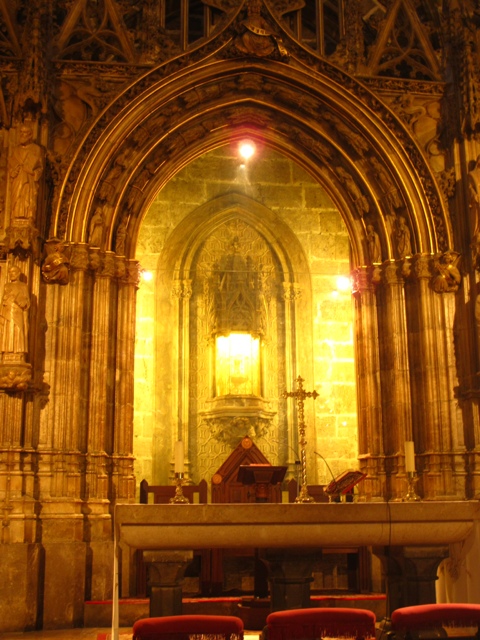
But we were in for a better surprise. The Cathedral has a special chapel which allegedly houses the “Holy Grail”. Behind a protective glass panel is the chalice which was reportedly used by Christ in the “Last Supper”. The Chapel is not big. Maxed out, it can seat maybe 50 pax. The door to the chapel has stone carvings and not huge at all. And if you stand just before the door, you’d find sunlight beaming right through the area where the chalice is kept. They say there are many legends involving many cups claiming to be the Holy Grail. Me? I have not heard of any. Till NOW. The story goes that the holy cup, or stone dish, or holy chalice, in the Saint Mary of Valencia Cathedral was allegedly taken by Saint Peter to Rome during the 1st century. Thereafter, Saint Lawrence supposedly brought it to Huesca, Spain in the 3rd century where it was guarded and protected from Islamic invaders of the Iberian Peninsula.



20120422-230650.jpg

20120422-230803.jpg


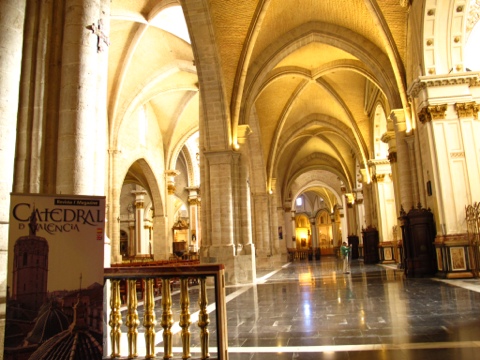
I have been to quite a number of pilgrimage sites yet I hardly listed Valencia among my must-visits. And I only read about it when I started researching on Valencia’s attractions. Makes me wonder. And quite frankly, I have not heard of the other legends involving the Holy Grail.


20120422-231427.jpg

20120422-231552.jpg

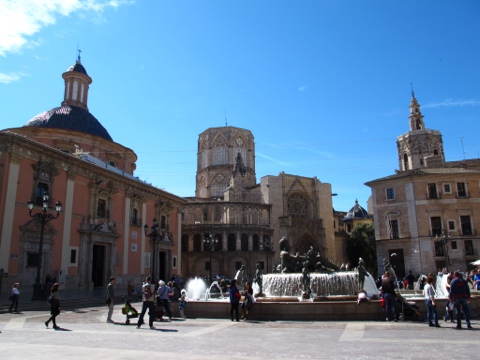
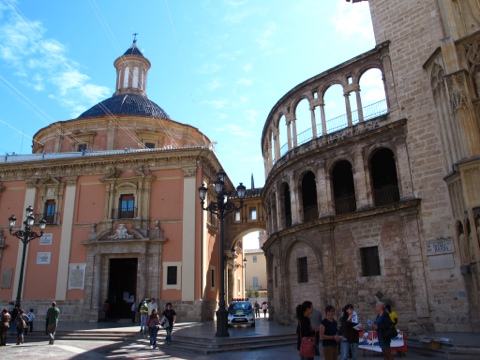
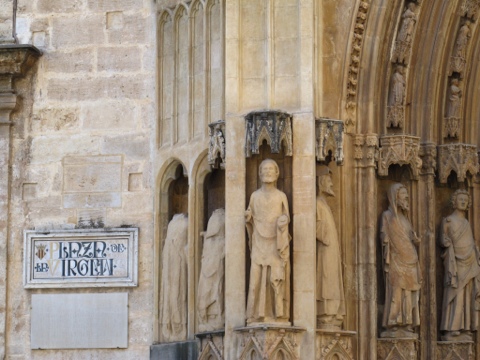
From the Cathedral, we walked towards the Plaza Dela Virgen where we found another cathedral door, again with intricate stone carvings of the 12 apostles. Some with heads, some without. This is the same portal where the Tribunal de las Aguas meet on Thursdays to settle disputes involving irrigation water.
20120422-232013.jpg

20120422-232054.jpg


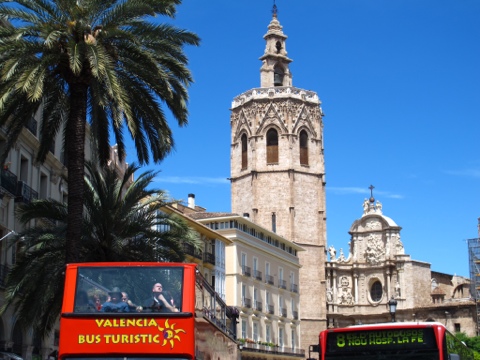
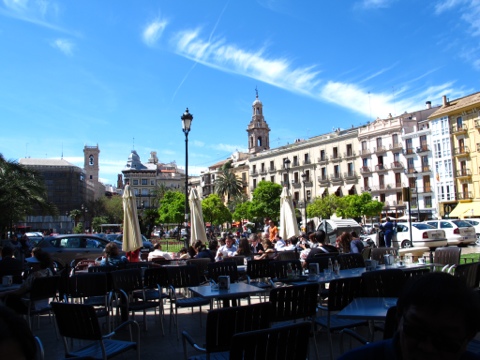
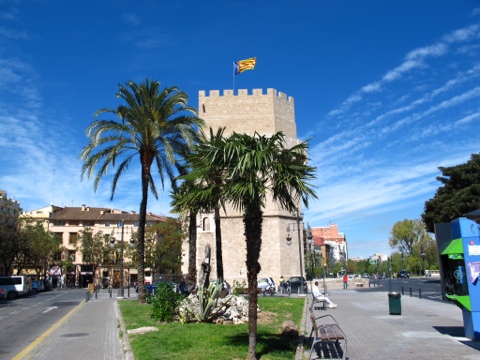
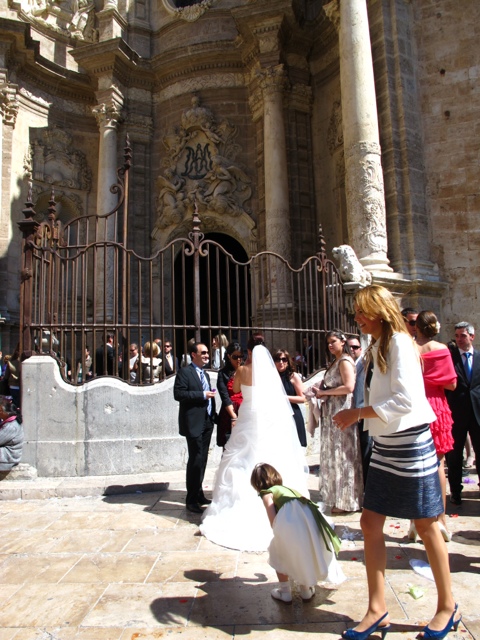
Lining the Plaza are many shops and dining places which overlooks the lovely Turia fountain. But this I must say, everywhere you look is pretty. There are always some spires or towers somewhere. We chose to walk away from the Cathedral towards Torre de Serranos. Didn’t bother to climb up. Meandering around bends and corners, we found ourselves back in the Plaza de la Reina right in front of Miguelete Tower of the Cathedral. By this time, we’ve peeled off our cardigans and coats as temp soared to 27 Celsius! Thus, we paused here to catch our breath and at the same time witness a wedding ensemble. Bride and Groom busily accepting congratulatory kisses from friends.


20120422-233251.jpg

20120423-122929.jpg


Now, what is that little girl looking for?


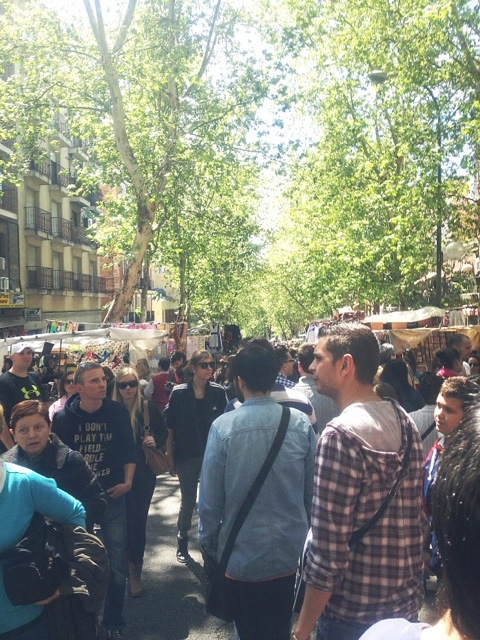
So, who has not been to El Rastro? Today’s a Sunday, and we’ve been putting this off for the longest time. Not that we haven’t done any shopping — are you kidding?— but a trip to El Rastro is more all about experience than anything else.


20120422-192503.jpg

20120422-195954.jpg


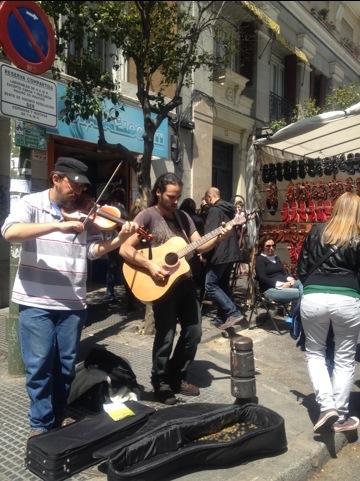
Took the metro all the way to La Latina. As we got out of the Metro Station, there was no mistake we were in the area we intended to be in. Music flowed from a couple of strummers just as crowds seamlessly flowed in one direction — towards the flea market called Rastro.


20120422-200403.jpg

20120422-200923.jpg


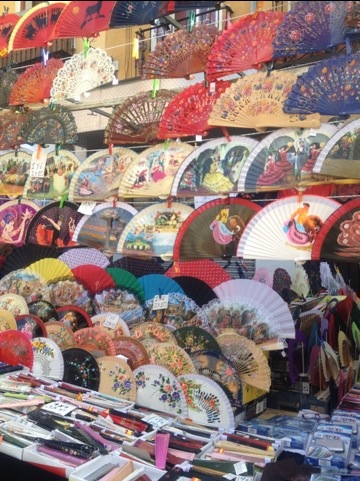
The Rastro has been an “institution” for centuries. I won’t say you’d get great bargains here as we have shopped elsewhere and enjoyed many rebajas. Even our very own Jose Rizal failed to resist shopping in El Rastro. These days, the cheap finds are Made in China and the leather products are not exactly cheap. If you ask me, I’d rather shop in a store less crowded. Besides, the place is a favorite hangout of pickpockets. Knowing that gives me anxiety attacks.


20120422-202350.jpg20120422-203140.jpg


Anyway, our El Rastro sojourn allowed us to meet a US-based Filipina visiting Madrid with her husband. The day we met was also the day they were leaving for home which is Rhode Island, NY. Guess what happened? The husband left ALONE for US of A. The Filipino wife stayed behind, and staying with us till May 1. Most time anyway. She’s joining my girls on a trip to Lisbon and next weekend in Barcelona. Crazy enough for you? Well, c’est la vie. We celebrate, and so does our new friend Kate!


20120422-221300.jpg


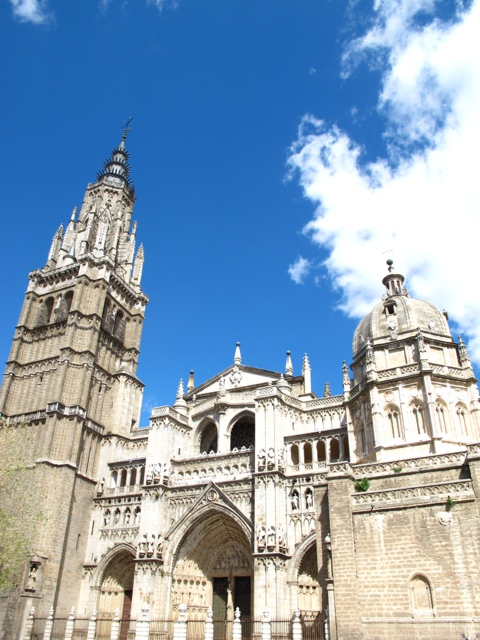
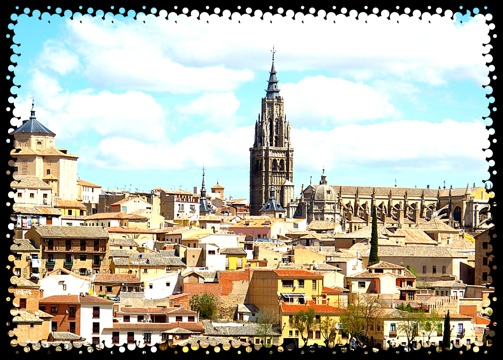
My TravelBlog piece dwells on my day trip to Toledo — my second time here in this lovely city brimming with art, culture and history. Ten years ago, I was also here and blogged about my experience in a brief stopover on our way south from Madrid. This time around, I would not be deprived the chance to visit and LINGER in the cathedral and in this place made even more famous in many El Greco paintings.


20120417-110704.jpg

20120417-110731.jpg


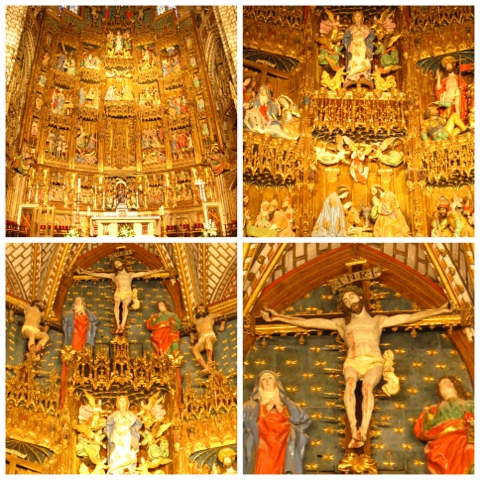
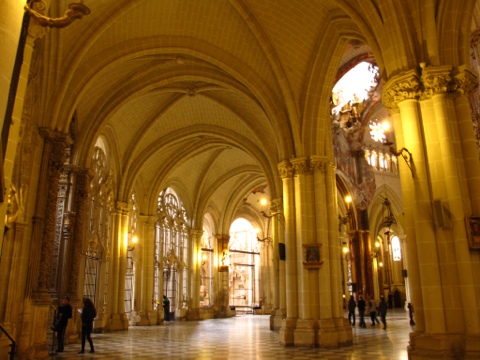
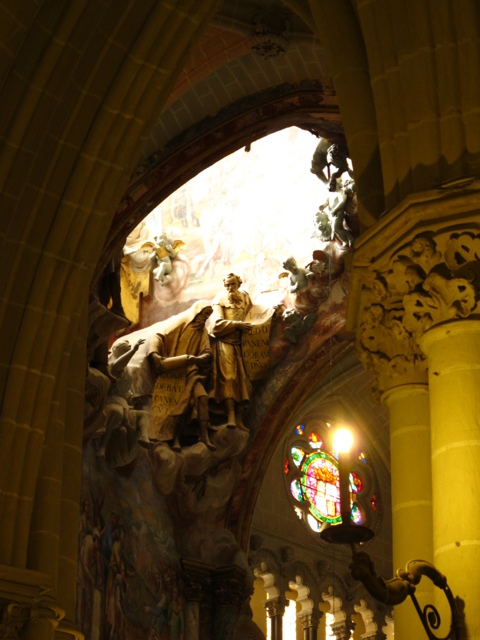
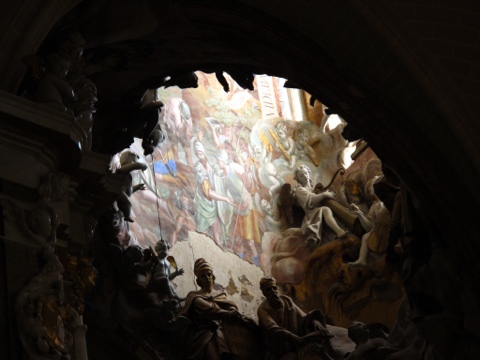
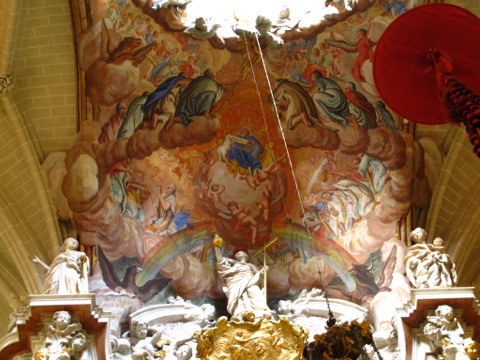
I choose to concentrate on the Toledo Cathedral. Having just recently visited the cathedrals in Avila, Segovia, Sevilla and Cordoba, you may think it’s overkill to visit another one. Not so in Toledo. The retablo behind the Main Altar and that “hole in the ceiling” —- the dome — are enough to justify the €7 admission here. Not to forget, I particularly love the statue of a smiling Mama Mary and a playful Infant Jesus in the Choir area just right across the Altar.


20120417-111258.jpg

20120417-111349.jpg


As I leisurely walked around the Cathedral, I would always catch myself looking up towards the ceiling. That “hole” impresses me so. I wonder how it was sculpted out up there, or how they even keep it clean, or how they change the lightings up there. Or is that natural lighting? Perhaps. As with many church areas where these geniuses of the past thought of almost everything!


20120417-111827.jpg

20120417-111852.jpg


What an inheritance! Spain is so lucky to have “inherited” all these treasures. And all those El Greco paintings of saints inside the capillas. Of course no photography was allowed inside the chapels which may well be art galleries by themselves given the many precious paintings inside. And as one steps outside, there’s so much more to see. Truly, Toledo’s claim as the biggest “open-air museum” rings true.


20120417-172124.jpg

20120417-172206.jpg


The best way to visit Toledo is to walk all around. Easily a half day just walking around, peeking in and out of churches and museos. Just imagine El Greco walking on the same cobble-stoned paths, drawing inspiration for his paintings and Miguel Cervantes for his Don Quixote novel from Toledo’s inheritance!


You may also want to read my 10 year-old blog on Toledo. It may be my 2nd time now, but the thrill of being in this huge open-air museum remains.


In an earlier blog, I wrote about our day trip to Avila from Madrid. It was the week before Holy Week. And I ended up doing Avila 2 days in a row. But that’s another story.


20120412-225819.jpg

20120412-225913.jpg


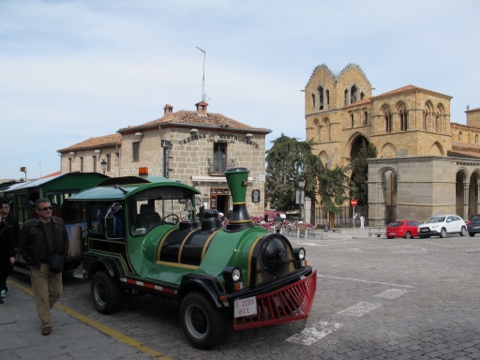
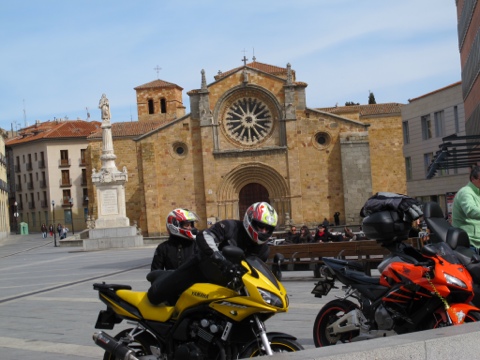
There are many ways to tour Avila. The Tourist Office has several itinerary choices for visitors. The more energetic may want to round up the walls and visit as many churches and museums. The lethargic, exercise-deprived may opt to train in and around the 11th century walls. The first time around, it was a walking trip for us. Avila has enough churches ⛪and old buildings 🏰within its “murallas” or walls to fill up a whole day. The 2nd time around — which is really just the day after — we didn’t miss the chance to ride the green train that weaves around and outside the walled city. A good idea, sparing us from the leg cramps of the day before.


20120412-230557.jpg

20120412-230838.jpg


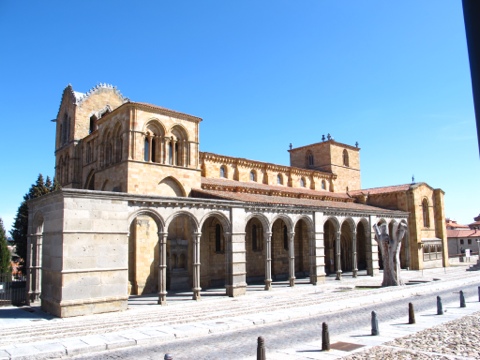
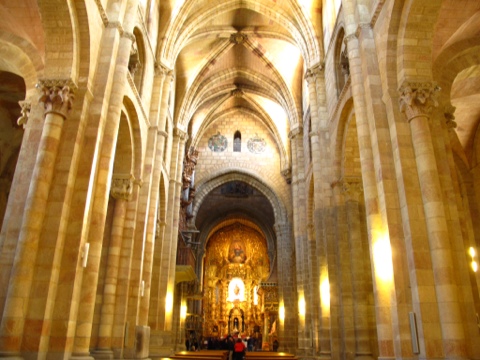
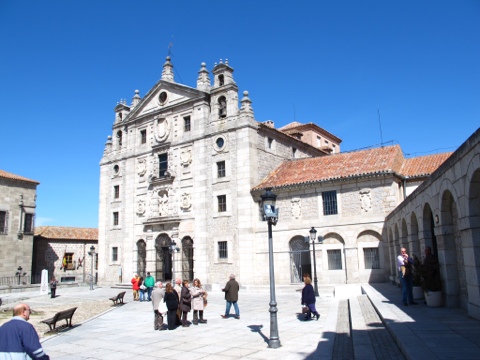
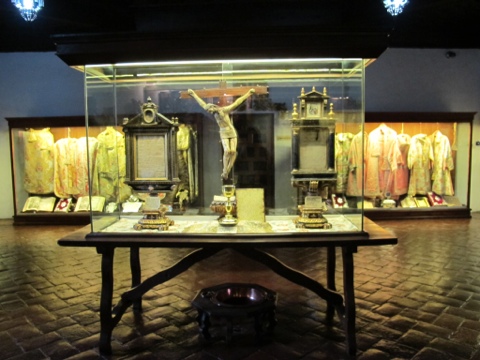
Typically, every tour starts in the San Vicente Basilica, 💒which is right at the mouth of The Murallas. The basilica is where the young Prince, son of Ferdinand and Isabela, remains buried. Very impressive. Just before entering, take time to appreciate the wood carvings on the doors and the statues guarding the admission area. I spotted 10 apostles and wondered. When asked, the guide didn’t know which of the apostles are missing. Also, every pilgrim here won’t miss a visit to the Museo de Santa Teresa. Although Avila has another patron saint (well before St. Therese was born and sainted), there are many museums and relics of St. Therese, along with all those stores selling “yemas” named in her honor. If you ask me, those “yemas” taste like pure yolks sprinkled with sugar. Too rich. 😖


20120412-231217.jpg

20120412-231320.jpg


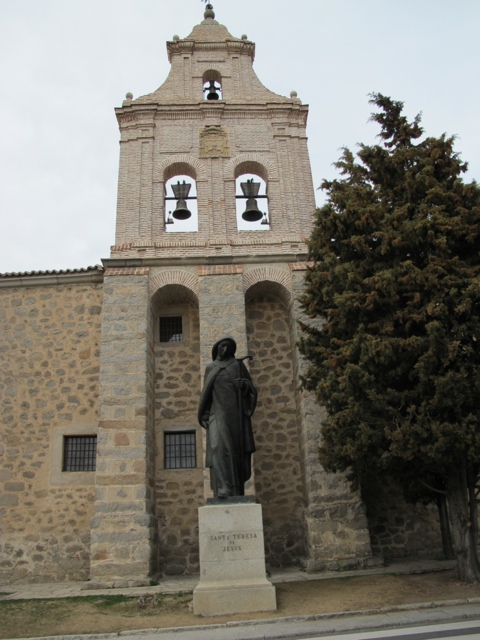
On our 2nd visit, we visited the Convent cum Monastery where St. Therese of Jesus was once the prioress. Coincidentally, this Monastery of Incarnation opened its doors on the very day of the saint’s baptism, though it was 20 years after when she entered the convent as a nun in 1535.


20120412-231858.jpg

20120412-232010.jpg


Inside, we spotted the exact site where St. Therese met the child Jesus. The child Jesus allegedly appeared to the saint right by the main staircase of the Monastery. The story goes that the child asked the saint “Who are you?”, to which the saint answered “Teresa of Jesus”. Then she asked the child, “Who are you?” And the child answered “I am Jesus of Teresa”.


20120412-232318.jpg

20120412-232419.jpg


In 1982, Pope John Paul II visited this convent. The chair on which he sat is encased in glass and put on exhibit here. There are many relics inside the Monastery, and the cell where St. Therese of Jesus lived is well-preserved.


20120412-234024.jpg

20120412-234419.jpg


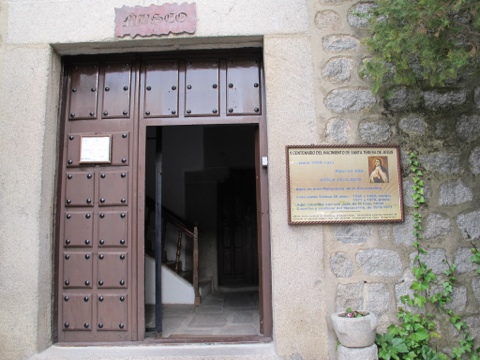
The Monastery’s gate is actually outside the walls. If you are riding a cab, be sure to be dropped off right by the gate. Easily, you can spend an hour or less here. A small tienda or souvenir shop can be found as you exit the same door you entered.


I do not pretend to be a connoisseur, nor am I saying I’ve tried all culinary delights around here. But I dare say that what I have found so far, I LIKE!


20120410-142051.jpg

20120410-142206.jpg


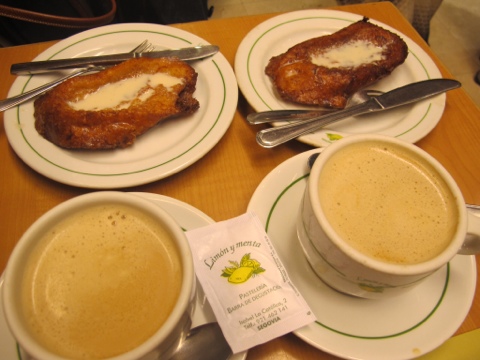
A trip to Avila meant bringing home some boxes of those yemas and cookies irreverently called “Tetillas de Monja” . Lenten Season meant we should try that Lenten delicacy called “Torrijas” or “Torrejas” —- frankly a cross between a French Toast and a bread pudding.


20120410-142607.jpg

20120410-142655.jpg


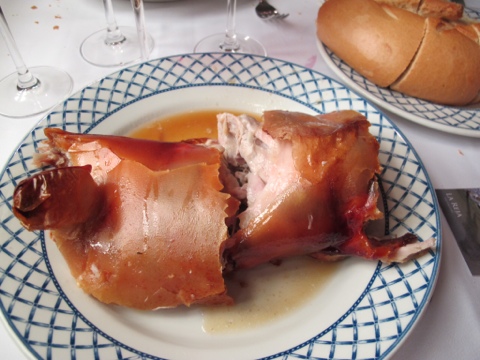
In Segovia, never miss a cochinillo meal at no less than Meson de Candido. They didn’t build a monument for Candido for nothing. It’s only a half hour AVE train ride from Madrid. The cochinillo, the cathedral and the Alcazar are good enough reasons for a day out to Segovia.


20120411-105153.jpg

20120411-105514.jpg


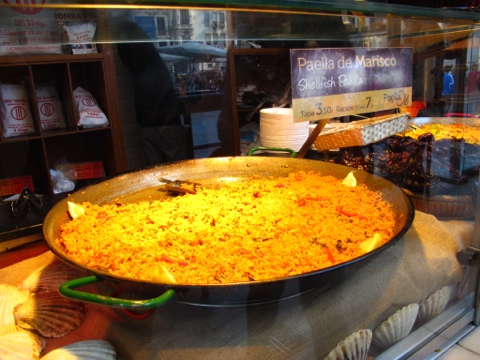
Of course, one must try the authentic paellas here in España. We tried some when we sat and dined in Plaza Mayor, while watching the crowds in chilly weather. But the best was introduced to us by our foodie friends who brought us to this hole in the wall somewhere in Tres Peces, 20 near the Anton Martin metro station. It is called Ventorillo Murciano.


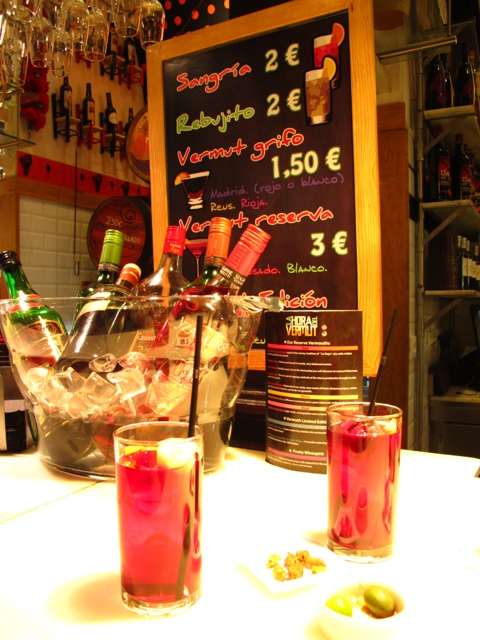
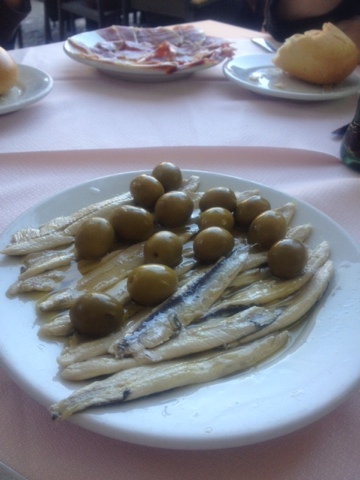
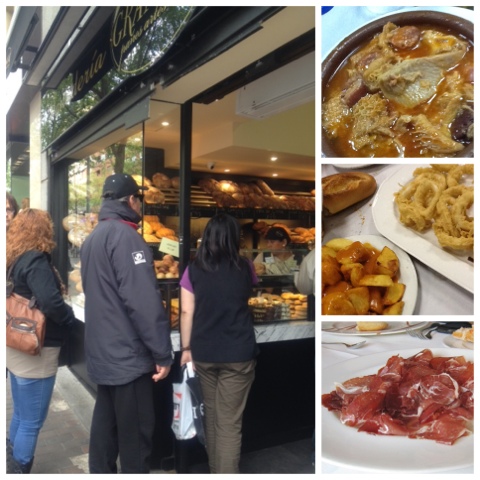
A trip to the Mercado de San Miguel is also a must-try. Have your cheese and croqueta fix here. Or grab a drink or two while savoring some boquerones, Jamon, langostinos or some other shellfish. We even found some Chicharon, which they call cucurucho!


20120411-110938.jpg

20120411-110957.jpg


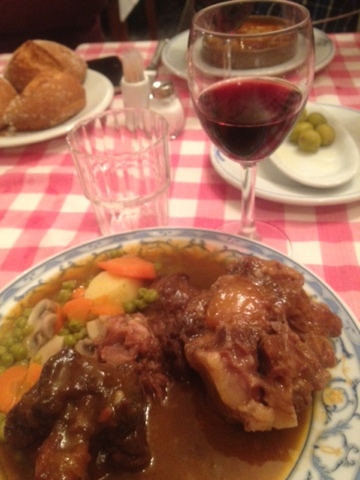
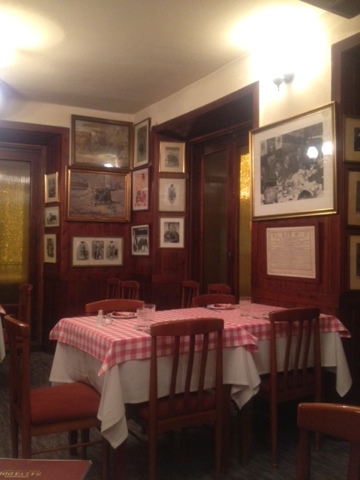
We checked out Casa Botin, that oldest running restaurant in the world, but there was a long line that Easter Sunday. No problem. The same foodie friends D and J introduced us to another Hemingway favorite haunt. Restaurante Salvador does not serve Botin’s suckling pig (besides, we had our cochinillo fix in Segovia) but it certainly serves the best Rabo de Toro. My friends said this is the same place where matadors hang out after a corrida. And one of them matadors had an affair with no less than Ava Gardner. Whether it was after or during her marriage to Frank Sinatra is debatable. But who cares if one is served bull’s tails for dinner?


20120411-111846.jpg

20120412-184423.jpg


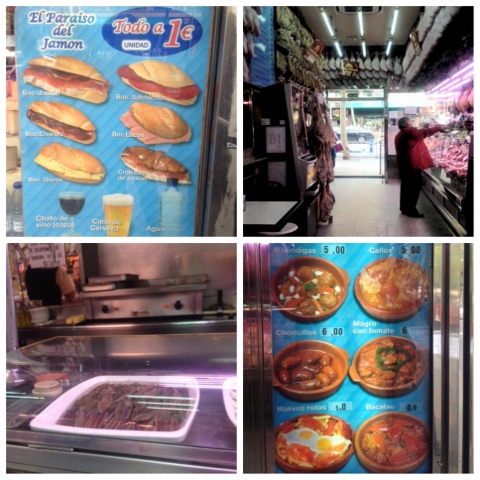
Now, if you’re on a tight budget…..you don’t have to do Mc Donald’s or KFC here. Do check out some local food chain. There is Museo del Jamon, and there is Paradiso del Jamon. Both serve €1 bocadillos (sandwiches) and some good ol’ Spanish delicacies from Quezo, Jamon, Callos, Albondigas, Tortilla, etc. You choose!


20120412-184746.jpg


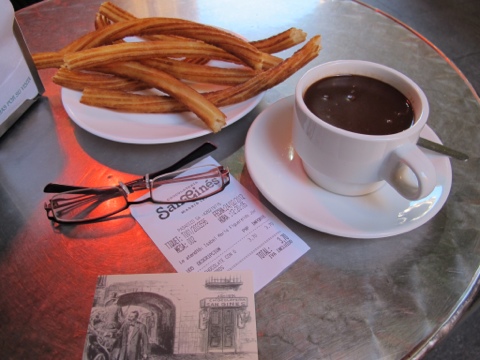
But do save some euros for that churros con chocolate. If you go to the palenque (market), you can have your desayuno (breakfast) of cafe or chocolate WITH either churros or porras (like bicho bicho) for only €2. Cheaper than a Mc Do breakfast! Or you may want to line up for some freshly-baked breads and pastries (like Garnier’s) but it would be difficult to resist the pastries. At least ONCE, try the churros con chocolate ☕in either Chocolateria San Gines off Calle del Arenal near Puerta del Sol, OR Valor near Plaza Callao.


Buen Provecho!


20120412-185250.jpg

20120412-185647.jpg