Category: Spain


Having fallen ill on my last week in Madrid, I opted out of trips outside the capital and skipped on long walks. Truth is I lost much time just staying in, homebound with coughing fits. Must be the cold spell.
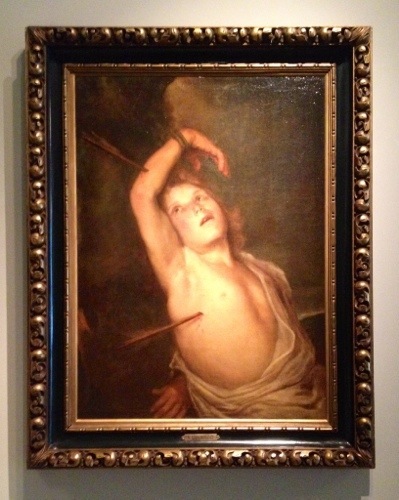


20140118-060552.jpg

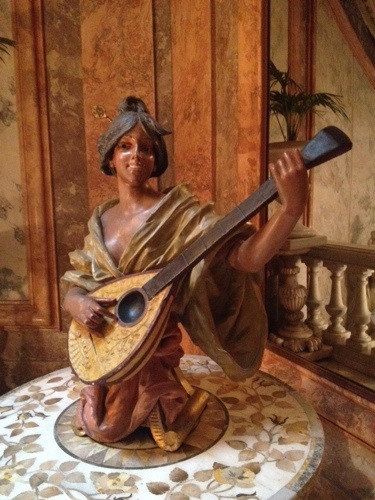
One of Lazaro’s favorites, it is among the first art pieces you’d encounter. No attribution. Bought in Paris from the Marquis de Salamanca’s Collection.
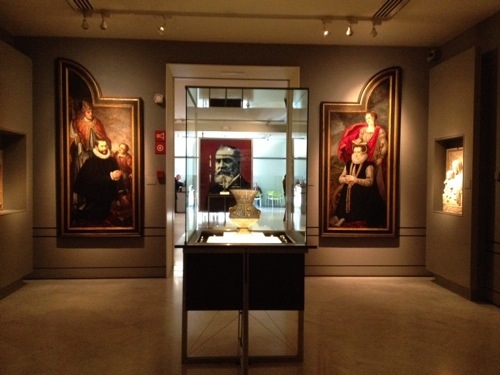
20140118-060648.jpg

That’s Señor Lazaro right in the middle. Financier, Journalist, Publisher, Art Collector.


By the time I’m well enough to step out, I was reminded not to overdo it. So how about this less-visited museum. No crowds. Below the tourist radar, but highly-recommended for its art treasure and exquisitely-arranged collection.


20140118-061035.jpg

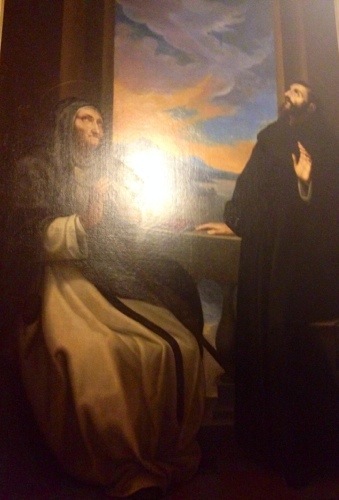
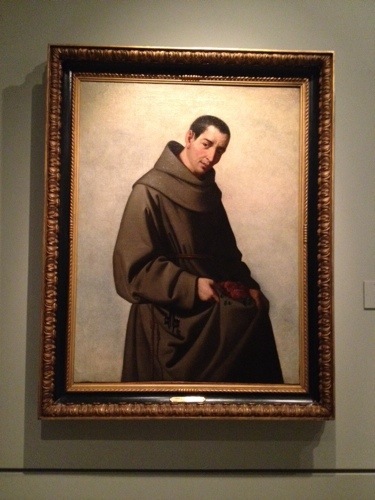
San Diego de Alcalá. By Franccisco de Zurbarán. 1651-1653.
20140118-061125.jpg

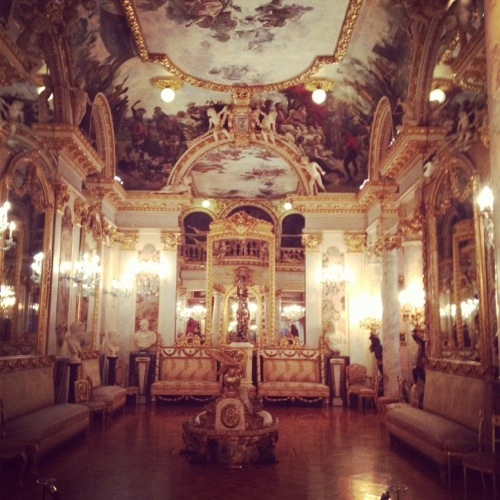
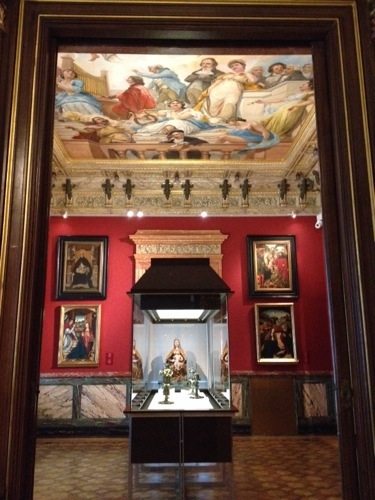
Look up!


Not too far from the U.S. Embassy in the fashionable district of Salamanca is Palacio Parque Florido. That’s how the estate is called. The museo housed in the Galdiano Mansion is actually where the childless Lazaro Galdiano lived with his Argentinian wife, Paula Florido. Along with the estate given over to the Government is Señor Galdiano’s impressive collection of paintings, sculpture and other works of art. This one generous intellectual obviously collected without regard for cost. The rich and famous…. and brilliant and classy, may I add. Oh yes, not all those with fame and wealth have intellect and errrr, class. This Galdiano couple did.
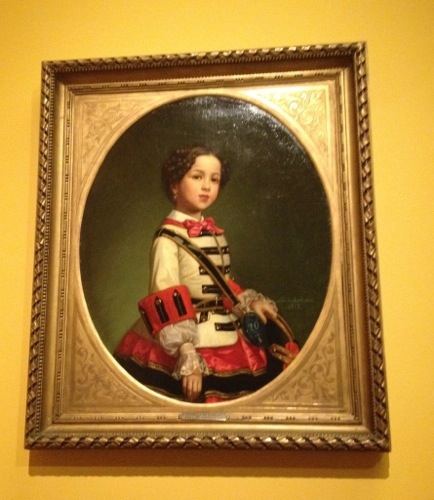


20140118-061709.jpg

The Young Marchioness of Roncali. Madrid. 1838. So young. So elegant.
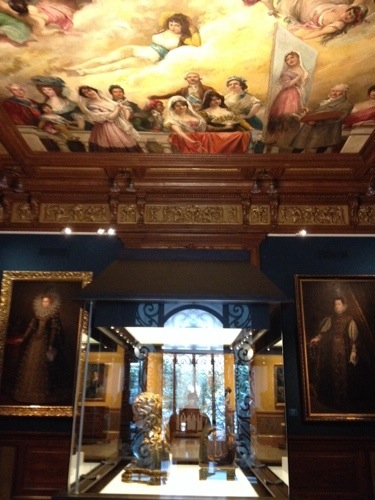
20140118-061811.jpg

Another reason to look up!


The couple collected as a matter of personal taste rather than societal dictates. Both Lazaro and his Argentinian wife acquired art pieces like they were perennially on a shopping spree. Moving from Madrid to Paris to New York must have fuelled, stepped up their acquisition mode that every room in this neo-Renaissance 3-storey (or was it 4?) mansion was tastefully done and adorned with art. Even read that some art critics of that time dismissed their collection as “barbaric”, whatever that means. I like that they collected even those art pieces without any attribution. Or that the pieces done by less popular artists didn’t have to compete for more prominent space on the walls, and yes, ceilings, of the lovely mansion. Going from room to room, hall to hall, floor to floor is an adventure. The next step, always a pleasant surprise. The frescoes on the ceilings are magnificent. The Goyas on exhibit pale in size and popularity compared to those in the Prado, but still manage to delight. The portraits present a study in contrast….. from the aristocratic ladies sitting for their portraits to the more relaxed but nevertheless elegant poses of young sitters.
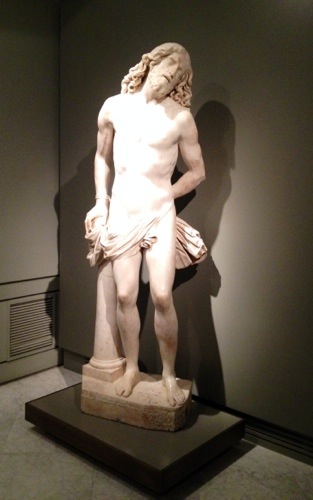


20140118-062000.jpg

Christ at the Column. Michelangelo Naccherino. 1550-1622. Italian School. Marble.
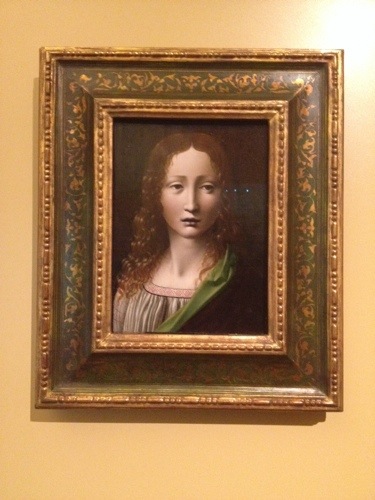
20140118-062053.jpg

Young Christ, a late 15th century “Leonardesque” painting traditionally attributed to Leonardo da Vinci. Oil on Beech Tree Panel.


A painting of an adolescent Christ intrigued me. It is my first time to see an image of a younger Jesus. Same with the more detailed and morbid painting of the head of San Juan Bautista. Was it really Leonardo da Vinci who painted the young Christ? Or was the painting done by one of Leonardo’s student protegés or apprentices? Just like the controversial “other Mona Lisa” in Museo del Prado, Da Vinci continues to stir controversy centuries later. As for Saint John’s head, this painting was originally listed in the 1570 Medici inventory. Such anatomical details! 
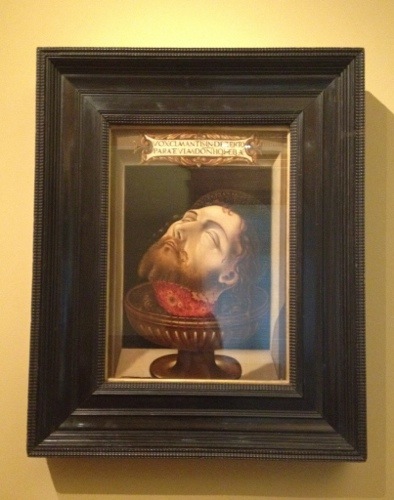


20140118-062306.jpg

Head of Saint John the Baptist. Another “lost original” by Leonardo da Vinci?
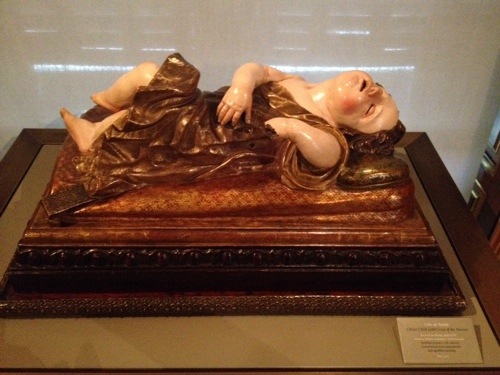
20140118-062358.jpg

Christ Child With Cross of the Passion. No attribution.


Sometimes, a museum visit gets “personal”. I felt that way when I visited Museo Sorolla. Same here. And there’s even less crowd yet more collections! Could the more “intimate experience” be attributed to the fact that the Museo was a former lived-in residence? That its collection was personally handpicked by its owner-collectors, and in the case of the lovely jewelry collection, even worn and lovingly cared for? Good vibes in this museo, for sure.
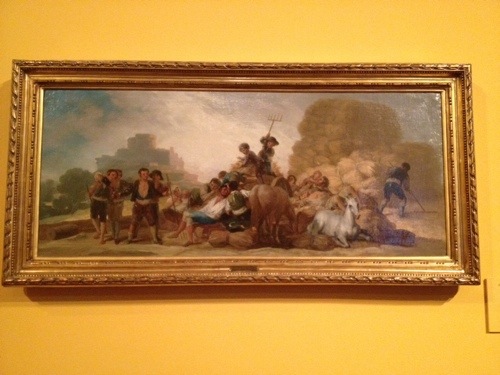


20140118-062640.jpg

Goya’s El Verano (Summer). 1786.

20140118-062734.jpg

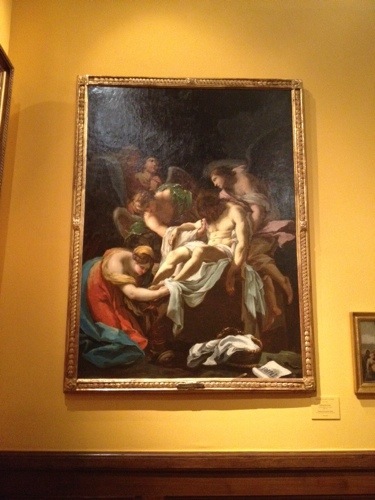
Entombment of Christ by Goya. 1771-72


The Museum closes early, and is closed every Tuesday. If you’re doing the rounds of Madrid’s museums, you’d be happy to visit this on a Monday when most other museums are closed. It is easy to spot along the posh Calle Serrano farther away from the shops near the corner of Calle José Abascal. Lastly, don’t forget to ride the glass and wood elevator. I did. Alone. Seated like a queen on the velvet bench inside the tiny enclosure. 🙂
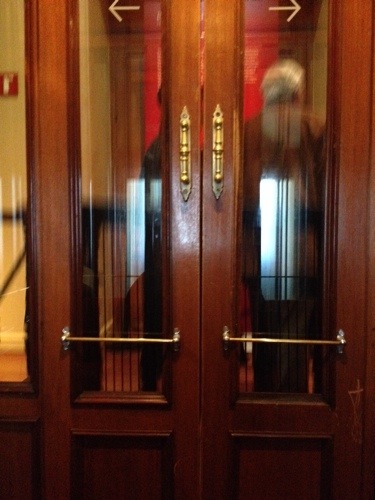


20140118-062901.jpg

Wood and Glass Elevator in Museo Lazaro Galdiano.

20140118-062947.jpg

Museo Lazaro Galdiano. Madrid.

Back when I was a first time visitor in Madrid, I took my breakfasts in the hotel. Easily, that sets you back 7-10€ daily. I scrimped the second time i visited. Did my groceries and made my own breakfasts. Then the 3rd and 4th time around, I knew better.


20140112-101017.jpg

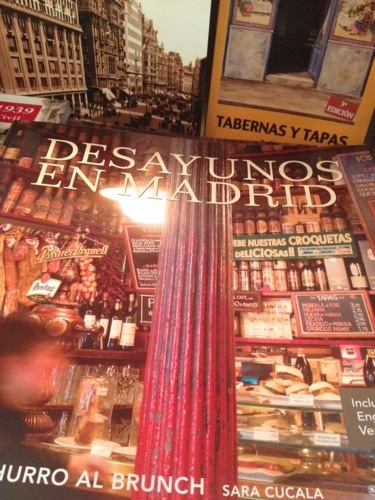
Desayuno means breakfast in Spain. Not their most important meal of the day, but just as interesting as it is simple.

20140112-100724.jpg

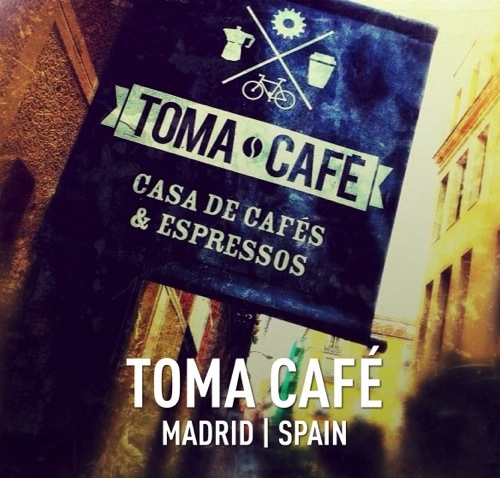
Tomá Cafe. Best coffee in town. 5 stars!


While I’m not about to dismiss the Churros y Chocolate in Chocolateria de San Gines, which honestly appeals to me more as midnight or late afternoon snack, I’d like to share some happy breakfast discoveries here. Feel free to click on the link for more photos, details and directions.


20140112-101654.jpg

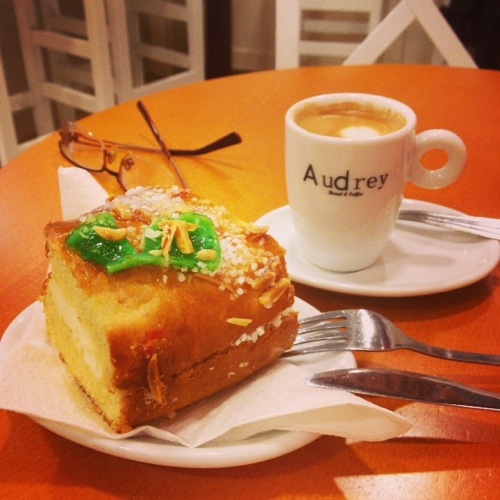
Typically, my breakfast here is only 2.50€ for a cup of cafe cortado y bocadillo. This photo shows my breakfast of coffee and roscon de reyes, a typical 3 Kings Day pastry. Costs 3.50€ for this special fare.

20140112-101920.jpg

A typical desayuno from audrey’s: cafe y empanada.


For best coffee, it’s Tomá Cafe ☕️. Their alfajores is also good on the lips, but feel your hips grow while munching one. Audrey’s Panaderia is just round the corner so it easily became a go-to for bocadillo, croissant and empanada fixes.


20140112-102737.jpg

Brie con tomate breakfast in Toast Cafe where I was the sole diner. I must be too early?

20140112-103221.jpg

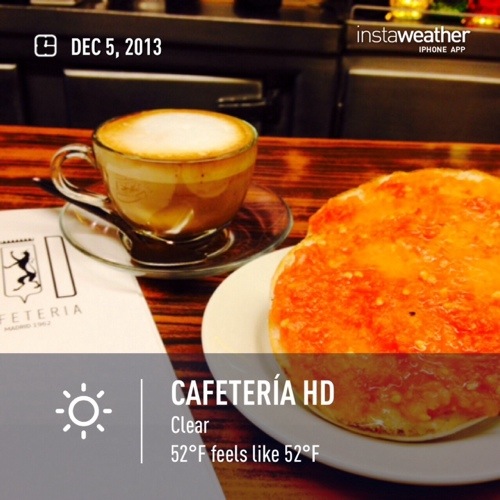
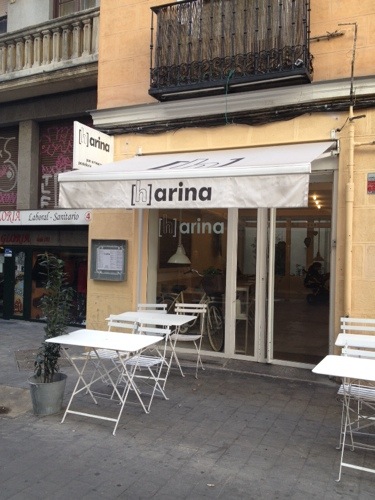
Cafeteria HD ain’t much to look at from outside, but you’d like the vibe here. I’m told they serve good burgers here.


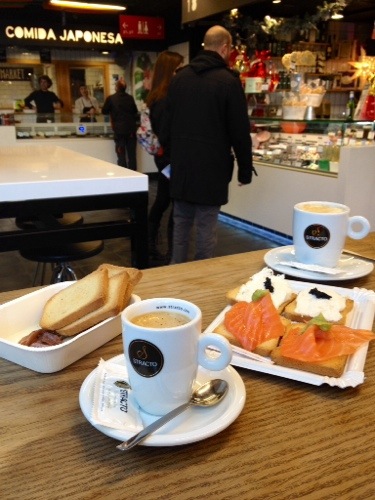
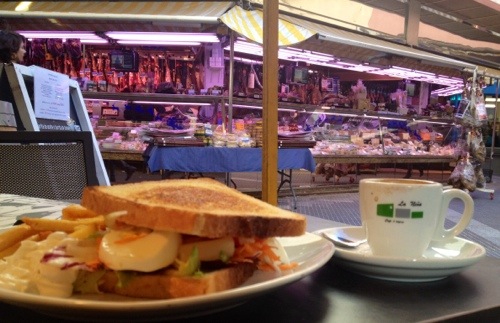
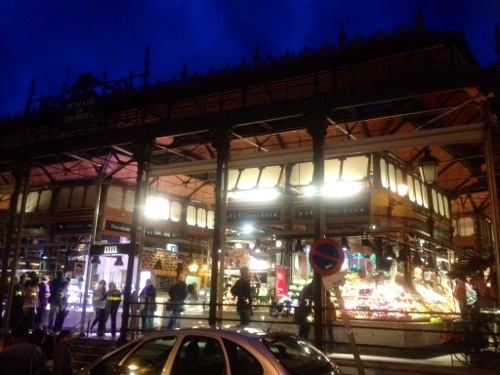
Spaniards don’t really take breakfasts “seriously”. That works well with me as I do enjoy hearty luncheons. I care about my coffee and would settle for a good molleta con tomaté in Cafeteria HD or brié in Toast Café. Those are typical Spanish fare for desayunos. Other times, I settle for brunch in some mercado where I can stay longer people-watching while downing cups of my favorite black liquid, or while deciding whether to order more tapás. Mercado de San Anton, Mercado de San Miguel, Mercado de la Paz and Mervado de Maravillas come to mind.


20140112-104015.jpg

Mercado de San Anton. My new favorito.

20140112-104130.jpg

Mercado de San Miguel, still one of my favorites.


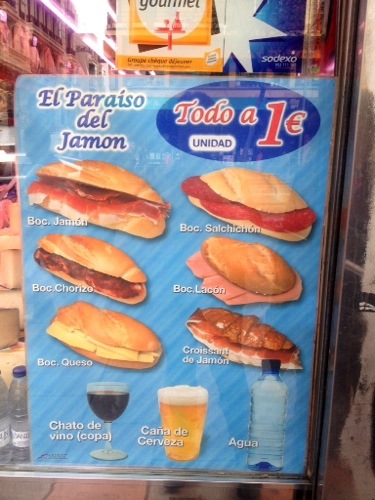
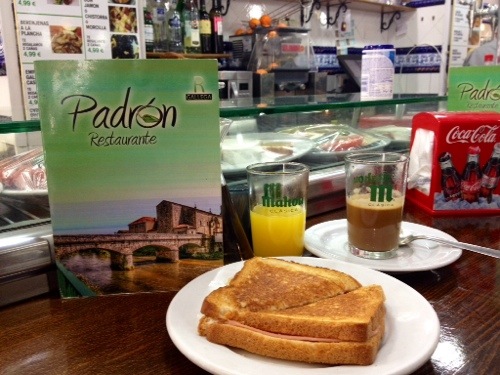
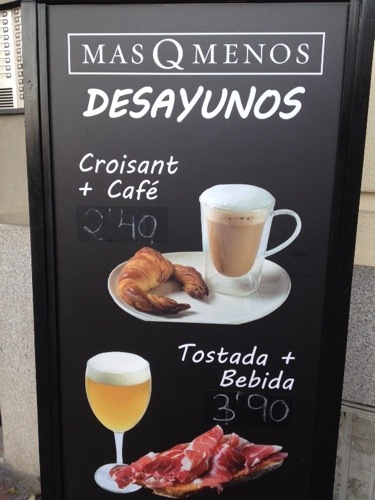
Of course it’s tempting to see those 1€ bocadillos or sandwiches and maybe take a couple “para llevar” to eat in some park or square. But I’d advise you against it only because desayunos can be a happy leisurely affair that hardly costs you. I even found one coffee shop offering 1-1.50€ complete breakfast (Mercado de Provenzal) and another with an extra glass of freshly-squeezed naranja (2.50€) at Cerveceria de Padron. Great deals.


20140112-104454.jpg

Mercado de la Paz. People-watching or jamon-watching while enjoying your desayuno.

20140112-104611.jpg

Tempting, yes. Not the best, but really cheap, huh?


Much depends on how you feel first hour in the morning. You either save your appetite for lunch and thus settle for a simple breakfast, or take a full breakfast to energize you for long city walks. Take your pick. Mine varies from very simple, simple, hearty to delightful. The last is when I take the sweet Spanish pastries for breakfast. In Christmas, there were loads of them!


20140112-105521.jpg

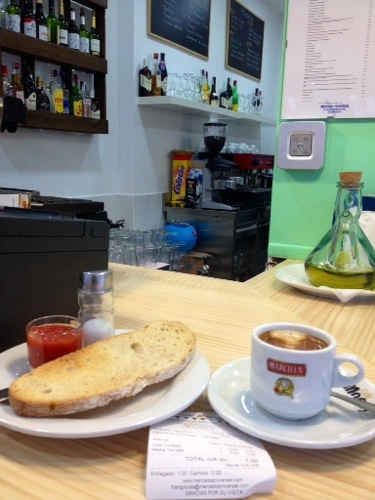
Want to show you a 1€ breakfast of good coffee and a tostada media con tomate.

20140112-110307.jpg

And here’s a 2.50€ desayuno with a glass of freshly-squeezed naranja. Coffee in a glass.


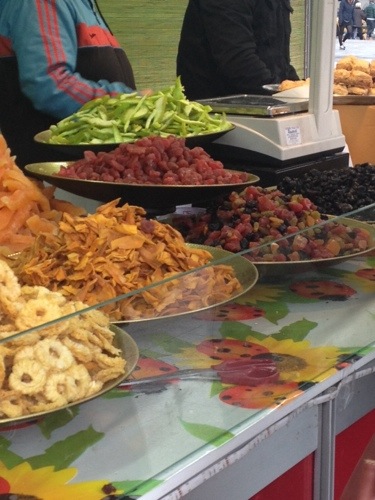
Dulces de Navidad is how they’re called.  Snack food. But don’t take my word for it. I dropped in on a few pastelerias for breakfast to indulge myself 🍰🍪🍮


20140112-110719.jpg

Ensaimadas here are not like what we have locally. Tasted more like creme puffs to me. But I love their turrones and their polvorenes con almendras (almonds)!

20140112-111113.jpg

Drool……


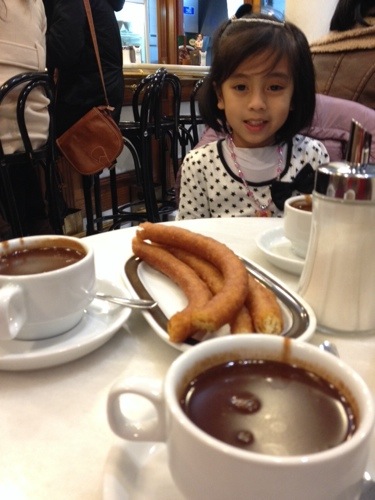
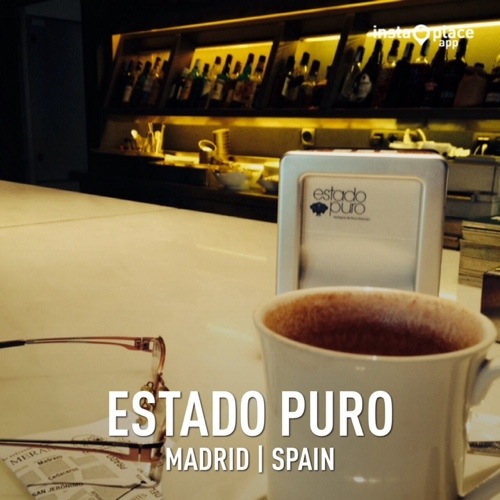
Or you may simply choose to have your Spanish chocolate con or sin churros after all. There’s Chocolateria de San Gines as I mentioned, or Valor. But I’m also happy with my chocolate from the lovely Estado Puro or Pabellon de Espejos. Your choice, really.


20140112-111514.jpg

See that smile? Churros con chocolate does that to any child. Valor.

20140112-111614.jpg

Just 2.50€ for a cup of chocolate here in Estado Puro. You’d love their very spanish interiors here.


I know. Too many choices for a “simple desayuno”. The idea is you’d never find it a problem looking for a breakfast place around Madrid. Cheap too! Most offered below 3€. If you need more “complications” deciding how to spend your waking hours, here’s more. 😉
 

20140112-111940.jpg

It’s an ice cream place but I ‘ve tried their coffee here. Another choice for you when you want to jump from desayuno to sinful dessert.

20140112-112105.jpg

20140112-112742.jpg


Many Spaniards celebrate the Feast of the Three Wise Men — alright, 3 Kings, if you like — more than they do Christmas and New Year’s. It’s the Twelfth Night of Christmas! The Eve of the Epiphany. No Papa Noel in dear España. No Santa Claus entering homes through their chimneys. Rather, the Three Kings from the Orient are the bearer of gifts. And Spanish niños y niñas wait until January 6 for their aguinaldos. Even decors show the 3 kings climbing up Spanish balconies bringing presents. Sí, you can say the Spanish traditions take off from the Bible more literally and meaningfully than Western practices. Christmas is all about the Belén where the star is the Infant Jesus. New Year’s is all about the countdown and the eve’s dinner is called Noche Vieja (literally, old night) and it’s considered good luck to eat “doce uvas” or 12 grapes as one welcomes the New Year. And Christmas Season ends with the Feast of the Three Kings.


20140107-004449.jpg

Meet Melchor.

Meet Caspar. Or

Meet Caspar. Or Gaspar.


Melchor, Caspar (or Gaspar) and Balthasar (or Baltazar). They’re the stars in this street parade in many major cities and towns all over España. I was fortunate to be in Madrid for the entire Christmas Season 2013-2014, and didn’t miss any of the festivities. But I agree with many Madrileños. The most festive and extravagant is the Cabalgata De Los Reyes Magos. There are many floats, marching bands, majorettes, horsemen, acrobats, cartoon characters, fireeaters, fairies, clowns, but you have to bring tons of patience waiting till the street parade reaches your spot.


Meet Balthasar. The last of 3 floats bearing the magi.

Meet Balthasar. The last of 3 floats bearing the magi.


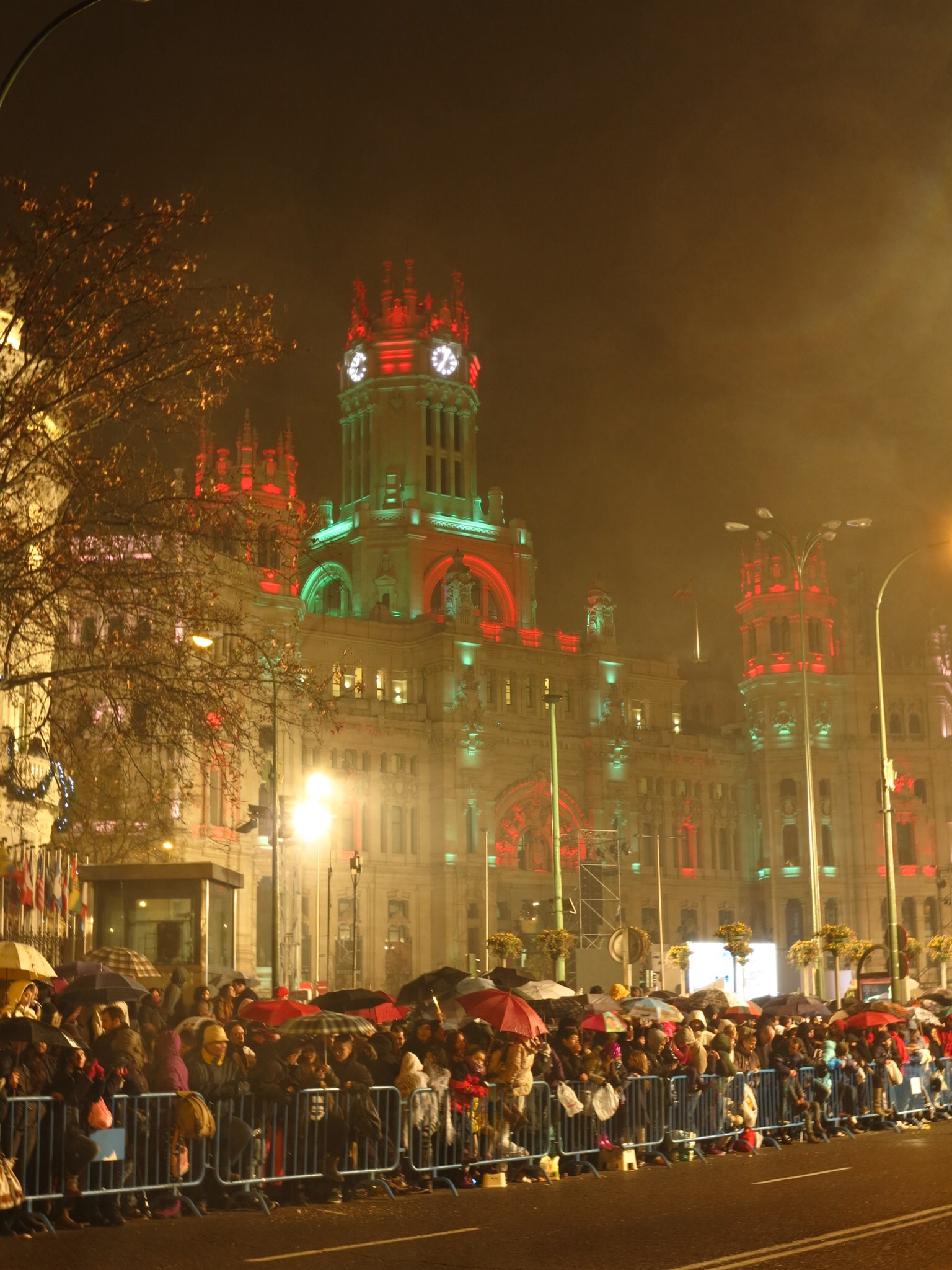
The Cabalgata parade weaved its way from Nuevos Ministerios through Plaza Colon area, towards Plaza de Cibeles where we waited and claimed a spot when there was still light on this winter day. We waited through an early sunset,  hardly sensed twilight because of our excitement, joined a crowd of many locals who came ready with food baskets, toys to amuse their toddlers and young children through as long as 4 hours of waiting, blankets (yes!) and even ladders (si!). We prayed for good weather since it rained for 2 days prior, and we got it the whole day till mid-parade when it started to drizzle. But Madrileños came prepared. Raincoats out, umbrellas up. No one is losing his temper here. The anticipation is only matched by the fierce cold weather. I wrapped myself good, but still too cold for my shaking bones and freezing fingers.


This kid played, ate, and waited. Then she slept midway through the parade.

This kid played, ate, and waited. Then she slept midway through the parade.

The rains won't stop this street parade!

The rains won’t stop this street parade!


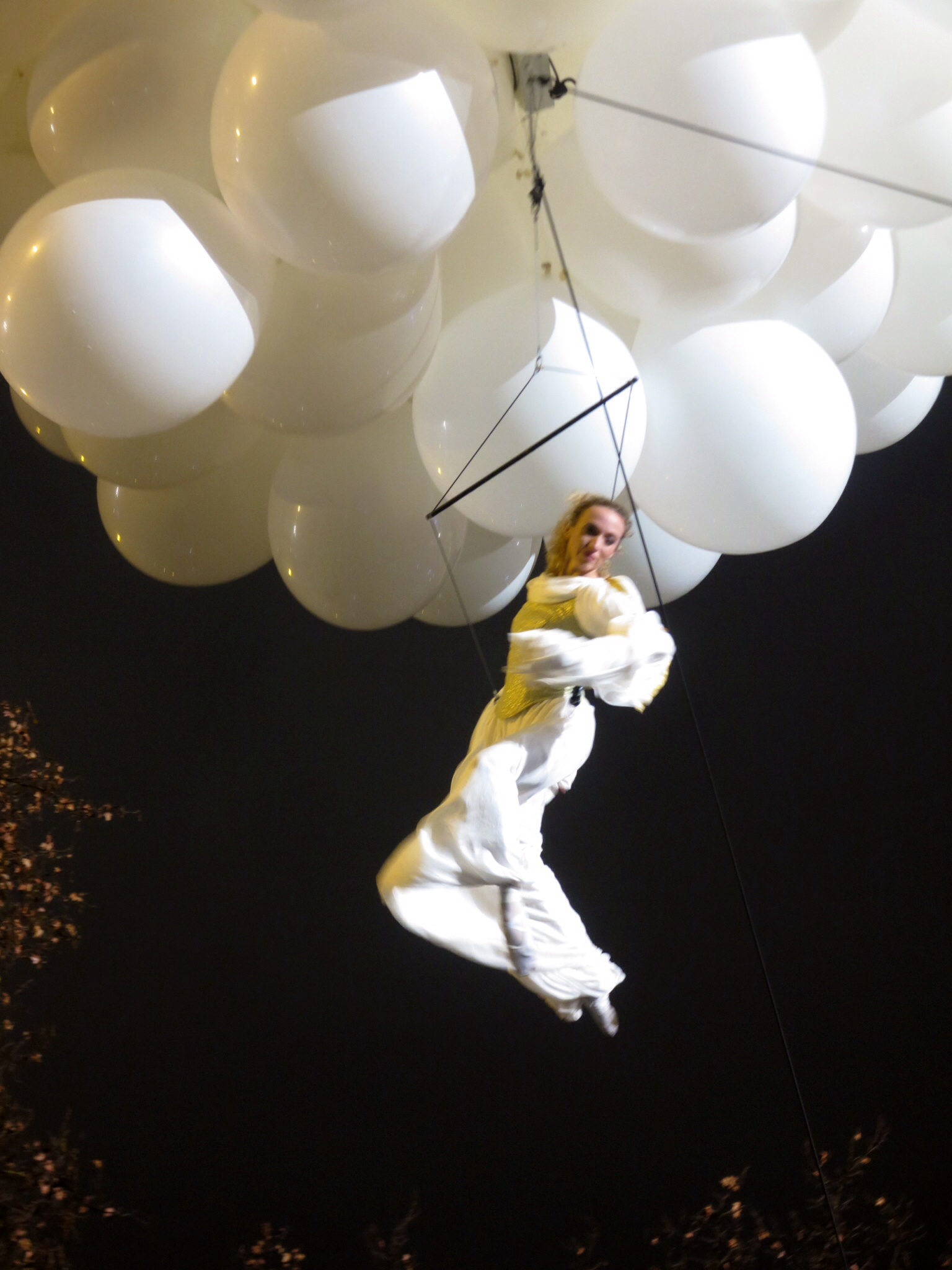
So much revelry. The fairies, the clowns threw away candies or dulcés to the crowd. Some costumed marchers broke away from the parade to say “Hola” to the delight of the kids and not so young. An acrobat gowned in white was tied to a bunch of balloons (and roped down to a bunch of “controlling men”) doing her stunts up in the air, sometimes just right over our heads until she soars high again, against the lovely backdrop of the Palacio de Cibeles.


image

The “up” lady in white.

image

Let the “up” lady soar high!


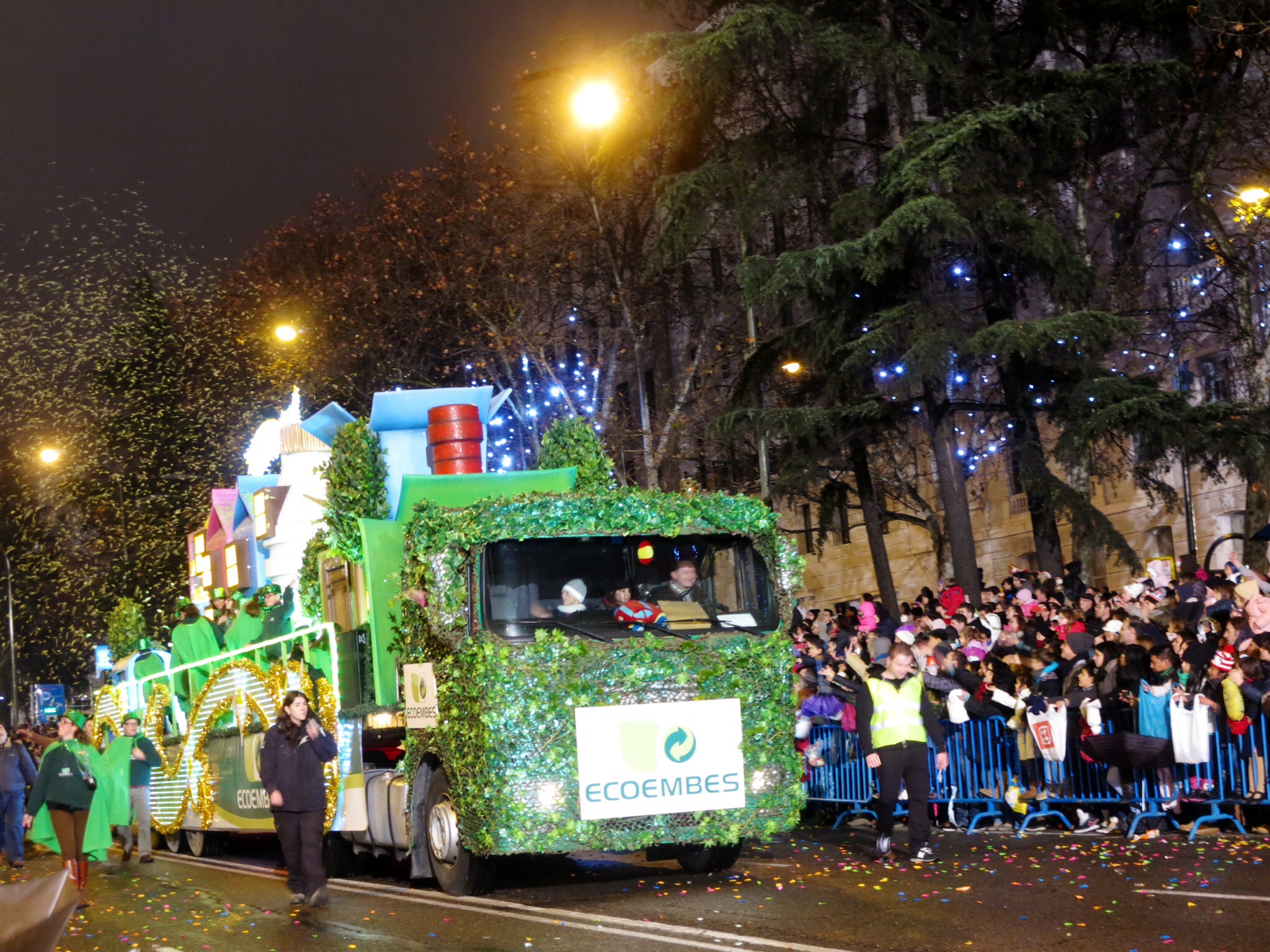
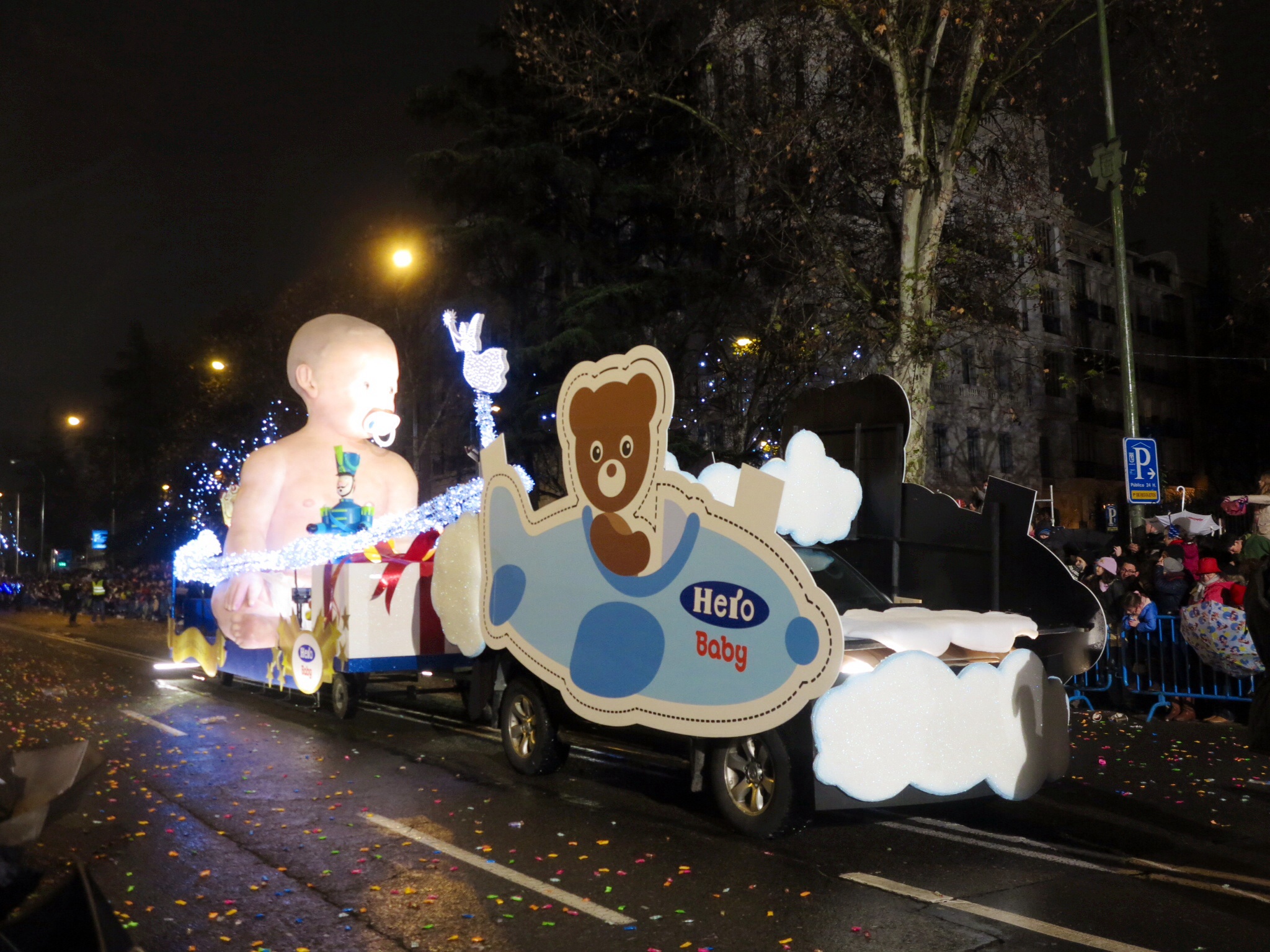
There were many floats outside of the carrozas ridden by the three kings. Obviously designed to grab young spectators’ interest, I also noticed how some floats incorporated environmental concerns for everyone’s wise consumption. Watching these carrozas pass us by, it is hard to think the Spanish economy is having a crisis. But it is certainly money well-spent. The sponsors who funded the floats certainly enjoyed media mileage, having been watched and appreciated by both young and old in the crowd. Locals, as well as visitors like me.


image

Environmental Management. Go GREEN.

image

Biggest babe tonight!


And lest I forget, those marching bands making beautiful, bouncy music while swinging and dancing with their instruments were really fun to watch. Same with the pageantry of seeing horsemen…. an entire cavalry joining the parade. The horses, and sí, those horsemen all looked good. You’ve got to hand it to the organizers for making this event so orderly, so organized, and most of all, SAFE. I heard about the tragedy that struck one Cabalgata in Malaga (where a kid ran to pick up some dulcés and was ran over by one of the floats) but the organizers certainly had these concerns in mind. The Policia, the Bomberos, even the street cleaners who manned the tail end of the street parade sweeping their way through were equally crowd drawers.


20140107-015811.jpg

20140107-015859.jpg


Thank you, Madrid, for this experience of watching this festivity and putting more meaning to this Feast of The Three Kings! He disfrutado mucho! Gracias, Madrid. 


20140107-020247.jpg


That’s how the article was headlined. Packing the Estadio Bernabéu for the Champions for Life Charity Match to raise funds for UNICEF’s Program to help children affected by Typhoon Haiyan in the Philippines. The charity match played between the big football stars of Spain from the Western and Eastern Regions was scheduled last December 30, 2013 and raised 550,000 Euros! That’s about P30 Million.


20131231-220051.jpg

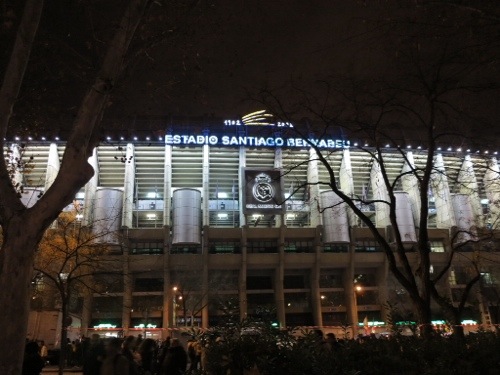
The 80,000 seater Estadio Bernabéu in Madrid.
20131231-220300.jpg

The December 30, 2013 Charity Match raised 550,000€ or about 30 million pesos.


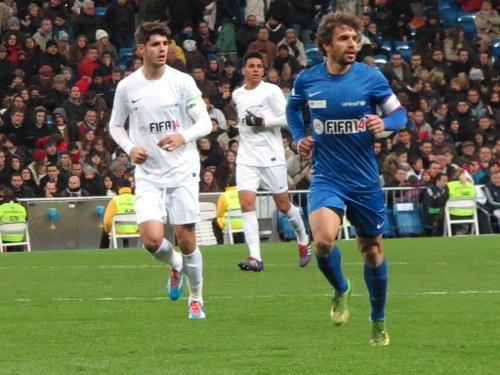
I don’t know anything from Adam when it comes to football. Talks of Sergio Ramos, Álvaro Morata, Iniesta, Quini,  Beñat, Iñigo Martinez, Gabi, Raul Garcia, Iraola, Jesus Fernandez and other football greats didn’t ring a bell for me. But here I am, watching a 7pm match in the stadium that Real Madrid Football club calls home. My only clues that the players are big stars come from this boy behind me who’d invariably call out their names and ask for a “camiseta”. I assumed that’s the equivalent of a fan asking for the player’s jersey.


20131231-224853.jpg

Saved! Just as UNICEF aims to save the children affected by Typhoon Haiyan (Yolanda) in the Philippines. Muchas Gracias, UNICEF, España, the Football Stars.

20131231-225003.jpg

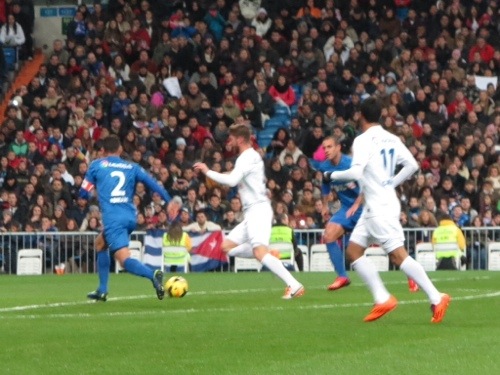
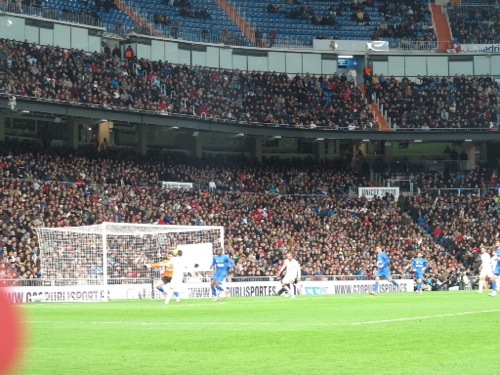
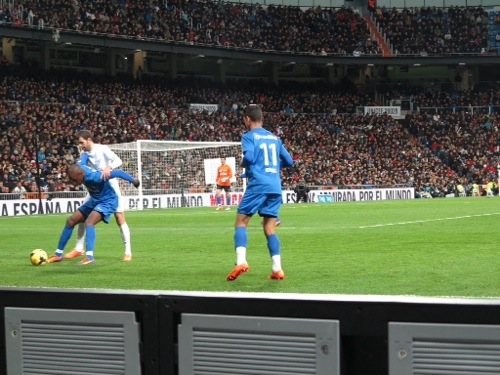
It was a friendly match, but players are players and everyone wants to see a good game played.


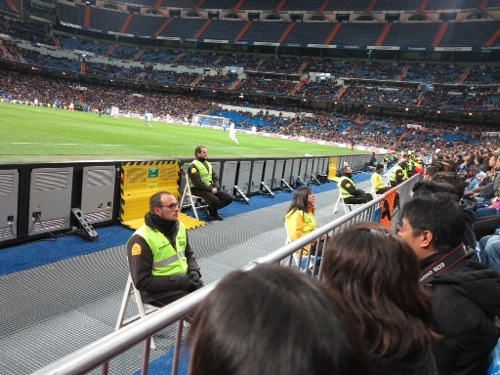
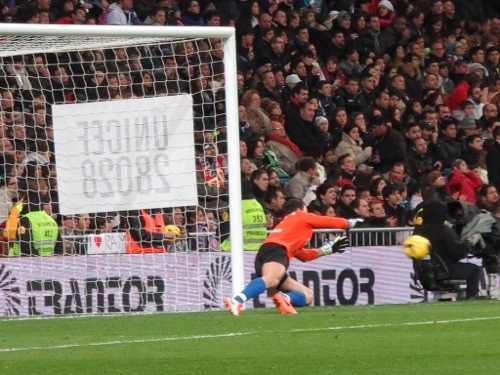
The Estadio Santiago Bernabéu can seat over 80,000 spectators. The stadium is about half full with families watching from grandpa to grandkids in strollers. Seated in front, you are about 3 meters away from the nearest security officer from a security team who have the “ill luck” of watching the crowd rather than the game. They only stand up, presumably to watch the crowd better, everytime a team scores. GOOL! those 4-letter words flash every time a player scores a goal. But not GOAL. Here in España, it’s GOOL.


20131231-225211.jpg

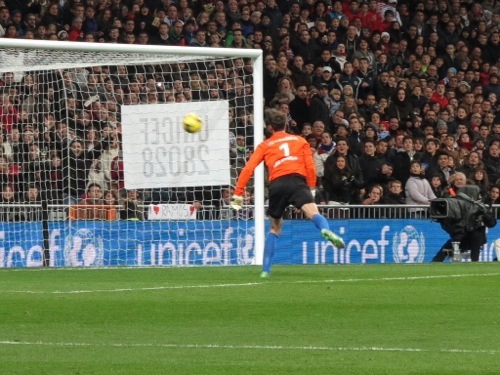
That’s Alvaro Morato wearing the white “camiseta”. He scored an impressive “bicycle” goal to the crowd’s delight.

20131231-225245.jpg

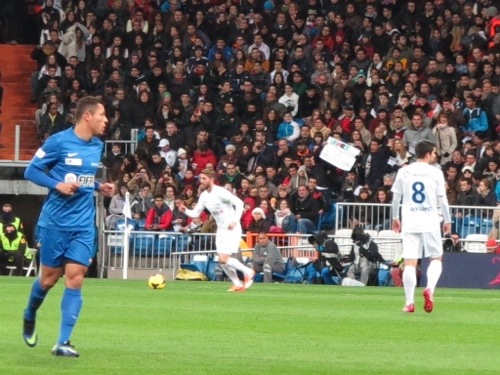
This is Sergio Ramos, also from the Real Madrid Team.


It was a chilly night. The man beside me had a small bottle of wine that he sucks from time to time. He also littered our common space with watermelon seeds. Pepitas, to the locals.  But despite the cold, everyone was in good spirits. For a good 5 minutes, the crowd stood to “wave” around the stadium.  Thought it would never stop! 


20131231-225835.jpg

Sergio Ramos counts many fans among the Spanish football aficionados.


20131231-230016.jpg

20131231-230214.jpg


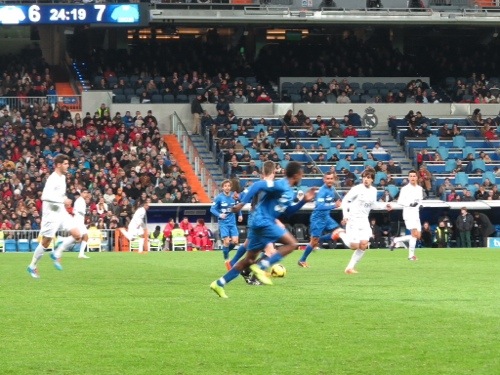
The mood was very festive. At the start of the game, they even played Christmas carols.   Though a friendly match, there were daring runs, impressive saves and goals. Quini and Morata got the loudest cheers for their memorable goals that night. What a thrill! And that’s coming from someone who watched a football game for the very first time!  


THANK YOU ESPAÑA! THANK YOU UNICEF!


20131231-230301.jpg

Not this time. It’s a GOOL!

20131231-230427.jpg

Three meters away, maybe even less. Hard to watch the game knowing the security officers are missing the thrilling game 😉


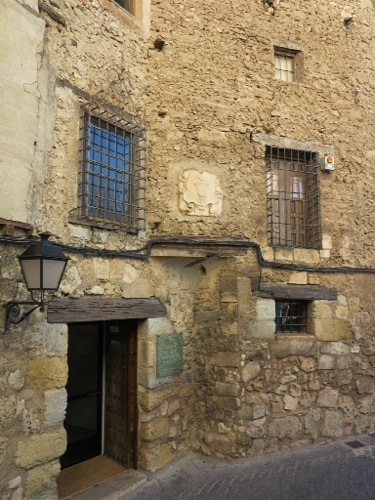
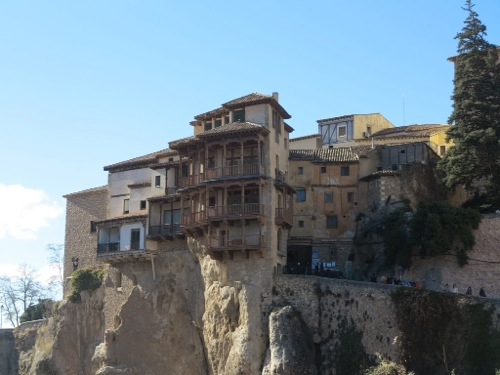
Once home to the royals, one of the few remaining houses — called Casas Colgadas — in the medieval town of Cuenca, Spain is the location of a highly-regarded Museo de Artes Abstracto Español. The establishment of this Museum of Abstract Arts in the 1960’s is credited mainly, if not exclusively, to one man. Fernando Zobel y Montojo. Born in Manila, Zobel belongs to a prominent Filipino-Hispanic family in the Philippines who also happens to be a passionate art patron and artist himself. Together with a couple of Spanish artists — Gerardo Rueda and Gustavo Torner — he realized his dream of a Museum and added significantly to this lovely town’s cultural offerings.

20131230-221256.jpg

Museo de Artes Abstracto Español (Museum of Abstract Arts) in Cuenca, Spain.

20131230-221359.jpg

The Museum is housed in one of the Casas Colgadas or Hanging Houses of Cuenca, Spain.


Cuenca is only a 45 minute ride on the AVE fast train from Madrid’s Atocha Station. You can do this as a day trip but you’d miss out seeing the medieval town especially its Casas Colgadas and Puente de San Pablo illuminated at night. Train ticket costs 28€ each way but what you’d spend, you’d save on more reasonably-priced meals and admission tickets to art museums and cathedral museums. I have no illusion I can cross the Puente de San Pablo in the dark (that’s what it promises!) guided only by the lights from under the bridge and the dramatically-illuminated hanging houses which include the Museum of Abstract Arts with its wooden balconies jutting out of the rocky ridge, hanging over the Huecar gorge. No. Crossing it in daylight at -5 Celsius with windchill is more than what i need. Besides, it is a deep gorge! If you have altitude problems, remember to look ahead. DON’T ever ever look down. And yes, walk fast towards the other end. 😉


20131230-223804.jpg

20131230-223905.jpg

The bridge : Puente de San Pablo crossing the Huecar Gorge in Cuenca, Spain.


But the simplicity, warmth and novelty of this Museum comforts you. Fernando Zobel is so loved in this heritage town that it named its railway station in his honor. Beat that! From the station you can ride 2 buses to Plaza Mayor (#12, then #1) or hail a cab for around 12€. In less than 20 minutes, you find Cuenca’s best attractions within and around the square. Just behind the Cuenca Cathedral (another must-see!)  is the Museum of Abstract Arts, housed in one of the Casas Colgadas, as if riding on the spine of a rocky ridge of this former Moorish fortress. Inside, abstract art in painting and sculpture compete with another “abstraction”. The windows and balconies show the bridge (Puente de San Pablo) crossing the Huecar Gorge with the former convent, now a parador, in full view across the gorge.


20131231-151606.jpg

One of the “abstractions” inside the Museo: prized view from the balcony of the Casa Colgada or Hanging House. Cuenca, Spain.

20131231-151734.jpg

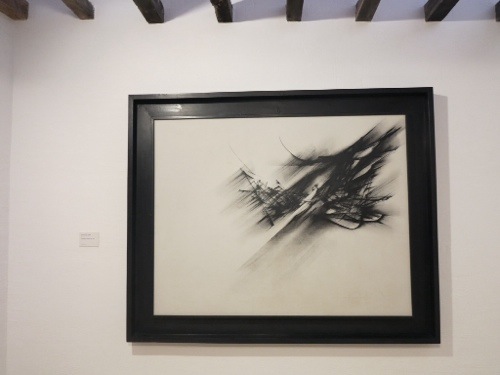
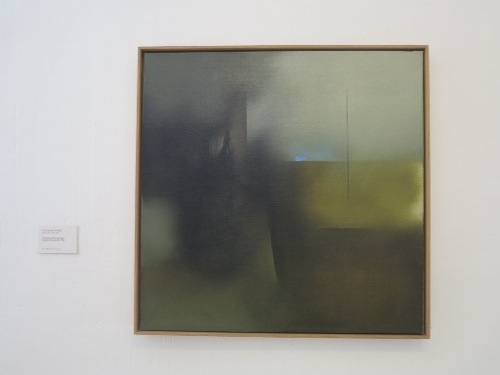
Abstract Art by Fernando Zobel. (1924-1984)

20131231-151837.jpg

Inside the Museum of Abstract Arts. Cuenca, Spain.


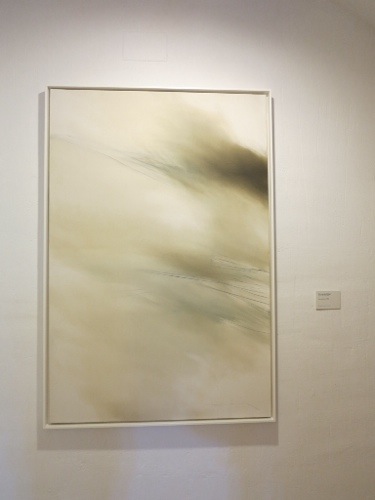
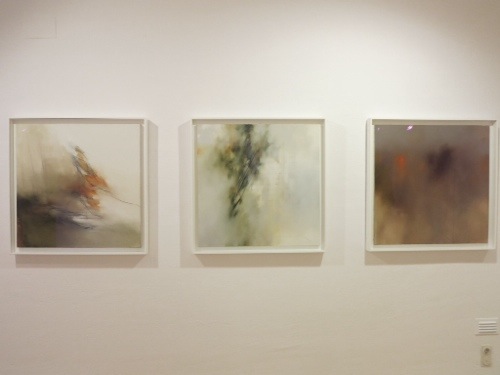
I must confess I am not a big fan of abstract arts but Zobel’s modernist art is quite distinct. Like a signature style, he uses surgical syringe in some of his paintings to produce those long, sharp, more defined lines. It is likewise interesting to note that Zobel finished medical studies in the University of Santo Tomas before completing his studies in Harvard University (history & literature) where he graduated Magna Cum Laude. From medicine to literature & history, to art. In his lifetime, he visited many Museums to view the works of art masters and drew inspirations to create “reactions” in abstract forms. He also helped, tutored and nurtured the careers of then budding Spanish modernist painters like Antonio Saura, Antonio Lorenzo, Eusebio Sempere, Martín Chirino López and many others. These protegés’ works are also on display in this Cuenca Museum.


20131231-160003.jpg

Abstract Art by Fernando Zobel. (1924-1984)

20131231-160105.jpg

Abstract Art by Fernando Zobel. (1924-1984)


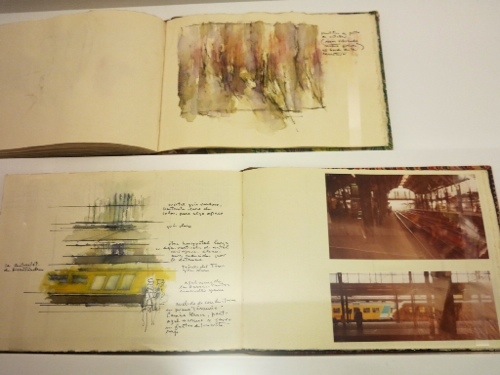
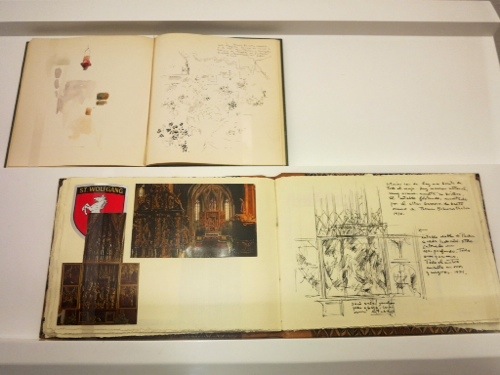
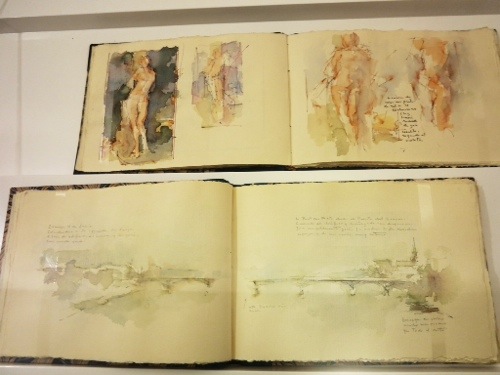
At the risk of sounding shallow, let me say that I do find Fernando’s notebooks cum sketchpads as interesting as his obramaestras.  The notes and sketches are very neat and detailed. Like there’s “order” in his art. Hardly any smudges or erasures. Like he gives his art a lot of thought before committing himself on paper. And his handwriting? Fluid strokes from this brilliant artist.


20131231-173724.jpg

Notebook of Fernando Zobel. (1924-1984)

20131231-173948.jpg

Notebook of Fernando Zobel. (1924-1984)

20131231-174034.jpg

Notebook of Fernando Zobel. (1924-1984)


For all he has accomplished, no less than the King of Spain bestowed upon Zobel the Medalla de Oro al Mérito en las Bellas Artes in 1983. A fitting tribute to one man who dreamed and helped many along the way. A year later, Fernando Zobel died of a heart attack while visiting Rome, Italy. His remains were buried in his beloved Cuenca, in a hill overlooking the Huecar Gorge which gave him inspiration for many of his landscape paintings. In 2006, he was posthumously awarded the Presidential Medal of Merit by then Philippine President Gloria Macapagal-Arroyo for his contributions in the arts.


20131231-171743.jpg

Abstract Art by Fernando Zobel. (1924-1984)

20131231-172110.jpg

Abstract Art by Fernando Zobel. (1924-1984)


On a final note, let me again say that I have no pretensions over my art appreciation but I am extremely proud that a Filipino (yes, born in Ermita and a citizen of our country!) gained the love and respect of the people of Cuenca, even the entire nation of Spain and yes, the rest of the world in the field of art. The visit to Cuenca was prompted more by the fame and respect bestowed upon Fernando Zobel de Ayala y Montojo, more than the medieval town’s other cultural treasures. I was adequately intrigued that this heritage town so honored him to name their train station after him. Arriving at Fernando Zobel Train Station in Cuenca lets you off on a good start. And then ……. lets you finish with pride in your heart.


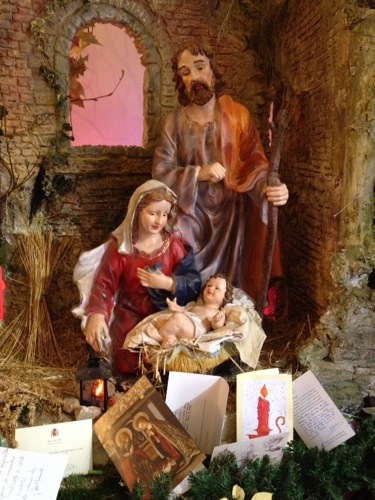
In my search for belenes or belens on display here in Madrid, one such nativity tableau or crèche touched me more than the others. Not because it is the grandest or fanciest, but because the belen was a gift from the Philippine Island of Cebu to the Messengers of Peace Foundation. The Madrid-based NGO headed by Father Angel received the gift for its charity work related to Typhoon Haiyan victims in the Philippines.

20131227-231643.jpg

BELEN DE FILIPINAS. A loving gift from the people of Cebu to Father angel’s Mensajeros de la Paz for the help extended to typhoon H aiyan (Yolanda) victims.


The BELEN DE FILIPINAS is on display in the tiny NUESTRA SEÑORA DE LA SOLEDAD CHAPEL in Calle Fuencarral 44 corner Calle Augusto Figueroa in Madrid. Just 3 or so blocks from Gran Via.
 

20131227-232302.jpg

In Madrid, Christmas is all about the Belen. Santa Claus and Christmas Trees are not as fashionable as elsewhere.


The Foundation continues to accept donations through a vending machine that shows images of the food that will be donated corresponding to each monetary donation.


20131227-232632.jpg

The tiny chapel is right at the corner of Calle Fuencarral and Calle Augusto Figueroa. Just 3 blocks or so from Gran Via.


May God bless Father Angel and all

the Mensajeros De La Paz!


20131227-232919.jpg


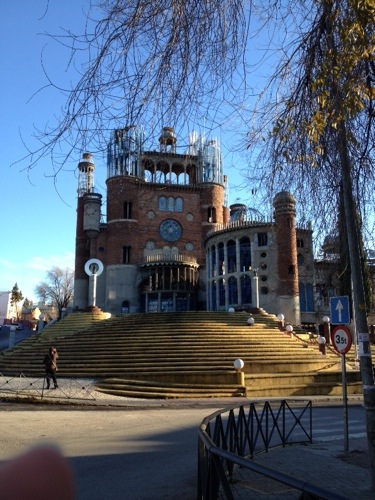
What happens when you are told some story about an ex-monk who’s been hammering away the last 50+ years building a church cathedral?


20131226-144715.jpg

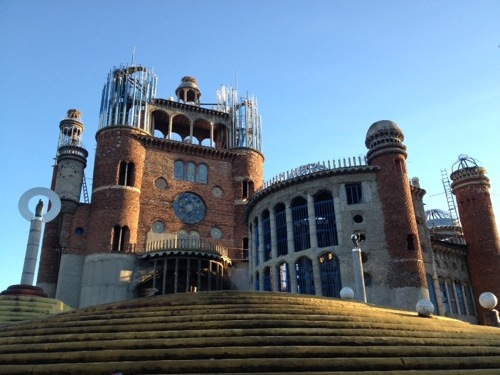
A SELF-built cathedral in Mejorada del Campo.


I know. I didn’t buy the story as gospel truth. Until my friend Jaime actually brought me to Mejorada del Campo some 20 kilometers from the city center.


20131226-145119.jpg

An “illustration” of Don Justo’s vision. Mejorada del Campo.
Photo Credit: Discovery Channel


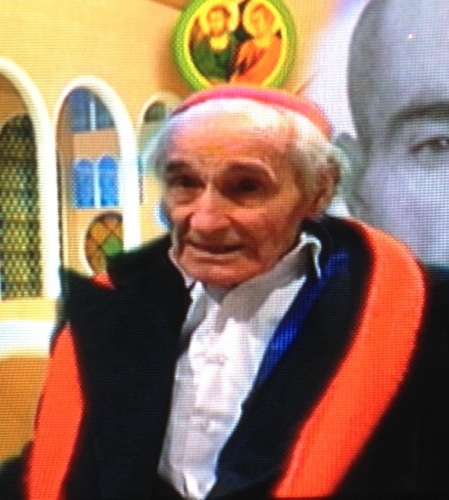
Ex-monk Justo Gallego Martinez, now 88 years old, has a plan. After only 8 years in a Trappist Monastery, he had to leave in 1961 after falling ill of tuberculosis. He prayed then to Our Lady of the Pillar and vowed to build a shrine in her honor when he recovers from his ailment.


20131226-145832.jpg

The man. The ex Monk. Don Justo Gallego Martinez. Born 1925. On a mission since 1961.


Don Justo, as he is fondly called. He’s been at it since 1961 when he started building with his own bare hands on a piece of inherited land. There were no architectural plans, no blueprint, so to speak. Just a vision. Reminds me of the dzongs (fortress cum temple) of Bhutan. So there, both inspired by a deep spirituality. Amazing.


20131226-150530.jpg

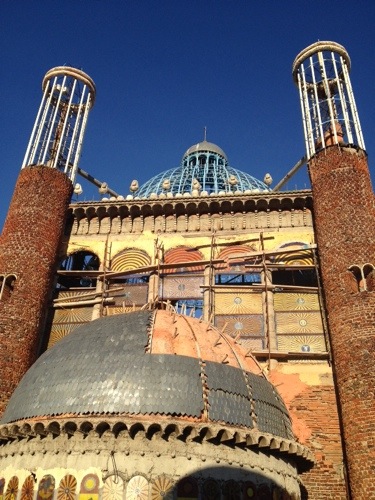
Stained glass, all donated, for this awesome man’s ambitious project.


It behooves me to think this man is still around and “at it”. I mean, 88? When Jaime said he wanted me to meet the old man, I wasn’t sure how to react. We found him carrying a hollow block (!), busily minding the construction. He gets a lot of help now from his 6 nephews and some locals. He also gets donations in cash and in kind (construction materials) for his ambitious project.


20131226-151307.jpg

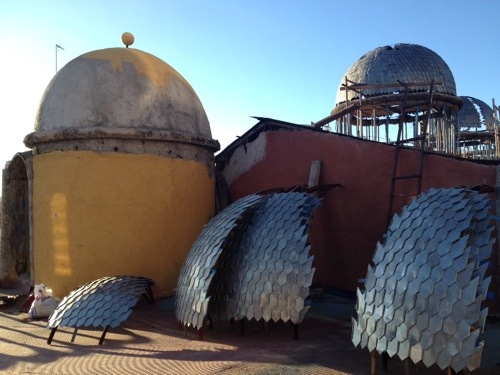
Care to climb up to the top dome and lay down a brick or G.I. Sheet?

20131226-151427.jpg

Some roofing materials waiting to be installed. Who’s climbing up?


Jaime egged me to climb up to the dome. I chickened out. There’s still so much left unfinished. Can’t help thinking what will happen when the old man goes. Like the Sagrada Familia in Barcelona, this cathedral will count many more years to get completed. Incidentally, the structure is built along Calle Gaudi. How fitting.


20131226-152023.jpg

The inside requires just as much work.


By God’s mercy, I hope to see the completed cathedral in another visit. Not sure if Don Justo, as he is fondly called, would still be around, but for his sake, I pray his vision is realized. Jaime is right — the best time to see this Cathedral is NOW. Meeting Don Justo in person is a bonus. An event meant to remind you of how some men can be so faithful and persevering. Don Justo’s covenant with his God and to the Lady is very inspirational.


20131226-152911.jpg

One last look before we go. Thank you, Jaime Marco, for bringing me here.


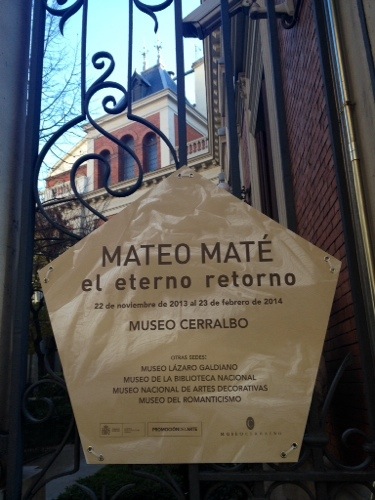
It used to be a private mansion, though it looks more like a palace to me. Its former owner, the Marquis of Cerralbo,  was a patron of the arts as his collections obviously show.  The Museum opened in 1944 and can be found a few meters from the corner of Calle Bailén/Calle Ferraz and Calle Ventura Rodriguez, 17, in Madrid. If you are in the area visiting Plaza de España and Templo de Debod, it’s a good pitstop (from the cold or all that sun) before proceeding towards Calle Bailén to view the Palacio Real or Royal Palace and Almudena Cathedral. 


20131226-204410.jpg

Museo Cerralbo is along Calle Ventura Rodriguez, 17, just off Plaza de españa and Templo de Debod.

20131222-091508.jpg

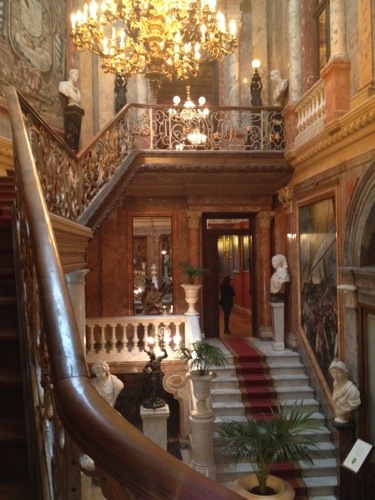
Frankly, the staircase and interiors of museo cerralbo intimidate me. But then again, a Marquis lived here!


From Plaza de España, I was walking towards Templo de Debod along Calle Bailen growing into Calle Ferraz, when I was tempted to take a right turn in Calle Ventura Rodriguez upon seeing the marker towards Museo Cerralbo. I joined many locals, including young students, when I got there, and felt like i was the only tourist.  First off upon entry, the ornately decorated staircase and walls with many prized and large paintings —- like they were running out of space —- simply floored me.  Whoa, some treasure here! 


20131222-091653.jpg

20131222-091905.jpg

This Salon must be their equivalent of a living room? Look at that ceiling!


It makes for a good break after visiting the “BIG 3” in the Paseo del Prado. Of course you can’t miss the Prado, Reina Sofia and Thyssen-Bornemisza Museums.  But what I love about small museums is that they’re “manageable”, won’t overwhelm, and best of all….they are  mostly former residences of the collector or artist himself!  Another museum, Museo Sorolla, ranks high among my favorites as the museo gives a glimpse of how the artist Sorolla lived and painted during his life.  As for Museo Cerralbo, here is one example of how the aristocrats lived then. Their mansions have huge salons fit for parties and their dining halls are meant for banquets. Adorning the walls is an impressive spread of their art collections. I can imagine them aristocrats taking a “stroll” along these corridors, pausing here and there, appreciating the many art pieces. 


20131222-092102.jpg

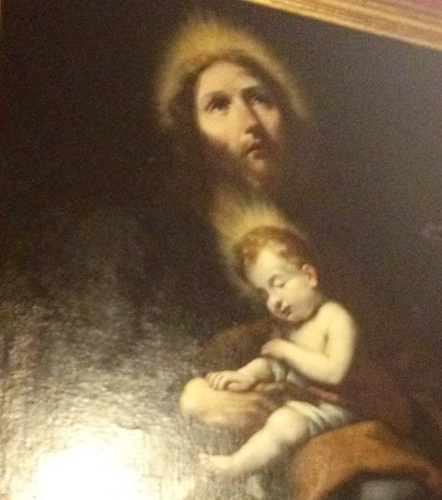
St. Joseph and the Child Jesus. Quite a takeoff from the usual Madonna and Child.

20131222-092202.jpg

The marker says it is one of many versions done by Girolamo Muziano (1580-1590)


The first oil painting is NOT attributed to any artist. Yes, it’s ANONYMOUS.  The marker says it was sourced from  an Italian School,  done presumably by one of its art students who drew inspiration from a Madonna and Child painting by Guido Reni, a master from a school in Bologna. This anonymous piece of art got my attention.  I love art themed on the Madonna and Child.  EXCEPT that this is NOT your usual Madonna & Child. Rather, it’s Saint Joseph with the Child Jesus. The second oil on canvas is done by Girolamo Muziano, the same 16th-century painter who did the same versions in at least 3 more Italian churches including the Saint Peter’s Basilica.


20131222-092337.jpg

This one is from the Spanish School where works are mainly religious paintings.

20131222-092604.jpg

A very intimidating corridor, fit for royalty.


Having actually lived here, the Mansion has its living, dining and sleeping quarters. Mind you though, they are far from the ordinary or standard quarters. I bet the Marquis did a lot of entertaining. After all, what are all those conversation pieces for? The collection could have covered conversations good for a month or longer! Besides, many royal guests from the nearby Palacio Real or Royal Palace must have whiled away some time here in the Mansion. Imagine them walking along the corridors, pausing for a break in the huge salon, or dining in the banquet room.


20131222-092704.jpg

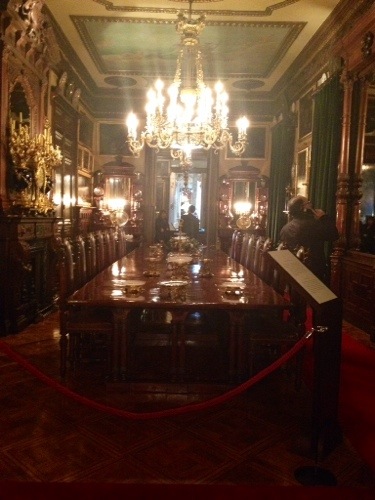
The Banquet Room in Museo Cerralbo.

20131222-093019.jpg

Too many conversation pieces inside Museo Cerralbo 🙂


For all its grandeur though, I am perplexed how or why the Marquis chose to keep his bedroom so modest. It just doesn’t add up. Maybe sleeping or resting ranks low in his priorities? Check out the last photo here and tell me what you think. 😉


20131222-093217.jpg

Yes, he’s the man. Don Enrique de Aguilera y Gamboa, 17th Marquis of Cerralbo.

20131222-093403.jpg

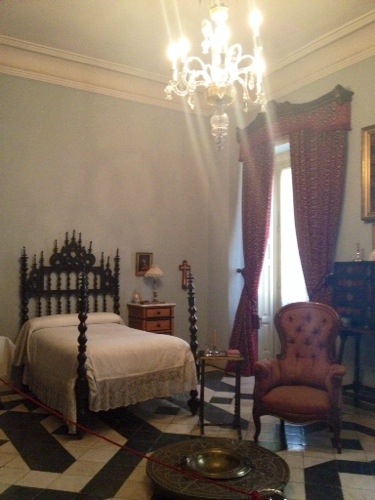
Would you believe this is the royal bedroom of the Marquis?

Now compare that with one of his offices……..

20131222-092913.jpg


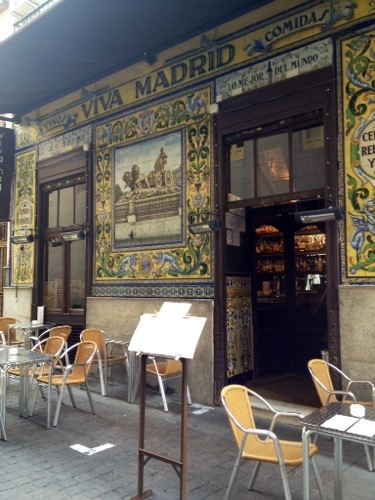
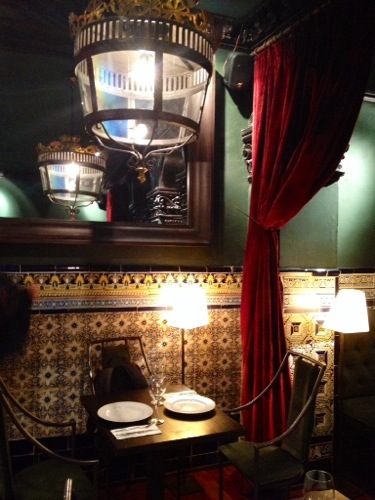
It was one of Rizal’s favorite haunts in Madrid. A “hangout”, if you like, with fellow patriots, to enjoy tapas y vino. And how convenient that it is just a few meters away from his apartment and 3 other hangouts: Teatro Español, Hotel Ingles and Los Gabrielles, another hangout famous for its azulejos or glazed tiles. Viva Madrid is in the heart of Madrid’s historic center along Calle de Manuel Fernandez y Gonzales, 7. Not too far from Puerto del Sol and just a stonesthrow from Plaza Santa Ana, this restaurante is quite a looker from outside with its murals, and even better-looking inside. The warm interiors match the friendly service and delicious food. This place is good for both dining, people-watching or simply basking in “Rizal’s life in Madrid”.


20131222-094101.jpg

Viva Madrid in Calle de Manuel Fernandez y Gonzales, 7.

20131222-094307.jpg

Imagine Rizal enjoying his vino y tapas here.


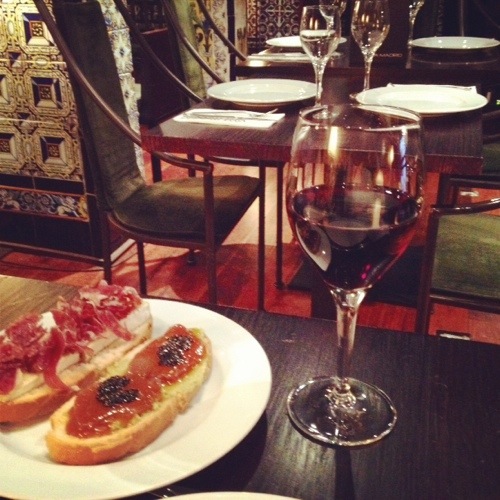
The rioja y tapas were a perfect prelude to the blackest, inkiest, most flavorful paella negra to be had in Madrid. Very negra indeed. And muy delicioso,especially with generous servings of salsa alioli. Thanks to Jaime Marco, the go-to guy for Rizal’s Madrid, for bringing me here. Jaime is not only a Filipino historian and Rizal expert but a foodie through and through. Dining in Viva Madrid combines the best of both worlds: food and history. 😉  


20131222-094618.jpg

Jamon y Salmon…. Con Brie.

20131222-094737.jpg

Piece de Resistance. Paella Negra.


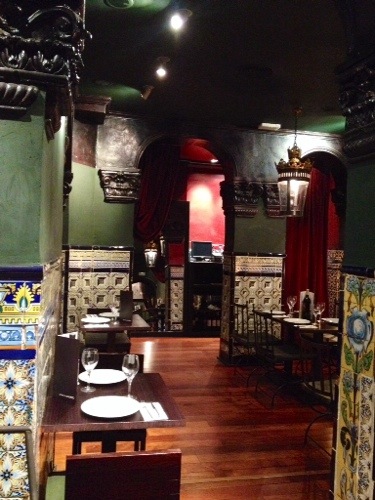
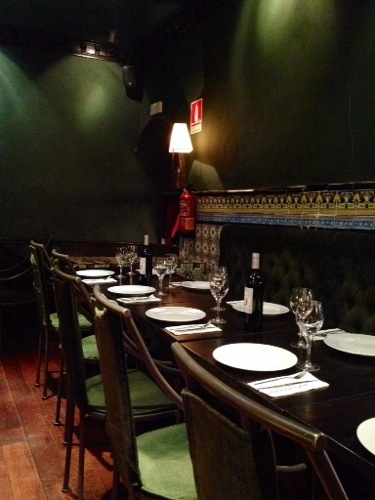
How fortunate that Viva Madrid exists to this day. Not like nearby Los Gabrielles, which has closed. Every Filipino visiting Madrid should dine here. Just be warned that the food may distract you from appreciating the lovely interiors of Viva Madrid. The same glazed ceramic tiles adorn the interior walls, framed by columns and dark wood panels. Imagine our national hero sitting in a quiet corner here, enjoying his light meals and vino. Imagine many of our propagandists whiling away their time here while discussing what gets printed on La Solidaridad.


20131222-095056.jpg

Lovely Interiors. Then, as in Now.

20131222-095149.jpg

Rizal’s Corner.


When you get here, do ask for Rizal’s corner. Jaime says it’s the one near the 2 columns. Check out the 6th photo. And on your way out, check out the Rizal marker. Doesn’t that make you proud?


20131222-095524.jpg

Good for family dining too!


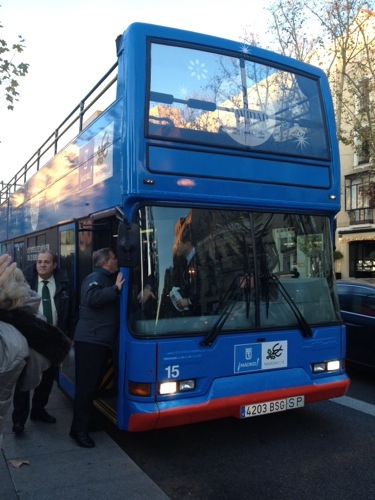
Not once, but twice. Got to do it a second time, because my battery died on me just when we were on the last stretch of the Navidad drive across the city center. Yes. Bummer to the core. I wanted so much to commit the lovely spectacle to memory. But I do need to document the scenario through my cam lest i fail to describe them well. And yes, I wasn’t so happy with the iPhone shots…… so i trooped back and joined the line.


20131222-090805.jpg

Rode atop this bus 2x. Ikr.


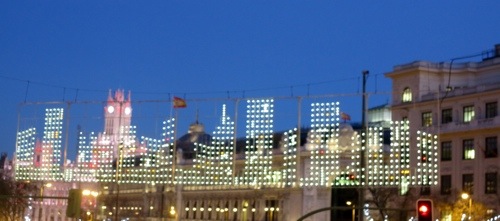
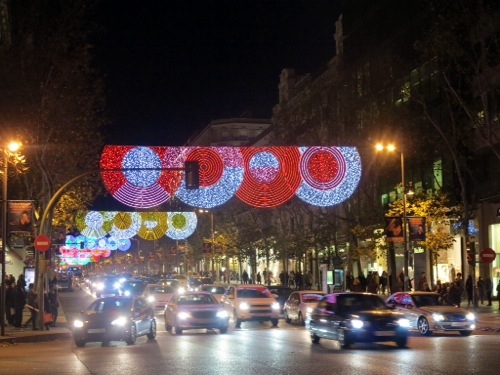
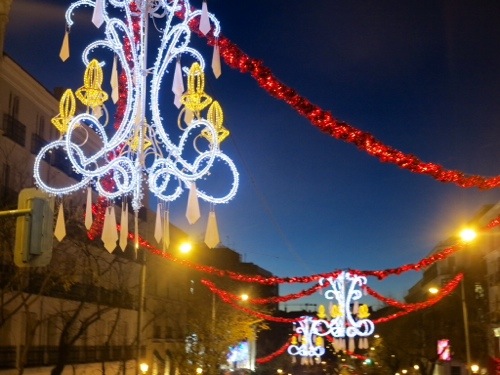
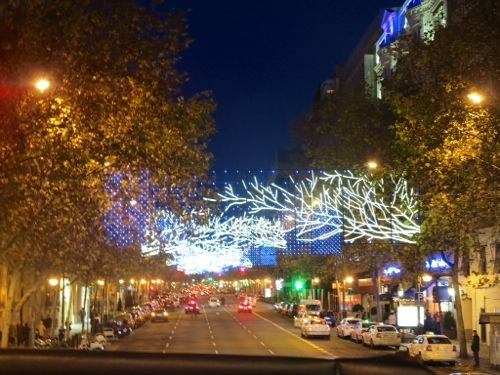
Las luces y arbol de Navidad. These Madrileños do take their Christmas decor seriously. There were assigned artists/designers for certain streets. Not sure if there is a competition, but the variety from street to street certainly spelled excitement during the hour’s drive along Calle Serrano through Puerta del Alcala through Gran Via, Santo Domingo, back to Paseo de Recoletos and through Velasquez, Goya, etc and finally back to Calle Serrano. Don’t know all the names of the Calles but this second time around, I noticed the crowd getting thicker! Makes me mull over earlier plans to be in Puerta del Sol and Plaza Mayor area right on Christmas Day.


20131222-090919.jpg

Metro stop: Plaza de Colon. Then walk towards Mikhael Kors shop along Calle Serrano.

20131222-091036.jpg

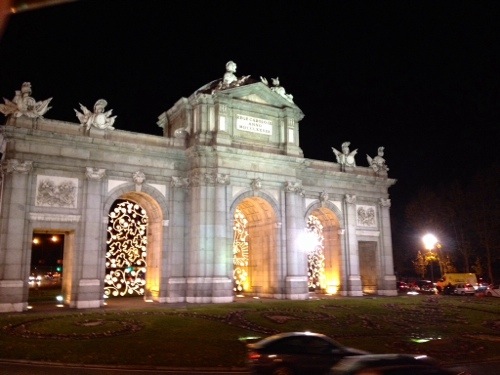
Puerta del Alcala, looking like a bride waiting for the groom.

Calle Serrano is right within the posh neighborhood of Salamanca in Madrid. Somehow, I expected Christmas lights to be brighter and fancier in this barrio. What can I say? They were fancy, bright, colorful and festive. Just as it was everywhere else. If this is some competition, the judges would have a difficult time. If only the Navidad Bus would take time to stop for a few shots of the brightly-lit Puerta del Alcala. Or pause for a moment at the corner of Calle Goya or Calle Diego Velasquez!
20131223-170358.jpg

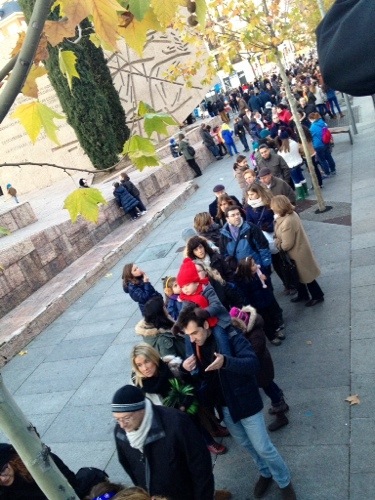
This is right by the corner in Calle serrano where the line for the NaviBus starts.

20131223-170448.jpg

Lovely spectacle in the posh neighborhood of Barrio Salamanca.

At 5 degree celsius and on a moving bus, it was an ordeal to take shots with frozen fingers. That plus almost everyone on the bus stands up to take shots everytime the NaviBus momentarily stops. Since this is my 2nd time, I earlier planned on WALKING around my fav streets but they were too many and kind of spread out, so I ditched the plan and took the bus at Plaza de Colon. Swell……… except that the windchill left me with freezing bones.

20131223-171136.jpg

Still in Barrio Salamanca. One of my favorites!

20131223-171254.jpg

Gran Via. Near the iconic Metropolis Building.

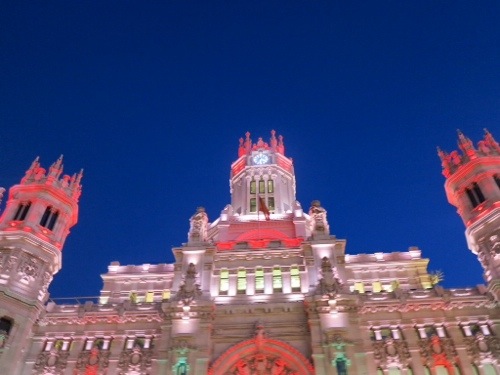
The iconic Palacio de Cibeles (called Palacio de Comunicaciones before 2011) looks like a gingerbread house, though one admits this edifice looks awesome even outside the Yuletide Season. The Puerta del Alcala all lighted up across Parque de Retiro somehow reminded me of December brides (don’t ask me why….), all veiled and vibrant. It’s a pity the Navidad Bus couldn’t navigate through the small streets and alleys with just as interesting luces or Christmas lights. They’re just as lovely and add to the festive spirit. Even posh department stores, signature shops and some government and big private buildings displayed some Christmas spirit.

20131223-172418.jpg

Calle Serrano. So Christmasy!

20131223-172511.jpg

Palacio de Cibeles looking like a Gingerbread house.

By the time the NaviBus negotiated its way back to Calle Serrano side of Plaza de Colon, the infants on the bus with me were asleep, the toddlers crying out of hunger, and the more senior gingerly walking down the steps (from the open top section of the bus), likely with freezing knees and limbs. As for the teens and young at heart? I wonder if they really joined the line to view the luces y arbol. They were very “BUSY” keeping themselves “warm” at the back of the bus. Ahem. 😉

20131223-173105.jpg

Multi-colored Christmas Gift boxes?

20131223-173224.jpg

Arbol de Navidad…… in funky pink!

20131223-173337.jpg

Photo sourced from the Net. Feliz Navidad a todos!