Category: Philippine Travels


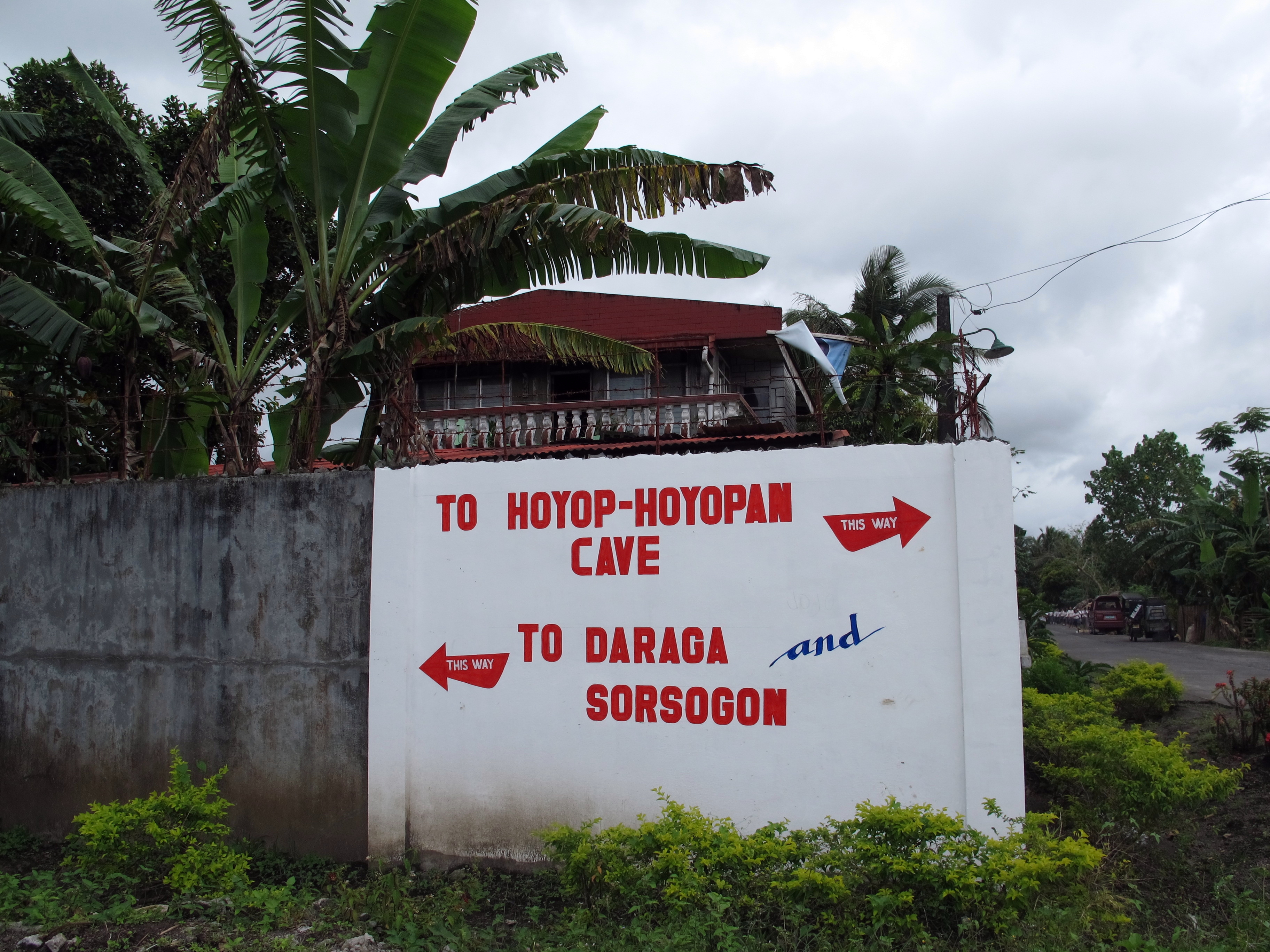
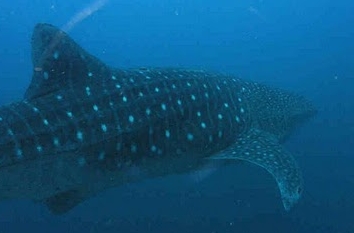
It has been a week since my encounter with the whale sharks of Donsol, Sorsogon. Called “Butandings”, swimming with these gentle giants never prepare anyone for such an awesome experience. A week later, and I still dream of that animal experience. I still get a high just thinking about it .


For sure, I will be bringing my family to Barrio Dancalan in Donsol. To meet their butandings and mark that memory in their minds. A diesel attends into the vintage. The Butanding Festival in Donsol will be this April, but it won’t be till May before we get there. Let’s pray those sea pets are still there. I bet they would be. After all, those Donsol folks have been most kind to them, treating them like their pets.


Check out more photos in my TravelBlog site.  


The Butanding Whisperer


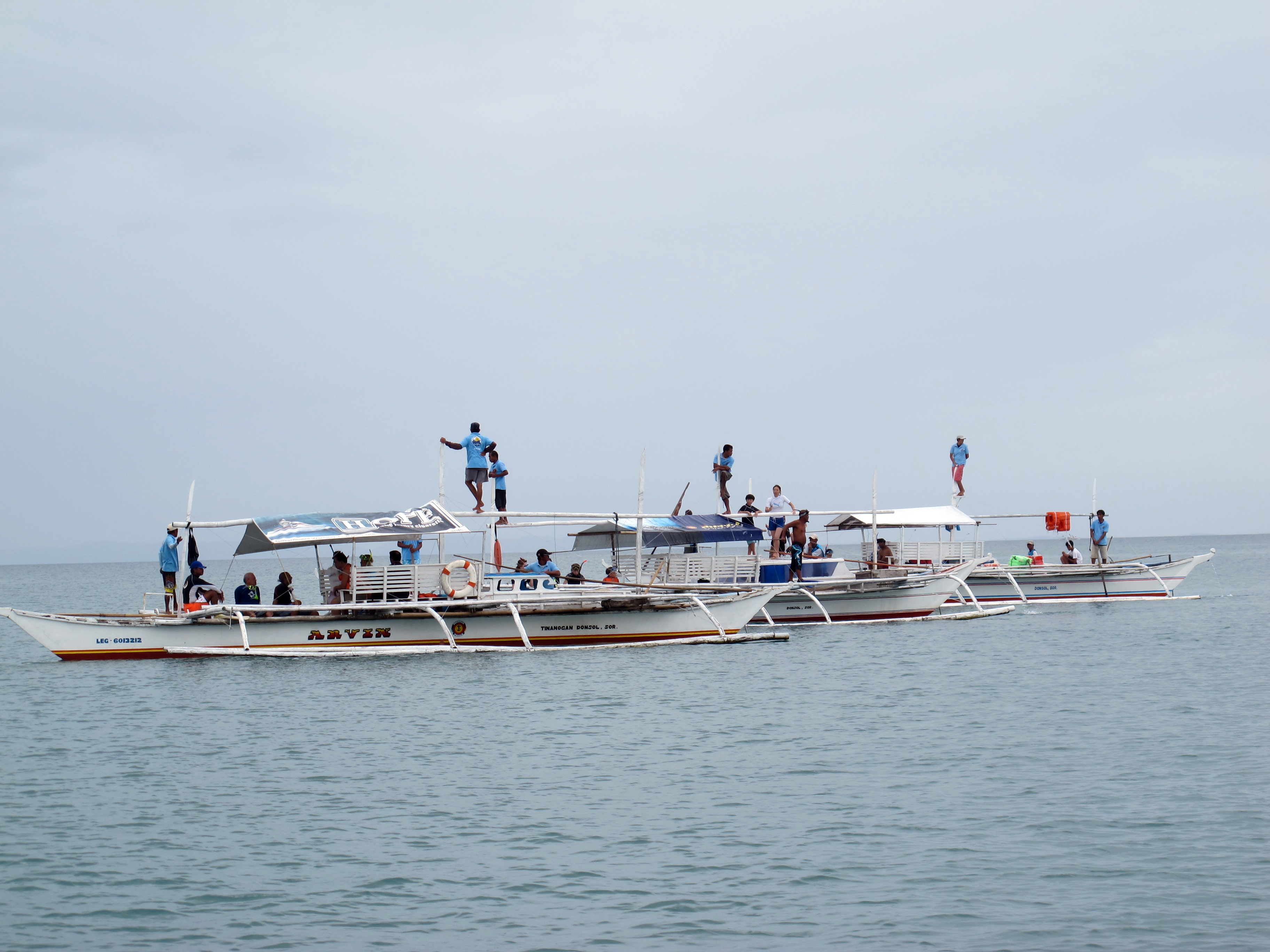
His name is Randy. He hails from this very place that crosses the whale sharks’ migration highway. Randy has “known” these whale sharks since he was 12. He is now 31. I never asked, but I suspect Randy never had formal swimming lessons. Nor diving lessons. But he sure could hold his breath down there , donned only with his snorkeling equipment. When Randy barked “swim forward”, me and them boys were focused on only one thing. To see our first Butanding. After all, we have been waiting a good hour and were near frustration with one of the boys depressingly saying “I only need to see ONE…..” These boys were with another team the day earlier, and they have not been lucky. Today is their second attempt, and the overcast sky was no encouragement. You see, those butanding spotters find it doubly hard to see the “shadows” on a cloudy day like today.


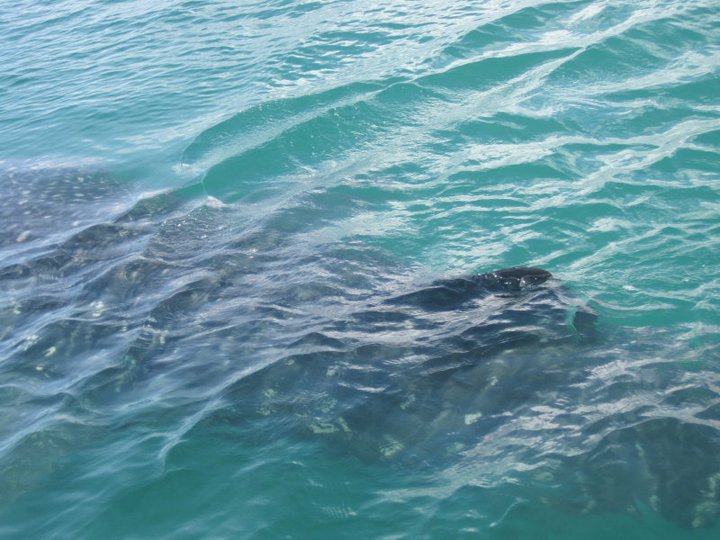
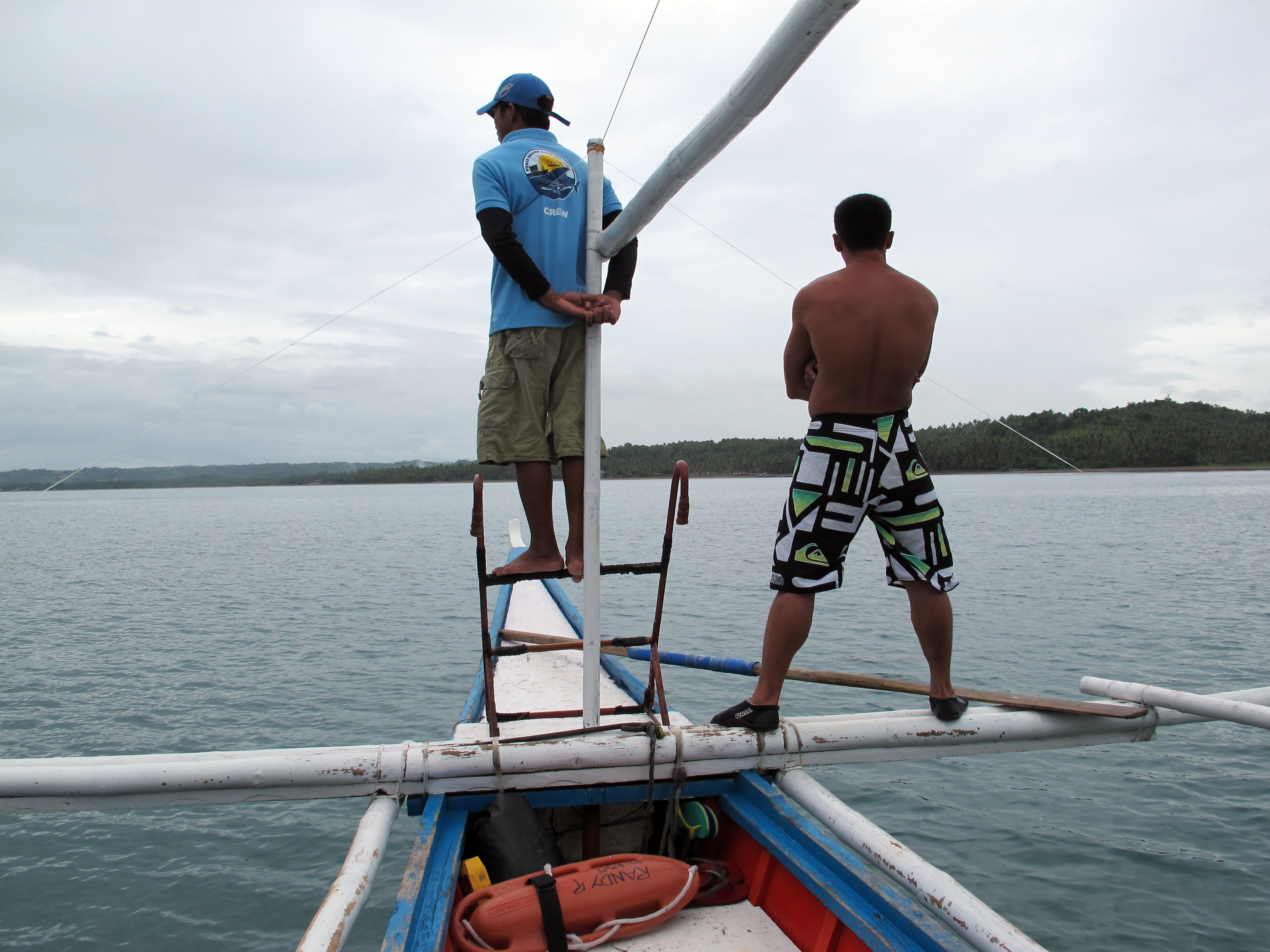
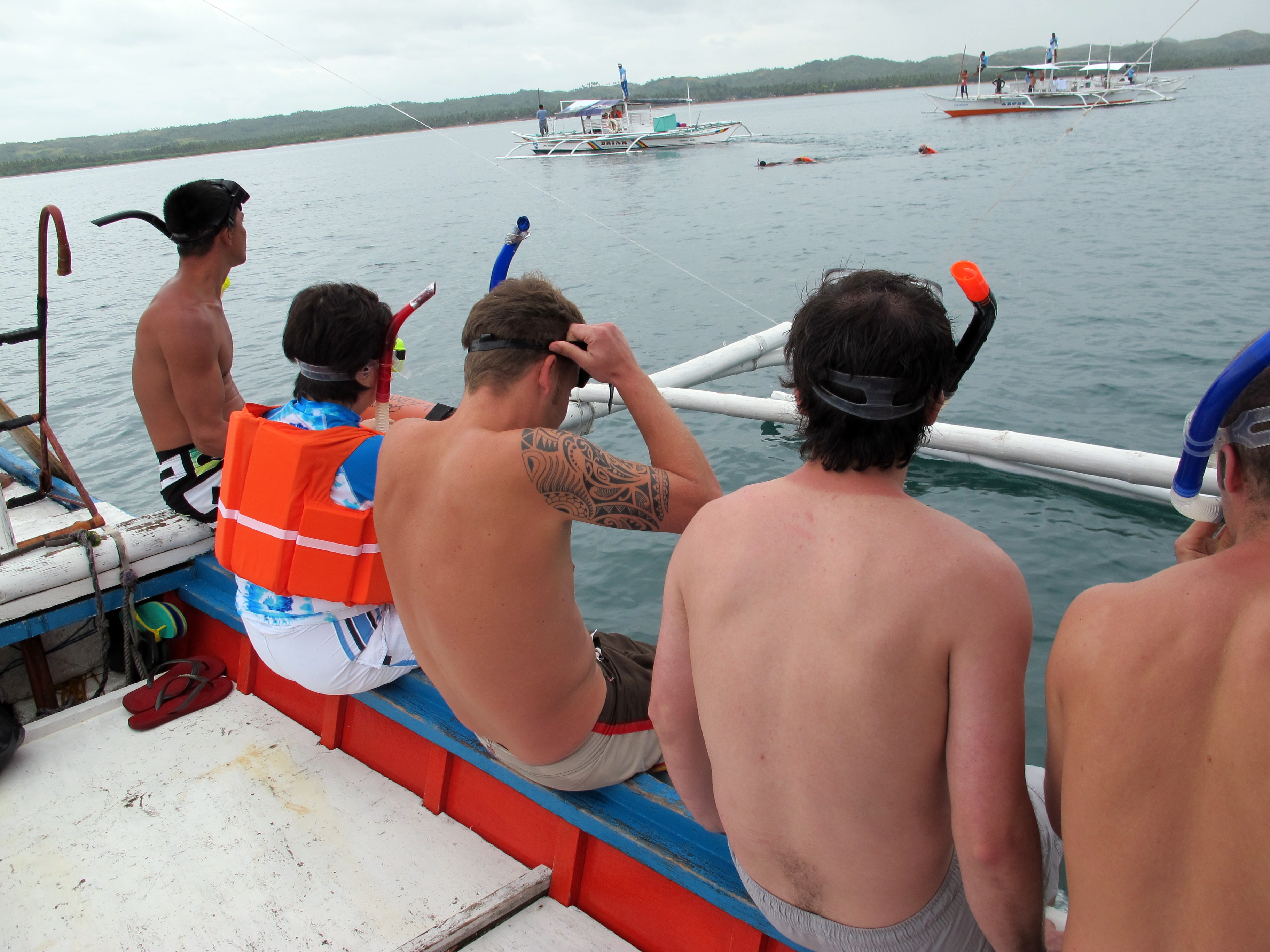
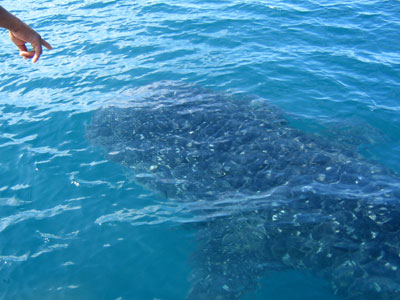
When one of them prayerfully chanted “Butanding…….Butanding………Butanding”, Randy very ably balanced himself (while the boat is cruising) on the bamboo pole crossing the front of the boat and assisted the spotters. As we all chorused and chanted, the boat crew were so focused on their jobs. I admire their patience, their quiet competence. As if on cue, Randy gently reminded us to get ready on the left side of the boat. Frankly, I was so afraid I couldn’t balance myself sitting on the edge of the boat and would have jumped in before Randy’s signal. Mercifully, I was ready when Randy barked “JUMP”. We swam forward, or rather, Randy pulled me forward so I can “swim” in tandem with the boys. I’ve never been so excited in my whole life. What an adrenaline rush, just knowing a Butanding lurks beneath us. When Randy barked “Look down”, I almost panicked to see the Butanding right beneath me. Maybe 2-3 meters below me. I was so afraid my legs would touch its head and send the whale shark on a wild spree. I could see the 3 boys in our team swimming under me and beside the gentle giant, with good old me contentedly swimming over this unbelievably gentle sea creature.


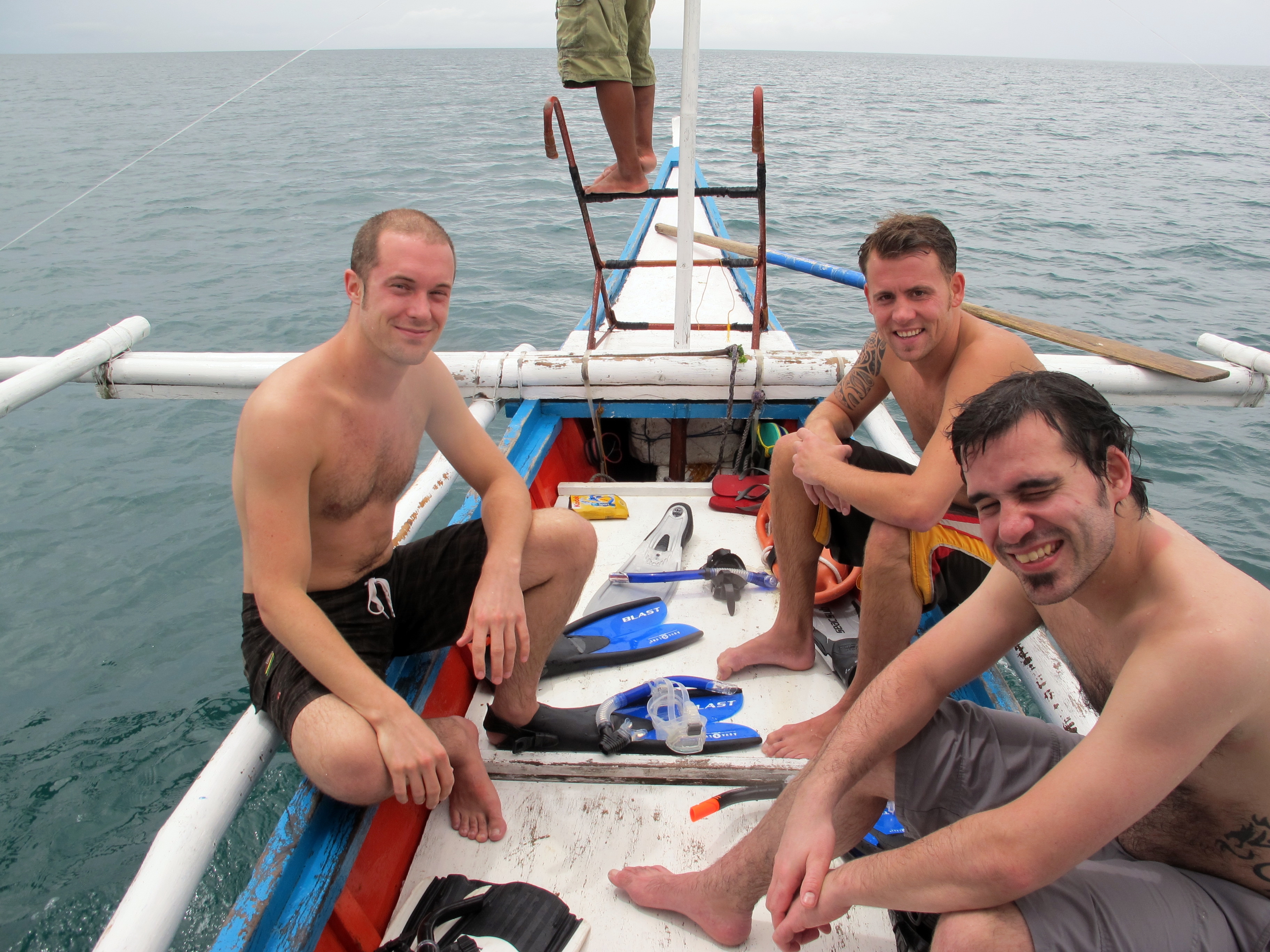
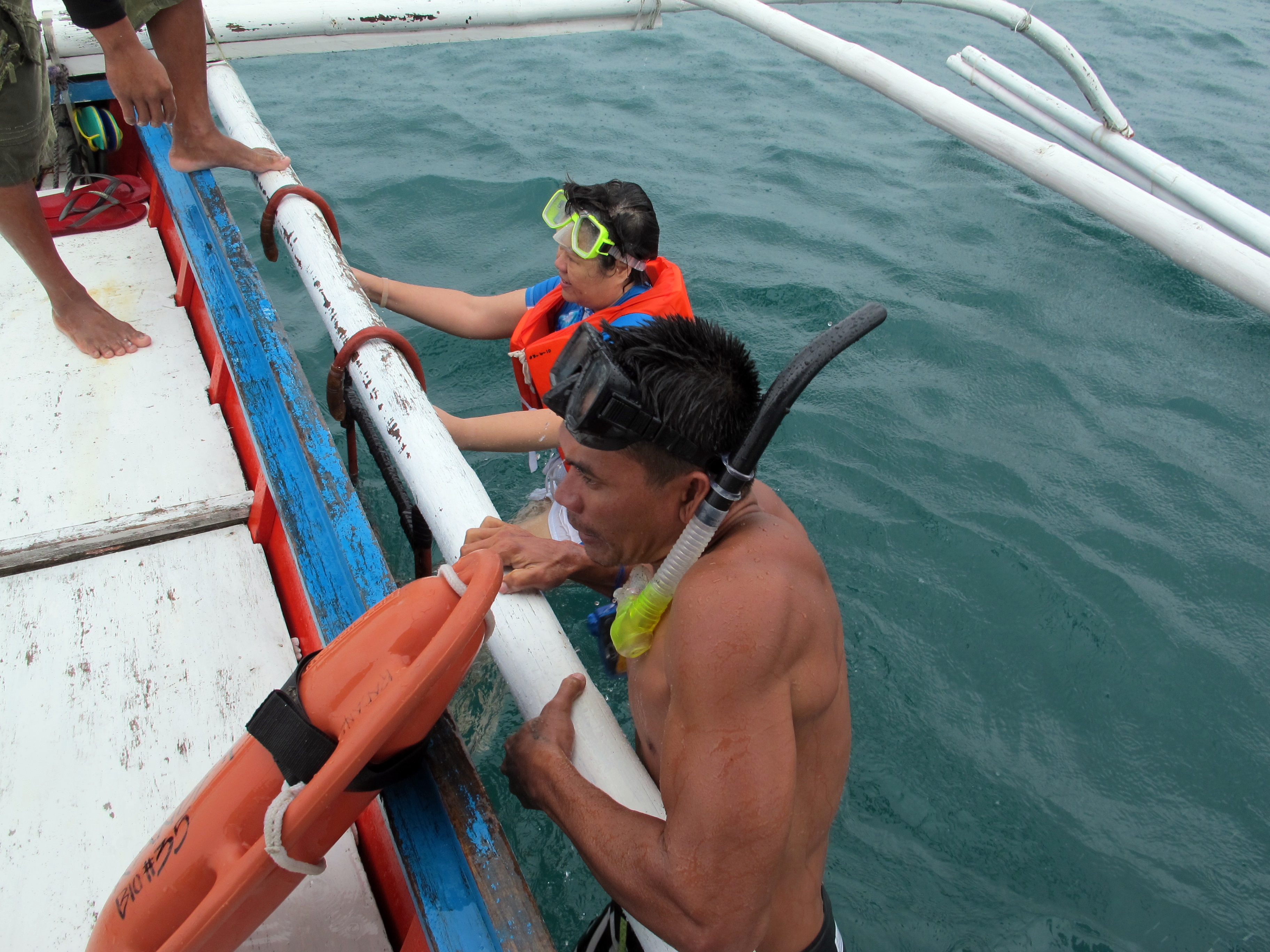
If I could frame my feelings now, you would see a framed painting splashed with a quiet solitude, evoking a serenity heretofore unknown. I do not know how far we were from our boat. Who cares? Until I saw another man dive deeper under the whale shark , swimming along,as if reuniting with an old friend.  I recognize his swimming shorts. I know that pattern. And remembered they were Randy’s! So who’s swimming with me? I looked up to catch my breath to see the ends of those snorkeling tubes, as everyone in our team and those from another boat were busily watching the whale shark swim underneath us. It must have been a full minute, likely longer. But without Randy by my side, I cannot swim forward WITH the whale shark. By the time Randy came up, the Butanding gently showed its side and white underbelly as it dove deeper. Perhaps in search of it plankton meal. Our boat suddenly appeared from nowhere. Perhaps Randy gave the signal that our new friend has left us for his meal. The crew put out the rusty ladder for me to climb up as the other boys waited for their turn. I was onboard , happily watching each of the boys get on the boat, hugging Randy and jumping up and down with joy. I was still feeling “high” from the experience, and my mind captured those scenes way better than any camera could . Pure joy. Young men in their mid-20′s acting like little boys. Randy almost too shy as these 3 young men hugged him so tightly in gratitude for this awesome animal experience. Yes, that memory will stay in my mind for many, many years. Another “framed feeling” stored in my memory bank. Randy very kindly allowed us to have our 2nd and 3rd Butanding experience in the 3 hours that we rented the boat. The boys longed for a 4th and final encounter, as I opted out, quite happy with the 3 sightings. Randy stayed on the boat, hoping to get the Butanding to “show up” for the benefit of my new Nepalese friend, Ava, and Beth, both of whom chose to stay on the boat. Without the Butanding whisperers, the young men in our team came back empty-handed. But no way are they complaining. Three sightings in a couple of hours ain’t bad! Especially on a cloudy, rainy day like today. As for Ava, coming from a landlocked country like Nepal, this boat ride by itself is a most cherished adventure for her. Everybody happy!


As the boat sailed towards shore, the boys swapped stories of their experiences. One of them excitedly said that I was always on top of the whale shark. Thanks to Randy. I suspect the butanding stayed with us long enough because of Randy. They must be friends for 2 decades now. Perhaps playmates is the more appropriate word. This shy, quiet young man has been interacting with this whale shark since he was 12. When I asked him what he does off – season, Randy said he goes to Manila to work with a landscaping team. He does gardening. Talk about flora and fauna. He must really have a green thumb for the flowers, and a gray thumb for the whale sharks? I don’t know. But I truly, truly respect the quiet dignity and warm kindness of Randy and his crew. They took good care of us. Not much fanfare. No fuzzing over us. But we know they were all watching out for us. They all seem too shy. They love their butandings, knowing how much these sea creatures have improved their lives. The Donsol fisherfolks offered a safe harbor for these gentle giants, and they have been rightfully rewarded.

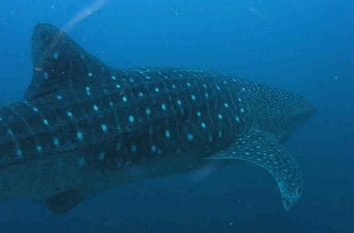
When you come to this area, be sure to make this one hour trip from Legazpi City to Donsol, Sorsogon. Best time is from November through May. I will most certainly go back, next time with my family. (I actually did, in late May. And my “elves” to this day talk animatedly of their whale shark encounter, as narrated in another blog) These fisherfolks make for a good example of ecotourism. And these Butandings with their broad, flattened heads and large, very terminal mouths with checkerboard patterns on their backs are truly a sight to behold. Very gentle, friendly and playful, allowing humans to swim and interact with them, as they gently glide alongside our boat. And while you’re here, be kind to this community of about 47,000 fishermen and farmers. They live off the livelihood gained from the Butanding phenomenon half of the year, and scrape a livelihood the remainder of the year. More so when the typhoons hit them. And they get it way too often to have a decent living. They never ask, nor do they even drop hints. But it will go a long way to help them with a more generous tip. After all, they deserve them. Treat these locals as you would treat a place where you would “park” your pets. You may not be around the whole time, but you draw comfort in the fact that there are guardians , caretakers and caregivers for your pets. The Butandings are here because these locals take good care of them and leave them unharmed. They play with them, interact with them. Despite the poverty, it never crossed their minds to harm these gentle creatures. Such kindness deserves to be rewarded. My Butanding Encounter is by far my most awesome animal experience. Another one off my bucket list. The idea of swimming with the graceful butandings is scarier than actually interacting with them. Really. I do not know if I’d say this same thing if I saw the Butanding we sighted open wide its big mouth. But there you go. Mouths closed, they are simply fascinating. Go!

Thanks to our Butanding Interaction Officer (B.I.O.) Randy!

More photos in my TravelBlog site.


************************************************************************************ Trivia

Butandings or whale sharks are vegetarians. They only eat plankton and krill, which are found abundant in the very very salty waters of Donsol. There is no report of whale sharks taking humans as prey!

Donsol is a quiet community of only 47,000 people. They live off farming and fishing until a big concentration of whale sharks were sighted in 1998, inviting the attention of WWF and ATF. The sightings changed the landscape and ignited an economic boom in the area. Whale sharks live over a hundred years old. “Puberty” at 20 years old!

Biggest fish in the world. They only measure from 15 ft. to as long as 40 ft. in length! Our boat can easily rest on it silvery, polka-dotted back. They swim near the surface, allowing the “spotters” to see their shadows. Donsol is now not only a feeding place or “dining area” for the butandings. Of late, they sighted baby whale sharks. That means, the place has now become a berthing ground for the butandings. Who knows where they go after May? Anybody’s guess. But the locals are confident they will come back, for yet another wholesome ecotourism adventure.

Most important trivia: You need not know how to dive nor swim to have a Butanding Encounter. Just be sure you have a good B.I.O. like Randy to swim with you, and PULL you towards the nearest Butanding. You may reach Randy with this number : +63910 5485647.  

Btw, Randy took a “summer job” or should I say “gap job” as a messenger. When I told him to see my friend for an interview, it was  a stormy day and there were no boats from the island where he lives (last barangay in Donsol, he says) and Randy had to walk 2 hours just to make the interview.  Such is life for these hardworking folks. 

This is my entry to the September Blog Carnival hosted by Marky Ramone Go of Nomadic Experiences on the topic  “Unforgettable Human Encounters on the Road”.                                                                                                                                                                                                                                                                                                                                                                                                                                                                                                                                                                                                                                                                                                                                                                                                   


An hour or so away by plane, all of 8 to 9 hours travel by road. Take your pick.

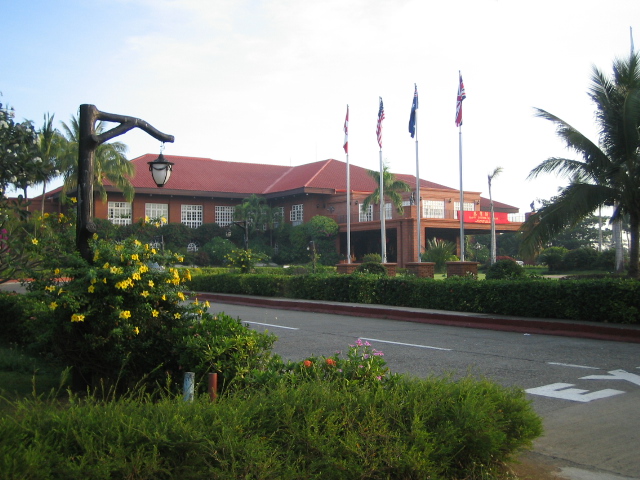
Fort Ilocandia

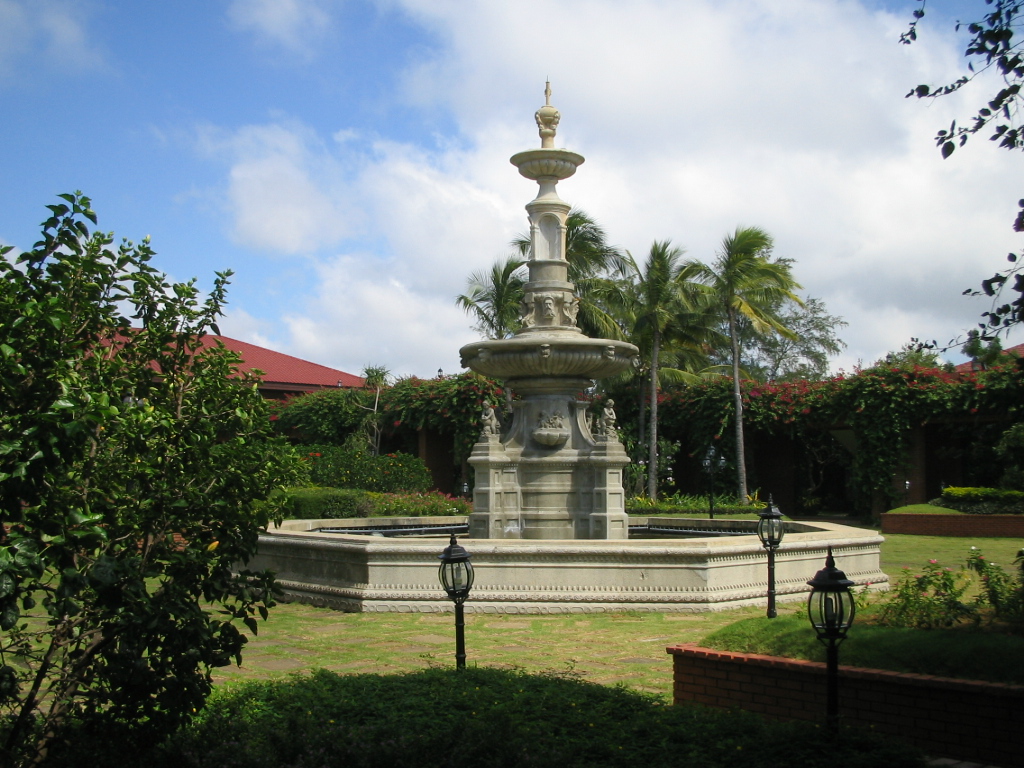
Fountain Inside Fort Ilocandia

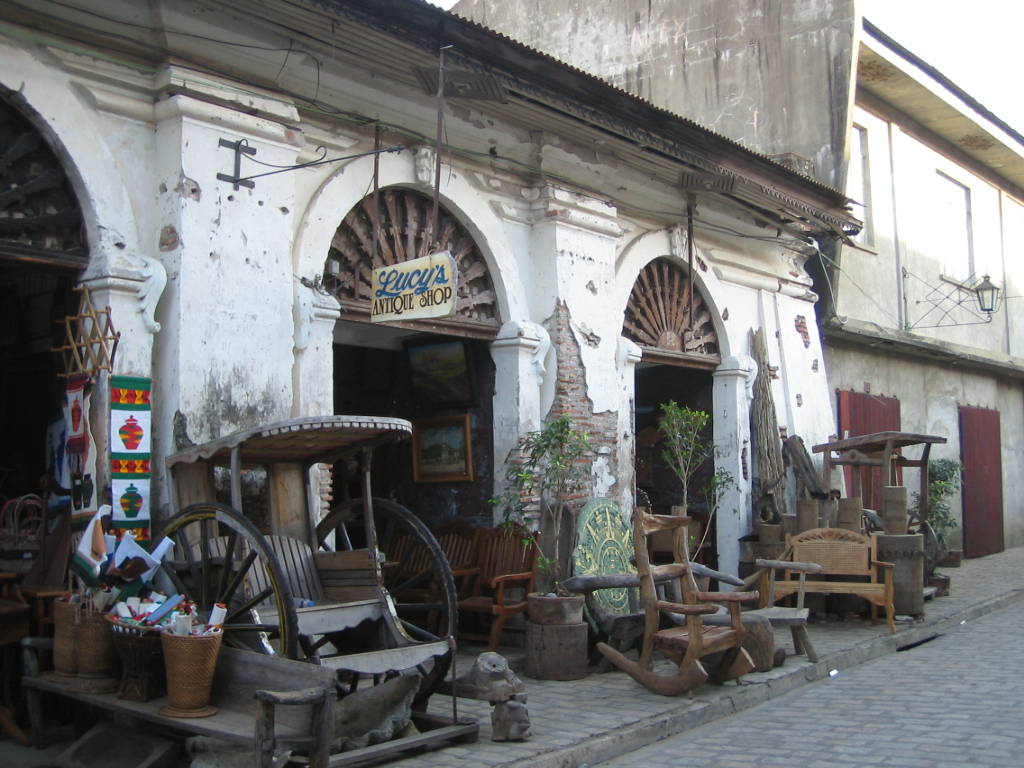
We chose to fly, then rent a car from our base which is Fort Ilocandia Hotel and Resort.  The hotel is a good base for many day trips to various parts of the Ilocos Region.  Top of the list is a visit to Vigan, the only surviving colonial town in the country.  Declared a UNESCO Heritage Site,  it is a must see for all visitors who want to catch a glimpse of how it was in the 18th and early 19th century.  Time stood still in this part of Northern Philippines.  It helped too that Vigan , unlike Cebu and Manila,  was spared of the bombing last World War II.  Do not forget that Manila is the second most bombed city during that war. By God’s mercy,  Vigan survived and preserved  its antiquated houses, cobbled pathways, even the calesas or horse-drawn carts. The township with all its narrow streets speak of an architecture which blends Spanish, Asian and Mexican influences. At the time, it was called Ciudad Fernandina before it became Vigan which comes from the word “kabiga-an” where a tuberous plant called “biga” abounds. Then famous as a commercial and trading post,  it attracted Chinese junks sailing from the South China Sea. Some of these Chinese seafarers married natives and settled in Vigan. This was long before King Philip II of Spain sent Captain Juan de Salcedo who then “founded” the town in 1572 and called it Ciudad Fernandina in honor of the King’s son Ferdinand who died at an early age. Since then,  Augustinian missionaries visited Vigan and the rest of Ilocos Region and initiated the evangelization of the area. Many churches and monuments still stand today , spared from the bombings of World War II.

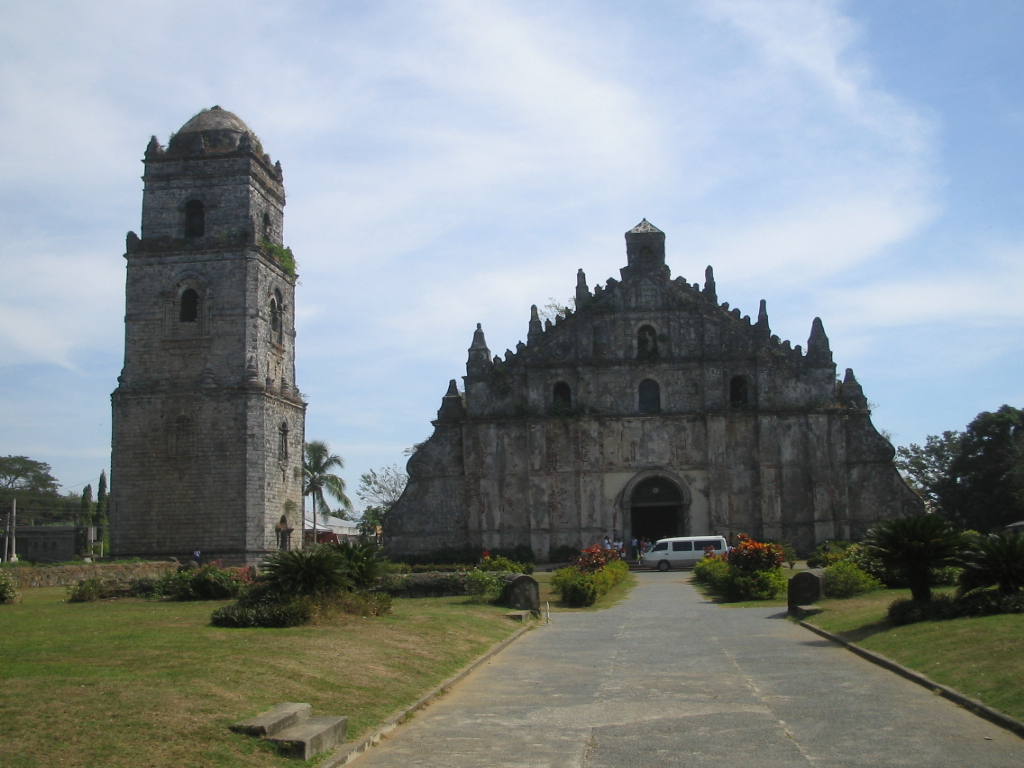
Paoay Church

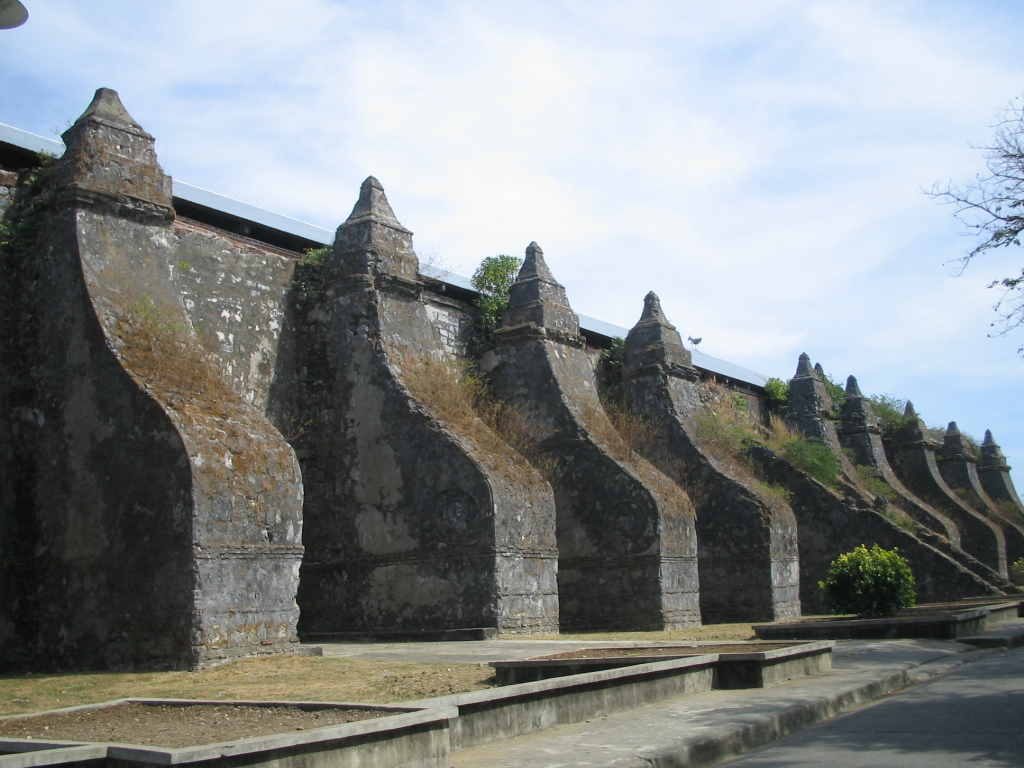
Paoay Church Sideview

Paoay Church,  A Very Spanish Legacy

Back in Laoag, Ilocos Norte,  we spent the next day visiting Paoay Church, another UNESCO Heritage Site.  I have not seen a church compound anywhere in the Philippines as grand as this one.  Paoay Church stands proud. It is by no means as grand as the churches you’d find in Europe, but the colonial heritage and the Spanish legacy give it its well-deserved grandeur.  Built of bricks and coral blocks, the architecture combines Gothic, Baroque and Oriental. Built over a period of nearly 200 years, the church belltower is a fitting reminder of the Christianization of the Philippines as well as its role in the Philippine Revolution when it was used as an observation post by the local rebels called Katipuneros. Another church , the St. William’s Church, was built by the Augustinian frailes or priests in 1612 in the Italian Renaissance design. Right next to it is the Sinking Belltower leaning slightly to the North.  This is our local though much scaled-down version of the Pisa tower. A 3rd church we visited was Sta. Monica Church , a century old church of  neo-classical and baroque architecture.

Batac

Sinking Bell Tower

Ferdinand Marcos Hails from Ilocos

Of more recent history is the fact that ex-President and strongman Ferdinand Marcos hails from Batac, not too far from Laoag. The ancestral house of the Marcoses is now the Marcos Museum and Mausoleoum where the late President’s body lies like a wax statue. During his 20 year reign,  Marcos built a Malacanang of the North (Malacanang in Manila is the official residence of the President, much like the White House in Washington DC).  The mansion is an expression of opulence and overlooks the lovely Paoay Lake. Now a museum,  visitors can tour the mansion for a minimal fee.

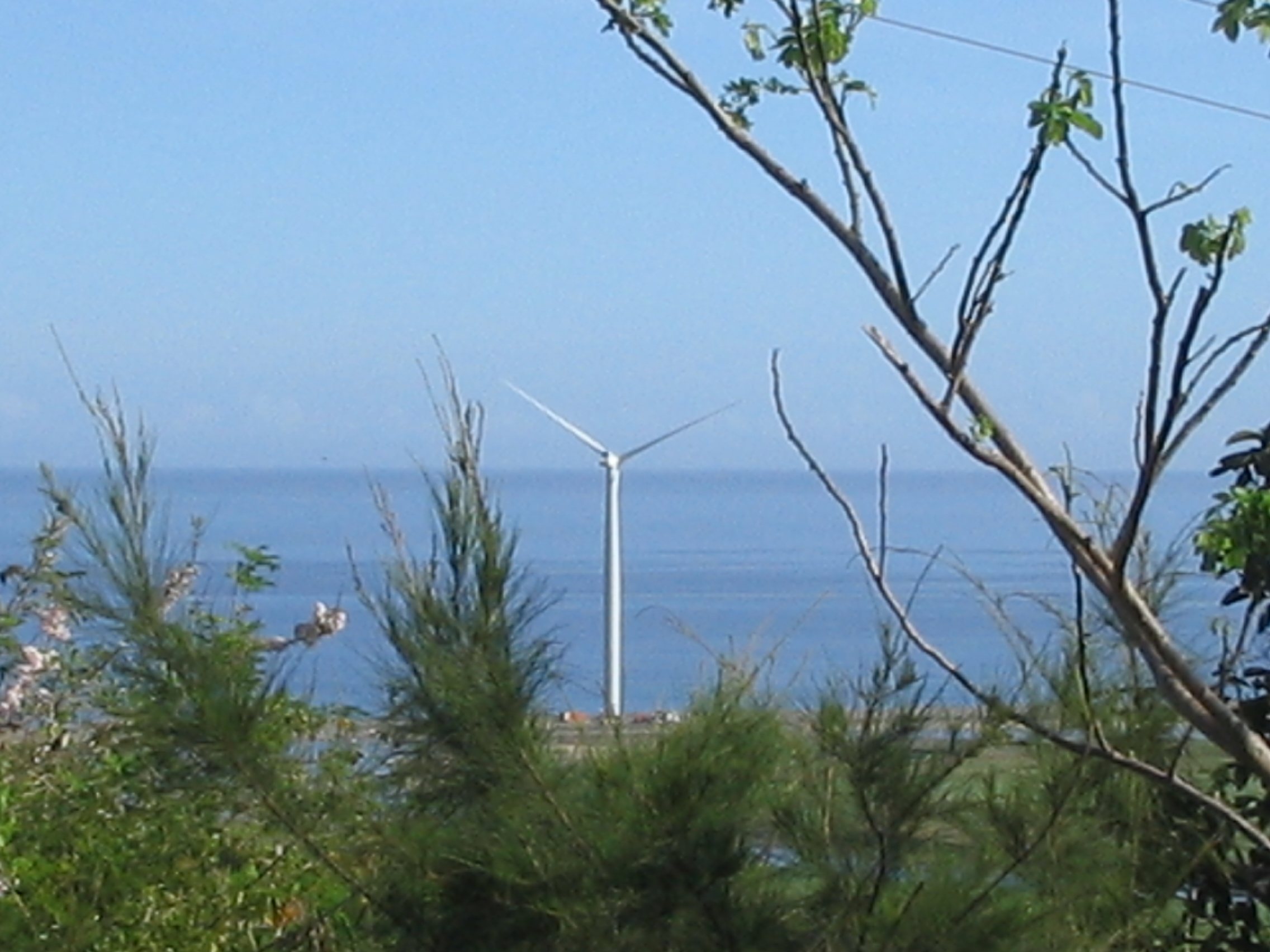
Bangui Windmills

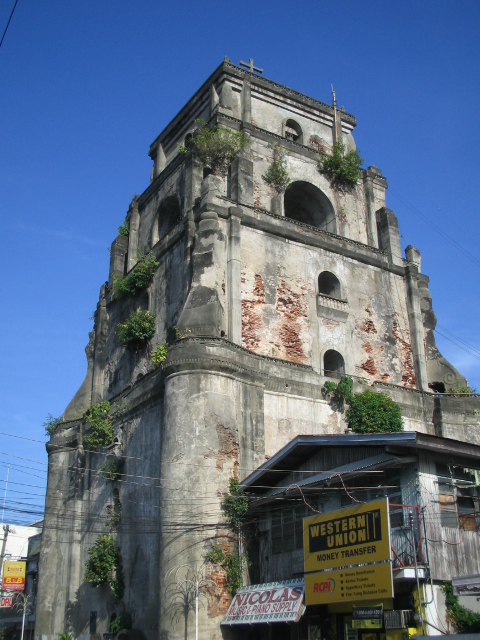
Bantay Belfry, Ilocos Sur

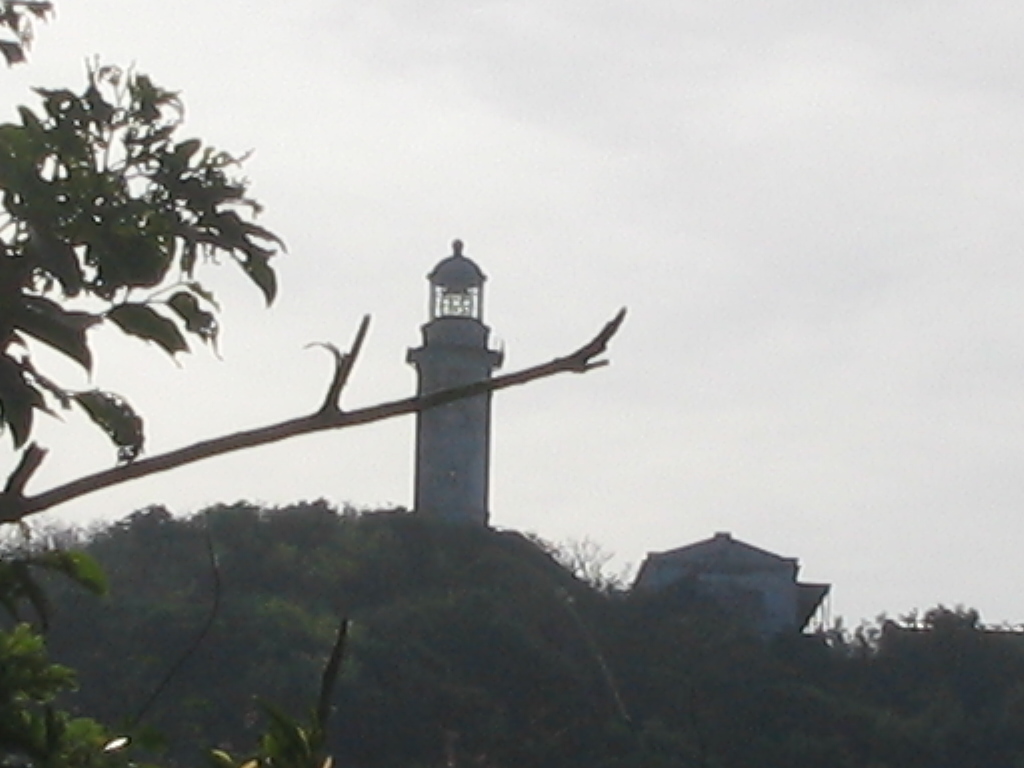
These days, the Ilocos Region is still considered Marcos land despite the fact that the dictator has passed on many years ago.  His only son, Ferdinand Junior,  Bongbong to most, is the current congressman representing the Ilocos Region. Bongbong earlier served as governor of the province, during which time the Bangui Windmills were established.  This wind farm lies nearly next to Pagudpud and now has 15 wind turbines. It has since attracted many visitors to the area just to view the 70 meters tall wind turbines. And not too far from here is the Cape Bojeador , a lighthouse built in 1892 north of Laoag City. It is the highest, and I think the oldest, lighthouse in the country.

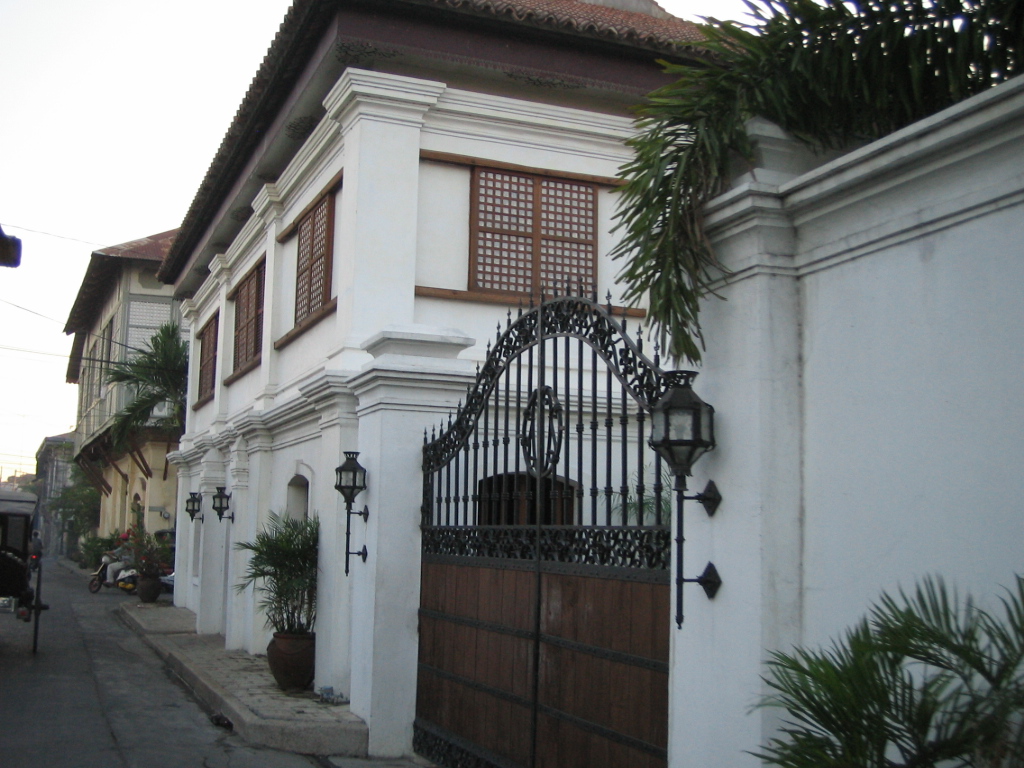
Vigan's Heritage Site

Cape Bojeador Lighthouse

Many Ilocanos to this day idolize the late President Marcos.  Without dwelling on politics,  I will venture to suggest that the more prominent and admirable Ilocanos should be Juan Luna ,  Diego Silang and his equally brave widow, Gabriela.  All three are martyrs and heroes of the land.  They have done far more for our country than any other Ilocano. That said,  let me invite everyone to visit our land!

Vigan

pagudpud

More photos can be viewed in my TravelBlog site


This beats many a collector’s dream.  I am not sure whether to thank the collector,  to envy him, or what.


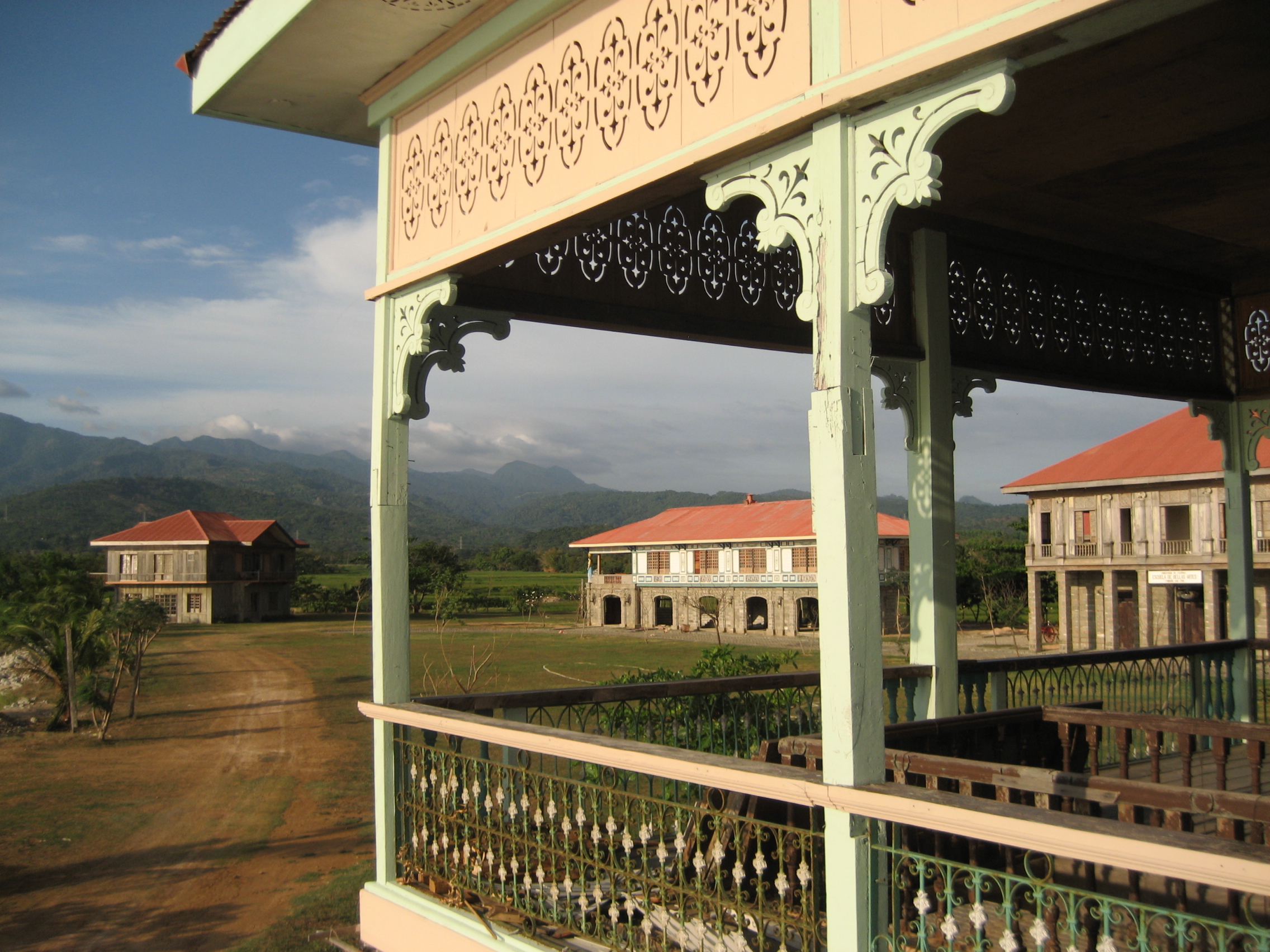
We accepted a friend’s invitation to spend the weekend in Pilar, Bataan and prepared ourselves for a somewhat dull weekend visiting the local market, Mt. Samat War Memorial Shrine in Pilar, Bataan,  and enjoying fresh fruits in season. “Ciudad de Acuzar” was not part of our itinerary. Neither have we even heard of this heritage town where the owner’s collections included many historical turn of the century houses, town hall, school and chapel!


Just 3 hours north from Manila


The drive  northwest of Manila via an expressway and paved roads  took more than 3 hours. Pilar is a sleepy town in Bataan.  Right beside a ricefield with a view of Mt. Samat, our host’s house promised a lot of rest , peace and quiet.  History lessons reminded us of the annual celebration of the “Fall of Bataan” in 1942.  Every April 9,  which was declared a public holiday,  we remember our fallen brothers who gallantly defended our land. The Shrine on Mt. Samat was built in loving memory of these brave Filipino and American soldiers who died  during World War II.  Along with the Fall of Bataan, this province also reminds us of  the famous  Death March from Bagac and  Mariveles, Bataan all the way to Capas, Tarlac. Rich in history,  it was ironic that what we remember most from our Bataan weekend would be the “heritage town” put up by a local land developer in Bagac, Bataan.


The “Old Town” Collection


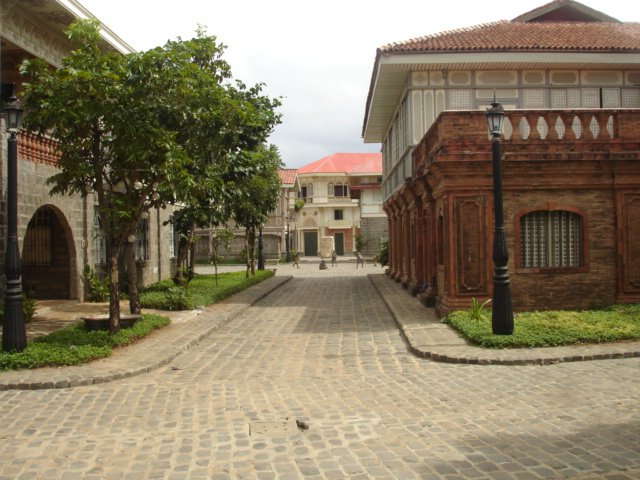
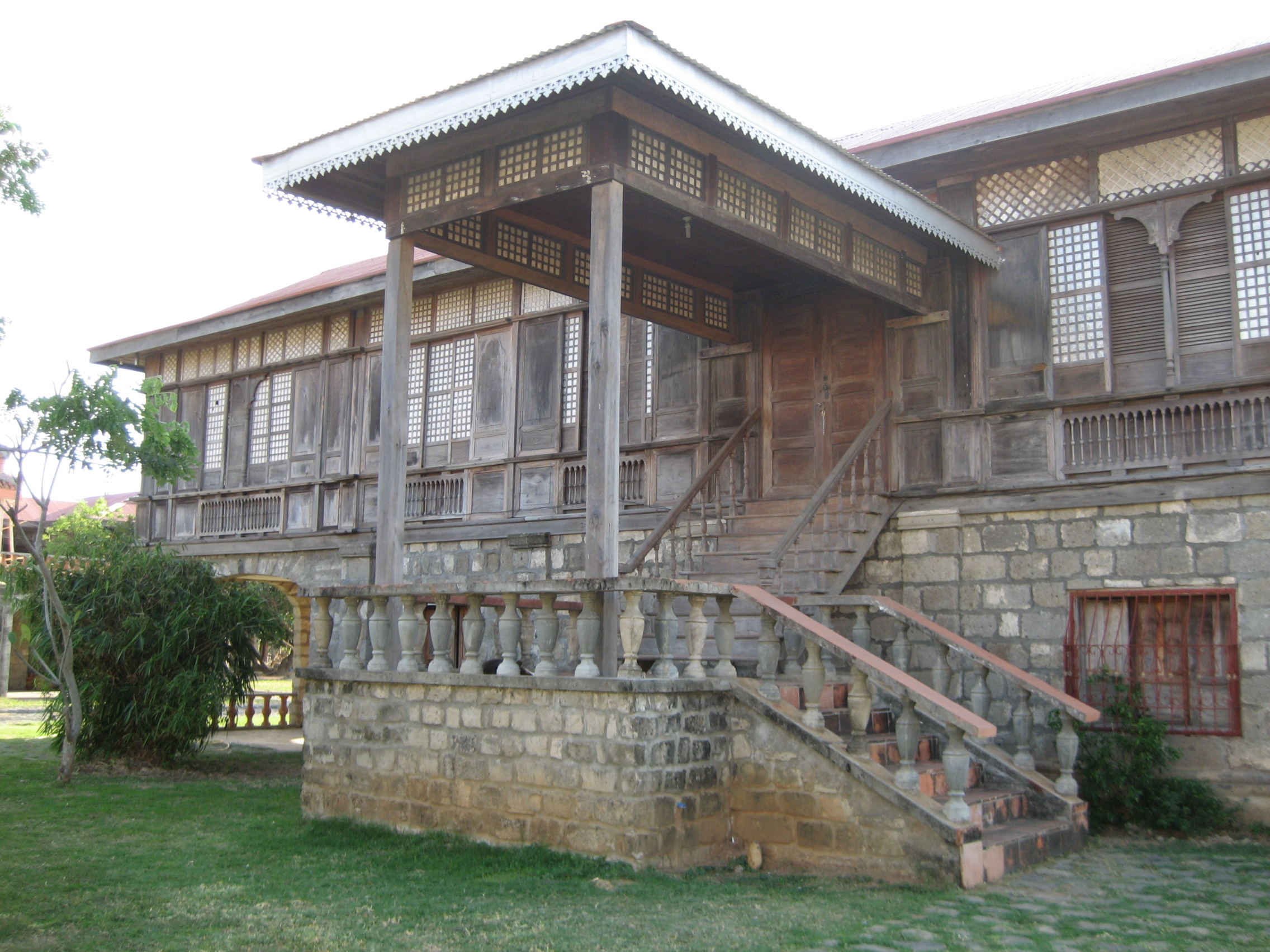
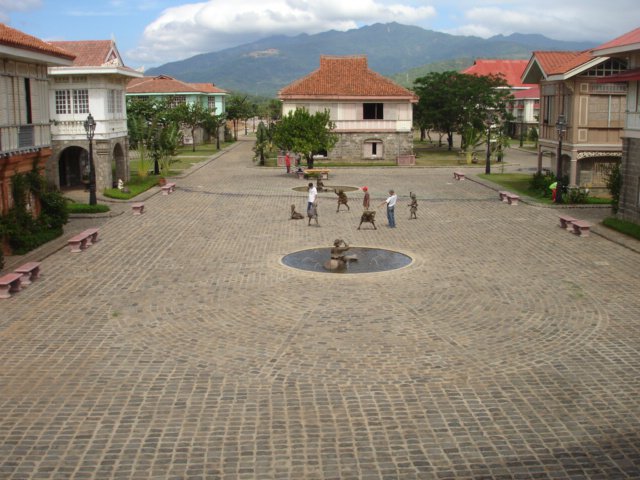
Uprooted from various areas within the country were a small chapel, the entire turn of the century school building, and many ancestral houses to form part of the new “old town” representing Mr. Acuzar’s collections. This development inevitably invited many critics to scream foul, asserting that these historical landmarks are best left and preserved wherever they were. So much furor for the transfer of all these heritage structures to satisfy one man’s dream collection!  At the same time, there were also those who hail the transfer of all these ancestral and historical structures to one area with a good promise that the owner/collector will preserve the structures.  Though a private collection and property,  “Ciudad de Acuzar” is bound to attract a lot of attention, and likely curious visitors.


We saw a lot of activity in this heritage town during our visit, where men worked on cobble-stoned pathways and reassembled doors, windows and posts from some old near-forgotten buildings in some faraway place.  The restoration and reassembly of these old buildings in this single area begs a debate on the propriety of such a collection. Will these structures now be better preserved here , or best left where they were?  I have no answers to that.  I only know that I feel lucky  viewing all these “collections” in a single afternoon.  Ciudad de Acuzar may either be your heritage town or modern day theme park, depending on your take.  As they say,  the Philippines “spent 400 years in a convent, and 50 years in Hollywood”.  (That’s nearly 400 years under the spaniards, another 50 years of American rule)


By the way,  at the time I visited, the place is not open to the public.  The site is in this 60 hectare property somewhere in Barrio Pag-asa in Bagac town, 150 km from Manila, or a 2½-hr drive through NLEX and SCTEX.  Not sure, but I hear the Museum Foundation runs tours .   The property makes for  a good day trip.  Check out their link here.   

P.S.  The property was featured recently in a major daily. Here is the link.  

More photos can be viewed from my TravelBlog site. 


My niece Suzette teased me about my blogging only about my foreign travels, never on my local trips.  Gave that a thought, and decided I should have really done some. Not so much for myself, but more for those who may wish to check out some of our local sites.  Frankly,  I enjoyed these trips around our islands just as much as I enjoyed my foreign travels.  Perhaps I only felt compelled to write about my travel adventures when they last longer than 4 nights, never for shorter adventures. But I am changing all that now. So here goes………..


From Manila to Tagbilaran, Bohol

I actually meant to bring my other niece Mayette for this trip, but she’s busy.  So, Suzette got lucky.  Started our adventure with a mid-morning flight via Philippine Air Lines from Manila to Tagbilaran, Bohol. An uneventful flight of an hour and a half or so.  The small Tagbilaran airport certainly demands improvement since the province attracted more tourists to check out the Chocolate Hills, tarsiers,  Baclayon Church, a few colonial houses, and the beaches of Panglao.  Small and seemingly chaotic,  we actually did not have any problem retrieving our bags and driving out of the small airport for our next destination – Panglao Island Nature Hotel.

Panglao Island Nature Hotel

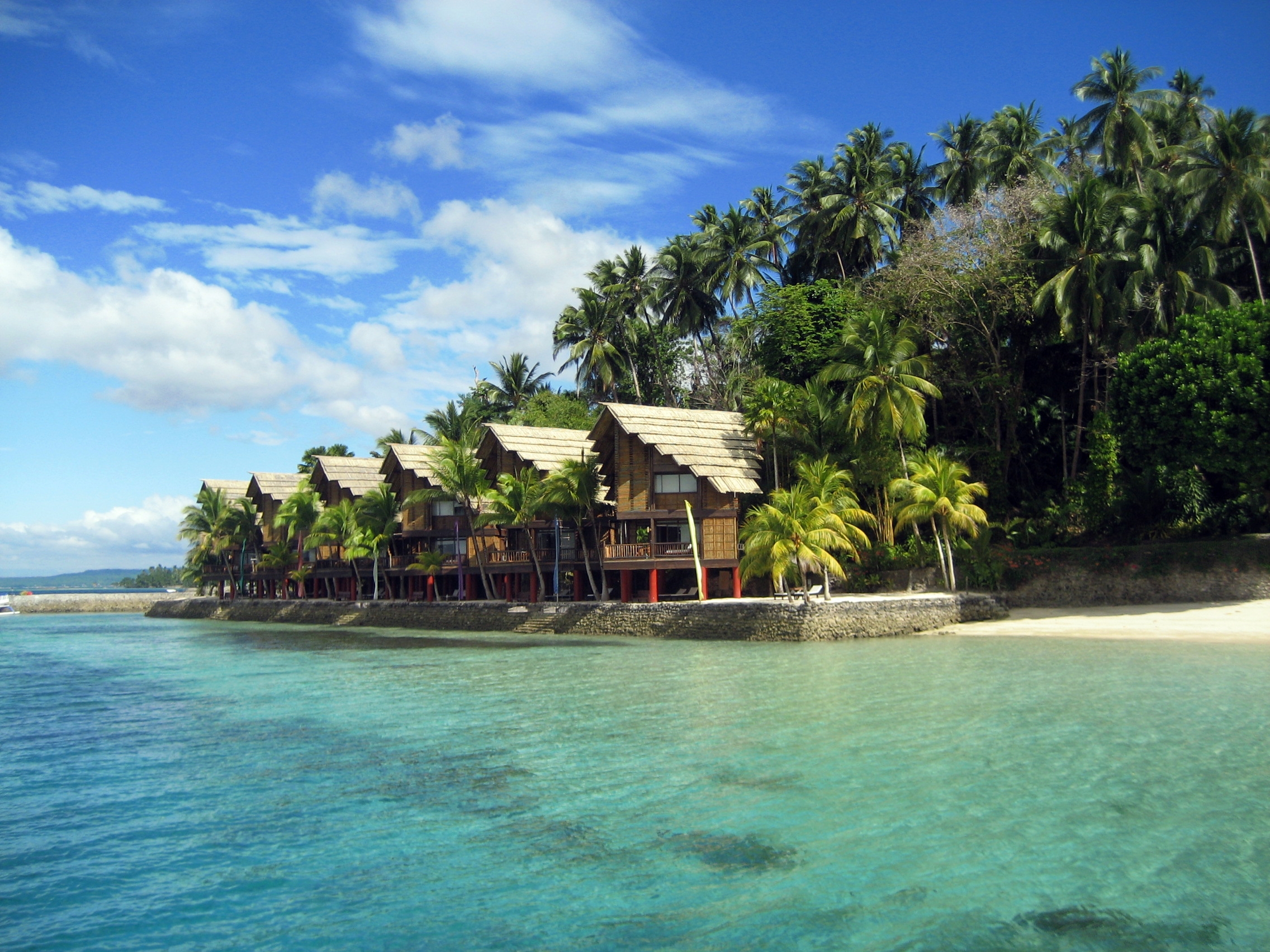
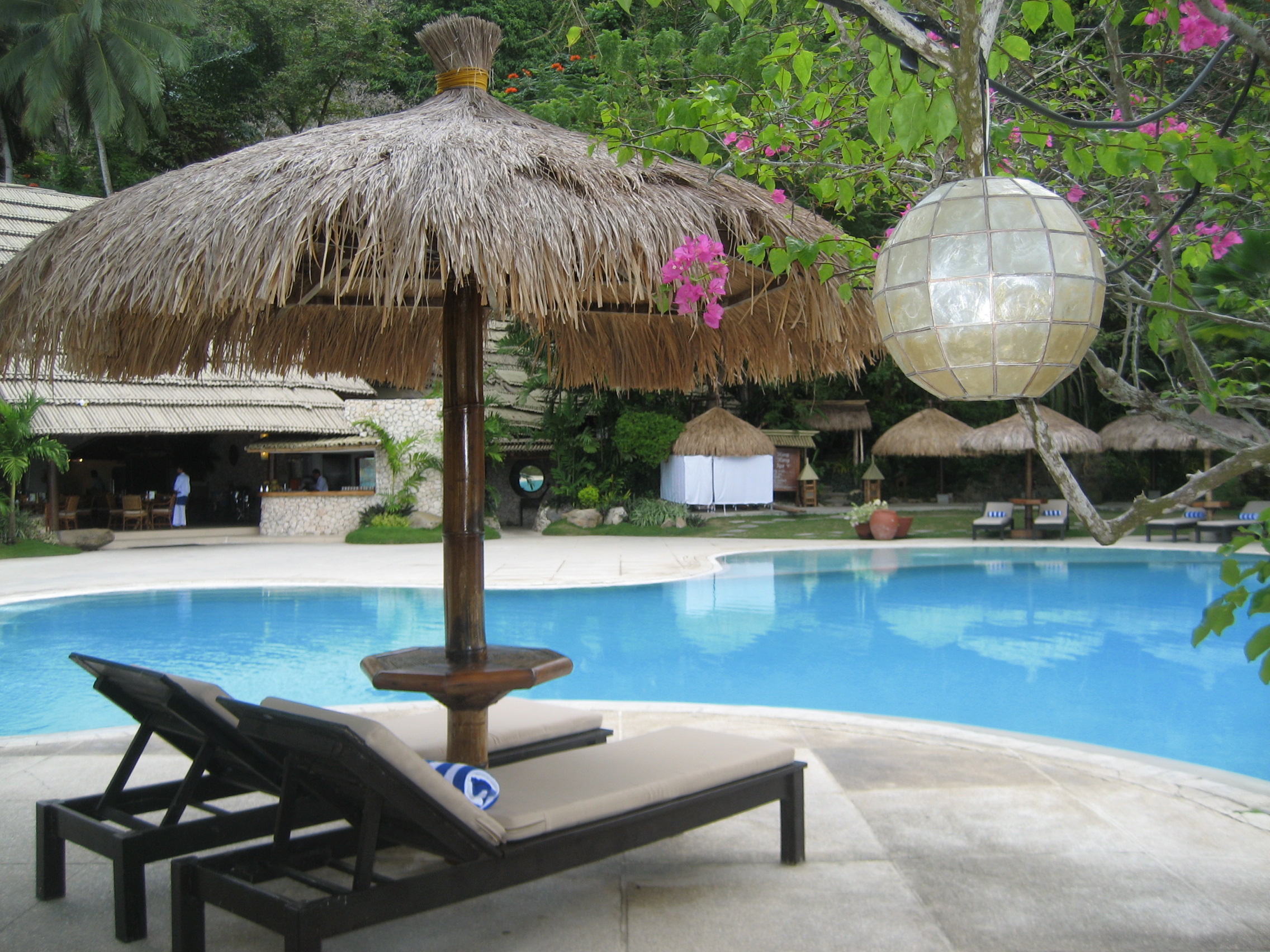
Our resort hotel welcomed us with a refreshing juice from squeezed dalandan (local oranges) and a couple of guitar-strumming singers.  As soon as we checked in,  we glimpsed a very beautiful beach beyond the swimming pools surrounding the reception hut/lounge. The infinity pool promised to provide a relaxing afternoon under the sun.  It was exciting to find a small manmade island just beyond the beach area where some dinners are served.  We were told we will enjoy one of our dinners in that tiny island.

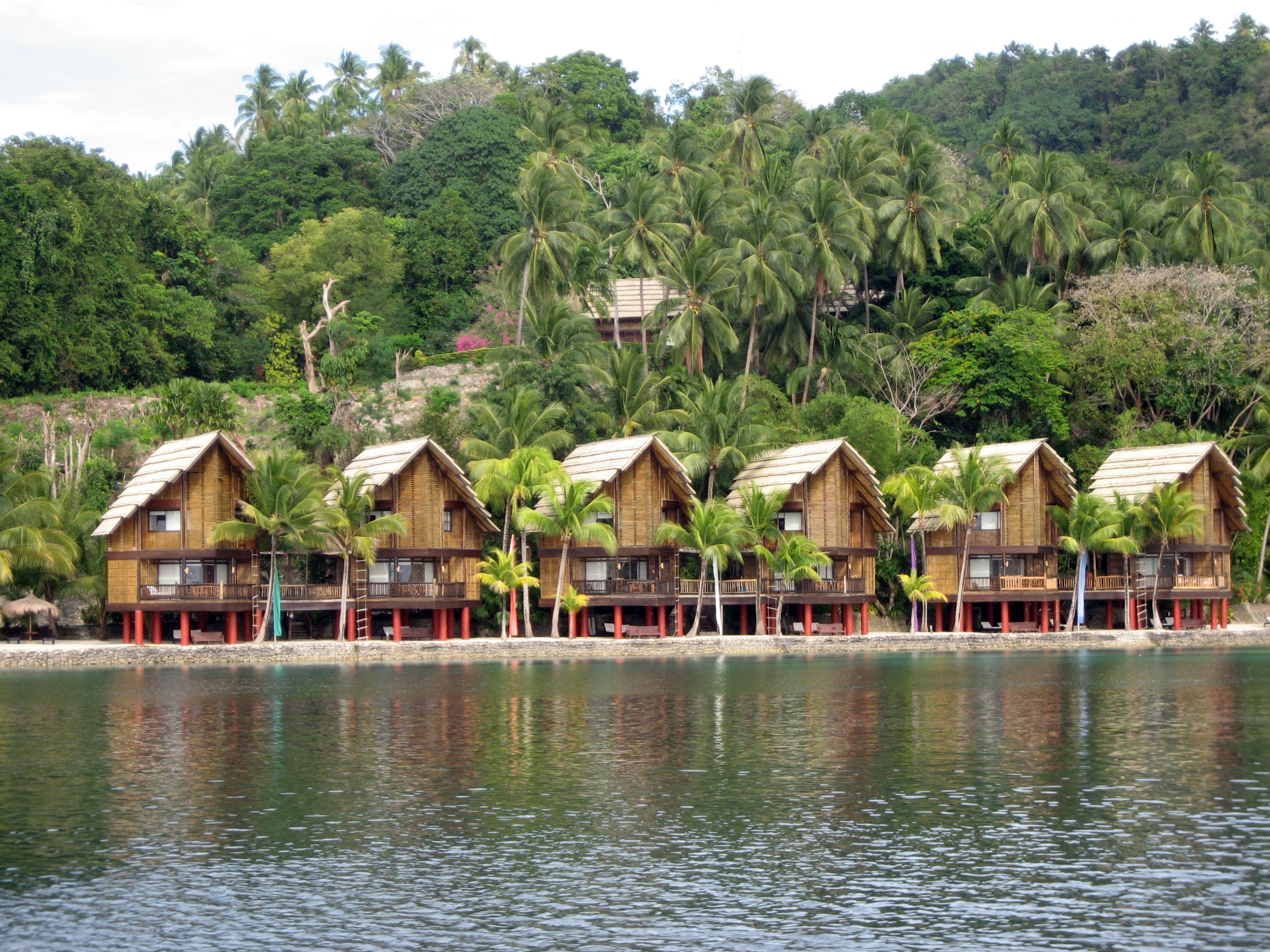
From the reception area, we rode a small golf buggy to take us to our cottage where we would spend the next 4 days. The forest cottage is not very far . We could have walked.  Even with our bags.  Nice and roomy.  The first item I check is always, always the bathroom and toilet. I was not disappointed. They could have put another room there. The walk in closet was a pleasant change. There was even a jacuzzi!  The 2 beds promised that Suzette and I will not be breathing and snoring next to each other.  We also found a good sized balcony though there was not a view except passing buggies bound for next door cottages.  The basket of fruits included my favorite mangoes. I was happy with that.

After a walk around the resort,  we headed for one of the 3 restaurants in the resort.  We strongly recommend Bohol’s famous yam soup.  It has the texture of a pumpkin soup, but this local version won’t disappoint. My first time to try it.  They don’t serve this back in Manila.  Yummy yam!  The other dishes served are fairly standard hotel food.  I will not rave about it.  You’d have your standard barbecue, breaded fish, green salad,  etc.  It fills up ,  but won’t sate, if you know what I mean.

Our Riverboat

Bohol Bee Farm, Baclayon Church and Museum, Loboc Museum, River Cruise, Chocolate Hills, Tarsiers

We spent the next day the best way any tourist can.  Started off the day with breakfast in Bohol Bee Farm. We were served organic Chef’s salad, homemade jams and marmalades,  pates and cheese spread, home-baked pumpkin bread and other pastries.  They even have their own coffee made from corn!  Eggs, local sausages called longganizas, meat loaf, various fruits, etc.  After that hearty breakfast,  a guide gave us a short tour cum lecture on how bees make honey,  what plants went to our breakfast salad,  the different flowers and plants around the area.  There was even a small store where one can buy their homemade jams ,  cheese spreads, honey, local biscuits, and native bags. I  got a couple of bags.

From the Bee Farm,  we drove towards Baclayon Church and Museum. I have seen this church some years back when the province has yet to make a mark on the tourism map. There have been some improvements, but my heart tells me the local government can do a lot more.  Tourism in the area has vastly improved. Perhaps ten fold if not more.  It’s easy to guess that.  My niece Suzette is making her first visit and I can tell she is impressed with our colonial history. Having grown up in the city,  she has had not much exposure to vestiges of our Spanish heritage.  The churches she goes to are all of modern architecture, unless she goes to Intramuros or a few other selected churches whenever she’s invited to weddings.  But our everyday church is a modern church.  Baclayon gives us a glimpse of how it was in olden times.  It helped that our guide prepared us by citing the story of the Spanish Expedition led by Miguel Lopez de Legazpi and Datu Sikatuna’s Blood Compact in the island of Bohol.  Now, let me explain a few things here.  Datu Sikatuna is a local chieftain in Bohol.  The Blood Compact is a ritual where both leaders seal their friendship by shedding a few drops of blood from their arms (i suppose they have to make neat cuts first…) , mix in some wine, and drink them.  Sounds very primitive to me, but that is what history books tell us.  Mind you,  that “friendship” allowed the Spaniards to overstay by a good 400 years.  Must be one effective Treaty of Friendship if you ask me.

Back to Baclayon Church and Museum.  This ancient church claims to be the oldest church in the whole of the Philippines.  Some may argue and say that the oldest church is San Agustin Church in Intramuros.  Well, that is the oldest STONE church in the country.  From the looks of it,  there are still some renovations going on within the church compound. Let us hope the complex will have more improvements by my next visit. My only frustration is hearing the sad news that the church experienced burglaries in the past, and that the Museum is now missing some precious items of antiquity.  My say on this?  There would not be burglars if there are no buyers.

From the Church,  we had a short drive to the Loboc Museum which sits right by the Loboc River, exactly where the terminal is for the  Loboc River Cruise.  The wide wide seaworthy vessel looks more like a big nipa hut with bamboo flooring floating down this green river.  Lunch was served while cruising Loboc River, complete with a singing duo who would gladly oblige guests with their favorite songs.  Again, I did not find the food all that impressive but I like the idea of having lunch while river cruising.  Along the river, one gets a glimpse of provincial life.  Native huts, children playing and swimming by the river edge, wooden outposts that serve as hangouts for idle men and women enjoying a good chat.  The whole concept is just so relaxing.  At river’s end,  there was even a band of  young girls singing kundimans (local songs of old) to the delight of foreign tourists.  Their songs brought cheer to our hearts.

Having enjoyed a relaxing cruise down the river , we then proceeded to check out the tarsiers.  Big eyed mini-monkeys with eyes bigger than their brains.  The smallest monkey in the world is an attraction here in Bohol.  Many foreign and local tourists took snapshots of these cuties who must have been stressed out with all those flash photography (despite the signage) and noisy crowd.  Suzette had a couple of shots to show off to her son and daughter.  From here,  we then trooped to the Chocolate Hills. We were told that there are better views of the hills in a farther town in Carmen, Bohol.  Tired that we were, we settled for the nearest viewpoint.  This view though can be had only after climbing a hundred steps .  But the vista did not disappoint.  Rolling down the landscape were the Chocolate Hills, now not so chocolate-ty but more greenish.  I recall having climbed the same steps the last time I visited Bohol.  Was it age creeping up on me, or did they actually add more steps to the stairs?  Kidding aside,  it was not a steep and long climb.  Very manageable, really.

Coming back to the hotel,  we hit the showers right away to drain away the sweat from the sweltering heat,  and all that dust and grime from a whole day of touring.  We also had our perfect dinner in that tiny manmade island which was made up by the hotel for a luau dinner.  They set up torches to light up our dinner , and they had tiny boats ready to ferry us from shore to the island.  I thoroughly enjoyed our dinner of crabs, prawns, grilled pork bellies and chicken,  seagrapes salad called lato,  green mango with bagoong (shrimp paste), various fruits.  Wine flowed. And the singing began.  It was a natural consequence, one may observe.  And it was also our cue to stand up and leave.  Better back in the room, than feel obliged to sing. The night was magical  and we decided to walk back from shore to our forest cottage.  The resort is really not big.  I may say it is a good size.  There was a good breeze and I was happy to walk back to our cottage. It was also just the perfect time to try out the hotel’s famous spa.  Suzette had her body massage at exactly 11 in the evening.  Don’t ask me how she found her way back to our cottage by midnight after that treatment.  What I know is that I’m pretty sure she drooled in her sleep.

The following morning could have been another adventure but the weather did not cooperate.  Our dolphin watching boat adventure was cancelled at the last minute because of stormy weather.  Balicasag island promised a lot, but I guess we can’t have it all.  We spent the whole day in the resort.  My niece checked out some of the caves around with newfound friends.  By nightfall,  we had a simple dinner before deciding to seek adventure.  This time,  we ventured out for yet another boat ride along Loboc river to check out the fireflies!   We were along the river for a good hour, no fireflies.  Just mosquitoes, and so much darkness.  We almost gave up by the time the fireflies decided to make an appearance.  So beautiful.  One tree looked like a lighted Christmas tree in mid-summer.  How magical! And that’s the second time I used that word here.

The following day is the day we take our flight back to Manila.  There was enough time to hear mass at the nearby Dauis Church, another ancient church.  After mass,  we had a chance to check out the plaza behind the church.  Then back to Panglao Island Nature Resort to pack our bags and get ready for our flight.  It was a weekend well spent.

Read also my Bohol blog in my TravelBlog site. More photos there.    

A Weekend in Subic


It was a weekend well-spent in Subic. 🙂


We planned this weekend with the kids and made sure there’s a day to enjoy swimming and just bumming around,  a day with the dolphins at Ocean Adventure , and a day at the Zoobic Safari to check out the tigers and other animals in the zoo.


On Our Way to Subic

Early morning, and we were ready for our 3 hour journey to Subic, the former American military camp which has been transformed into a Freeport Zone as well as a major playground .  It actually took less than 3 hours as we drove through the Northern Luzon Expressway (NLEX), past the San Fernando Exit, then into the new Subic-Clark-Tarlac express way or SCTex.  This relatively new expressway connects Subic Bay to the Clark area, just a half hour ride away.  Subic is also another gateway into the Philippines with an International Airport  now serving a number of budget airlines.  One can also choose to take the bus (Victory Liner)  from Manila to Subic.

Ocean Adventure


Legenda Hotel is not everyone’s favorite in Subic, but if one is searching for a good family room, this is the place.  We got ours complete with its own living area and a very roomy bedroom and a walk-in closet!  Easily, the walk-in closet was a hit with the kids.  Remember how we all enjoyed hiding in closets when we were kids?  Well, this one is really more like a small room with a boudoir.  And the kids loved it.  Soon after we arrived, my young swimmers checked out the pool and worked up an appetite for lunch.  I can’t recall the name of the restaurant near Legenda Hotel, but let me just say we ate there quite a number of times.  The resto opens up to the beach, and is just a short walk from the hotel.  Here, one chooses his seafood dish as the fish, shrimp, crabs, prawns, clams , squid and other wet creatures vie for your attention while they are all lined up on the tiled tables.  After making your choices,  you now decide how you want your seafood cooked.  We did not mind having to wait a while while our lunch or dinner is getting cooked.  There was always that chance to venture out into the sandy shores and feel the breeze from the bay.  Every meal time was preceded by the kids needing to wash off the sand stuck between their fingers. Never mind that sand also found their way through their toes.


Subic Bay Yacht Club

Off to Ocean Adventure

That same afternoon,  we went to the Ocean Adventure at the Camayan Wharf.  This marine park can easily take a whole day, with those lectures and various shows with those wonderful mammals.  The Dive with the Dolphins and Whales was the highlight, but we sadly learned that this requires an additional fee of nearly US$80.  No way, Jose.  But looking at my 2 little elves broke my heart.   So I did the next best thing.  I explained to the little ones that the fees are just too much but there is a chance the park attendants and ushers may ask for volunteers during the dolphin show.  Now, those eyes brightened up instantly and you bet they eagerly waited for those magic words.  Finally, when the show emcee asked for a volunteer, my 10 year old grandniece didn’t leave anything to chance and proudly stood up and walked towards the emcee, thus pre-empting any other would-be volunteers.  Woo hoo!  That saved me US$80!  The photos will show how she enjoyed this portion of the show where she fed the dolphins, danced with them, and allowed them to “squirt” water on her.  For all that, she even was rewarded with a bag of goodies! Er, not bad…….

Tiger Attack @Zoobic Safari

Adventures in Zoobic Safari

Over dinner,  we talked non-stop about their adventures as we also filled them in for the next day’s adventures.   How they can wake up the next day with so much energy after a late night just playing around the big family room,  is beyond me.  After a hearty buffet breakfast at the Legenda Hotel, we again took off  this time for Zoobic Safari.  The entrance to the zoo is about US$10 for adults , and about US$7 for the kids. Again , there was a show before the stroll around the zoo.  Still smarting from yesterday’s spirit of volunteerism,  our young girl again volunteered to bottle-feed the tiger cub.  She did not stop there.  Patricia also volunteered to play with this tiny snake which twirled around her tiny arms while we all sat watching .  Her brother Martin was not as adventurous, but he enjoyed the whole show, and was just as eager to check out the rest of the zoo.  It was a very humid day, but we survived it.  We also survived our next adventure, where we all piled inside a jeepney with window bars.  The bars were there to keep away the tigers.  What happened was as soon as we piled in,  the jeepney took off and entered an enclosed park where tigers roamed free.  Someone from the park threw a chicken dinner for the tigers to feast on.  What happened next got Martin screaming at the top of his lungs.  The tigers jumped on the roof of the jeepney as they savored their chicken dinner.  Other tigers , not as quick, walked side by side our jeepney…….and they all looked hungry.  Martin laughed and screamed, laughed and screamed.  The other passengers in the jeepney did the same.

Zoobic Safari

Our last day in Subic should have been a day in the forest with the monkeys, but we instead opted to spend it at the Subic Yacht Club for another day of swimming.  All that humidity can easily warp your brains and change your mind.   So, no monkeys, no canopy walks and ziplines for us today. But it was again another day well spent.   Just 4 days and 3 nights here in Subic……all in leisure.  By the time we drove out of the Subic Freeport Zone,  the kids were ready to hit the sack.  All energy gone.  It was a longer drive back to Manila.  Perhaps because all excitement has been exhausted and we were not exactly looking forward to another week of school and work.

Subic Bay Yacht Club

More photos in my TravelBlog site. 


St. Paul’s Subterranean  River National Park in Puerto Princesa certainly deserves to count among the 7 wonders of the world.  My friends and I thought it’s about time we visit this famous underground river which has been declared a UNESCO Heritage Site , and check out the many other attractions of this southern part of Palawan. We were pleasantly surprised to find many more wonders in Puerto Princesa. And this is how our adventure went.


St. Paul’s Underground River


It took us a couple of hours to reach the place.  That’s over land.  Next step is to board a boat passing limestone cliffs to reach the entrance to the underground river. The boat ride was another 30 minutes. When we got off the boat,  we found a path “guarded” by monitor lizards and swinging monkeys through this mini rainforest which led towards the river. Waiting for us at the mouth of the cave were professional guides who divided us into small groups. Each small group to a professional rower guide to each boat. While waiting for an earlier batch to come out of the cave entrance,  we listened to instructions from our guide while taking in the sights around the entrance.  I asked about this tree which must have stood by the cave entrance for many years to witness all the comings and goings in this world wonder. The Dangkalan tree is a fitting guard that stands between the open sea and the cave entrance.  By the time we were instructed to board our boat and don our helmet,  I was satisfied with the pictures I took of the lovely tree.


Inside the cave, the underground river snaked through for some 4 kilometers before we were led back the same way to get out.  We must have spent a good hour inside……..enough to see many of the stalactite and stalagmite formations. I’ve got to hand it to the guide who cheerfully flashed his light on cave formations in different shapes and sizes, resembling various fruits and vegetables, as if we were all out in the market.  There was also a spot aptly called Cathedral because of it s height which looked like an atrium with the “Holy Family” cave formation somewhere near.  We were careful to keep our  mouths shut as there were too many bats too eager to shed some droppings!


Iwahig Penal Colony


If there was ever a prison community with the most cheerful inmates, this is the place.  The penal colony spanned many hectares.  This correctional institute is really more like a farming community much like the kibbutz farms I have visited in Israel. Some prisoners lived with their families and were given lots to till to earn a living. Along the river were picnic cottages where families of other prisoners stay during “visits”.  I met an inmate there with a pet snake,  just a small one,  but no matter –  those slimy creatures still give me the creeps.  Another inmate had a pet turtle.  Still another had various handicraft products for sale.  It felt kind of strange to roam around the place, meeting inmates,  chatting with them, even haggling with them for some keychains and other souvenir wood products which they crafted with their own hands.


In another part of the penal colony,  we found this old structure with lovely windows. Must be at least 50 years old.  Certainly not too old,  but it’s got character.  Reminded me of some of the old structures that can be found in the old Sangley Point back in Cavite City where our family once lived.  Right beside this structure was the handicraft store.  Wooden souvenirs,  keychains,  table mats, etc were up for sale.  One can tell these prisoners had their hands full,  busy working with their hands to earn a living.  No wonder they look happy in this place.


Dining at Kalui’s and Badjao


Not to be missed are these 2 fine establishments.  Kalui’s has such a homey atmosphere where diners are asked to leave their slippers outside the hut and don house slippers while enjoying many of Kalui’s seafood delicacies.  The grilled fish selections were so yummy,  and paired with the local seagrapes salad called “lato” make for a really good lunch.  I like the ambience in this place.  It is truly an artist’s place.


Badjao Restaurant on the other is a lot bigger, built on stilts looking out into the sea.  Seafood is the place’s attraction too.  Freshly harvested prawns and lobsters, grilled tuna, and some local vegetable dishes.  I can imagine many weddings and birthdays held here.


Crocodile Farm in Palawan’s Wildlife Center


I have never been to any crocodile farm, so this is my first outing with these crocs.  Each one of us in the group was made to hold a baby croc and pose for a picture.  Naturally,  i did not pass up the opportunity.  But just like the snake,  I have no affection for these reptiles.  Forgive me. We crossed a short bridge passing a group of crocodiles who looked like they were waiting for their lunch.  Hopefully they did not expect me for lunch.


Viet Ville


On our way back to Legend Hotel where we were booked,  we stopped by this place for dinner.  We met some ex-refugees from Vietnam here.  Obviously, not everyone left for good old America.  Some chose to stay behind, and married their Filipina girlfriends.  The Vietnamese restaurant where we had dinner boasts of authentic Vietnamese cuisine.  We had the usual rolls, barbecued meats and noodle soups. We even tried their air-dried jackfruit slices.


Snake Island


We took a boat and braved the waves in Honda Bay , passing a number of islands.   We chose to eat our lunch of grilled fish, salted eggs with tomatoes,  mangoes with bagoong (shrimp paste), and rice in Snake Island.  We also found a couple of snorkelling guides who  found the perfect spot for us to see schools of fish.  Frankly,  I was a bit scared venturing out in open sea.  My guide was kind of advanced in years and I was praying he won’t have an attack while watching out for me.  Tried hard not to panic, and simply enjoyed snorkelling.


Mitra’s House


The house of the late Congressman Mitra is atop a hill and provided a lovely view of Honda Bay.  It was also a house with a unique architecture…………round in shape,  with wooden balcony rails to hem in the tourists enjoying the panoramic view.  Inside the house, one finds pictures of the entire family.  The caretaker still speaks lovingly of the late Speaker of the House.  As do most people from Palawan. What a waste.  Now, we’d never know if Mitra could have been the republic’s greatest ever president.


Read also my Palawan blog in TravelBlog.  More photos can be viewed there.   


Country Life @Villa Escudero


It is a long weekend and we took the chance to visit Villa Escudero where a vast coconut plantation estate has been converted into a tourist destination south of Manila. Left Manila 6:30am and reached this hacienda well before 9am. A welcome drink of “gulaman” , a local drink made of diced gelatine and sugared water was most refreshing.


Day Tour Inclusions


Country life, then and now, is what Villa Escudero is all about.  Our kids, aged 12 and 9, accustomed to urban living, would do well to have this ‘introduction’ to provincial life.  The adults? Well, we can all do with this break.  And country air is definitely something of a luxury these days, despite the heat. The day tour costs 1,250 pesos or nearly US$30.  Included in this package is a Museum tour of the owner Ado Escudero’s antique collections housed in a church which has now been converted into a Museum. Nearby, another museum is under construction.  Guess that means that Mr. Escudero must have accummulated more collections to warrant another structure.  That gives us a good reason to return to this place.   Also included in the package are:  buffet lunch, carabao-driven cart rides, swimming, rafting in the lake, and a cultural show.  Not bad. The elder child, aged 12 turning 13 soon,  said she thought it would be some laid-back plantation visit with not much to do.  She and her 9 year old brother were pleasantly surprised with the set up in this “real FARMVILLE” . (For those of you who play Farmville on Facebook , you know what I mean. )  Both kids and adults tried everything.


Museum Tour


No photos inside.  But this church turned Museum has quite a collection of “floats” used in religious processions, and many many religious statues.  The antique altar,  sculpture of the Last Supper,  collectors’ items such as Philippine currency/money,  local costumes,  Spanish-inspired furniture, paintings, handwritten letters of the national hero Dr. Jose Rizal,  paintings,  stuffed animals from the Philippines and other places like Africa and neighboring Asian countries,  butterfly collections, etc.  Tells us that this Escudero family is most surely a family of collectors.   And they have the money to indulge in this passion! I pointed out to the kids the local alphabet —-  which is non-existent, if not “not known at all” to many Filipinos.  Oh yes Virginia, we had our own alphabet way before the Spaniards came to rule our country for nearly 400 years.  We have to thank the Escuderos for this, as well as the other collections for many like our kids to appreciate.


Estate Park and a “Private Property”


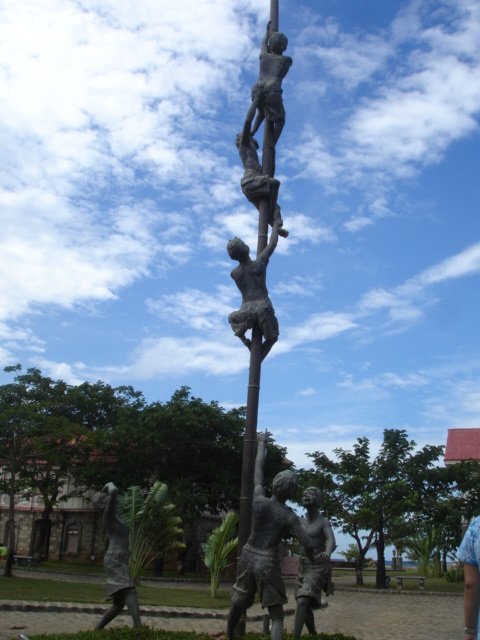
The Museum has a plaza where one finds a sculpture of the Escudero ancestors, another Museum under construction,  and various World War II mementos like cannons , tanks, etc.  All around, there were also sculptures of typical Filipino scenes.  I like these, as i found it easier to explain to the kids how country life was in the olden days.  Like those sculptures of a man “courting” this lady.  No eye contact, while the man tries to offer a gift to his lady love.  The lady, in turn, acts coyly as women then were expected to behave. Then there was this scene of a little boy riding a carabao,  a person “picking trees” with this long pole,  a little boy feeding piglets. The premier spot in this plaza belongs to the Mansion where the Escuderos presumably lived then, perhaps till now.  The pink Mansion sits in this prime spot fronting the plaza , with Mount Cristobal in the background. On a clear day, it is a beautiful sight……matched only by the serenity of the estate lake trimmed by cottages and trees.


Lunch and A Cultural Show


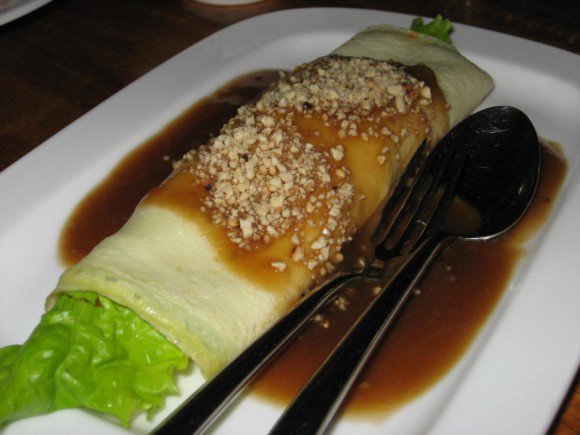
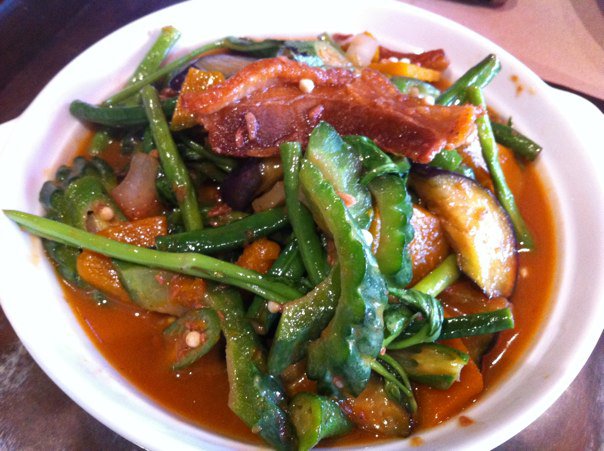
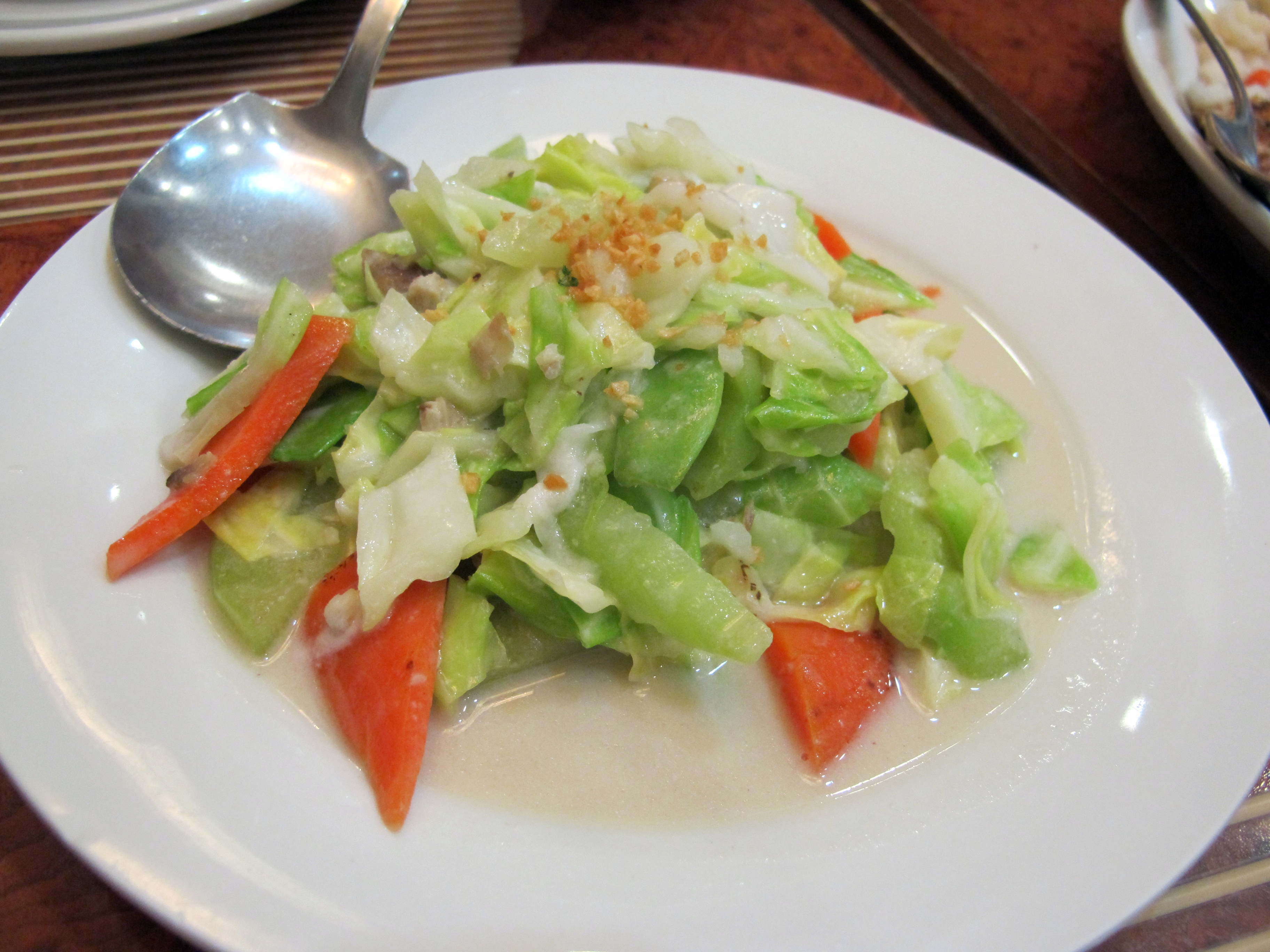
In between swimming, we succeeded in dragging our 9year old back to an area where lunch is served. The place has a man-made waterfalls with water flowing underneath several tables and benches. We took our lunch while our feet enjoyed the cool waters. I even caught sight of small black fish in the 6 inch waters while enjoying my lunch. Lunch was a typical Filipino and Fil-Spanish cuisine. Oh , and some Chinoy or Fil-Chinese additions too like the vegetable rolls. I had a lot of these rolls , in between bites of diced pork chops (over-grilled though, if you ask me) and grilled tilapia fish. The peanut sauce was good for some of the freshly sliced cucumber and other veggies. The pumpkin sauce , the beef caldereta , and desserts like banana cue and tapioca balls complete the lunch. 


After lunch, we trooped back to the Coconut Pavilion and waited for the 2pm cultural show. There were dances from Northern , Central and Southern Philippines. As with many dance performances, the finale is the “singkil” dance from Southern Philippines. The costumes, the colors, the graceful dancers, and the sequence of tribal and national dance numbers made up for a good show. 


Time for Some Rowing


I made the good decision not to join the group who took turns rafting.  The lake is not so big nor wide.  But my arms would do me in, for sure,  and so I opted out.  Watching them row out, then back,  I could tell their arms tired out rowing .  Of course, one end of the lake is the waterfalls where we earlier enjoyed our lunch. If Martin wins hands down enjoying all the pools and playing in the waterfalls area,   Anna Patricia gets a trophy for rafting.   She rowed well in between laughter as her aunts alternated to be her partner rower in the same raft.  I didn’t think I’d have the energy to row back to safety.  A pair of tourists probably felt the same way AFTER one of them dropped into the lake as she tried to disembark from the raft.  She was all ready with one of her legs out to step off the raft into waiting hands .  But the raft MOVED.  So she goes straight into the lake.  Oh oh.


The Carabao-Driven Cart


We left the plantation (yes, it still is a working coconut plantation) nearly 5pm, and took the same carabao-driven cart back to the parking area. Can’t end this blog without mentioning these: 1.   When taking this ride, be sure NEVER EVER TOUCHING THE ROPE tied to the carabao. One of us did,  and the carabao took that to mean we were ready to go. 2.   If you have kids with you,  don’t try singing along with the kundiman singers riding the cart.  (Kundiman is local songs sang way way back by our forefathers.  Not unless you don’t care if you are embarassing them or not.  In our case, I think I embarassed our kids enough. So there,  we spent a good holiday in Villa Escudero.  Just 2 1/2 hours south of Manila.  If driving, take the Southern Luzon Expressway (SLEX) and exit at 50 (Lucena, Legazpi and Batangas exit).  Turn left at the Sto. Tomas junction and left again at Tanauan-Sto. Tomas junction.  Head straight down, bypassing towns like Alaminos and San Pablo City Proper.  Slow down upon seeing Quezon arch and turn left immediately. Villa Escudero is at the boundary of San Pablo City and Quezon province.


More photos in my TravelBlog site.   

Silay’s Heritage Houses


Specter of Affluence From Bygone Era

Silay City, is less than an hour away from Bacolod City. Just a 30 minute drive. It is in the Philippines’ Western Visayas region and the flight took less than an hour from Manila. Because it counted many famous artists during its heyday, it was then dubbed the “Paris of Negros”. A number of heritage houses , mostly built at the turn of the 19th century, still exist, some remarkably well preserved, to this day.

It should be mentioned that Negros is the seat of the country’s sugarcane industry. Many sugarcane plantations flourished and brought wealth to a number of families here. In our country, they were called hacienderos, taken from the word “hacienda” which means a big plantation or farm. Hacienderos refer to their owners or the families who owned them. These days, whenever we meet landed gentry, rich elitist families, we are tempted to call them “hacienderos”.


The Heritage Houses of Silay City

Silay City enjoyed its Golden Age with the boom of the sugar trading industry. This is the period from 1880 to 1930. Many of our parents and grandparents were born during this period. The city oozed with wealth and enviable affluence. Children of many sugar barons enjoyed their fortunes which manifested in the number of beautiful ancestral homes in the city. Interestingly, this period was also marked by the country’s bid for independence from Spain. More interestingly, many of our national heroes and artists actually came from prominent families such as the barons from this part of the country. For a while, Silay City and its neighboring Bacolod City served as the hub for European artists and musicians. This atmosphere must have spawned the emergence, and prominence of many of our local artists and musicians in this part of the country.

Victorias Milling Company is about an hour away from Silay City. You’d better believe this, but it used to be the world’s biggest mill from 1960′s -70′s. No wonder then, right? After all, these hacienderos observed a regular schedule of work limited to just 6 months (planting season), and another 6 months of harvesting and spending their fortunes. Those 6 “idle” months must have invariably spelled “party season” for the rich and famous Ilonggo families. Naturally, the ancestral houses one finds here have big lawns and gardens, as well as grand receiving rooms complete with chandeliers and grand pianos . Imagine the parties they threw here when the scions of wealthy families must have grown tired counting their fortunes!

There are several ancestral houses just off the San Diego Pro-Cathedral along Rizal Street. One may opt to start a walking tour from here or from El Ideal Bakery, also along Rizal Street. Since we had an appointment for a guided tour at the Hofilena Heritage Home, we started our tour here. Hofileña Ancestral House is the repository of the private art collection of Ramon H. Hofileña. The exhibit includes the work of our national hero Dr. Jose P. Rizal , and a number of top artists in the country like Juan Luna, Hidalgo, H. R. Ocampo, Manansala, Joya, etc. We had the good fortune to have Mon Hofilena himself give us the guided tour of this lovely heritage house. Mon shared many historical trivia with us, peppered with some of his own personal history. There were many portraits of Mon in the second storey of the house, painted by some of his friends like Hechanova whom Mon thinks should have been given more recognition as a Filipino artist of note. The photos of the Hofilena ancestors and children were also all over the house, along with newspaper and magazine clippings featuring the accomplishments of the Hofilena children. Mon didn’t forget to also mention how he was the first Filipino male bikini model (he is now 77 years old) and showed us some of his nude paintings with “strategically located” post-its in case there are children in the tour group. *Wink Wink*

Not far from the Hofilenia House but not open to the public is this private home formerly owned by the family of Teodora Morada. The Dimacalis who bought this property restored, maintained and preserved the grandeur of this charming white colonial house. As with the Hofilenia residence, there was also the grand staircase where one imagines the debutante daughters of the former owners of this mansion walking down , resplendent in their designer gowns. Teeming with prosperity, many daughters from these wealthy families enjoyed this “introduction to society” (debut) by way of lavish parties celebrating their 18th birthday.

Balay Negrense is the ancestral mansion of the Gaston Family which has since been converted into a museum showcasing how sugar planters lived at the beginning of the century. The property has a huge front lawn , and a just as huge living room, and an even bigger second floor receiving room. Up on the second floor are the rooms, where canopied beds, antique Filipiniana costumes and other memorabilia are on display. You would even find collections of old dolls and other toys in what could have been a children’s room. (Museum is open from Tuesday to Sunday at 10:00 a.m to 6:00 p.m. Cinco de Noviembre Street Tel. No. 4954916.)

Bernardino Jalandoni House , now also a Museum, was built in 1908. This house showcases the affluence of Negros at the turn of the 19th century. All items on display are authentic period pieces. Interestingly, a grandson of Don Bernardino is a high-ranking leader of the country’s Communist Party. His name is Luis Jalandoni who is now exiled in the Netherlands. (It is located at Rizal Street with Tel. No. 4955093. It is open Tuesday to Sunday from 10:00 a.m. to 6:00 p.m.). Strolling along this same Rizal Street, one finds many more heritage gems which have since been converted into banks, eating establishments or other business offices. The entire Silay City is definitely one heritage town!

The Ruins. That’s how they call this former mansion built by Don Mariano in memory of his departed wife Maria Braga who died while giving birth to their youngest child in 1911. Sounds similar to the Taj Mahal of India? The Mansion pales in comparison to the Taj Majal, but its timeless elegance resonates of an era when sugar barons ruled the land. What is amazing about this place is that it was built right in the middle of the sugar plantation. With its many huge windows, the sugar barons of those days must have enjoyed a 360 degree view of their sugar plantation as the “sacadas” (paid farm hands) tilled the soil. This place is best visited at dusk. Pray there is no school group or big tour groups when you visit!

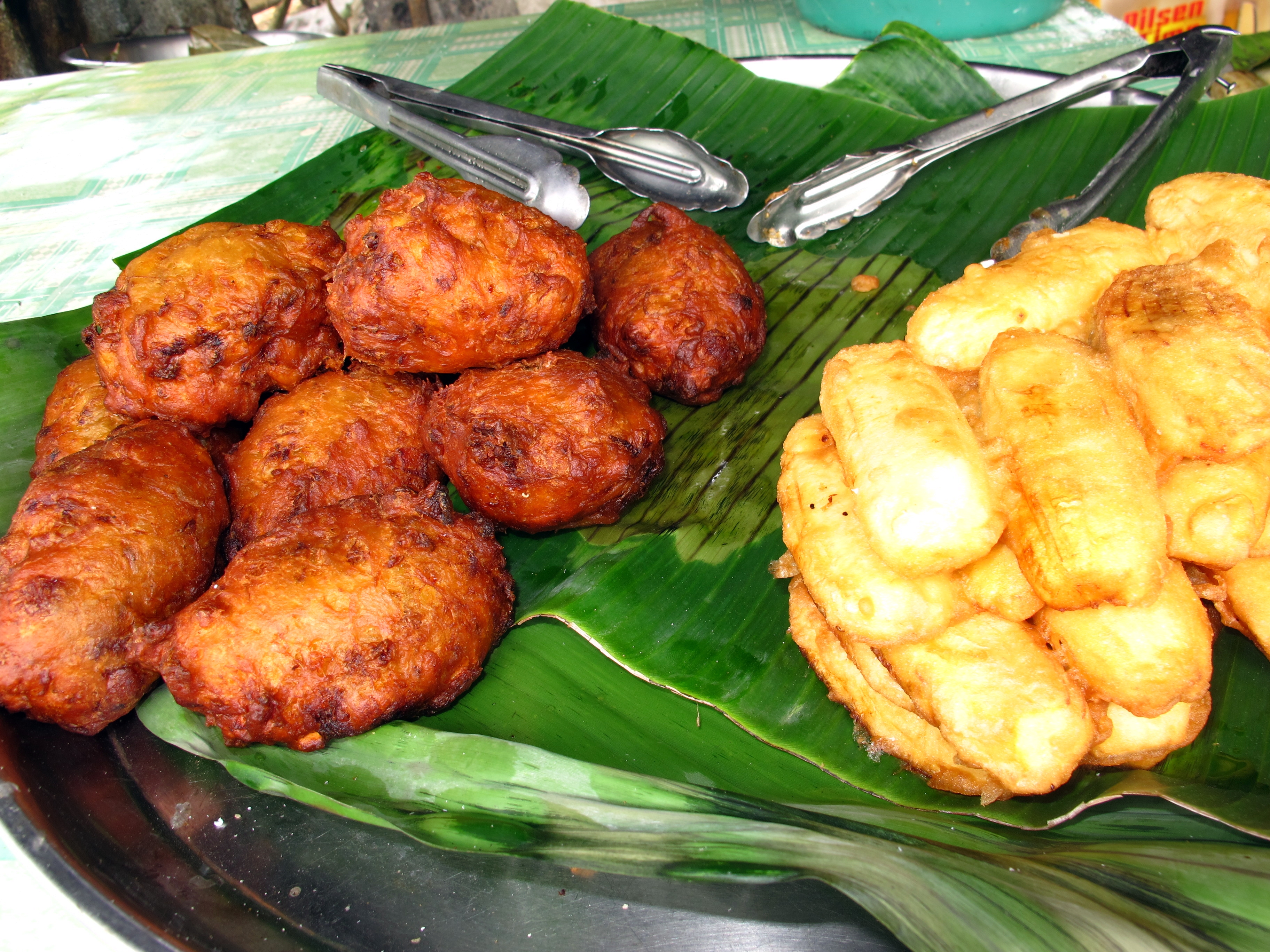
And then there are the eating places in Silay. El Ideal Bakery and Restaurant on Rizal Street, Silay City is one of the oldest restaurants in Silay or in Negros Occidental famous for guapple (guava and apple) pies, buko (coconut meat) pies and assorted delicacies. I have not stopped eating since I arrived here in Silay City, but I certainly made sure I had room for the guapple pie, lumpia ubod which are rolls with heart of palm fillings, batchoy (a very Ilonggo soup dish). El Ideal also has a “pasalubong center” (gift center) and some take outs include ibos (made from corn, wrapped in banana leaf like a suman), puto lanson (a kind of rice cake made from coconut meat), piayaya, and many more. Surely, a trip to Silay City is never complete without trying out these native delicacies! If your pockets are lined with wads of pesos, try the Showroom. Here is a place where souvenir items are put in a different class worth every cent of their price tags. The capiz serving trays, bags made from indigenous materials, hand-crafted and intricately-designed neck and ear pieces, as well as sugary and baked foodstuff make for a shopping sidetrip to remember or …. avoid.

Go check out this link too. More photos. 


La Gota de Leche


Skipping Manila? I know …. the sun and sand beckons in the beaches of Boracay. There’s serious diving in Palawan. You long to breathe the mountain air in Baguio and Benguet,  or simply go completely rustic in the northermost part of the country in Batanes. Or maybe you want to try your surfboards in Siargao or even check out the tarsiers and chocolate hills in Bohol.  For many, it’s the heritage sites in Vigan and Laoag in the Ilocos region, where one is transported in time to a colonial era.  The air is cleaner, less crowded, people likely less busy and thus friendlier, and board and lodging even cheaper in the islands south of Manila and the provinces north of Manila.


La Gota de Leche

And Then There’s Manila…..


I can’t blame you.  Manila is so congested, dirty in many parts of the city, and traffic is so bad.  I live in the better part of  Metro Manila not too far from the shopping malls and fancy restaurants  lining the streets of Makati.  I hardly venture out of Makati. In fact, it has been ages since I last got to the center of Manila where one finds Rizal  Park,  Intramuros with its city walls and Fort Santiago.  Whenever I have foreign visitors who have a day or a whole afternoon to spend in Manila, I would invariably bring them to Intramuros and Fort Santiago, and simply point out Rizal  Park as we pass this park along the way.  These 3 are the likely top tourist attractions in the city, but I’d say only because not too many write or talk about the other interesting historic sites in the metropolis.


No, it is not a secret.  We have heard of some of these places, even watched documentaries on television about them.  But perhaps not often  enough. Nor enough.  Many history books hardly talk about them too.  And as soon as we hear the heritage sites are in Quiapo,  many of us would either lose interest or feel not too brave to walk the streets there.   Sad but true.  And I am ashamed to admit it.


Quiapo Church


QUIAPO is best known for the Quiapo Church, the official “residence” of the Black Nazarene. Around the Church, one finds many hawkers selling religious articles side by side vendors selling “anting-anting” (charms, herbs, amulets, voodoo items) . Crossing the plaza towards the Church, one would likely meet “traders” who would not too subtly whisper the  dollar-peso exchange rate for those interested to change their precious dollars to Philippine pesos.  Mixing with the crowd are likely predators on the lookout for “innocent victims”.   You find them too in the streets of Madrid, Paris, Prague and Rome.  The bag snatchers and thieves.  Sadly, these characters kept many like me from visiting this place more often.


All That Chaos Towards A Center of Spirituality!

Garden View from Inside La Gota de Leche

La Gota de Leche


Amidst all the chaos, it is a pleasant surprise to find this corner of elegance.  A kind of class that soothes the nerves.   Like some oasis which quenches the thirst for some degree of tranquility.  


Literally means “drop of milk”.  This place was inaugurated in 1907 by then Governor-General, later US President William Howard Taft.  Designed by Arcadio and Juan Arellano, fathers of Philippine architecture, inspired by the Hospital of the Innocents, an orphanage in Florence designed by Brunelleschi, a renowned  Italian Renaissance architect.  As if to indicate what this structure stands for, there are decorative reliefs on pediments with images of infants.


Established as a clinic to address malnutrition concerns among the indigents, it was run  by the La Proteccion de la Infancia, Inc. This outreach organization was founded by philanthropist Teodoro R. Yangco in 1907. Records show the construction was completed in 1917 so that makes this building nearly a hundred years old.  You can say this organization was the country’s very first NGO or non-government organization.  A charity project dedicated to infants and young children, its operations involved the distribution of milk to indigent children. It further evolved to champion women’s rights as it also houses the “Kababaihan Laban sa Karahasan Foundation” (literally “Women Against Violence”). The charity organization exists to this day, and must take credits for the restoration of this building in 2002-2003, for which it was awarded the 2003 Heritage Award of the UNESCO Asia Pacific Heritage Award for Culture Heritage Conservation.


Located in 859 Sergio Loyola Street (parallel to Morayta Street), La Gota de Leche is very near the University of the East.  It almost sticks out like a sore thumb in the University Belt, in Sampaloc to be precise, in an  area hemmed in by sidewalk vendors, dilapidated buildings and smelly trash bins. But La Gota stands proud like an old contessa, with its cross-vaulted arcaded loggias, front garden and a non-functional water fountain.

Bahay Nakpil

Bahay Nakpil


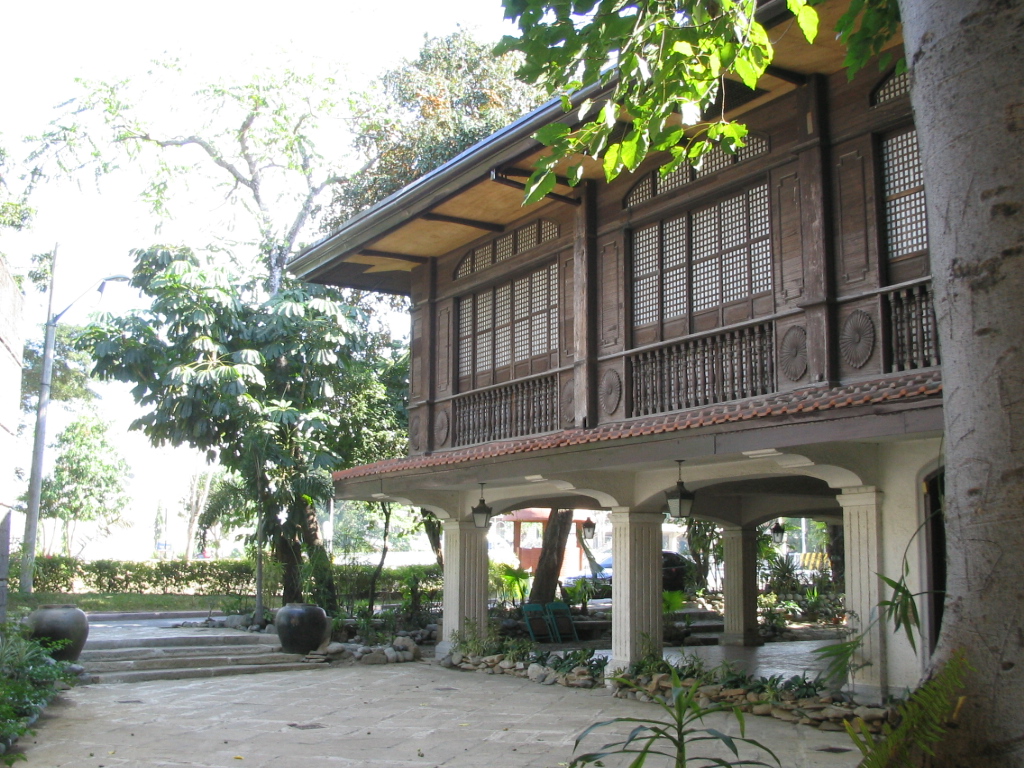
Bahay means house.  This is the house of the Nakpils and Bautistas, built in 1914 Truth is the house should be called Bahay Nakpil-Bautista. Besides being a century-old house , its distinction lies in its being home to some of our heroes of the 1896 revolution.  Located in A. Bautista Street, just off Ramon Hidalgo Street,  the 2 Philippine flags and a marker in front of the house are the only tell-tale signs that it is a house of distinction.  Right beside it is another house, even older, which seems ready to collapse anytime. Both are of the “bahay na bato” architecture which literally means “house made of stone”, though structure is really that of an upper storey made of wood built over a stone foundation.  Typical of the bahay na bato, architect Arcadio Arellano incorporated Viennese Secession motifs into the making of the house. Oddly, the style was adopted after the family received a gift of Secessionist furniture such that the design of the house worked around the furniture motifs.


Street Scene @Bahay Nakpil


The house is owned and built by Dr. Ariston Bautista, a noted propagandist during the Philippine Revolution .  His wife was Petrona Nakpil, whose brother, Julio Nakpil, composed the secret society Katipunan’s patriotic hymns.  Katipunan was founded by Andres Bonifacio, who is married to Gregoria de Jesus.  Inside, there is a marker citing that this has also been home to Gregoria de Jesus, widow of working class hero Andres Bonifacio, who then married Julio Nakpil.  Bahay Nakpil-Bautista was also the place where the family operated its Plateria Nakpil which crafted many jewelry pieces highly prized by Manila’s elite at the time. As distinguised Quiapo families,  the house witnessed many social gatherings and concerts aside from being home to national heroes and artists. Continue reading