Category: Food Trip


Yes, Alagao.  I hail from the province and what I know of alagao is that it has a “hairy” leaf. Yes, H.A.I.R.Y.  But it is one hell of a versatile leaf. Just like the guava leaves,  they can be used to wash wounds or applied to open cuts.   Whenever we have indigestion or suffering from gas pains,  our elders would come up with this concoction and force us to drink the alagao tea, if you can call it that.  Gosh, I even remember our quack doctor with some cut up alagao leaf or two on his temples to cure his headache!


As kids, we would play-cook and readily discard the alagao leaves among our “ingredients” for whatever it was we are boiling or concocting.  That’s because we didn’t like the “felt” texture of the leaf. Hairy has no room in our kids’ menu back then. But in this part of Antipolo, alagao  takes centerstage in this lovely lunch buffet.  Was I in for a pleasant surprise!
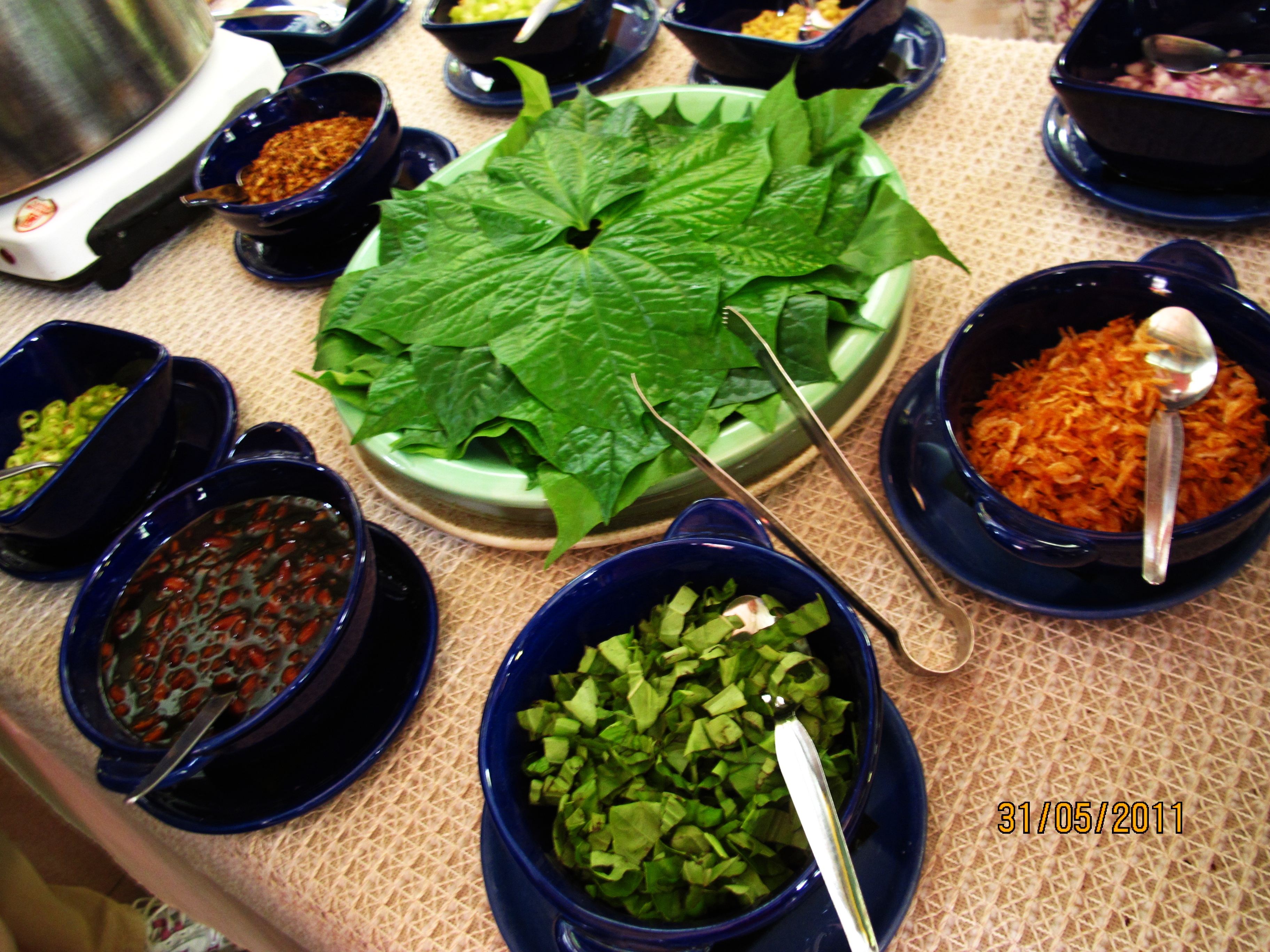
 

Signature Appetizer Is Alagao Leaves With Spices & Other Fillings


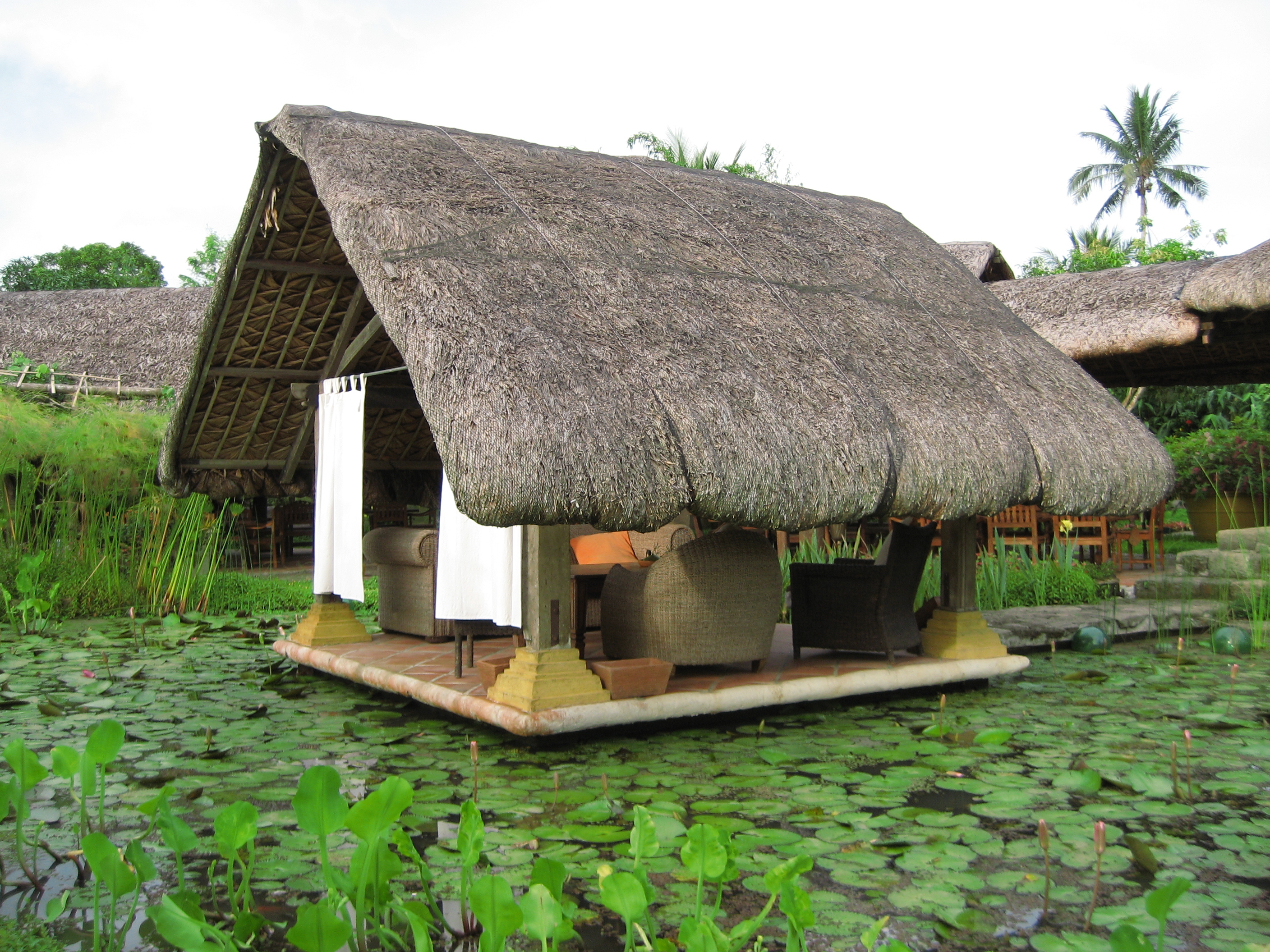
It was past my lunchtime when we reached Crescent Moon Cafe.  I do not know how long it has been in business  in this corner in Antipolo, Rizal, but it sure is a well-kept  secret.   It was a very humid day, and we have just visited the Angono-Binangonan Petroglyphs at high noon!  Hungry,  I was quite ready to eat a cow by the time we reached this cafe and its lovely garden and koi ponds.
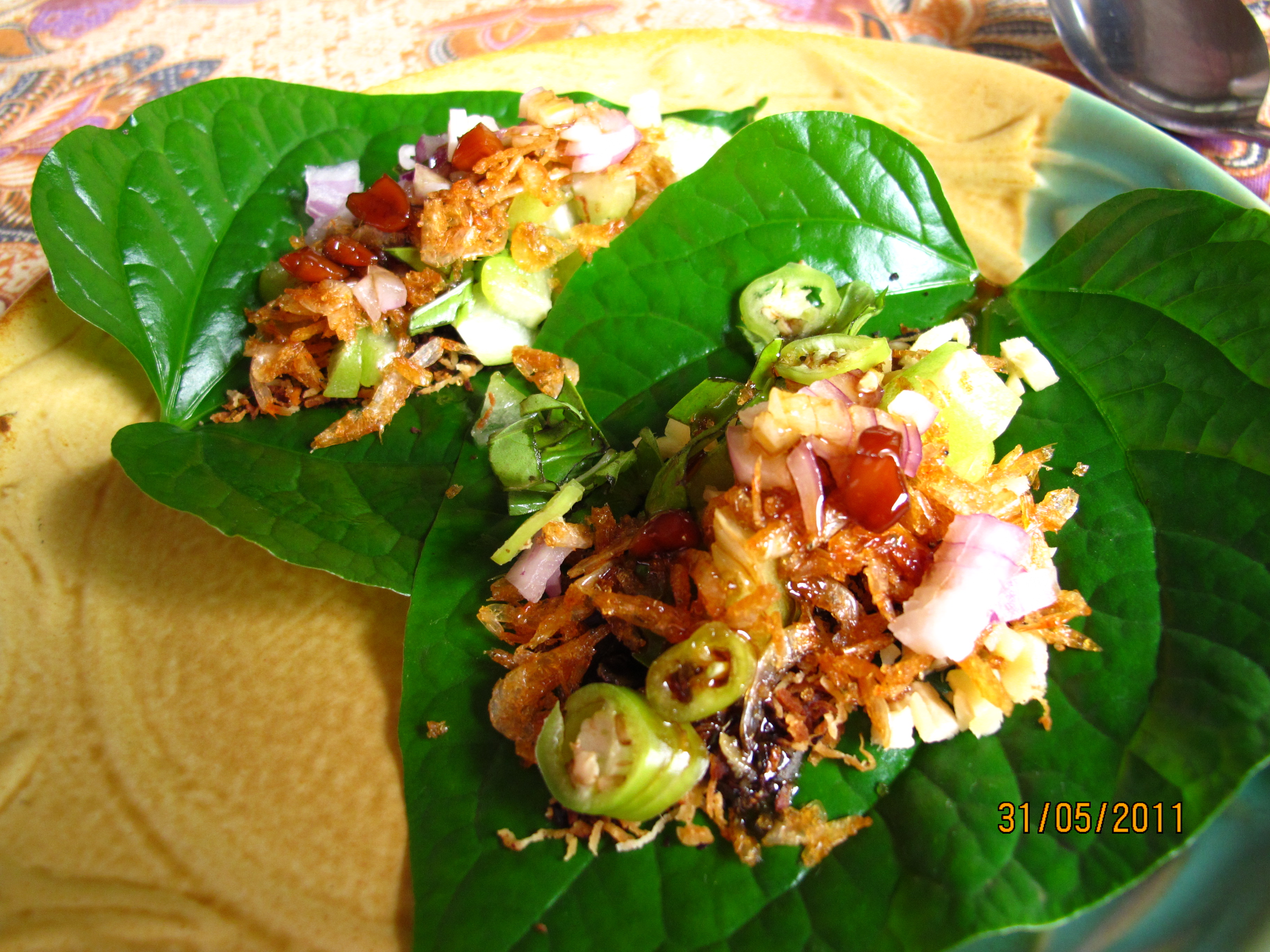
 

Choose your fillings, then wrap and roll!


As its signature appetizers,  one makes his own “rolls” using an alagao leaf and stuffing it with various spices.  There’s  fried garlic, minced onions, green chili for the brave ones, alamang fried to a crisp, cut up basil leaves, cubed mangoes,  ginger and some nuts.   You choose your fillings, lay them on the leaf, smear it with some sweet dark sauce, and then wrap the leaf like you would a lumpia. Voila!  The sweet, salty, sour and spicy all compete for attention and make out a sensation that is not quite the same as any other.  What do you know, I actually like it!  


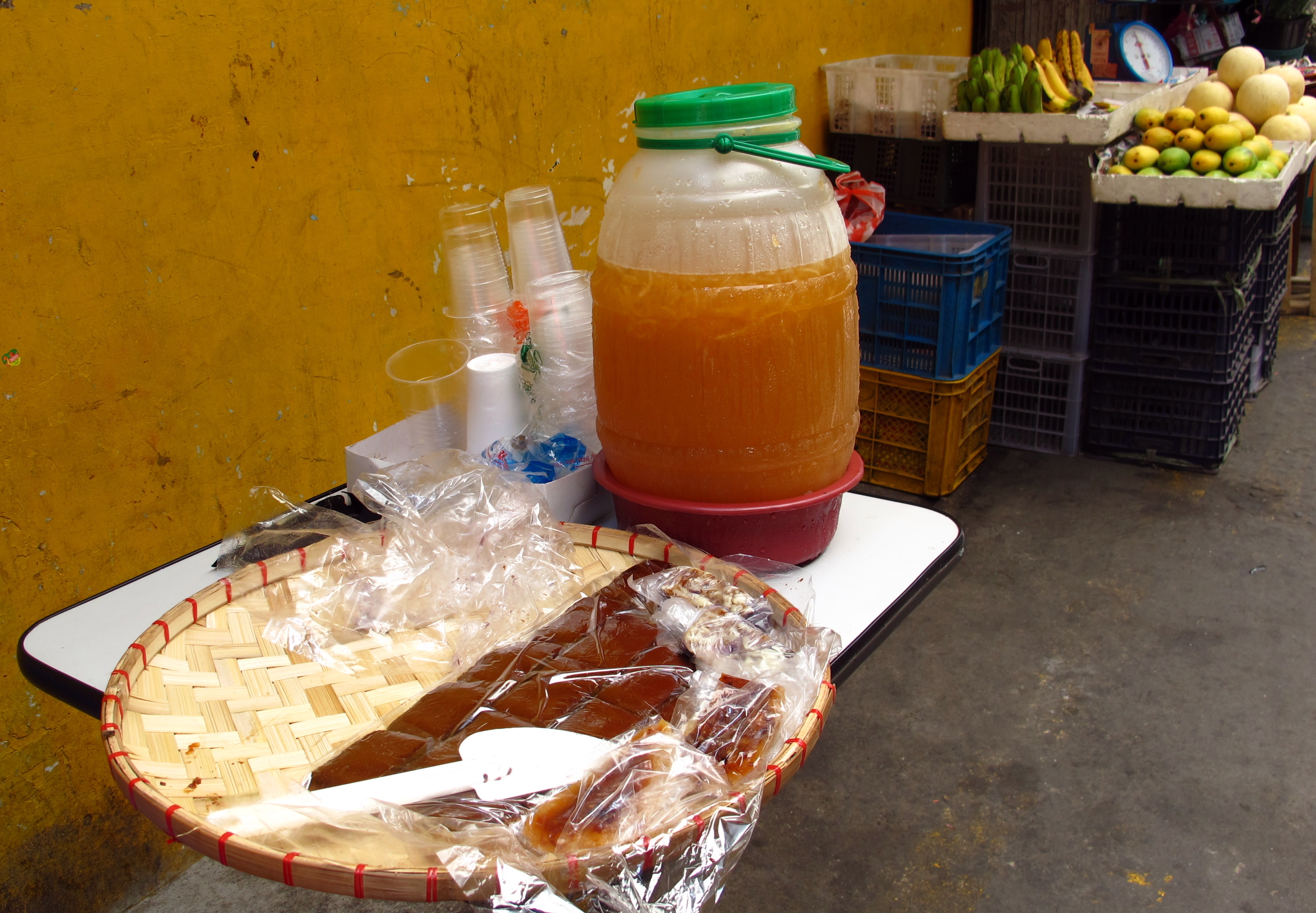
Owned by  Lanelle Abueva-Fernando,  niece of National Artist Napoleon Abueva and daughter of former UP President  Jose Abueva,  the place has no pretentions.  I understand there is really no set menu here, but the signature alagao appetizer is a mainstay.  For this lunch , we had soup,  a steamed fish, some crispy noodles with vegetable curry toppings,  a chicken dish which I ignored (not because it wasn’t good,  but a chicken is a chicken is a chicken if you know what I mean),  and another vegetable dish. Me? I focused on the alagao rolls,  steamed fish and the curried vegetables with crispy noodles.  And for dessert? We had suman served with a quarter of a mango.  I could do with another quarter, actually, but for P35o for a set lunch, I should not be complaining.  I like their suman.  No need for sugar or anything else.  The suman, by itself,  is complete in its sweetness and creaminess.  You can buy them too as take-home pasalubong for P275 a bundle.  
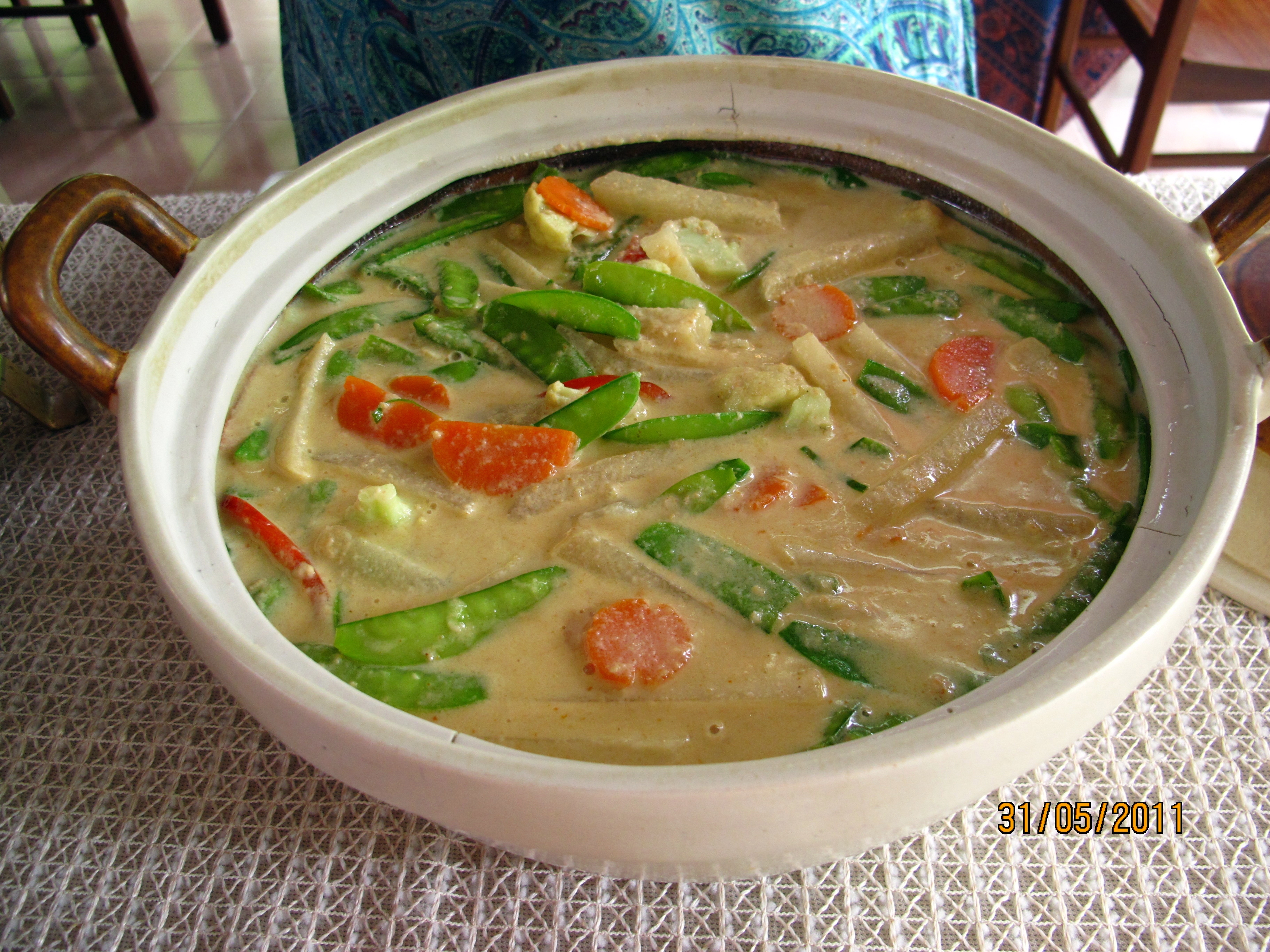
 

No, It's Not Soup. It's The Topping for the Crispy Noodles.


Done with lunch, one can stroll around the garden and pond.  On a hot day,  this place offers a refreshing break.  The trees all around make it tolerable despite the humidity.  But it is not conducive for any shopping.   Lanelle Abueva-Fernando’s pottery is right within the compound  and her works  are on display and available for sale.  There were nice  teapots and matching teacups,  serving plates , cups and saucers, jars, sugar and creamer sets, etc.  By the time we were done with lunch, all I wanted to do was to get back to the airconditioned vehicle.  You see, Crescent Moon Cafe is NOT airconditioned.  You can do away with that setup in Tagaytay (like in Sonya’s Garden) but not so here in Antipolo.  Or maybe it was simply a hot humid day  when we visited. Struggling to keep my eyelids from drooping shut,   I decided to enjoy the comforts of airconditioning in the vehicle.  
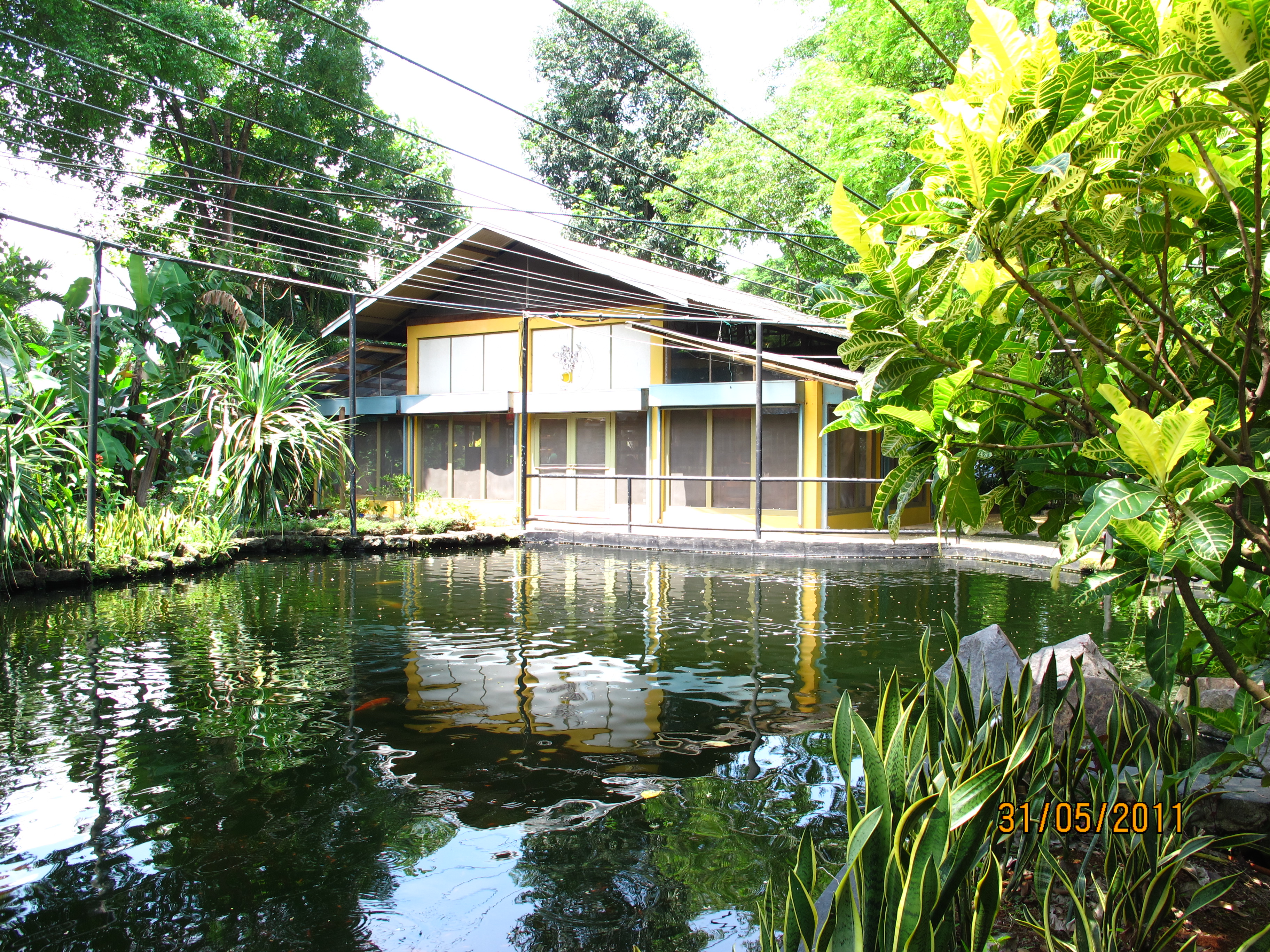
 

Crescent Moon Cafe in Antipolo City

It looks cool. Temp 38C


By the way,  make sure you don’t come on a Sunday or Monday when Crescent Moon Cafe is closed. And do remember that it is only open for lunch.  For directions, you may call +632 630-5854 .  But allow me to try.  😉  If you are coming from Sumulong Highway, go straight past the Ynares Rotunda and Unciano Hospital. You’ll soon find  Flying V gasoline station which is on the left side of a three forked intersection. Take the rightmost road and drive past a Shell station, then Milagrosa Subdivision. A few meters past the subdivision, you’ll see the Crescent Moon signboard. Take that road, and enter the Crescent Moon compound on the left side of the road. The exact address is Sapang Buho, Ascencion road. Barangay Dalig, Antipolo City.


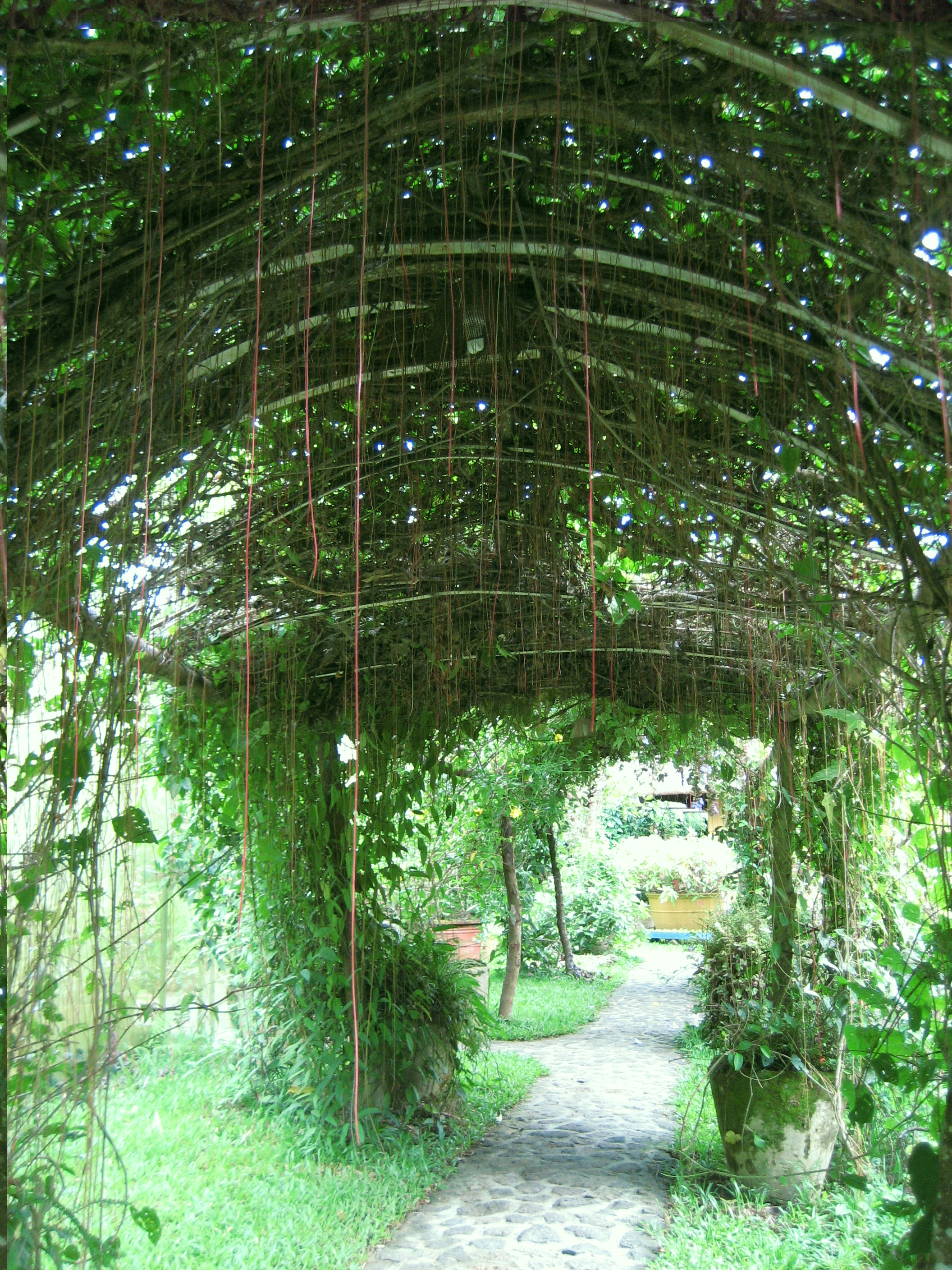
And don’t be fooled. There is still  a tree-lined  walkway towards the Cafe.  You’d walk this path from the street to get inside.  It’s a pleasant walk.
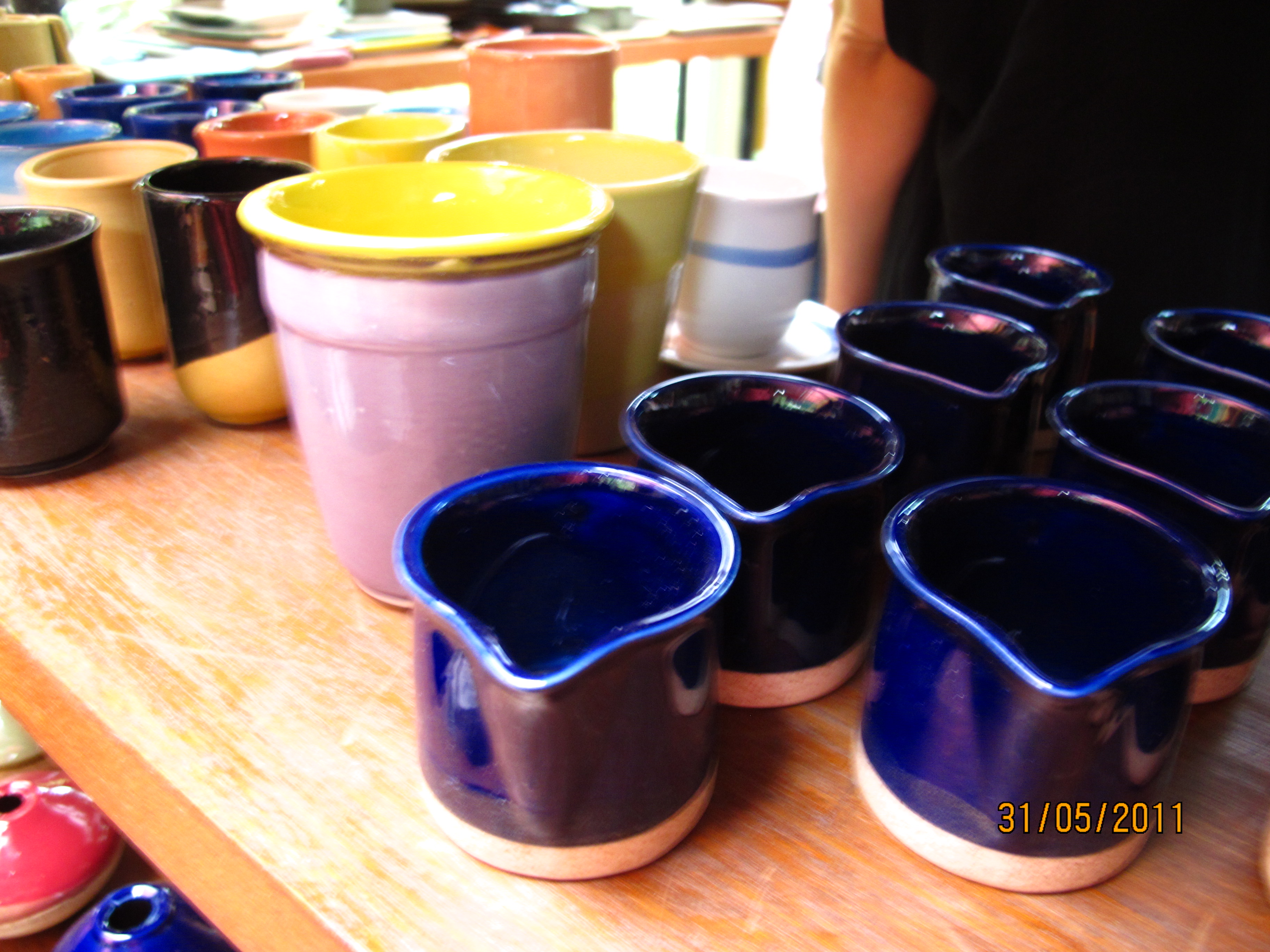
 

The Art of Pottery

Entrance to Crescent Moon Cafe


This May Help Get You There 😉


When it comes to the subject of food, I readily go overboard.  I have earlier submitted my entry to the Pinoy Travel Bloggers’ Blog Carnival for the month of July 2011 with the theme “Awesome Food Experience While Traveling” hosted by Anton Diaz of Our Awesome Planet.  But hey,  what’s wrong with a 2nd entry?  There is always room for good food, right?  


I have a soft spot for Bicol.  And I have a big appetite for Bicol dishes.  Oh, not just dishes.  Of late, I have discovered and loved their exotic shakes and ice cream! (Ice Cream Photo Borrowed From FlipNomad)


Sili Ice Cream @1st Colonial Grill

SILI Rocks


We found this cozy place called Bicol Blends Cafe in Daraga , Albay — right along the Rizal Road connecting Legazpi City to Daraga all the way to our previous destination, Donsol.   First time we chanced upon it,  we were actually at 1st Colonial Grill which is right beside this cafe.  Now, 1st Colonial Grill was what brought us to this neck of the woods.  The Tinapa Rice and Buko Chopsuey there are good reasons for a visit.  Over and above that,  we were longing to try that famous SILI ice cream.  SILI???? Yes, sili as in chilis as in peppers as in HOT and SPICY.


Tinapa Rice @1st Colonial Grill


It didn’t look threatening at all.  In fact, it can pass for strawberry ice cream at first glance.  But wait till you taste the last drop.  The spice kicks in.  Your tongue feels the “burn”, and so does your palate as you finish up with that last lick.  So be sure to have a tall glass of water at arm’s reach.  But wait, there’s more than just the SILI ice cream here.  Right beside 1st Colonial Grill is a coffee shop cum pastry shop owned by the same family.  Bicol Blends Cafe soon took over as our favorite coffee place in Bicol for its exotic pastry items and even more exotic shakes.


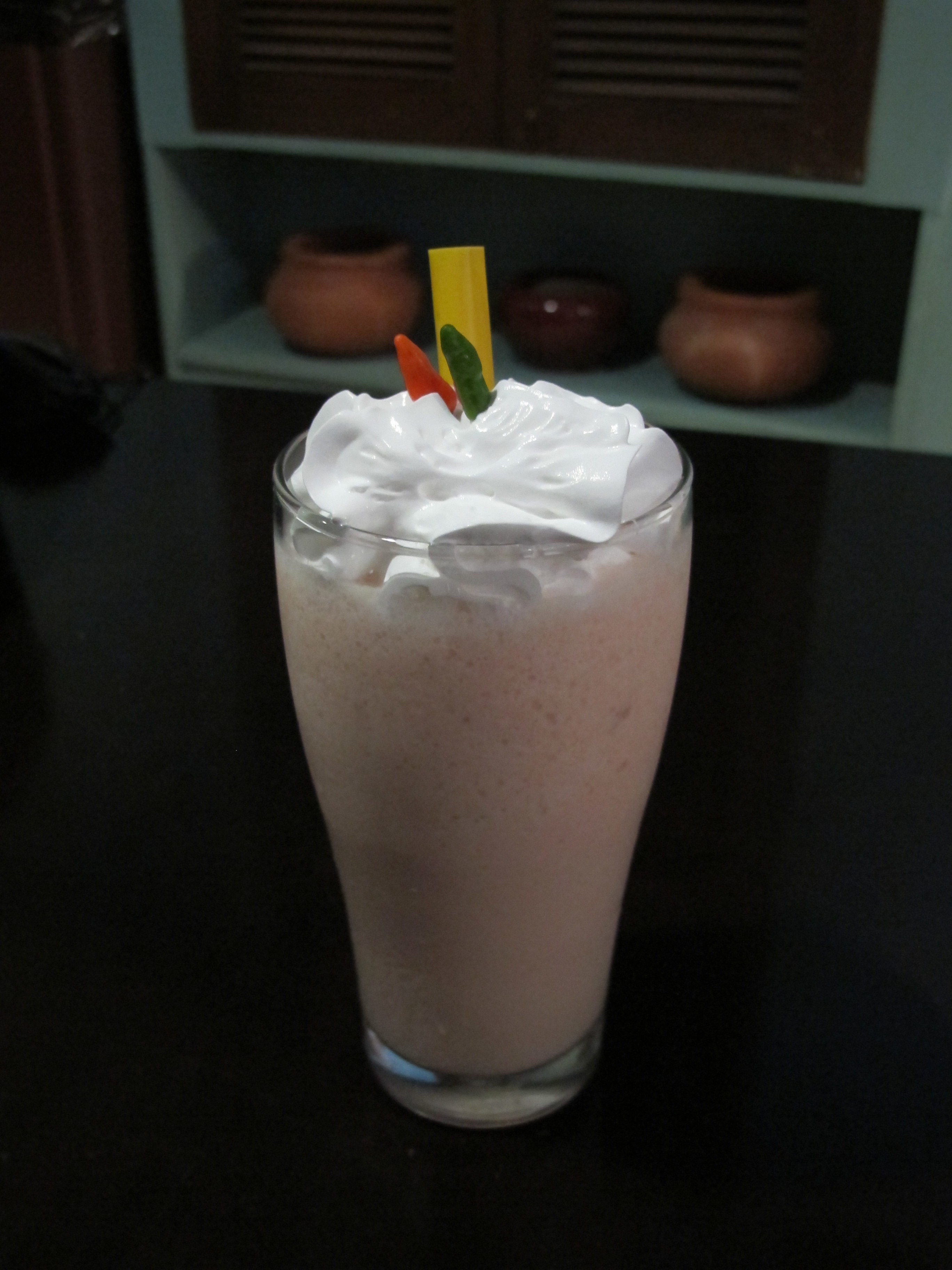
The Deceptive Sili Shake @Bicol Blends Cafe


There is the pili shake.  And the sili shake.  Just like the sili ice cream, the sili shake can be quite deceptive.  It starts off like your typical, standard milk shake.  But the finish! Oh, the finish…….will remind you to take your food “slowly” as our elders would often say when we were younger.  Chew slowly.  Drink. Don’t slurp.  Savor every bite.  Relish every sip.  And give your taste buds the chance to discern the variety of flavors each food morsel offers!  


And the baked stuff offered quite a variety.  Pan de Bicol Express?  This is a big pandesal stuffed with bicol express.  Don’t be fooled by the “mini-pan” description. It is a big pandesal.  Had it for breakfast along with my favorite brew.  Whoa! Did that perk me up! Understatement of the year.  I love the dough, just like the way I want my pandesal.  But the filling shook me up crazy with all those spices so early in the morning.   Besides,  it takes an acquired taste to welcome coconut cream-based fillings at this early hour.  I dare the brave ones to try it.


Pan de Bicol Express To Rev Up Ur Mornings@Bicol Blends Cafe


The second breakfast I had in Bicol Blends Cafe,  I tried the Pili Bread. Now this one is as mild as seeing majestic Mount Mayon first hour of the morning.  Pili nut abounds in Bicol and is a regular take-home or pasalubong item.  I love it.  I find it quite expensive but it is a nut truly our own, so flaunt it. Eat it. Buy it!  Many modern and fusion restaurants in the area have actually found ways to get that nut into their Bicolano cuisine,  accompanied by the unforgiving sili and drowned in the usual coconut cream. Mixed into their bread, or shaved like one would with almonds to garnish a pasta dish,  the taste of this pili nut is never obscured by the other flavors.


A Milder Treat To Start The Morning: Pili Bread @Bicol Blends Cafe

Bicol Blends Cafe


If we were spending a few more mornings in this place, I would have tried their Laing Offerings. Perhaps next time? For sure, I will be making a visit to this place not just for my sili and pili fix, but also for the cozy ambience and wifi connection the place offers.  Maybe I’d also try their Malunggay Ice Cream and Tinutong Ice Cream.  All those crazy ice cream flavors! For your info, you can dine in either 1st Colonial or in Bicol Blends Cafe and order from the menu of either since both are owned by the same family.  Nice 🙂


Craving for more Bicolano food?  Check out this blog. More yummy photos too.  Oh, take me back. Take me back! 


More? Just click the link above for more bicol dishes.


This is my entry to the Pinoy Travel Bloggers’ Blog Carnival for July 2011 with the theme “Awesome Food Experience While Traveling In The Philippines” hosted by Anton Diaz .  Bon apetit! 


Days before our planned visit to Los Banos,  I asked my friends for any recommendations on where best to have lunch in the area.  Frankly,  I wasn’t in the mood for a typical Filipino meal of bulalo, laing, crispy pata or kare-kare.   Neither am I up to a burger or chicken inasal lunch.   Not this time, anyway.


Believe it or not,  I chanced upon a “tweeted recommendation” to check out Dalcielo right along the lone Lopez Avenue headed for UPLB.   Not one to search for a dining place somewhere off the road,  I readily decided we must give this one a try. Easy to find.  “Just look for those 2 huge orange umbrellas fronting the deli” — he tweets.   Oh, I love this online community.   So easy to source travel and dining ideas!   Just keep me out of politics and other social agenda, and I’m fine. So there we were, searching for 2 orange umbrellas.  Perfect markers!  You just can’t miss it.  And they have a parking area right beside it too!


We found Dalcielo a good half hour before noon.  Served us right.  We had the luxury of choosing our “corner” in the limited space, just before the noontime crowd sets in .  Maybe just 5 tables to choose from.   Yet, we have just stepped in a good meter or two ,  and I knew we would have a good meal.   The shelves were teeming with farm produce (cottage cheese, yogurt, what else?) and bakery products.   The chocolate cake looked so inviting I was tempted to make it my appetizer.  That, along with a cup of good brew.   There were cookies, cream puffs, cheesecakes,  lemon squares, sans rival .  We’re in heaven!


For starters, we ordered the local Fern or Pako Salad.  After that, we AGONIZED over choosing from among so many of our favorite dishes.  Till we settled …….  to have all, or share all.   Marissa, the owner, was ever so gracious.  It is only a small dining place with only one food server, with Marissa ruling the kitchen.  She would sneak in and out ,  each time surprising us with the aroma and presentation of our ordered dishes.  I just love their Lengua Estofado while my friend drools over their Callos.   The Lengua  had very thin, tender slices cooked to perfection.  The Callos had just the right spice to it — never mind that the portion was kind of small .   We all enjoyed the Seafood Paella or Paella Marinara. And we likewise shared the Grilled Fish, served on a bed of spinach.   The desserts completed our sinful afternoon.   Two kinds of sans rival: one which is sugar-free, guilt-free?   …. and the regular sinful one. We also tried the cream puff  with our coffee, along with the mango panacotta.   There is also a strawberry panacotta, which I must try the next time I visit.   As we left no room for more desserts,  Marissa so kindly gifted us with a slice of take-home chocolate cake.  Isn’t that a lovely gesture?  Even their coffee is soooo good.   We savored every morsel and bite of every dish and dessert we ordered.  Like nothing simply went wrong.   We were prepared to see Marissa and the lone waiter looking harassed and stressed out,  but they so cheerfully attended to our every whim and fancy.


For sure,  I will make another trip to Dalcielo.   It would be a good stopover (??) on my way to Paete , Pakil, Pagsanjan, Liliw  or some other interesting towns of Laguna.  Anything. Anywhere, for a reason to pass by this gem of a deli and bakeshop.

You may also wish to read my other blog  on Dalcielo and places to visit in this neck of the woods. Bon apetit!


It took this long for me to think of blogging about one of my favorite places in my own country. Perhaps because I visit it too often, or I took its beauty so much for granted. Tagaytay holds many happy childhood memories for me and myfamily. Both my parents are from Cavite where Tagaytay is. And many weekends were spent here, in a neighboring town called Silang, Cavite where my grandmother used to live, long before it became a favorite tourist destination. From Manila, it would take about an hour and a half traveling south for 60 km to reach Tagaytay to view the “volcano island” inside a lake called Taal Lake, or Lake Taal.

Childhood Memories

;

As a child, my ears got so used to many old folks’ stories about Taal Volcano where one finds a lake within a volcano within a lake within a volcano. Yeah, I know, it sounds redundant. Can you imagine me listening to all these stories and this line which has now become an adjective to describe Taal Volcano back when I was still of pre-school age? It appears Taal Volcano made up for its size by always threatening to erupt, as if drawing attention all the time. Records show it is the smallest active volcano in the world. And for good measure, the old folks back in the province recount to this day all their experiences with Taal Volcano’s mini-eruptions in the past until it was no longer news.

;

The story goes that Tagaytay Ridge where one gets a perfect view of Taal Lake and Volcano was actually part of a bigger volcano until a major eruption hundreds or thousands of years ago. Originally a huge volcano towering 18,000 feet, many people don’t realize that it used to be one of the largest volcanoes in the world. Tagaytay Ridge is the rim of the volcano! Before it was “reduced” to its present size, Tagaytay ridge would have been only about a sixth of the way to the top of the volcano!! This caldera is now fringed with many tourist inns, hotels, restaurants and picnic groves. A major golf course and upscale community (Tagaytay Highlands) and a casino hotel (near Taal Vista Lodge Hotel) can also be found along this ridge. Most tourists make day trips from Manila to this place, missing out on an unhurried day of adventure which may include a boat journey across the lake to reach the volcano island (about 1,500 pesos or US $30 for the entire boat so you can split it among the 3 or 4 of you), a trek to the top of the volcano on a donkey (most recommended, unless you are very very fit but be ready to shed another US$10 per person), as well as trying out the many fine-dining and local restaurants in the area.

;

A Mountain Resort? A Summer Retreat? Religious Retreat Center? A Garden Restaurant?
;

Many years back when Tagaytay only had picnic huts available for rent to locals bringing in their own picnic baskets, the place was famous for its many retreat houses and prayer centers. The cool climate and the now-lost “rustic innocence” of the place made for a very meaningful weekend of prayers and meditation. The retreat houses are still there. And many retreat weekends are still held there. The popularity of the place has also resulted in many foreigners deciding to stay permanently and setting up their own restaurants and shops there. These days, one can make trips to Tagaytay to try out this new Vietnamese restaurant (Bawai), or this Austrian-German bistro called Chateau Hestia, a greek taverna, or a lovely garden restaurant called Moon Garden run by a Belgian. Taal Vista Lodge Hotel is a newly renovated hotel complex , Josephine’s Restaurant with its seafood delicacies still stands attracting both local and foreign patrons, the Discovery chain of serviced apartments runs Country Suites and I must say, serves the best lamb chops, and of course there is Sonya’s Garden and Antonio’s – 2 of the fine dining establishments in the area. My personal favorite is Antonio’s though that will set you back a good US$30 to $50 per pax. For local food, one can try Josephine’s (their buffet is a steal at only US$7) and Leslie’s (try their “bulalo” which is beef stew). As for the kids, there is Residence Inn and Zoo where you can spend an entire afternoon with small children. Lunch is also served in this place, a good way to spend an hour or two after checking out the zoo. Restless kids can go to a nearby playground while the adults enjoy their coffee after lunch, or simply wait out for the sunset while viewing the volcano.

;

There is always something to do in Tagaytay other than just taking in the view. The more adventurous go for the boat ride and donkey trek. The prayerful spend their retreat weekends there and head back to Manila with emptied minds, restful spirits and re-energized bodies. The hedonists spend time in their favorite spas while their husbands play a round of golf in Tagaytay Highlands. The foodies try out the many food establishments, where the variety caters to every pocket range. The kids can check out the tigers, crocs, gorillas, etc in the zoo. Or simply rent out bikes or go horseback riding in the park.

;

;

I live in Makati, the financial center of Manila. This urban jungle has its advantages and disadvantages. Thank God for Tagaytay. In under 2 hours, we can enjoy its breeze and open spaces. There is just no way we will ever grow tired of Tagaytay!

This is my entry to the PTB Blog Carnival hosted by Mhe-Anne Ojeda

on the theme My Hometown.


Read also my blog on same subject in TravelBlog.


We get this all the time.  Foreigners in the workplace telling us that Filipinos tend to eat every so often.  Lunch is no sandwich and a fruit.  Neither is it a half hour break.  Naaaah.  That one hour lunch break can easily stretch to a couple of hours, often blaming the traffic for not getting back soon enough. These days,  there are many joints a walking distance from the offices. But lunch is lunch, and every Filipino observes it not just as a break from work but also as a chance to chat away the blues and break the monotony of working behind a desk. As for snacks or mid-day “mini-meals”?   That’s when it is more likely to find Filipinos eating that sandwich or fruit.  But the hardcore ones would still crave for their carbo fix:  a noodle dish, rice porridge or rice cakes.  In between lunch and that midday mini-meal, don’t be surprised to find them munching peanuts, pork cracklings, chips, or splitting pumpkin seeds.


Taho. Best for breakfast!

Sago at Gulaman


Luckily for us,  there is no shortage of food to be found and bought.  Stuck in a traffic jam?  No worries.   The street vendors plying the main roads sell anything from peanuts to pork cracklings to boiled eggs to mint candies to fruits to bottled water to “fish balls, squid balls and shrimp balls”. Boiled bananas, boiled peanuts, even corn on the cob! Walking the streets of Manila is an adventure.  Every tourist should try this.  Buying street food is very much a part of every Filipino’s way of life.  And there’s more to be found in urban centers like Manila, where folks are supposed to be “busier” than their counterparts in the provinces who may have the time and energy to cook their own meals and snacks.


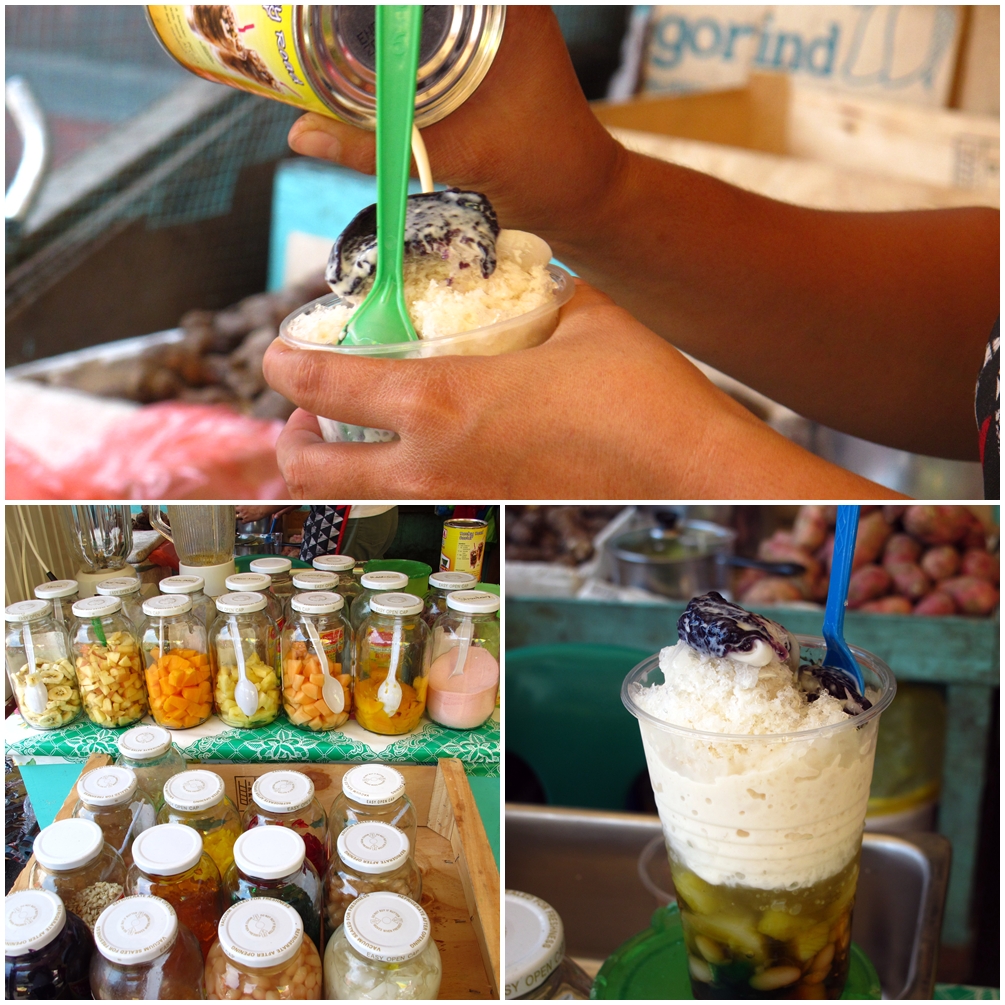
Halo Halo!


As it is summer, try going to San Andres Market, a stone’s throw from Malate Church.   You can get your freshest fruits here to eat, or to be made into a fruit shake.   You can’t go wrong with a 10 peso fruit shake (less than US $0.25) or the local “halo-halo” (literally means “mix-mix”) for 20 pesos (less than US$0.50). I strongly suggest you try the halo-halo which is a mixture of  sweetened fruits, ice shavings and milk, topped with a local sweetened ube yam. You can’t be more Filipino than that!


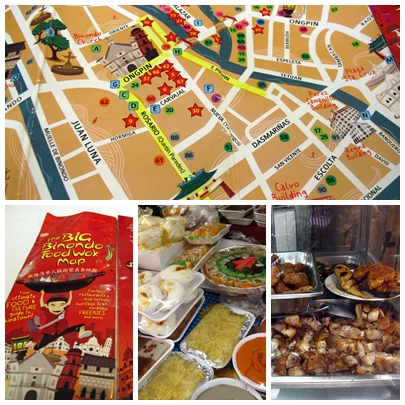
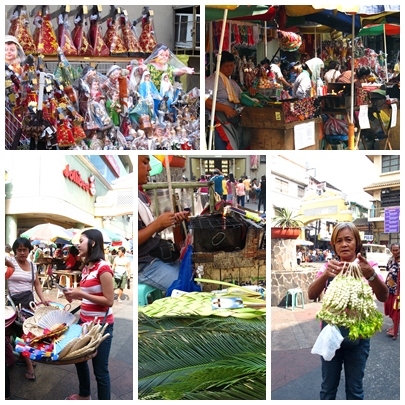
Or you may want to head all the way to Chinatown for your dimsum fix and other foodstuff.  The street vendors here range from those selling fruits, vegetables and cooked food to those selling almost anything you need to get from an honest-to-goodness hardware and supermarket.  Around Quiapo Church,  you can buy your religious icons,  candles,  fans (strongly suggested on hot, humid days) , flower garlands, brooms (yes, brooms),  fruits, vegetables , squash flowers, and fish (live, dead, smoked or dried!).  From Quiapo Church through Santa Cruz Church to Binondo Church,  you will find street stalls selling footwear, garments and again,  more foodstuff.  There is an alley near the Binondo Church called Carvajal where I wanted to buy almost everything I laid my eyes on!  Forget the diet.  There is so much to buy here to take home as TV dinners.  Sushi?  Taho? Meat loaf?  Rice cakes?  


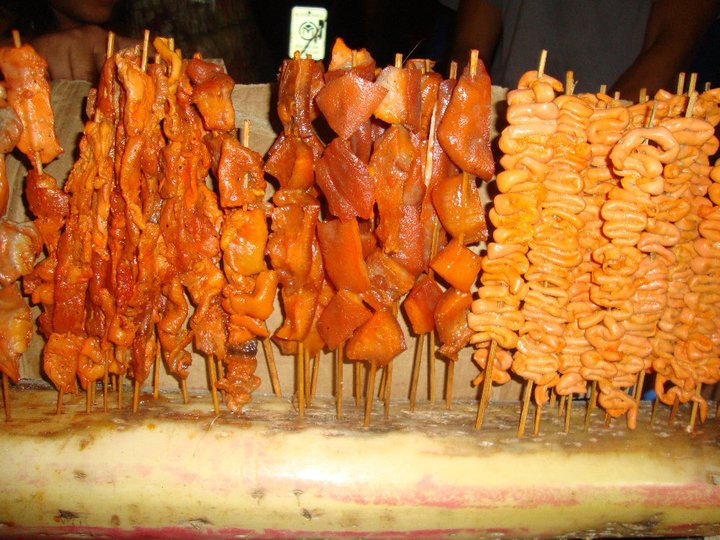
Barbequed Pork and Innards. Guess what!

Puto Bumbong

You may also want to check out more photos from my TravelBlog site. 


Lechon or Roasted Pig


The celebrity chef Anthony Bourdain once visited the Philippines and tried our lechon. He then declared it is the best he has ever tried in all his travels.


This roasted pig adorns almost every buffet table as families and friends celebrate occasions from birthdays to anniversaries to graduations to weddings to baptisms to fiestas.   It is the equivalent of a royalty dish.   It is our Filipino equivalent to the American turkey,  or to the roast beef.    When lechon adorns a buffet table,  every Filipino starts thinking of having a feast.   And almost always,  the roasted and crunchy skin is the first to go.   Some stuff the roasted pig with various herbs and serve lechon without any dips, like the lechon from the Visayas, a group of islands south of Manila.  Others serve lechon with a dip of liver sauce (some sweet, some a little spicy),  or with a vinegar and soy sauce dip. We have heard of many tales of fatal heart attacks in many parties where the victims indulged of this cholesterol load.  You may say you can savor lechon and enjoy it at your own risk.   The health hazards are however set aside in favor of this savory meal.


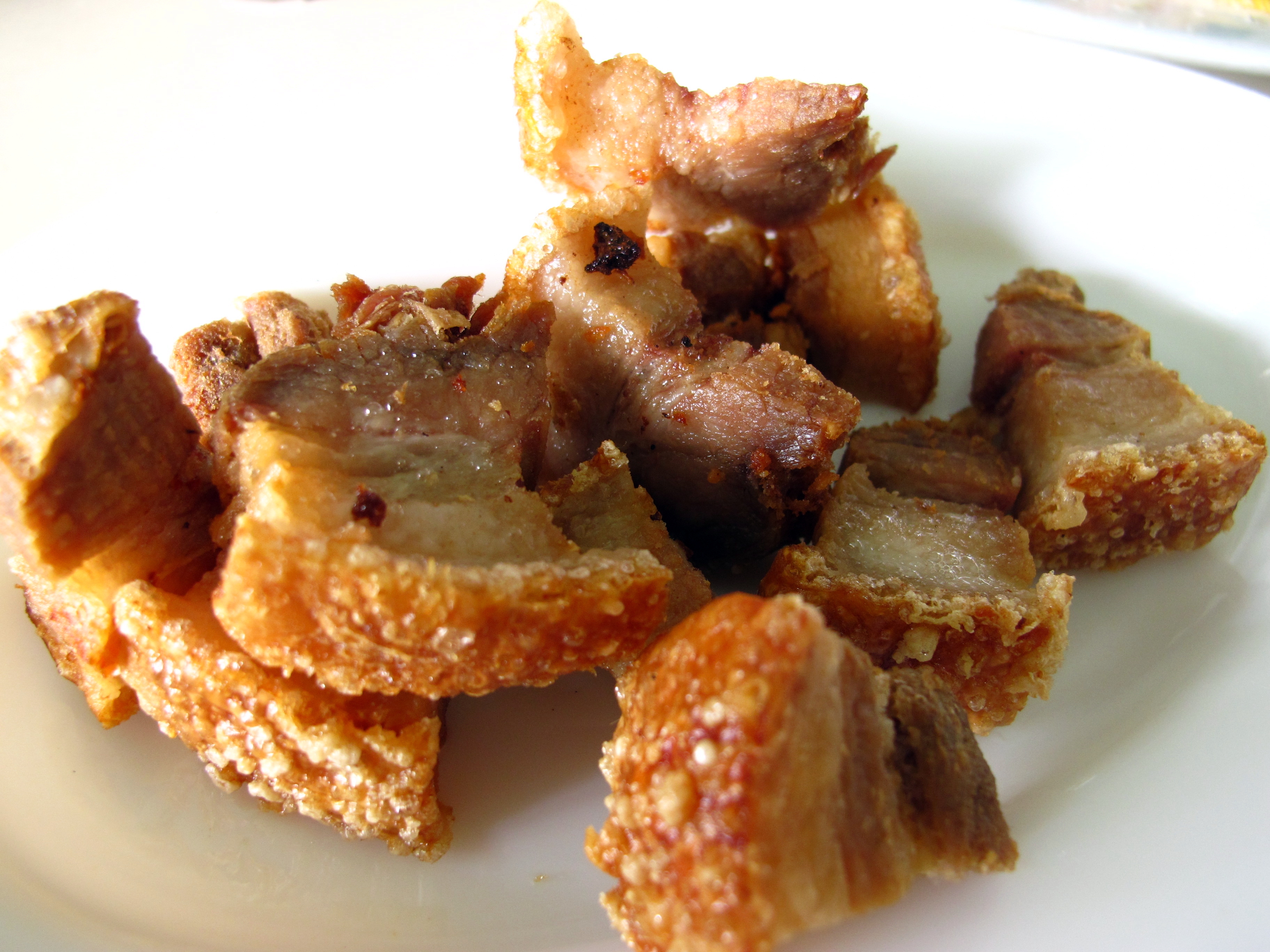
Lechon Kawali or Wok-Fried Pork Chunks


Many restaurants serving Filipino dishes include lechon in its menu, but if you want to see the whole pig chopped up into half kilo or one kilo servings,  you may want to try going to Baclaran Church in Pasay-Paranaque along Roxas Boulevard (lining Manila Bay), or just try your luck in supermarkets with food stalls (like in SM Supermarket, Cash and Carry Supermarket) where lechon is available for take out .


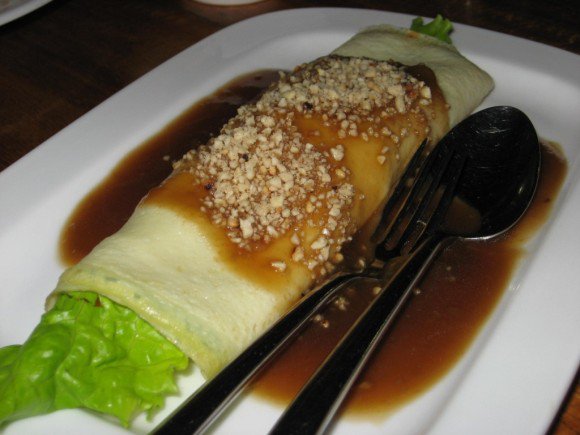
Lumpiang Sariwa (Fresh Vegetable Roll)

Vegetable Dishes


To “ease” the guilt of that cholesterol load, you may order any of these vegetable dishes :


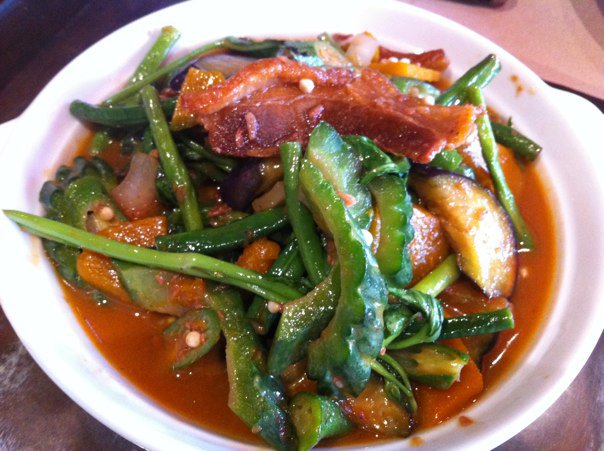
Pinakbet


Pinakbet or Pakbet :  this came from Northern Philippines but has somehow become a mainstay vegetable dish in many Filipino homes.   Vegetables include ampalaya (bitter gourd), squash, stringbeans, eggplant, and okra.   Some cook it a tad dry, others soupy, flavored with the very Filipino bagoong or shrimp paste. If you are a vegetarian, be sure to tell the waiter to have it cooked WITHOUT pork or any meat slices.


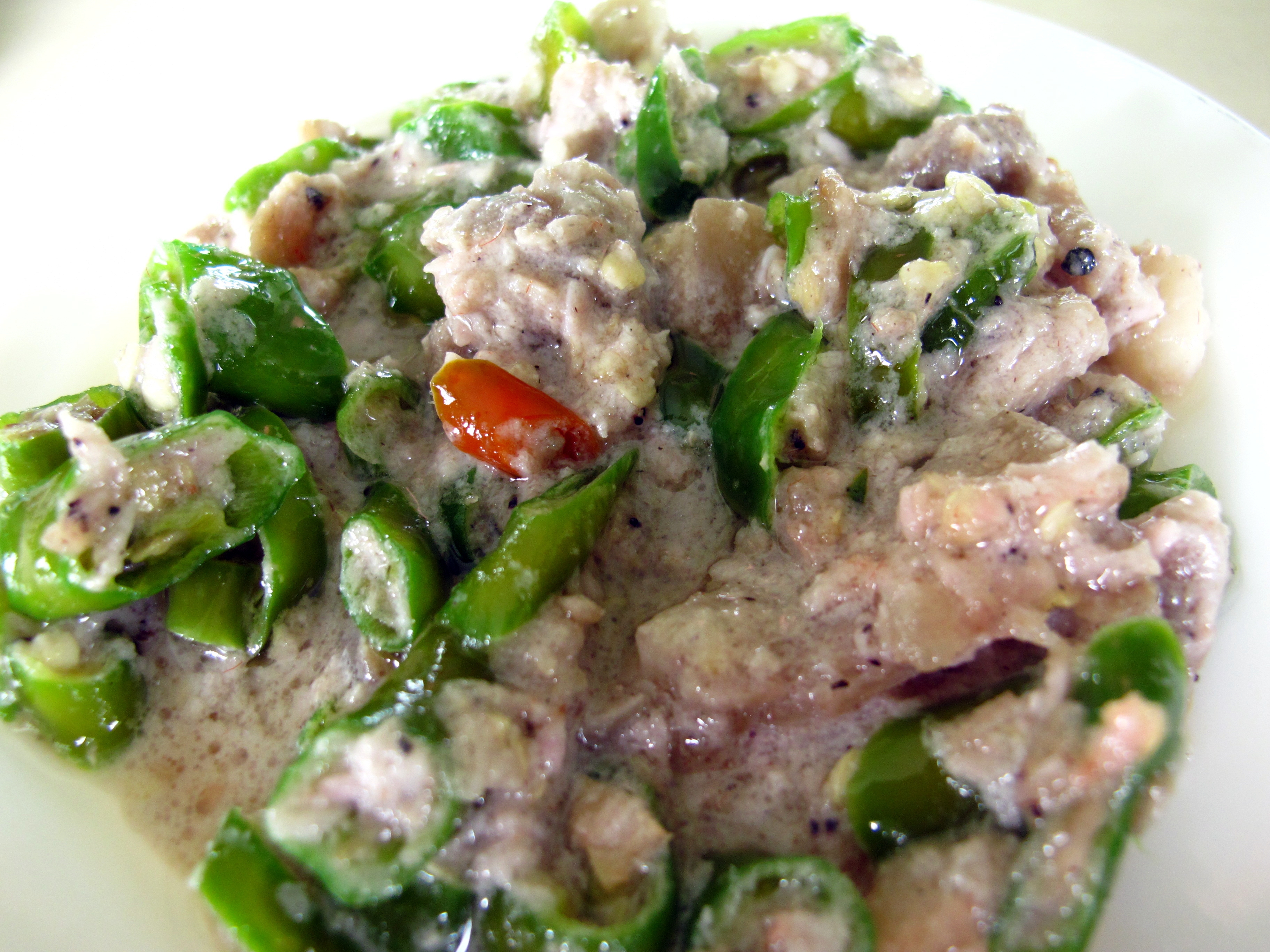
Bicol Express


Laing and Bicol Express :  From Bicol Region some 8 hours drive south of Manila,  this spicy dish is cooked in coconut milk.   Taro leaves are used for the laing and again, some cook it a bit dry or saucy.  Either way,  it is spiced up enough to make it a dish hailing from Bicol, which is famous for its peppery dishes.


Buko Chopsuey


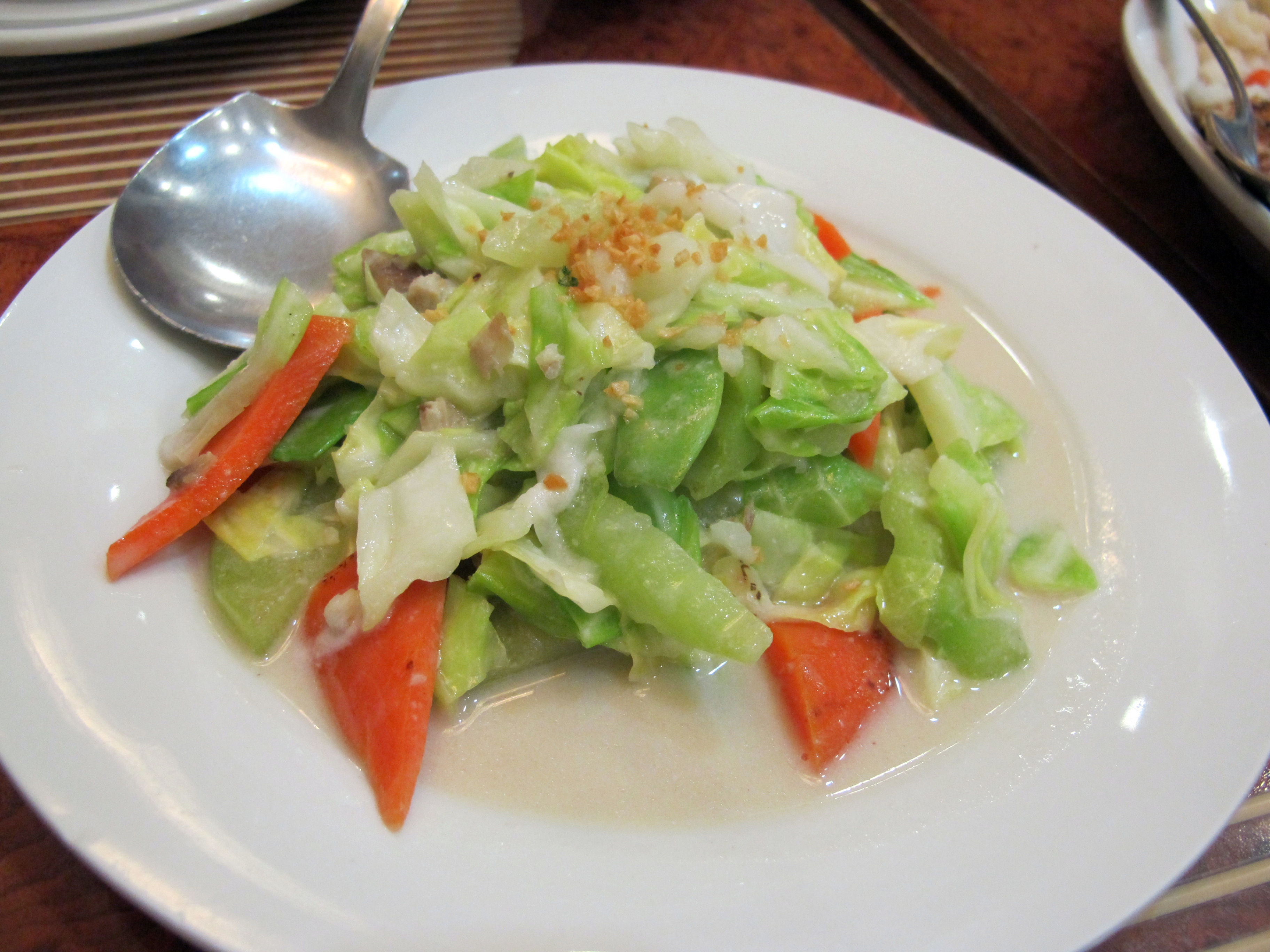
Chopsuey :  If you are familiar with Chinese cuisine,  this is the same chopsuey which has become another Filipino favorite. In Bicol, there is a variation of the dish:  Buko Chopsuey.

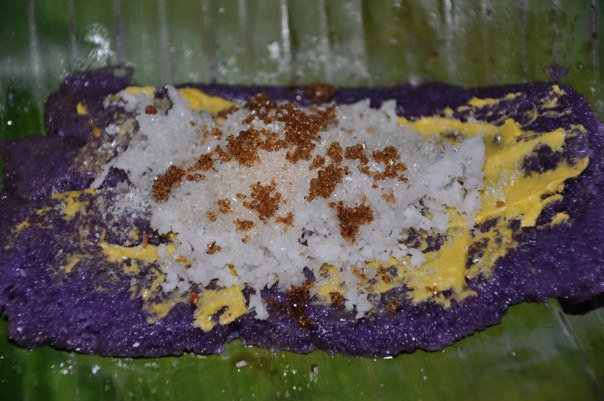
Kakanin:  Bibingka, Puto Bumbong at Iba Pa

Bibingka


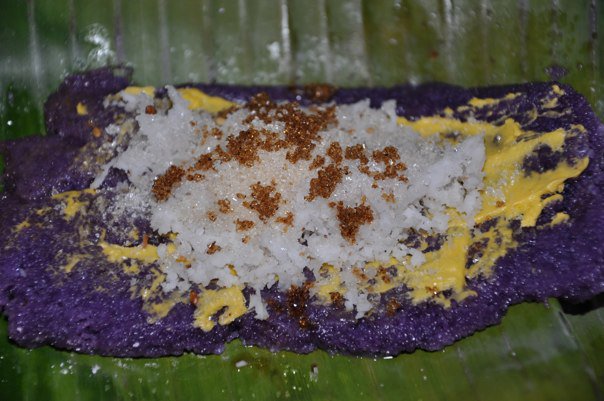
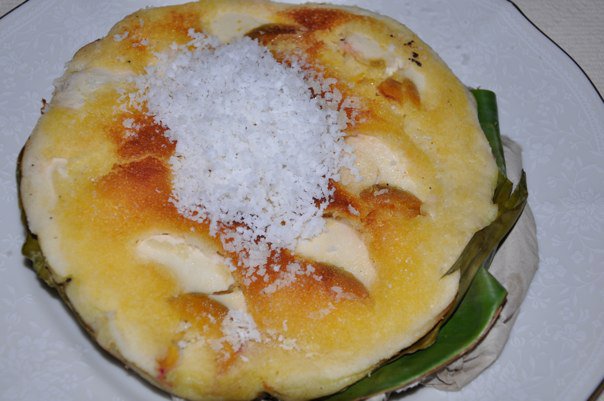
I live near the area of Greenbelt Makati where many trendy and gourmet restaurants can be found.   Italian, Greek,  Spanish,  American,   Chinese, Thai, Indian……….take your pick.   Among the Filipino restaurants ,  you can try the very established, not that expensive “Via Mare” .  Here, one finds the very Filipino rice cake called bibingka served either with our local buffalo cheese or salted egg,  fried noodles served with eggs, shrimps, squid, pork rinds called pancit luglug and again, the guinomis or halo halo.  Our local bread called pandesal is also available here, served with kesong puti which is the equivalent of the Italian mozzarrela, but way cheaper!   There are other rice cakes and desserts like puto bumbong (colored purple!) and palitaw which are all priced so reasonably I have to insist you try them all!  Most rice cakes are served with shredded coconut meat.


Puto Bumbong

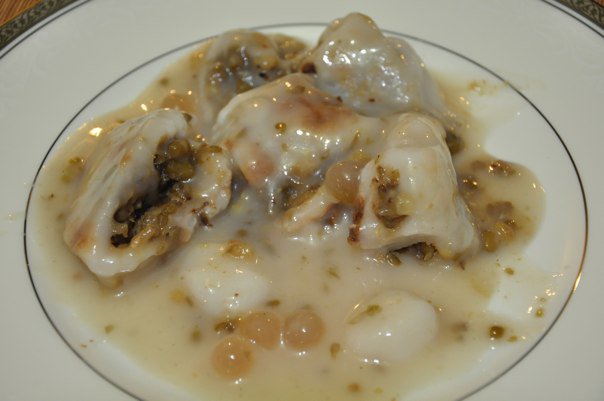
Bibingkoy


Happy eating, everyone!


Have more cravings? More photos can be found in my TravelBlog site. 


Bicol Express. Sounds like a train to you?  That is exactly what it was.  The non-stop train from Manila going south to the Bicol Region is called Bicol Express. The train’s long gone,and many take the overnight buses now.  [As of end of June 2011, the PNR train from Manila to Naga resumed operations.] But the Bicol dish to which it gave its name, remains a favorite popular Bicolano dish.  In Albay, we tried this dish in 1st Colonial Grill in Legazpi City and in “Let’s Pinangat” , a roadside eatery in Camalig, Albay.

Traditional Bicol Cuisine


Quite distinct from the local cuisine found in other parts of the country, Bicol is famous for its spicy, coconut cream-based dishes.  Local folks here even eat raw “sili” (peppers) dipped in salt to go with their rice.  By itself, it is a meal.  Just watch them pop the “sili” into their mouths without touching their lips and following it up with rice scooped with their hands.


I’d say the Bicolano cuisine is truly local, “untouched” by Spanish and Chinese influences.  Coconuts abound in the area. So with the local peppers.  It is a natural consequence that their cuisine will use much of these local ingredients.  Bicol Express may have a very American sounding name, but I will venture to guess that it had a local name before the famous train plied the Manila-Bicol route.  “Laing” and “Pinangat” can only be Bicol as Bicol could be.  Both use homegrown ingredients like taro leaves, and of course the “sili” and coconut cream.  Back in Manila,  the laing — taro leaves stewed in coconut cream — is a regular vegetable dish in many Filipino restaurants.   But nothing beats eating it right here, cooked the traditional way.

Fusion Cuisine

Sili Shake, anyone? And there's Pili Shake too! (Try it at Bicol Blends Cafe)

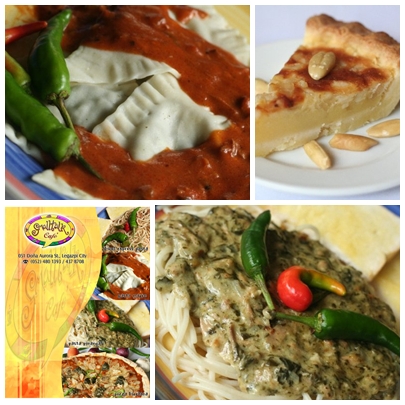
Small Talk Cafe


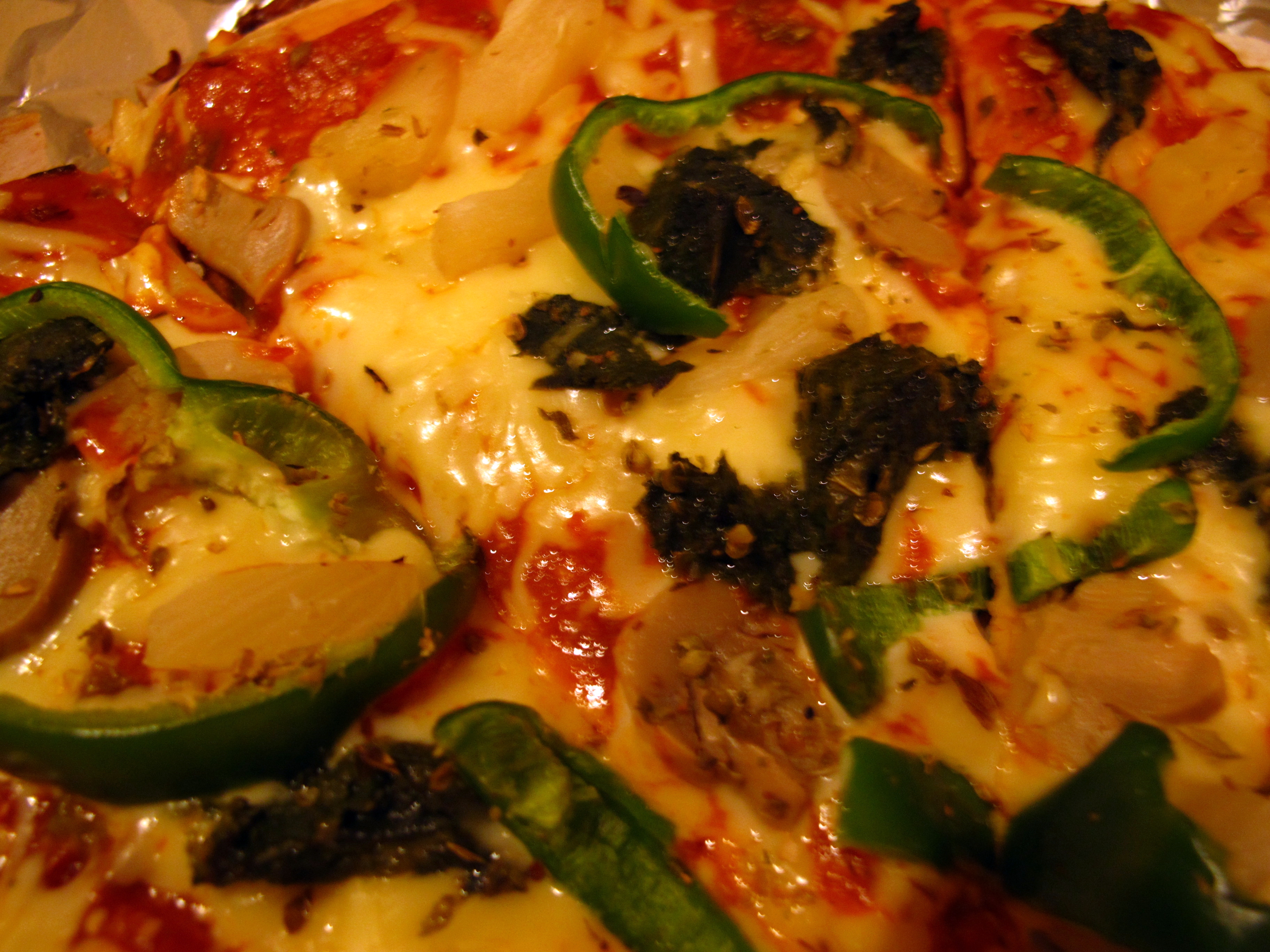
Of late, many modern restaurants now fuse Western and Bicolano dishes.  Starting off with the milk shakes,  there is a joint called Bicol Blends right beside Hotel Amada and 1st Colonial Grill which serves modern-day fusion drinks for the adventurous.  Sili Shake and Pili Shake , to name a few.   And there’s Small Talk Cafe which serves up pizza and pasta fused with local dishes like pinangat and laing.  We tried the Laing Pizza where the laing or taro leaves look more like the regular pesto on a pizza.  But the laing pasta certainly has a very local, acquired taste.   I liked it, actually.   I could have also tried their Pili Basil Pasta, but there just isn’t any more room for more. For sure, I will have to also try Pasta Mayon when I head back in May.  Pasta Mayon is laing(again!)-filled ravioli with tuna sauce.  It is served in a way that it looks like a volcano with lava flowing.


Some Local Sweets and Pili Nuts

“Pili” is Bicol’s prized nut.  Slightly more expensive than almonds, but they are so good one shouldn’t leave the place without trying them.  You may find them in tetra paks, in plastic jars, in plastic sachets all over town.  We got ours from Albay Pili Nut Candy along Rizal Street.  It is reputed to be among the oldest pili stores, operating as a home business or cottage industry.

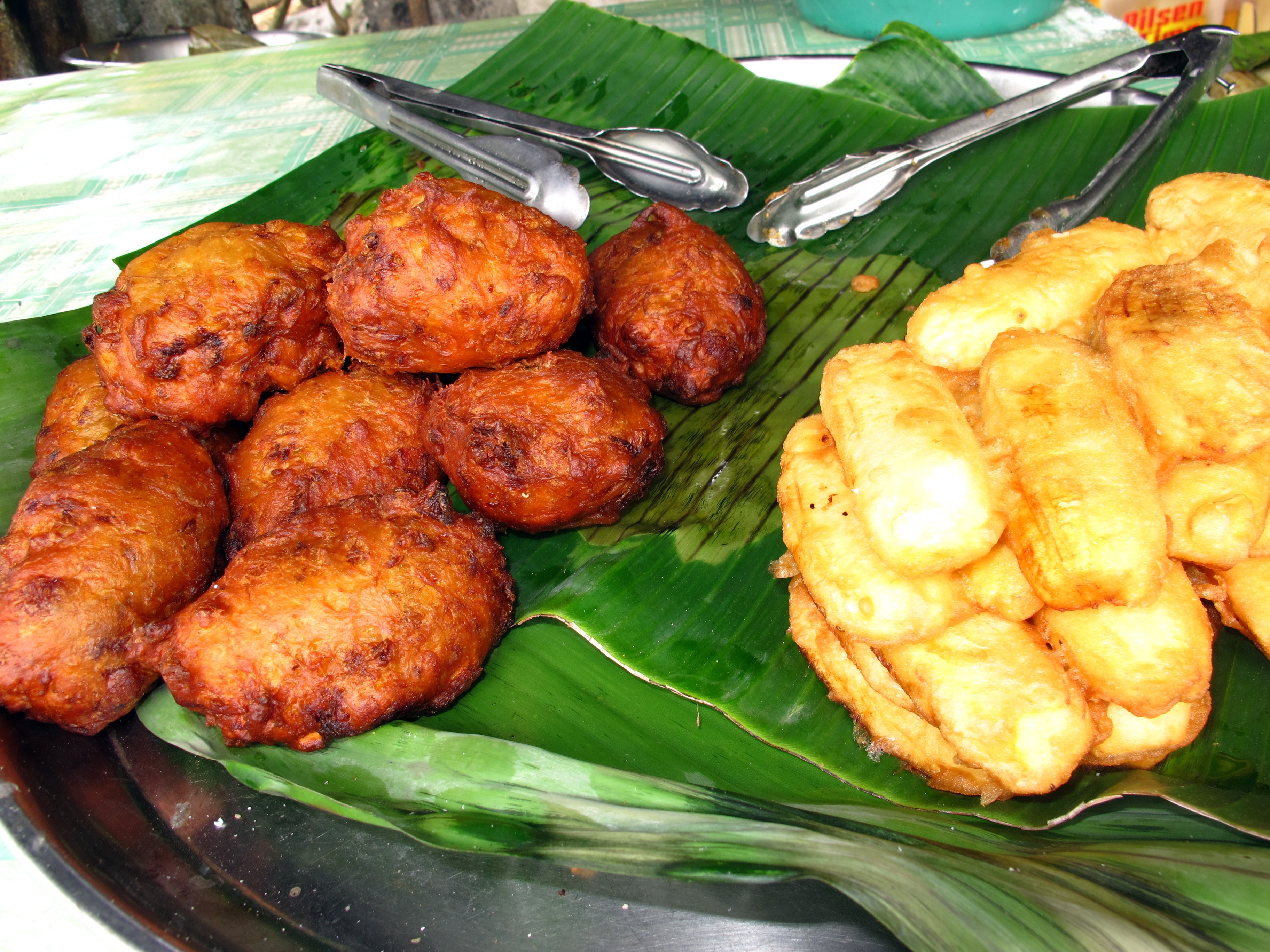
Sweetened or honeyed Pili Candies make for good desserts.  But if you want to try some street food, check out those roadside stalls selling guinamos which is mashed bananas and sinapot which is banana fritters.  You may also be interested how locals “bake” their rice cakes using only tin cans and charcoal.  You find many versions of the rice cakes in this rice-eating nation and Bicol has its own version, for sure.   All these rice cakes also make for good mid-day snacks or breakfast, and collectively go by the name “kakanin”which literally means “eats”.

Bon apetit! [:)]

More photos  can be found in this TravelBlog site.