Category: Europe


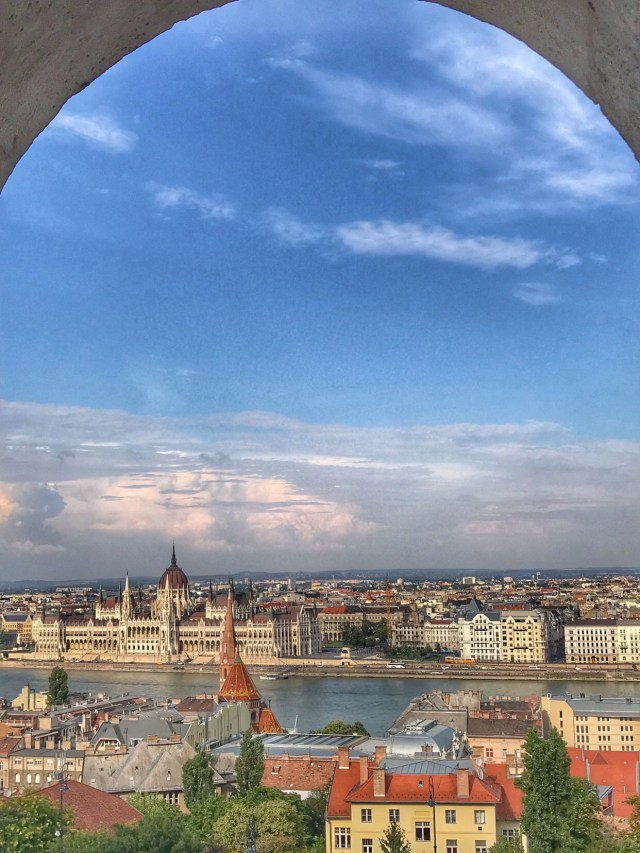
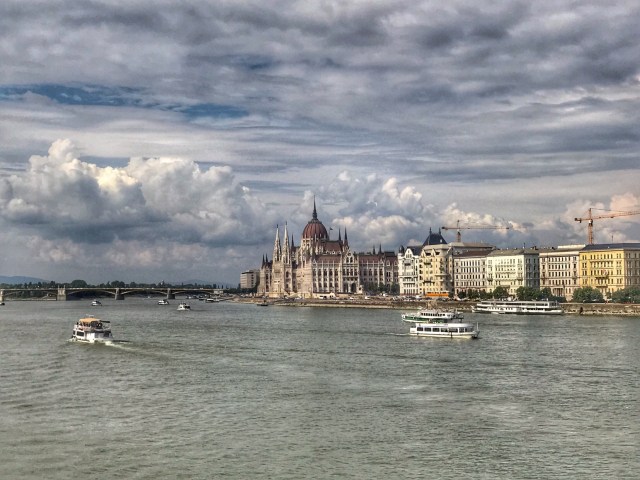
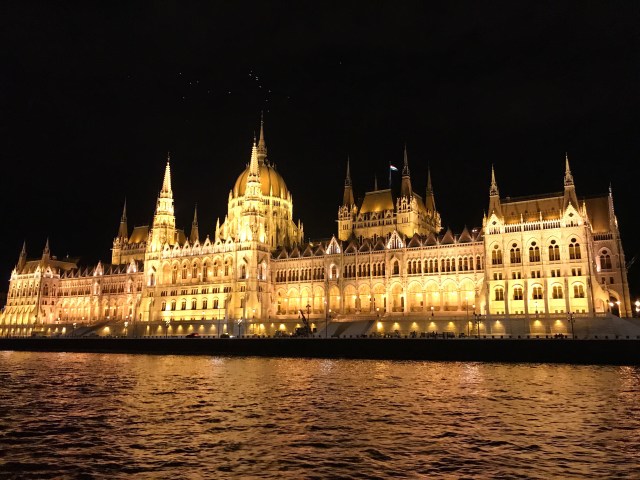
Flanking the Danube River are Buda on the West and Pest on the East Bank. The “tale of 2 cities” merging into one has been subject of many discourses and inevitably comparisons are drawn. Our hotel is on the Pest side. This is where the Parliament is, best viewed from across the Danube in Castle Hill. A very handsome building which is only 3rd largest in the world.

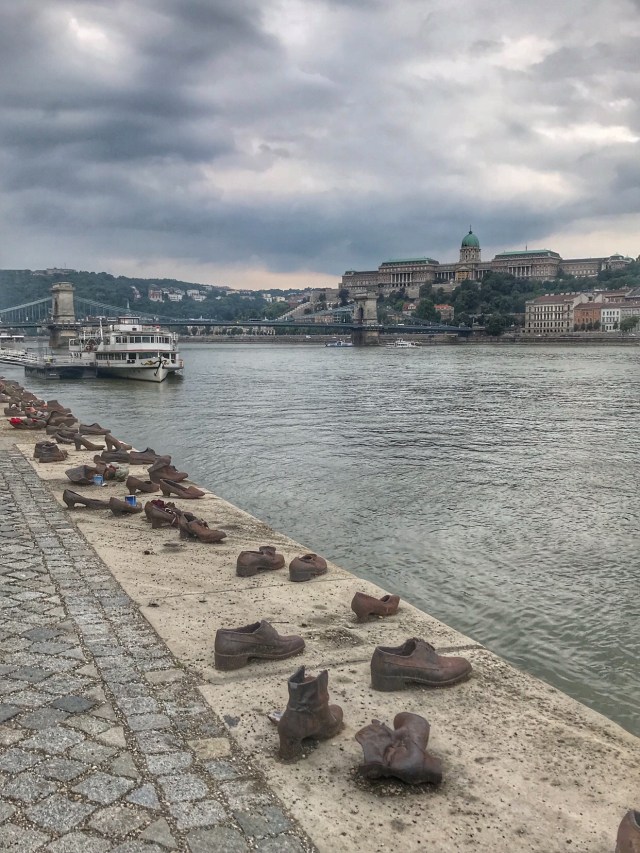
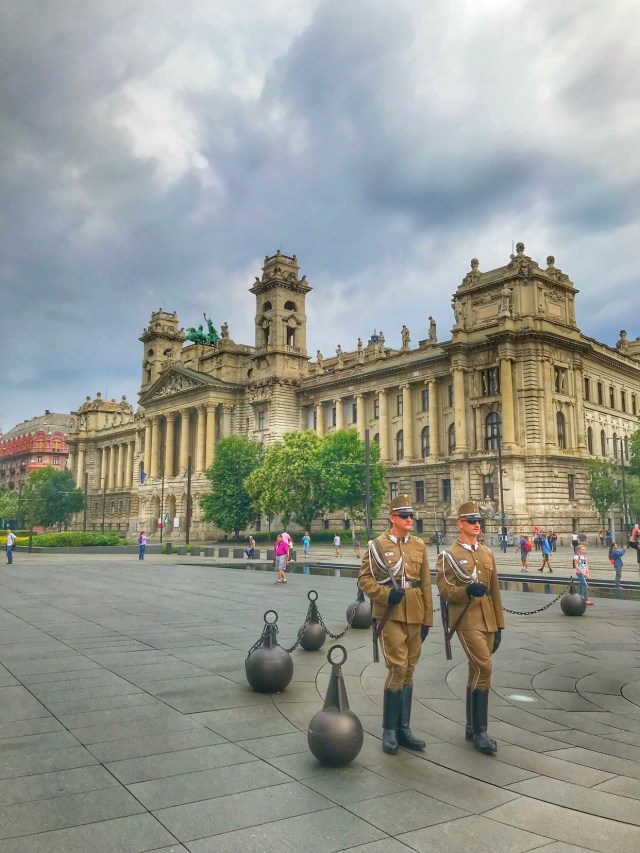
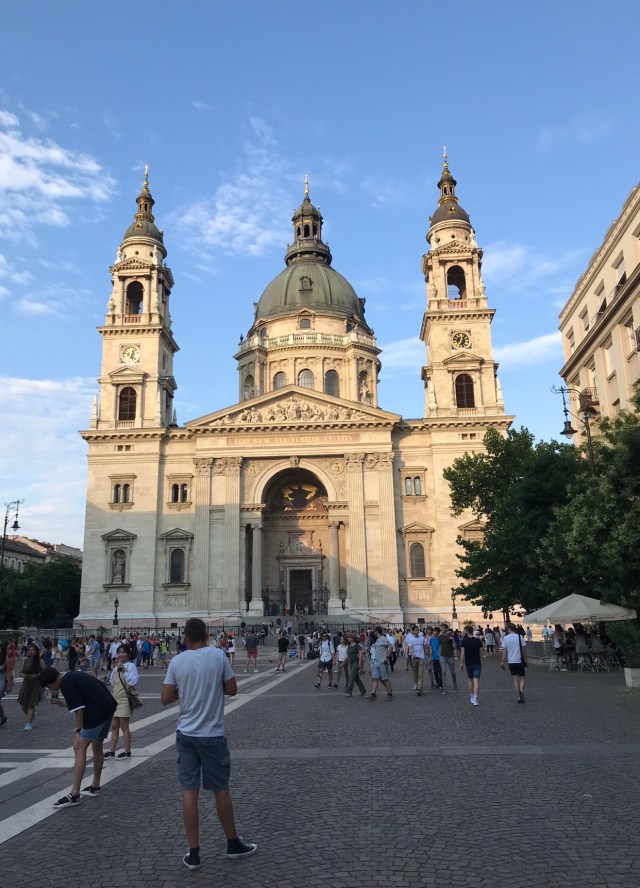
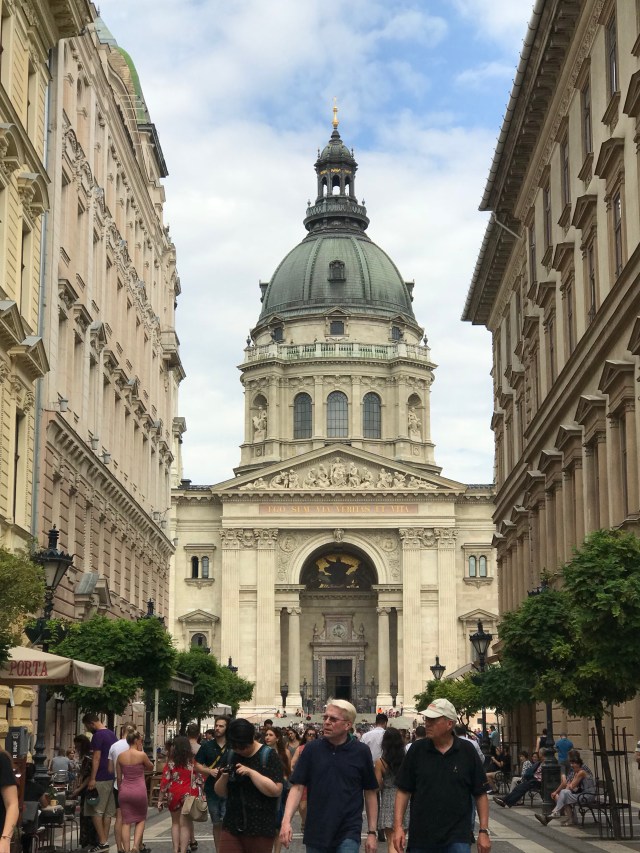
Pest is flat, but bigger. Where Buda is more formal, even reserved, Pest is more vibrant. Nightlife is certainly livelier on the east bank of the Danube. It may not be “quiet and less crowded” as its hilly half, but this is where the action is. The coffee and bar scene here is tops and while relatively “new” and “young”, its bolder character gave way to many prominent edifices like the Parliament, Heroes Square, the “ruin bars”, the iconic St. Stephen’s Cathedral, and the many bronze statues scattered all around. But in my mind, nothing beats the eclectic bronze shoes lined at the edge of the Danube. The story goes that Hungarian Jews were told to take off their shoes, put whatever jewellery they have inside the shoes, and stand by the river edge. Then they were summarily executed and their bodies fell into the river as they took the shots from Budapest’s Arrow Cross Militia who shared the same Nazi ideology during World War II. The bronze shoes are poignant reminders of this dark period in Hungarian history.

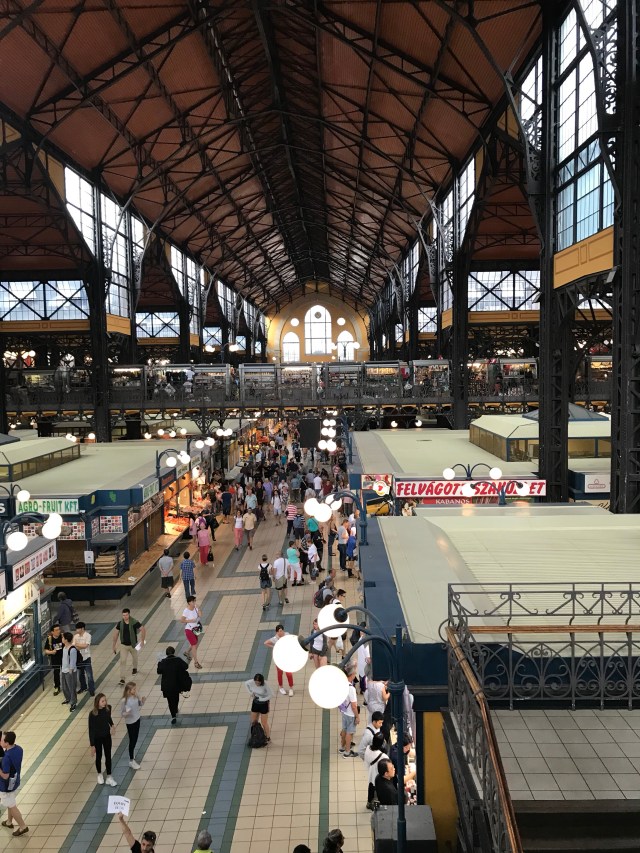
The Central Market Hall is another iconic landmark in Pest. The market has a 2nd floor catering to tourists wishing to buy souvenirs and feast on Hungarian cuisine. There are many souvenir and handicraft for sale here, as well as food stalls where one can try Goulash, lecso, Hungarian smoked sausages, stuffed cabbage, meatballs, langos and many more. We’ve tried it here and it was forgettable if it weren’t our worst lunch. Well, it was a food court after all. But Pest is really teeming with nice shopping places, coffee bars and fine-dining restaurants. One only needs to do a little research. Thankfully, one of my friends made sure we ate very well here. 🍽

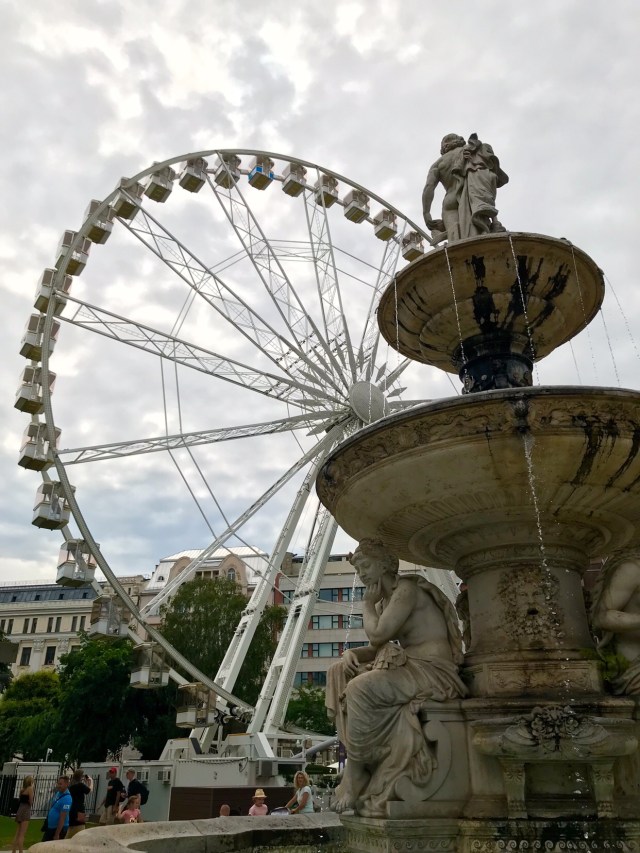
Michael Jackson fans would love it here. There is an MJ Memorial Tree in a tiny square corner just right across Kempinski Hotel where the late pop idol used to stay. The tree has assumed a Shrine of sorts with MJ photos plastered around the trunk. And Hungarian fans still gather here on MJ’s birthday, performing MJ’s popular dance moves. Nearby is the Hungarian Eye, much like the London Eye. It’s colossal but I feel it’s an eyesore amidst the many beautiful and historic buildings in the area.

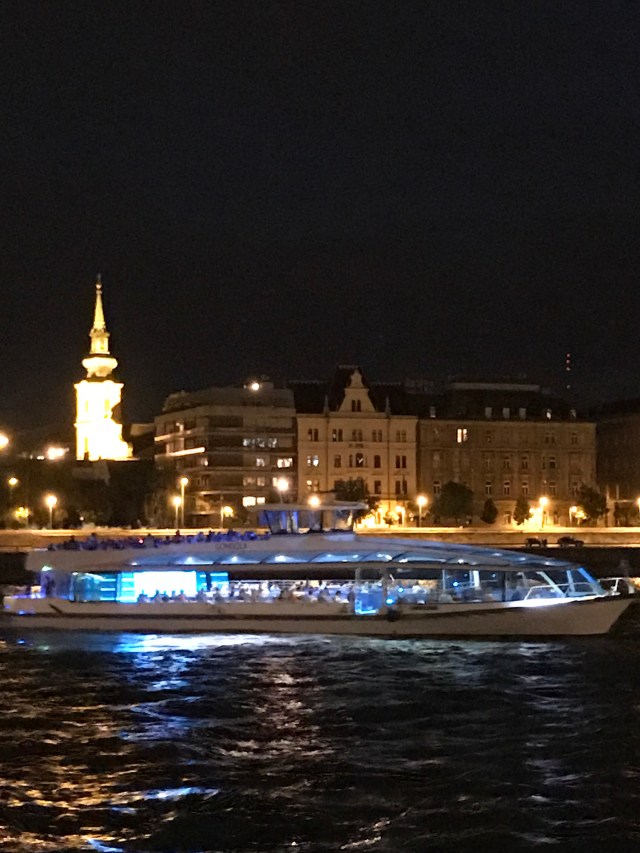
Budapest has a number of popular thermal pools or baths, clearly something they must have picked up from the Romans and Turks. It was tempting to check out Széchenyi or Gellért if only to watch old men play chess while half-submerged in hot thermal waters. We passed on this one and chose to instead hear mass at St. Stephen’s , enjoy a good dinner then take an evening Danube cruise to see the Hungarian landmarks all lit up. We enjoyed both Buda and Pest. But when I do make a next visit, I’d likely try a hotel in Buda if only to feel its more sober night life.

Buda of Budapest


It used to be Buda, Pest and Old Buda. Buda and Pest separated by the River Danube, with the Old Town resting on the left bank which is Buda. Earliest settlers were Celts until the Romans occupied the present-Day Budapest in the first century B.C., annexing it as part of the Roman Empire. Then there was Attila, and the Huns ruled from the 5th century till the Magyar tribes arrived in the 9th century. By all accounts, the settlers and rulers lingered for centuries to affect Budapest’s way of life in many, many ways – art, culture, cuisine, architecture, language.

By the 10th century, the Hungarian Kingdom was established and the first king was St. Stephen who converted Hungary into Christianity. Soon, the French and Germans migrated here and then, the Mongolian invasion happened in the 12th century, thus destroying both cities. Through the centuries until Buda, Pest and Old Buda (Obuda) were joined in 1873, the city saw its transformation from Medieval Hungary to Renaissance Budapest to Turkish Budapest. And then the Hapsburgs came. Pest was soon to become the cultural and economic center of Hungary. But let’s talk about Buda first, and deal with Pest in my next blog. 😊

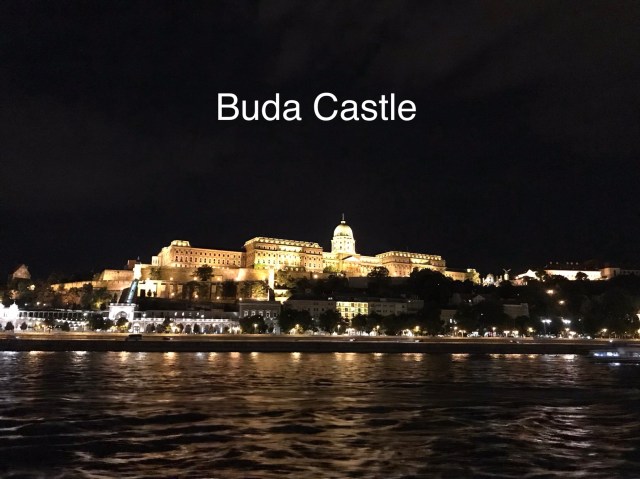
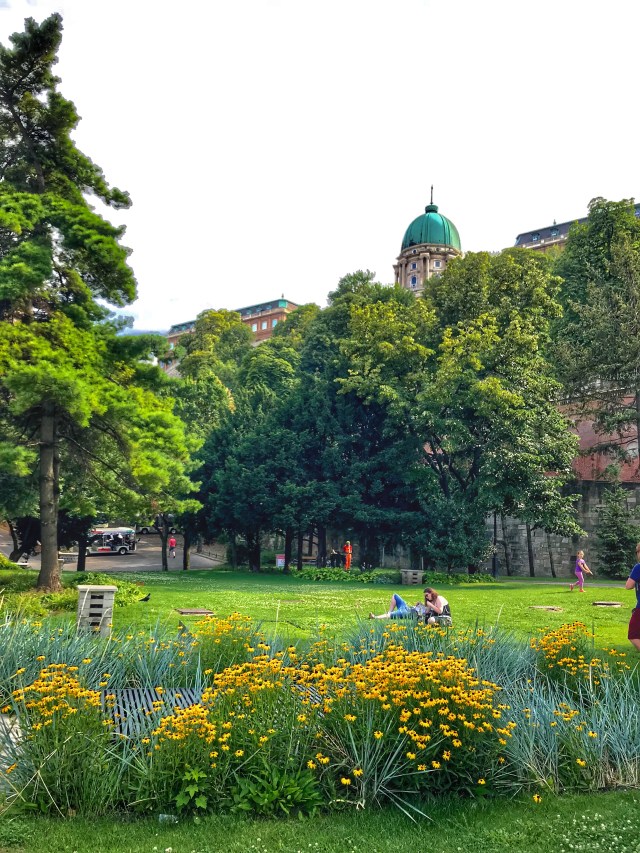
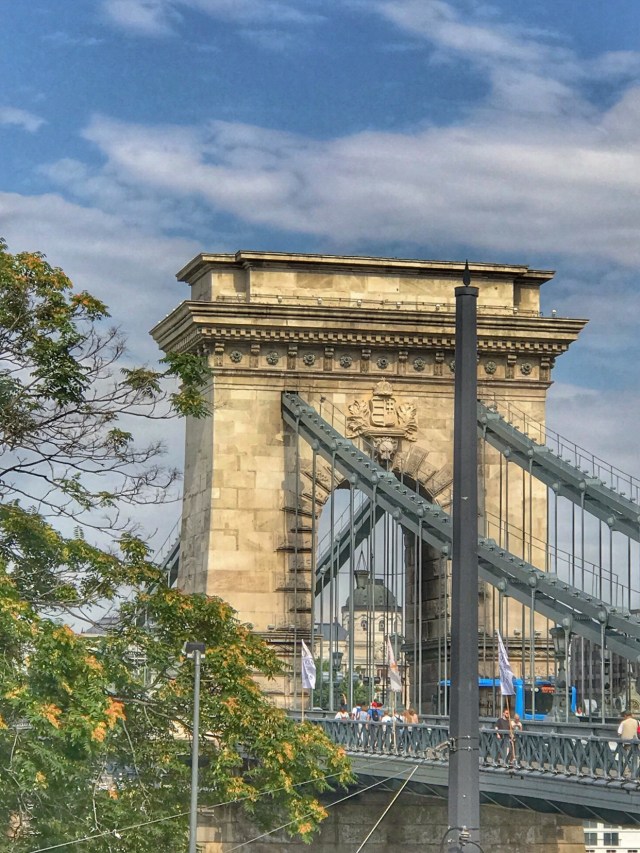
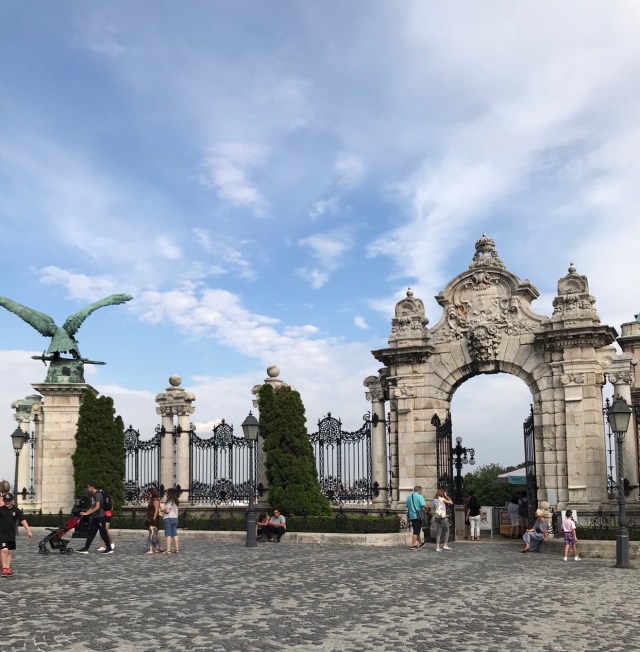
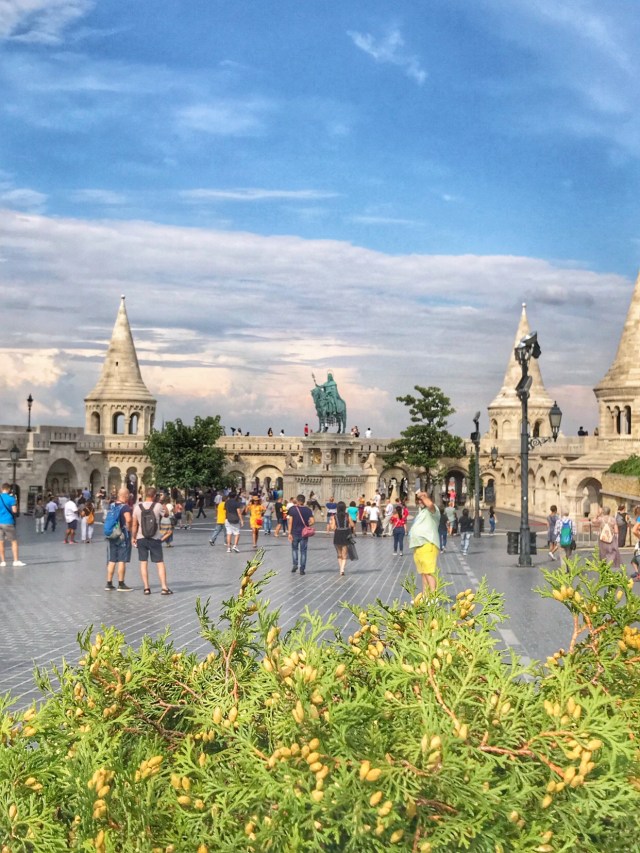
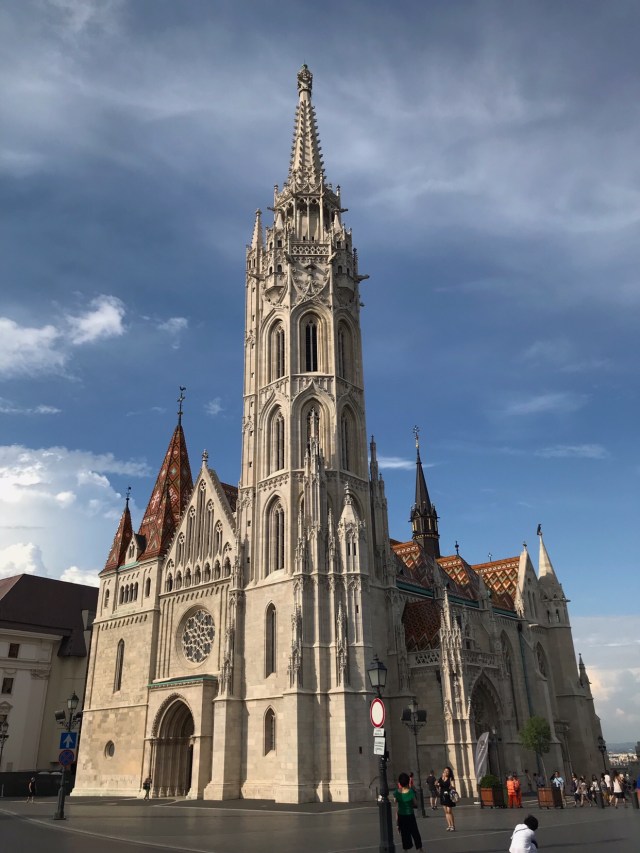
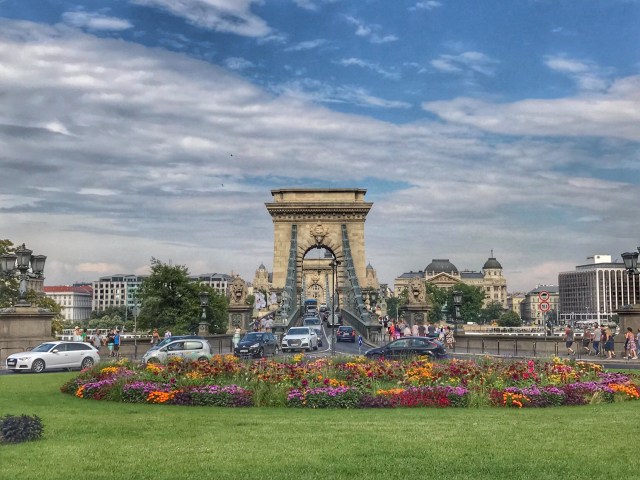
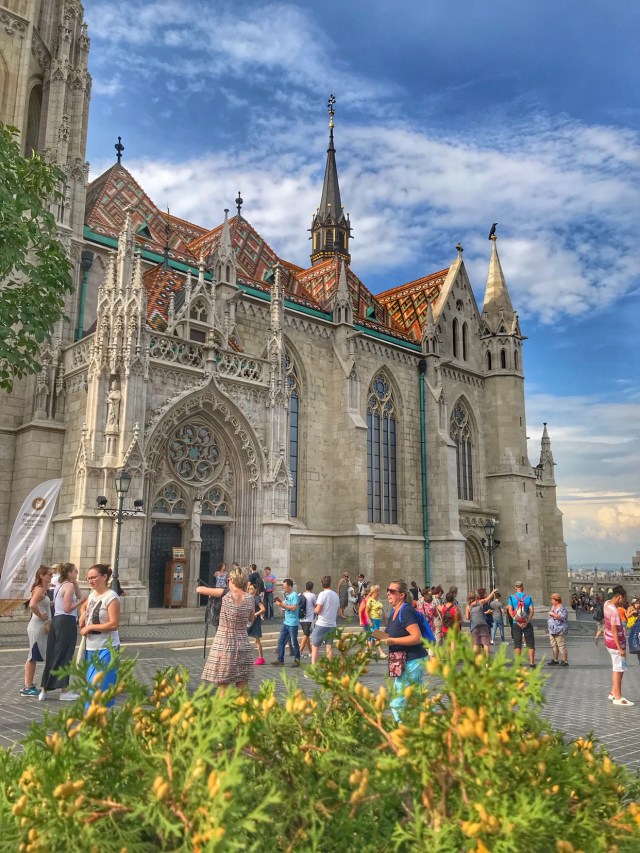
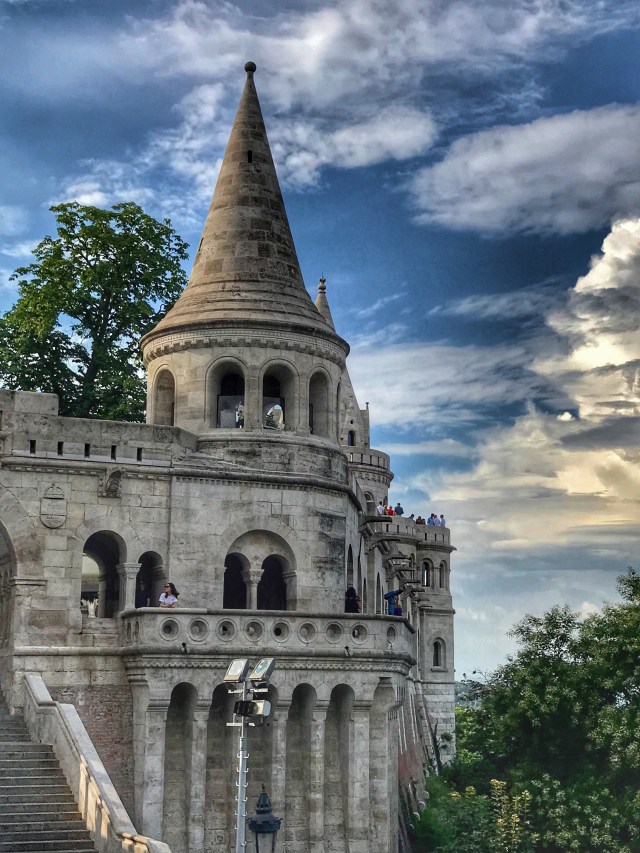
Buda Castle sits on Castle Hill with a perfect view of the Pest side. You can appreciate a night view of Buda riding a boat which glides slowly along the Blue Danube, or you can join a walking tour which requires stamina to last nearly 3 hours. Oh, there’s a funicular to climb up Castle Hill and visit the 3 major attractions on this side of the river. But we WALKED. 🏃‍♂️🏃‍♀️ And we crossed the Chain Bridge ON FOOT. 👣👣And we CLIMBED. 🚶‍♀️🚶‍♀️🚶‍♀️All the way to Buda Castle, 🏰🏰 Fisherman’s Bastion and St. Matthias Church 🕍🕍🕍 These 3 account for the best Buda attractions on the western bank of the Danube . All UNESCO Heritage Sites.

Its rich history doesn’t end here. The Austro-Hungarian Empire can claim much of what present-Day Budapest is. The Empire lasted only till the First World War. Then, during the Second World War, it cast its lot with Nazi Germany. The Germans seized the city and soon a dark period began for the country’s Hungarian Jews. There were political upheavals and once more, the nation in the 19th century transitioned from being a Hungarian Soviet Republic for a brief period, to being a Kingdom without a king.

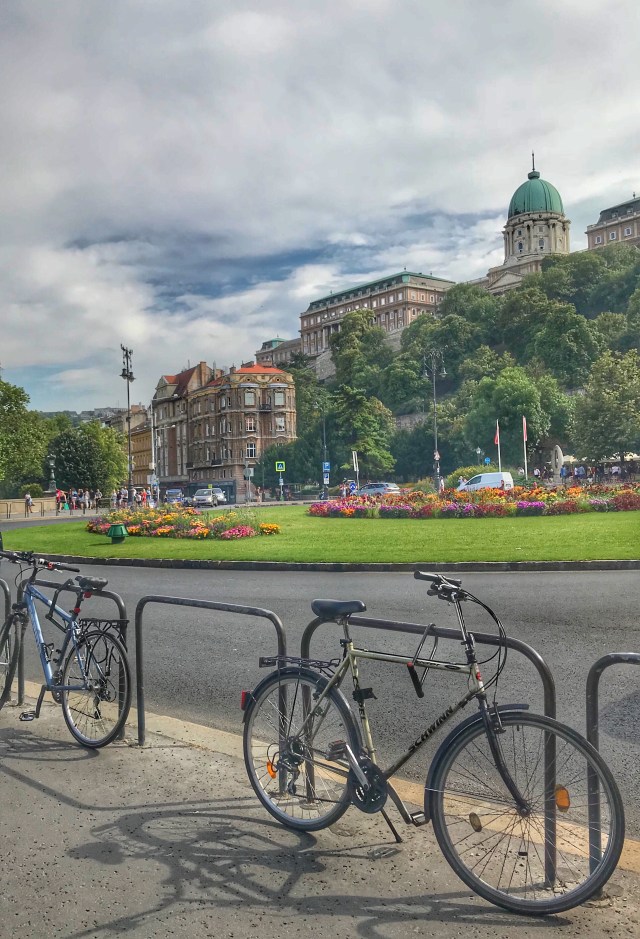
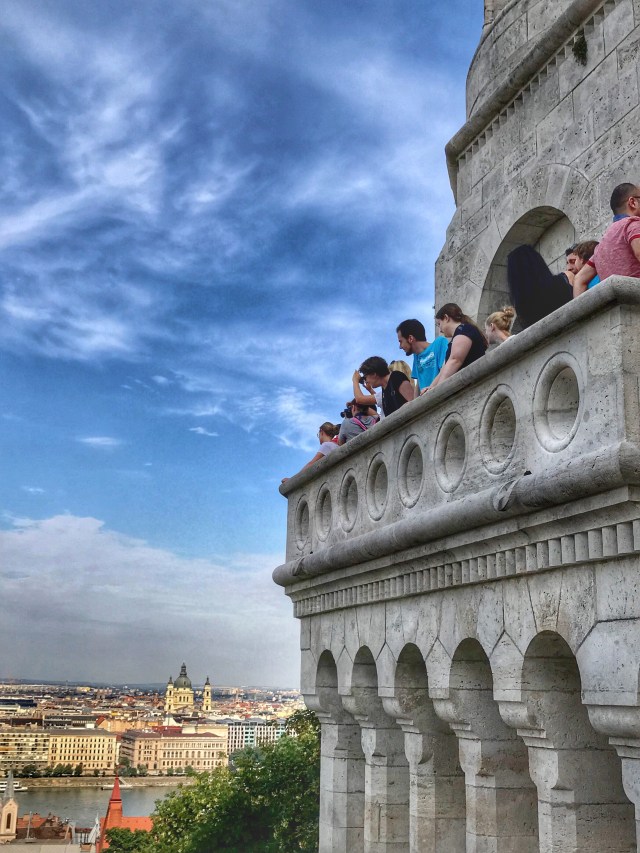
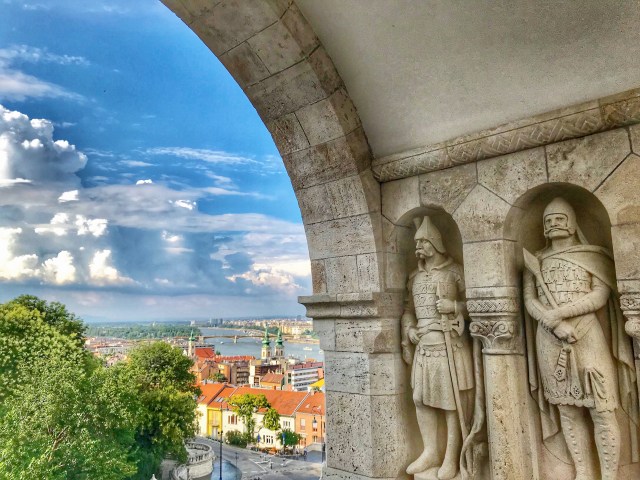
Castle Hill looks more “imperial” than its better-half on the right bank. Where Pest is flat, Buda is hilly. The first bridge connecting the 2 was built only in 1848. The other bridges look nothing less and maybe more interesting for those eager for a view of the thermal pools. Among its attractions, I like Fisherman’s Bastion with its fairy tale windows offering the best views of Pest. I am also intrigued by St. Matthias Church which was the venue for the coronation of the last 2 Hungarian Hapsburg monarchs : Frank Joseph in 1867 and King Charles IV in 1916. Earlier destroyed by the Mongols, it was reconstructed, restored and survived wars to what it is today. Side by side, the Saint Matthias Church and Fisherman’s Bastion are 2 sites not to be missed. Or for that matter, a visit to Budapest is a must-see destination. One falls in love with this city. Buda or Pest side, both are lovely. On foot or gliding on a riverboat, both sites are magical.


My Schengen visa is good till December 12 of this year. I do want to use it again and in fact drew up several options — like back to Spain for a week’s camino with my apo but he refused, thinking it’s too much hard work (hiking), or going to Croatia, or Iceland, or Poland — places I haven’t been to — or visit a friend in Switzerland. All plans fizzled out. Then some of my friends invited me to join their small group on an “impulsive, whimsical” trip to Vienna, Budapest and Bratislava. Problem is they are leaving Manila while I’m still in Vietnam. So I did the next best thing. I booked a ticket flying to Vienna on the same day I’m arriving from Vietnam to catch up with them. Why not? Or as they say here, “wine not”?

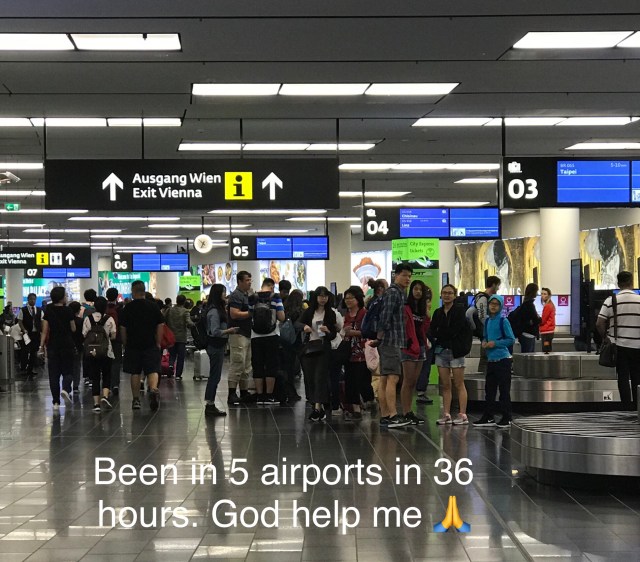
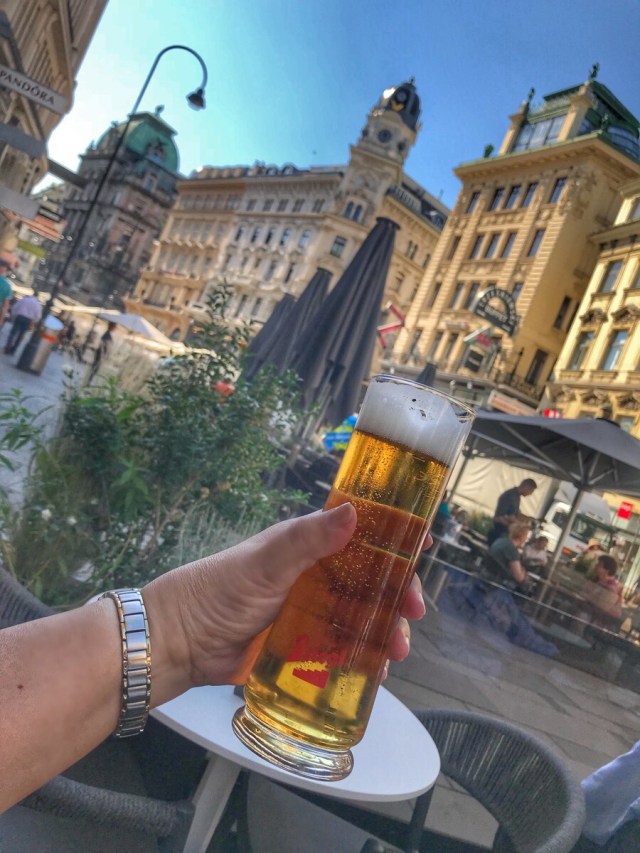
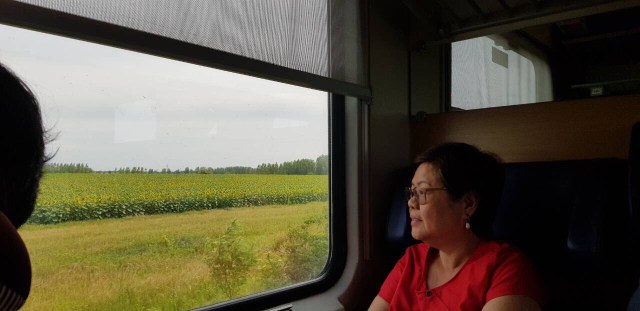
I was very tired when I landed early morning in Vienna. I should have slept throughout the 12-hour flight from Taipei to Viena but flying solo makes me all too cautious and alert that I must have slept only 3 hours max. I found my friends ready to hit the city when I reached our hotel soon after they were done with breakfast. And so we set off. By 9am, they were eager for their Viennese coffee after only an hour of city walk. (I was keen on having a beer though — yes, at 9am!) – and so we sat down and ordered our preferences. 🍺☕️

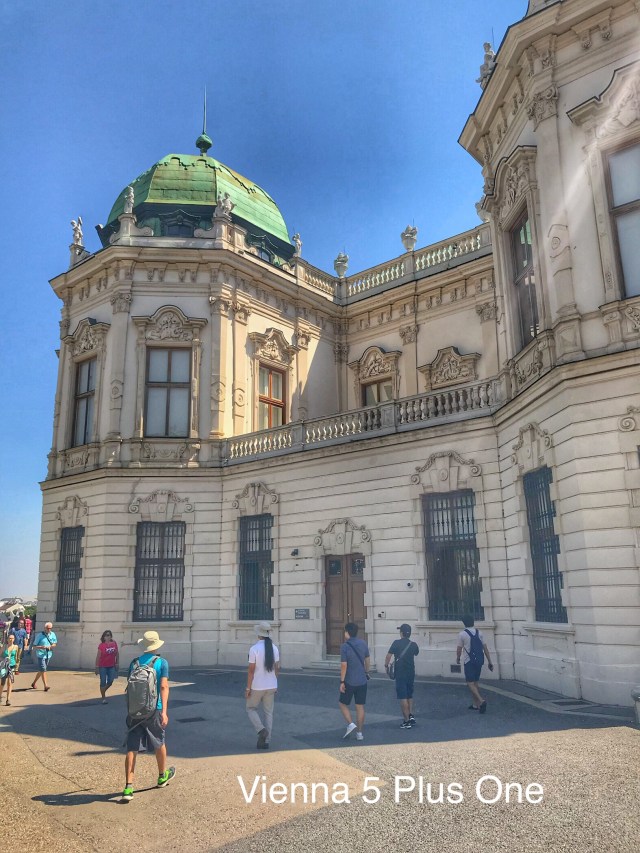
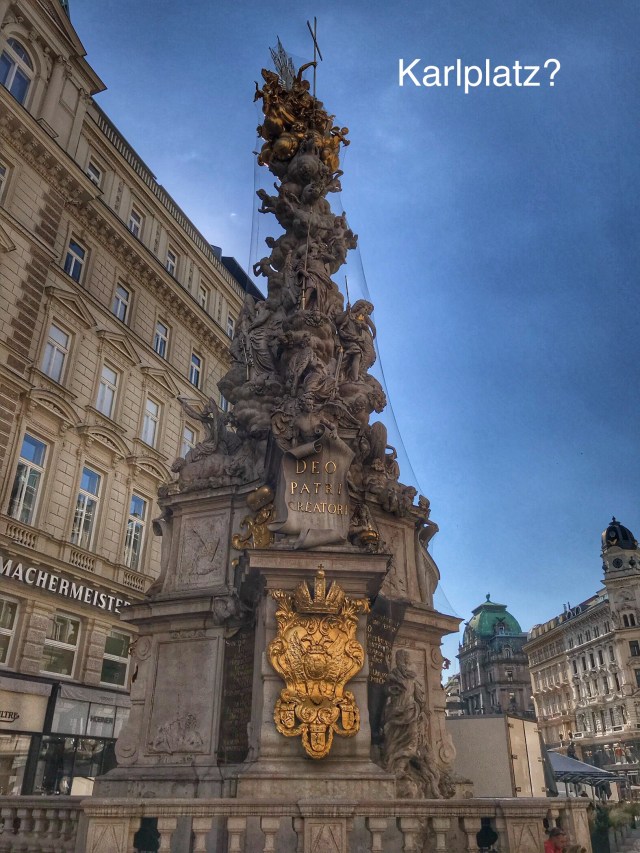
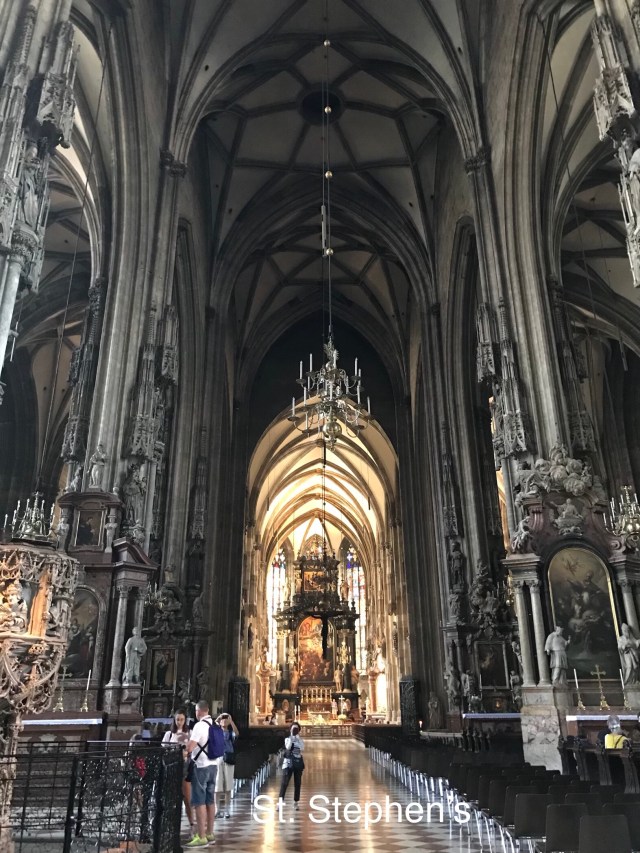
Since they got here earlier and covered the major Vienna attractions already, we planned on just a few more. It’s my 4th visit here so I don’t mind missing some of the sights. But I haven’t been to Belvedere Palace, so we did that. Plus a visit to the St. Stephen’s Cathedral. 🙏🏻

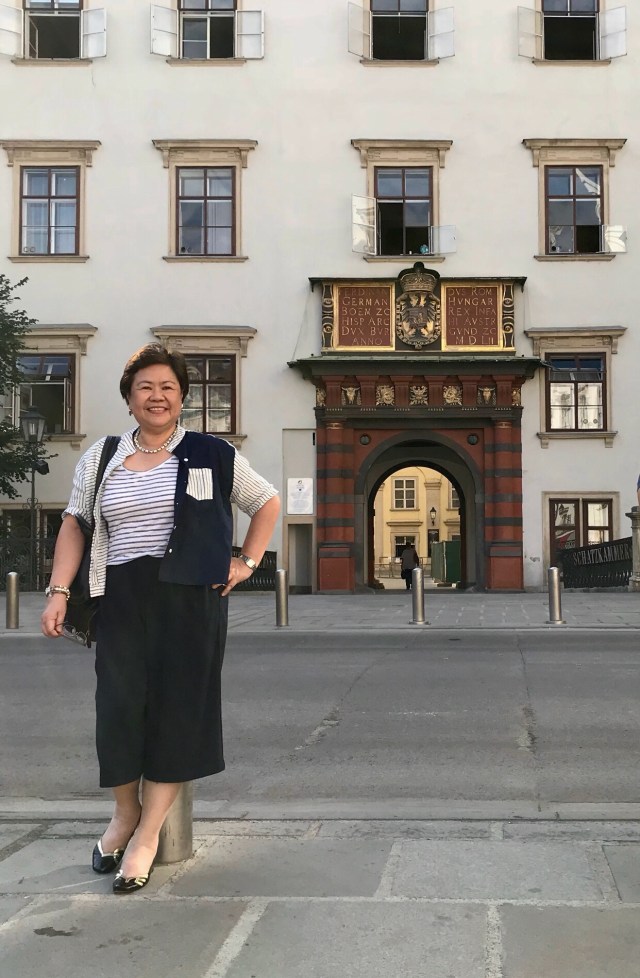
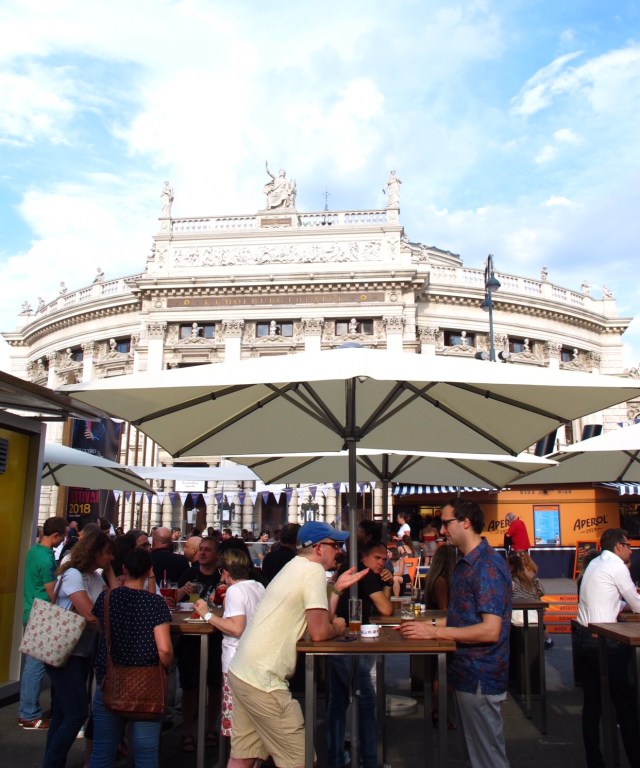
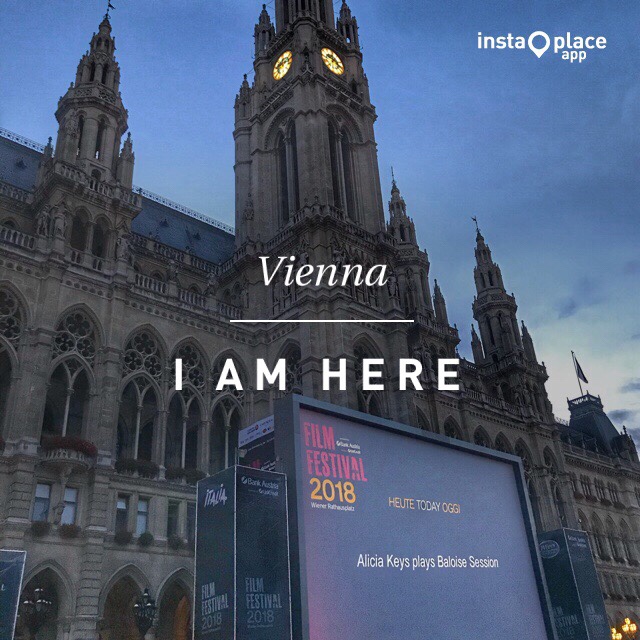
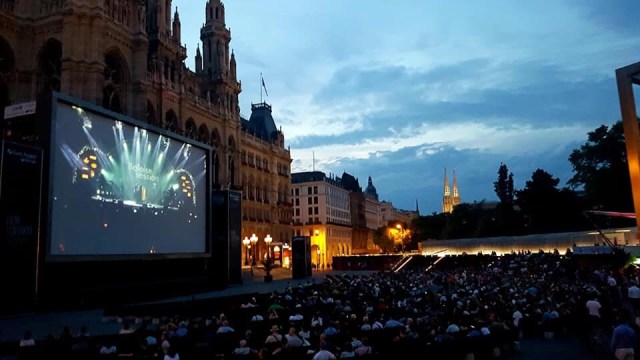
After Belvedere, St. Stephen’s and another pass of the Hapsburg Palace, we went in search for a good lunch in the Naschmart. Then we headed back towards the hotel for some rest. By evening, we set off for the Rathaus where a musical concert is taking place and where a lively, festive mercato-type food court is set up. I love these summer concerts and food camps. Dinner was an assortment of Viennese, German, Hungarian and Slovak delicacies although we likewise spotted some Asian food stalls. Here, we had our wine, spritzer and beer. Plus assorted sausages, meatloaf, and whatever else we spotted in the next table! It was crowded and we were lucky to get a table. No chairs. But we’re just too happy with our drinks, pica pica and music that we can’t complain.

Since the musical concert wouldn’t start yet and we’re done with dinner, we decided to make good use of our time. The coffee and pastry shop at the corner beckoned. It was time for iced coffee, lattes, sacher torte and apple strudel. We picked a good spot to people-watch that we had to struggle getting up and out to claim our seats in front of the Rathaus for the musical concert.

While my friends stayed 3 nights in Vienna, I only managed a night. No worries. I’m really more keen on the trip’s 2nd leg: Budapest in Hungary. So, the next day we geared up for the train ride to Budapest. Watch this page!

Abuela Con Nieta


Traveled with my nieta over the holidays — her first time in Europe. We based ourselves in Madrid but made 3 night trips to Paris, Barcelona and San Sebastian. Paris was at the top of her list but she ended up loving San Sebastian best and Barcelona second best. I wasn’t surprised.

She loves visits to the art galleries and spent lotsa time there. And I mean lotsa time! San Sebastian has no museos in the league of Louvre nor Prado, but she digs the vibe in this Basque city so much that I’m convinced she can live there.

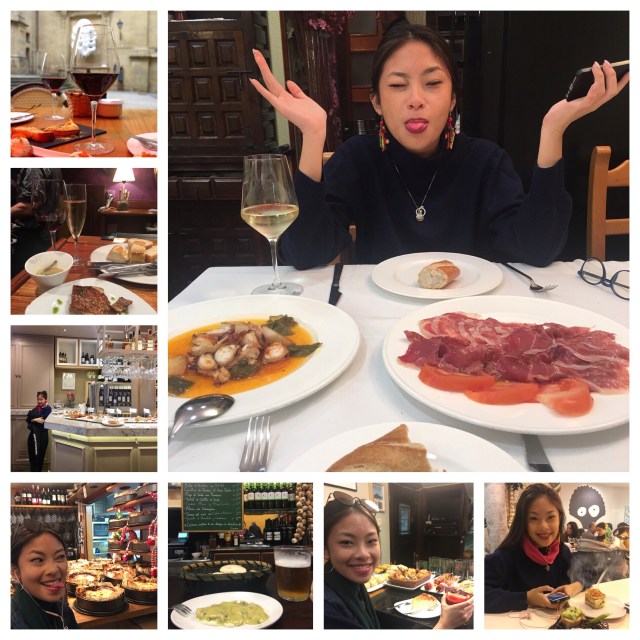
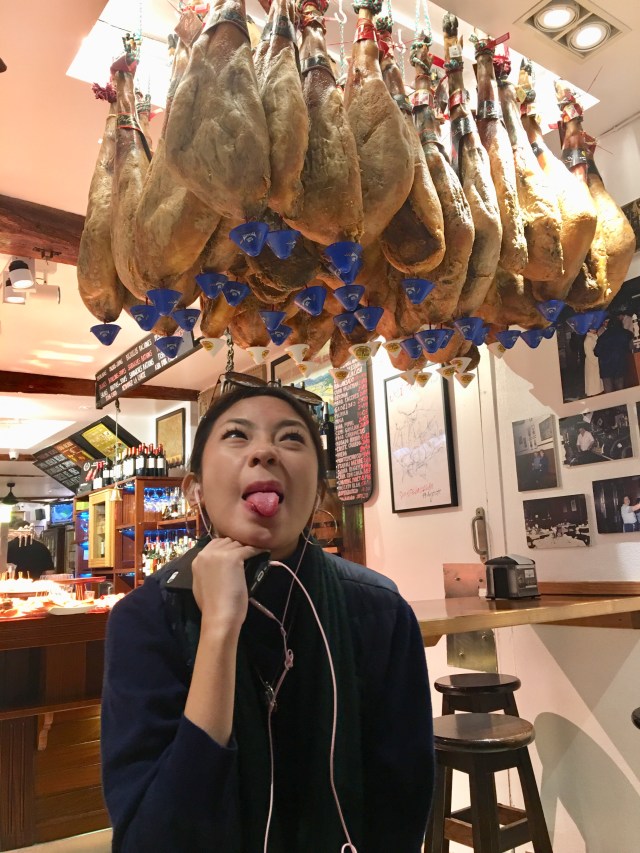
Traveling as abuela y nieta, our pair must have invited some attention. Or at least we were marked. Or perhaps SHE was marked. More than once, I was asked “Donde esta la chica?” She’d always find a vacant seat on the train where she can more comfortably sit, or stray away from me while we’re in line. She’d get free admission to some museos when the man at the window would ask if she’s a student. No student ID nor passport copy, but she gets in free or at a discount while her abuela pays the regular rate. She’s out of her teens now but still acts like a child like when I couldn’t get a decent shot of her without her tongue sticking out or her crinkling her nose.

Our vacation lasted a full month. She’d tease we didn’t quarrel as much as expected and laugh. I was happy to show her around, much that museos and art galleries were coming out of my ears. She discovered she’s a good dishwasher and that she easily forgets things. I discovered I can appreciate street and urban art too. We share food preferences and love bubblies. She likewise shops like me — quick, decisive and wise. Ahem.

I am certain “art appreciation” was the highlight of this trip. I have seen how she spent for art materials and art books, more than she spent for those fashion stuff. For sure, she has set her sights on a return trip knowing how she has enjoyed this holiday.

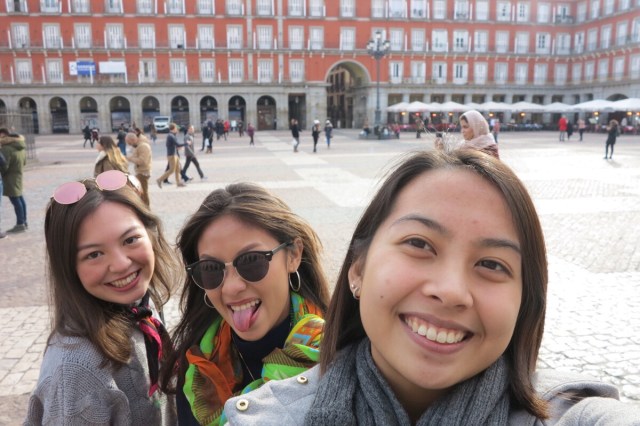
While in Madrid, she found time to meet with her friends now studying there. It was amusing to see her playing tour guide cum photographer. Their photos speak volumes on how much they enjoyed each other’s company, sticking tongues and all 😜 She loves Spain. And judging by how she’s been painting lately, mi nieta is inspired. 💕👩🏻‍🎨🎨

Travels with #aponimamu:(Just click on the link)

Around Paris

Louvre and Centre Pompidou

Bohemian Paris

Touchdown, San Sebastian

Txikiteo in San Sebastian

The Playas of San Sebastian

Traveling Paintbrush of Anna

Museo Guggenheim (Bilbao)

Museu Picasso (Barcelona)

Museo Reina Sofia (Madrid)

Museo Thyssen-Bornemizsa (Madrid)

Gaudi and Ciutat Vella

To Montserrat and Back

A Pleasant Moorish Surprise

Not Segovia, But Alcala de Henares

Street Art In Spain

Some Musings and Ramblings:

Abuela Con Nieta

Happy Thoughts for Anna P

Bohemian Paris


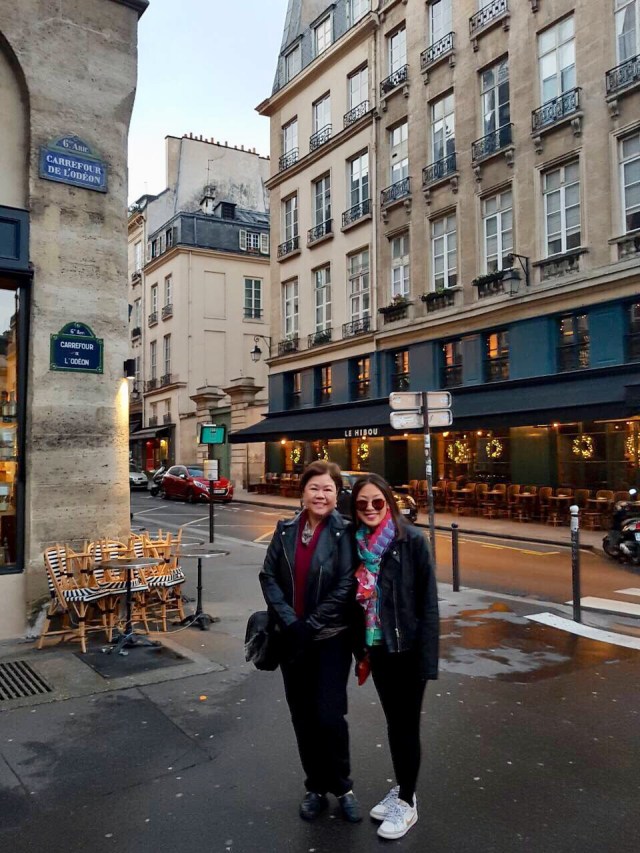
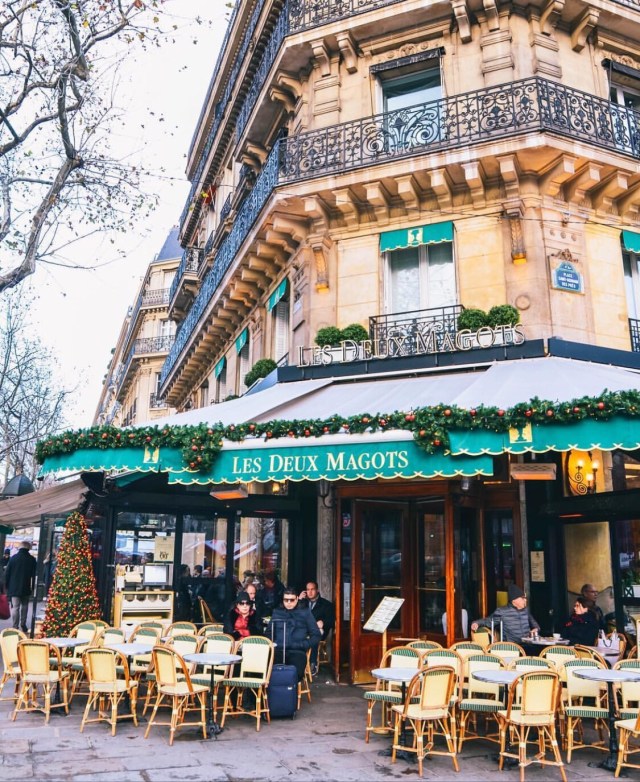
Paris. Left Bank. Saint Germain des Prés. Once the artistic and literary center of Paris. Tempting to think Ernest Hemingway, F. Scott Fitzgerald, Sartre along with Picasso, Monét and Renoir. I have always stayed in a hotel on the right bank in previous visits. This time around, I booked this apartment near the Jardin du Luxembourg just a stone’s throw from the Boulevard Saint Germain des Prés. I can’t wait to show Anna Patricia this very bohemian side of Paris. Maybe do some people-watching while having cafe au lait or chocolate chaud and an almond croissant in Les Deux Magots. If only the sun will come out 🌞 In winter, le soleil is almost absent. Any chance there are sunny spells or even just a hint of those glorious sunshine rays, expect the Parisians to be out in droves!
< strong>

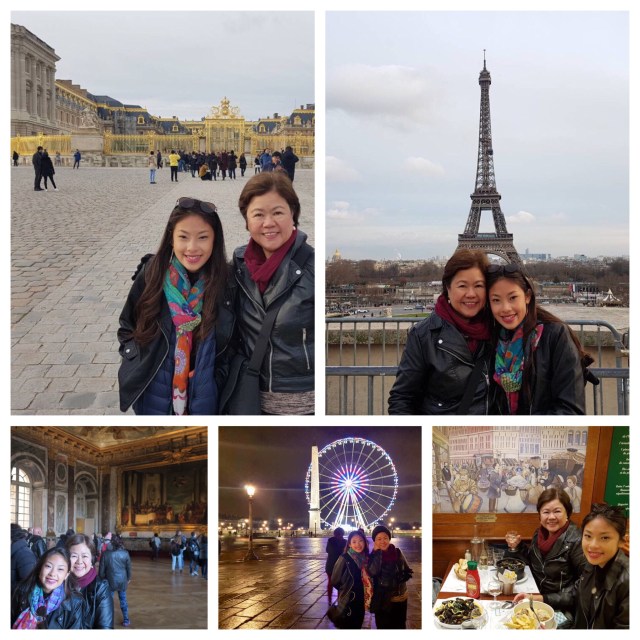
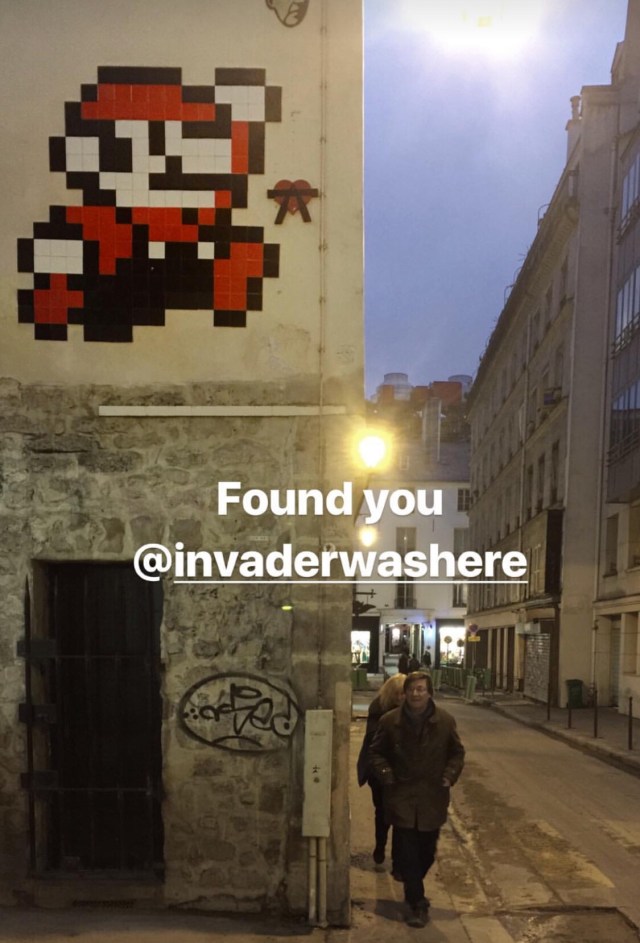
But Paris in 4 days is just all too brief. Make that even 3 days since we arrived after sundown on Day 1. I can only reminisce time spent in that famous cafe that has since acquired a reputation as a tourist destination. We instead had our pastries and cafe au lait elsewhere and spent more time in Montmartre area which is another bohemian paradise. But still……
< img src=”https://lifeisacelebration.blog/wp-content/uploads/2018/01/27338132859_cb2a31cb28_o-1.jpg&#8221; class=”size-full wp-image-13360″ height=”3024″ width=”4032″>

Thinking back, many moons ago, when crepe, quiche and macaron were unfamiliar to my tastebuds, I have realized how much I have truly missed. The inviting aroma wafting from a french bakery only proves Peter Mayle’s

love for almost everything French. Yeah, i know, we’ve lost him only recently. Made me go through my stack of books, eager to re-read A Year In Provence only to remember someone borrowed my Peter Mayle books and never returned them! (Well, you know who you are 🙄)
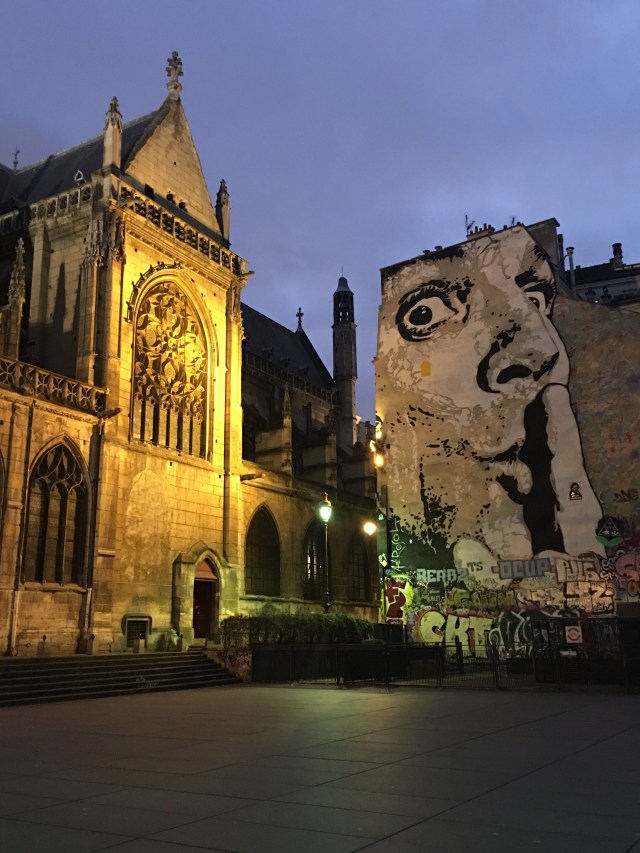
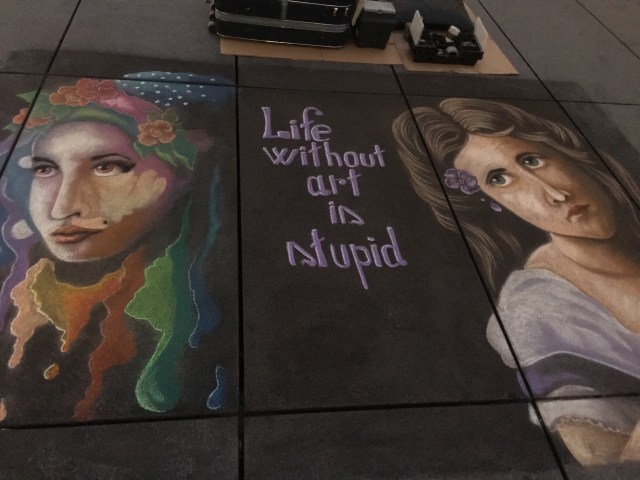
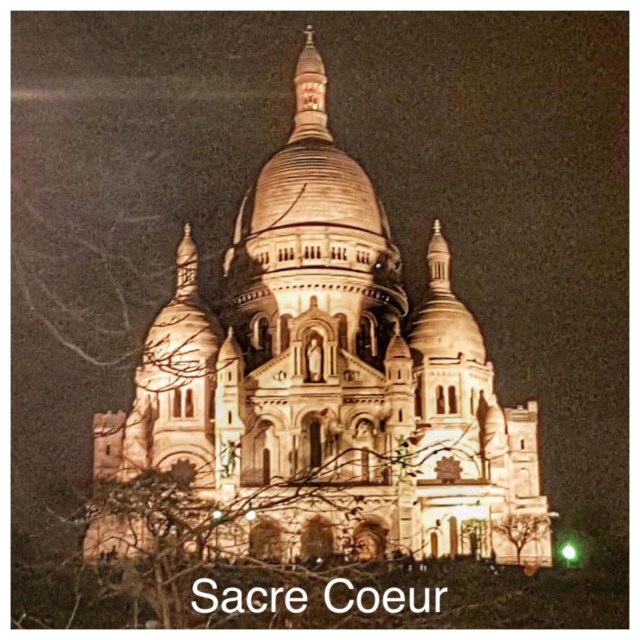
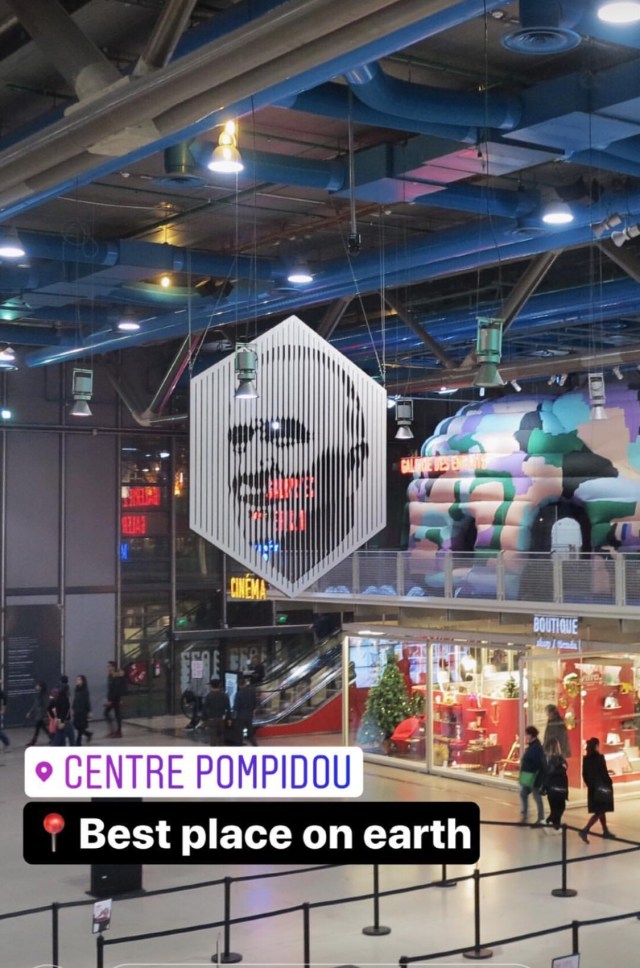
It’s a dirtier Paris I came to now. The metro stations looked sad and neglected. Some back streets teeming with trash and where we felt unsafe. With few hours of daylight, we strolled past 5pm trying to beat sunset while taking in as much sights on early winter nights. Heard Saturday 10pm anticipated mass in Sacre Coeur but ditched plans to roam around Place Du Tertre as crowds have thinned and ambulant artists gone for the winter night. This is Paris on winter nights. The crowds thin as night sets in and temps dip. Less time to stroll around in daylight. So I’d suggest you do the Museums at night instead. Centre Georges Pompidou is open till 9pm daily and Louvre till 10pm, 2 days of the week: Wednesdays and Fridays. Musee d’Orsay is open till 9:45pm on Thursdays. So there. Hit the other sights during the day, then museums before a late dinner before calling it a night. And yeah, don’t rush Paris like we did. Stay longer than 4 days 😊
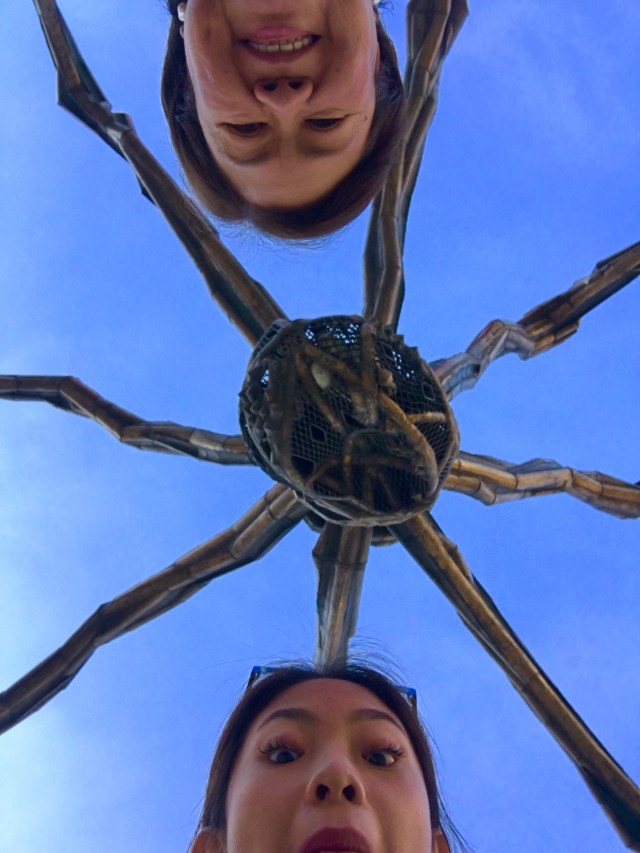
It’s a nursery rhyme I find myself humming each time I come visiting Guggenheim Museum in Bilbao, Spain. Sure, most people would visit to view what’s on exhibit inside the museo, while others would be quite content just viewing Guggenheim’s magnificent architectural wonder made of titanium, glass and limestone. In a sense, one can say the most significant work of art in this museo is the modern and contemporary style of the edifice itself. Designed by Frank Gehry, completed in 1997, hailed as a 20th century masterpiece. And indeed, it is! But much that I find the glass and titanium masterpiece awesome, I am particularly lured by this giant spider sculpture!

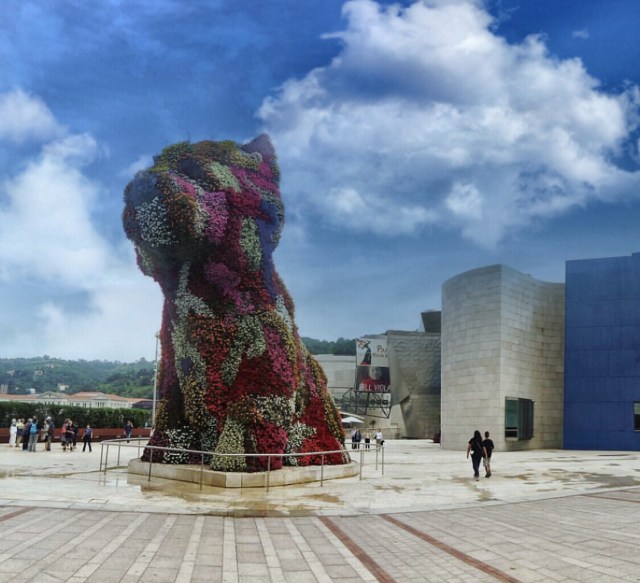
The day and time we visited, there was even some sort of a “fogging machine” around the edifice making the entire complex looking even more dramatic. Yet even without it, there is already enough drama in Guggenheim Museum with the giant spider, giant puppy topiary and the majestic red bridge. No camera whore nor aspiring photographer could miss these iconic landmarks. Unfortunately, Jeff Koons’ “Puppy” looks forlorn without the blooms. Made of stainless steel, this work of art is typically festooned with the most colorful flowers. Not in winter though. From the comforts of a sushi restaurant across the street where we nourished ourselves (a girl’s got to eat!), we viewed Koons’ giant terrier sculpture from the floor to ceiling glass window. Sad. It lost its magic from its spring version (shown here for comparison).

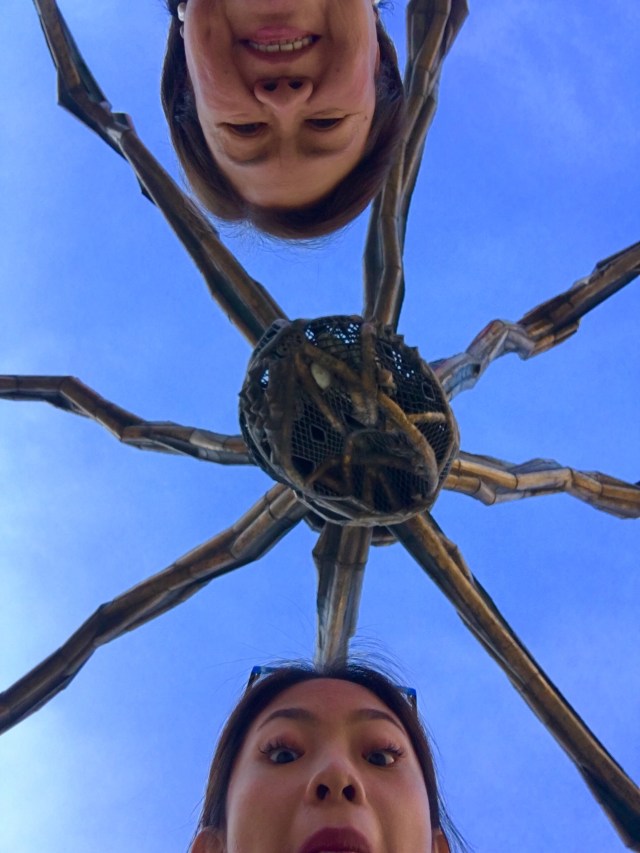
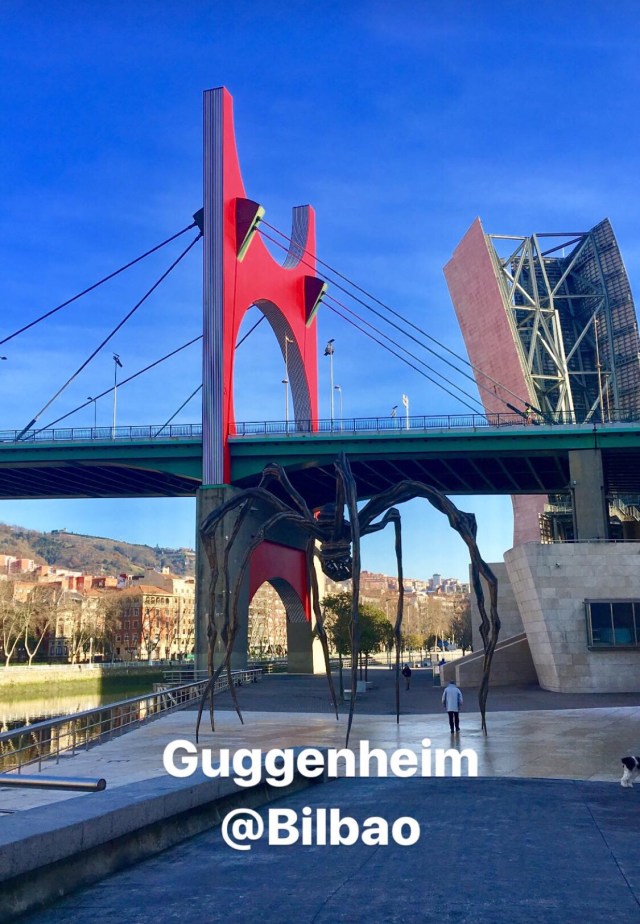
The not so itsy-bitsy spider by Louise Bourgeois makes up for the pup’s slack. On the other side of Gehry’s creation is this 9 meter-tall bronze, marble and stainless steel sculpture. It even has a name – Maman. If you stand underneath the giant spider, you’d find a sac of marble eggs embedded on its stomach. The artist designed it as such to honor her weaver-mom and to project the protective nature of mothers.

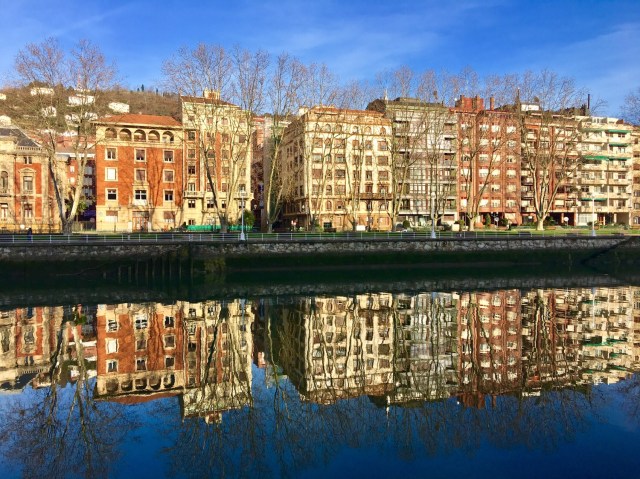
Lastly, let’s not forget the red bridge and row of buildings just across the river. No cam whore can possibly do wrong taking shots of these sights. But please do take the time to pause and appreciate this entire composition of works of art outside the confines of the Museo. After a few snapshots, breathe in all this beauty. I’m attached to the giant spider sculpture perhaps because the artist meant it as a tribute to his mom. Yeah. I’m a sucker for such stories.

Btw, no photography is allowed inside the Museum. Hmmm, so this explains all these exterior shots. I sneaked in a few shots though. Mi apologia.


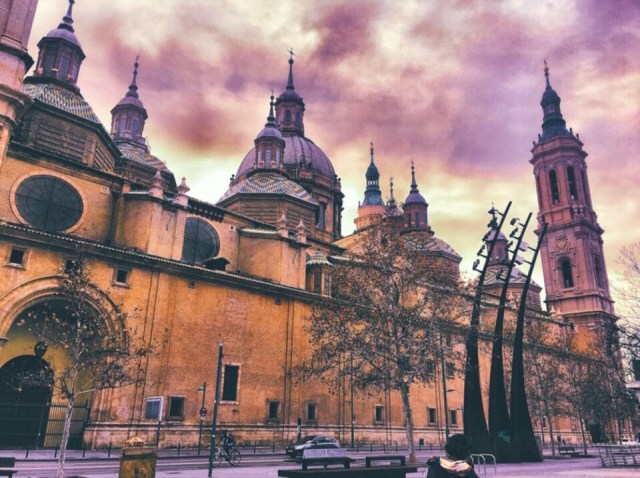
Early Tuesday morning, we took the train to Zaragosa. Just a quick visit to the Basilica de Nuestra Señora de Pilar, La Seo del Salvador and the Palacio de la Aljaferia. As the train chugged through towns blanketed in white-out snow, we braced ourselves for low temps as we reached Zaragosa. We could feel the cold almost touching our spine as our hands touched the train’s glass windows. Beanies and mittens on!

From the Zaragosa-Delicias Station, we hailed a cab to take us to our hotel. Dropped our bags in the hotel and stepped out almost immediately to hail another cab to drive us to Plaza del Pilar where the Basilica and La Seo stand across each other. Walking in this cold weather was not an ideal option. Upon reaching the Plaza del Pilar, we found so much going on there. Looks like some festivity just ended (3 Kings, I bet) and the decor, Christmas booths, kiddie rides are all being dismantled and packed away. But the entire Plaza del Pilar is sooo quiet. Hardly a crowd. We had a field choosing where to eat in the restos lining the square.

No photography was allowed inside where gaping is a common occurrence. The chapels, the dome, the vaulted ceilings, the many antique and art pieces are simply mind-boggling. Between the Basilica and La Seo, we were “churched out”. I’ve read somewhere that La Seo’s interiors are even lovelier than the Basilica’s. I do not disagree. Unfortunately, I don’t have photos to prove this comparison.

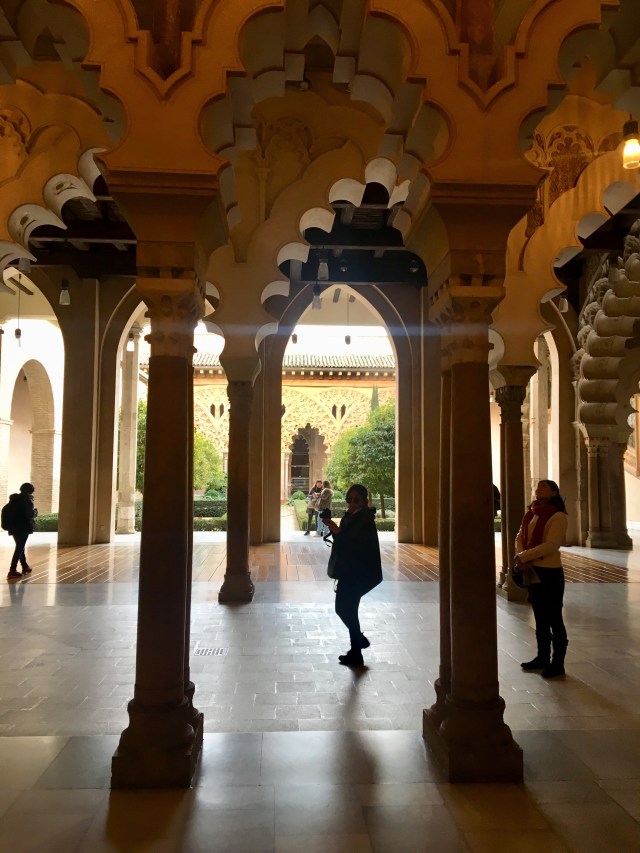
But what surprised us most is the Palacio de Aljaferia. We walked from the Plaza del Pilar to here. Surely, the Aljaferia is one of the finest examples of Hispanic-Muslim art, or Mudejar. This style was later copied at the Alcazar in Sevilla, as well as the more-visited Mudejar masterpiece in Alhambra in Granada. I have been to both and the garden and palace similarities are unmistakable. The series of arches, carved ceilings, the elaborate and intricately designed windows and doors. It is hard to imagine this 11th century structure was a woeful sight in near ruins despite being declared a National Monument of Historical and Artistic Interest in 1931. Then UNESCO declared its Aragonese Mudejar architecture a World Heritage Site.

Having visited this Islamic palace, I am awed by its grand design — the oratory, the portico arches, the wooden and coffered ceilings, the tiled pavement, the corridor, the lavish plaster decor. No wonder this architectural wonder became the Palace of the Aragonese monarchs after Zaragosa was recaptured from the moors.

Mi piquena Alhambra. Odd that it actually was the prototype for that grand palace and gardens in Granada. But Mudejar art in Aragon truly flourished in its time. Magnificent is an understatement. The palace is a good introduction for those who have yet to visit Sevilla, Cordoba and Granada’s Alhambra.

The Palace of Joy. It was. It is. Its beauty does not overwhelm. Its grandeur does not intimidate. Impressive, without being so imposing. It’s a palace not intended to impress, but meant to be enjoyed. Both Moorish and Christian monarchs who took up residence here must have felt the same.


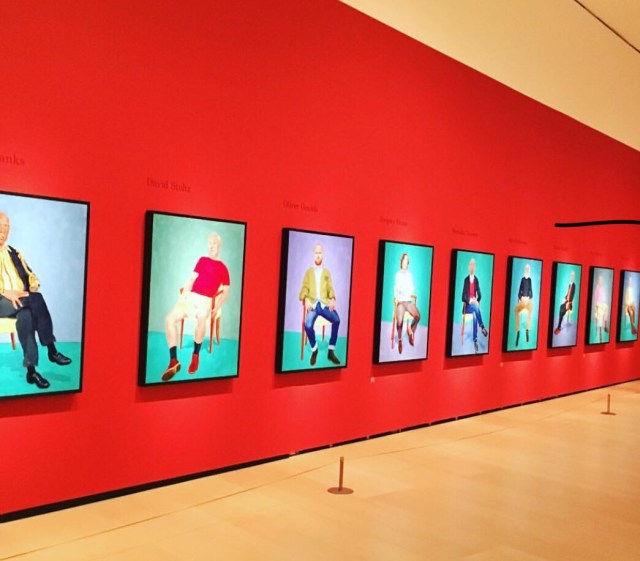
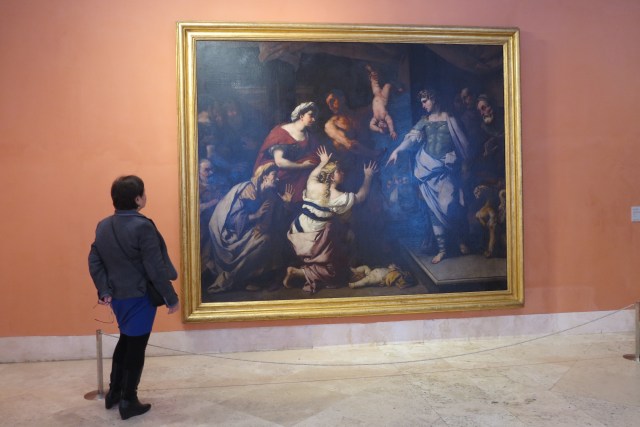
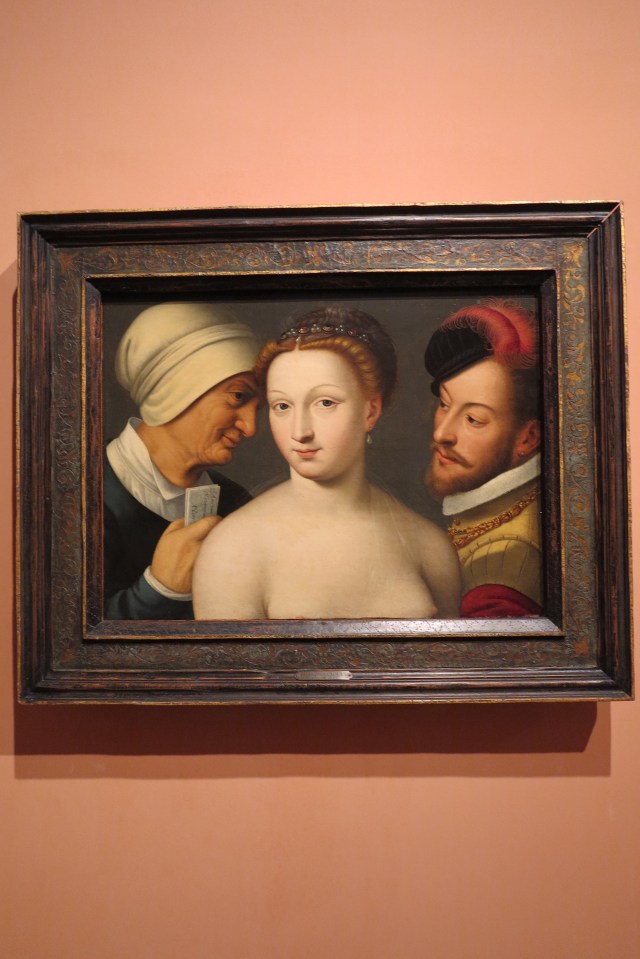
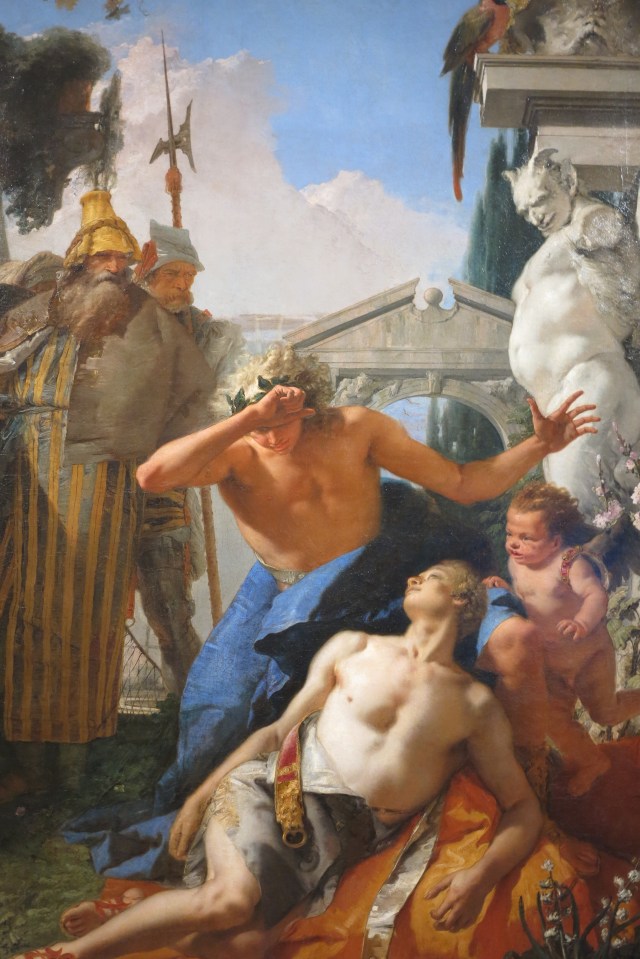
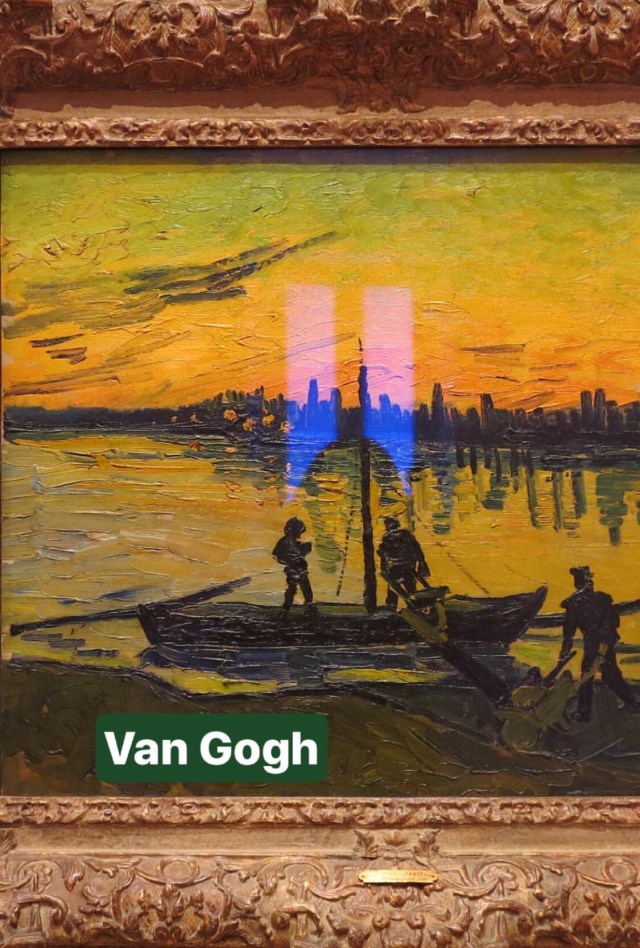
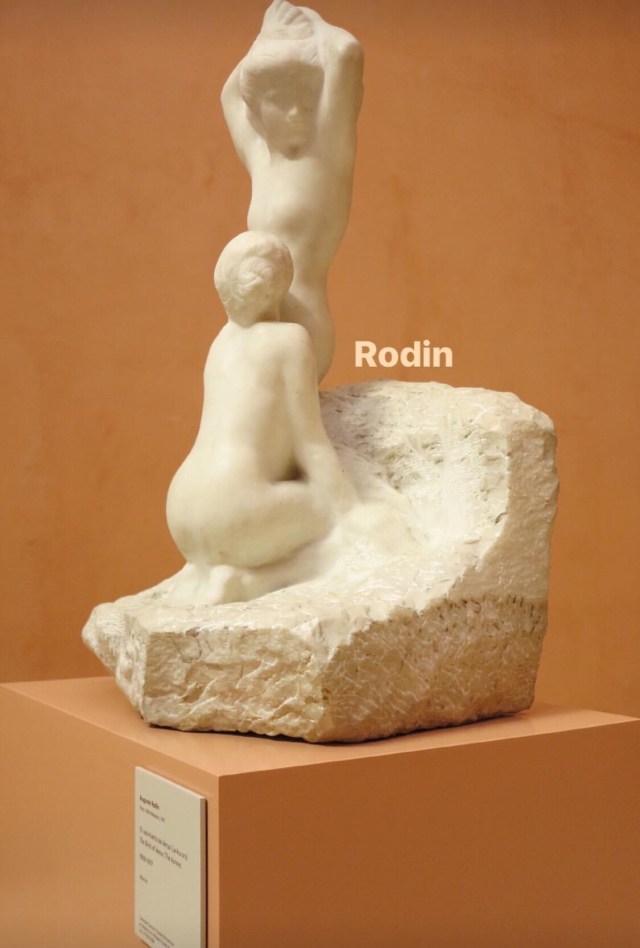
Last of the big 3 in Madrid: Prado, Reina Sofia and now Thyssen-Bornemizsa. There are varied opinions on which is the best. I observed the older ones prefer the more academic, traditional, classical Renaissance art while the younger generation prefer the more modern, contemporary art. In Thyssen-Bornemizsa, one gets a good blend of both. I saved it for last for this reason, and because I thought my energy level would have dwindled by the nth museum and Thyssen has a very good, decent cafe where I can chill.

On a freezing afternoon, it was the perfect thing to do. No way you’d find us in some park or strolling the streets of Madrid. There were even days it slightly snowed in Madrid and the breeze just give our bones the chill. So another museum visit won’t hurt. Besides, my nieta just couldn’t have enough of it. (There’s another small, even obscure museo she wants to visit which I haven’t in the many trips I’ve made to Madrid. Well, we’ll see. )

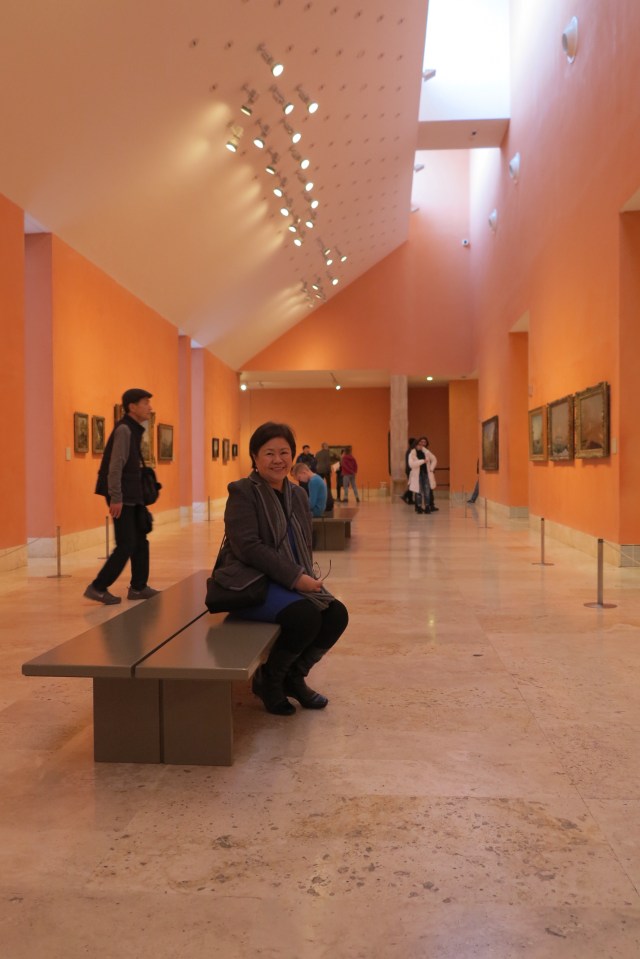
Thankfully, there were no lines. No crowd. Most everyone must be chillin’ on bed. Hmm, the mere thought makes me want to go under a warm blanket, in a heated room. That should be comforting. Anyway, there’s this business of viewing the TB collection. And this, I must say. Thyssen I find as the most visitor-friendly museum here. Well-curated, with long benches to sit on in nearly every hall. I also think it’s difficult to “lose” someone here because the visit is so guided that one goes from hall to hall in a very orderly manner. Many times, I sat it out while nieta moved from here to there. When it was time to meet up, it was easy to find each other.

What I love about museum visits is that no matter how many times you go, you’d always find something new. Not exactly a new artwork, but more of how an old, even familiar piece can affect you. Is it one’s mood at that moment? Have we “changed” without us noticing it? Hard to explain. But there were art pieces there I found truly interesting after some visits.

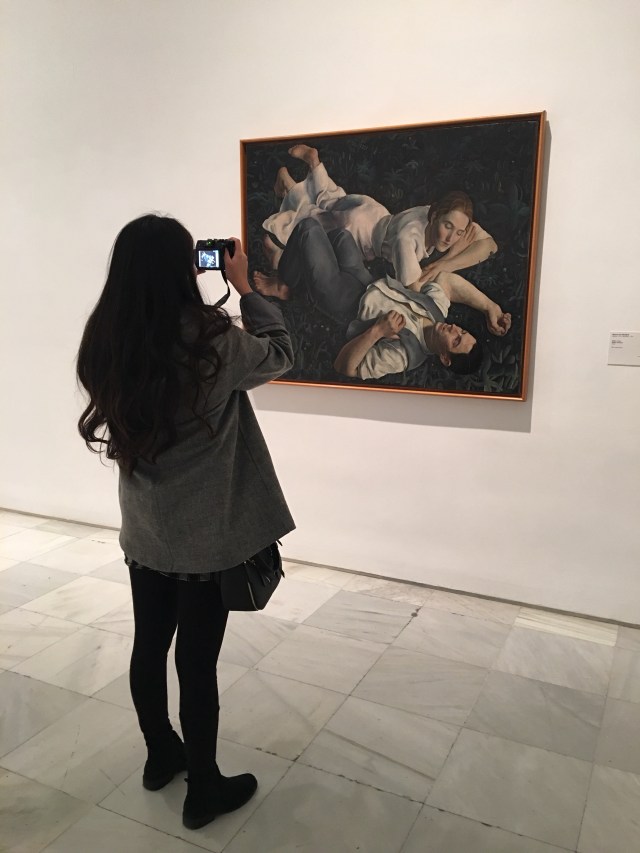
As for my nieta, she was happy she can take photographs unlike in Prado. In Reina Sofia, photography is allowed but not for Picasso’s Guernika and some other major pieces. She wants to look them up more intimately and perhaps, even reproduce them. Picasso did the same. So did many others. So, why not?


I’ve always known there would be many museums to visit with my nieta. But more visits to one museum? It happened. She asked to go back to Museo Reina Sofia. She felt the same way with Pompidou Center but our time in Paris was limited. Not so in Madrid. There was time.

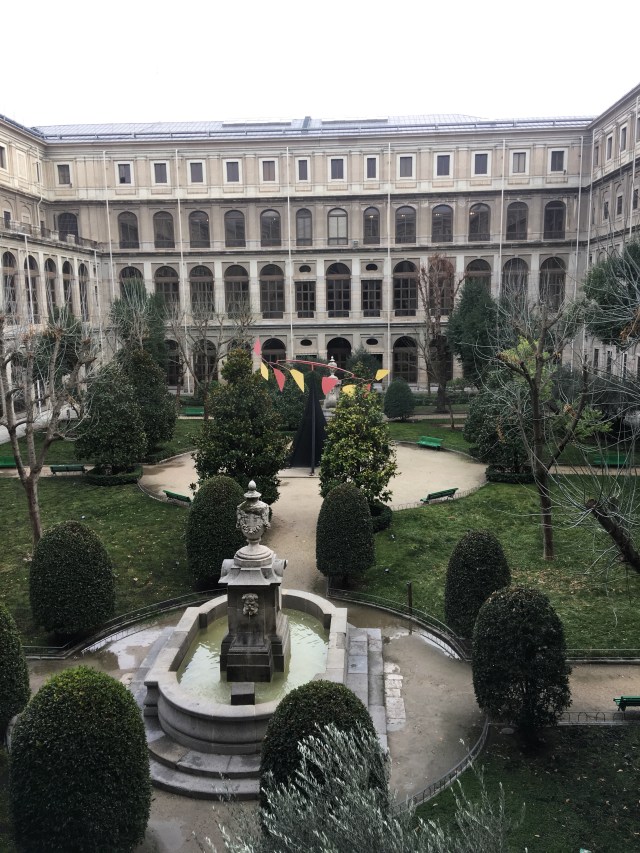
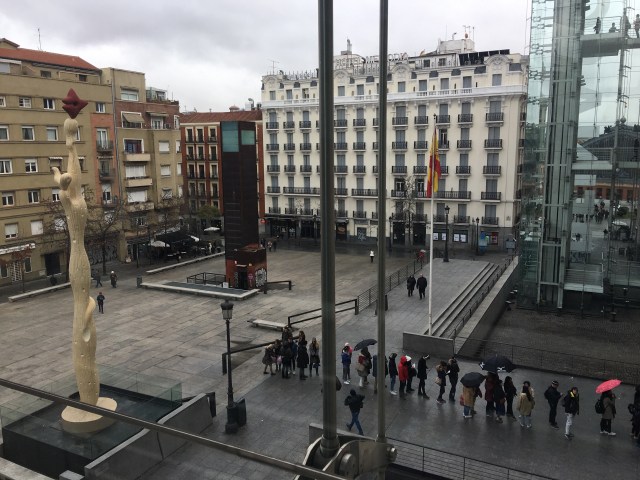
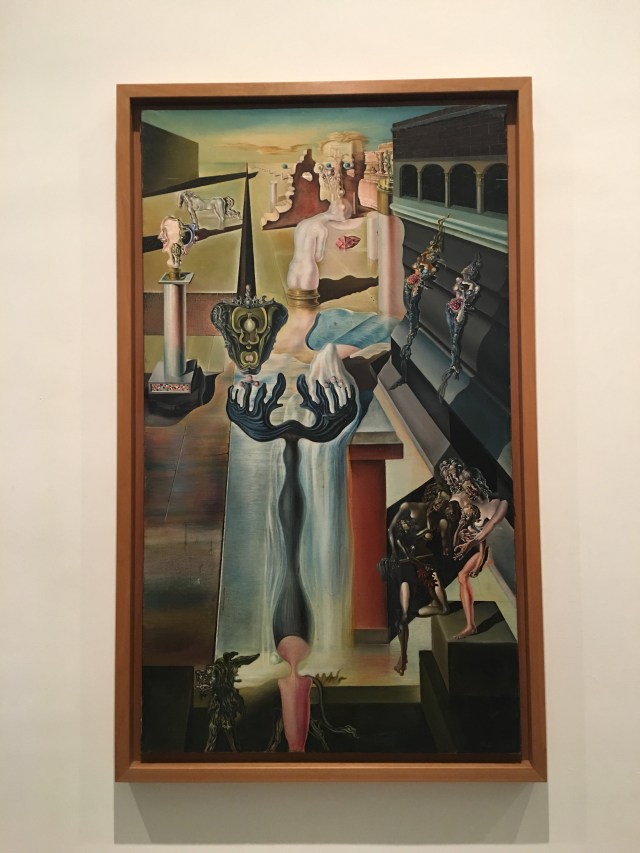
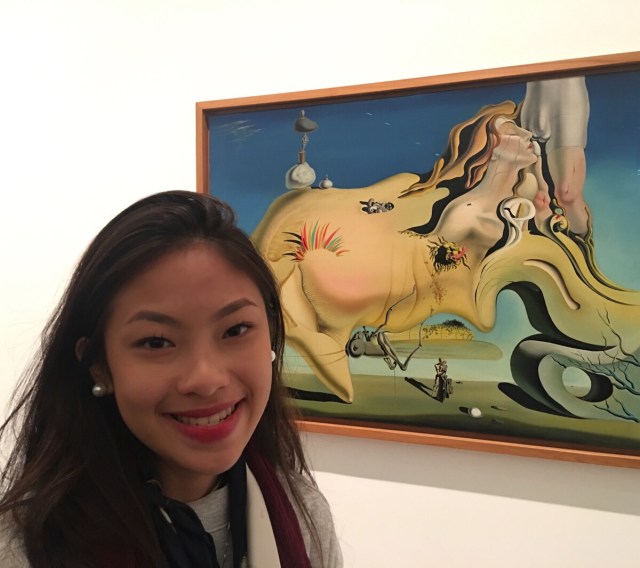
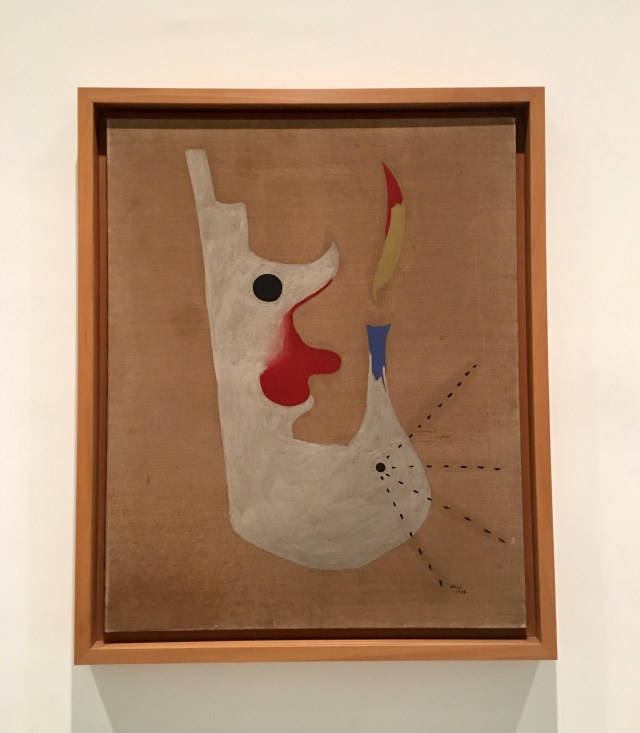
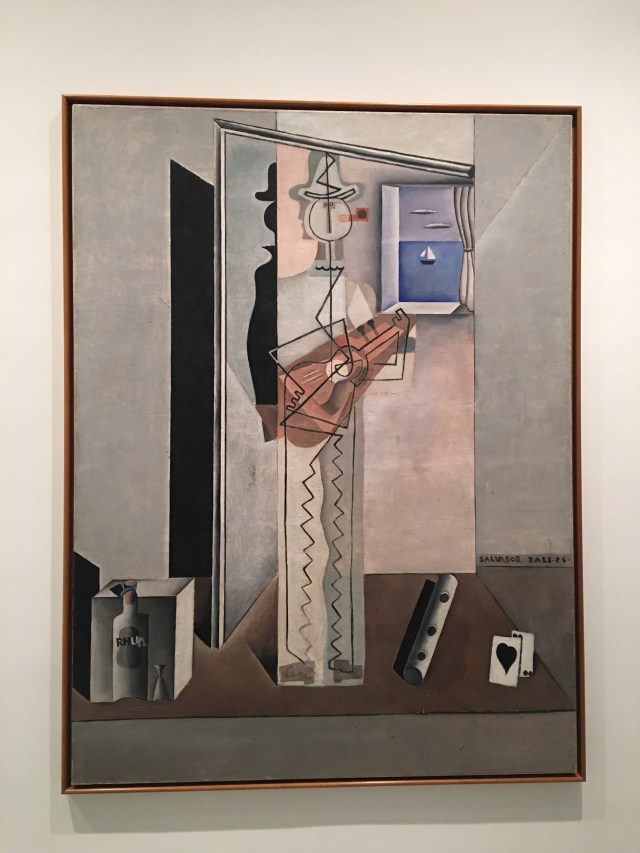
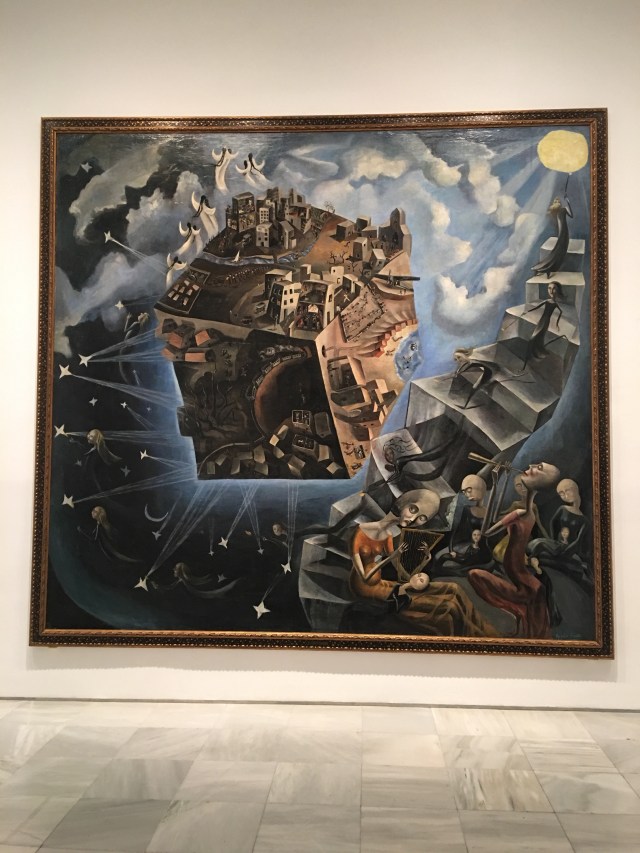
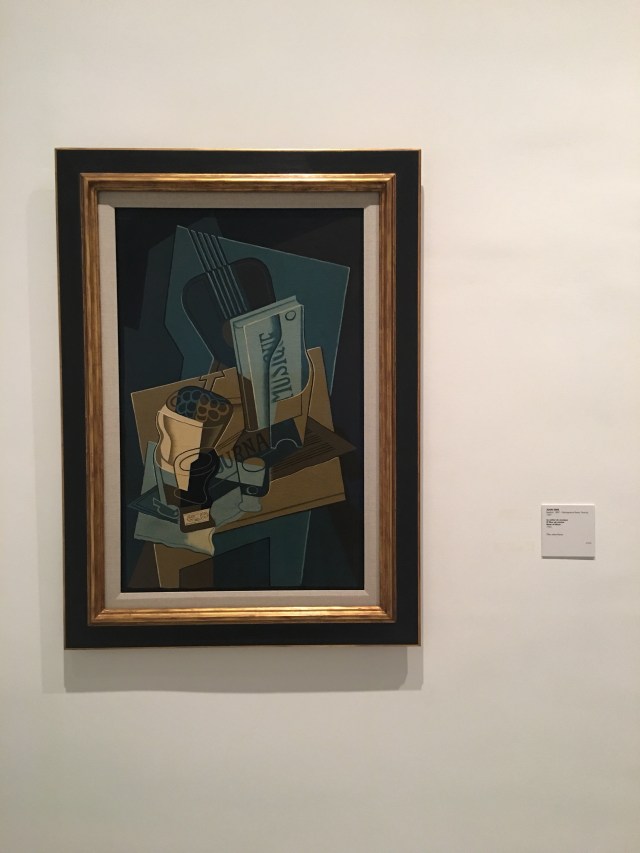
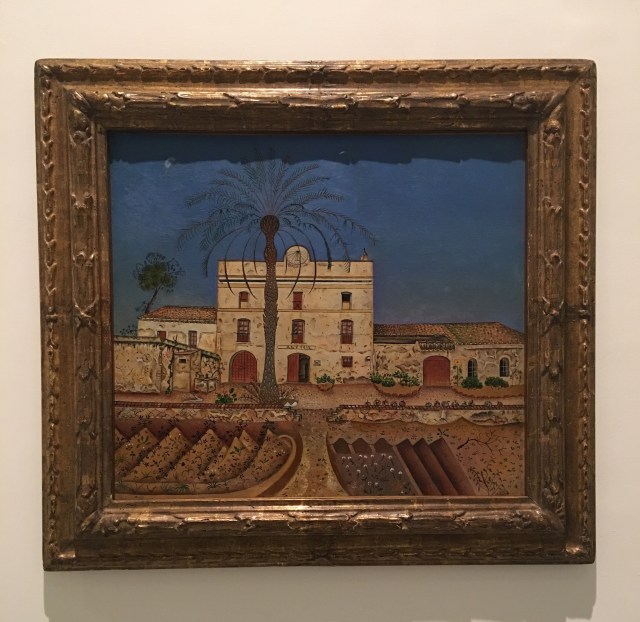
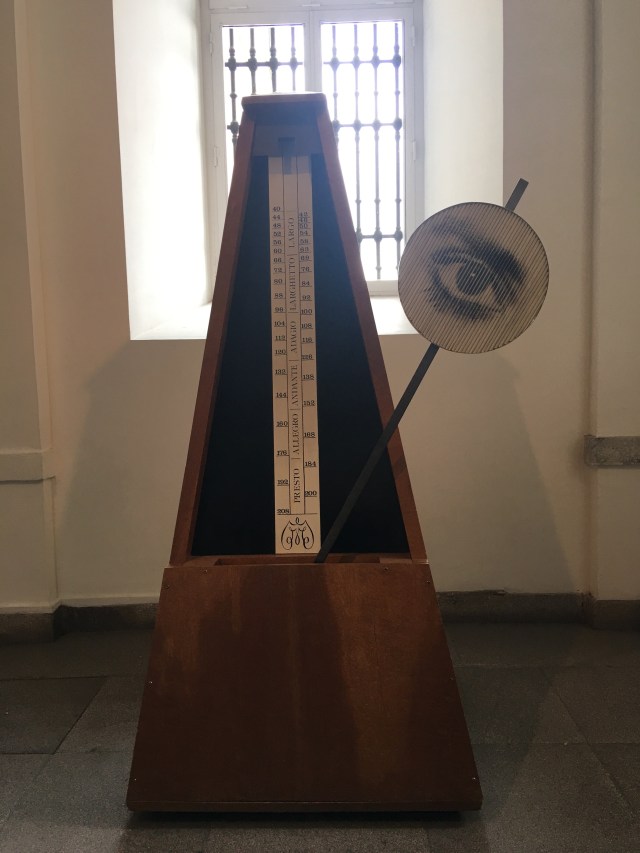
I could feel the excitement within the glass elevator we took to start from the upper levels and taking our sweet time down to the lower levels. She grabbed a map of the museum while I paid for the audio guides. She lingered longer over the Dali pieces. My fav too but I prefer the more sober Dali artworks. My nieta likes the ones bordering on surrealism. And there’s Miró, Magritte, Picasso, and 2 new favorites : Angeles Santos, whose Un Mundo she painted when she was only 18! And Juan Gris.

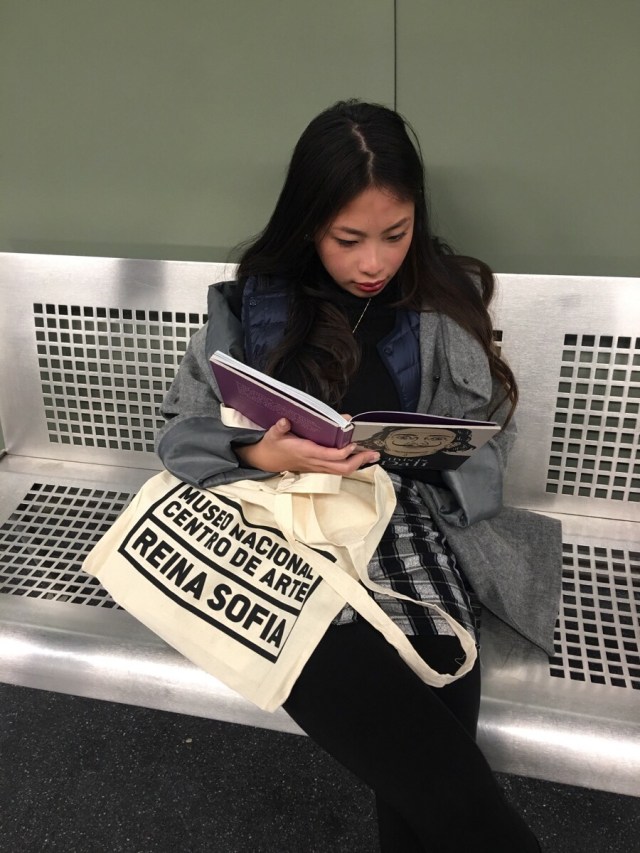
Apo (grandchild) was in Cloud 9. She had 4 hours to spend. That was the first thing she checked : closing time. It is a pattern: 4 hours in each museum. I should remember to wear more comfortable shoes next time. The lovely thing about Museo Reina Sofia is that she can take photos of many art pieces except for the obra maestras like Guernika by Picasso and some other celebrated works of the same artist and Salvador Dalí and Joan Miró. Truly, Spain reigned supreme in both Rennaissance and contemporary art.

Out in the streets of Madrid, she follows my lead as we navigated from Sol to Calle Mayor to Gran Via. Here within the Museo, she took the lead and shepherded me from hall to hall, and then back to the same halls where she found her favorites. She appreciated how her idols’ art evolved in style, approach and boldness in both message, form and hues. She fell in love with Dali’s works without loving the artist’s character. 🙄 Well…. Dali is Dali with all his eccentricities.

< strong>< strong>

By the time she was ready to turn in her audio guide, she shifted her interest to the museum’s tienda. She can’t leave without buying a Dali book and more souvenirs. Another happy day for mi nieta. 💕💕💕


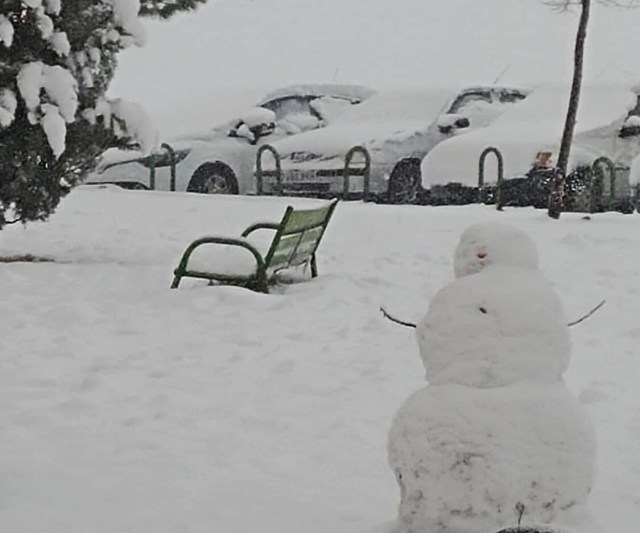
We were too lazy to plan where next to go. Giving in to instant and impromptu day trip plans, we woke up early one morning and decided we’d have a cochinillo lunch in Meson de Candido in Segovia. Hopped on the metro, off at Chamartin Station, straight into the Venta de Billetes to buy our ida y vuelta tickets for Segovia. We planned on staying at least 8 hours to enjoy the old town – the aquaduct, the Alcazar, Catedral, Museos, the cordero or cochinillo and a few, choice pastelerias. All in freezing -2C weather. But it snowed the night before in Segovia and the station is blanketed in snow. The man from Cercanias said the train will take us there but there’s no way we can reach the town proper from the isolated estacion because no buses nor taxis are available to ferry us out of the train station. Boo!

(Here are photos sourced from the Net on Segovia situation. Same snow situation in Avila, btw)

And so we hurried back — just as it also started to snow in Chamartin Station — to the ticket office to return our day tickets and claim a refund. Another time, perhaps. But we’re all bundled up for a day out and have no wish to be home early! Entonces, we returned to the ticket counter and bought tickets for the next train headed for….. Alcala de Henares. The hometown of Miguel de Cervantes, of Don Quixote fame. It is also home to a university founded by Cisneros. Cardinal, Regent and close adviser to Ferdinand of Aragon and Isabela of Castile.

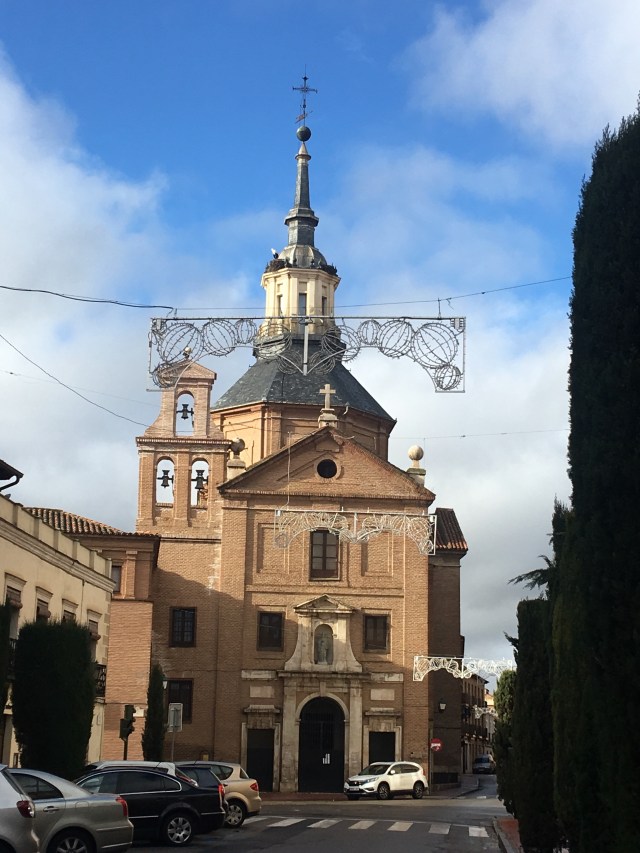
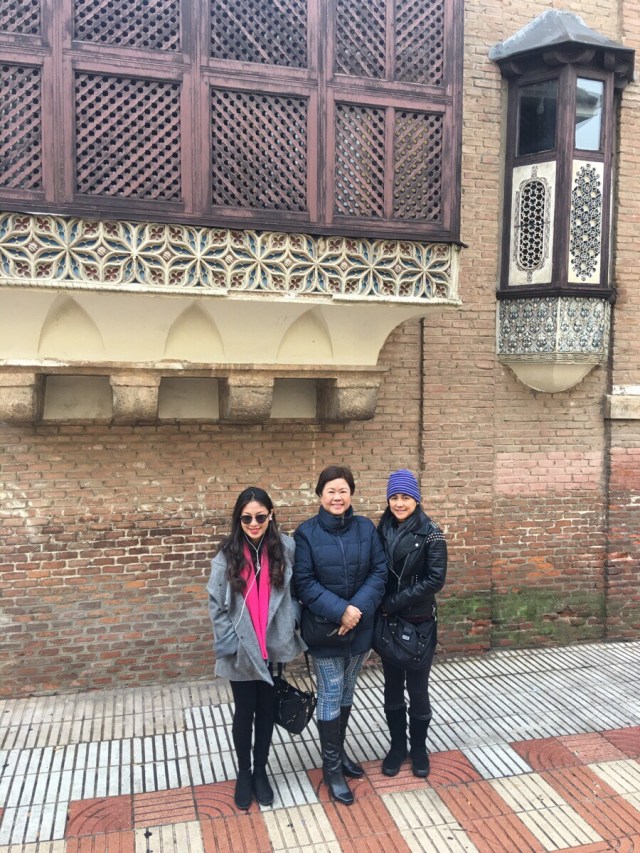
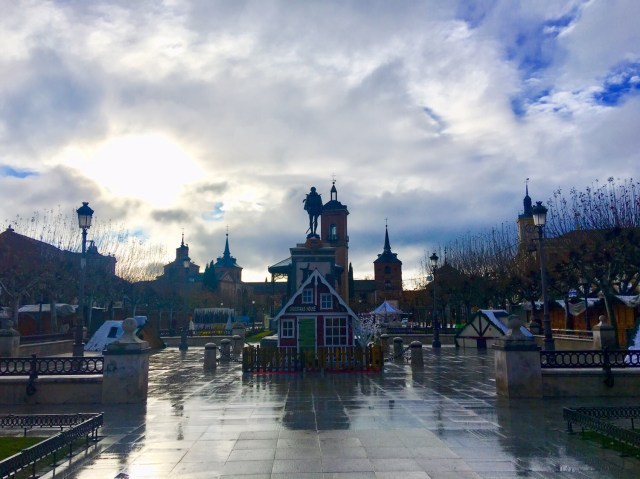
We took the Cercanias slow train and reached Alcala in under an hour. Still freezing at 3C, we only managed to visit a church, Cervantes’ Home, Plaza Cervantes with the ayuntamiento, the Universidad and the quaint, cobblestoned streets of Alcala de Henares. Oh yes, a little bit of “stork-watching” too. Told my sobrina and nieta that these storks seem to have “regal addresses” as they’ve taken up residences in many of the tall spires around this UNESCO Heritage Site.

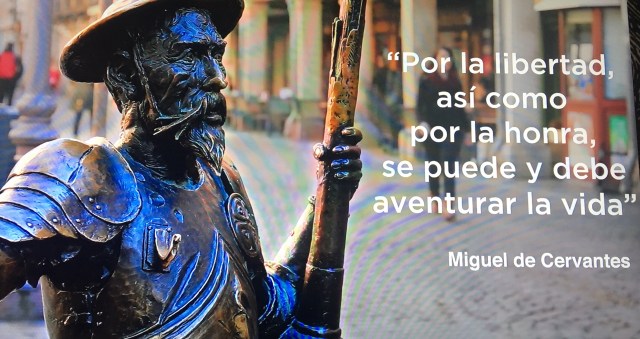
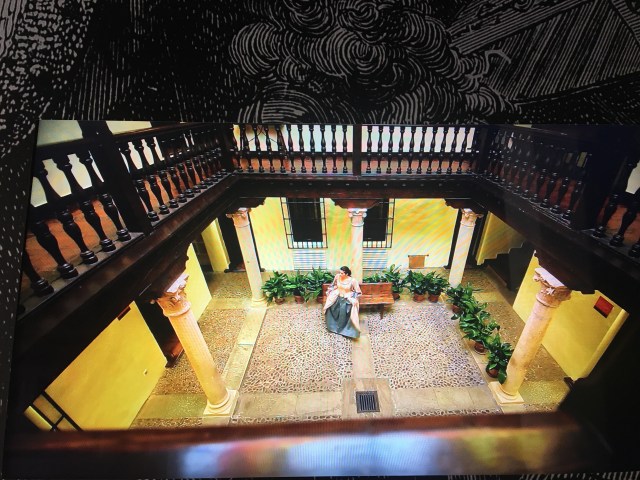
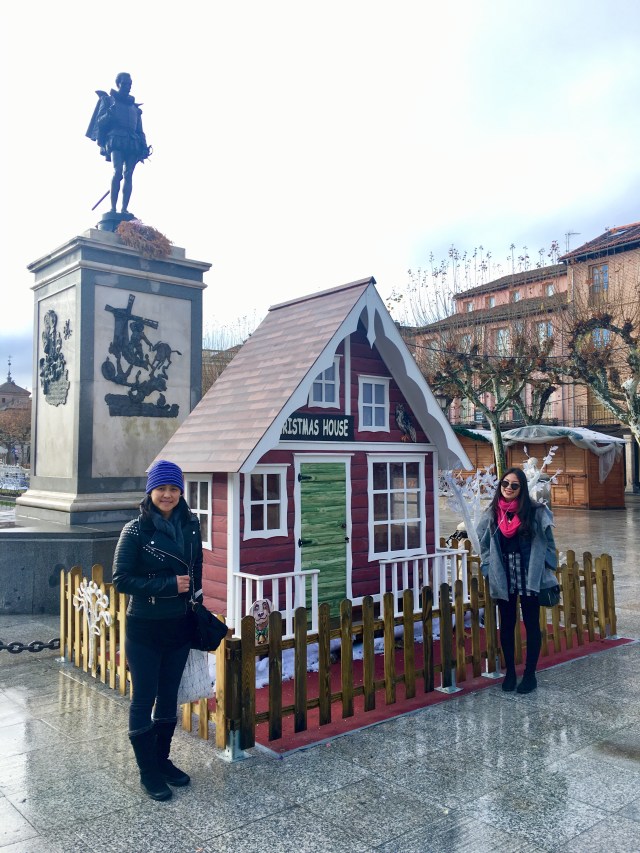
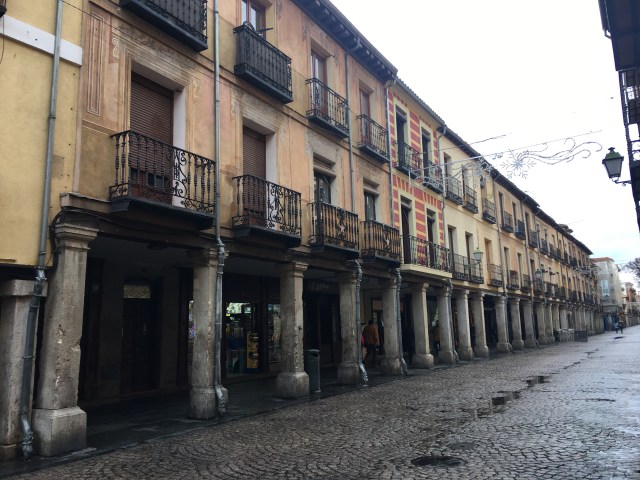
Man of La Mancha. Don Quixote. And his squire Sancho Panza. We’ve met twice before and we meet a third time more. Their life-size bronze statues guard Cervantes’ home, now a Museo. Casa Natal de Cervantes is right along the town’s cobblestoned, columns-lined Calle Mayor. Just off the Plaza Cervantes which locals have spruced up for the Christmas Season.

The first time I visited Alcala, I was all by myself. I knew I’d be back with family and friends. I was particularly amused by the “stork community” and earlier blogged about it. Just click on this link. But certainly, this town’s claim to fame lies in its old University and this celebrated man of literature. As for me, I’m happy enough to walk its streets, checking out those old columns, antique doors, gates, and (don’t laugh now) water spouts.

Btw, we were lucky to have changed our train tickets from Segovia to Alcala. The cochinillo place was blanketed in inches of snow, trapping many along the roads. Looks winter-nice in photos, but glad to be spared the ordeal of having to wait to be rescued. God is good!

https://www.thespainreport.com/articles/1290-180107094243-spanish-army-called-out-to-help-rescue-thousands-trapped-overnight-in-snow-west-of-madrid