Tag Archive: Van Gogh


In our last few days in Paris, we hit 2 more museums. First off, Musée de l’Orangerie in the Jardin des Tuileries. Housed in an iconic edifice on the western section of the Tuileries garden, this was our chance to view Monet’s famous eight Water Lilies mural. Monet painted water lilies for well over 30 years till his death at 86. His lily pond in Giverny where he lived provided much inspiration resulting in over 300 artworks. Some in large format like the egg-shaped hall where a colossal mural greets you. For the first time since we landed in Europe, I wanted to shh shhh the crowds milling around the murals. It would have been nice to sit in the center of that hall to appreciate these huge works of Monet. Alas, it was noisy, and too crowded.
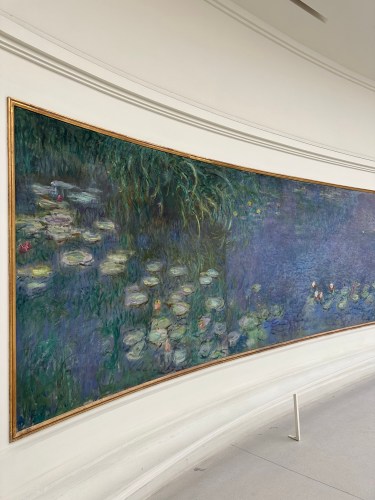
The 8 panels were Monet’s gift to the State, to be displayed based on his very specific conditions and design. Done just a few years before his death, but finally displayed only after he passed on. These panels are significant considering that Monet suffered from failing vision years before he died, so much so that he even had to label the colors of his paint tubes. He also painted other subjects, but still mostly from his gardens in Giverny. After all, the artist indulged in gardening as a favorite pastime and he loved painting outdoors.
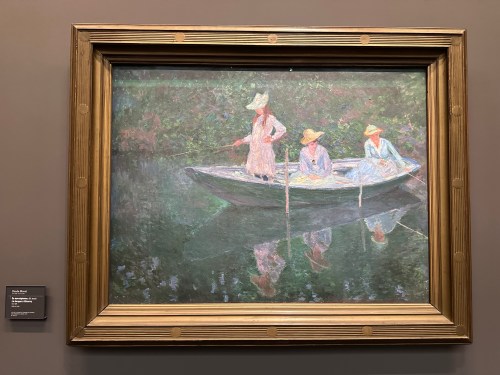
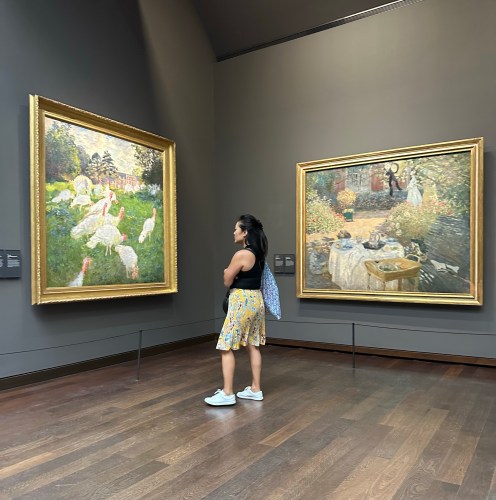
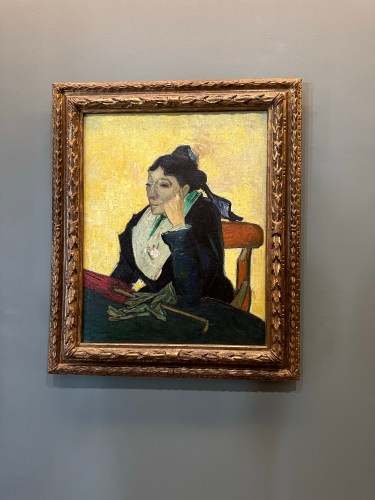
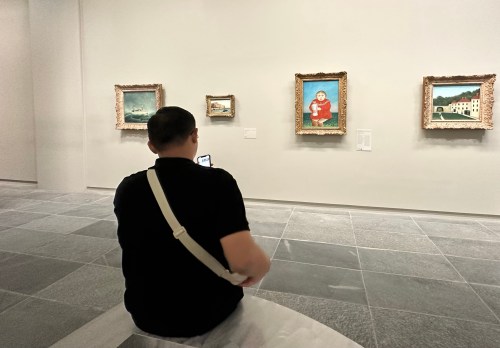
By the time we moved to Musée d’Orsay, we were growing tired and frankly, overwhelmed. Too much stimulation from the first museum visit, the walks under the sun, crossing the Seine and struggling with the heat. It didn’t help that we were made to line up outside without shade even though our ticket specified a time for the visit. When we got in, we passed most everyone and decided to start on the upper floors first. Besides, the Van Gogh pieces were there.
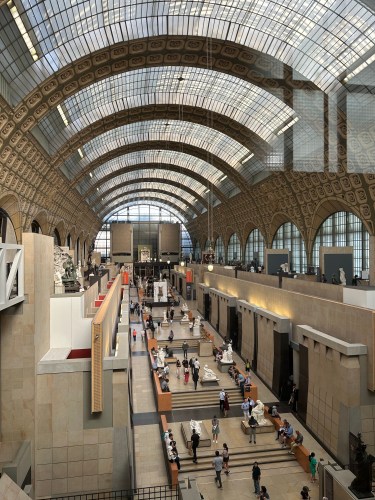
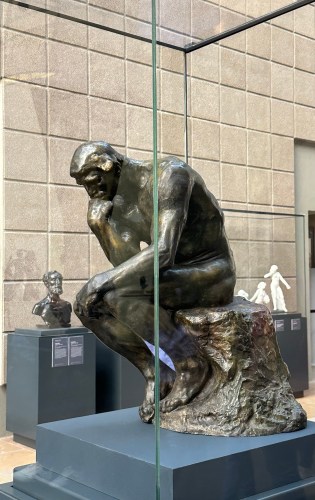
Next, we went in search of Rodin. I earlier intended to bring them to Musée Rodin but there wasn’t enough time. Wow, Musée d’ Orsay is really huge. Some actually prefer it to the Louvre and I don’t blame them. I do like Orsay too especially since it has a really nice cafe inside and the ex-train station building is kind of a romantic setting for this museum. Not to forget, it also has a lot of nooks and quiet corners with stone benches where one can sit it out and rest! We called it a day after 2 hours. Guess we didn’t do justice to these museum visits. But our energy levels are really low now, having been “on the go” the last 3 weeks. I haven’t really counted but I suspect we’ve done at least 15 museums on this trip. The major art galleries should be around 7 or 8. Wow. We need to sit it out in the park now or head back to our apartment for a quick pre-sleep sleep. Or maybe we should hit the bar to celebrate 🥂 🤣
The Cafe inside the museum. Look at that huge clock, often a feature of train terminals.

My first time in Montmartre was unplanned. I was in a conference in London in 2003 and a friend invited me to stay with her while exhausting the remaining lease on her daughter’s flat in Paris. I said yes, and so did another friend who trained in from Zurich. The 3 of us spent dinner nights between Montmartre and Saint Germain des Pres and had an immensely wonderful time. In 2017, I brought my nieta here but only for a night. It was a chilly night so the artists left the square in Place Du Tertre earlier. The “painters’ neighborhood” was without painters that night it threatened to snow. So here we are, back again, with all the sunshine we need on this spring-soon transforming into summer Paris day.

Last time we had a meal in La Bonne Franquette.
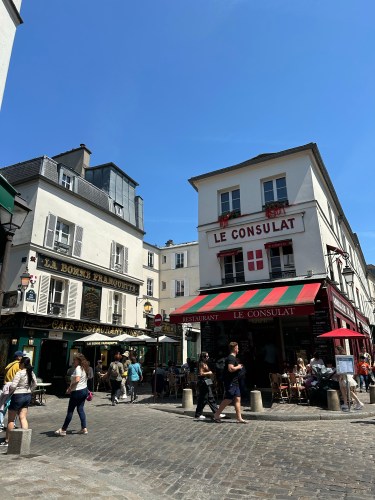
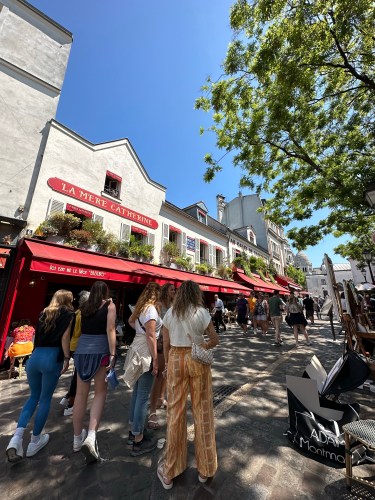
This time at Le Consulat.
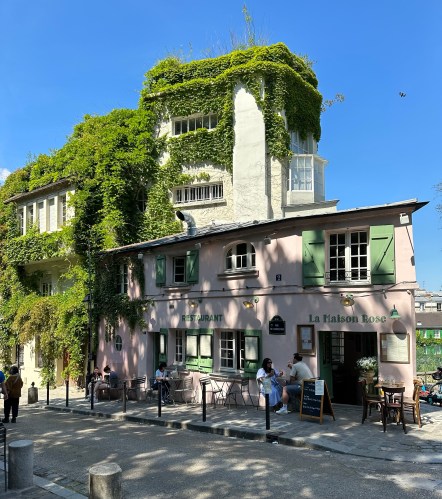
Coffee and Dessert at La Maison Rose or the
Pink House in Montmartre.
The “painters’ neighborhood” in Place Du Tertre.

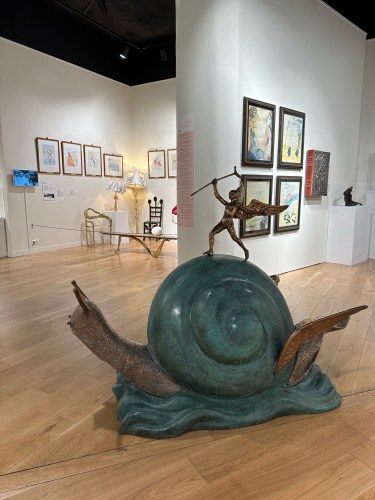
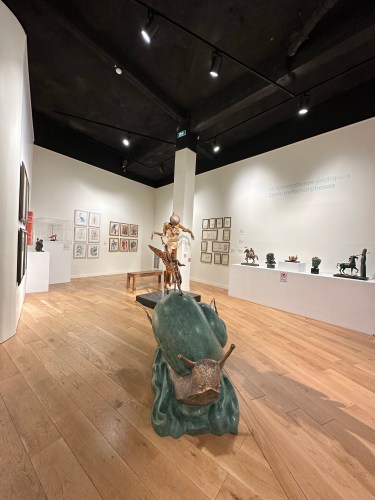
Montmartre has many cafes and bistros. If you’ve been watching Amelie and Emily in Paris, the winding streets and hilly paths here would seem familiar to you. Le Consulat and La Bonne Franquette are both hangouts of many artists centuries ago, like Van Gogh, Cezanne, Monet, Renoir, Picasso, to name a few. Some have even set up studios here. And actually lived here, like Van Gogh and Dalí. In one corner, you’d find Espace Dalí where you’d find 300 of his works from a private collection of Beniamino Levi. Levi was one of Salvador Dali’s art collectors and art dealers. He intended to make popular then Dali’s sculptures and engravings aside from his paintings. This gallery is worth a visit if you’re a Dalí fan.

Espace Dali in Montmartre
From Le Consulat where we had lunch, it was a short walk to the Pink House in one direction and the Espace Dali in the opposite direction.

So next time you visit SACRE COEUR Basilica, take a few more steps towards Place Du Tertre (if you’re a Filipino, it’s easy to remember this place that bears a name that sounds like one ex-Prez) to find centuries-old bistros frequented by many artists, poets and novelists. The coffee scene in the Saint Germain des Pres may be great but Montmartre has a number of good cafes too. And for tourists, the souvenir shops here may be more reasonably-priced, methinks.

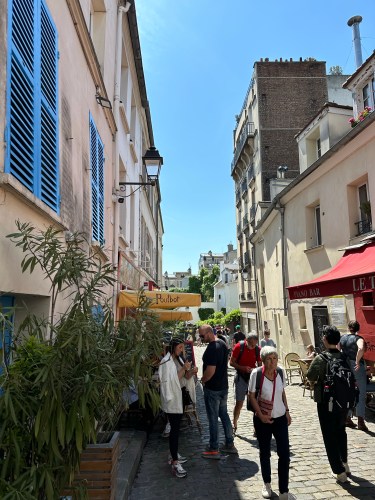
Montmartre teeming with locals and tourists!
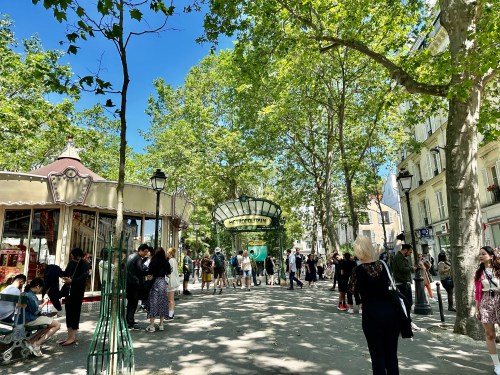
Off Abbesses Metro Station.
(I prefer getting off at Anvers)

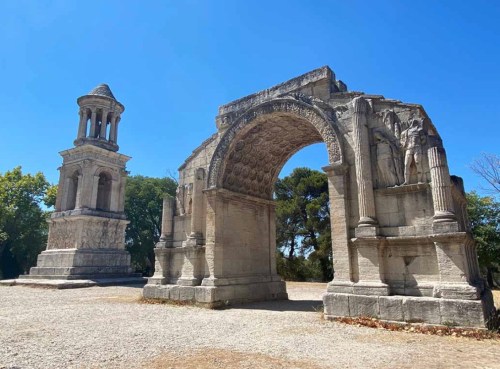
It was the last stop for the day. My recollection of my 2003 visit here was driving through Roman and Greek ruins which are the iconic landmarks of this ancient town. Think Julius Caesar. But we didn’t come here for these archaeological sites. Nor did we visit because it’s the birthplace of Nostradamus. We came for Van Gogh. That genius of a man had himself admitted in Saint-Paul de Mausole’s psychiatric institution as he sensed his mental health deteriorating despite the hospital treatment he was getting in Arles. Arles and Saint-Rémy-de-Provence are nearby towns not too far from Avignon and Vincent stayed in the monastery cum psychiatric clinic here for a good one year.

The Greek and Roman ruins of St. Rémy de Provence. This is the image in my mind from my 2003 visit.
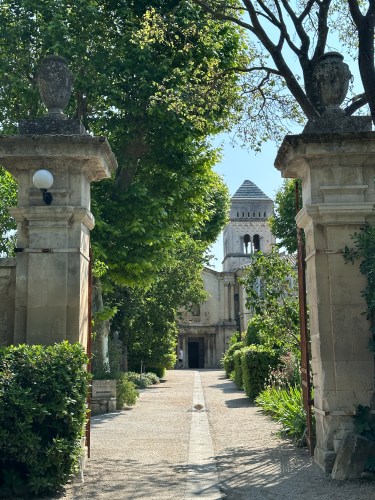
Saint Paul de Mausole along Van Gogh Avenue

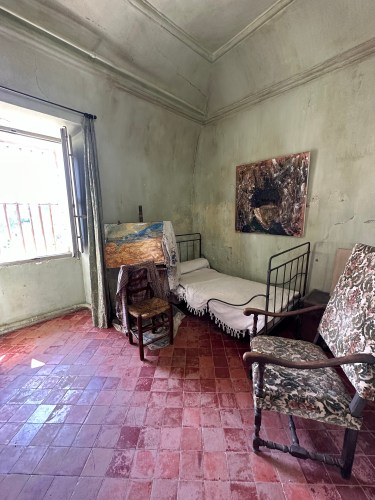
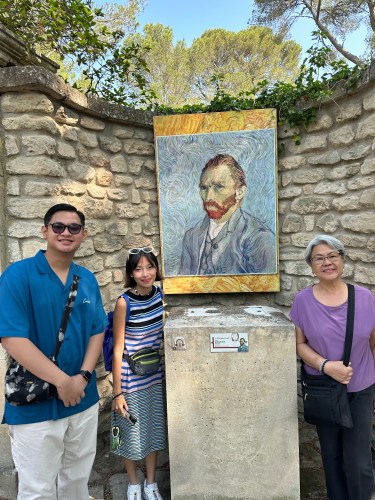
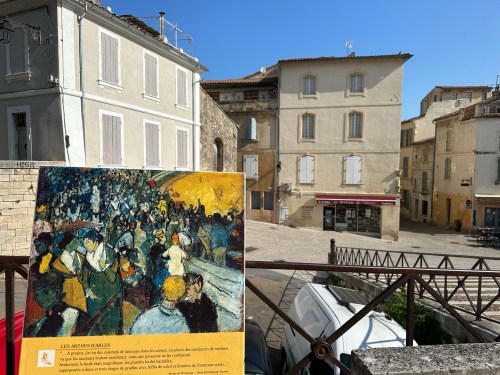
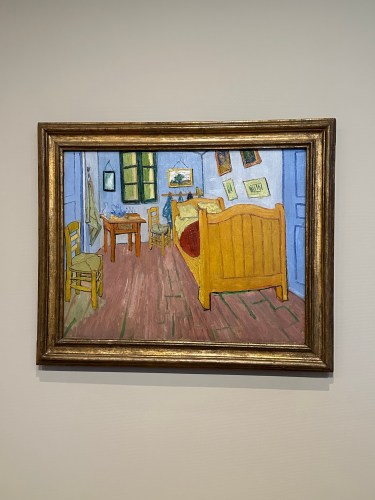
While he only stayed a year here, his 150 or so paintings are among the popular pieces spread and displayed in prominent museums all over the art world. His lonely and desolate rooms were painted on canvas — the bed, the chair, the window, the landscapes and blooms viewed from the window. Since he stayed a year, his works captured the seasonal changes including the mistral as well as the dry spells brought in by the Provençal summers. The farms, the peasants, the flowers and trees — all these were reflected on the 150 inspired works of art. Walking around Van Gogh Avenue, there would be repros of Vincent’s artworks against a backdrop of the actual scenes. One can say Van Gogh simply never stopped painting. Whether art was his therapy or not, it certainly occupied his mind 24/7.

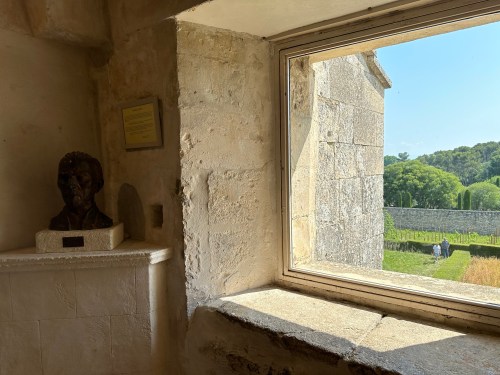
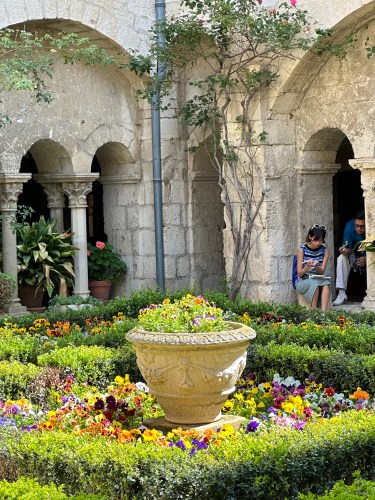
The monastery garden and courtyard provide enough inspiration. Very beautifully laid out. Amidst arcades, fountains and beds of flowers, one feels compelled to sit for a few moments and space out. The gardens behind the monastery can be viewed from Van Gogh’s room and studio, so it is easy to imagine how the blooms change with the seasons. More so how the landscapes changed as viewed day or night. A pity we were a couple of weeks early till the lavenders fully bloom. That must be a pretty sight. The flowers were just starting to sprout when we visited but we can already sense a faint smell of the soothing buds.

The monastery courtyard.
In summer, this field is littered with lavenders!

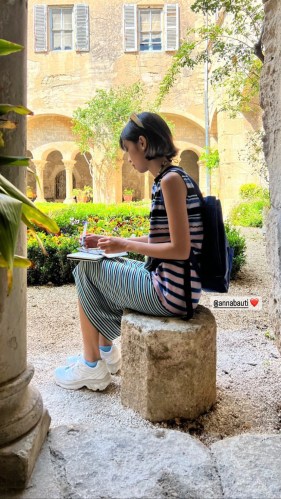
Our driver guide gave us enough time to linger. We made a second pass of the artist’s quarters and the back gardens before settling down in the courtyard. Seeing my nieta open her sketchbook and watercolours, I gingerly turned back towards the museum shop. Heaved a sigh of relief that the weather cooperated so we can enjoy the sunlight rather than the forecast of showers and gray skies. While loitering around gardens, I spotted a young man with an easel seemingly looking for a quiet corner. His search ended with a good spot amidst the arcaded passageways between columns but a perfect view of the courtyard bathed in sunlight. Bless these artists for cheering us up with their creations!

Van Gogh in Arles


A dream come true for Nieta y Nieto. For their abuela too. Prepped ourselves good with an afternoon visit of Van Gogh Museum in Amsterdam, read up on countless books and articles on this genius, and checked out his many artworks both popular and not so. There were many of the latter too. After all, Van Gogh was such a prolific painter (over 2,000! — nearly half of which painted in Provence in his short life’s last 2 years) that countless works didn’t earn as much distinction as those made into posters, postcards and other merch. Being big fans of Vincent, we made sure we didn’t miss the Van Gogh Tour as a day trip from our Provençal base in Avignon. The driver guide we had for this adventure was named after the artist. His namesake, another Vincent. He wasn’t the best driver and the 3 of us had vertigo spells as Vincent weaved through the traffic and hardly stepped on the brakes. We leaned left, right, forward just like Van Gogh’s sunflowers caught in a mistral. But he was a good guide, and obviously loves the place of his birth, Provence. In Arles, he brought us first to the garden park where Van Gogh painted many landscapes. The “lighting” and bright colors he was searching for, he found in the south of France. The trees have grown since over a century ago, and the layout must have changed. But the sheer thought that we are treading on the same soil and may have stood on the same spot as the great artist is mind-blowing. The apos were thrilled!

Espace Van Gogh

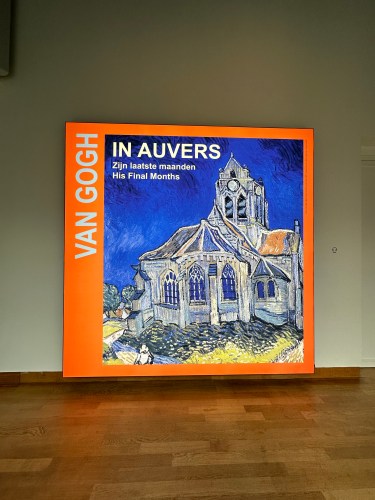
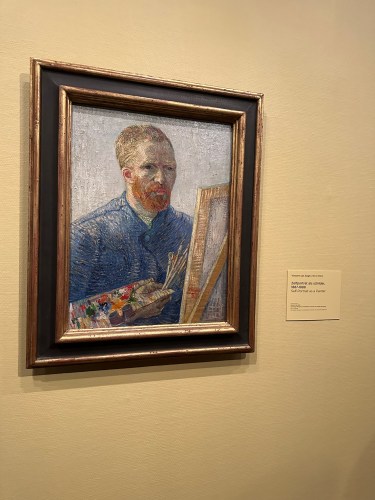
A marker stands by the park’s frontage. A loving dedication to a most venerated visitor-resident who moved from Paris to this Provençal town. He may have been “chasing the softer light” in Provence but I suspect what he found as well was something to “quiet” his soul and pacify his troubled mind. Away from the city chaos, Vincent painted away madly in Arles, as he did in St. Remy de Provence while in asylum and finally in his last residence in Auvers-sur-Oise. The exhibit we viewed — “Final Moments in Auvers” — at the Van Gogh Museum in Amsterdam prepared viewers to the artist’s mind’s turmoil as he moved from Arles to St. Remy to Auvers. In today’s world, science may have tagged him as bipolar or suffering from ADHD. Who knows? What’s known for sure is that he painted a lot in a very short period of his artistic life. Darn, he painted madly in his short life. Dead at 37, he left behind many sketches, etchings, paintings of landscapes, nature, still lifes, peasants, and quite a pile of self-portraits. In all this, he proclaimed: “Art is to console those who are broken by life.Poignant message. Pierces the soul.

Street Scene in Arles?
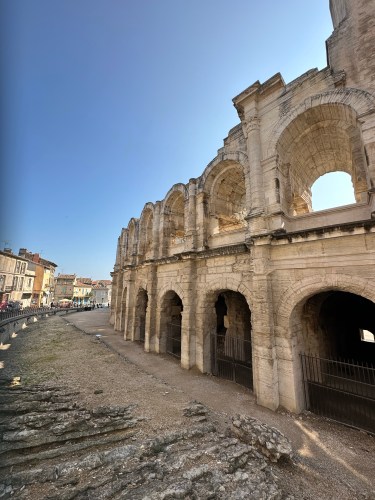
A Roman Arena in Arles

Who can say what he found in Arles while he lived there? Stayed 15 months, created over 300 masterpieces. Just like Picasso, Arles ignited his passion and provided him innumerable objects of inspiration. He loved painting nature, and painted it in bold, dramatic hues. He may have exaggerated the “force” of the howling wind from the Mediterranean, brightened up several notches the starlights and the moon and the sun, deepened the blue hues of the sky. My apologies — I’m rambling. No art expert here. Just a regular fan’s musings. Indulge me. 😊

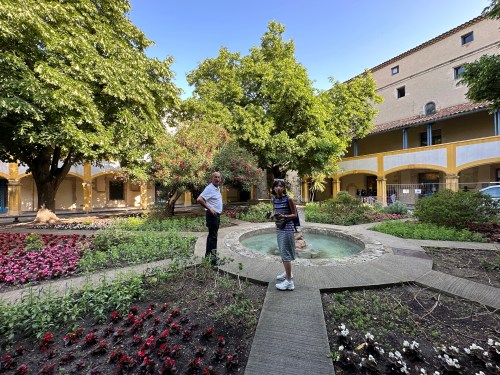
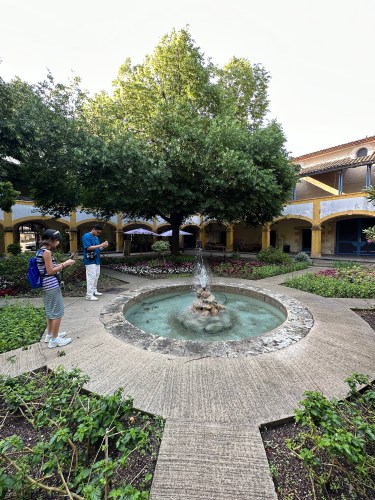
Espace Van Gogh

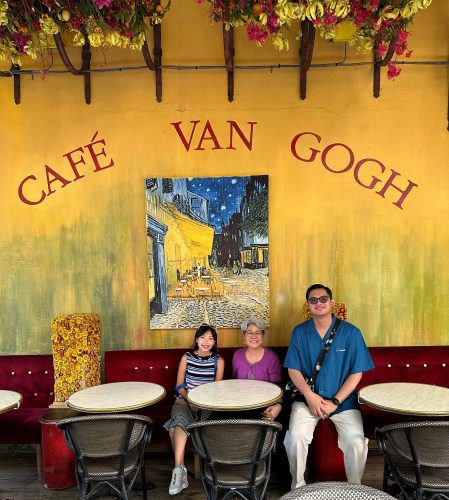
For sure, he found time to indulge himself. The Cafe de Van Gogh is marked as a tourist trap but how can you dismiss nor ignore this place? He painted Cafe Terrace at Night with this inspiration. The starry night background started a series and it is reported that Van Gogh has developed a stargazing habit which may have been prompted by some religious attachment. He proceeded to paint more star-filled skies after this, the most epic of which is “Starry Night”. At the same time, his stay in Arles was marked by an ear-slicing incident that brought him to a hospital just before Christmas. He had a serious altercation with Gauguin who lived with him in Arles briefly in a two-storey yellow house immortalised in a painting. Sadly, this incident marked the start of the artist’s deteriorating mental health. It won’t be long after this hospital stint that Vincent volunteered to be admitted in an asylum in St. Remy de Provence. Amidst all this turmoil, he created many works of art. The hospital courtyard is now called “Espace Van Gogh” and is included in every typical Van Gogh Tour around Arles.

“Great things are not done by impulse, but by a series of small things brought together.” — Van Gogh


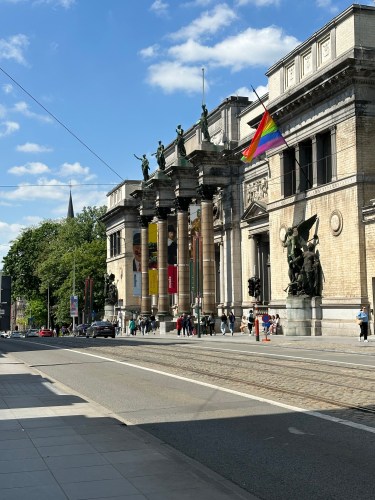
We covered a lot of museums in Amsterdam. Like 7! But only 1 museum in Brussels. Both cities proud of their Van Gogh and Magritte. One with a troubled Dutch mind who found expression in his art. Another who was quite happy with his life as artist, husband, leader and friend and expressed his joys in his art.

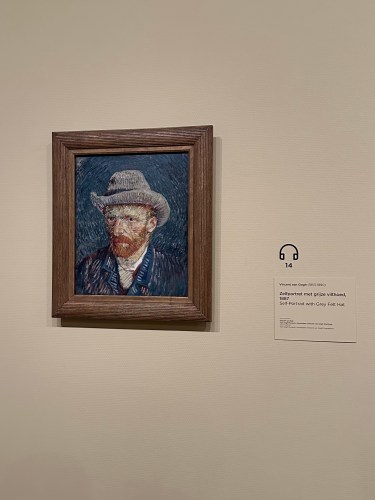
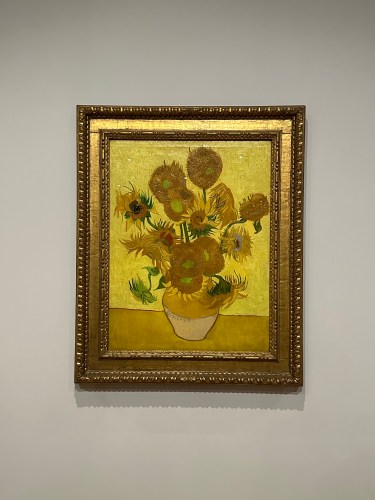
The Van Gogh collection is impressive. In his short life, Vincent was prolific, painting almost every single detail of his brief existence. With his numerous self-portraits, you can say he indulged in selfies. The dark rooms and galleries are intended to safeguard and protect his many artworks. The art world has Theo (Vincent’s brother) to thank for supporting Vincent throughout his turbulent moods and insecurities. This brother’s love is soooo moving, and one can understand how and why Theo passed nearly as soon as Vincent left. And just as touching was how Theo’s wife Jo made sure this Van Gogh collection found their way into our world today. Once more, the power of love made everything possible. How wonderful!

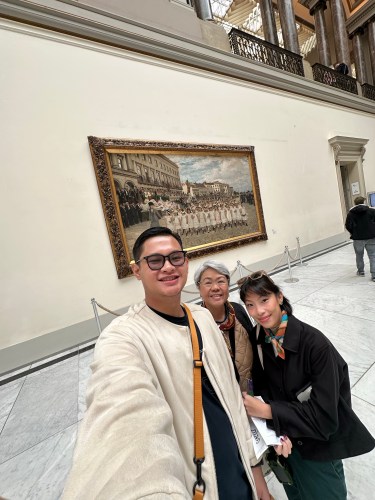
On the other hand, I find René Magritte’s collections so well-curated in the museum in Brussels. For less than half the admission price of major museums in Amsterdam, the Magritte Museum is truly value for money. The museum is massive and the collections hung so impressively. Like a lot of thought went into planning how the artworks should be displayed. It is easy to spend a whole afternoon here, and even to “space out” to enjoy this master’s works. The crowds are mostly locals, like Belgian schoolchildren and young adults likely studying art here.

I know. You love Van Gogh. Can’t miss it in Amsterdam. But do visit Magritte Museum in Brussels too. Twice as big if not more than Vincent’s museum in Dutchland, and equally impressive.