And just like that, we only have a couple of weeks before the year 2026 sets in. This early, we’ve mapped out some travel plans already for the coming year. Siargao in January. Kerala, India in February. Back to Sydney in March for quite a time, till June. And for the 2nd half of the year 2026, a river cruise along the Rhine. God knows where else we’d find ourselves in in between those planned trips. There’s Hokkaido and Medan, Indonesia in the drawing boards. And of course, that forever plan to watch Messi play — either with Inter Miami or with his national team Argentina for the coveted back to back win in the World Cup. Busy 2026? Perhaps busier than this year 2025. I’ve skipped many trips with my travel mates this year — choosing to spend more time and holidays with the family. All good. 👍
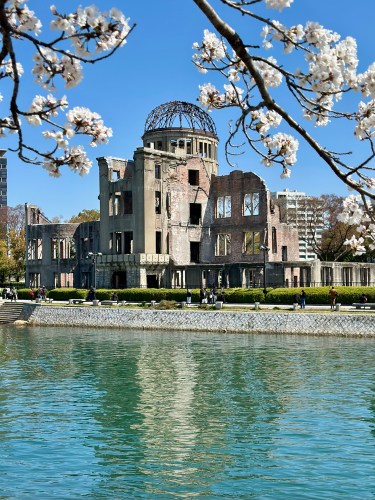
Hiroshima
Started 2025 with a trip to Fukuoka although we stayed in Hiroshima for the most part. Despite the grim reminders of the horrors of war, the white and pink Sakura blooms cheered us up all throughout that spring holiday. For the 3rd time, I visited Miyajima Island to enjoy once more the iconic Torii gate and the succulent oysters and eels the island is famous for. Back in Manila for the necessary preps for a bigger trip to Spain and France. This European holiday is my first trip with a grandnephew based in Sydney, plus a niece whom I wanted to introduce to the camino as well as take to Lourdes, France for some “spiritual experience”. From the Gaudi-inspired city of Barcelona, we took the train to Pamplona and met up with cousins to Saint Jean Pied de Port to Roncesvalles to Lourdes to Paris. It was time very well spent. The sightseeing, the pilgrimage walk, time with family, the art and culture aspects of a trip and most importantly, the bonding time while experiencing all these lovely adventures and creating happy memories.
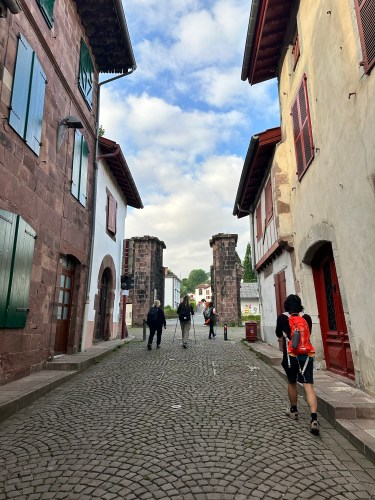
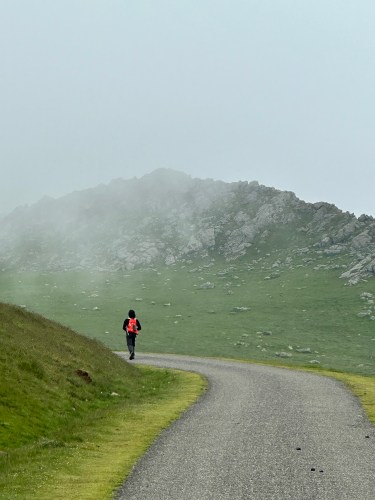
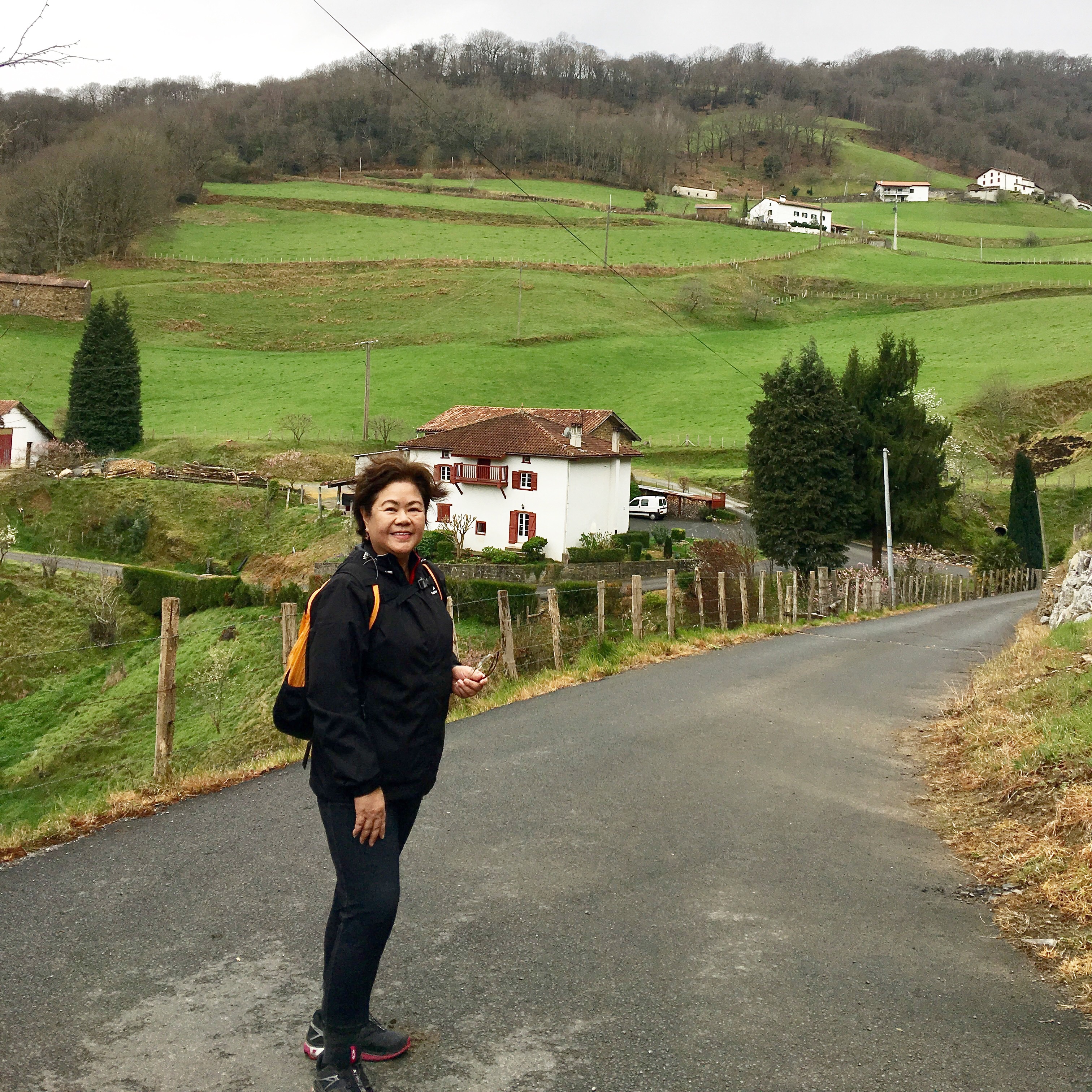
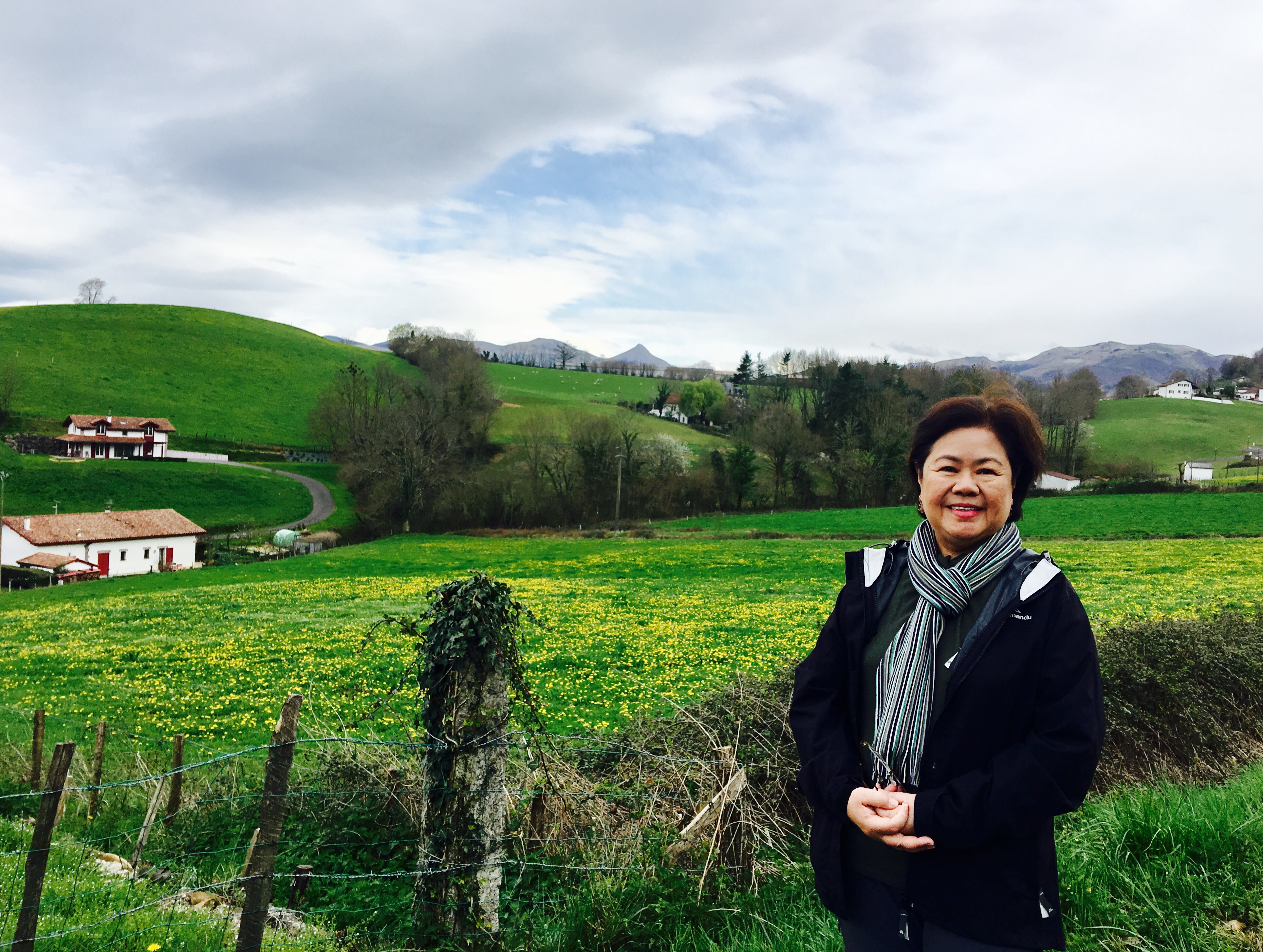
Walking out of Saint Jean Pied de Port in France to cross the Pyrenees into Spain.
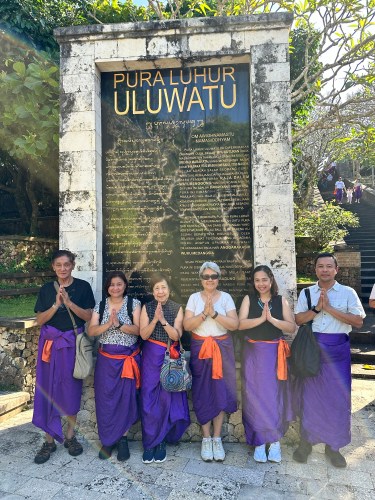
Soon after this European trip, I only had a few days to pack for another holiday. This time, in Bali, Indonesia where more kin from Sydney flew in to join me for 5 days of sun and sand. We made sure the trip is “senior friendly” as my 81 year old sister and brother-in-law are joining. That is not to say this newly-arrived (from a hectic trip) septuagenarian didn’t need a break. Quite honestly, I actually rested so well in Bali. It was truly a relaxing holiday after a fast-paced holiday with a younger set. Just what I needed!
With family in Bali.
Fukuoka in spring. Fukuoka in end of summer. Yes, I returned to this lovely city in September, this time with my “Apos” to attend my nieta’s art exhibit. But I hardly did anything outside of just being present. The twenty-somethings did all the planning, flight and tour bookings. Including all dining and shopping itineraries. Not bad. I can get used to this. We ate well, even if I thought we had too much coffee and ramen. I sat out the shopping part, but I enjoyed the new spots which the younger sets prefer. Besides, we are actually here for the Art Fair Asia Fukuoka !
Before the year ended, I joined my friends for yet another trip — to Kaohsiung in Taiwan. This is my first time here as I’ve only been to Taipei and nowhere else in Taiwan. Just a quick trip. Aside from shopping and eating, I only managed to visit Pier 2 Art Center. On 2 consecutive days, I visited the area which is just a short walk from the hotel we booked. Just as well. The pier is a massive place dotted with brick warehouses cum shopping and dining areas, and parks with very interesting art installations. I’m sure my young family members would love it here. But next visit, I’d be sure to time it during cooler temps. It’s hard to endure the sun in the open-air art spots. The afternoons by the river are more pleasant though.
Pier 2 Art Center. Kaoshiung, Taiwan.
And so, here ends 2025. How has it been? We look back with gratitude and look forward with hope. In a few, the year 2026 beckons. A third of the coming year is all planned out this early but the remainder is still there, leaving room for exploration. For adventure. For surprises. Oh, don’t we all love surprises? I am ready for the coming year. Are you? 💕🎉🙏🍾🚘💃✈️🚂🛳️⛱️🏕️⛰️🏝️
(Been advised this blog site — Travel Blog — may soon close. So I’m transferring some of my 180++ blogs to my Lifeisacelebration site starting with this 1996 travel blog)
At the time I visited Israel in 1996, I was not a very spiritual person. Perhaps I am still not. But I know that after this visit, I came home a changed person. Still a ‘work in progress’. But one’s got to try.
I have said rosaries every now and then before, and I say them almost daily now. And this time, I ‘feel’ every passion in each rosary bead. Covering Israel is very much like saying the rosary every hour every day. The passion of Christ in each and every rosary bead is most felt in this Holy Land. Heretofore I would recite the rosary in an almost mechanical fashion. But now, I can picture the very image of each and every mystery and feel the presence of our Saviour in a most spiritual way.
Our journey started with a flight out of Athens airport bound for Tel Aviv. Despite the hassles and the ultra thorough inspections and interrogations regarding our checked-in and carry-on bags, we felt so safe flying El Al. We landed uneventfully at Ben Gurion International Airport in Tel Aviv. Soon after retrieving our bags, we were whisked to our hotel by the shore. I never realized that Tel Aviv is by the coast, so I had to review my map and couldn’t help feeling happy about our accommodations. Our hotel room has a splendid view of the Mediterranean. Almost as soon as we checked in, we jumped out of our traveling clothes and donned our shorts. We hit the beach hoping it would be deserted in this cold spring. Were we wrong. There were a lot who had the same idea, but we were lucky to find empty benches. With a book in hand, we spent the rest of the afternoon at the beach. I noticed that the people here are very very conscious of security. There was this man working in the beach who did nothing but ‘scan’ the beach with this metallic thing which I can only presume to be a bomb scanner or whatever it’s called. Every inch of the beach area is inspected, scanned, checked. That’s good. But the system was not thief-proof. A couple in our group joined us at the beach, enjoyed the breeze, very irresponsibly left a bag on the bench, admired the scenery, sat back on the bench and took sometime to realize their bag was missing. Guess what. The bag contained all their valuables……..passports, cash, credit cards, plane tickets. Why they had to bring all that stuff out on the beach , I fail to understand. And there were safety deposit boxes in the hotel! Mazeltov…………..that’s good luck in their local language. (Pray tell me, is it Jewish or Hebrew?) The poor couple had to cancel their whole trip and work on their travel papers. Our very kind Tour Director, the very Jewish David, lent them money to tide them over. Oh, what misfortune! And it is only our first day in Israel.
The next morning, we were all pleasantly surprised with the buffet spread in the hotel. It was a lovely way to start our day. I had absolutely no idea what Jewish cuisine is, but whatever I ate, I liked. There were pickled fish much like the pickled herrings I tried in Amsterdam. And they also served rice! Perhaps because Tel Aviv is a city by the coast, there were a lot of seafood……their fruits from the Mediterranean Sea! Mostly smoked or pickled, which I love. And so, on full stomachs we joined our tour group on the many fascinating sights on this Mediterranean shore. We took a walk in the beautifully restored ancient port of Jaffa. This is where medieval pilgrims started their strenuous 2 day trek to Jerusalem. We were given just a few minutes for some picture-taking before we were advised to join the bus for our ride to our next stop, Caesaria. Going north, our Tour Director David took us to Caesaria’s Roman Amphitheater and the impressive Crusader Fortress. Enough to remind us of the Roman and Crusader presence in this area. I can’t recall if Caesaria was named after Julius Caesar or Augustus Caesar, but I do recall that Pontius Pilate held court here! Or was it Herod? Oh my. Frankly, I wasn’t prepared for the Roman ruins in Israel. A Roman aqueduct? I forgot this area was part of the Roman Empire. Which speaks a lot about how ignorant I was. Neither was I prepared for the vineyards here too!There were also apricot groves on the slopes of the scenic Carmel mountain range. At Muhraqa, David reminded us of the prophet Elias’ contest of faith with the priests of Baal. Gosh, I really need to read up! David puts us to shame! You should meet David. Here is one guy who is very very proud being a Jew. Loves his job as Tour Director, but never compromises on discipline. He’s a character. You should see him nearly scream at us whenever we take far longer in any one area………… threatening to leave us behind. And he always had this pole with him, that I was almost always imagining one of us will get struck with if we test his patience too far. When we reached our hotel in Haifa, we were famished. All that walking, plus the rising temp, made us hungry. And David won’t stop for snacks. He said , “they serve good dinner in Haifa. Don’t spoil appetite”. 😊
Yes, it was a good dinner. Also enjoyed the company. By this time, we have formed ‘cliques’ within our travel group. An American Jew, Steven, joined 5 of us Filipinos and called ourselves the ‘Lalo Group’. Steven learned a few words in our language, one of which is supposed to mean a jerk. The word is ‘gago’ (jerk) but Steven would always say LALO. Over dinner, we learned that Steven has long wanted to visit Israel and meet up with long lost relatives of his mom in Jerusalem. He was traveling alone, but starting today, has found his LALO family in us.
In Haifa, we spent the next morning visiting the Bahai Shrine, the world center for the bahai faith. The golden domed shrine was the backdrop for our group picture. This was suggested by David, who said it’s better done this early than later! No one dared argue with this man. Next we went to Acre, which was the capital of the Crusader Kingdom after its conquest by Richard the Lion-Heart. We marveled at the forbidding Ottoman fortress and toured the excavated part of the immense underground Crusader City with all the secret passageways! The vaulted crypts of the Knights of St. John was quite a sight.
After lunch, we proceeded to Nazareth where we visited the Church of Annunciation and St. Joseph’s workshop. Then we went to Cana, the site of the first miracle ……… where Jesus turned water into wine in a wedding party. Then we rode up towards the Mount of Beautitudes where Jesus delivered his sermon on the Mount. Here, I found an elderly nun who looked so angelic. She didn’t speak a word of english but had a ready smile for everyone. She is certainly bursting with unexplainable joy and her kind demeanor contrasts with her hunch and slowed pace. The scenery here is one for the books…….. we savored the panoramic view over Lake Tiberius before driving down to the lakeside Kibbutz Ginosar. We were led to very spartan rooms here where we would spend the night, to freshen up before dinner. Some of the guys went for a swim before dinner. This is one working community here. Hard to believe how the kibbutz system works wonderfully for the people here. We found all the kibbutz members busy. Not an idle hand. We were served dinner which consisted of their own produce from farms worked on by the men, cooked by their own women, served by their own children. After dinner, some of us stayed on to listen to a lecture on life in a kibbutz.
Yesterday was a long day, and each one in our group must have slept soundly last night. We were all looking fresh this morning, eager for a cup of coffee and another kibbutz meal. Over breakfast, Steven expressed his excitement now that we are driving towards Jerusalem. We shared the same sentiment, knowing that Jerusalem must be the highlight of this trip. On our way, we made a stopover at the Church of the Multiplication of Loaves and Fishes in Tabgha. The second miracle! Then off to Capernaum where Jesus recruited his disciples among the fishermen. Here we also found St. Peter’s Memorial.
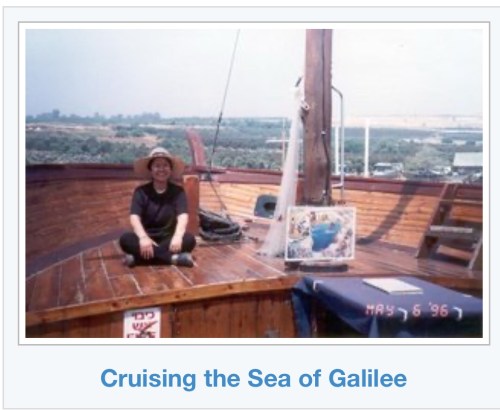
Just before noon, we took a boat to cruise the Sea of Galilee, and prayed our rosaries. That was one time David was truly quiet. When we finished, he said that we may not share the same beliefs but he has found a deep respect for our faith. What a wonderful thing to say. I think that ‘softened’ the man since, as he was more accommodating and less exacting after this episode. He even gave us a long time to enjoy a good lunch after the boat ride. Naturally, we took the chance to check out the restaurants by the Sea of Galilee (which is really a lake). Most eating places in this part of Israel boasts of the local delicacy – the St. Peter’s fish. I ordered one, and came face to face with a fish that looks exactly like our very own tilapia back in the Philippines. Only that, it cost me 5 times its worth here in Galilee.
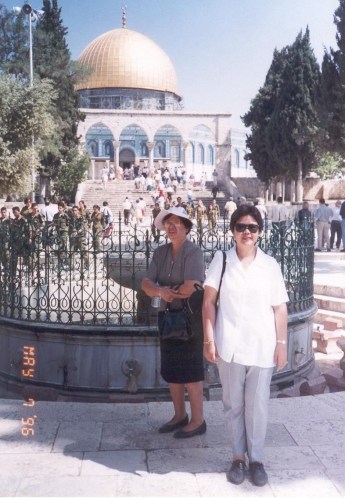
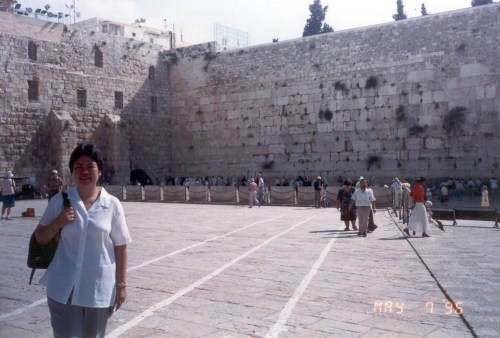
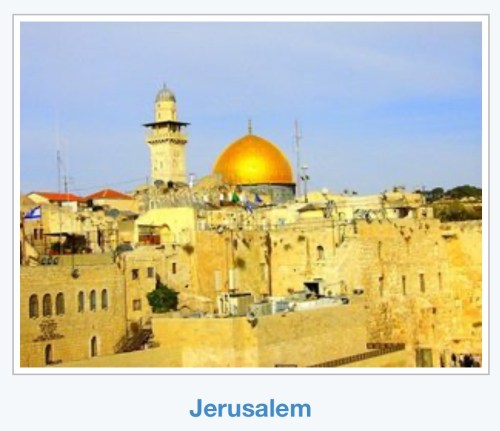
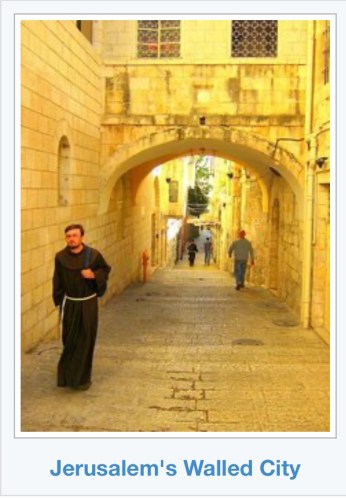
After my very eventful lunch, we headed towards the River Jordan. We were reminded by the baptism of Jesus by St. John the Baptist . There were many pilgrims in the area, all lined up for their “baptism” at the River Jordan. Although it was not part of our itinerary, David allowed a couple of us to join the line. I was so moved by this, that I had to take a moment to recover. A newfound spirituality must have been born or reborn then. I cannot explain it. I just know that somehow, my take on all these has been changed. After recalling all the mysteries and miracles in the places we have visited, I felt I was having my own miracle here. By the time we reached Jerusalem, everyone in the group felt a different kind of excitement and started to consider this trip as our own pilgrimage too. The following day, our very reliable David reminded us all over breakfast to wear comfortable walking shoes. Our hotel is so ideally located, just some 10 to 15 minute walk to the Old City or Walled City. Soon, we were all following David on a stroll of the lovingly restored Jewish Quarter all the way to the Wailing Wall. I may not be Jewish, but I certainly imbibed all that spirituality along the Wall. So many have prayed here. So many have wailed, maybe asking for forgiveness or invoking their petitions. David reminded me to walk backwards after praying, the way the Jews do. I took it to mean that we must never turn our back out of respect. On Temple Mount, we found the Dome of the Rock, a splendid Islamic Mosque. From here we traced the 14 Stations of the Cross passing the Armenian Quarter, Christian Quarter , through the Via Dolorosa towards Golgotha. There, we entered the Church of the Holy Sepulchre. Erected over the site of the crucifixion of Jesus Christ, this Church, destroyed and rebuilt many times, is now shared by 6 Christian communities. David pointed to a spot where Jesus was brought down from the cross and laid. Dear God, I can’t explain all this heaviness in my heart. And I learned everybody else in our group felt the same way. Sinner and imperfect that I was, I longed for forgiveness then and there.
It was good we had to walk back to our hotel, if only to wear off the feelings of sorrow. Before dinner, we said our prayers more fervently, more seriously. Tonight before sleeping, I prayed the rosary and recalled each sorrowful mystery as if I was again walking through the Via Dolorosa, passing all the Stations of the Cross.
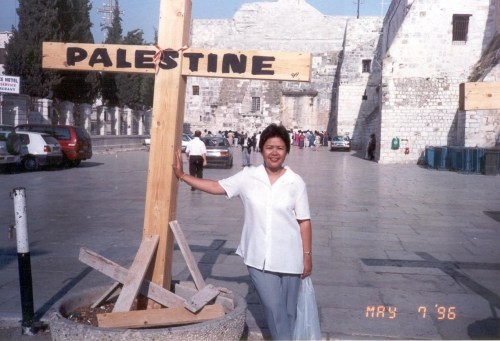
The following day, we boarded our bus for our excursion to Bethlehem, the birthplace of Jesus Christ and King David. Here we visited the Church of Nativity with its very low entrance door. David explained that it was designed as such so that those riding their donkeys had to dismount. Truly, the door is just a foot higher than a donkey. We all stooped to get in, and found a long line for the “Star” which marked the very spot where Jesus was born in the Manger.
The Star has a hole in the center where one can reach down and touch the very rock where the stable was. Those in front of me in the line were crying as they neared the Star. Now, I thought then that that was way too emotional. By the time I reached the Star, and had my hand touching the rock, I was shedding tears as well. I do not know where all that came from.
When we were done, our bus took us to the Garden of Gethsemane at the foot of Mount of Olives. The Church of All Nations stand here now, in the midst of all the olive trees that bear witness to Jesus’ Agony in the Garden. David pointed to an olive tree which was supposed to be the very spot of the first sorrowful mystery. From here, one has a good view of the Walled City and the gate by which Jesus entered Jerusalem on Palm Sunday.
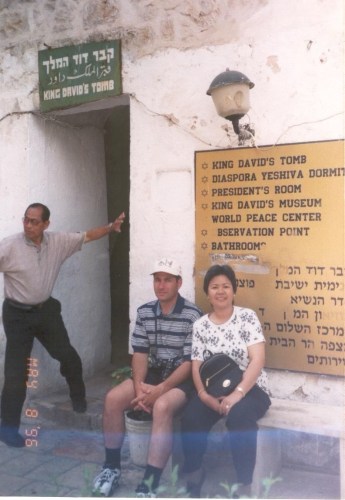
Most of us took the optional excursion to the Synagogue of Hadassah Hospital with its famous Marc Chagall windows. The excursion also included a visit to the Shrine of the Book and the Dead Sea Scrolls, Mount Zion with King David’s tomb, and the room of the Last Supper. David pointed out that two of the pillars in the Upper Room are still originals. Silent witnesses to the Last Supper. Jesus with his 12 apostles, including Judas Iscariot. The last leg of this excursion was a visit to the Yad Zashem Holocaust Memorial. We entered this structure in a line, with Steven right in front of me. We walked through a corridor that was very dark, where one hears taped voices of Jews, old and young, agonizing over their plight. There were memorabilia all around, pictures of the holocaust, grim reminders of man’s cruelty to his own kind. By the time we got out of the Memorial, Steven was in tears , a grown man crying unashamedly. When we got on the bus, David asked if there is anyone in our group who would like to watch an Israeli folklore show. No one was up to it.
The last 2 full days in Israel was highlighted by a trip to the Dead Sea, the lowest point on the surface of the earth, and Masada. Along the way, we caught glimpses of the caves of Qumran, where the precious Dead Sea Scrolls were found. David reminded us to bring swimwear so we can check out the Dead Sea’s buoyancy owing to its extreme saltiness. This was fine, but I have to say that the next stop promised more excitement for me. Masada, the last stronghold for nearly a thousand Jewish Zealots who preferred death by their own hands to the indignity of surrender to the overwhelming Roman forces. We reached Masada by way of a cable car to the spectacular cliff fortress. At the very least, the people of Masada proved to one and all the extent of their conviction and pride as a people.
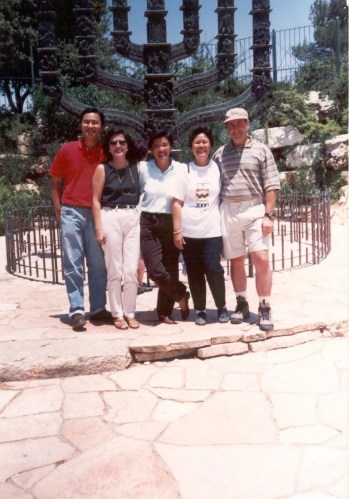
From Jerusalem, our bus drove back to Tel Aviv where we were to spend our last full day in the land of the Chosen People. We took the scenic winding road towards the Land of the Philistines. We stopped at the site where David defeated Goliath. This was followed by a visit to the Monastery of the Trappist Monks. Soon we were back in Tel Aviv, ready to explore more of the nation’s capital. We strolled through the city, did a bit of shopping (where i got a menorrah(pendant) and checked out the bands by the beach. Cool…….there was even a reggae band.
Over our farewell dinner, I felt kind of sad that I may not be seeing David, our Tour Director. We didn’t start off well on this tour, but everyone in our group agreed that David warmed up as days passed by. We made sure that we would all fill out the Globus Questionnaire and put in good words for this kind man. Yeah, a little bit dictatorial sometimes, but a very compassionate and spiritual man. Just before calling it a night, we went for another stroll by the beach , enjoyed the breeze, and silently wished for another chance to visit Israel in the future. Lastly, I prayed my rosary and held each bead like each one truly counts in this land.
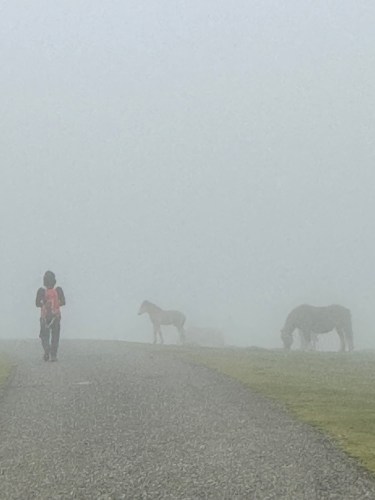
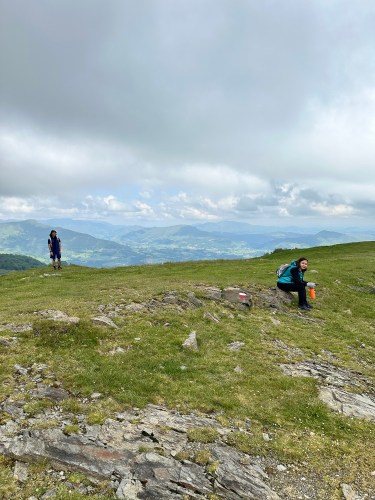
The first 20 kilometers or so was a gruelling uphill climb. Up until the Refugio Orisson, and further up to La Vierge (12 kms) where we arranged to be picked up by our mountain shuttle service. Further up is the Cross Thibault. I have great respect for those who hiked the entire 25 (or 27.5?) kms from SJPP to Roncesvalles in a single day. Man, that was hard! We broke the stage over 2 days and it still was challenging. For some, 25 or 27.5 kilometers may not seem so daunting. I’ve walked far longer in earlier Caminos but gaining over 1,300 meters elevation spells a major difference! The last time I did this was in 2017 but I took the Valcarlos route because Orisson was all mist and the center closed the route for the pilgrims. This time, I wanted to do the Napoleon Route which passes Orisson and Borda. The claim that this stretch is the most difficult because of the ascent is very true. Can’t disagree with that. It helped that the Pyrenees is simply so lovely and the mountain scenery in all its misty beauty distracted us from the rhythm of painful strides as muscles here and there ached. Beautiful meadows and farms and looking back, breathtaking vistas of the valley. Plus the wildlife, counting sheep, wild horses and cattle with mountain bells strung around their necks. I only started worrying when we strayed off the mountain roads and walked on cliffside rocky inclines. Too careful I’d step on and dislodge some stones or slip over some rolling rocks, my cliffside glimpses somewhat affected my sense of balance. And confidence. But we made it. Struggling, but not miserable. We persevered.
From what I’ve read, many pilgrims miss the La Vierge — a spot where a statue of The Virgin stands — and the border between France and Spain as one crosses the Pyrenees. This is Navarre. We were mindful to keep this in mind. We also took note of the highest point — this is Col Lepoeder. No way one would miss this. It’s that high point from where it’s nearly all downhill for 5 kilometers or so. It is also the spot where one decides to go left into the beech forests (one of Europe’s largest) or right via “abandoned” country roads. Either way you end up in Roncesvalles. Reportedly, “left is death” and “right is life”. You bet we headed right. And even then, I have committed the numbers 112 into my memory. That’s the European emergency numbers. Like 911. About 3 kilometers down the country roads, one glimpses the rooftop of the grand looking monastery of Orreaga. That’s Roncesvalles in Navarra. A big sigh at this point. The struggle is about to end. The very welcoming hospitaleros in the historic monastery stamped our pilgrim’s passport and promptly led us in to book our beds. But alas, our mountain shuttle was there to ferry us back to Saint Jean Pied de Port for our 3rd straight night. We boarded our van like little children, eager to reach our crib and put up our aching legs before a hot shower. How sweet to get this over and done with. How fulfilling that we persevered and completed the first stage of Camino Frances. Hopefully, my companions will find themselves back on the mountain and forest paths to complete their pilgrimage walk.
Back in 2017, I planned to walk from Saint Jean Pied de Port (SJPP) to Roncesvalles via the Napoleon Route. Unfortunately, that route was closed off due to weather conditions and I instead walked via the Valcarlos route. While I enjoyed this first leg of the Camino Frances, I felt cheated of what is claimed to be the most scenic route crossing the Pyrenees from the French border into the Spanish town of Roncesvalles. And so, I decided I’d give it another try after 8 years. My hair has since turned grey and the young friends I’ve met from the Express Bourricot transport office have matured and ready to build their young families. For a village of 1,500 French-Basque residents, I love the fact that most anyone know everyone.
Start of the Camino Frances
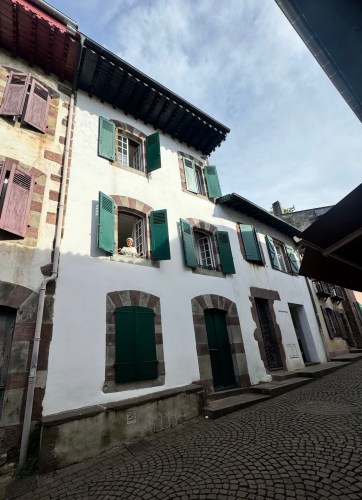
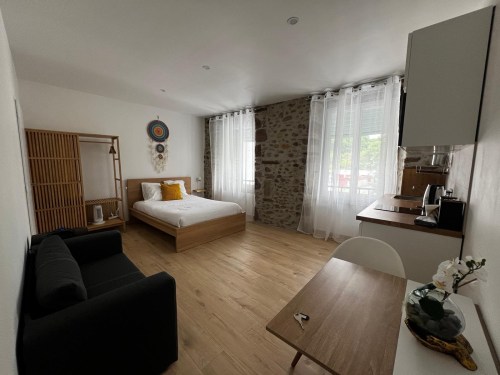
We booked a lovely apartment for 4 nights in Saint Jean Pied de Port (SJPP). The idea is to walk for 3 days, but stay in the same place. That means we get fetched/transported back to our flat after each day’s walk, and next day driven back to the point where we were earlier fetched to pick up where we left off. Sounds neat. Saves us the trouble of packing & unpacking and sleeping on different beds every night. Also, I like the idea of having a “home” even for 4 nights — with ref and pantry adequately stocked with fruits and groceries. We also love doing the laundry!
Our SJPP Crib
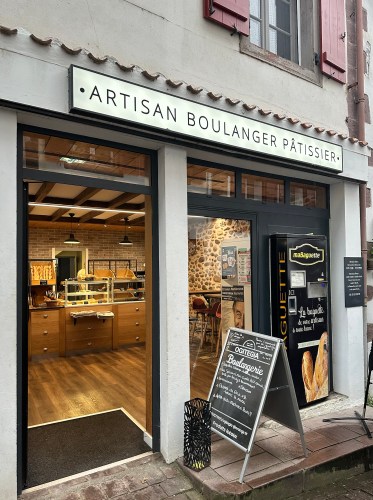
A day before our departure for SJPP, I got an email from Alicia (who runs the apartment) that SJPP experienced some heavy rainstorms and our rooms got flooded. Major headache, as it was too late to look for a sub. Alicia was kind enough to book a replacement apartment only 150 meters away. Trusted her completely and crossed my fingers there wouldn’t be any further issues. As it turned out, we got 2 very roomy flats, each modestly but sufficiently equipped. The best part is it’s only a few meters from the gate towards the start of the Chemin de Saint Jacques (Camino) and right across it, an artisan boulanger patissier operates a shop from where the aroma of freshly-baked breads wafts through the misty air of this French basque village.
Boulangerie with A Baguette Vendo Machine
Every morning, we step out meeting other pilgrims buying their baguette from the vendo machine in front of the boulangerie. It’s like a ritual before setting off on the Camino. And by day’s end, some old folks sit by the bench munching their pastries with their espressos or chocolat. After a day’s walk, I enjoy opening our windows and peeking down, people-watching, while my beef steak or pork sinigang stews. A whole roast chicken for 3 pax too. Fresh white asparagus, mushrooms , iceberg lettuces and the stoutest bean sprouts completed most of our dinners. And those passing pelegrins must have sniffed the steamed rice from our kitchen! All that walking revved up our appetites and nothing beats eating our local dishes. Unlike in Barcelona and Pamplona, we only went out for coffee and pastries here in SJPP. Real meals devoured in our flats on a dining table by the kitchenette.
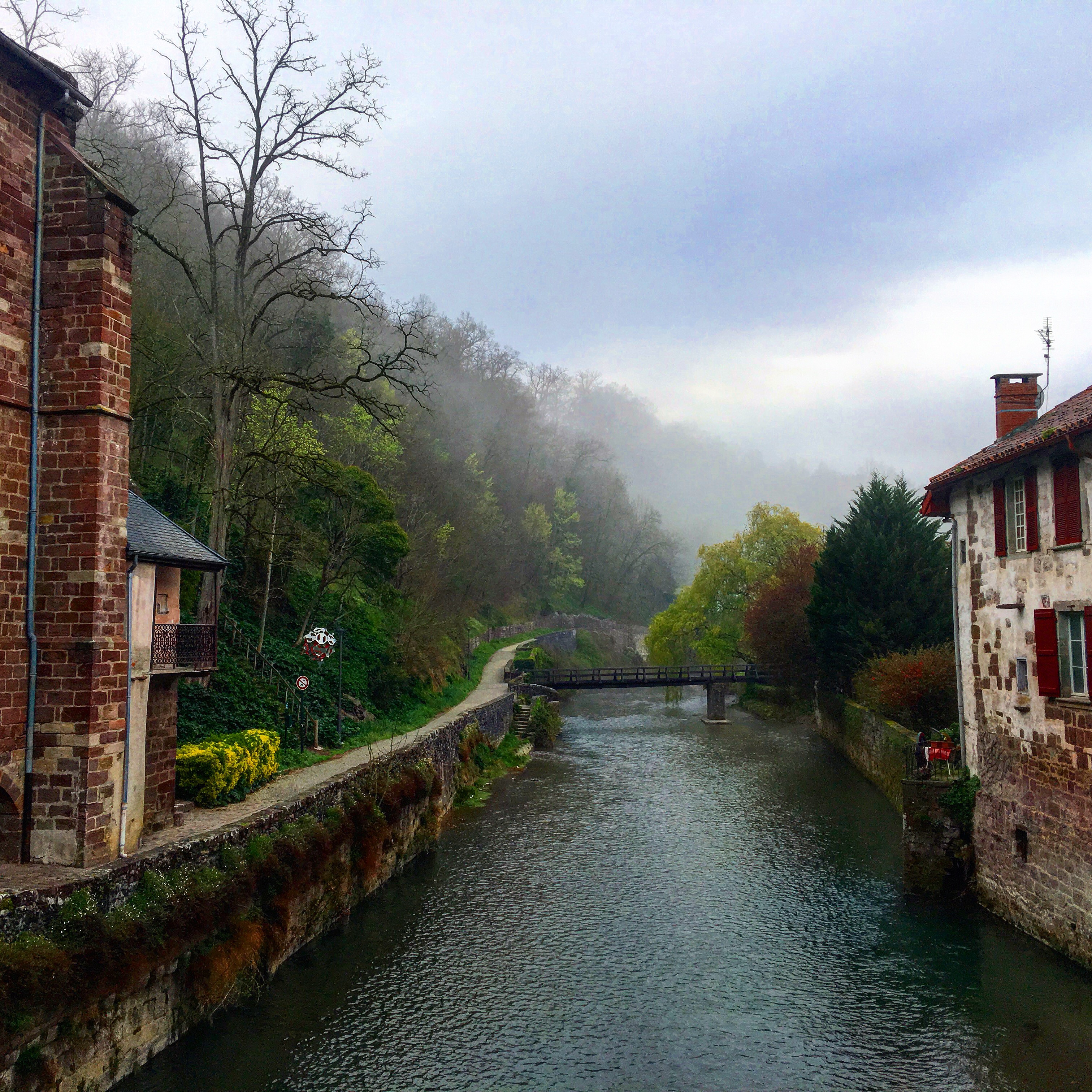
The Village
We started walking a day after we arrived. Got our pilgrim passports, shopped for groceries and visited the village church on the day we arrived. Also tried some shopping. The flats felt like home, especially after taking out of our luggage and hanging out our clothes for the next 4 days. Since it’s been raining the few days before our arrival, we took out our raincoats but prayed we’d be blessed with good sunny weather during our walks. Read what happened in the next blog 😉
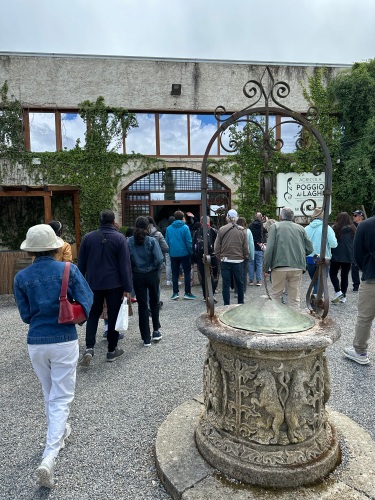
On an excursion from Firenze, we visited Monteriggioni and Chianti and was delighted to receive wine lessons from AGRICOLA POGGIO AI LAGHI where we tasted 4 kinds of wine, oils and balsamic vinegar. It was a wonderful, fun-filled session and everyone in the group thoroughly enjoyed the wine and oil tasting as much as the humorous spiels by the host. They even served us a good pasta dish. It was a penne pasta dish where we were all encouraged to spice it up with their chili pepper olive oil. Not bad. I actually like it despite the fact that the penne came from a box. (Seems we’ve been spoiled, feasting on homemade pasta all our days here in Italy) But I particularly enjoyed their thick, syrupy balsamic vinegar from Modena. Served with toast, but I can imagine it pairing well with some fresh strawberries. Hmmm. But back to wine, we found the winery so warm and welcoming. Quite a sensory experience just by being there, savouring every drop, every sniff, every swirl, every gulp. So very pleasant, indeed!
Cheers!2 kinds of balsamic vinegar. Gold spoon or Silver spoon?
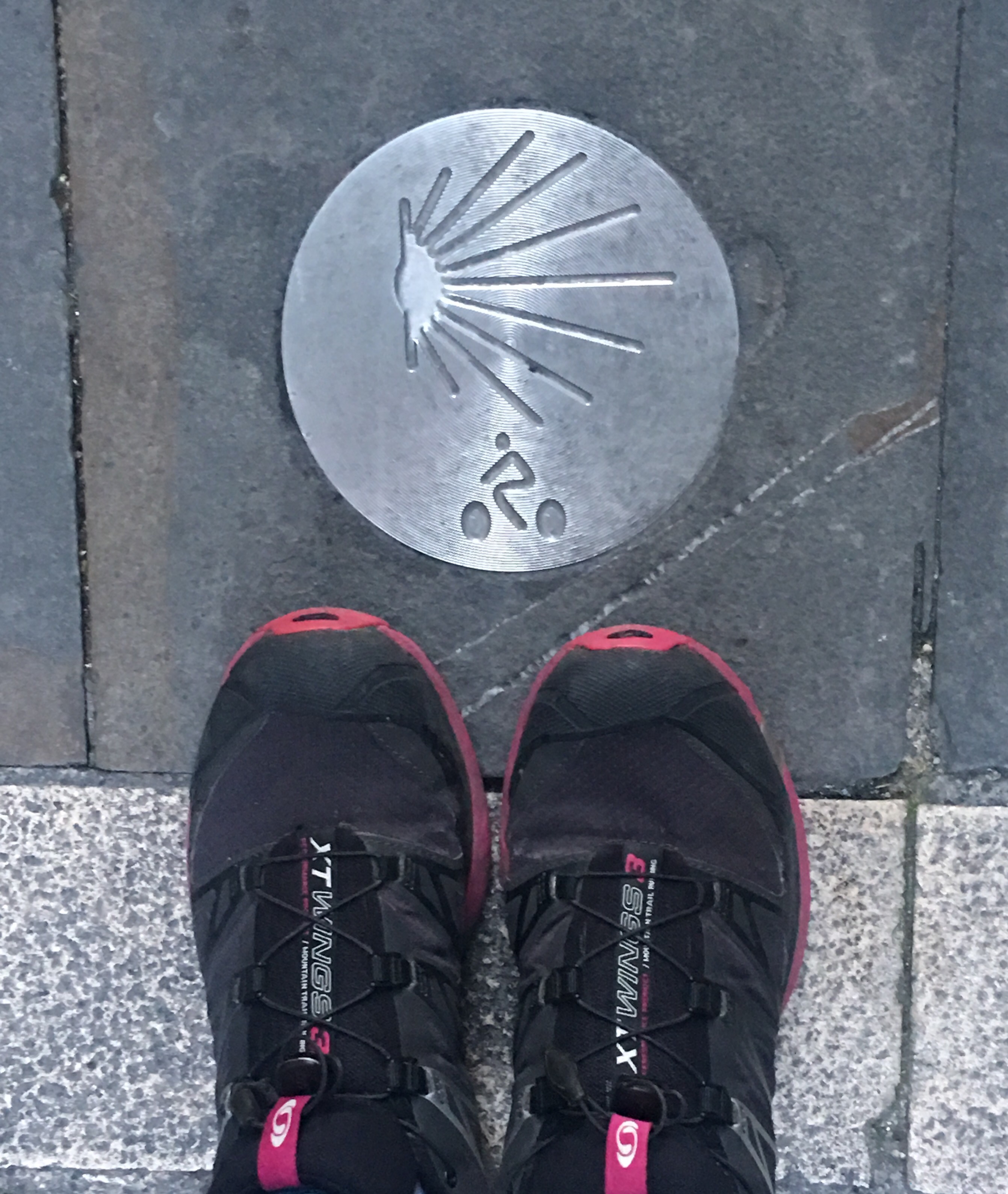
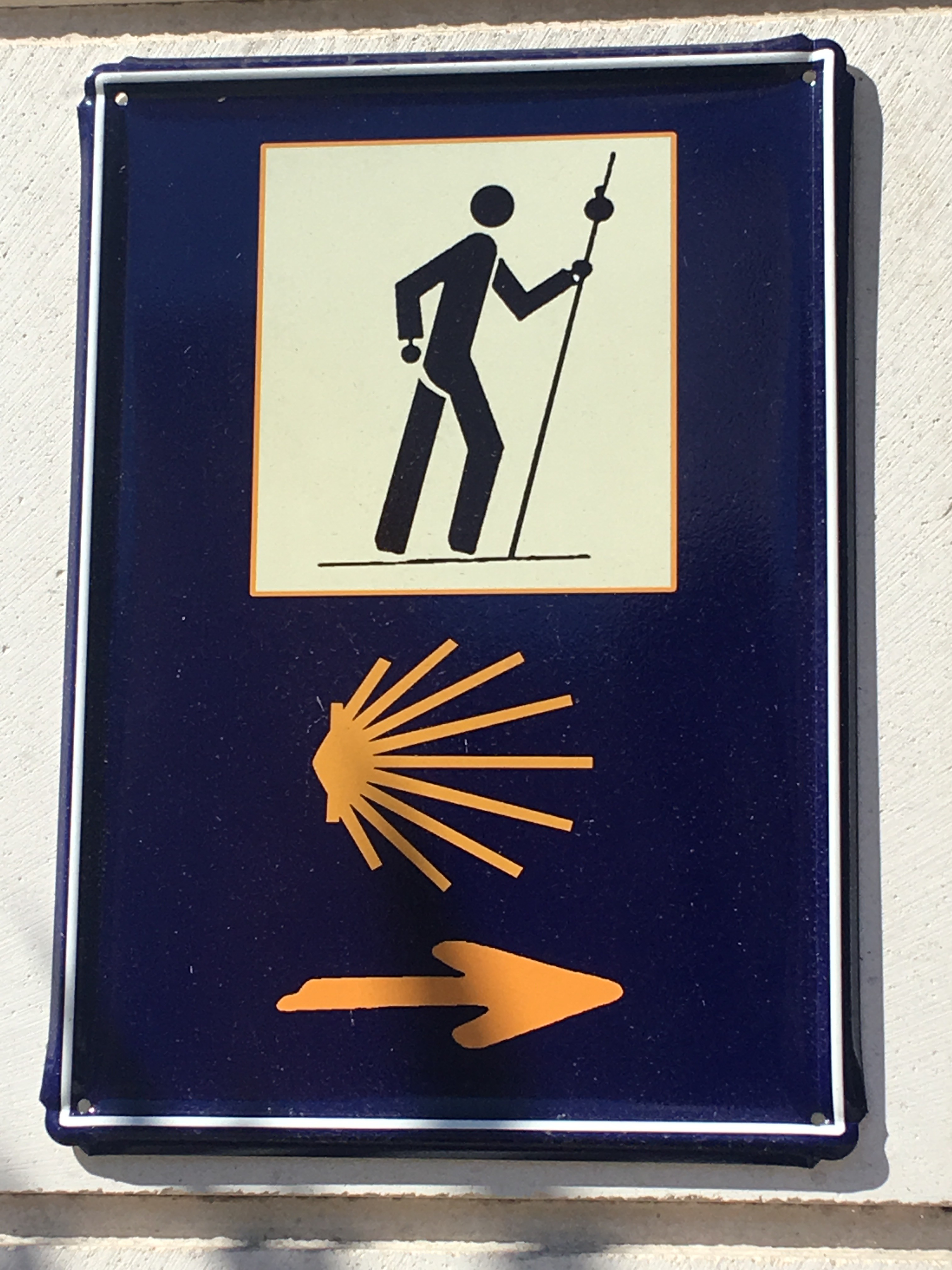
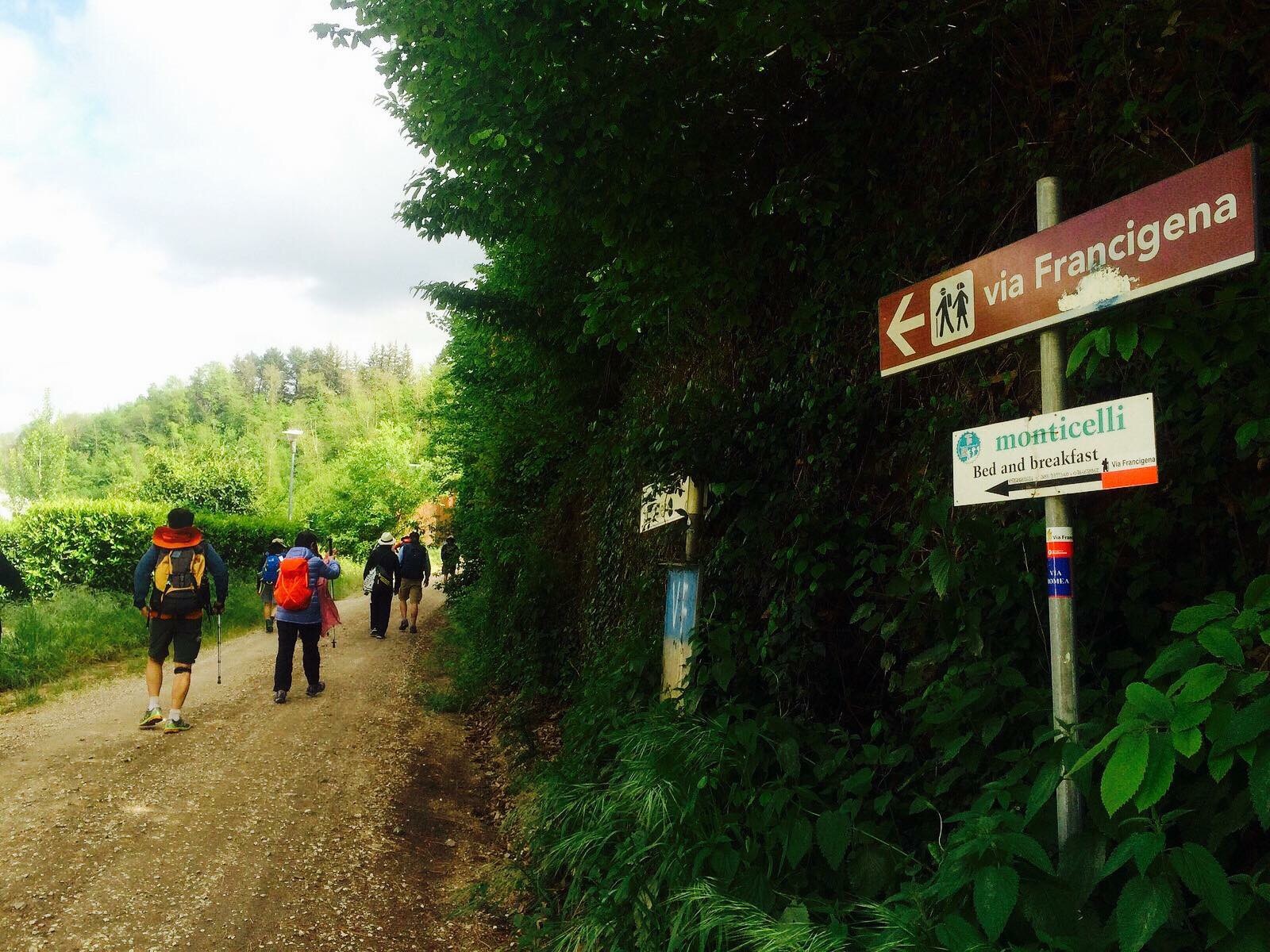
The winery caters to special events and parties. I can imagine big birthday and wedding celebrations here. Or corporate events, like a product launch. Must be equipped with a good kitchen, I presume. The set-up is quite impressive. The vineyards extend to the Monteriggioni area, a small commune with an interesting walled settlement dotted with tiny stores and cafes. A small chapel inside must have welcomed some pilgrims doing the Via Francigena as Chianti and Monteriggioni are along the Tuscan parts of the camino. When I saw the brown markers — as contrasted with the yellow and blue markers of the Camino de Santiago de Compostela — I was reminded of my pilgrimage walk some 8 years earlier from Viterbo to the Vatican/Rome.
Entrance to the WineryThe Wine Tasting Room
We may all be familiar with Chianti as a region and as a wine, but not Monteriggioni. When the guide gave us an hour to freely roam around, I thought that wasn’t enough time. Turns out it was really such a small compact commune that an hour is all you need. Yet it presents itself with a decent square, a tiny church, a cafe and a few stores selling local handicraft around the square or from the narrow alleys. Actually I felt I was in one of those Disney “lands”. Except that we had to hike up a decent distance to reach the piazza. Only needed a choo choo train to ferry us around and save some breath. 😩
Tuscany’s landscapes are a feast to the eyes. Coming from Firenze where art permeated the city’s soul, it was nice to breath in fresh air while sipping wine sourced from the vineyards right in front of you. The landscapes framed in the walled commune’s huge, arched gates are so pretty. Imagine this same scenery just before the grapes are harvested. Or when spring flowers are in bloom. Or even the tall, thin cypress trees swaying as the wind blows. Bellissima!
I realize I can’t do this in one go. Not all of 800 kilometers (500 miles) in one go over a period of 6 weeks or so. But after walking my first camino spanning the last 114 kilometers from Sarria to Santiago de Compostela, I knew it would be the first of many. One year after, I did the last 100 kilometers from Viterbo to Rome — what’s called Via Francigena which is the Italian equivalent of the Camino de Santiago de Compostela. Both tracing pilgrimage hiking trails, one ending in the northwestern part of Spain, the other ending in Vatican City.
The same year I walked from Viterbo to Rome, I likewise tried a short leg of the famed Nakasendo Trail from Magome to Tsumago to Nagiso in Japan. Like a preview or sampler of a longer hike sometime in the future. In Japan. But one idea continues to occupy my mind. The Camino Frances. From St. Jean Pied de Port (SJPdP) to Santiago de Compostela (SDC). Not just a part of it. The whole 800 kilometers of it. Yet, how? The mere thought of crossing the Pyrenees freaks me out of my wits.
First off, I accepted the reality that walking everyday for 5 to 6 weeks will make me miserable. Maybe I’d fail and go home limping, mad and frustrated with myself. So I’d settle for “mini successes”. Like breaking up the 800-km hike into 8-9 adventures, each involving 100 kms or so over 5 or so walking days. I thought the following itineraries doable:
Then, I read that the WORST, HARDEST, MOST PUNISHING walk is the first leg of Camino Frances. Specifically, the first walking day from SJPdP to Roncesvalles. Literally across the French-Spanish border in the Pyrenees area. No wonder most walking guides say most quitters do so on the first 2 days. My research taught me it’s also not as daunting as literally climbing up and down a mountain. Over time, this leg may have been “romanticized” as “crossing the Pyrenees” though that is not to say that it’s not difficult. Let’s just say there are ways to walk AROUND the mountains.
Many break the SJPdP to Roncesvalles route into 2 walking days, either stopping and resting the night in Orisson or in Valcarlos. Others simply skip this route and start their camino past the border in Roncesvalles. I’m determined to start from St. Jean Pied de Port. I’m also realistic enough to set this goal only up to Roncesvalles so that my next camino would be entirely in Spain’s Basque Country towards Navarra and Galicia. Small victories, I reminded myself. Just go past that crucial border crossing!
I hope to do this entire Camino Frances before I hit 71. Why 71? It’s the age I lost my old man and I just know that if he were around, he’d do this pilgrimage walk with me. Perhaps even at a faster pace! So there. Seems like a good plan. Wish me luck. God bless me with good health and the spirit to do this.
The equivalent of the Camino de Santiago de Compostela is the Via Francigena. The first ends in Santiago de Compostela in Northwestern Spain but involves many routes with the same final destination. The latter starts from Canterbury, England and ends in Rome. Specifically, in the Vatican. We walked the last 100+ kilometers from Viterbo to the Vatican. This is our story.
I got back this early morning from Rome where I completed my Via Francigena . The last 100 km-Camino from Viterbo to Rome, Italy was most certainly backbreaking and hard on my poor knees. You bet we all felt wasted after each day of 6-9 hours of walking!
The first day was without a break for coffee, beer or even pee stops. If you need to go, it’s bush land for you. No town in-between. Somehow, I missed the lively vibe in the Camino Frances’ last 100km stretch. Walked 5 days and Day 2 was excruciatingly difficult at 30kms with only 1 break for late lunch before meandering in woodland. We crossed a stream 3 times and I must confess those improvised bridges weren’t meant to encourage walkers. Day 3 was cold and wet. Day 4 was hot and humid. The 5th and last walking day towards Rome was most uninspiring. Roadside walks but most times, no sidewalks. Was I glad we were a big group and a fun group too. In all, we met only 9 other pilgrims. They, on the other hand, must have been pleased to meet our group of 11 pellegrinos.
So unlike my Camino Frances last year. Same last stretch of the final 100+ kms. But no way like it. So here are some lessons learned from this Italian Camino.
None to Barely any breaks for snacks, toilet or just to sit it out. Water bottles a must or dehydrate!
Prepare for ALL weather. Hot. Cold. Dry. Wet. Needless to say, you need a good raincoat and walking shoes that keep your feet dry. Layer up! Peel off as necessary.
Medications, first-aid kits welcome. We met a couple along the way. The man took a bad fall and they had to quit. They hitched a ride back to town. As we walked, we imagined how it could have been much worse if it happened in the bush land, where we meandered for well over 3-4 hours.
Lunch stops are for lunch. But don’t overstuff yourself just because you’ve been walking hungry for hours. An energy bar when you’re feeling tired and deprived should suffice. Quit the coffee and beer. With no toilet in sight, it’s best to walk semi-hungry. Alcohol is dehydrating. Save it for dinner times.
Don’t count on meeting people along the Camino trail. Pellegrinos are very, very scarce. Neither is the trail lined with cottages with people living in them.
Souvenirs? Forget it. No Camino shells, VF t-shirts, pins etc. I’m no collector, but I would have bought refrigerator magnets and key chains if there were any.
Stamp your pilgrim passport in the hotels and trattorias where you stayed/ate. There were hardly any tiny chapels along the trail nor in the hamlets we passed. When found, the chapels were either closed or without stamps. At times, we wondered if they’d know if we walked or bused in.
The equivalent of a Pilgrim’s Certificate after walking a minimum of 100 kms is called a Testimonium. This can be obtained in a Center in the St. Peter’s Square in the Vatican. The same Center SELLS tickets to the Vatican Museum and other stuff. So if you think it’s a dramatic moment to have pilgrims lined up to be certified and recognized, you’re dreaming.
Do your research on where to sleep, eat, have your credenziale stamped, and where to obtain your Testimonium. Even in the Vatican itself, hardly anyone in uniform know what Via Francigena is all about.
Lastly, I didn’t bring a camera for this Camino. I made do with my iPhone6 plus which takes decent shots. My friend’s Samsung takes even better shots. So we were able to document and chronicle our walk without the unnecessary weight.
So there. We survived the VF, and we’re lucky to be walking together. I dare say the Via Francigena is NOT ideal for solo or lone walkers.
Watch this page for more photos and details on our day-to-day Camino experience from Viterbo to Roma.
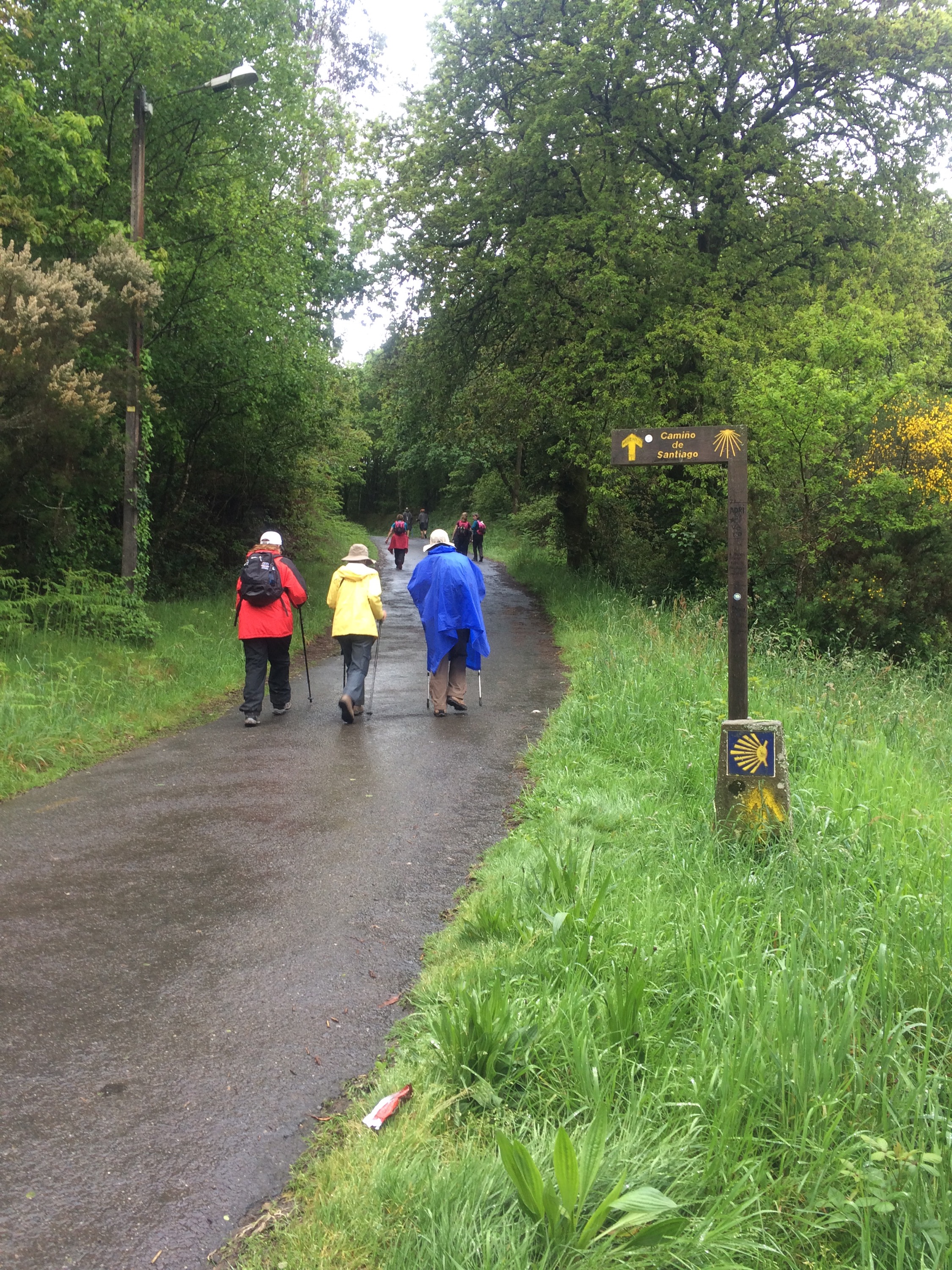
I have been dreaming of my camino de Santiago de Compostela like forever. I realized that dream on the first week of May 2015. Yes, just this year. And just nearly 3 months ago. I waited for many of my friends to join me, only to decide to do it solo. Well, not exactly solo. I joined caminoways which organized my camino for 6 walking days and booked all my hotel and luggage transfers, as well as my breakfasts and dinners. I dreaded walking so far only to find no decent accommodations and sleeping without dinner. I decided well. The pre-booked hotels and meals were all good, and all I worried about is finishing the day’s walk. All of 113 kilometers in 6 walking days. Minimum daily walk is 15 kilometers. Other days, we walked 30 kilometers including detours!
On the Feast Day of Saint James (July 25), I mused over my own camino. Interestingly, I thought back to all those moments when I felt God’s presence in the green fields, the moist smell of the forest, the encounters with grazing farm animals, the non-verbal interactions via sign language with friendly locals, the centuries-old medieval bridges crossed by many pilgrims before me, the tiny, dark churches in the quaint hamlets we passed, the muddied paths and puddles of rainwater along the trail. NEVER did the pain of walking so many miles in the rain cross my mind. If at all, I look at my little toes and reminisce how I persevered to finish my camino. A little triumphant sensation there, I confess.
Unfortunately, I didn’t have much time savoring my camino moments after my walk. Soon after, I met up with cousins visiting Madrid and then I had to fly to Berlin to meet up with friends before flying into Copenhagen to join our Scandinavian cruise. After sailing back to Denmark, I then flew back to Madrid with a couple of friends to join up with 2 more couples flying in from USA. The reunion lasted 3 weeks and covered many side trips from Madrid including bus and train trips to Burgos, Bilbao, Getaria, San Sebastian, Lourdes (in France), Irun, Santiago de Compostela (yes, I went back too soon), Muxia, Fisterra, Oporto, Fatima and Lisbon. The adventure with friends left me no time to really indulge in more musings over my pilgrimage to Santiago de Compostela. Besides, the experience was clouded by a couple more pilgrimages to Lourdes, France and Fatima, Portugal. It’s an altogether wonderful experience. Really. Just that I would have wanted to relive the memory of EVERY SINGLE DAY of my camino and remember how all the yellow arrows directed me throughout my weeklong camino.
I have been “on the go” since May. Even well before that, as I spent a week in Madrid doing more “practice walks” before hopping on that 6 hour train to Santiago de Compostela. When I returned to Manila mid-June, I only had a week to prepare for my family from Sydney spending a whole month with us. Plus there’s the Bangkok wedding which the entire family and a few friends (all 23 of us!) attended. On the feast day of Saint James, the last batch of my OZ family took the flight back to Sydney. I am left with many happy memories of family reunions, wedding, Bangkok sidetrips, and quite honestly, bonding across 4 generations within our family. Such memories would last me many lifetimes. As would my “me-moments with my God” during my camino. I find it a luxury to indulge myself with those lovely images and experiences from my camino now. No matter what you hear or read, your Camino is YOUR CAMINO. It’s a personal experience — an adventure, if you like — that is completely your own. I walked more than a hundred kilometers but more than half of those walking ALONE. Alone with my thoughts. In sync with Nature, and over-the-top with the wondrous solitude to pray as much and as long for others, and for myself and my family. Before the walk, I listed a hundred names of people I’d pray for. A kilometer for each, some of whom I do not know at all. The thought of praying for someone else pulled me through. Funny that whenever I prayed for myself, I’d always catch myself praying for “no blisters”. More so whenever I stop to change my socks, wiggle my toes and slather my feet with Vaseline. I even picked up the habit of ordering a beer to “reward” myself every afternoon, and some glasses of red wine come dinner time. Every morning when I woke up, I prayed and thanked the Lord for the renewed energy, well-rested limbs, and newfound enthusiasm for another day’s walk. I never lost the excitement over what I’ll find along the camino trail. Somehow, I likewise looked forward to the mid-morning and late lunch breaks when I find myself interacting with fellow pilgrims from different countries. One funny thing here is finding yourself deep in conversation with another pilgrim whose name you never asked. Yet you remember his nationality, from where he started his camino, and how long he has been walking. Other times, you’d be walking with a few for about a mile, engaged in serious and not-so-serious conversations, before bidding each other “Buen Camino”. If you meet them at your next coffee break, you greet each other like long lost friends. Such is the camino routine and vibes and I gladly eased into this “behavior”. I finished my camino without any blisters. I pity those who trudged on with blisters, nasty sore toes, and for a few, lost toenails. Thankful every time I reached our hotel even when there were days we were soaking from the rain. Nothing beats that first beer of the day. Except perhaps that first minute when you soak your tired feet in a tub filled with hot water. Many times I fell asleep till the water turned really cold around my swollen feet. Every night, I’d wash my hair and then wear my camino clothes for the next day. Yes, fat chance I’d jump into my pajamas and then change into my camino shirt and shorts the following morning. Happened only on the first night. 😄 Waking up every morning was a breeze as I only needed to brush my teeth, put on my socks and shoes, and walk out the room. I’m not embarassed to admit this. Really. And it’s one good advice I’d give anyone planning a camino. Starting the day right, with as much ease and convenience, is the way to go. SLOW. I’m beginning to like this word. It is NOT a contest. Why rush? You have the WHOLE DAY to do it. My daily camino started every morning at a convenient time of 8:30 am. It helps a lot that you know you have a room in the next hotel where you’d finish your day’s walk. Invariably, I’m done by mid-afternoon. And that includes coffee breaks, lunch breaks, pee breaks, oxygen breaks, and the occasional beer or wine. Mind you, I lingered over my lunch. It’s a major social activity for the day. A time to meet new walking buddies, swap first-aid plasters and ointments, listen to more (Irish) jokes 😄, “score” some passing hunks on bikes 😜, and share some energy bars sitting and adding weight to your backpacks. Altogether, these breaks are all too important to rest your limbs and maintain your sanity. When you start having a conversation with your leg muscles, your hip joints or your little toes, you know it’s time for a cafe con leche, cafe cortado, cerveza, rioja, or a bocadillo. 👣👣👣
Will I do another camino in my lifetime? I’ve met many septuagenarians who whizzed past me. Many walked alone. Many on their 2nd or 3rd camino. I would love to do this again. Perhaps walk the whole hog from St. Jean or Roncesvalles — but in installments. Like a week or 2 at a time. Let’s see. Meanwhile, BUEN CAMINO!
For more details and photos, check out my blog here. And yes, do share your own camino memories here. 😀
The peregrinos are coming to town. It’s a Friday and the noontime and evening masses for pilgrims at the lovely Romanesque cathedral in Santiago de Compostela will have 8 robed men swinging the butafumeiro across the isles. As I soldiered on on this wet and windy day, many younger pilgrims zoomed past me, unmindful of the cold and rain. They could reach Santiago in time for the mass at noon.
Believe me, getting in and out of your rain poncho can be a mood spoiler. Much more so for those wearing rain pants. But it’s the last day. Our last 15 kms. As the Irish, German and locals zipped past on foot or on bikes, each had an expectant look. “Buen Camino” which means “Have a good camino or walk” has also substituted for “hello” and “excuse me” or “move aside” as when they overtake you along the trail.
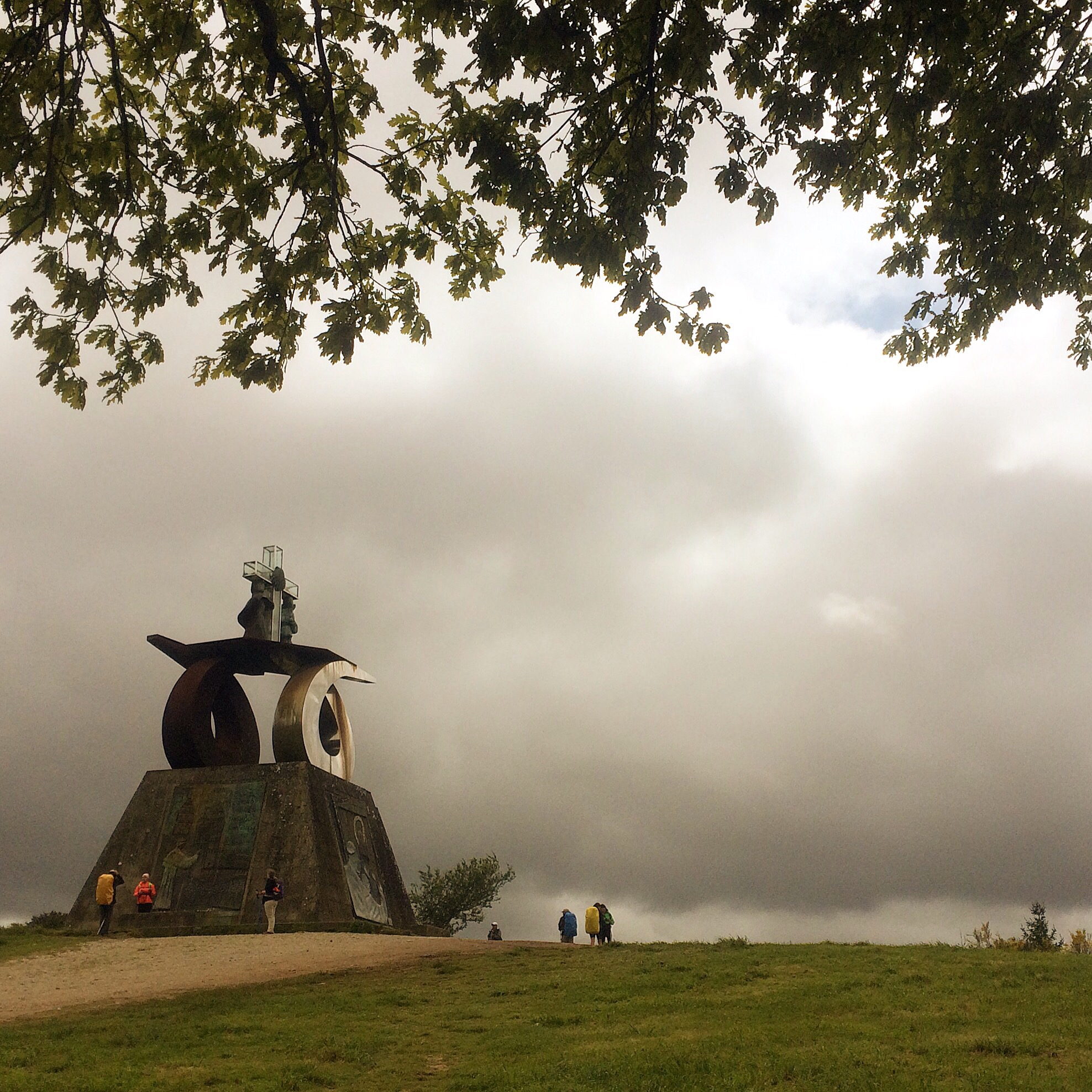
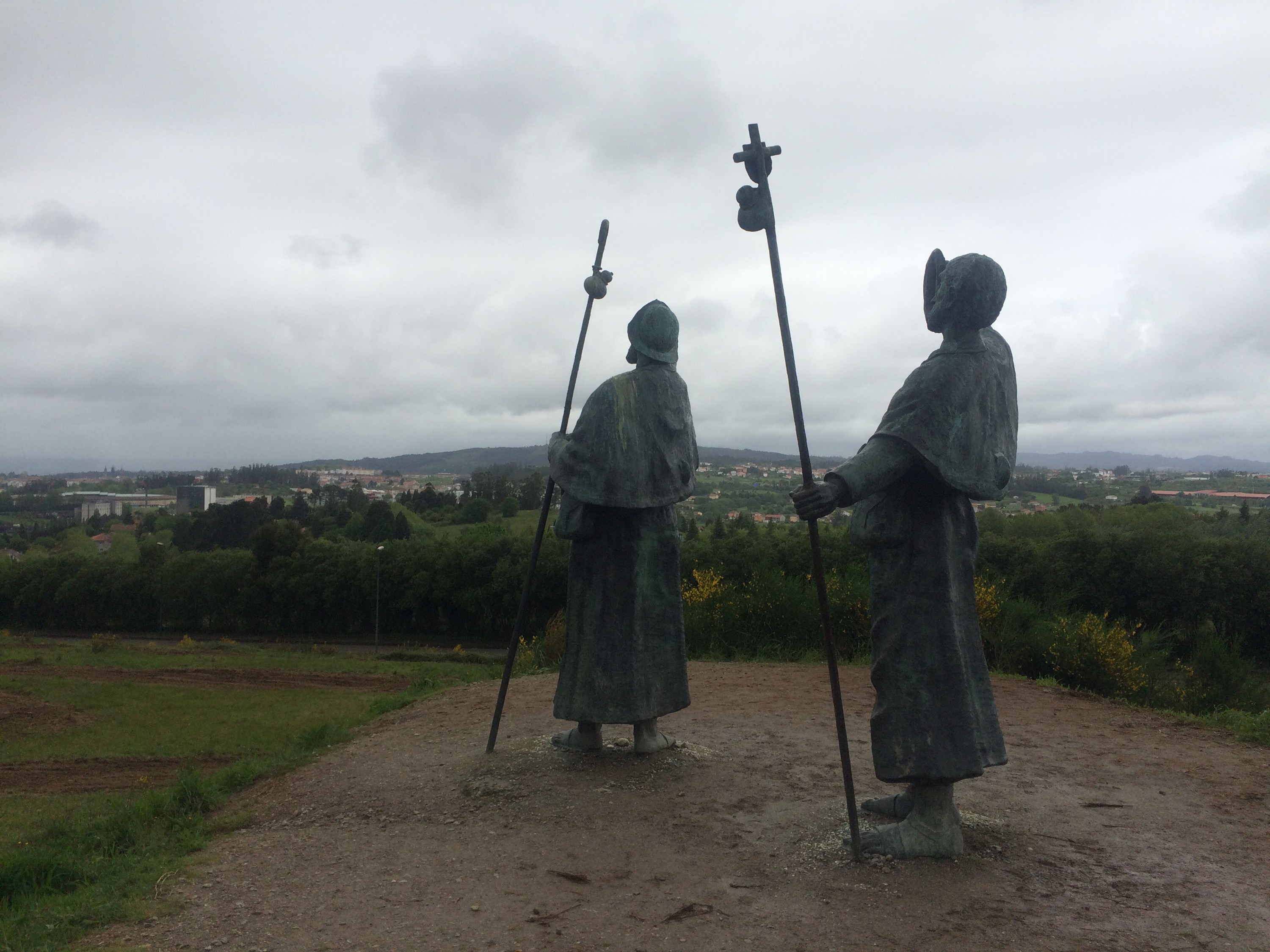
Most peregrinos stop at Monte do Gozo to have their first glimpse of the spires of the Cathedral of Santiago de Compostela. It’s the last hill before reaching Santiago, about 4 kilometers away. Windy, overcast sky, cold and wet, we made a collective sigh of relief that the “end” is near. Our hearts felt the church spires beckoning us to march on.
As soon as we stood before the Church, the dam broke. I cried. Such joy to be here. Such an honor to make this pilgrimage. All worth the wet, cold, windy camino days. The swollen feet from all the walking and the swollen hand from holding the shaft or walking stick. This “jubilada” (retiree — which is what they registered at the Pilgrims’ Office when asked my profession) made it! And I’m happy that we made this hike in 6 days, feeling every step of the pilgrimage. Gracias, Señor.
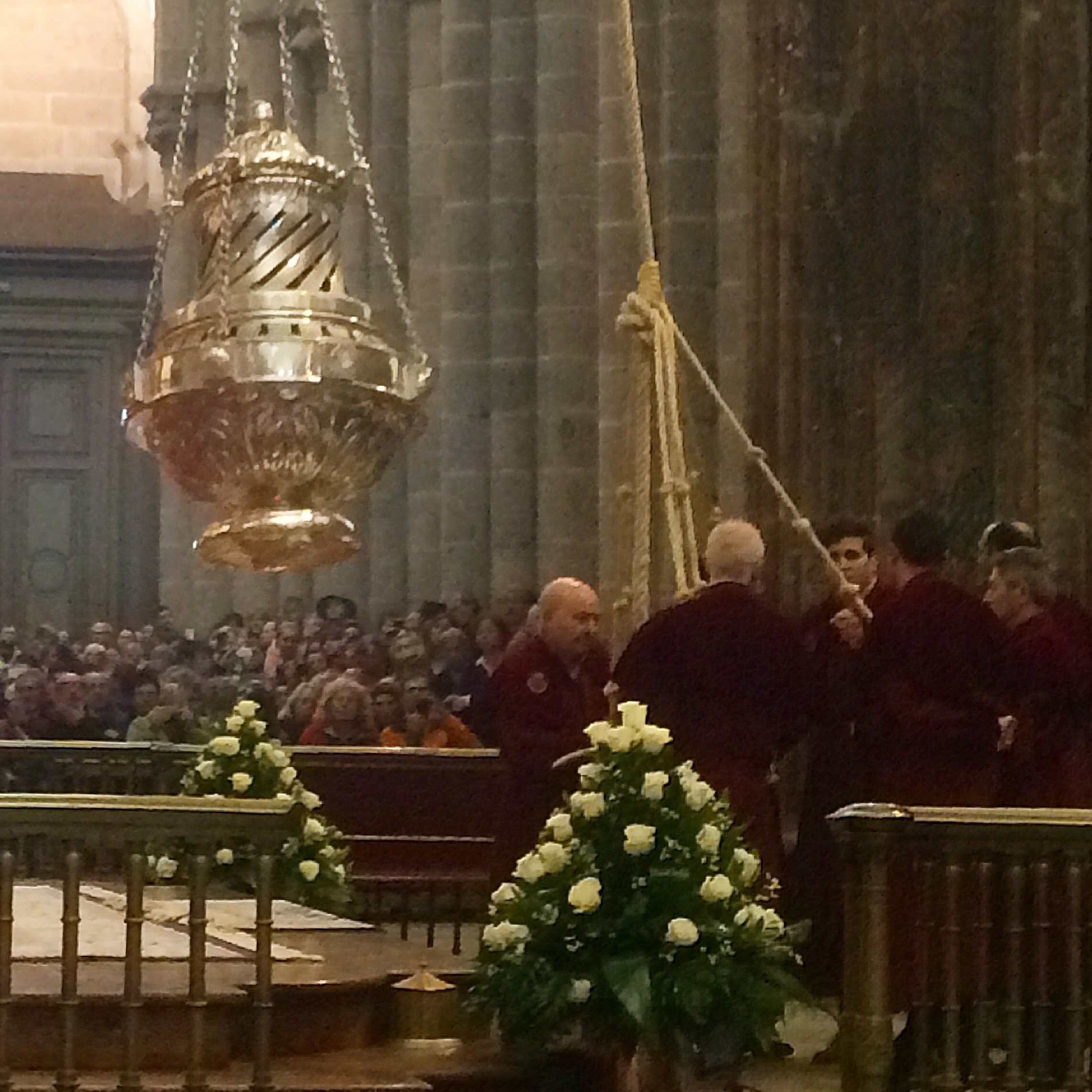
The Pilgrim’s Mass at 7:30pm had the entire cathedral filled up as early as half hour before the service. Came a good hour early and claimed front seat. Soon after the service, the tiraboleiros prepared to swing the metal thurible. Botafumeiro is that giant thurible or incensory that they swing across the isles, up and down, pulled by 8 men in deep red robes. Botafumeiro in Galician means smoke-expeller. And the robed men in charge of the swinging thurible are called tiraboleiros which mean incense carrier in Galician.
Such a fitting end to this pilgrimage. Feeling blessed. Unlike those who made the 300-800km journey (or even longer), I can’t claim any lifechanging miracle. But I have a newfound discovery. Life, as with uphill climbs, need NOT be rushed. It’s hard. But taking breaks –a breather– every so often makes a seemingly impossible task doable. Often enough, I had to remind myself to slow down and walk in a relaxed manner. As with life, wesometimes do things just to get it over with. In this Camino, I discovered SLOW works.
Gracias, Señor. Gracias, San Tiago de Compostela. Gracias to my nueva amigas : Maria Chus, Herta, Beth, Maryanne, May, Anne W, Helen, Carole, Ann, Misty, Sue. God bless you all😘



















 lifeisacelebration