Tag Archive: Philippines


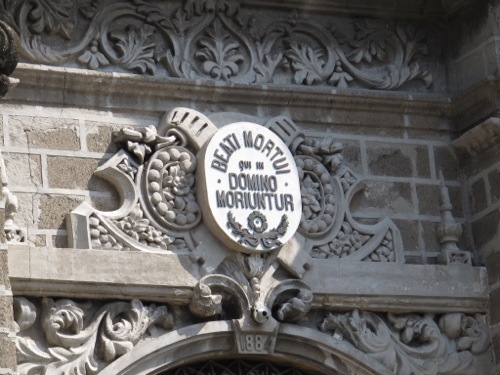
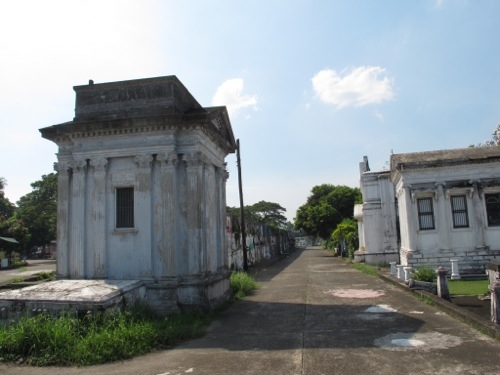
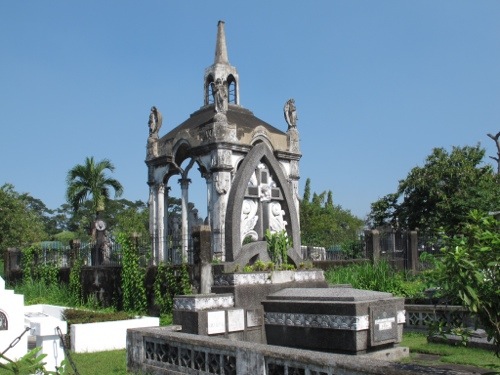
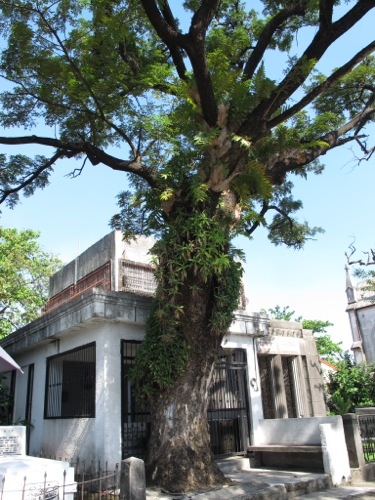
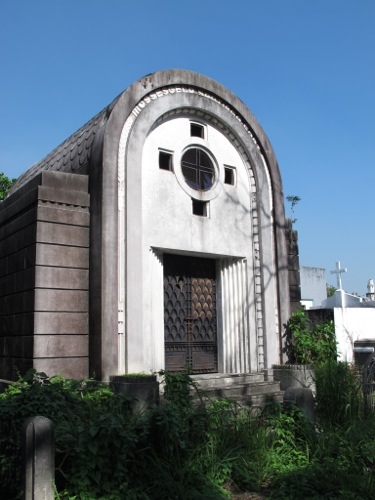
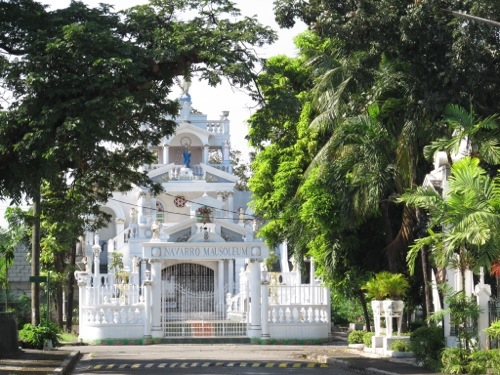
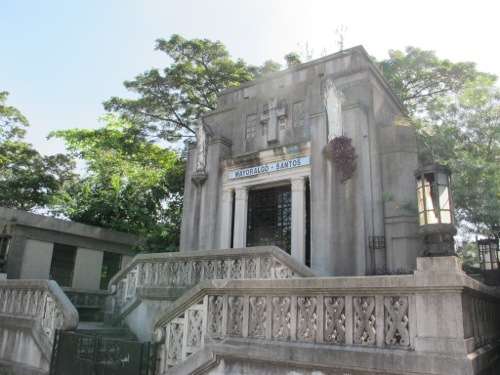
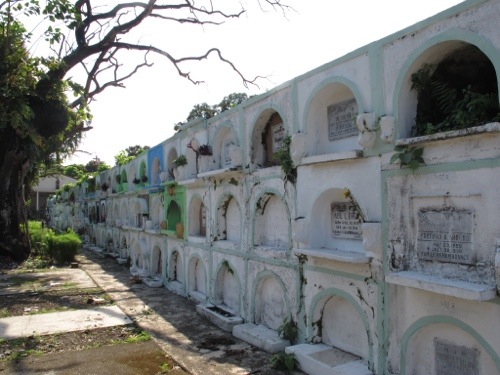
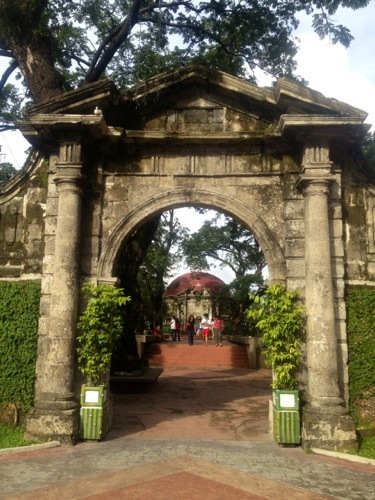
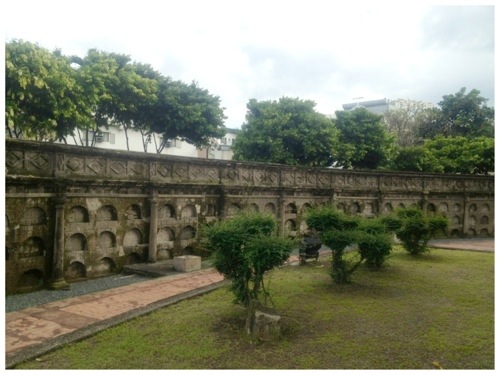
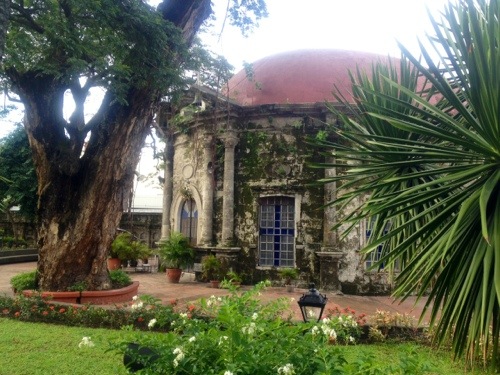
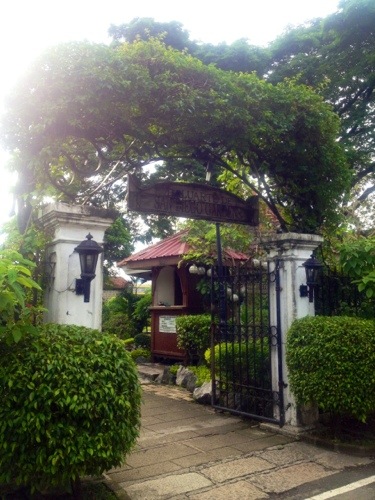
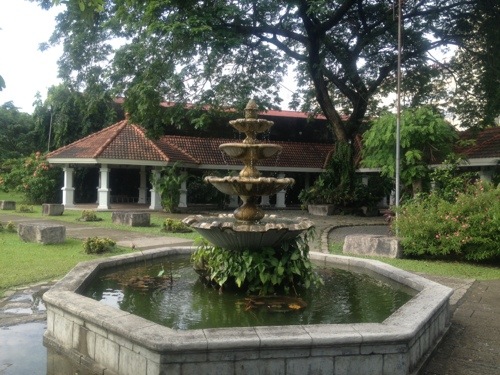
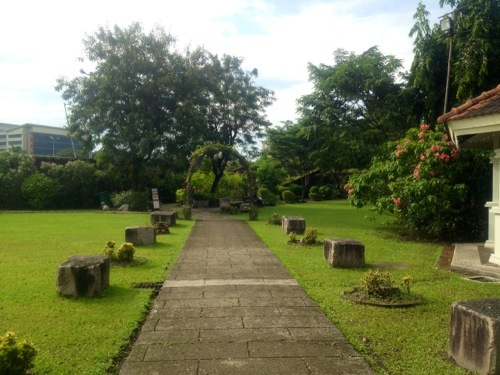
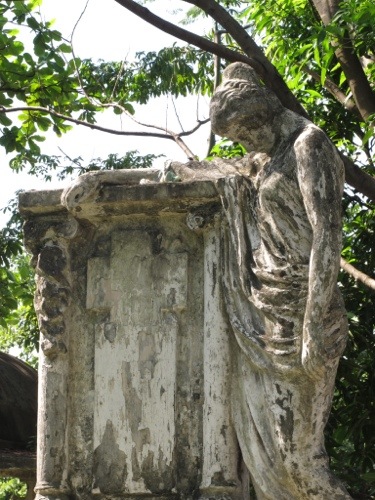
Another one of those afternoons. No cams. Not even a Point & Shoot. Just Siri and Me. Just another hour to “waste”. So here we are, revisiting Paco Park. That lovely, tiny, circular chapel. And the cemetery that could have, SHOULD HAVE earned more attention, respect and recognition other than as a popular wedding venue. 😦


20121028-163445.jpg


I confess to my own ignorance too. Not that I lacked interest. More like I truly feel there is something grievously wrong about how our history has been written and our own education and school system. Whatever I know of Philippine history, I gained from the books I bought and read. What I learned from school hardly went beyond Rizal’s martyrdom. Let’s admit this. Many history lessons stopped with Magellan’s death courtesy of Lapu-Lapu (so, what happened to Lapu Lapu after? Any guess?), or with Rizal’s martyrdom in Bagumbayan (where was our national hero interred following the 1896 execution?). Or how many Philippine heroes can you name and how much do we know of each? If we hardly know Rizal our national hero, I do not expect we can say much of Bonifacio, Mabini, Fathers Gomez, Burgos and Zamora.


20121028-164322.jpg

20121028-164349.jpg


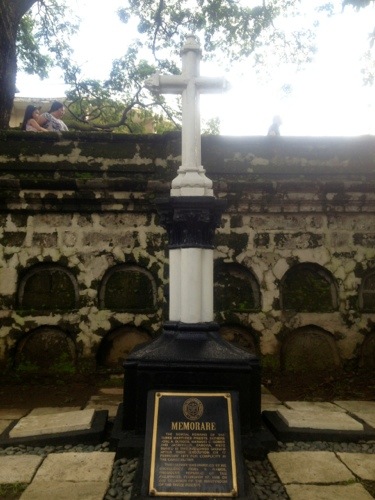
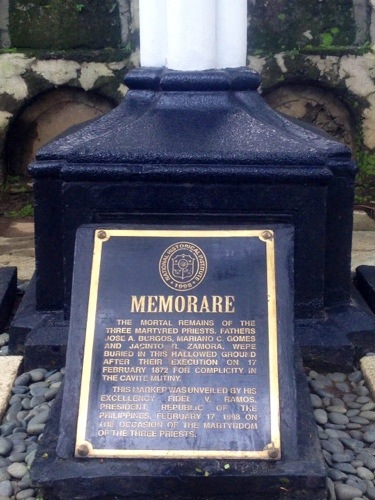
For some, if not many, it would come as a surprise that the 3 martyred priests are actually buried here. It may even surprise some that their execution in 1872 inspired our national hero to write El Filibusterismo.. Today, this marker may not spark as much enthusiasm and evoke much significance among many locals. How sad.


20121028-164826.jpg

20121028-164851.jpg


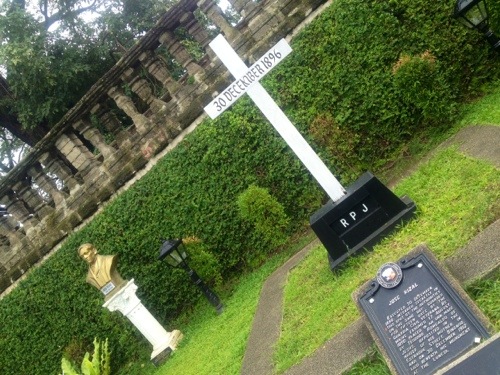
Circling the same Paco Park, a patch of land bears another marker. This is the very spot where our national hero was SECRETLY buried soon after the December 30, 1896 execution in Bagumbayan. Zoom in on that marker to know more! 😉
 

20121028-165404.jpg


We didn’t plan on being here. We met for early lunch hoping to simply chat the afternoon away. But why not chat while driving around Intramuros, much like those joy rides we used to enjoy when we were kids?


20121028-151351.jpg


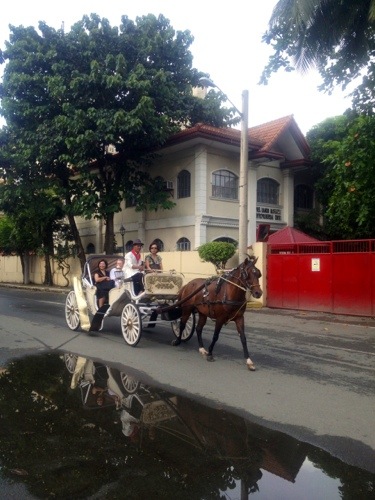
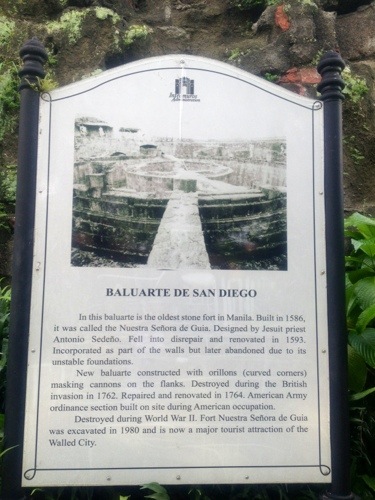
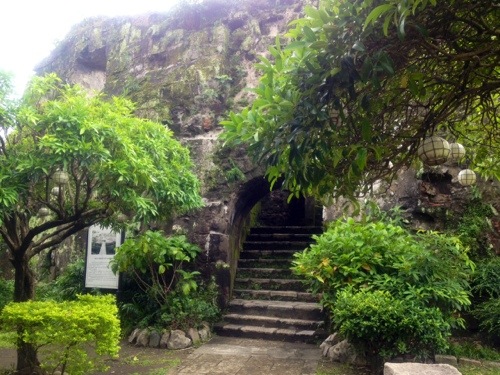
Then the calesa passed right in front of us. It’s 2 o’clock in the afternoon and those riders didn’t seem to mind the heat nor the sun. Well, it wasn’t particularly hot this afternoon. Pleasant enough to get off the car and walk into Baluarte de San Diego here in Intramuros. It’s a better option than the more open spaces in Fort Santiago. More shady trees too.


20121028-151843.jpg

20121028-151942.jpg


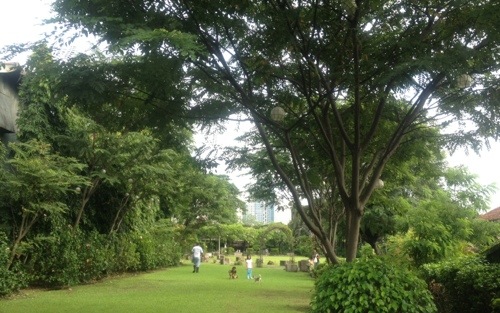
For only 75 pesos (less than US$2), one can get in to enjoy the “park with some history”. There were kids running around with their dog in the shady part of the Baluarte. Not many tourists. Many of them must be in Fort Santiago or San Agustin Church and Monastery. Yet this is one of the oldest stone fortifications in the whole length of the Intramuros walls.


20121028-152515.jpg

20121028-152544.jpg


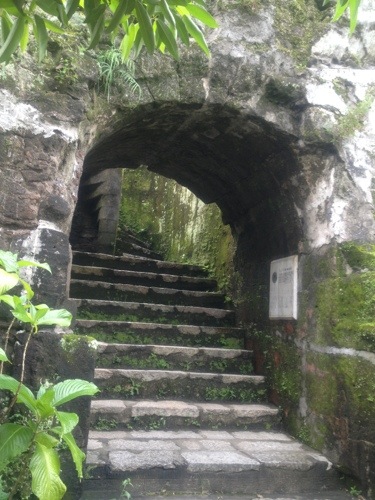
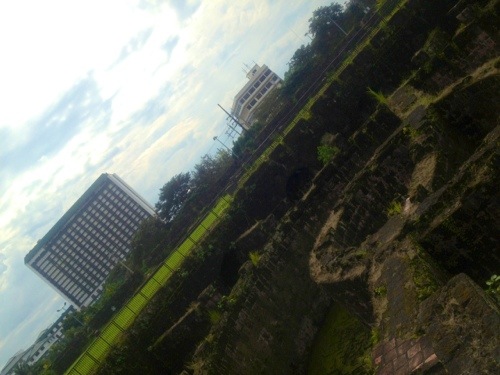
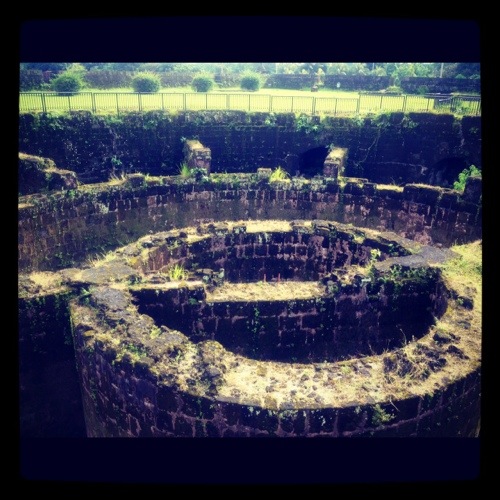
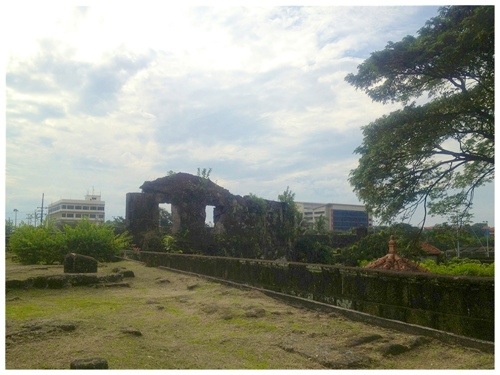
The old stone steps lead up to the walls from where one views this circular stone formation, the length of the walls, and the Manila Hotel and other modern skycrapers surrounding the walled city. I remember being here years back when I attended a wedding of a friend’s daughter where I stood as sponsor. I would have wanted to walk atop the walls, but my long gown got in the way 🙂 Today, there is no such restriction.


20121028-153055.jpg

20121028-153120.jpg


Will someone please tell me how these circular stone formations were used? Surely, the good Jesuit priest who designed it back in the 16th century had some purpose in mind. I mean, I do know they’re there to defend the walled city but my simple mind can’t understand the many circular formations. From what I gather, this part of the Walls went into disrepair and were in fact only rediscovered in the 70s. Forgive my ignorance, but I’m most certainly eager to know how that circular design work.


20121028-153733.jpg

20121028-153823.jpg

20121028-153851.jpg


These days, the Baluarte (Baluarte means bastion or fortification) is more popular as a wedding reception venue. I wish it could be more than that. The place has so much history and is, in fact, a lovely “park” which children would enjoy. The only drawback is it could be really hot during summer here. I sure hope the Intramuros Administration consider late afternoon and dusk tours here and around Intramuros. It will require some investment in good lighting and better security, but I’m sure tourists and even locals would enjoy the place better as the day approaches sunset and at night. Play some good music too (like in Paco Chapel and Cemetery) and you’d turn the Baluarte more magical!


20121028-160741.jpg

20121028-160827.jpg

20121028-163359.jpg


It is actually named Saint James the Apostle Church. But you’d get by asking for directions to Betis Church. After all, every person in Pampanga has every reason to be proud of this historical and architectural treasure.


20120629-105443.jpg


Huge, but it doesn’t look much from outside. And for a moment, I wasn’t sure if the 1- 1/2 hour drive from Manila is worth it. I’ve seen many photos of this 17th century church and its famed frescoes and murals but thought it could all be hype. That happens. So I braced myself not to expect much.


20120629-105957.jpg


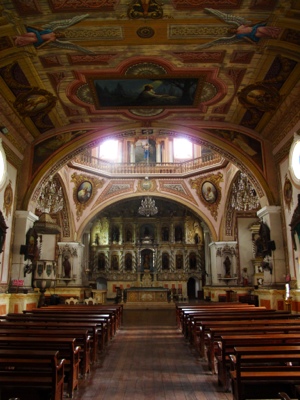
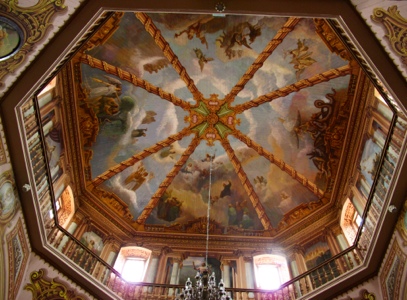
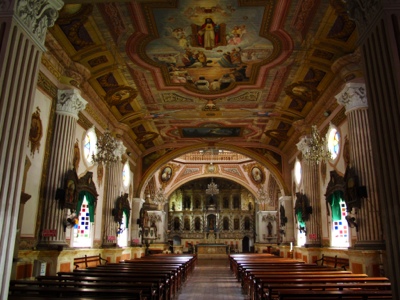
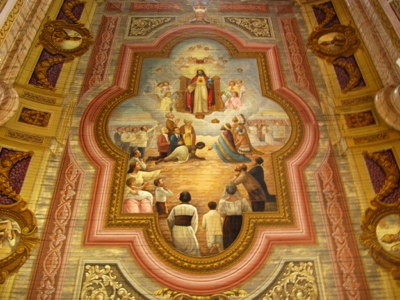
As we entered, we were pleasantly surprised to walk on wooden floors. Dubbed the “Sistine Chapel” of the Philippines, local artist Macario Ligon certainly didn’t disappoint. Biblical scenes and cherub paintings on the ceiling are guaranteed to give you a stiff neck while appreciating the majesty of this ceiling art. It confuses the senses whether to walk appreciating the native wood used for flooring, craning one’s neck so as not to miss the majestic “Sistine Chapel-ish” ceiling frescoes, or walking forward to get closer to the lovely and ornately-designed “retablo” of this church in Guagua, Pampanga.


20120629-110841.jpg


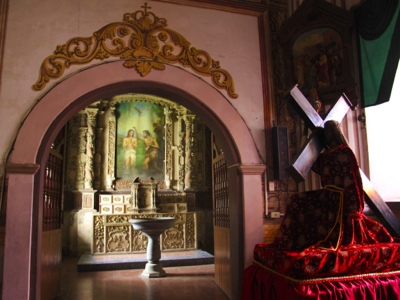
Don’t miss standing in the nave and spending a few minutes there just to take it all in. Check out the baptistery on the right side, “guarded” by a statue of the Nazareno, before taking baby steps towards the altar.


20120629-111816.jpg


The opulence strikes one with this pleasant sensation that a church as lovely as this has been spared from the disastrous lahar or mudflow from Mount Pinatubo. The neighboring town of Bacolor was not as lucky. By God’s grace, this church still stands in all its splendor so many more generations of Filipinos may appreciate this historical, cultural and architectural treasure.


20120629-112328.jpg

20120629-112436.jpg

20120629-112511.jpg

HOME SWEET HOME


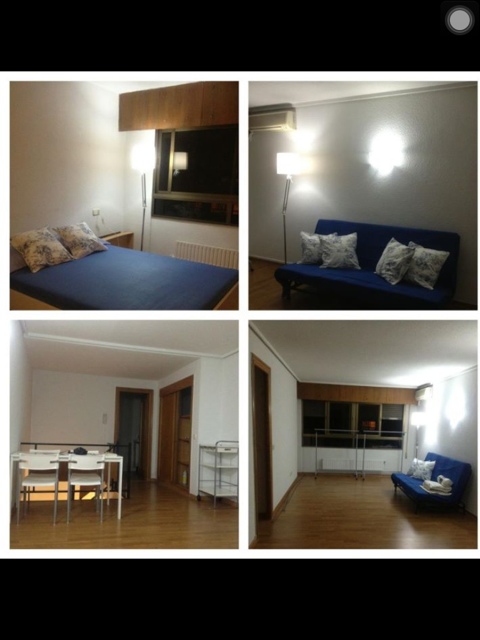
This is the moment where I take a break from travel blogging. Back home now after 2 and 1/2 months based in Madrid, after 42 blogs on WordPress and 5 more on TravelBlog. I was busy apartment-hunting with my niece, IKEA-shopping for furniture, waiting and wasting lotsa time for the delivery men, and getting serious with household chores. Well, sort of.


20120511-172001.jpg

20120511-172503.jpg


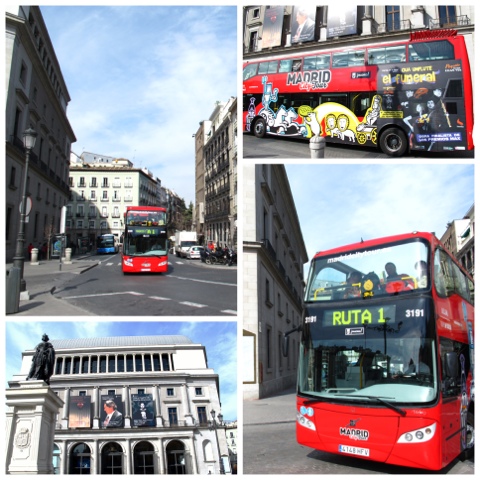
So, how was it? I never made it out of Madrid in the first 4 weeks. In fact, the first week spent in a hotel was most boring, while the 2nd week apartment-hunting provided the excitement. I did most of my Madrid walks during the first week as there wasn’t much to do in the hotel. Besides, wifi sucks in that hotel.


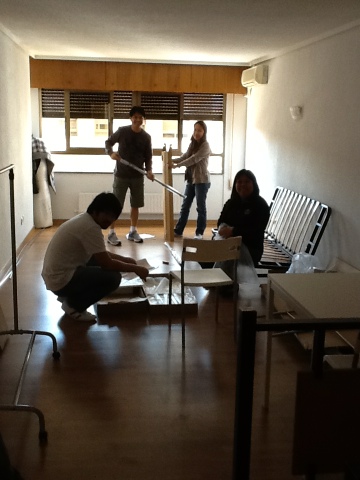
The 3rd and 4th weeks were devoted to furnishing the apartment, having the appliances and furniture delivered and assembled. I enjoyed this part. In between, my daily trips were largely to Carrefour, the palenque and the Chinese stores for food and little things like sandwich bags, detergents and other cleaning stuff.


20120511-173257.jpg

20120511-173844.jpg


By the 2nd month, we were nicely settled and welcomed our first batch of guests. All girls. No room for men guests as there is only 1 toilet and 1 bedroom. The sofa bed in the living room warmed many backs. My “survival cooking” survived. No one grew hungry, for sure. While we had no TV and wifi yet, we spent a lot of time chatting, laughing and eating.


20120511-174530.jpg

20120511-174905.jpg


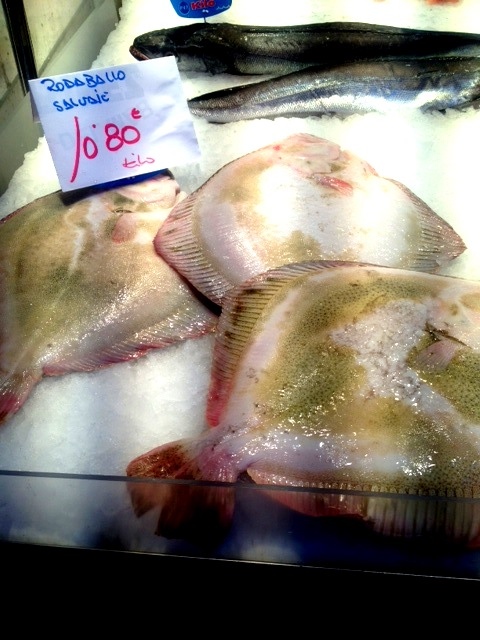
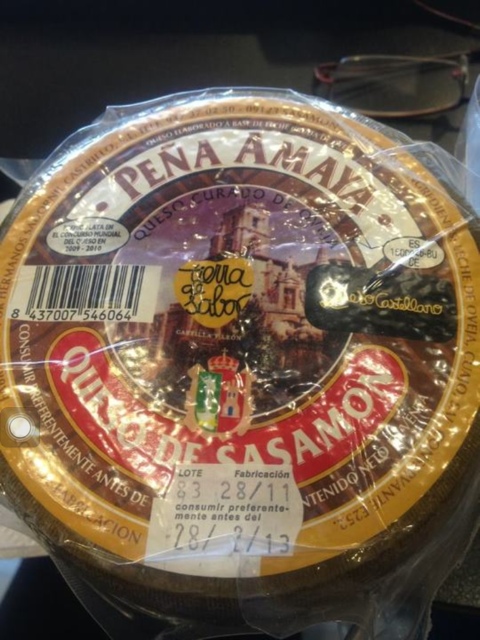
By this time, I have already mastered the metro system, the “free days and viewing hours” of most museums, the bus system and gained “Suki” from the palenque. My favorite vendor is this man who would always offer me a sliver of Jamon or Quezo to try. “Para prober” he always says. And I always gladly accepted. ☺☺


20120511-175210.jpg


I’ve spent Semana Santa in Andalusia, a long drive to Valencia and a last weekend in Barcelona. In between, there were day trips to Segovia, Avila, El Escorial, Valle de Los Caidos, Toledo, Aranjuez, and Alcala de Henares using the bus, the regional train, or the fast train. I experienced ALL seasons in the last 10 weeks. In Valencia, temp went from 7 Celsius to 27 Celsius in 8 hours. In Segovia, it snowed. Crazy, I know. I have been to Costa del Sol, Malaga and Granada before and felt no craving to revisit. Not yet. I would have wanted to see Salamanca again but there was no chance. Shopping for gifts to bring home took precedence. Perhaps next time.


20120511-175749.jpg


Now I’m home…. in sweltering heat. I miss my daily walks in cool weather. I miss dragging my “old lady’s” shopping trolley whenever I set out to do the groceries or marketing. I miss my pair of boots which I left in the apartment. Back to normal. Back to “Lola mode”. No more solo trips except to the beauty parlor. My elves waited too long and it’s time to catch up with one another.


Since I arrived, I have completed all my blogs on my Spanish “holiday” (or have I?) and stayed home most of the time. It breaks all newly- formed habits and patterns. I even miss our washing machine in Madrid! Oh well……..


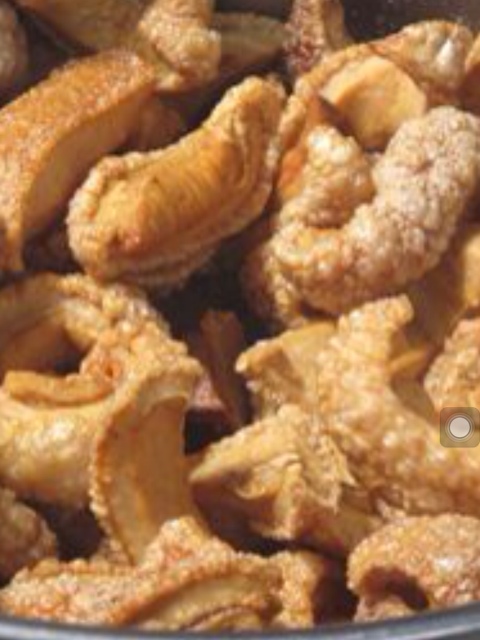
Can you blame us? Who goes to Cebu and not try its lechon and chicharon? If the best Cebu lechon comes from Talisay (I know, I know, I’d get lotsa flak writing this), then don’t argue with me when I say the best Chicharon hails from Carcar. Chicharon pa lang, ulam na!


20120308-112913.jpg


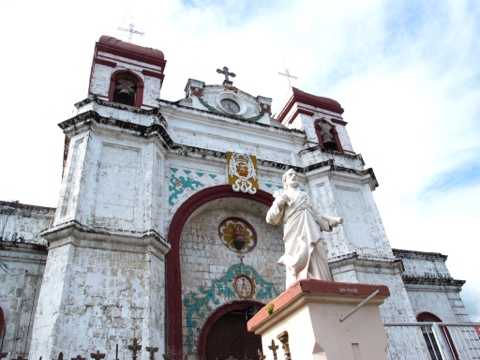
It’s more fun in the Philippines, indeed! But make sure you do Visita Iglesia in Saint Catherine of Alexandria Church to spare you from hypertension resulting from cholesterol overload. At the time we visited, the parish was closed. Thus, we appreciated its beauty — styled like most Greek Orthodox churches with onion-domed bell towers — from the outside where we also found many statues of saints adorning the fence around the church.


20120308-113129.jpg


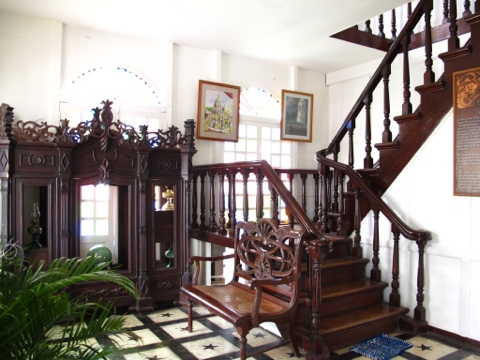
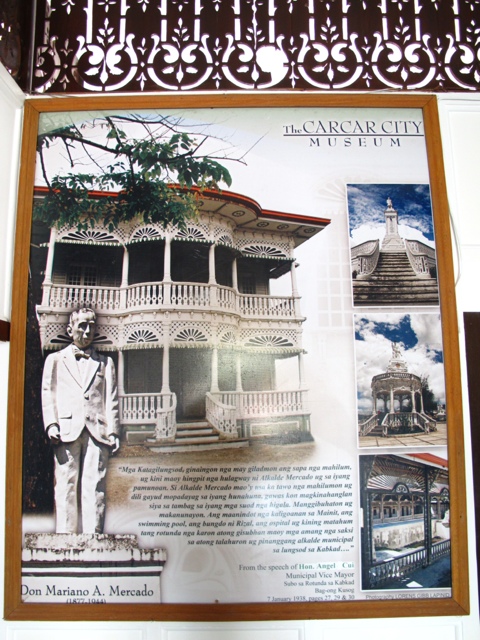
Right beside the church is the Carcar Museum. Yes, a Museum! Well actually, an American-styled dispensary years before and now converted into a lovely Museum complete with various illustrations tracing its history in this heritage capital of the province of Cebu. The Carcar Rotunda is also as American as the Carcar Museum. This white gazebo stands right before the church and the museum, which together comprise a most charming plaza.


20120309-143809.jpg


There was a museum guide who showed us around. The American-era dispensary was actually built in 1929 during the term of Don Mariano Mercado as Mayor. Among other landmarks are the municipal pool behind the Dispensary building, the Carcar Rotunda and the Rizal Monument. If I had my way though, I would replace the statue of Don Mariano with something more “cheerful” or “leader-like”. Call me irreverent but I thought the statue displayed Don Mariano’s shy, even tentative side. 🙂


20120309-150054.jpg


Where to buy Chicharon? No worries. They’re everywhere! Inside the malls, outside the malls, along the streets, inside your bus or cars! The prices are no different though from the crunchies you can buy back in the city just an hour’s ride away. It is not known though that Carcar was once what Liliw is to Laguna, or Marikina to Rizal (now Metro Manila). Somehow, this 17th century shoemaking industry faded from the scene as competition set in and other industries flourished.


20120309-165609.jpg

20120309-165646.jpg


Just off the Plaza, and visible from the porch of the Carcar Museum is the town’s oldest house. Owned by Don Florencio Noel, the house is still lived in and is fondly called by Carcaranos as “Dakong Balay” which literally means “big house”. Now declared by the National Historical Institute as a heritage house, the house remains unaltered but lovingly restored and preserved by fourth generation descendants of the Noel family.


20120309-170938.jpg

20120309-171023.jpg


If you have been to Lourdes in France, you would be reminded of such Marian pilgrimage site when you visit Simala or Monastery of the Holy Eucharist in Southern Cebu. Run by Mongha ni Maria (Monks of Mary) who tend the gardens and built a mini-falls within the compound, the church has also since been a pilgrimage site.


20120307-164235.jpg


This church in Sibonga, Cebu drew crowds when the miraculous statue of Mama Mary shed tears of blood. Though not validated by the Church, this phenomenon drew many faithfuls to the site.


20120308-104746.jpg


I tweeted about this trip to Cebu and some tweeps advised me to go visit Simala on our way back to the city. It’s just slightly off the way and in between our Dalaguete and Carcar stopovers, but since we hired a van for the day, it worked out well. We felt good making this stopover. And there was even a Mass when we visited.


20120308-105053.jpg

20120308-105149.jpg


Hard to believe a church of this size was built in this corner of the province. The story goes that funds were provided by faithfuls who were miraculously healed here. If you are a first-time visitor like we were, you’d be awed by the grandeur of this church. Not just in the exterior appearance with the curving staircase and footbridge wrapped around the church, but in the interiors as well. We waited till Mass was over before snapping these photos.


20120308-105639.jpg

20120308-105719.jpg


So, next time you are in these parts of Southern Cebu, make time to do this pilgrimage. All you need to bring with you is your faith and perhaps, countless petitions for divine aid.


We didn’t plan on visiting Dalaguete. Much less visit it on its town fiesta which is celebrated every 9th and 10th of February. Yet there we were, witnesses to all that revelry in honor of its patron saint, San Guillermo de Aquitania.


20120307-152611.jpg

20120307-152711.jpg


As with similar town fiestas, Utanon is the Dalaguetnons’ way of showing gratitude for all their blessings. Through dance and music, they celebrate the town’s good harvest as Dalaguete is Cebu’s vegetable basket much like Baguio is in Luzon. It is also alleged that Dalaguete is the Music Capital of the island. The name Dalaguete came from balete, a tree which grew abundantly in the town, and which in Cebuano, is called the dalakit. On the other hand, Utanon means vegetables in the local dialect.


20120307-152814.jpg

20120307-152859.jpg


We caught sight of the bands and street marchers/dancers in front of San Guillermo Church. The festive colors of red, blue and green complemented the floats with “Hermana Mayors” gamely waving their hands as they were paraded around town. I have to say that the sight made for a very rural scene….. A village affair. I bet everyone knows everybody in this small town.


20120307-153500.jpg

20120307-153615.jpg


We surmised that the religious procession in honor of San Guillermo is scheduled later in the day as local men were still busy decking the floats with flowers. We said a prayer inside this 18th century baroque church with its shell-shaped altar before heading out for one last glimpse of the church and its adjoining convent. Should you come and visit this church, take time to stare up to view one of the few masterpieces by Canuto Avila, a 19th century maestro who did religious murals for 20 or so churches and convents in the Visayas, including the ceiling of Cebu’s Santo Niño Church.


20120307-154223.jpg

20120307-154357.jpg

20120307-154453.jpg


Next time around though, we’d make time to do the trek to Osmena Peak. For now, it would just be a pit stop towards Carcar where more Chicharon awaits us ☺


Cebu is NOT all about lechon. There’s the coveted, sought-after Chicharon from Carcar too! 😍 Kidding aside, Cebu has much to offer. In between the lechons and the chicharons, its natural wonders and rich history make it a must-destination.


20120306-083833.jpg


Oh, how we indulged ourselves! More so after a NO-TUKI-SIGHTING day in Oslob. Imagine having to wake up at 3am to leave at 4am, cruising the next 3 hours down to Southern Cebu to meet the gentle whale sharks. F.R.U.S.T.R.A.T.I.O.N. Those giants stood us up!


20120306-084229.jpg


Not like us to let this frustration ruin our day, we made good use of our time (and money spent on the hired van) to make a few interesting stopovers on our drive back to Cebu City.


20120306-091619.jpg

20120306-091718.jpg


Boljoon. Our first stop heading back to the city from Oslob driving along the coast. One of the oldest towns in the Philippines. Strategically located, facing Bohol Strait some 100 kilometers south of Cebu City. The church of Nuestra Señora Patrocinio de Maria, built in 1599 making it the oldest remaining stone church in Cebu, is very well preserved. The Museum adjoining the Church is a pleasant surprise.


20120306-104134.jpg

20120306-104719.jpg


If I have not read earlier blogs on Boljoon, I would have easily dismissed it as another sleepy town. As we passed this seaside municipality, a huge limestone and granite rock caught our attention — allegedly a cavity formed by the collapse of a mountain range. These natural wonders never fail to amaze me — truly an unplanned composition of water and wind. It is likely that Boljoon may have derived its name from “nabulho”, meaning “collapsed”.


20120306-125044.jpg

20120306-125218.jpg


I took the stairs and was floored by the vista of the Boljoon Church courtyard framed by mountains. Wow. You don’t get this view every day. Somehow the vista transported me to those times of the frailes. A truly colonial feel. I can almost visualize the frailes doing their paseos in the courtyard or venturing out of the church premises for a grand view of the sea. More than that, the Parish Museum has much to offer – from church vestments, well-preserved parish records and manuscripts dating as far back as the 17th century, to various religious artifacts and archaeological finds. Among these archaeological finds are Japanese porcelain and other artifacts. Since the church compound also has its own burial grounds, skeletons were also unearthed. What all these excavation finds reveal can fill many pages of a book, telling of a rich heritage of an otherwise “sleepy, seaside town”. We never bothered before, but these discoveries now beg our attention. It’s all up to us to make, and cherish, that connection to our past.


20120306-132306.jpg

20120306-132432.jpg


So, we recall our history lessons and confidently state when the Philippines was discovered by Magellan. We remember too that Magellan was killed by Lapu Lapu in Mactan. Then WHAT?


Magellan's Cross


Our history lessons quizzed us on the dates, on who Magellan was, but failed miserably on educating us on the very first Philippine hero who resisted  foreign aggression. Epic fail!


20120217-021227.jpg

Magellan's Cross


Was Lapu Lapu such a nondescript character unworthy of a longer narration in many history books?

I bet many in my generation hardly knows this hunk from Mactan! Like me. But I intend to change that.


20120217-021809.jpg


True, the Spaniards brought Christianity to our land. While I take my faith seriously, I have this gnawing feeling……..no, I am absolutely confident  that the Spaniards who ruled our land for nearly 4 centuries had motivations  more compelling than spreading the faith.


20120217-022259.jpg


But I’m not about to dwell on these motivations. What interests me is to know exactly what happened to our first Philippine hero.


Sourced from the Net: Lapu Lapu Monument in Mactan


The little I know is that Magellan befriended some local tribal chiefs the likes of Rajah Humabon. Lapu Lapu strayed from the pack and refused to succumb to this foreign aggression, as well as to Rajah Humabon’s order to accept the foreign colonizers. Lapu Lapu organized his warriors as Magellan and his troops sailed to the island of Mactan. Allegedly, Rajah Humabon connived with Magellan to attack and subdue this “rebellious tribe in Mactan”.  Fortunately for Lapu Lapu and his tribal warriors, the Spanish fleet, helped along by local “friendly” tribes, could not sail nearer to the island and had to wade ashore where they were met and attacked by Lapu Lapu and his men. The fleet’s cannons and firepower could not support the Spanish troops as the boats were at some distance from shore. Besides,  Pigafetta, the chronicler, claimed the Spaniards were outnumbered by the Mactan “army” of Lapu Lapu.  Pigafetta escaped with some others, as Magellan lay helpless and died. His body was never found.


Sourced from the Net: Lapu Lapu Killed Magellan!


And then what? Now this is where the legends abound. One legend claims Lapu Lapu left the island to live up in the mountains, far from sight. Was he hiding from his fellow Cebuanos who have so readily welcomed and accepted Spanish “visitors”?  Of interest here is the report that Rajah Humabon, after Magellan’s defeat and fatal encounter with the local tribes, betrayed the remaining Spanish troops by trying to poison them in a feast he tendered for his European visitors.  Oh well. That’s another story.  But what of Lapu Lapu? Never seen by anyone ever again. Another legend is more dramatic and attributes superpowers to this Mactan chieftain. This legend claims Lapu Lapu turned into a stone (or a rock) facing the sea to forever protect the island of Mactan. How’s that for a legend?  


How frustrating can this get. Any ideas, anyone?  Admittedly, this story is so “bitin”.  😉


Lapu Lapu Statue Standing Guard Around The Valencia or Agrifina Circle


And how have we honored Lapu Lapu, our first national hero? Lapu Lapu appears on the official seal of the Philippine National Police.  There’s the shrine in Mactan.  A Monument in Rizal Park.  And don’t forget the fish.  Gawd, we didn’t even bother to declare a national holiday in his honor?

To be updated, as history unravels. 


I love my family. We all live in a condominium building where space is gold and where we feel cramped as the kids grow taller and the adults grow wider 😦

Over time, we spilled over 2 more units in the same condo building but share THE SAME SQUARE dining table I bought when I was still living alone. How we fit or take turns at the dining table is a practiced skill!

And so family playcations is a tradition in this family. Summers and Christmas breaks are popular holiday dates for us, but we’re one family who also make good use of long weekends.

We took a vote and came up with this list of top playcations for us. Thought I’d share it with you as suggestions for your next family adventure.


#1 CRUISING TOPS THE LIST


To this day, our 3day, 2 night cruise sailing out of Singapore for Melaka (Malacca, Malaysia) holds truly fond memories for adults and elves. Royal Carribean’s Legend of the Seas had this $306 per pax, twin-sharing promo rate which we grabbed. All 5 meals and snacks included!


READY TO SAIL! Kids board Royal Carribean's Legend of the Seas

#2 HONGKONG DISNEYLAND AND MACAU


The FIRST family playcation out of the country is of course nothing less than memorable. When the elves were 5 and 2 visiting Disneyland (Los Angeles, USA) for the first time, they were too young to appreciate it. This time around, they knew exactly what they wanted, and how many “teacup spins” they needed!

From HK Disneyland to Macau. What a horrible ferry ride!

#3 NEW YEAR’S EVE FIREWORKS IN HONGKONG

We were back the year after. The fireworks at the Avenue of the Stars fronting the lovely HK Harbour is the highlight of the New Year’s Eve revelry, but the dinner prelude was just as exciting. No mercy was our mantra, as we stuffed ourselves with Peking Duck and other Chinese dishes at the Star Cafe. Just as memorable was walking with the thick Chinese crowd in the middle of the road at 2am to reach our hotel.

HONGKONG DISNEYLAND

#4  SSSSHHHH…..KIDS GO AWOL IN SHANGHAI


Shelly and I flying in to Shanghai from a month-long trip in Turkey and Greece.  The rest of fam flying in from Manila.  What a reunion!


The Bund. Shanghai, China

#5  WORLD EXPO IN SHANGHAI


Can’t resist this. It’s the closest we can get to a world tour.  Very educational for the children.  Very satisfying for the adult gluttons. 🙂

World Expo 2010 in Shanghai, China

#6 BUTANDING ADVENTURE


It was a weeklong holiday. A road trip. We booked only for our first 2 nights in Donsol, Sorsogon where I brought the family to experience this awesome animal encounter. After that, we sort of felt our way through looking for places to stay in Legazpi City and Naga.


ONE BIG HURRAH AFTER THE FIRST BUTANDING ENCOUNTER! YEHEY!

#7 ALL 12 ABOARD FOR A JOURNEY THROUGH ILOCANDIA


Yes, 12. My family and my friend’s family. We flew to Laoag, then cramped ourselves into a van, and then a jeepney around Laoag and Vigan. Food Trip to the max.  Gee, now I miss their Pinakbet Pizza


Walking out of Malacanang of the North. And yes, we were 12 in the group!

#8 ROADTRIP TO BAGUIO

Not our “usual” Baguio trip. This time around, we explored the lesser-known destinations and relished the surprisingly enjoyable vegetarian joints in this city. Even the elves loved their “kamatis (tomato) pasta” in Oh My Gulay Resto!

Taken at Bencab Museum Garden.

#9  NEW YEAR IN BORACAY. WHY NOT?

Who’d dare argue against spending New Year’s in the lovely island of Boracay?  We spent all of 5 days here. What a great relaxing way to welcome and start the new year!

SUN AND SAND TO WELCOME AND START THE NEW YEAR IN BORACAY

#10 A NEW DISCOVERY: CLUB BALAI ISABEL


Again, we were lured by the promo package offered by this lovely resort along the shores of Taal Lake in Talisay, Batangas. A weekend that’s really value-for-money. The rooms have 2 big-sized beds, the resort has 3 swimming pools, a fish spa, food is good, service is excellent, and THE VIEWS! C’est magnifique!

GOOD FOOD, GOOD SERVICE, MAGNIFICENT VIEWS!