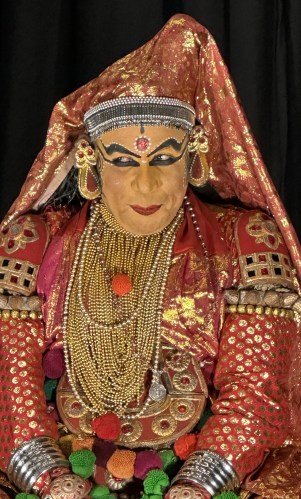
We’re home now. Nature-tripping in the southern part of India was nourishing to the soul. We weren’t so lucky with the wildlife sightings but that’s alright. I’m not exactly that eager to spot a tiger. Nor an elephant. The only Ellie I found was in this spot near the theater where we watched a Kathakali Show. Sadly, the elephants here were used for “rides” through the nearby forest. Sad. 😞
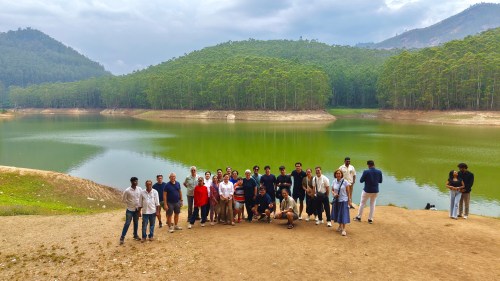
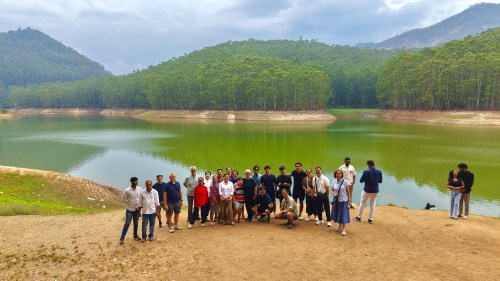
Our group photo by the Lake Kundala
So, it’s a wrap. South India from Cochin to Munnar’s tea estates to Thekkady’s wildlife sanctuaries to Alleppey’s backwaters. Swell. Here are the links to my blogs on Kerala:
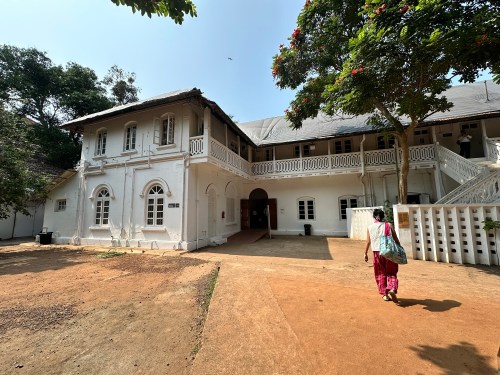
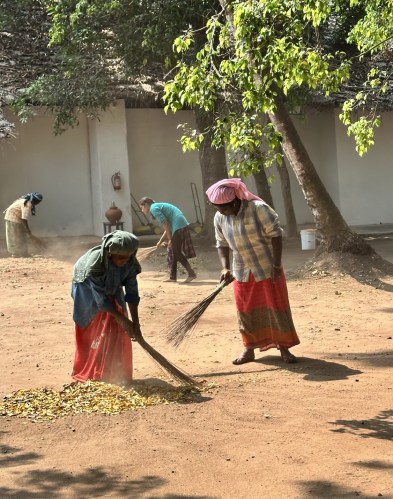
We arrived back in Cochin by noontime to catch our midnight homeward flight to Manila. Enough time to do a 2nd pass of the Kochi Muziris Biennale 2026. The first visit was in a small, restricted venue called David Hall, an art gallery cum cafe. But on our next shot of the Kochi Biennale, we visited the main exhibition in Aspinwall House, a waterfront heritage mansion that used to be the headquarters of a British trader of spices, coffee, rubber and coir. Distinctively Dutch colonial in style, Aspinwall House is now a major cultural hub typically open to the public during the biennale. A fine choice for the prestigious exhibition, with its white-painted buildings, high ceilings, and large verandahs. On one side are verandahs looking out to sea and the inner courtyard is littered with leaves crunching as people step on them. Spotted around 5 old ladies sweeping the leaves all afternoon we were there. A pretty, mesmerizing sight.
Aspinwall House. This all white seafront mansion is the primary venue for the Kochin – Muziris Biennale 2026 titled “For The Time Being”.Sweepers around Aspinwall House
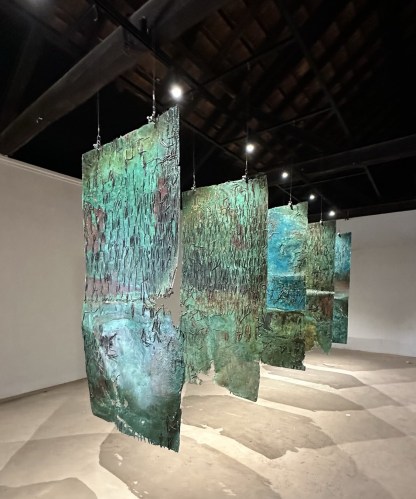
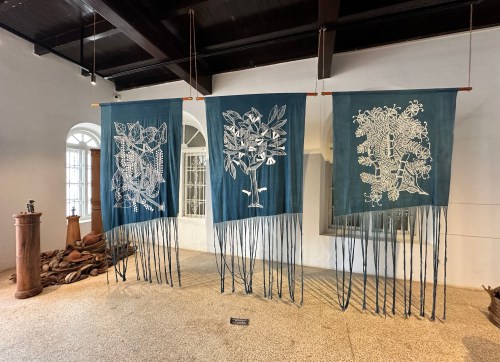
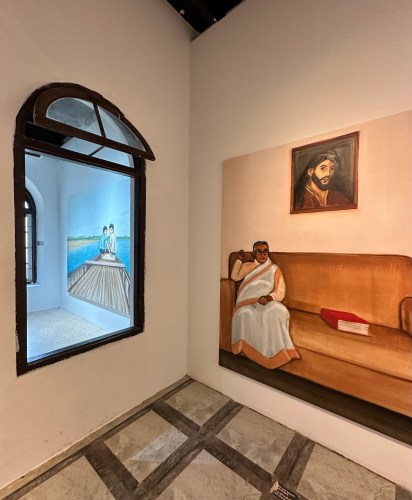
I do not know the artists but this once in 2 years biennale is certainly well-curated and couldn’t have chosen a better venue for its primary hub. The Dutch colonial heritage house is so pretty in all its whiteness and gabled facade. It was just a short line to get in and we found many local visitors to this biggest contemporary art festival in the whole of Asia. 66 artists from 25 countries. 29 venues. We could have spent more time but had to squeeze in some last minute shopping before rushing to the airport to catch our flight. A pity. I particularly liked the series of etched copper plates suspended from the high ceiling made by Delhi-born and now Sydney-based artist Kirtika Kain. Very evocative.
A series of etched copper plates suspended from the high ceiling of Aspinwall House made by Delhi-born and now Sydney-based artist Kirtika Kain.Another evocative installation made by Panjeri Artists Union, an anti-caste collective organized in 2021 in West Bengal near the India and Bangladesh border. Handwoven fabrics made by manual labor replaced by mechanical weaving machines. The message is deep, provocative and a tad heartbreaking.
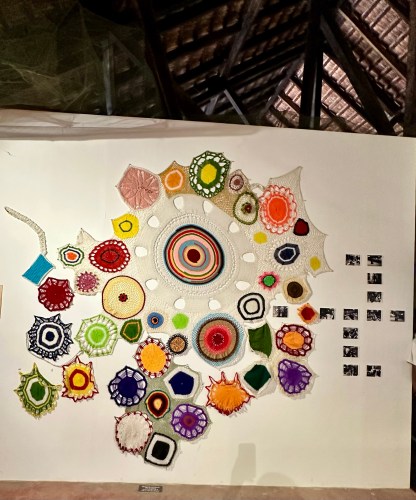
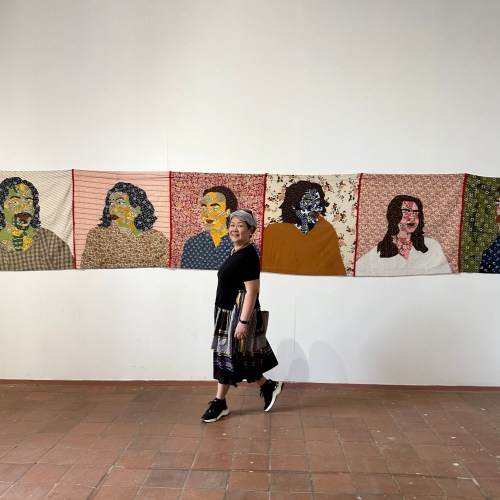
The works on exhibit evoked many socio-political undertones. The social-cultural backgrounds of the participating artists may have a lot to do with that but in my book, there is so much to learn about Indian history.Prompts me to read and learn more about this fascinating nation of over one billion. So much to research and my curiosity crosses beyond the era of maharajahs and more into more recent Indian history.The art pieces have deep, profoundmessages that may be easily missed because of the beauty and colors of the artworks. Yay, I wish we had at least another whole day to spend in Cochin. The Biennale was a pleasant surprise and I’m only too glad we timed our trip well. But there’s so much more to explore in this busy port city, not to mention the exotic cafes, seafood stalls and great shopping!
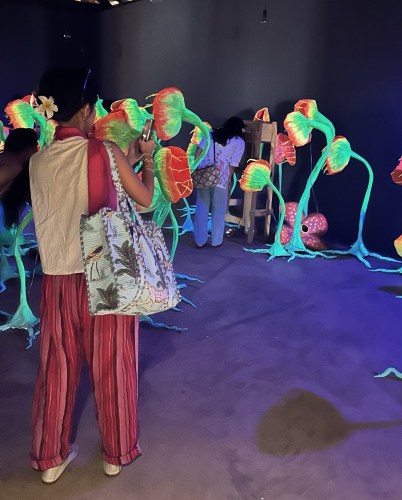
Brightly illuminated installations of carnivorous flowers by Dhiraj Rabha, a visual artist from Assam, India. Title: The Quiet Weight of Shadows . Dhiraj reflects on his childhood in Goalpara Camp. This was taken in David Hall near Fort Kochi Beach. Another Dutch colonial house we visited on our first day in Cochin. Another biennale venue — there were 29 — all across Fort Kochi. Now operates as an art gallery and cafe.
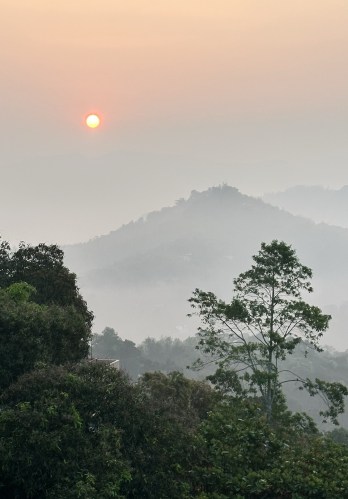
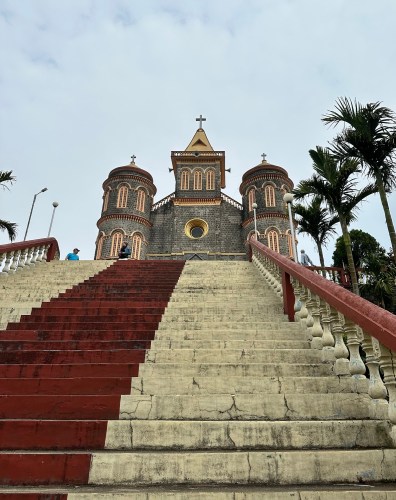
Knowing we have this long trip and a very late lunch before reaching our houseboat, we woke up early and was greeted by a lovely sunrise vista. Simply beautiful 🌞 It makes us anxious that it would be another 5 hour backbreaking, butt-numbing bus ride. Our houseboat is waiting for us in Allepey. From zigzag roads hemmed in by tea fields, we navigated around mountains and hills in the same zigzag pattern. Milder though this time. 🤪 Lush forests dotted by coconut trees 🏝️and rubber trees, we passed a few towns’ temples, schools, and churches. After about an hour, we stopped to drop in at Pattumala Church, a Marian Pilgrimage Centeralso known as the Shrine of Our Lady of Good Health. Unique Gothic- inspired architecture, built entirely of granite, impressive interiors but I’m not a fan of the punishing staircase to reach the church from the street. Phew!
Sunrise in Thekkady Shrine of Our Lady of Good Health or Pattumala Church
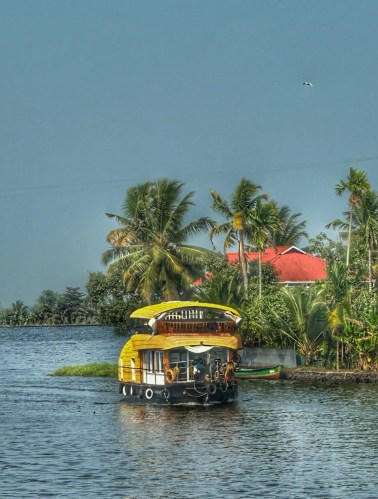
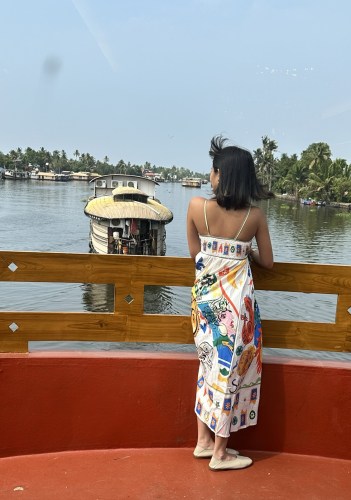
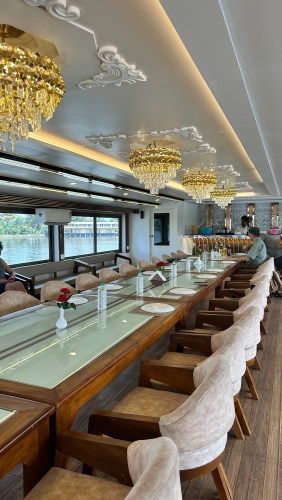
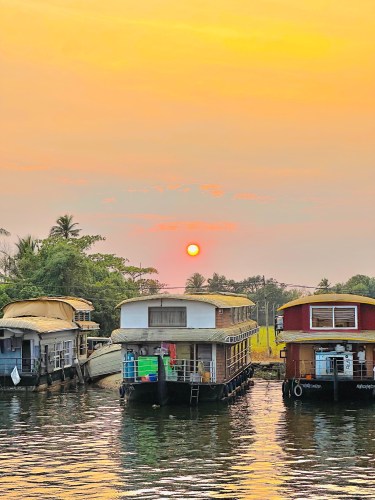
Our houseboats were ready to receive us way after lunchtime. The bus ride took nearly 5 hours. Late lunch was ready as soon as our (smaller) overnight bags were delivered to our rooms. The river cruise starts after lunch till sunset. Some took off to explore the rural town before dinner while others idled the early evening hours enjoying cocktails. Allepey is teeming with tourists eager to board ferries plying the river or hire houseboats for the night. The sound of the boat engine can lull you to sleep and houseboats plying the river make a pretty sight. I love our rooms with wide glass windows as well as the dining room with a long table that can seat 30 people. By sunset, our 3 houseboats were dockedside by side that some of the boys in our groups can easily jump from one houseboat to the next off the open deck. All meals are cooked by the Chef on board. Some of us got off the boat and bought shrimps to add to the buffet dinner of Keralan cuisine.
Houseboat gliding along the river in AllepeyVista from the deck
This sleeper houseboat is quite an experience. We are only too glad that we have Chef on Board and that the rooms are sized just right. I can imagine Ernest Hemingway hiring a one room houseboat, having early evening cocktails with the boat staff, perhaps even writing a whole book here. Very calming. Balm for the soul. Just what we need.
You can hold a board meeting here!Sunset in Allepey 📸Eman Capuno
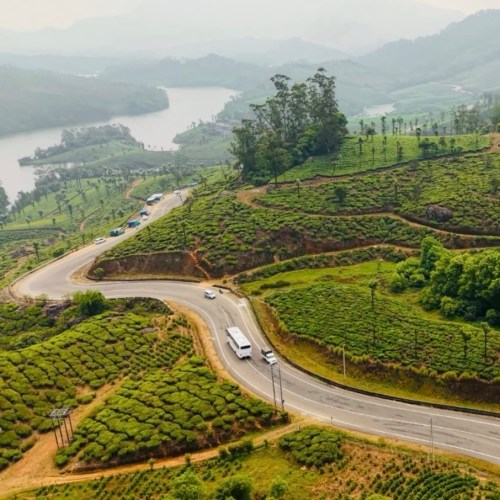
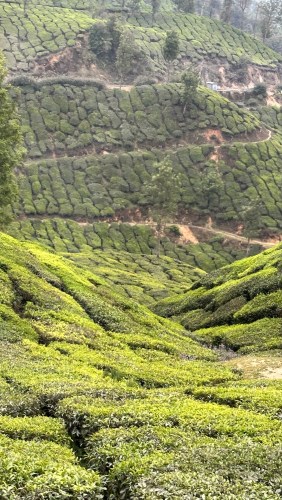
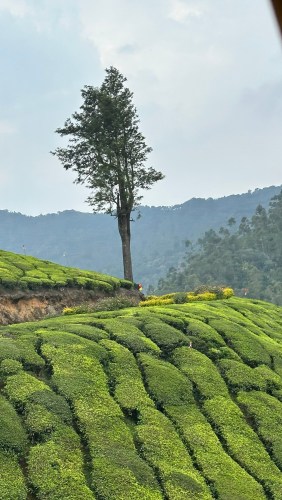
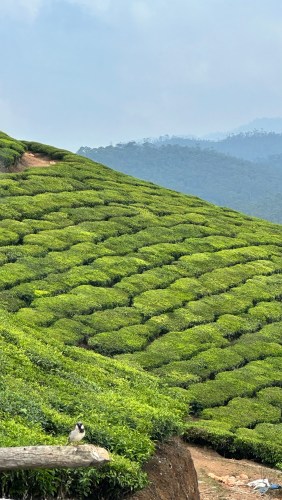
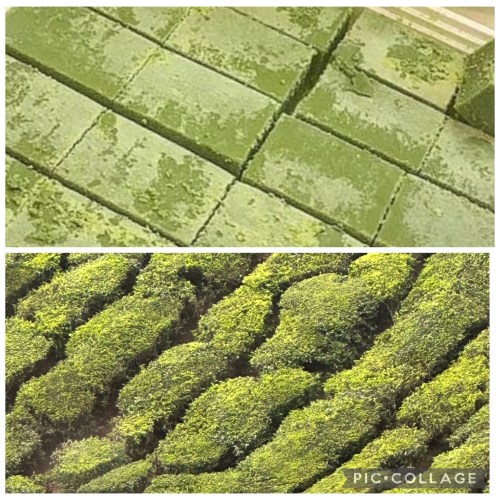
It took over 4 hours by bus from Munnar to Thekkady. The zigzag journey was only broken by photo ops as we passed more tea gardens left and right of the uphill road. Kerala is truly India’s tea capital. We never expected how extensive the tea plantations are, like a green carpet over the hills all around Kerala. As my grandniece said, it’s like Royce Matcha Chocolates spread all over the place. The patterns make me curiousas the carpets of tea fieldsnever seem to end.
The road to Thekkady. 📸 @eman capuno
Kathakali Show in Thekkady
The night we arrived, we went to watch a centuries-old Kathakali show. The classical dance drama retells stories from Hindu epics without any dialogue. The entire tale is expressed through facial expressions that really seemed like facial contortions, as well as symbolic hand gestures. Only two characters, plus a narrator and the music/drummer man. The theater setting is very simple, yet intimate. Glad they continue to show these aspects of their culture. After all, Kathakali started right here in Kerala since the 17th century. 👏🏼👏🏼👏🏼
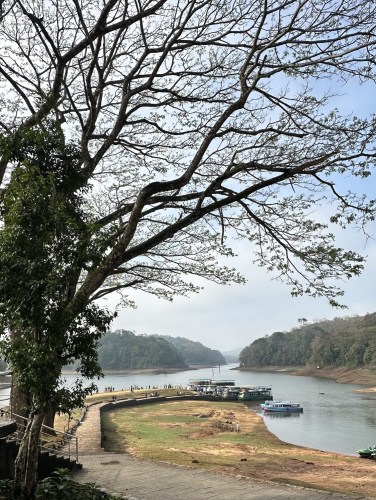
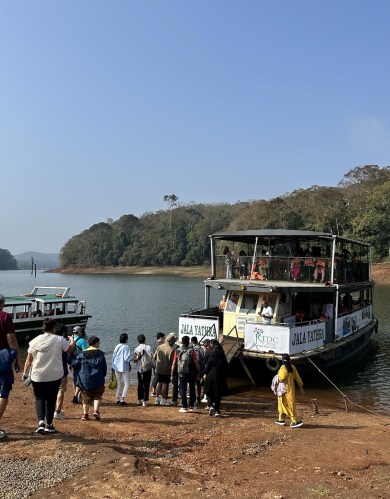
Boat Safaris in Periyar Lake
The following morning was all foggy amidst the sound of chirping birds in the hotel where we stayed. We spent the morning on a boat safari cruising Periyar Lake for some wildlife sightings. I wish I can write we spotted some tigers or elephants but we didn’t. And frankly we weren’t hopeful we would. But we spotted some birds, deer and wild boars. The lake cruise took less than 2 hours and in our safari boat, most visitors are locals — from Mumbai and New Delhi. Met a pair of British tourists, but I didn’t see many more. I wonder how lucky others were in spotting tigers. I learned there are only about 40 of them. Must be a truly elusive adventure.
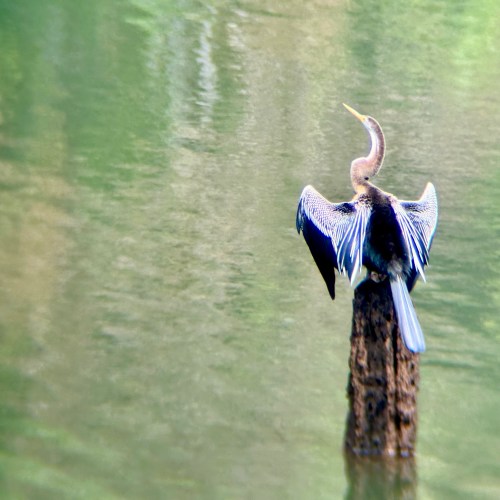
The Snakebird
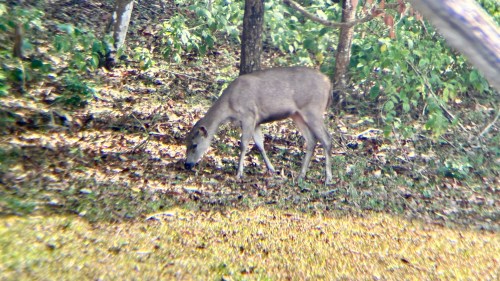
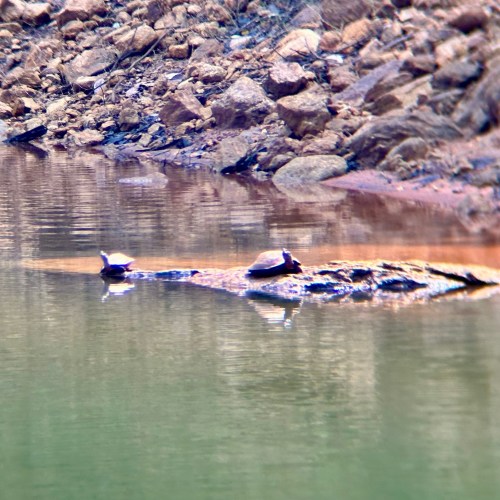
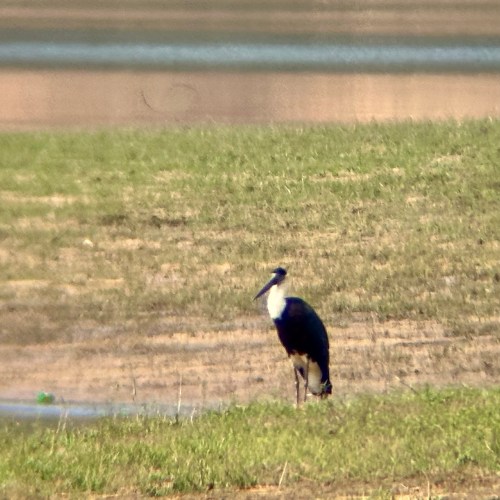
The birds looked really pretty. Must be a birdwatchers’ haven. There were storks too but forgive me, I can’t name them birds 😞. There were also deer and wild boars but the images are quite blurry from a distance. While cruising though, we welcomed the peace and quiet as we passed tree stumps where some birds we can’t name took rest. Like these lovely birds, these travelers need some slow-time too after those backbreaking long bus rides. The pee breaks were a challenge as there were not too many options to stop and have a proper tea and pee break. But this we all admit — shopping here is soooo good. Even non-shoppers like me would be tempted. So there. You know what it’s like!
Munnar is known as the tea capital of Kerala. It took us 4 hours to drive from Cochin to Munnar with at least 3 pitstops. Reminded us of trips to Baguio, our country’s summer capital as we passed waterfalls, visited a Spices Garden and sensed the temps dropping. A long day as we settled in our hotel to prep for the next 2 days visiting tea plantations amidst misty hills and placid lakes. While we found time to enjoy cooler temps, we weren’t prepared for the zigzag drives climbing hills along narrow roads. We can hardly look as buses and cars glide past each other with only a few inches between them. Not even the green, verdant hills and serene lakes can calm our nerves as traffic grew congested while tracking steep roads and navigating sharp curves. These Keralan drivers are simply good and patient, like tight situations are par for the course.
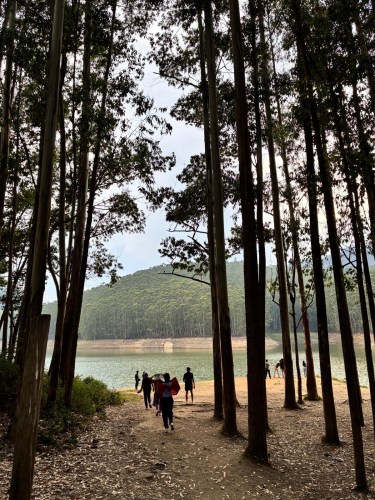
Admittedly, we lost a lot of time because of the slow traffic. Our driver and guide tried to push it all the way to the top hill station. The Echo Point by the lake is where we stopped to stretch our limbs and vocal cords. True, the sounds reverberated as we shouted out names, and some Pinoy inanities. Another challenging episode were the trips to the loo. And if something weird or crazy is about to happen, you bet it will happen to me. But that’s another story I hope my travel mates will not repeat outside our group 🤣
Echo Point. Ctto: TrishaGroup Shot by the lake. ctto: Eman
Today, we’re headed to a Tea Museum and perhaps a stroll in the nearby tea gardens. Will update this blog after today’s visit! See ya.
Update: Went to the Tea Museum and to Srishti, a charitable trust and welfare institute — a haven for specially-abled children of Munnar’s plantation workers. It aims to prepare and empower these children for life where they can positively contribute to society by learning skills like traditional craft techniques. Some of us bought fabric, bakery products, traditional apparel, paper products made from the fiber of non-wood raw materials like tea leaves, bananas, coffee, papyrusand marigold flowers. The day after, we saw more tea gardens and some locals asking to have photos with them. I find that very warm and welcoming. As for the tea gardens, my apo said they remind her of Royce matcha chocolates cut neatly into tiny rectangles. Hmmmm, you know, she is actually right.
I have been to India back in 2014. Happy to have spent my birthday there. As a first-time visitor then, we spent nearly 2 weeks touring around New Delhi, Agra, as well as the pink, blue and white cities of Jaipur, Johdpur and Udaipur. The Golden Triangle, plus more. As expected, highlight of the trip was Taj Mahal.
I’d gladly head back to Udaipur in the heart of Rajasthan and skip Delhi which I found so (air) polluted it threatens an asthma attack. Thought too that there are other spots in India I’d love to explore, like the southern part. So when my travel group suggested Kerala in the south of India, it was a no brainer to join. Tea estates, Kochi history and cruising the backwaters on a houseboat tick off many boxes for me. The only concern we have is the Nipah virus which allegedly hit West Bengal lately, over 2,300 kilometres away. Checked the map and the distance is like Manila to Singapore. Ergo, we decided it’s “safe” and far enough. So here we are.
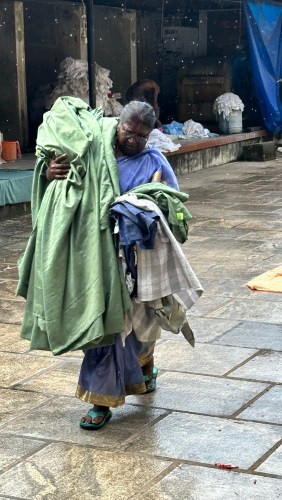
A grandma working in the Dhoby Ghat where all washing are done by hand, and ironing done using antique charcoal iron.
Securing travel e-visas was an ordeal as the visa system kept crashing. Most of us got stuck on page 2 of the online application but as soon as you pass that, it’s a breeze and processing only took 24-48 hours. Well, for most of us. My apo got hers after more than a week. And only after she got an email (a week from filing) requesting for submission within 24 hours (absolutely not a joke!) of additional information and proof which covered all of 18 pages. A real scramble. But we pulled through and the evisa was promptly issued within 24 hours from the 2nd filing. Phew!
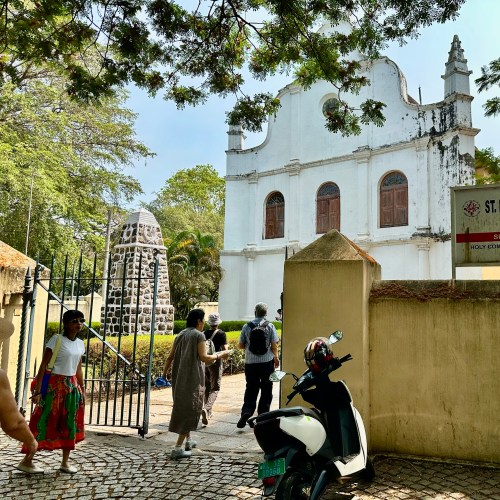
St. Francis Church
We got a big group this time. These seasoned travelers must share this same sentiment for enchanting tea plantations and Kerala backwaters. Balm for the soul. Soothing to our frayed nerves. Plus I’m assuming most of us are big fans of Indian cuisine. I am. So is my apo (grandchild). And then there’s Fort Kochi. I’m curious how the 3 cultures — Dutch, British and Portuguese — blended in this historic coastal neighborhood’s architecture, heritage and culture. Prior to this trip, all I know about Kerala has to do with Vasco de Gama. This Portuguese explorer reached Kerala in 1498, thus establishing a sea-based trade route between Europe and Asia. It was an epic 2 year voyage from Lisbon, around the Cape of Good Hope in South Africa, towards India’s south western city of Calicut in Kerala. This new maritime route ended the monopoly of Arab and Venetian spice traders. Think pepper and cinnamon. The new route boosted Portuguese economy and commerce. The Portuguese sailor went back a couple more times but on his 3rd trip, he caught malaria, died and was buried in India’s first Catholic Church — Saint Francis Church in Fort Kochi — before his remains were returned to Portugal where he now rests in the much visited- Jeronimos Monastery in Lisbon. Today, the spot where he was first buried (for 14 years, I hear) bears his tombstone.
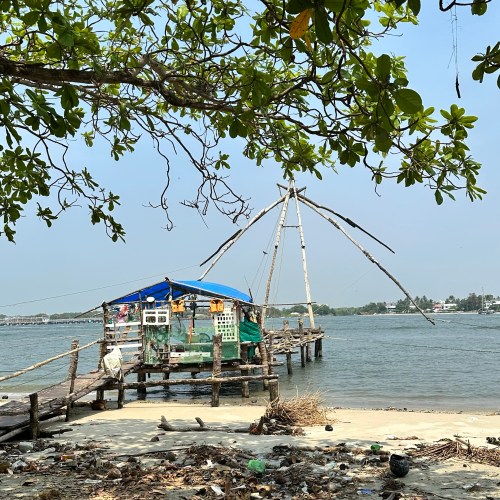
The Chinese Fishing Nets in Fort Kochi
On our first whole day, our Kerala introduction involved a visit to the public laundry called Dhoby Ghat in Fort Kochi. This centuries-old traditional/manual and community washing center involved “dhobies” who are mostly old ladies doing handwashing and ironing using antique charcoal iron which are very heavy and hot. Frankly, it’s a tad heartbreaking to watch grandmas working way past retirement age. Thankfully, we didn’t stay too long and walked instead towards St. Francis Church. More tourists here. And even more vendors as we headed towards the Chinese fishing nets off the Arabian Sea. These teak and bamboo contraptions are a major tourist attraction here. To be honest though, we were distracted by the many beachfront vendors selling bags, purses, pens, jewelry, clothing and so much more. Before long, our tote bags just grew heavier while our wallets went lighter.
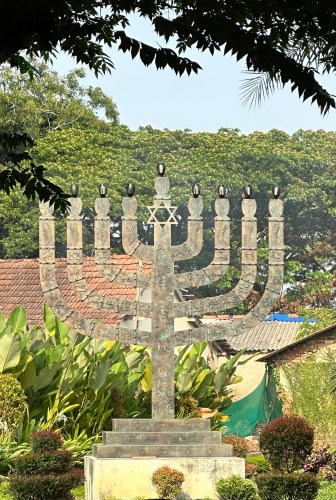
Jewish Synagogue.
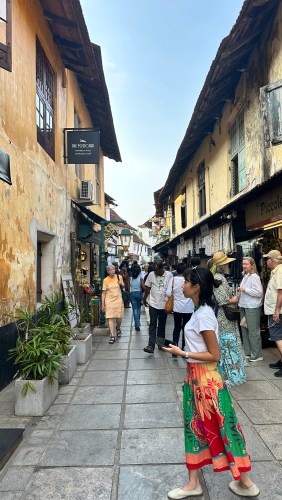
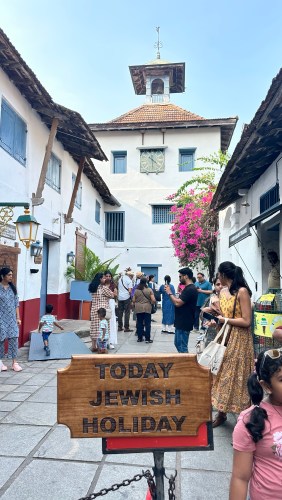
Fort Kochi is an interesting neighborhood. The Jewish town included a museum, a synagogue and an assortment of market stalls selling anything from spices to clothing to jewelry to perfumes, essential oils , woodcarvings and marble statues. We had our fill of shopping around the area and would have loved to check out the Jewish Synagogue but it being a sabbath, it was closed off to tourists like us. And so, we did the next best thing. Shop some more.
Jewish Town
Tomorrow we drive towards Munnar and then Thekkady before we meet up with our houseboat in Allepey. It’s only our first whole day here and we’re giddy with excitement for some nature-tripping in the coming days. Not your typical barkada trip, I guess, but let’s just say we love going off the beaten path. Kerala may not be up there within the tourist radar but we’re here to explore and ready for some pleasant surprises. 😄







 lifeisacelebration