Latest Entries »


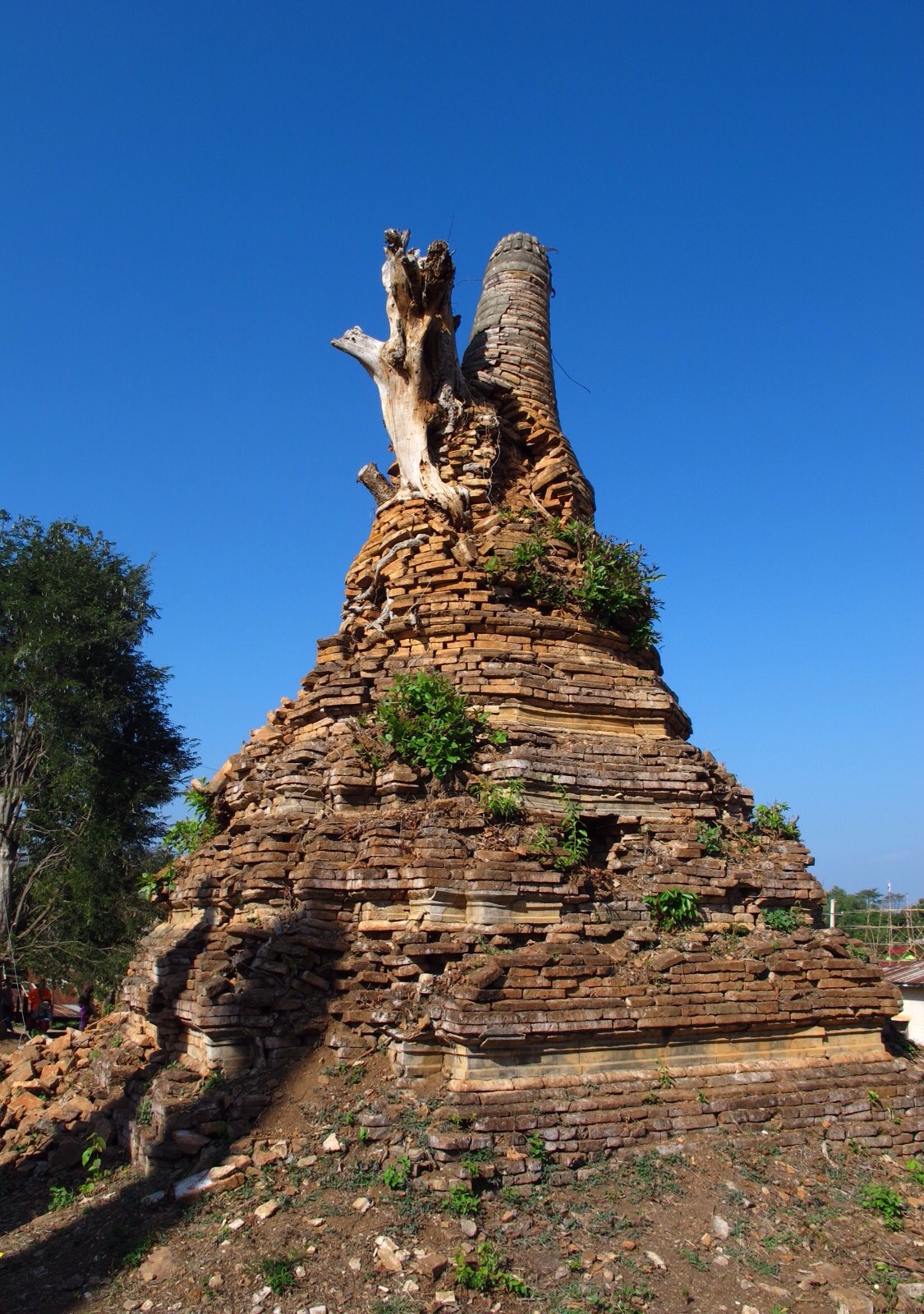
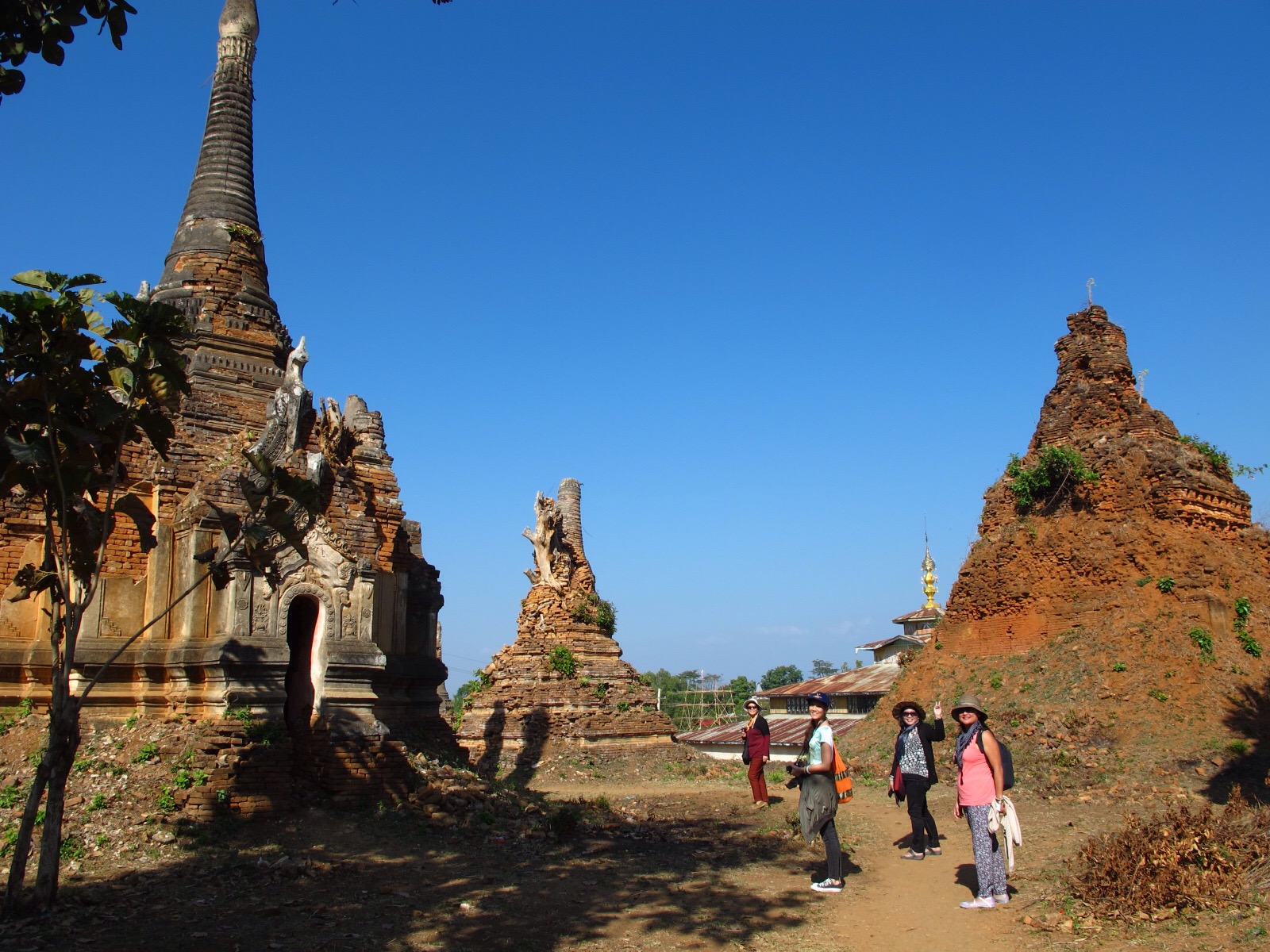
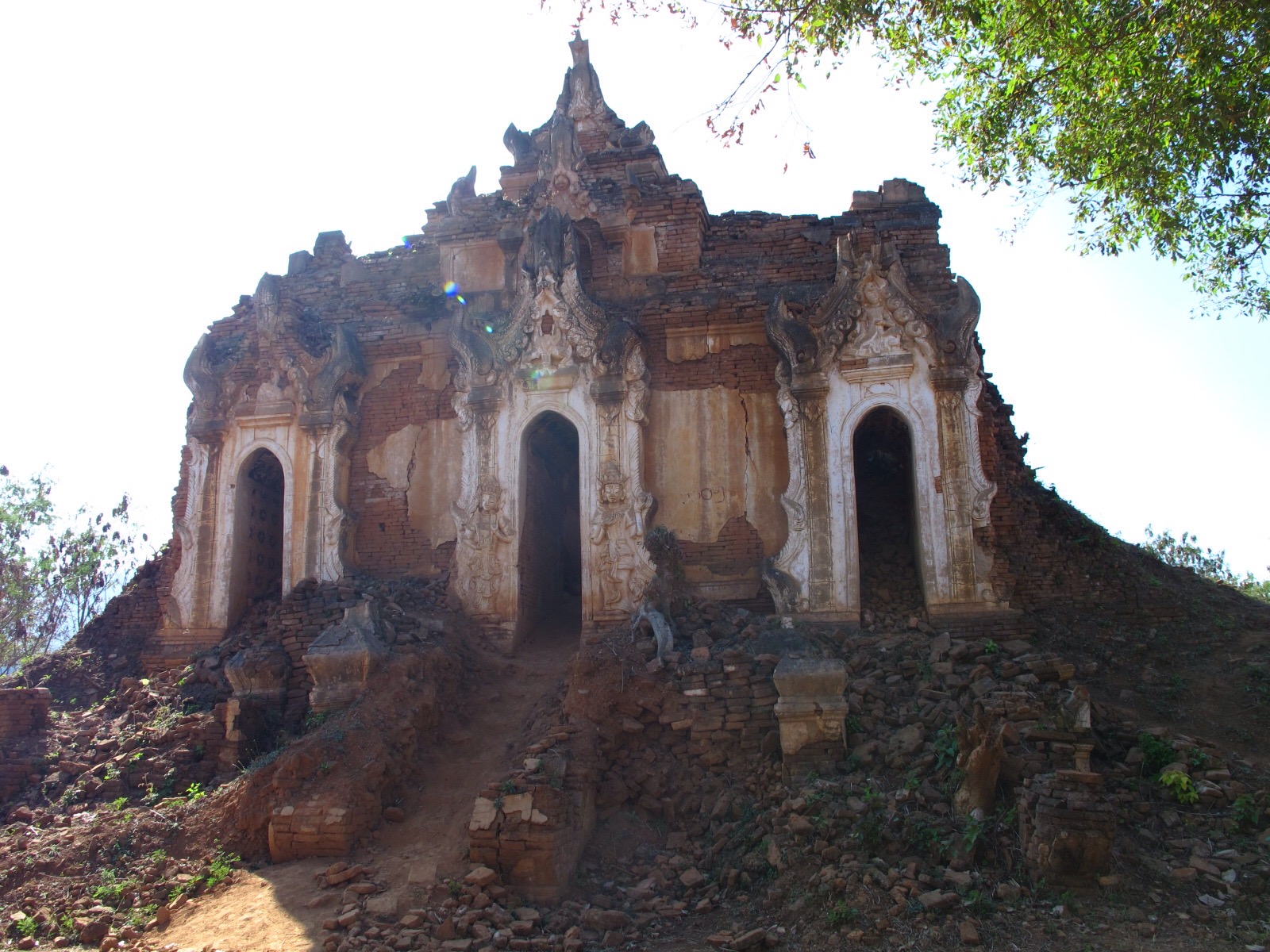
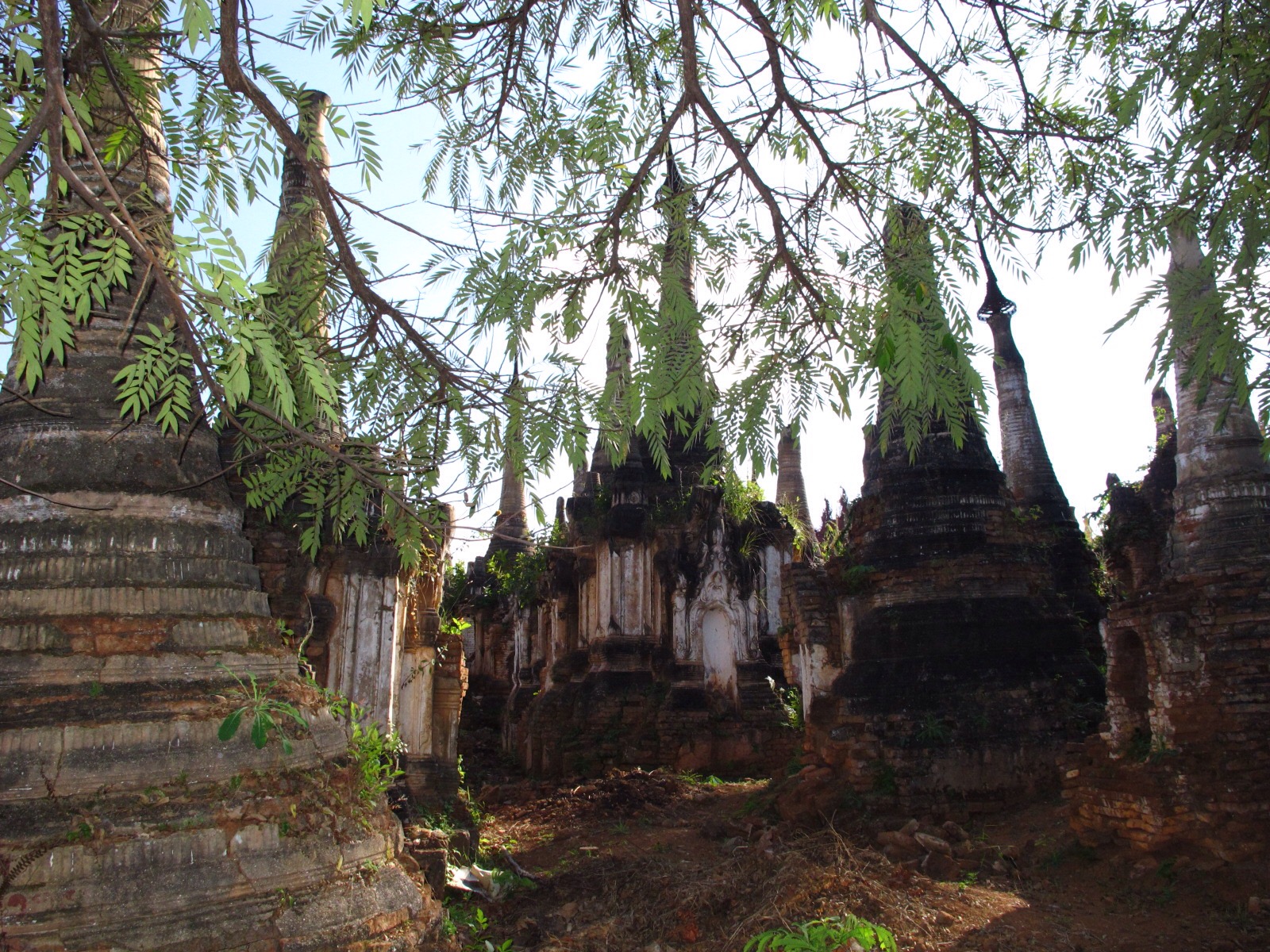
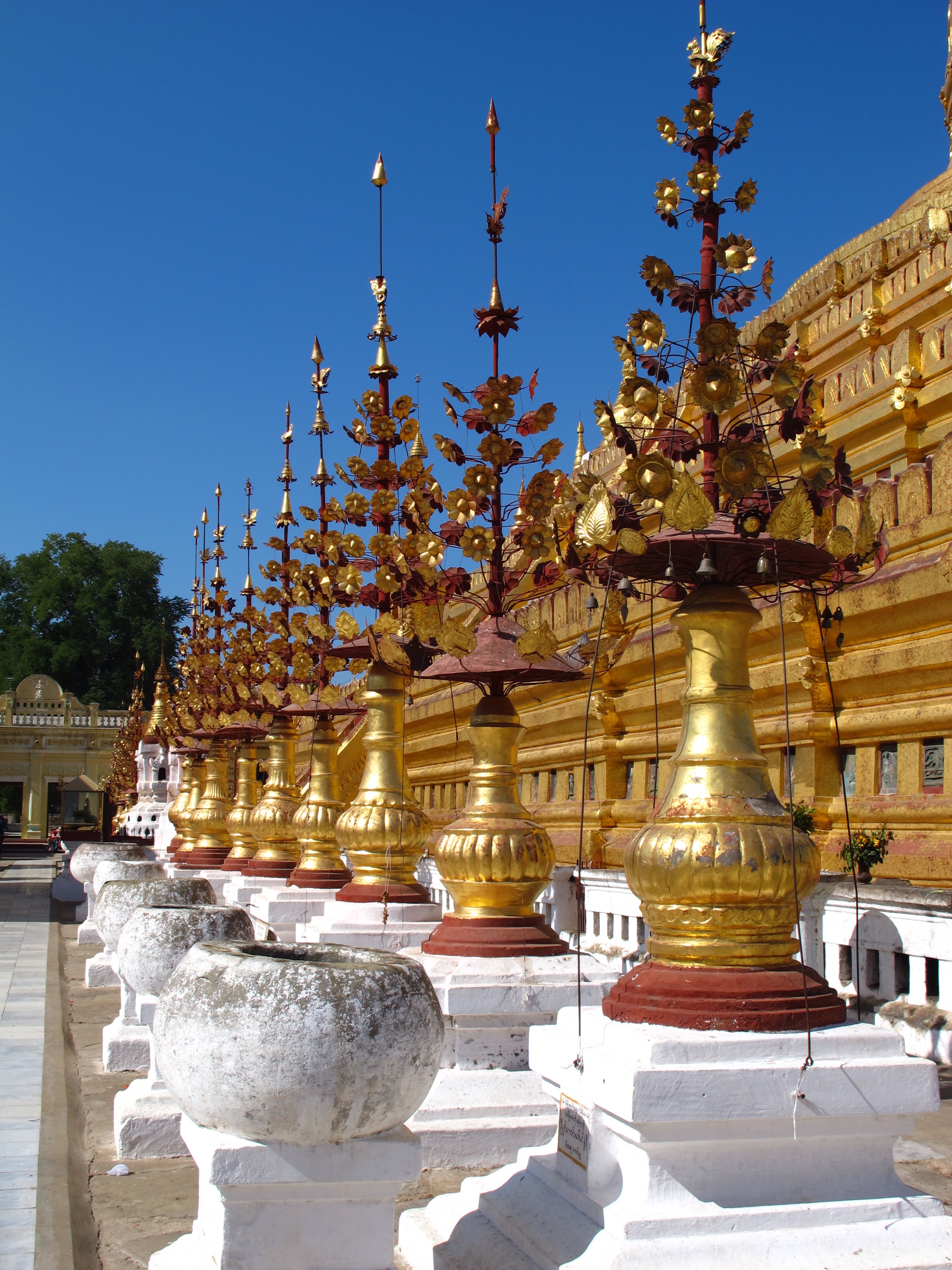
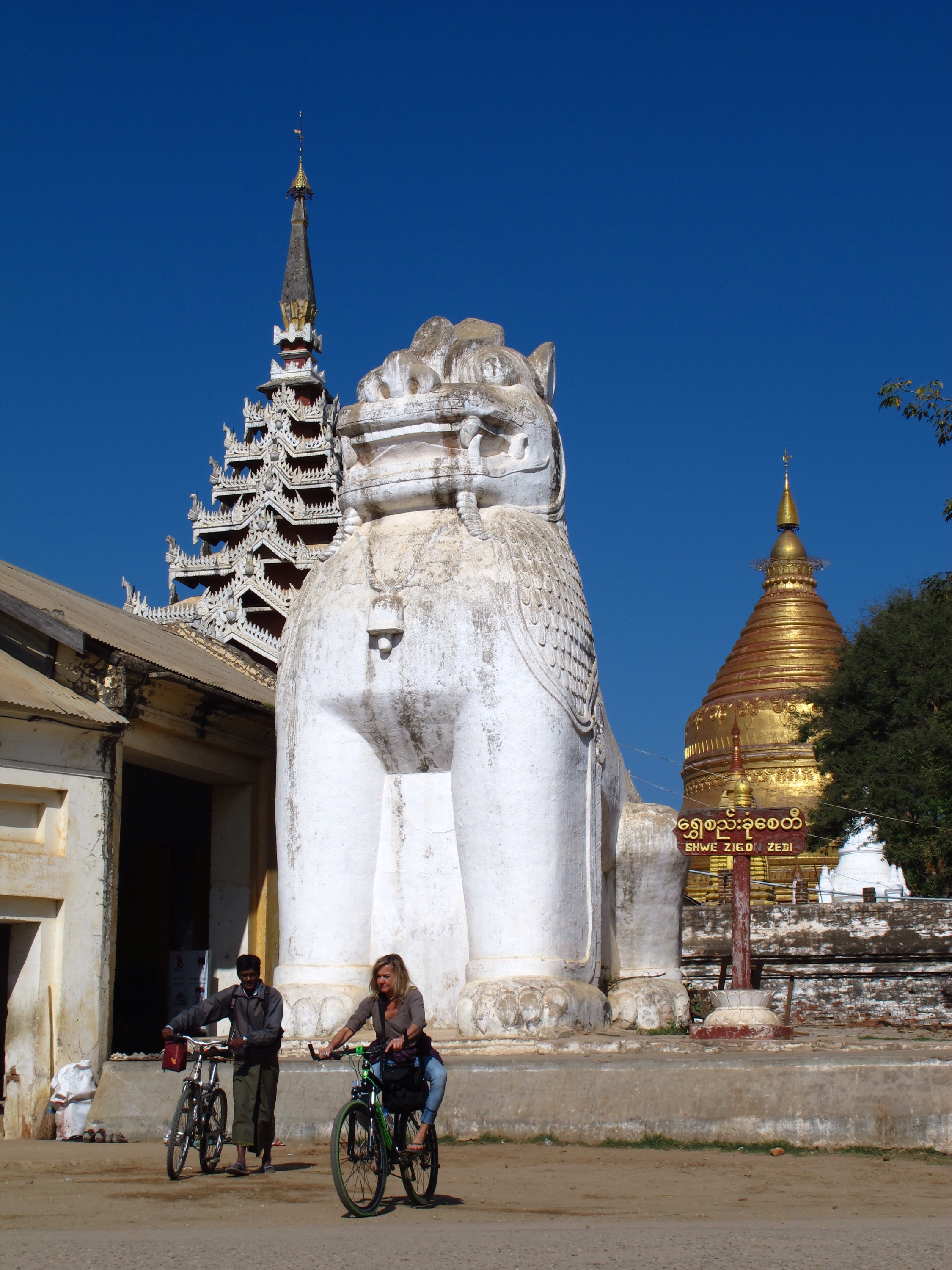
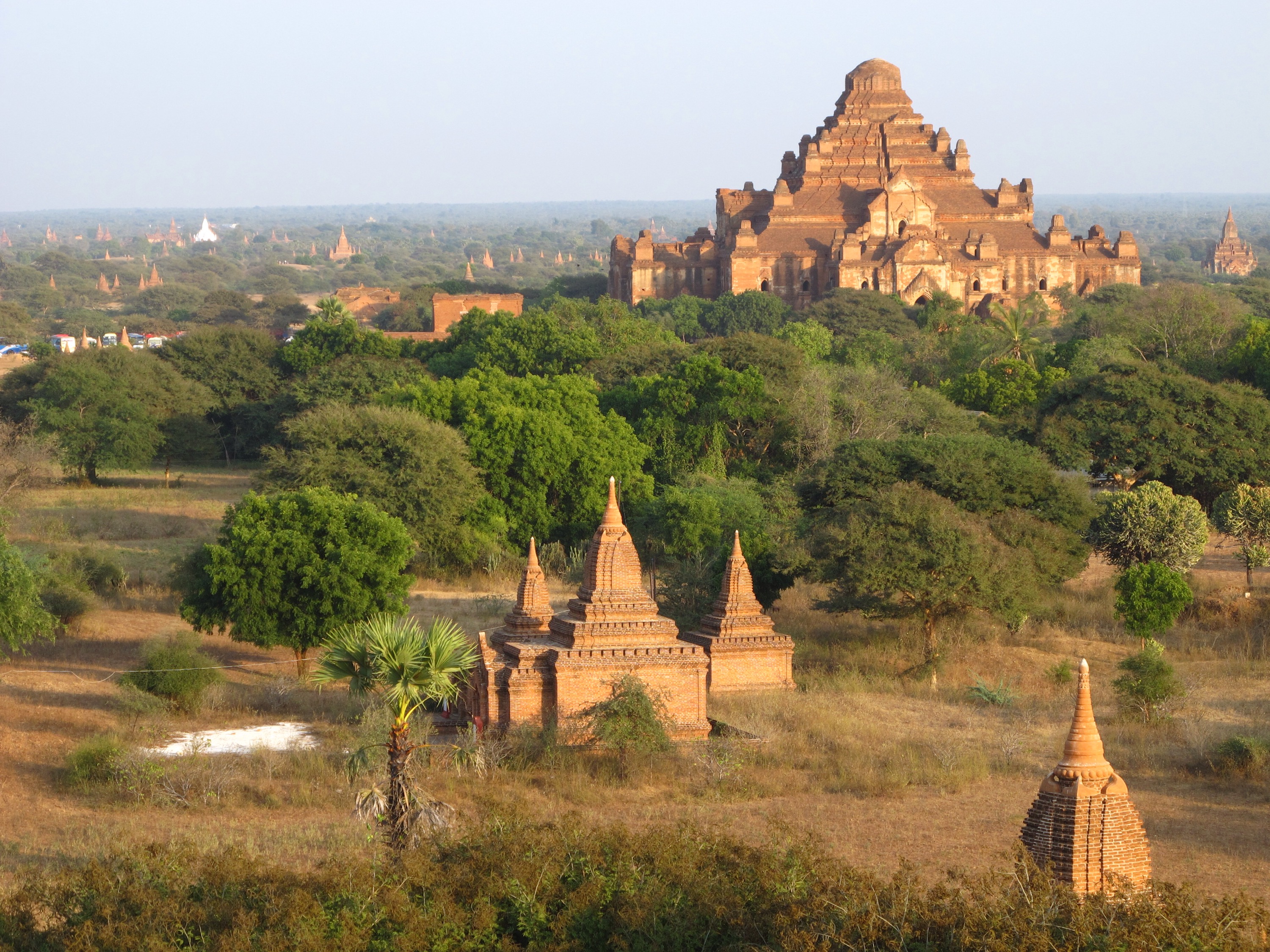
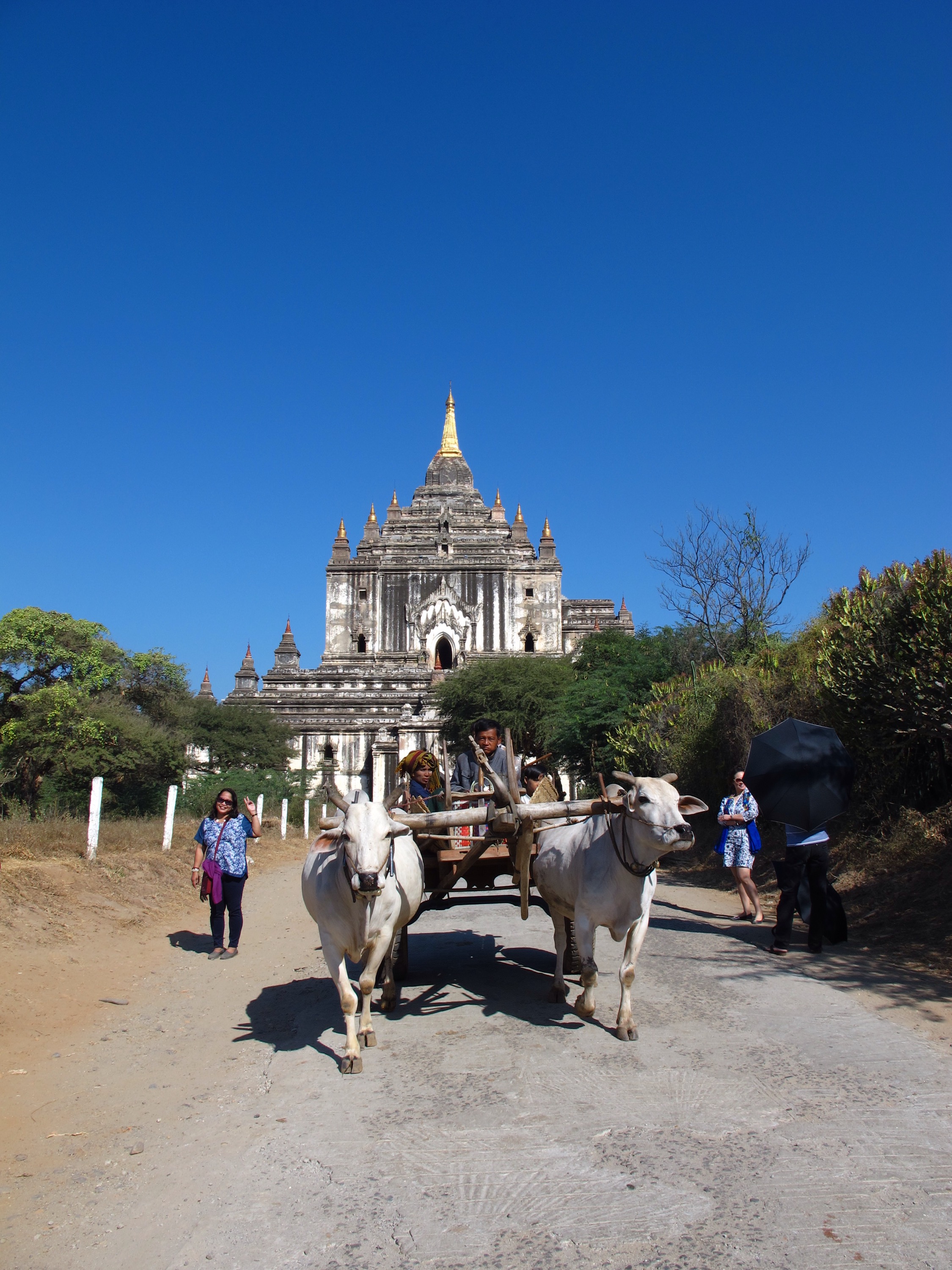
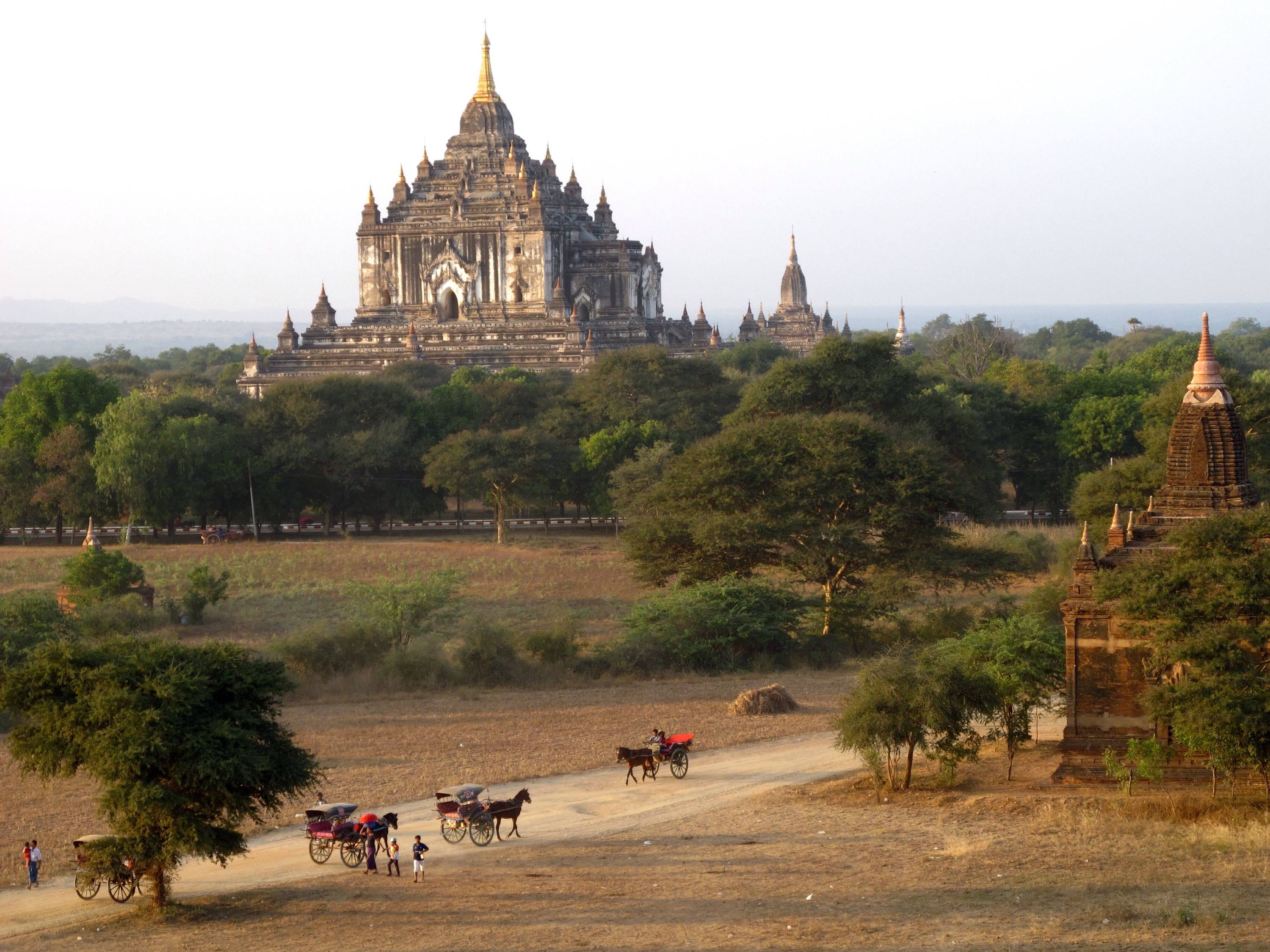
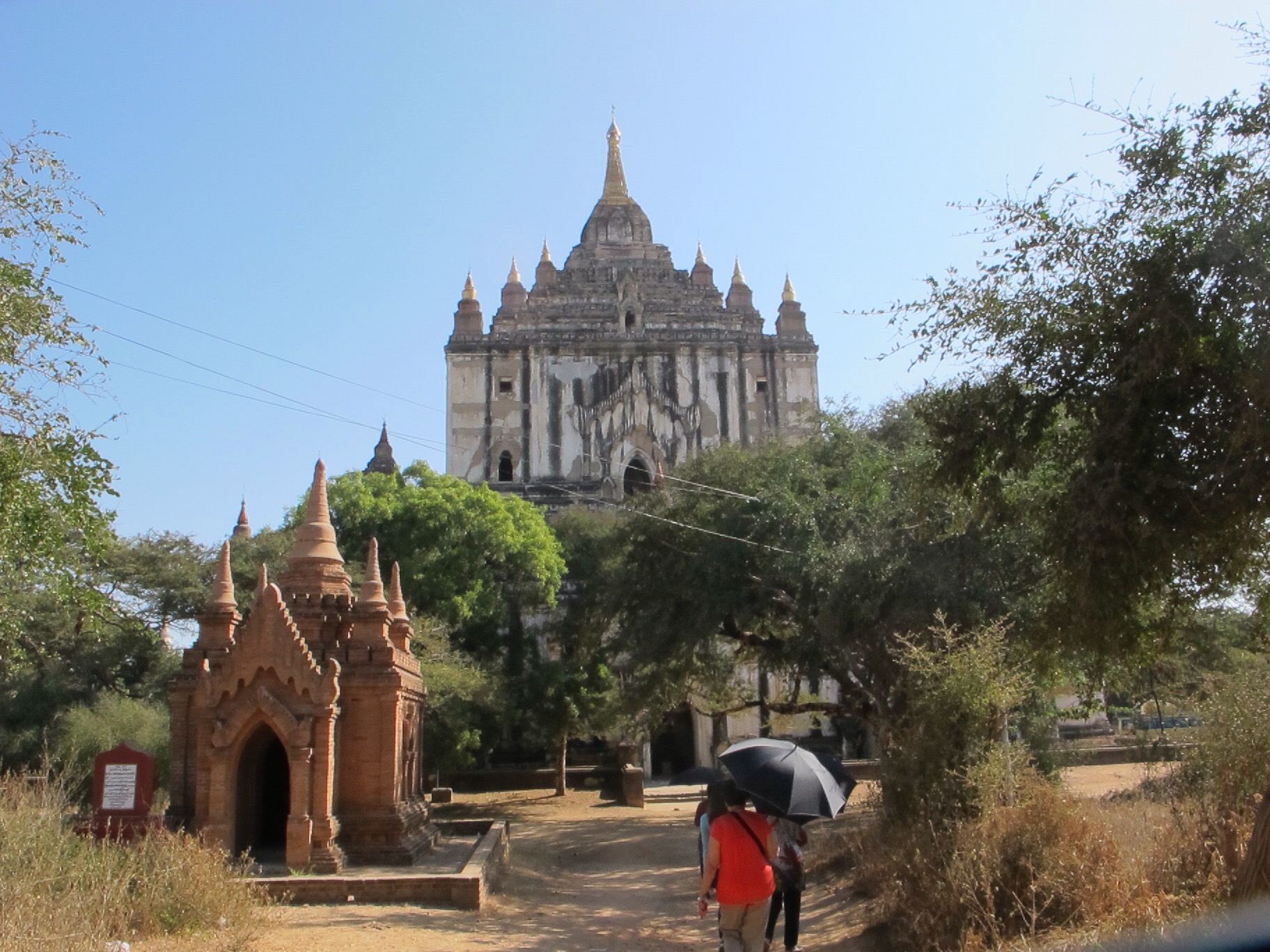
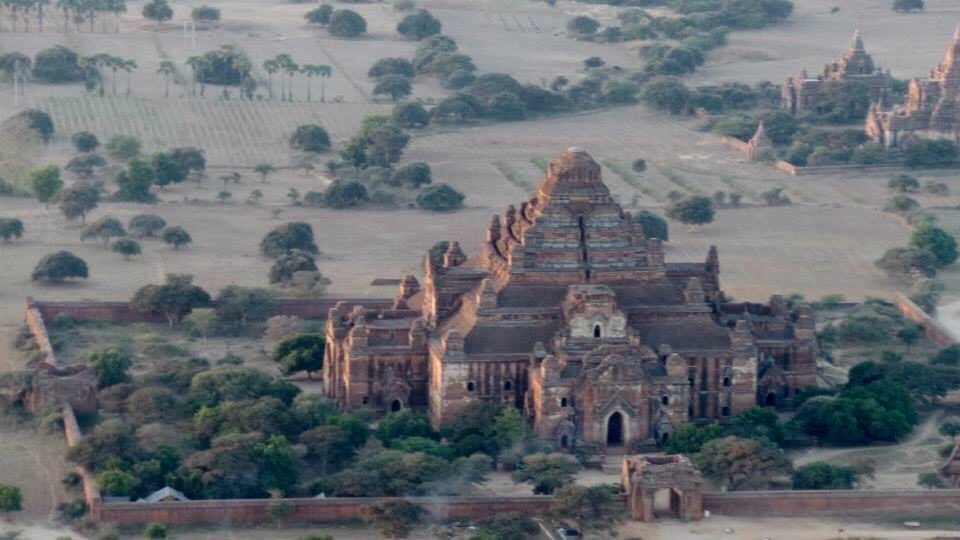
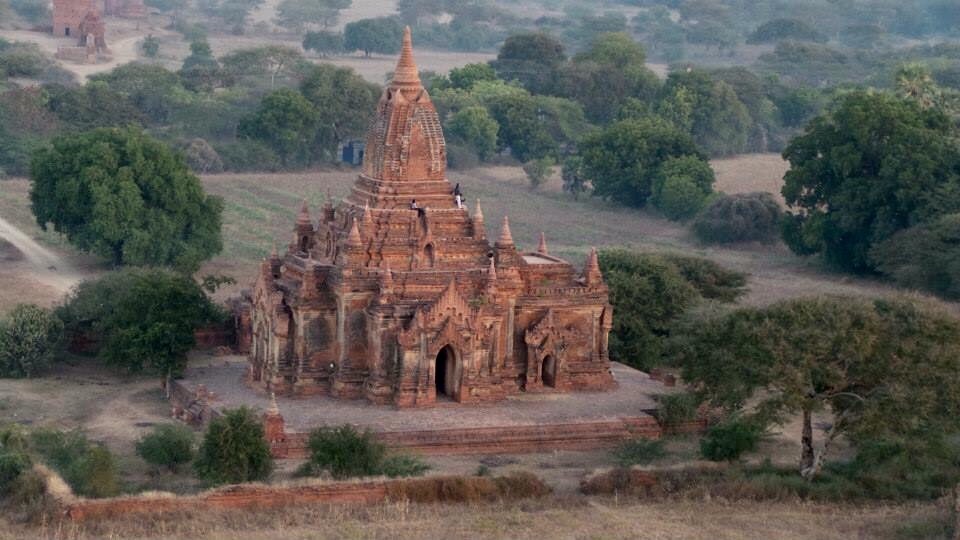
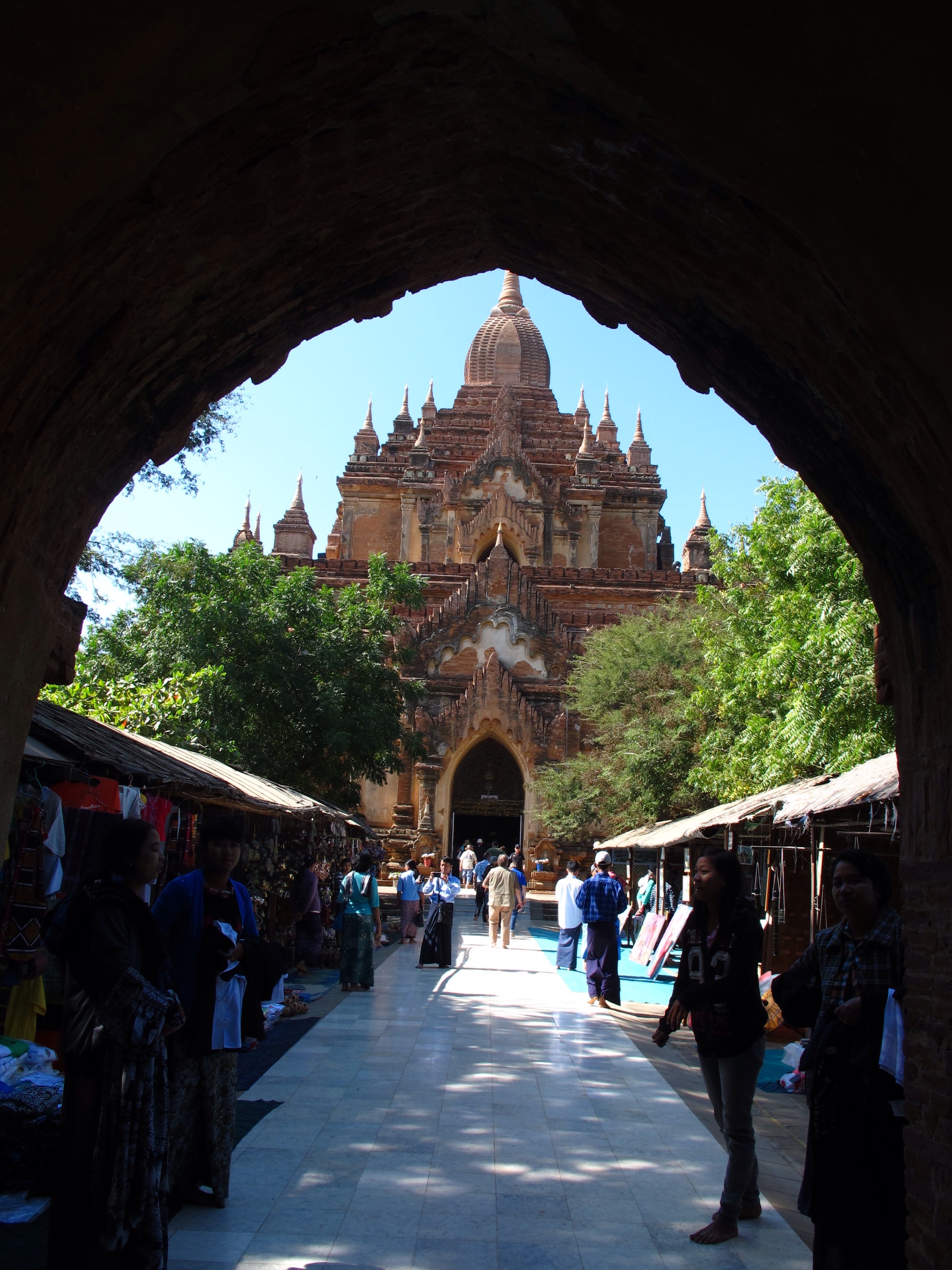
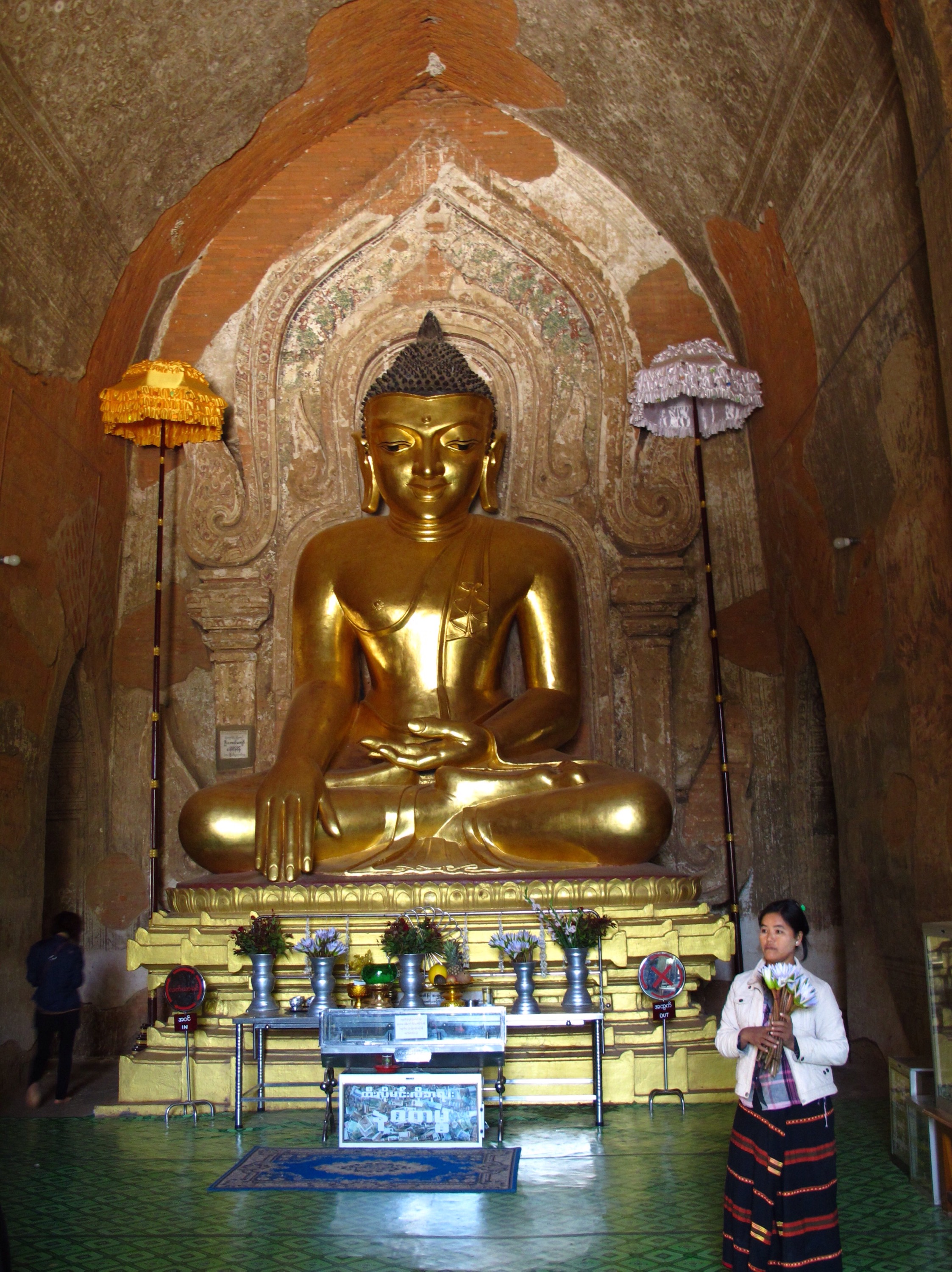
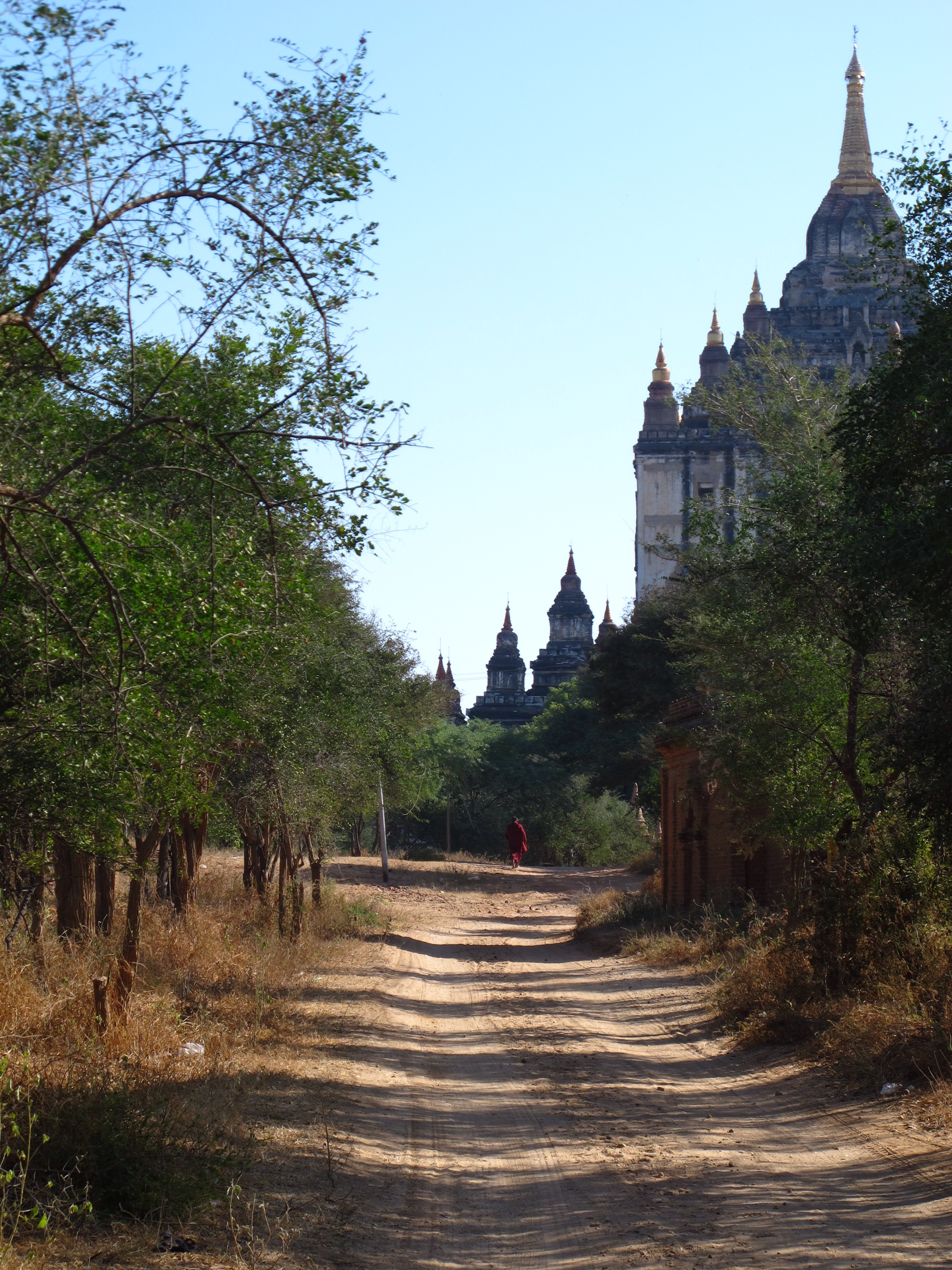
Rather unsettling seeing this raw, dusty landscape dotted with innumerable 11th to 13th-century stupas and pagodas of various heights, sizes and designs. Buddhism truly thrived and flourished in this former province of British India. The moment we spotted a cluster of about 3 or 4 ancient stupas, we wanted to jump out of the bus and snap away with our cams. My, we felt like some time machine transported us to this vast Bagan Plain where some 13,000 religious monuments once stood. Of the remaining 2,200 monuments in this 42 sq. km. earthquake zone, we can only surmise that only a few prominent ones are visited and upkept. The smaller ones seem to be cared for by local families enterprising enough to sell trinkets and artworks beside the monuments. Stupas, Temples, Pagodas, Buddhas — too many to count! Time stood still here, indeed.


2015/01/img_9587.jpg


2015/01/img_9577.jpg


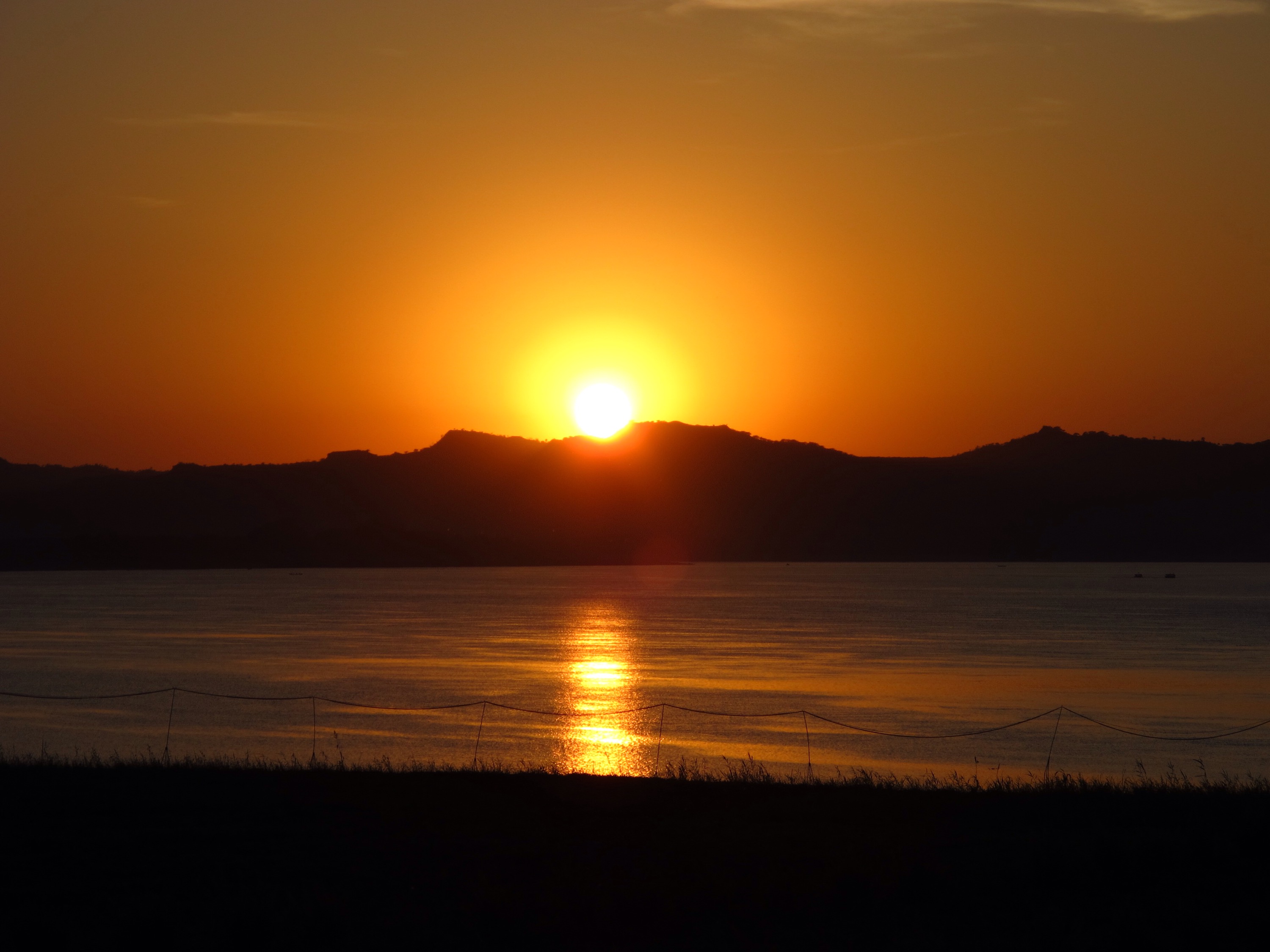
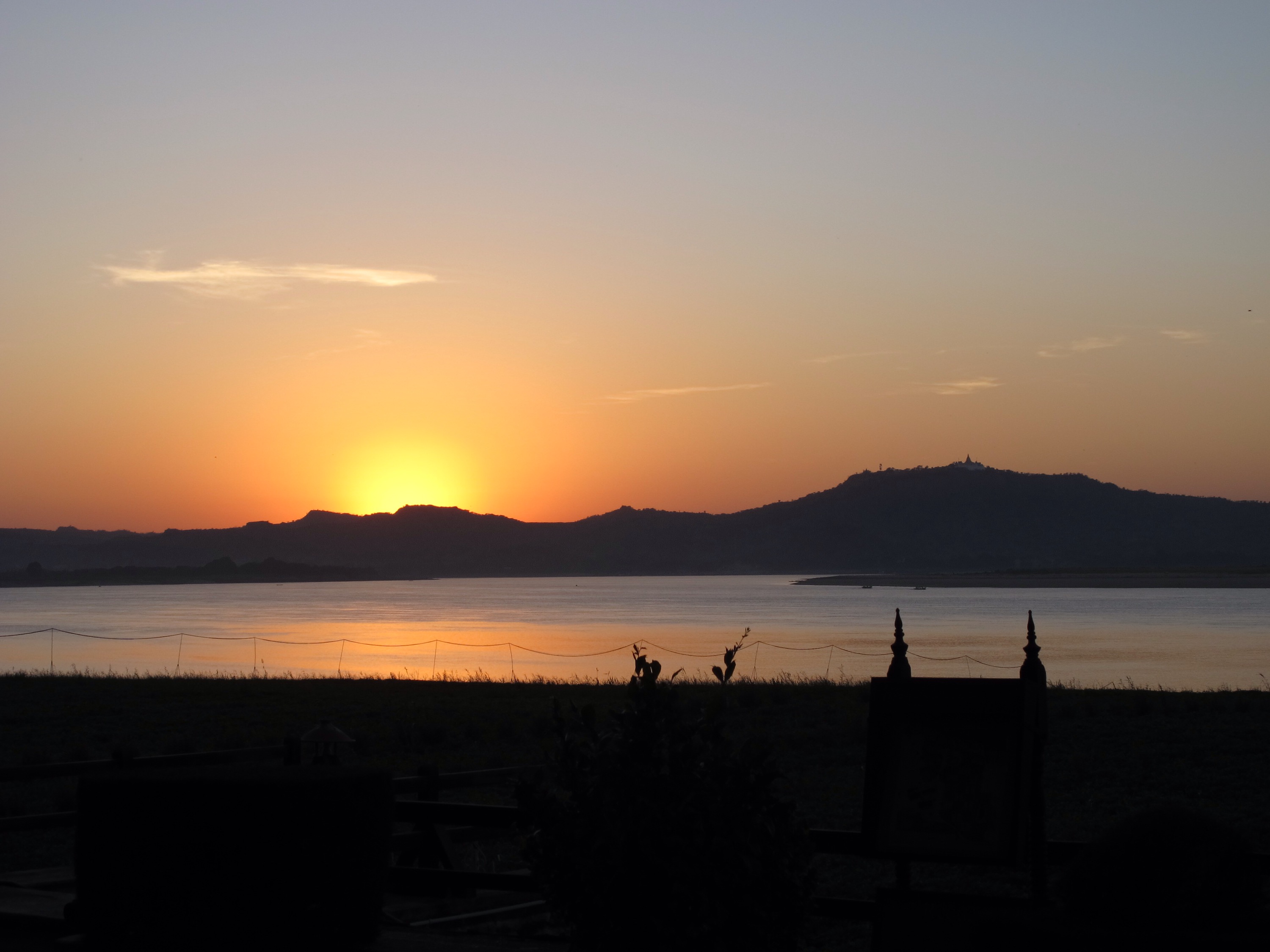
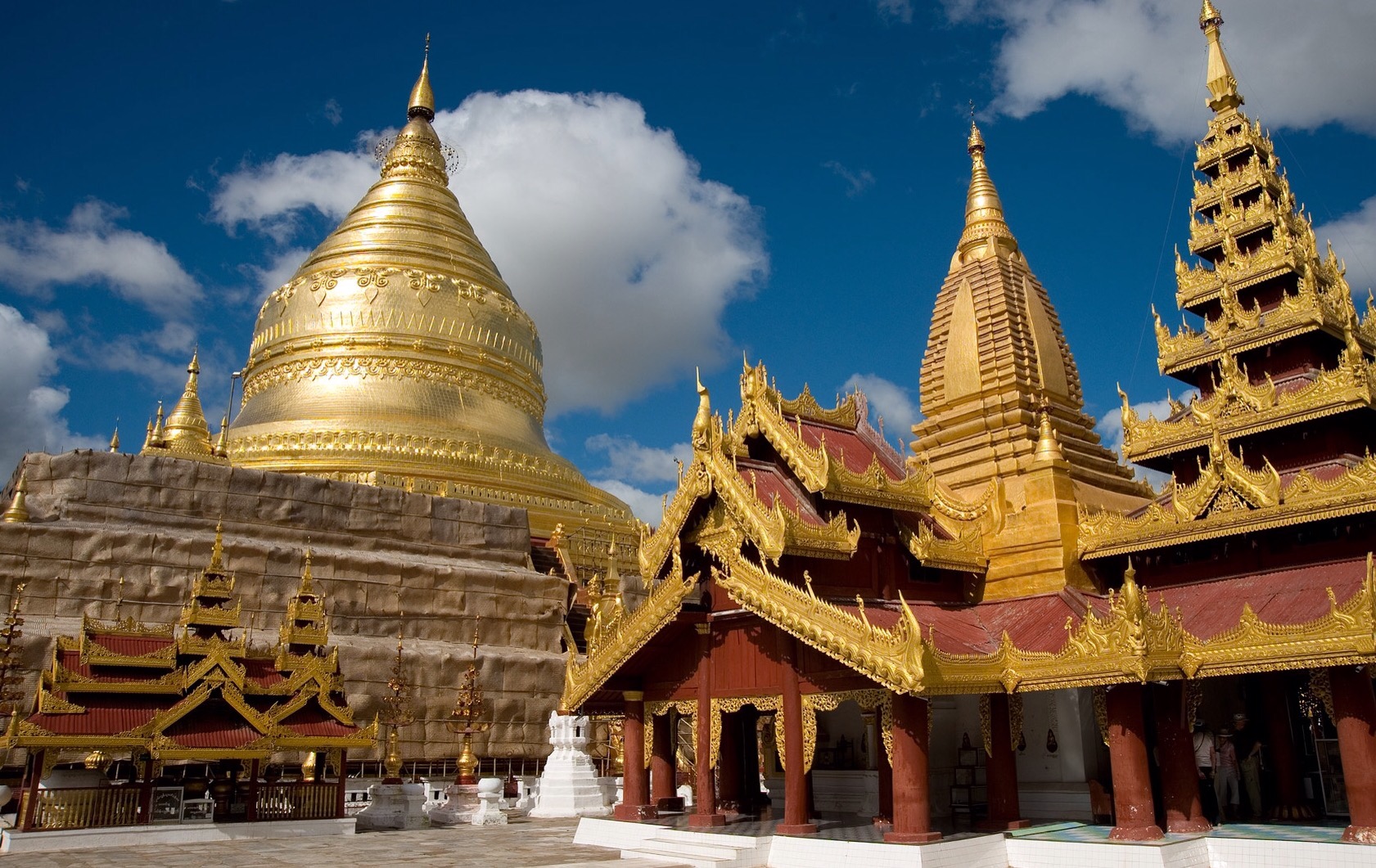
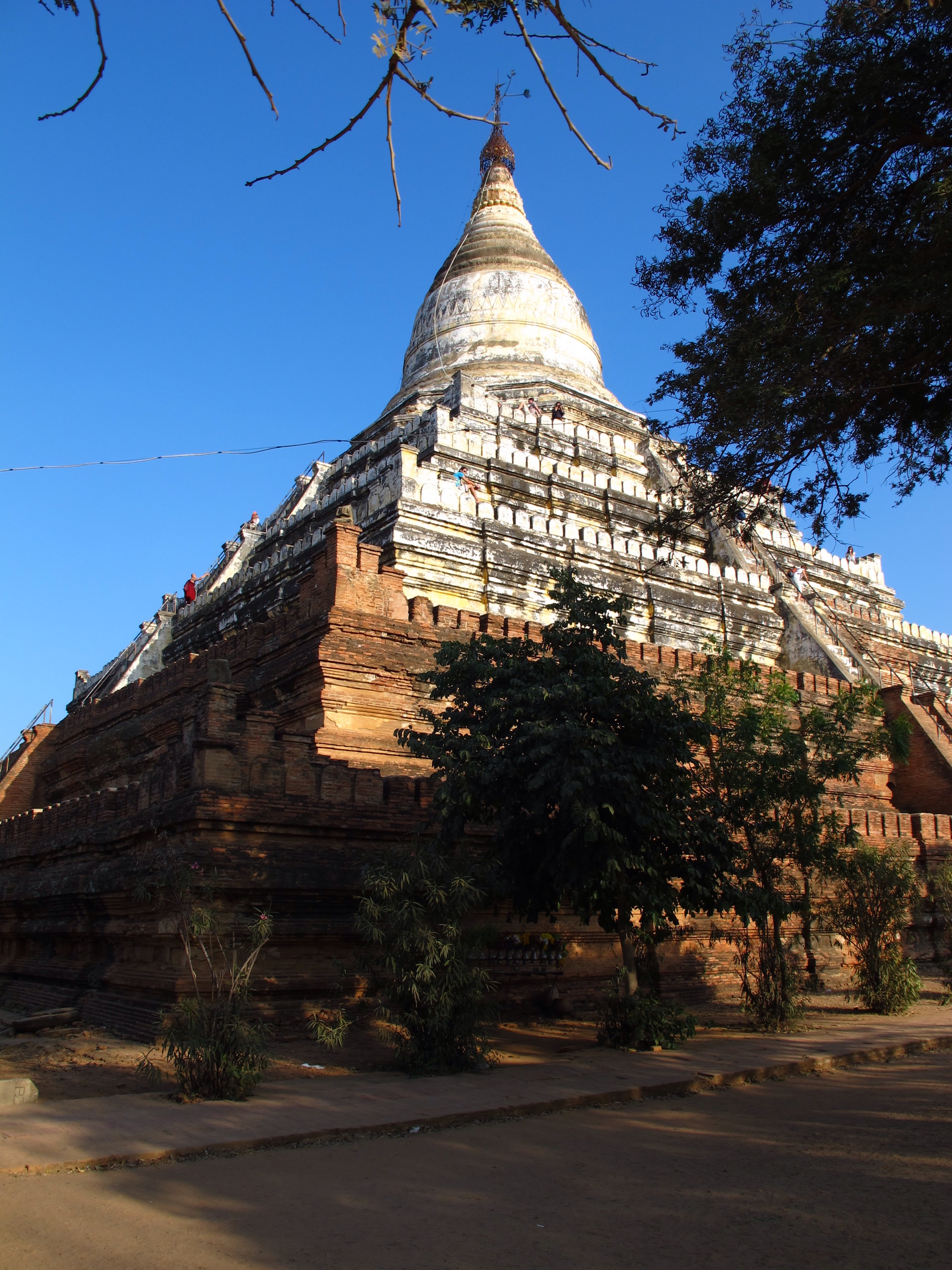
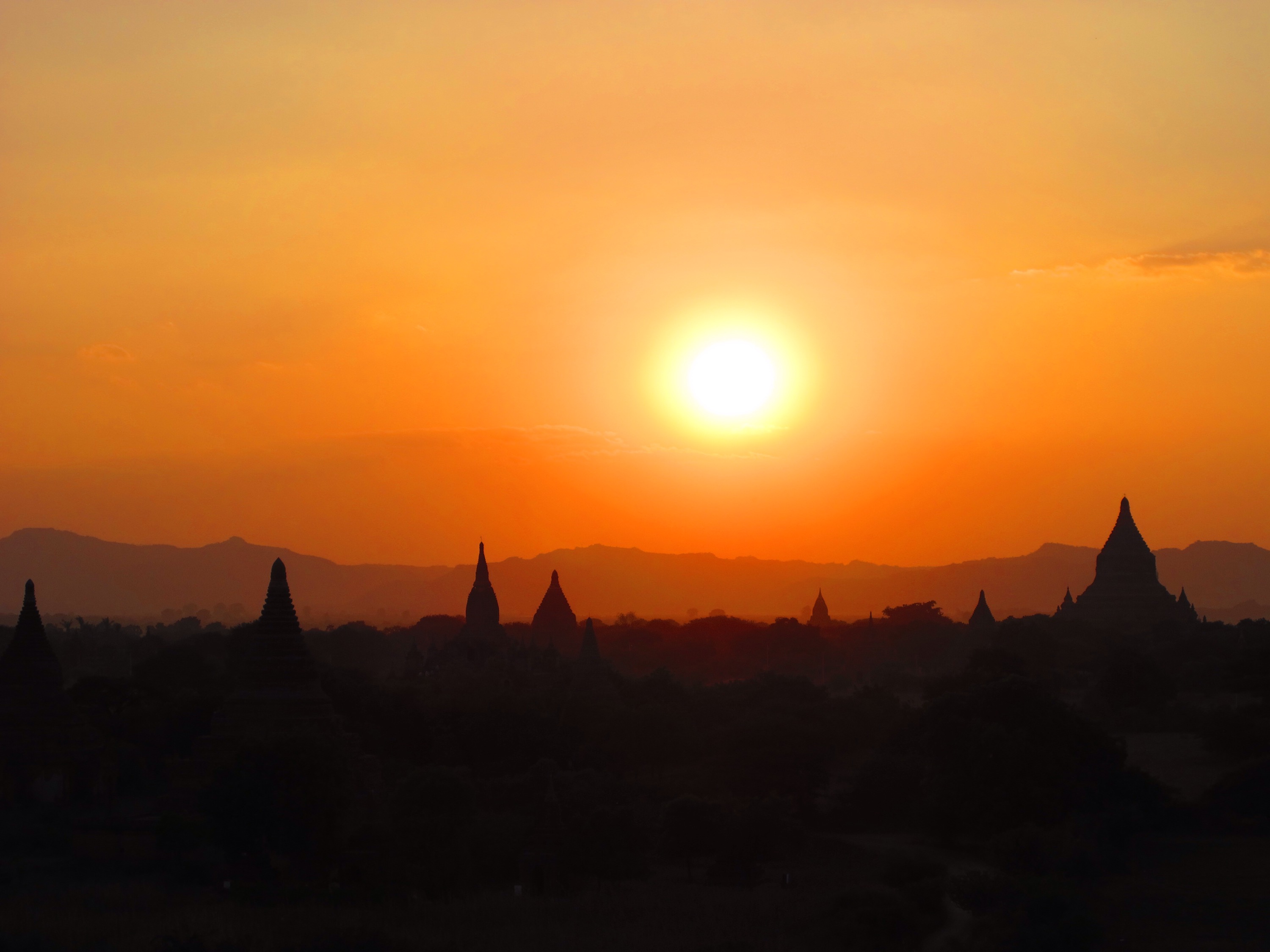
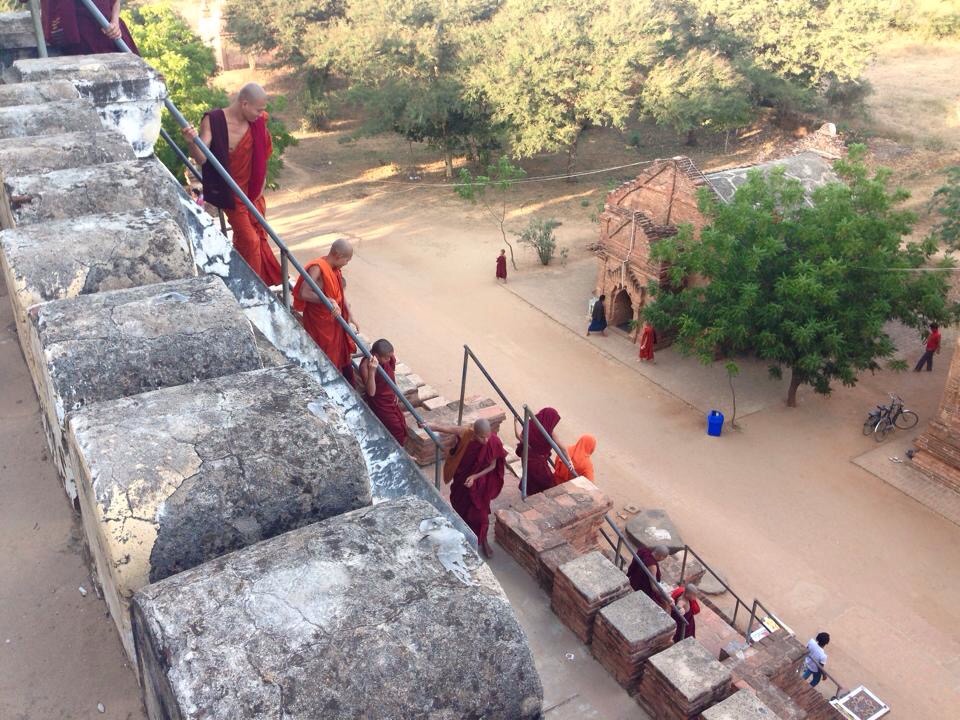
We braved and climbed the bigger 11th-century Shwe San Daw Pagoda where we waited for sunset. The Pagoda has 4 stairways on each side and we slowly and carefully scaled the steps towards each of the 4 (out of 5) terraces till we claimed a spot among some tripod-bearing photo enthusiasts. Now, I’ve waited for many sunset opps but for the life of me, I sensed that the sun took its time setting in this Burmese Plain. As we waited, a couple lit up their cigarettes and were gently reminded that they are on holy grounds. Some resistance there from the obnoxious pair, but seeing how many others were giving them killer stares, they relented. Back to the setting sun, I waited and snapped like the rest. Then, I happily stored my cam and simply watched the beautiful spectacle. When all’s over, I sneaked a peek into one of the serious photographers’ shots and felt how inferior and amateurish my photos were. But who cares? Sunset in Bagan is deeply etched in my memory, along with the sentimentality of a first-time visitor of this awesome landscape.


2015/01/img_9594.jpg


2015/01/img_9598.jpg


Shwe San Daw Pagoda may not be the best monument for a sunset view, but judging by the number of pilgrims, tourists and shutterbugs littering the place, it must be among the best viewpoints. Lost in the frenzy of taking the best sunset shot is how this pagoda supposedly enshrines a Buddha hair relic. In fact, Shwe means “gold” and San Daw means hair. Just as lost are the terracotta plaques which once adorned the terraces of this magnificent pagoda. Like some other temples we’ve passed or visited, heavy-handed “restoration” nearly obliterated what used to be ancient architecture. A pity. But it happens everywhere in Third World countries with hardly any resources to preserve their links and expressions of ancient art and history.


2015/01/img_9600.jpg


2015/01/img_6341.jpg


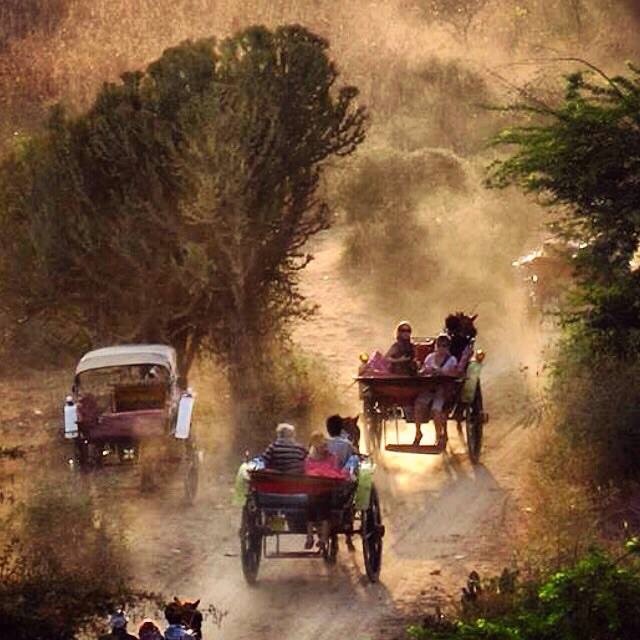
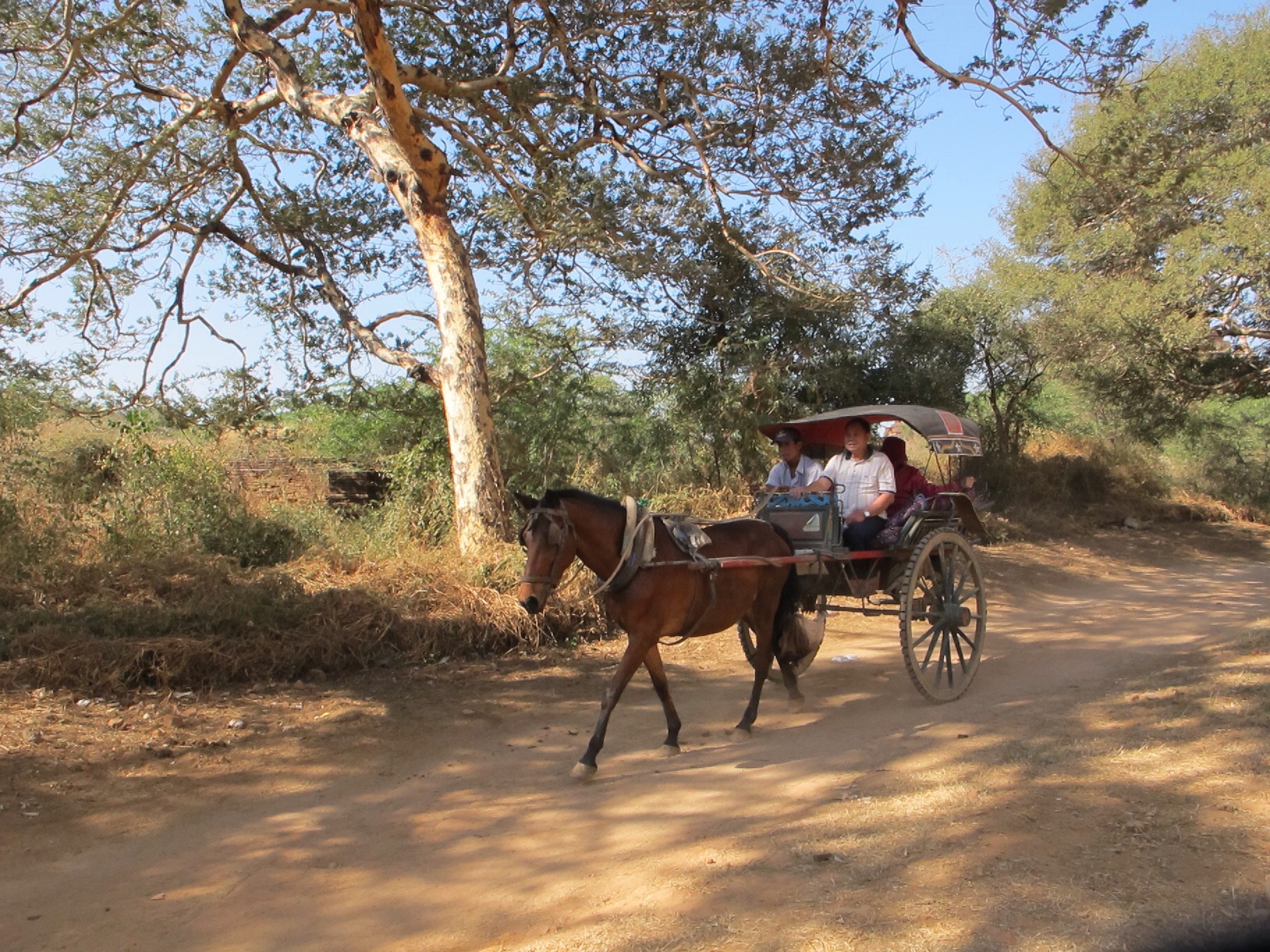
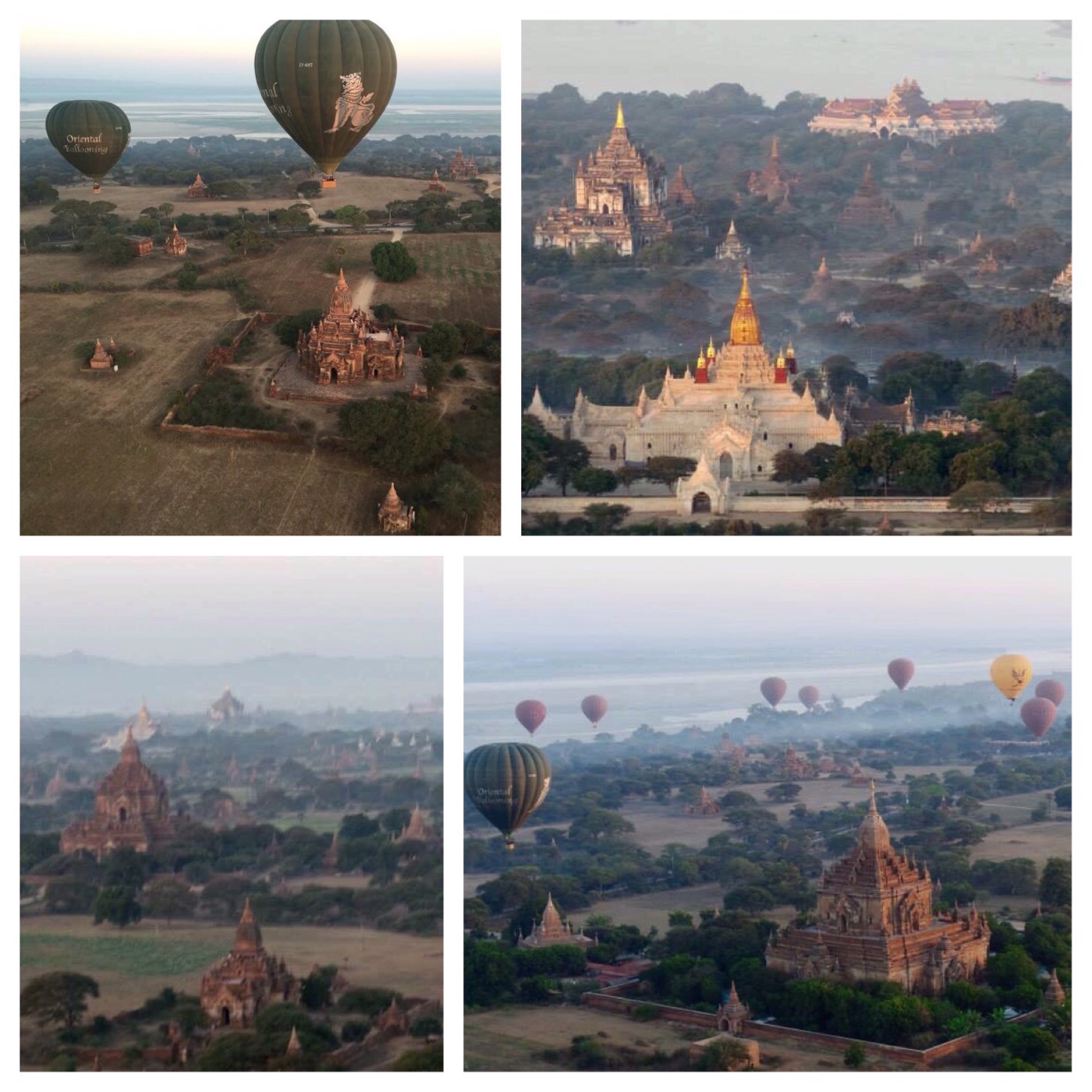
The early morning hot air balloon ride over this Plain must be a thrilling experience especially for first-time balloon riders. I borrowed and posted a photo here from someone (Thanks, Fe) who used a simple phone cam to capture the foggy scene. At ground level, there’s a choice between the horse cart and the oxcart. Either way, eat the dust, baby! I knew it even before I took the ride. As soon as I was handed a “surgeon’s mask” I prepped myself for a dusty hour. I would have wanted to ask someone to put some local sunscreen on my cheeks (called “thanaka”) but there was no chance. Thanaka is what you find on locals’s faces — you know, those whitish blotches on their faces which serve as sunscreen and cooling lotion.


2015/01/img_0150.jpg


2015/01/img_9771.jpg


2015/01/img_9279.jpg


I had high expectations before coming here. Have not read much of its history, but viewed enough documentaries and NatGeo photos. Still, Bagan did not disappoint. I do not know of any other place like it. I can only imagine how prosperous Bagan was in the middle century to spark this frenzy of building imposing structures. As I mentioned, too many to count. Too many to care for. I won’t be surprised if some backpackers try to camp out in any one of the unguarded monuments on a humid summer night. Oh Bagan. You’re a dream. Lara Croft should get here and do a movie sequel!


2015/01/img_9670.jpg


2015/01/img_9676.jpg


2015/01/img_9678.jpg


As the youngest member of the group said (yes, Lauren, that’s YOU), ALL THAT GOLD! Our introduction to Myanmar is all glitter, literally and figuratively speaking. Multiple pagodas or temples of gold, silver, copper, marble, lead and tin in one sacred place. Just as many stupas of same shape but different sizes. Same, same but different. Some “just” golden, others embellished with gemstones of varied colors. You have to crane your neck to see the top of the tallest, golden stupa. Then peer inside some smaller shrines where Buddhas are encased. Here, I think they are also called “Nats” or spirits (pre-Buddha) where we found pilgrims including monks at prayer.


2015/01/img_9006.jpg


Having first visited the Reclining Buddha, the Shwedagon Pagoda came next as our first-day introduction to Burma. It is the most important Buddhist pilgrimage site in present-day Myanmar. The most sacred place, if you will, since the octagonal pagoda with a diamond-studded spire houses relics of Gautama Buddha. It is an old pagoda but exactly how old, no one knows. I can only guess it started with a rather simple and single pagoda, then stupas were added through the years and centuries to compose this impressive temple complex.


2015/01/img_9013-0.jpg


We spent an hour here. Feeling like zombies after a long flight, the incense, the crowds (both pilgrims and tourists), the constant shutter-click sound of a camera, all these only got us more excited, unmindful of our lack of sleep and the strange feeling of walking barefoot around the huge temple complex.


2015/01/img_8995.jpg


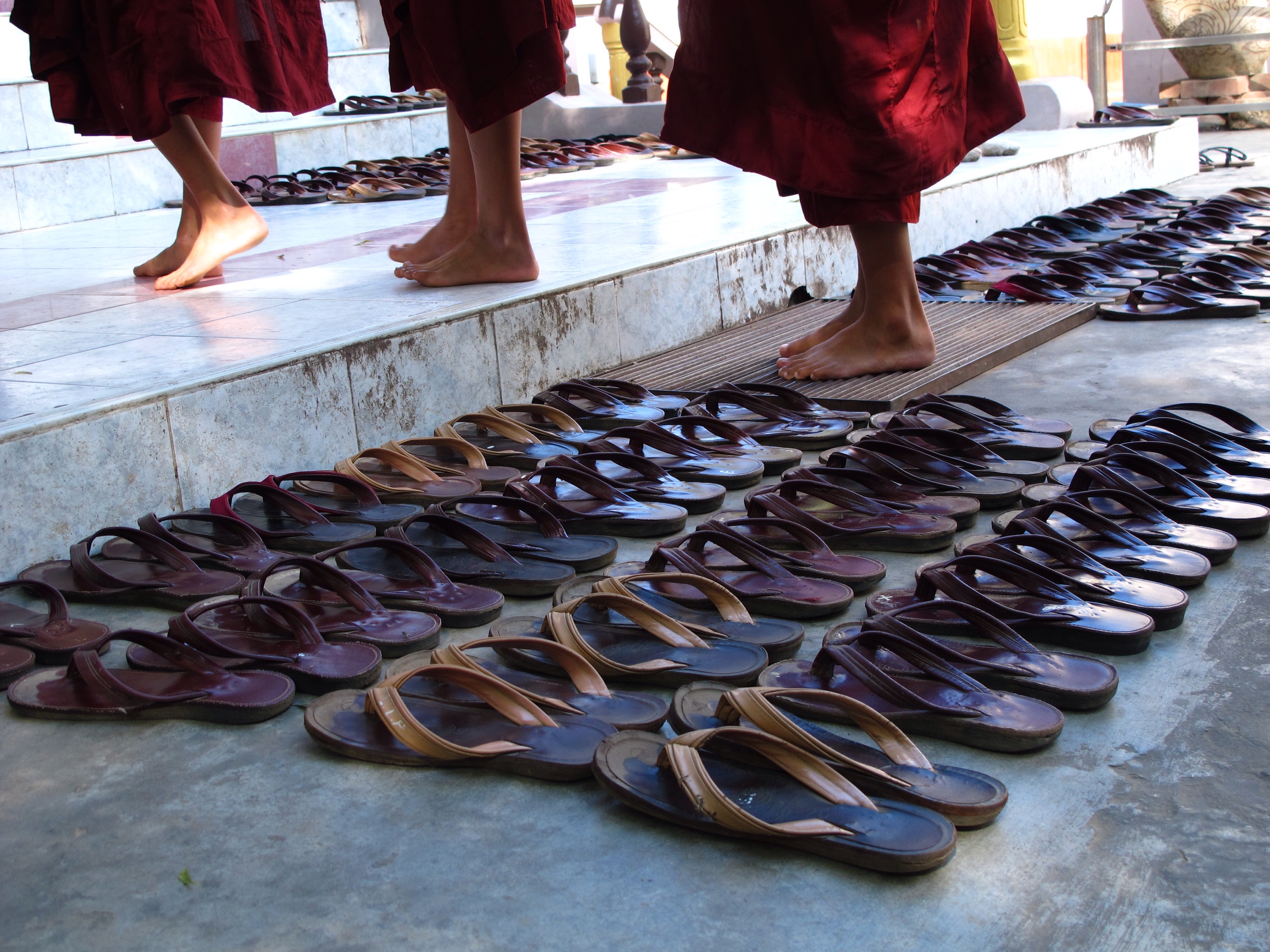
All’s well. The Reclining Buddha and the Shwedagon Pagoda on our first day before hitting the sack prepared us for the next few days of adventure in Myanmar. This intro also prepared us for many barefoot experiences here. No shoes, no sandals, not even socks. That’s how they do it here in Myanmar. A good tip is for you to buy those cheap flipflops here to wear. Getting in and out of those rubber shoes or strapped sandals can be a chore. Plus, you can simply discard those flipflops as soon as they’ve served their purpose. So there…….


2015/01/img_8930.jpg


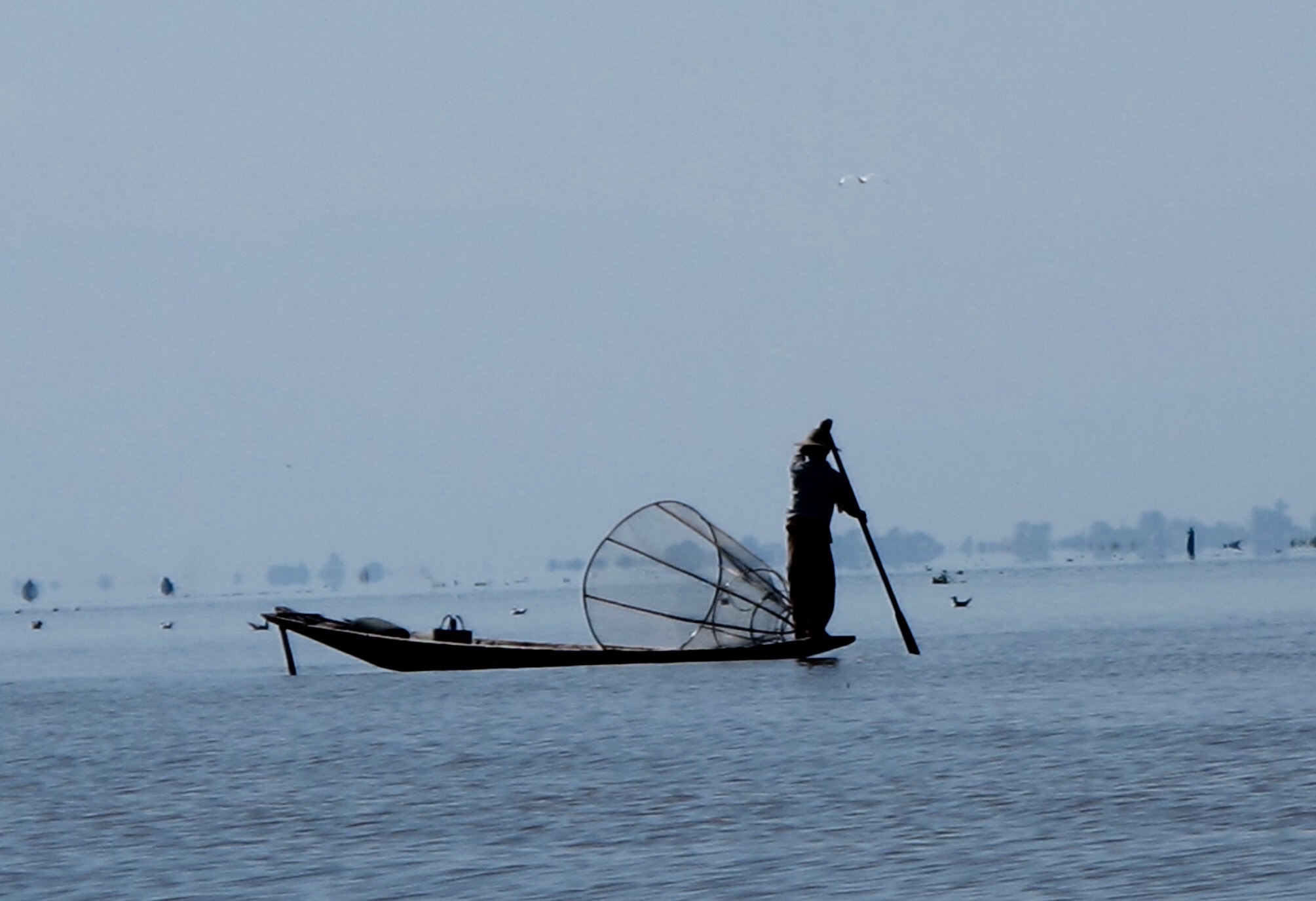
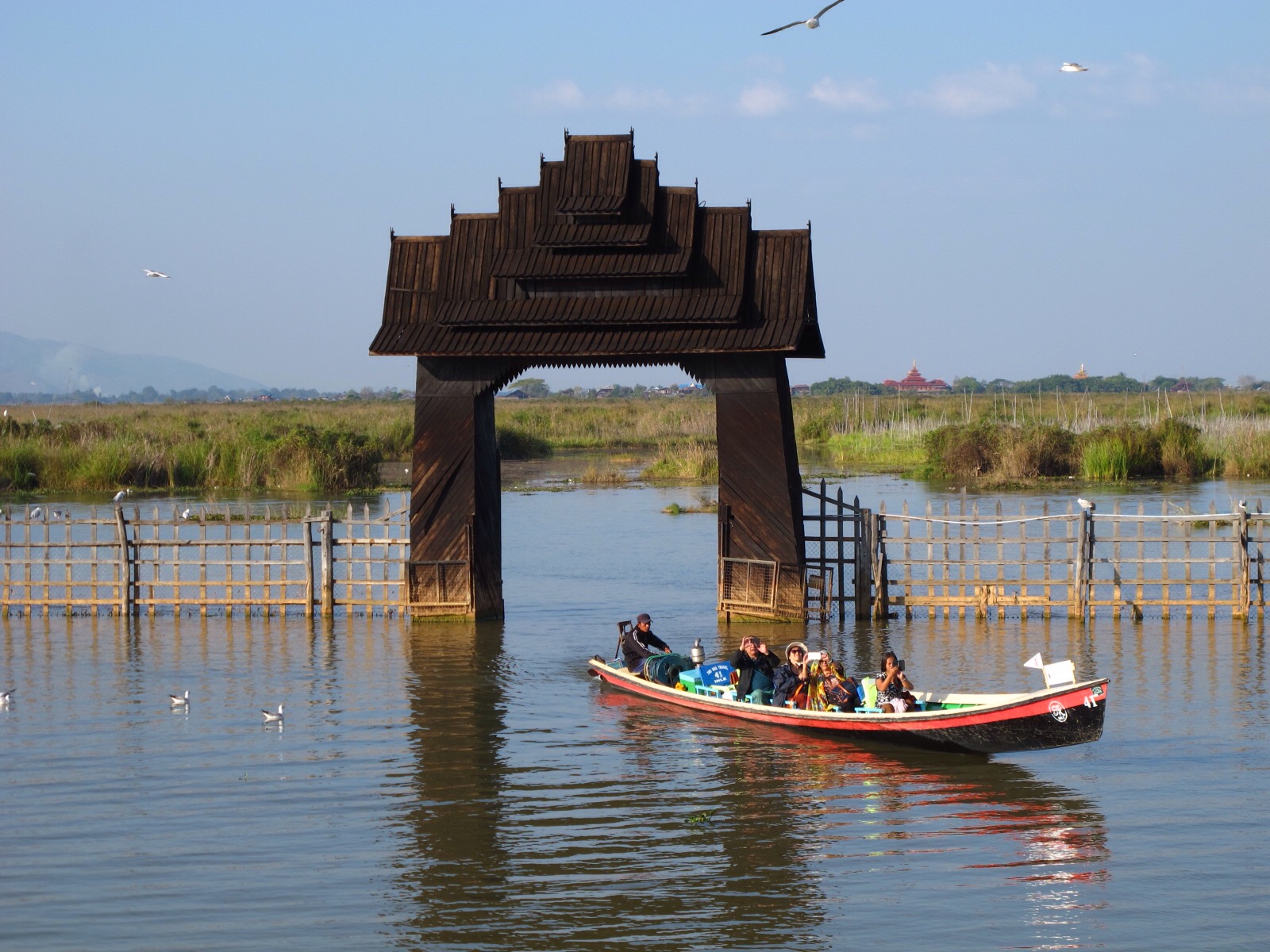
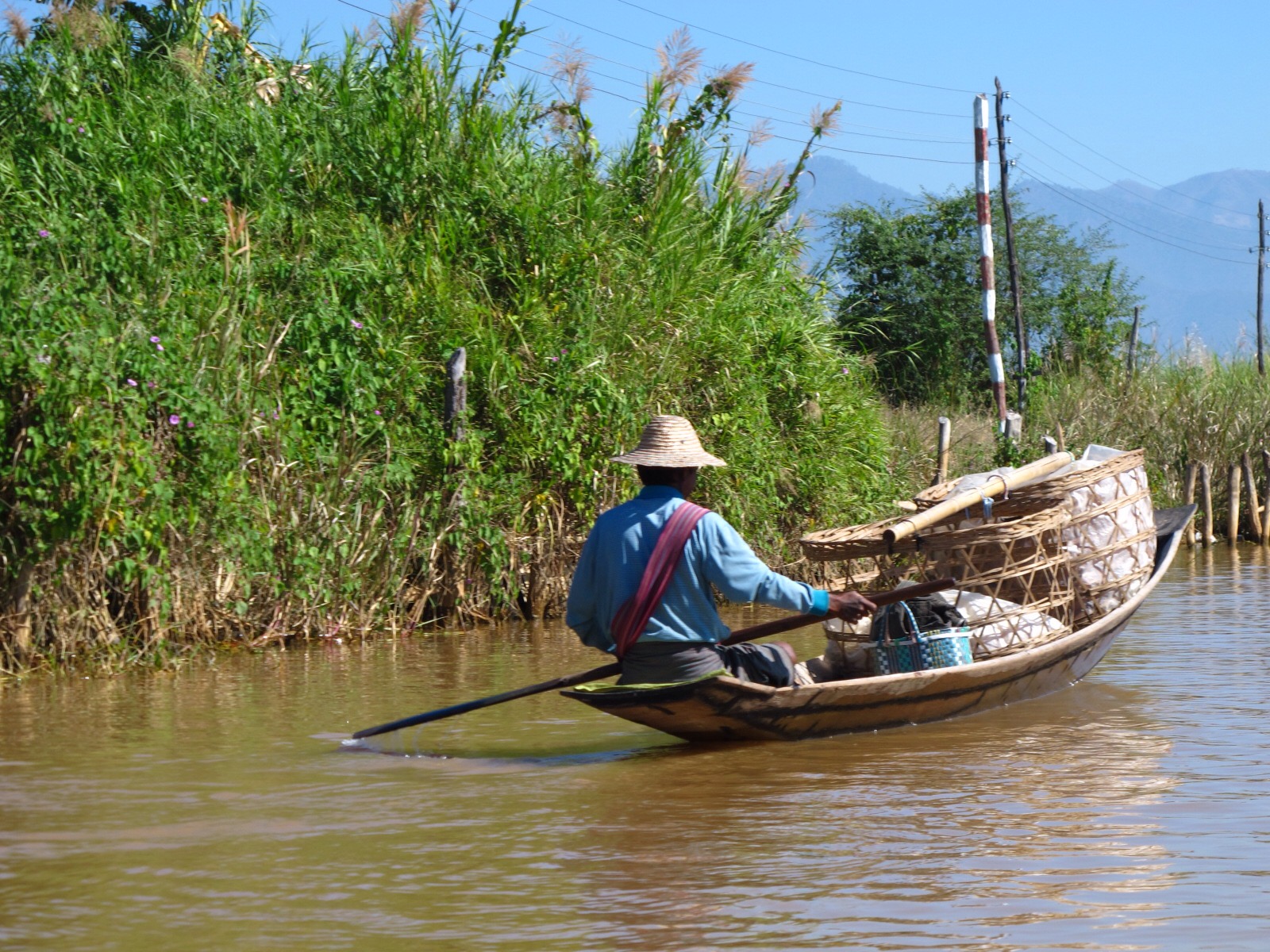
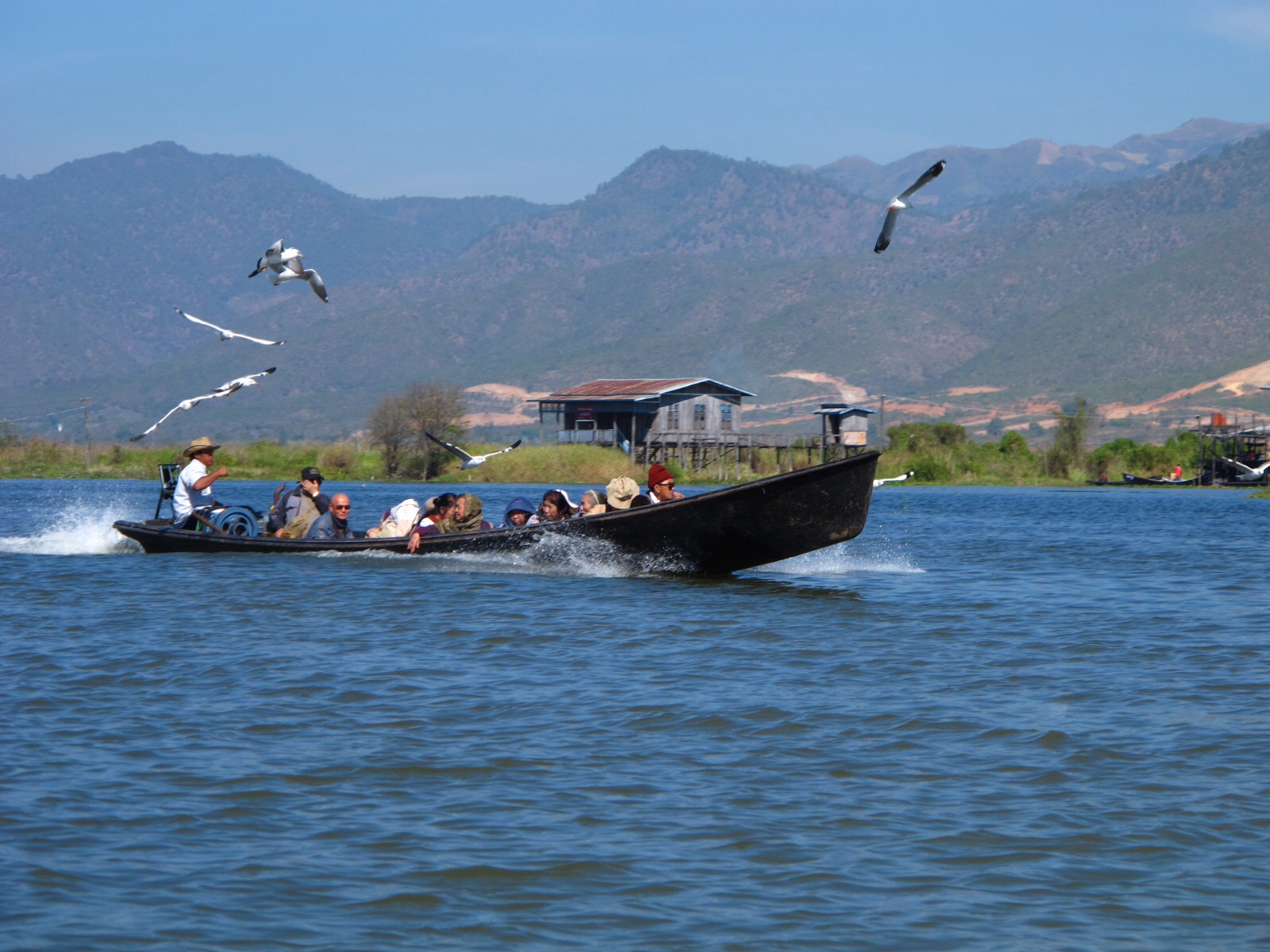
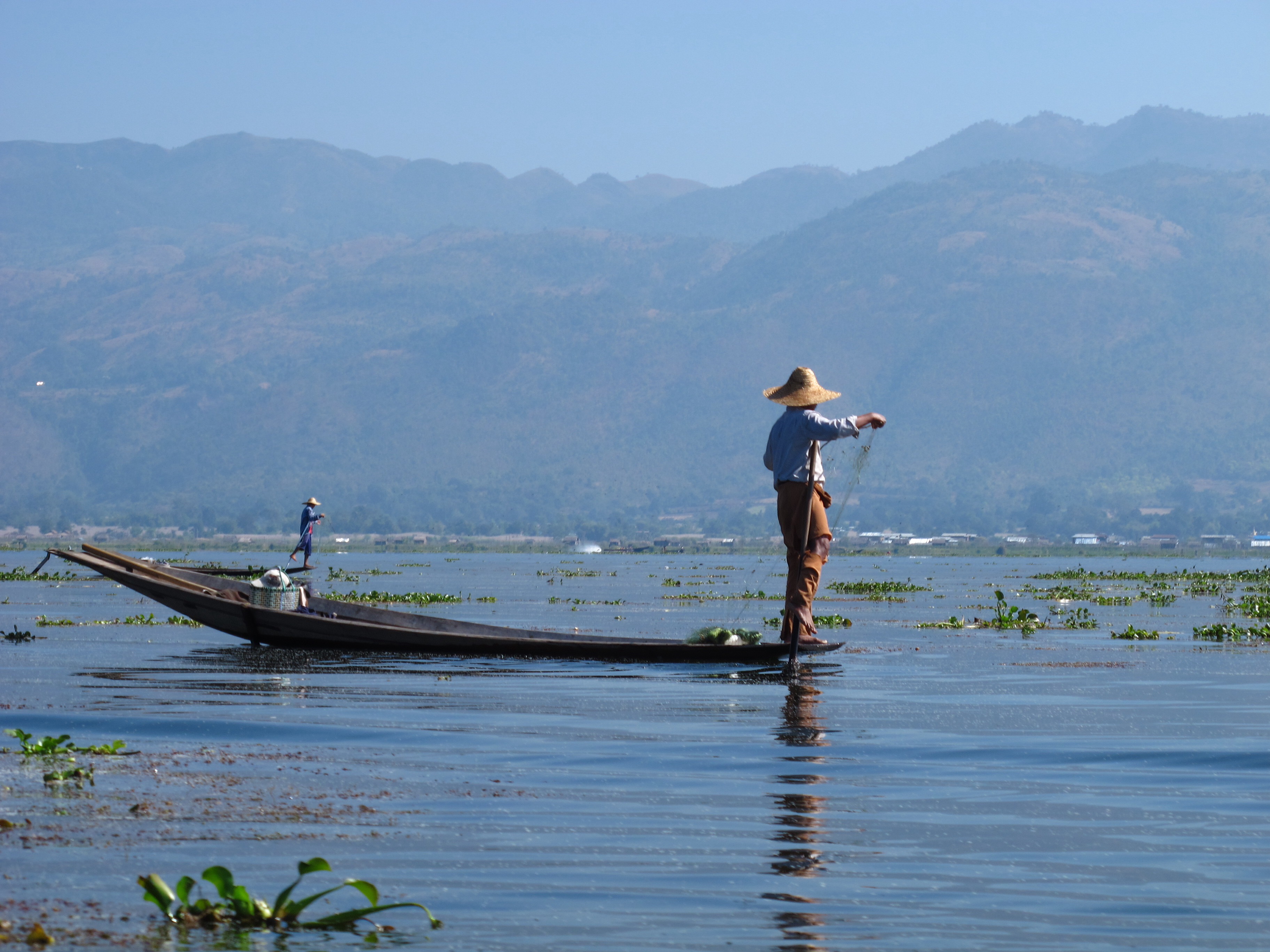
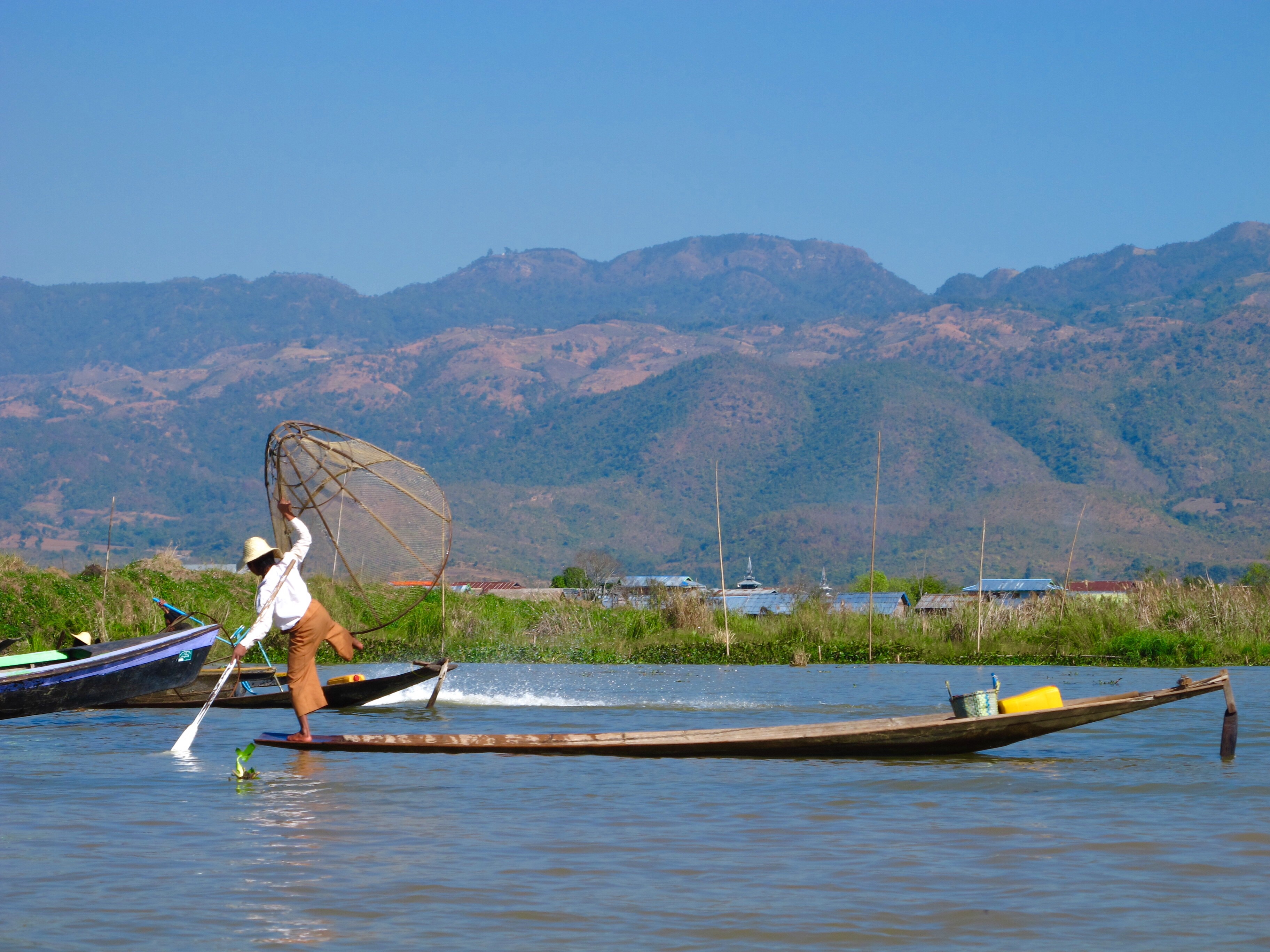
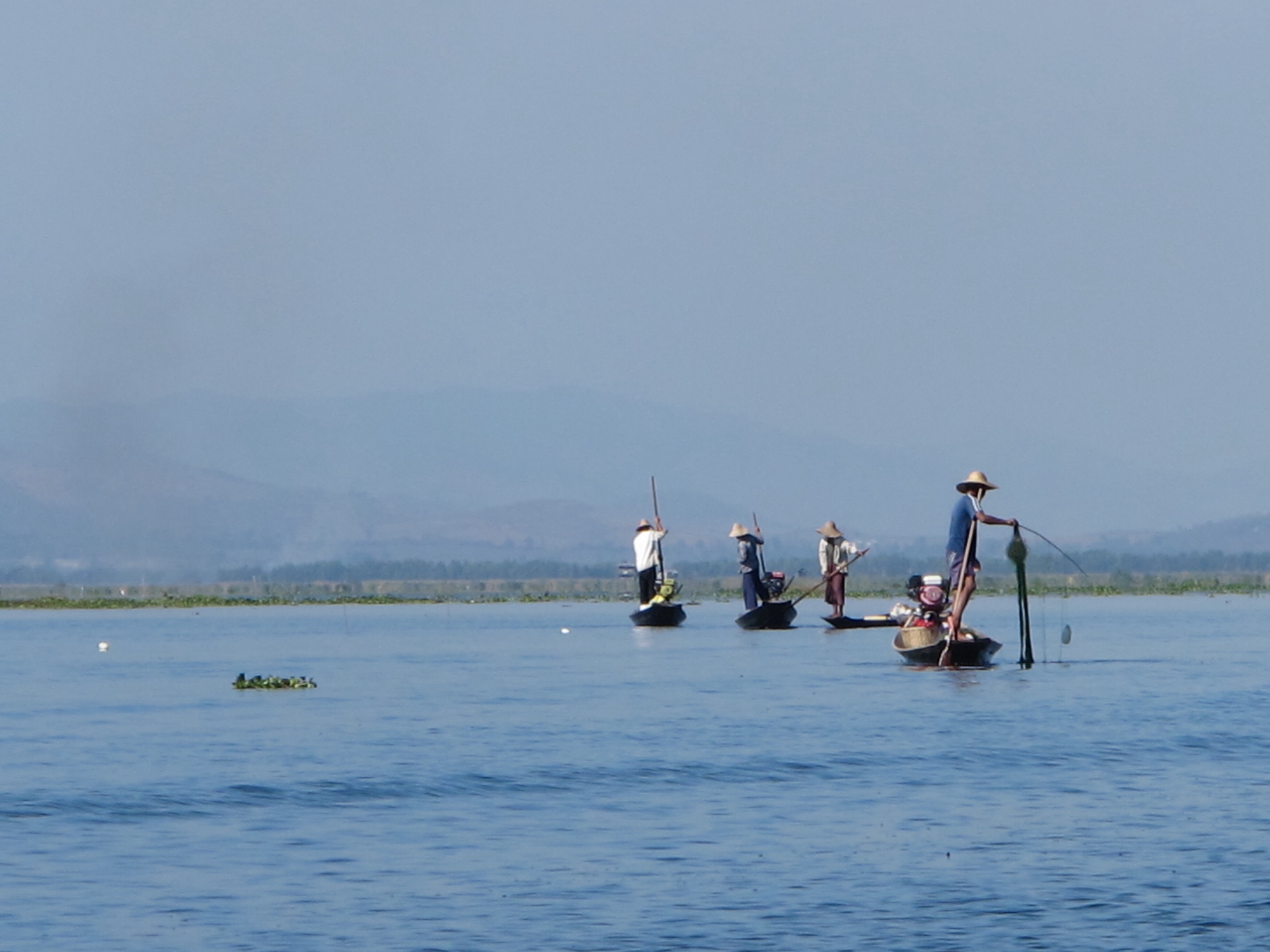
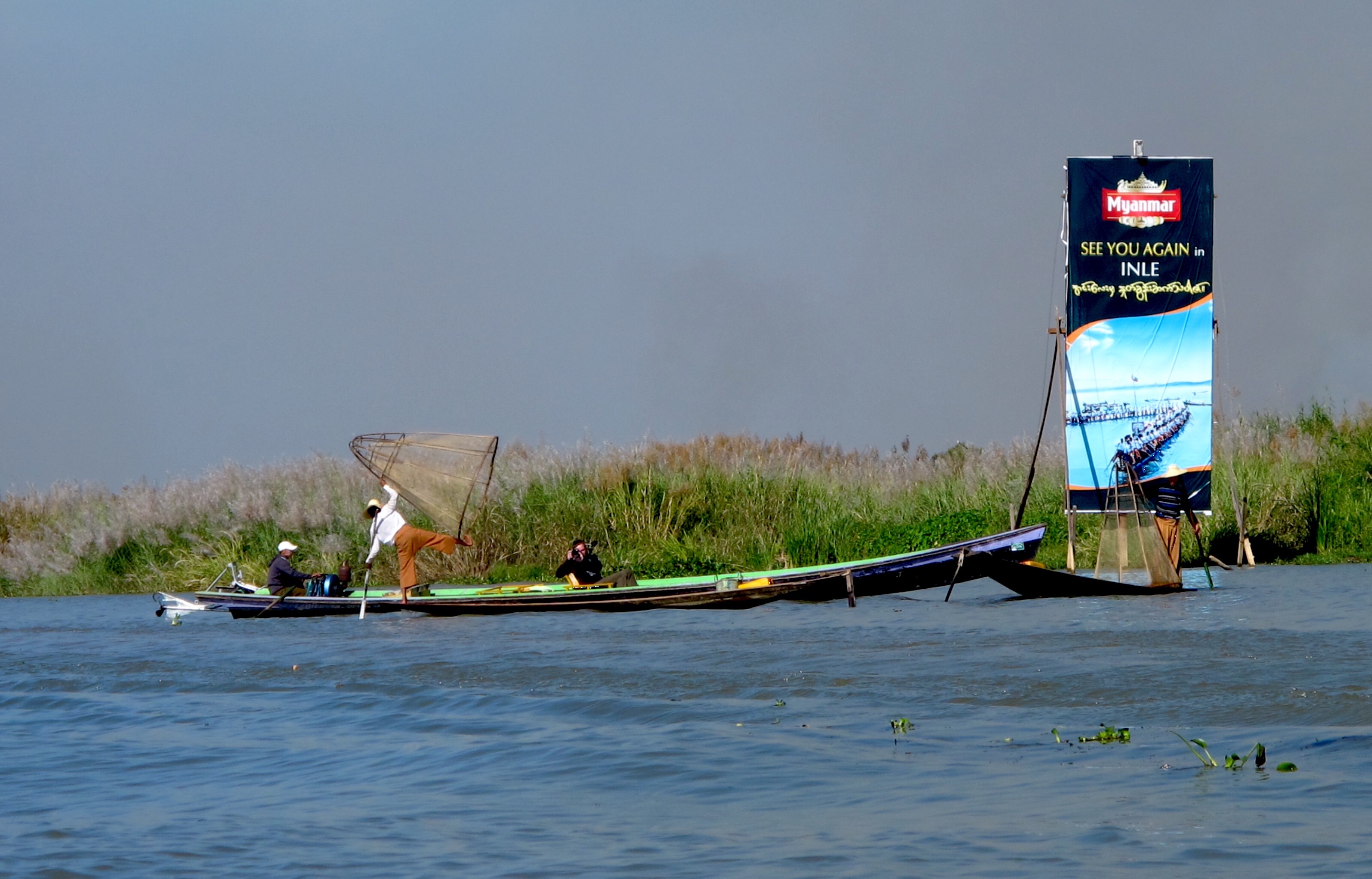
Expectations ran high as we neared the end of our holiday in Inle Lake. The 45-minute boat ride was uneventful for the first 20 minutes, till we found fishermen rowing their flat narrow boats with one leg, arms free and ready with their basket nets to catch fish. I almost threw out the blanket I was using during the boat ride just to capture the scenes with my cam. Fingers nearly freezing as photo-snapping followed a ryhtmic beat, we dismissed the wind chill just to save the dramatic scenes in our memory-keepers. What a sight! Never mind that it’s running 10 Celsius while we baked under the sun on a roofless boat.

Fishing In Inle Lake

Fishing In Inle Lake

Busy fishing or modeling?

Busy fishing or modeling?

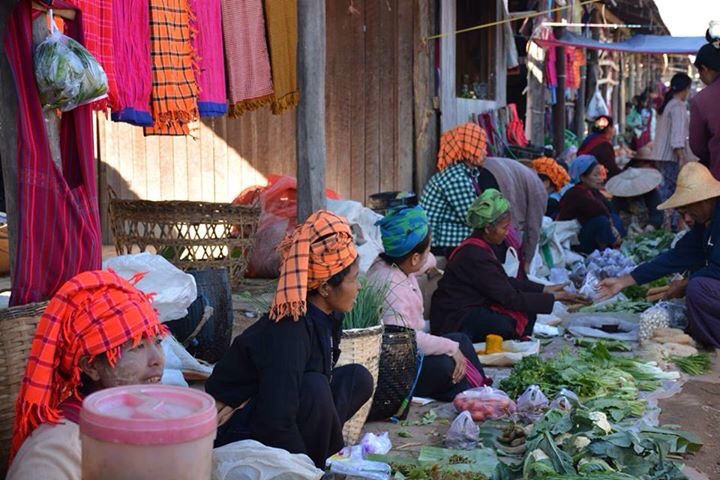
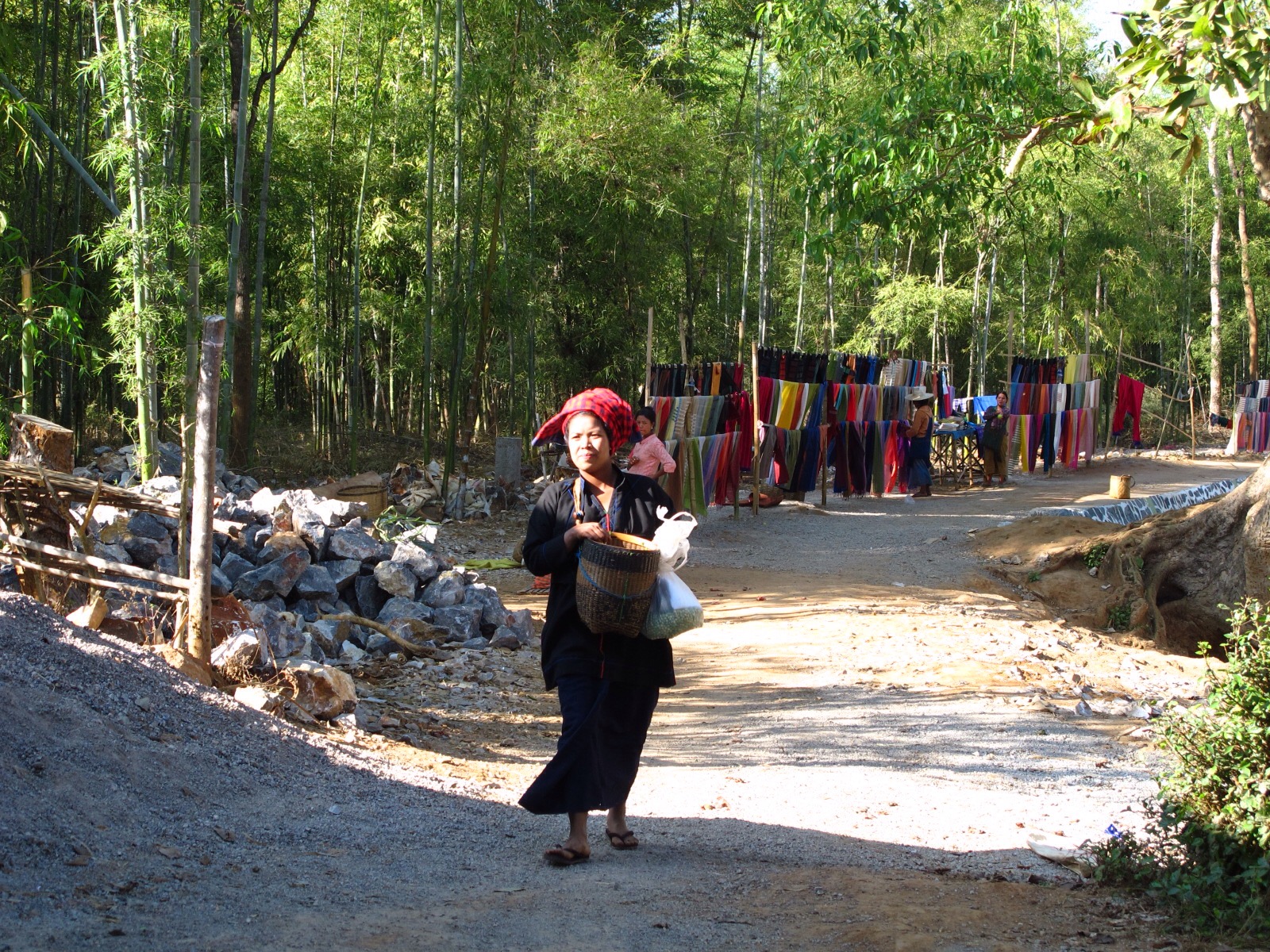
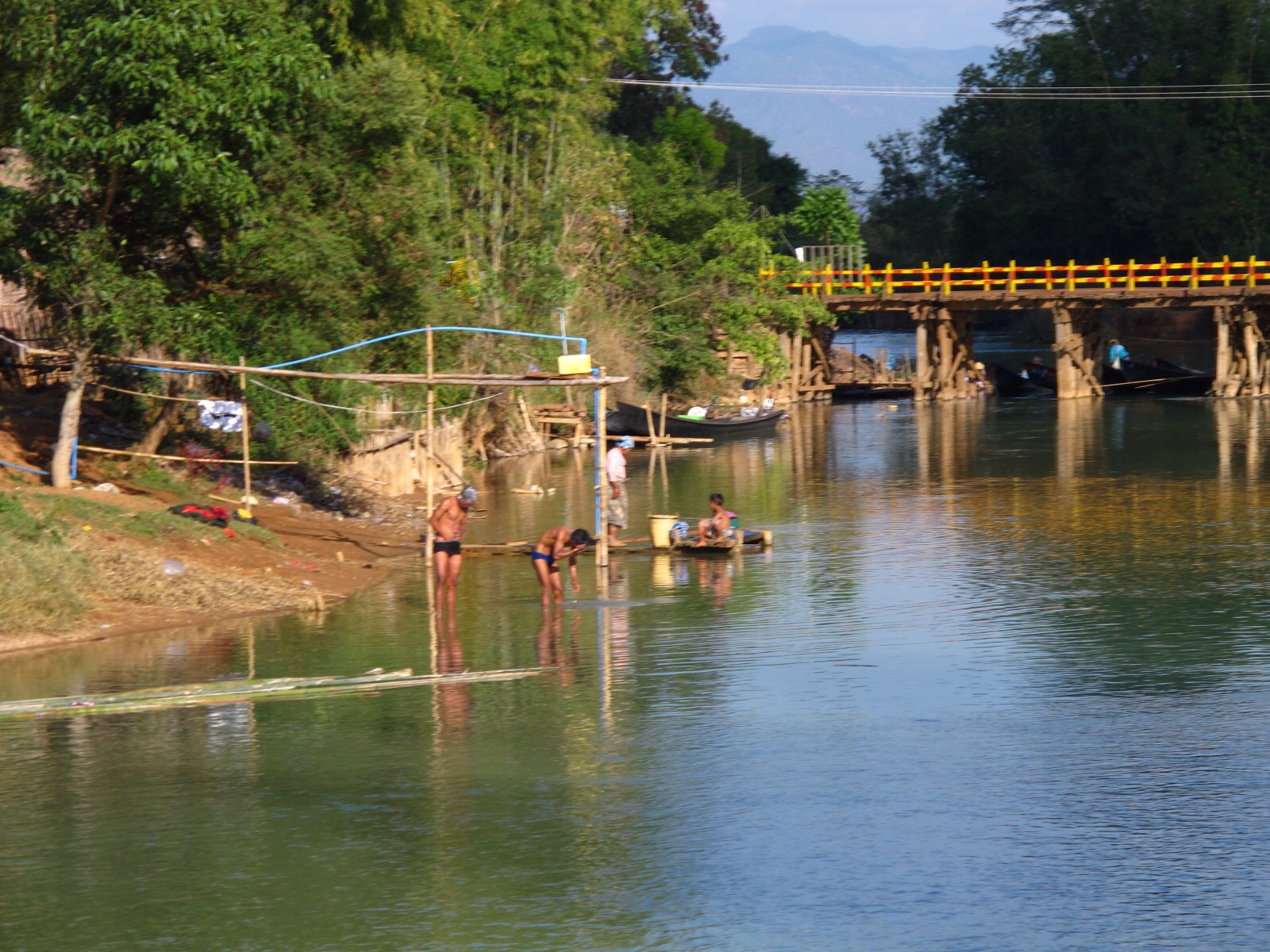
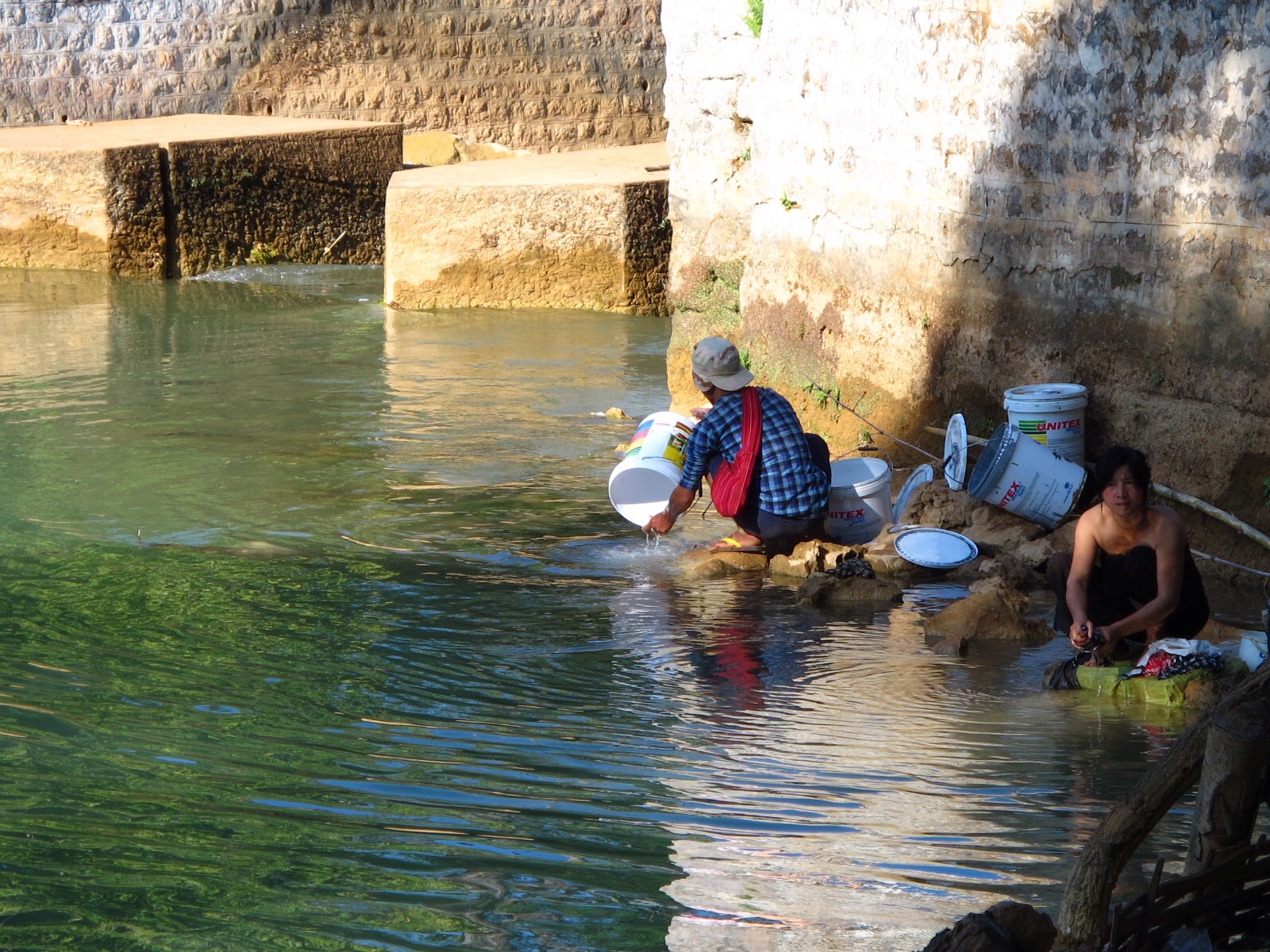
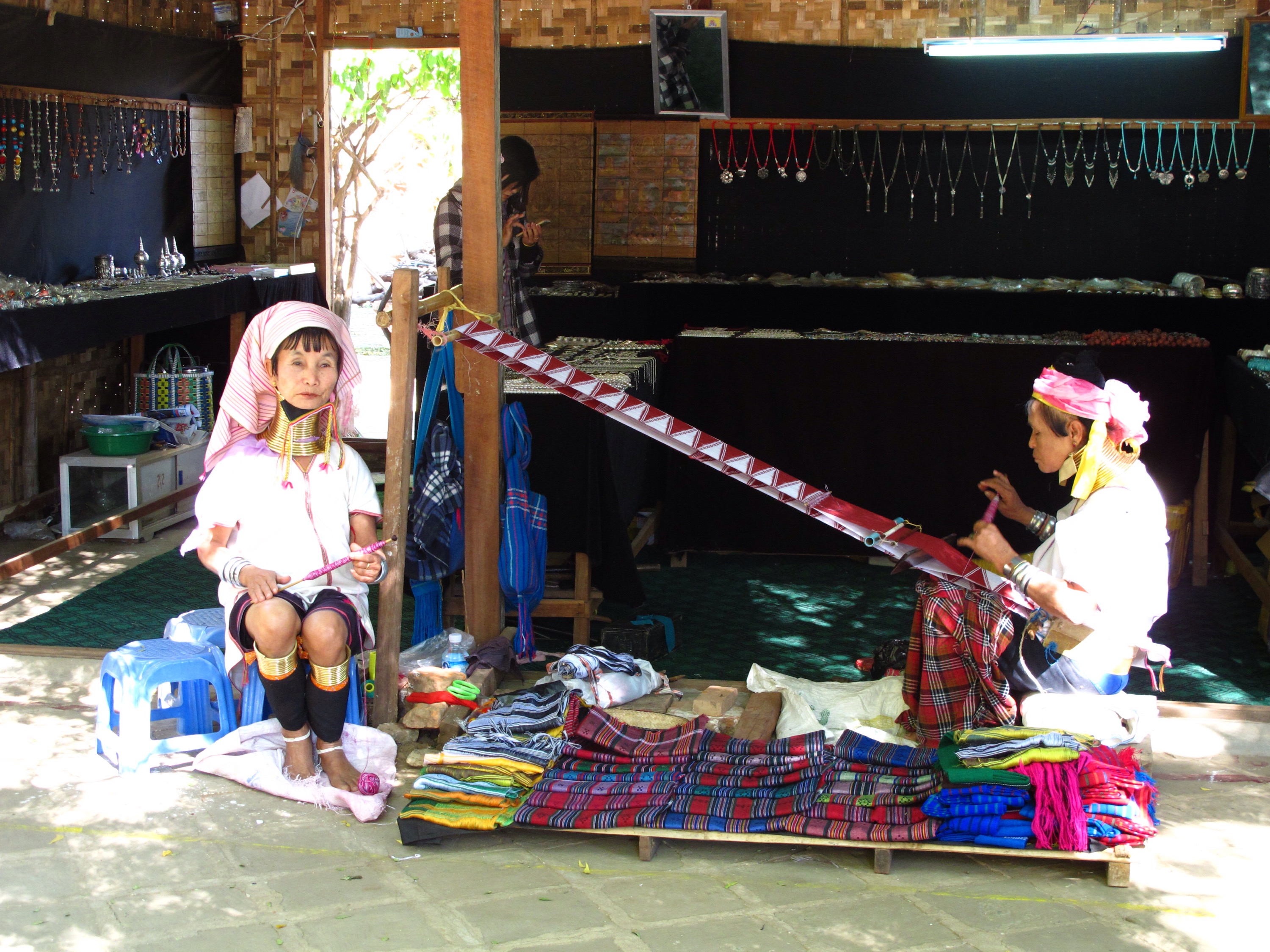
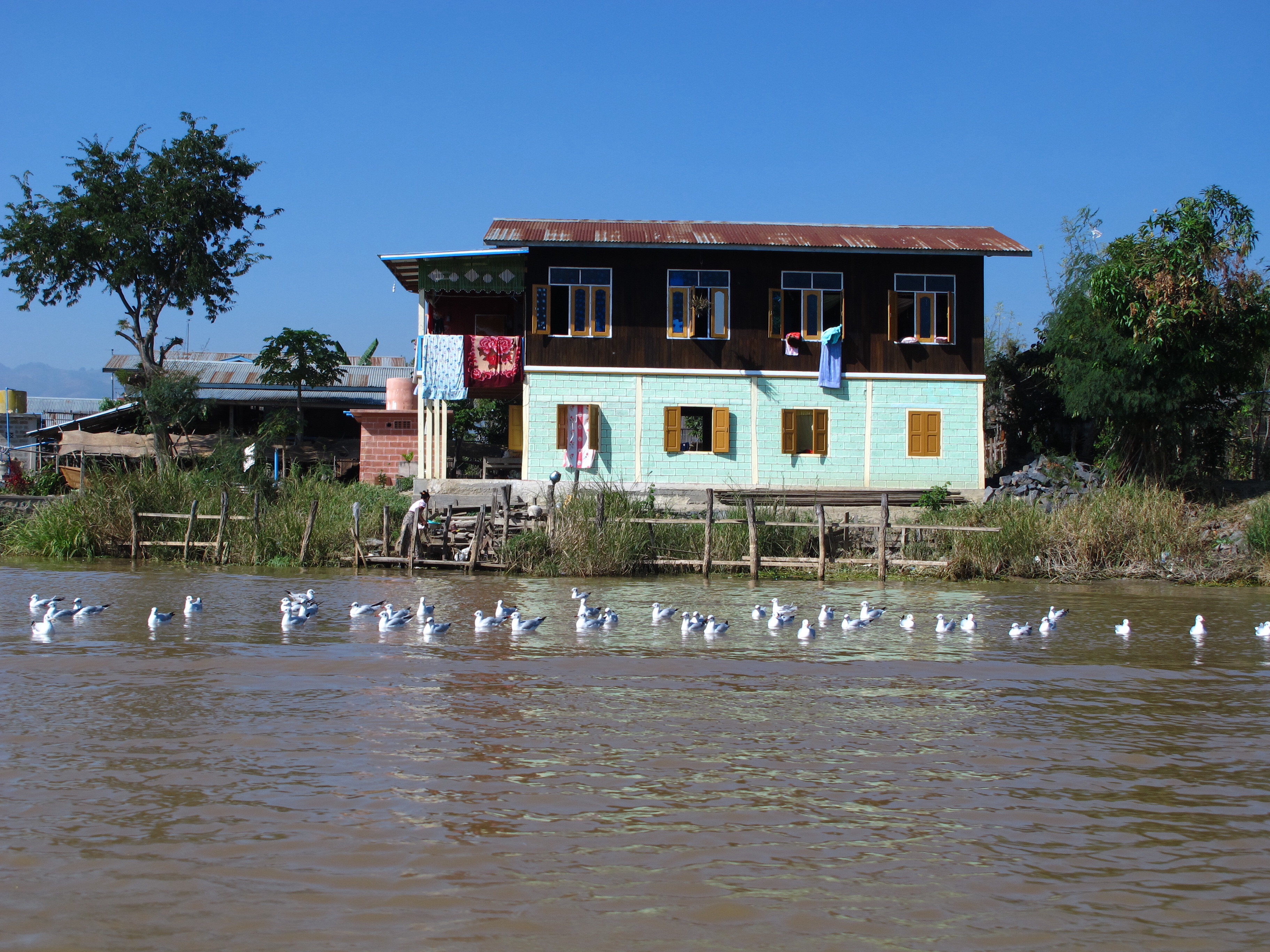
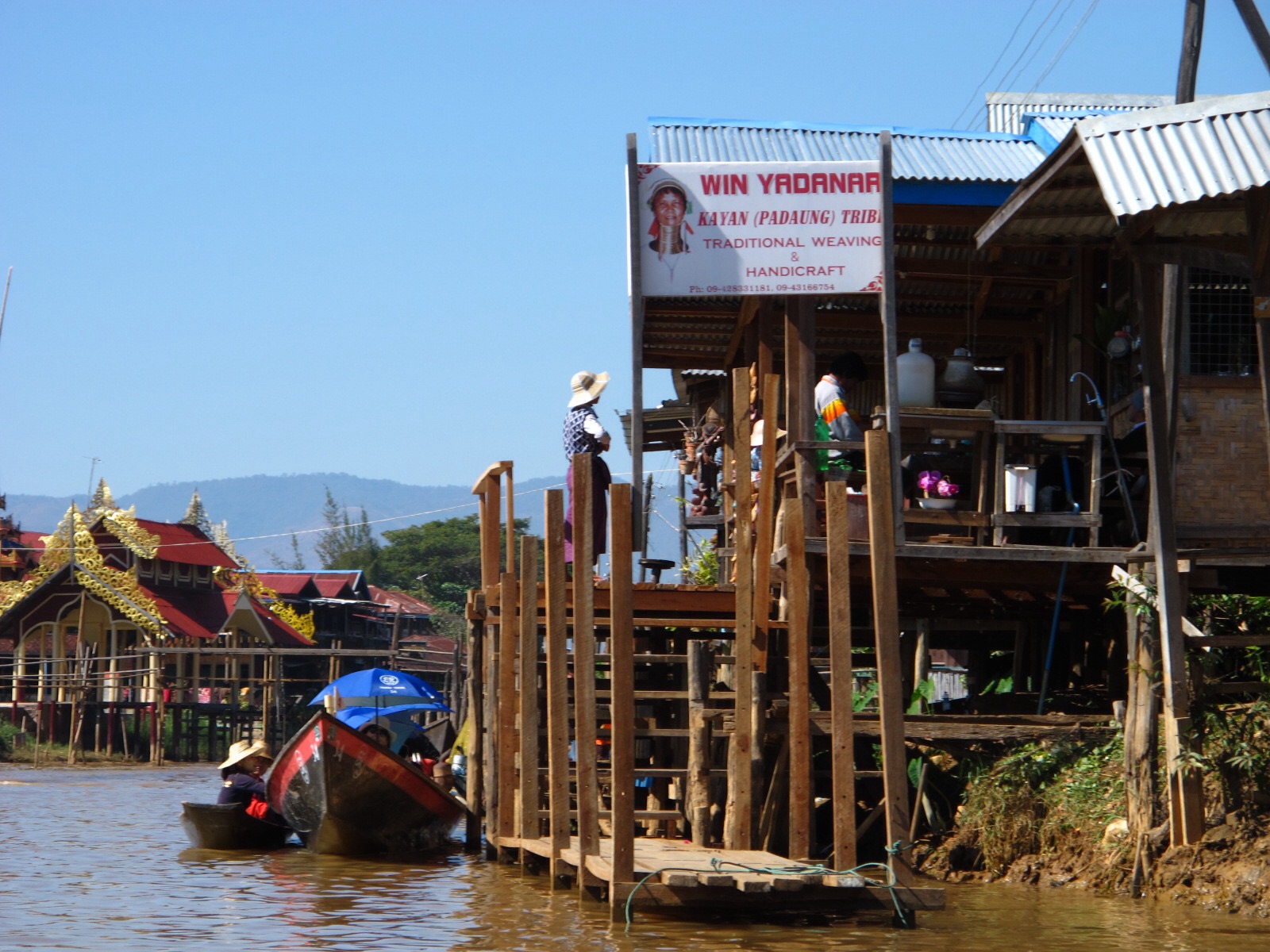
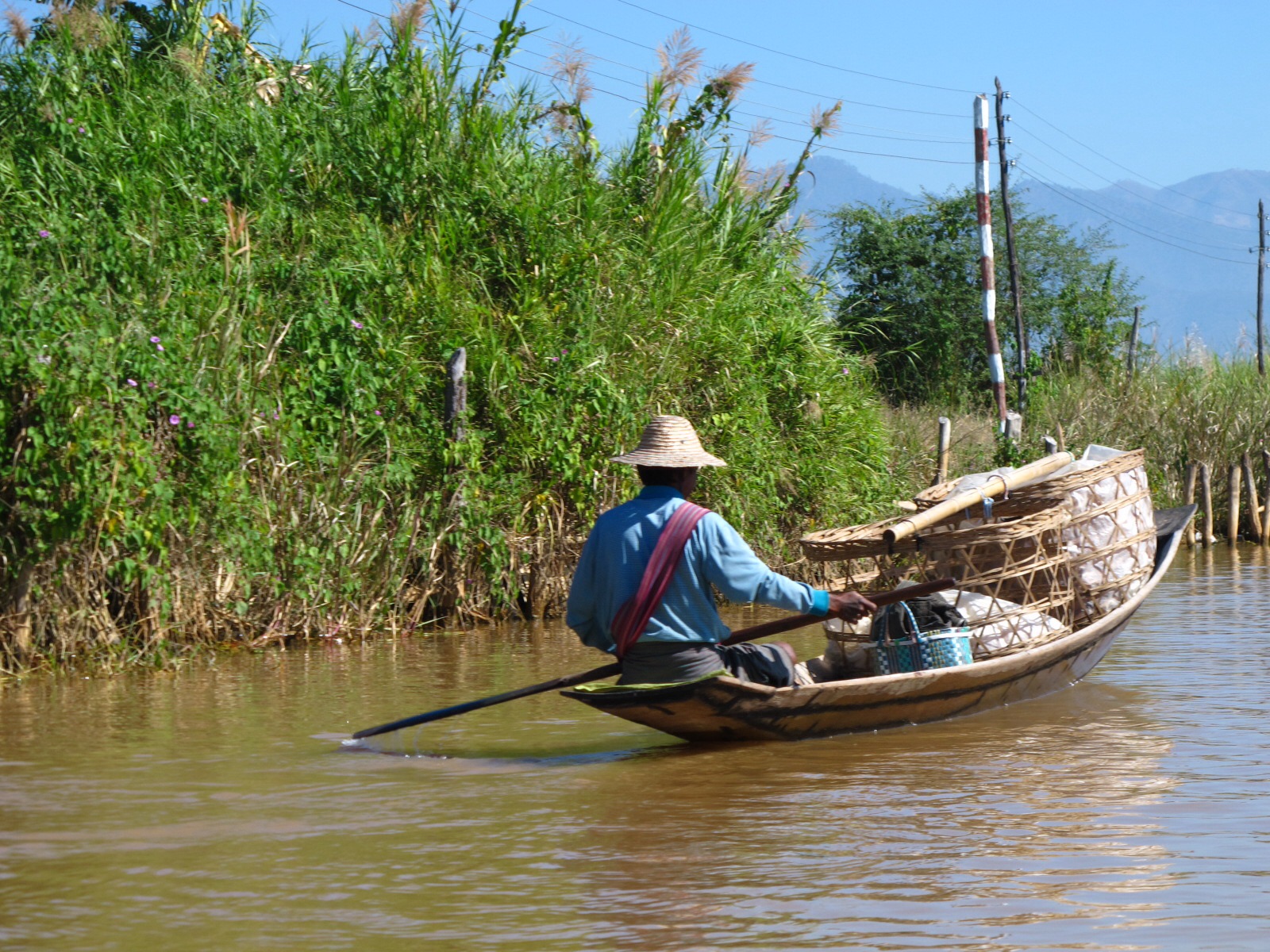
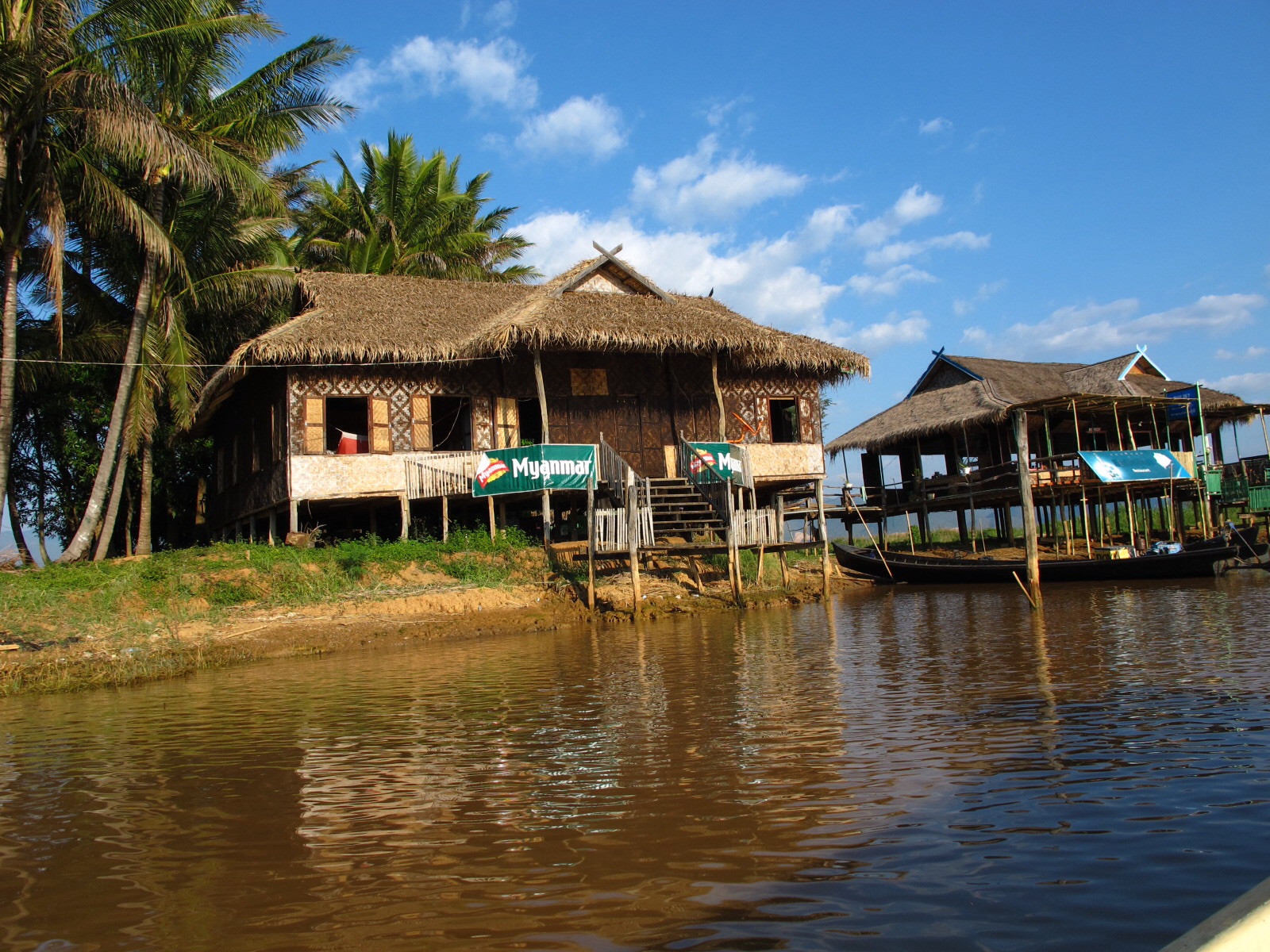
Never found this scene in any other fishing village. There were waterways serving as “main highways” edged in by floating flower gardens and vegetable patches. The hum of the boat engine somehow lulls you to sleep as the boatmen maneuvered the boats along the canals. In no time, the floating gardens were replaced by residential and commercial structures on stilts as the waters ebbed up and down with each passing boat. We passed many including silk and lotus weaving centers, some with weavers from the Padaong tribe with their elegant stretched necks bedecked with gold rings nearly touching their chins. Every now and then, there were women doing their laundry on boats parked in front or beneath the cottages on stilts, laundry out drying on improvised clothesline, waving and swaying with the wind. If not out fishing or ferrying tourists on their motorized boats, some men busied themselves tending the gardens. We were happy to see taro and “patola” (gourd?) gardens side by side with rows of floating flower gardens. This is truly one community here.

Seagulls of Inle Lake

Seagulls of Inle Lake

The Waterways of Lake Inle

The Waterways of Lake Inle

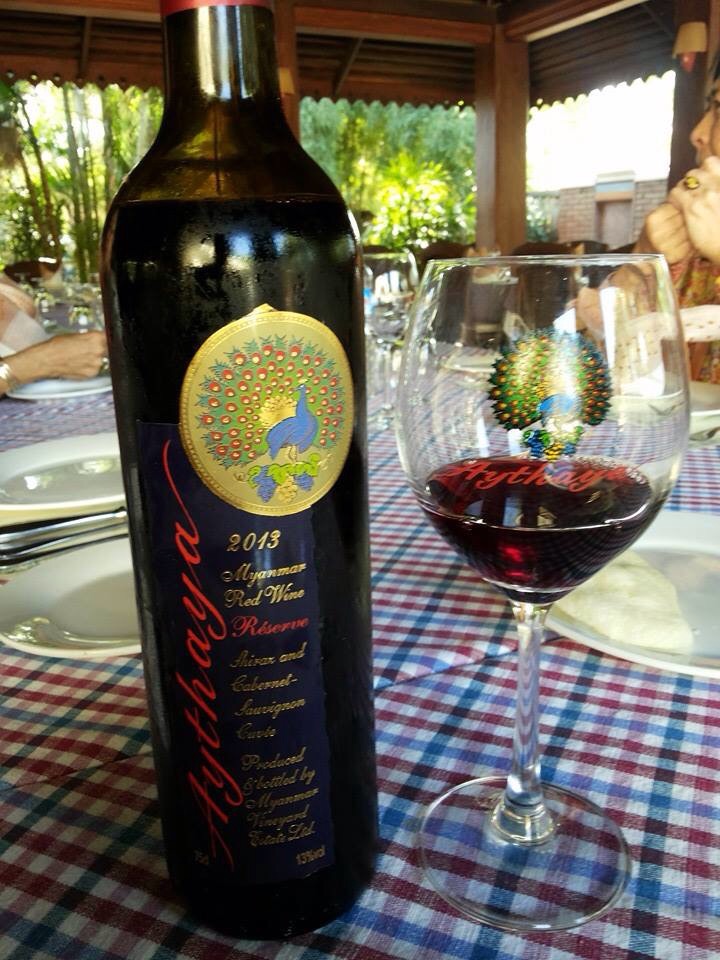
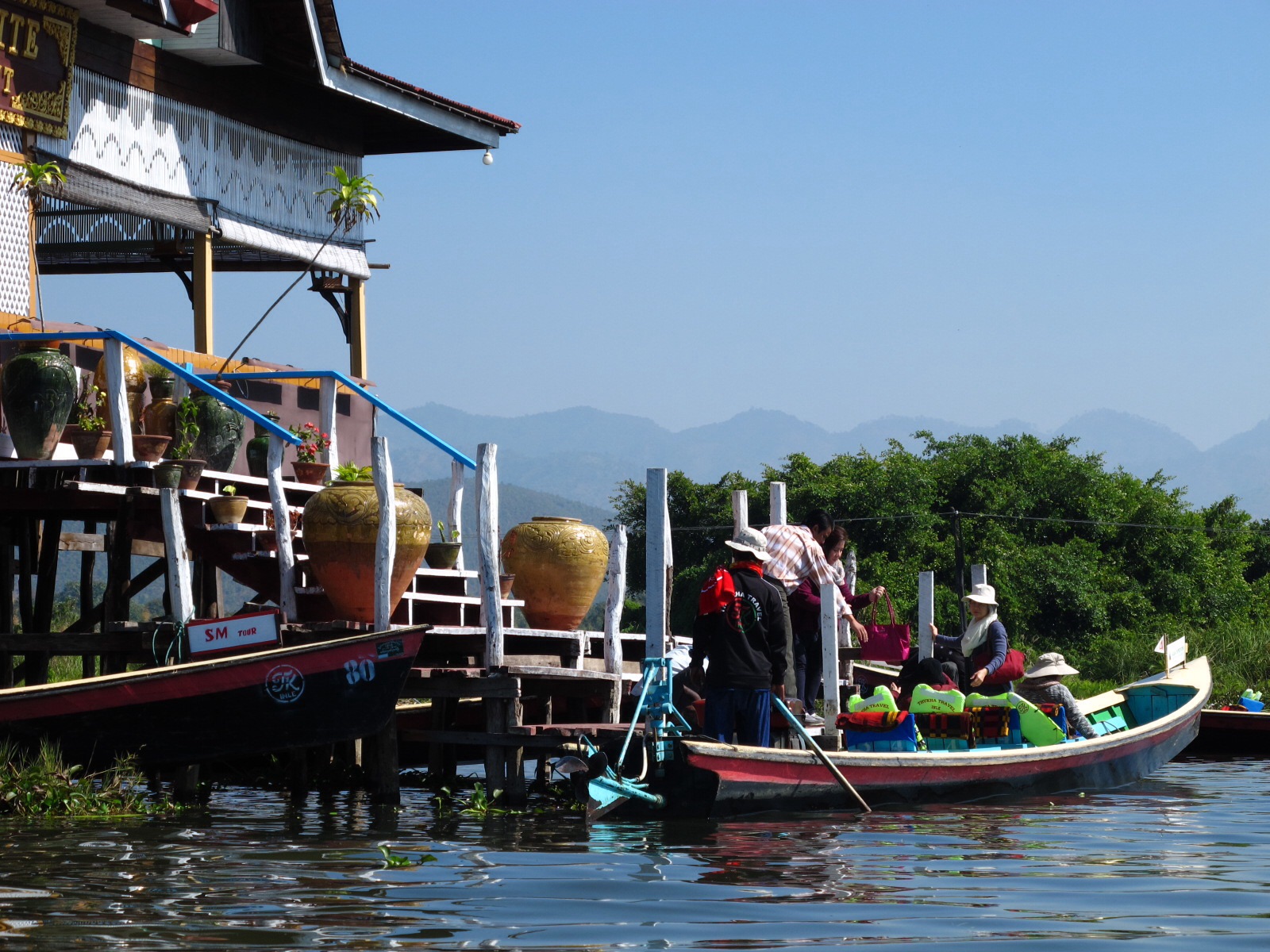
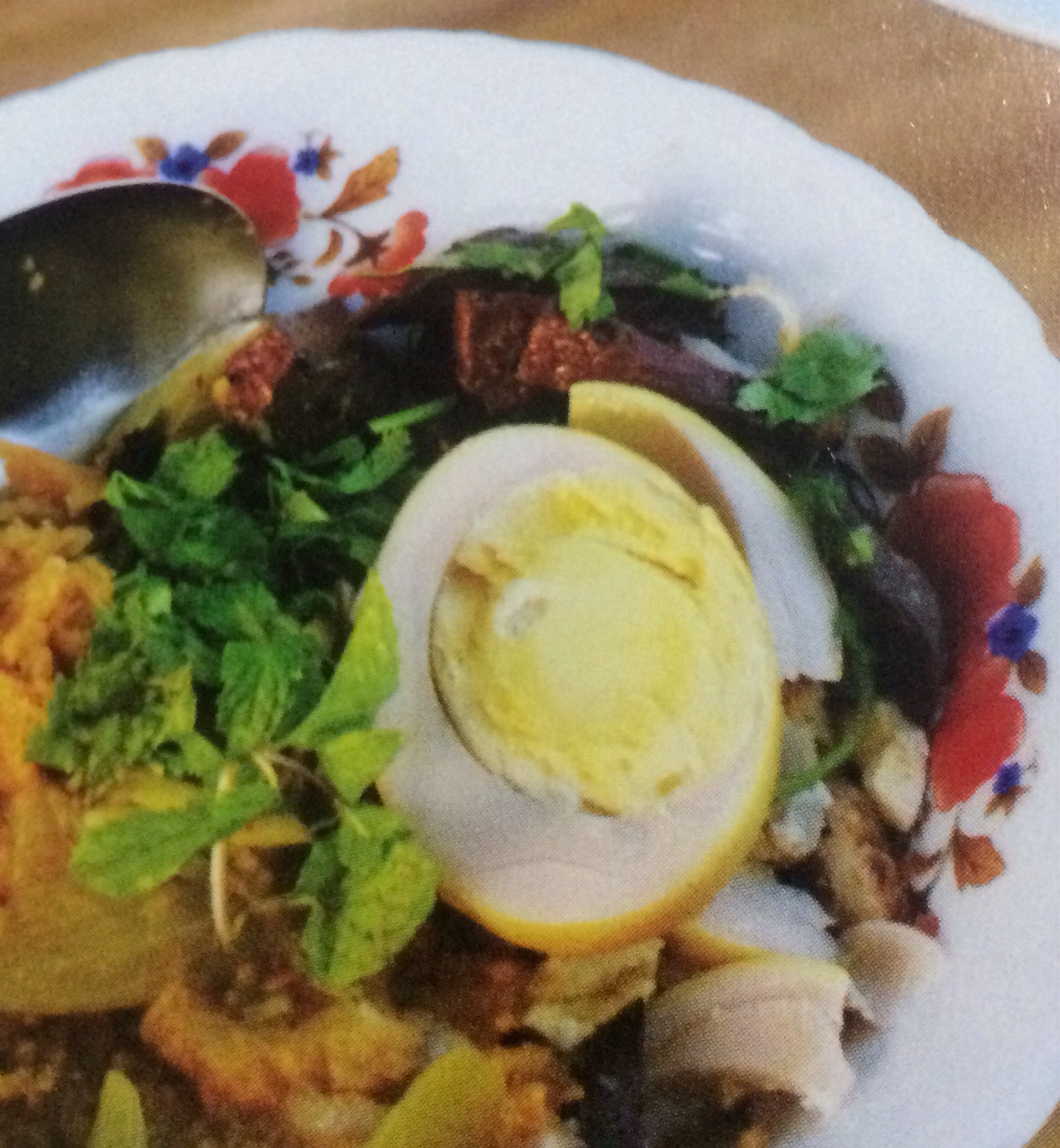
Such vibrant fishing community. Was I surprised to find floating hotels price-ranged from luxury to backpackers’ budgets? Not at all. But I was pleasantly surprised that there are floating restaurants like Golden Kite Restaurant serving freshly-baked bread and pizza pies, great pomodoro pasta, delicious tomato basil soup and simple but delicious avocado salad. A good first lunch was had. We skipped the wine and instead tried the Myanmar Beer. All those Myanmar beer adverts hanging on lake restos, hotels and floating houses must have conditioned our minds. (The next lunch was in a place called “Heritage House”, where local food was served. Interestingly and regrettably, hardly any seafood foraged from the lake waters by local fisherfolks, though some of the vegetables may have been harvested from the floating organic gardens)

A local in the Fishing village.

A local in the Fishing village.

Traditional way of fishing uses one leg with hands free to catch fish using a basket net.

Traditional way of fishing uses one leg with hands free to catch fish using a basket net.

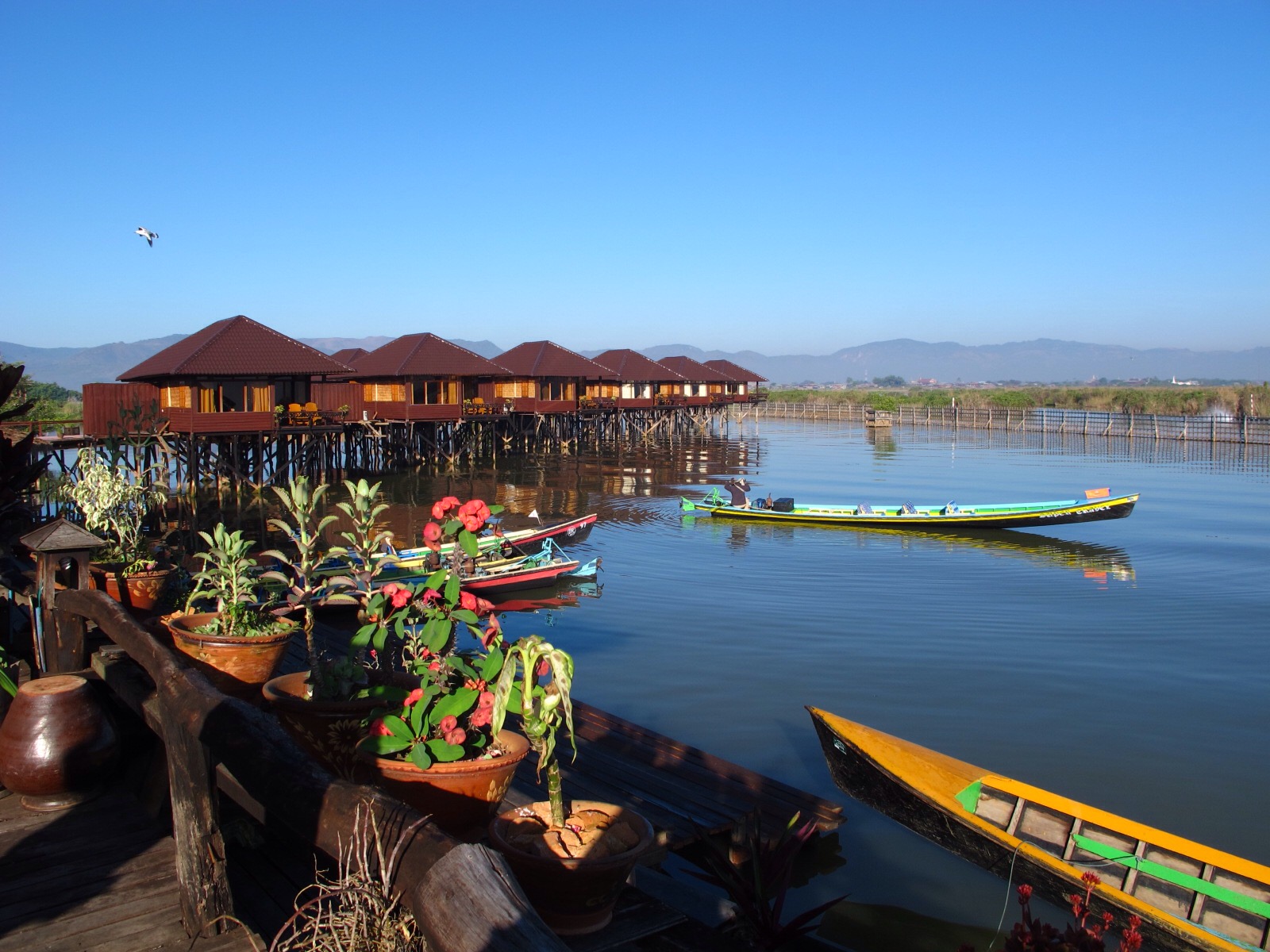
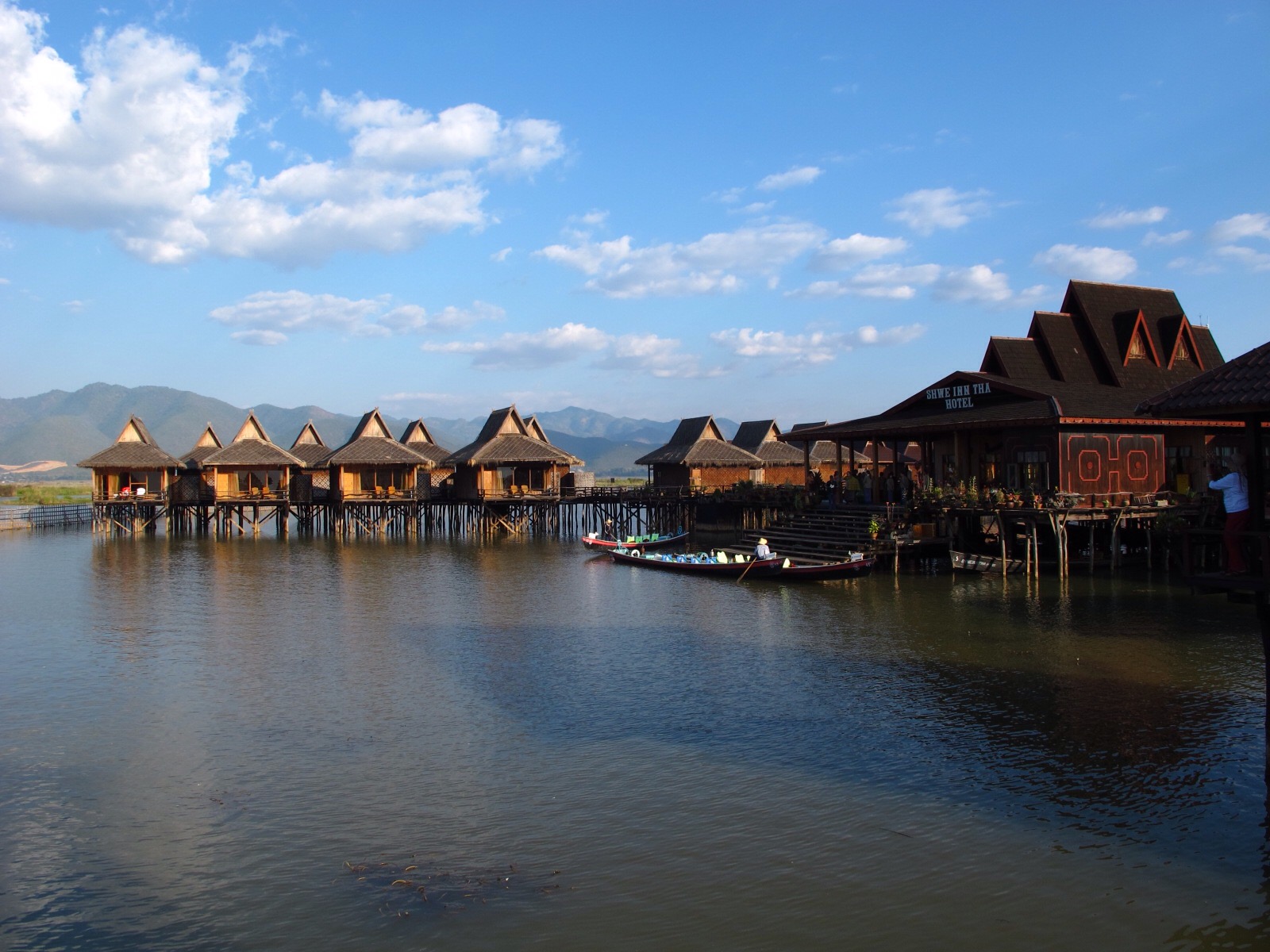
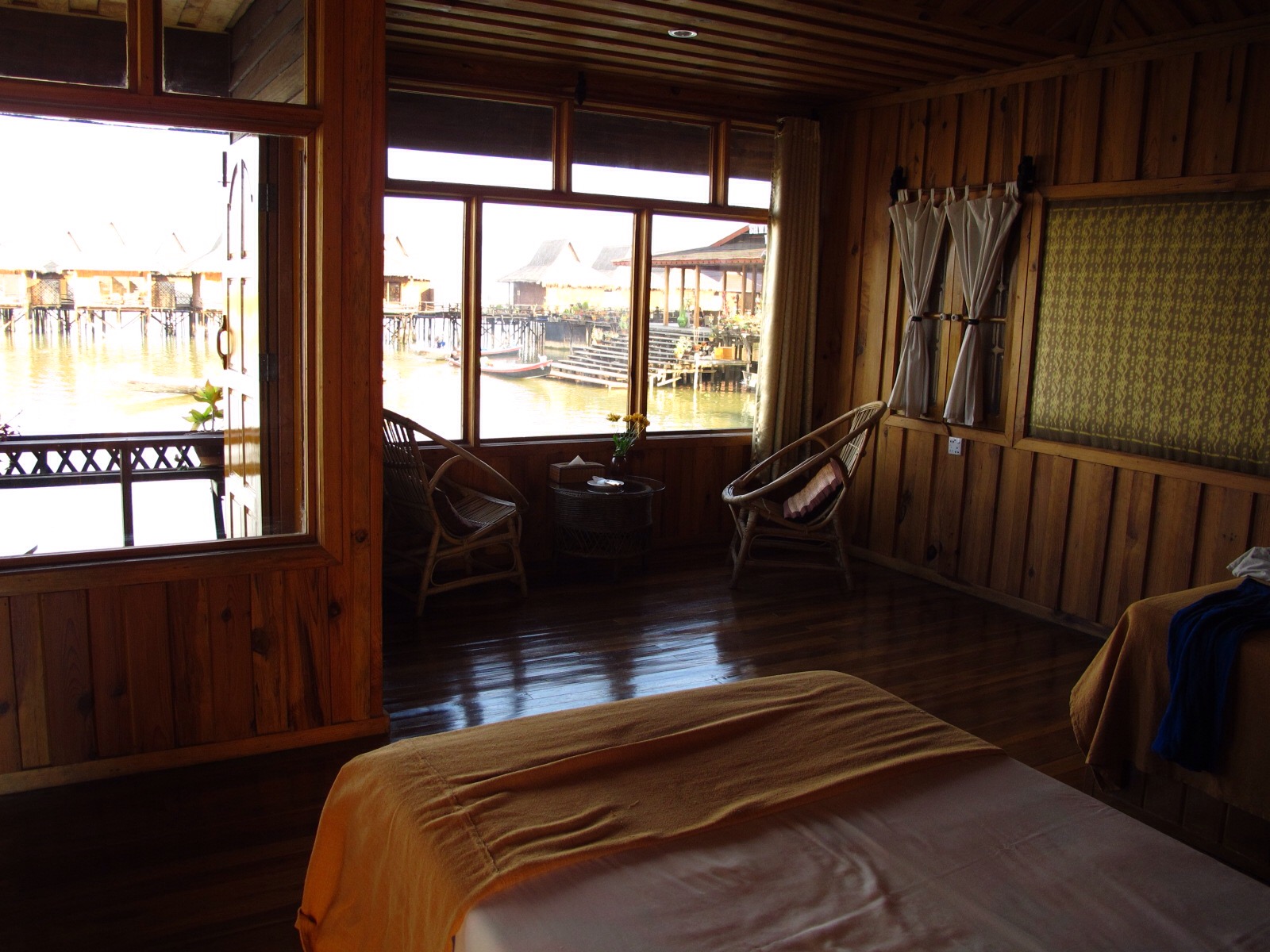
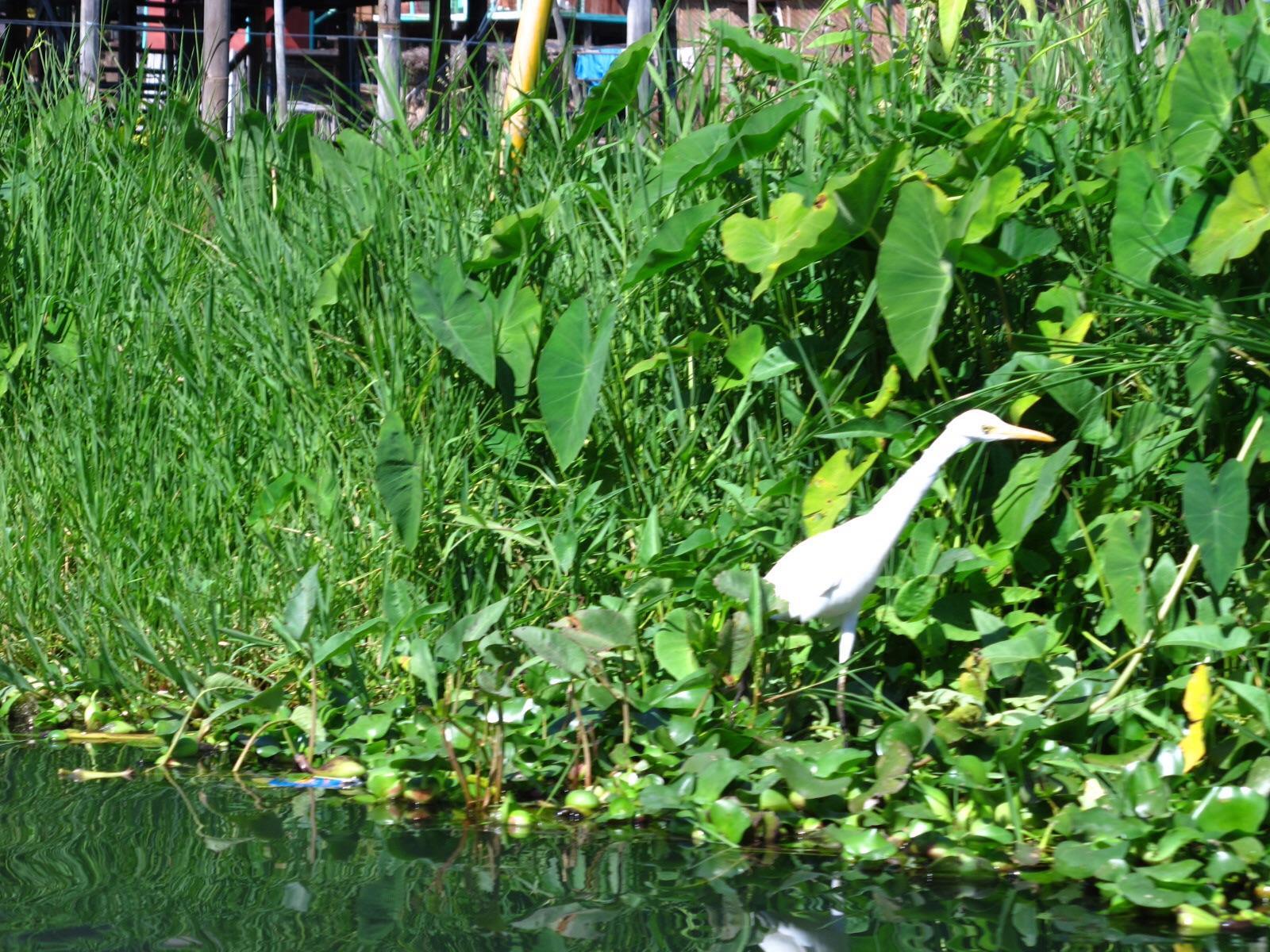
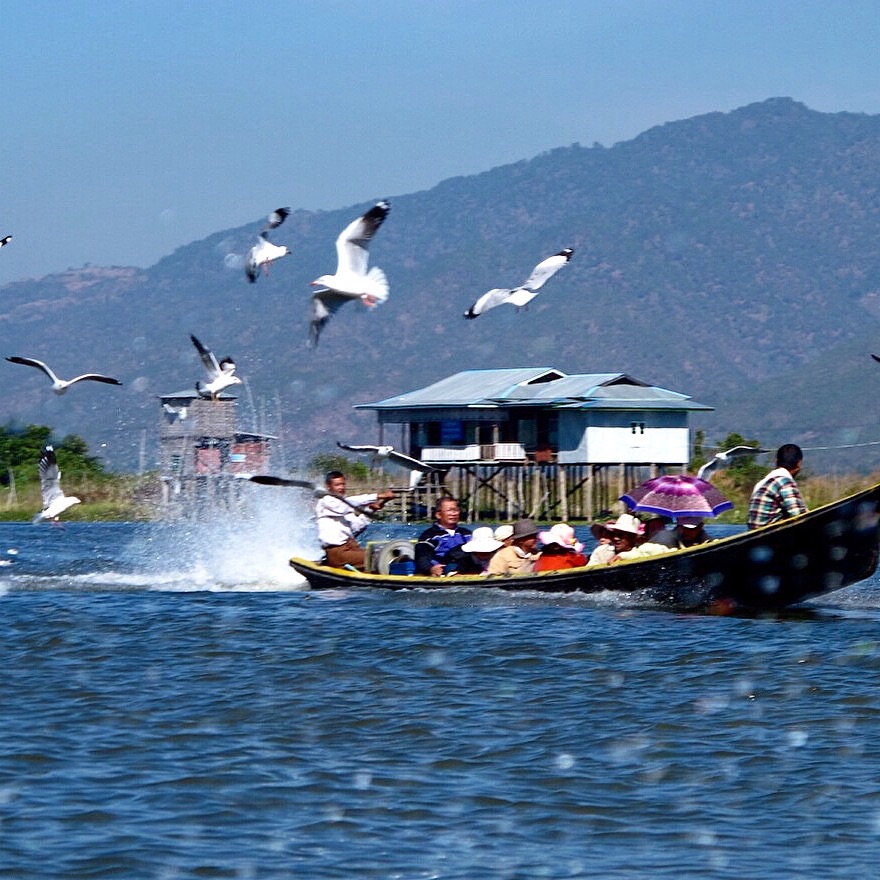
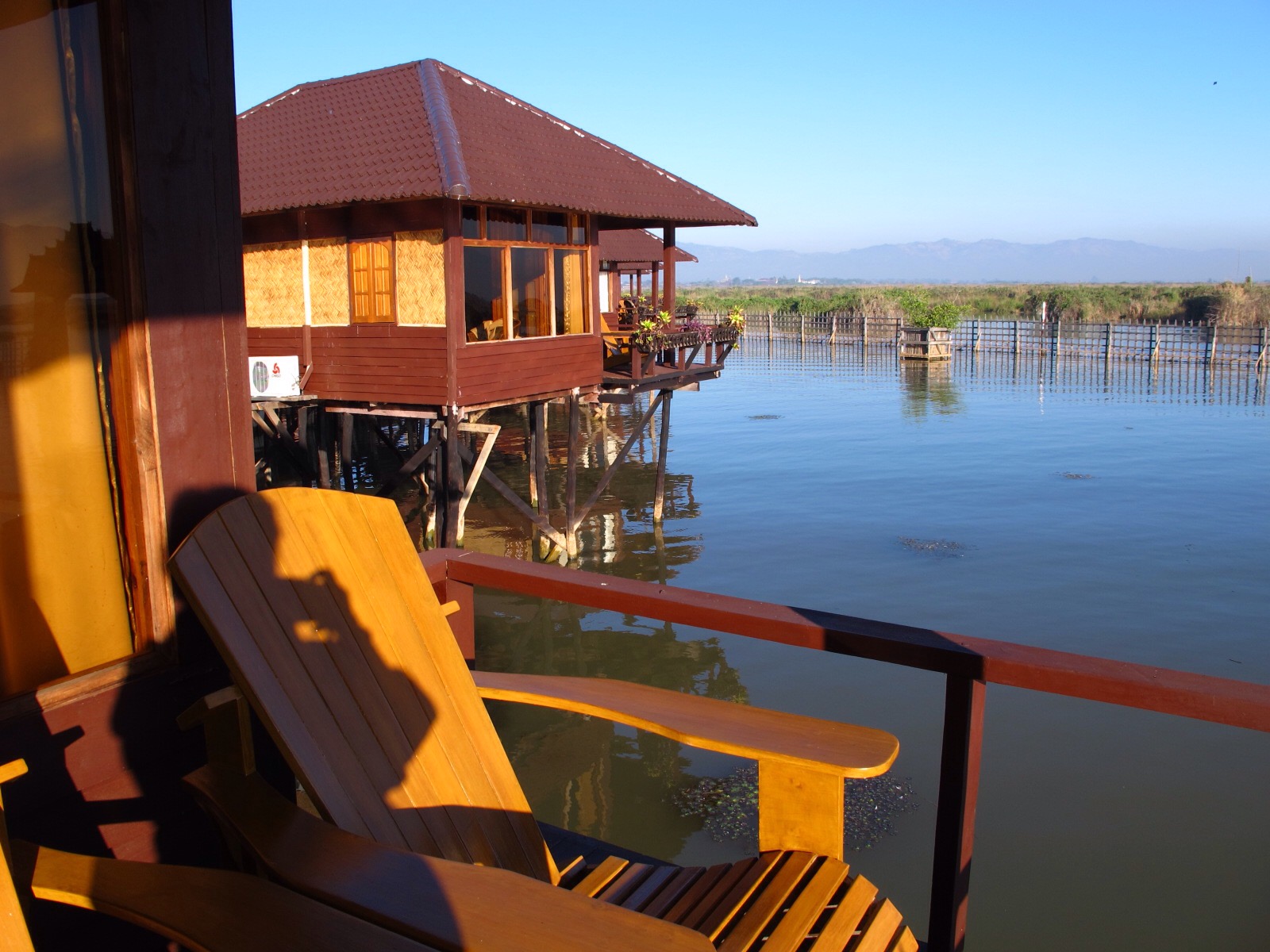
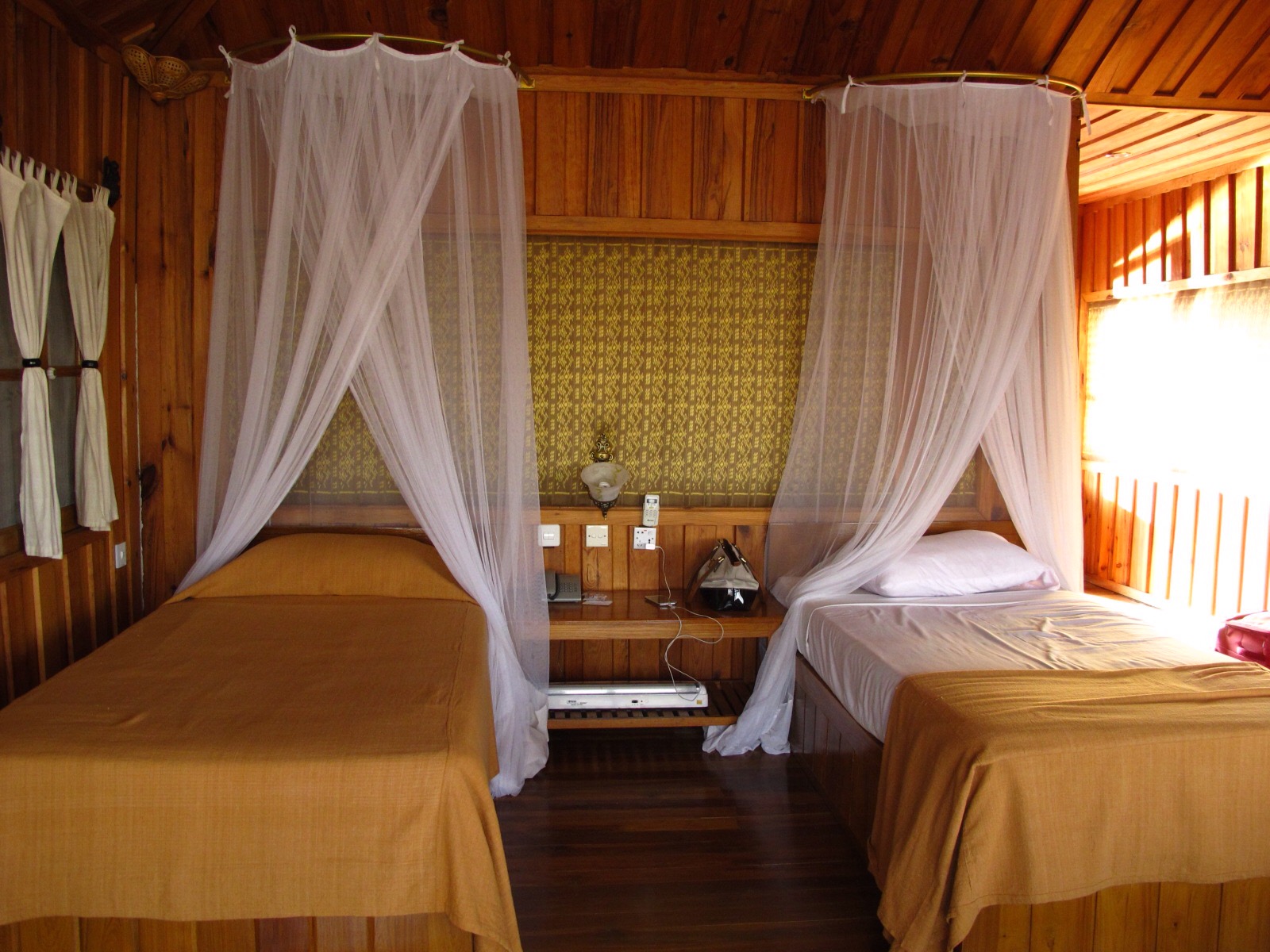
Our hotel is heaven-sent. Baked under the sun for nearly an hour, plus more for the boat rides to the floating restaurant and a visit to a local village, the lovely Shwe Inn Thar Floating Resort was simply what our minds and bodies needed. It was inviting to just sit in the balcony the whole morning while sipping coffee, counting off the happy (not angry) birds “guarding” the arched entrance to the floating resort, and people-watching while boats sailed past the hotel by the main waterway. The lake is a bird sanctuary and my only regret is not bringing bread to feed them birds. I envy those who did, as my eyes followed their boats being chased and surrounded by the happy birds. Happy birds, Happy tourists. Pio de! (means “happy” in the local language)

Shwe Inn Thar Floating Hotel

Shwe Inn Thar Floating Hotel

Golden Kite Restaurant serves real good pizza, bread, pasta, soup and salad.

Golden Kite Restaurant serves real good pizza, bread, pasta, soup and salad.

As we left Inle Lake, I had this nagging fear that the place will soon — if it hasn’t — be overrun by tourists and commercialism. The traditional fishing method is unique to this community. Consequently, the group of DSLR-toting men with their long zoom lens I sighted angling about 4 men dressed in colorful local londyin skirts may soon be the order of the day. Between fishing and modelling, the latter may yield more kyats. So with the happy birds. Why swoop down to catch fish when tourists come to feed them regularly? When I visited a local village and a child of 7-8 asked me for money, my heart broke. Someone should teach this child to string local beads into bracelets, or sell flowers, fruits or any local food to sell rather than just asking for money. And I didn’t even take any photograph of him. A pity.

The long-necked, golden rings-bedecked ladies of Padaong.

The long-necked, golden rings-bedecked ladies of Padaong.

“No man is rich enough to buy back his past” —- Oscar Wilde

(More photos to be uploaded soon as wifi connection is stable. Watch this page……)


Well, NOT all trips need to be planned.  My young friend Paula Peralejo-Fernandez of Our Restless Feet  meticulously arranged our first 3 days of adventure off Hanoi with visits to Hoa Lu, Tam Coc and a heavenly 2-day cruise along Halong Bay via Paradise Cruises, but our last 2 days in Hanoi was meant to simply meet up, dine and shop with friends. We ended doing that, plus more. So much more spontaneity, ditched plans, instant meet-ups, unplanned discoveries, and more unplanned shopping. 


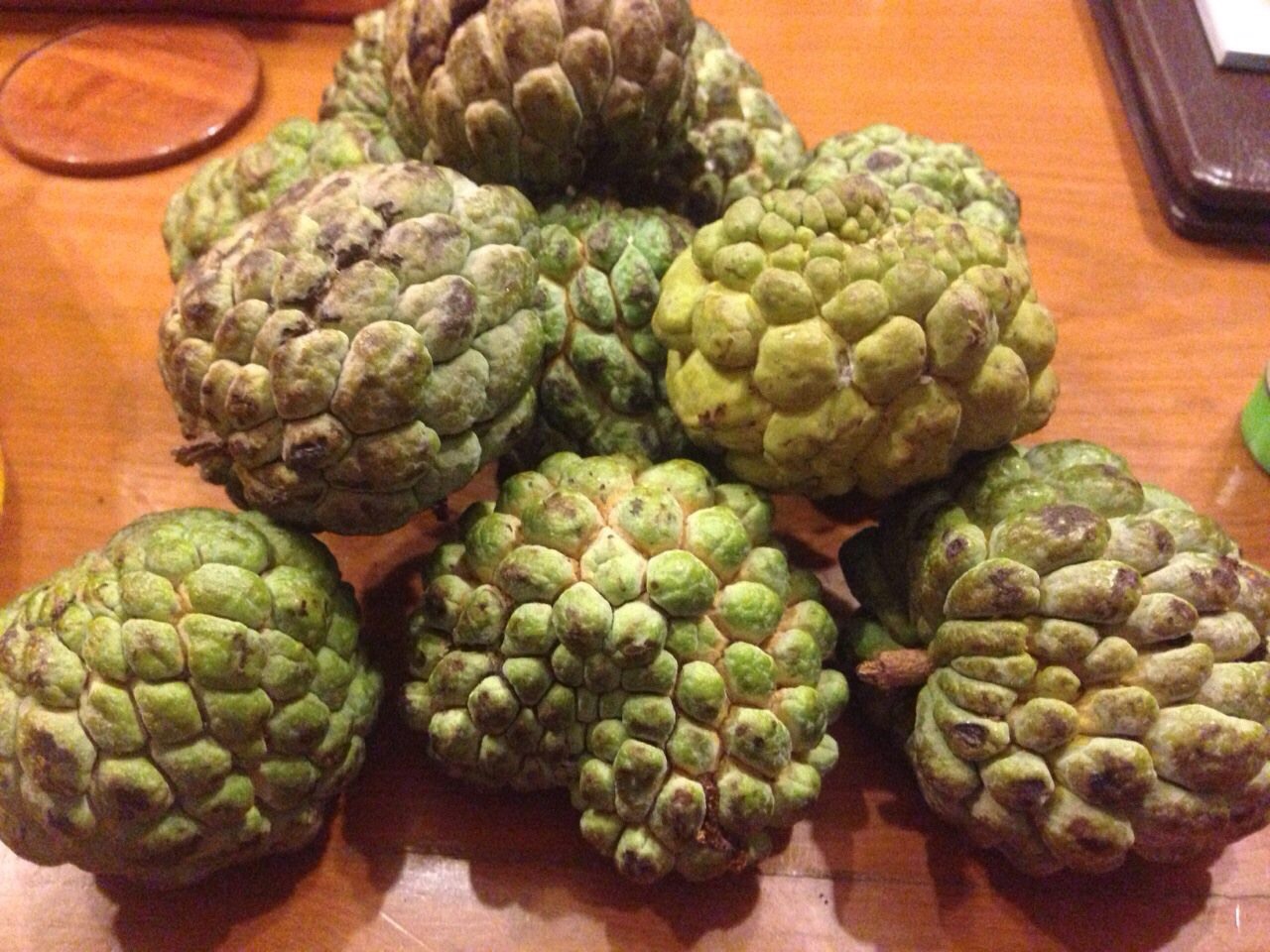
Every night after dinner,  we'd go in search of our favorite custard apple ("atis") .

Every night after dinner, we’d go in search of our favorite custard apple (“atis”) .


Our eyes brightened up each time we meet fruit peddlers on bikes.

Our eyes brightened up each time we meet fruit peddlers on bikes.


Before our first day in Hanoi was over, we’ve acquired the requisite skill of crossing streets, dodging bikes and cars, while keeping an eye on fruit stands and shops. Multi-taskers to the core. A former colleague now based in Hanoi learned we were in town and promptly whisked us away after our hotel brekkie to give us a city tour and food trip. (Thank you, Bing!) The Ho Chi Minh Mausoleum stands tall and proud in the vast square, but no HCM because the body is off somewhere for “re-waxing (???). In the same square, we found the Prime Minister’s Office, which looks really grand. 


HCM is out.

HCM is out.


The Prime Minister is in.

The Prime Minister is in.


Museum of National History

Museum of National History


We found time to visit the National Museum of History. Well-curated museum that we all feel jealous for this piece of Vietnamese pride. More national pride to be found in the War Museum where downed American bomber-planes are proudly displayed. Here, I drew a good laugh from local kids playing a game of “sipa” (kick), a game I played when I was a kid. Feeling still adept at this game, I asked them if I could join the game. In wedged sandals and a bag in one hand, I must have given them quite an entertainment that drew laughs till the sun set in Hanoi. Enjoyed that!


War Museum

War Museum


On wedged sandals and bag in one hand, I happily kicked the afternoon away!

On wedged sandals and bag in one hand, I happily kicked the afternoon away!


The Maison Centrale or Hoa Lo Prison in the French Quarter reminded us of the horrors of war. Much of the exhibits were of the French-era prisoners. Ergo, it’s by and large about the Vietnamese revolutionaries held behind bars, many executed using the guillotine, here. The Americans call it “Hanoi Hilton” because 200-300 captured American pilots were interrogated and tortured here. Their “experiences” were not however documented and exhibited here.


Maison Centrale or Hanoi Hilton?

Maison Centrale or Hanoi Hilton?


Under French rule, Vietnamese revolutionaries were jailed, shackled, and tortured here in Hoa Lo.

Under French rule, Vietnamese revolutionaries were jailed, shackled, and tortured here in Hoa Lo.


Quite depressing to see how humans can inflict inhumane punishment during war. “Tortured” by these images, our friend cum “local guide” brought us to the real, modern Hanoi Hilton for a cuppa and some sweet pastries before driving us home. And home is this boutique hotel near Hoan Kiem Lake bordered by many stalls and shops selling everything from shirts, bags, coats, slippers, souvenirs, fruits, coffee, tea, even turtles! Mind you, those turtles are for sale NOT as pets but as food. Yay!


The real Hanoi Hilton all dressed up for Christmas!

The real Hanoi Hilton all dressed up for Christmas!


Turtles sold in markets and supermarkets. NOT as pets, but as dinner on your table!

Turtles sold in markets and supermarkets. NOT as pets, but as dinner on your table!

.


More retail therapy and more food porn in 48 hours in this city. No meticulous planning, but surely, a fully-booked but relaxing holiday for us all. The sampan and cruise boat rides, the Hoan Kiem lake view provided the nerve-soothing experiences. The retail therapy provided the haggling experience with the locals. The food trips satiated our belly cravings and another dimension of this memorable travel experience.


The newly-opened Royal City with its 7-storey undeground mall!  Kichi-Kichi rotary hotpot was quite a dining experience here!

The newly-opened Royal City with its 7-storey undeground mall! Kichi-Kichi rotary hotpot was quite a dining experience here!


Hoan Kiem Lake

Hoan Kiem Lake


It was just a 2 day, 1 night cruise aboard Paradise Luxury. Thrilled after a 4 hour drive from Hanoi, it was such a treat to cruise Halong Bay — its many limestone rock formations, floating fishing villages, caves, the food and activities on board! Yes, it rained. But that didn’t take away a single minute of our enjoyment of this adventure. We were the lucky ones. A day earlier, the cruise was recalled after only 2 hours of sailing because of inclement weather. 

Boarding Time! (Paradise Luxury @Halong Bay) Boarding Time! (Paradise Luxury @Halong Bay)
A shower of rose petals as we boarded Paradise Luxury. A shower of rose petals as we boarded Paradise Luxury.

There were just a few of us onboard. The crew, the Cruise Manager (Lance) and butler (Gwen?) of Paradise Luxury 4 were all so friendly and accommodating. Food porn on board too. The works! All that plus a jacuzzi in the room? Rooms were spacious, so unlike the small, cramped cabins we got used to on big cruise ships.  Though it rained, the waters were so calm. Cruising along Halong Bay viewing its 1,969 karst formations was sheer delight. We thought we’d never grow tired staring out of our wide cabin windows or feeling the breeze and enjoying the views on deck. How could we have missed this in many of our travel itineraries?

So much room in our luxury cabin! So much room in our luxury cabin!
If you're traveling as a couple, ask for the cabin with this jacuzzi. Perfect for honeymooners! If you’re traveling as a couple, ask for the cabin with this jacuzzi. Perfect for honeymooners!

But the real treat lies in the beauty of this UNESCO Heritage Site, truly a top natural wonder of the world. The smooth ride over the placid waters of Halong Bay was so soothing to nerves frayed by the motorcycle and bicycle scene of Hanoi. This is the exact opposite of one’s feelings while crossing the streets of Hanoi. There were many other cruise boats, along with the smaller fishing boats from nearby floating villages along the bay, but this is one “traffic” that is far from chaotic. In fact, the many sailboats and luxury yachts dotting the 1,969 limestone rock islands added to the charm.

A lone sailboat looking wedged between 2 rock formations. A lone sailboat looking wedged between 2 rock formations.
Truly a top natural wonder of this world! Truly a top natural wonder of this world!

We slept like a log after a scrumptious dinner on board. The activities included short rides on tenders to view some caves, kayaking (if weather permits, but not on this ride), culinary and barista lessons, tai-chi first hour in the morning. For an overnighter, that is more than enough. Plus of course all the eating. The last activity is NOT to be missed. We had such savoury Vietnamese appetizers of crab cakes, shrimps, spring rolls and papaya salad. The menu listed scallop bisque, lamb, king prawns, salmon, and a chicken dish. We were prepared to choose one main entreé but was surprised we had ALL of it instead. And such generous helpings too.

And these were just appetizers! And these were just appetizers!
Fine dining on board! Fine dining on board!

The barista and culinary lessons were held in the dining hall. The tai-chi too, because the sundeck was wet from all the rain. The heavens wept while we slept, and just as we were sailing back to shore. The only thing is dining is intermittently interrupted as we passed the karst formations viewed from the glass windows and doors spilling out to balconies. How can you not help taking a photo? Lovely day. Soothing nights. We even passed one rock formation with a cave all lighted up for a private candlelit dinner!

Culinary lessons on board! Culinary lessons on board!
Ready for barista lessons! Ready for barista lessons!


After this experience, you know what I have in mind? Gathering my family and a few close friends to set sail on this luxury boat all to ourselves! That should be fun. There are smaller, 3 cabin boats if you like. But I am thinking along the lines of 8 cabins or so for a big family and a few couple friends. How about that?

Twilight time! Twilight time!
A time with friends. A time well spent! A time with friends. A time well spent!

It was a late flight and an hour past midnight arrival. Yet we managed to sleep well and enjoy a hearty breakfast in the few hours left before our mid-morning pick-up for the Hoa Lu and Tam Coc trip. The drive was comfortable, and our guide Húng gave us a good introduction to Vietnam’s glorious past.

Hoa Lu, just a 2-hour drive from Hanoi.

Hoa Lu, just a 2-hour drive from Hanoi.

image

Hoa Lu is an ancient capital in the 10th – 11th century before the capital was moved to Hanoi. There were only 5 rulers under this dynasty, but 5 may seem many considering the dynasty reigned for less than half a century. Most interesting were the stories involving an emperor who was succeeded by a 6-year old son, replaced by his regent and top general who then married the first emperor’s widow. Just 3 square kilometers in size, the site featured palaces, shrines and temples to honor these emperors : Dinh Tien Hoang and Le Dai Hanh, their sons, and Queen Duong Van Nga.

Temples are dedicated to people;  Pagodas to Buddha. Something new I learned from Hung.

Temples are dedicated to people; Pagodas to Buddha. Something new I learned from Hung.

image

Vietnamese lunch was served just before our boat ride in Tam Coc. So we were so full while enduring a 1 1/2 hour sampan boat ride that stretched into 2 because the heavens opened up and we took cover under one of the natural cave “tunnels” while it poured. Still, the giant limestone karst formations jutting out of the rice paddies provided an impressive site. It’s like Halong Bay on land, or rather between rice paddies. Too bad they just harvested the rice when we paddled our way through the Ngo Dong River. We made our way back with newly-bought raincoats and braved the rain while our boat man paddled the boat using his feet in a fast-paced rhythm.

image

image

The Sampan Ride along the river hemmed by rice paddies, dotted by limestone rock formations.

The Sampan Ride along the river hemmed by rice paddies, dotted by limestone rock formations.

It was a no-brainer to decide to cancel the biking around rice paddies after the boat ride. Instead, we dried ourselves and made our way on a 2 1/2 van ride back to the city. Not complaining here. We had a wonderful time despite the rain.

Look Ma, no hands!

Look Ma, no hands!

image

image

Fishing?

Fishing?


This is the Church of Saint Anne in Molo, Iloilo. Some coral rocks, some sand, some eggwhites. And then, the statues of 16 women saints. Seek their graces and feel empowered, woman!


image

image


The church is right across the beautiful district plaza where one finds a domed pavilion with 6 Greek goddesses. Why Greek? I honestly don’t know. Our guide kept harping on the “Athens of the Philippines” bit, but I feel it’s a stretch. The Gothic Church stands on its own, and the plaza….well, let’s just say it’s neat and pretty without any reference to the Athens line.


image

image


Molo. Say that, and what immediately comes to mind is a clear broth with pork and shrimp dumplings. In olden times, the districts and towns along the shoreline were constantly raided by Moro pirates. The place being Iloilo’s version of Chinatown had many Chinese settlers, who pronounced “Moro” as “Molo”. This also explains the Chinese influence on its famous local dish “Pancit Molo”, one of my favorites.


image

image


The church interiors made great use of columns, many of which along the main aisle is adorned by a female saint. You may address your prayers for intercession to Saints Cecilia, Teresa, Monica, Mary Magdalene, Clara, Martha, Rose de Lima, and many others. The statues, woodwork, stained glass, carvings and paintings are worth a few seconds’ pause, if you will.


image


The ochre color, the flying buttresses, the ornately-designed bas reliefs, the uneven belltowers, and the gold-plated retablo. All that speak of a history surrounding the St. Thomas of Villanueva Church, more commonly, and simply called Miag-Ao Church. 

image image

The church facade is unique. St. Christopher is depicted like a local, more so as he is illustrated holding on to a coconut tree. There are also other “local” elements represented here like local fruits and flowers. Interestingly, the typical village life is very much represented in this art form.

image

The Retablo

image

Impressive Altar & Sanctuary

Inside, the interiors are simple, but very elegant. The antique gold plated retablo is impressive. So with the altar. A story goes that the altar dates from the late 1700s which was subsequently lost during the 1910 fire and later found and re-installed during repair excavations in 1982.

image

The Flying Buttresses

image

One of 2 Bell Towers attached to the church.

You’d wonder why the 2 bell towers at the church front are uneven, or simply different, unmatched. Used as watchtowers against Moro pirates, the 2 towers were built separately. The older and taller belfry is the one on the left side. Apparently, the 2 priests who commissioned the work thought it unimportant to match the design and architecture of the 2 towers. If you ask me, I think the disparity makes it unique.

image

The Baptistery


Mangoes. Nothing’s sweeter than the Philippine mangoes. We have them good from Cebu, from Zambales, but the sweetest come from Guimaras Island, just a 15-minute boat ride from Iloilo. By the time we visited, it was almost the end of the peak season and prices have more than doubled. Yet the mangoes remained sweet.

Just a 15- minute banca ride to the island of Guimaras!

Just a 15- minute banca ride to the island of Guimaras!

Sweetest Philippine mangoes!

Sweetest Philippine mangoes!

We visited the oldest Church in the island. San Isidro Labrador Parish in Navalas honors the patron saint of farmers here. Small but charming. And terribly in need of restoration work. Since the church forms part of many itineraries for day-trip visitors of this island, perhaps the local authorities and prominent families here can help restore and preserve this part of Guimaras history.

Navalas Church, oldest in Guimaras

Navalas Church, oldest in Guimaras

Roca Encantada, the Guimaras Resthouse of the Lopezes

Roca Encantada, the Guimaras Resthouse of the Lopezes

Unlike the church in disrepair, Roca Entanda looks grand and well-maintained. The power scions — Lopez Family — has this all-white mansion by the edge of the waters, built on a rock looking out to sea. I can imagine all-night parties here with the seawind breezing through the spacious verandah. Or quiet weekend escapades with a coffee mug or a glass of wine, waiting for either sunrise or sunset. The life!

View from the balcony of Roca Encantada

View from the balcony of Roca Encantada

Mango Ketch, anyone?

Mango Ketchup, anyone?

Local residents line up streets with stalls  selling fresh mangoes, ready to be boxed for those who care to bring home these sweet fruits. There are also stores like McNesters selling mango byproducts like mango piaya, mango ketchup, mango bars, mango barquillos, etc. A foodie’s delight! More of the same stuff can be bought from the Trappist Monastery. As for lunch, how about that famous KBL (kadios, baboy and langka) soupy dish, soured by the local batwan, from Jannel Glycel Beach Resort? You can even opt for a quick swim before your lunch, if you like.

Janna Glycel Beach Resort

Janna Glycel Beach Resort

Trappist Monastery

Trappist Monastery


I confess this trip was hatched as a serious “food trip” with friends. My love affair with shellfish has withstood the test of time and coming home, I’ve been dreaming of my favorite hard-shelled loves. But 4 days of marathon dining can get us into serious trouble so we arranged to visit some heritage churches and ancestral homes as well.

IMG_8360.JPG

image

Of the churches we visited, I was impressed with this Church. Tigbauan’s architecture has Latin American influence ….. “Churriquesque” it’s called. It doesn’t register at all with me. Admittedly the first time I heard of it. Otherwise, I would have thought it refers to some barbecued specialty dish. (I’m hopeless) . I wonder how it looked back when it was constructed in 1575 before a 1948 earthquake destroyed much of it but for the bell tower, a few pillars and church facade. The mosaics which were actually what caught my attention in the first place, were installed when the church was restored following the 1948 destruction.

IMG_8361.JPG

image

Officially named Saint John of Sahagun Church, many simply refer to it as Tigbauan Church after the town where it is located. San Juan de Sahagun was an Augustinian friar who earned many enemies during his time in Salamanca, Spain where he was known for his sermons and scathing words which offended many from the upper echelons of society. It was believed then that the fierce saint died from poisoning by a woman who sought revenge. The woman was a nobleman’s concubine who was “enlightened” by Saint John of Sahagun . Wicked woman!

IMG_8363.JPG

image

Old, original, or not, I am impressed with the mosaic interiors. The altar looks lovely in an austere way. The niches with the Last Supper, saints as well as the Stations of the Cross, look just as charming in an old world way. I just hope the local parishioners and authorities work on the full restoration of the belfry and facade, remnants of this centuries-old church.