Latest Entries »

Taking Paris Frame By Frame


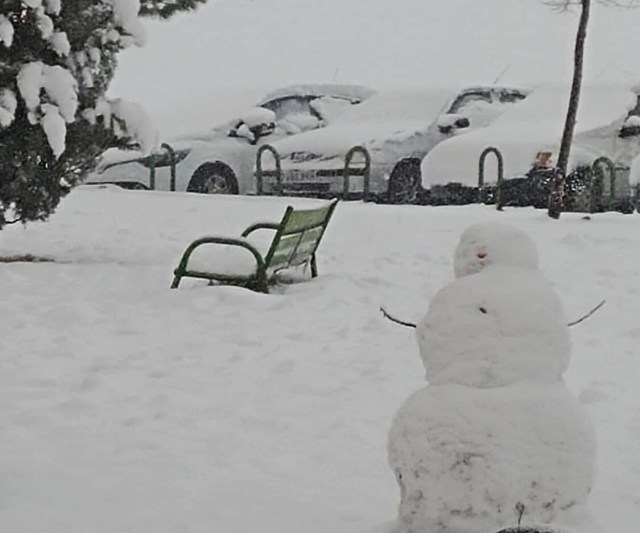
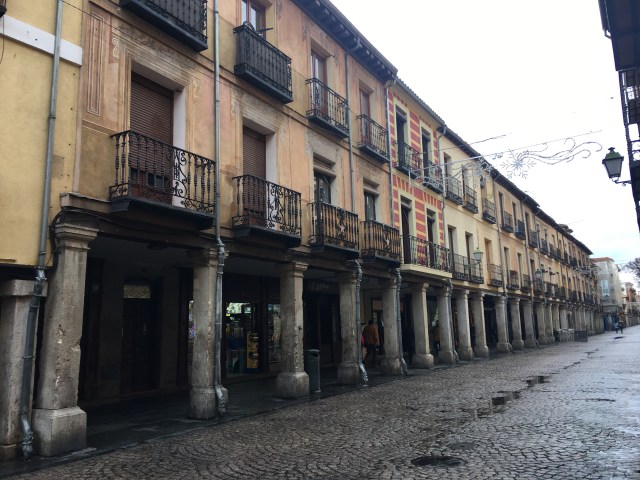
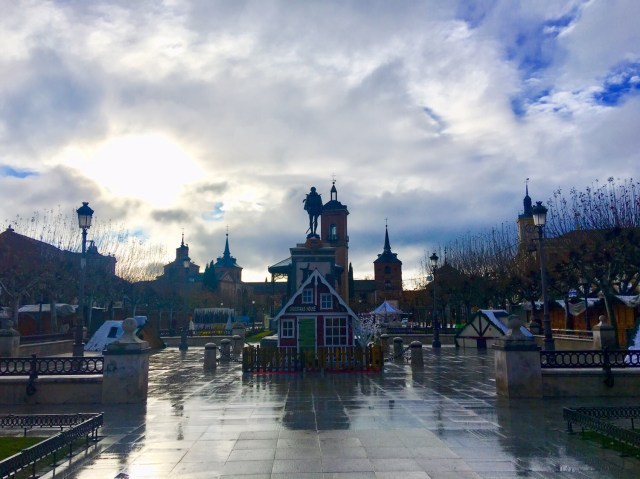
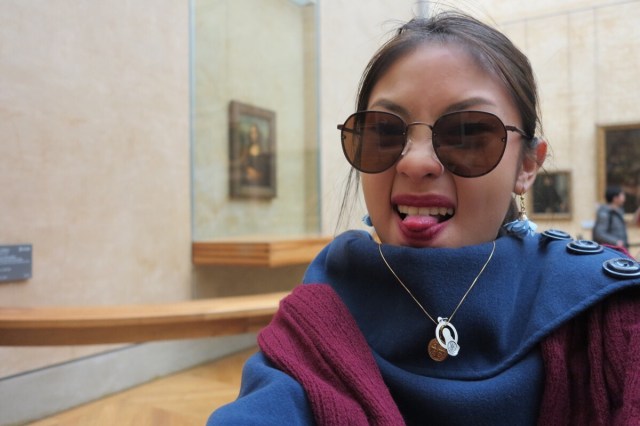
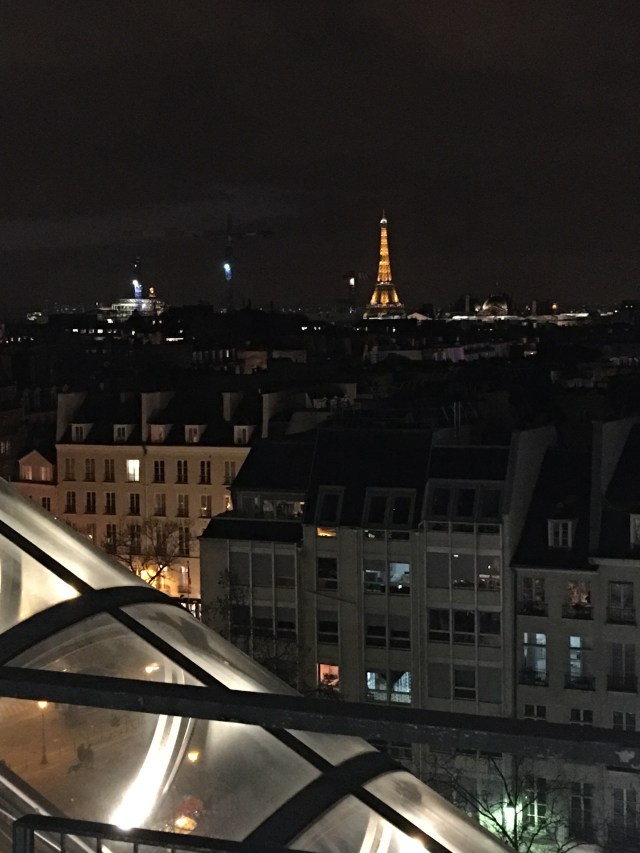
I couldn’t wait to show our young artist around Paris. The City of Lights (and Love) lives up to its name and more so this December. Air’s crisp and cold. Sky’s cloudy and threatening to pour. My young adult is looking for Santa’s Villages and Art Booths while her grandma is on the lookout for a vin chaud (hot wine). Temps dip, it grows cold, wet and even icy, it can be dark and gloomy but our spirits soar with Christmas glee.

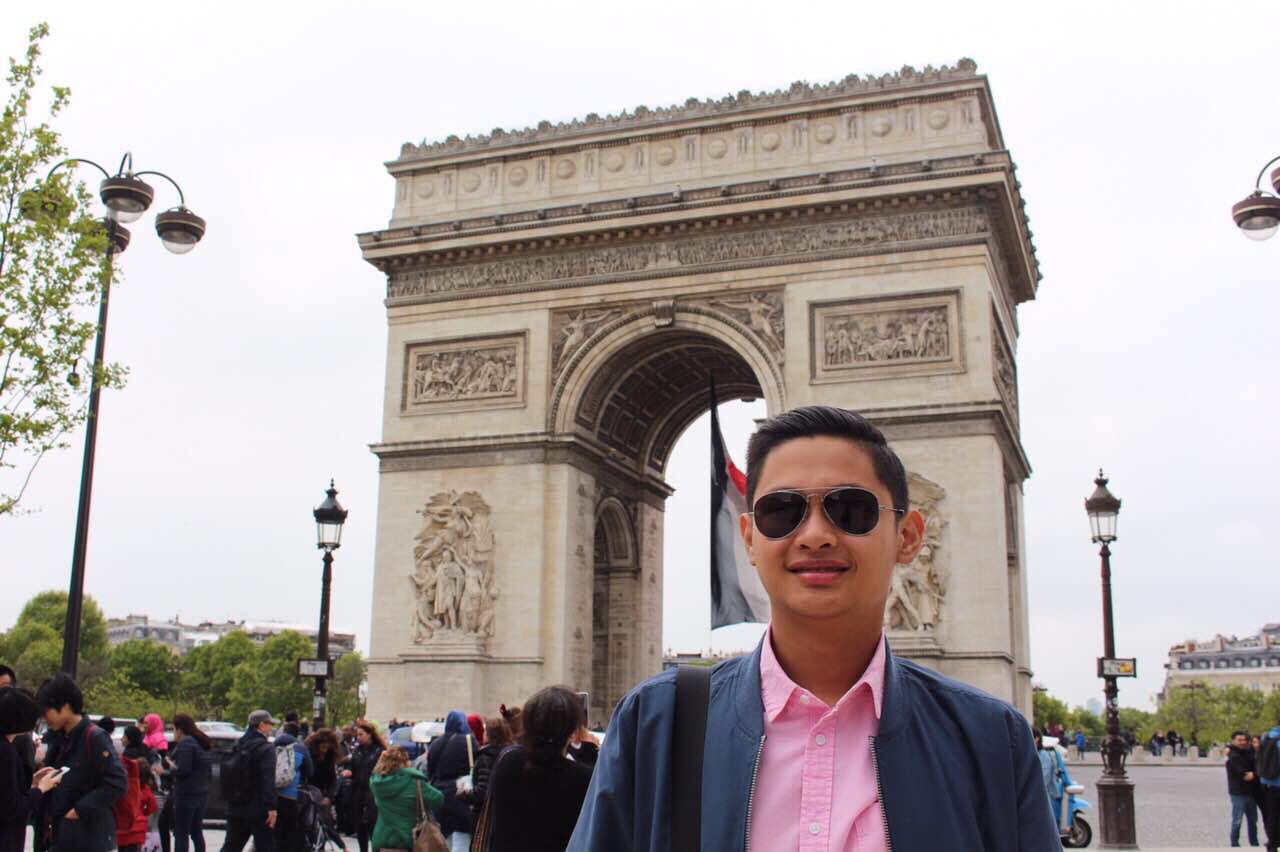
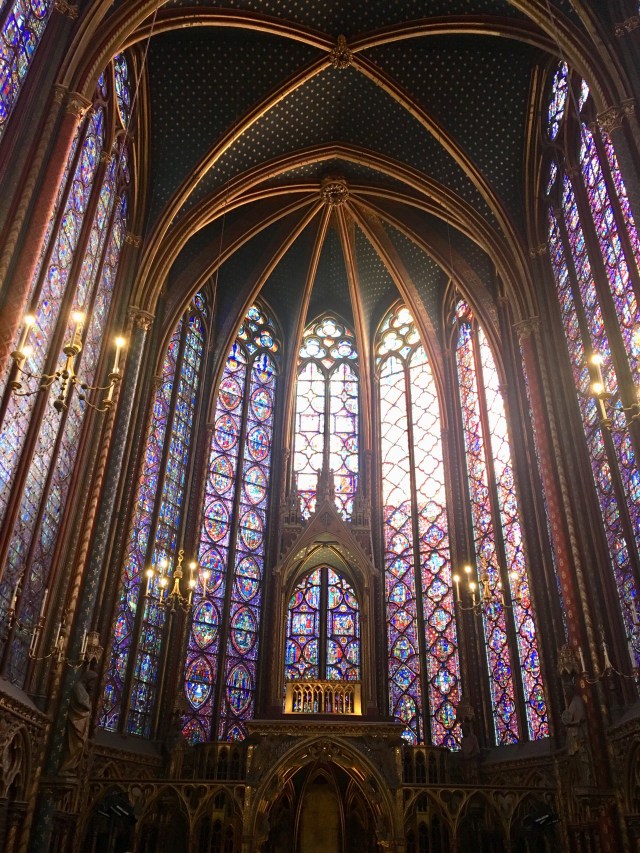
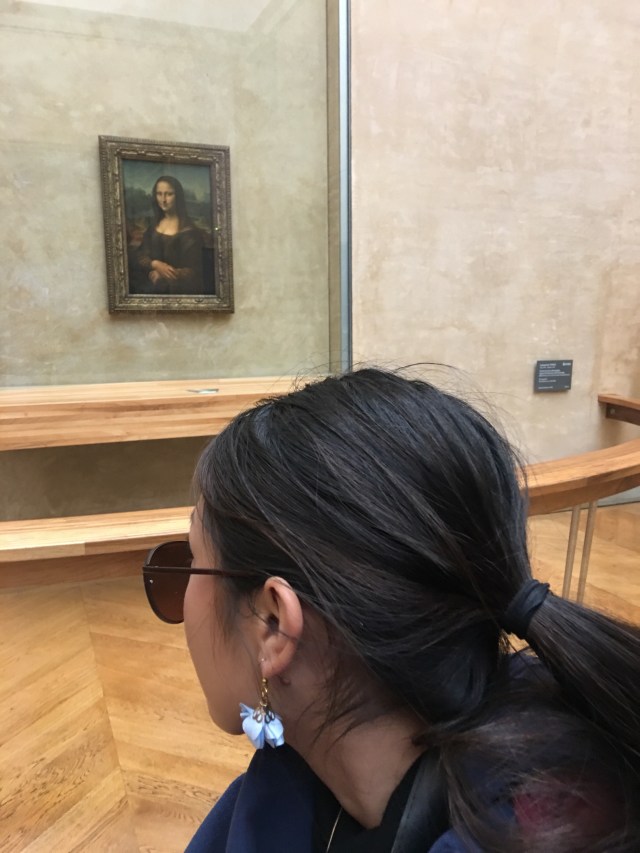
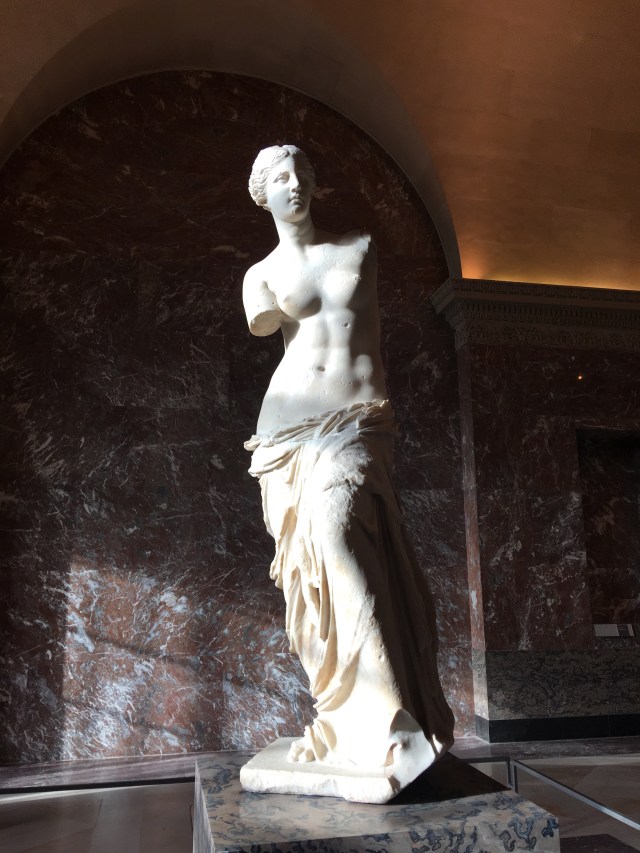
With only 4 days and 3 nights here, with early sundowns, we need to plan well. But this is Paris! The bohemian in us would rather walk aimlessly, linger where it feels warm and inspiring, and just go where the heart takes us. But I can’t let my first-time Paris visitor miss the iconic landmarks. And so, the “mandatory tour” begins: Eiffel Tower, Arc de Triomphe, Louvre, Moulin Rouge, Champ Elysees, Sacre Coeur, Notre Dame, Tuileries, Montmartre, Madeleine, Place de Concorde, Sainte-Chapelle.

The sun set early the day we arrived. As soon as we dropped our bags in the Saint Germain des Pres apartment we’ve booked, we set off for the Montmartre area. Moulin Rouge in illuminated version can’t be missed as soon as you step out of the Blanche Metro Station. From here, we could have walked to Place du Tertre but took the Metro back to Anvers to find a dinner place before the anticipated 10pm mass in Sacre Coeur. Le Consulat was our first choice but they only offered drinks as their kitchen closed early. Our 2nd choice turned out to be perfect for us hungry souls. Le Bonne Franquette is on the same cobble-stoned street, likewise old as the other centuries-old buildings in this old part of Paris. We imagined Van Gogh, Cezanne, Renoir et al enjoying their meals here. History aside, we actually enjoyed our dinner of french onion soup and pave de boeuf in Le Bonne Franquette. Oh sure, the vintage charm helped too.

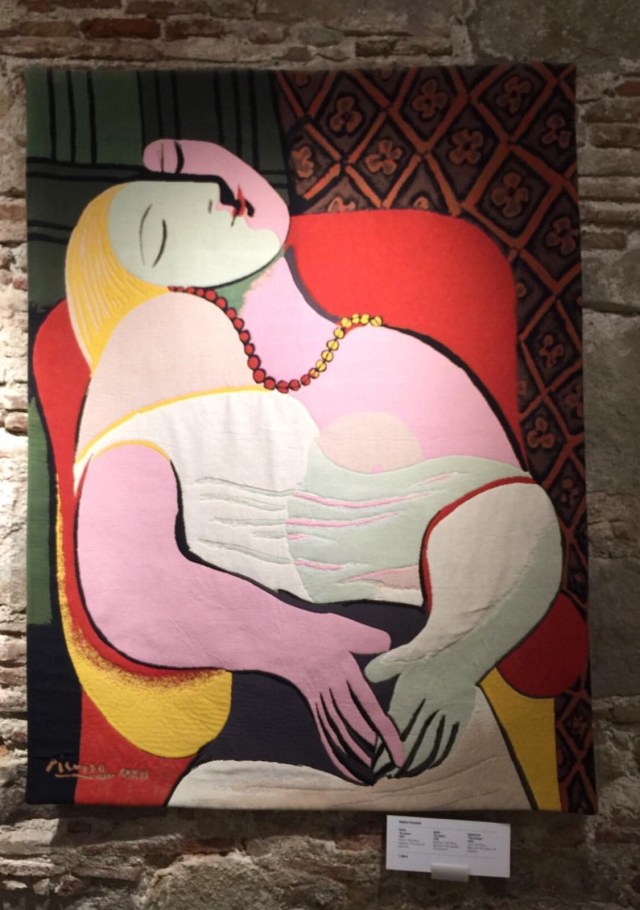
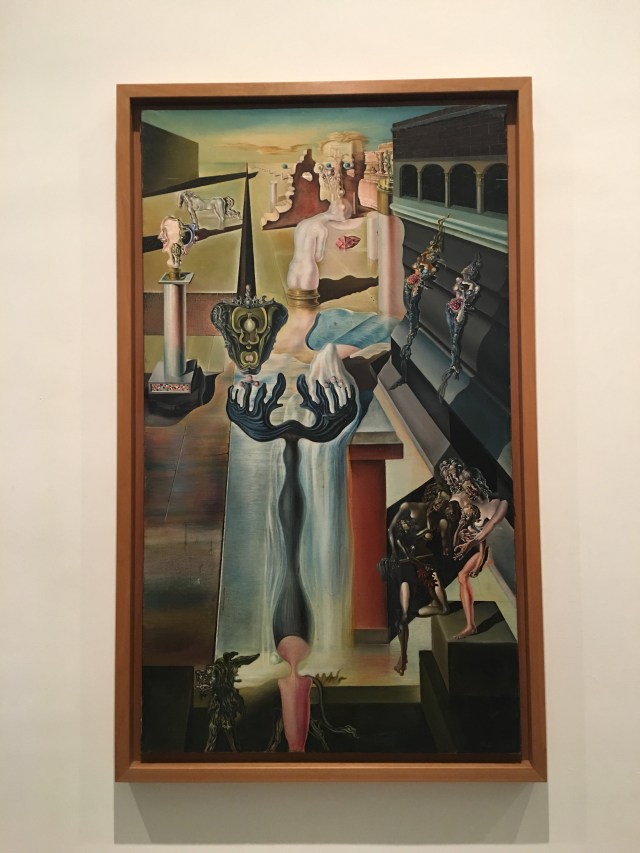
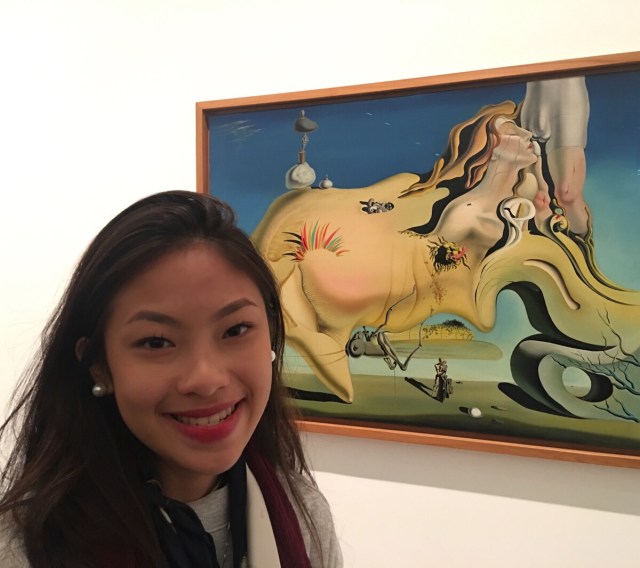
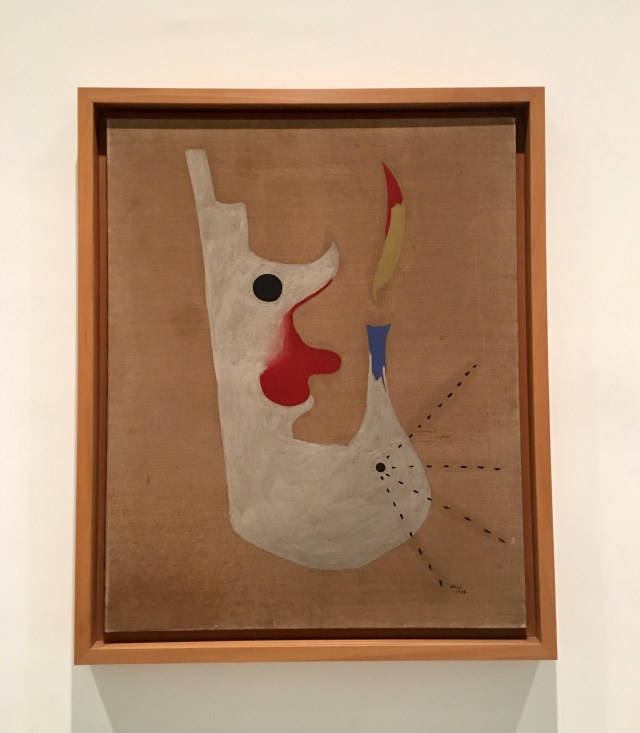
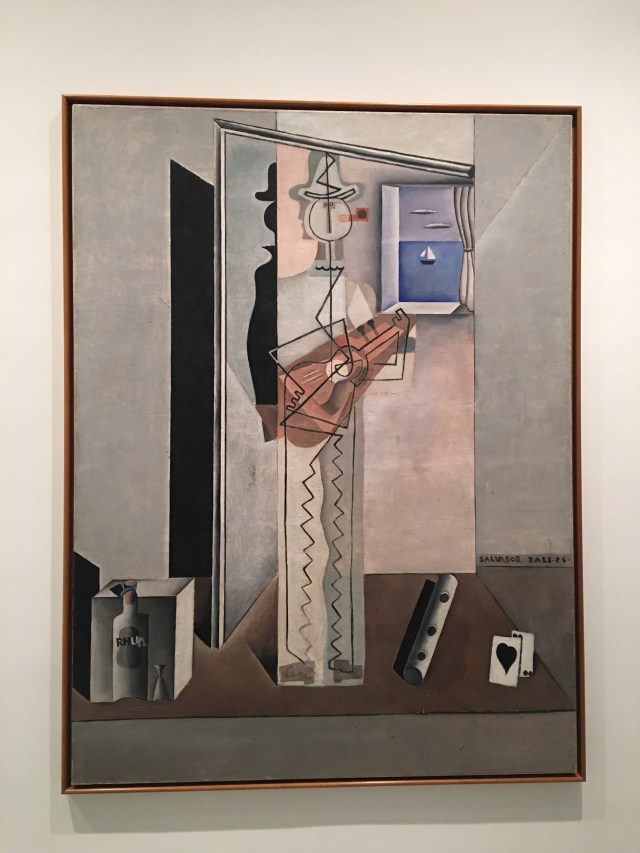
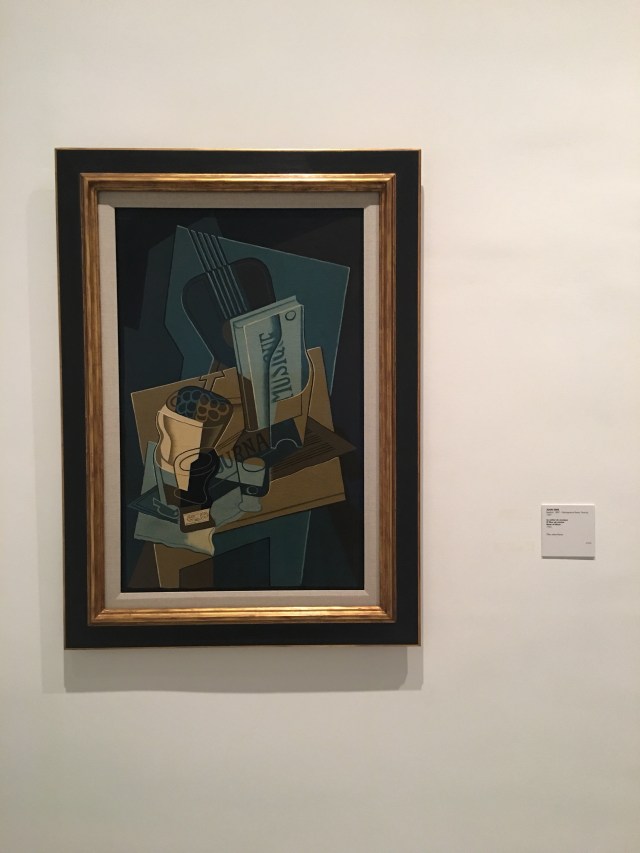
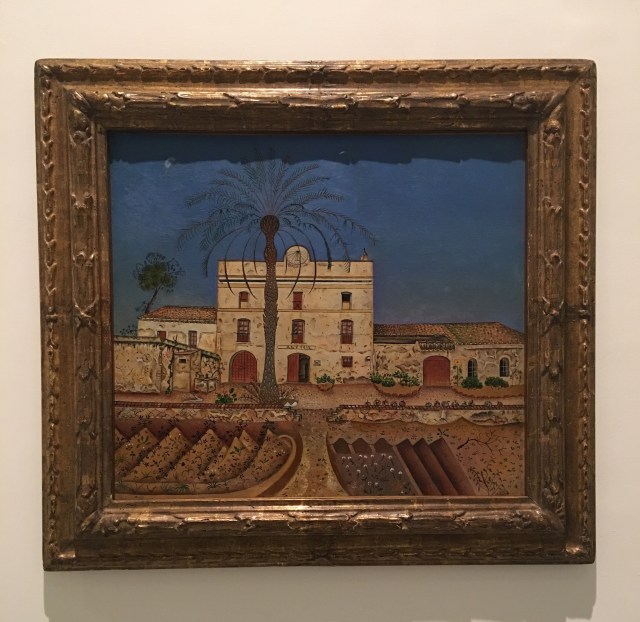
Must be the freezing weather (0-3 Celsius) but Place du Tertre was stripped of the easels and actual/live paintings that fascinated me years back when I visited. I was eager to show her this art scene in the Butte Montmartre. Though a tad disappointed, excitement grew as she spotted a gallery of Dalí paintings. I hope the tiny, winding streets of Montmartre will inspire her to paint those quaint, centuries-old cafes and structures, images of which one finds in many postcards in France. So charming!

Versailles Palace was in our itinerary on our 2nd day in Paris. The chateau, the fountains, the gardens, the “fake” hamlet, the art pieces are way too much for my first-time visitor. The young artist was totally charmed. If it weren’t for her eagerness to see Tour Eiffel and Arc de Triomphe in daylight, we could have stayed in Versailles longer. And so we trooped back to the city for a couple more iconic landmarks plus a stroll through Champ Elysees towards Place Concorde. Yes, a long walk but we had a lovely break for a mussel dinner at Leon de Bruxelles. Still as crowded ss I remember it but we were early and easily found a table.

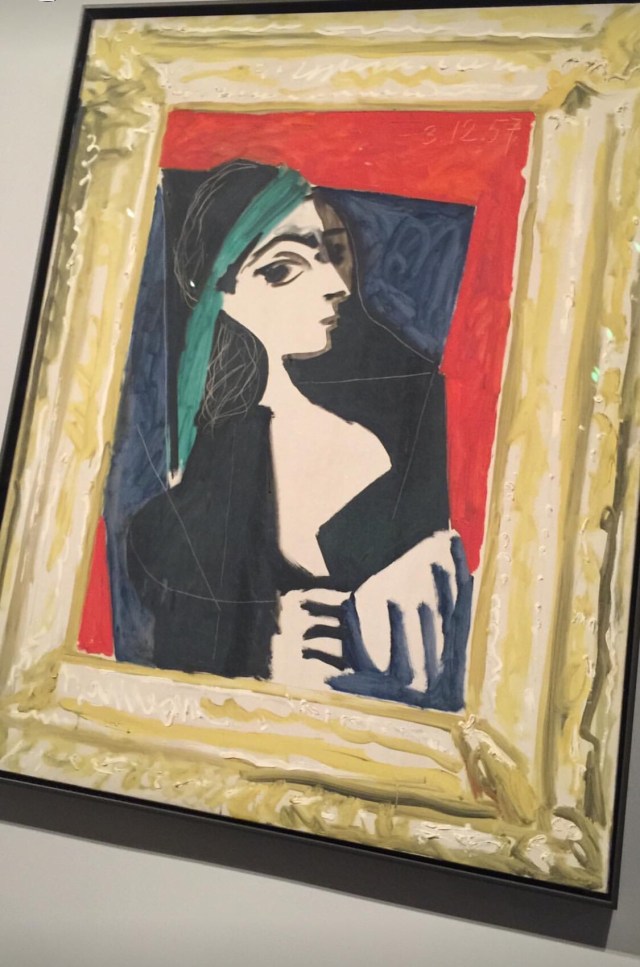
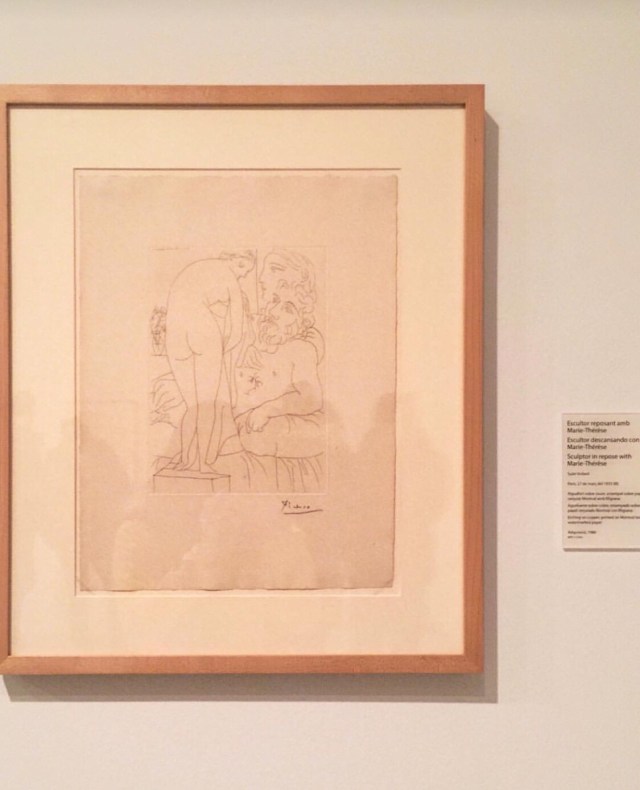
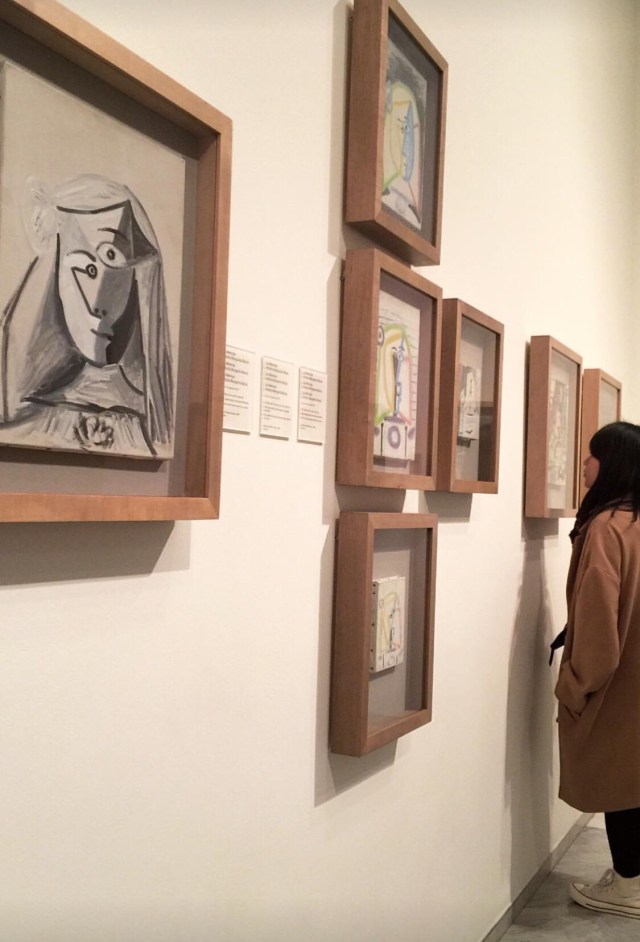
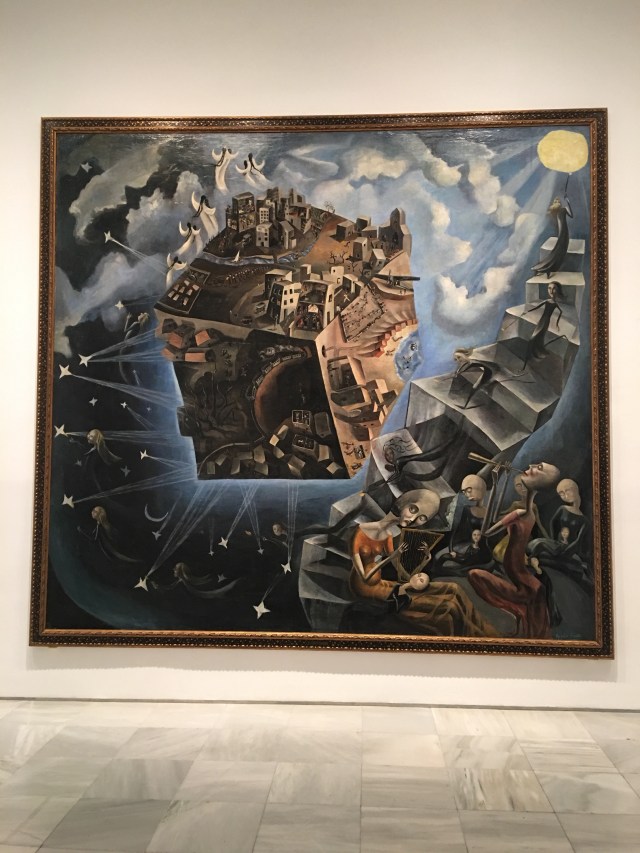
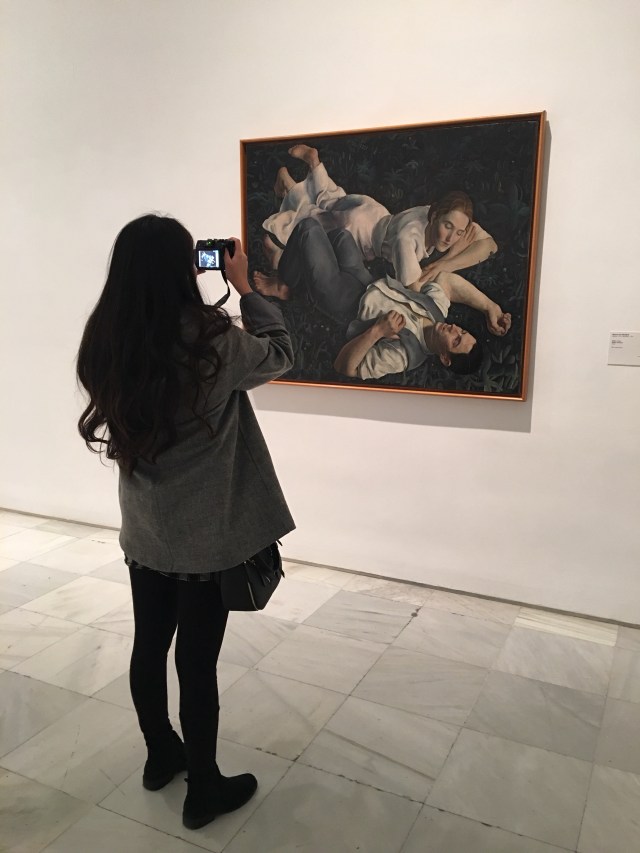
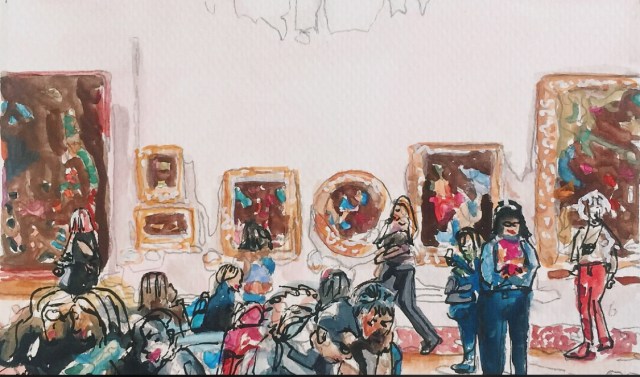
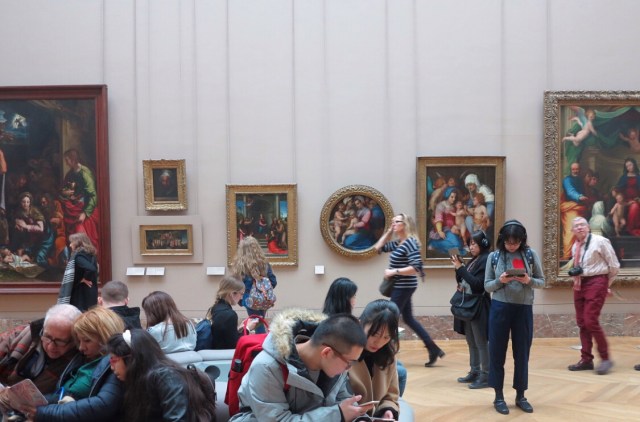
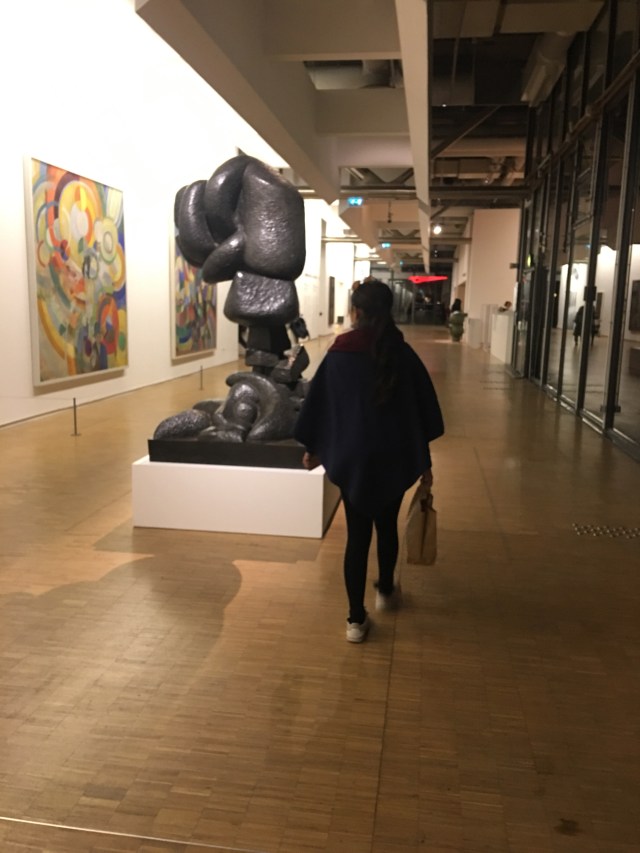
Tomorrow, we should be joining the lines for Saint Chapelle, Notre Dame and the Louvre. There may be time for Pompidou Center as my young artist has expressed her preference for modern art. Wish we can likewise throw in Musee d’ Orsay and Musee du Rodin, but I’m not hopeful. Lastly, I chose this apartment because of its proximity to Jardin du Luxembourg and the bohemian neighborhood of Saint German des Pres, but we have not even visited the gardens yet! Oh Paris. There’s so much to see and we have so limited time. But perhaps it’s best that way so our young artist’s heart continues to long for this city of lights and “finish the job”. I suspect though she’d be back, no way ever will the job get finished. Such is the allure of Paris. ❤️

Happy Thoughts For You


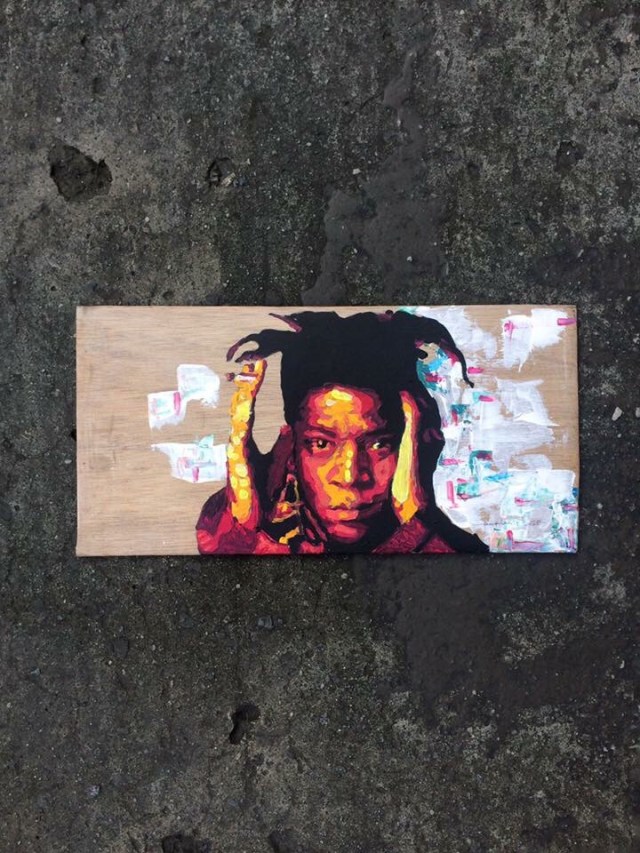
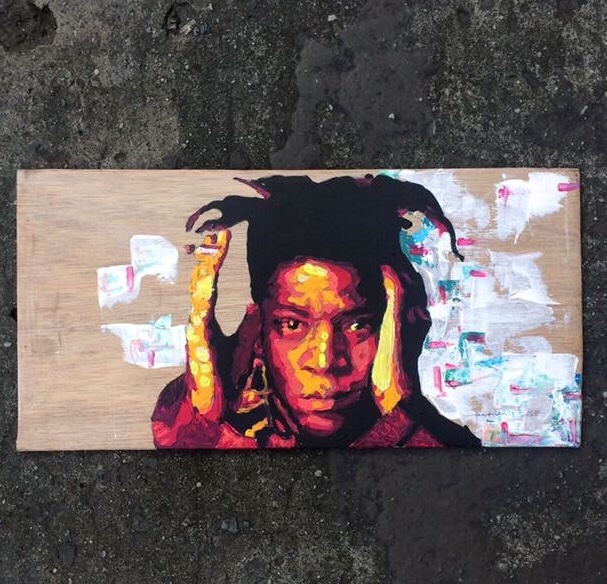
She painted on canvas & paper,

Now on plywood and leather

Perhaps ceramic next or fabric?

So paint me something eccentric.

Varying moods, divergent themes

As night sets in and lights go dim

What inspires her, I wonder

Not so ready with an answer.

New iPhone turned out a lemon

Stirred up moods like a demon

Oh how she vented her woes

As she treated the canvas like foes.

Boards and canvas bought in bulk

To frame this much art stock

Yet inspiration made her fingers fidget

To paint Dali on her denim jacket.

Three murals and countless sketchings

Quick strokes, untutored paintings

You’ve worked hard for those 2 exhibits

I suspect a Matisse in you inhabits.

Whenever I spot paint on your hands

A palette recklessly lying on the floor

Some brushes left hanging to dry

I know you visited your happy world.

Happy thoughts, happy world

Nurture those happy thoughts

No matter how blurred or fleeting

Nurture it. Let your heart keep it. ❤️

Abu, Apo 💕

Curious About Kyushu


It’s only a week in this southern island of Japan. Not as touristy as Kansai (Osaka, Kyoto, Nara), Honshu (Hiroshima & Miyajima), nor Kanto (Tokyo, Gifu) and even Hokkaido (Hakodate, Otaru, Lake Toya, Sapporo) which is now drawing more tourists. We timed this trip really well to enjoy the symphony of autumn hues. All around and especially in the temple grounds and parks, we were welcomed by a mosaic carpet of autumn foliage. So pretty!

Here’s a summary of blogs written on our recent visit to Fukuoka, Nagasaki and Beppu. Just click on the highlighted topics, including earlier-written blogs on my Kansai, Kanto, Honshu and Hokkaido trips.

Fukuoka

Dazaifu Tenman-gu Shrine

Shinto and Zen Temples

Yatais

Nagasaki

Peace Park, Ground Zero

Glover House

Meganebashi Bridge

Beppu

Umi-Jigoku Hot Springs

Onsen Cooking

Yufuin

Mt. Tsurumi Ropeway

Lake Kinrin

Happy reading! And hugs and kisses to my travel buddies whom I’d fondly call #Soba15 for a most enjoyable holiday.


I felt I could have given Nagasaki a skip because of the grim reminders of the devastation, grief and misery of the atomic bombs dropped here 3 days after Hiroshima, 300 kms. away. It didn’t help to know that the 2nd bomb should have been dropped in Kokura, some 150 kms. away, but visual bombing couldn’t be managed then because of heavy ground haze and smoke. A change in fortune favored Kokura at the expense of Nagasaki. The rest is history.

Meganebashi survived the bombing. It now stands as the oldest stone arch bridge in Japan, earning the monicker “Spectacles Bridge” because of the reflection on the water created by its two arches. There are several bridges spanning Nakashima River, but this 400-year old stone arch bridge built by a 2nd-generation Chinese monk is the prettiest. Disaster nearly hit Meganebashi when flood waters washed it out in the 1982 deluge that hit the city. Thankfully, each single stone was retrieved and the bridge restored to its original appearance. Likewise, the riverpath has railings that are both artful and functional.

The Nakashima River snakes through Japan’s 2nd largest city and it was a pity we didn’t have time to try those stone steps from street level down to the riverbank to stroll along its river path. The locals — notably the Chinese merchants operating shops along the banks — hang illuminated lanterns along the length of the river on Chinese New Year, and we can only imagine how pretty that is. Being a port city, Nagasaki was Japan’s only contact with the outside world during its period of isolation or seclusion. Chinese. Portuguese. Scottish. Dutch. Obviously, it had first taste of world cultures that seem to have reflected in its art, fashion, architecture, cuisine and religion.

Speaking of religion, history records the arrival of Saint Francis Xavier in Nagasaki in 1549. Interestingly, Meganebashi was built in 1634, during the time when Christianity was banned in Japan and Christian missionaries kicked out of the country. Today, Meganebashi is among Nagasaki’s top tourist attractions and among Japan’s top 3 famous bridges alongside Nihonbashi Bridge in Tokyo and Kintaikyo Bridge in Iwakuni, Japan.


We were so aware it’s easy to get templed out so we’ve decided we’d just visit Dazaifu Tenmangu Shrine outside the city and a city temple. In the city, we had 3 temple options but naaaahh, one will do. So we decided on the first Zen temple, Shofukuji Temple. Hardly anyone inside, though we found many cats. We loitered around the temple grounds and tried to imbibe the many Zen elements within. Unlike Dazaifu’s Shinto Shrine, Shofukuji is a Zen Buddhist Temple. I will NOT even venture to define Zen here. I’m frankly not sure what it is, but I do know it is NOT a religion nor a moral teaching. My nephew practices it, just like I try (repeat, TRY) to practice mindfulness. Here in the temple grounds of Shofukuji, there is no need to define Zen. One simply enters, and feels. The rock garden, the pond, the trees. All in harmony with the universe. Like a shoulder-dropping relaxant.

The visit to the other 2 temples was unplanned. Tochoji happened to be right next to Shofukuji, so why not? One thing I remember here is lighting a candle and 3 joss sticks just before entering “hell” underneath the Buddha statue. Can’t say I enjoyed walking in complete darkness as I worried I’d trip or bump my head. But I like the nearby pagoda and garden. Our guide even showed us a line of 88 small Buddha statues representing Japan’s 88 sacred temples. You can say you can “shortcut” your pilgrimage here. Cool.

Now, this 3rd one was no Zen activity. I wouldn’t even consider it a “visit”. More like we went to Kudashi Temple for a pee break, walked the Shinto temple grounds and passed the stacked-up sake barrels on our way to the Canal City mall and Kawabata Shopping Arcade 🙄

Were we templed out? Not at all. The visits were brief, the zen garden was relaxing, the Shinto Shrine and temple were peaceful. Just odd to find some side by side with shopping arcades 😊

Mt. Tsurumi Ropeway


Located on the border of Beppu and Yufu in Oita Prefecture is this volcano towering over the hot spring town of Yufuin. Initially, we planned on hiking Mt. Yufu, but thankfully, our guide had the nerve to discourage us from doing the Mt. Yufu trek. Instead, we chose to ride the aerial lift line towards Mt. Tsurumi.

Beppu Ropeway is just a hop and a skip from the Beppu Onsen Resort (Umi Jigoku Springs) where we had our foot bath. All around, we glimpsed steam vents. And up on the cable car, we were awed by the autumn foliage rolling under the lift as the car climbed up Mt. Tsurumi. The hike offers 2 options — one either starts the trek from the lower ropeway station, or ride all the way up and then walk the last few meters to reach the summit. We were an assortment of travel buddies whose sense of adventure spans a wide range. 😊 And so we opted to climb easy, or so I thought 🙄

The youngest member of our hiking party ran up the steps while the rest gingerly climbed one step at a time. I was gasping for air and broke my climb with frequent oxygen breaks. The summit may not be that high at 1,375 meters but my lungs don’t know that. Huffing, we made it and we lingered for many posterity shots. The panoramic view at the summit takes (a few more) breaths away, even as temps dipped to 0 Celsius. Brrrrrr……We were only too happy to take the same cable car down to the station and then enjoy our foot bath in the steamy, hot springs of Beppu. That, plus an onsen adventure before bedtime and our day’s complete!

For more blogs celebrating life, check out :

https://lifeisacelebration.blog/

https://retirementsuitsme.wordpress.com

http://www.travelblog.org/Bloggers/liliram/

Like me on Facebook: https://www.facebook.com/Lifeisacelebration


This is a Shinto Shrine in Dazaifu in Fukuoka Prefecture. The shrine honors Michizane, deified as Tenjin, a gifted scholar who drew the ire of the aristocrats. Among them aristocrats is the Fujiwara clan who sent him into exile in the southern island of Kyushu. He died young at 57 and the story goes that when his dead body was carried by an ox, the beast stopped, knelt on an area that is now his burial site and shrine.

All around the shrine complex, there are brass statues of the ox, touched by many presumably for good luck.

Our guide mentioned that the shrine attracts the young crowd, mostly students, who pray there for blessings before an examination. Perhaps because Michizane/Tenjin was a scholar, those who pray to him appeal for scholarly or academic achievements. We were also lucky to find this cute child all dressed up for shichi-go-san, a rite of passage for little girls aged 3,5 and 7, and 3 and 5 for little boys. I remember seeing many “dolled-up” children in other temples in my earlier visits (in Nara and in Kyoto). Another rite is at age 20, deemed one’s passage into adulthood.

The water was muddy but it didn’t take away the charm off the vermilion-colored arched bridge. The fall colors are evident everywhere, as if bidding adieu before the winter season sets in. I did like the landscape of autumn hues blending in subtly with the greens, making for a dreamy background to the pond and other structures. Not autumn in full bloom, no fierce explosion of colors. More serene, more relaxing. More nostalgic, if you like.

There were also monks lining up a pedestrian path. (Thanks, Angel, for this photo) Unlike their orange-robed cousins in other Asian neighboring states, these monks looked more formal. They also accepted cash rather than food, which I think is more practical. And barefooted NOT too. If you ask me, their get-up from head to toe is a winner. Even the bowl (for alms) and basket look classy!

On the way in and out of the Shrine, the path is hemmed in by quaint little shops as well as restaurants. We had lunch in one. We were also amused by a more traditionally-themed Starbucks coffee shop, side by side with Japanese traditional stalls selling umegae mochi, the local specialty dumpling, along with matcha, kimono, ice cream, snacks, etc.

If you are based in Fukuoka, and only have time for one temple or shrine, go to Dazaifu. You need not be Japanese nor practice Shintoism to appreciate this place. And while there, rub that brass ox statue for good luck. You’d never know when you need it. 😊

< strong>< strong>
For more blogs celebrating life, check out :

https://lifeisacelebration.blog/

https://retirementsuitsme.wordpress.com

http://www.travelblog.org/Bloggers/liliram/

Like me on Facebook: https://www.facebook.com/Lifeisacelebration


The setting for the Puccini Opera “Madame Butterfly” is a house on a hill overlooking Nagasaki Harbor. Could this be the Glover House that inspired this Puccini masterpiece? This oldest Western-style wooden building in Japan was built in 1863, just some 25 years before Madame Butterfly was written in 1898. The Scottish merchant who owned and lived in this house likewise married a Japanese. Not a geisha though, as in the story, nor was the Japanese wife abandoned by Mr. Thomas Blake Glover. Rumor is rife that Glover and his Japanese wife adopted a son whose bio-mom was THE ex-geisha. And that’s where the story begins. Or ends.

Glover is credited for his significant contributions to Japan’s modernization particularly in the areas of shipbuilding, coal mining and other businesses. He lived with his Japanese wife in this famous, charming house. Today, the Garden is really an open-air museum cum park. The koi pond is on a promontory overlooking the harbor and many of the Western-style mansions have a clear, sharp view of the Nagasaki Bay especially from the second-floor balcony of the former Mitsubishi Dock House. Within this same park or garden, there is a lifesize statue of a kimono-clad Japanese lady with one hand on the shoulder of a young boy and the other hand seemingly pointing to something. For sure, this statue evokes memories of the Puccini opera.

Being a weekend, the park was teeming with visitors. Perhaps some were Sunday mass-goers from the nearby Oura church touted as the oldest wooden Gothic-style church in Japan. We didn’t have a chance to get inside this Church at the foot of Glover Garden that was dedicated to the 26 martyrs executed in nearby Nizhisaka Hill. Not among the 26 martyrs is San Lorenzo Ruiz, the first Filipino saint. San Lorenzo was with subsequent batches of martyrs. We couldn’t even take a decent shot of this church because of the scaffolding but Sunday worshippers must enjoy spending time in the park up on a hill. Don’t fret over the climb. There is a long-ish escalator to bring up park visitors.

There is a coffee and ice cream shop within Glover Garden. As soon as we spotted it, we “lost” our group. Just had to stop for that cone of Cremia goodness and milkiness. By the time we slurped the last spoonful of ice cream, we found our group. Or rather they found us! All’s well. 🍁🍂🍁

For more blogs celebrating life, check out :

https://lifeisacelebration.blog/

https://retirementsuitsme.wordpress.com

http://www.travelblog.org/Bloggers/liliram/

Like me on Facebook:

https://www.facebook.com/Lifeisacelebration


The “hells” of Beppu offer a unique experience. Its hot springs generate so much steam you can cook just about anything. Clams, scallops, fish, shrimps, octopus, pork, eggs, sausages, corn, sweet potatoes, cabbage. First you buy your stuff to cook in the store. The man in the open kitchen made sure we saw our bought stuff laid out in the steaming pots and baskets, and advised us to claim our tables and wait 15 minutes. As he dropped the pots, hot steam jetted out ferociously and blurred my eyeglasses. I’d never make it as a cook. Not even as steamer!

Hell’s Kitchen. Very eco-friendly. But we all wished the man fished out our lunch sooner than 15 minutes. The octopus meat wasn’t so tender anymore. And the shrimps were overcooked. Rather, oversteamed. But we enjoyed our pork slices with steamed cabbage, which tasted rather sweet. Even sweeter were the corn and sweet (say that again?) potatoes. The fish was ok, so with the sausages. But the clams and scallops were rubbery. Again, oversteamed!

Well, we still managed to enjoy our lunch. Can’t resist this unique onsen cooking here in Beppu. You’d find steam vents all over the place. We were lucky to beat the lunch crowd as we came early. Heard it can be crowded. The food is just average but one must think of this as an experience rather than as an honest-to-goodness dining.

If visiting Beppu, don’t skip this experience. But be sure to tell the “steamer-chef” to steam your seafood stuff for only 7-10 minutes. I think that should do it. And yes, don’t miss the sweet corn and potatoes. Then, sit back, relax and have a beer while waiting for lunch.

Happy steaming, Happy eating!

(PS. Thanks, Iyay for letting me use your photo)

For more blogs celebrating life, check out :

https://lifeisacelebration.blog/

https://retirementsuitsme.wordpress.com

http://www.travelblog.org/Bloggers/liliram/

Like me on Facebook:

https://www.facebook.com/Lifeisacelebration


The War ended, but at the expense of Hiroshima and Nagasaki. Just 3 days apart, 2 atomic bombs were dropped on these 2 cities on August 6 and 9, 1945, sealing Japan’s unconditional surrender. In my year-earlier trip, I visited Hiroshima but very briefly stayed and moved on to Miyajima Island, just a few more minutes train and ferry ride away. Too depressing to visit Hiroshima, I thought. Yet here I am in Nagasaki, wallowing in the same depressing vibes as the bombed-out Hiroshima. The Peace Park, Ground Zero and the Museum are more than enough reminders of the city’s devastation and the people’s undeserved suffering.

The explosion unleashed a destructive force which resulted in 60,000 to 80,000 deaths. That is not counting the many consequences of the radiation exposure on the health of Nagasaki survivors. Yet more than these physical ailments resulting from the blast and radiation exposure, how about the mental anguish of Japanese survivors? Imagine a father burying his 3 children and wife after the bomb dropped. Or living through hell with missing limbs, suffering from leukaemia. How to stay sane after finding yourself alone, having lost the rest of your family? What agony!

The open spaces in the Peace Park and Ground Zero help ease the depressing thoughts. The Museum is another matter though. Film clips of the blast, tattered remains of clothing last used by atomic bomb victims, other reminders of this human-inflicted catastrophe are on display in the Museum. Not so easy to dismiss, especially after reading some haiku, essays and recorded interviews of those who came home to bury their dead. The anguish, the agony, the insanity of feeling guilt after having survived while many loved ones were lost. Just how do you even begin to share your depressing stories?

The Japanese in power during the War learned a hard lesson. Emperor Hirohito’s historic address to his Japanese subjects may have brought the humiliation of defeat, the unthinkable pain and suffering of losing dignity, BUT IT ENDED THE WAR. It also ended Japan’s imperialism and paved the way for its rebirth. All that after too many innocent lives were lost.

Today, the Museum and Park are grim reminders of the War. There are many, many war stories to tell — on victories, on defeat, but worst, on sufferings endured. May mankind’s cruelty never ever happen again. 🙏🏻

For more blogs celebrating life, check out :

https://lifeisacelebration.blog/

https://retirementsuitsme.wordpress.com

http://www.travelblog.org/Bloggers/liliram/

Like me on Facebook:

https://www.facebook.com/Lifeisacelebration