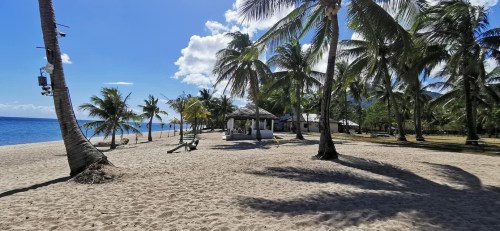
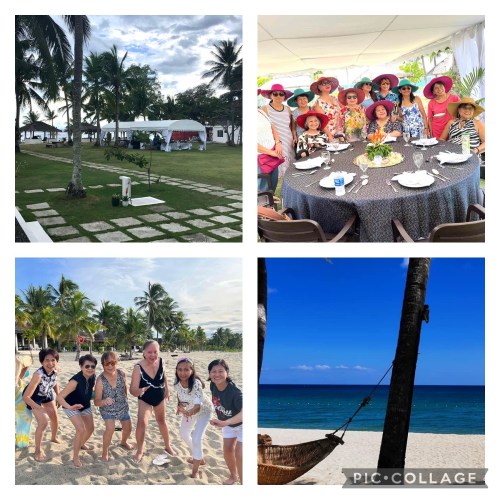
Once you cross 50 years since graduation, you treasure every moment, every minute, every get-together not knowing when the next one would be. Nor who’d be around at the next reunion. This sentiment prompted many based abroad to come home, and for the core organisers to line up as many events. Any excuse to see each other in the limited time everyone is around. Amazingly, the adrenaline of seeing each other again must have pumped up these “energiser bunnies” as every event, every single affair proved to be well-attended, well- organised, and superbly enjoyed! Best of all, that very same energy pushed these senior ladies to brave the long drive to LAIYA, San Juan in BATANGAS and to pull an overnighter in this wonderful paradise of a beach resort.
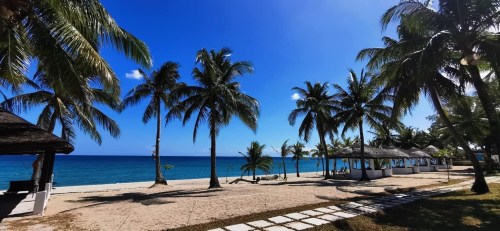
As one rolls into their 70’s, the service demands grow several notches higher. Food, customer service, cleanliness, convenience and leisure/entertainment option all become mandatory rather than simple wish lists. It would be a nightmare to fail their standards. But The Resthouse truly delivered. The 9-hectare beachfront estate provided the sea breeze, stillness, tranquility and scenic views to soothe the nerves after long drives. The memory of a beach affair among giggly, life-loving, cheerfuland cool, rocking grandmas is a gift made possible by The Resthouse management and staff. Five stars won’t suffice. And the fond memories will last for a very long time.
Thank you, The Resthouse, for granting our wish of this lifetime memory. We treasure our time spent in this slice of heaven on earth. Till our next gathering there!
The Bac Ha Market some 3 hour drive from Sapa totally overwhelmed me. But what’s most interesting isn’t so much what they sell but how the hill tribes of Northern Vietnam have created a community here. The Flower H’Mong, the Phu La, the Black Dao, Tay and La Chi Nhung minorities. How to tell one tribe from another? Don’t ask me 🧐
The forecast was one rainy WEEK, but we’ve been enjoying sunshine since we reached Sapa here in Northwestern Vietnam. On the day we visited this Sunday Market, it was totally humid. The animal trading — horse, buffalo, dogs, etc — wasn’t my cup of tea. So my travel mates and I spent more time in the fabrics/textiles area. Along the way, we passed some organic plants, herbs, nuts and fruits. There was a display of assorted natural “viagra” and the sales pitch is one for the books. We chanced upon a couple on a mission to stock up on a few of these herbs and the entire sales spiel was quite an entertaining spectacle. 😜
Local Color To The Core
The once-a-week market is truly both a community and commercial affair — a social and trading event that has lasted over a century now. It’s a privilege to witness this exotic cultural experience. The open, outdoor market stretches over an expanse that it would be easy to get disoriented. In particular, I enjoyed the local color and flavor such as finding a “barber shop al fresco”. It’s your mobile barber in action! Or a motorbiker with a basket full of chickens. I didn’t have the heart to try horse stew there though. Not for moí. Sorry.
Bac Ha Sunday MarketBarber Shop?
After lunch somewhere within the Sunday Market’s periphery, we headed for the Ban Pho village just a few minutes away. Corn wine was available but I took one sniff of the stuff and promptly avoided it. Must be over 50% alcohol, enough to knock one out after a few sips. If you ask me, you can give this visit a miss. The market is quite interesting even if some of the products can be found in the town and city malls, but the local color and experience cannot be replicated in the more cosmo and commercial spots. Nor the local herbs and ethnic vibes. The locals are also very friendly yet not pushy to make a sale which I like. The “pros” in the city shops give me a headache, actually. I’m glad we came despite enduring 6 hours on the road. Along the way, we also checked out the Vietnam/China Border. Separated only by a river, it’s amazing how these “neighbors” can literally wave to each other across the river. 👋
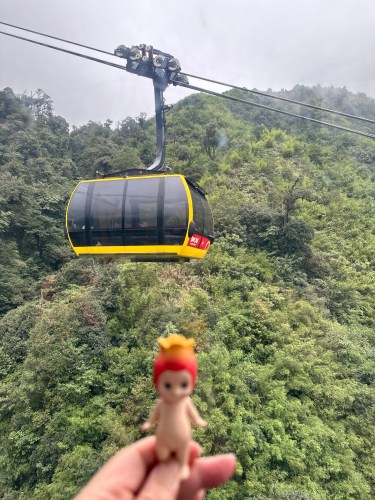
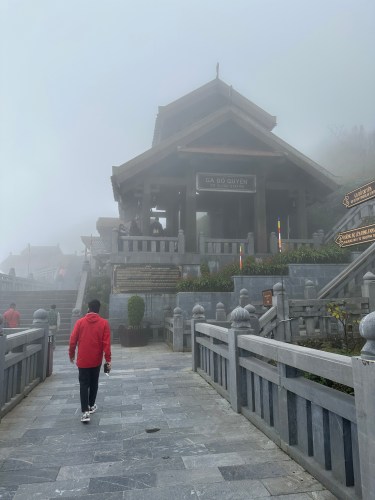
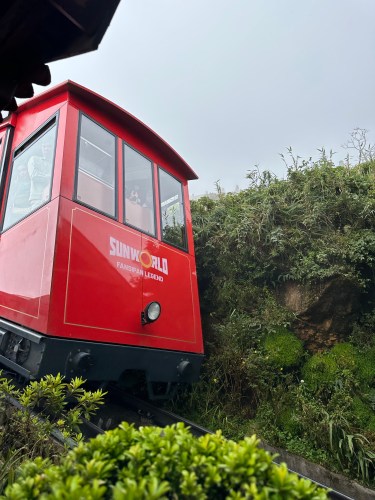
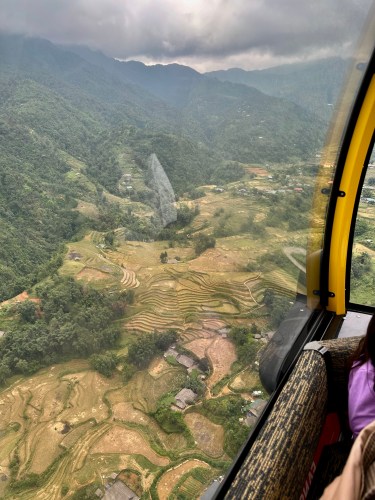
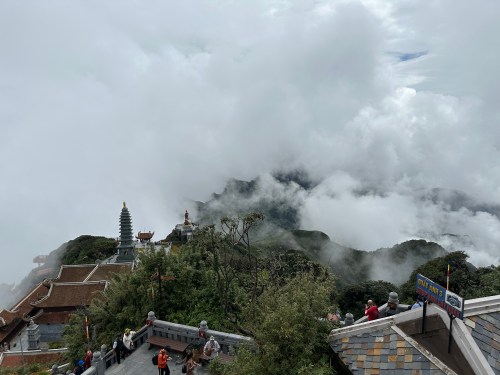
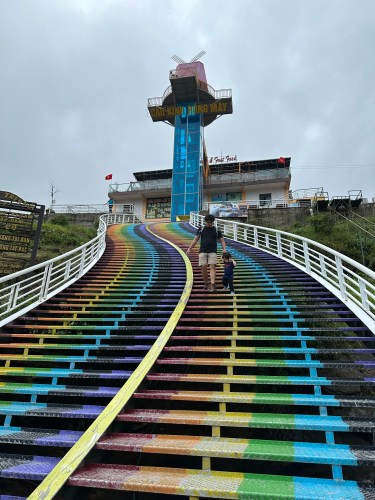
Too much excitement in one day! The Fansipan adventure involved cable car and funicular rides to reach Fansipan Mountain, the highest mountain in Vietnam. Touted as the “roof of IndoChina”, it is actually higher than Machu Picchu at over 3,000 meters. Hoang Lien Son mountain range spans the horizon as the cable car climbs up to the peak. Once there, some 600 steps await you. Along the way, there are temples, outdoor Buddhas and restos. One can even ride horses in the complex run and operated by Sun World Legend. We were a big group of adventurers who endured the long drive from Hanoi to Sapa just to get here. Seniors, young professionals and toddlers all out to enjoy each other’s company and savor the sense of family we’ve come to adopt, having traveled together way too many times and seeing the family grow.
The Fansipan Complex is huge! The cable car and funicular rides are run efficiently and the dining outlets and food courts within the entire park look promising. There are also snack booths and massage chairs to fill up one’s time and the crowds seem to be manageable. The entire time we were here, the day grew from cloudy to sunny back to sunny with some breeze. Luckily it didn’t rain. Just a slight drizzle.
Fansipan Funicular
Easily, one can spend 3 hours or more here. Longer, if you linger over lunch or snacks or if one is doing the temples. The ride to the peak via the funicular can be crowded and once at the top, it is quite magical to see, even feel, the fog envelop the area where one finds the tallest flagstaff of IndoChina. Be warned though : it can get windy and cooler once you reach the top so be sure to wrap up.
Glass-Bottomed Bridge
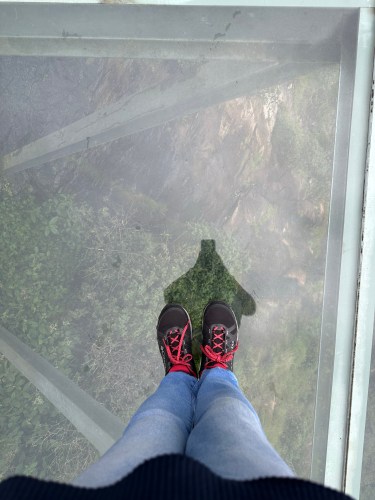
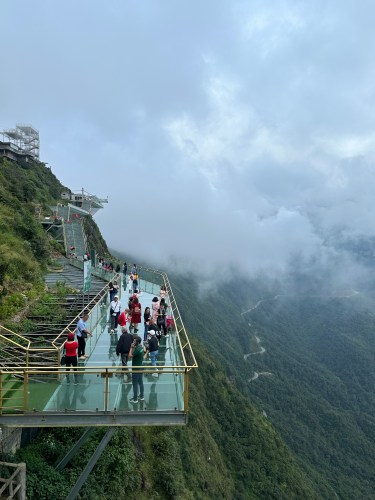
After Farsipan, we took on another challenge. The Bach Long Glass-Bottomed Bridge is touted as the longest in the whole world. Not one for the weak of heart. Nor one short of patience. We took too many transfers — 2 short van rides, an elevator that took all of 3 minutes, along with some waiting time in between transfers. Now, this phenomenal structure left us confused and inconvenienced. There are vans to take visitors from one level to the next. An elevator that takes a full 3 minutes to reach the suspension bridge. Why was this built, you’d ask? Just to land in the Guinness List? To draw in tourists, visitors seeking thrills and excitement? We found many locals when we visited. Thrill-seekers? I took a few steps and that’s enough. Why walk the entire stretch of 700 meters, pray tell?
Glass BridgeNearly 1 Kilometer Suspension Bridge
So there. Two major altitude challenges in one day. The first challenge was justified by the magnificent view of the mountain range. As for the glass-bottomed bridge, we must be insane to even consider coming here. 🤣
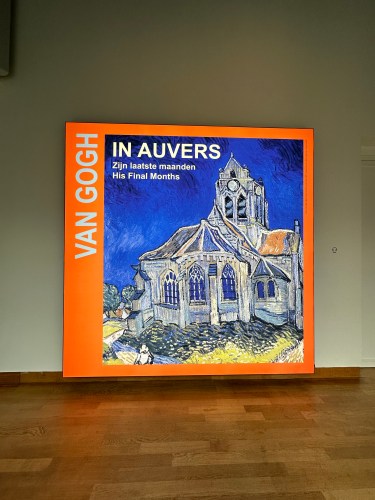
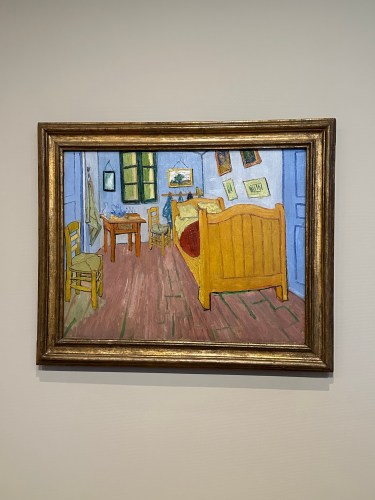
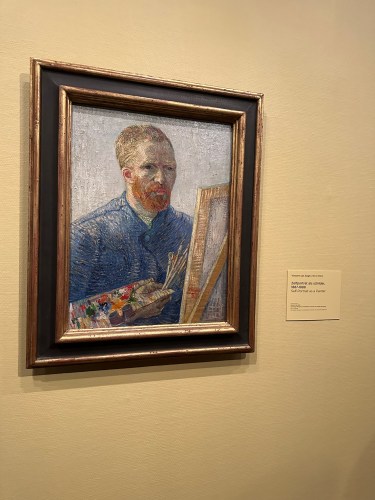
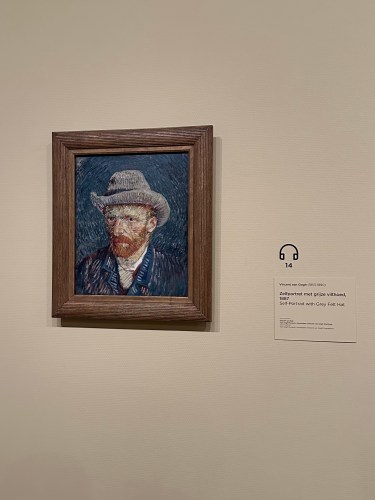
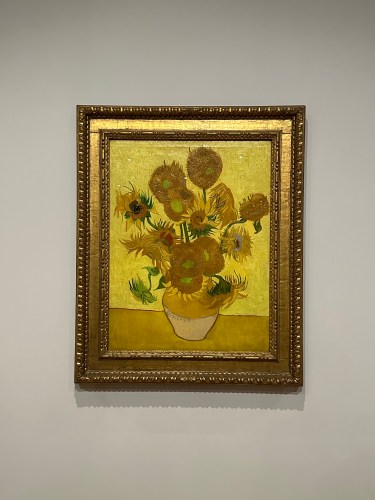
We covered a lot of museums in Amsterdam. Like 7! But only 1 museum in Brussels. Both cities proud of their Van Gogh and Magritte. One with a troubled Dutch mind who found expression in his art. Another who was quite happy with his life as artist, husband, leader and friend and expressed his joys in his art.
The Van Gogh collection is impressive. In his short life, Vincent was prolific, painting almost every single detail of his brief existence. With his numerous self-portraits, you can say he indulged in selfies. The dark rooms and galleries are intended to safeguard and protect his many artworks. The art world has Theo (Vincent’s brother) to thank for supporting Vincent throughout his turbulent moods and insecurities. This brother’s love is soooo moving, and one can understand how and why Theo passed nearly as soon as Vincent left. And just as touching was how Theo’s wife Jo made sure this Van Gogh collection found their way into our world today. Once more, the power of love made everything possible. How wonderful!
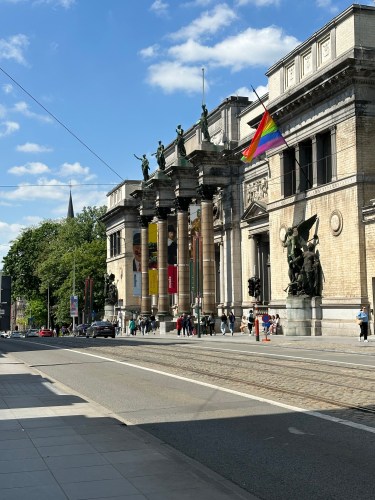
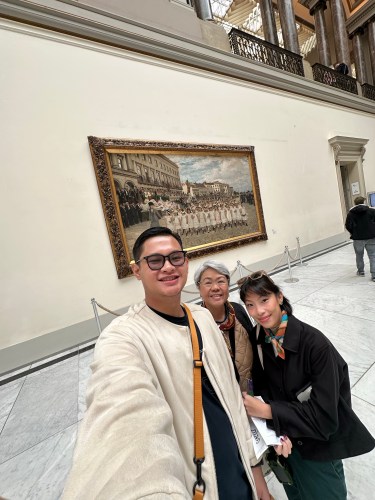
On the other hand, I find René Magritte’s collections so well-curated in the museum in Brussels. For less than half the admission price of major museums in Amsterdam, the Magritte Museum is truly value for money. The museum is massive and the collections hung so impressively. Like a lot of thought went into planning how the artworks should be displayed. It is easy to spend a whole afternoon here, and even to “space out” to enjoy this master’s works. The crowds are mostly locals, like Belgian schoolchildren and young adults likely studying art here.
I know. You love Van Gogh. Can’t miss it in Amsterdam. But do visit Magritte Museum in Brussels too. Twice as big if not more than Vincent’s museum in Dutchland, and equally impressive.
We are home, and still dreaming of the sites we visited and the food we enjoyed. Times are better and “lost in translation” is soon a thing of the past. Google translate and the young helpful Japanese make life so much easier. When we touched down and trooped out of the Namba train station, we couldn’t figure out which direction to take to reach our hotel. When the map says it’s near, hailing a cab is out of the question and that means we should drag our luggage to our hotel just a couple of blocks away. A pair of young Japanese happily walked us to our hotel — crossed 2 streets with us and even offered to take my suitcase. Using Google translate, the young fellow asked if there’s some other place we’d like to pass by before checking in at our Namba hotel. Bless their hearts!
Love how these young Japanese ham it up!
On the way to our hotel — both in Osaka and Tokyo — we took note of all those red and gold lanterns, lightings, food stalls and shops where purchases are so neatly wrapped. Those snack foods packed in cute boxes and bags, as well as young adults in twinning outfits or in school’s winter uniforms. I just love how traditional structures, decor and traditions have survived and withstood the onslaught of modernity in all aspects of Japanese life. Like onsen, tea ceremonies, food alleys, Shinto and Buddhist shrines, temples and pagodas dotting the city landscapes. And how the locals show respect with a bow after rendering service even when no one is looking!
My love affair with Japan began long before I started traveling. Back when I was still in school, I had a weekend foster brother who is Japanese. Kazuhiro is from Osaka but we’ve lost touch many years ago. How I wish we remained in contact. My father who never had a son readily welcomed this Japanese lad on the many weekends he spent with us in our ancestral home in the province. I remember his fastidious attention to cleaning the bathroom that our family made sure he bathed LAST. My father would egg us all to hit the showers before Hiro — as we fondly called him — took his bath. Invariably, Hiro left behind him sparkling clean bathroom tiles after all the scrubbing. And that includes brushing the bathroom slippers squeaky clean!
My only regret was that we were too busy feeding Hiro with local delicacies instead of leaving him to try his kitchen skills. Back then, we weren’t too keen on Japanese cuisine. Sushi and ramen were totally not favoured over mami and siopao to ignoramus like moí and eating raw would have been unwelcome even to my Pa and Ma. Too bad. At the time, what I considered “unmistakably Japanese” then was limited to thoroughly clean, a manicured and pebbled garden, a bow to show appreciation, welcome, and bye, perfectly-cooked riceand good tea!
Been here countless times, each time with someone visiting Japan for the firsttime. That means checking out all spots in a tourist’s itinerary and getting “trapped” in camera-touting crowds. I wrongfully assumed that the crowds would have thinned because it’s winter but obviously that idea is way off. Shinjuku, Shibuya, Asakusa, Ginza, Harajuku, to name a few. There wasn’t even enough time in the 5 days we were in the capital to check out Odaiba or Roppongi!
Memory Lane or Piss Alley?Mt. Fuji and the Metropolis
Our hotel was in Shinjuku area right across the Observatory at the top of Tokyo Metropolitan Government Building. Quite a surprise to view Mt. Fuji very clearly from many of its glass windows, sans any clouds. As they say, the great dame makes a solid appearance come winter time. A short walk from here is the Shinjuku JR Station which is right next to an alley fondly referred to as Memory Lane as it’s been there since the 1940s after the war. It is now called Omoide Yokocho, home to some 60 bars and food stalls. Not exactly the comfiest place to have a proper meal but if you’re into a few drinks and bar food like “anything grilled” and some seafood, it’s the place. Claim your stools and enjoy. We had a marvellous time drinking and dining with 3 young Aussies and a couple of locals who love raising their glasses, shouting Kampai! Even the bar hostess grilling and serving our drinks looked like having a good time with us.
Sensoji Temple
Now, if you want to do some temple and shrine-spotting, don’t miss Sensoji Temple in Asakusa. The way to the temple is far from spiritual though as crowds mill around the many souvenir and snack booths. But if it’s serious shopping you plan to do, there’s Harajuku, Ginza and Shibuya-jungamae. Well frankly, there’s more but for this trip we only managed these spots. The alley in Takeshita-Dori right across the JR Harajuku Station caters to the younger set whilethe other two have shops with more variety. Some signature shops can be found there as well, and we were lucky to find Louis Vuitton’s pop up store in collab with Japanese renowned contemporary artist Yayoi Kusama in Jungamae. The installations were fantastic and somehow, the experience made up for my missing out on a visit to the artist’s museum in Tokyo.
Tokyo is for the young. I still can’t get used to the rushing subway crowd and the so many confusing exits at every train station. My heart pumps nearly out of my chest each time, right through the ride standing toe to toe during rush hours and heaving a sigh of relief only upon exiting. Maybe that explains why and how we ended up taking the Shinkansen with our green pass to savor country air in the less touristy spots.
It’s a long journey to meet them snow monkeys in Jigokudani Park. The Shinkansen ride took 1.5 hours from Tokyo to Nagano where a Snow Monkey Pass can be bought to cover the nearly one-hour bus trip and entrance fee to the park. That’s not bad but you need to walk from the bus stop to the park. Should have ordinarily taken about 30 minutes of walking 2kilometers but the narrow paths are slippery with last night’s snow. Icy by the time we got there and our rubber shoes are no longer good to go. We rented snow boots and finally started walking — for a good hour! No way you can go faster as we eyed the edge of the paths that showed drops I dare not even imagine. Here and there, we dropped to our knees as we slipped and our weights carried us down the paths. At one point, our hands “burned” as we slid hanging by the ropes. It was tempting to give up but having wasted 2.5 hours on a train and bus, we decided to wing it.
Lonely walk towards the park, Snow all around!
The hot springs serve as haven for these macaques during winter. The heat keeps them warm as they frolic between the mountain slopes and the pond. Never aggressive, but it’s wise to keep a distance. On a few occasions, a couple of macaques squirrelled past me. Every now and then, there’d be “quarrels” among them — I guess claiming their onsen spots — but nothing so dramatic, nor threatening. After a while, you get used to the snarling sounds. It’s just magical just watching them have a good time.
Almost there. Finally there.
The snow monkeys are having a good life here. An onsen life in the wilds. While we stood watching, Mama Monkey and her babies are soaking warm in the pond. The park sits close to many nearby onsens catering to humans. Same hot springs, I bet, but nothing beats how these snow monkeys are enjoying their own brand of onsen-dipping. The peace and quiet is only broken by camera shutters busily snapping shots, and humans doing what they do worst — being noisy. If these monkeys aren’t quarrelling, they just sit quietly with eyes closed, seemingly meditating. You can say they behave better in onsens than many humans. 🤣
These snow monkeys are having a good life. Mommy and Baby enjoying the onsen as Papa dozes.
I’m glad we came. It’s best visited in winter when the macaques are drawn to the hot springs. But I should have remembered to wear snow boots to keep me from slipping, and a beanie to keep my head and ears warm. Well, hard lessons learned. For those of you making plans to visit this winter, pay heed. So there.
Our first home base was in Osaka. Right in Namba’s Dotonbori area. The aroma of food wafting from the food stalls and restos kept us going especially on our first night. We have made our wagyu dinner reservations but ended up in the wrong resto branch. And that’s after some time looking all over the place, scanning all the alleys. We were tempted to just skip it and instead check out the many ramen or yakitori or crab places but how can we give up on matsusaka beef 🥩? The staff in the “wrong branch” took us to the right outlet just a few meters away. Seemed like they’re used to guests getting lost or missing the right branch. The night ended well and we were satisfied with our first dinner in Osaka. 👌
Wagyu Dinner at Matsusaka-gyu MFushimi Inari Looking Empty of Visitors
Woke up early the next morning for a train ride to Arashiyama Bamboo Forest, but it seemed most everybody had the same “brilliant idea”. Walked all around until our knees went jello, then moved to Fushimi Inari where once more, a long line of visitors have already assembled. Alas, the gods smiled on us and we found a break in the line so we promptly took snapshots of the shrine’s vermilion gates looking empty. By the time we were done, we took the Keihan Line to Kyoto’s geisha district, Gion. This time, we failed to spot any geisha, geiko nor maiko. But we enjoyed Hanamikoji alley in peace as the sun set in Kyoto.
Another Tourist Trap: Arashiyama Bamboo ParkSundown in Gion District
Osaka and Kyoto are just 15 minutes apart via Shinkansen. So convenient. And from the JR Namba Station near our Osaka crib, we took the rapid express train to Nara Deer Park the next day. Just under an hour. Easy. But not as easy is the trip to Hiroshima and Miyajima. Took the 1.5 hour Shinkansen, the half-hour local train from Hiroshima to Miyajima and finally the 8 minute ferry ride to the island. But hey, if you have the time, and the JR Pass, it’s worth visiting. The pass is good for the Shinkansen, local train and ferry. Just make sure you don’t doze off on the ferry ride or you’d end up making a round trip!
Miyajima IslandNara Deer Park
On our way to Tokyo, we broke our journey in Kyoto for a quick visit to Kiyomizu-dera and to enjoy some Uji matcha delights. Suitcases left in the station’s coin lockers, we were off to take the local train from Kyoto Station to Kiyomizu-gojo via Tofukuji. The uphill climb from Exit 4 took a half hour. The thick crowd we met served no encouragement to truly explore this beautiful temple but we’re not complaining. Time enough for a visit and catching our late afternoon Shinkansen to our next crib, Tokyo. Watch this page for more of our adventures!
This 2022 is a better year judging by how the pandemic woes have eased and how international borders have opened up. Soon after we returned from our Nile cruise early in 2020, we survived a lockdown which saw us cancelling as many as 3 international trips in 2020 and staying in for much of the time throughout 2020-21. Sad news from family and friends we haven’t, couldn’t visit reached us and all we could do was pray and try to stay healthy. My annual visits to my family in Sydney was put on hold until OZ borders opened up in February 2022. I wasted no time and secured a visa to visit Sydney last May 2022. Stayed a good 6 weeks and felt gratitude seeping in that our family is well and in good health.
La Familia. OZ Chapter. It was winter that mid year in Sydney. Lovely to bond with family again, especially since there are just 2 of us sisters in the original branch of the family.
Soon after, it was time to visit a niece now based in Guam. Renewed my US visa to visit this territory in the Northern Pacific and spent a month, thinking there isn’t much to do in this tiny island. I was prepared to get bored and promised not to whinge. Well, I must have done whatever there is to do in Guam from hotel staycations, duty-free shopping, watching a musical, binging on movies in the nearby cinema, trying Chamorro meals, driving and touring around the island, swimming and other water adventures. There were a number of family friends to meet up so there’s aplenty to do and catch up on. Besides, there was a birthday to celebrate!
A day excursion to Bikini IslandAnd a birthday to celebrate!
In between these visits, I made 2 domestic trips. One to holiday in Boracay with dear friends who are my extended family, and another to Cagayan de Oro in Southern Philippines to celebrate a friend’s retirement and birthday. My relationship with these extended families makes me feel so very thankful for their friendship and the bond that ties us forever. Their children are all my godchildren — from baptism to wedding — and our friendship counts decades with the younger members forging an equally strong bond among themselves. This relationship will last beyond our lifetimes!
And then there’s our Fukuoka trip this last month of the year. Not our first time to Kyushu Island in the southern part of Japan, but we were just too eager to travel again as a group. Who cared who was guiding us or where we were going? Destinations hardly mattered. There were just 3 major sights: a garden in autumn foliage, an active volcano and a gorge, and a canal cruise. And onsens and kaiseki in between. Enough. In the company of these travel buddies, we’re good. Fun as always. More fond memories. We are blessed.
When we reached Arden Hotel Aso in Minami-Aso, we didn’t have any high expectations. Lying in a village in Kyushu, Japan, the onsen hotel must have been neglected much throughout the pandemic judging by its peeling wall paint along the corridors. But its vast garden was well-kept and the resident rabbits look well-taken care of. The rooms are very clean though, and the food superb. The kitchen crew must have stayed along with the garden staff. This you can tell by the quality of its kaiseki dinners. As for the onsen and hot spring baths, we had the area nearly all to ourselves. A choice of indoor and outdoor onsen, as the mood dictates. Swell!
Arden Hotel AsoThe Garden is perfect for strolls and meditative breaks. Be prepared to meet the resident rabbits!
In winter, it’s agonizing to decide whether to try the outdoor onsen and hot spring baths or to simply check out the indoor onsen. Just walking from the hotel in yukatas to the spas within the complex — a very short walk, actually — can be an ordeal because of the freezing weather. But the indoor onsen is far from being a poor choice. My only complaint is that I could hardly tolerate the hot temps as I dipped in. That is why the outdoor onsen makes so much sense!
No cams allowed inside so these are photos from the hotel website.
We all enjoyed the onsen prior to dinners and breakfasts while we were here. And in the afternoons soon after our day excursions, the gardens provided some perfect breaks for meditation or just me-times. Our spacious rooms looked out to these gardens and the autumn foliage added much to the garden’s charm. In spring and summer, these gardens seem perfect for weddings. I can imagine round tables littering the beautiful rock garden, the food and cocktails served under the maple trees, a string quartet just around the garden rocks and many rabbits jumping around the lawn.
These are the covered corridors towards the outdoor onsen. Used by both humans and rabbits. Cocktails in spring/summer temps should be good here. This looks out to the garden.
And yes, I mentioned kaiseki dinners. The breakfasts were good too! If one’s skipping the day excursions, staying in for these meals could even be a treat! Our first was topped by Aso beef, a kind of wagyu that may not be of the same quality as your Kobe or Matsusaka beef, but Aso comes from Akaushi cattle raised in this area. You’ve just got to try it!
Aso Beef is this omakase’s highlight! While the Aso beef shabu shabu is good, I was drawn more to the sea bream carpaccio here. And that tempura is really gooooooood!