Category: Don’t Skip Manila!


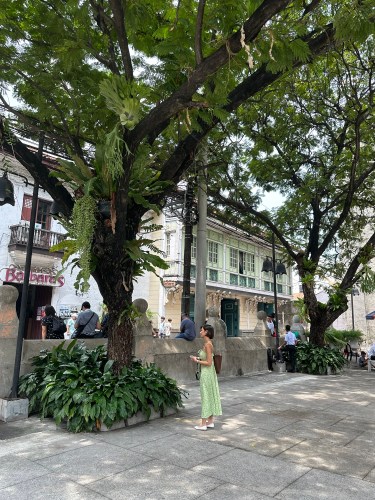
Intramuros comes to mind whenever we have foreign visitors to take around Manila. Over the years, I’ve lost count of foreign guests and “balikbayans” I’ve toured around the former walled city and nearby historical and cultural spots. But today is different. We have a free day and we’ve decided we’d check out the now pedestrian zone around Plaza San Luis Complex where you’d find San Agustin Church, Casa Manila, Casa Blanca, Barbara’s, Cafe Intramuros, Batala Bar, and not too far away, the Centro de Turismo and Museo de Intramuros. I’m only too happy to stroll along the cobblestoned General Luna Street devoid of motor vehicles and the ubiquitous pedicabs and tricycles. Now you’d find visitors on bamboo bikes, segways or horse-drawn calesas competing for space with the pedestrians. It even felt strange to find the San Agustin Church without cars crowding its beautiful frontage. Such scenes completely changed, nay transformed Intramuros. About time!

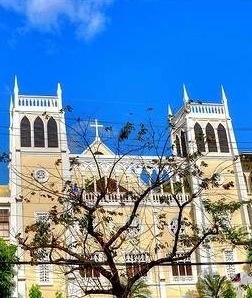
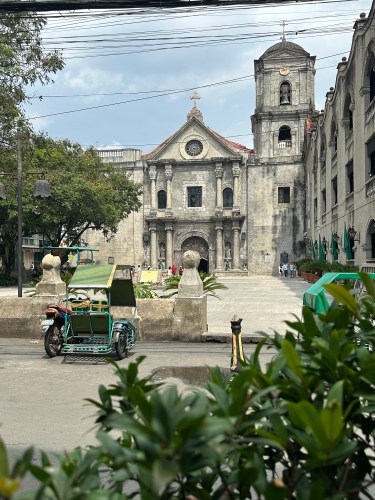
San Agustin Church
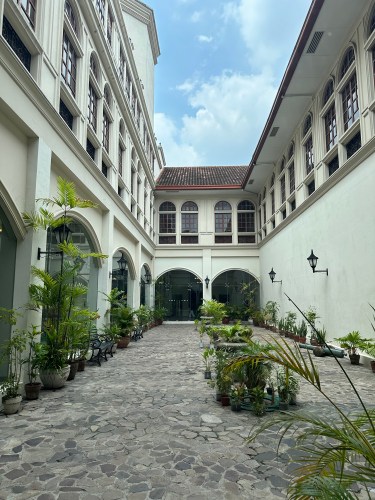
Across the Church is the Plaza San Luis Complex

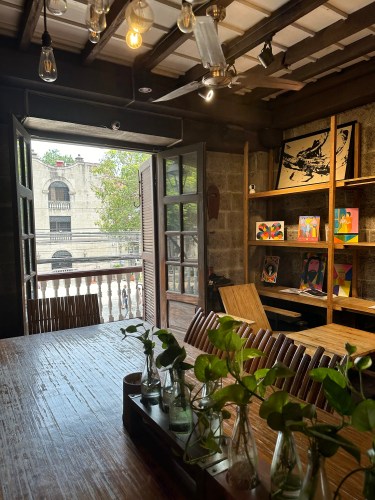
The coffee scene in Intramuros now counts Batala Bar and Cafe Intramuros alongside Barbara’s. We started our day with brunch in Batala Bar. From its windows, we have views either of the San Agustin Church or the Plaza and Casa Manila. There were not too many visitors but I need to mention that despite the summer heat, it was such a pleasant experience to go around the area. The service crew and the security staff are very friendly, accommodating and generous with their knowledge about the place. When people go out of their way to please, it is always a sign of good training and work ethics. 👍

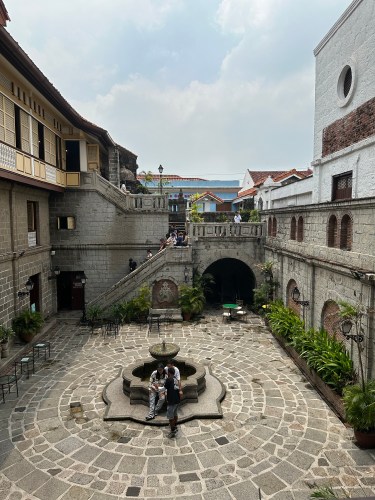
Plaza San Luis
View from Batala Bar

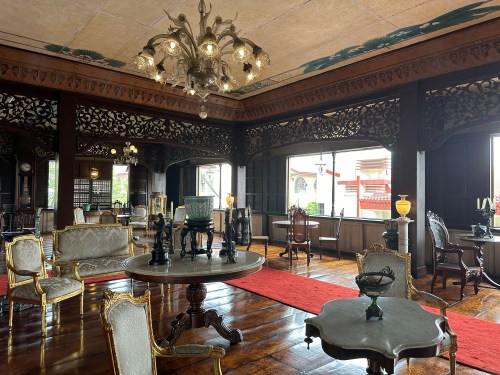
Casa Manila gives a glimpse into the lifestyle of the “illustrados” — Filipino families who enjoyed affluence during the Spanish times. The Casa or house is actually a mansion bearing the colonial style of architecture and taste — in stark contrast to the more modest “Bahay Kubo”. The antique furniture, wide windows, huge kitchen with antique cauldrons is a trip down memory lane. Like as far back as the 1850’s. Easily, one can spend an hour here. Around the Casa, one is never short on dining options. The cafes and restaurants are to be found just as soon as one exits Casa Manila via the staircase from the kitchen spilling into the plaza with the fountain at the center. There are also souvenir shops though I think they can improve in this department.

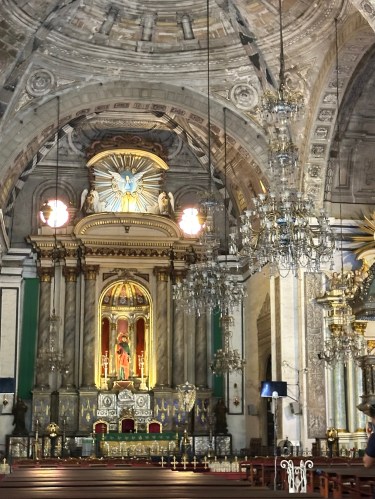
Inside San Agustin Church
Inside Casa Manila

The Centro de Turismo is under renovation so we spent an hour or so instead in the Intramuros Museum. Housed in what was then the San Ignacio Church and Convent, it is a treasure trove of historical and religious artifacts. For sure, the Intramuros Admin did a terrific job on this project. A half day itinerary for tourists may include visits to San Agustin Church and its Convent cum Museum, Casa Manila, followed by lunch in any of the cafes and restaurants within the Plaza San Luis. And there’s also Ristorante Delle Mitre across the street where there’s a good assortment of desserts and baked goods.

Museo de Intramuros
Inside Museo de Intramuros

Now if you still have energy and time left, you can always proceed to Manila Cathedral and Fort Santiago. We did, but not so much to tour around but to check out Papa Kape inside Fort Santiago. We heard so much about their Black Gulaman Americano Coffee and the Tahoat Coffee — a concoction that blends “taho” and oat milk cafe. Both iced, we enjoyed our bev as well as the resident cats within the cafe. Not a bad day to spend like “local tourists” in our own city!

Mr. Cat sleeping on the best seat of the house. Tahoat and Black Gulaman Coffee best served “iced”.
Papa Kape

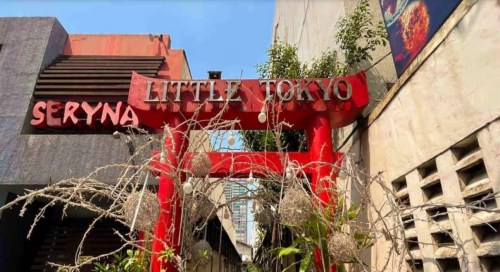
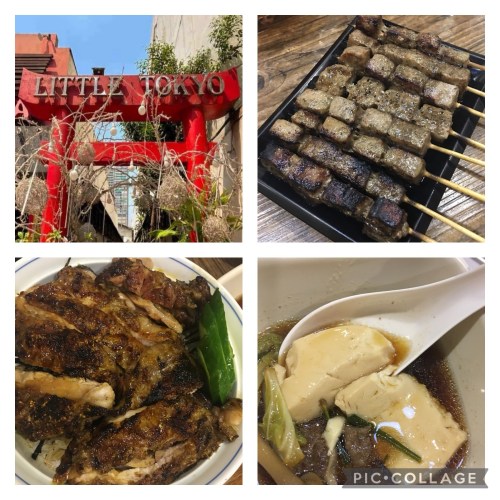
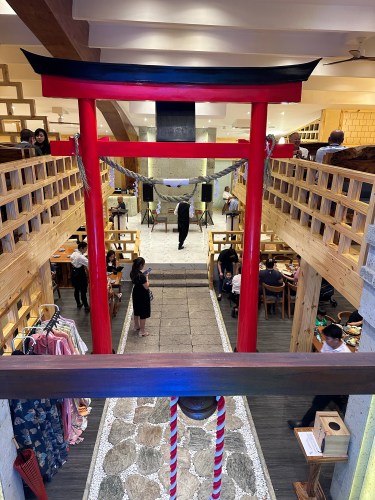
This is my neighbourhood. It’s a bit off the CBD, perhaps a couple of blocks. But here lies a slice of Japan with a cluster of izakayas serving authentic Japanese food with price tags ranging from quite cheap to pricey. Makati Cinema Square is now called Makati Central Square, MCS for short. Within this old mall are many tiny Japanese restos, the most popular of which is Manmaru. That is, judging by the queues nearly every mealtime outside this Japanese eatery. A few more restos within the same mall is Unakichi (entrance near Mcdo and KFC area) which specializes in unagi and Sakura Yakiniku (near Unakichi) and Yakiniku Kenshin (beside Manmaru). There is also our fav Wabi Sabi (2nd floor above Kenshin) for vegetarian ramen, dumplings and homemade ice cream. From MCS, we step out and cross the street towards LITTLE TOKYO which is another cluster of izakayas with a truly Japanese vibe. The Torii gate, narrow alley lined with red lanterns look more Japanese in the evenings when the lanterns are lighted and the courtyard seems more festive with banners.

It’s easy to miss it but this Torii gate is just across Manmaru in Makati Central Square
Behind the Torii gate is this narrow alley
towards the izakayas.

Within Little Tokyo, the most popular and my personal favorite is Kikufuji whose entrance fronts the main road (Chino Roces Avenue), and for ramen, there is Shinjuku. Both are iconic izakayas in the Little Tokyo area fronting the main road and must have stood there for at least 2 decades along with Hana which is situated in the inner “courtyard”. Parking is always a challenge so I’d advise parking in the MCS basement and just walking across to Little Tokyo.

Izakaya Kikufuji may look rundown but it consistently ranks among the best izakayas in Makati.
Hana is in the interior part of Little Tokyo and is one of the 2 oldest izakayas there.

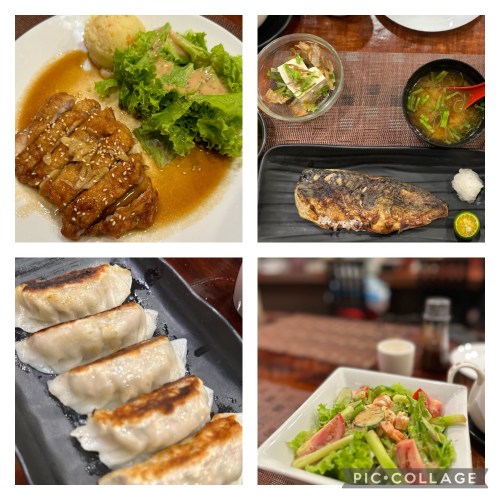
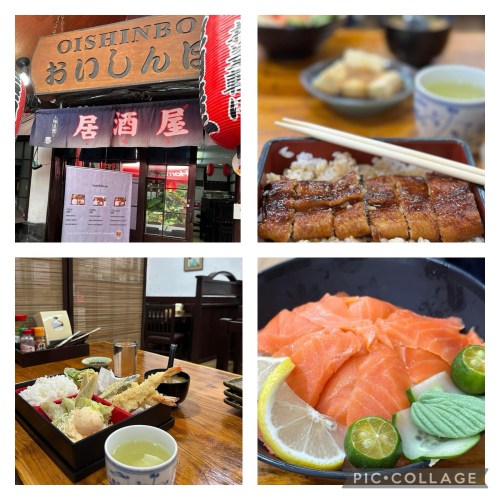
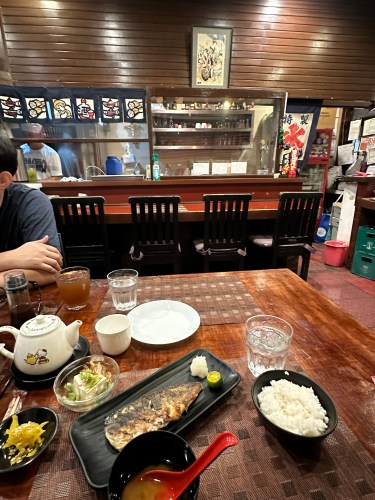
Inside Little Tokyo, you may choose to go for simple snacks like takoyaki, kakigori (flavored ice shavings), okonomiyaki (pan cake) or have serious yakiniku or bento boxes. Plenty of choices here. Menus are on display by the izakaya’s door so there shouldn’t be any surprises especially if one is on a budget. You may also opt for al fresco lunch or dinner or step into the tiny air conditioned spaces. I have tried Kikufuji, Shinjuku, Yakiniku, Hana and Oishinbo in the Little Tokyo cluster. Pricing observes a wide range as it largely depends on what you order. Less expensive would be the rice bowls or rice toppings, called donburi. Ask also if they have set meals which are really combo meals to include your chosen dish, miso soup, pickles, rice and sometimes a drink. There are a few more izakayas waiting for me to try. 😁

Oishinbo in INSIDE Little Tokyo
Inside Hana

Seryna is also quite popular. It is right beside the Torii gate entrance and across Manmaru in MCS. But my personal favorite remains to be Kikufuji — love those wagyu cubes and sushi. Just that it is always fully booked so I always end up settling for Shinjuku ramen or one of those bento boxes in either Hana or Oishinbo. Unless of course I’m craving for unagi which means crossing towards MCS’ Unakichi. As for Manmaru, I’d rather order online (via Grab) than braving those long lines!

Wagyu Cubes from Kikufuji
Little Tokyo at Night

The latest addition to this izakaya cluster is EDOYA. It is right beside Seryna and a Japanese grocery store and right across Manmaru housed in Makati Central Square. Some of the food we ordered tasted good but they’re still on soft opening when we visited so the service can actually be improved. It took a while for our food to be served. Also, we stayed in one of the cubicles on the 2nd floor and we found the acoustic properties of the place to be problematic. I hope they do something about this because the place looks nice and we’re willing to give the Resto a second chance. The iced coffee bevs are ok but we were frustrated that none of their ice shaving desserts were available. I promise to dine there a 2nd time and update this blog. So there. 😉

EDOYA
EDOYA

Yes, I’m talking about St. Scholastica’s College standing on a 3.5 hectare-block hemmed in by 4 streets: Leon Guinto, Pablo Ocampo (formerly Vito Cruz), Singalong and Estrada. This college in Malate was established in 1906 and predates the neighbor campus of De La Salle University. Run by Benedictine sisters, St. Scho moved from a modest residential house in Tondo to San Marcelino (where Adamson University sits now) until it finally moved to its present Malate site in 1911. Of note is the fact that this college founded by German nuns pioneered formal music education and established a Conservatory of Music only a year after it was founded. At the time we visited, we were lucky to listen in on a pair of Music students practicing a Kundiman classic, “Pobreng Alindahaw”.  Check out the YouTube link below.

Photo Credit: Old Manila Walks


https://youtu.be/1T1fYBeYjdw


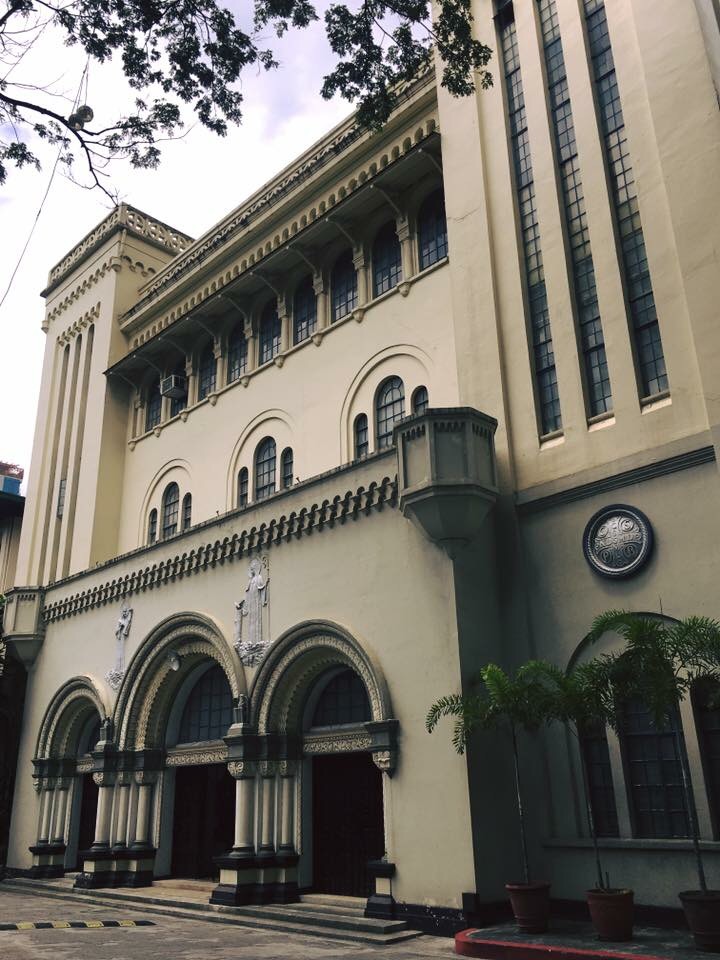
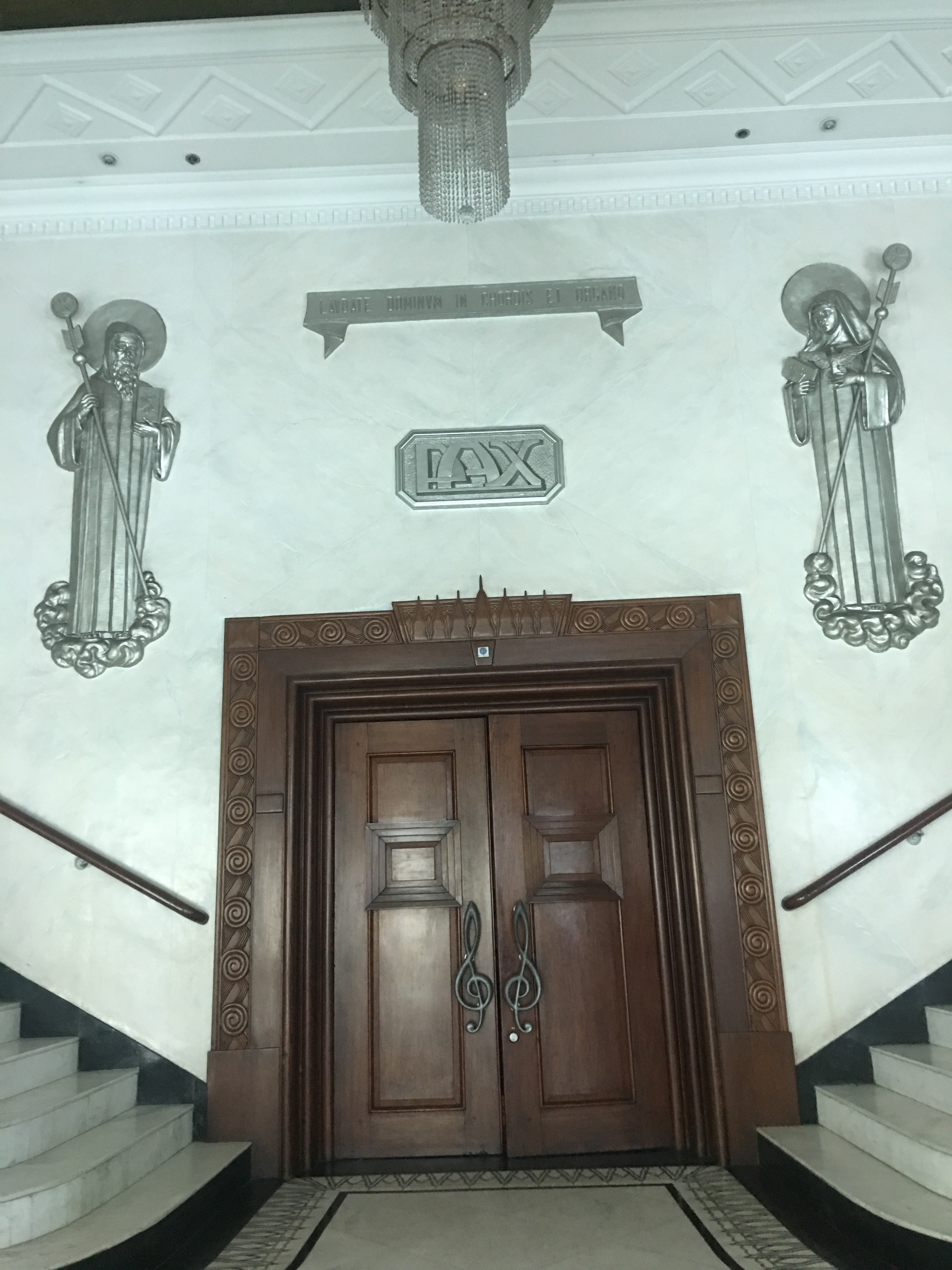
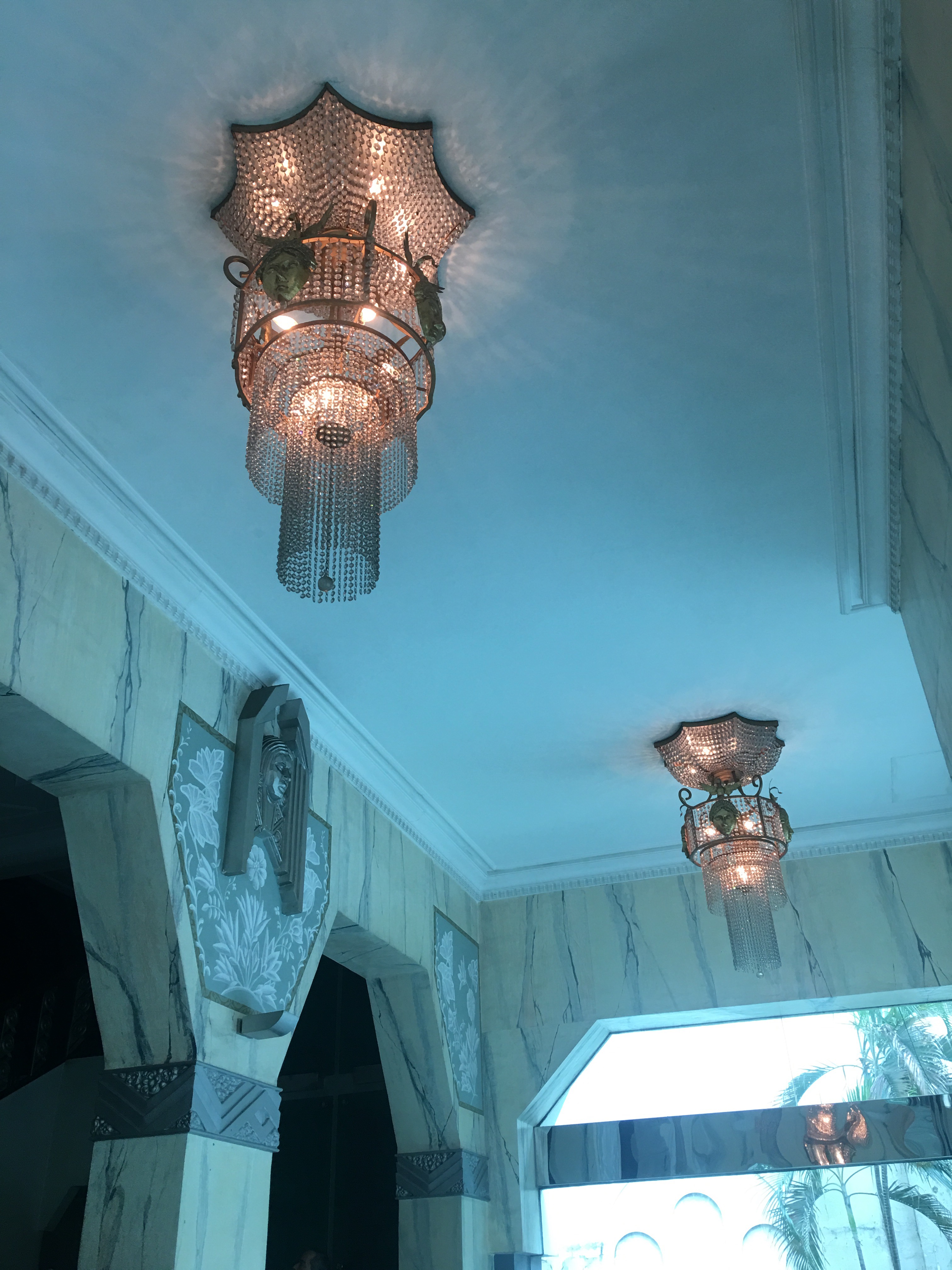
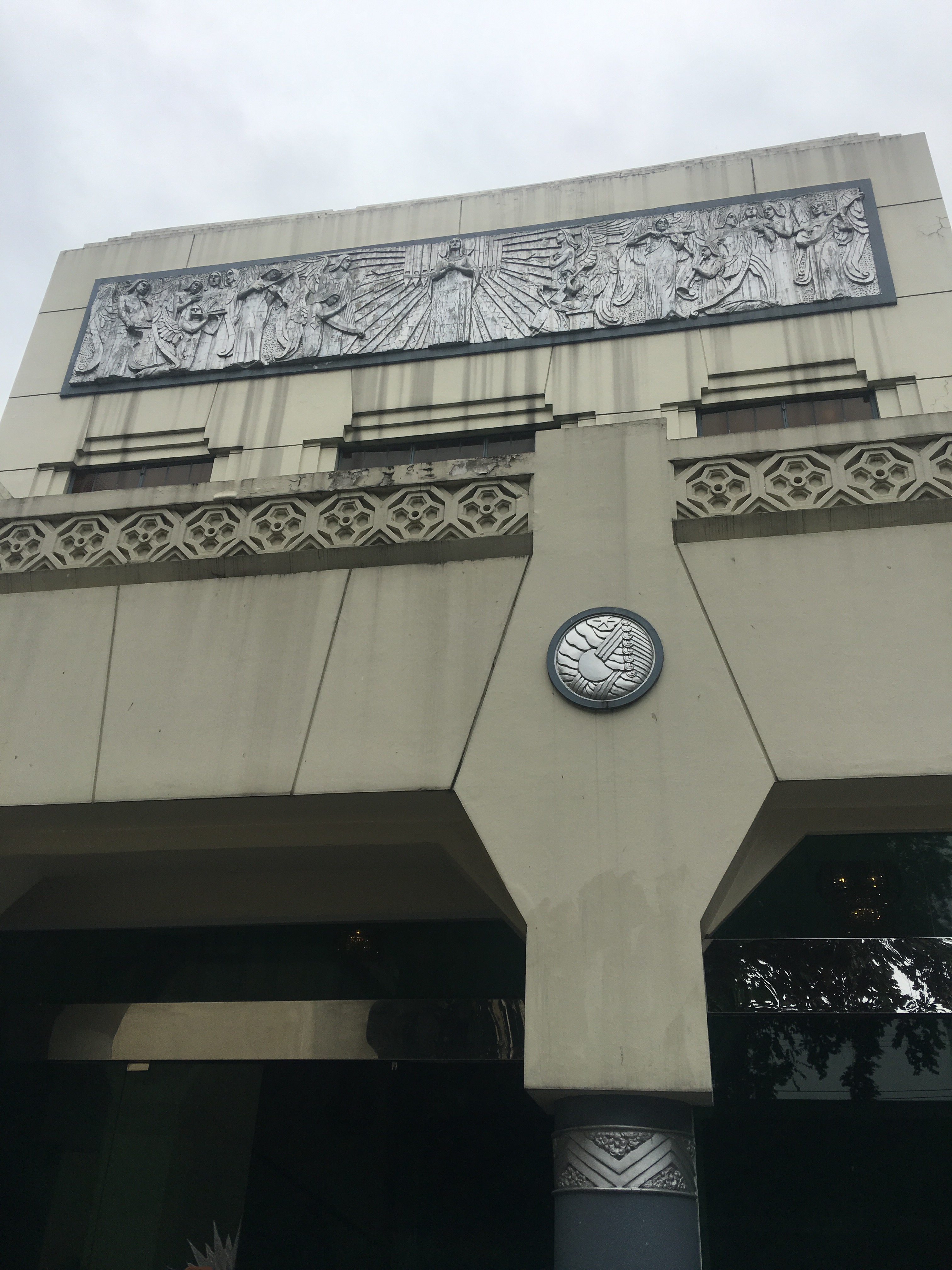
Art Deco adorns the campus chapel, the jewel-box theater, corridors, reliefs and many nooks and crannies. Despite the heat and humidity, we were enthralled by the Art Deco elements around us. Though ravaged by World War II, the post-war (from 1946) reconstruction of the school buildings was pursued and completed within a decade. Thanks to Ivan (Man Dy) who conducted the Manila Moderne Art Deco Walking Tour, we were educated and adequately guided to spot these oft-ignored details: the lines, zigzags, geometric patterns in all Deco-inspired heritage! 


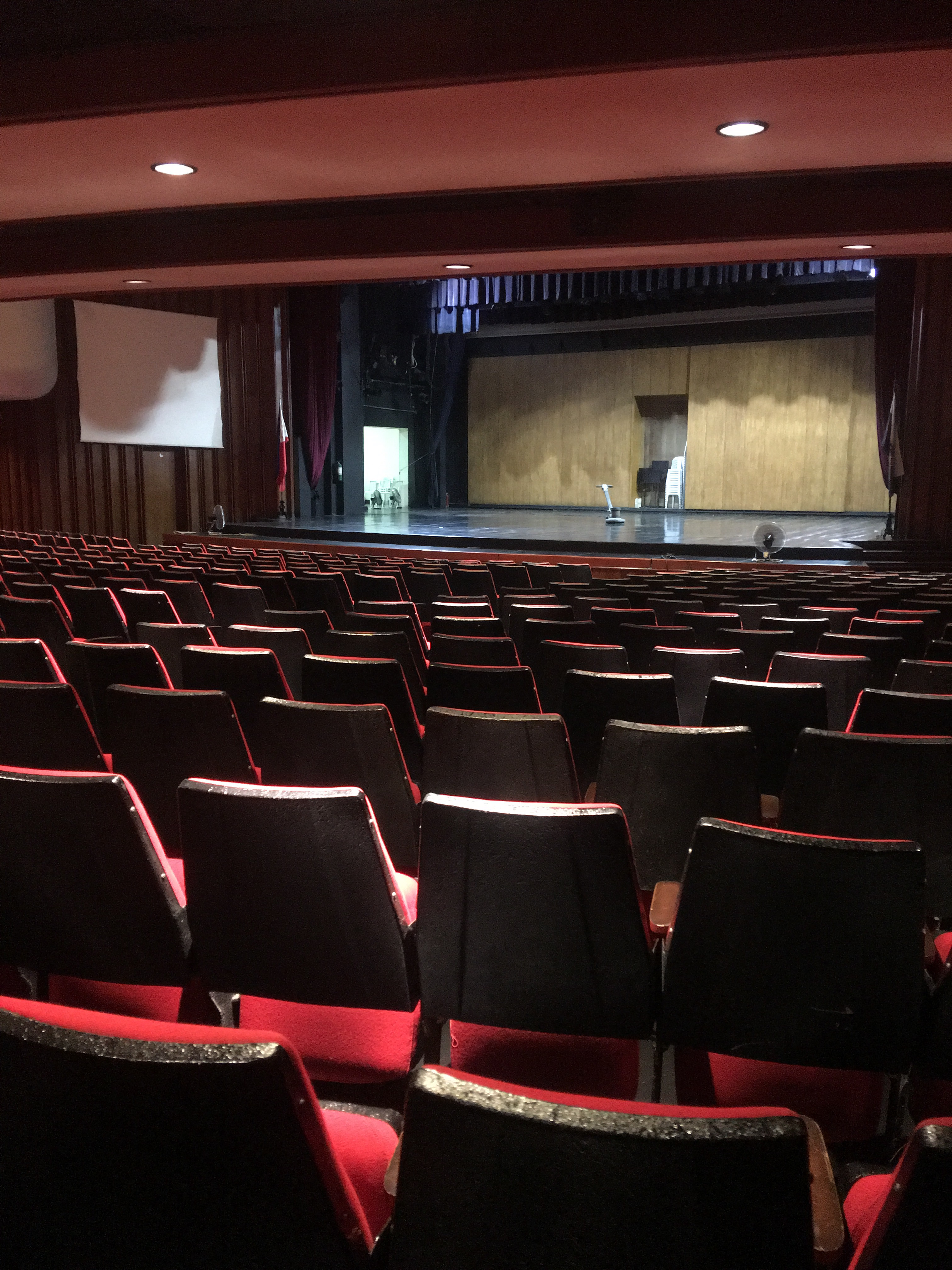
Art Deco here is not all colonial-American as I earlier understood.  The architecture and style found in this campus lent itself to Bavarian influences as the chapel photo above shows. Another style is evident in the concert hall, aptly named St. Cecilia’s Hall. St. Cecilia is the patron Saint of musicians. And guess who was the architect of this premier concert venue of its time? No less than Andres Luna de San Pedro, son of Juan Luna who built the concert hall in the Egyptian Art Deco style. 


No wonder then that the National Historical Commission declared St. Cecilia’s Hall as  a National Cultural Landmark. Notwithstanding that bigger concert halls and performing arts venues now exist, this iconic theatre hall was clearly the forerunner of the Cultural Center of the Philippines as many notable musical artists had their recitals and concerts here. 


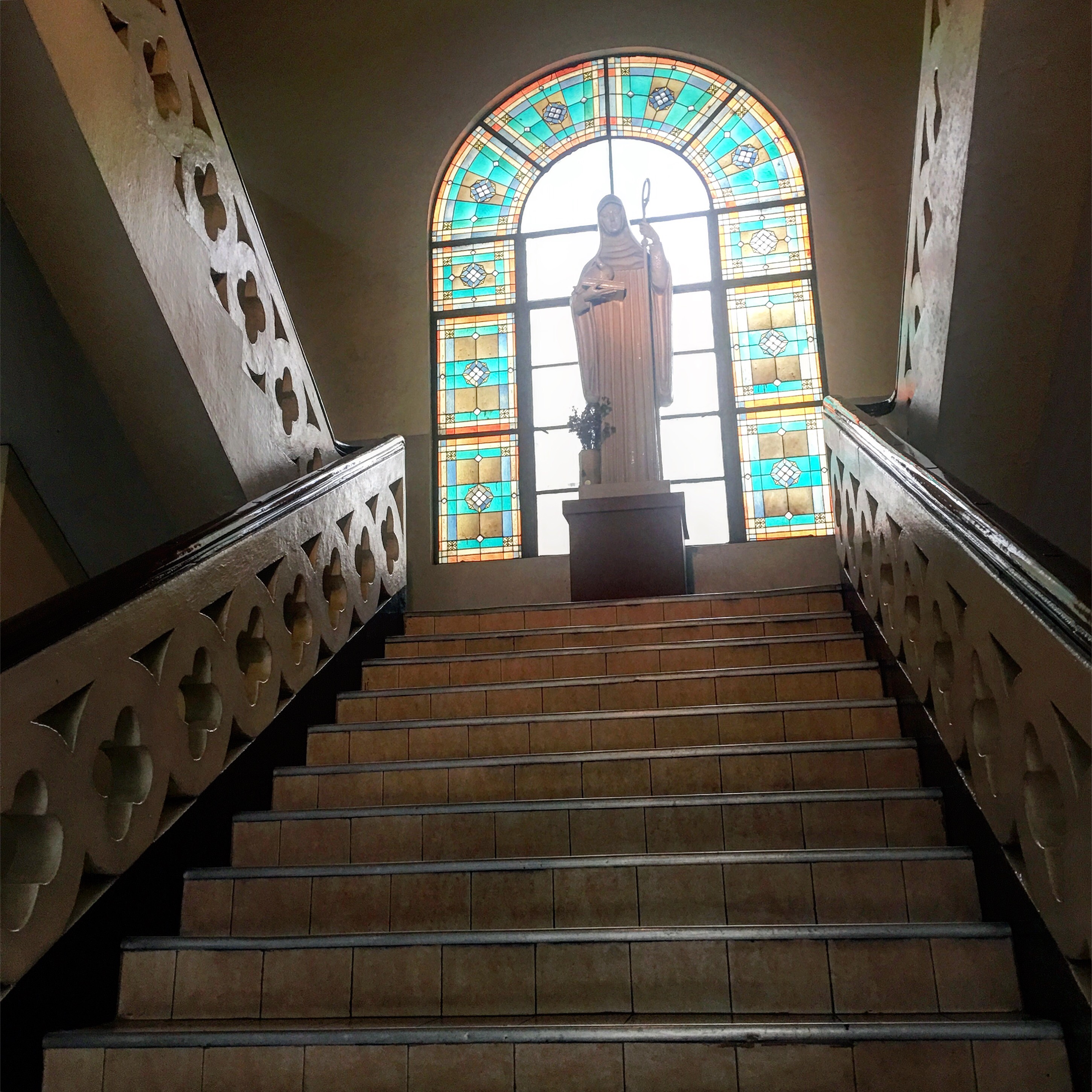
The Deco style manifests in the college’s courtyard, grand staircases, wrought-iron grills, ceiling art, sleek lines, arches, and geometric shapes adorning walls and columns. Such inspiration for its many outstanding alumnae which counts one President (Cory Aquino), 2 beauty world titlists (Gloria Diaz and Aurora Pijuan), and the first woman Supreme Court Justice (Cecilia Muñoz-Palma). 


We often forget that many of our universities and colleges are hidden cultural gems, having withstood the test of time. Though many were bombed out in the last war, thankfully their reconstruction restored many of the architectural elements prevailing at the time. After this walking tour, I am now inclined to visit as many campuses within and outside Manila. Yes. Before some idiot think of demolishing old buildings which have been part of our history. 


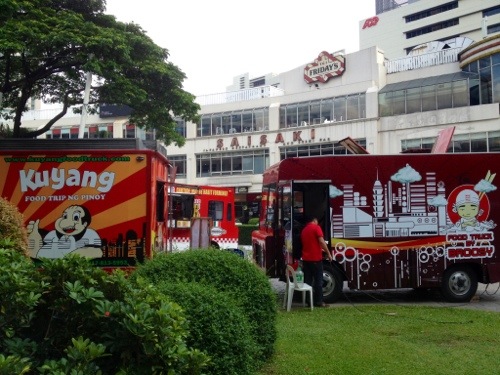
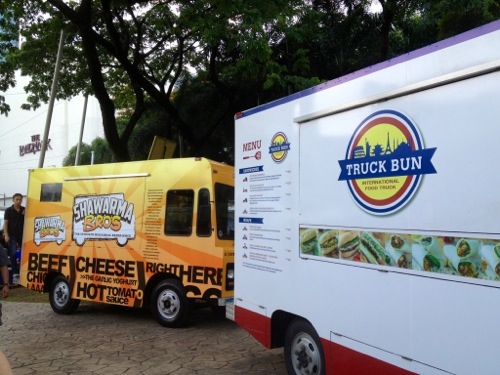
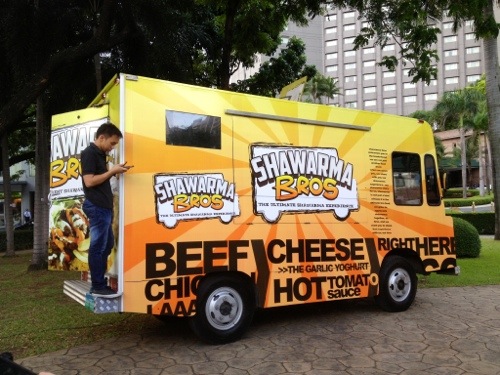
Here’s a quick one. We meant to be dropped off in Glorietta when we were pleasantly surprised with the tents being set up and food trucks parked around that tiny park fronting Glorietta and Makati Shangrila Hotel.

20130711-165816.jpg

20130711-165916.jpg

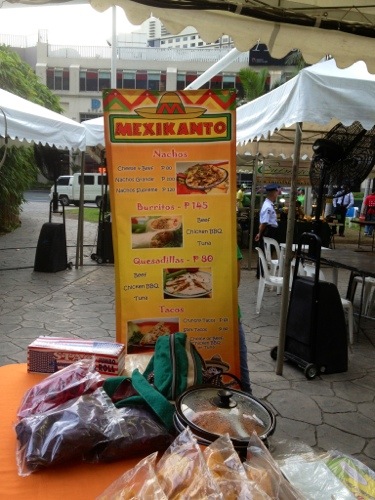
There were burgers, fish & chips, arroz caldo, bbq’s, ice cream, tacos, roast chicken, mac and cheese, kakanin like rice cakes, and so much more!

20130711-170113.jpg

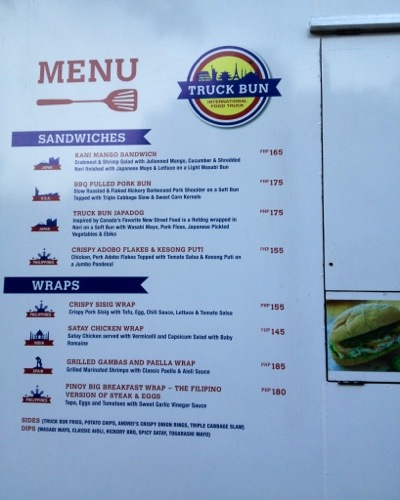
How exciting to find these food trucks here. As soon as my apos and I got off the car, we lost no time checking out the many stalls. So many choices. And lots of new food dishes to try. We’re waiting for Truck Bun to get ready — planning on trying the Japa-dog, whatever that is. Also Jasper’s Chicken where we can actually sit inside the van! (The Chicken Karaage with Sour cream and their “wet sauce” was good!) Then finish off with Merry Moo’s ice cream. Or you can cross the street towards Family Mart to buy their P25 green tea soft-serve ice cream in the comforts of an air-conditioned space with tidy restroom. Hmmmm. Nice Thursday afternoon.

20130711-170515.jpg

20130711-170547.jpg

20130711-170644.jpg


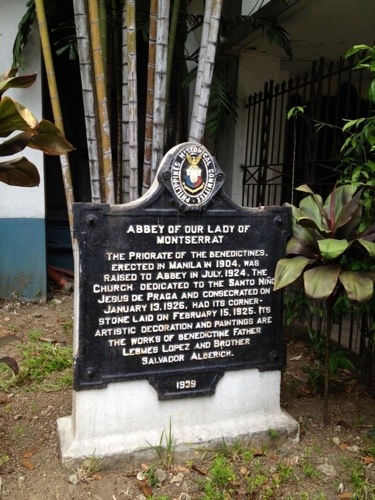
A week after I visited a monastery run by Benedictine Monks down South, I was reminded of my Visita Iglesia back in April earlier this year. Among the 7 churches and chapels I visited, the most striking in my book was the Abbey of Our Lady of Montserrat, more popularly called San Beda Chapel. It is a gem waiting to be discovered and rediscovered…… in an area more remembered as the posh San Miguel district in Manila where the moneyed and high society used to lead elegant lifestyles by the banks of the then clean, oil spill-free Pasig River. Quite ironically, it is also known of late as the Mendiola site that bore witness to way too many rallies, even bloody protests, as rallyists marched towards Malacañang.


20130701-085345.jpg

Abbey of Our Lady of Montserrat


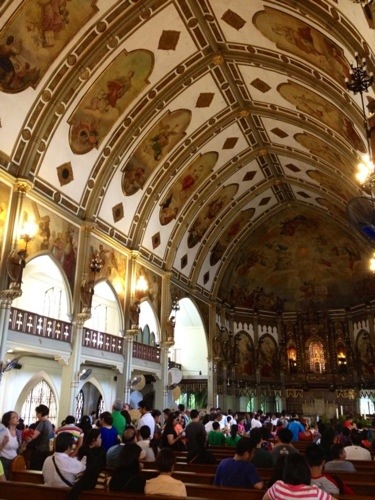
This neo-Gothic Chapel was designed by a Swedish architect by the name of George Asp. It would have looked even lovelier when it was consecrated in 1925, with those Sistine Chapel-like ceilings painted by artist-monk Fr. Lesmes Lopez, a Benedictine Monk. Awesome is an overused word, but yes, it is indeed awesome!


20130701-085505.jpg

You would have thought you’re somewhere in Europe. But naah, this is the San Beda Chapel right in Mendiola!


The stars in the galaxy must have conspired to spare this magnificent church from the destruction of the Second World War. Just a block away from Malacañan Palace by the Pasig River, both structures survived the carpet bombing during the Battle of Manila. Many of its historic counterparts in Intramuros were not as lucky. It surprises me though that not too many are even aware of the striking beauty of this college chapel. One look at the painting of the Apotheosis of the Most Holy Name of Jesus, the retablo and many bronze angels holding lamps to illumine the chapel in a “Rennaissance” kind of way, and you’re transported out of the slums, dirt, grime, chaos of Manila. I can imagine the old rich and elite hearing Sunday masses in this lovely college chapel back then. Can you?


20130701-085724.jpg

20130701-085757.jpg

Photo Sourced from the Net


How often do we entertain foreign guests and balikbayan (returning Filipinos) family and friends?


I’ve done quite a few — from long weekend trips in mountain villages up North or to some beach destinations down South to whole day together-ness via roadtrips north or south of Manila. And for the briefest encounters……. There’s THE DRILL. A glimpse into over 300 years under Spanish rule (Fort Santiago y Intramuros) + the heart and core of Chinatown (a.k.a. Binondo Walk cum Foodtrip) + end-of-day relaxation along Manila Bay interspersed with brief food tripping episodes.


20130418-121619.jpg

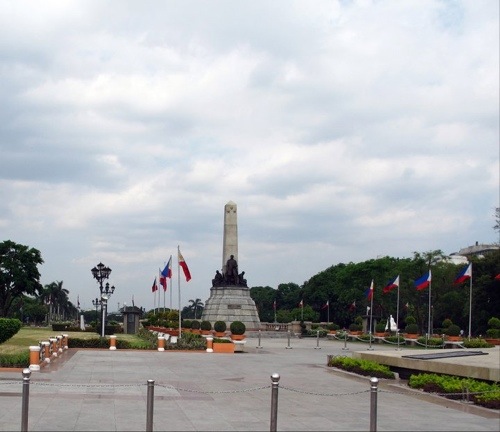
Rizal Park

20130418-121744.jpg

Fort Santiago in Intramuros, Manila


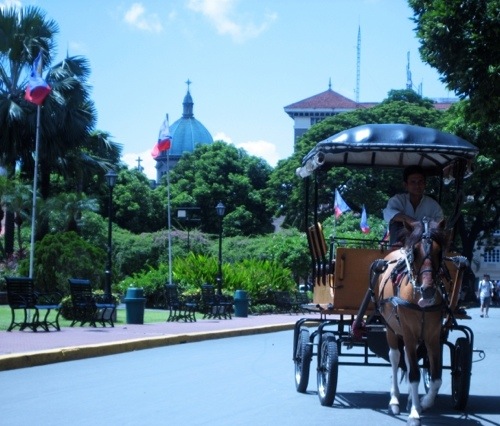
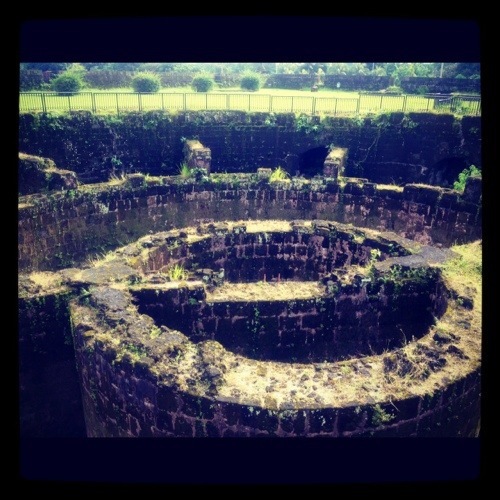
By itself, the Rizal Park-Intramuros-National Museum can take a whole day already. But who wants to do long walks at 39 Celsius in humid April? I say the Museum can wait and the Park can easily be a “drive-thru”. We were first driven to Fort Santiago (entrance: 75 pesos, 50 pesos for students) passing Rizal Park (Dr. Rizal is the national hero), and then walked from Fort Santiago towards San Agustin Church, the oldest surviving church in this predominantly Catholic country. If there’s time, you can visit the Museum housed in the Convent adjoining the Church or visit Casa Manila (showcasing Filipino-Spanish lifestyle) just off the church corner. Or you can choose to sit on a horse-drawn carriage (the cheaper calesa or the pricey caruaje) sightseeing for the next hour or two. The choices depend on how much time you have. In some instances, I totally skipped Fort Santiago and instead visited Baluarte de San Diego. More trees there. Ergo, more shade!


20130418-132828.jpg

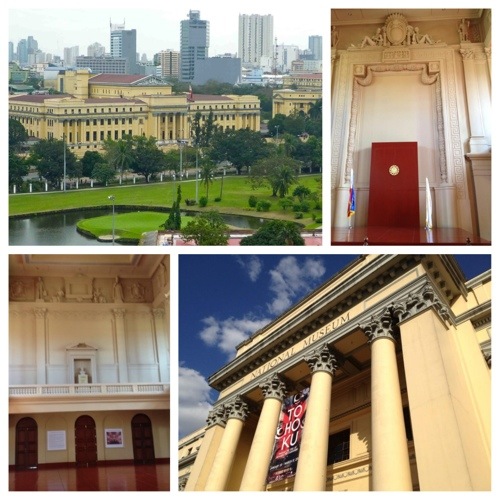
The National Art Gallery which used to be Legislative Building

20130418-133034.jpg

Baluarte de San Diego in Intramuros, Manila


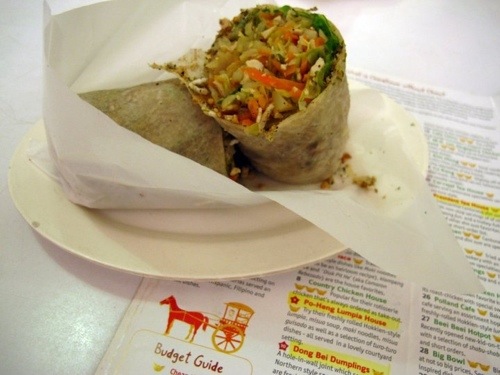
From Intramuros, you can either take a cab or a jeepney or drive past the Museum and City Hall across Jones Bridge overlooking the lovely Postal Office to reach Binondo. Hungry or not, a Binondo Walk is never complete without dropping in on those “hole in the wall” spots. My personal favorites are Po Heng Lumpia House and Dong Bei Dumpling House. Need I tell you what they serve?


20130418-134252.jpg

Chinese Lumpia (Vegetable Roll) from the best : Po Heng Lumpia House in Binondo, Manila.

20130418-134323.jpg

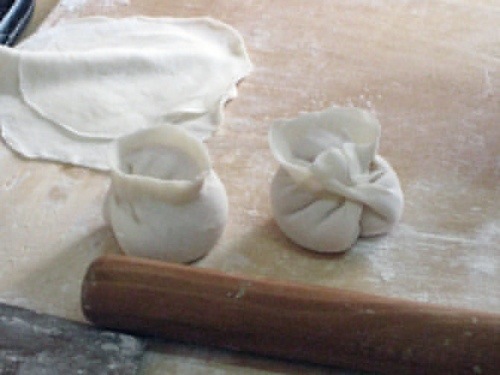
Dumplings or Sio-Mai. Freshly Made!

20130418-214156.jpg

Kutchay Siomai or Dumplings with Chives Fillings. Only from that hole-in-the-wall, Dong Bei Dumpling House in Binondo, Manila.


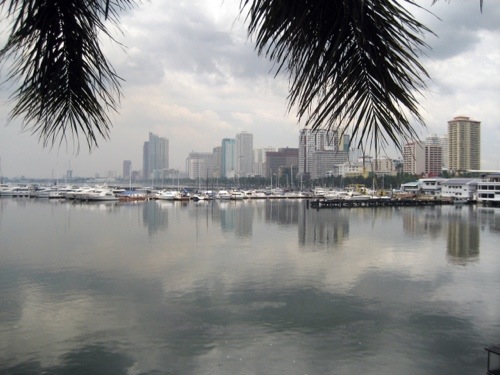
Finally done with Hispanic Philippines (Intramuros) and Chinoy Philippines (Binondo Chinatown)? Maybe it’s time for a cup of Cappuccino in Harbour Square within the reclaimed area housing the Cultural Center of the Philippines, Folk Arts Theatre and Philippine International Convention Center. It’s your modern Philippines complete with junk food outlets lining the Bay. Grab a bite here, if you like. Many choices across a wide price range. This is also a superb place to unwind or chill while waiting for the famous Manila Bay Sunset.


20130418-135913.jpg

Manila Bay, viewed from Harbour Square in the CCP Complex near Cultural Center of the Philippines.

20130418-140005.jpg

Roxas Boulevard near Manila Bay. At Twilight.


Juan Luna’s obra maestra, the SPOLIARIUM , greets you as soon as you step into the Hall of Masters in the National Art Gallery. I have visited it quite a few times, appreciating how this painting brought and still bring so much pride to us Filipinos.

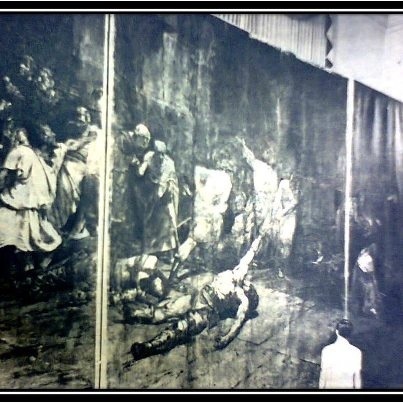
Browsing through my favorite Facebook pages, I was struck to find this photo of how the obra maestra looked in 1958. The National Museum offers this information and I do not wish to add nor subtract from it:


“Spoliarium (1958): Photo shows the Juan Luna masterpiece “Spoliarium” on display at the lobby of the Department of Foreign Affairs building on Padre Faura St. (now the Department of Justice building) where it was mounted on a wooden frame after it was shipped to the Philippines as a gift by the Franco Government in Spain that year. Unfortunately, because of its size, the painting was sliced into three pieces before it was crated and brought to the country. (The slices in the painting can be seen here) The Spoliarium was later restored by artist Antonio Dumlao before it was unveiled again in 1962. The painting remained at the DFA before it was transferred to the National Museum where it can be seen today.


The Spoliarium was entry by Luna to the Exposición Nacional de Bellas Artes in 1884 in Madrid, where it garnered the first gold medal (out of three). In 1886, it was sold to the Diputación Provincial de Barcelona for 20,000 pesetas. It measures 4.22 meters x 7.675 meters, and considered as the largest painting in the Philippines. (Thank you, Vic Torres, for the photo and the annotation.)”


20130407-090705.jpg

Sourced from the Net

(Source: National Art Gallery)


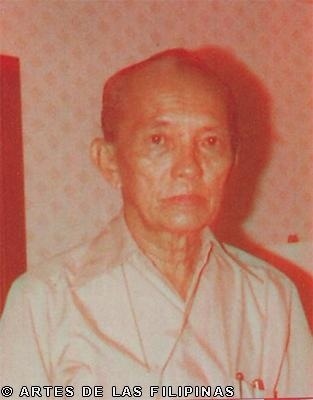
It almost breaks your heart to see even just a photo of a visibly “split up” SPOLIARIUM. Thanks to Antonio Dumlao, we are now privileged to view this obra maestra in all its glory. But pray tell, who is ANTONIO DUMLAO?


20130407-090900.jpg

Spoliarium at the Hall of Masters. National Art Gallery. Manila


More Internet surfing and more heartbreaks which can only be appeased by my sharing these with you.


First off, Antonio Dumlao was an accomplished artist. He was commissioned to give a “facelift” to the Juan Luna obra maestra in 1960 despite the fact that he was never trained in restoration work. In fact, he never had any formal education in the arts. He quit the same year he enrolled to study fine arts in the University of the Philippines. With or without formal education, Dumlao was a gifted artist. He was a muralist, a portrait canvas artist, a sculptor and a stained glass innovator. For many years, he served as Art Director of San Miguel Corporation and developed a friendship with his top art patron, Don Andres Soriano, through whom he met Don Manuel Elizalde, another art patron.


20130407-111309.jpg

Antonio Dumlao. (Photo sourced from the Net)

(Photo sourced from the Net)


DUMLAO was friends with Fernando Amorsolo, a contemporary, who has great admiration and respect for his work. Ironically, not much is known about DUMLAO. Nor about his deep friendship with his childhood friend from Intramuros days, Vicente Manansala. When Dumlao had a stroke in 1979, his daughter recounted how “Mang Enteng” flew to his father’s bedside. Genuine friends, indeed. Two years after that visit, Manansala had a heart attack and died before Dumlao, who died in 1983.


20130407-113012.jpg

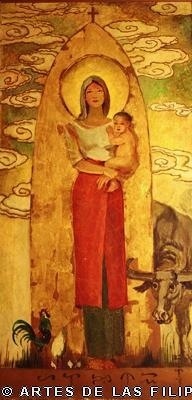
Ina ng Lahi. Photo sourced from the Net.

(Sourced from the Net: “Ina Ng Lahi”. UP Vargas Museum. Filipiniana Collection.)


20130407-113119.jpg

Not just a painter or muralist. He works on stained glass too!
Photo Sourced from the Net.

(Sourced from the Net: “Sarimanok” Stained Glass. Far eastern University)


Imagine how this gifted muralist restored Luna’s Spoliarium! Makes me wonder how much of the mural is Luna’s and how much was Dumlao’s. I know, that’s NOT fair to say. Forgive this non-artist, layman’s random thought. One thing’s for sure though. This Luna fan is now officially a Dumlao fan too. His other stained glass works are still in Malacañang and in the Mosque in Quiapo. Now, this requires a visit! Join me?



Food tripping in Manila? We’ve tried some restaurants and takeout counters and came up with this list!
GREENBELT/GLORIETTA AREA

Tutto Domani

Cafe Breton

Spectrum In Raffles-Fairmont Hotel

Lobby of Makati Shangrila Hotel

Sentro 1771 in Greenbelt 3

TONKATSU By Terazawa

Yomenya Goemon in Greenbelt 3

Toast Box

Heaven & Eggs in Glorietta 4

Going Greek in Cyma

DRAFT in Greenbelt 2

Burger Bar

Teddy’s Bigger Burgers

ROCKWELL

Grace Park

Hatch 22

Mamou

Wooden Spoon

TWG Tea Salon

Zaifu at Power Plant Mall

KAYA Korean Restaurant

Morelli’s Gelato in Power Plant Mall

Cucina Victoria in Power Plant Mall

DRAFT in Rockwell

THE FORT

Champêtre

Going Mad For Garlic….. anytime!

Las Flores

Tokyo Bubble Tea at The Fort

Bar Dolci at The Fort

Shi Lin (Chinese, what else?) At The Fort

IHOP. Or OverHyped?

Cabalen (Pinoy Buffet) in Market, Market

Banapple at Market, Market

YABU IN SM AURA

SHINE Bakery & Cafe

MAGNUM in SM AURA

ARACAMA

SARSA Kitchen

Ramen Nagi

AROUND MAKATI AREA

BLACKBIRD (formerly Nielson Tower)

ESCOLTA At The PEN

Romulo Cafe in Jupiter Street (Pinoy With A Twist)

Kikufuji  

Hole In The Wall

Kashmir

Pino or Pipino? Carnivores Vs Vegetarians?

Build and Design Your Own Burger

Build and Design Your Own Pizza Pie

Shinjuku in Little Tokyo off Pasay Road

Toby’s Estate

Cara Mia or Amicí?

XO 46 in Salcedo Village (Spanish-Filipino Cuisine)

Kanin Club for Rice-Eaters

Rai Rai Ken

Kite Kebab in Poblacion

Señor Pollo in Poblacion

Coffee and Saints (Don Bosco Church, Makati)

The Plantation in Legazpi Village

Sophie’s Mom in San Antonio Village, Makati

Mochiko in Malunggay Street, Makati

As Korean As DONU Grill in Polaris

The Curator, A Coffee Shop

Commune Cafe & Bar

Your Local & Yardstick

Rural Kitchen of Liliw

MALL OF ASIA Area

China Blue in Conrad Hotel

Cafe Adriatico or Abe’s in Mall of Asia

Lugang Cafe (Chinese)

Sebastian’s Artisanal Ice Cream

Movie Stars Cafe

Razon’s in MOA and Elsewhere

Abe’s

SUBURBIAN MANILA

BLACK PIG in Alabang

Vieux Chalet in Antipolo

Swiss Deli in BF Homes III

OLD MANILA/CHINATOWN

Binondo: Po Heng Lumpia House

Binondo: Happy & Delicious Kitchen

Binondo: Dong-Bei Dumpling House

Ambos Mundos

ELSEWHERE IN MANILA

Ginzadon in Resorts World

Corazon in Shangrila Mall

Casa Roces Near Malacañan Palace

Epicurious

Peri Peri Chicken 

Rita’s

Lombardi’s for Italian Food

Project Pie in Mandaluyong

Makan Makan in Hotel H2O

Dulcelin in UP Town Hall

Crepeman in Maginhawa Street

Papa Diddi in Maginhawa Street

Cafe Publico in Greenhills’ Promenade

Krazy Garlic in Greenhill’s Promenade

TAKEOUTS

TDF (To Die For)

Best Mango Torte STILL from CUERVA’s

PIMBRERA in San Antonio Plaza (Forbes)

Bon Banhmi

Ellie’s Cookies


CPR. Naaah, not the medical/first-aid procedure. Long before initials became the norm in addressing bosses, the entire Philippine nation had CPR. CARLOS Peña ROMULO. My generation still remember those history quizzes back in Grade School where United Nations, Gen. MacArthur’s landing at Leyte and liberation were associated with CPR. As when I remember my father’s generation refer to him as Mr. United Nations. Always, with Filipino pride.


20130223-111429.jpg

Sourced from the Net. This photo inspired the bronze statues representing the Leyte Landing of General Douglas MacArthur, then President Sergio Osmena, then Brig. Gen. Carlos P. Romulo , etc.

20130223-111503.jpg

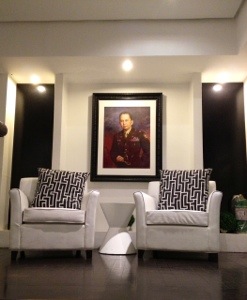
From the staircase to the private function room (good for 80 pax) on the second floor, this portrait of CPR would greet the visitor.


Mr. United Nations, impressive orator, diplomat, soldier, Filipino patriot, journalist and author. An achiever at a very young age, he was no ordinary teenager. Wet behind the ears, he was already a reporter at age 16, a newspaper editor by age 20, and a publisher by age 32. He is also the co-founder of the Boy Scouts of the Philippines. During the Japanese Occupation, he made sure the Philippines was not forgotten, chronicling the plight of Filipino fighters, his voice heard by as many Americans while he agonized just thinking of his family back in the Philippines. But more than all these, his legacy extends to this Filipino restaurant — Romulo’s Cafe.


20130223-113211.jpg

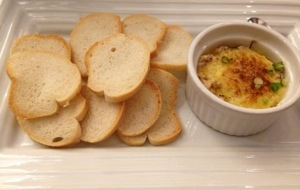
Bangus Pate. Bangus is milkfish, flaked and made into a pate that are served as appetizers with Crostinis.

20130223-113245.jpg

This Tuna Sisig is ideal for vegetarians and vegans.


You can start and end with the appetizers and NOT feel cheated. The Bangus Paté and Tuna Sisig are must-try appetizers. No pork in your Sisig? No liver pâté? I’m telling you. You won’t miss your pork and duck liver. Filipino ingenuity at work here.


20130223-113913.jpg

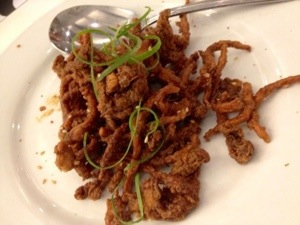
Crispy Squid. Oh this is a favorite!

20130223-113949.jpg

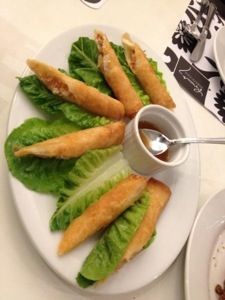
Fish Rolls


And there’s the crunchy squid and fish rolls. I can down these appetizers with a cup of steamed rice and wear a smile all night. All 4 appetizers so savory, and healthy. No guilt pangs. YET. 😉


20130223-114303.jpg

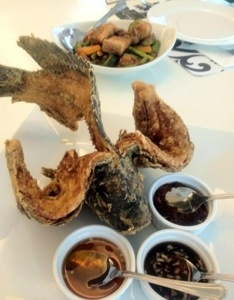
Fried Tilapia

20130223-114339.jpg

Pinakbet with Bagnet. A Northern Philippines (Ilocano) dish.


We TRIED staying healthy, but not for long. The deep-fried, splayed Tilapia served with 3 sauce dips is both a gustatory and aesthetic delight. The BAGNET in the Pinakbet stole the scene from the shrimps adorning the veggie dish. Too tempting. It broke all resolve to have a Meatless Friday — of course, others were dead set early on to break the rule 😉 — and so came the Crispy Pata and the Lengua .


20130223-114843.jpg

Can’t stay away from meat? Try the Crispy Pata.

20130223-115147.jpg

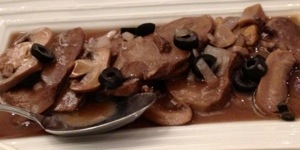
Lengua. (Ox Tongue)


Good company, good food, good service and a place so charming. The high ceiling, black-and-white motif, and tastefully-designed interiors all combine perfectly to highlight the framed photos hanging on the walls. Each one a lesson in history. CPR giving a speech — this little man standing tall amidst prominent Americans and other foreigners in the audience. CPR in a family photo, in earlier times and late in his years. CPR doting on his grandchildren. What a legacy!


20130223-115923.jpg

Suman Con Latik. A very Filipino snack food with a twist!

20130223-115948.jpg

Framed photos such as these are each a lesson in history. CPR is very much a part of the Philippines’ wartime and post war history.

20130223-120258.jpg

A doting grandpa, more than anything else.


Back at the National Museum to attend the Museum Foundation’s Lecture Series on Batanes. No less than Architect Toti Villalon gave the lecture with a few prominent residents of Batanes in the audience. But we were more than an hour early for the lecture. So we found ourselves meandering from hall to hall, trying to avoid the student crowds who filled the Hall of the Masters.


20130217-081412.jpg

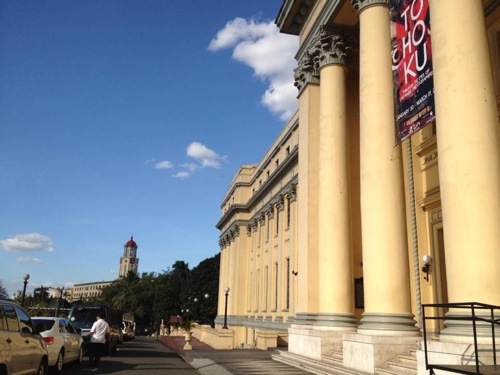
The National Art Gallery/ National Museum with the Clock Tower of the Manila City Hall in the background.


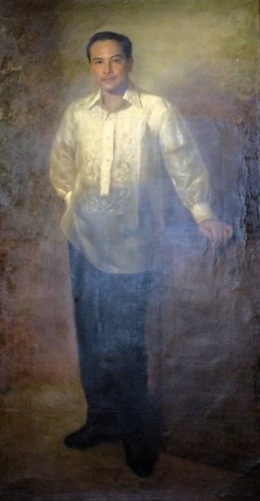
We were drawn to the Amorsolo portraits — thinking how lucky those high society people were to pose for this National Artist. But one particular portrait got our full attention. Having just visited the newly-restored Old Senate Hall within the National Art Gallery (the same building used to house the Legislature), we were pleasantly surprised to find a hunk of a statesman in the twice-elected Speaker of the House.


20130217-082146.jpg

Guess who? No less than the Speaker of the House (twice elected) Jose B. Laurel Jr.


With those looks, it’s tempting to think the Legislature consisted mainly of women. But this Presidential son (he is the eldest of 9 children of ex-President Jose P. Laurel) and Vice-Presidential brother (Doy Laurel, the man who withdrew his presidential ambitions in favor of Cory Aquino to run and win as Vice President) earned every laurel (pun intended) on his head. He made a bid for the Vice Presidency himself, but lost to Diosdado Macapagal, who went on to become President and whose daughter likewise became President. These days, they call it political dynasty. But the Laurels have all proven their worth, and for a “political clan”, remains low-profile and unassuming. Surely, their patriarch, President Jose P. Laurel, knew how to raise a BIG family.


20130217-084045.jpg

Died not too long ago. Lived a quiet life though his family remained in the political limelight.