Archive for February, 2013


About time we consider this listing. Makes life so much simpler.

Visa-Free Countries for Philippine Passport Holders:

ASIA
Brunei – Not Required for stay up to 14 days
Cambodia – Not Required for stay up to 21 days
Hong Kong – Not Required for stay up to 14 days
Indonesia – Not Required for stay up to 30 days
Israel – Not Required for stay up to 90 days
Laos – Visa can be obtained upon arrival up to 30 days
Macau – Not Required for stay up to 30 days
Malaysia – Not Required for stay up to 30 days
Maldives – Visa can be obtained upon arrival up to 30 days
Myanmar – Visa can be obtained upon arrival with pre-approval letter required
Nepal – Visa can be obtained upon arrival up to 150 days
Palestine – Not Required for undefined number of days
Singapore – Not Required for stay up to 30 days
Sri Lanka – Visa can be obtained upon arrival up to 30 days
Thailand – Not Required for stay up to 30 days
Timor Leste – Visa can be obtained upon arrival up-to 30 days
Vietnam – Not Required for stay up to 21 days

SOUTH AMERICA
Brazil – Not Required for stay up to 90 days
Bolivia – Not Required for stay up to 59 days
Colombia – Not Required for stay up to 180 days
Costa Rica – Not Required for stay up to 30 days
Ecuador – Not Required for stay up to 90 days
Grenada – Visa can be obtained upon arrival
Haiti – Not Required for stay up to 90 days
Montserrat – Not Required for stay up to 90 days
Peru – Not Required for stay up to 90 days
Saint Vincent and the Grenadines – Not Required for stay up to 30 days
Suriname – Not Required for stay up to 90 days

AFRICA
Cape Verde – Visa can be issued upon arrival
Central African Republic – Not Required for stay up to 7 days
Comoros – Visa can be obtained upon arrival
Djibouti – Visa can be obtained upon arrival up to 1 month
Eritrea – Not Required for stay up to 30 days
Ethiopia – Visa can be issued upon arrival
Madagascar – Visa can be obtained upon arrival up to 90 days
Mauritius – Not Required for stay up to 60 days
Morocco – Not Required for stay up to 90 days
Seychelles – Not Required for stay up to 30 days
Somalia – Not Required for stay up to 21 days
Togo – Visa can be obtained upon arrival up to 10 days at Lome airport
Zambia – Visa can be obtained upon arrival

PACIFIC ISLANDS
Cook Islands – Not Required for stay up to 31 days
Fiji – Not Required for stay up to 120 days
Micronesia – Not Required for stay up to 30 days
Nauru – Visa can be obtained upon arrival
Nieu – Not Required for stay up to 30 days
Palau – Visa can be obtained upon arrival up to 30 days
Pitcairn Islands – Not Required for stay up to 14 days
Samoa – Not Required for stay up to 60 days
Tuvalu – Visa can be obtained upon arrival up to 30 days
Vanuatu – Visa can be obtained upon arrival up to 30 days

EUROPE
Andorra – Not Required but only accessible via Spain or France that require visa.
Azerbaijan – Visa can be obtained upon arrival up to 30 days
Kosovo – Not Required for stay up to 90 days
Liechtenstein – Not Required for stay up to 90 days
San Marino – Not Required for stay up to 21 days

This data is updated as of February 2012. Visa requirements may change in the future so it is advisable to double check also before making your travel arrangements. You would also need to check whether a transit visa will be needed if you will travel through countries that require visas for Philippine passport holders. For those territories where you can get your visa upon arrival, make sure to check the required documents prior to arranging the trip.

HAPPY TRAVELS EVERYONE!!! 🙂
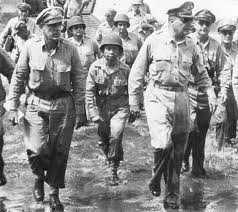

CPR. Naaah, not the medical/first-aid procedure. Long before initials became the norm in addressing bosses, the entire Philippine nation had CPR. CARLOS Peña ROMULO. My generation still remember those history quizzes back in Grade School where United Nations, Gen. MacArthur’s landing at Leyte and liberation were associated with CPR. As when I remember my father’s generation refer to him as Mr. United Nations. Always, with Filipino pride.


20130223-111429.jpg

Sourced from the Net. This photo inspired the bronze statues representing the Leyte Landing of General Douglas MacArthur, then President Sergio Osmena, then Brig. Gen. Carlos P. Romulo , etc.

20130223-111503.jpg

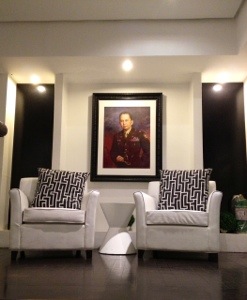
From the staircase to the private function room (good for 80 pax) on the second floor, this portrait of CPR would greet the visitor.


Mr. United Nations, impressive orator, diplomat, soldier, Filipino patriot, journalist and author. An achiever at a very young age, he was no ordinary teenager. Wet behind the ears, he was already a reporter at age 16, a newspaper editor by age 20, and a publisher by age 32. He is also the co-founder of the Boy Scouts of the Philippines. During the Japanese Occupation, he made sure the Philippines was not forgotten, chronicling the plight of Filipino fighters, his voice heard by as many Americans while he agonized just thinking of his family back in the Philippines. But more than all these, his legacy extends to this Filipino restaurant — Romulo’s Cafe.


20130223-113211.jpg

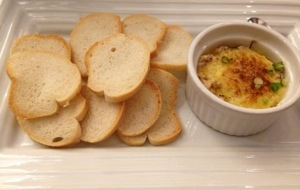
Bangus Pate. Bangus is milkfish, flaked and made into a pate that are served as appetizers with Crostinis.

20130223-113245.jpg

This Tuna Sisig is ideal for vegetarians and vegans.


You can start and end with the appetizers and NOT feel cheated. The Bangus Paté and Tuna Sisig are must-try appetizers. No pork in your Sisig? No liver pâté? I’m telling you. You won’t miss your pork and duck liver. Filipino ingenuity at work here.


20130223-113913.jpg

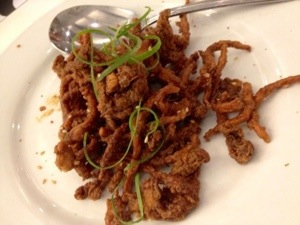
Crispy Squid. Oh this is a favorite!

20130223-113949.jpg

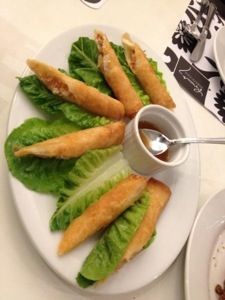
Fish Rolls


And there’s the crunchy squid and fish rolls. I can down these appetizers with a cup of steamed rice and wear a smile all night. All 4 appetizers so savory, and healthy. No guilt pangs. YET. 😉


20130223-114303.jpg

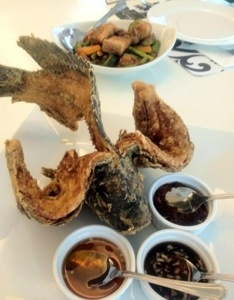
Fried Tilapia

20130223-114339.jpg

Pinakbet with Bagnet. A Northern Philippines (Ilocano) dish.


We TRIED staying healthy, but not for long. The deep-fried, splayed Tilapia served with 3 sauce dips is both a gustatory and aesthetic delight. The BAGNET in the Pinakbet stole the scene from the shrimps adorning the veggie dish. Too tempting. It broke all resolve to have a Meatless Friday — of course, others were dead set early on to break the rule 😉 — and so came the Crispy Pata and the Lengua .


20130223-114843.jpg

Can’t stay away from meat? Try the Crispy Pata.

20130223-115147.jpg

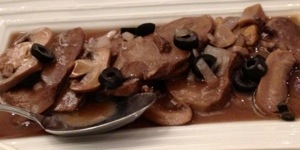
Lengua. (Ox Tongue)


Good company, good food, good service and a place so charming. The high ceiling, black-and-white motif, and tastefully-designed interiors all combine perfectly to highlight the framed photos hanging on the walls. Each one a lesson in history. CPR giving a speech — this little man standing tall amidst prominent Americans and other foreigners in the audience. CPR in a family photo, in earlier times and late in his years. CPR doting on his grandchildren. What a legacy!


20130223-115923.jpg

Suman Con Latik. A very Filipino snack food with a twist!

20130223-115948.jpg

Framed photos such as these are each a lesson in history. CPR is very much a part of the Philippines’ wartime and post war history.

20130223-120258.jpg

A doting grandpa, more than anything else.


Back at the National Museum to attend the Museum Foundation’s Lecture Series on Batanes. No less than Architect Toti Villalon gave the lecture with a few prominent residents of Batanes in the audience. But we were more than an hour early for the lecture. So we found ourselves meandering from hall to hall, trying to avoid the student crowds who filled the Hall of the Masters.


20130217-081412.jpg

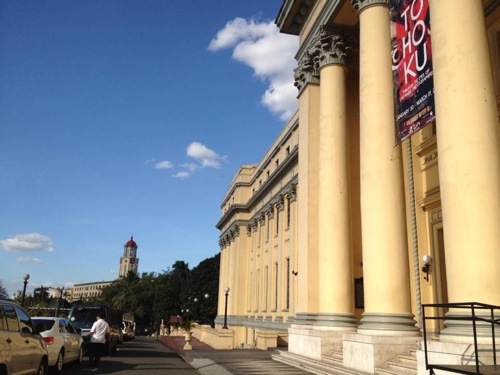
The National Art Gallery/ National Museum with the Clock Tower of the Manila City Hall in the background.


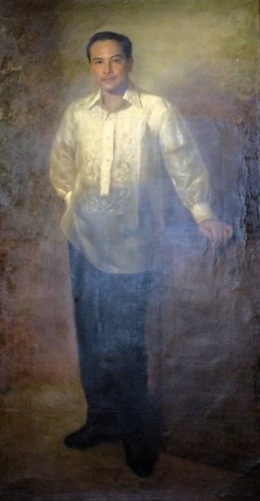
We were drawn to the Amorsolo portraits — thinking how lucky those high society people were to pose for this National Artist. But one particular portrait got our full attention. Having just visited the newly-restored Old Senate Hall within the National Art Gallery (the same building used to house the Legislature), we were pleasantly surprised to find a hunk of a statesman in the twice-elected Speaker of the House.


20130217-082146.jpg

Guess who? No less than the Speaker of the House (twice elected) Jose B. Laurel Jr.


With those looks, it’s tempting to think the Legislature consisted mainly of women. But this Presidential son (he is the eldest of 9 children of ex-President Jose P. Laurel) and Vice-Presidential brother (Doy Laurel, the man who withdrew his presidential ambitions in favor of Cory Aquino to run and win as Vice President) earned every laurel (pun intended) on his head. He made a bid for the Vice Presidency himself, but lost to Diosdado Macapagal, who went on to become President and whose daughter likewise became President. These days, they call it political dynasty. But the Laurels have all proven their worth, and for a “political clan”, remains low-profile and unassuming. Surely, their patriarch, President Jose P. Laurel, knew how to raise a BIG family.


20130217-084045.jpg

Died not too long ago. Lived a quiet life though his family remained in the political limelight.


Originally intended as a public library but subsequently built to house the Legislature, this magnificent building designed by Juan Arellano was a casualty during the Battle of Manila in 1945. It was reconstructed in 1946 based on the original plans and remained the august halls of the Senate of the Philippines until it moved out in 1996. It took nearly a decade to transform this architectural treasure into what it is now: the official repository of national arts, treasures, archaeological finds and historical relics. The National Art Gallery of our very own National Museum.


20130218-102942.jpg

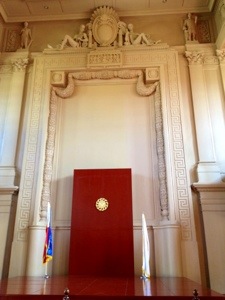
The Old Senate of the Philippines. Fully restored!

20130218-103039.jpg

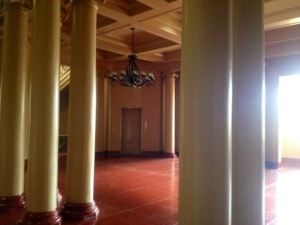
Check out this hall where many statesmen of old (a rarity now) used to walk!


Whenever I visit the Museum, I always start with the Hall of Masters. It’s like paying your respects to geniuses the likes of Juan Luna and Felix Resurreccion Hidalgo. If that P150 (US$4) admission fee entitles one to a viewing of Luna’s Spoliarium and Hidalgo’s Assassination of Governor Bustamante ALONE, it would have been worth it. But there’s more. LOTS MORE. One visit won’t be enough.


20130218-103304.jpg

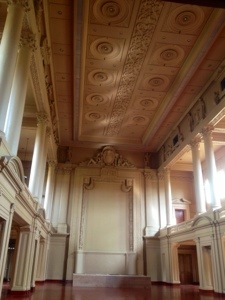
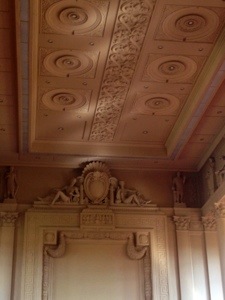
The ornate ceiling in the Old Senate Hall within the National Art Gallery.

20130218-103332.jpg

The Marker of the Old Senate Hall of the Philippines.


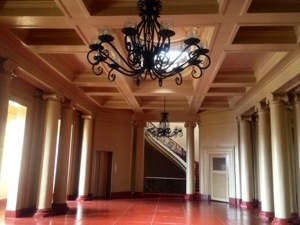
The Old Senate Hall has been completely restored. Here, where many revered statesmen walked the very floors and whose walls echoed many speeches from statesmen whose names now grace many street signs, shrines and monuments. Thank you, National Museum for allowing us to reconnect with our past. Thank you, Jeremy Barns, Museum Director, and everyone else who made this possible.


20130218-103537.jpg

How many National Anthems were played in this Hall?

20130218-103558.jpg

The Entrance to the National Art Gallery.

20130218-103623.jpg

Lovely Building. Next up: Museum of Natural History. In the same area!


WHO IS JONES? Why was this oldest bridge in the Philippines named Jones Bridge?


20130218-102048.jpg

Puente de Espana, then Jones Bridge, to honor the man behind the Jones Act granting independence to the Philippine Islands.


WILLIAM ATKINSON JONES. Member of US House of Representatives from 1891 to 1918. Right about the same period when the US bought the Philippines from Spain for $20 million. Imagine that. US$20Million for 7,107 islands.


20130218-102222.jpg

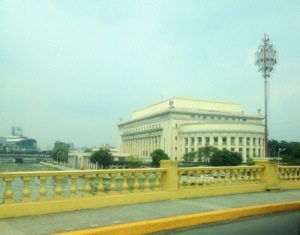
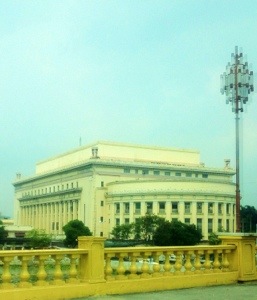
The Post Office Building and the Jones Bridge. Two landmarks rich in history.


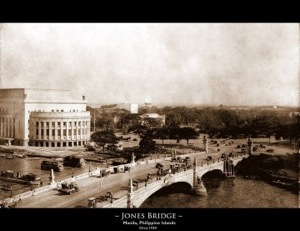
Back to the question — why was the bridge named after Rep. William Atkinson Jones? Used to be called Puente de España since it was built in 1701 spanning over Pasig River and connecting Binondo to the core of the capital city of Manila. Originally done by Juan Arellano in the Neo-Classical design but destroyed and renamed Jones Bridge by the US Colonial Government in 1916 to honor the man who sponsored the bill, later enacted into law, granting independence to the Philippines. Bombed out in World War II, this formerly ornate arch bridge was yet again rebuilt but in simpler design after 1945. The oldest bridge in the country.


20130218-102557.jpg

Not my copy. Credits to Old Manila Nostalgia.


When Jones died in 1918, the Philippines paid for the marker on his grave in gratitude for the Jones Act which granted Philippine Independence. So much history behind this bridge across Pasig River with a bonus grand view of yet another landmark, the Postal Office of Manila. Next time you head for Binondo or Chinatown and cross this bridge from Plaza Lawton, think Philippine Independence. 😉


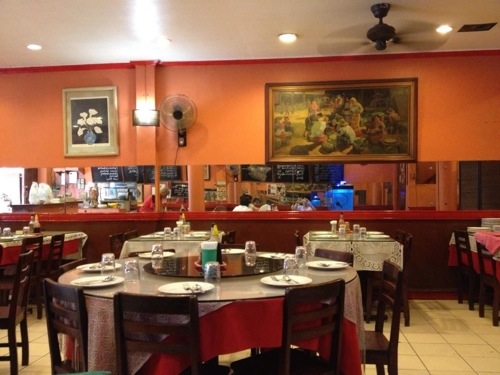
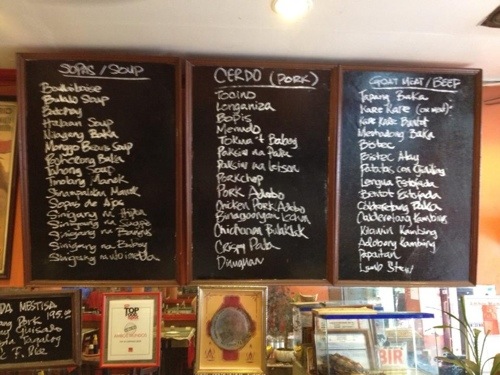
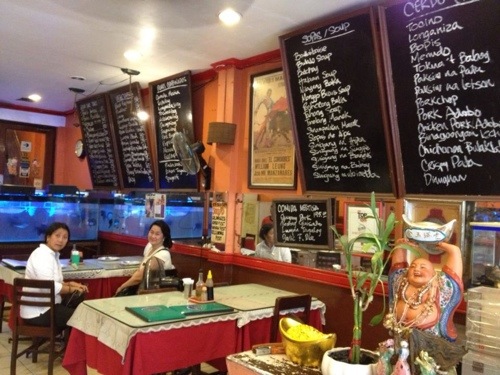
Many would remember it as that restaurant where Pinoy, Chinoy, and Tisoy cuisines merged, and which became a landmark off Echague Street. While it has since moved to 750 Florentino Torres near C.M.Recto and Soler Streets, the aura remains the same. It helps that the furniture exudes the same illustrado character, where an Amorsolo-ish painting hangs on one side of the wall  and where menu offerings are written in chalk on boards hanging on another side.


20130213-223320.jpg

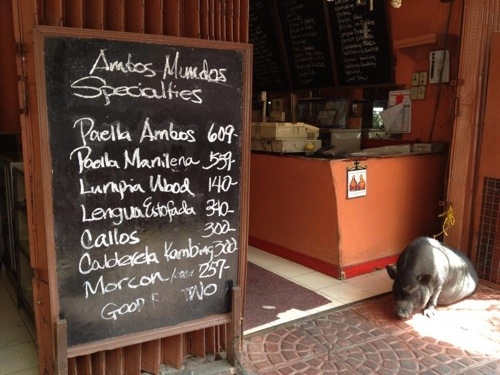
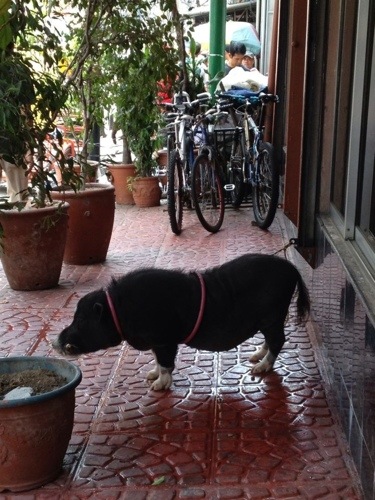
And there’s that lone boar tied to the door…………. Could that be “Liempo” or “Pork Chop”?

20130213-223403.jpg

Ambos Mundos. Claims to be the oldest resto in the Philippines. 1888


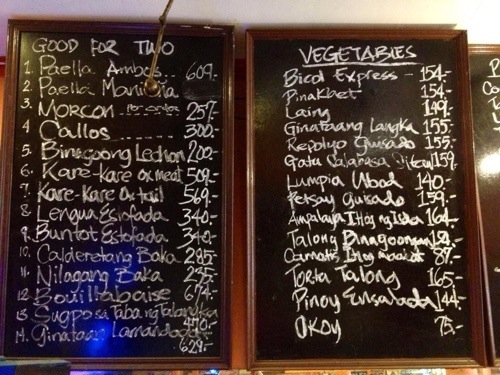
The “best of both worlds”. East and West? Ambos Mundos. I can imagine men in tailored suits (yes, they really dressed up back when Recto Avenue was still called Azcarraga) dining here. Perhaps feasting on either Paella Ambos or Morisqueta Tostada. Or would it be Lengua or Buntot Estofada? Many Filipinos think of Callos and Morcon as “fiesta fare” — special dishes served whenever there is reason or an occasion to celebrate. In the same breadth, Filipinos likewise drool over their favorite local food, and by that, I mean favorite local Filipino and Chinese food. Crispy Pata, Bulalo, Lumpia Ubod, Pancit Bijon, Asado, etcetera!


20130213-224331.jpg

That menu is a real fusion of Chinoy, Pinoy and Tisoy Cuisines.

20130213-224400.jpg

Chinoy or Pinoy or Tisoy Cuisine in Ambos Mundos. 1888


Is it really the oldest restaurant in the country?  Both Ambos Mundos and Panciteria Toho Antigua claim to be the oldest, having operated since 1888. Who’s to tell? Both were my childhood favorites, by the way. But where Toho appears like many other old Chinese restaurants, Ambos Mundos has an altogether different charm. Very old world. Complete with pot-bellied black pigs tied to its front doors! (A recent addition, I suspect) Some keep pet dogs. Or pet kittens. But pet boars? We’re told they’re there for good luck. There must be a grain of truth in that. After all, they’ve been around since 1888!


20130213-224647.jpg

My 2 amigas eagerly wait for our order of Morisqueta Tostada, Lengua Estofado and Patatas con Giniling.


See you again, “Liempo” and “Pork Chop”! We weren’t very happy with the Morisqueta Tostada, Lengua Estofado and Patatas con Giniling that we ordered — not as good as I remember 😉 — but we’re willing to try the other dishes next time we visit. 😉 OINK OINK


20130213-224743.jpg

Another set of pet boars just across the street in Wah Sun, same owners. A Gaudinez married into the Leung Family who owns this Chinese resto since 1955.

20130213-225105.jpg

They say you can order from either/both menus of Ambos Mundos and Wah Sun across the street. Same owners.


Addendum: This is even more interesting. Thanks to Teresa Gaudinez-Martinez, I now have a chance to straighten out some “kinks” and misinformation in this blog. Foremost is that THIS IS NOT THE AUTHENTIC AMBOS MUNDOS RESTAURANT. “Both Worlds” (Ambos Mundos) refer to Spanish and Filipino cuisines. NEVER INCLUDED CHINESE CUISINE. Huh? And there was NEVER A PET BOAR outside the restaurant. Huh again! Teresa, I have read all your blogs and sympathize with your legal woes. Obviously, there’s a long story fraught with family, legal, proprietary rights issues here. Thank you for taking the time to make the corrections. To our readers, here’s the link to Teresa’s Ambos Mundos blogs.


Food is an integral part of my travels and yes, you may say food defines many of my adventures. The passion to search for certain kinds of food is serious business. Going to great lengths for a food particular to the area builds the excitement as much as checking out the local attractions. So, here’s a compilation. It is a living, breathing list as I intend to add more as I get busy celebrating life. A few inches more on the waist, on the hips won’t hurt 🙂
20130208-090839.jpg

EATING AROUND THE PHILIPPINES

It all starts at home. While the Philippines has national dishes like adobo, sinigang, Kare Kare and lechon, there are regional cuisines that are must-try eats. Check these out.

Philippine Cuisine

Regional Cuisine: Northern Philippines

What and Where to Eat in Laoag and Vigan

As Spicy As It Gets in Bicol

What To Eat In Batanes

Eating Frogs and Crickets From the Philippines’ Culinary Capital

DINING101 in AFRICA

Boma Dinner and the Exotic Meats of Africa

South African Cuisine

BUEN PROVECHO EN ESPAÑA!

Eating Around Spain

Best Churros Con Chocolate

FOOD PORN IN BANGKOK

EATING AROUND BHUTAN

PHÔ & MORE IN HO CHI MINH

BEYOND NASI GORENG IN INDONESIA

FOOD COMA IN KOREA

SUBJECT TO ADDITIONS, NO DELETIONS.


Thought I’d line up my blogs on “walks and drives” around Manila for those who are interested. In many of these walks and drives, a good 4 hours may be enough. Likely less if you just want to concentrate on a certain area. You can walk around, hop on and off your car or some public transport, combine 2 trips and plan a good lunch in-between, or simply visit a Museum to linger for the next couple of hours. If you’re with children, I’d most certainly advise planning a good meal after 2 hours or so. Attention span and all, you know. A good meal never fails, and I’d usually have the first leg as the “more serious walk through history” and make sure the 2nd post-meal leg involves some window shopping (a.k.a. “Street desserts” and other sweet munchies) or less serious history stuff or simply more open spaces.


20130205-115756.jpg


HERITAGE SITES/HISTORICAL LANDMARKS

Quiapo!

Say Hello to “Mi Ultimo Adios”

San Agustin Church in Intramuros

Four Hours To Waste in Manila

Some Photographs From Manila

Universidad de Santo Tomas (UST)

Baluarte De San Diego in Intramuros

Paco Park


MUSEUMS

Dummy Goes To The National Museum

National Art Gallery: Searching For More Lunas

Up Close: Luna and Hidalgo

Hidalgo and Luna: Genius Has No Country


CEMETERY TOURS

A Preview of the Cemetery Tour: Wait Till The Shoe Lady Dies

The Old (and Dead) Rich of La Loma

A Nearly-Forgotten Panchong in North Cemetery


SUBURBIAN MANILA

Angono: Art Capital of thePhilippines

Silangan Gardens and Pinto Art Gallery

Antipolo’s Suman, Kasuy and Pan Lechon?


CHINATOWN & Other sites

A Walking Tour of Binondo

Binondo Walk With Kids

The Street Vendors Of Manila

Harbour Square in CCP Complex


Urban Escapades

Weekend At The Pen

HOTEL CELESTE: A Pleasant Staycation


PINOY DINING 101

Just How Do You Eat Alagao?

What To Feed Your Guests (Part 1)

What To Feed Your Guests (Part 2)

Vieux Chalet in Antipolo

Pinoy Ice Cream? Check This Out!


20130203-212200.jpg


I was on my 10th week in Madrid. Yes, the blues getting in the way this early in the morning. Coffee in hand, I’d find myself looking out the window. As I allowed homesickness to creep in, various morning activities are framed behind the glass windows. You could almost hear the beans grinding, smell the coffee brewing, silvers clinking to make those bocadillos (sandwiches), and feel those hurried daddy hugs as toddlers see them off to the door.


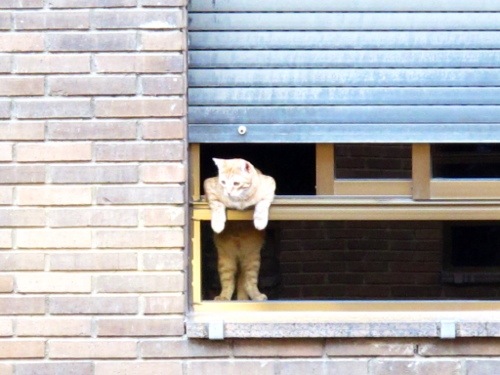
But this one’s different. In one of those window frames, I find this cat. Across the space between us, we looked at each other. He must have been busy watching others beating the “morning rush” from his window. As I was. It’s interesting how many of them do nearly the same thing at the same time every morn.


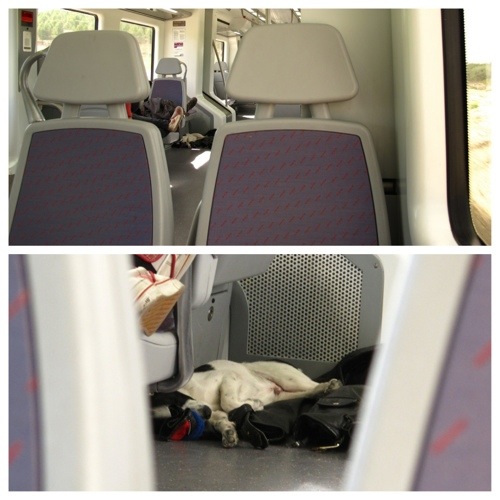
By the time I boarded the train for another one of those day trips, I was still thinking of the kitty…..when I spotted something unusual on the train floor. Lying asleep was this young man’s best friend. Both buddies in dreamland. They looked tired. They were still doing their REM when I passed them to disembark.


20130204-083757.jpg


What a sweet life? These animals live without the complications humans have. No budgets to keep. No compulsion to inventory for future needs. They hunt or get only for their daily needs. If they do store for a rainy day, it is for their own consumption. Not for business. Unlike humans who love to enrich themselves. I wonder. Do they feel envy? Is there a rich dog or a poor cat? Or would those adjectives apply only to their masters? And if there is a rich dog, does he flaunt his wealth the way some humans do?


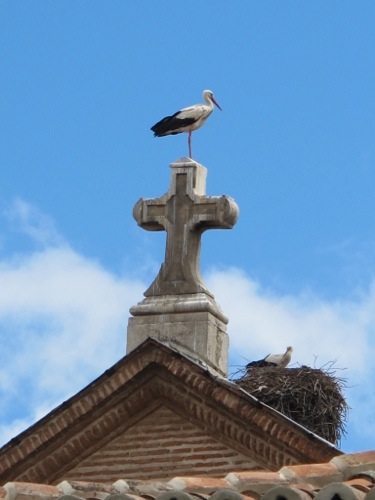
In Alcala de Henares, I spent a whole morning munching through a whole bocadillo, nipping on thin manchego shavings, sipping my cafe con leche while watching the storks busily minding their nests. The whole episode gave me a stiff neck, looking up much of the time. But my snooping exposed me to a valuable lesson in life.


20130204-090449.jpg


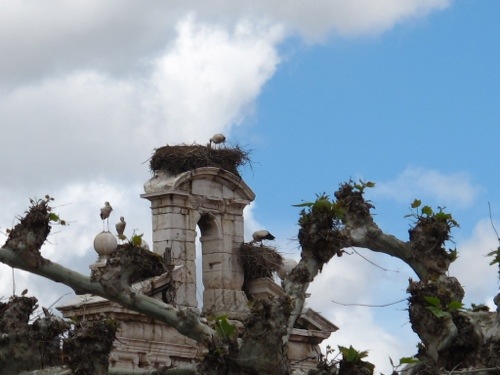
The storks here in Alcala de Henares, a university town just a few minutes train ride from Madrid, is a whole community. Their nests differ only in location (some high up atop spires, others in lower arched windows, still others in between steel bars of a crane) but never much in terms of size.
Almost uniform in height and width, the nestlings look uncomplaining and comfortable. Mom and Dad storks fly in and out, presumably with something to feed their young. Some simply standing by, looking like they’re waiting for the first nestling to attempt a first flight. As they wait, they don’t seem to mind much else. How can they stay perched on a ledge for hours on end?


20130204-092014.jpg


Patience. Many of us struggle to tame our temper. I am not sure about this. Nor do I have the proper academic background to draw any conclusions. But obviously, humans can pick up a few lessons on temper management here.

This is my entry to the Weekly Photo Challenge: Unique.


It’s been a while since December 2011. I have longed to write about this but a few trips and blogposts got in the way.


20130203-205848.jpg


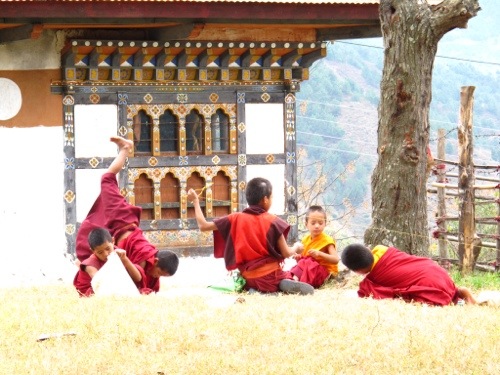
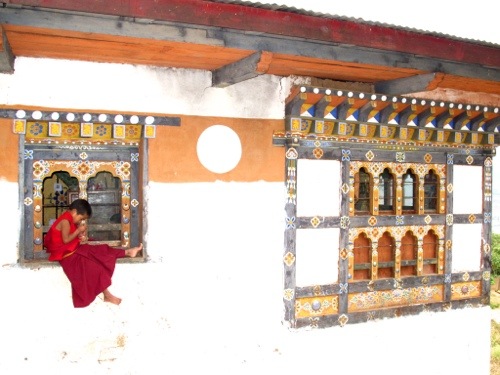
Mini-monks. That’s what I call them. Without those robes though, they’re just kids goofing around!


20130203-210004.jpg

20130203-210258.jpg


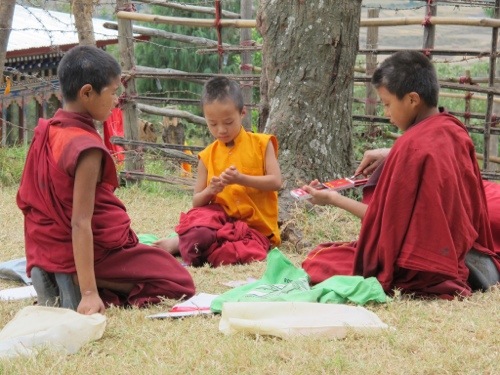
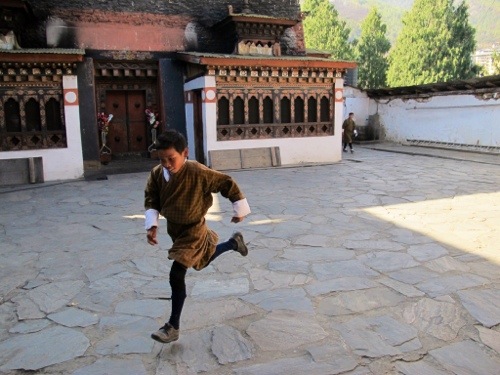
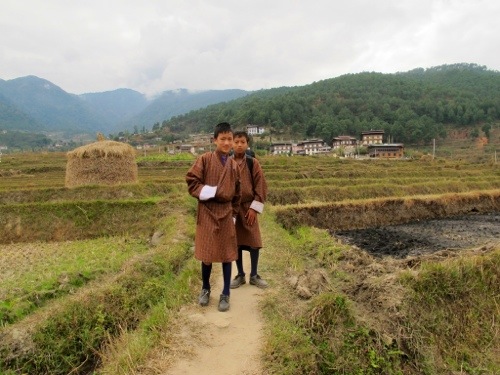
And there were the young school boys. Don’t they look adorable wearing the “gho”?


20130203-210435.jpg

20130203-210510.jpg


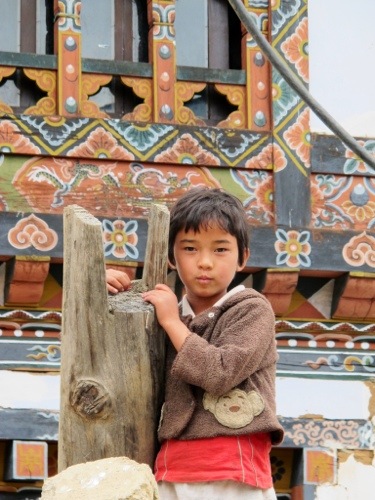
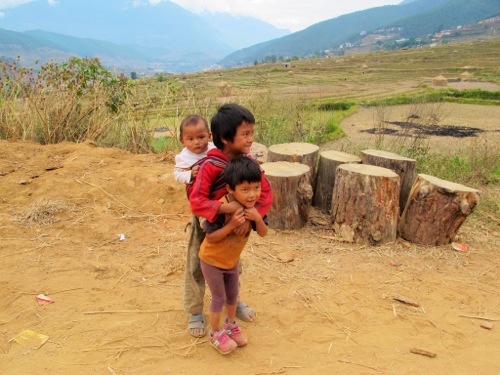
We walked through some villages and met many young boys. More boys than girls, actually. This one’s a charmer. Took many shots of him as he willingly posed for the cam.


20130203-210704.jpg

20130203-210807.jpg


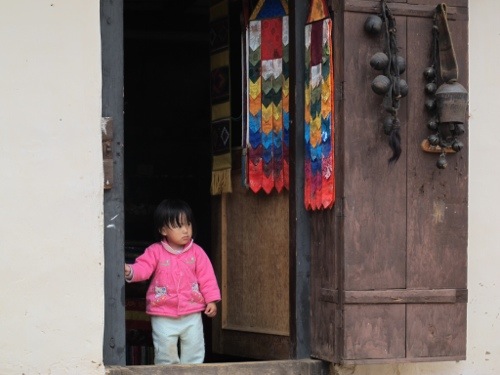
Met a few girls. Just a few….. Cuties. Now, why do little girls love wearing pink?


20130204-071119.jpg


Travel is more than the seeing of sights; it is a change that goes on, deep and permanent, in the ideas of living. – Miriam Beard