Tag Archive: Manila


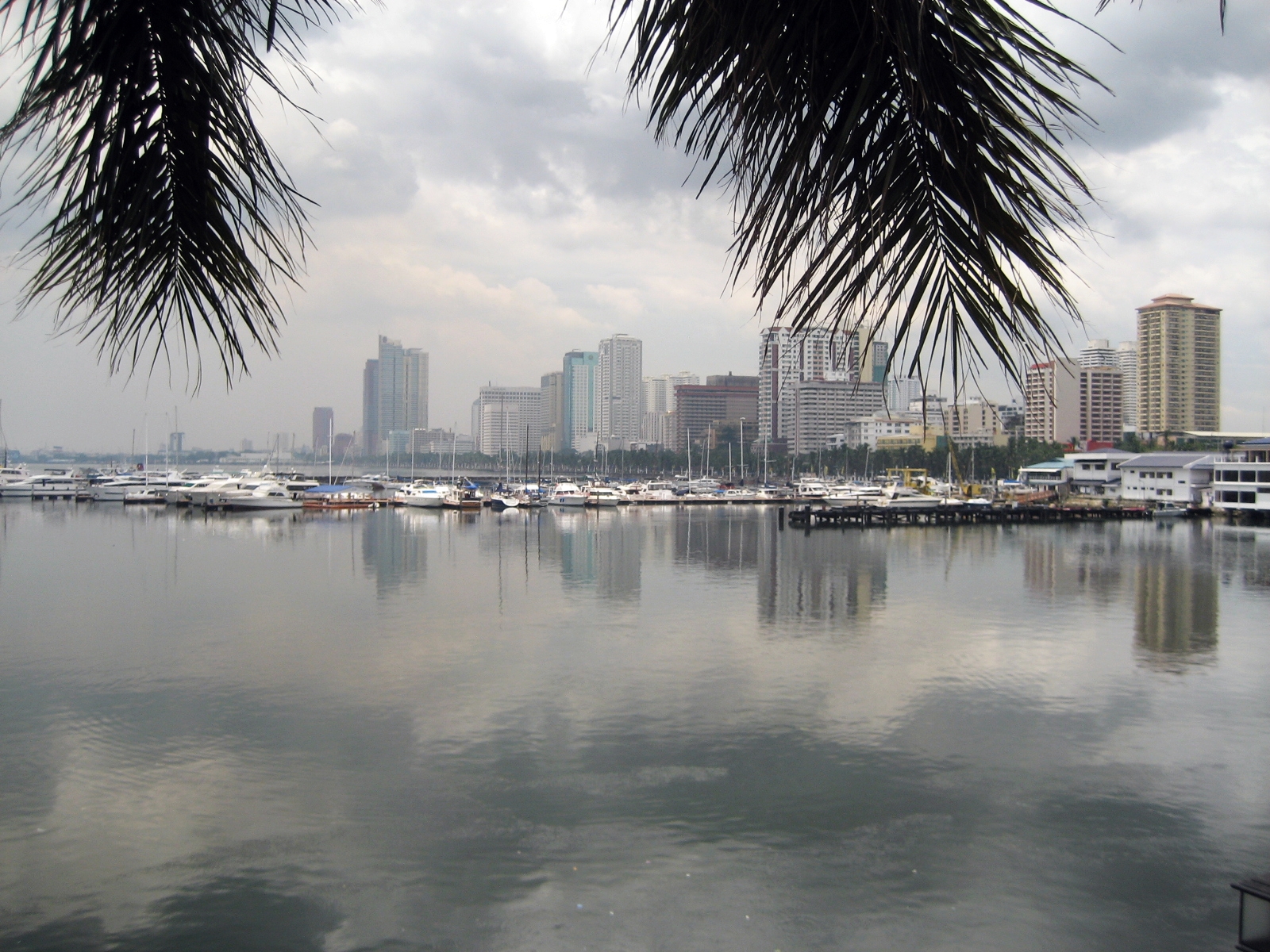
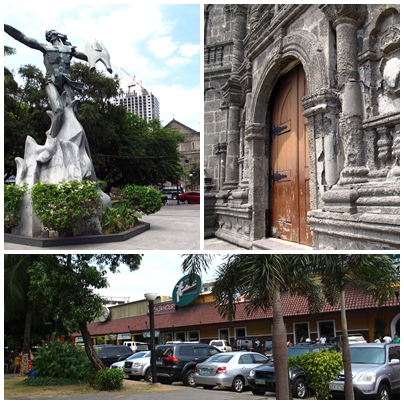
If there’s Hispanic Philippines in Intramuros and Chinoy Philippines in Binondo,  then Harbour Square may well be your American Philippines.

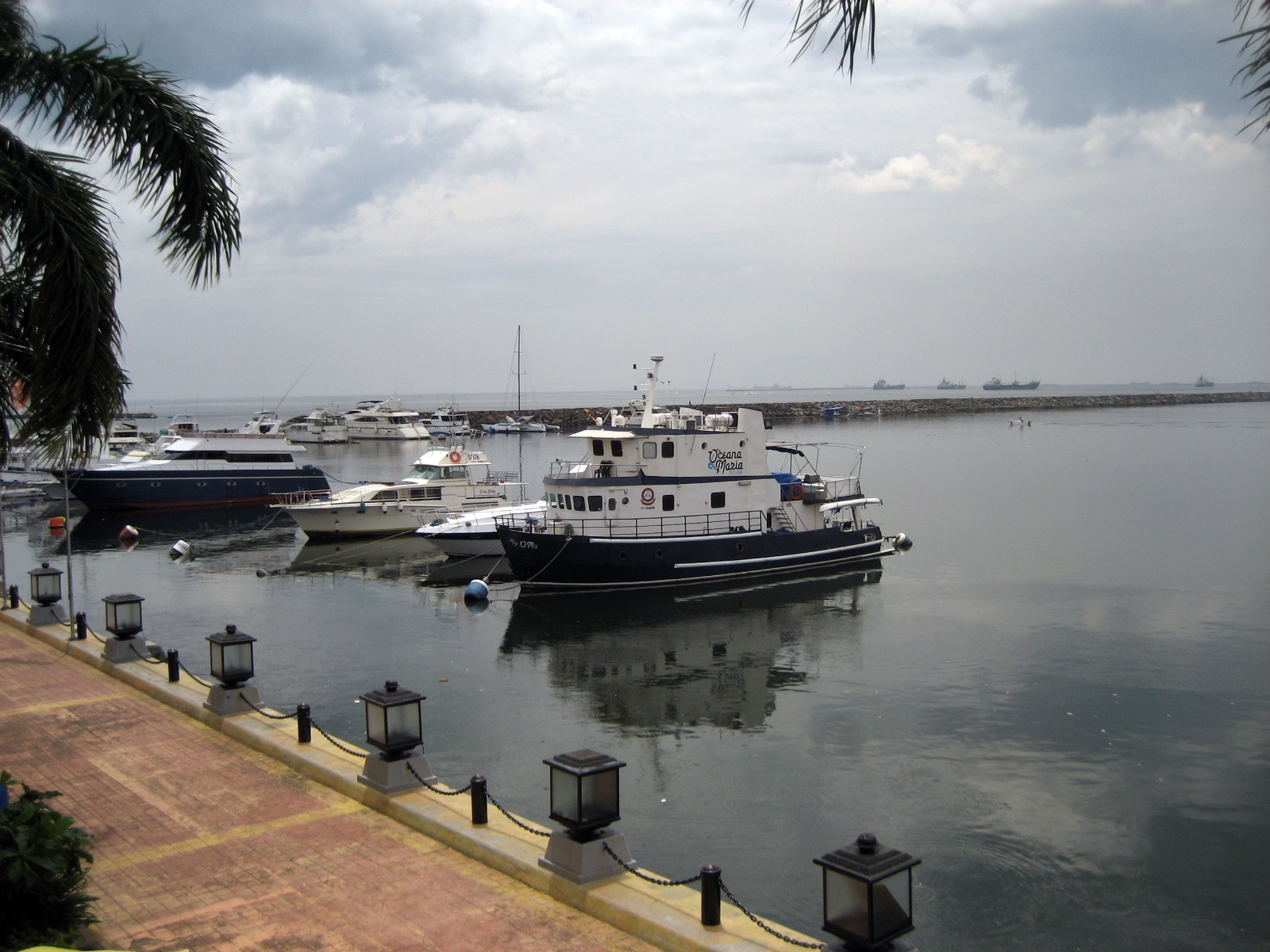
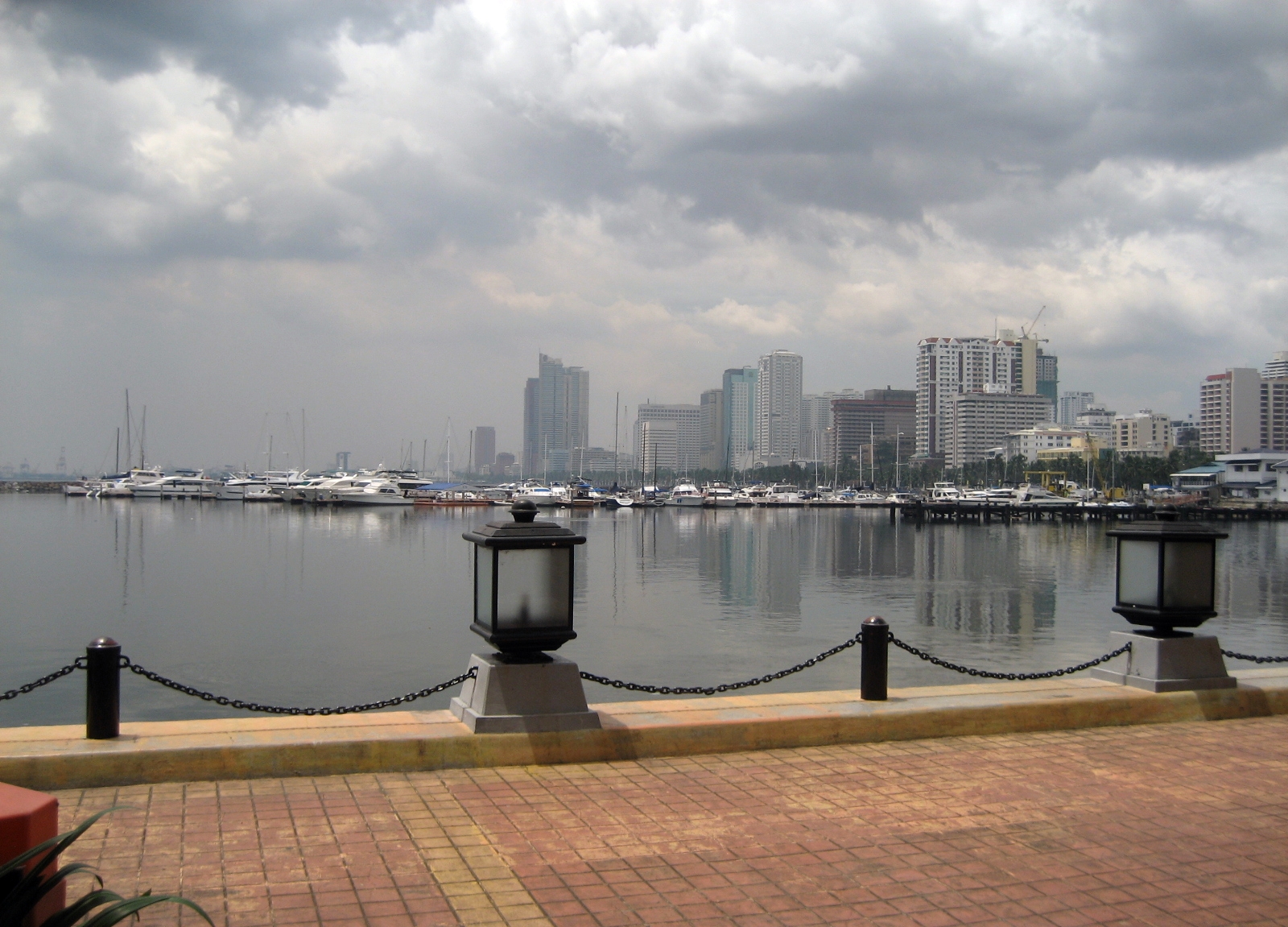
Just realized it has been awhile since the last time I was here.  I remember idling time away here soon after I quit my job. The breeze, the view, those speedboats bobbing up and down the waters of Manila Bay, the skyline,  all make for a lazy morning. Or afternoon.  Wide range of dining choices too, should you go hungry.  You can go all American at Army Navy, full-throttle Pinoy at Dencio’s, Mediterranean along with a flute of champagne or glass of white or red wine at Grappa’s, Japanese shabu shabu or Teriyaki Boy,  Chinese, or go budget meals at Jollibee.  Or perhaps you can talk well into the night while sipping your brew at Starbucks.

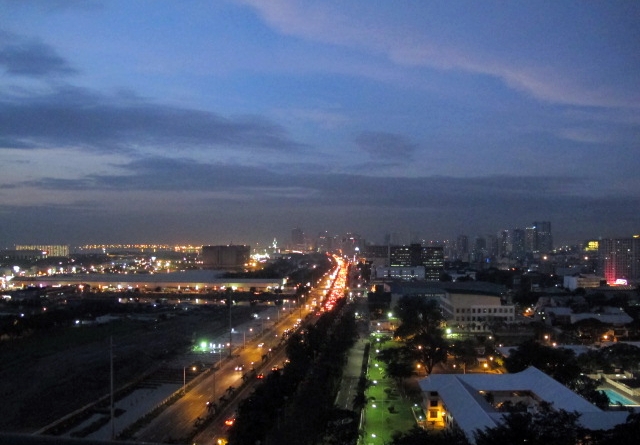
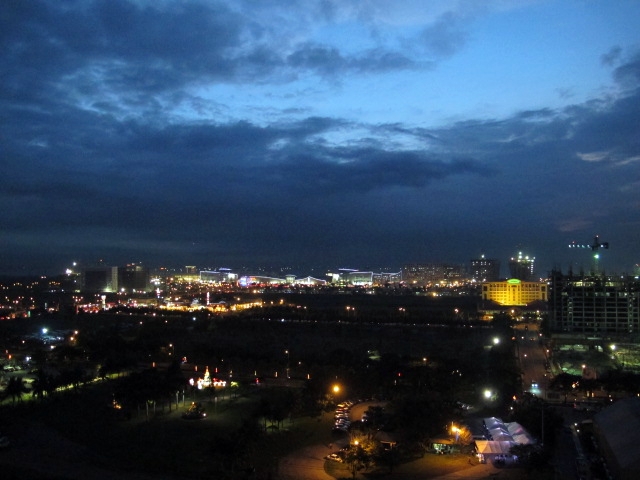
The place is ideal for dating couples.  Whether you are in a romantic mood or gearing for a lover’s quarrel,  you’d find some “privacy” while strolling the walkway by the Bay, circling  Cultural Center of the Philippines, Folk Arts Theater, Aliw Theater, Star City, all the way to Sofitel if you like.  If all that walking didn’t settle the score, well…….get a room.  😉  Well, apart from being more private you also get to take a better twilight photo of the Bay area.  Seriously though,  this part of Manila is more “quiet”, less chaotic, good for the nerves and spirit. 

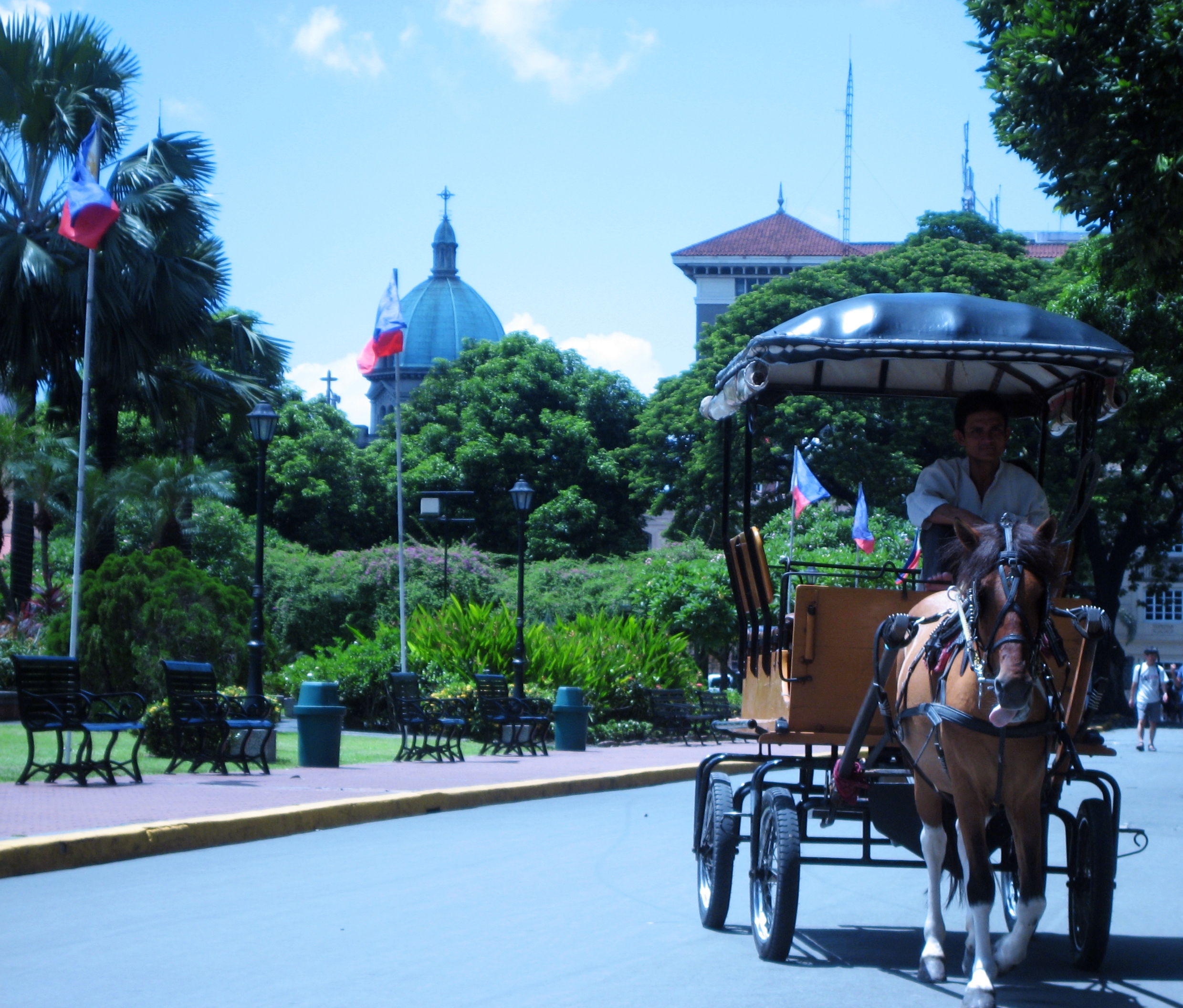
Guess Where This Shot Was Taken!

And here’s another one too……………. 🙂

Twilight at the Bay Area

xxxxxxxxxxxxxxxxxxxxxxxxxxxxxxxxxxxxxxxxxxxxxxxxxxxxxxxxxxxxxxxxxxxxxxxxxxxxxxxxxxxxxxxxxxxxxx


I wasn’t meaning to write about our national hero and join the PTB Blog Carnival , thinking I needed to clear my backlogs first. But as it turned out, a couple of friends from TravelBlog visited the Philippines and had an extra day to spend in Manila. Thought I’d give them the drill:  Spanish-Philippines in the morning,  Chinatown-Philippines for lunch, and Hollywood (American)  cum “Urban/Modern” Philippines late afternoon till early evening.  The “Philippines-Philippines” episode can wait till they get their walking feet to Bicol starting with an off-chance,  late-in-the-season Butanding Interaction in Donsol, Sorsogon.

I enjoy meeting new friends.  Jan and Polona are from Slovenia and belong to my other “community” at TravelBlog. Young, full of energy, and eager to know the Philippines .  And I was just as eager to introduce our country, our culture to them. So we began the morning with a tour of Fort Santiago and a drive-through Intramuros.  The latter deserves another leisurely afternoon.

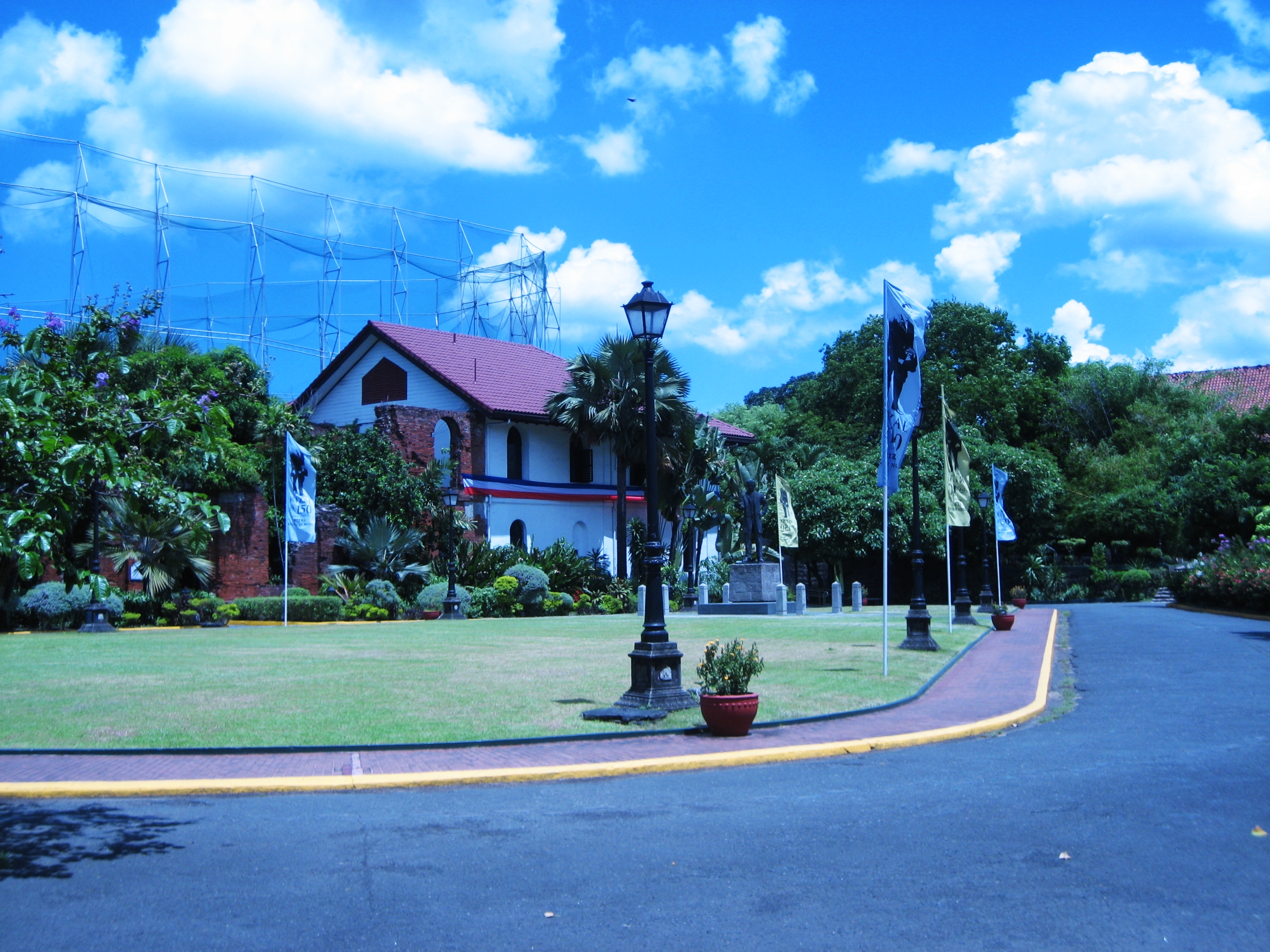
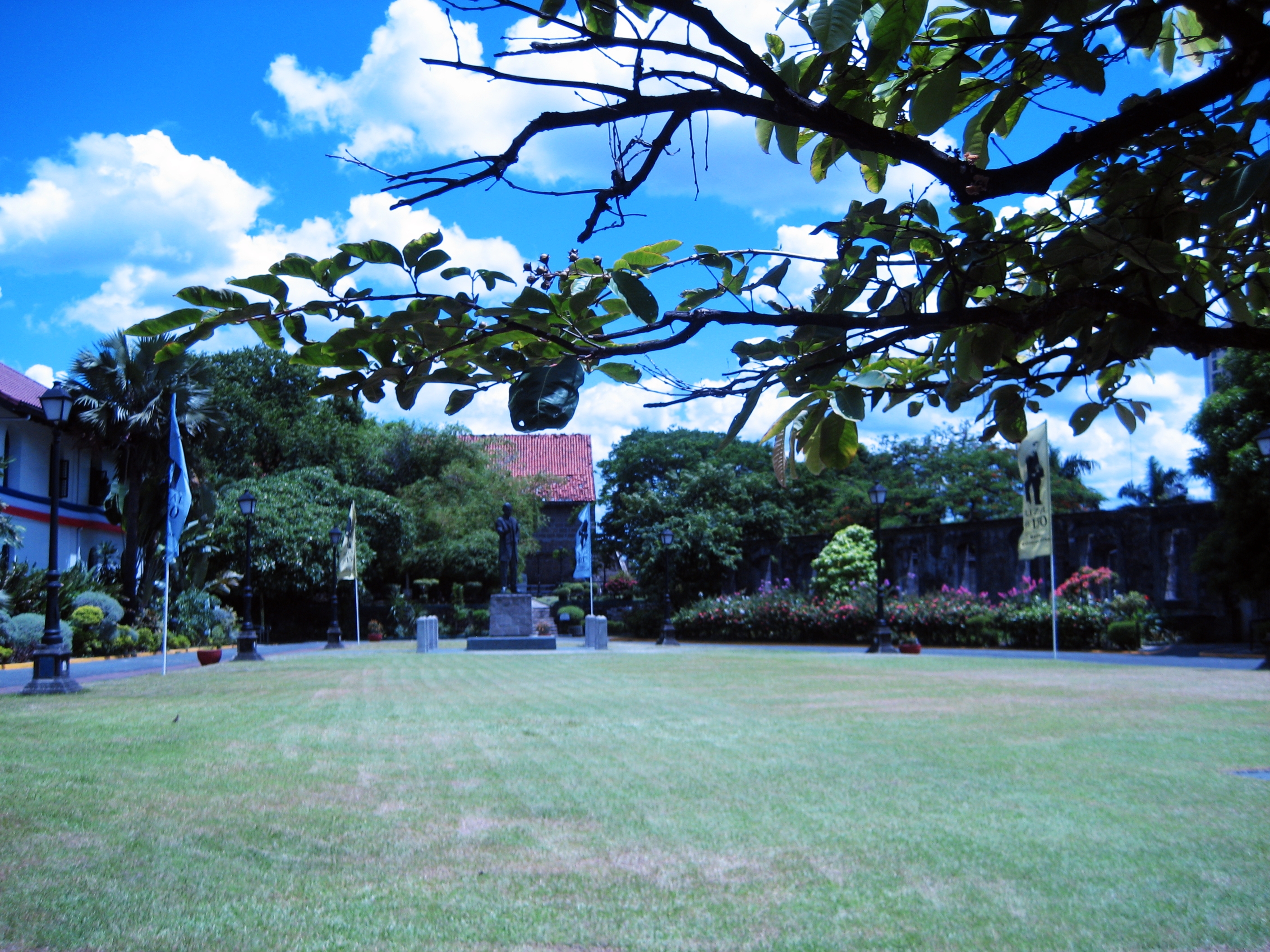
Fort Santiago

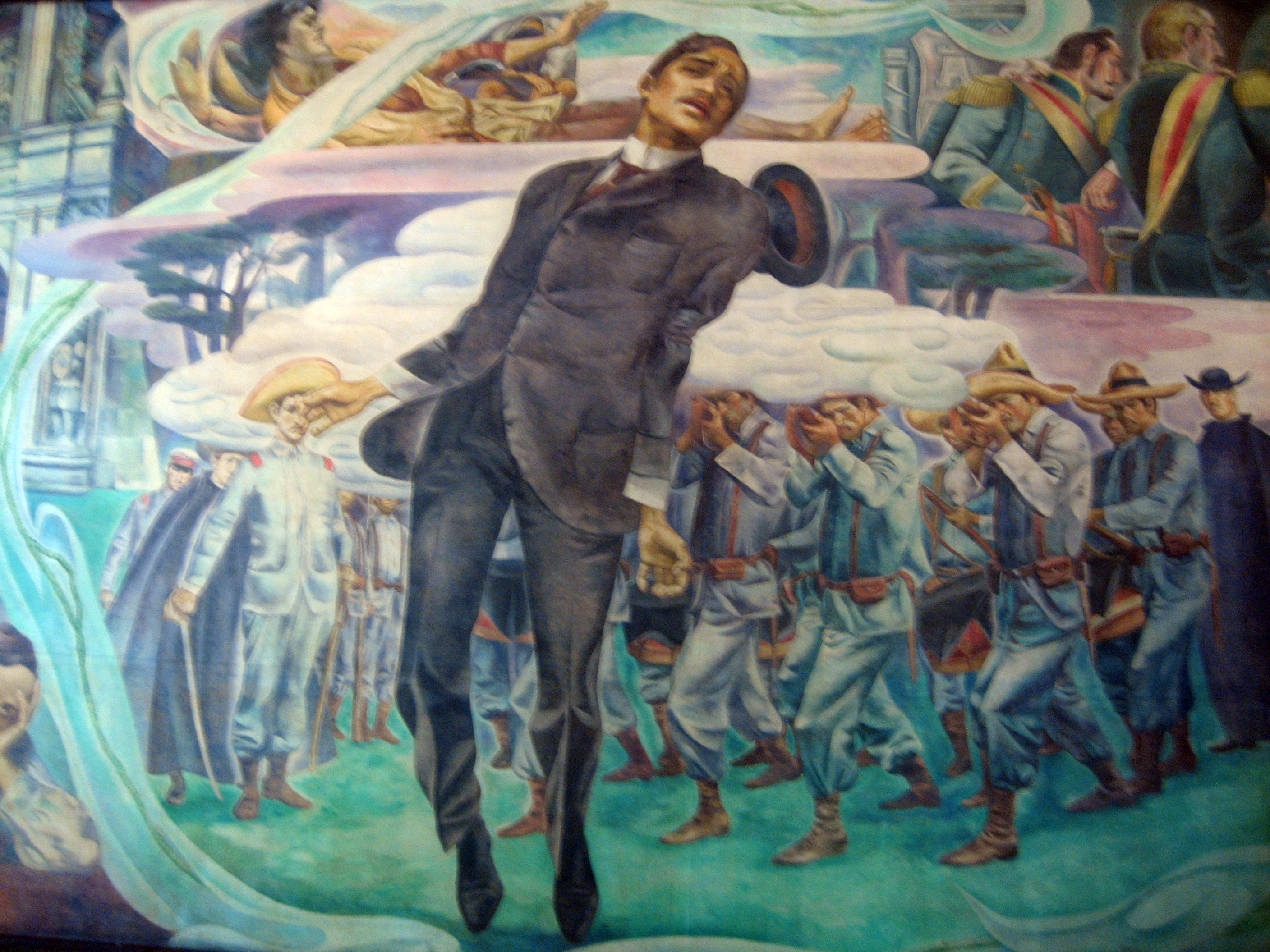
There are heaps of good write-ups on Fort Santiago.  And blogs matched with stunning photography of this “walled city”.  I brought my rusty Point & Shoot Camera just so I can take souvenir shots with my young Slovenian friends.   My young Slovenians surprisingly did their homework and knew enough about our national hero, Dr. Jose Rizal, and about his last days in Fort Santiago.  No need for any history lessons.  These travelers, as opposed to tourists, know their stuff.   It was I who was sufficiently surprised.  Inside the Rizal Shrine ,  they took their time reading “Mi Ultimo Adios”.   I must confess I never went past the “Adios Patria Adorada, Region del Sol Quirida”  stuff.  😦

Amazingly, there was a translation of Mi Ultimo Adios in other languages.  Jan and Polona painstakingly read through some, especially the one translated in Czech.   Even as translated,  they were quite impressed with the many talents of our national hero.  Having visited many other countries,  they were pleased to find that our own is a man of peace.  And not another military chief or warrior who liberated the country from oppressors.  This gave another perspective of allowing one’s self to be impressed about the power of the pen.   How a philosophy, an ideology can move people . How it can enlighten and liberate an entire race to think on its own.   Of his many talents,  Dr. Jose Rizal certainly used the power of the pen to give life to common sentiments heretofore repressed.

There are times when I feel sentimental and wax poetic.  Moments when I find myself reading and taking pleasure in reading poems.   No favorite poets for me.  I read whatever takes my fancy.   But “Mi Ultimo Adios” ?  I never gave it a chance.  I do not know why.  Perhaps because it was part of the school curriculum and I associated it with the obligatory history lessons.   Thanks to Jan and Polona, I rediscovered the beauty, the wisdom and the rhythmic beat of Rizal’s patriotism in this farewell poem.

“I die when I see the sky has unfurled its colors 
And at last after a cloak of darkness announces the day; 
If you need scarlet to tint your dawn, 
Shed my blood, pour it as the moment comes, 
And may it be gilded by a reflection of the heaven’s newly-born light.”

Shame on me.  To have someone from a foreign land teach me a lesson on appreciation of one’s own.   This stanza was nearly “alien” to me. As I said,  I hardly went beyond the “Adios Patria Adorada” line.  Yet Rizal’s passion and patriotism resonated with these lines of poetic candor.


“If upon my grave one day you see appear, 
Amidst the dense grass, a simple humble flower, 
Place it near your lips and my soul you’ll kiss, 
And on my brow may I feel, under the cold tomb, 
The gentle blow of your tenderness, the warmth of your breath.”

Lovely. Simply lovely.  He may be a doctor of medicine. A hero.  A painter.  A sculptor. An engineer.   And more.  But in my book, he is  a poet par excellance.

This is my entry to the PTB Blog Carnival celebrating Dr. Jose P. Rizal’s 150th birthday with the theme “Rizal and Travel”, hosted by Ivan Henares .


We get this all the time.  Foreigners in the workplace telling us that Filipinos tend to eat every so often.  Lunch is no sandwich and a fruit.  Neither is it a half hour break.  Naaaah.  That one hour lunch break can easily stretch to a couple of hours, often blaming the traffic for not getting back soon enough. These days,  there are many joints a walking distance from the offices. But lunch is lunch, and every Filipino observes it not just as a break from work but also as a chance to chat away the blues and break the monotony of working behind a desk. As for snacks or mid-day “mini-meals”?   That’s when it is more likely to find Filipinos eating that sandwich or fruit.  But the hardcore ones would still crave for their carbo fix:  a noodle dish, rice porridge or rice cakes.  In between lunch and that midday mini-meal, don’t be surprised to find them munching peanuts, pork cracklings, chips, or splitting pumpkin seeds.


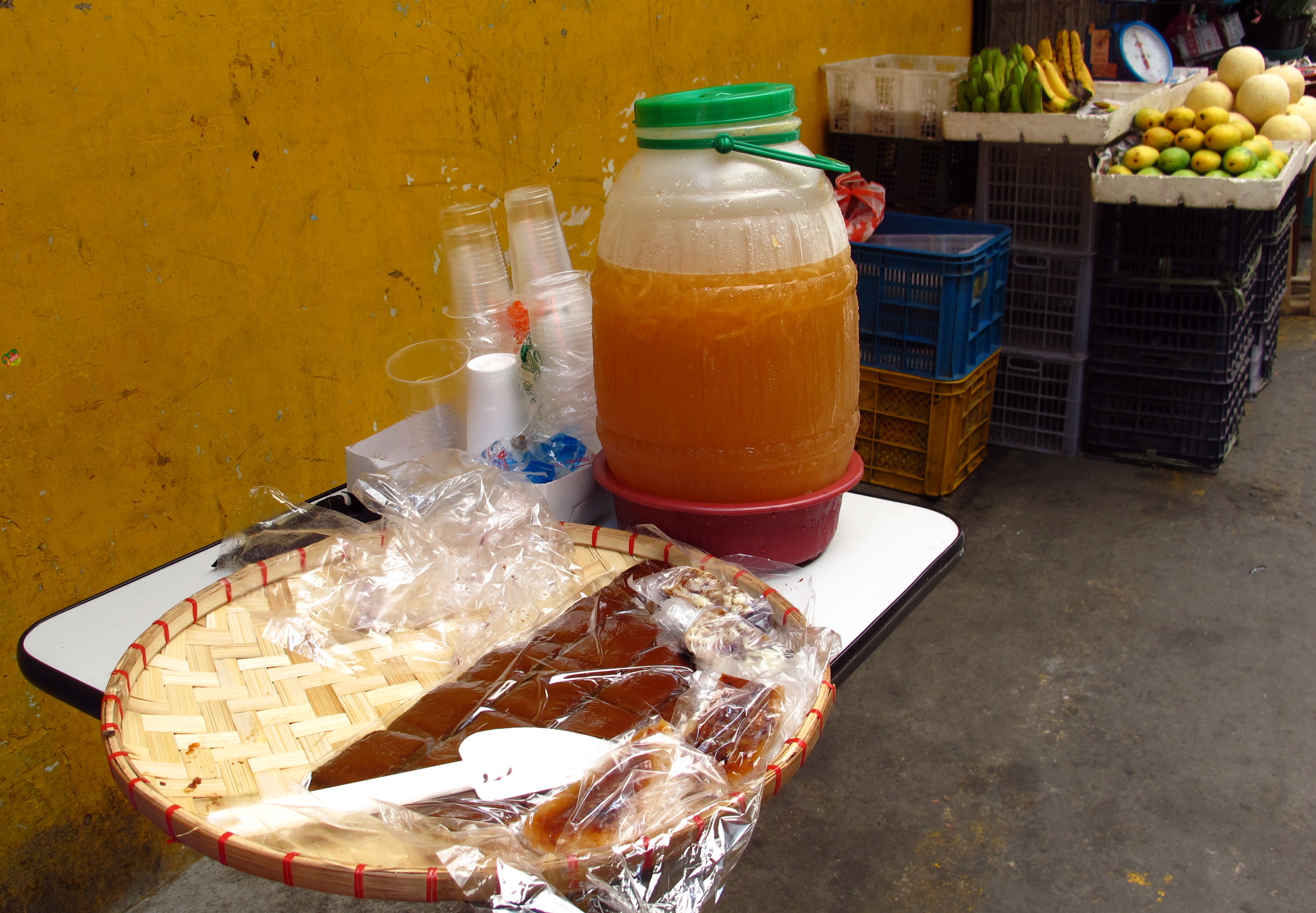
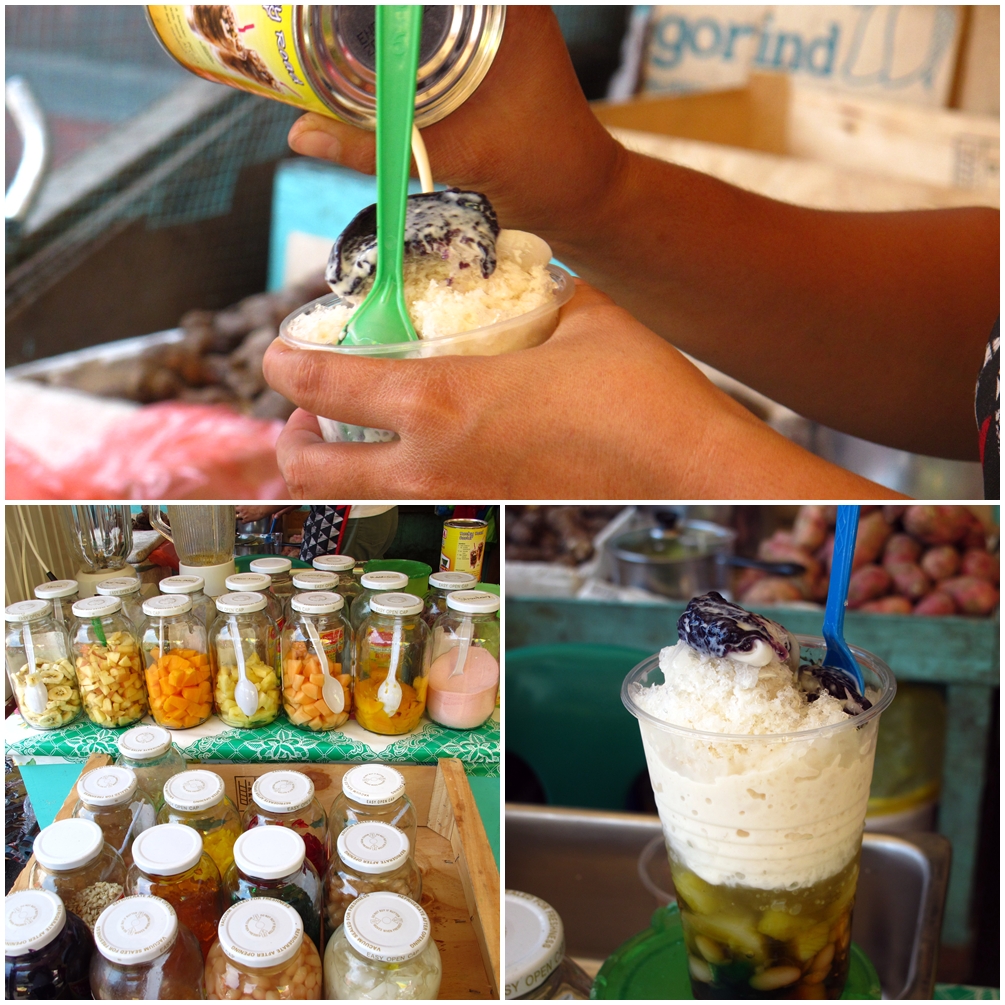
Taho. Best for breakfast!

Sago at Gulaman


Luckily for us,  there is no shortage of food to be found and bought.  Stuck in a traffic jam?  No worries.   The street vendors plying the main roads sell anything from peanuts to pork cracklings to boiled eggs to mint candies to fruits to bottled water to “fish balls, squid balls and shrimp balls”. Boiled bananas, boiled peanuts, even corn on the cob! Walking the streets of Manila is an adventure.  Every tourist should try this.  Buying street food is very much a part of every Filipino’s way of life.  And there’s more to be found in urban centers like Manila, where folks are supposed to be “busier” than their counterparts in the provinces who may have the time and energy to cook their own meals and snacks.


Halo Halo!


As it is summer, try going to San Andres Market, a stone’s throw from Malate Church.   You can get your freshest fruits here to eat, or to be made into a fruit shake.   You can’t go wrong with a 10 peso fruit shake (less than US $0.25) or the local “halo-halo” (literally means “mix-mix”) for 20 pesos (less than US$0.50). I strongly suggest you try the halo-halo which is a mixture of  sweetened fruits, ice shavings and milk, topped with a local sweetened ube yam. You can’t be more Filipino than that!


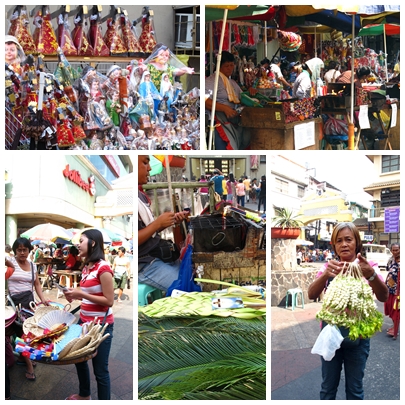
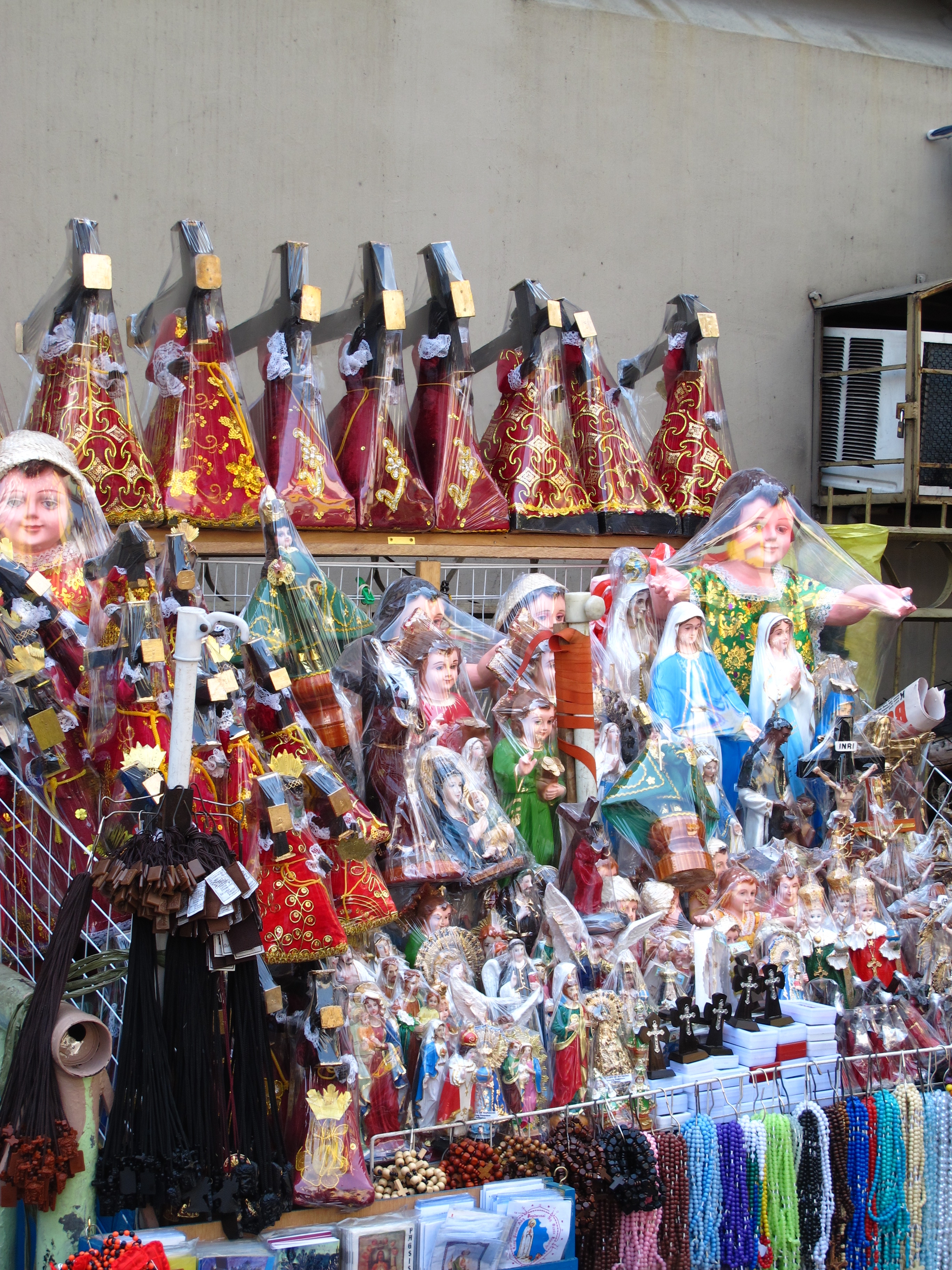
Or you may want to head all the way to Chinatown for your dimsum fix and other foodstuff.  The street vendors here range from those selling fruits, vegetables and cooked food to those selling almost anything you need to get from an honest-to-goodness hardware and supermarket.  Around Quiapo Church,  you can buy your religious icons,  candles,  fans (strongly suggested on hot, humid days) , flower garlands, brooms (yes, brooms),  fruits, vegetables , squash flowers, and fish (live, dead, smoked or dried!).  From Quiapo Church through Santa Cruz Church to Binondo Church,  you will find street stalls selling footwear, garments and again,  more foodstuff.  There is an alley near the Binondo Church called Carvajal where I wanted to buy almost everything I laid my eyes on!  Forget the diet.  There is so much to buy here to take home as TV dinners.  Sushi?  Taho? Meat loaf?  Rice cakes?  


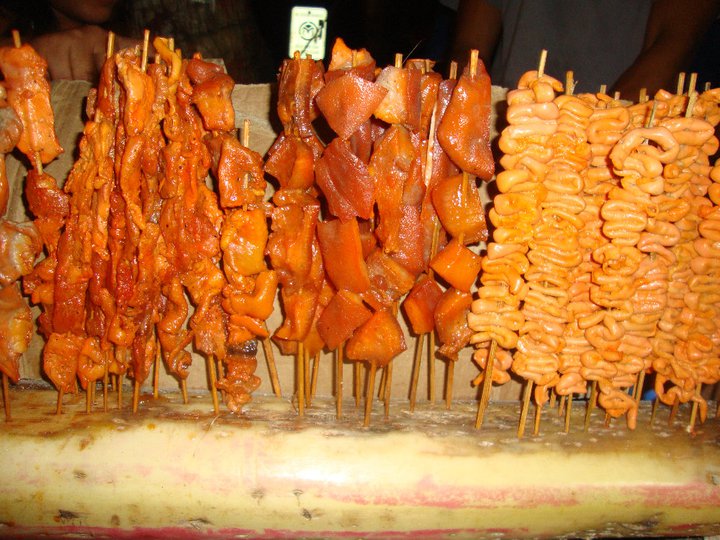
Barbequed Pork and Innards. Guess what!

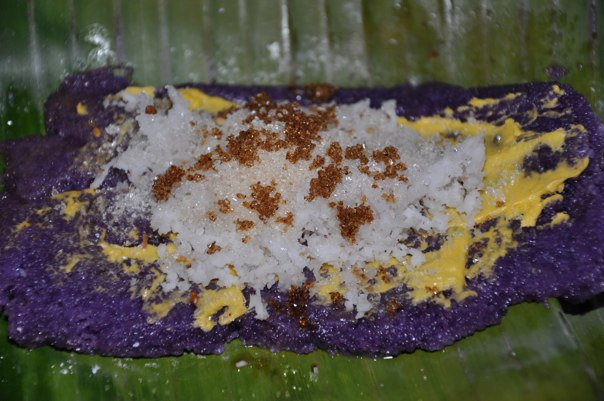
Puto Bumbong

You may also want to check out more photos from my TravelBlog site


Met up with my friend E and without much planning, decided we make good use of our time together while waiting for her son to get off summer school.  That’s from 10am till 2pm, if you wanna know.


Almost instantly, we agreed we should check out the Pasig River Ferry at the  Guadalupe Ferry Station where we can take the ferry ride to Escolta, or all the way to Plaza Mexico in Intramuros. But alas,  the station was closed as we unhappily learned the ferry company has ceased operations. Shoots!


Not easily discouraged,  we mapped out another plan.  Something in keeping with the Lenten Season.   From under the Guadalupe Bridge where the Ferry Station is located, we drove back up to EDSA southbound and took the right at the corner where you’d find Loyola Memorial .  This street goes a few hundred meters down to Nuestra Senora de Gracia or Guadalupe Church.  Foundations laid in 1601, construction completed by 1629.  I have once attended a wedding here, and was not disappointed with how beautiful the Church is just past midmorning.


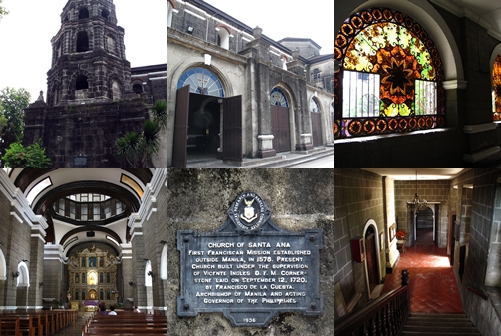
From this nearly 400 year-old Church in Guadalupe, we drove down to J. P. Rizal Street all the way to Sta. Ana, Manila.   We passed what used to be the Sta. Ana Race Track,  until we found the Church of the Abandoned.  I have passed this Church many times before,  always referring to it simply as Sta. Ana Church.  Never realized it ranks among the oldest churches around Manila.   At this hour,  there was hardly any crowd inside this  17th century-Church , more so in the adjoining halls of the church where they kept religious statues of a few saints.  We even ventured up the stairs, but was gently reminded that the convent is not open to the public.


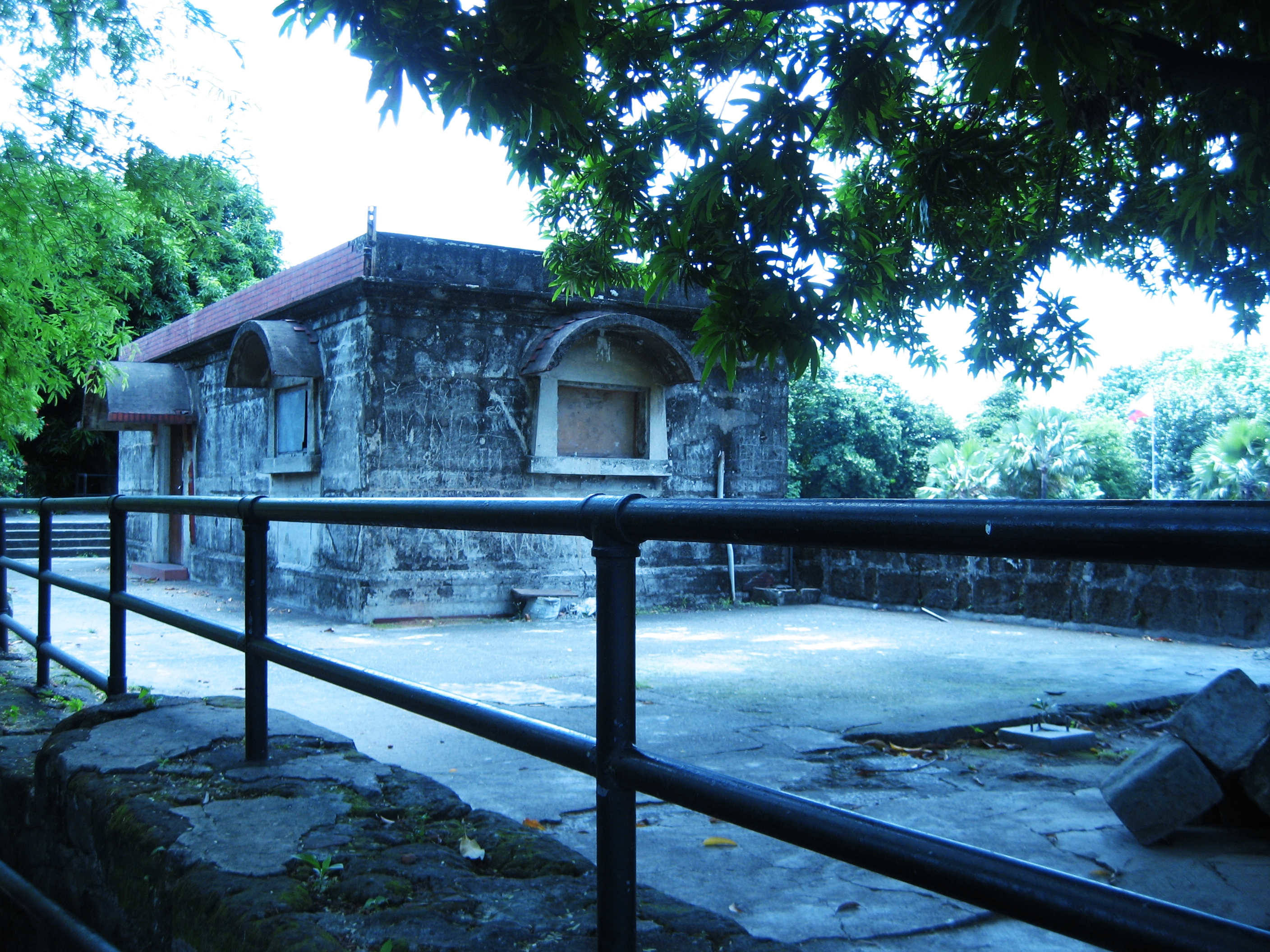
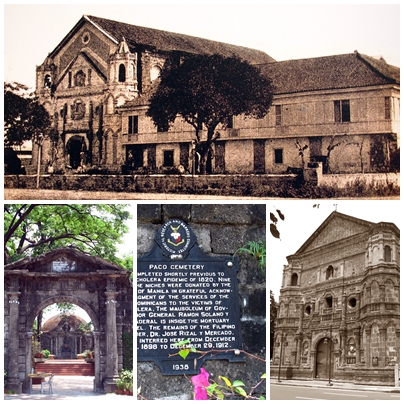
Driving further west towards Paco, Manila, we visited the Paco Church and Cemetery only to find it closed.  Today is a Tuesday and Paco Park Complex is closed Mondays and Tuesdays.   From outside, it looks like your mini-Intramuros as the Park is closed in by this  ancient wall.   No wonder this Church is a favorite wedding  as well as concert venue.    Never mind that it is also a cemetery!  After all, it has a distinguished list of VIPs interred in its park grounds.  No less than the national hero, Dr. Jose P. Rizal was buried here until 1912 (errr, did you know that?) , and so with the martyred priests Fathers Gomez, Burgos and Zamora, more commonly referred to as Gomburza.


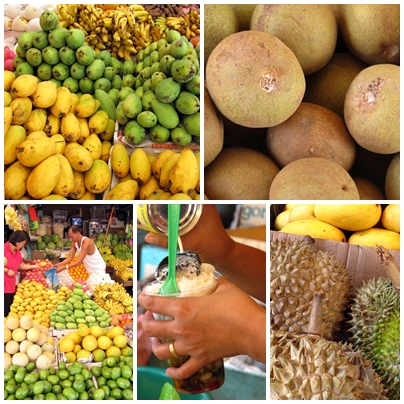
From Paco Park,  we decided to have lunch at Aristocrat which is right beside the Malate Church.  But not without a quick visit to the San Andres Market where we found fruit stalls after fruit stalls of mangoes – yellow ripe, unripe green, smallish “supsupin” mangoes, Indian mangoes – along with racks of chicos, durian, dalandans, honeydew melons, watermelons , turnips, bananas, sweet potatoes, etc.  I even bought myself a glass of halo-halo (ice shavings with various sweetened fruits like bananas, sweet potatoes, garbanzos, beans, jackfruit, mixed in with ube yam, leche flan, gelatine,  sago and milk) for only 20 pesos.  What a refreshing drink, and all for just half a US dollar!  The same stall even offers hot chocolate and coffee for 5 pesos. Dirt cheap!  I shared the halo-halo (literally meaning “mix-mix”) with my friend E as I didn’t want to spoil my appetite for my bbq lunch at Aristocrat.


Aristocrat was doing brisk business by the time we got there.  Well, it’s noon time, but the waiter there says they get this crowd daily.  For me, Aristocrat (and another established chain restaurant Max’s) is a great “equalizer”.  Nothing fancy here, just plain good old barbecue and local dishes.  You’d be fine to allocate 200 pesos per head for a good meal. And it draws a big crowd from all sections of society.  From a table occupied by a group of students, another by working men and women out on a lunch break, to a group of nuns and yet another group of balikbayans (literally “back to country” Filipinos) having this comfort food.  It is always a yummy meal here in Aristocrat, and it won’t burn a hole in your pockets too.


And so, on full stomachs we crossed the street to visit the Malate Church.  Built in 1588 originally as an Augustinian Friar Building, it withstood a number of earthquakes and the February 3-17, 1945 Battle of Manila which left nearly the entire Malate area flattened, with thousands dead from the shelling from American forces and burning from Japanese occupiers.  This centuries-old church was left charred and roofless, and reconstruction began soon after the end of World War II.  At the time we visited, absolutely no one was inside the Church.  All quiet and peaceful . A fitting final stop for our attempt to “waste” four hours around Manila.  Call it the final part of our 7-church Visita Iglesia.  Having done Manila Cathedral and San Agustin Church last week and San Sebastian Church much earlier (hmmm, that last one  shouldn’t count, really), and 4 today (Guadalupe, Sta Ana, Paco and Malate),  I have completed the mandatory 7 Churches for the Visita Iglesia.  But there is this weekend when I plan to visit Binondo , Santa Cruz and Quiapo.  Now wait, that makes 10!  And I am still agonizing whether to include Tondo Church or not.  We’ll see………….no harm in visiting a dozen churches.  Especially churches loaded with history! So , next time you have an extra 4 hours to waste,  why not put it to good use and learn bits of history while doing your spiritual duty?


And if you do have more than 4 hours,  you can cross Roxas Boulevard  from Malate Church and stroll along the Baywalk and wait for the lovely Manila Bay sunset.  Who knows?  You may even work up an appetite again and head back to the Malate Church Square and this time, try the Max’s Fried Chicken just across Aristocrat.  Both are institutions in the Philippine dining scene, so don’t miss them.  Not to worry, you can enjoy budget meals in either one of these 2 eating places, and live to go back again and again.


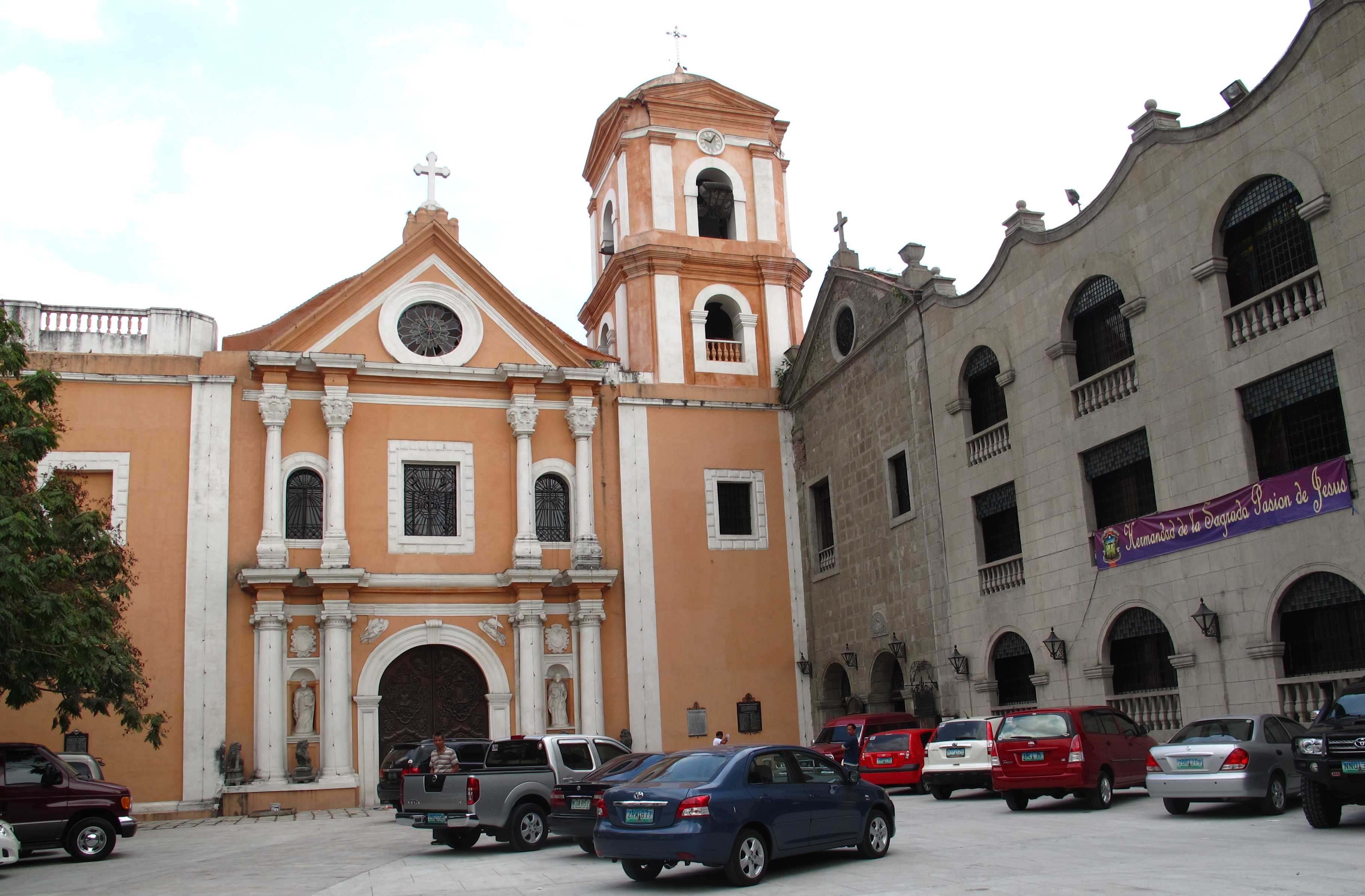
It is Lent. Time to go visiting the Churches. The norm for Catholics here is to visit 7 Churches, preferably on Maundy Thursday.  But I have decided to instead do the 7 during the entire Lenten Season, and to choose the 7 Churches with lots of history. First off: San Agustin Church in Intramuros, a 16th century church claimed to be the oldest stone church in the country.


Filipinos:  A Strange Race?


From Makati where I live,  we drove along Roxas Boulevard with a lovely view of Manila Bay towards the Pier.  We took the right towards Intramuros, where one finds Fort Santiago and the Manila Cathedral.  We skipped both, and drove directly to San Agustin Church and Monastery.


Standing right in front of the Church and looking around, I found how un-Asian this corner in Intramuros is.  No wonder some of my foreigner friends tell me that Filipinos are “strange” in that way. Strange in that most of us bear Spanish-sounding surnames.  Like Ramirez.  Like Chavez. Like Guerrero. Or Mendoza.  Sure, we were a Spanish colony for close to 400 years, but other countries had Dutch or Portuguese or British colonizers – yet, I don’t hear of them with Dutch or British or Portuguese family names.  Or am I wrong?   Strange in that our language is interspersed with a lot of Spanish words and that Filipinos very readily use Spanish expletives that I do not wish to repeat here.  Truth is we even coined a word for the elitist Filipinos …… “con** crowd” — which literally means a lady’s private part in Spanish.  Strange in that we are so used to counting in Spanish (uno, dos, tres………) or in telling the time in Spanish ( a las tres y media, a las dose, etc.).   But more than anything else, we are very “Spanish” in our faith.  The Philippines does not have the temples of Cambodia, Laos or Thailand,  nor the pagodas of China , Japan and Korea,  but we have many Catholic Churches dotting the countryside which are worth seeing. Churches always form a central and core part of every Filipino’s lifestyle.  Here in Manila,  a few old Churches remain standing despite this city being the second most -bombed city during World War II.
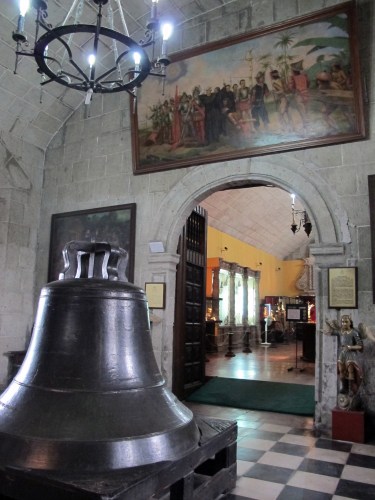


More Than Just An Old Church


San Agustin Church at the corner of General Luna Street and Real Street in Intramuros is hard to miss.  It is just a stone’s throw from the Manila Cathedral (when facing the Cathedral, take the right side and walk straight towards San Agustin Church) and an easy walk from the Fort Santiago, another tourist destination.


Inside the Church, one finds off some corner a confessional box.  The parish priest sits inside while parishioners take turns to have their confessions heard by the priest with only a small screen window separating them.  On your knees, you confess your sins!  In another corner,  there is the pulpit where the parish priest used to say his homily or sermons.   Times have changed since those days.   And the ornately designed pulpit is now simply a reminder of how grand our old Churches were or still are, if luckily preserved and bomb-spared as with this Church.  But Filipino Catholics still make their confessions to their priests in this box-like structures though modern-day Catholics are not discouraged from doing face-to-face confessions.


This Church is a favorite among brides such that “bookings” for weddings need to be arranged at least a year in advance.  I have attended one too many wedding ceremonies here, and wedding receptions were held in any one of the nearby colonial-inspired restaurants and bistros just across the Church, or in the garden within the church courtyard.  On weekdays,  you may find school groups doing their field trips, and on weekends you would likely witness wedding ceremonies.  That is how “busy” this Church is.
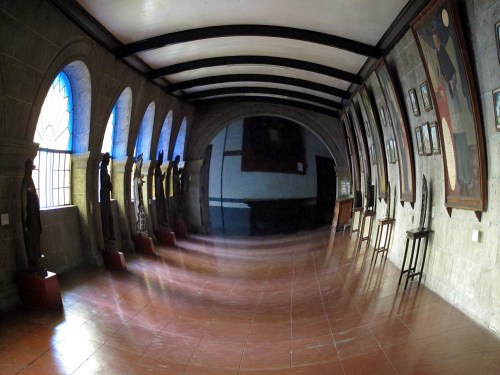


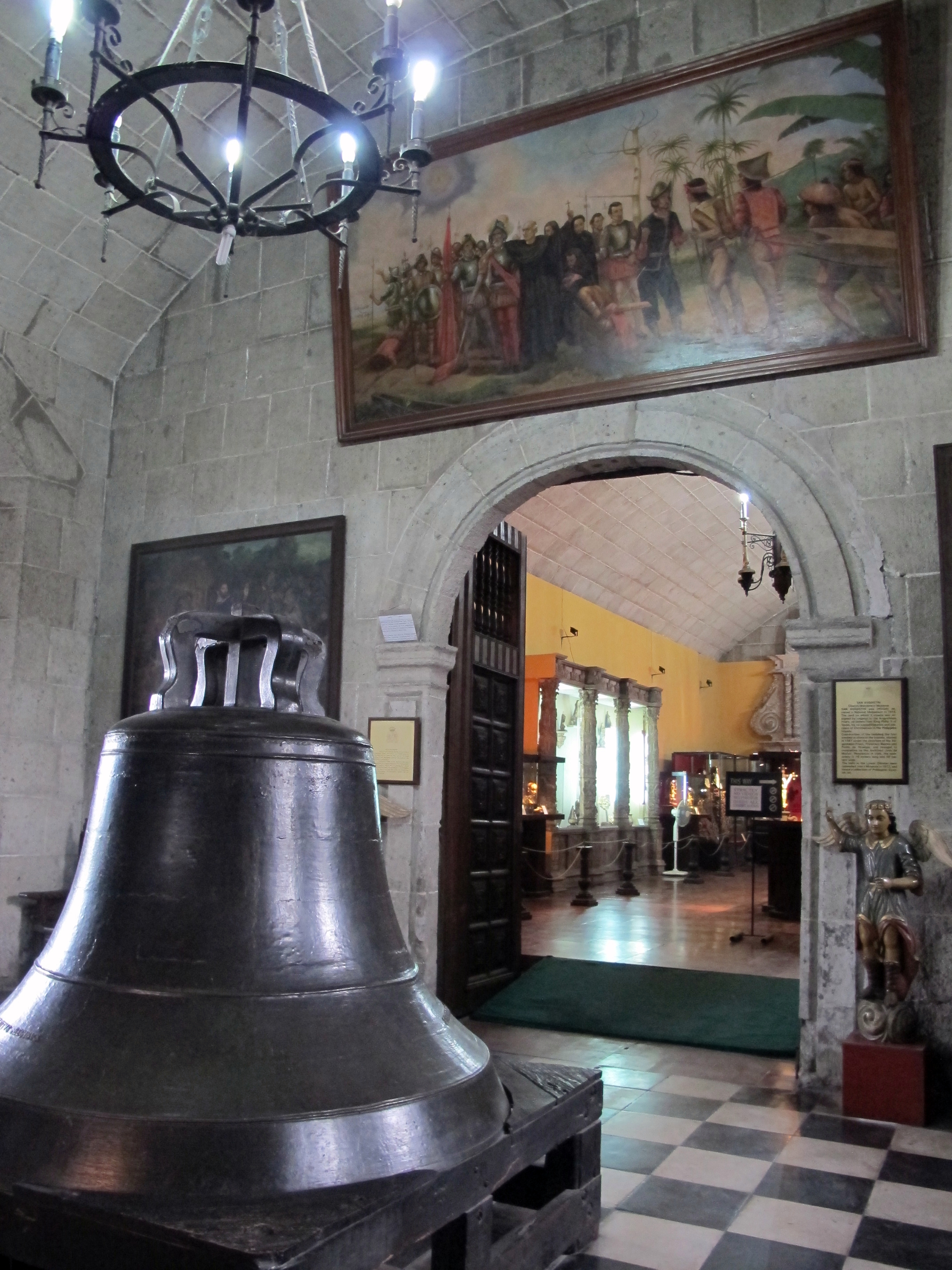
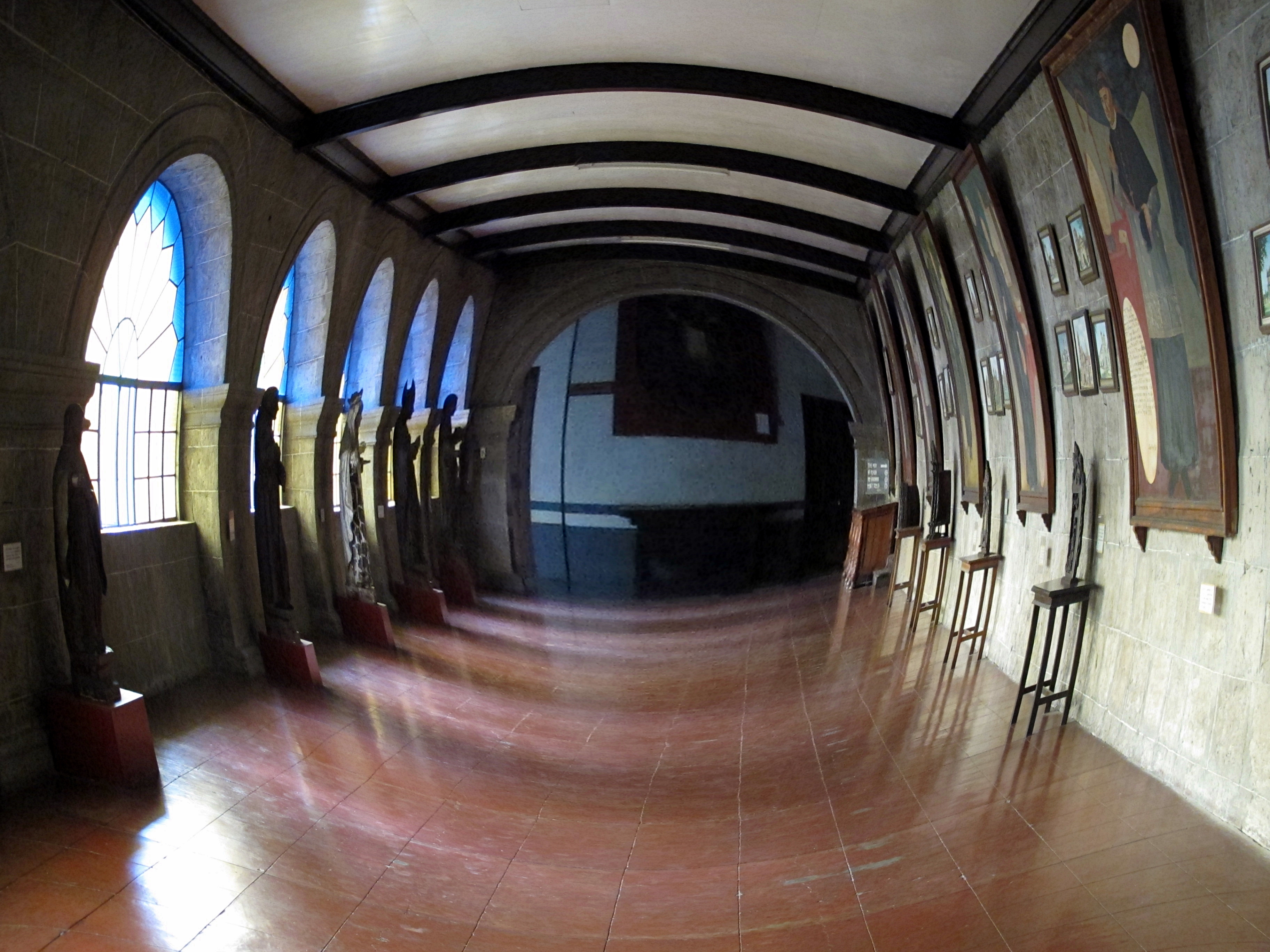
Yet………the adjoining Monastery which has since been converted into a Museum hardly gets a crowd. The day I visited,  I walked alone along many corridors.  Kind of eerie, if you ask me.  I honestly felt like some statues are staring down at me.  In one of the exhibit rooms ,  I got goosebumps finding a dark corner with 4 or 5 statues clad in black robes.  They were representations of the early Augustinian friars who built this Church and established a religious order in the country.  It “helped” that the room was dimly lit, such that you find the robed statues just when you are almost face to face with them.  Off another corridor,  I found huge paintings, some pitifully warped, and woodcarvings depicting hell.  You bet my hair stood on edge and felt my heart beating out of my chest.  I almost had regrets that I came when school’s over. I could have timed my visit with a school group’s field trip instead and spared myself of some palpitations.
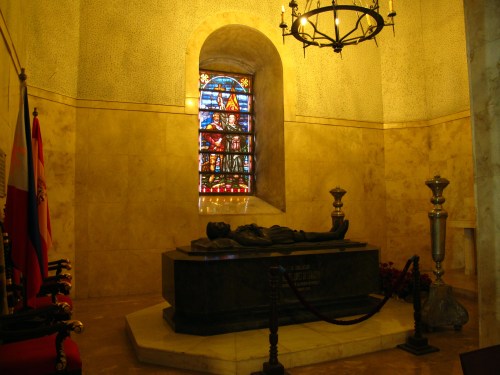


Miguel Lopez de Legazpi Rests Here: A Short History Lesson


Filipinos all know that Ferdinand Magellan discovered the Philippines. But Spanish colonization and the subsequent Christianization of the Philippines didn’t start with the discovery of Magellan in 1521, who incidentally was slain by a local tribal chieftain named Lapu Lapu in the island of Mactan in Central Visayas. While Magellan captained the very first ship to sail completely around the world,  Magellan never lived to tell his tale of discovering the Philippines and to prove that the world is indeed round. However, his discovery led to Spanish Expeditions led by Ruy Lopez de Villalobos in 1541 (who was driven away by hostile locals)  and then by Miguel Lopez de Legazpi in 1565. Legazpi befriended a native Bohol chieftain called Datu Sikatuna  in a ceremony called “Blood Compact” and from there, established Spanish colonies with the aid of  local allies starting with the island of Cebu. With the colonization, came Christianization of the natives who earlier practiced nature worship.  And as pagans converted to Christianity, they were baptized and given Christian names.  So.  Now you know why many Filipinos have Spanish family names. Right?


Legazpi was a diplomat more than he was an explorer.  In Manila, he befriended both Rajahs Lakandula and Sulaiman and with some help from Augustinian and Franciscan friars, established a governing city council in 1571. At the same time, he ordered the construction of Intramuros, proclaiming it the capital of Manila and seat of the Spanish Government in the East Indies. He died in 1572 and was laid to rest right here in the San Agustin Church.


Now, enough of history and back to topic.


Father Blanco’s Garden


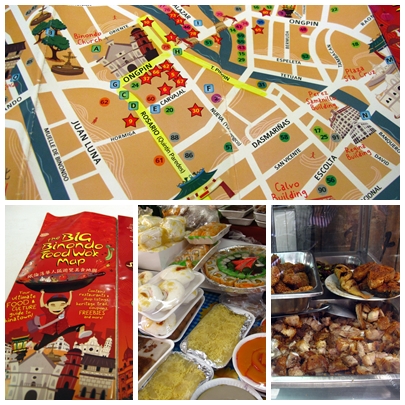
After doing the rounds (actually the “squares”) in the Museum,  it is refreshing to go down and spend some time within the garden.   If you have a book with you,  you can take over one of the benches and while away the time while resting your legs and feet in Father Blanco’s garden.  The garden can do with more flora, but you can enjoy the afternoon breeze here before venturing out of the Museum grounds. In my case,  I found the time to check out the “Binondo Food Wok Map” while here in the courtyard garden.  This is the map I bought (for 100 pesos) in the Bahay Tsinoy (literally means House of Filipino-Chinese) one block away from San Agustin Church.  (Facing the Manila Cathedral, one can take the road on the left side till you hit the 2nd corner.  This is Cabildo Street corner Anda Street)  Of course, if it is too sunny, you may simply have a drink and some chips or biscuits in a corner stall (can’t even call it a cafe) within the Museum.  There are tables and chairs where you can sit, facing some huge paintings.  Not bad in terms of scenery, but the corner stall can certainly offer better drinks (like a good brew?) and better wafers or local rice cakes.


More Time to Spare?


If you have more time to kill,  you may head straight for the Walls by taking Real Street (the Church is right at the corner of Real and General Luna Streets) , passing by a good bistro called Ristorante delle Mistre and remembering to have a cozy dinner there on the way back.  There is an option to walk along the walls or ON the walls.   There are stairways to get on top from where one is afforded a view of the nearby Manila Hotel and the sprawling golf links which get all lighted up at night.  On this visit, I found many young couples on a date here.  Good choice.  It is quiet, breezy and has good views.


As I trace my steps back to the Church, I passed bronze representations of ex-Presidents in what is dubbed as Gallery of the Presidents.  I cannot help but feel amused to find those of ex-presidents Gloria Macapagal Arroyo and Joseph Estrada side by side.  Even in bronze, it is kind of strange and quite amusing to find them together.  Can’t wait till 2016 when that of incumbent President Noynoy Aquino joins them.  Oh, I do not mean to be disrespectful.  Just that it is no secret in my country how these 3 ‘adore’ each other.   Enough said.  Go drop by Ristorante delle Mistre and have that mango cheesecake (less than US$2)  to go with your brew.  If you have the appetite for lunch or dinner, order their set menu. Come, visit and enjoy Manila!


Better still, enjoy the many islands of the Philippines.  I am a local living here and must admit I still have a long list of must-visit destinations around the country. Like Mount Pinatubo.  Or Puerto Galera in Mindoro.  Or Sagada.  Plus many more.  Now, that’s a confession!


For more photos, check out my TravelBlog site.  


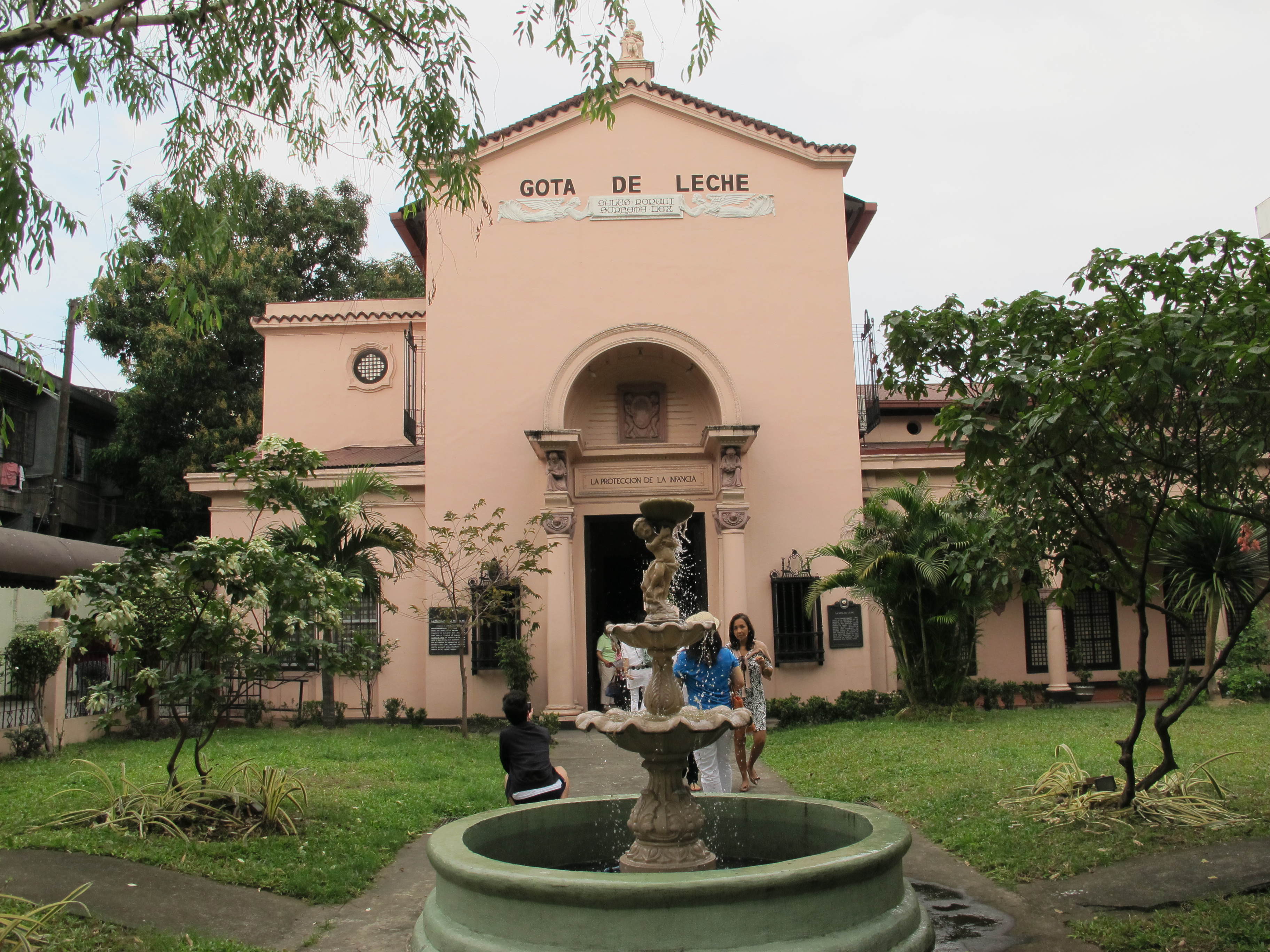
La Gota de Leche


Skipping Manila? I know …. the sun and sand beckons in the beaches of Boracay. There’s serious diving in Palawan. You long to breathe the mountain air in Baguio and Benguet,  or simply go completely rustic in the northermost part of the country in Batanes. Or maybe you want to try your surfboards in Siargao or even check out the tarsiers and chocolate hills in Bohol.  For many, it’s the heritage sites in Vigan and Laoag in the Ilocos region, where one is transported in time to a colonial era.  The air is cleaner, less crowded, people likely less busy and thus friendlier, and board and lodging even cheaper in the islands south of Manila and the provinces north of Manila.


La Gota de Leche

And Then There’s Manila…..


I can’t blame you.  Manila is so congested, dirty in many parts of the city, and traffic is so bad.  I live in the better part of  Metro Manila not too far from the shopping malls and fancy restaurants  lining the streets of Makati.  I hardly venture out of Makati. In fact, it has been ages since I last got to the center of Manila where one finds Rizal  Park,  Intramuros with its city walls and Fort Santiago.  Whenever I have foreign visitors who have a day or a whole afternoon to spend in Manila, I would invariably bring them to Intramuros and Fort Santiago, and simply point out Rizal  Park as we pass this park along the way.  These 3 are the likely top tourist attractions in the city, but I’d say only because not too many write or talk about the other interesting historic sites in the metropolis.


No, it is not a secret.  We have heard of some of these places, even watched documentaries on television about them.  But perhaps not often  enough. Nor enough.  Many history books hardly talk about them too.  And as soon as we hear the heritage sites are in Quiapo,  many of us would either lose interest or feel not too brave to walk the streets there.   Sad but true.  And I am ashamed to admit it.
 

Quiapo Church


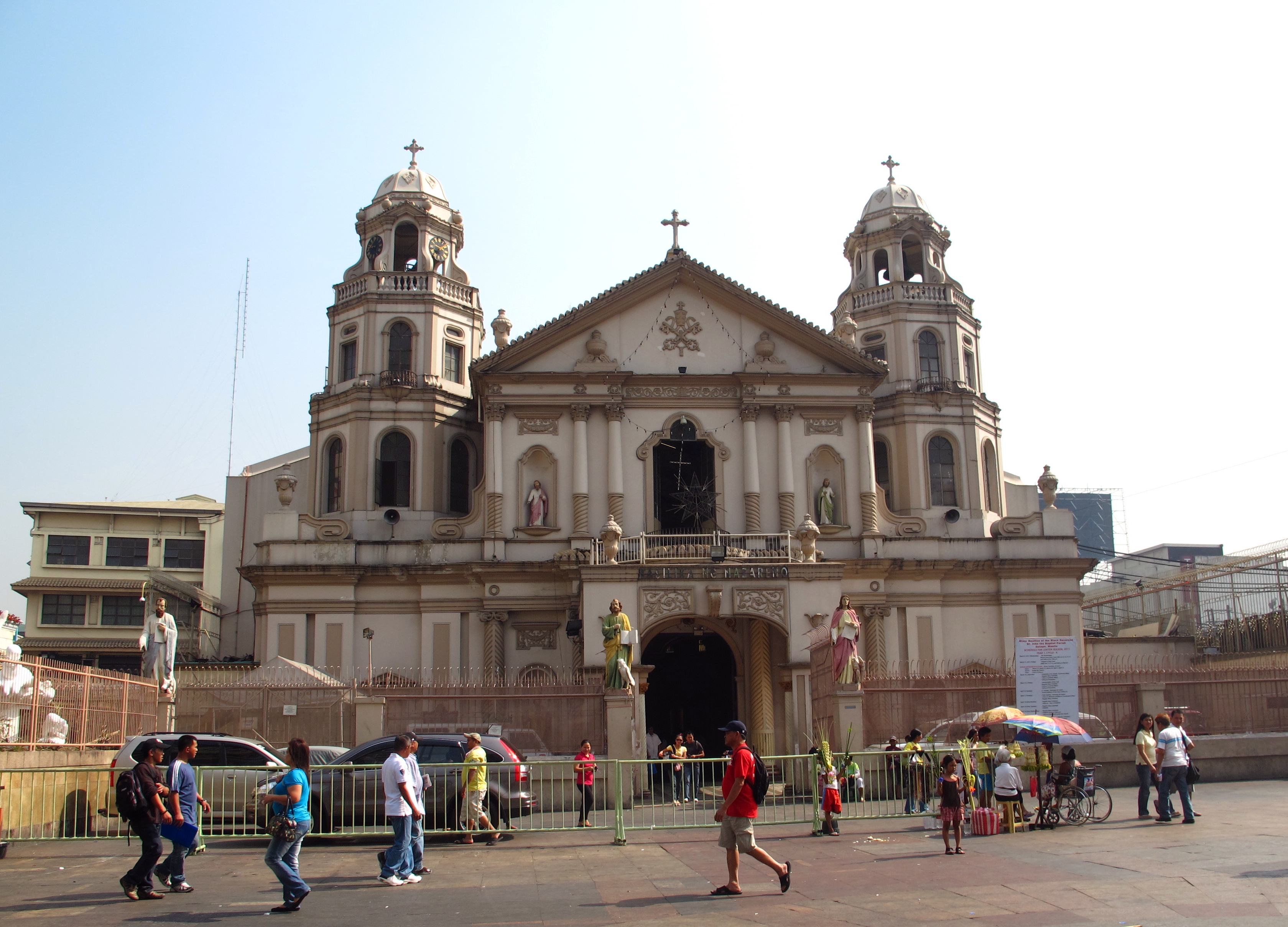
QUIAPO is best known for the Quiapo Church, the official “residence” of the Black Nazarene. Around the Church, one finds many hawkers selling religious articles side by side vendors selling “anting-anting” (charms, herbs, amulets, voodoo items) . Crossing the plaza towards the Church, one would likely meet “traders” who would not too subtly whisper the  dollar-peso exchange rate for those interested to change their precious dollars to Philippine pesos.  Mixing with the crowd are likely predators on the lookout for “innocent victims”.   You find them too in the streets of Madrid, Paris, Prague and Rome.  The bag snatchers and thieves.  Sadly, these characters kept many like me from visiting this place more often.


All That Chaos Towards A Center of Spirituality!

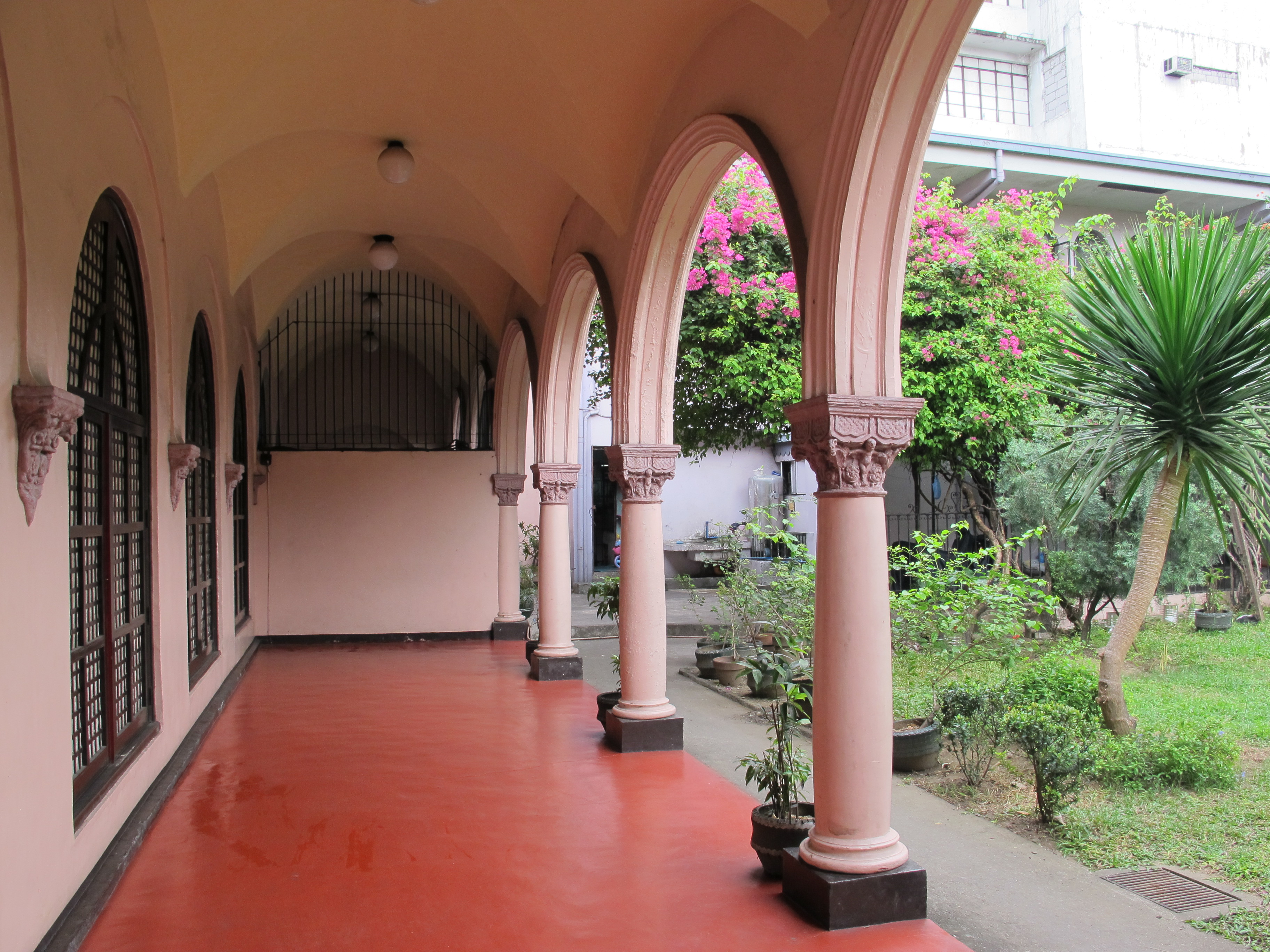
Garden View from Inside La Gota de Leche

La Gota de Leche


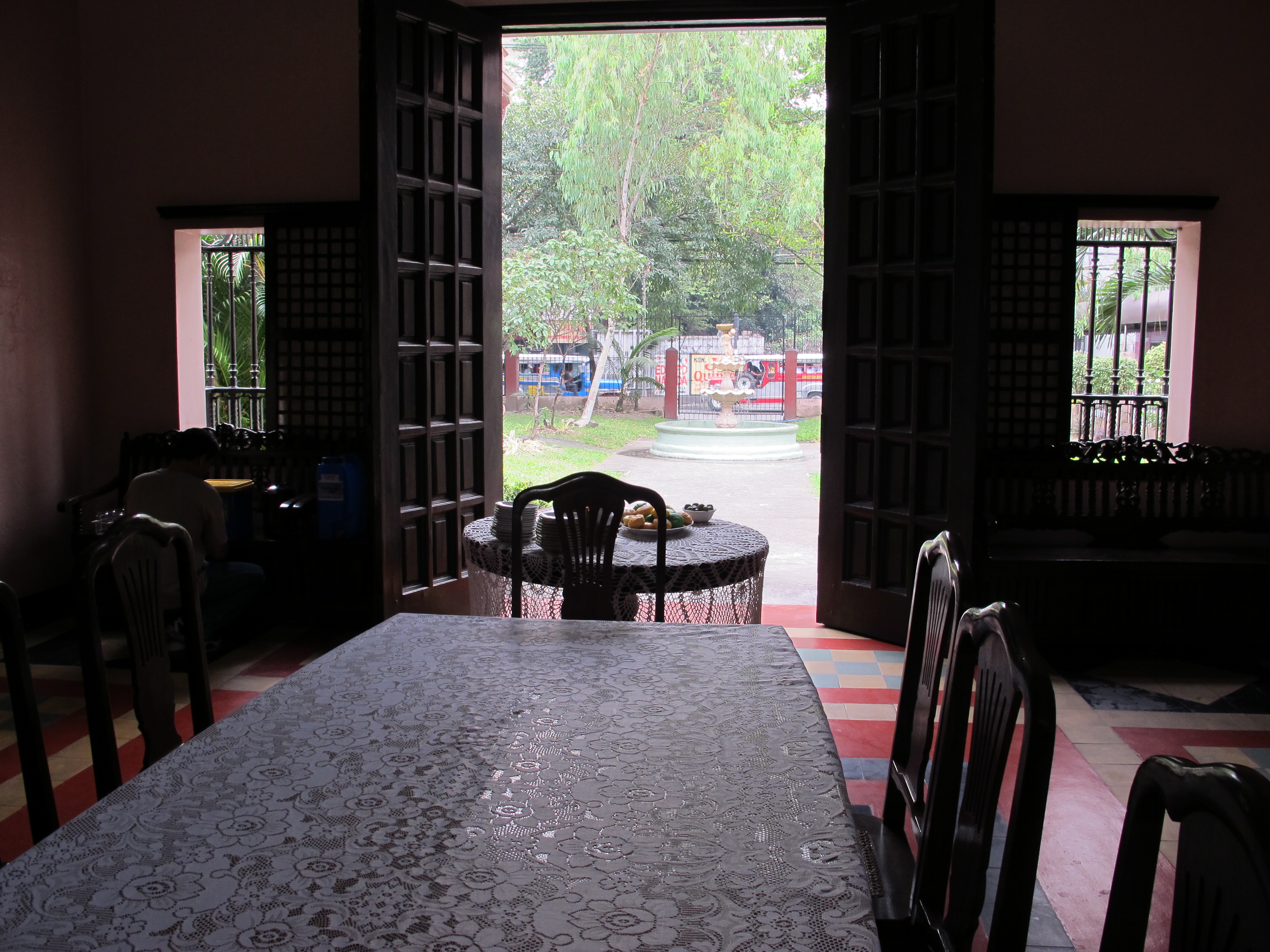
Amidst all the chaos, it is a pleasant surprise to find this corner of elegance.  A kind of class that soothes the nerves.   Like some oasis which quenches the thirst for some degree of tranquility.  


Literally means “drop of milk”.  This place was inaugurated in 1907 by then Governor-General, later US President William Howard Taft.  Designed by Arcadio and Juan Arellano, fathers of Philippine architecture, inspired by the Hospital of the Innocents, an orphanage in Florence designed by Brunelleschi, a renowned  Italian Renaissance architect.  As if to indicate what this structure stands for, there are decorative reliefs on pediments with images of infants.


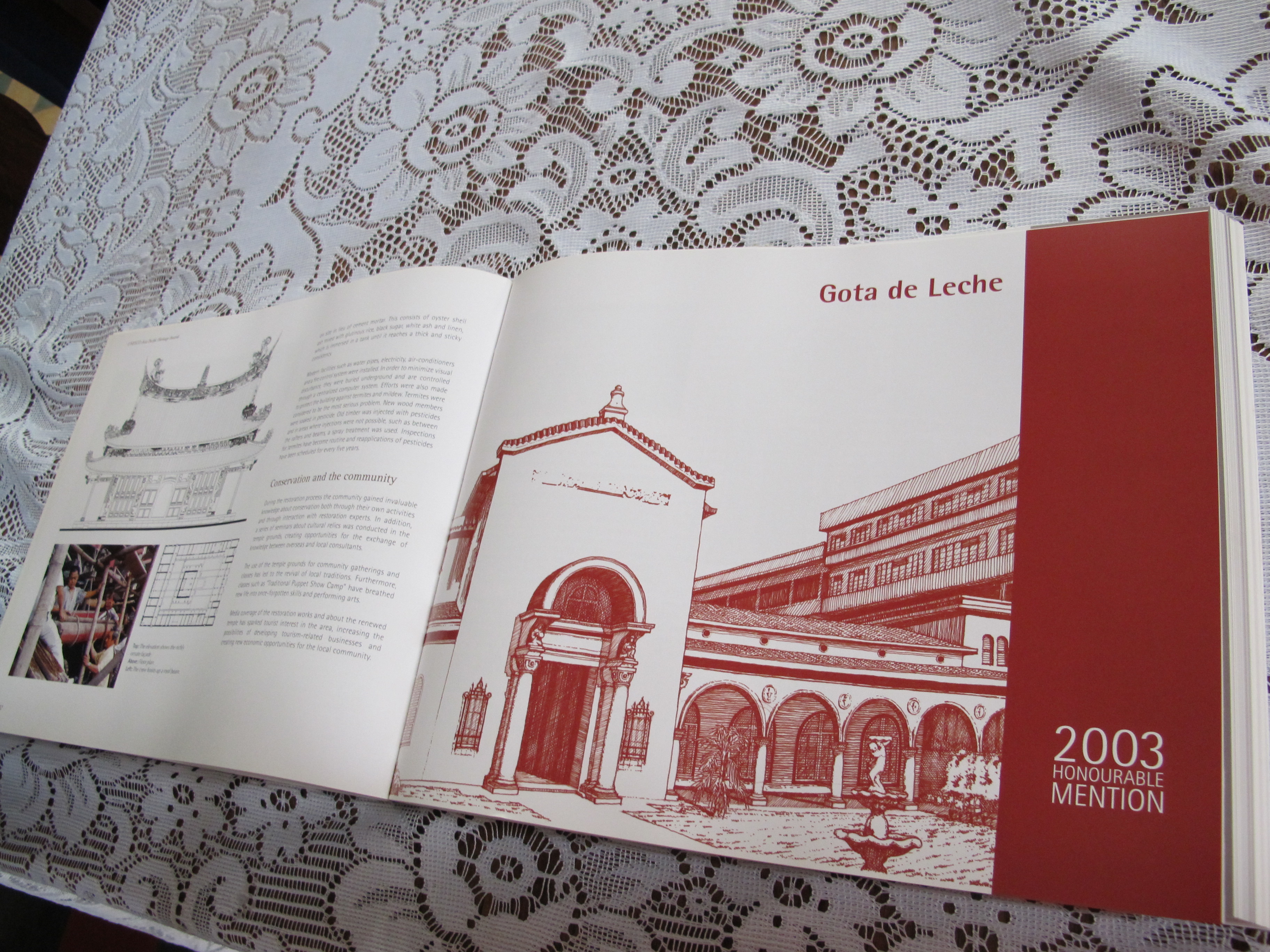
Established as a clinic to address malnutrition concerns among the indigents, it was run  by the La Proteccion de la Infancia, Inc. This outreach organization was founded by philanthropist Teodoro R. Yangco in 1907. Records show the construction was completed in 1917 so that makes this building nearly a hundred years old.  You can say this organization was the country’s very first NGO or non-government organization.  A charity project dedicated to infants and young children, its operations involved the distribution of milk to indigent children. It further evolved to champion women’s rights as it also houses the “Kababaihan Laban sa Karahasan Foundation” (literally “Women Against Violence”). The charity organization exists to this day, and must take credits for the restoration of this building in 2002-2003, for which it was awarded the 2003 Heritage Award of the UNESCO Asia Pacific Heritage Award for Culture Heritage Conservation.


Located in 859 Sergio Loyola Street (parallel to Morayta Street), La Gota de Leche is very near the University of the East.  It almost sticks out like a sore thumb in the University Belt, in Sampaloc to be precise, in an  area hemmed in by sidewalk vendors, dilapidated buildings and smelly trash bins. But La Gota stands proud like an old contessa, with its cross-vaulted arcaded loggias, front garden and a non-functional water fountain.

Bahay Nakpil

Bahay Nakpil


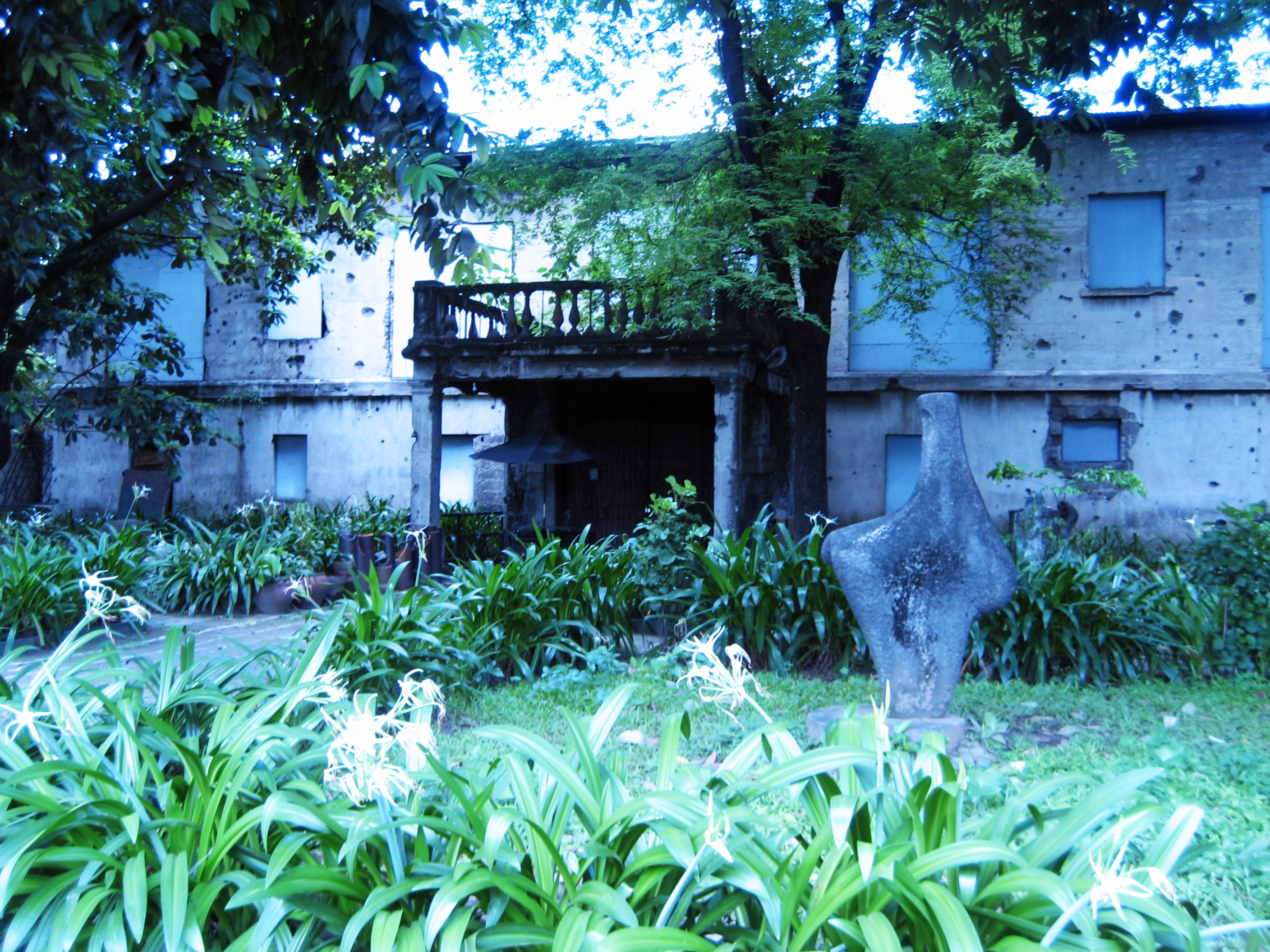
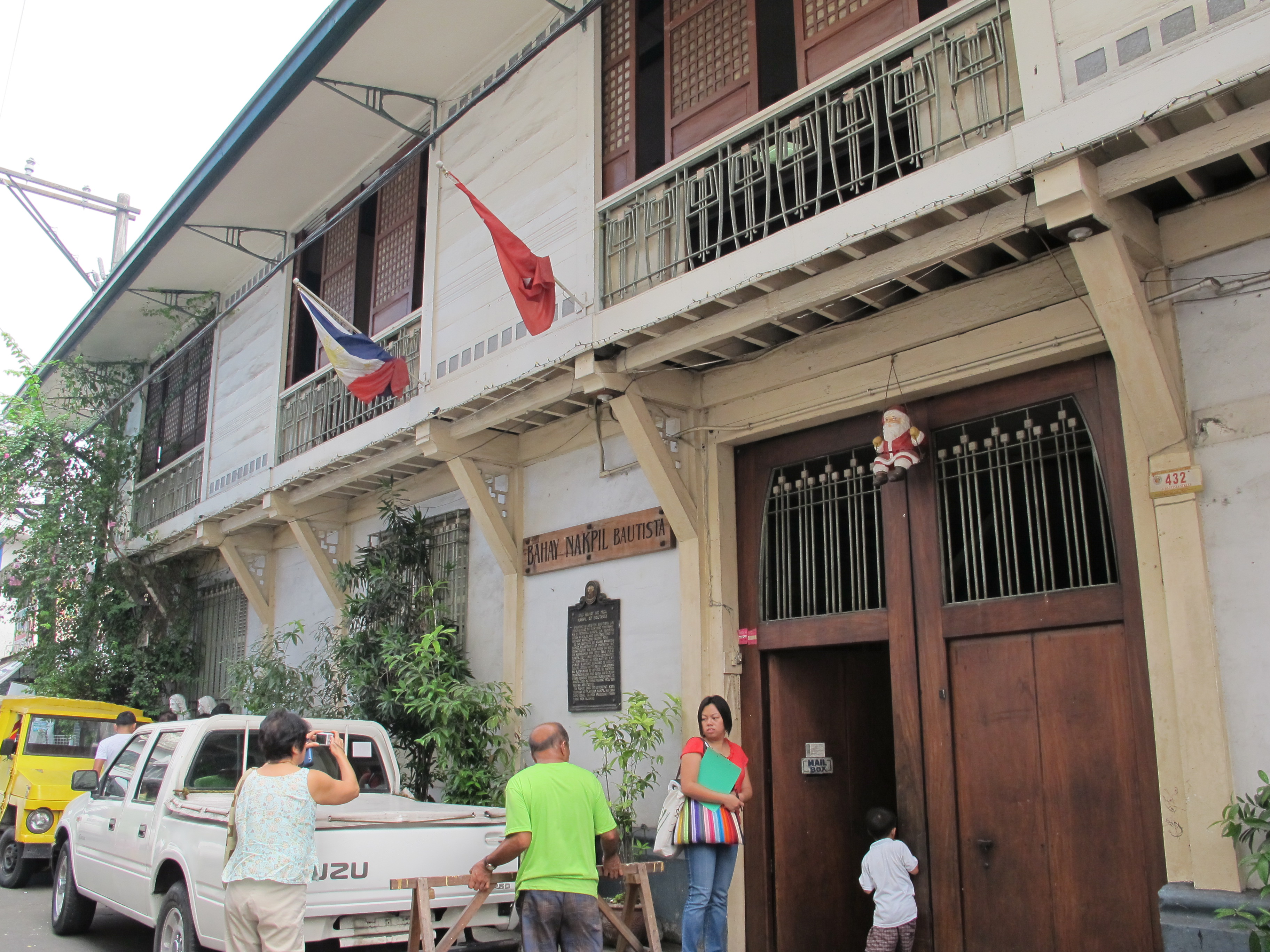
Bahay means house.  This is the house of the Nakpils and Bautistas, built in 1914 Truth is the house should be called Bahay Nakpil-Bautista. Besides being a century-old house , its distinction lies in its being home to some of our heroes of the 1896 revolution.  Located in A. Bautista Street, just off Ramon Hidalgo Street,  the 2 Philippine flags and a marker in front of the house are the only tell-tale signs that it is a house of distinction.  Right beside it is another house, even older, which seems ready to collapse anytime. Both are of the “bahay na bato” architecture which literally means “house made of stone”, though structure is really that of an upper storey made of wood built over a stone foundation.  Typical of the bahay na bato, architect Arcadio Arellano incorporated Viennese Secession motifs into the making of the house. Oddly, the style was adopted after the family received a gift of Secessionist furniture such that the design of the house worked around the furniture motifs.


Street Scene @Bahay Nakpil


The house is owned and built by Dr. Ariston Bautista, a noted propagandist during the Philippine Revolution .  His wife was Petrona Nakpil, whose brother, Julio Nakpil, composed the secret society Katipunan’s patriotic hymns.  Katipunan was founded by Andres Bonifacio, who is married to Gregoria de Jesus.  Inside, there is a marker citing that this has also been home to Gregoria de Jesus, widow of working class hero Andres Bonifacio, who then married Julio Nakpil.  Bahay Nakpil-Bautista was also the place where the family operated its Plateria Nakpil which crafted many jewelry pieces highly prized by Manila’s elite at the time. As distinguised Quiapo families,  the house witnessed many social gatherings and concerts aside from being home to national heroes and artists. Continue reading