Latest Entries »

#30 HOW SPANISH ARE WE?


Luckily for me, we had more Spanish units in college than the younger set. Just the same, I am stumped whenever I’m forced to express myself in Spanish, and more so, when I’m compelled to listen to someone reply to me in Spanish. I’m telling you…… The easy part is expressing yourself in Spanish. Google Translate and all those English-Spanish dictionaries work for all those questions you have in mind. Until they give you their answers. As in DUH????



20120420-160337.jpg


I have been living in Madrid the past 2 months. I still don’t speak Spanish. But I go to the palenque, ride the metro, take day trips out of Madrid using the bus or train, visit museos, shop and sip good coffee along Gran Via, and feel “comfortable” in this foreign land. I would always find something “familiar” — no matter how vaguely — in every phrase or sentence uttered, or in many signposts or directions. Thank God the numbers (uno, dos, tres….), prices (quince, dies, katorse….), time (alas cinco, alas cuatro…..), days (Lunes, Martes, Miercoles….), months (enero, febrero…), are all familiar to us. These days, I confidently greet our porter “Que tal?” , hoping he would reply in “despacio” mode.


20120423-231600.jpg


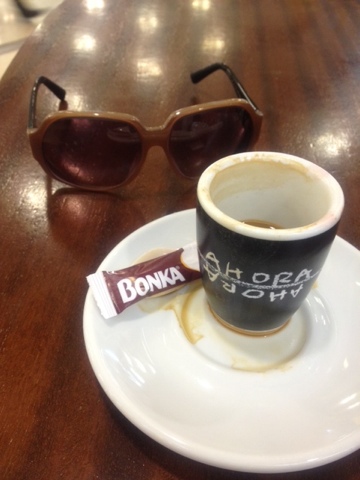
Going to the palenque is always an adventure. I easily found my “Suki” (favorite shops) where the vendor would actually gently correct my Spanish. Like tomate, not tomato. Cuarto (1/4) not cuatro. My fish vendor would even teach me how to cook the fish as if I understood beyond “plancha” (grill) and harina (flour). 😄 I easily spend 2 hours here, even drink coffee from a bar where the sacred brew is served in a glass! And how I remember my very first ordeal here….. How to order coffee with little milk. You see, you typically order cafe con leche (with milk) or cafe cortado (espresso). The problem is I’m not crazy over espressos and the alternative cafe has mucho leche!


20120425-171354.jpg


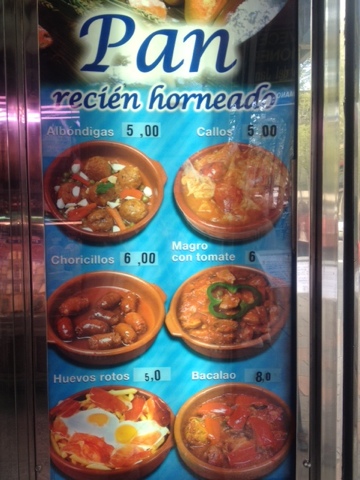
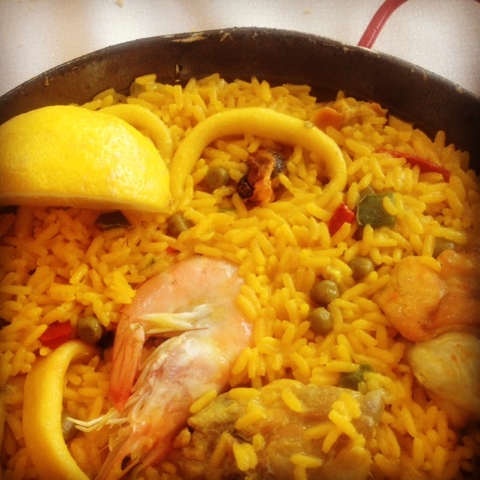
I have been very observant about signposts. More so about menus. Many Spanish dishes naturally found their way to Pinoy tables. The names ring familiar, sometimes similar, other times completely different. Like there is alBondigas here versus our alMondigas. Of course, every Pinoy loves Jamon but our Hamon is more American than Spanish. Which is a pity. And who has not heard of Arroz Valenciana? Valencia is where paella originated. How about Leche flan? Or pastillas?
 

20120425-173005.jpg

20120425-173246.jpg


Even here, you don’t throw your “Basura” just anywhere. When you want to rent or lease something, you say “Alquila” or “alquiler” similar to our arkila. And it’s not difficult to figure out what entrada and salida mean.


20120425-174005.jpg

20120425-174205.jpg


It will take some great effort for me to learn a new language like Spanish. Call me slow. But I’m always amazed how some Tagalog words are rooted in Spanish. After all, they ruled for nearly 400 years, didn’t they?
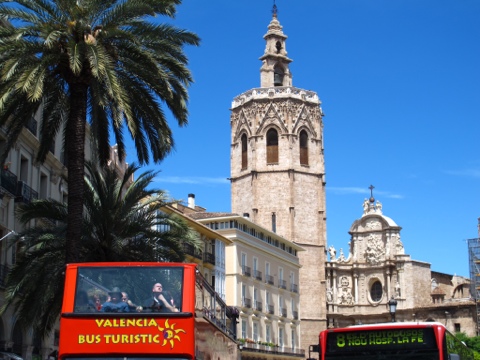
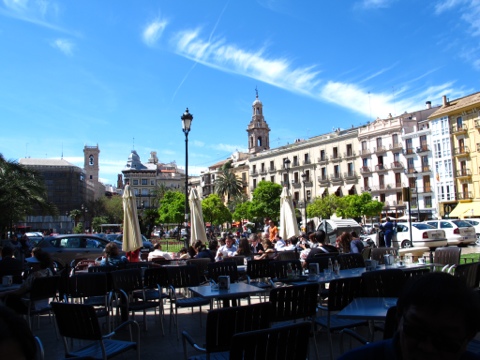
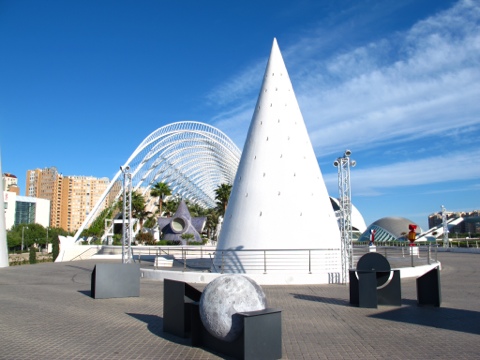
All wrapped up for Valencia, Spain. Weather forecast was 7-15 Celsius. Partly cloudy, light rain. Leaving at 4 am for the 4 hour drive from Madrid was a curse. Best decision I ever made was to bring my pillow in the car. The next 4 hours was put to good use………waking up fresh and not so grouchy in the place where paella was born.


20120422-215732.jpg

20120422-215951.jpg


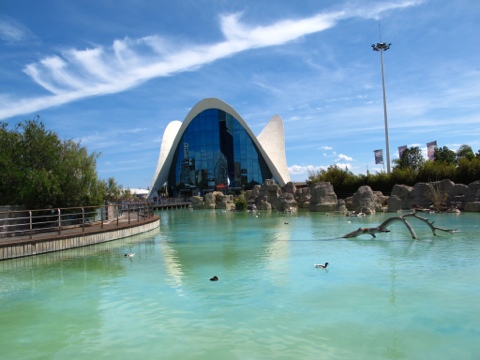
But that’s lunch. As we arrived well before opening times of many churches, museos and parks, there was plenty of time. As the car dropped us off at the Ciudad de Los Artes y Ciencias, the wind chill dropped from 7 Celsius to 14, and temp’s rising. Not bad. It’s cool and pleasant. Many tourists visiting Valencia had this itinerary uppermost in their minds. In fact, our hired driver only knows how to drive to this Park where his paying clients spend their whole day in the Park designed and created by Calatrava in some very futuristic design, then heading back to Madrid without even visiting the historic center.


20120422-223821.jpg

20120422-223955.jpg


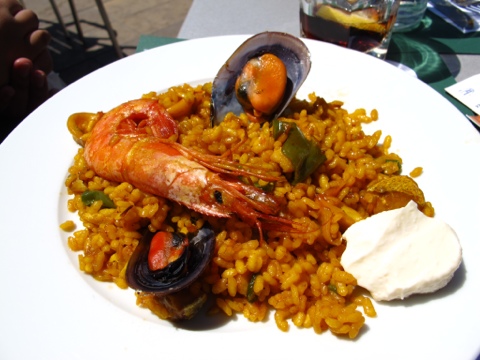
I won’t do that. If made to choose, I can skip the Park altogether and concentrate on Valencia’s Cathedral, Torres, Plazas, Fontanas and Museos. Not to forget, I will never ever pass up the chance to order that paella in this historic place where Paella was born! Who would? We had our best paella in Valencia. And guess what? We had San Miguel Cerveza here too.


20120422-224849.jpg

20120422-225007.jpg


But we were in for a better surprise. The Cathedral has a special chapel which allegedly houses the “Holy Grail”. Behind a protective glass panel is the chalice which was reportedly used by Christ in the “Last Supper”. The Chapel is not big. Maxed out, it can seat maybe 50 pax. The door to the chapel has stone carvings and not huge at all. And if you stand just before the door, you’d find sunlight beaming right through the area where the chalice is kept. They say there are many legends involving many cups claiming to be the Holy Grail. Me? I have not heard of any. Till NOW. The story goes that the holy cup, or stone dish, or holy chalice, in the Saint Mary of Valencia Cathedral was allegedly taken by Saint Peter to Rome during the 1st century. Thereafter, Saint Lawrence supposedly brought it to Huesca, Spain in the 3rd century where it was guarded and protected from Islamic invaders of the Iberian Peninsula.


20120422-230650.jpg

20120422-230803.jpg


I have been to quite a number of pilgrimage sites yet I hardly listed Valencia among my must-visits. And I only read about it when I started researching on Valencia’s attractions. Makes me wonder. And quite frankly, I have not heard of the other legends involving the Holy Grail.


20120422-231427.jpg

20120422-231552.jpg

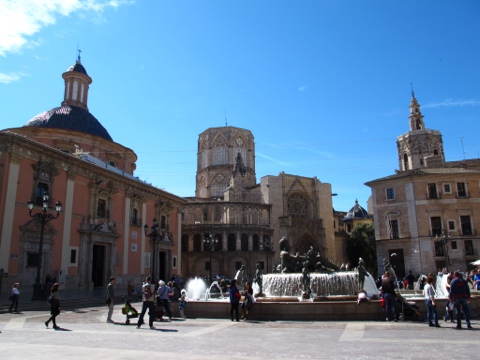
From the Cathedral, we walked towards the Plaza Dela Virgen where we found another cathedral door, again with intricate stone carvings of the 12 apostles. Some with heads, some without. This is the same portal where the Tribunal de las Aguas meet on Thursdays to settle disputes involving irrigation water.

20120422-232013.jpg

20120422-232054.jpg


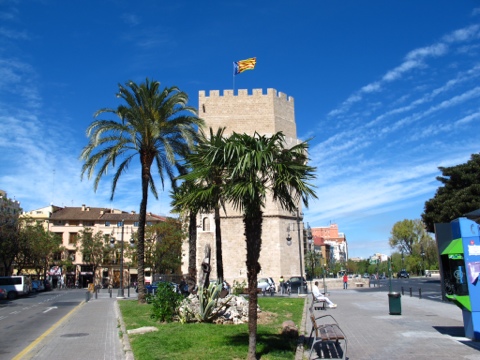
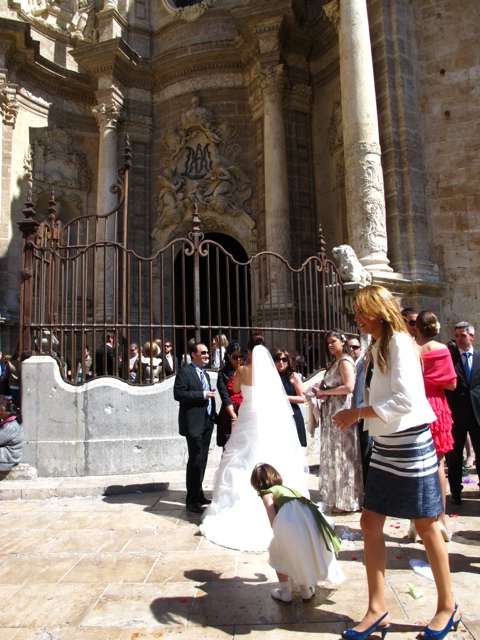
Lining the Plaza are many shops and dining places which overlooks the lovely Turia fountain. But this I must say, everywhere you look is pretty. There are always some spires or towers somewhere. We chose to walk away from the Cathedral towards Torre de Serranos. Didn’t bother to climb up. Meandering around bends and corners, we found ourselves back in the Plaza de la Reina right in front of Miguelete Tower of the Cathedral. By this time, we’ve peeled off our cardigans and coats as temp soared to 27 Celsius! Thus, we paused here to catch our breath and at the same time witness a wedding ensemble. Bride and Groom busily accepting congratulatory kisses from friends.


20120422-233251.jpg

20120423-122929.jpg


Now, what is that little girl looking for?


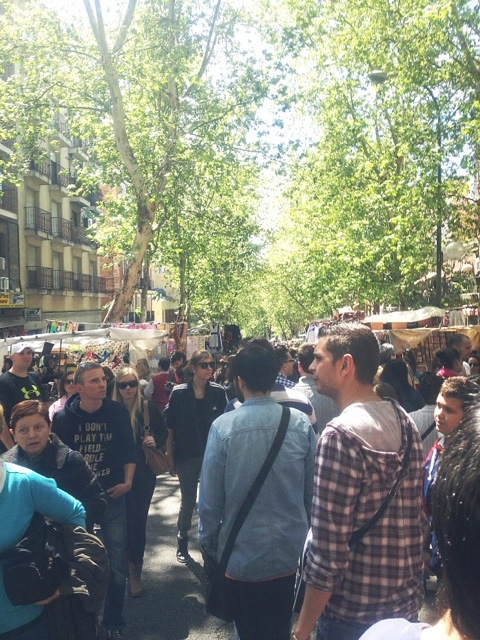
So, who has not been to El Rastro? Today’s a Sunday, and we’ve been putting this off for the longest time. Not that we haven’t done any shopping — are you kidding?— but a trip to El Rastro is more all about experience than anything else.


20120422-192503.jpg

20120422-195954.jpg


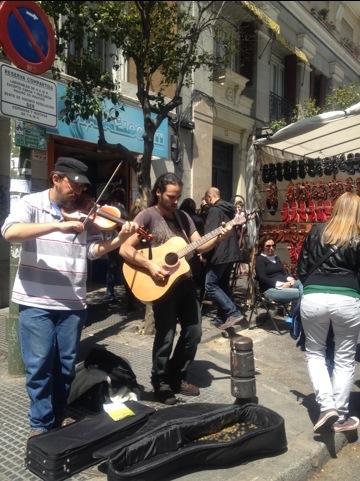
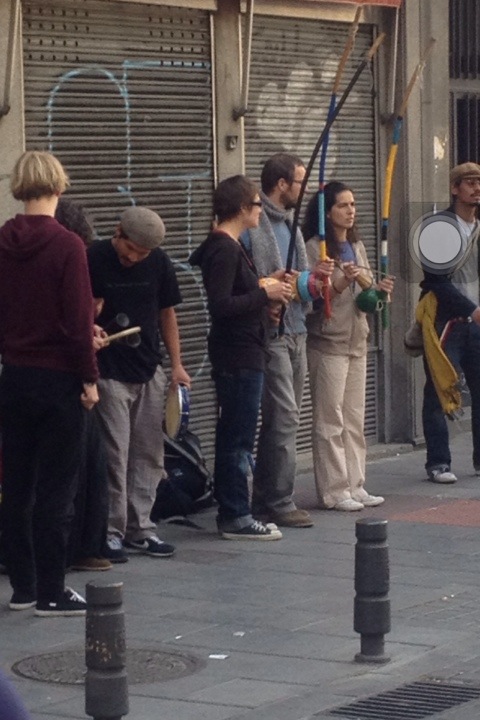
Took the metro all the way to La Latina. As we got out of the Metro Station, there was no mistake we were in the area we intended to be in. Music flowed from a couple of strummers just as crowds seamlessly flowed in one direction — towards the flea market called Rastro.


20120422-200403.jpg

20120422-200923.jpg


The Rastro has been an “institution” for centuries. I won’t say you’d get great bargains here as we have shopped elsewhere and enjoyed many rebajas. Even our very own Jose Rizal failed to resist shopping in El Rastro. These days, the cheap finds are Made in China and the leather products are not exactly cheap. If you ask me, I’d rather shop in a store less crowded. Besides, the place is a favorite hangout of pickpockets. Knowing that gives me anxiety attacks.


20120422-202350.jpg20120422-203140.jpg


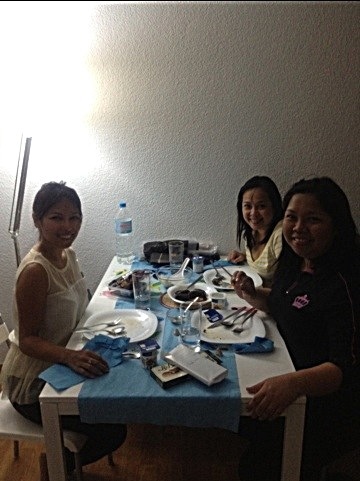
Anyway, our El Rastro sojourn allowed us to meet a US-based Filipina visiting Madrid with her husband. The day we met was also the day they were leaving for home which is Rhode Island, NY. Guess what happened? The husband left ALONE for US of A. The Filipino wife stayed behind, and staying with us till May 1. Most time anyway. She’s joining my girls on a trip to Lisbon and next weekend in Barcelona. Crazy enough for you? Well, c’est la vie. We celebrate, and so does our new friend Kate!


20120422-221300.jpg


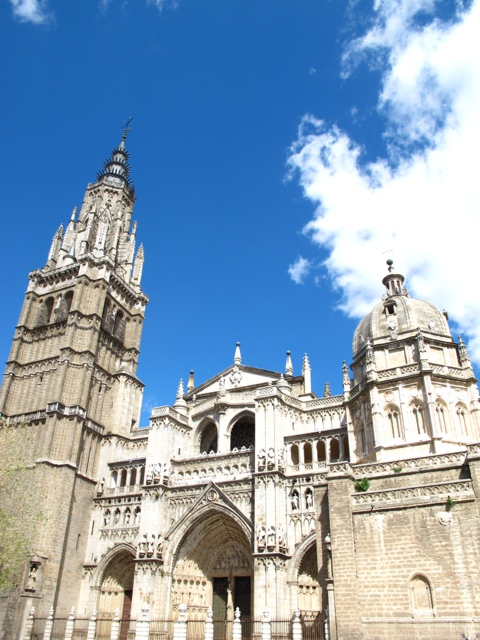
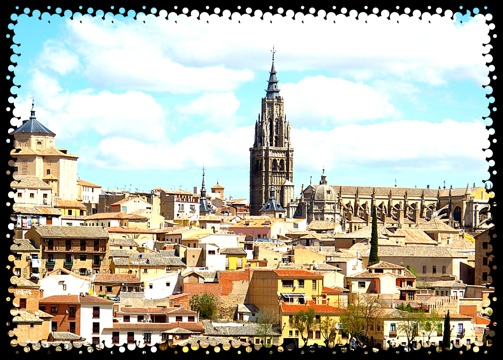
My TravelBlog piece dwells on my day trip to Toledo — my second time here in this lovely city brimming with art, culture and history. Ten years ago, I was also here and blogged about my experience in a brief stopover on our way south from Madrid. This time around, I would not be deprived the chance to visit and LINGER in the cathedral and in this place made even more famous in many El Greco paintings.


20120417-110704.jpg

20120417-110731.jpg


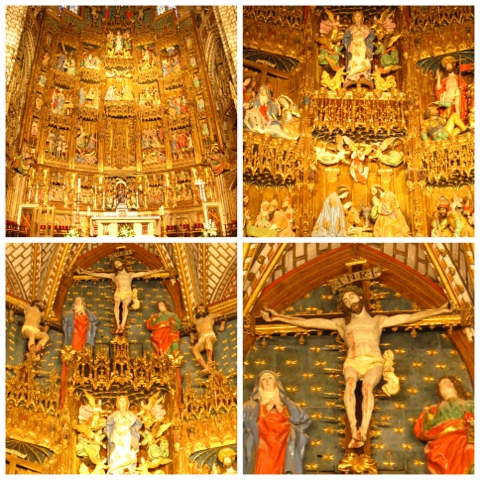
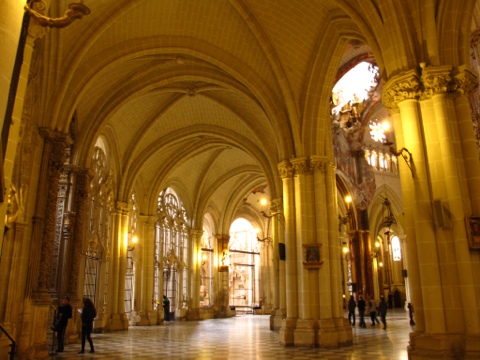
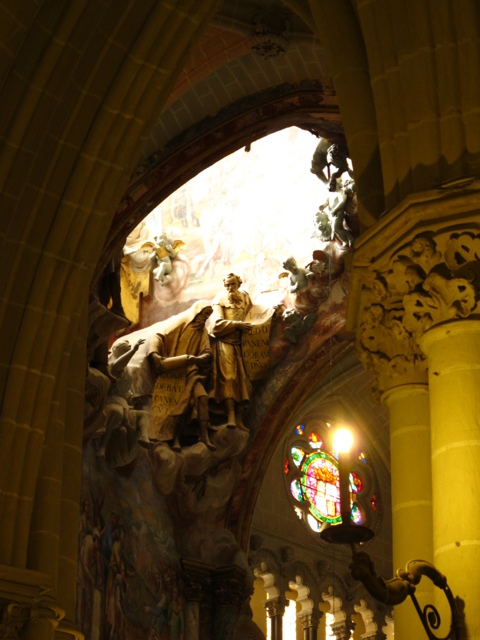
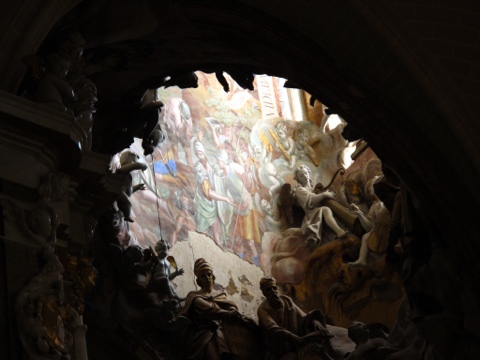
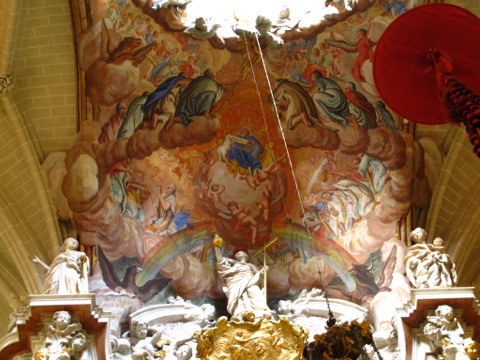
I choose to concentrate on the Toledo Cathedral. Having just recently visited the cathedrals in Avila, Segovia, Sevilla and Cordoba, you may think it’s overkill to visit another one. Not so in Toledo. The retablo behind the Main Altar and that “hole in the ceiling” —- the dome — are enough to justify the €7 admission here. Not to forget, I particularly love the statue of a smiling Mama Mary and a playful Infant Jesus in the Choir area just right across the Altar.


20120417-111258.jpg

20120417-111349.jpg


As I leisurely walked around the Cathedral, I would always catch myself looking up towards the ceiling. That “hole” impresses me so. I wonder how it was sculpted out up there, or how they even keep it clean, or how they change the lightings up there. Or is that natural lighting? Perhaps. As with many church areas where these geniuses of the past thought of almost everything!


20120417-111827.jpg

20120417-111852.jpg


What an inheritance! Spain is so lucky to have “inherited” all these treasures. And all those El Greco paintings of saints inside the capillas. Of course no photography was allowed inside the chapels which may well be art galleries by themselves given the many precious paintings inside. And as one steps outside, there’s so much more to see. Truly, Toledo’s claim as the biggest “open-air museum” rings true.


20120417-172124.jpg

20120417-172206.jpg


The best way to visit Toledo is to walk all around. Easily a half day just walking around, peeking in and out of churches and museos. Just imagine El Greco walking on the same cobble-stoned paths, drawing inspiration for his paintings and Miguel Cervantes for his Don Quixote novel from Toledo’s inheritance!


You may also want to read my 10 year-old blog on Toledo. It may be my 2nd time now, but the thrill of being in this huge open-air museum remains.


In an earlier blog, I wrote about our day trip to Avila from Madrid. It was the week before Holy Week. And I ended up doing Avila 2 days in a row. But that’s another story.


20120412-225819.jpg

20120412-225913.jpg


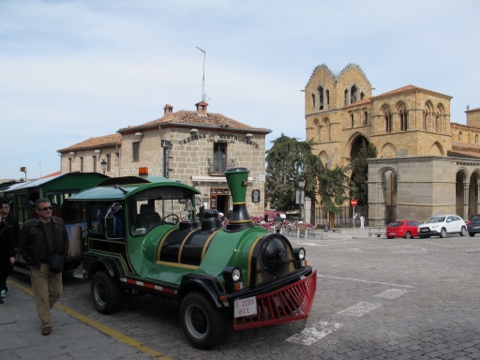
There are many ways to tour Avila. The Tourist Office has several itinerary choices for visitors. The more energetic may want to round up the walls and visit as many churches and museums. The lethargic, exercise-deprived may opt to train in and around the 11th century walls. The first time around, it was a walking trip for us. Avila has enough churches ⛪and old buildings 🏰within its “murallas” or walls to fill up a whole day. The 2nd time around — which is really just the day after — we didn’t miss the chance to ride the green train that weaves around and outside the walled city. A good idea, sparing us from the leg cramps of the day before.


20120412-230557.jpg

20120412-230838.jpg


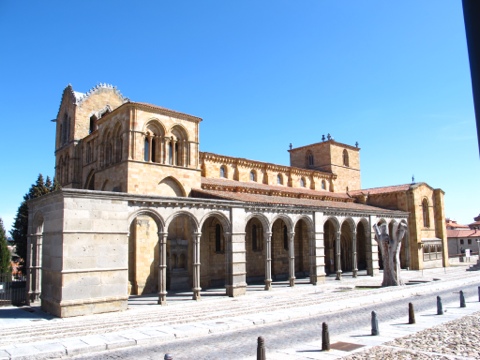
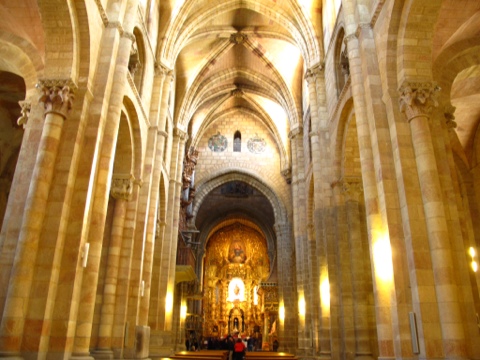
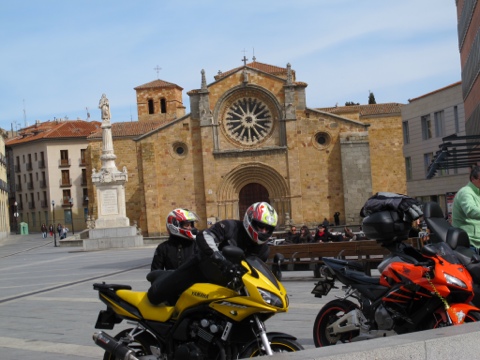
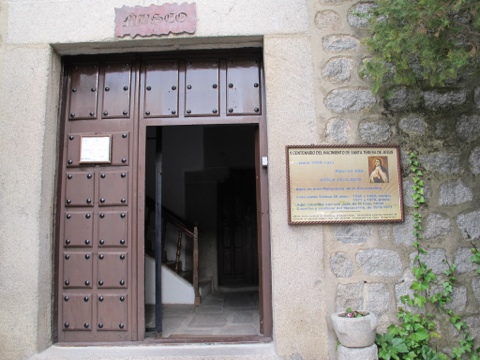
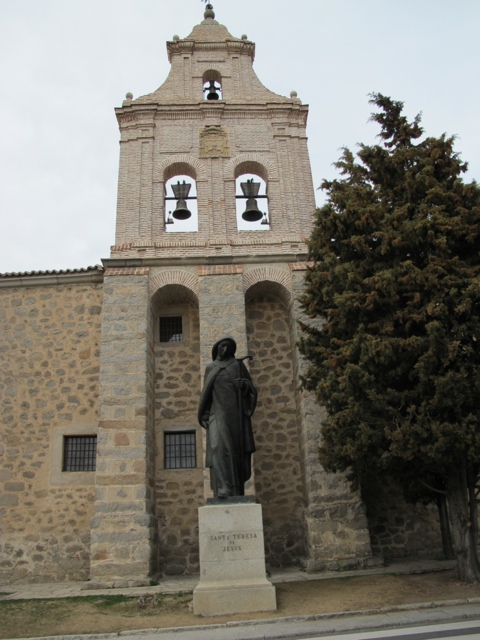
Typically, every tour starts in the San Vicente Basilica, 💒which is right at the mouth of The Murallas. The basilica is where the young Prince, son of Ferdinand and Isabela, remains buried. Very impressive. Just before entering, take time to appreciate the wood carvings on the doors and the statues guarding the admission area. I spotted 10 apostles and wondered. When asked, the guide didn’t know which of the apostles are missing. Also, every pilgrim here won’t miss a visit to the Museo de Santa Teresa. Although Avila has another patron saint (well before St. Therese was born and sainted), there are many museums and relics of St. Therese, along with all those stores selling “yemas” named in her honor. If you ask me, those “yemas” taste like pure yolks sprinkled with sugar. Too rich. 😖


20120412-231217.jpg

20120412-231320.jpg


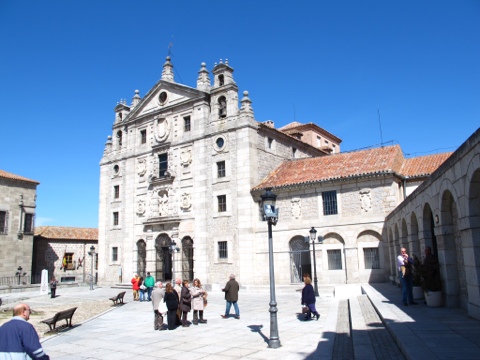
On our 2nd visit, we visited the Convent cum Monastery where St. Therese of Jesus was once the prioress. Coincidentally, this Monastery of Incarnation opened its doors on the very day of the saint’s baptism, though it was 20 years after when she entered the convent as a nun in 1535.


20120412-231858.jpg

20120412-232010.jpg


Inside, we spotted the exact site where St. Therese met the child Jesus. The child Jesus allegedly appeared to the saint right by the main staircase of the Monastery. The story goes that the child asked the saint “Who are you?”, to which the saint answered “Teresa of Jesus”. Then she asked the child, “Who are you?” And the child answered “I am Jesus of Teresa”.


20120412-232318.jpg

20120412-232419.jpg


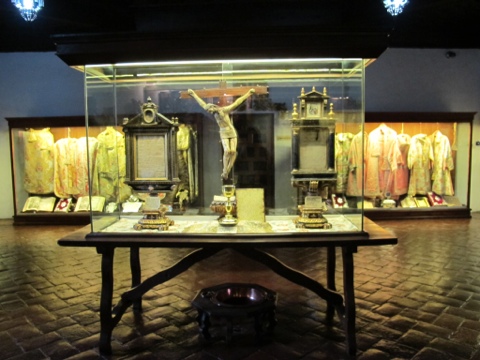
In 1982, Pope John Paul II visited this convent. The chair on which he sat is encased in glass and put on exhibit here. There are many relics inside the Monastery, and the cell where St. Therese of Jesus lived is well-preserved.


20120412-234024.jpg

20120412-234419.jpg


The Monastery’s gate is actually outside the walls. If you are riding a cab, be sure to be dropped off right by the gate. Easily, you can spend an hour or less here. A small tienda or souvenir shop can be found as you exit the same door you entered.


I do not pretend to be a connoisseur, nor am I saying I’ve tried all culinary delights around here. But I dare say that what I have found so far, I LIKE!


20120410-142051.jpg

20120410-142206.jpg


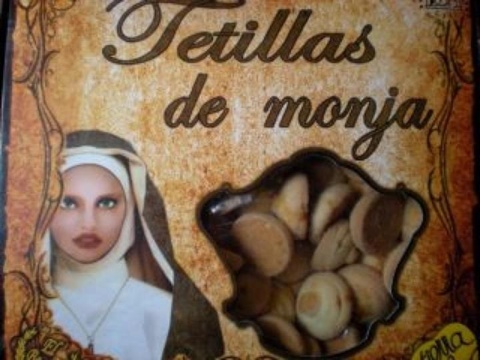
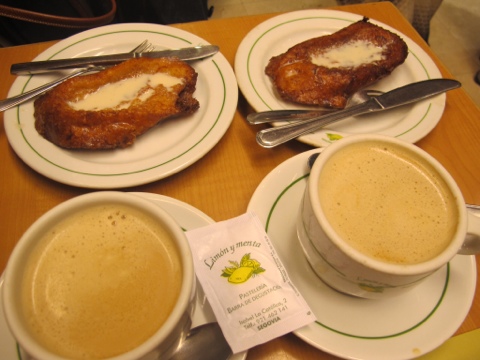
A trip to Avila meant bringing home some boxes of those yemas and cookies irreverently called “Tetillas de Monja” . Lenten Season meant we should try that Lenten delicacy called “Torrijas” or “Torrejas” —- frankly a cross between a French Toast and a bread pudding.


20120410-142607.jpg

20120410-142655.jpg


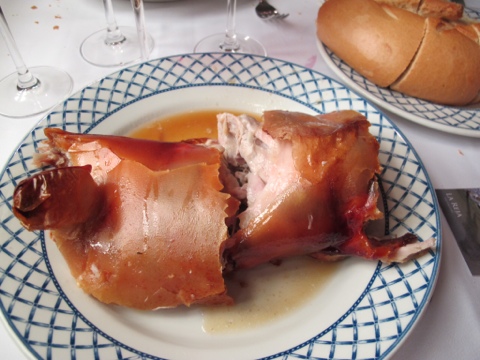
In Segovia, never miss a cochinillo meal at no less than Meson de Candido. They didn’t build a monument for Candido for nothing. It’s only a half hour AVE train ride from Madrid. The cochinillo, the cathedral and the Alcazar are good enough reasons for a day out to Segovia.


20120411-105153.jpg

20120411-105514.jpg


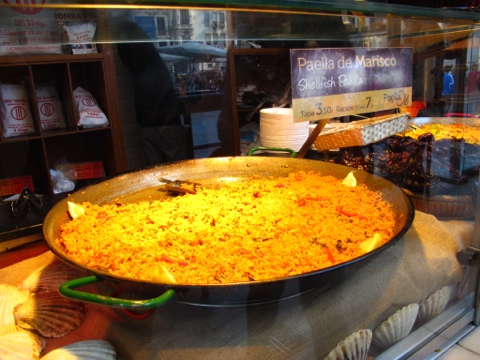
Of course, one must try the authentic paellas here in España. We tried some when we sat and dined in Plaza Mayor, while watching the crowds in chilly weather. But the best was introduced to us by our foodie friends who brought us to this hole in the wall somewhere in Tres Peces, 20 near the Anton Martin metro station. It is called Ventorillo Murciano.


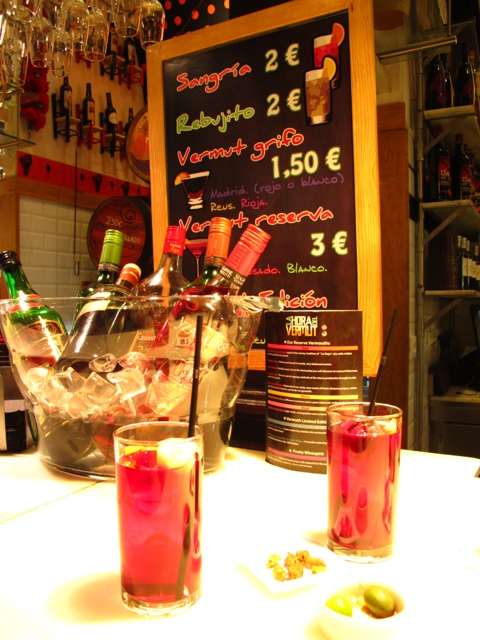
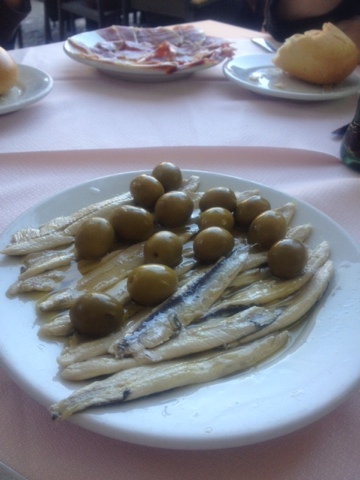
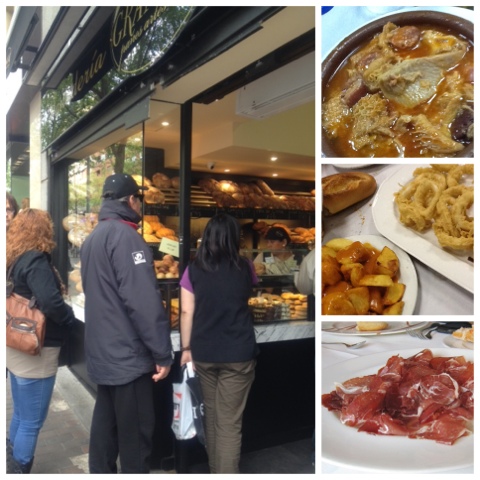
A trip to the Mercado de San Miguel is also a must-try. Have your cheese and croqueta fix here. Or grab a drink or two while savoring some boquerones, Jamon, langostinos or some other shellfish. We even found some Chicharon, which they call cucurucho!


20120411-110938.jpg

20120411-110957.jpg


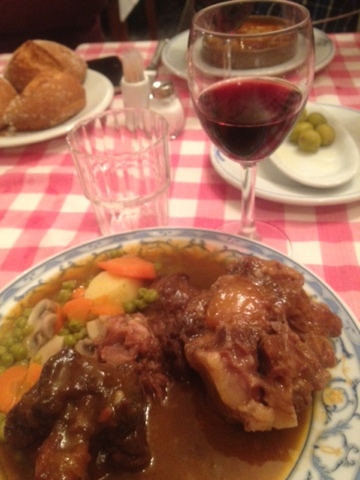
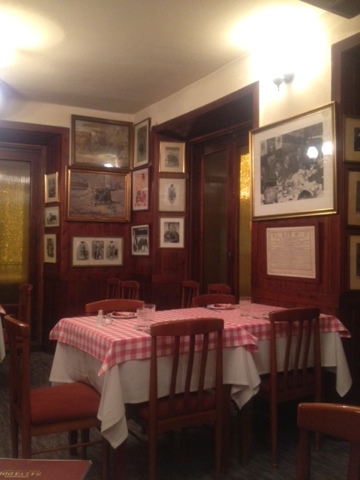
We checked out Casa Botin, that oldest running restaurant in the world, but there was a long line that Easter Sunday. No problem. The same foodie friends D and J introduced us to another Hemingway favorite haunt. Restaurante Salvador does not serve Botin’s suckling pig (besides, we had our cochinillo fix in Segovia) but it certainly serves the best Rabo de Toro. My friends said this is the same place where matadors hang out after a corrida. And one of them matadors had an affair with no less than Ava Gardner. Whether it was after or during her marriage to Frank Sinatra is debatable. But who cares if one is served bull’s tails for dinner?


20120411-111846.jpg

20120412-184423.jpg


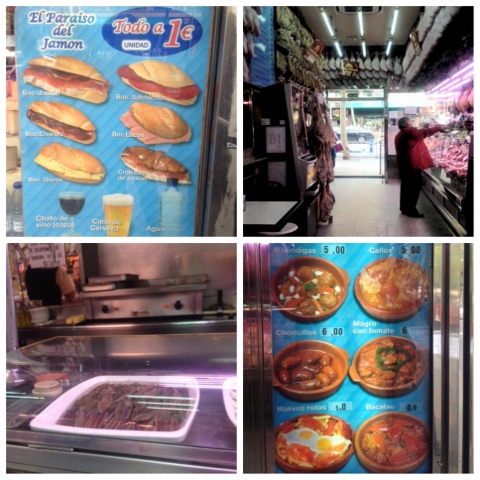
Now, if you’re on a tight budget…..you don’t have to do Mc Donald’s or KFC here. Do check out some local food chain. There is Museo del Jamon, and there is Paradiso del Jamon. Both serve €1 bocadillos (sandwiches) and some good ol’ Spanish delicacies from Quezo, Jamon, Callos, Albondigas, Tortilla, etc. You choose!


20120412-184746.jpg


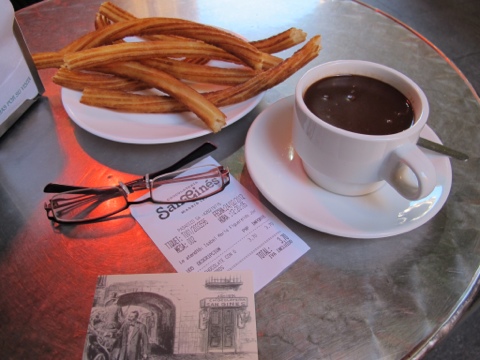
But do save some euros for that churros con chocolate. If you go to the palenque (market), you can have your desayuno (breakfast) of cafe or chocolate WITH either churros or porras (like bicho bicho) for only €2. Cheaper than a Mc Do breakfast! Or you may want to line up for some freshly-baked breads and pastries (like Garnier’s) but it would be difficult to resist the pastries. At least ONCE, try the churros con chocolate ☕in either Chocolateria San Gines off Calle del Arenal near Puerta del Sol, OR Valor near Plaza Callao.


Buen Provecho!


20120412-185250.jpg

20120412-185647.jpg


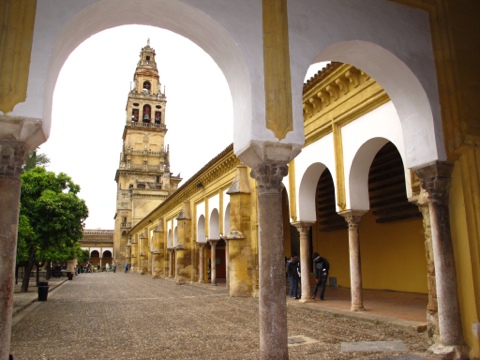
Cordoba. The Mesquita. Originally a pagan temple. Then a Visigothic Christian Church. Converted into a Mosque. And finally a Catholic Church. How can one go to Cordoba without visiting the Mesquita?


20120410-134704.jpg

20120410-134805.jpg


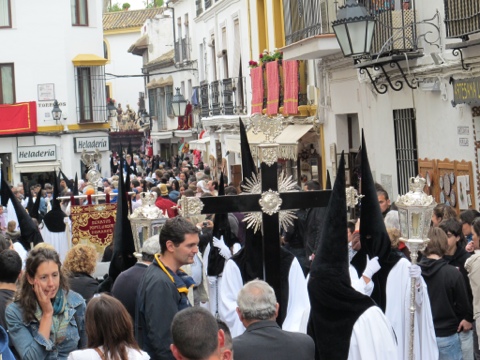
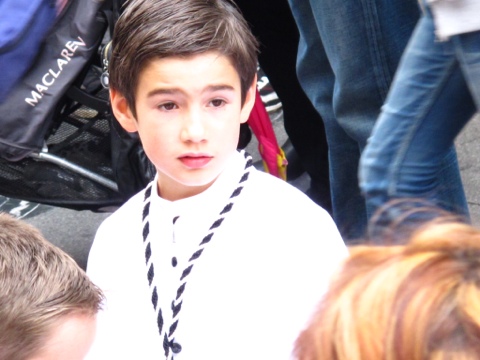
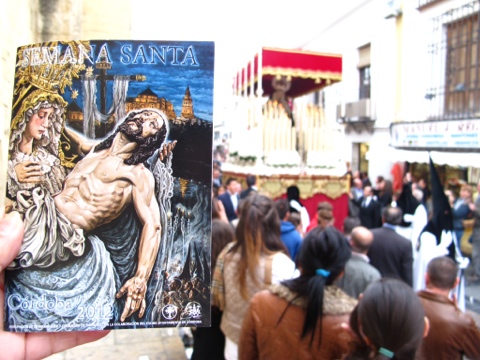
My earlier blog on Andalusia will tell you how we covered both Sevilla and Cordoba during the Semana Santa. Perfect place to be in, except that the weather hardly cooperated. Just the same, we were in luck when we reached Cordoba. Miercoles Santo had 8 processions running. All ending at the Mesquita. We didn’t watch all 8, but our attention was drawn to the young Nazarenos — trainees? Protégés? — in the crowd.


20120410-135434.jpg

20120410-135520.jpg


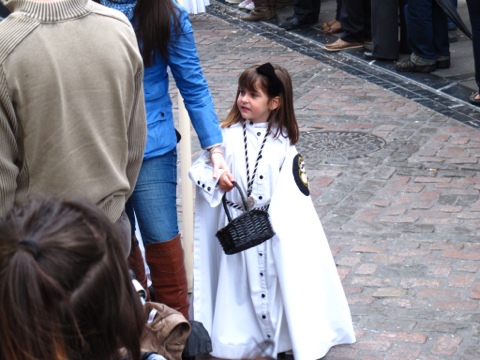
Unlike the “regular” Nazarenos, these young protégés had no pointed hoods over their heads. We even found one barely out of his stroller, nearly knocking everyone blocking his path as he seriously took on his role in the procession. His grandfather tried, in vain, to put him back on the stroller. And we also found girl Nazarenos. Pretty and cutesy participants to the Semana Santa processions. As they passed right in front of us — we were lucky to be standing right by the elevated platforms of the Mesquita — we heard cellphones ringing, as the teenage Nazarenos likewise engaged in light banter with friends in the crowd. All spiritual meaning may have been lost …… But who’s judging?


20120410-140211.jpg

20120410-140822.jpg


These young Spaniards are fortunate to have, and to keep these traditions. The processions may seem a bit unruly —- compared to the “silent processions” in Madrid —- even festive, but the tradition has not lost its meaning, and its charm, on me.


20120410-141141.jpg

20120410-141229.jpg

20120410-141333.jpg


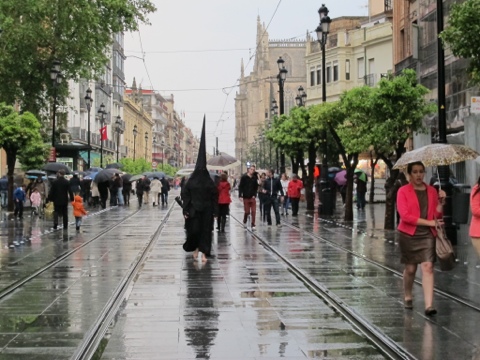
That’s what the driver of the red tourist bus said. IT’S RAINING VERY WELL IN SEVILLA. Very well, indeed.


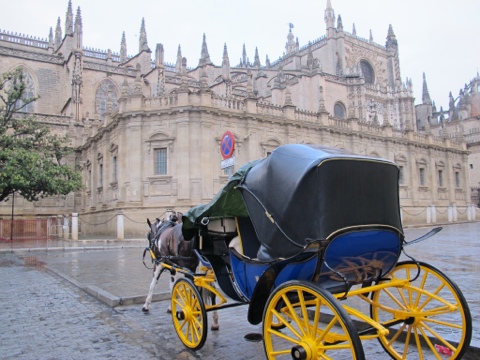
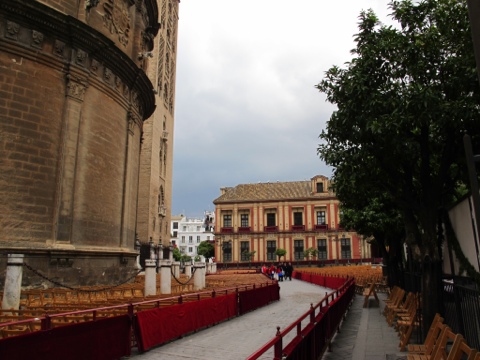
We took the AVE fast train to Cordoba today only to find not so pleasant weather in this part of Andalusia. Then and there, we decided to hop back on the train and proceeded to Sevilla. Rounded up the Giralda with all those seats neatly arranged around the cathedral while young and not so young men and women donned their Nazareno hooded outfits for the religious procession. Alas, it poured too — more heavily here — and the procession and other religious festivities were all cancelled!


20120409-102007.jpg

20120409-102134.jpg


It was so frustrating to watch. Hooded Nazarenos unmasking, wet wooden seats folded up, crowds thinning and spilling into nearby tascas and tapa bars. Pasos staying inside the church without a chance to stray out for a procession. Even the ride on the hop on, hop off tourist bus was so gloomy as the skies opened up and threatened a flash flood around the beautiful city of Seville. We peered through windshields with wipers busily swatting off raindrops. We wrapped ourselves good as the chill started to freeze our fingers and numb our cheeks.


20120409-113053.jpg

20120409-114456.jpg


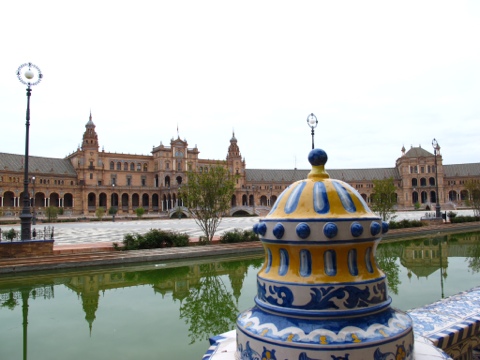
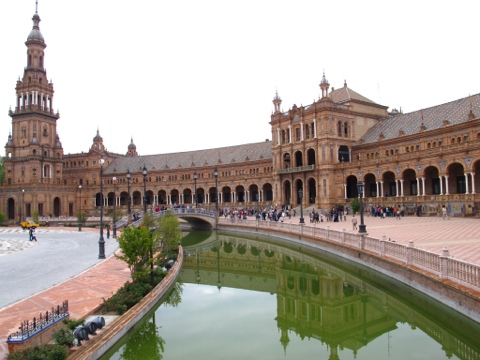
The morning after left Sevilla still wet, the floors of many tapa bars strewn with litter, too many coffee cups in garbage bins. Since we slept early the night before — so un Spanish — we woke up to catch the early hours in Maria Luisa Park sans the tourist crowd. It’s a lovely park though I still long for the charm of centuries-old buildings, bell towers, castles and churches.


20120409-133154.jpg

20120409-133256.jpg


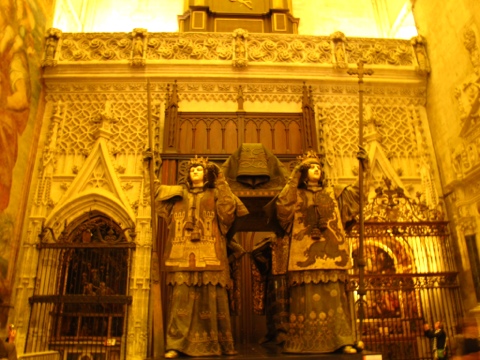
By the time the tourist buses arrived to download more camwhores tourists like us, we were ready for another ride on the hop on, hop off red bus. Then off to the Sevillan Cathedral where throngs of tourists seem to have congregated around the Tomb of Cristopher Columbus. I grew tired waiting to snap a better photo.


20120409-135857.jpg

20120409-135947.jpg


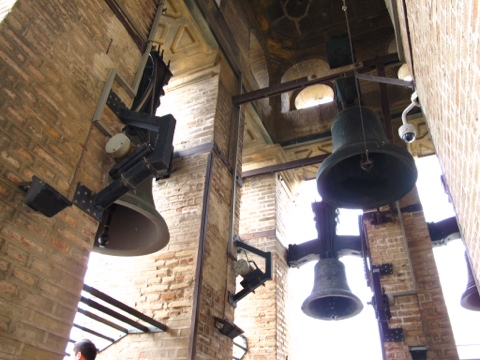
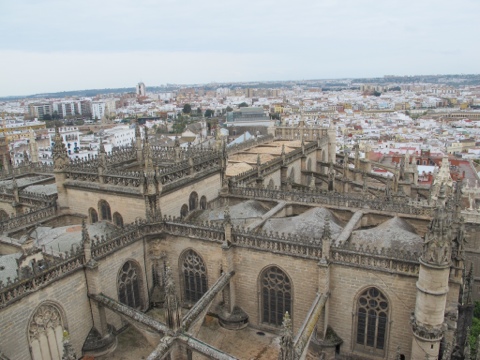
We queued up to scale the ramps toward the Giralda Tower, a Moorish remnant that now serves as the bell tower of the cathedral. All of 37 planks? Can’t recall, but it sure felt that many. From the top, one is rewarded with the Sevillan skyline including the cathedral roofs.


20120409-140305.jpg

20120409-140357.jpg


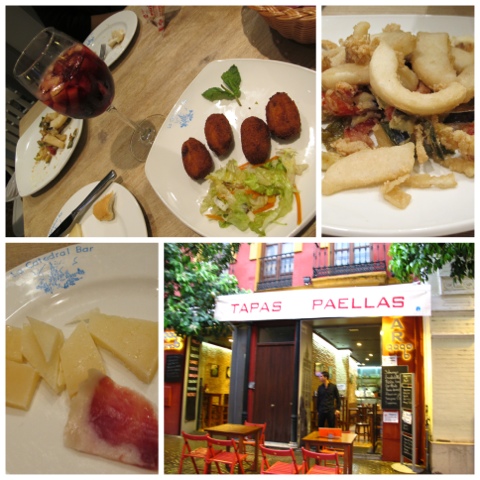
Now, don’t forget that Andalusians take their tapas seriously. We did too. And let that be a good souvenir of our journey to Seville on this Holy Week. With or without the procession, sunny or cloudy, wet or dry, the home of flamenco is always worth a visit.


20120409-141645.jpg

20120409-142401.jpg


Just 15 kilometers away from El Escorial is Valle de Los Caidos. Literally translated to “Valley of the Fallen”, this memorial is as different to Escorial as black is to white. The latter is a monument to Spanish fascism. Think Generalissimo Franco.


20120405-152021.jpg

20120405-152153.jpg


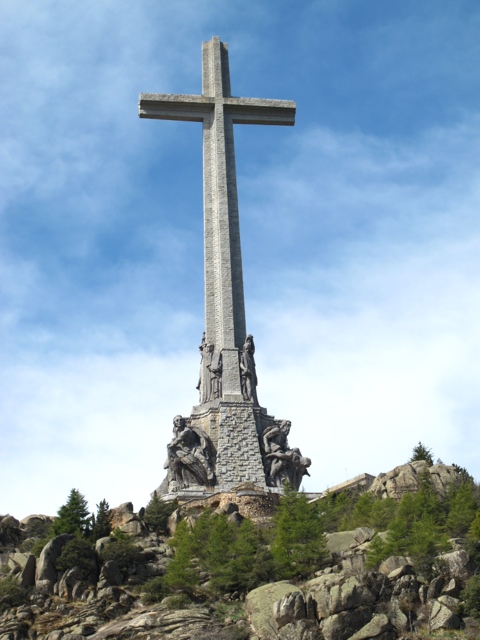
This is the world’s largest free standing cross. Built upon orders of Generalissimo Franco in the 1940s with labor from prisoners as many as 20,000, the structure houses an underground tomb which includes Franco himself. The memorial was erected in memory of the sacrifices made by the fascists during the Spanish Civil War. Our Tour Guide reminded us to refrain from making any political remarks in this monument as Franco is both loved and hated in this part of the world.


20120405-153015.jpg

20120405-161820.jpg


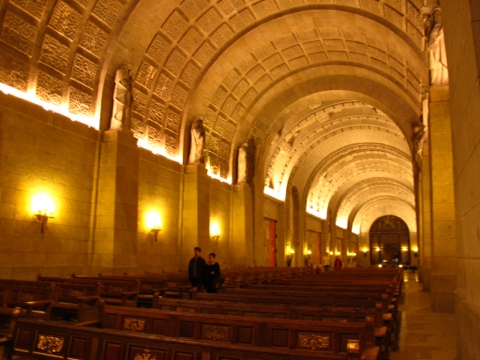
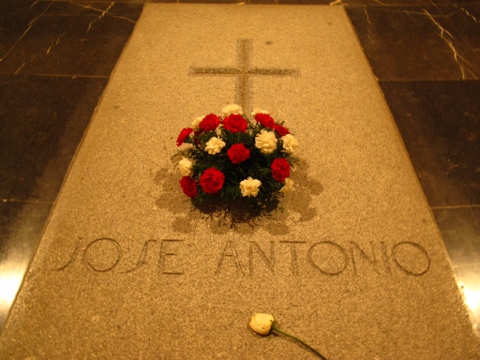
Frankly, I initially felt like I was walking inside a bomb shelter as I made my way in. Of course the murals and interior decor vanished that ridiculous thought almost instantly. But I was surprised to find a tomb in the name of Jose Antonio just before the altar, right across Franco’s. Who is Jose Antonio?


20120405-163133.jpg

20120405-163224.jpg


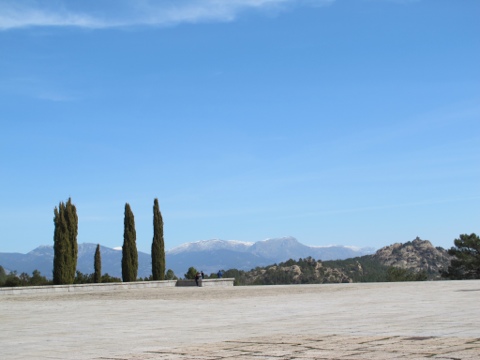
I didn’t stay very long inside. Felt kind of claustrophobic , if you ask me. I was glad to be out breathing the mountain air and appreciating the view. Then a question popped in my mind — but no….. I’m on holiday. No political concerns whatsoever. 😷😏😜


20120405-163945.jpg


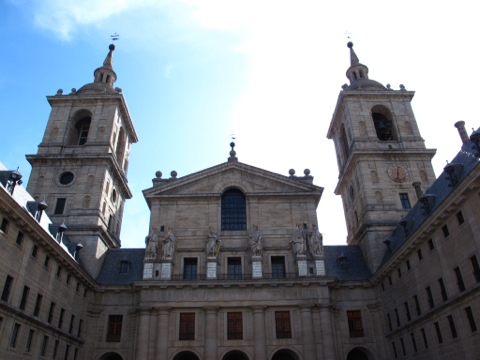
If you’re hankering for a lazy day visiting a cultural treasure and checking how royalty lived, died, and were buried then, take a day trip to the Royal Seat of San Lorenzo de El Escorial. Simply called El Escorial, you can make a stopover here on your way to Avila or Segovia. Or you can simply do El Escorial, just 45 kilometers or less than an hour’s drive from the capital of Madrid, along with Valle de Los Caidos not too far from the palace cum monastery.


20120405-105240.jpg

20120405-105500.jpg


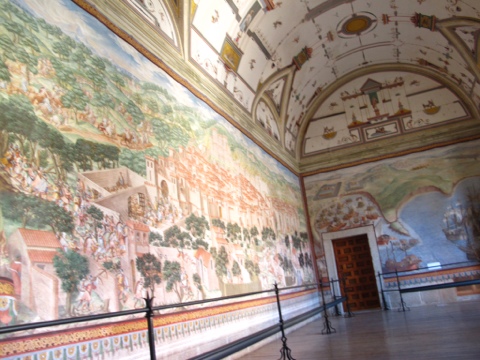
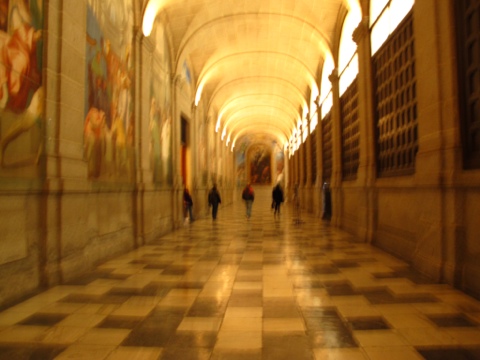
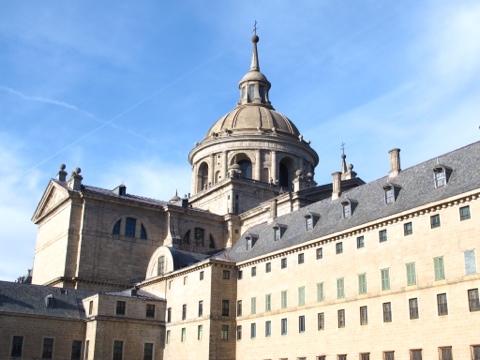
It may be true that the edifice was inspired by the Temple of Solomon. The 2 statues of David and Solomon guarding the entrance to the basilica bolster this theory. For sure though, the structure integrated many architectural alterations. Far beyond being a royal residence and monastery, El Escorial is also a school, convent, library, and for the last 500 years, the royal burial site for most of Spain’s monarchs. King Philip II originally intended the place as necropolis for his parents King Carlos I and Queen Isabella of Portugal, as well as for his own family and descendants. The Royal Pantheon, creepy in all its marble goodness, reunite the Spanish Royal Family after life. It is aptly placed right beneath the royal chapel.


20120405-112607.jpg

20120405-112717.jpg


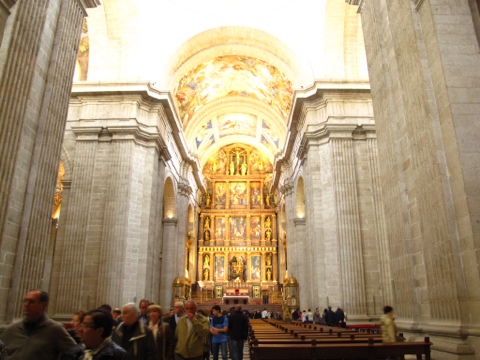
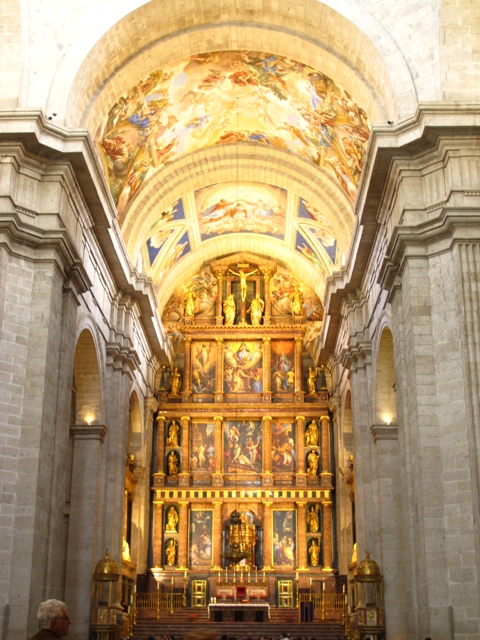
Declared a World Heritage Site by UNESCO in 1984, this 16th century royal site is likewise a treasure trove for great pieces of art from Spanish, Flemish, Italian masters from the 15th through the 17th century. From Titian to Velasquez to El Greco and many other collections. Too bad no photos to share, folks. Photography not allowed within much of the complex. I heard Mass inside the Basilica and took photos after the service. I was gently reminded by the guards with a simple, potent “No…..” before I could snap a photo of the dome which was inspired by the great church in the Vatican. Not surprising as the royal architect — Juan Bautista de Toledo — likewise worked in Saint Peter’s Basilica. Next to the basilica is King Philip’s royal quarters where a window allowed him to observe Mass even when his gout gave him problems. How about that?


20120405-122030.jpg

20120405-122232.jpg


My personal favorite is the Library. The vaulted ceiling’s frescoes reminded me of the Sistine Chapel, albeit on a less grand scale. The Spanish Monarchs and scholars must have spent a great deal of time here. More so as King Philip II intended El Escorial as a center of studies to counter Protestant Reformation then sweeping Europe, in keeping with Spain’s role as center of Catholicism during his reign.


20120405-122407.jpg

20120405-122826.jpg


It would take many day trips to El Escorial to fully appreciate its grandeur and view the entire horde of art treasures. My hands found a nice reproduction in watercolor in the monastery’s “tienda” but decided against buying it as I agonizingly peeled myself away to get back on my bus and join my tour group. The tour guide then pulled out a surprise by raffling off the same piece my fat fingers gently traced just a while back. You guessed right. I won that watercolor reproduction. It’s a beautiful day! Life is a celebration 😍😍😍


20120405-123853.jpg

20120405-124338.jpg