Category: Philippine Travels


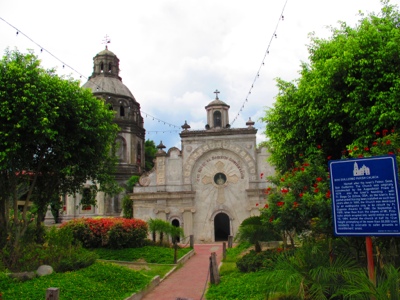
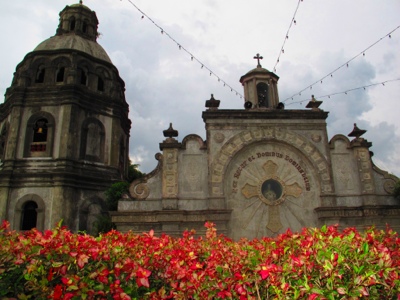
I have never been to San Guillermo Church in Bacolor, Pampanga before. But I have certainly heard about it, and grieved with many when the mudflow (lahar) from Mount Pinatubo left the church and many parts of Bacolor, Pampanga half-buried in nature’s wrath.


20120701-201235.jpg

20120701-201300.jpg

San Agustin Church was built in 1571. San Guillermo Church dates back to 1576.


Mount Pinatubo put us back in the world map with its disastrous eruption after a hundred years of dormancy. A sleeping monster. The ash fall covered a large area just as I was spending a holiday in a beach in Zambales that sad day in 1991. We cut short our holiday then, but it didn’t end with that. The large deposits of lava emitted by the volcano was a serious threat to the areas surrounding the volcano each time the country experienced some heavy rainfall. Four years after the eruption, the town of Bacolor, Pampanga met its sad fate from nature’s fury. San Guillermo Church was not spared.


20120701-202106.jpg

20120701-202135.jpg


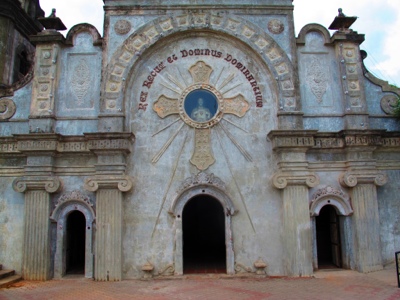
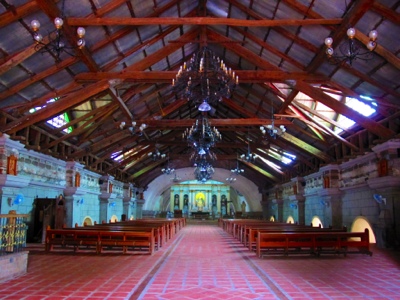
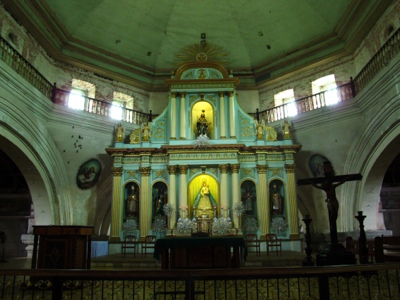
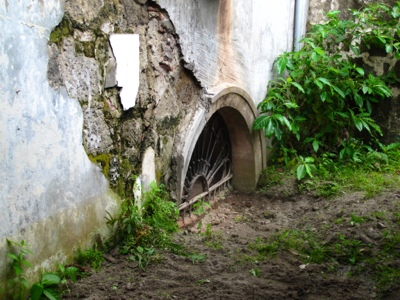
Sad to think that a church nearly as old as the San Agustin Church in Intramuros stood helpless when lahar flowed from the slopes of Mount Pinatubo on that fateful day of September 3, 1995. Four years after it erupted on June 15, 1991, Mount Pinatubo continued to wreak havoc on this Philippine countryside. Half of the 12 meters of this baroque and neo-classical architecture lay buried in mudflow. Yet faith and perseverance united the Bacolor folks who wasted no time excavating the religious statues, altar and retablo which they carefully and lovingly relocated under the more spacious church dome where it would fit.


20120702-144413.jpg

They moved the altar and retablo in this space under the dome, where it would fit.

20120702-144440.jpg

Those bats gave me the creeps…………


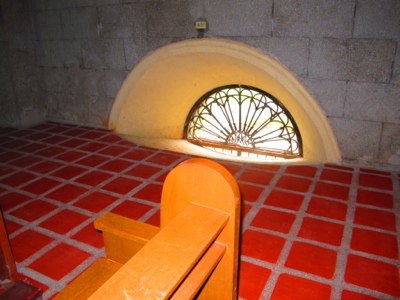
We were the only ones visiting the church at the time. The silence and presence of bats guarding the retablo added to the mood. Such sorrow at seeing this church “halved” by this catastrophe. We entered and exited through what used to be the church windows. We lamented seeing the arches touch the ground. So with the windows touching the now-tiled floor. We stooped through low archways to get inside the Adoration Chapel. Thank God many of the religious icons were salvaged and painstakingly restored and preserved.


20120702-145203.jpg

20120702-145236.jpg

Yes, it reached all the way up there.


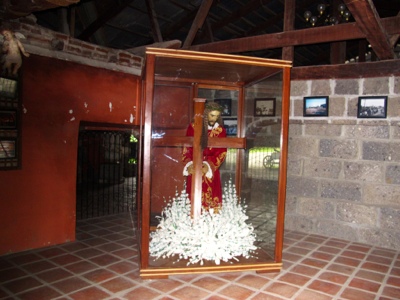
The centuries-old religious statues on display is a testament to the town’s faith and pride. A popular TV series (“May Bukas Pa”) had their location shooting in this church. We didn’t miss checking out “Bro” — a statue of the reincarnated Christ. There were more where we found Bro. All equally finely crafted.


20120702-145723.jpg

Si Bro…..

20120702-145755.jpg

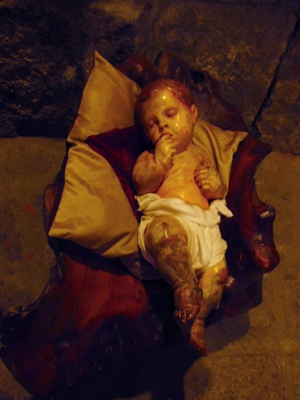
Don’t You Just Love This Image of this thumb-sucking Infant Jesus?

20120702-145823.jpg


For sure, “Bro” is pleased that nature’s wrath did not at all diminish the faith in this town. In a way, Bacolor “saved” the other towns in Pampanga as it served as catch basin for all that mud flowing down from Mount Pinatubo. Many lost their homes, businesses and loved ones. One can’t help but feel sorrow for their misfortune. God bless this town.


20120702-150618.jpg

20120702-150646.jpg


Read so much about it, but never tried. Till now.


20120630-094752.jpg


I’ve eaten frogs before in a Chinese restaurant in London. They called it “water chicken” there and I savored the dish without suspecting “water chicken” = frog. Not bad. In fact, I liked it. But I have not repeated that experience since. Till now.


20120630-095125.jpg


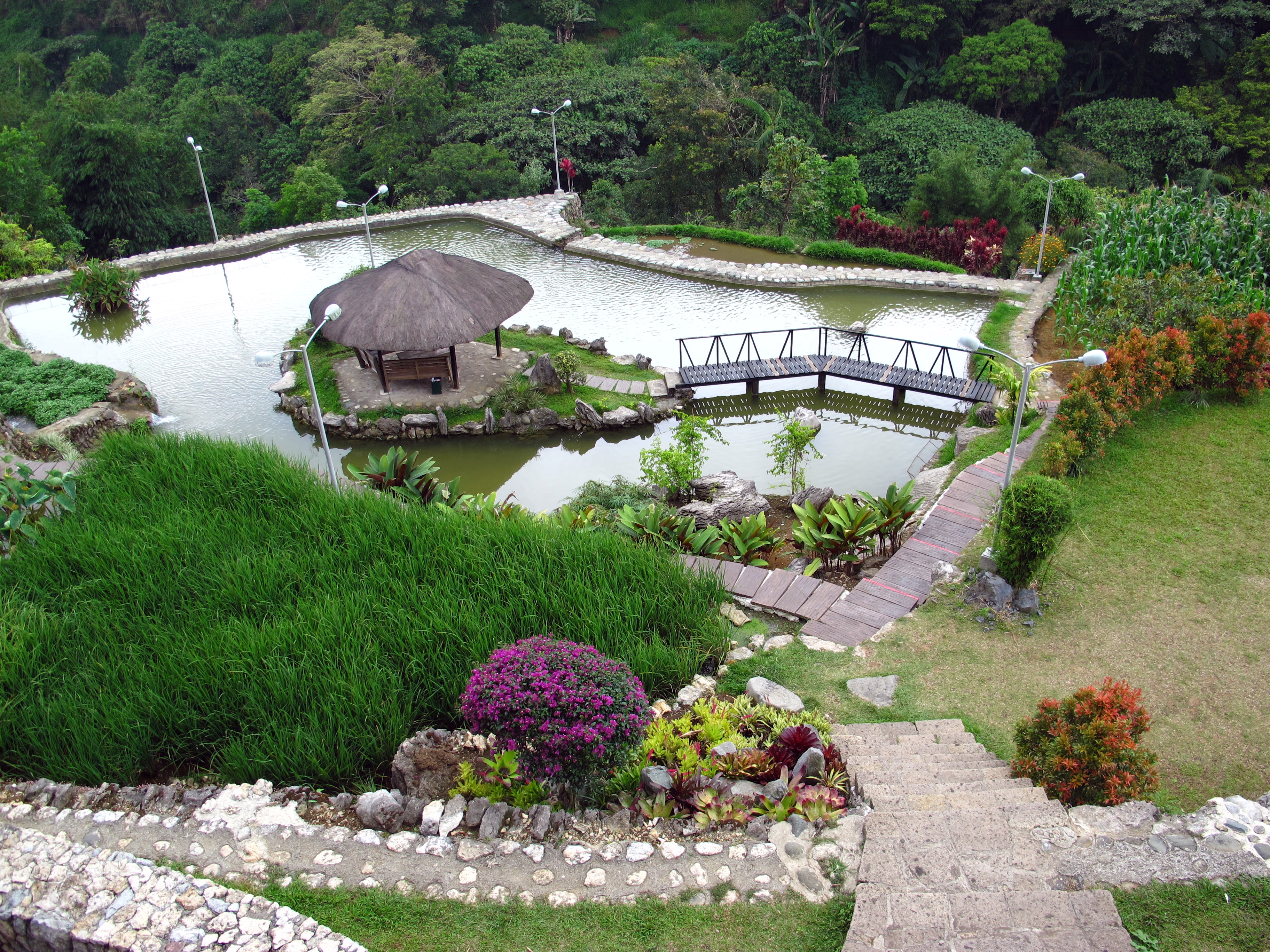
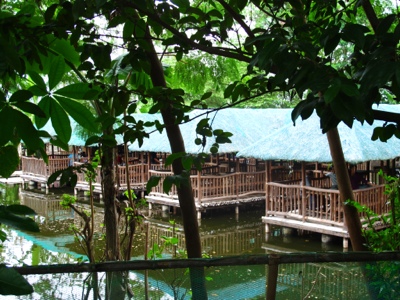
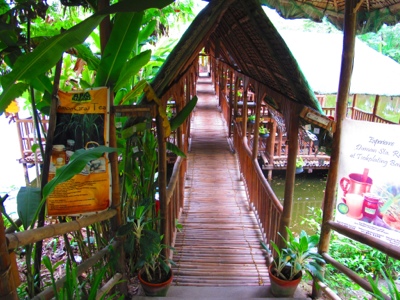
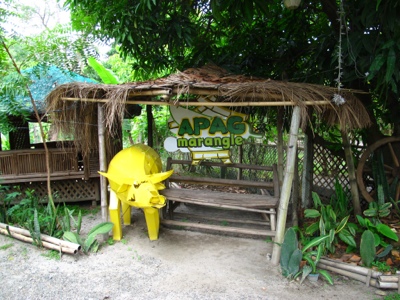
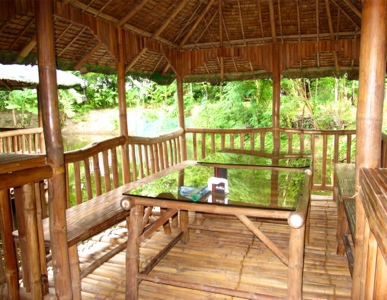
In a recent trip to Pampanga, lunch was in a place called Apag Marangle in Bacolor. Literally translated as “hain sa bukid”, or dining in the farm, this 4 year old restaurant is located along the old Olongapo-Gapan Road (now JASA) in Bacolor, Pampanga. Fast gaining popularity for its authentic Kapampangan dishes, the native cottages lining a man-made fishpond with grazing ducks add just the right touch.


20120630-100140.jpg

20120630-100226.jpg


Pampanga is regarded as the culinary capital of the Philippines. One story goes that the Muslim royalty driven out of Manila settled here with their royal household. Another version is that many Spanish friars who oversaw the construction of several 17th century churches here had their own coterie of artisans and kitchen masters. I’m more inclined to believe the former story, quite unable to imagine the likes of Padre Damaso feasting on frogs and crickets.


20120630-100739.jpg

20120630-100926.jpg


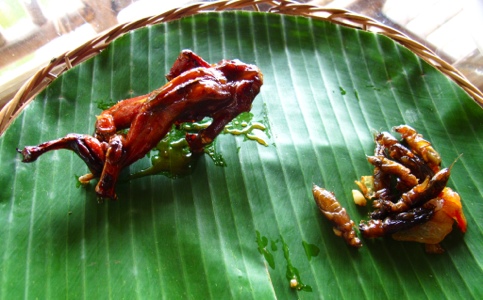
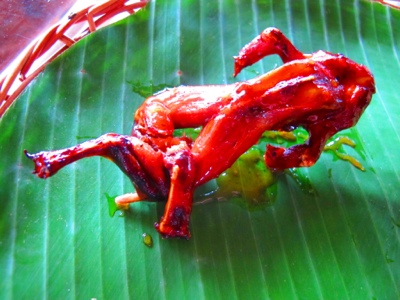
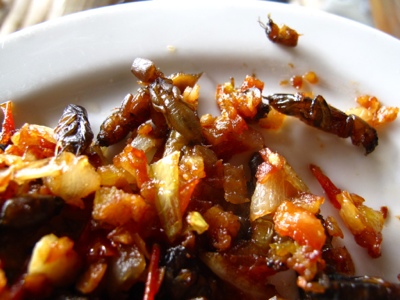
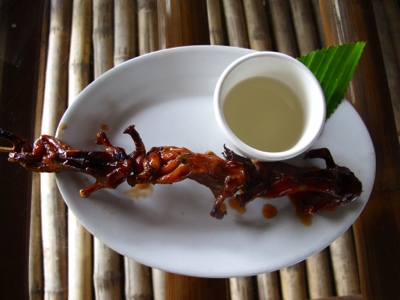
Unlike the frogs served in London, the Kapampangan frog dish had no pretensions. The frog — called “tugak” — was served skewered, 3 to a stick. There is also the stuffed version (“Betute”) but I went for tugak 😪. No one wanted to share the dish with me. But I had company when the mole crickets were served. Boiled in vinegar and garlic, then sautéed in chopped tomatoes and onions. Crunchy at first bite, moist inside. Again, no pretensions in serving this bug dish called kamaru or kamaro. Never disguised. They all looked like they were crawling just moments before they were served. Awwwww 😣😢😝


20120630-101351.jpg

20120630-102003.jpg


You don’t need a stomach made of steel to try these exotic dishes from this foodie province. Just a lot of spunk and “fear factor-ish” sense of adventure. Don’t worry, there is no scratchy texture to the cricket dish. Why, you ask? The cook makes sure they have rendered the mole crickets lame by removing the legs and wings. Aww! 😣😢😓


20120630-102436.jpg

20120630-102531.jpg


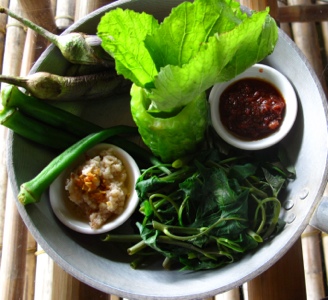
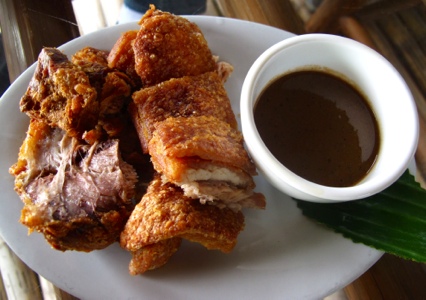
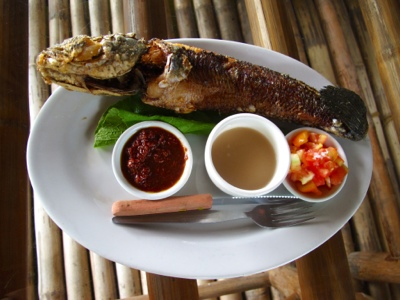
To be sure, order some other non-exotic Kapampangan dishes in Apag Marangle. The grilled seafood and steamed vegetables served with buro (fermented rice) perfectly complement Tugak and Kuliglig. And the carnivores can still satisfy their Lechon Kawali fix served with liver sauce while deciding whether to order the more exotic Betute. I opted out. Stuffed with minced pork before deep-frying, the dish looks like an oversized, obese frog to me. 😢😣😜. Much unlike its skewered cousins who can do with some muscle toning. 😱


20120630-103338.jpg

20120630-103455.jpg

20120630-103536.jpg


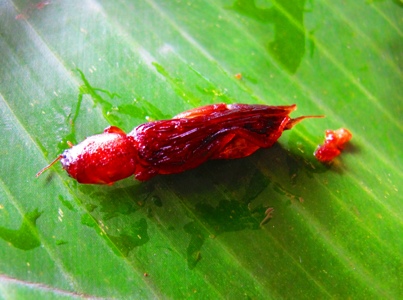
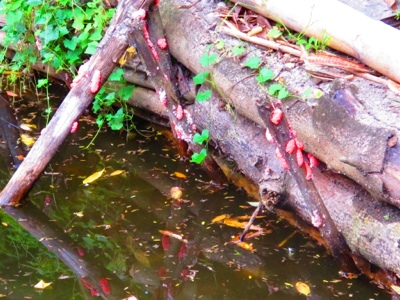
On our way out of Apag Marangle, we spotted some reddish thingy clinging to the bamboo poles and rocks. We were told they were snail eggs. We dared not ask if they were edible! 😝😝😝


20120630-103910.jpg

20120630-104250.jpg


It is actually named Saint James the Apostle Church. But you’d get by asking for directions to Betis Church. After all, every person in Pampanga has every reason to be proud of this historical and architectural treasure.


20120629-105443.jpg


Huge, but it doesn’t look much from outside. And for a moment, I wasn’t sure if the 1- 1/2 hour drive from Manila is worth it. I’ve seen many photos of this 17th century church and its famed frescoes and murals but thought it could all be hype. That happens. So I braced myself not to expect much.


20120629-105957.jpg


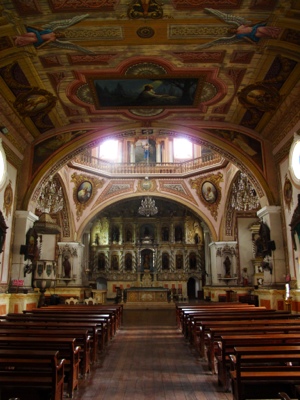
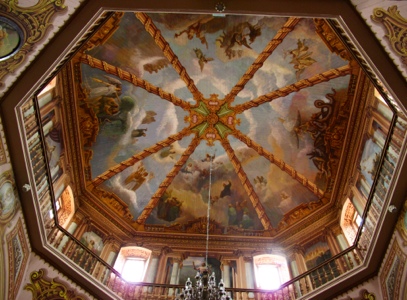
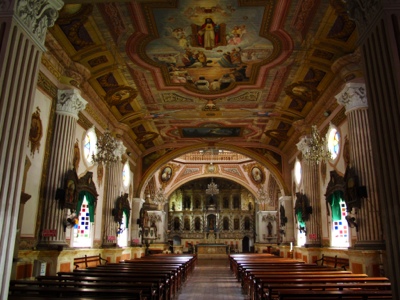
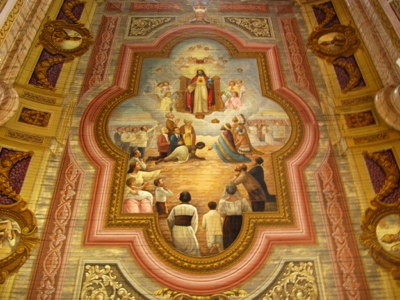
As we entered, we were pleasantly surprised to walk on wooden floors. Dubbed the “Sistine Chapel” of the Philippines, local artist Macario Ligon certainly didn’t disappoint. Biblical scenes and cherub paintings on the ceiling are guaranteed to give you a stiff neck while appreciating the majesty of this ceiling art. It confuses the senses whether to walk appreciating the native wood used for flooring, craning one’s neck so as not to miss the majestic “Sistine Chapel-ish” ceiling frescoes, or walking forward to get closer to the lovely and ornately-designed “retablo” of this church in Guagua, Pampanga.


20120629-110841.jpg


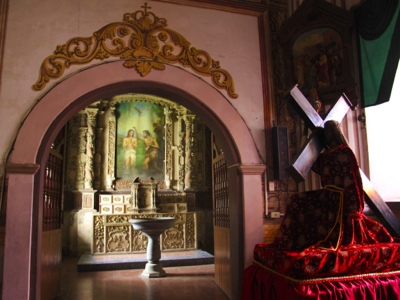
Don’t miss standing in the nave and spending a few minutes there just to take it all in. Check out the baptistery on the right side, “guarded” by a statue of the Nazareno, before taking baby steps towards the altar.


20120629-111816.jpg


The opulence strikes one with this pleasant sensation that a church as lovely as this has been spared from the disastrous lahar or mudflow from Mount Pinatubo. The neighboring town of Bacolor was not as lucky. By God’s grace, this church still stands in all its splendor so many more generations of Filipinos may appreciate this historical, cultural and architectural treasure.


20120629-112328.jpg

20120629-112436.jpg

20120629-112511.jpg


Away for nearly 3 months, I am now nicely settled. Home again. Back to the old grind. The same routine. The same food trip!


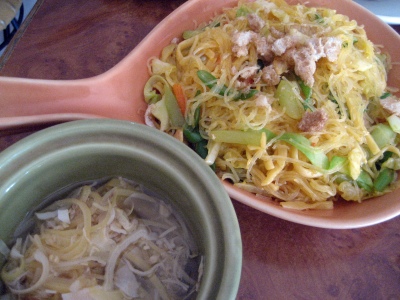
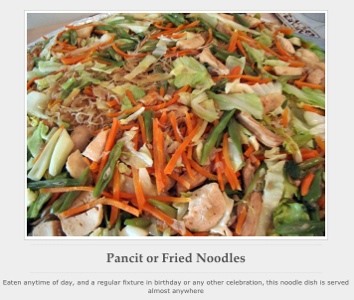
There were many food items I missed and you bet I didn’t waste time lining them up to stir up fond memories 😉 First on my list of must-eat was my favorite pancit. Now there are many versions of pancit (fried noodles) in this country and each version I pigged on. Shamelessly, I asked my good friend to cook my favorite pancit from Cavite — the one you eat with kilawing puso and culao toppings, along with a good sprinkling of Chicharon bits! Happiness :))


20120626-175632.jpg


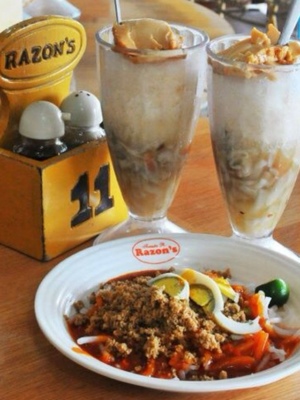
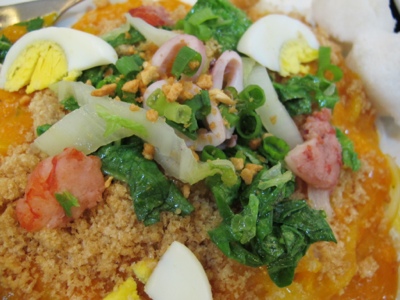
Then there’s the trip to Razon’s for my halo halo fix and….. yes, the pancit palabok. Again, with generous dollops of Chicharon bits. I’m not sure if it’s really the pancit or the Chicharon that got me hooked. But really, any version of the pancit does it for moí!


20120626-175756.jpg


Back home, Manang Trining’s pancit is what everyone in the family comes home to after being away. For sure, this pancit stirs up many fond memories as every occasion is celebrated with this dish taking the middle spot on the dining table. The Chicharon is a side serving — like it’s “optional” yet I have yet to see someone foregoing that option when feasting on Manang Trining’s pancit.


20120626-180812.jpg


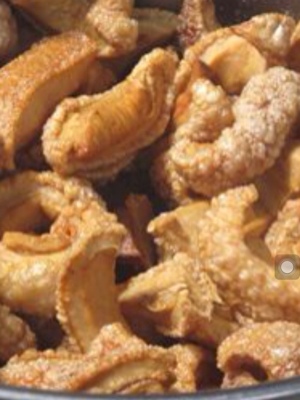
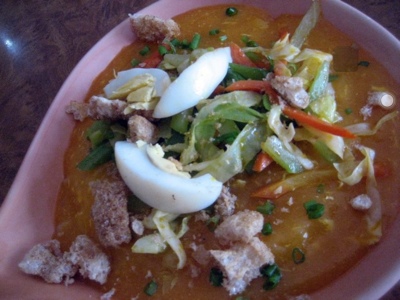
The Chicharon never misses making an appearance when it’s the Pancit Luglug or Pancit Malabon version. Some crushed, some in bigger chunks. Some plain Chicharon cracklings, others with a sliver of pork attached to the fatty stuff.


20120626-181358.jpg

20120626-181439.jpg


Which brings us back to the question. Is it the Chicharon? Or the pancit?


20120626-185711.jpg


Spain ruled over the Philippines for nearly 400 years. Does it show? I’ve always said that Philippines is your “Latin country” in Asia. We do not have temples and wats, but the archipelago is dotted with many churches which see regular Mass-going Sunday crowds.


20120621-224039.jpg

UST. 400 years of history.


The oldest university in Asia? Only last year, this Catholic University celebrated its 400 years of existence since April 1611. A quadri-centennial celebration which drew in many alumni from all corners of the world. I had many friends based abroad who came home just for this event. It was a grandiose celebration, helped along by funds donated by its alumni who spent many happy university years here and saw the event as a payback for the education they earned.


20120621-224154.jpg

UST: Oldest University in Asia


Long before the Americans came, the Spaniards gave us education. This is the oldest university in the Philippines and the whole of Asia. It is also the only university ever visited by 2 popes 3 times: once by Pope Paul VI on Nov. 28, 1970, and twice by Pope John Paul II on Feb. 18, 1981 and January 13, 1995.


.

20120621-224256.jpg

University of Santo Tomas.


The students and alumni called “Thomasians” count many prominent Filipinos. Our national hero Dr. Jose P. Rizal (JPR) studied medicine here before he left for and continued his studies in Madrid, Spain. UST also takes pride in counting 4 Presidents among its alumni: Manuel Quezon, Sergio Osmeña, Jose Laurel and Diosdado Macapagal.


20120621-224435.jpg


The university belt bears witness to daily chaos. Traffic is bad and the streets are crowded with way too many pedestrians and ambulant vendors. The university has the largest campus grounds in the entire city and on the day I visited, I found many students enjoying a breezy afternoon within the “campus park”. A luxury I must say in this tropical country of over 90 million people.


20120621-224609.jpg

20120625-121824.jpg


Next time I visit, I’d check out the university museum.


20120625-121611.jpg

20120625-121900.jpg


Can you blame us? Who goes to Cebu and not try its lechon and chicharon? If the best Cebu lechon comes from Talisay (I know, I know, I’d get lotsa flak writing this), then don’t argue with me when I say the best Chicharon hails from Carcar. Chicharon pa lang, ulam na!


20120308-112913.jpg


It’s more fun in the Philippines, indeed! But make sure you do Visita Iglesia in Saint Catherine of Alexandria Church to spare you from hypertension resulting from cholesterol overload. At the time we visited, the parish was closed. Thus, we appreciated its beauty — styled like most Greek Orthodox churches with onion-domed bell towers — from the outside where we also found many statues of saints adorning the fence around the church.


20120308-113129.jpg


Right beside the church is the Carcar Museum. Yes, a Museum! Well actually, an American-styled dispensary years before and now converted into a lovely Museum complete with various illustrations tracing its history in this heritage capital of the province of Cebu. The Carcar Rotunda is also as American as the Carcar Museum. This white gazebo stands right before the church and the museum, which together comprise a most charming plaza.


20120309-143809.jpg


There was a museum guide who showed us around. The American-era dispensary was actually built in 1929 during the term of Don Mariano Mercado as Mayor. Among other landmarks are the municipal pool behind the Dispensary building, the Carcar Rotunda and the Rizal Monument. If I had my way though, I would replace the statue of Don Mariano with something more “cheerful” or “leader-like”. Call me irreverent but I thought the statue displayed Don Mariano’s shy, even tentative side. 🙂


20120309-150054.jpg


Where to buy Chicharon? No worries. They’re everywhere! Inside the malls, outside the malls, along the streets, inside your bus or cars! The prices are no different though from the crunchies you can buy back in the city just an hour’s ride away. It is not known though that Carcar was once what Liliw is to Laguna, or Marikina to Rizal (now Metro Manila). Somehow, this 17th century shoemaking industry faded from the scene as competition set in and other industries flourished.


20120309-165609.jpg

20120309-165646.jpg


Just off the Plaza, and visible from the porch of the Carcar Museum is the town’s oldest house. Owned by Don Florencio Noel, the house is still lived in and is fondly called by Carcaranos as “Dakong Balay” which literally means “big house”. Now declared by the National Historical Institute as a heritage house, the house remains unaltered but lovingly restored and preserved by fourth generation descendants of the Noel family.


20120309-170938.jpg

20120309-171023.jpg


If you have been to Lourdes in France, you would be reminded of such Marian pilgrimage site when you visit Simala or Monastery of the Holy Eucharist in Southern Cebu. Run by Mongha ni Maria (Monks of Mary) who tend the gardens and built a mini-falls within the compound, the church has also since been a pilgrimage site.


20120307-164235.jpg


This church in Sibonga, Cebu drew crowds when the miraculous statue of Mama Mary shed tears of blood. Though not validated by the Church, this phenomenon drew many faithfuls to the site.


20120308-104746.jpg


I tweeted about this trip to Cebu and some tweeps advised me to go visit Simala on our way back to the city. It’s just slightly off the way and in between our Dalaguete and Carcar stopovers, but since we hired a van for the day, it worked out well. We felt good making this stopover. And there was even a Mass when we visited.


20120308-105053.jpg

20120308-105149.jpg


Hard to believe a church of this size was built in this corner of the province. The story goes that funds were provided by faithfuls who were miraculously healed here. If you are a first-time visitor like we were, you’d be awed by the grandeur of this church. Not just in the exterior appearance with the curving staircase and footbridge wrapped around the church, but in the interiors as well. We waited till Mass was over before snapping these photos.


20120308-105639.jpg

20120308-105719.jpg


So, next time you are in these parts of Southern Cebu, make time to do this pilgrimage. All you need to bring with you is your faith and perhaps, countless petitions for divine aid.


We didn’t plan on visiting Dalaguete. Much less visit it on its town fiesta which is celebrated every 9th and 10th of February. Yet there we were, witnesses to all that revelry in honor of its patron saint, San Guillermo de Aquitania.


20120307-152611.jpg

20120307-152711.jpg


As with similar town fiestas, Utanon is the Dalaguetnons’ way of showing gratitude for all their blessings. Through dance and music, they celebrate the town’s good harvest as Dalaguete is Cebu’s vegetable basket much like Baguio is in Luzon. It is also alleged that Dalaguete is the Music Capital of the island. The name Dalaguete came from balete, a tree which grew abundantly in the town, and which in Cebuano, is called the dalakit. On the other hand, Utanon means vegetables in the local dialect.


20120307-152814.jpg

20120307-152859.jpg


We caught sight of the bands and street marchers/dancers in front of San Guillermo Church. The festive colors of red, blue and green complemented the floats with “Hermana Mayors” gamely waving their hands as they were paraded around town. I have to say that the sight made for a very rural scene….. A village affair. I bet everyone knows everybody in this small town.


20120307-153500.jpg

20120307-153615.jpg


We surmised that the religious procession in honor of San Guillermo is scheduled later in the day as local men were still busy decking the floats with flowers. We said a prayer inside this 18th century baroque church with its shell-shaped altar before heading out for one last glimpse of the church and its adjoining convent. Should you come and visit this church, take time to stare up to view one of the few masterpieces by Canuto Avila, a 19th century maestro who did religious murals for 20 or so churches and convents in the Visayas, including the ceiling of Cebu’s Santo Niño Church.


20120307-154223.jpg

20120307-154357.jpg

20120307-154453.jpg


Next time around though, we’d make time to do the trek to Osmena Peak. For now, it would just be a pit stop towards Carcar where more Chicharon awaits us ☺


Cebu is NOT all about lechon. There’s the coveted, sought-after Chicharon from Carcar too! 😍 Kidding aside, Cebu has much to offer. In between the lechons and the chicharons, its natural wonders and rich history make it a must-destination.


20120306-083833.jpg


Oh, how we indulged ourselves! More so after a NO-TUKI-SIGHTING day in Oslob. Imagine having to wake up at 3am to leave at 4am, cruising the next 3 hours down to Southern Cebu to meet the gentle whale sharks. F.R.U.S.T.R.A.T.I.O.N. Those giants stood us up!


20120306-084229.jpg


Not like us to let this frustration ruin our day, we made good use of our time (and money spent on the hired van) to make a few interesting stopovers on our drive back to Cebu City.


20120306-091619.jpg

20120306-091718.jpg


Boljoon. Our first stop heading back to the city from Oslob driving along the coast. One of the oldest towns in the Philippines. Strategically located, facing Bohol Strait some 100 kilometers south of Cebu City. The church of Nuestra Señora Patrocinio de Maria, built in 1599 making it the oldest remaining stone church in Cebu, is very well preserved. The Museum adjoining the Church is a pleasant surprise.


20120306-104134.jpg

20120306-104719.jpg


If I have not read earlier blogs on Boljoon, I would have easily dismissed it as another sleepy town. As we passed this seaside municipality, a huge limestone and granite rock caught our attention — allegedly a cavity formed by the collapse of a mountain range. These natural wonders never fail to amaze me — truly an unplanned composition of water and wind. It is likely that Boljoon may have derived its name from “nabulho”, meaning “collapsed”.


20120306-125044.jpg

20120306-125218.jpg


I took the stairs and was floored by the vista of the Boljoon Church courtyard framed by mountains. Wow. You don’t get this view every day. Somehow the vista transported me to those times of the frailes. A truly colonial feel. I can almost visualize the frailes doing their paseos in the courtyard or venturing out of the church premises for a grand view of the sea. More than that, the Parish Museum has much to offer – from church vestments, well-preserved parish records and manuscripts dating as far back as the 17th century, to various religious artifacts and archaeological finds. Among these archaeological finds are Japanese porcelain and other artifacts. Since the church compound also has its own burial grounds, skeletons were also unearthed. What all these excavation finds reveal can fill many pages of a book, telling of a rich heritage of an otherwise “sleepy, seaside town”. We never bothered before, but these discoveries now beg our attention. It’s all up to us to make, and cherish, that connection to our past.


20120306-132306.jpg

20120306-132432.jpg


Our group planned this 3 day, 2 night adventure in Cebu highlighted by a visit to Oslob. This small, heretofore vaguely known town in Southern Cebu hugged the limelight when it was reported that whale sharks — Butanding in Donsol, “tuki” in Cebu — were discovered. The “feeding” of these friendly gentle giants invited so much attention and excitement that we promptly packed our bags and flew to Cebu. This, even after the disastrous earthquake that rocked Negros and Cebu a few days before our flight.


20120218-094740.jpg


We arranged for a van to pick us up at the new Harold’s Hotel in Cebu City at the ungodly hour of 4am. Having feasted on lechon the day before — the day of our arrival — I hardly slept because of a disturbing headache (which I later learned was actually triggered by a spike in my blood pressure) which deprived me of the needed winks.


20120218-095229.jpg


We tried to catch some sleep in the van as we cruised towards Oslob on that 3 hour drive. Armed with my own life vest, life buoy and snorkeling equipment (all hand carried from Manila), we were ready eager when we arrived 7am in this remote village. The makeshift registration kiosk wasn’t that busy as it was a Thursday and it was just our group, a family, 2 Caucasian couples and a lone Frenchman arranging for a date with the gentle, krill-fed whale sharks. 


20120218-095805.jpg


But it was not to be. We waited another 3 hours, content with stories from this local who regaled us with her own adventures feeding the whale sharks. By 10am, we prepared to leave as the “spotters” who rounded up the area several times came back empty-handed.  Disappointed. Frustrated. Deprived of an adventure dreamed of weeks before. Thank God I was in the company of good (and cheerful) friends with whom a day is never dull nor devoid of “adventure”.


20120218-100534.jpg


Now, WHAT TO DO? The 3 hour return trip was marked by stopovers in Boljoon, Dalaguete, Carcar and Simala. Separate blogs to follow, as each has a story to tell. Tuki or no tuki, we certainly didn’t waste our day!  When you guys go, better pray you meet them. Pray for good weather. It rained nearly the whole night and early morning of our visit. The whale sharks may have been sooo disturbed by the strong current and choppy waters.