Category: Don’t Skip Manila!


Let me ask……..when was the last time you visited the Museum?


Don’t look at me. It’s something I don’t do on a regular basis. But I would love to spend many afternoons there. And I continue to wish there is a good coffee corner somewhere within the building where I can take a break before pursuing a second run of the Gallery.


The National Art Gallery with the Balangay Diwata ng Lahi


As it turned out, I was good for just a couple of hours. No breaks. Glucose level drops in 2 hours after walking from Hall to Hall , up and down the 3 floors. And then I start longing for a cup of good brew and some munchies. Having said that, let me advise you to go in the morning after a good breakfast! Or in the afternoon after a good lunch 😉
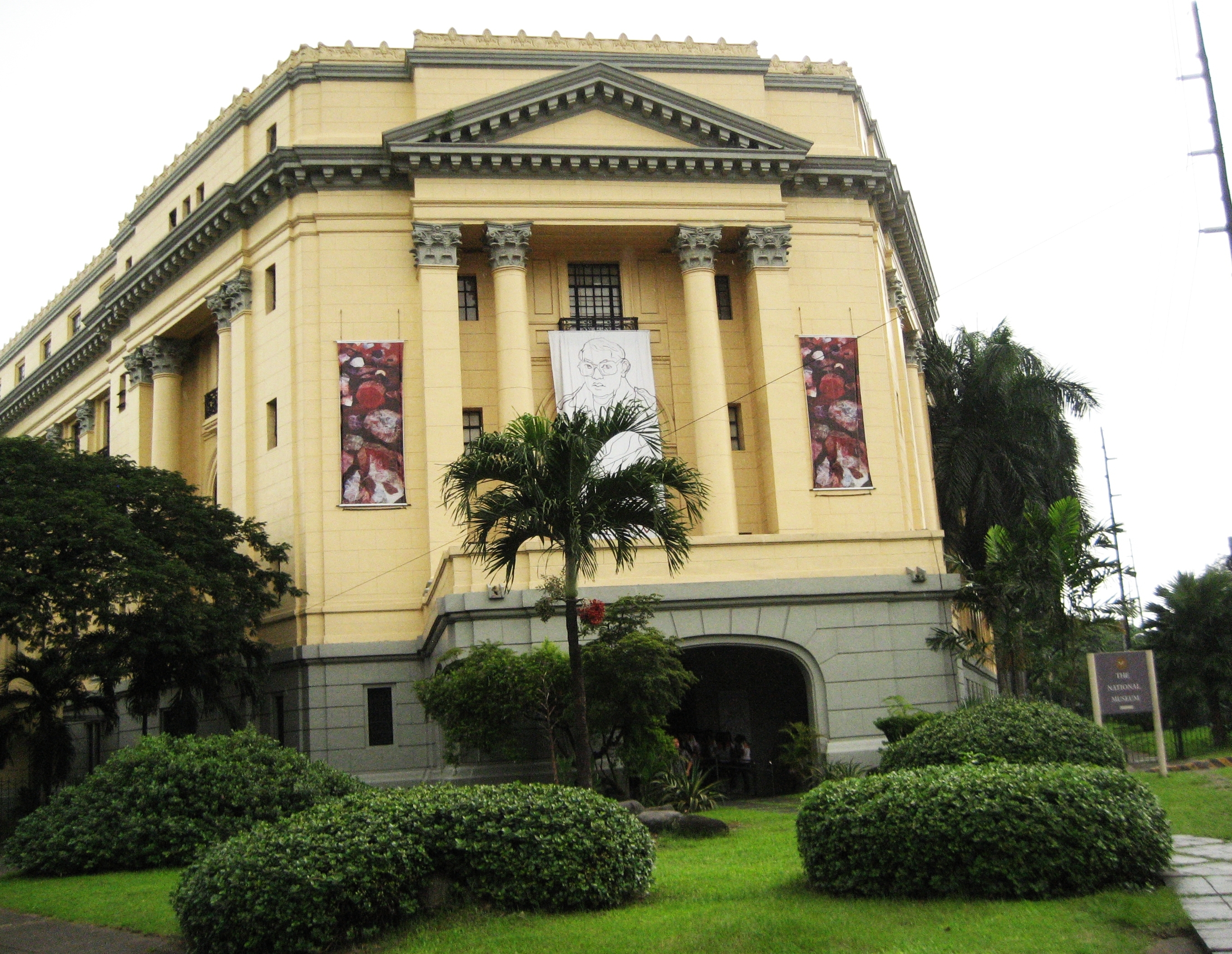


The Museum Of the Filipino People


When I got there, I decided to do the National Art Gallery first. The Museum of the Filipino People is good for a separate visit. “Slow by slow.” 😉 Who says you can rush through a Museum? The best time is always a time when you don’t care about the time. Go slow. Read all those markers. Every piece of art has something to say. Either written or visual or sensed. If you’re like me who hardly picks up an art or history book, this maybe a fine time to brush up on art and history. You just have to trust that the most relevant information are encapsulated in all those reading materials and markers.
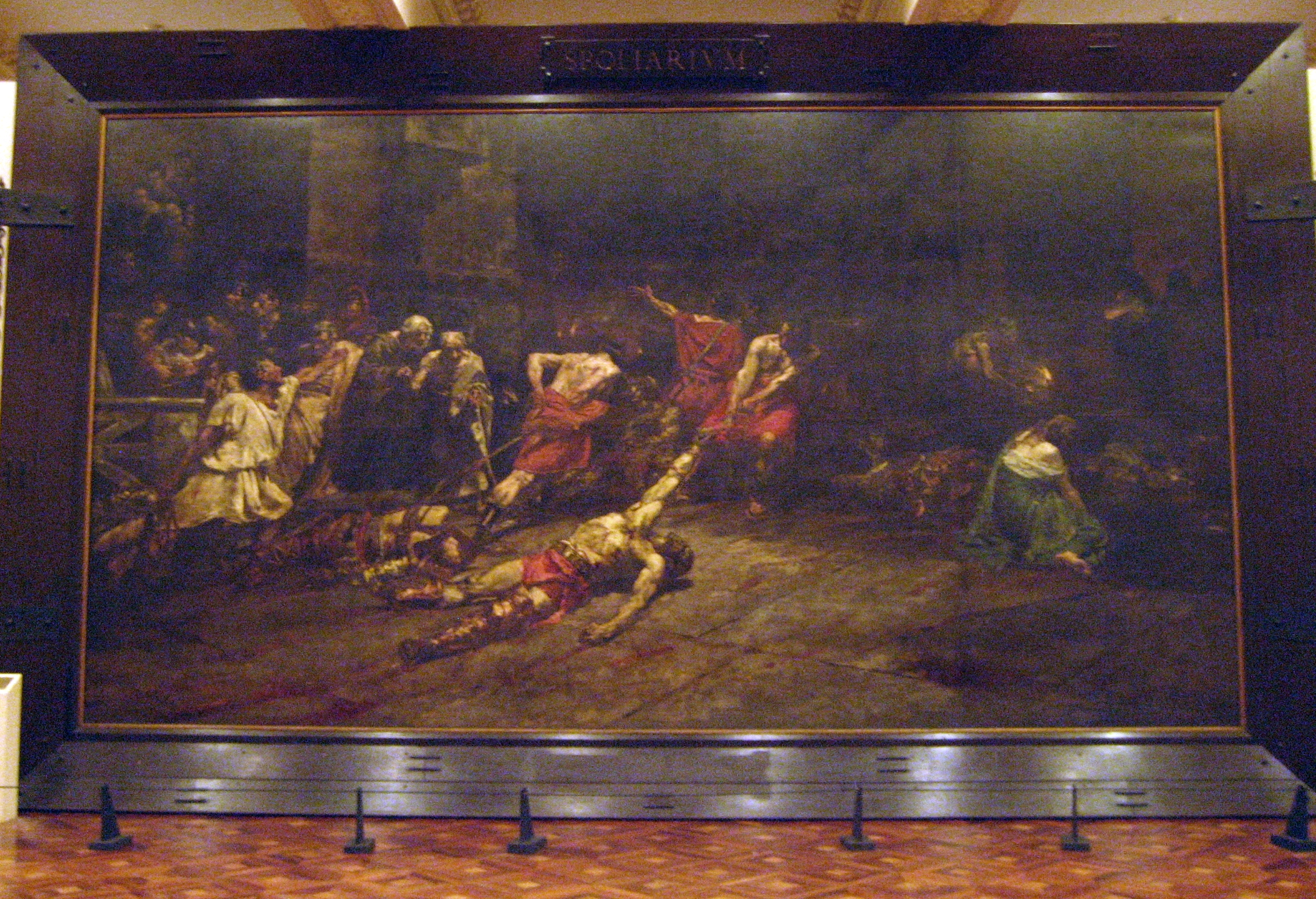


Juan Luna
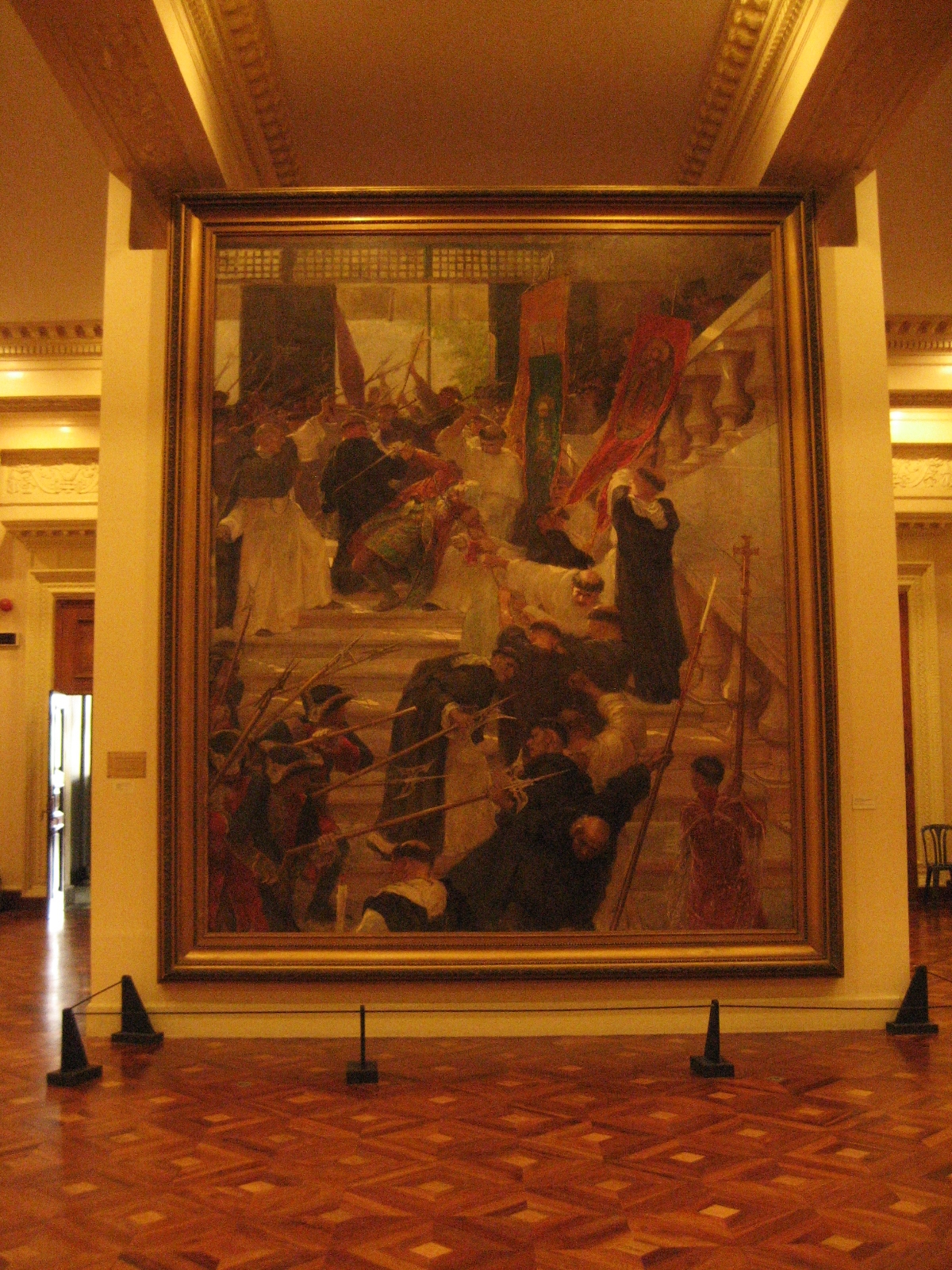
Felix Ressureccion Hidalgo’s “Assassination of Governor Bustamante”


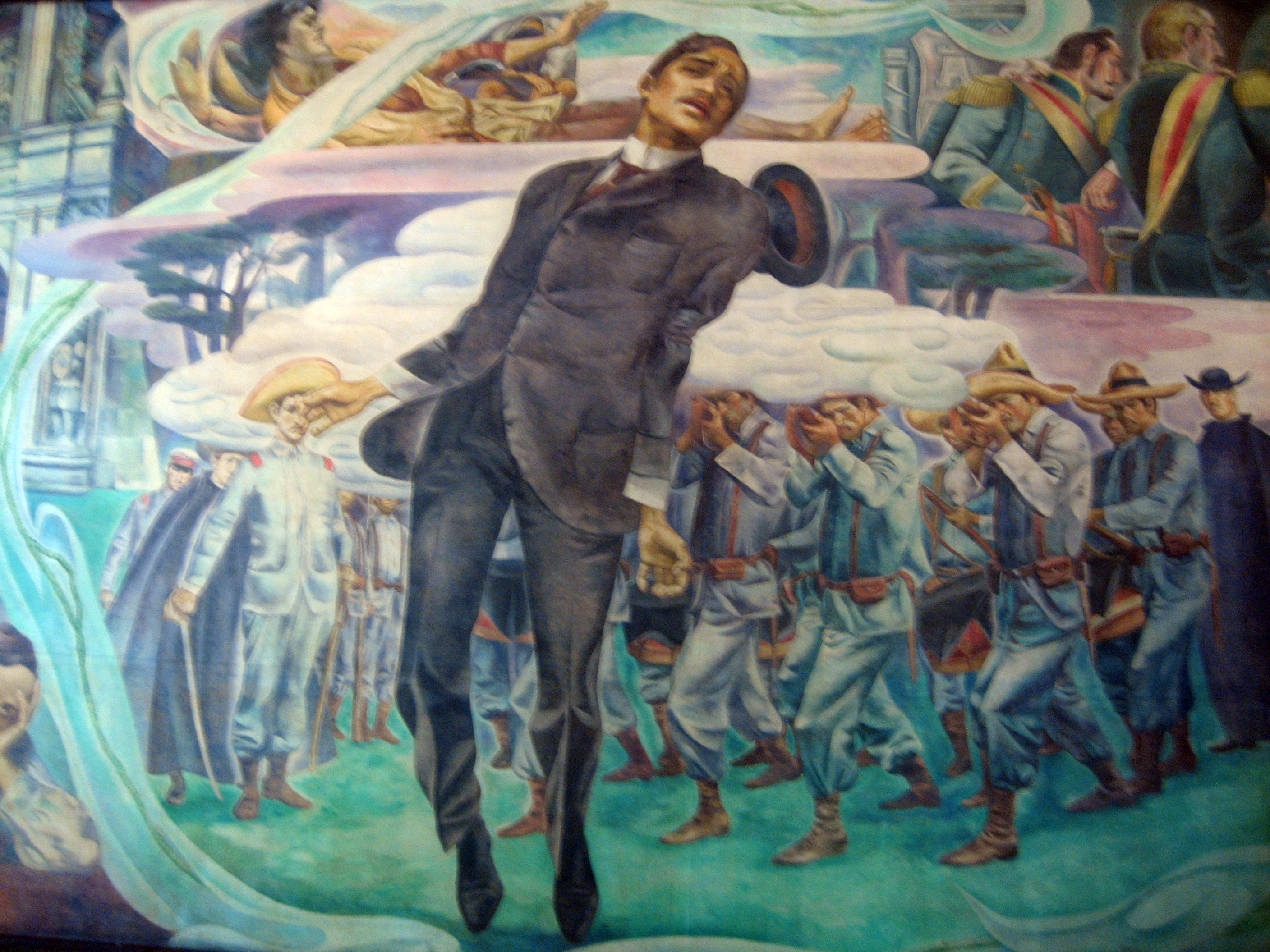
You may want to start with the Hall of Masters. Be prepared to be blown away. Juan Luna’s “Spoliarium” has that effect on most people. On the other hand, Hidalgo’s “Assassination of Governor Bustamante” reveals a violent side of Spanish friars of that period. See it to know what I mean. Sly. Sly.


There are special halls showcasing the Museum collections of Juan Luna, Hidalgo, Amorsolo, Botong Francisco, Napoleon Abueva, etc. I cannot write about all of them, and would have to limit myself to a few favorites. After all, the “selection” is a very personal decision. No pretensions here. In my book, art assumes significance when these treasured pieces “talk” to me. Or “touch” me. I may misinterpret its message, or completely misunderstand it. But why and how the message was conveyed to me is entirely my own perception. Or sensation? This may sound like it takes too much away from the artist himself. But I dare say that the artists’ messages affect people in different ways. Happy, sad, empty, peaceful, anxious, relaxing, refreshing, uplifting…… we feel as we feel.


How lucky were those who posed for Amorsolo! They have been immortalized by this National Artist’s magical hands. Truly, a “Pamana” or inheritance. Amorsolo’s legacy lives through these masterpieces. Thank God for this prolific painter, our very first National Artist. From Philippine landscapes to traditional Filipino practices and everyday life , to these portraits, one is transported back in time as one takes in all those details of his artful strokes. For sure, his uncle Fabian de la Rosa, another great Filipino artist, must be so proud having mentored Amorsolo in his younger days when he and his family (Amorsolo’s mom is De La Rosa’s cousin) lived with them after Amorsolo’s father died.
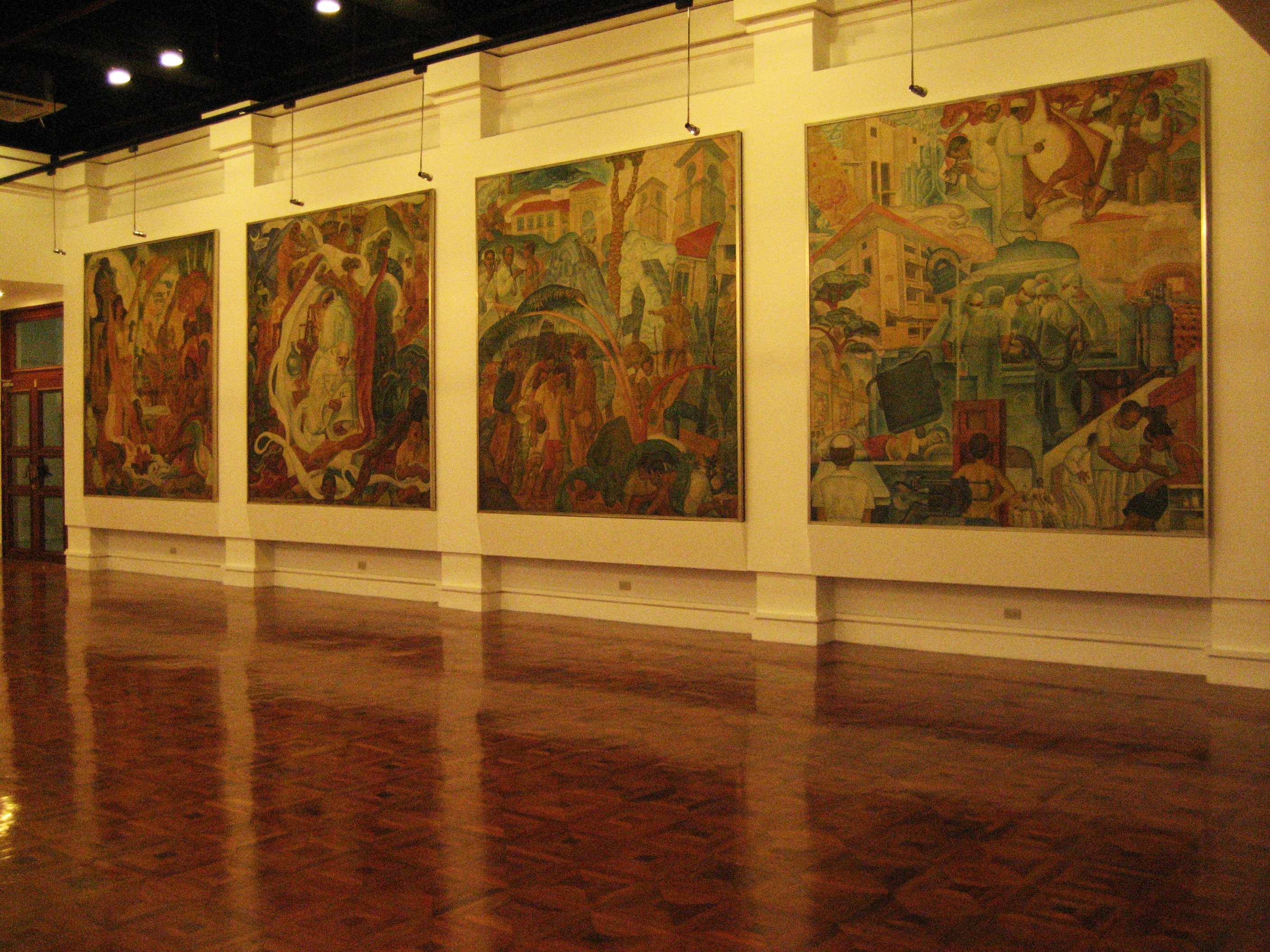


First off, I was very very happy to find the Museum Foundation Hall where one views Botong Francisco’s murals which were ‘rescued’ by the Foundation from Philippine General Hospital (PGH) where they were earlier housed. The murals represent the progress of medicine in our country, so it was fitting to have them in PGH. Over time, these art pieces hardly invited attention, much less admiration and respect, as PGH visitors had other mundane things in mind. Cleaned up, restored to its former glory, and accorded its due respect in a Hall focusing on the greatness of this National Artist is an answered prayer. Aaaaah. Those wooden benches looking like “hagabis” (were they? ) let one rest and simply take in all the beauty of the masterpieces.
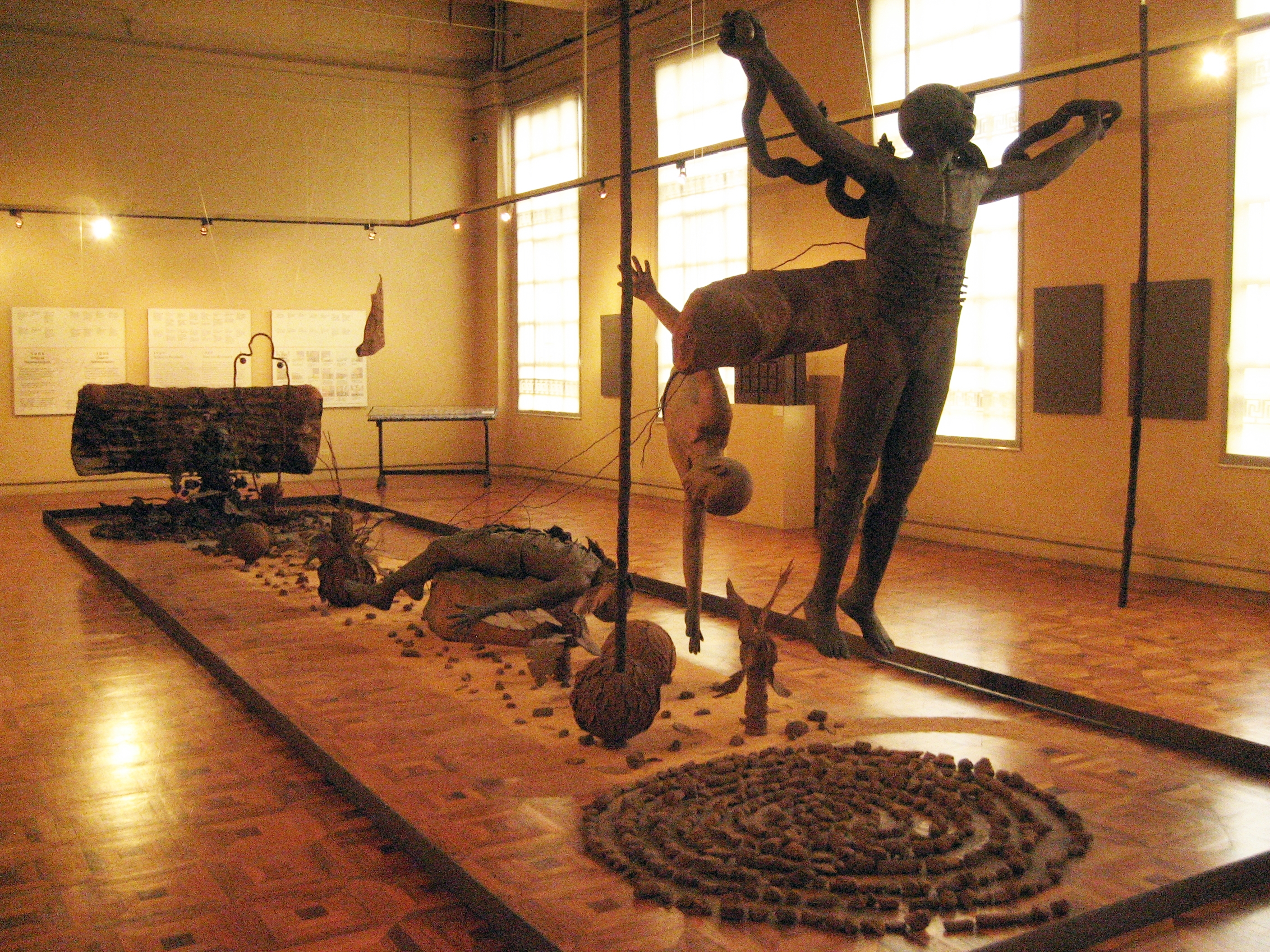


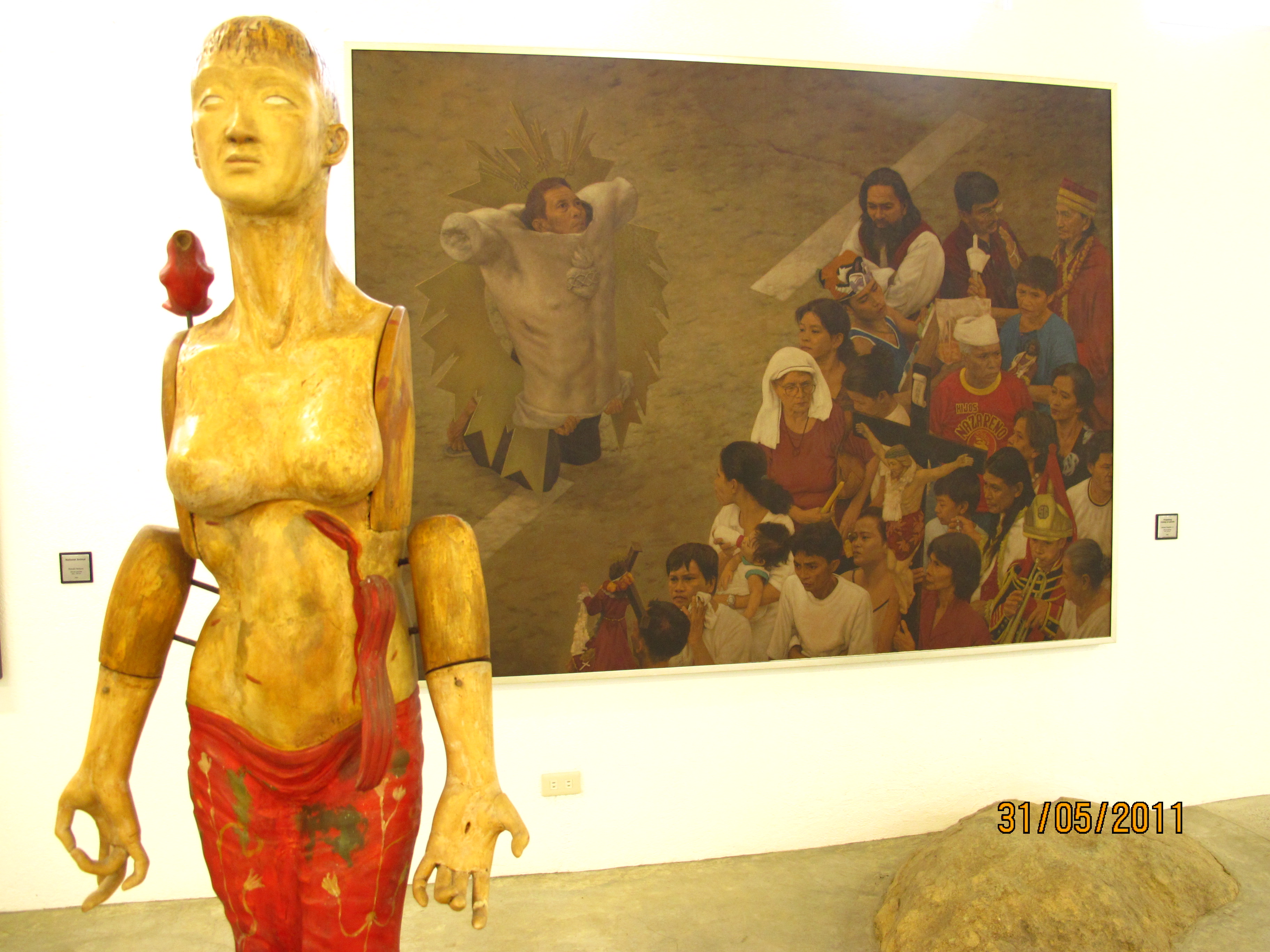
Vessels of Faith. That’s what it says. Honestly? I don’t know one bit about this exhibit. So, I devoured all “lessons” to be learned right in this Hall. Remember what I told you? The good guys who made this exhibit possible would have read up on these art pieces, and like “Twitter” are constrained to write down/display all that information in as few words as possible. This is history “shortcut”, if I may call it that. And it is just what I need. Right then and there, I did my “cramming” as if I would have to pass an exam as I exit from the National Art Gallery.
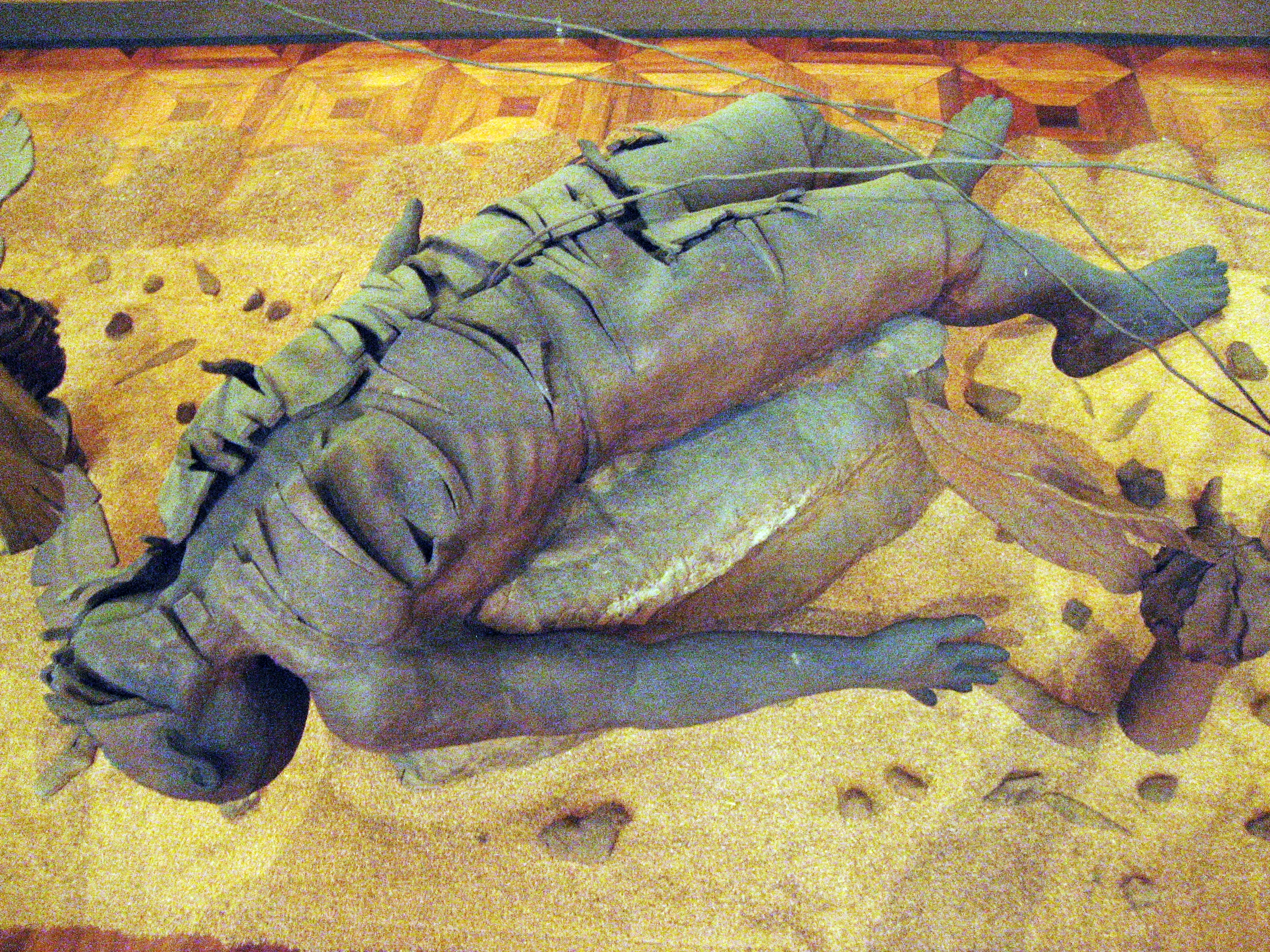


So, how much do we know of the Tau-Tao? A quick reading gives ample background on this Bagobo myth on afterlife. The myth is complete with all those colorful characters which reminded me of those Ramayana tales and Panday movies. Imagine Lumabat’s journey from earth, crossing the horizon to reach the skyworld. Meeting and vanquishing a snake with sharp teeth and a mouth that opens wide and shut to cut one person half, chasing a deer 9 times around the world, belly-opening procedures to take out one’s intestines to free Lumabat of his earthly desires (hunger)! Oh, this is part of our history — all those pre-Hispanic beliefs and myths comprising the Filipino spirituality!
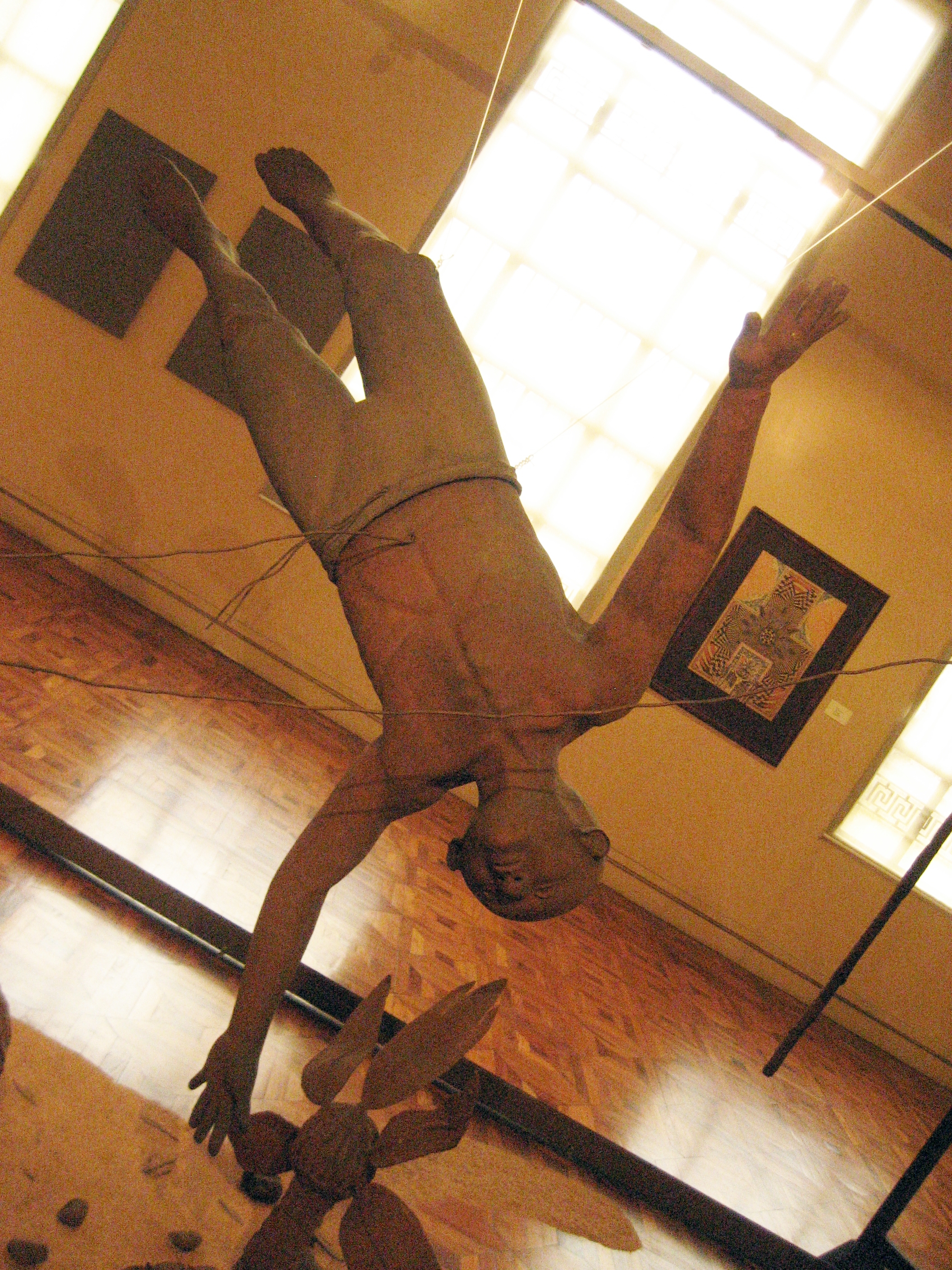


I lament that I did not take my history lessons seriously. How I wish we had the equivalent of an Ambeth Ocampo (myIdol) in my student years! Now I cram. And it takes more than a few visits to really appreciate our heritage housed in the National Arts Gallery. So much. Too much. So I have decided on my “slow by slow” mode as my memory bank is not as efficient as it used to be. A few exhibits at a time. A few artists at a time. And once more, how I wish there is a Coffee Shop within the Museum! Caffeine-starved, my memory bank screams “full”. No storage space.


Talk to you later, guys!
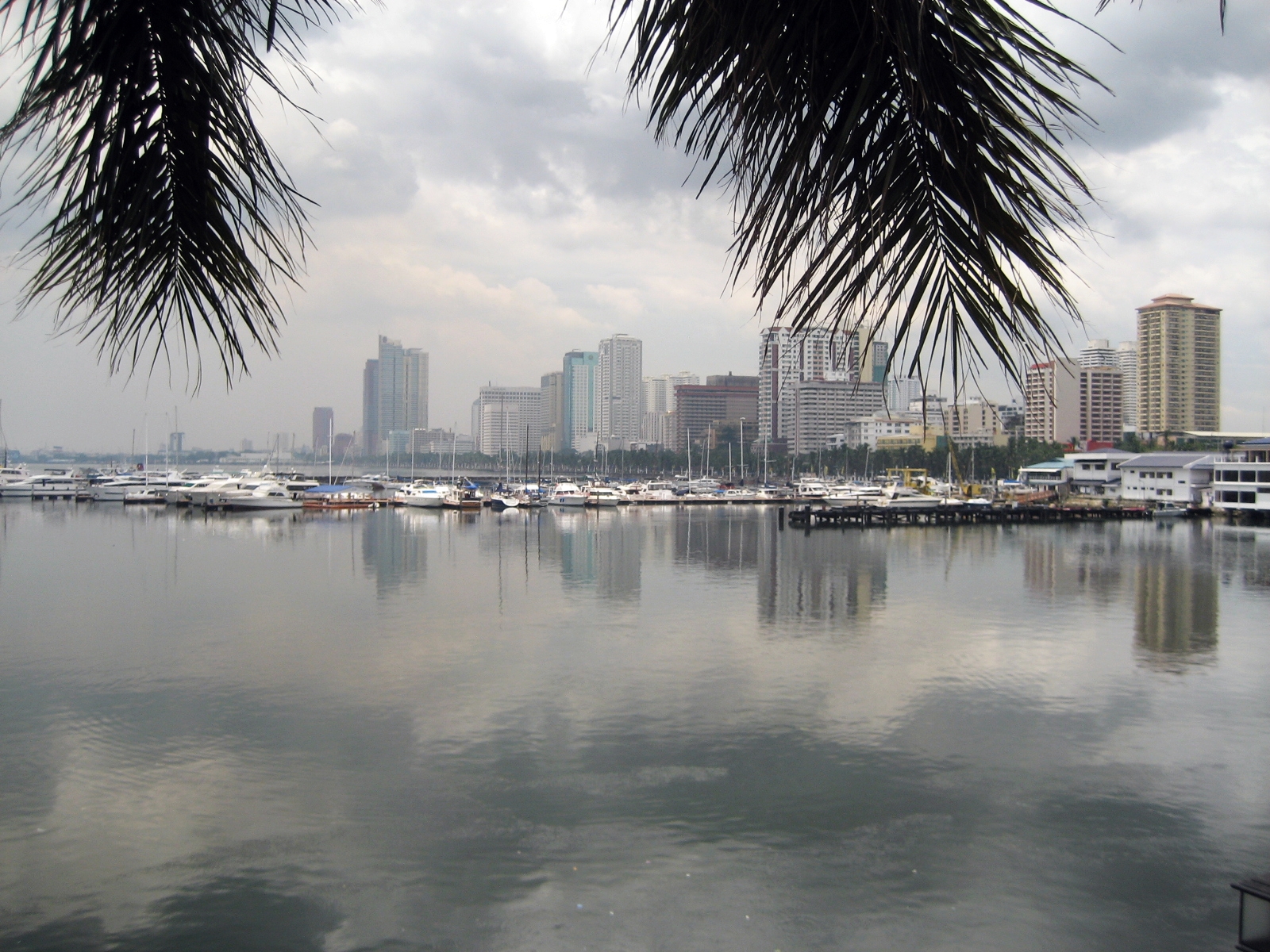

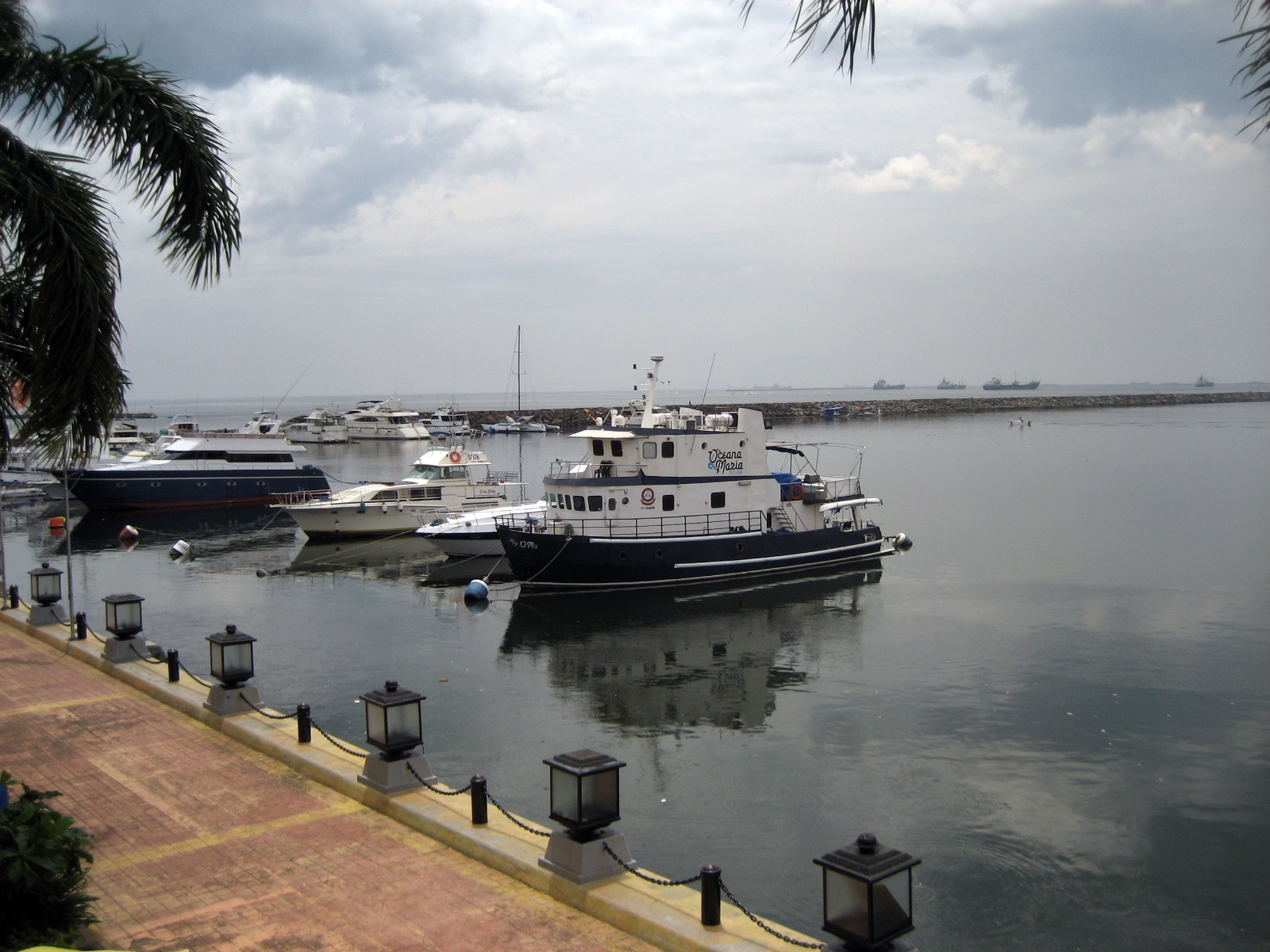
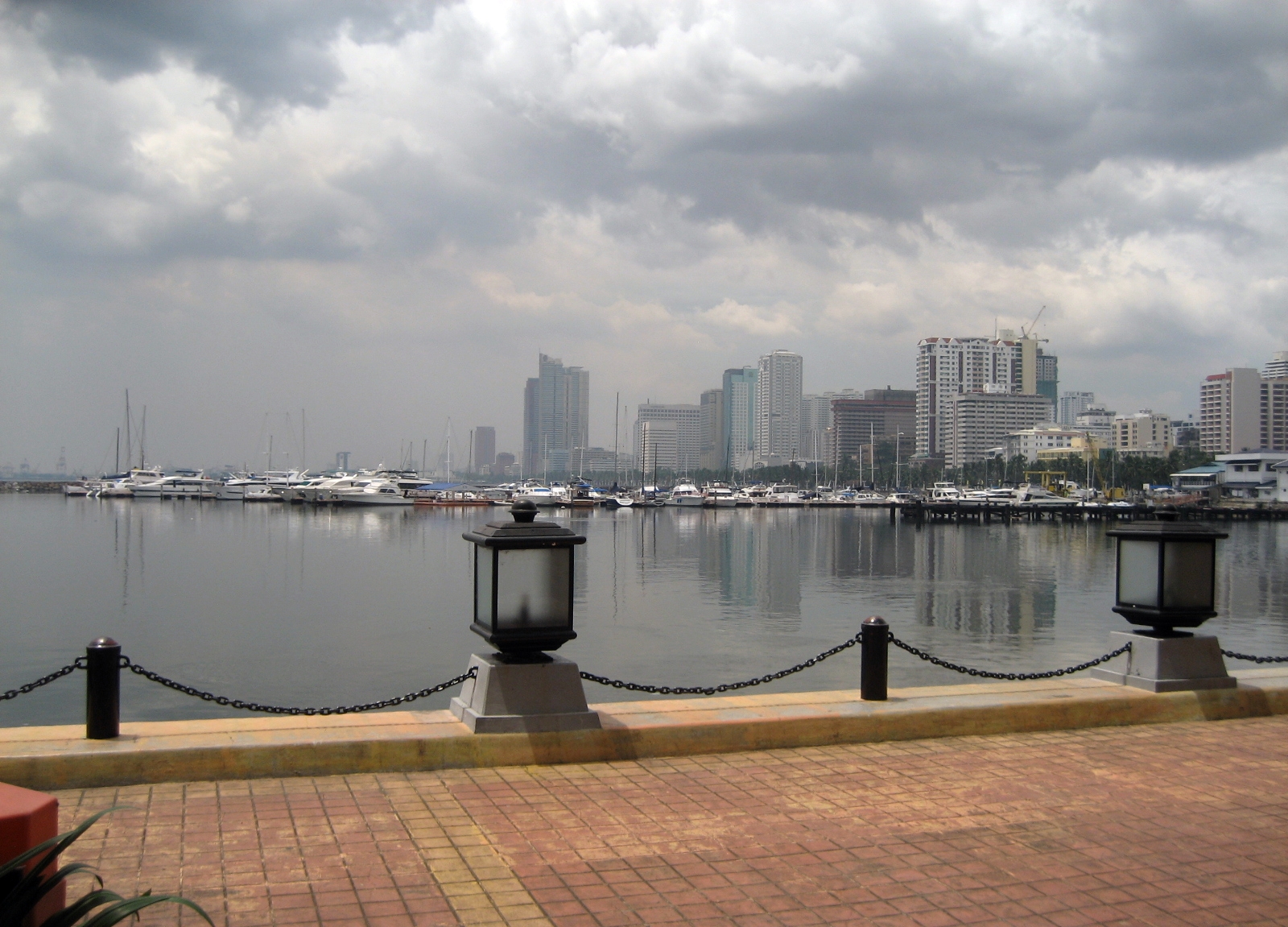
If there’s Hispanic Philippines in Intramuros and Chinoy Philippines in Binondo,  then Harbour Square may well be your American Philippines.

Just realized it has been awhile since the last time I was here.  I remember idling time away here soon after I quit my job. The breeze, the view, those speedboats bobbing up and down the waters of Manila Bay, the skyline,  all make for a lazy morning. Or afternoon.  Wide range of dining choices too, should you go hungry.  You can go all American at Army Navy, full-throttle Pinoy at Dencio’s, Mediterranean along with a flute of champagne or glass of white or red wine at Grappa’s, Japanese shabu shabu or Teriyaki Boy,  Chinese, or go budget meals at Jollibee.  Or perhaps you can talk well into the night while sipping your brew at Starbucks.

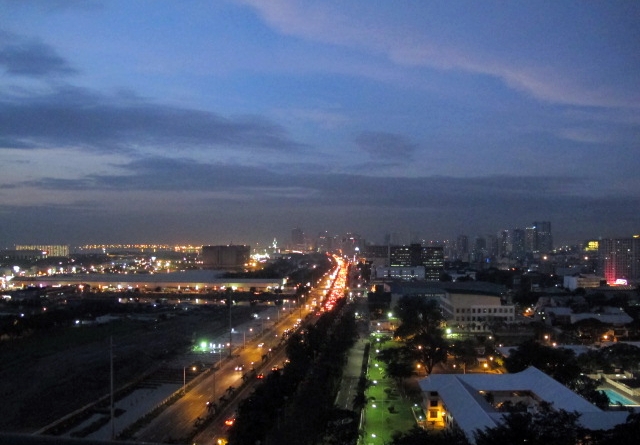
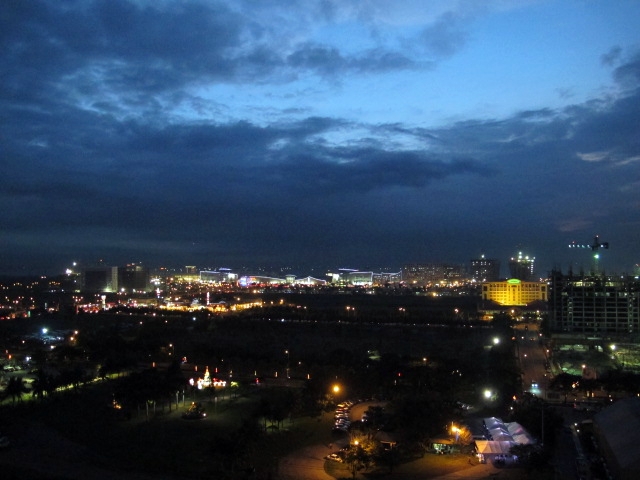
The place is ideal for dating couples.  Whether you are in a romantic mood or gearing for a lover’s quarrel,  you’d find some “privacy” while strolling the walkway by the Bay, circling  Cultural Center of the Philippines, Folk Arts Theater, Aliw Theater, Star City, all the way to Sofitel if you like.  If all that walking didn’t settle the score, well…….get a room.  😉  Well, apart from being more private you also get to take a better twilight photo of the Bay area.  Seriously though,  this part of Manila is more “quiet”, less chaotic, good for the nerves and spirit. 

Guess Where This Shot Was Taken!

And here’s another one too……………. 🙂

Twilight at the Bay Area

xxxxxxxxxxxxxxxxxxxxxxxxxxxxxxxxxxxxxxxxxxxxxxxxxxxxxxxxxxxxxxxxxxxxxxxxxxxxxxxxxxxxxxxxxxxxxx


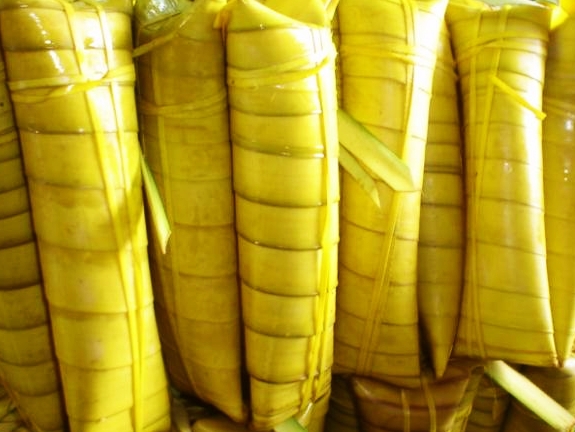
I have not heard of a Sumaka Festival celebrated every 1st of May.  But now I know it stands for SUman, MAngga, KAsuy.  SU.MA.KA.   Others refer to it as the SUMAKAH Festival, the extra H for Hamaka or “hammock”  or slings tied to a bamboo pole where ladies are carried in the olden days. Hmmm, I wouldn’t mind a hamaka ride like that!


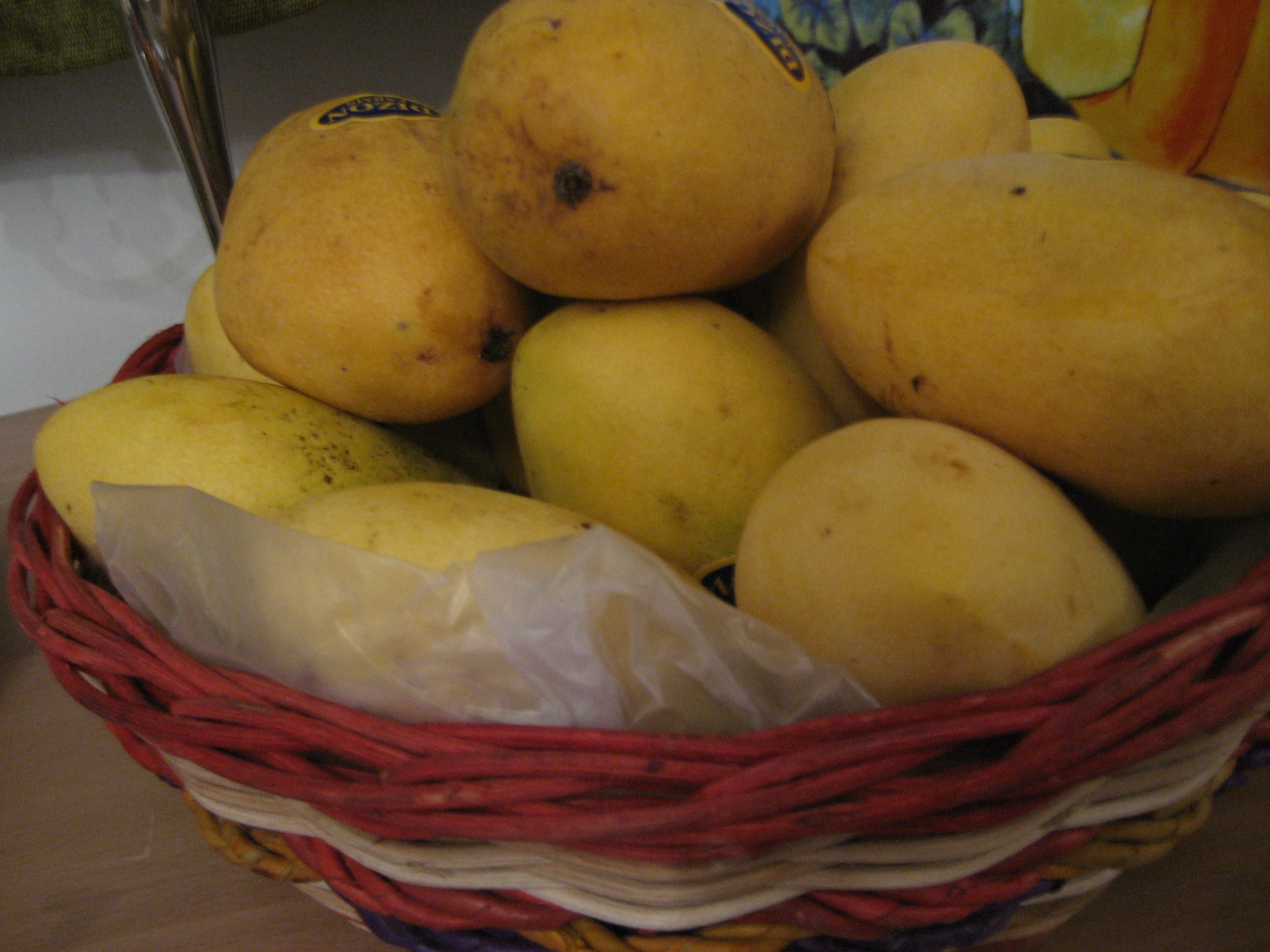
Long before I started going to school,  my family would make this annual pilgrimage to the Virgin of Antipolo.  Little did I know that she was the Lady of Peace and Good Voyage.  It was enough that I prayed to her as the Virgin of Antipolo and that soon after hearing mass in the Church,  I would be treated to a lunch of lechon.  Take-outs would include kasuy,  bunches of suman and baskets of mangoes.  Yes, during those days the mangoes were sold by the baskets rather than by the kilo.  

A trip to Antipolo in my early years also meant a day at Hinulugang Taktak.  But the falls have long gone and dried up,  I hear.  These days,  a trip to Antipolo simply meant a visit to the Cathedral,  perhaps lunch at either Crescent Moon Cafe or in Vieux Chalet — 2 of Antipolo’s “hidden secrets”—- or a visit to the Silangan Gardens and Pinto Art Museum  or more simply a visit to stock up on suman, mangga, kasuy AND MORE! What more?

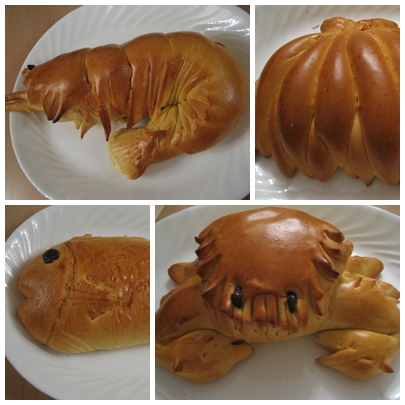
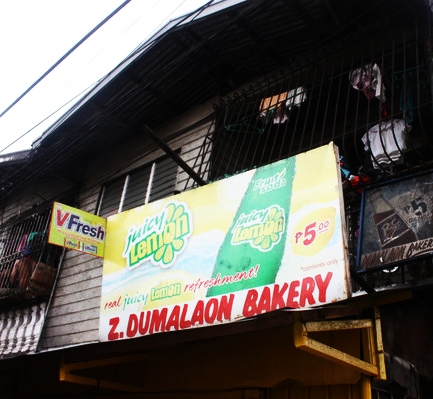
This time around,  we found ourselves making this quick dash to this hole-in-wall bakery before heading home.  Here, you can buy the pan de lechon.  Pan de what? Perhaps , a photo would better explain what we came here to buy. Photo below is the best seller of Dumalaon Bakery  in Antipolo City.

The "animal breads" of Dumalaon Bakery

Aside from the Pan de Lechon,  there were also breads shaped like a crab, a fish, a prawn, a crocodile and a bunch of bananas!  I lined up to buy and was pleasantly surprised to learn they sell for only P10 a piece.   I gave a P100 bill and the lady said she has no change.  So I ended up buying 10 pieces of different forms and shapes.  🙂

Would You Still Eat Them? P10 a piece. P20 for the bigger ones.

Cute-sy, don’t you agree? If you can’t afford to buy a lechon, whole or by the kilo,  buy the bread! It’s healthier 😉
Driving Directions:  From Sumulong Highway, you’d reach a fork : turning right will take you to taktak road  (Vieux Chalet!) while  going straight takes you to the Antipolo Church. TURN LEFT here.  The road is part of the circumferential road commonly called  “siete medya” (don’t ask me why) by the locals. After turning left at the intersection, just drive past some 3 blocks and look out for  the bakery on your right side.  It looks more like a sari-sari store. Naaah, it is a sari-sari store along a very busy road. Exact address is  257 Circumferential Road, Barangay San Isidro, Antipolo City. It is also near Crescent Moon Cafe (where you find the Alagao rolls or lumpia — check out my other blog)

xxxxxxxxxxxxxxxxxxxxxxxxxxxxxxxxxxxxxxxxxxxxxxxxxxxxxxxxxxxxxxxxxxxxxxxxxxxxxxxxxxxxxxxxxxxxxx


Going to Antipolo?  Filipinos have this tradition of visiting the Antipolo Church especially right before a major trip.  Our Lady of Peace and Good Voyage is a national shrine.  A pilgrimage site for every O.F.W. just before leaving the homeland.  

So, how about a nice detour?  A Swiss Chalet in Antipolo? What do you know………..

Antipolo Church

Inside the Our Lady of Peace and Good Voyage Church in Antipolo

This dining place is owned by the family of Susan Hassig, a Filipina married to Tony Hassig, a Swiss national. In operation for more than 2 decades now, I remember many breakfasts and early dinners here.  Solo.  At the time,  I was still working and branch visits are my daily fare.  On way to or from Tanay and other parts of Rizal,  I would drive out early to enjoy a peaceful breakfast here.  Or drop by before driving home for a panoramic and illuminated view of the city.  Each visit,  the waiter would ask me if I want the table for two in some corner with a view of the mountains.  Perfect view while sipping a good cup of brew. Invariably, my answer is “I want the table, but I’m eating alone”.   This exchange between the waiter and myself must have caught the attention of the owner such that when the same fellow asked me for the nth time,  the owner loudly said “The lady enjoys dining  ALONE”.  A wink there, and that ends the discussion. 🙂

Inside Vieux Chalet

Since I quit my job,  I have not been to Vieux Chalet.  But I certainly have fond memories of my breakfasts and early dinners there and the tranquility offered by the mountain vistas. You may think this  petty or trivial,  but this place fries my eggs exactly the way I want it…….NOT so in many breakfast places I have tried.  Nor can I forget the raclette or pate de foie. The only problem with eating alone in this place is that I never got to order the Cheese Fondue as I have no one to share it with.  So with the pizza.  😦  

But I digress. This time around,  I found myself back in this lovely Swiss Chalet mid-afternoon of a weekday.  It wasn’t a busy hour.  I found the place almost exactly the way I remembered it.  Even the shade of brown of its tables and chairs is the same familiar shade.  De ja vu.

It Was Sooo Good I Forgot What It Was Called!

I was surprised to learn that they now run Wellness Sessions.  Well, not actually surprised.  The place and the vista is perfect for just this kind of activity.  It has to be arranged though, as with any parties, retreats or family reunions you may plan to hold in this place. As for me, I’d be quite content to spend a quiet afternoon here, sipping my coffee and enjoying my mid-afternoon delights:  D.E.S.S.E.R.T.S !  

Susan and her daughters run the place now.   If you want to dine here, or to ask for directions on how to get here, call Vieux Chalet, 697-0396 or 344-5056  or Susan Hassig’s cellphone, 0917-856-5175. Do make those reservations as the place has quite a limited space.  I’d say just a dozen tables and of course, the ones with a view of the city lights are premium tables.  Don’t do it the way I did,  go with company. Many dishes are best shared, like the salads, pizzas and sausage and cheese platters. Getting there is quite challenging, but Susan offers these driving directions:

If you’re coming from Ortigas Center, you can take Ortigas Avenue going up to Antipolo. Ortigas Ave. Extension (from Robinson’s Galleria) ends at the fork marked by an island across from Ynares Center, with statues of the Filipinos of olden days. 

Please take the left branch of the  fork. Soon you’ll see on your left a gas station, USA88. Turn left there and keep driving on and then keep right when the road forks once more. Drive down this road and you will see the arch with names of several resorts. Go through the arch and drive down keeping left until you reach Purok Sampaguita gate, which is always half-closed. Go in and keep moving on the road toturn right uphill at the second corner. You’ll then see Vieux Chalet directional arrows and signs along the way.


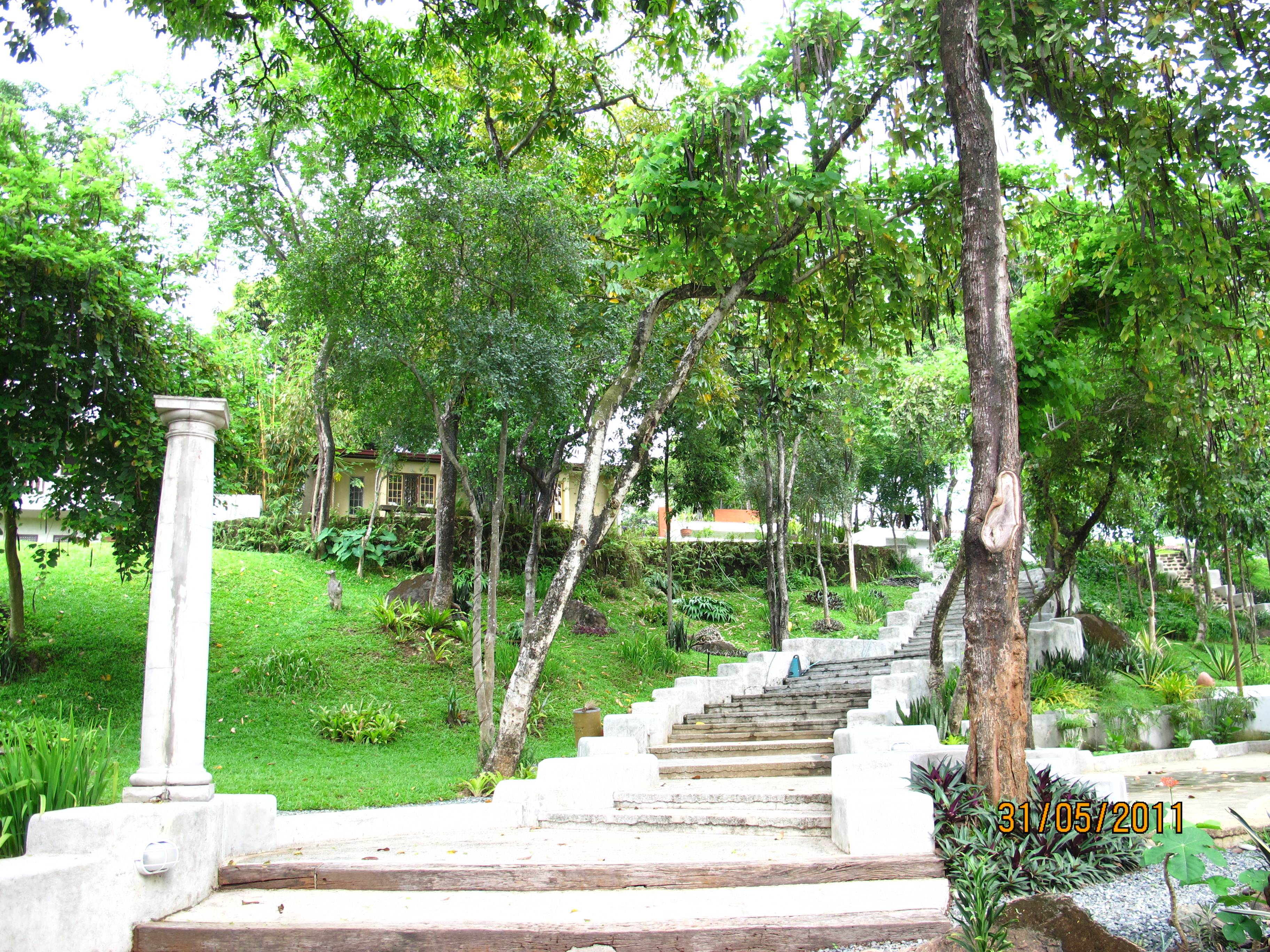
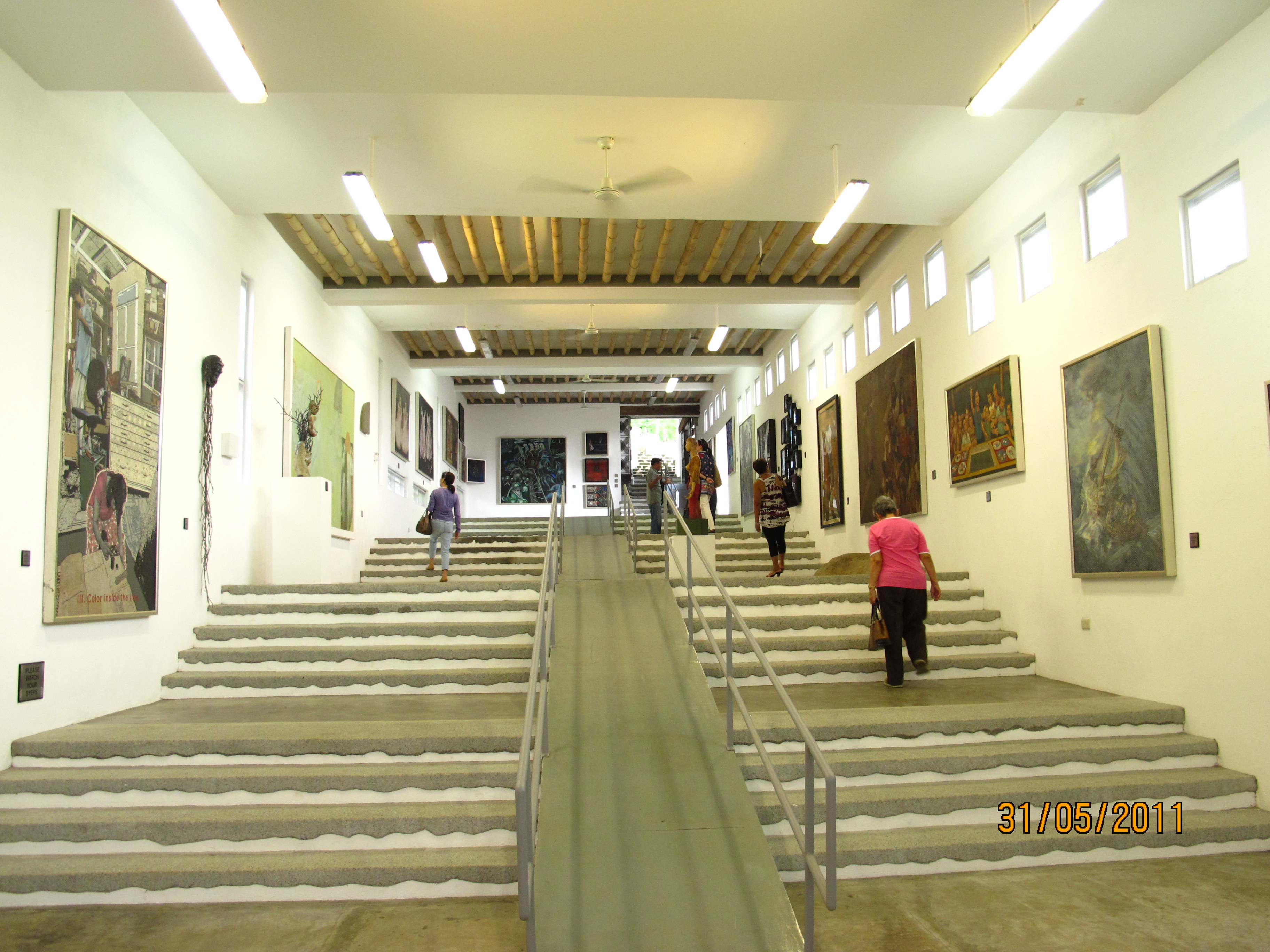
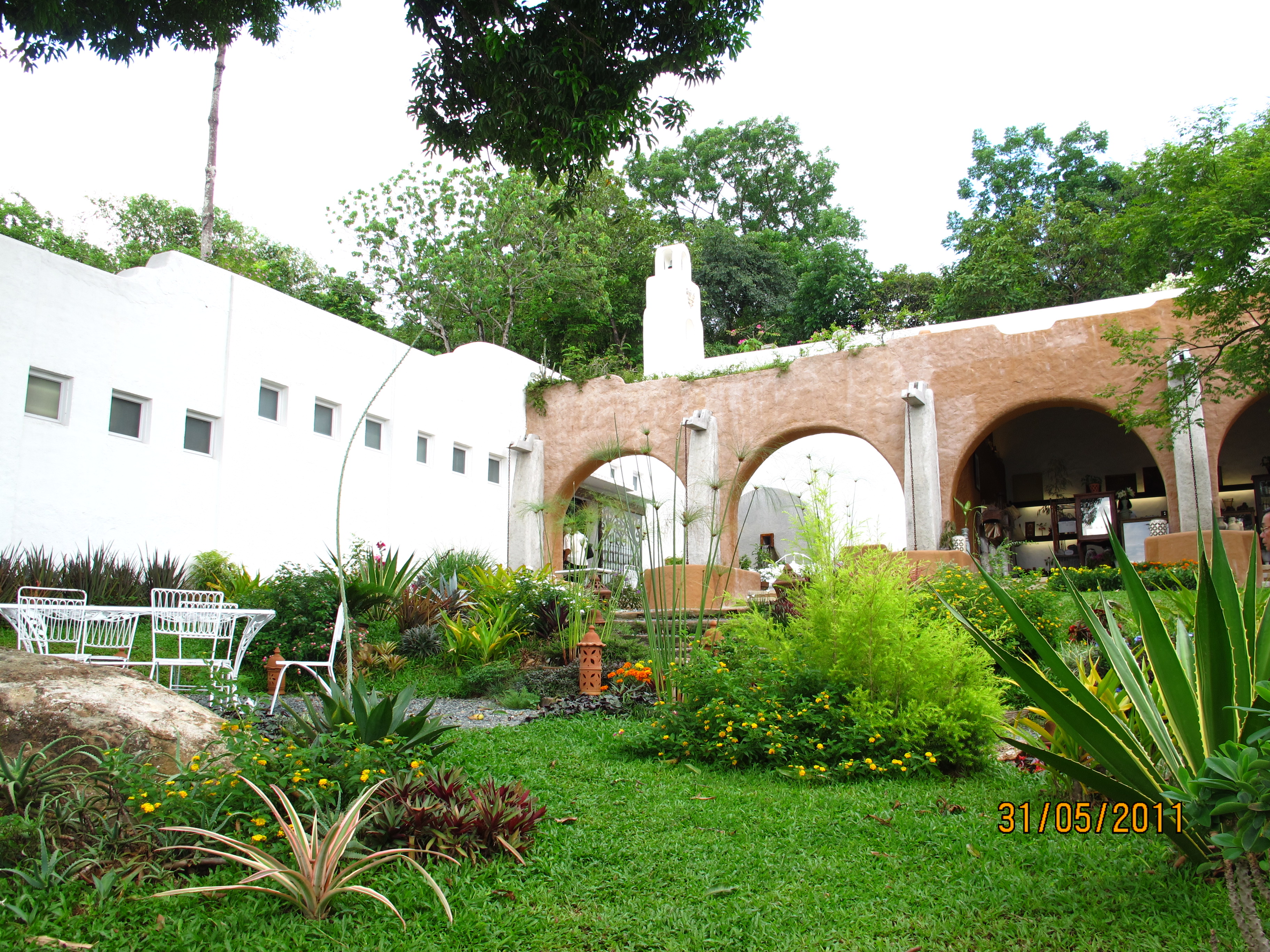
Just in the suburbs.  This oasis of peace and quiet is truly an art haven.  As my friend puts it, this is our very own MOMA (Museum of Modern Art). A not-to-be-missed destination. You don’t even have to be an art lover to enjoy this place.  But there is no guarantee you won’t end up as one by the time you’re done.


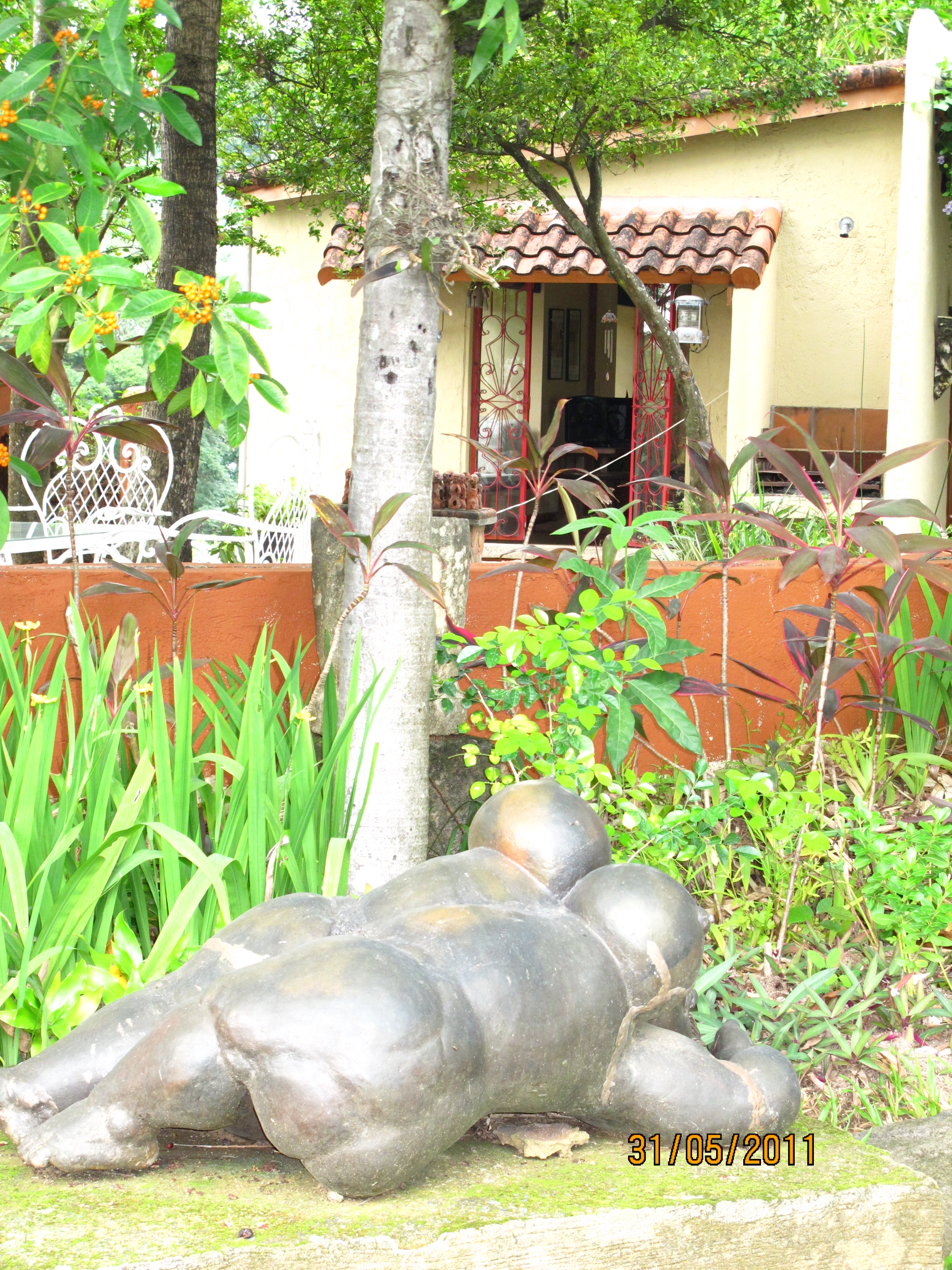
Despite the humidity,  the place offers a pitstop for tired bodies, restless minds and depressed spirits. Strolling around the gardens aimlessly, we soon learned why this place has become famous for pre-nuptial photo shoots.  It is most certainly a haven of creativity.  And I am just talking about the gardens here.  Wait till you go through the Museum proper, where I advise you to go slow to digest every ounce of art and culture. 


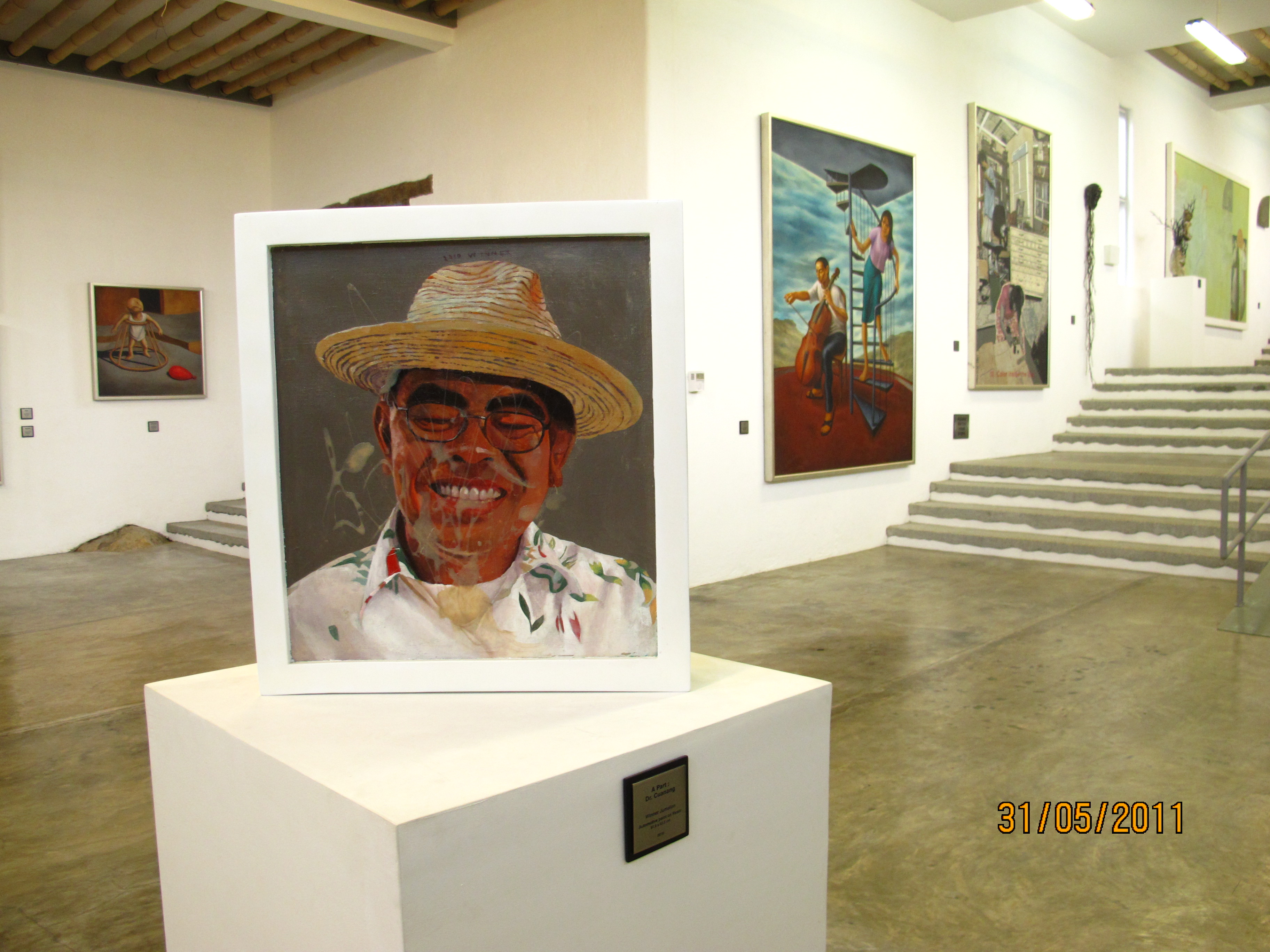
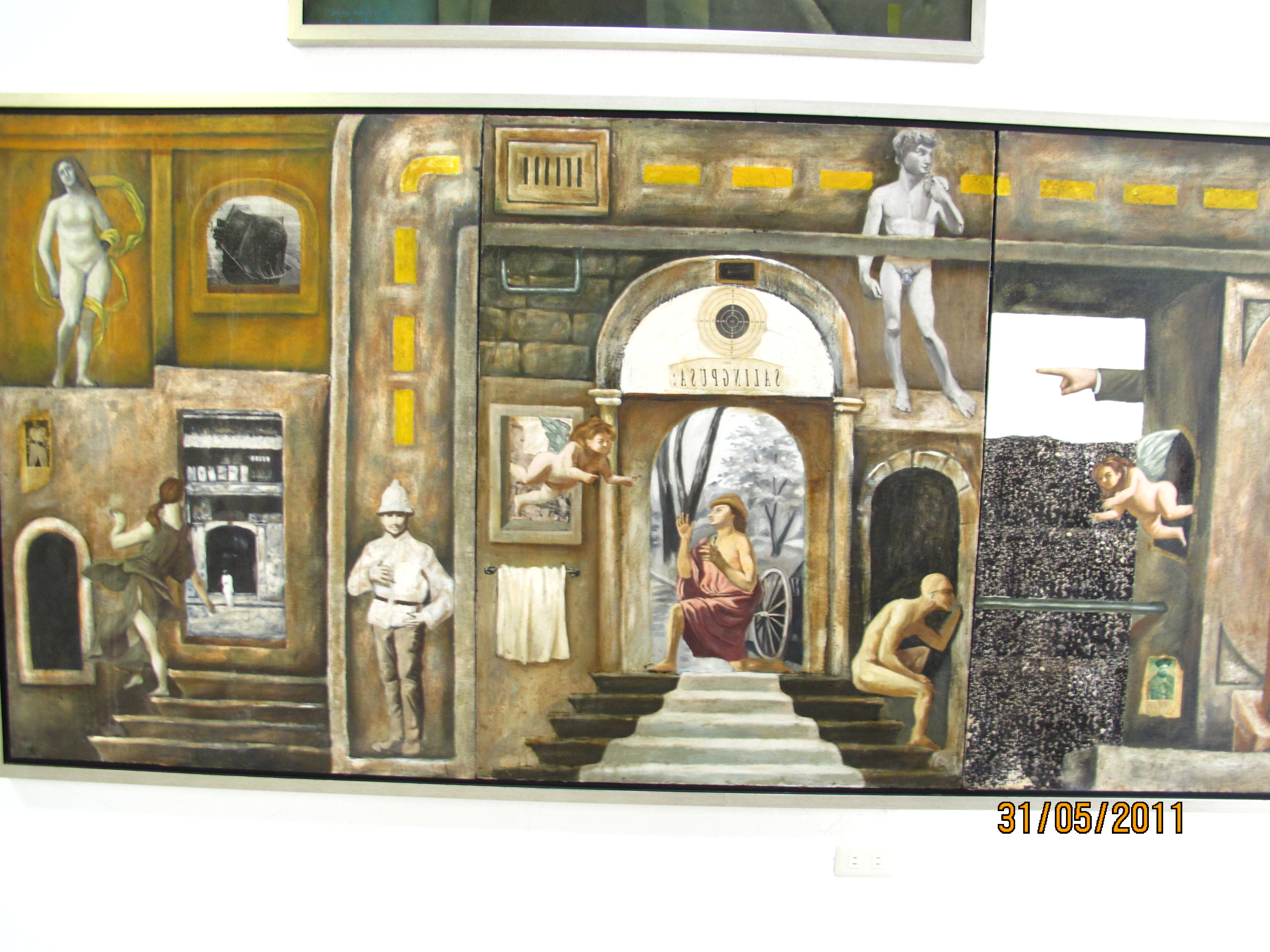
The Pinto Art Museum and Silangan Gardens is right inside Grandheights Subdivision in Antipolo City. I’m lousy with directions so if you plan to visit the place,  give them a call at (+632) 703-4453 or (+63917) 608-6754)  to ask for directions.  There is much to see here. And it is not difficult to wander aimlessly and view the collections of noted neurologist and art patron Dr. Joven Cuanang. We were lucky to find the good doctor in his residence right within the gallery compound when we visited.  He was most kind and even eagerly showed us around the many items of art inside his residence hemmed in by the lovely gardens.


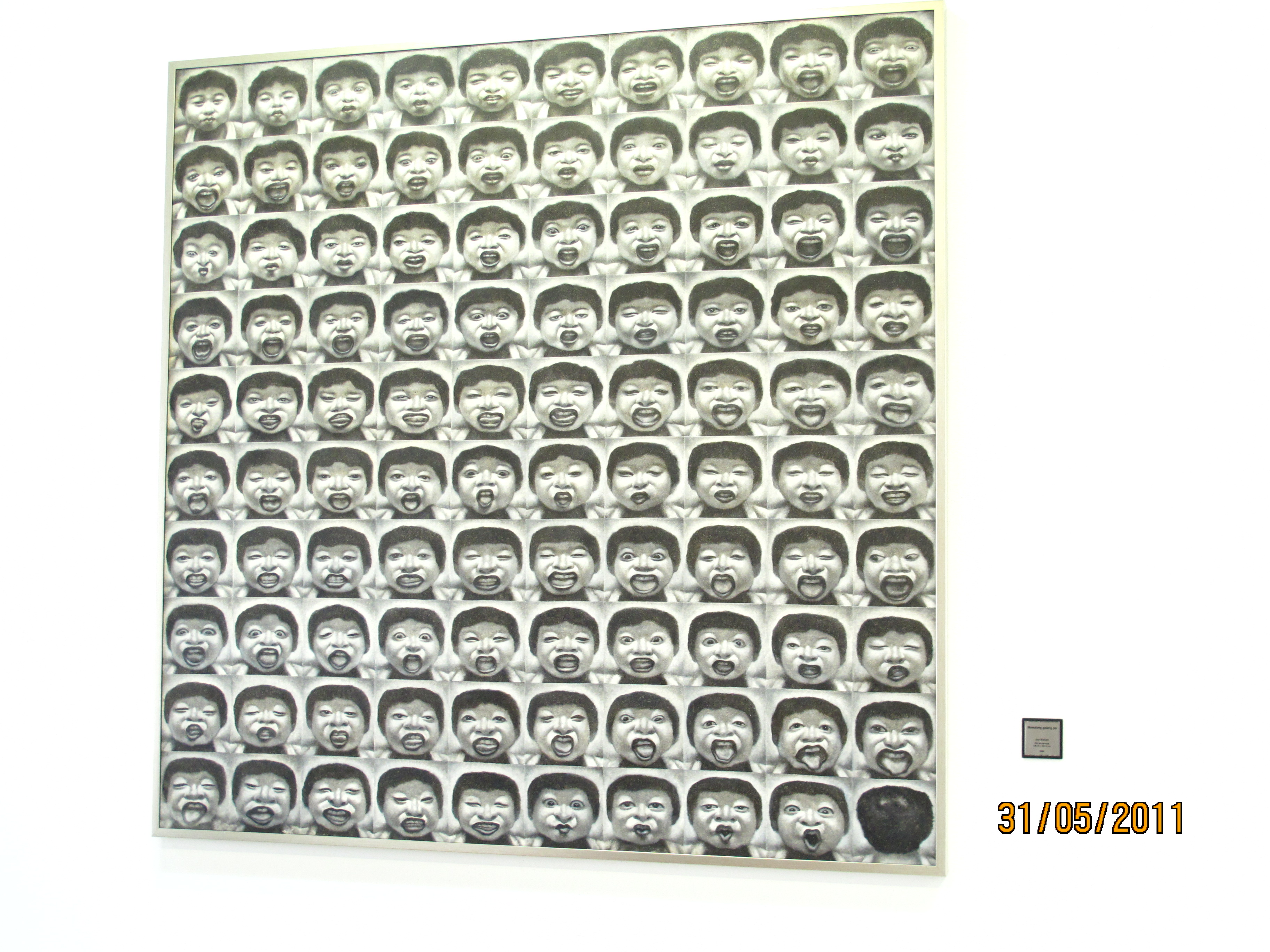
How To Say “Ma.wa.lang.Ga.lang. Po.

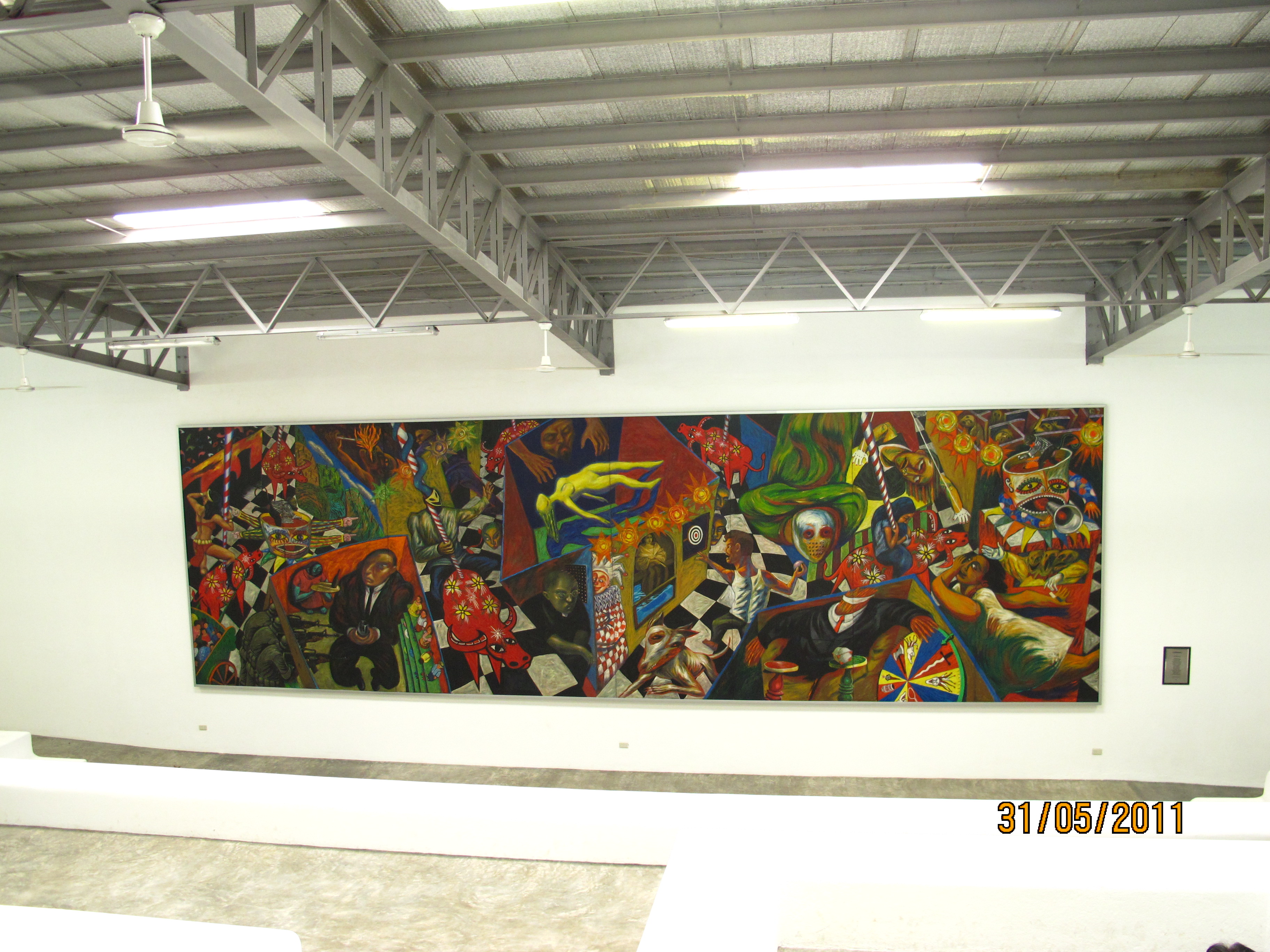
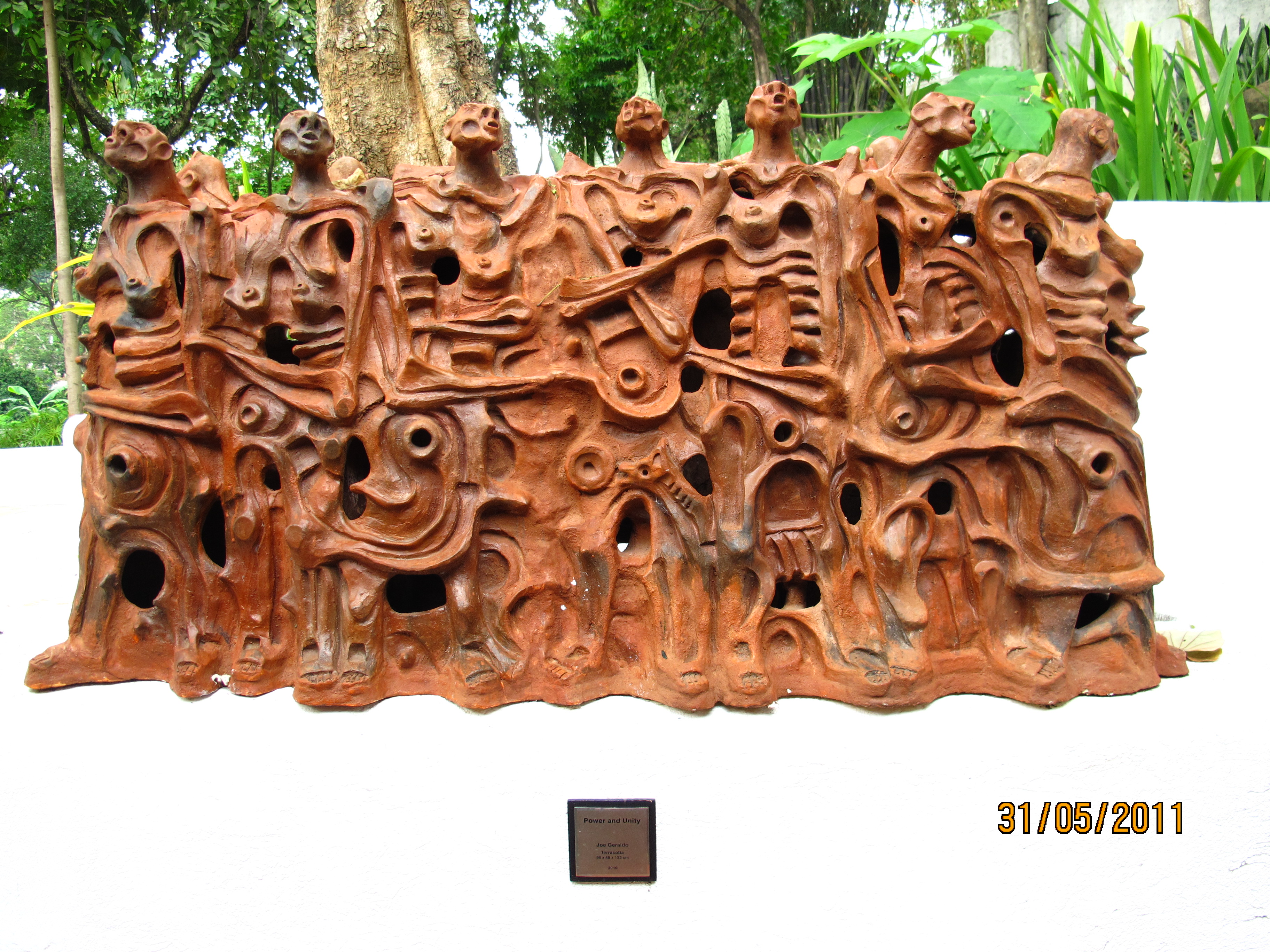
It is of natural consequence that one views these collections with a sense of pride over Pinoy ingenuity and artistry. Filipino artists, both famous and promising, found a home here.  Dr. Cuanang talks about his collections like a father would lovingly and proudly talk about his children.  Like all his sentiments and emotional attachments wrap each piece of art and collection.   We were not surprised to learn that the good doctor has not parted with ANY piece of art that he has acquired through the years. Each of these acquisitions hangs proudly on the Museum walls in this architectural complex designed by no less than artist Antonio Leano.  The high ceilings , white stone walls , open porches and sprawling gardens all make for a very colonial/Mexican architecture.  As one weaves from hall to hall to view the exhibits,  there is an element of unhurriedness and pleasure as one’s aesthetic senses are stirred.  Surely, this place is a labor of love!   


Thanks to Dr. Cuanang and his vision and advocacy, we are able to enjoy our own MOMA within the City. 


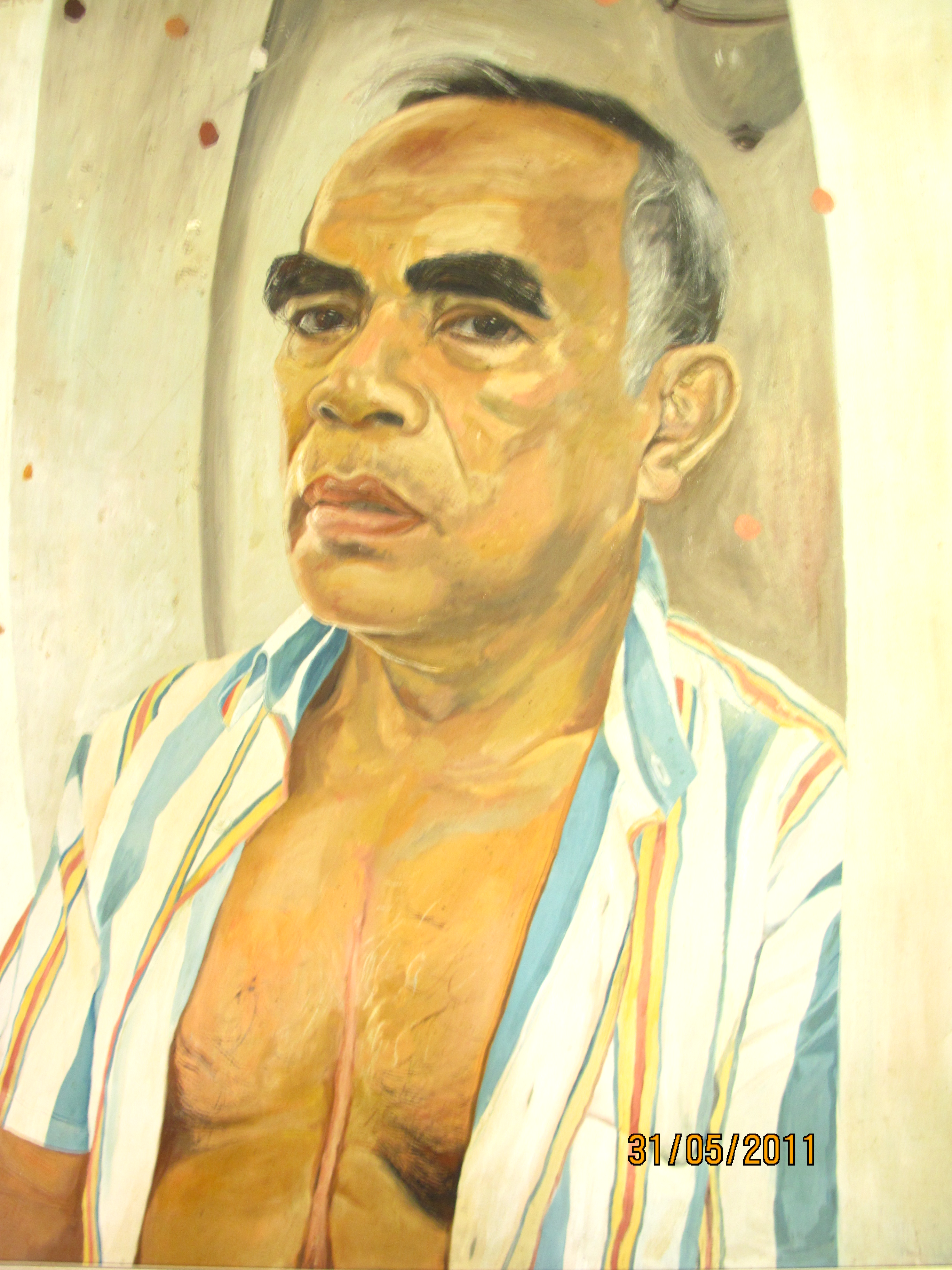
A Painting of Dr. Joven Cuanang

PS. We visited again on April 5, 2018 and found even more improvements, including its Cafe Rizal. Met Dr. Cuanang once more and felt jealous that this man lives within the Museum grounds and only had to step out and literally stroll around the gardens, visit the galleries and then stop for a drink in the cafe. What a great life!

https://youtu.be/qfbrgcvIcho


Yes, Alagao.  I hail from the province and what I know of alagao is that it has a “hairy” leaf. Yes, H.A.I.R.Y.  But it is one hell of a versatile leaf. Just like the guava leaves,  they can be used to wash wounds or applied to open cuts.   Whenever we have indigestion or suffering from gas pains,  our elders would come up with this concoction and force us to drink the alagao tea, if you can call it that.  Gosh, I even remember our quack doctor with some cut up alagao leaf or two on his temples to cure his headache!


As kids, we would play-cook and readily discard the alagao leaves among our “ingredients” for whatever it was we are boiling or concocting.  That’s because we didn’t like the “felt” texture of the leaf. Hairy has no room in our kids’ menu back then. But in this part of Antipolo, alagao  takes centerstage in this lovely lunch buffet.  Was I in for a pleasant surprise!


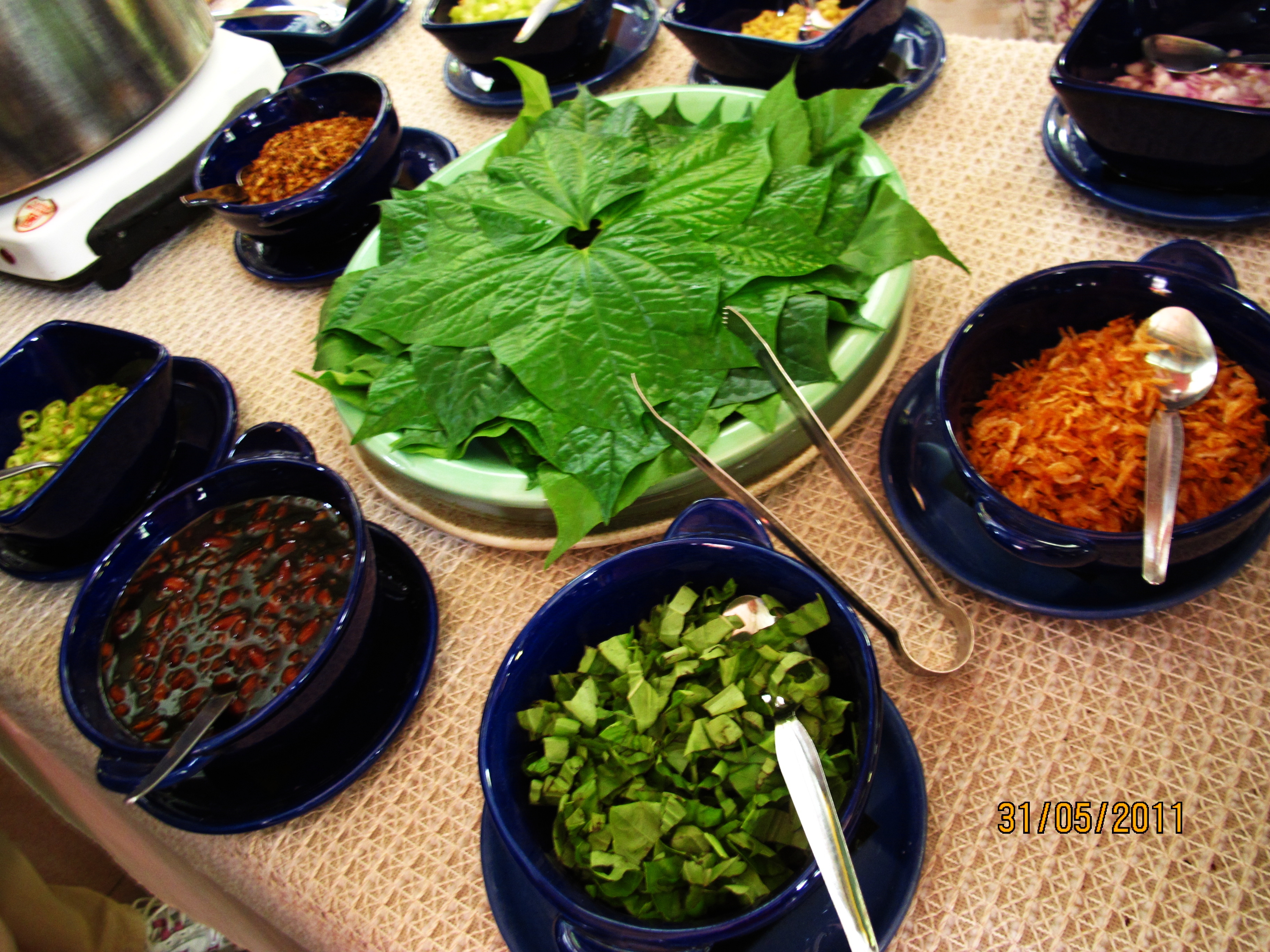
Signature Appetizer Is Alagao Leaves With Spices & Other Fillings


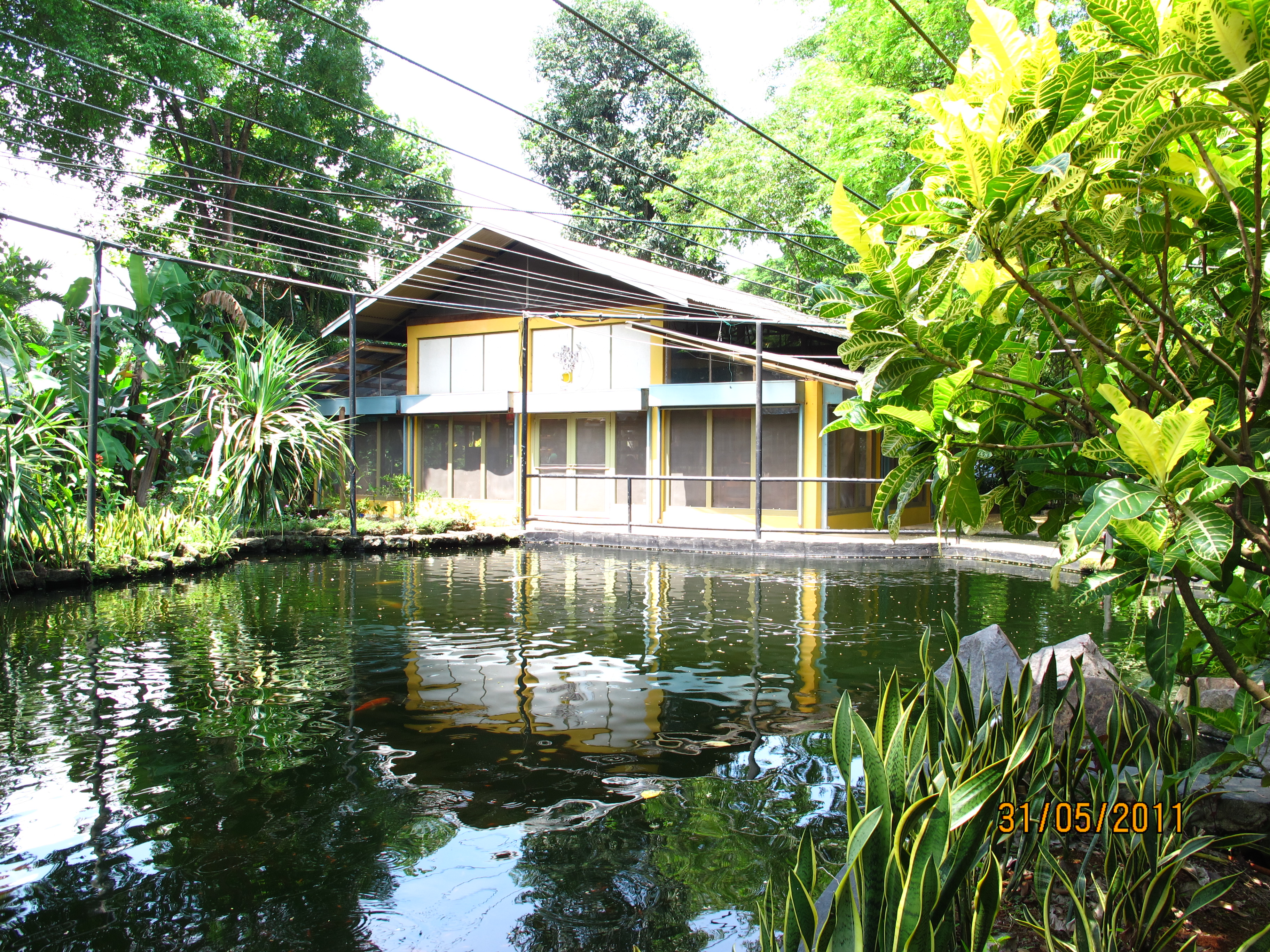
It was past my lunchtime when we reached Crescent Moon Cafe.  I do not know how long it has been in business  in this corner in Antipolo, Rizal, but it sure is a well-kept  secret.   It was a very humid day, and we have just visited the Angono-Binangonan Petroglyphs at high noon!  Hungry,  I was quite ready to eat a cow by the time we reached this cafe and its lovely garden and koi ponds.


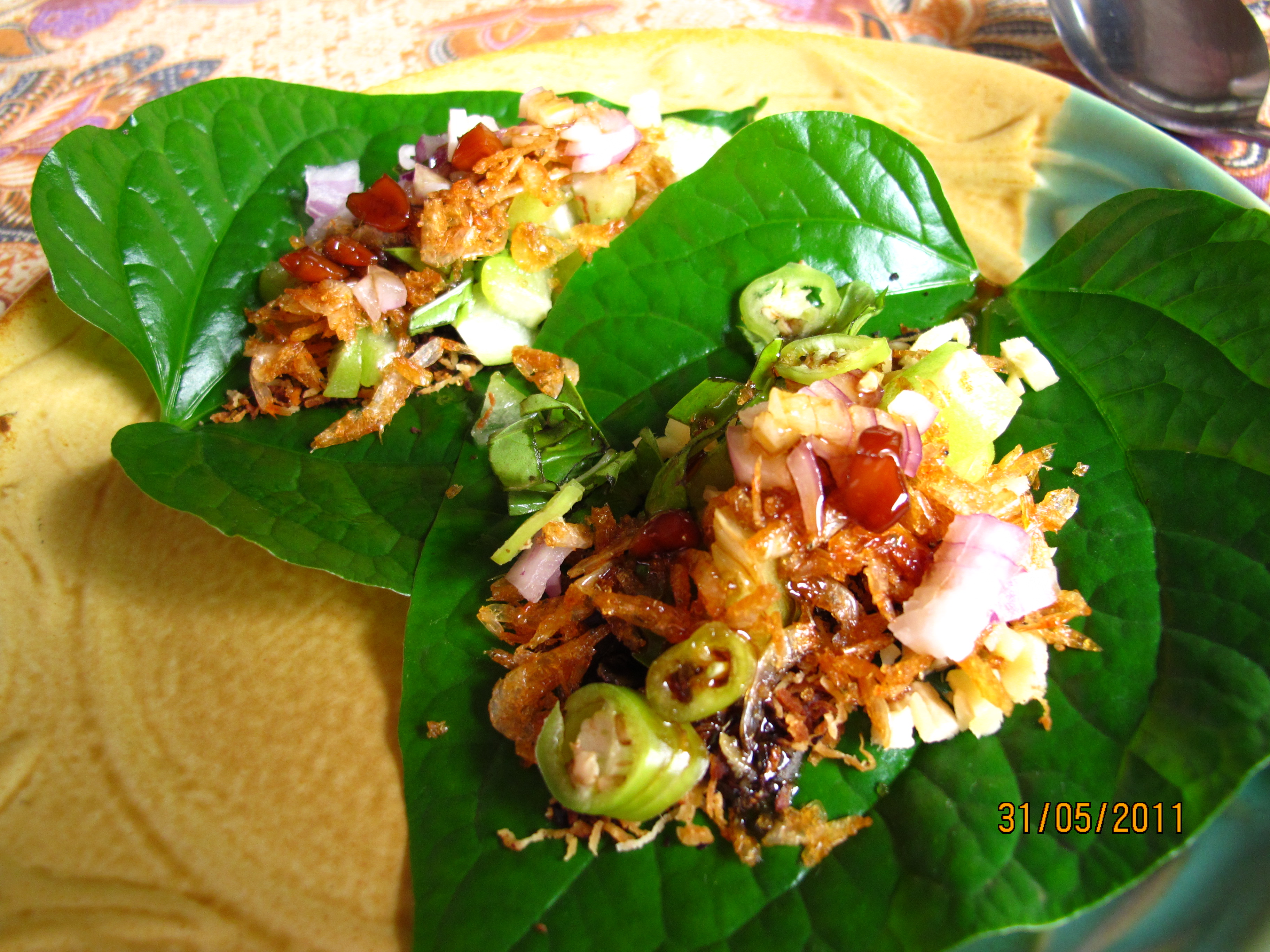
Choose your fillings, then wrap and roll!


As its signature appetizers,  one makes his own “rolls” using an alagao leaf and stuffing it with various spices.  There’s  fried garlic, minced onions, green chili for the brave ones, alamang fried to a crisp, cut up basil leaves, cubed mangoes,  ginger and some nuts.   You choose your fillings, lay them on the leaf, smear it with some sweet dark sauce, and then wrap the leaf like you would a lumpia. Voila!  The sweet, salty, sour and spicy all compete for attention and make out a sensation that is not quite the same as any other.  What do you know, I actually like it!  


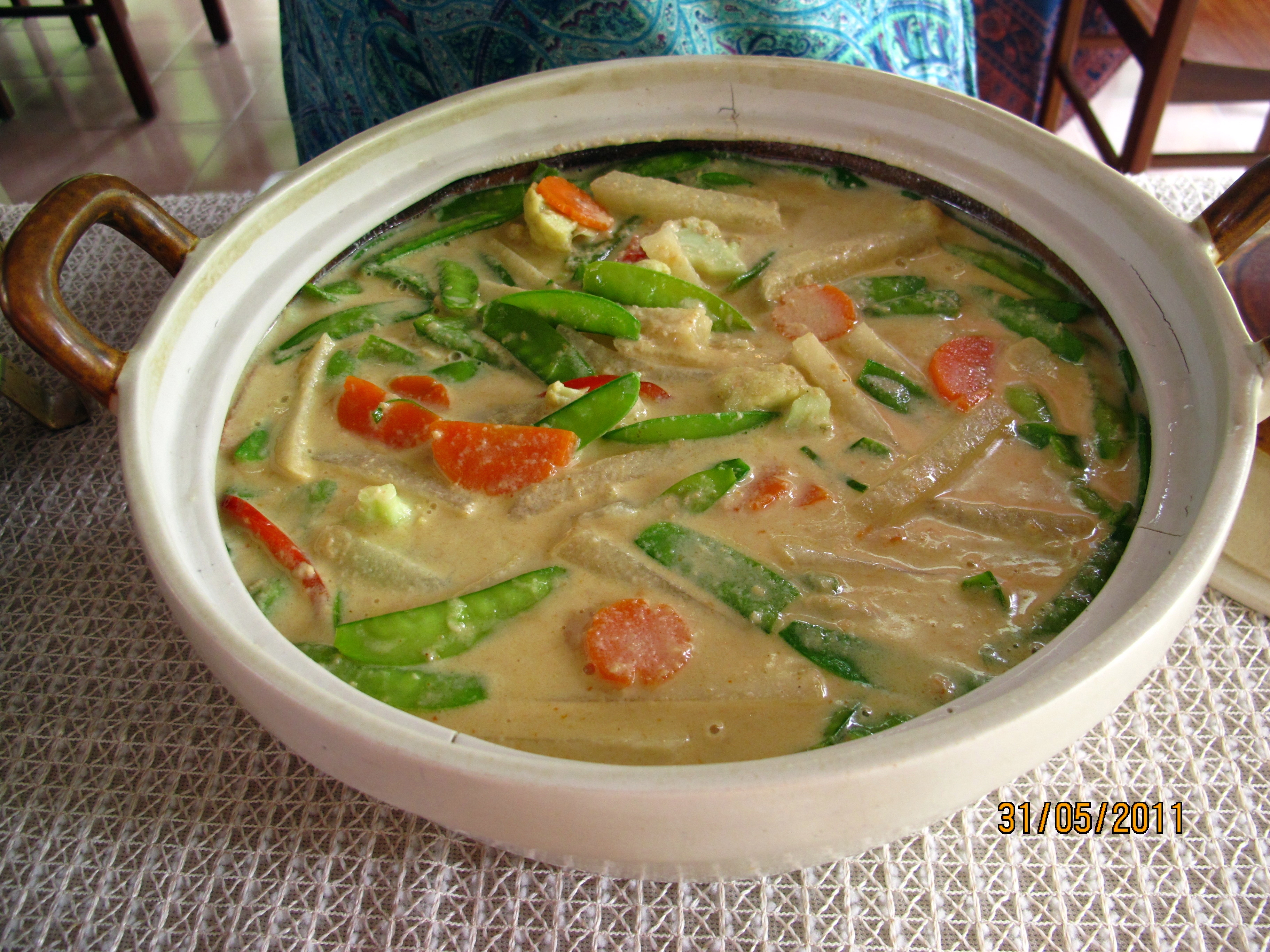
Owned by  Lanelle Abueva-Fernando,  niece of National Artist Napoleon Abueva and daughter of former UP President  Jose Abueva,  the place has no pretentions.  I understand there is really no set menu here, but the signature alagao appetizer is a mainstay.  For this lunch , we had soup,  a steamed fish, some crispy noodles with vegetable curry toppings,  a chicken dish which I ignored (not because it wasn’t good,  but a chicken is a chicken is a chicken if you know what I mean),  and another vegetable dish. Me? I focused on the alagao rolls,  steamed fish and the curried vegetables with crispy noodles.  And for dessert? We had suman served with a quarter of a mango.  I could do with another quarter, actually, but for P35o for a set lunch, I should not be complaining.  I like their suman.  No need for sugar or anything else.  The suman, by itself,  is complete in its sweetness and creaminess.  You can buy them too as take-home pasalubong for P275 a bundle.  


No, It's Not Soup. It's The Topping for the Crispy Noodles.


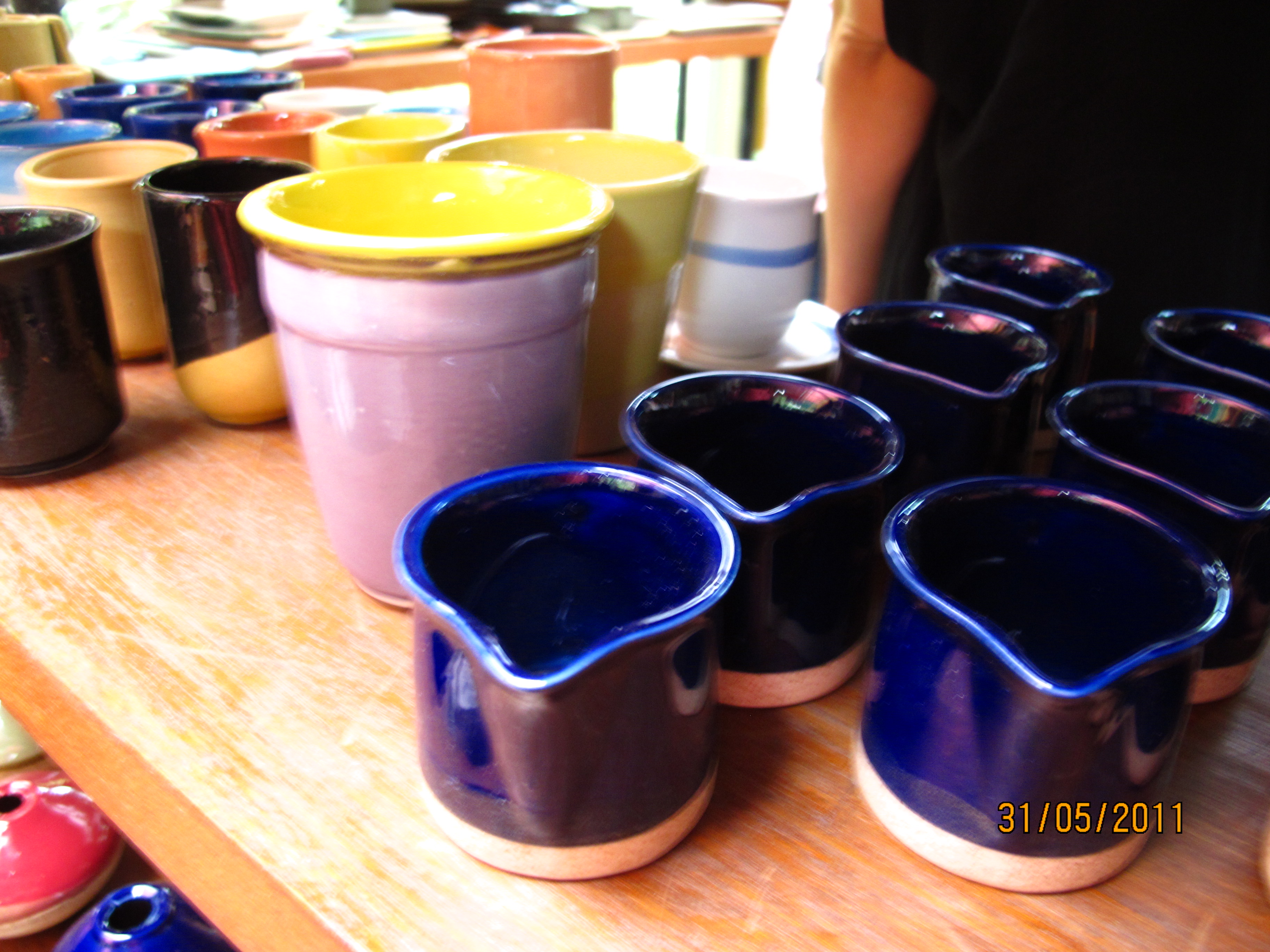
Done with lunch, one can stroll around the garden and pond.  On a hot day,  this place offers a refreshing break.  The trees all around make it tolerable despite the humidity.  But it is not conducive for any shopping.   Lanelle Abueva-Fernando’s pottery is right within the compound  and her works  are on display and available for sale.  There were nice  teapots and matching teacups,  serving plates , cups and saucers, jars, sugar and creamer sets, etc.  By the time we were done with lunch, all I wanted to do was to get back to the airconditioned vehicle.  You see, Crescent Moon Cafe is NOT airconditioned.  You can do away with that setup in Tagaytay (like in Sonya’s Garden) but not so here in Antipolo.  Or maybe it was simply a hot humid day  when we visited. Struggling to keep my eyelids from drooping shut,   I decided to enjoy the comforts of airconditioning in the vehicle.  


Crescent Moon Cafe in Antipolo City

It looks cool. Temp 38C


By the way,  make sure you don’t come on a Sunday or Monday when Crescent Moon Cafe is closed. And do remember that it is only open for lunch.  For directions, you may call +632 630-5854 .  But allow me to try.  😉  If you are coming from Sumulong Highway, go straight past the Ynares Rotunda and Unciano Hospital. You’ll soon find  Flying V gasoline station which is on the left side of a three forked intersection. Take the rightmost road and drive past a Shell station, then Milagrosa Subdivision. A few meters past the subdivision, you’ll see the Crescent Moon signboard. Take that road, and enter the Crescent Moon compound on the left side of the road. The exact address is Sapang Buho, Ascencion road. Barangay Dalig, Antipolo City.


And don’t be fooled. There is still  a tree-lined  walkway towards the Cafe.  You’d walk this path from the street to get inside.  It’s a pleasant walk.


The Art of Pottery

Entrance to Crescent Moon Cafe


This May Help Get You There 😉


When it comes to the subject of food, I readily go overboard.  I have earlier submitted my entry to the Pinoy Travel Bloggers’ Blog Carnival for the month of July 2011 with the theme “Awesome Food Experience While Traveling” hosted by Anton Diaz of Our Awesome Planet.  But hey,  what’s wrong with a 2nd entry?  There is always room for good food, right?  


I wasn’t meaning to write about our national hero and join the PTB Blog Carnival , thinking I needed to clear my backlogs first. But as it turned out, a couple of friends from TravelBlog visited the Philippines and had an extra day to spend in Manila. Thought I’d give them the drill:  Spanish-Philippines in the morning,  Chinatown-Philippines for lunch, and Hollywood (American)  cum “Urban/Modern” Philippines late afternoon till early evening.  The “Philippines-Philippines” episode can wait till they get their walking feet to Bicol starting with an off-chance,  late-in-the-season Butanding Interaction in Donsol, Sorsogon.

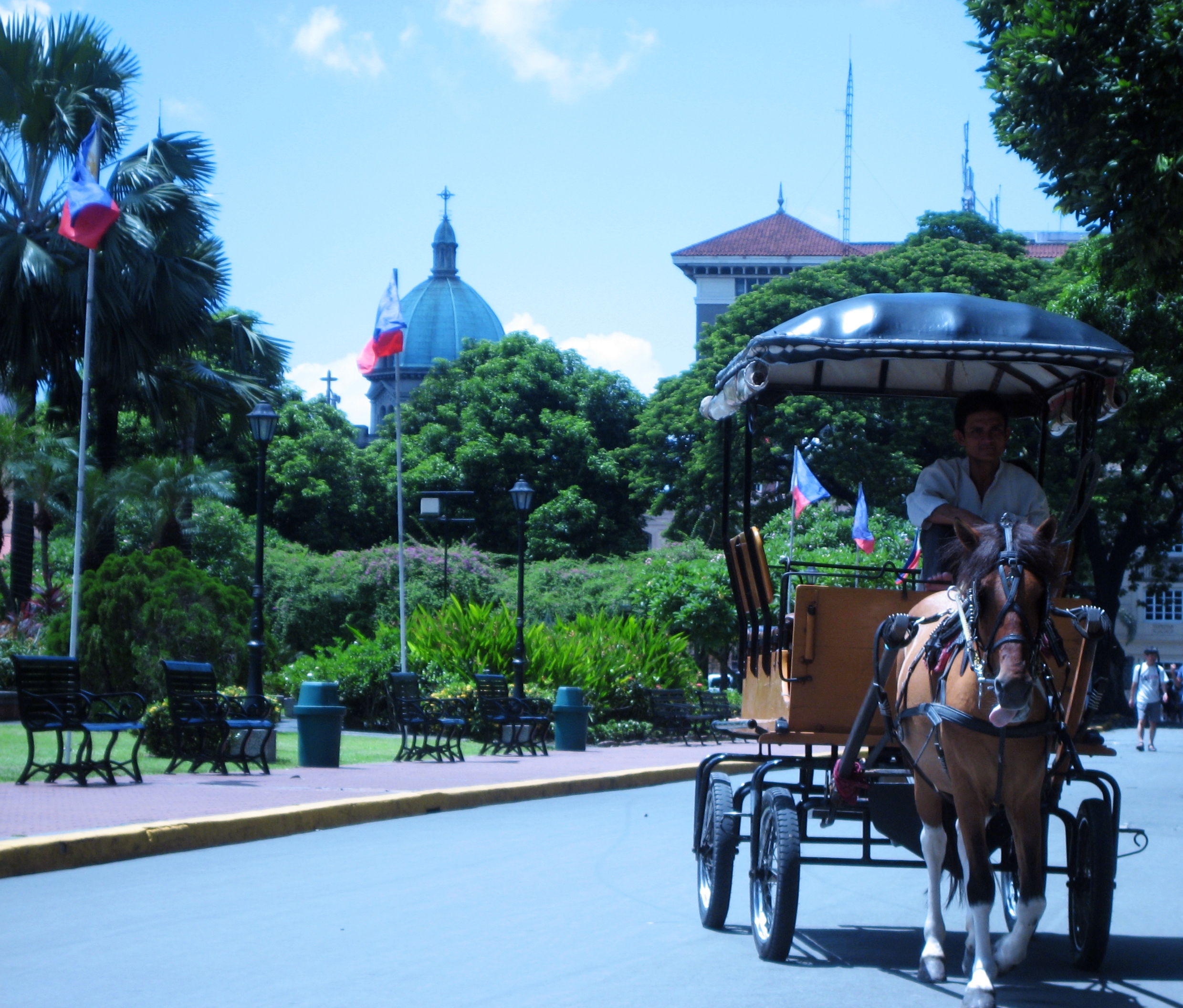
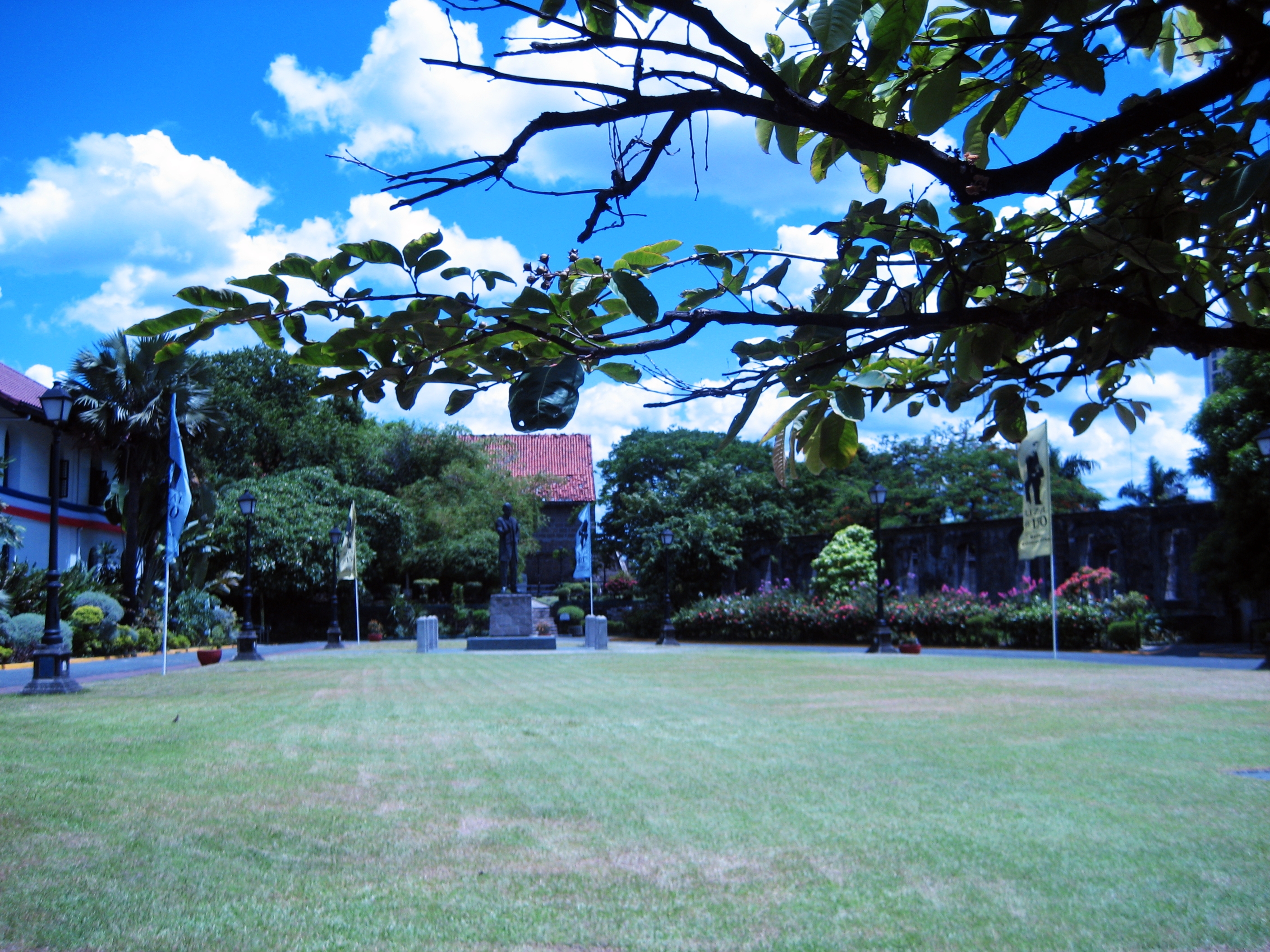
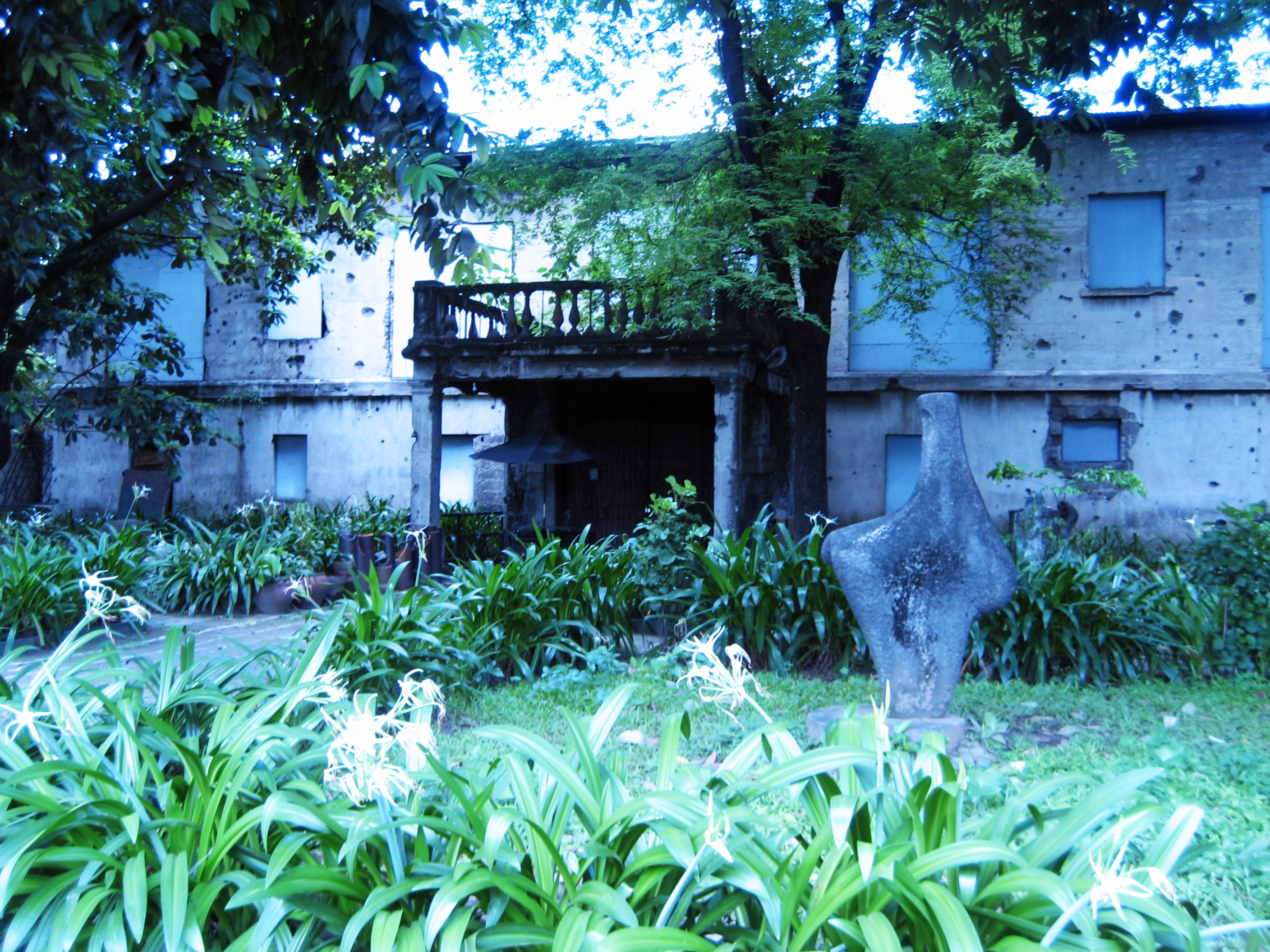
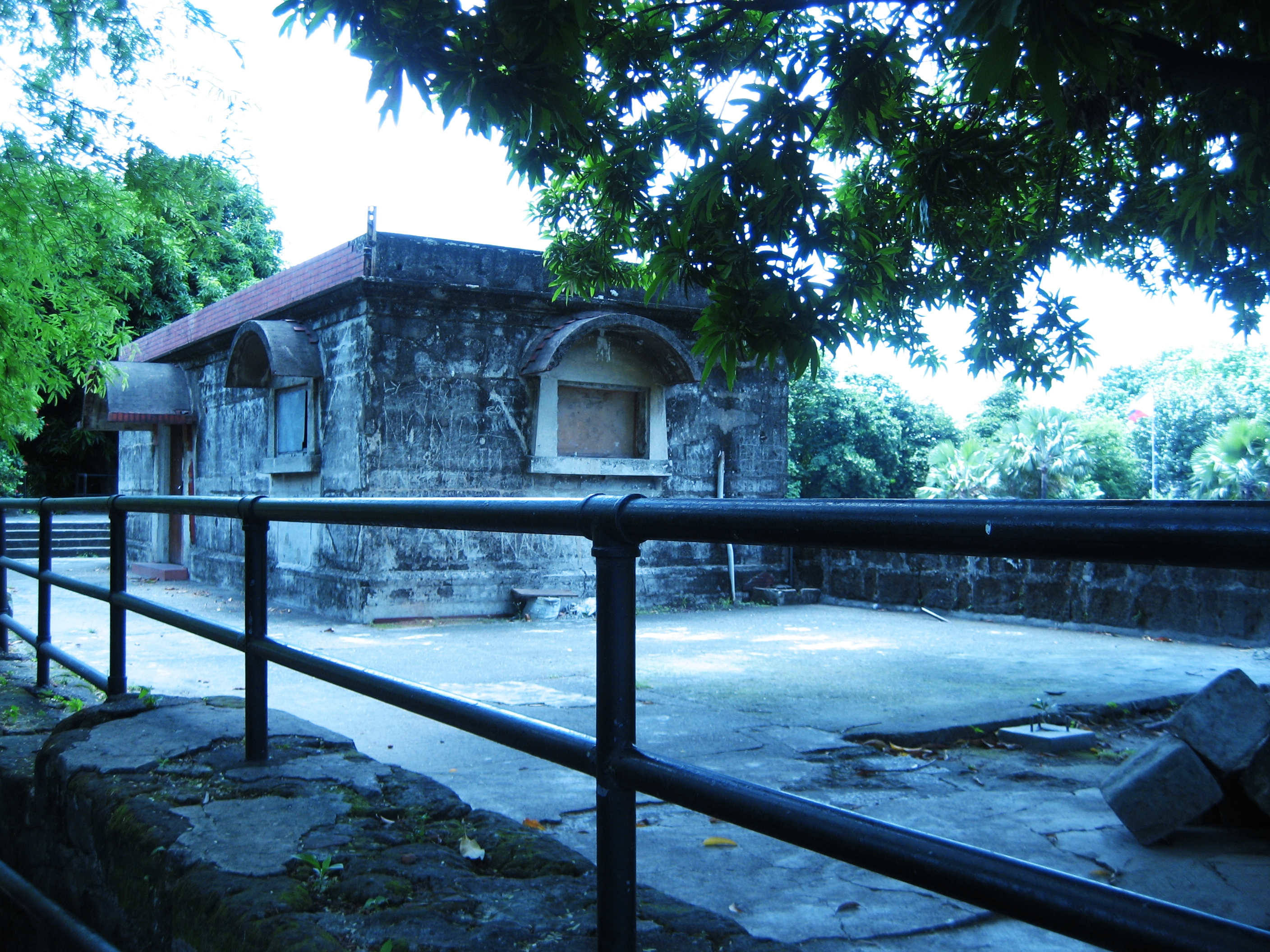
I enjoy meeting new friends.  Jan and Polona are from Slovenia and belong to my other “community” at TravelBlog. Young, full of energy, and eager to know the Philippines .  And I was just as eager to introduce our country, our culture to them. So we began the morning with a tour of Fort Santiago and a drive-through Intramuros.  The latter deserves another leisurely afternoon.

Fort Santiago

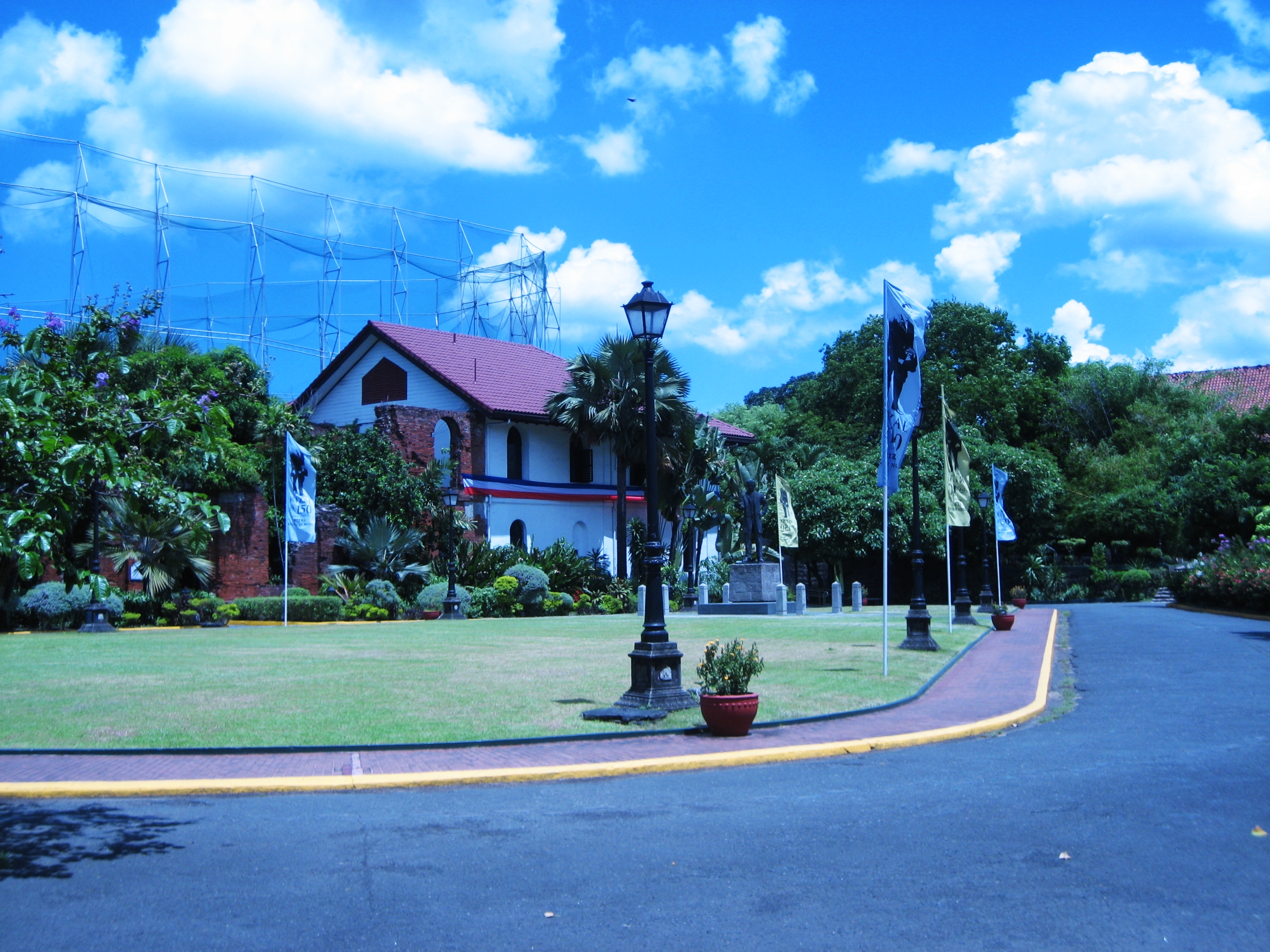
There are heaps of good write-ups on Fort Santiago.  And blogs matched with stunning photography of this “walled city”.  I brought my rusty Point & Shoot Camera just so I can take souvenir shots with my young Slovenian friends.   My young Slovenians surprisingly did their homework and knew enough about our national hero, Dr. Jose Rizal, and about his last days in Fort Santiago.  No need for any history lessons.  These travelers, as opposed to tourists, know their stuff.   It was I who was sufficiently surprised.  Inside the Rizal Shrine ,  they took their time reading “Mi Ultimo Adios”.   I must confess I never went past the “Adios Patria Adorada, Region del Sol Quirida”  stuff.  😦

Amazingly, there was a translation of Mi Ultimo Adios in other languages.  Jan and Polona painstakingly read through some, especially the one translated in Czech.   Even as translated,  they were quite impressed with the many talents of our national hero.  Having visited many other countries,  they were pleased to find that our own is a man of peace.  And not another military chief or warrior who liberated the country from oppressors.  This gave another perspective of allowing one’s self to be impressed about the power of the pen.   How a philosophy, an ideology can move people . How it can enlighten and liberate an entire race to think on its own.   Of his many talents,  Dr. Jose Rizal certainly used the power of the pen to give life to common sentiments heretofore repressed.

There are times when I feel sentimental and wax poetic.  Moments when I find myself reading and taking pleasure in reading poems.   No favorite poets for me.  I read whatever takes my fancy.   But “Mi Ultimo Adios” ?  I never gave it a chance.  I do not know why.  Perhaps because it was part of the school curriculum and I associated it with the obligatory history lessons.   Thanks to Jan and Polona, I rediscovered the beauty, the wisdom and the rhythmic beat of Rizal’s patriotism in this farewell poem.

“I die when I see the sky has unfurled its colors 
And at last after a cloak of darkness announces the day; 
If you need scarlet to tint your dawn, 
Shed my blood, pour it as the moment comes, 
And may it be gilded by a reflection of the heaven’s newly-born light.”

Shame on me.  To have someone from a foreign land teach me a lesson on appreciation of one’s own.   This stanza was nearly “alien” to me. As I said,  I hardly went beyond the “Adios Patria Adorada” line.  Yet Rizal’s passion and patriotism resonated with these lines of poetic candor.


“If upon my grave one day you see appear, 
Amidst the dense grass, a simple humble flower, 
Place it near your lips and my soul you’ll kiss, 
And on my brow may I feel, under the cold tomb, 
The gentle blow of your tenderness, the warmth of your breath.”

Lovely. Simply lovely.  He may be a doctor of medicine. A hero.  A painter.  A sculptor. An engineer.   And more.  But in my book, he is  a poet par excellance.

This is my entry to the PTB Blog Carnival celebrating Dr. Jose P. Rizal’s 150th birthday with the theme “Rizal and Travel”, hosted by Ivan Henares .


We get this all the time.  Foreigners in the workplace telling us that Filipinos tend to eat every so often.  Lunch is no sandwich and a fruit.  Neither is it a half hour break.  Naaaah.  That one hour lunch break can easily stretch to a couple of hours, often blaming the traffic for not getting back soon enough. These days,  there are many joints a walking distance from the offices. But lunch is lunch, and every Filipino observes it not just as a break from work but also as a chance to chat away the blues and break the monotony of working behind a desk. As for snacks or mid-day “mini-meals”?   That’s when it is more likely to find Filipinos eating that sandwich or fruit.  But the hardcore ones would still crave for their carbo fix:  a noodle dish, rice porridge or rice cakes.  In between lunch and that midday mini-meal, don’t be surprised to find them munching peanuts, pork cracklings, chips, or splitting pumpkin seeds.


Taho. Best for breakfast!

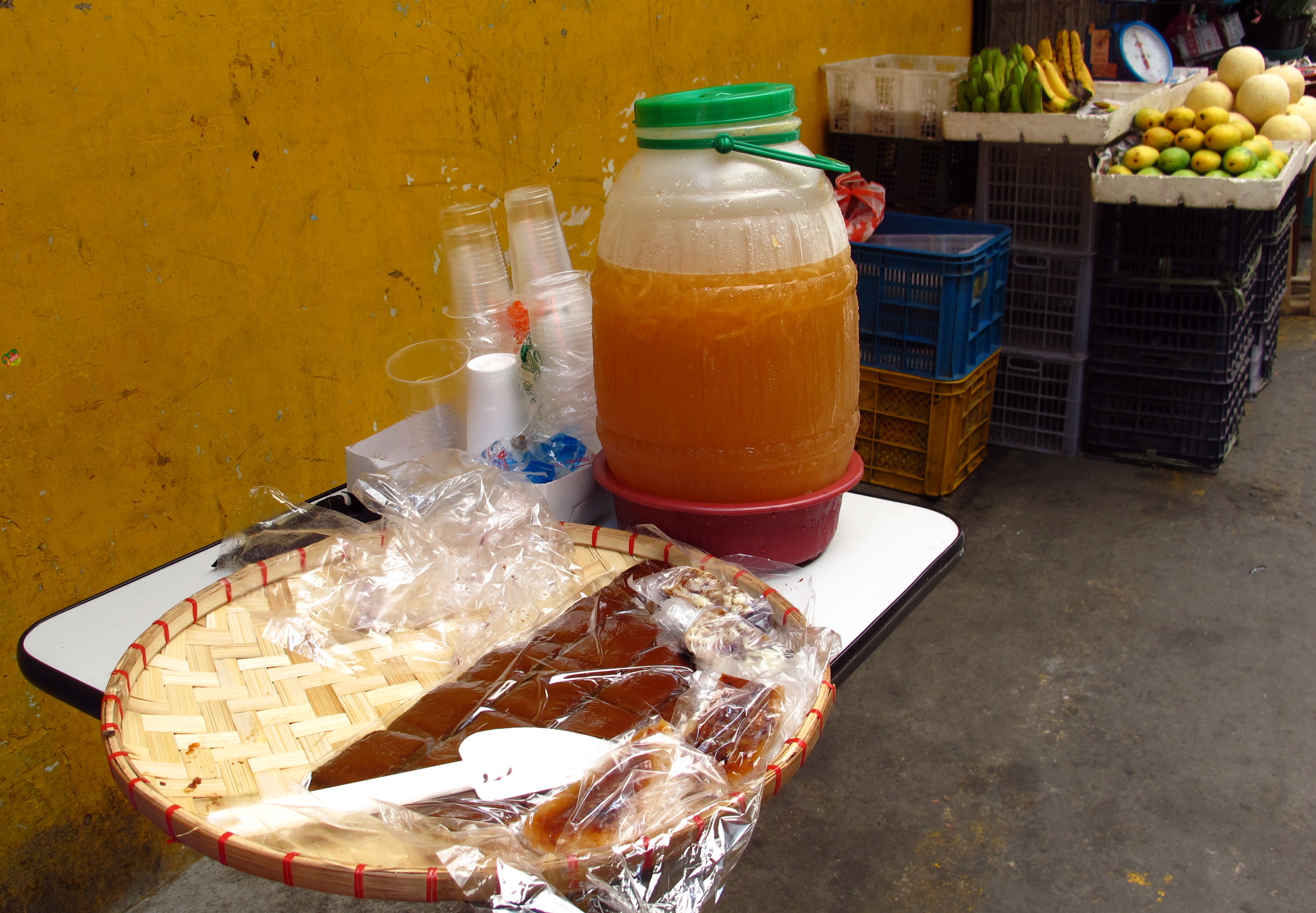
Sago at Gulaman


Luckily for us,  there is no shortage of food to be found and bought.  Stuck in a traffic jam?  No worries.   The street vendors plying the main roads sell anything from peanuts to pork cracklings to boiled eggs to mint candies to fruits to bottled water to “fish balls, squid balls and shrimp balls”. Boiled bananas, boiled peanuts, even corn on the cob! Walking the streets of Manila is an adventure.  Every tourist should try this.  Buying street food is very much a part of every Filipino’s way of life.  And there’s more to be found in urban centers like Manila, where folks are supposed to be “busier” than their counterparts in the provinces who may have the time and energy to cook their own meals and snacks.


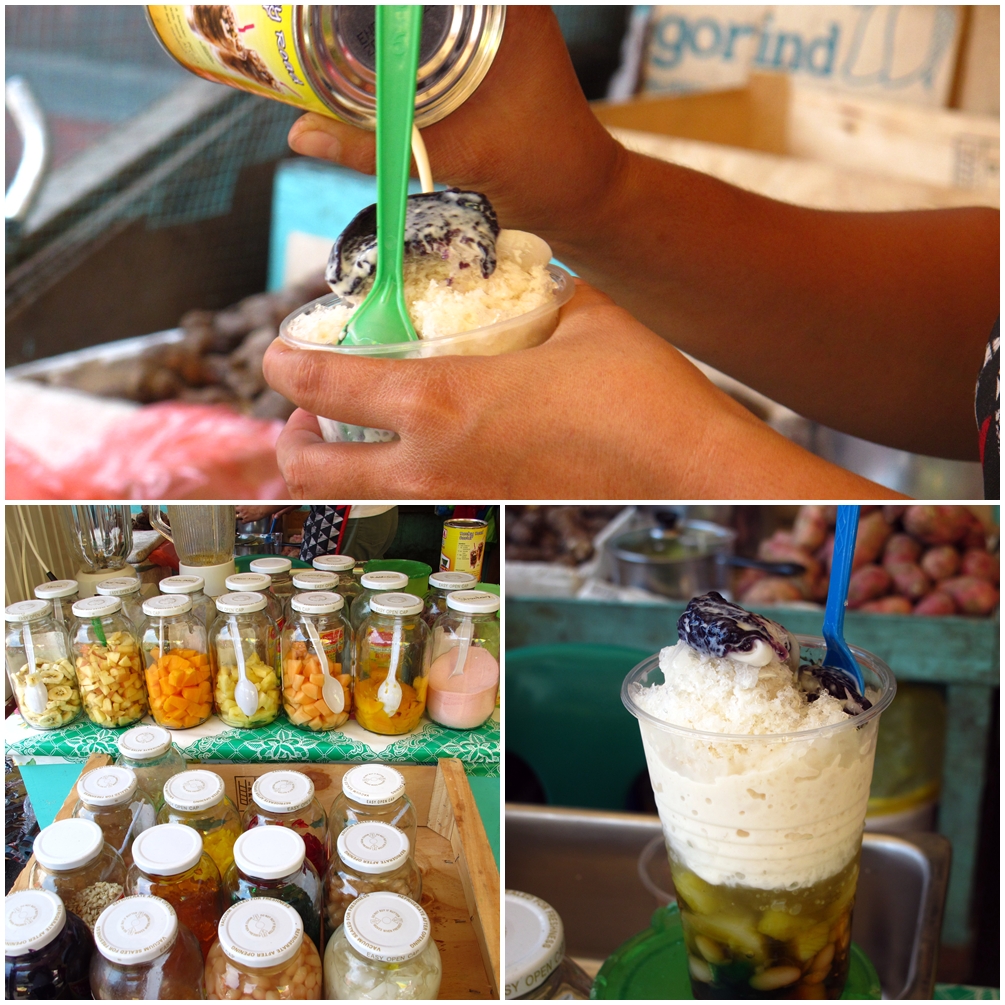
Halo Halo!


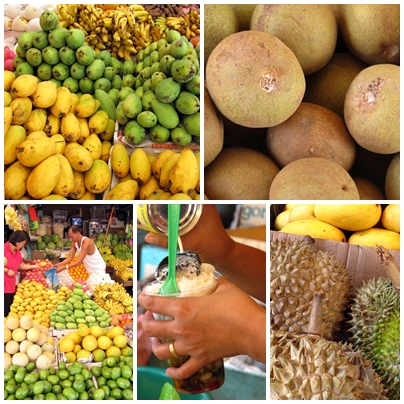
As it is summer, try going to San Andres Market, a stone’s throw from Malate Church.   You can get your freshest fruits here to eat, or to be made into a fruit shake.   You can’t go wrong with a 10 peso fruit shake (less than US $0.25) or the local “halo-halo” (literally means “mix-mix”) for 20 pesos (less than US$0.50). I strongly suggest you try the halo-halo which is a mixture of  sweetened fruits, ice shavings and milk, topped with a local sweetened ube yam. You can’t be more Filipino than that!


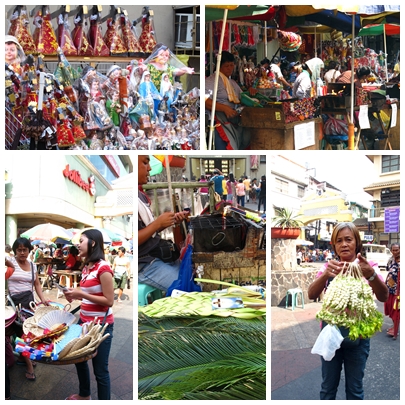
Or you may want to head all the way to Chinatown for your dimsum fix and other foodstuff.  The street vendors here range from those selling fruits, vegetables and cooked food to those selling almost anything you need to get from an honest-to-goodness hardware and supermarket.  Around Quiapo Church,  you can buy your religious icons,  candles,  fans (strongly suggested on hot, humid days) , flower garlands, brooms (yes, brooms),  fruits, vegetables , squash flowers, and fish (live, dead, smoked or dried!).  From Quiapo Church through Santa Cruz Church to Binondo Church,  you will find street stalls selling footwear, garments and again,  more foodstuff.  There is an alley near the Binondo Church called Carvajal where I wanted to buy almost everything I laid my eyes on!  Forget the diet.  There is so much to buy here to take home as TV dinners.  Sushi?  Taho? Meat loaf?  Rice cakes?  


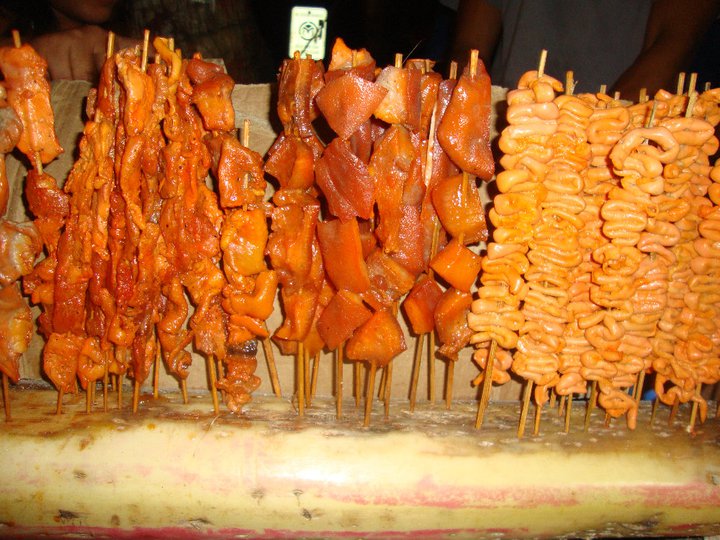
Barbequed Pork and Innards. Guess what!

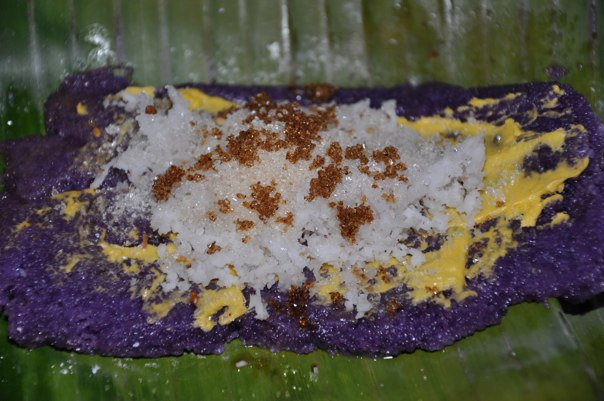
Puto Bumbong

You may also want to check out more photos from my TravelBlog site


Met up with my friend E and without much planning, decided we make good use of our time together while waiting for her son to get off summer school.  That’s from 10am till 2pm, if you wanna know.


Almost instantly, we agreed we should check out the Pasig River Ferry at the  Guadalupe Ferry Station where we can take the ferry ride to Escolta, or all the way to Plaza Mexico in Intramuros. But alas,  the station was closed as we unhappily learned the ferry company has ceased operations. Shoots!


Not easily discouraged,  we mapped out another plan.  Something in keeping with the Lenten Season.   From under the Guadalupe Bridge where the Ferry Station is located, we drove back up to EDSA southbound and took the right at the corner where you’d find Loyola Memorial .  This street goes a few hundred meters down to Nuestra Senora de Gracia or Guadalupe Church.  Foundations laid in 1601, construction completed by 1629.  I have once attended a wedding here, and was not disappointed with how beautiful the Church is just past midmorning.


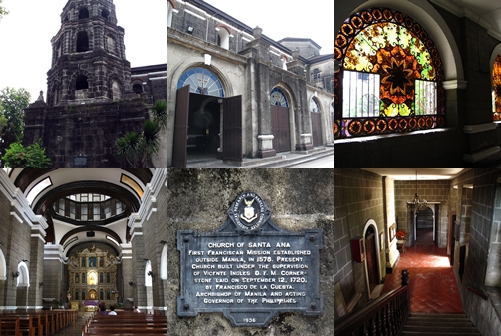
From this nearly 400 year-old Church in Guadalupe, we drove down to J. P. Rizal Street all the way to Sta. Ana, Manila.   We passed what used to be the Sta. Ana Race Track,  until we found the Church of the Abandoned.  I have passed this Church many times before,  always referring to it simply as Sta. Ana Church.  Never realized it ranks among the oldest churches around Manila.   At this hour,  there was hardly any crowd inside this  17th century-Church , more so in the adjoining halls of the church where they kept religious statues of a few saints.  We even ventured up the stairs, but was gently reminded that the convent is not open to the public.


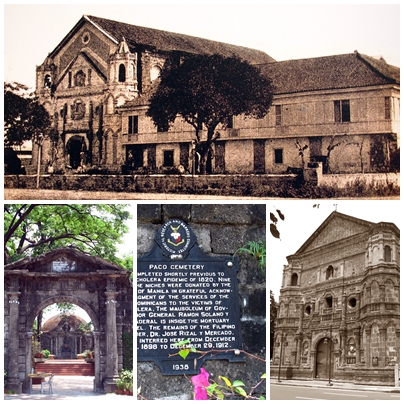
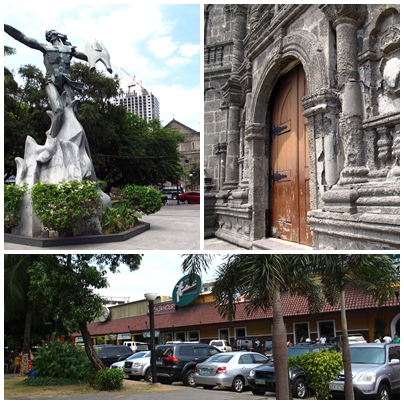
Driving further west towards Paco, Manila, we visited the Paco Church and Cemetery only to find it closed.  Today is a Tuesday and Paco Park Complex is closed Mondays and Tuesdays.   From outside, it looks like your mini-Intramuros as the Park is closed in by this  ancient wall.   No wonder this Church is a favorite wedding  as well as concert venue.    Never mind that it is also a cemetery!  After all, it has a distinguished list of VIPs interred in its park grounds.  No less than the national hero, Dr. Jose P. Rizal was buried here until 1912 (errr, did you know that?) , and so with the martyred priests Fathers Gomez, Burgos and Zamora, more commonly referred to as Gomburza.


From Paco Park,  we decided to have lunch at Aristocrat which is right beside the Malate Church.  But not without a quick visit to the San Andres Market where we found fruit stalls after fruit stalls of mangoes – yellow ripe, unripe green, smallish “supsupin” mangoes, Indian mangoes – along with racks of chicos, durian, dalandans, honeydew melons, watermelons , turnips, bananas, sweet potatoes, etc.  I even bought myself a glass of halo-halo (ice shavings with various sweetened fruits like bananas, sweet potatoes, garbanzos, beans, jackfruit, mixed in with ube yam, leche flan, gelatine,  sago and milk) for only 20 pesos.  What a refreshing drink, and all for just half a US dollar!  The same stall even offers hot chocolate and coffee for 5 pesos. Dirt cheap!  I shared the halo-halo (literally meaning “mix-mix”) with my friend E as I didn’t want to spoil my appetite for my bbq lunch at Aristocrat.


Aristocrat was doing brisk business by the time we got there.  Well, it’s noon time, but the waiter there says they get this crowd daily.  For me, Aristocrat (and another established chain restaurant Max’s) is a great “equalizer”.  Nothing fancy here, just plain good old barbecue and local dishes.  You’d be fine to allocate 200 pesos per head for a good meal. And it draws a big crowd from all sections of society.  From a table occupied by a group of students, another by working men and women out on a lunch break, to a group of nuns and yet another group of balikbayans (literally “back to country” Filipinos) having this comfort food.  It is always a yummy meal here in Aristocrat, and it won’t burn a hole in your pockets too.


And so, on full stomachs we crossed the street to visit the Malate Church.  Built in 1588 originally as an Augustinian Friar Building, it withstood a number of earthquakes and the February 3-17, 1945 Battle of Manila which left nearly the entire Malate area flattened, with thousands dead from the shelling from American forces and burning from Japanese occupiers.  This centuries-old church was left charred and roofless, and reconstruction began soon after the end of World War II.  At the time we visited, absolutely no one was inside the Church.  All quiet and peaceful . A fitting final stop for our attempt to “waste” four hours around Manila.  Call it the final part of our 7-church Visita Iglesia.  Having done Manila Cathedral and San Agustin Church last week and San Sebastian Church much earlier (hmmm, that last one  shouldn’t count, really), and 4 today (Guadalupe, Sta Ana, Paco and Malate),  I have completed the mandatory 7 Churches for the Visita Iglesia.  But there is this weekend when I plan to visit Binondo , Santa Cruz and Quiapo.  Now wait, that makes 10!  And I am still agonizing whether to include Tondo Church or not.  We’ll see………….no harm in visiting a dozen churches.  Especially churches loaded with history! So , next time you have an extra 4 hours to waste,  why not put it to good use and learn bits of history while doing your spiritual duty?


And if you do have more than 4 hours,  you can cross Roxas Boulevard  from Malate Church and stroll along the Baywalk and wait for the lovely Manila Bay sunset.  Who knows?  You may even work up an appetite again and head back to the Malate Church Square and this time, try the Max’s Fried Chicken just across Aristocrat.  Both are institutions in the Philippine dining scene, so don’t miss them.  Not to worry, you can enjoy budget meals in either one of these 2 eating places, and live to go back again and again.


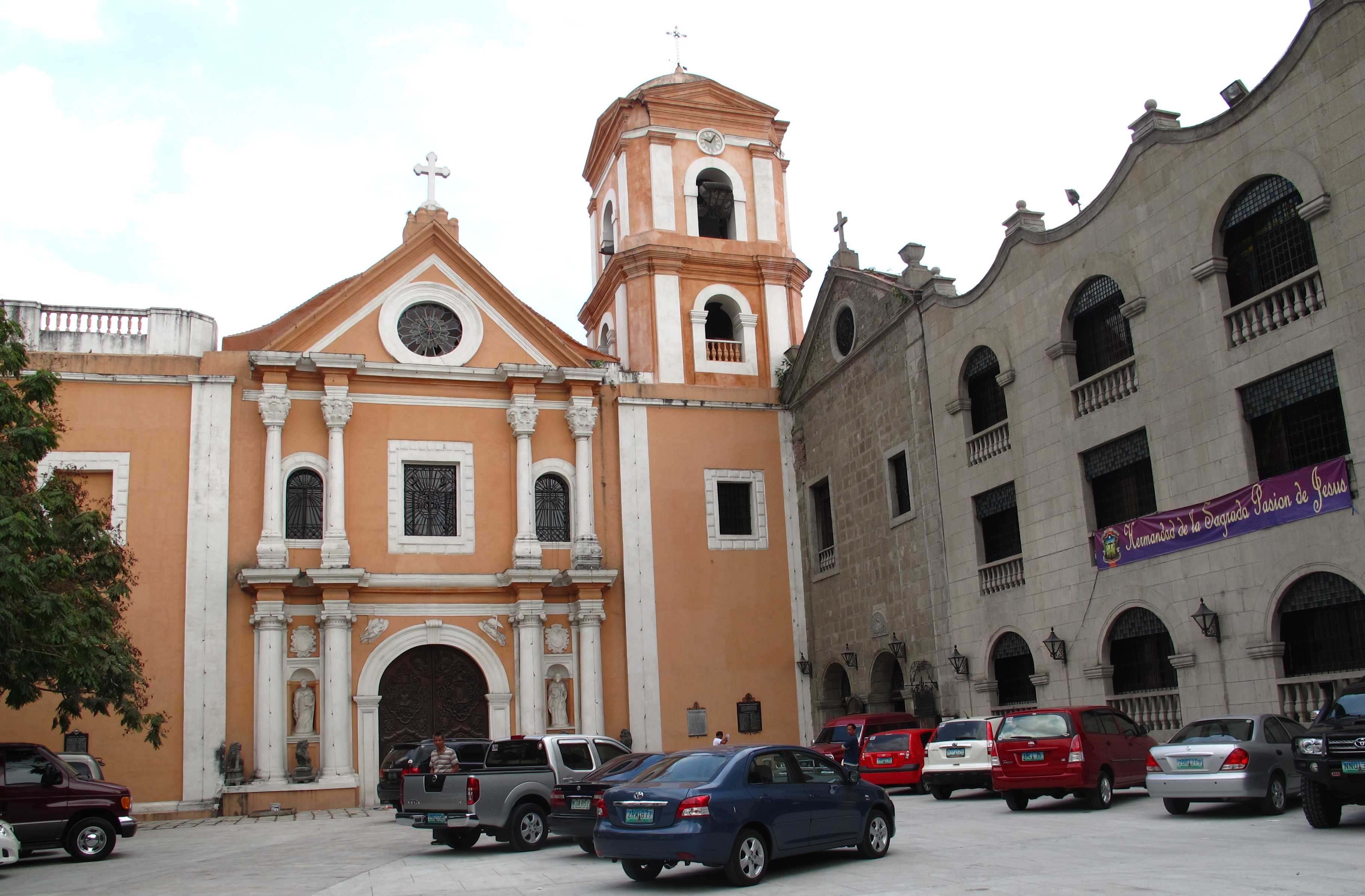
It is Lent. Time to go visiting the Churches. The norm for Catholics here is to visit 7 Churches, preferably on Maundy Thursday.  But I have decided to instead do the 7 during the entire Lenten Season, and to choose the 7 Churches with lots of history. First off: San Agustin Church in Intramuros, a 16th century church claimed to be the oldest stone church in the country.


Filipinos:  A Strange Race?


From Makati where I live,  we drove along Roxas Boulevard with a lovely view of Manila Bay towards the Pier.  We took the right towards Intramuros, where one finds Fort Santiago and the Manila Cathedral.  We skipped both, and drove directly to San Agustin Church and Monastery.


Standing right in front of the Church and looking around, I found how un-Asian this corner in Intramuros is.  No wonder some of my foreigner friends tell me that Filipinos are “strange” in that way. Strange in that most of us bear Spanish-sounding surnames.  Like Ramirez.  Like Chavez. Like Guerrero. Or Mendoza.  Sure, we were a Spanish colony for close to 400 years, but other countries had Dutch or Portuguese or British colonizers – yet, I don’t hear of them with Dutch or British or Portuguese family names.  Or am I wrong?   Strange in that our language is interspersed with a lot of Spanish words and that Filipinos very readily use Spanish expletives that I do not wish to repeat here.  Truth is we even coined a word for the elitist Filipinos …… “con** crowd” — which literally means a lady’s private part in Spanish.  Strange in that we are so used to counting in Spanish (uno, dos, tres………) or in telling the time in Spanish ( a las tres y media, a las dose, etc.).   But more than anything else, we are very “Spanish” in our faith.  The Philippines does not have the temples of Cambodia, Laos or Thailand,  nor the pagodas of China , Japan and Korea,  but we have many Catholic Churches dotting the countryside which are worth seeing. Churches always form a central and core part of every Filipino’s lifestyle.  Here in Manila,  a few old Churches remain standing despite this city being the second most -bombed city during World War II.


More Than Just An Old Church


San Agustin Church at the corner of General Luna Street and Real Street in Intramuros is hard to miss.  It is just a stone’s throw from the Manila Cathedral (when facing the Cathedral, take the right side and walk straight towards San Agustin Church) and an easy walk from the Fort Santiago, another tourist destination.


Inside the Church, one finds off some corner a confessional box.  The parish priest sits inside while parishioners take turns to have their confessions heard by the priest with only a small screen window separating them.  On your knees, you confess your sins!  In another corner,  there is the pulpit where the parish priest used to say his homily or sermons.   Times have changed since those days.   And the ornately designed pulpit is now simply a reminder of how grand our old Churches were or still are, if luckily preserved and bomb-spared as with this Church.  But Filipino Catholics still make their confessions to their priests in this box-like structures though modern-day Catholics are not discouraged from doing face-to-face confessions.


This Church is a favorite among brides such that “bookings” for weddings need to be arranged at least a year in advance.  I have attended one too many wedding ceremonies here, and wedding receptions were held in any one of the nearby colonial-inspired restaurants and bistros just across the Church, or in the garden within the church courtyard.  On weekdays,  you may find school groups doing their field trips, and on weekends you would likely witness wedding ceremonies.  That is how “busy” this Church is.


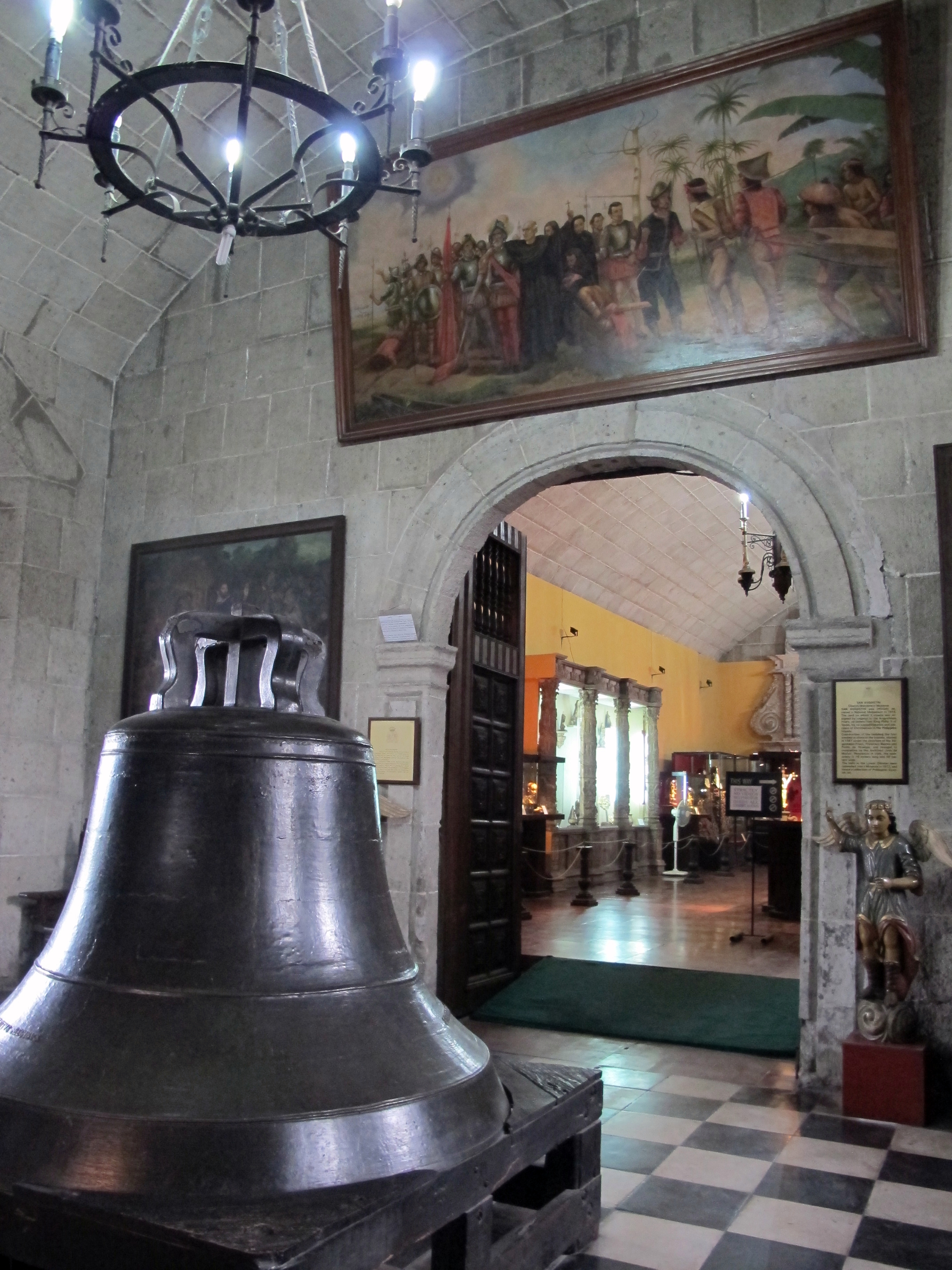
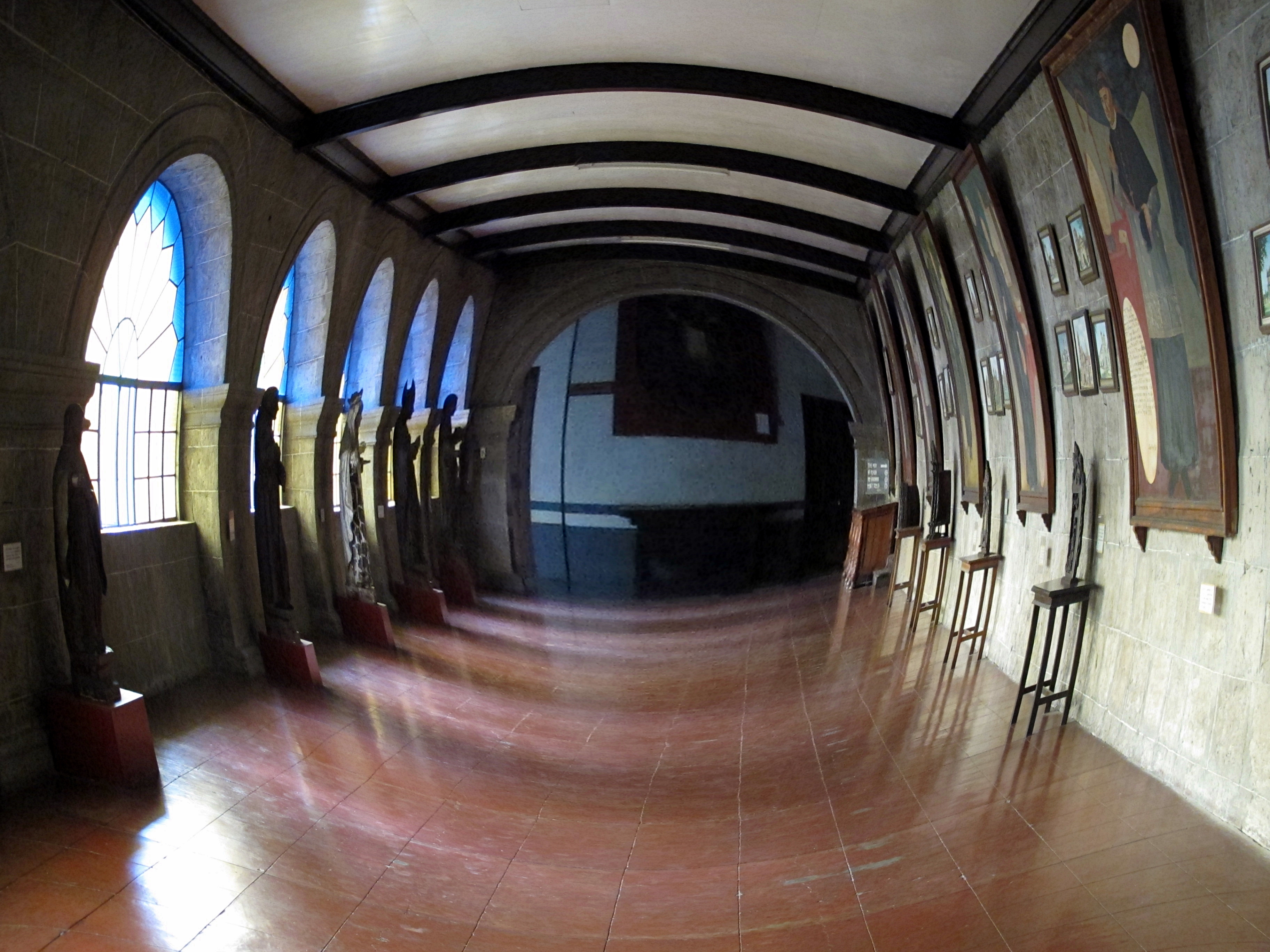
Yet………the adjoining Monastery which has since been converted into a Museum hardly gets a crowd. The day I visited,  I walked alone along many corridors.  Kind of eerie, if you ask me.  I honestly felt like some statues are staring down at me.  In one of the exhibit rooms ,  I got goosebumps finding a dark corner with 4 or 5 statues clad in black robes.  They were representations of the early Augustinian friars who built this Church and established a religious order in the country.  It “helped” that the room was dimly lit, such that you find the robed statues just when you are almost face to face with them.  Off another corridor,  I found huge paintings, some pitifully warped, and woodcarvings depicting hell.  You bet my hair stood on edge and felt my heart beating out of my chest.  I almost had regrets that I came when school’s over. I could have timed my visit with a school group’s field trip instead and spared myself of some palpitations.


Miguel Lopez de Legazpi Rests Here: A Short History Lesson


Filipinos all know that Ferdinand Magellan discovered the Philippines. But Spanish colonization and the subsequent Christianization of the Philippines didn’t start with the discovery of Magellan in 1521, who incidentally was slain by a local tribal chieftain named Lapu Lapu in the island of Mactan in Central Visayas. While Magellan captained the very first ship to sail completely around the world,  Magellan never lived to tell his tale of discovering the Philippines and to prove that the world is indeed round. However, his discovery led to Spanish Expeditions led by Ruy Lopez de Villalobos in 1541 (who was driven away by hostile locals)  and then by Miguel Lopez de Legazpi in 1565. Legazpi befriended a native Bohol chieftain called Datu Sikatuna  in a ceremony called “Blood Compact” and from there, established Spanish colonies with the aid of  local allies starting with the island of Cebu. With the colonization, came Christianization of the natives who earlier practiced nature worship.  And as pagans converted to Christianity, they were baptized and given Christian names.  So.  Now you know why many Filipinos have Spanish family names. Right?


Legazpi was a diplomat more than he was an explorer.  In Manila, he befriended both Rajahs Lakandula and Sulaiman and with some help from Augustinian and Franciscan friars, established a governing city council in 1571. At the same time, he ordered the construction of Intramuros, proclaiming it the capital of Manila and seat of the Spanish Government in the East Indies. He died in 1572 and was laid to rest right here in the San Agustin Church.


Now, enough of history and back to topic.


Father Blanco’s Garden


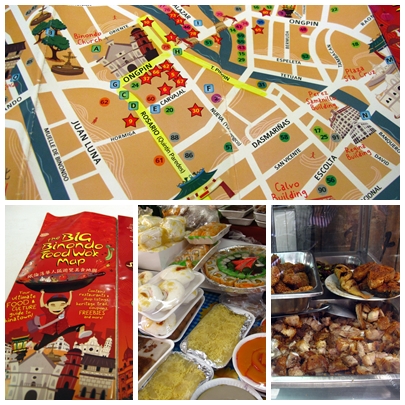
After doing the rounds (actually the “squares”) in the Museum,  it is refreshing to go down and spend some time within the garden.   If you have a book with you,  you can take over one of the benches and while away the time while resting your legs and feet in Father Blanco’s garden.  The garden can do with more flora, but you can enjoy the afternoon breeze here before venturing out of the Museum grounds. In my case,  I found the time to check out the “Binondo Food Wok Map” while here in the courtyard garden.  This is the map I bought (for 100 pesos) in the Bahay Tsinoy (literally means House of Filipino-Chinese) one block away from San Agustin Church.  (Facing the Manila Cathedral, one can take the road on the left side till you hit the 2nd corner.  This is Cabildo Street corner Anda Street)  Of course, if it is too sunny, you may simply have a drink and some chips or biscuits in a corner stall (can’t even call it a cafe) within the Museum.  There are tables and chairs where you can sit, facing some huge paintings.  Not bad in terms of scenery, but the corner stall can certainly offer better drinks (like a good brew?) and better wafers or local rice cakes.


More Time to Spare?


If you have more time to kill,  you may head straight for the Walls by taking Real Street (the Church is right at the corner of Real and General Luna Streets) , passing by a good bistro called Ristorante delle Mistre and remembering to have a cozy dinner there on the way back.  There is an option to walk along the walls or ON the walls.   There are stairways to get on top from where one is afforded a view of the nearby Manila Hotel and the sprawling golf links which get all lighted up at night.  On this visit, I found many young couples on a date here.  Good choice.  It is quiet, breezy and has good views.


As I trace my steps back to the Church, I passed bronze representations of ex-Presidents in what is dubbed as Gallery of the Presidents.  I cannot help but feel amused to find those of ex-presidents Gloria Macapagal Arroyo and Joseph Estrada side by side.  Even in bronze, it is kind of strange and quite amusing to find them together.  Can’t wait till 2016 when that of incumbent President Noynoy Aquino joins them.  Oh, I do not mean to be disrespectful.  Just that it is no secret in my country how these 3 ‘adore’ each other.   Enough said.  Go drop by Ristorante delle Mistre and have that mango cheesecake (less than US$2)  to go with your brew.  If you have the appetite for lunch or dinner, order their set menu. Come, visit and enjoy Manila!


Better still, enjoy the many islands of the Philippines.  I am a local living here and must admit I still have a long list of must-visit destinations around the country. Like Mount Pinatubo.  Or Puerto Galera in Mindoro.  Or Sagada.  Plus many more.  Now, that’s a confession!


For more photos, check out my TravelBlog site.